Uruguay
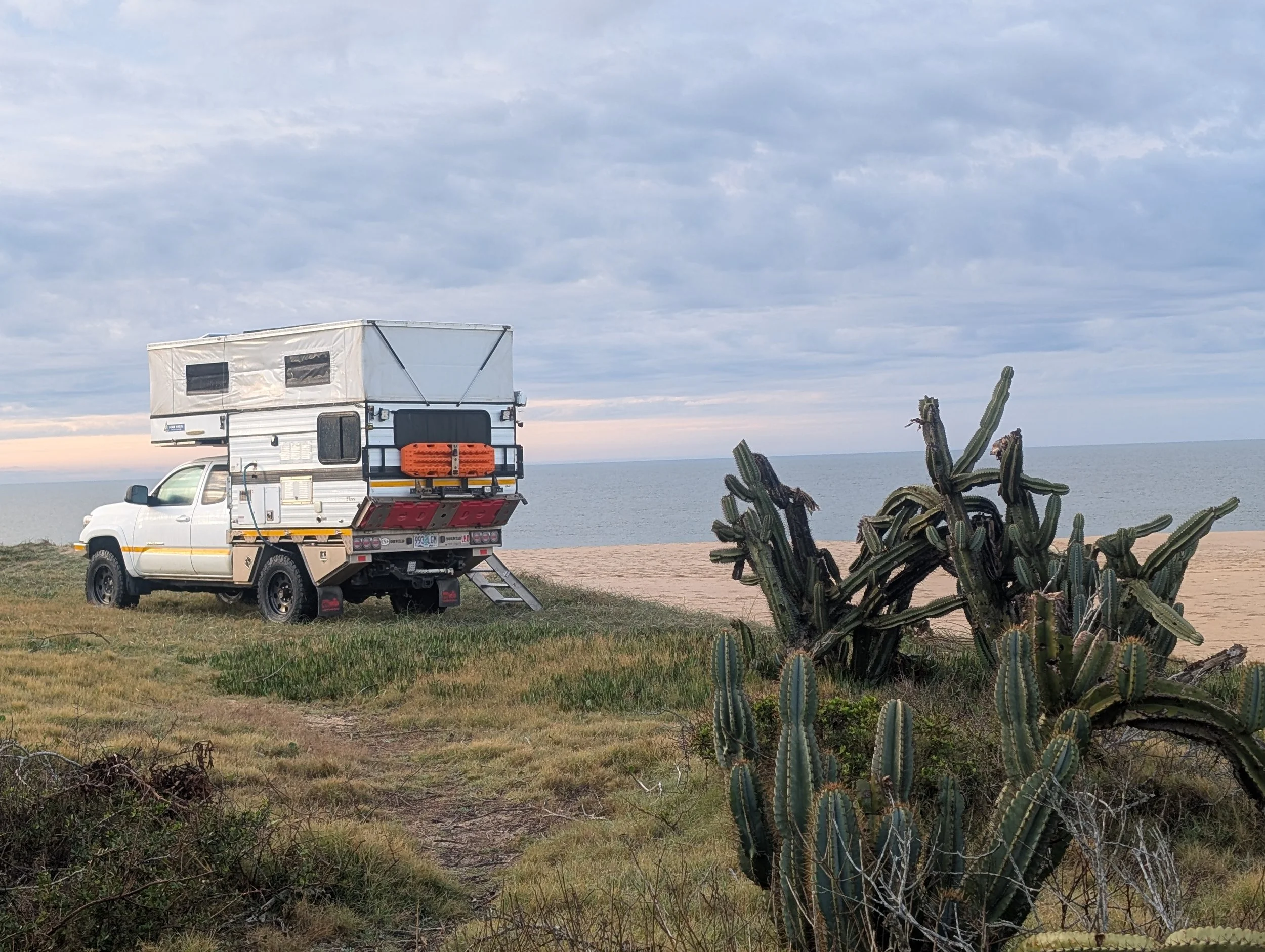
Camping along the coast of Rio de la Plata, the southern boundary of Uruguay
Vamo Arriba! Or “let’s go!” as they like to say in Uruguay.
Uruguay was a gentle pleasure. It may not have had the scenic highs of it’s neighbor, Argentina, but it was an easy country to navigate. The smallest Spanish speaking country in South America, Uruguay’s geography is characterized by rolling grass land. It’s tallest point stands at 1700’ so no steep mountain ranges, vast deserts or rugged roads to navigate. Instead, we lazily wandered along the southern coastal zone where 70% of the nation’s population lives.
Our Montevideo walking tour guide jokingly told us that Uruguay has the highest cow to human ratio, with 14 million cows way out numbering the 3.5 million people.
Resources, from gas to groceries, were easy to find and wild camping spots were frequent, typically with beautiful river or ocean views.
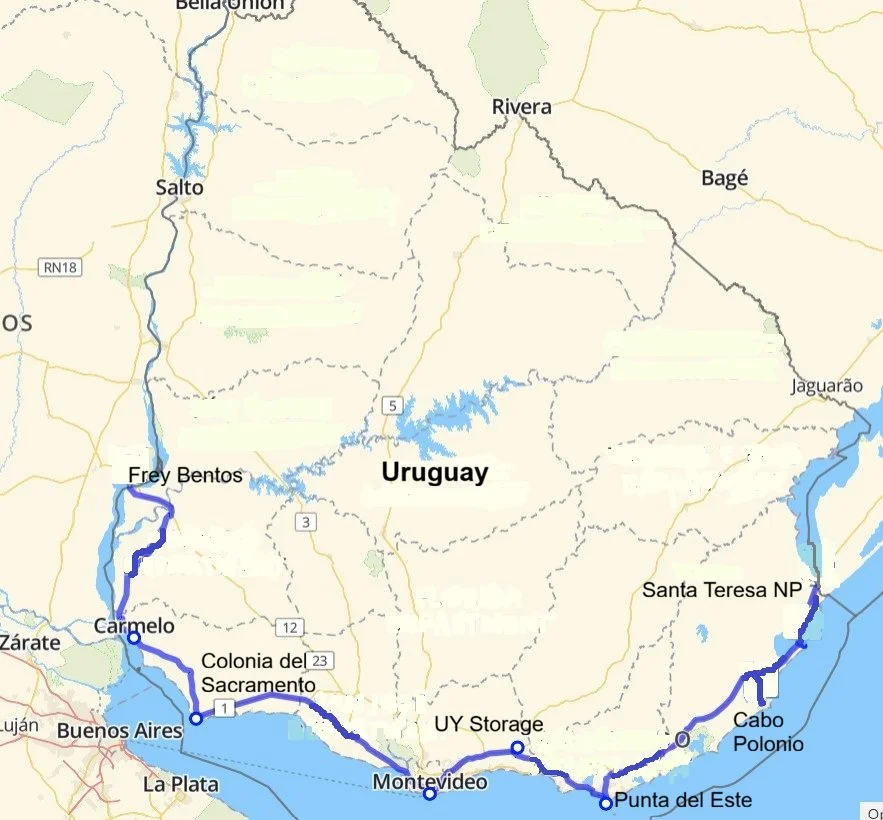
Our over 800 mile route through Uruguay
Uruguay felt peaceful and has a well deserved reputation as one of the safest and most politically stable countries in Latin America. Low crime rates and strong social programs mean that people feel taken care of.
But we can also see how people must struggle to make ends meet. We found it to be an expensive country, groceries, restaurants and hotels cost about the same as in the US. Gas was twice as much in Uruguay. We also had to buy some tires and ended up paying twice as much as we would have in the US due to import taxes and the VAT. Given that the average income in the US is 3 to 4 times higher than that of the average Uruguayan, people are living on a shoestring budget.
An independent nation since 1830, the government of Uruguay has focused on creating a well educated population and developing a strong export-focused culture based on agriculture. In general, the country felt more prosperous than it’s neighbors, Argentina and Brazil.
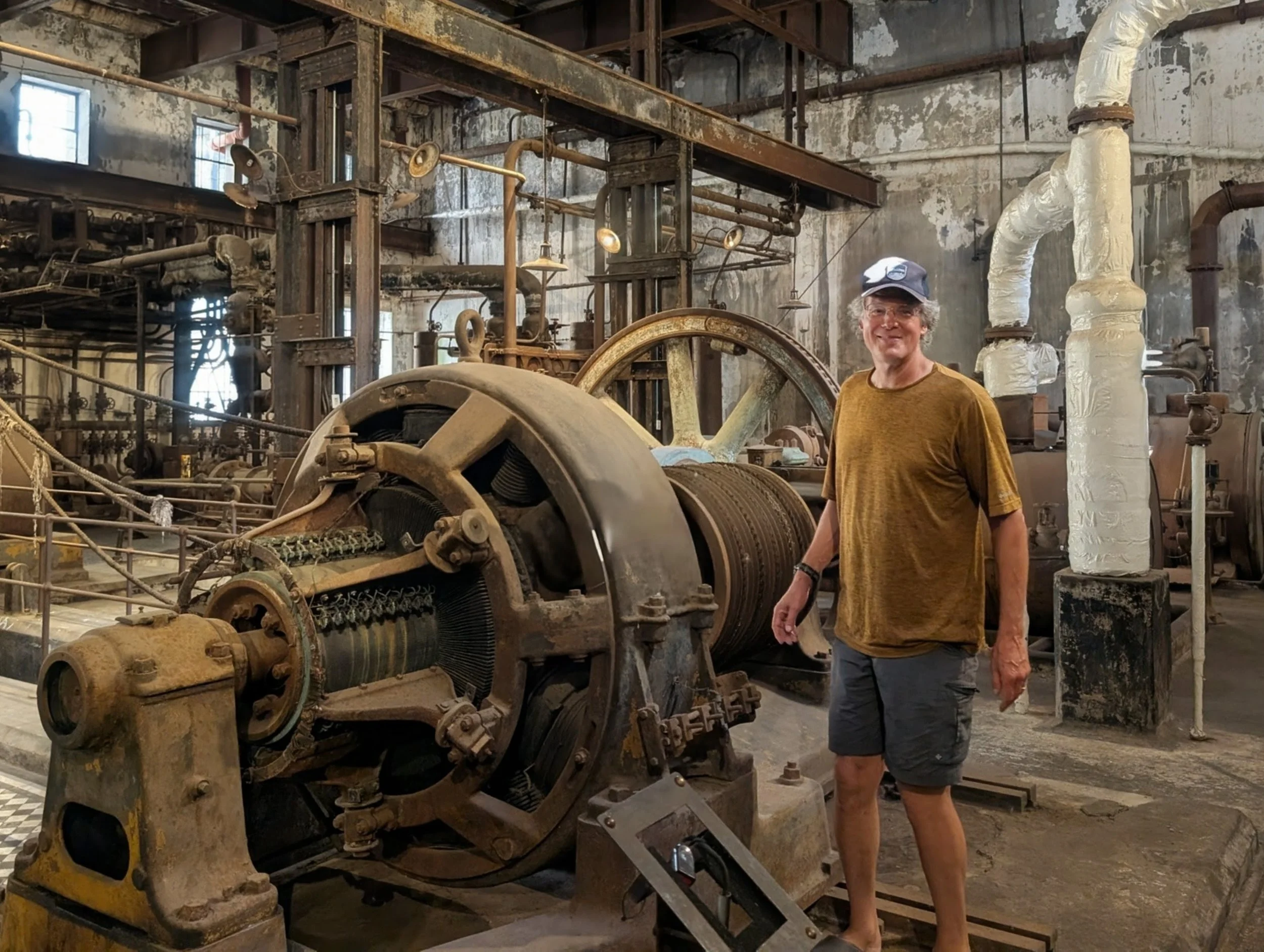
Meat packing plant at Frey Bentos, now a historical museum
Our first stop was Frey Bentos, home to one of the historically largest meat packing plants in the world. Founded in the second half of the 19th century, the plant provided a staple pantry item - canned meat - for many European countries and went on to provide the primary rations for allied troops through both world wars. At its peak during WWII, the plant slaughtered 1600 to 2000 cows a day - or up to 400 an hour. The scale was inconceivable to us and walking through the huge slaughter warehouses was chilling. Eventually, inexpensive and widespread refrigeration brought about the business’s downfall.
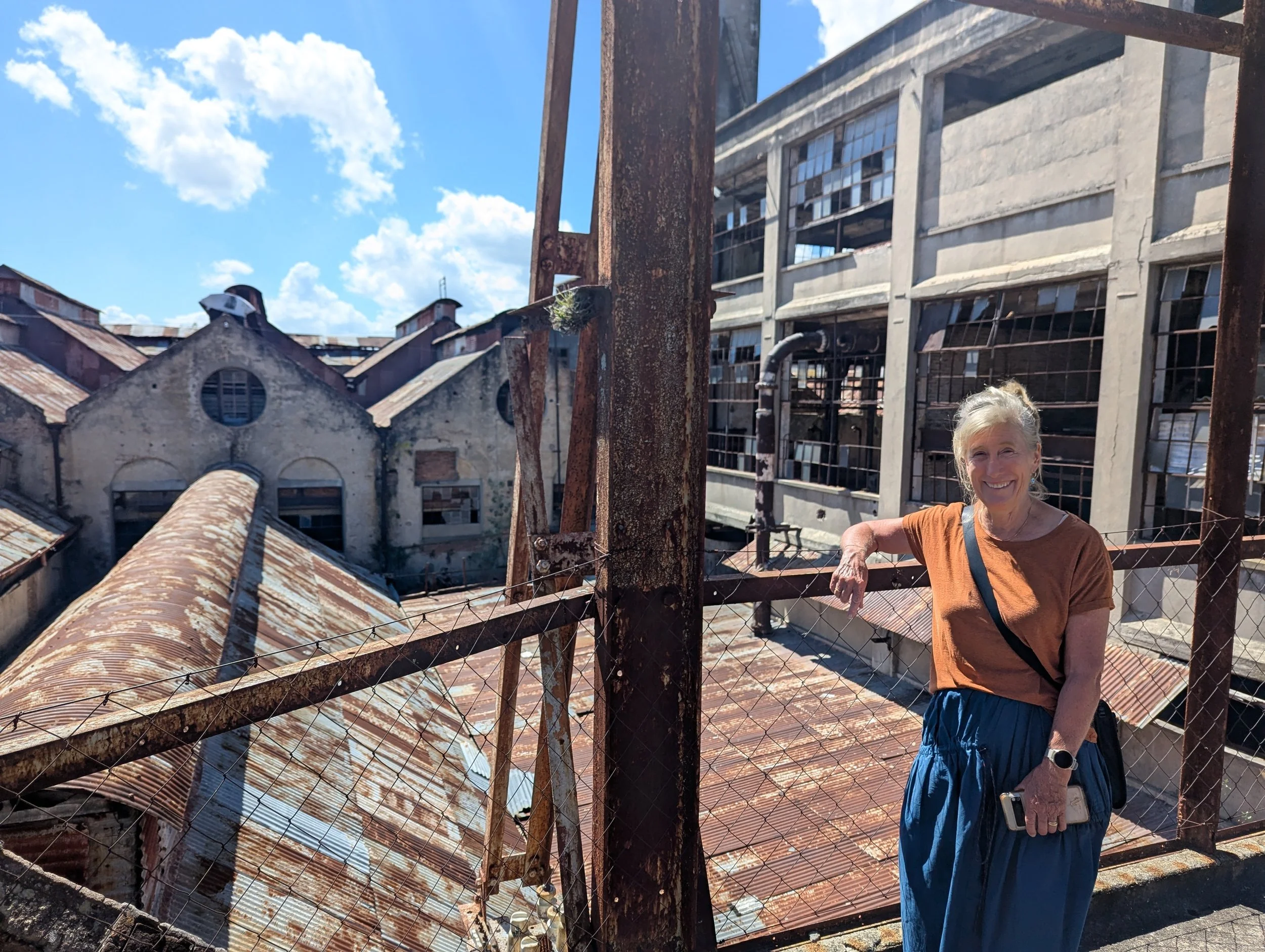
Exploring the historic complex at Frey Bentos
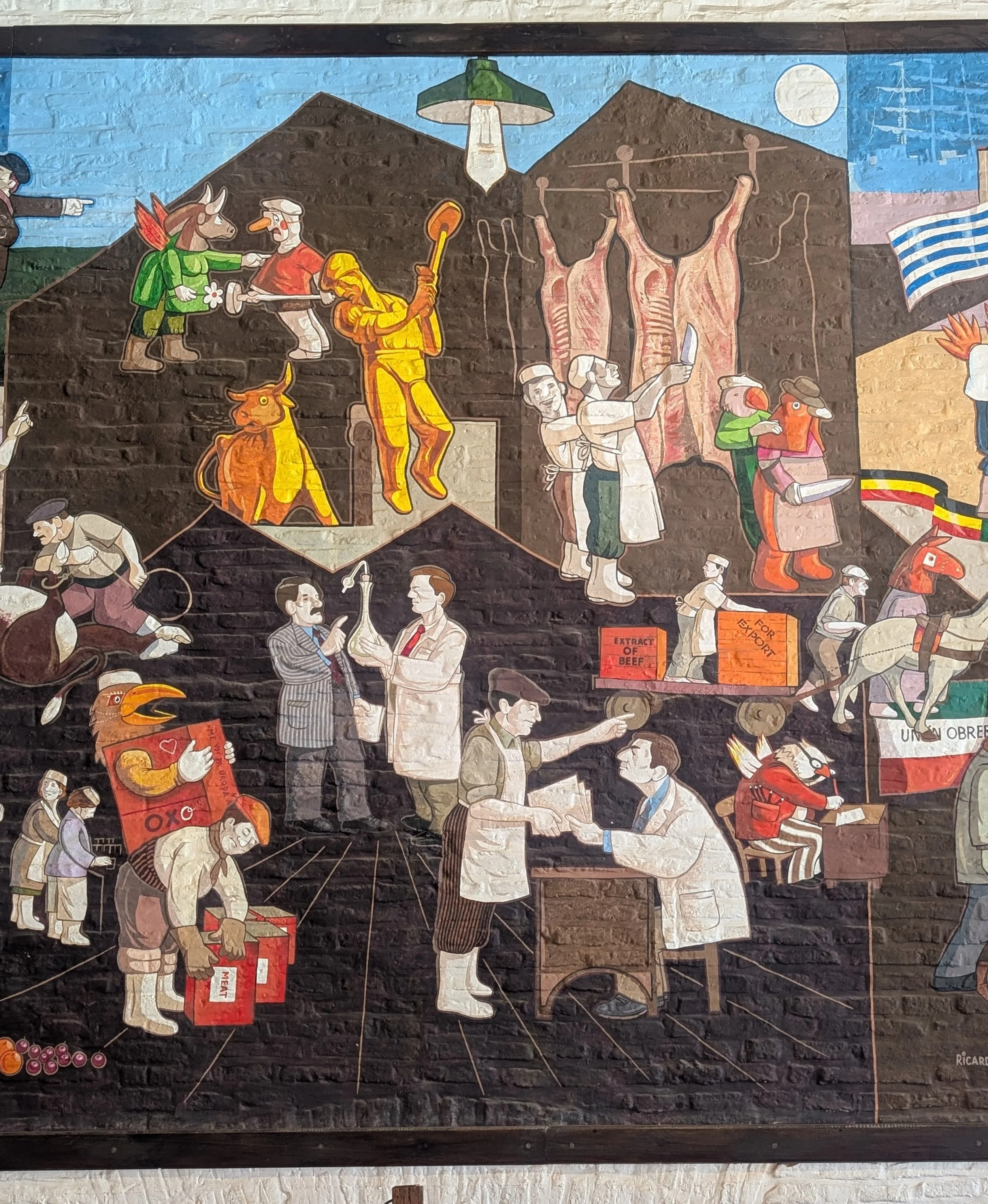
Mural on the wall of the meat packing museum
It was definitely a fascinating place to visit and we appreciated the informative English language tour (provided by a young German student on a work exchange program).
Next, we were off to find a place to sleep. Luckily, the southern coast of Uruguay was covered with places to camp. They ranged from bluff top sites with a view of Rio de Plata to beachside.
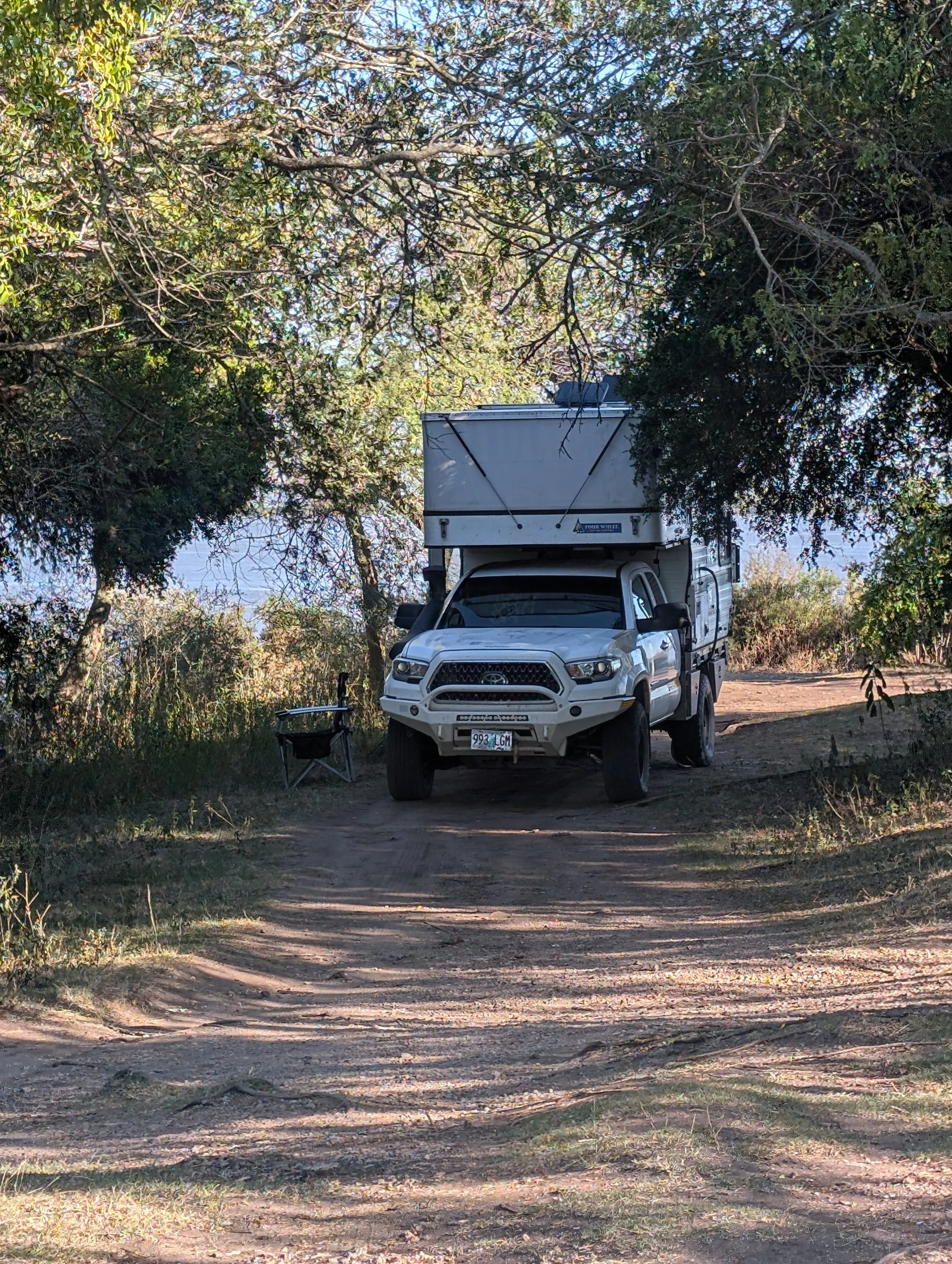
Blufftop site above Frey Bentos
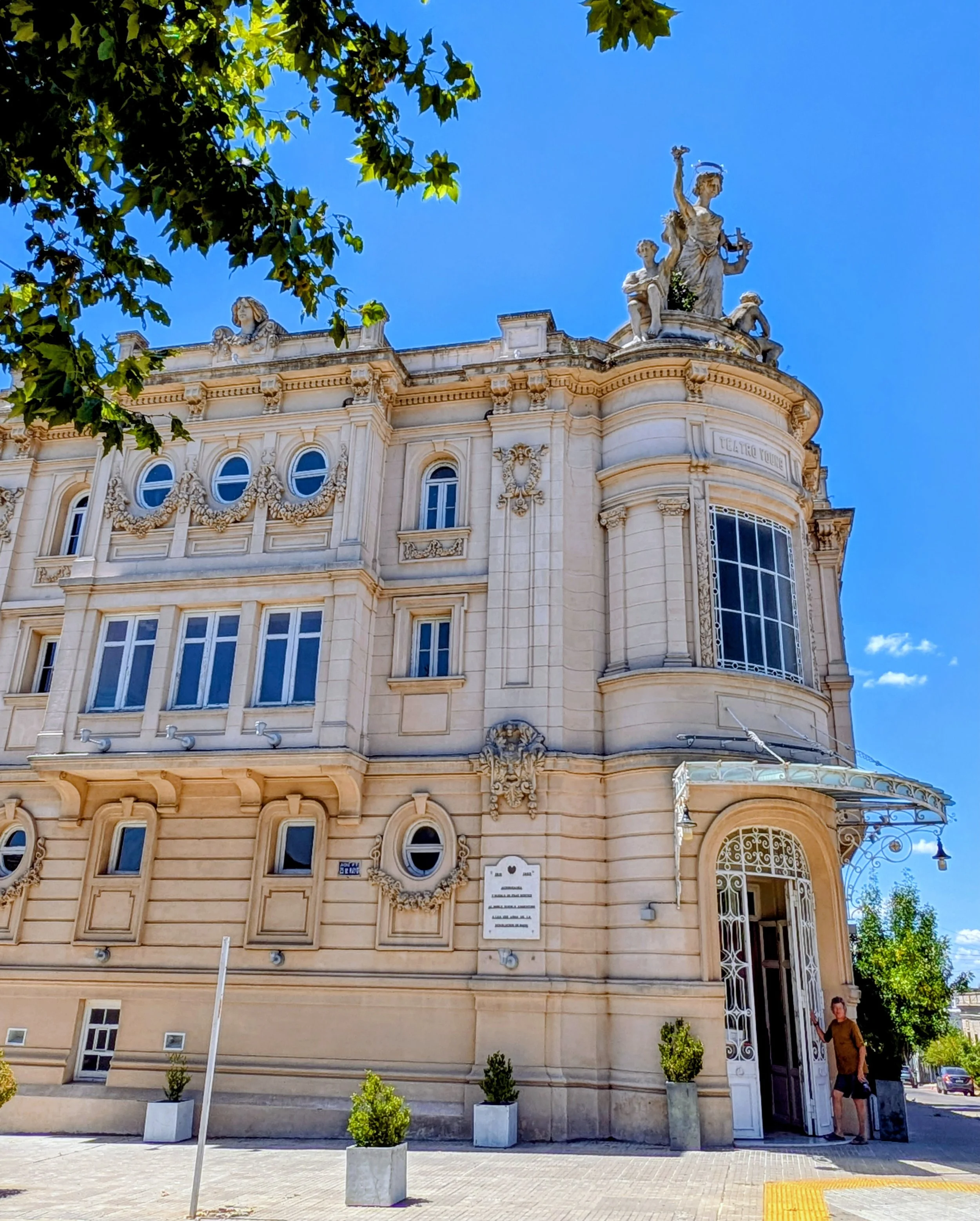
Historic theater in the town of Frey Bentos
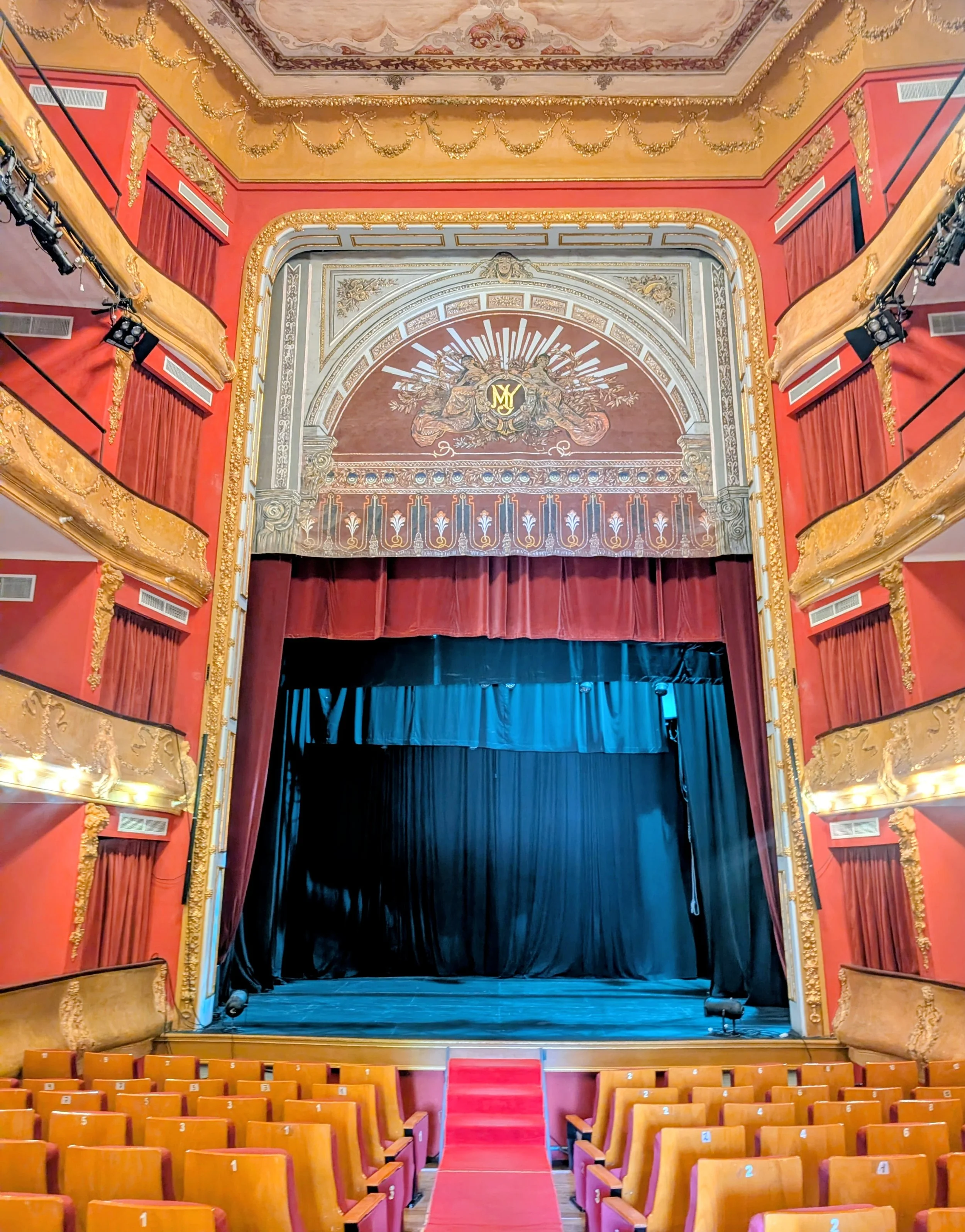
The caretaker graciously allowed us to peek inside - Dawn always loves a theater.
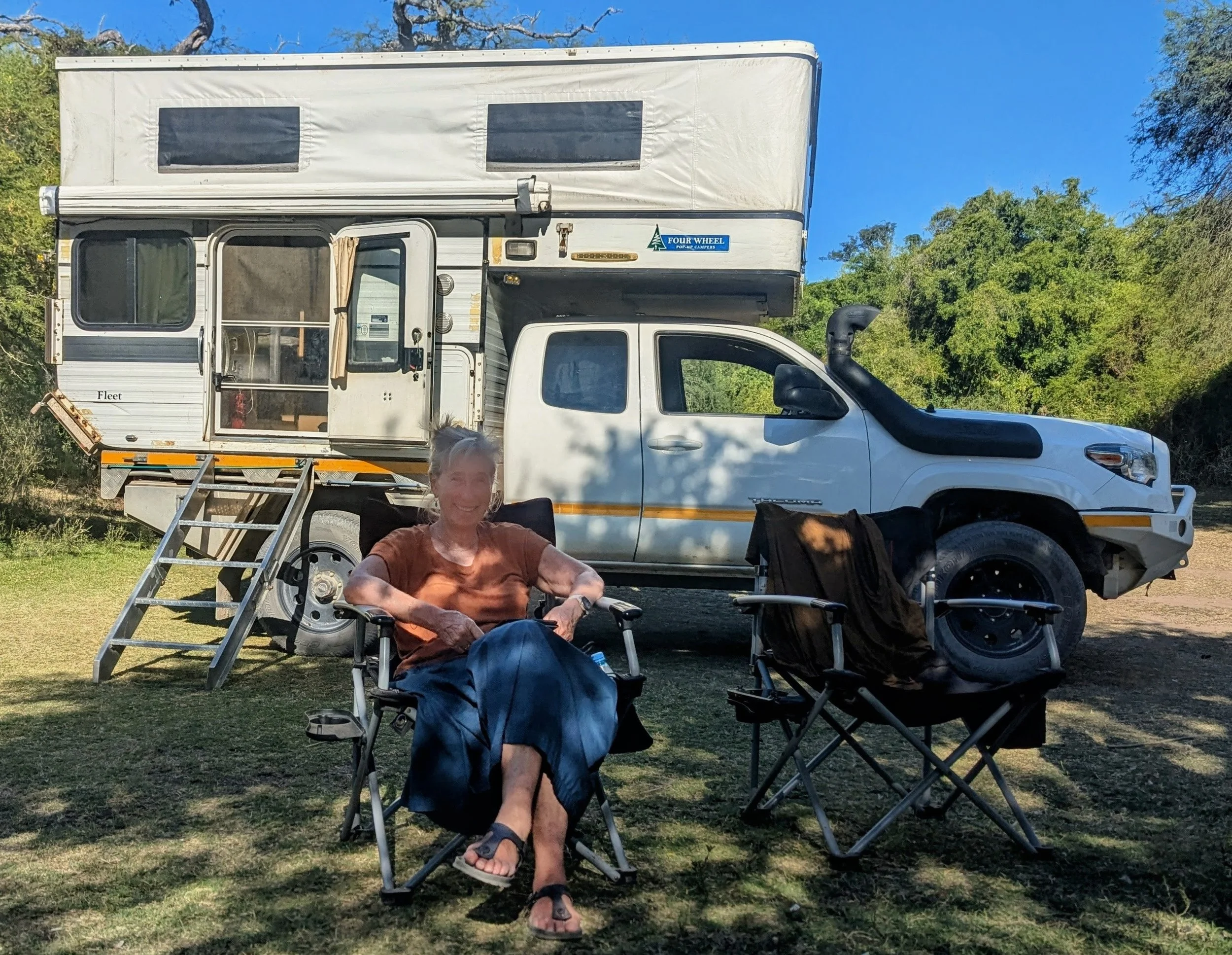
Enjoying the breeze at camp
Our next stop was Colonia del Sacramento. Established in 1628 by Portugal, the town’s strategic location directly across the estuary from Buenos Aires meant it changed hands over seven times between the Portuguese and Spanish as the two powerful nations fought for power in the region. Finally in 1828, the British helped broker a peace deal that established an independent Uruguay, neutral to both Argentina and Brazil.
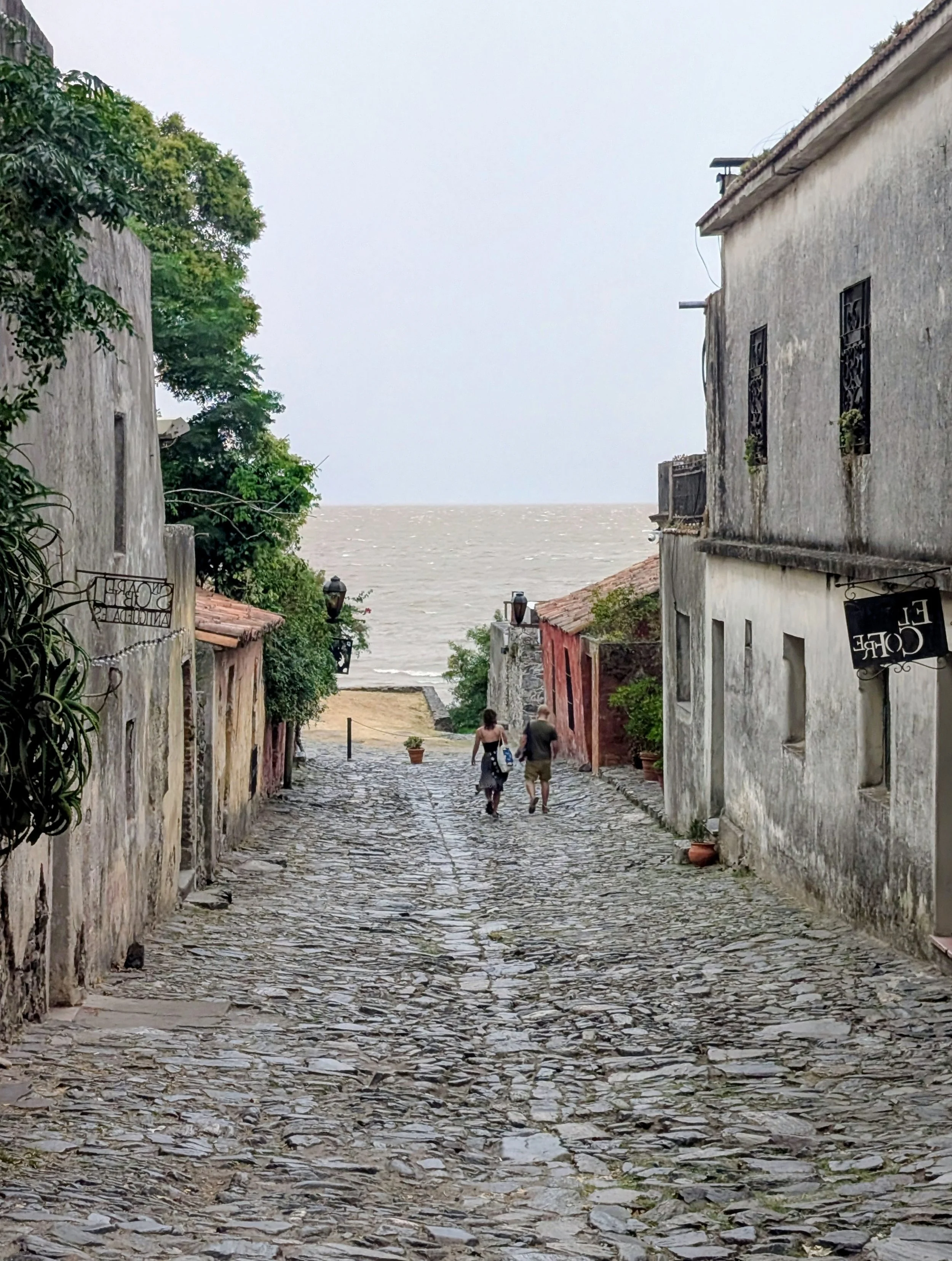
Cobbled street in Colonia del Sacramento - we learned that streets built by the Spanish featured a central drainage line, whereas the Portuguese favored a domed construction with streets draining down the outer edges. This street was built by the Spanish.
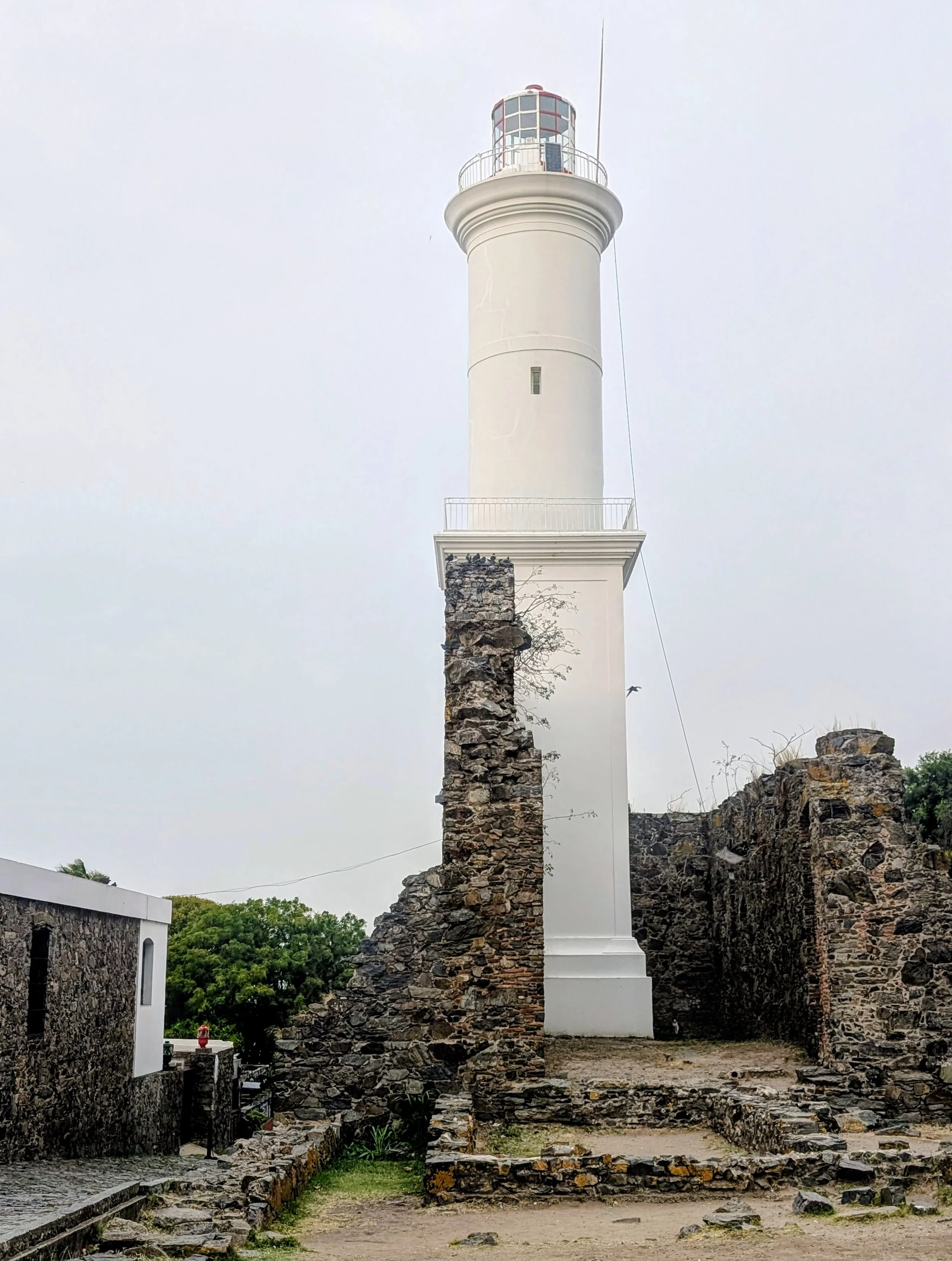
Lighthouse built in the mid 1800’s on top of the foundations of a Portuguese convent.
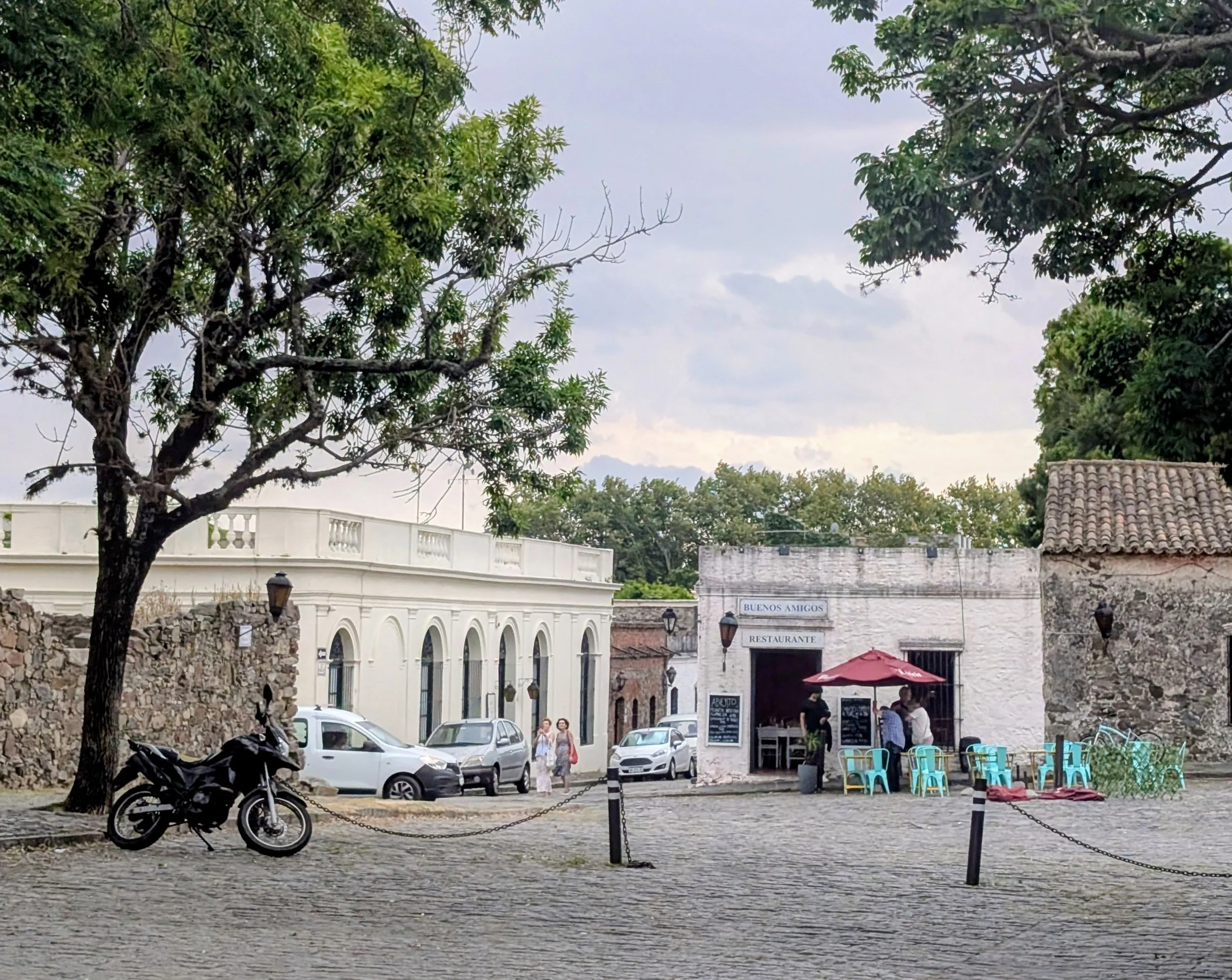
Central historical square of Colonia del Sacramento
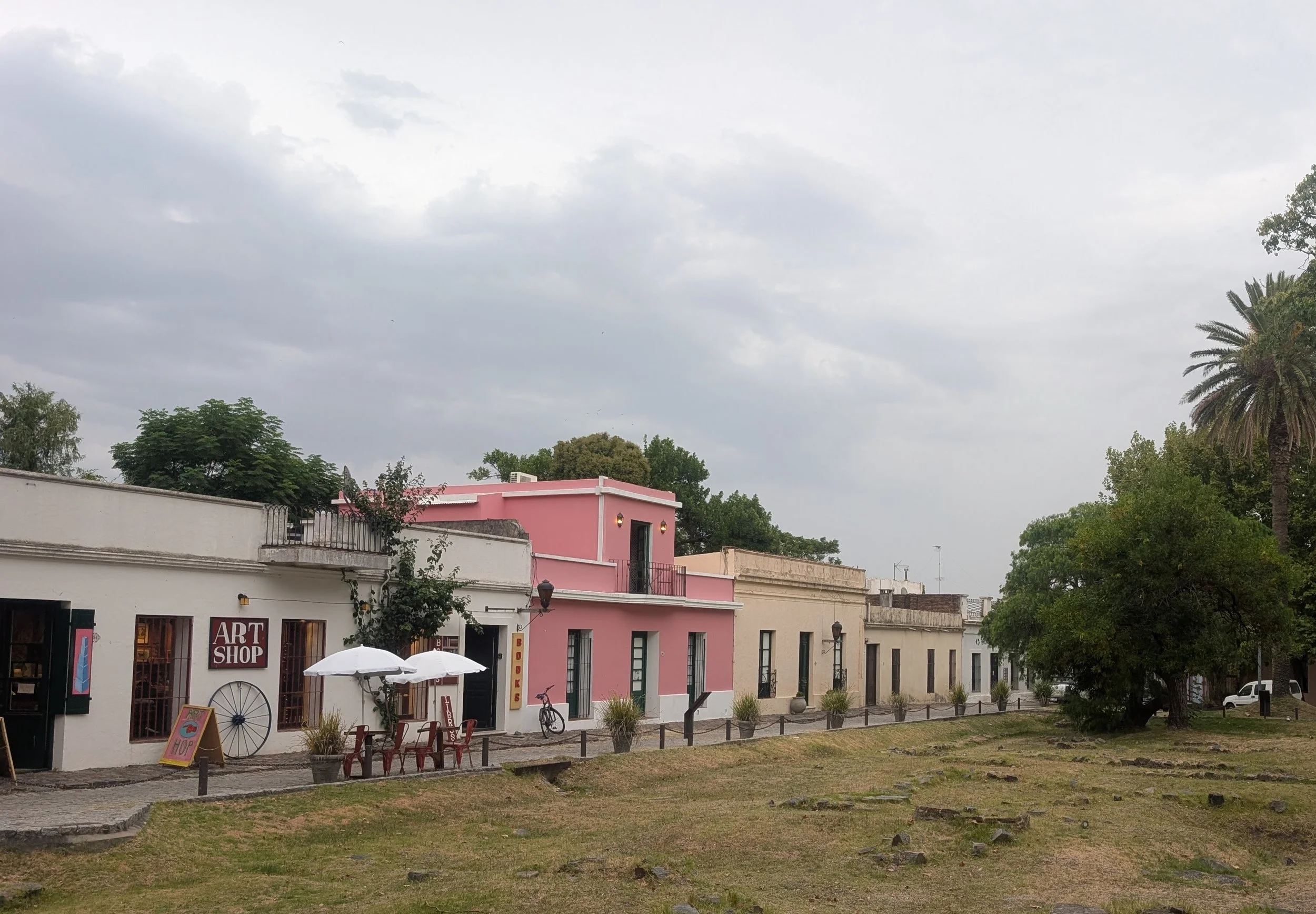
The town was an appealing place to wander
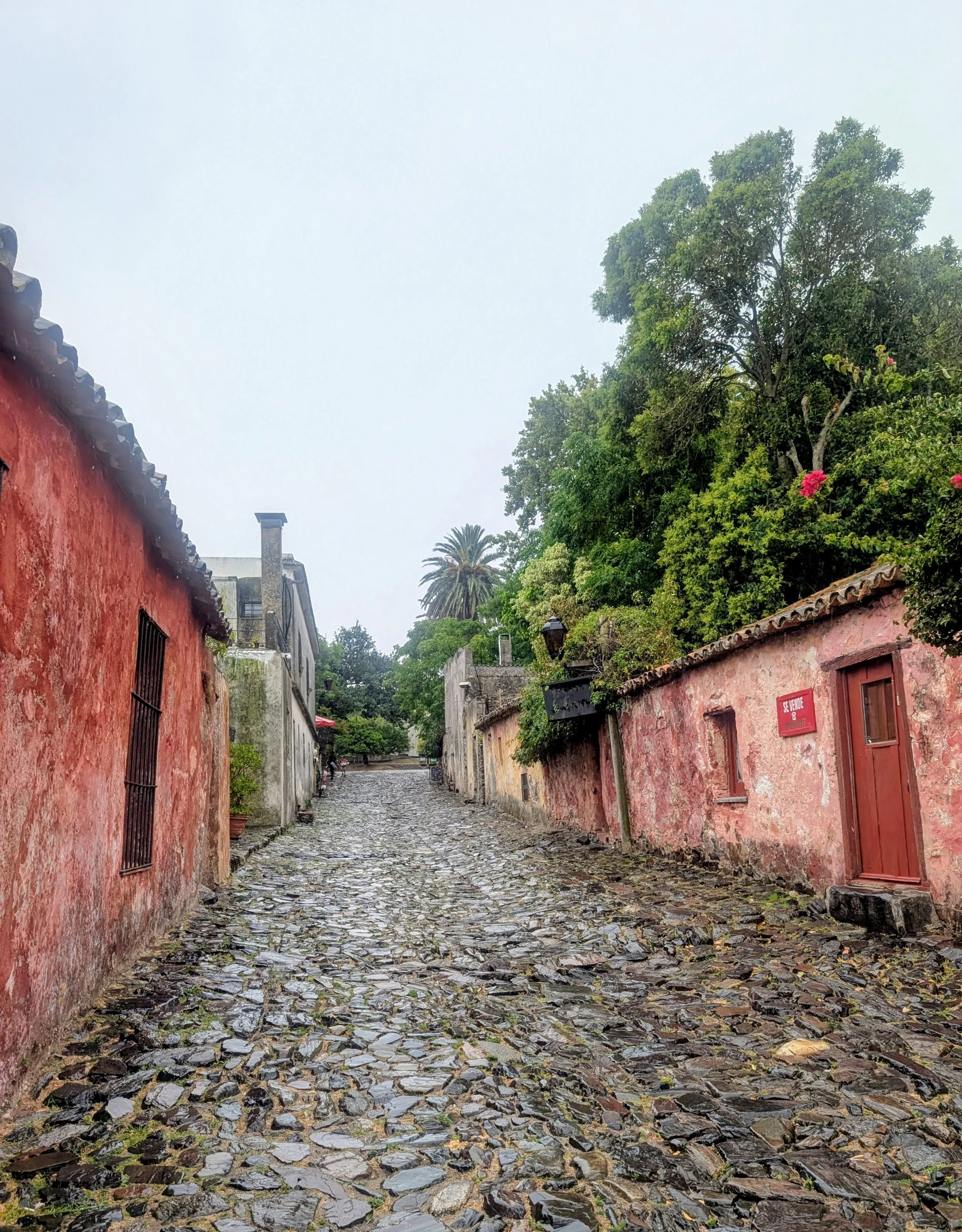
A Portuguese - built cobbled street
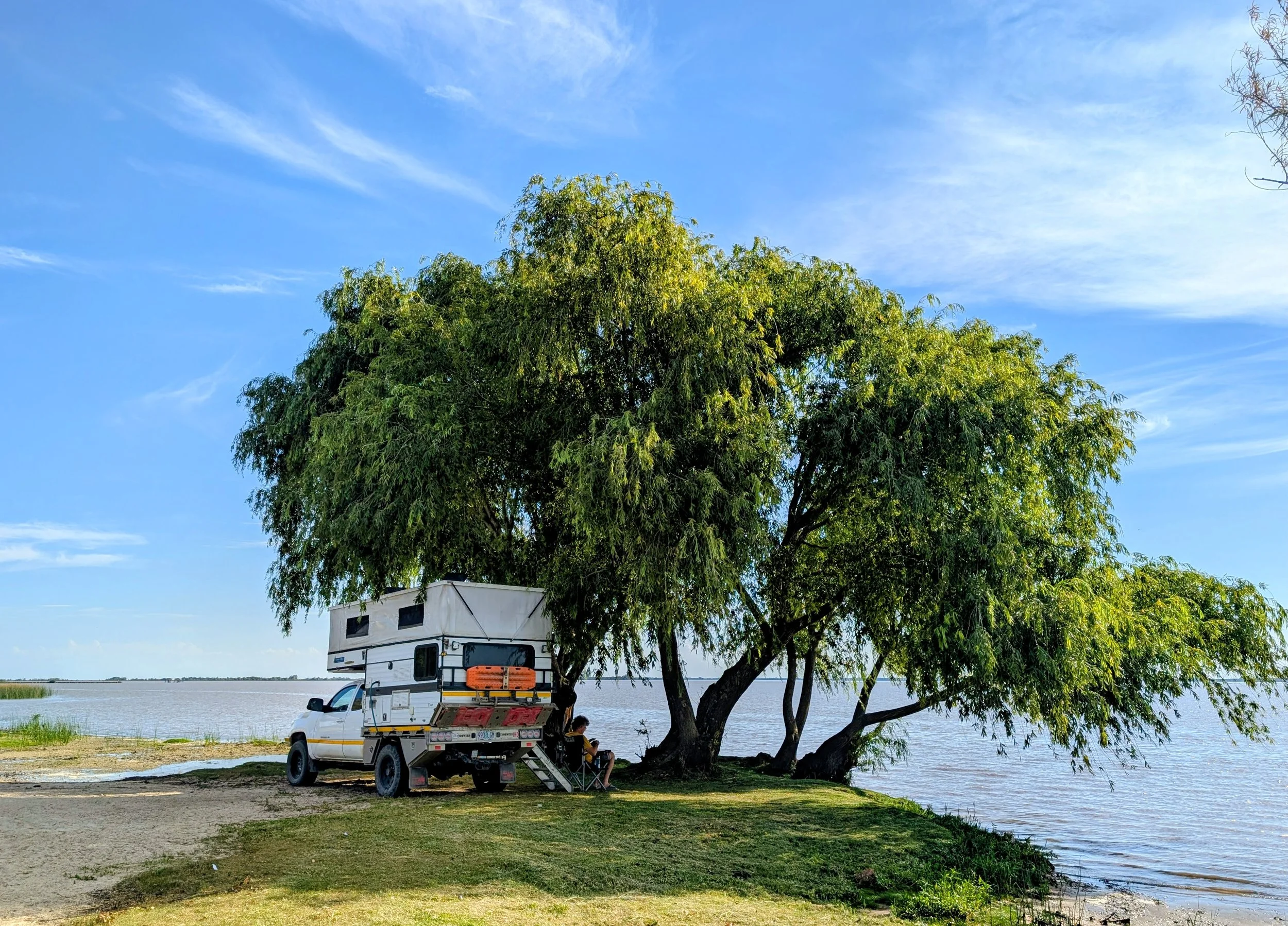
Beach side camp, with the advantage of shade.
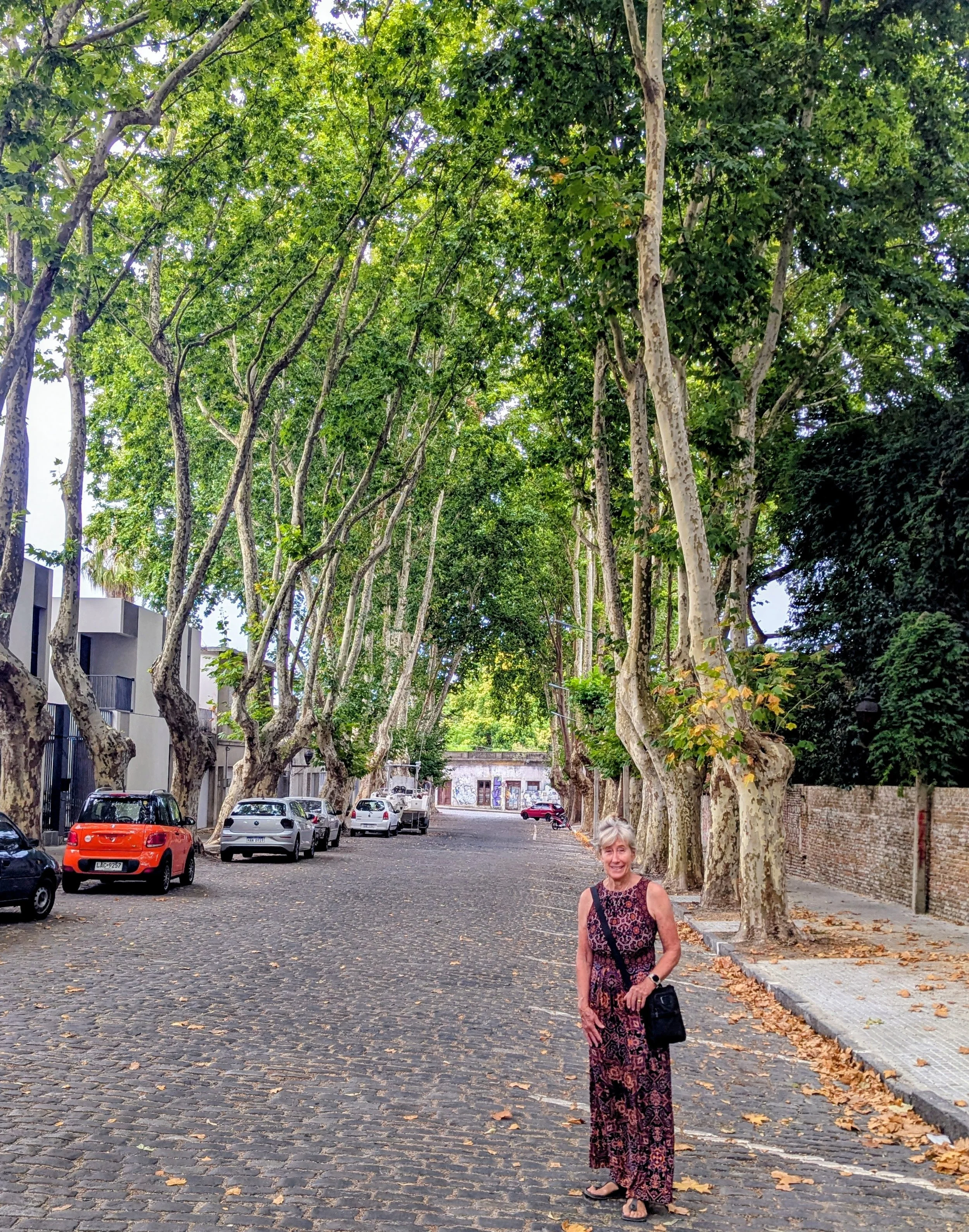
Day two of exploring the city, Dawn is off to find an art museum
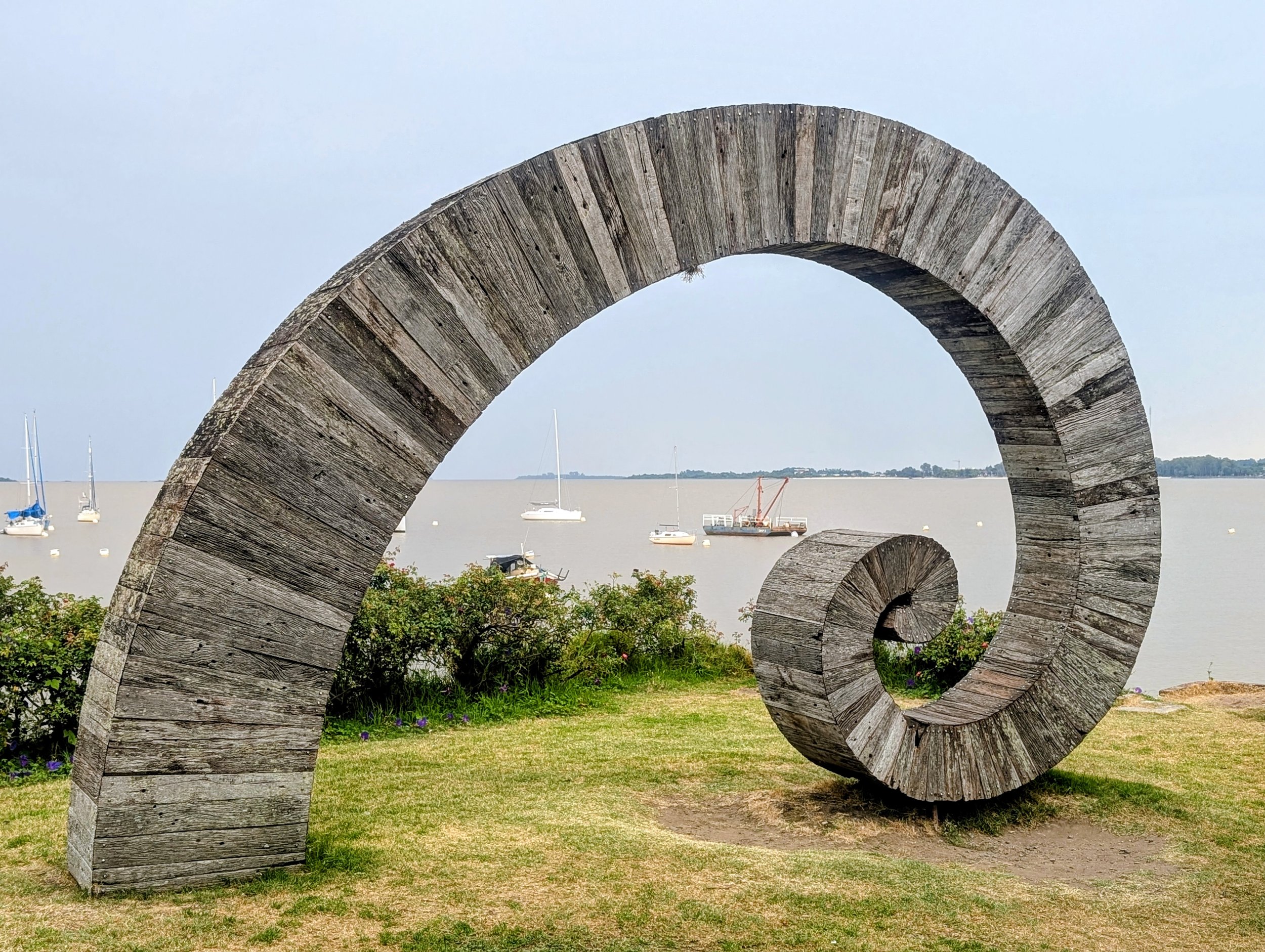
She found it
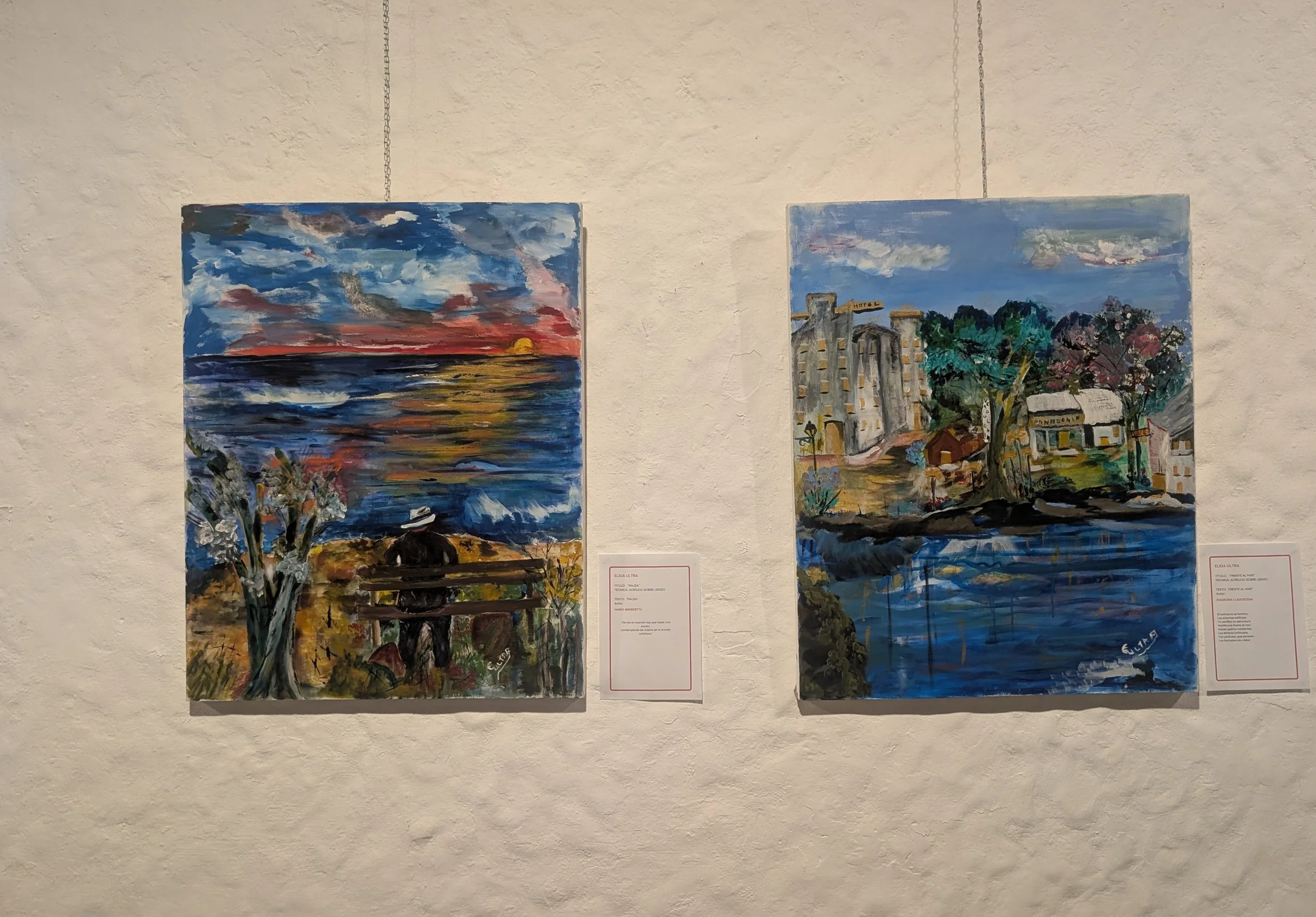
Featuring Uruguayan painters
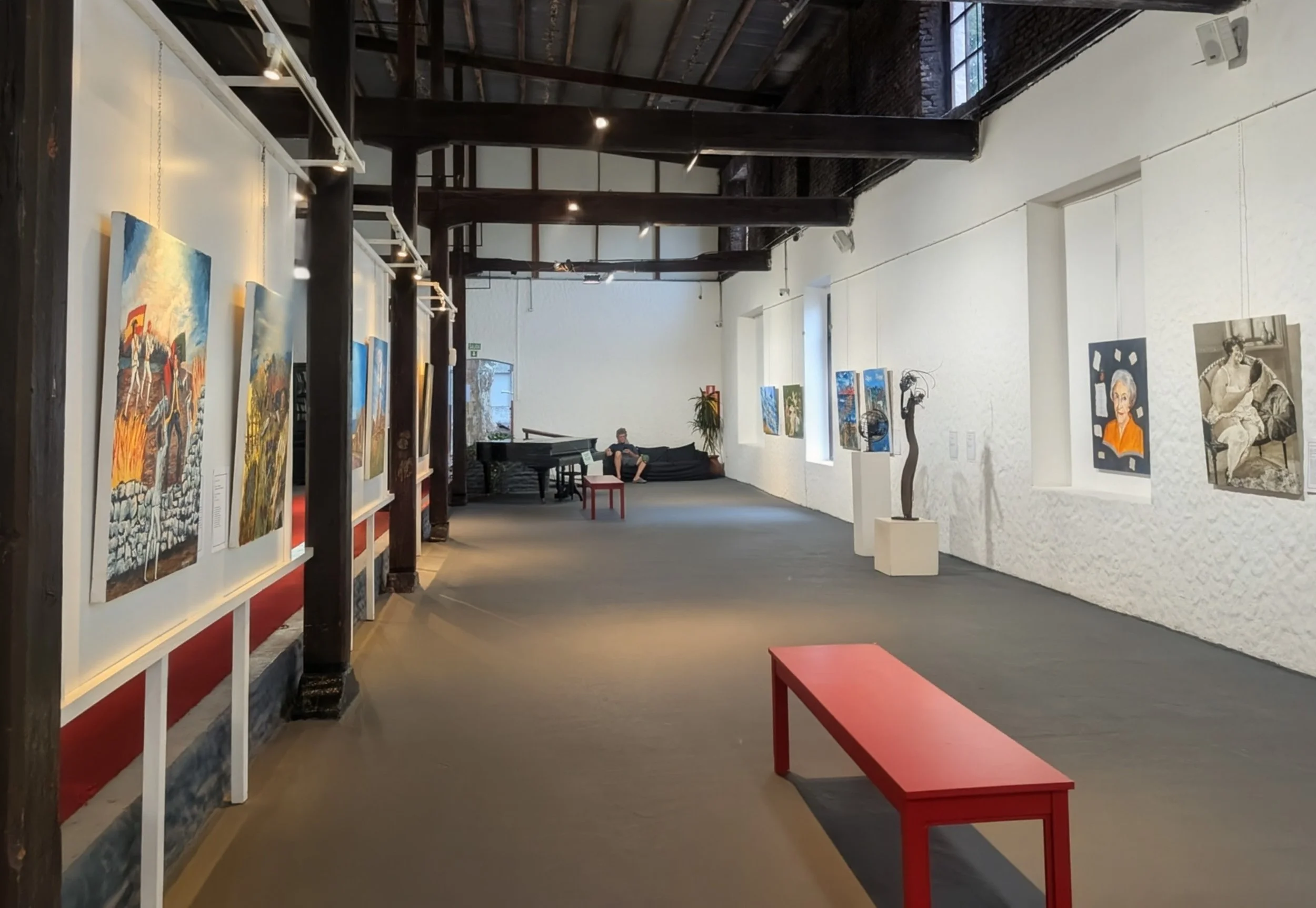
What Andy does while Dawn explores art museums (find him in the back reading his kindle on a sofa)
In general, we found remote camping spots most nights. Our most frequent company was evening fishermen, or families gathering for a sunset viewing. The Uruguayans have a rather sweet cultural tradition of clapping as the sun makes its final descent.
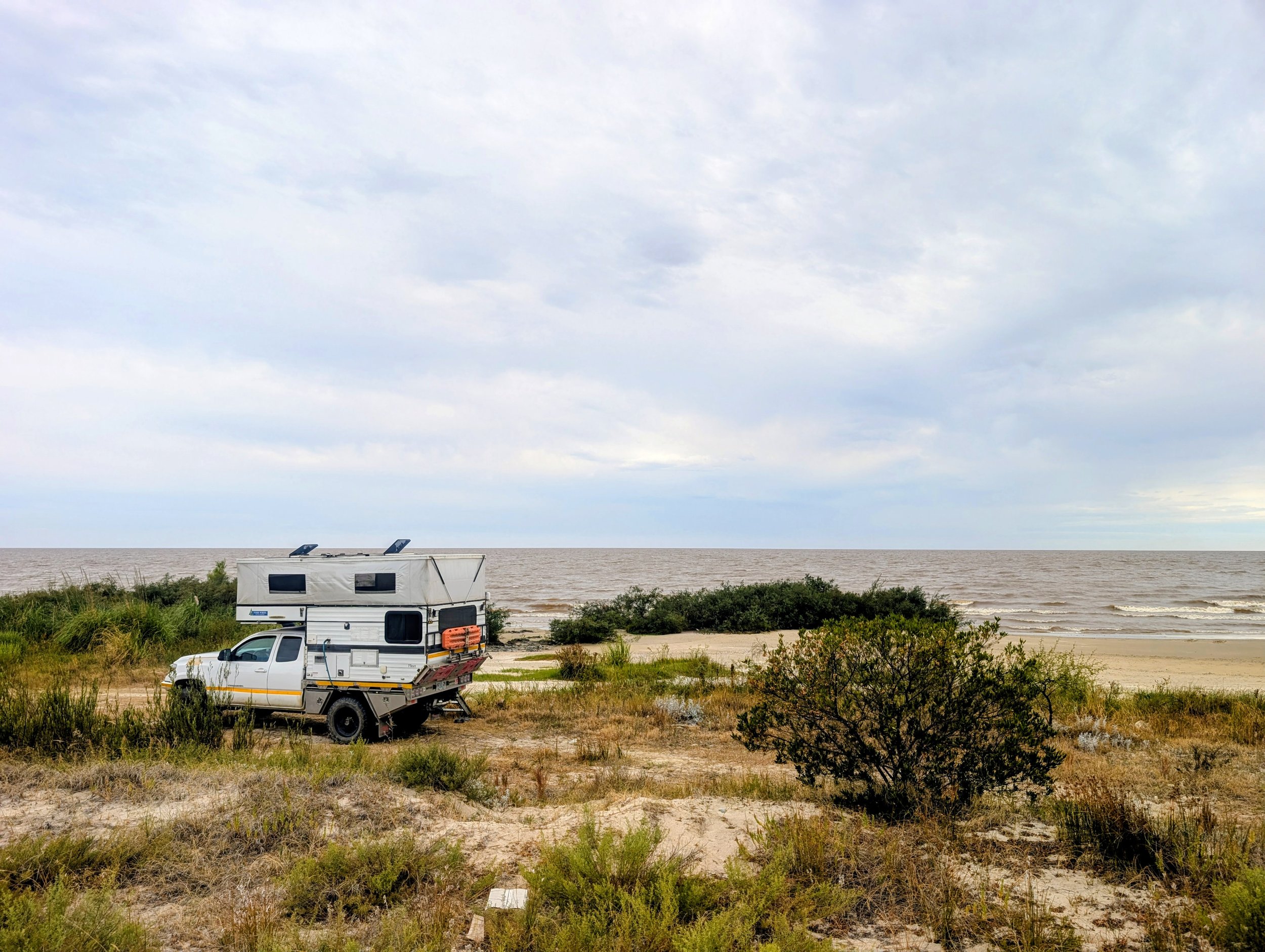
Although at this point still technically an estuary, we felt like we were on the ocean. The Rio de Plata (silver river) was distinctly brown.
We had only just begun to explore Uruguay, but we were approaching a scheduled trip home to visit friends and family. We had planned our route so that we could fly in and out of Uruguay as the country issues free one year vehicle permits for overlanders which makes the paperwork easy to leave your vehicle for a bit.
We had heard about UY Storage run by German brothers out of Montevideo. They build overland vehicles, run an excellent repair service and store vehicles for a nominal fee on their property ($3 a day). We made our way there, left the truck and took the bus into Montevideo for some sightseeing before we flew home.
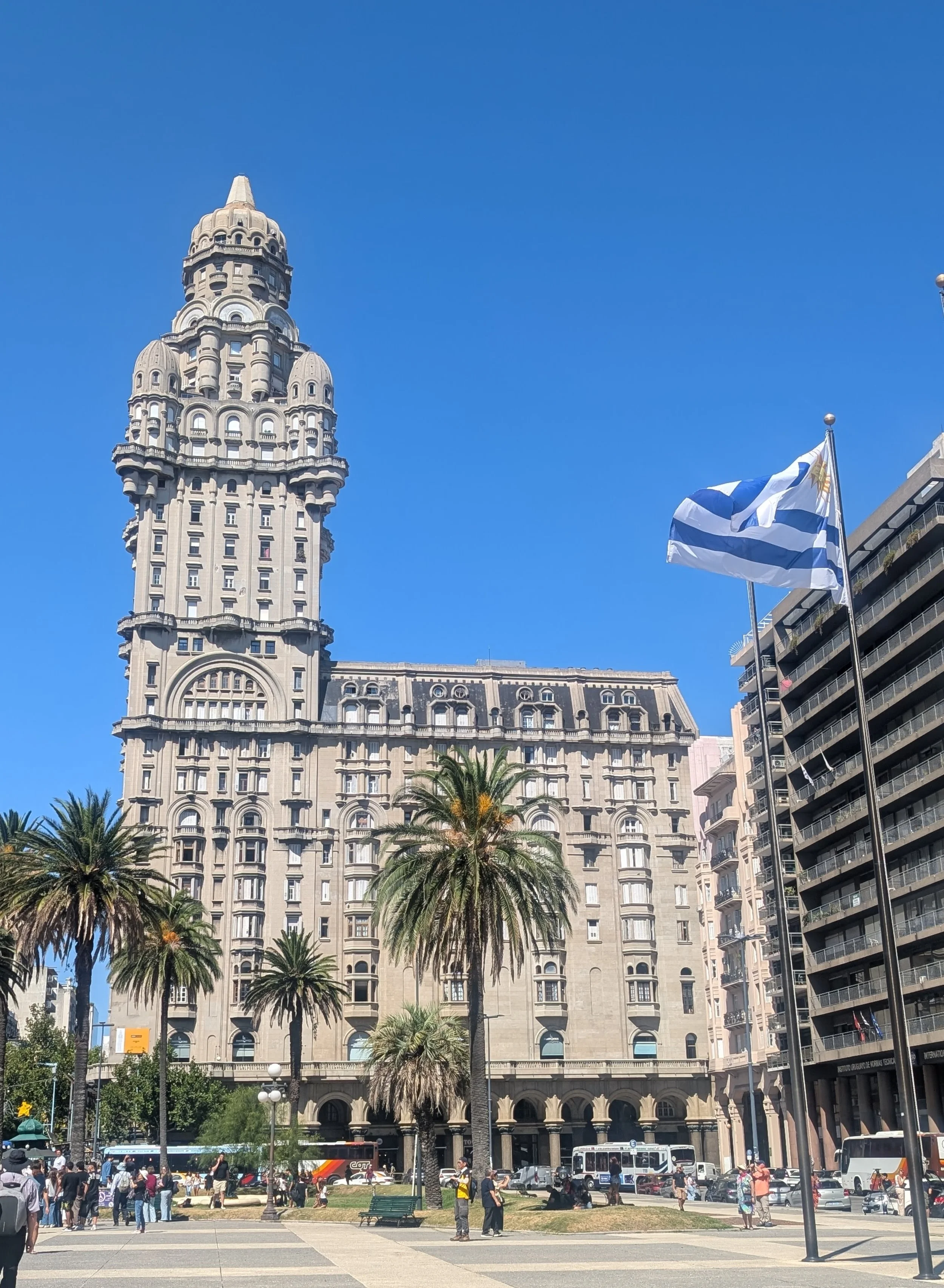
Palacio Salvo, an iconic landmark building in the center of old town Montevideo. We lucked out on booking an Airbnb apartment inside it.
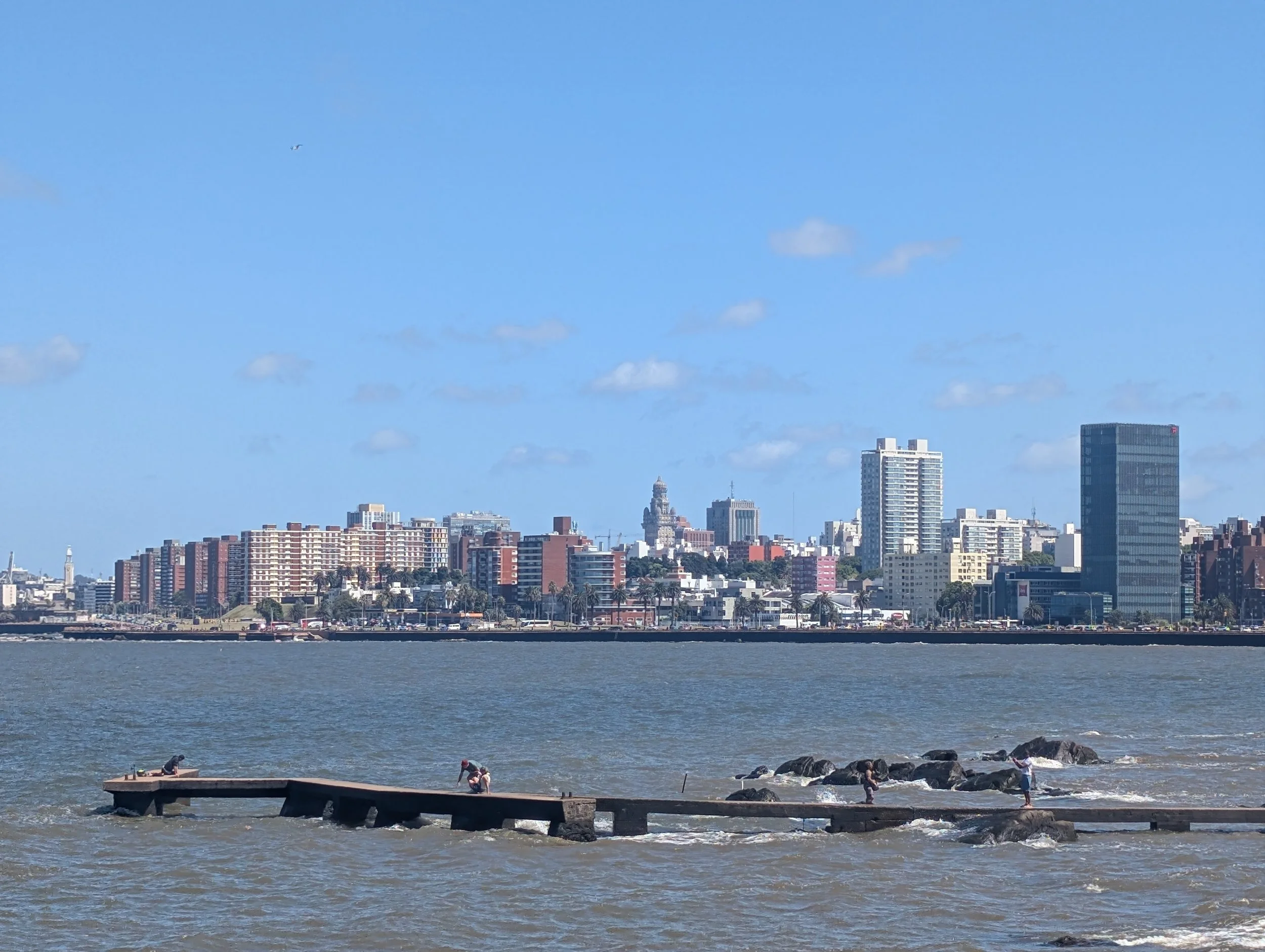
Montevideo sky line
We had a great time in Montevideo. It was a safe, walkable city with a lot to see. We spend multiple days walking different sections of the Rambla, a broad paved waterfront path stretching for 30 km.
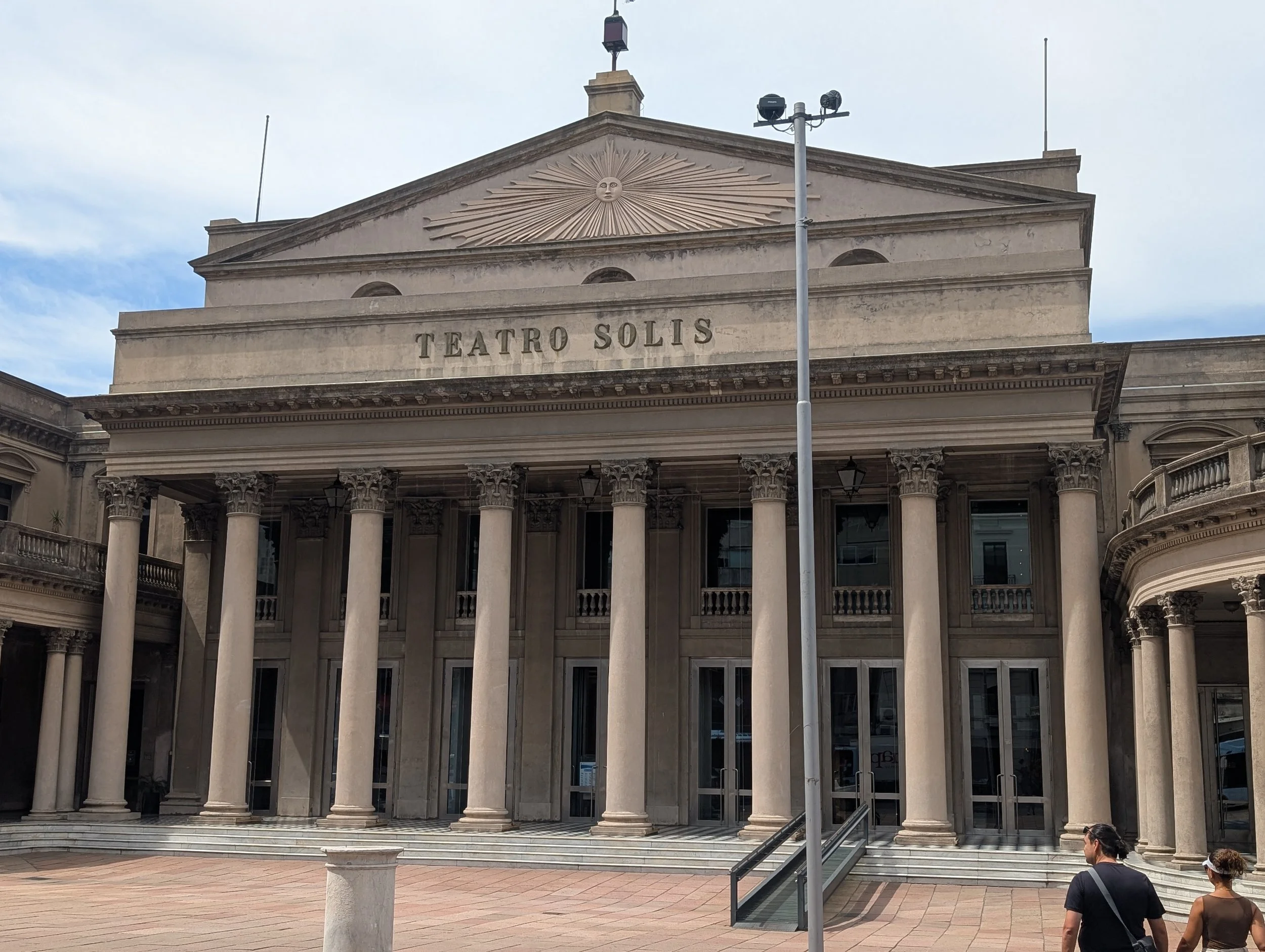
Old downtown theater
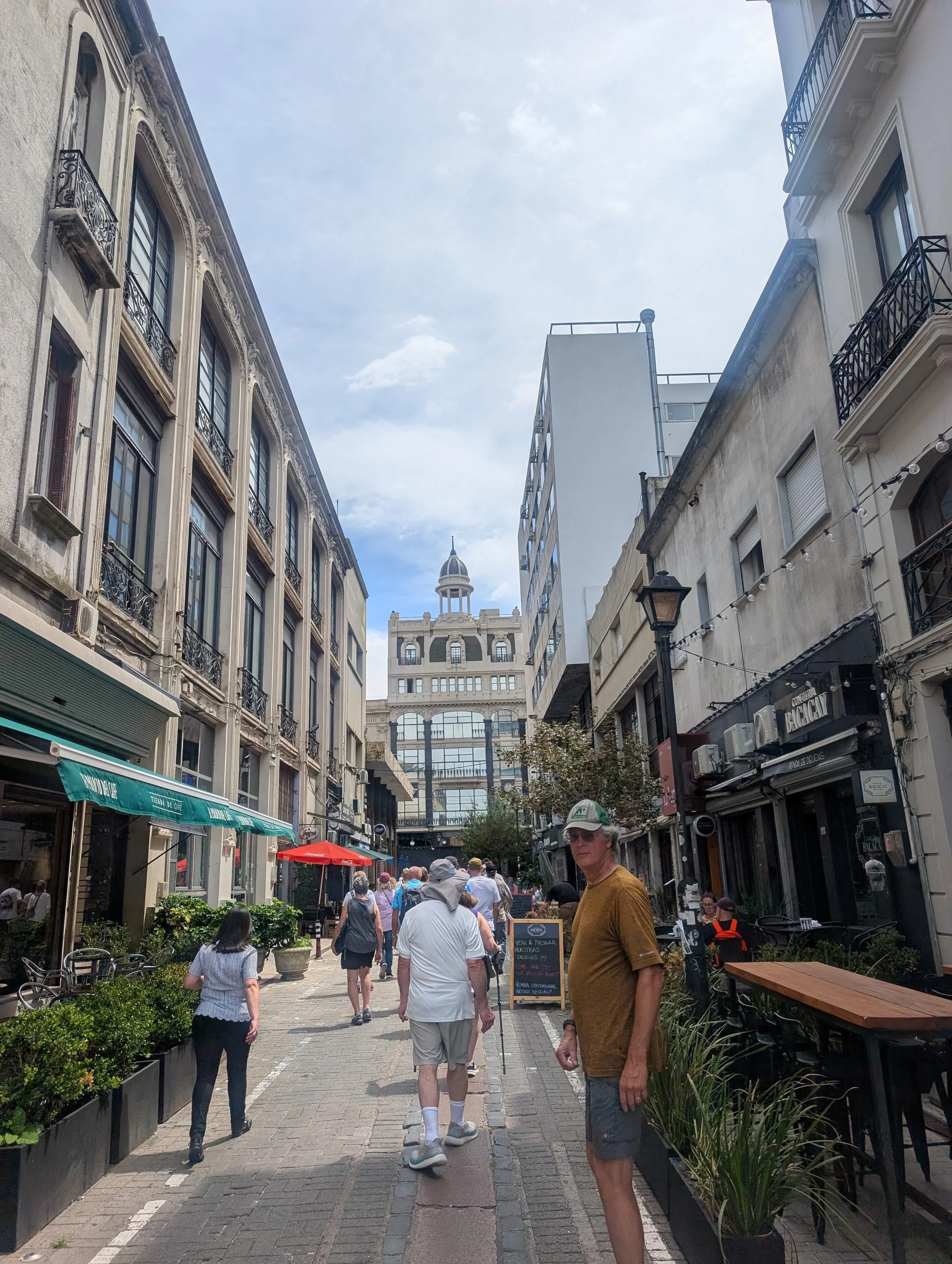
Old town pedestrian cobbled streets
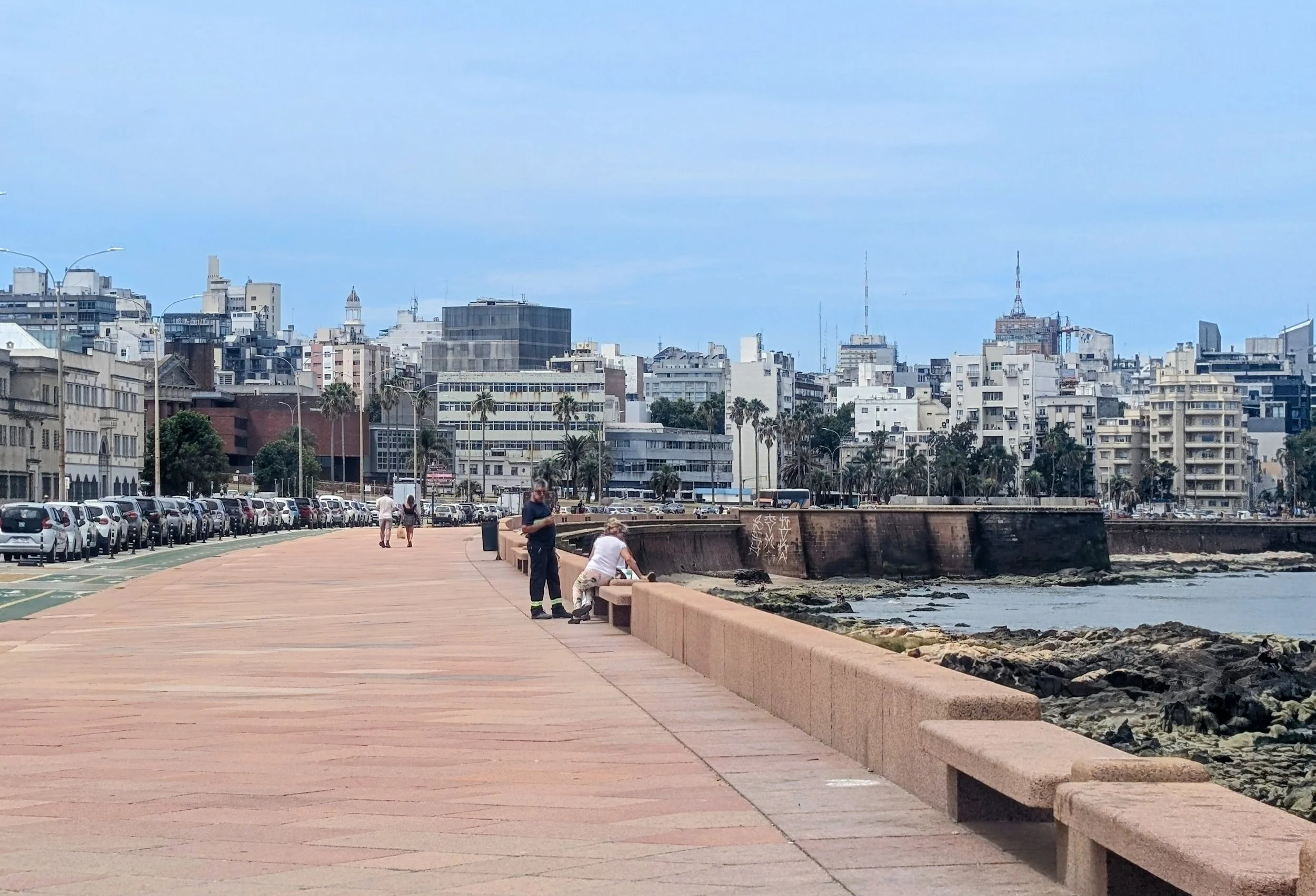
The Rambla - where everyone gathers to walk, jog or eat lunch
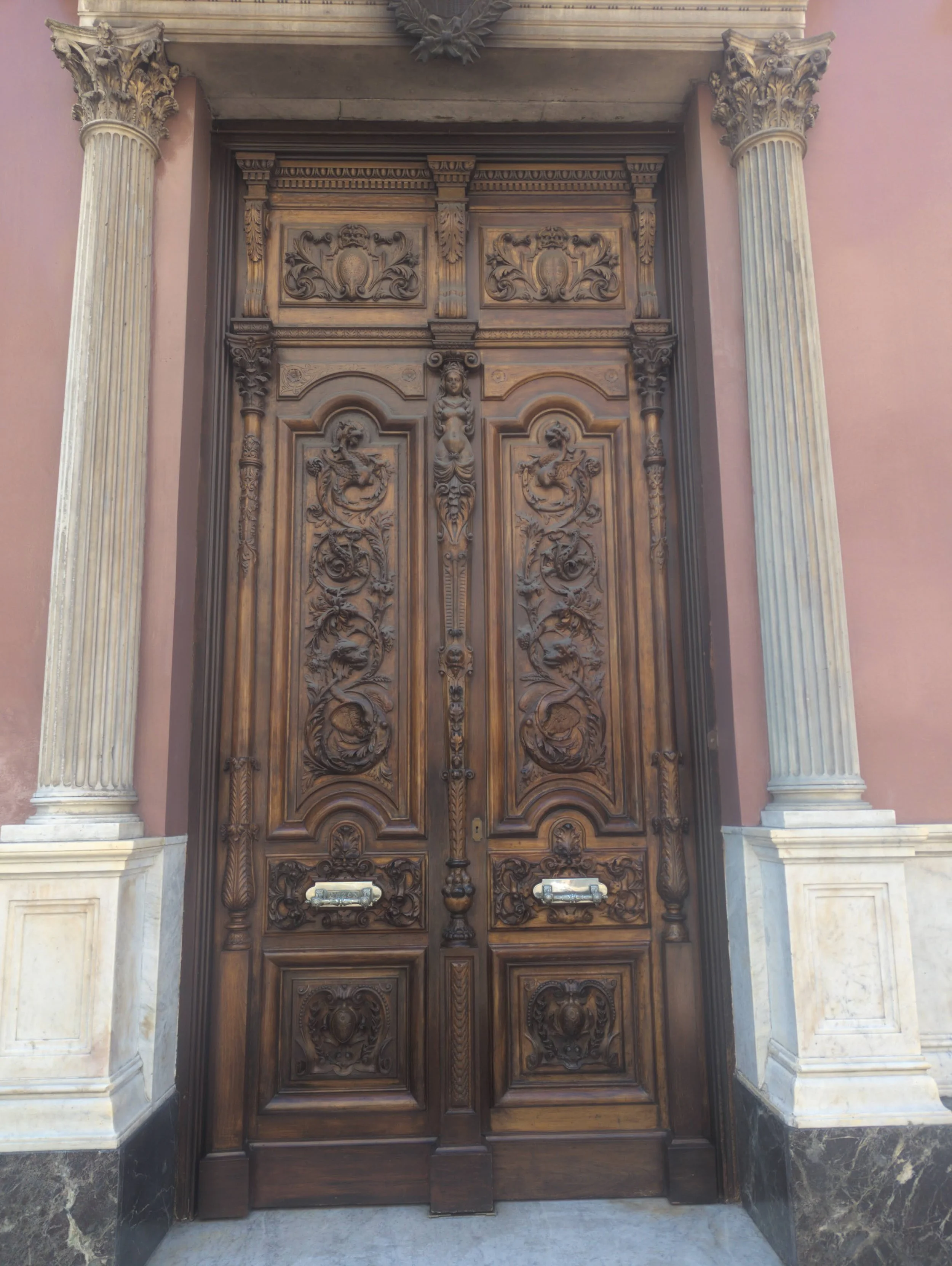
Andy loves an old door
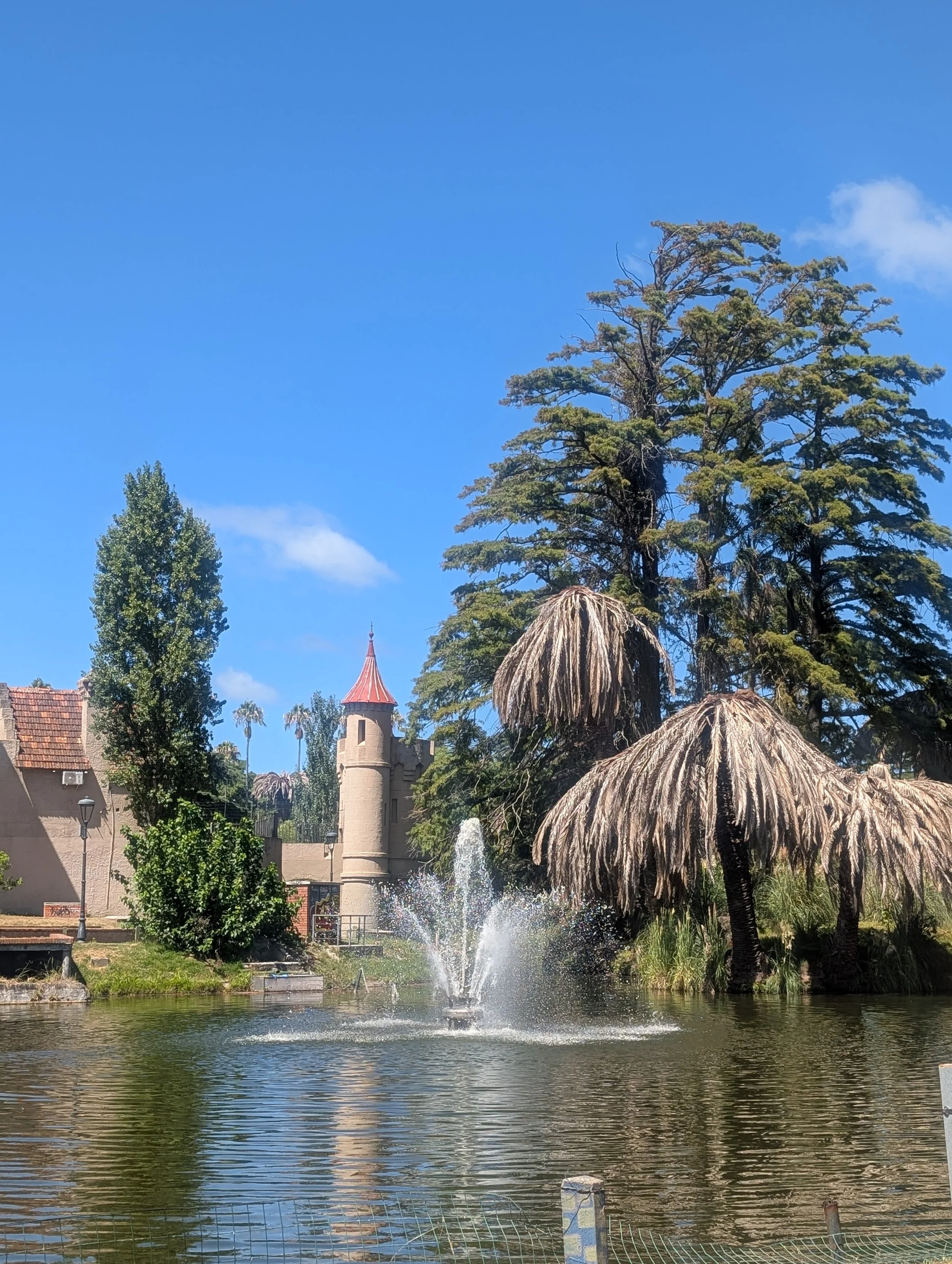
City park we found on one of our explorations
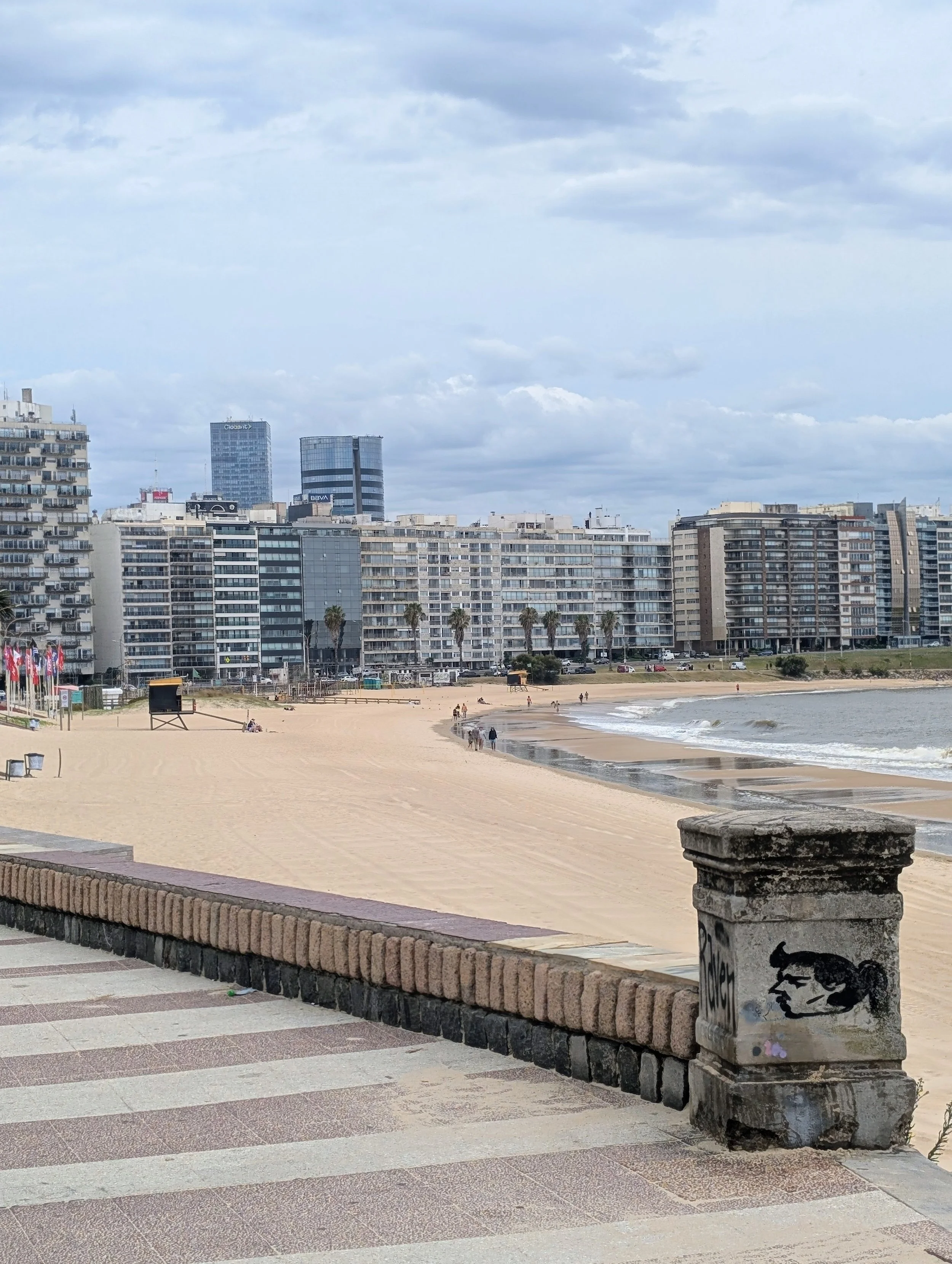
Another section of the iconic Rambla
We returned home for three months, diving into our other life. We spent time with family and friends and continued work on our recently purchased property in Bend, Oregon where we were building a small guest apartment and workshop.
Before we knew it, we were frantically sourcing the needed parts to bring back to UY in Uruguay and Felix who had agreed to complete some much needed repairs and maintenance on the truck. We stuffed a new radiator in the biggest suitcase we could find, wrapped a master brake cylinder in clothes, put inner and outer tie rods in Andy’s carry on back pack (caused some concern with TSA in Bend but luckily the supervisor recognized the parts and liked our story so let us through), packed front body mount bushings, a fan clutch and 7 liters of differential and transmission oil. It was a game of tetris trying to fit everything and stay underweight (which is why the tie rods went in Andy’s carry on back pack). But we made it and arrived safely back at UY in Uruguay.
Very experienced with these sorts of tasks, Felix accepted the pile of parts and got to work.
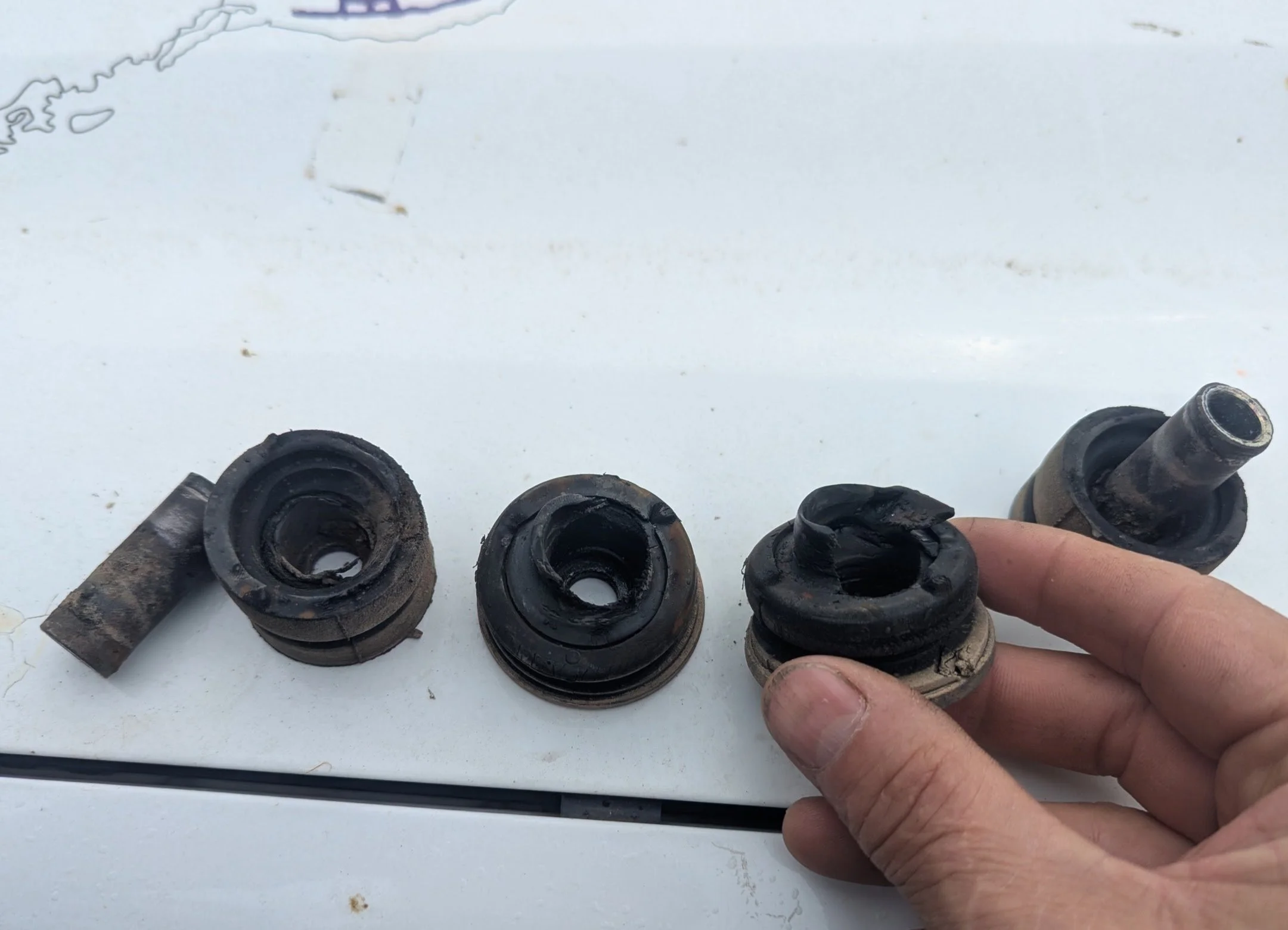
One of the parts needing replacing is the front body mount bushings completely worn out
Andy installed new front body mount bushings hoping to resolve a embarrassingly loud squeak in the front end. Unfortunately after installing the new bushings, he was able to confirm the problem is worn out lower control arm bushings. They are also all cracked. Unfortunately we will have to carry new new LCAs from the USA next time we come back.
Felix installed the new radiator (the old one suddenly developed a major leak while in Argentina and had been patched with paprika). Conveniently while the radiator was out, we also had him install a new fan clutch because a mechanic in Chile said that it was starting to slip. Since Felix had such a good shop we asked him to replace the front and rear differential fluids.
The Chilean mechanic also said one of our inner tie rods was starting to wear out so we brought back two sets of inner and outer tie rods for both sides of the front end figuring that sooner or later all of them needed to be replaced eventually.
Finally, Felix installed a new master brake cylinder which finally solved our soft brake pedal that's been plaguing us for about 20,000 miles.
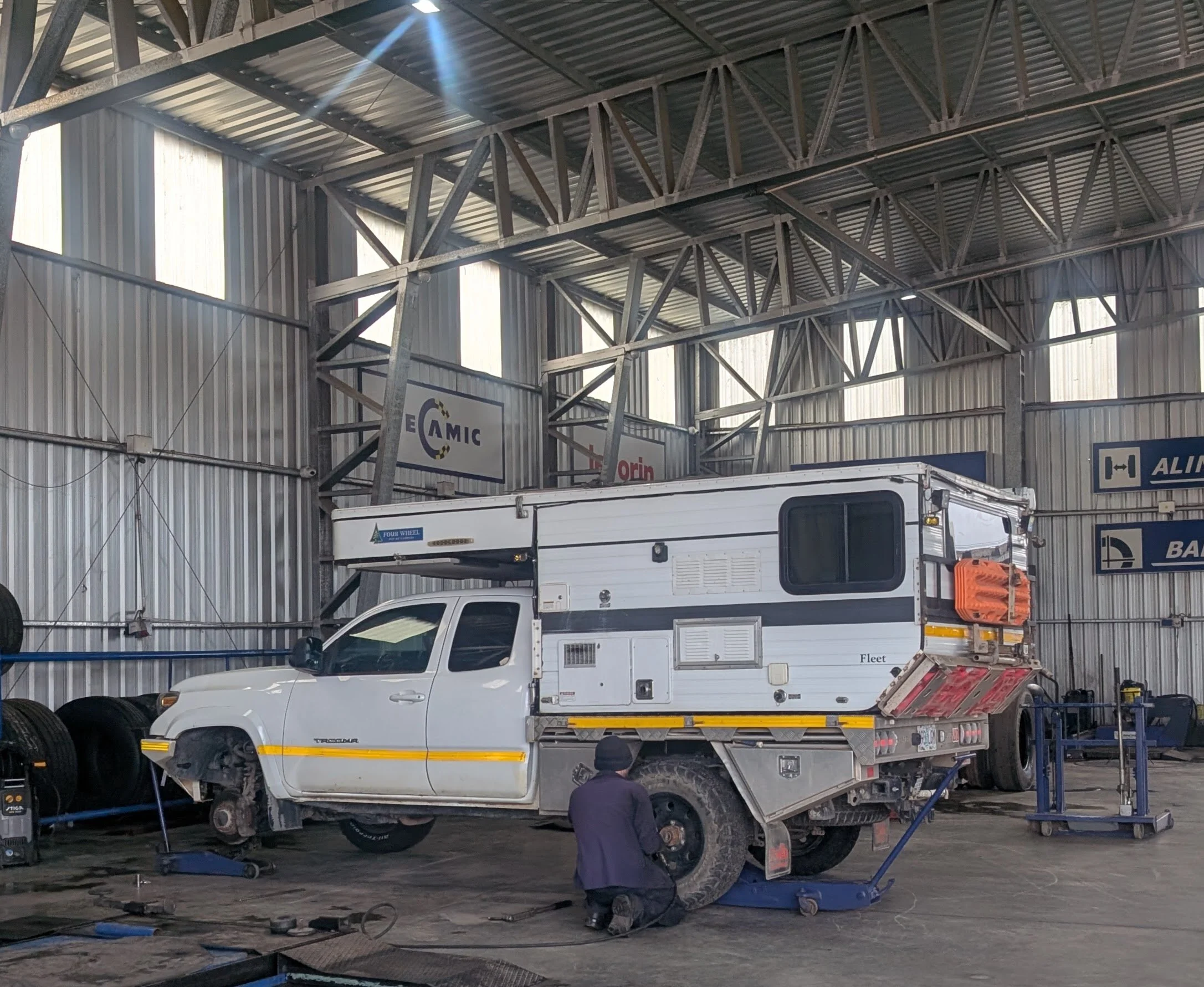
After only 31,000 miles our tires (Yokahama Geolandar M/T) were completely worn out. We replaced them with our original brand that we started out with, BF Goodrich KO2s, which previously lasted us 55,000 miles
Since the tires were worn out, with Felix’s help we sourced new BF Goodrich KO2s, an all-terrain tire that we've originally started the trip with and had a great experience with. While at the tire shop we had them align the front end.
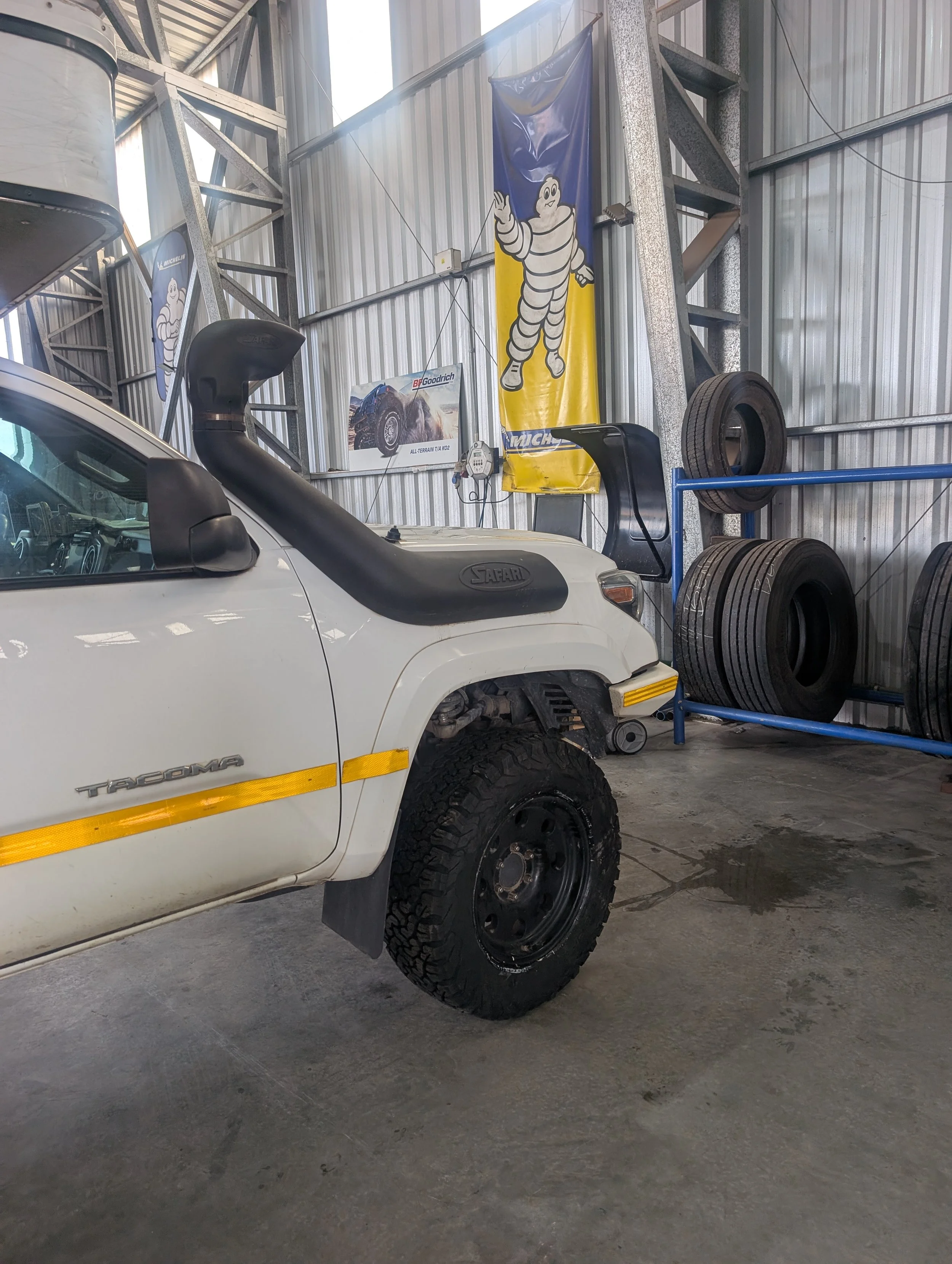
Despite the ridiculously high price, ($2400, inclusive of Uruguayan VAT and import taxes, we wished we could have brought some back from the US) the new tires look awesome!
After a 24 hour marathon shop session, we thought we were ready to go. Reminiscent of our many false stops in Argentina with our fuel lines, we tried to leave UY twice, but each time had to return to take care of additional issues.
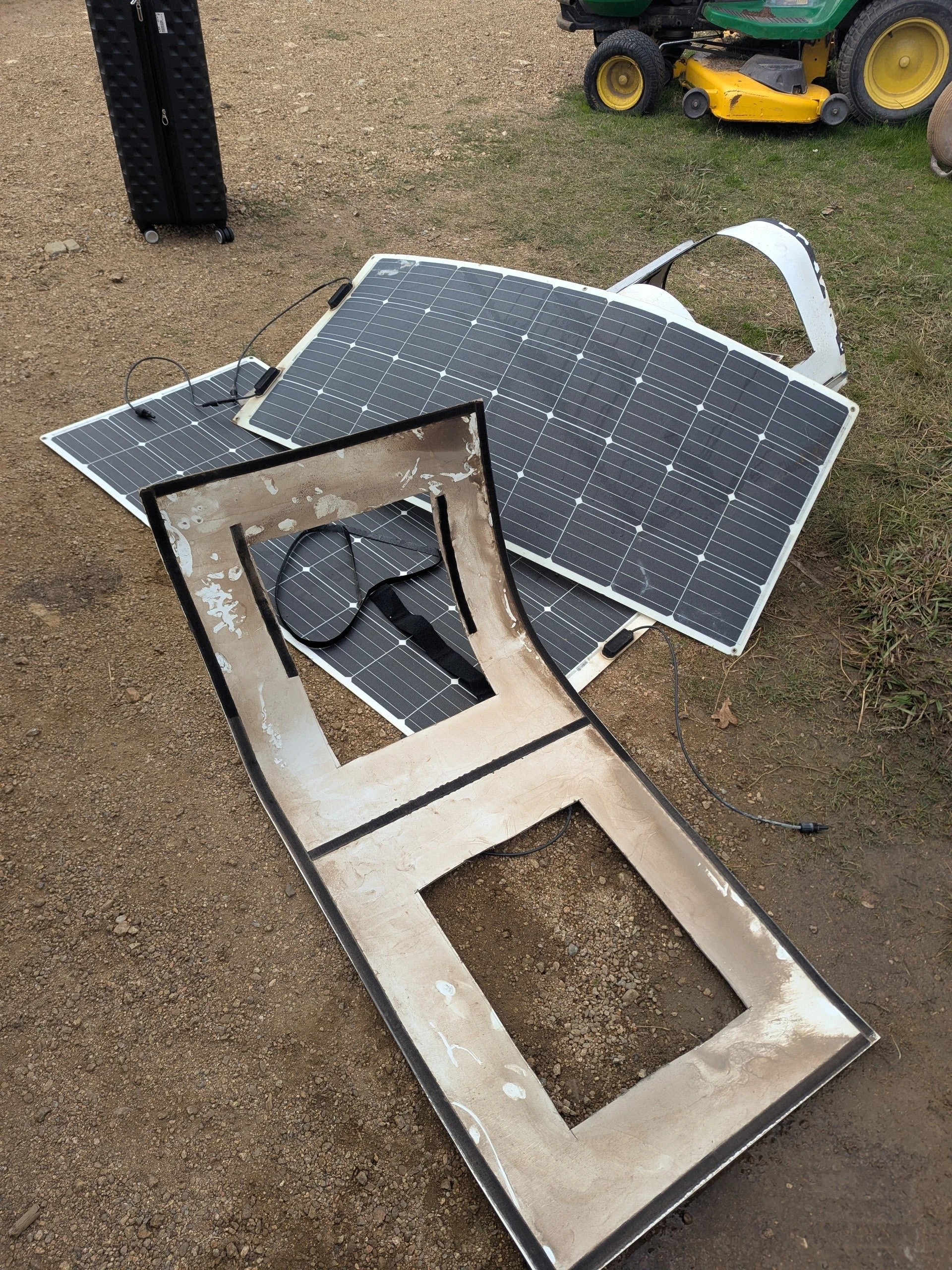
Quickly after hitting the road we realized that we weren’t generating a normal amount of electricity from the solar panels. A quick glance confirmed that one of the panels that we had installed three years earlier had delaminated
The first time we left we noticed that the solar panels were not charging. We rely on them for camper power - most importantly running our refrigerator. Luckily we didn’t get very far, so after a day away returned to UY who also specialize in solar systems. We quickly determined that one of the panels had delaminated. UY had in stock 2 - 150 watt panels.
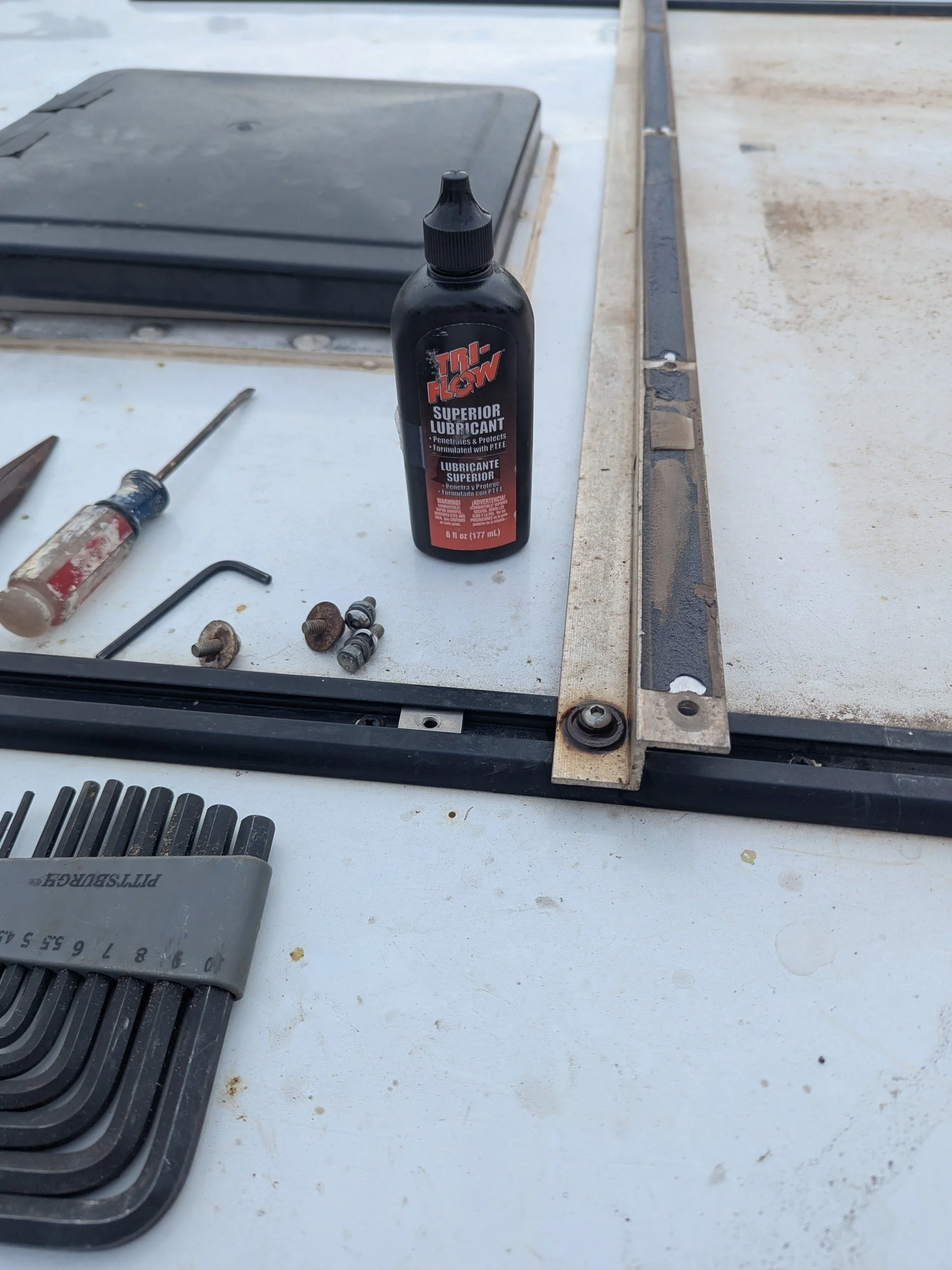
Our solar panel mounting system using aluminum Z metal designed to slightly elevate the panels to keep them cooler
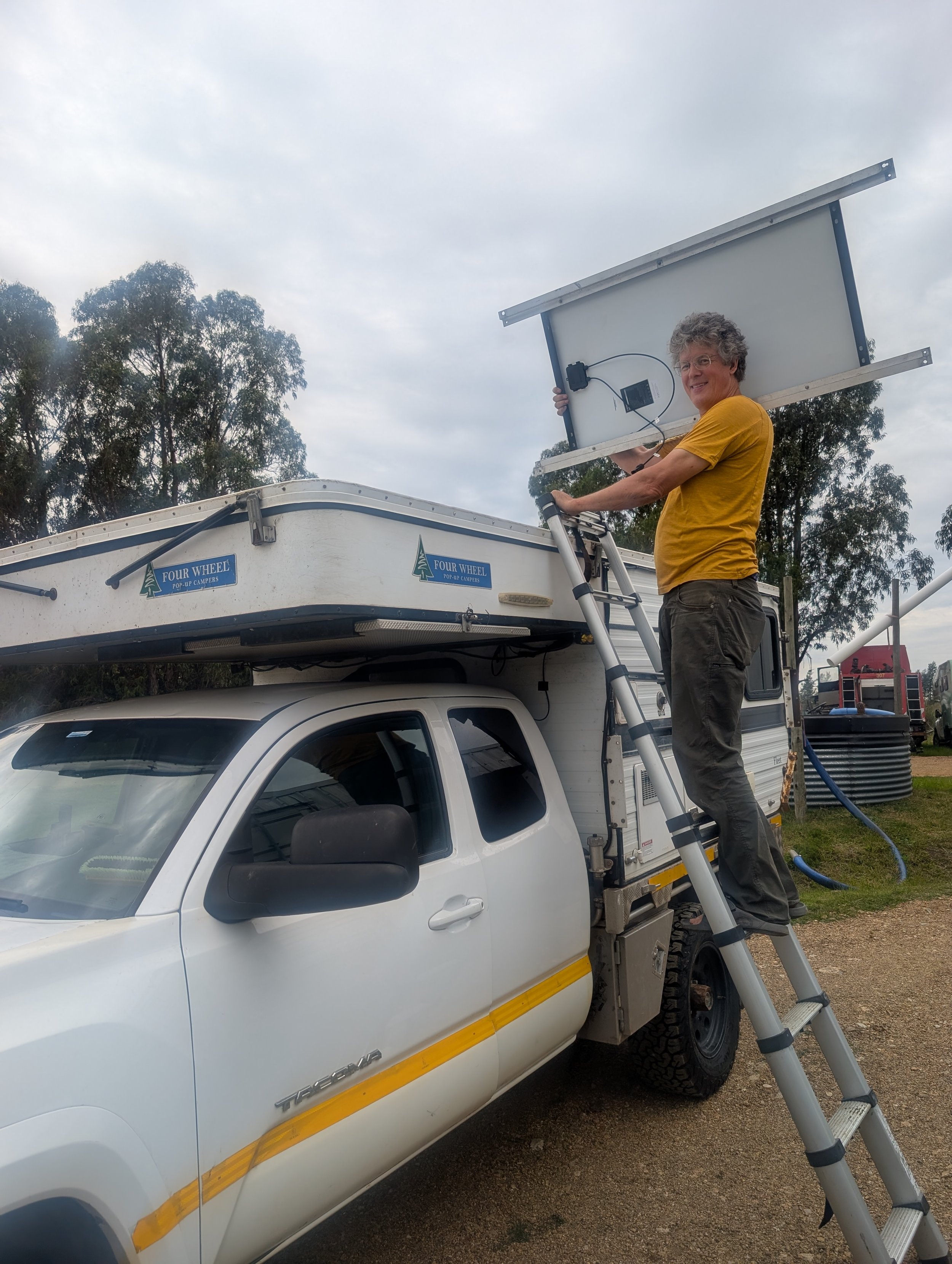
The UY brothers were busy with a custom camper build so Andy took on the solar panel replacement job himself.
Feeling hopeful, we once again hit the road - fully stocked with water, food, gas and a working truck. Unfortunately, after a day of driving we noticed the solar panels were still not charging the battery. Thoroughly frustrated and with a refrigerator full of fresh food, Andy did some research and realized that the solar panels were actually producing too high a voltage for our existing solar charge controller. So once again we returned to UY where luckily they had a new charge controller in their supply warehouse. Another unexpected purchase.
Finally, after having spent more time and money than we had ever planned, we were back on the road. We continued our journey east, hitting the Atlantic ocean.
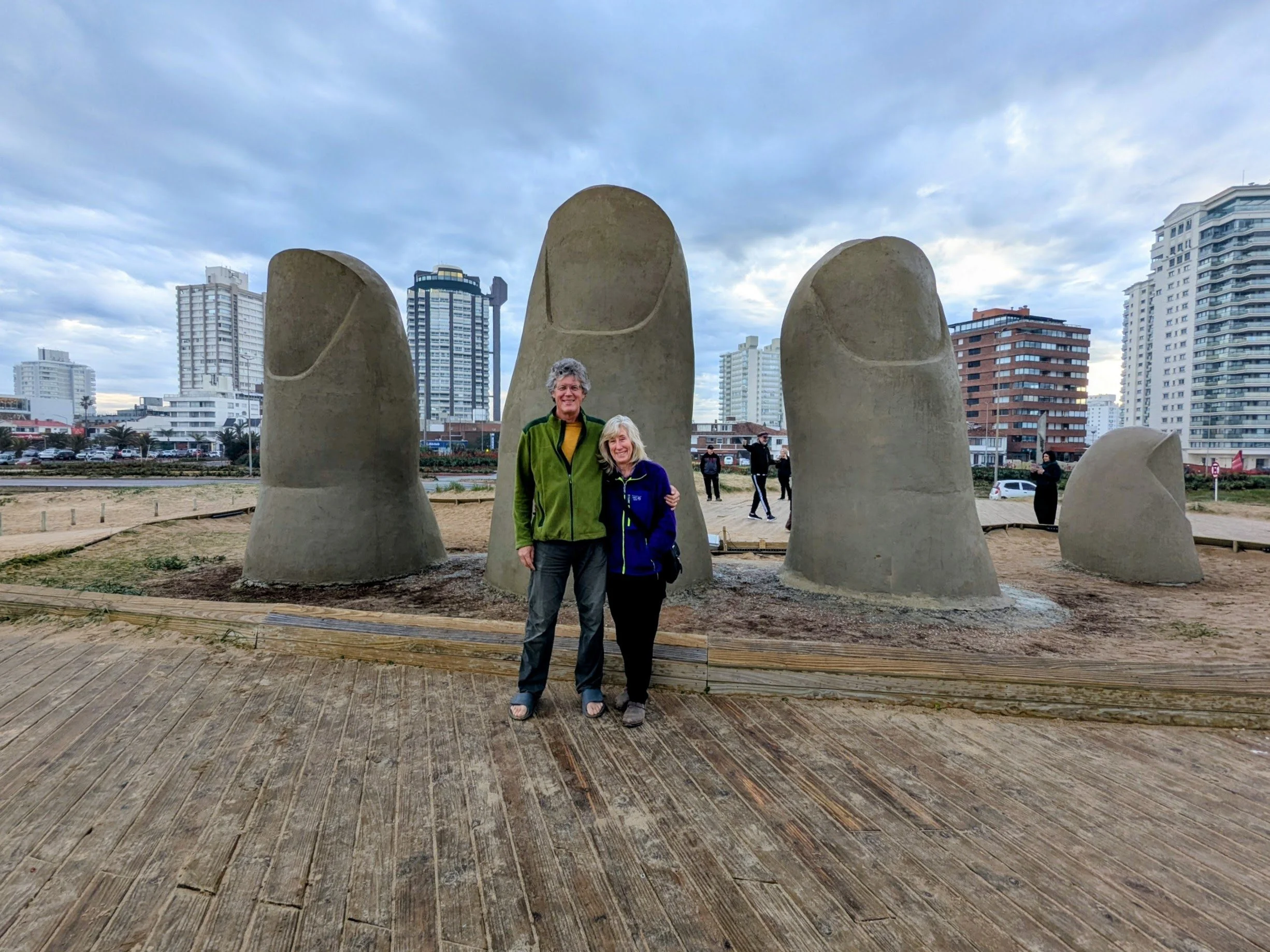
Urban sculpture “La Mano” in Punta del Este
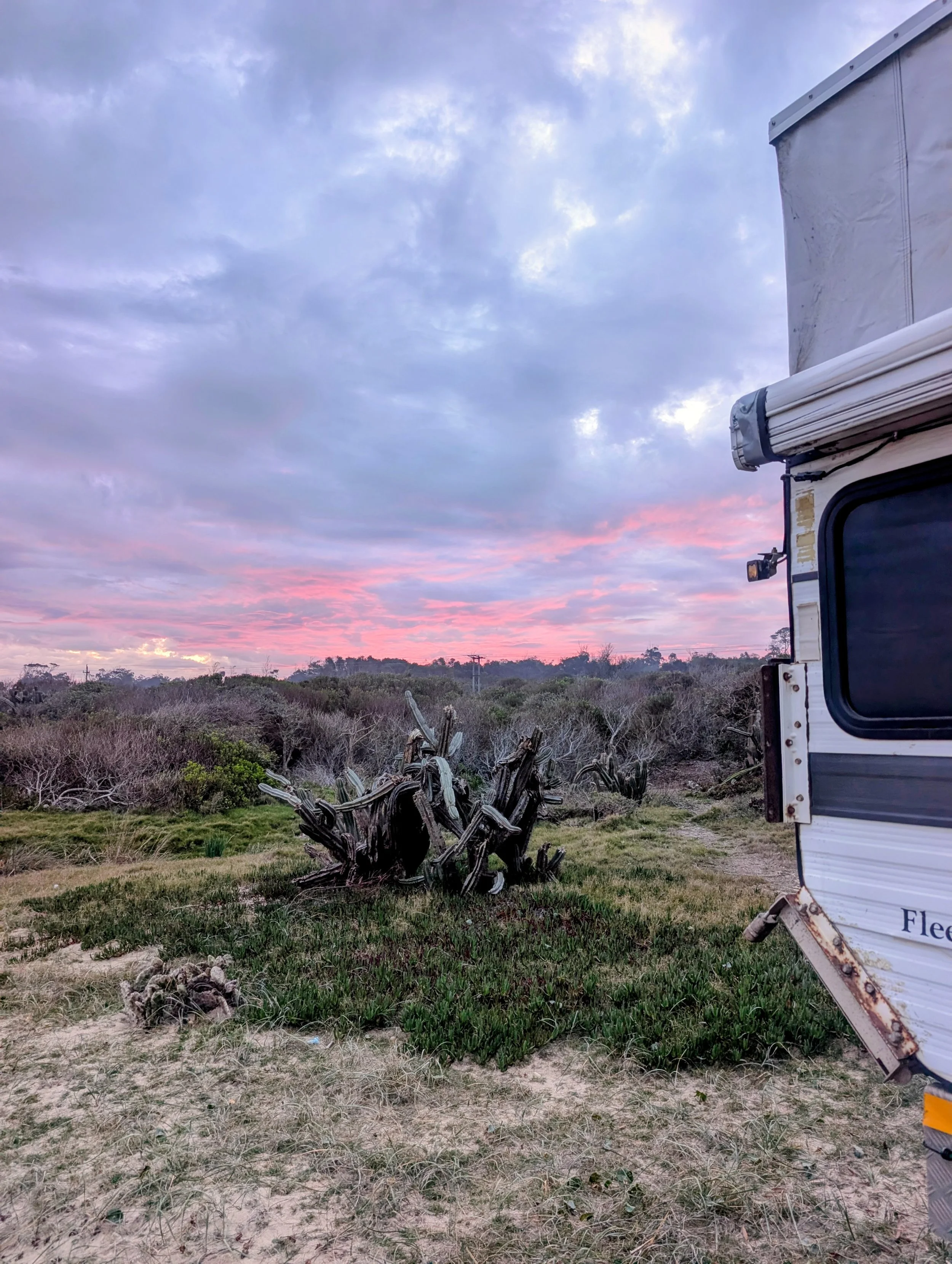
Sunset at beach camp
Along the way, we stopped at the beautiful museum and sculpture garden of Uruguayan artist Pablo Atchugarry. All free to visit.
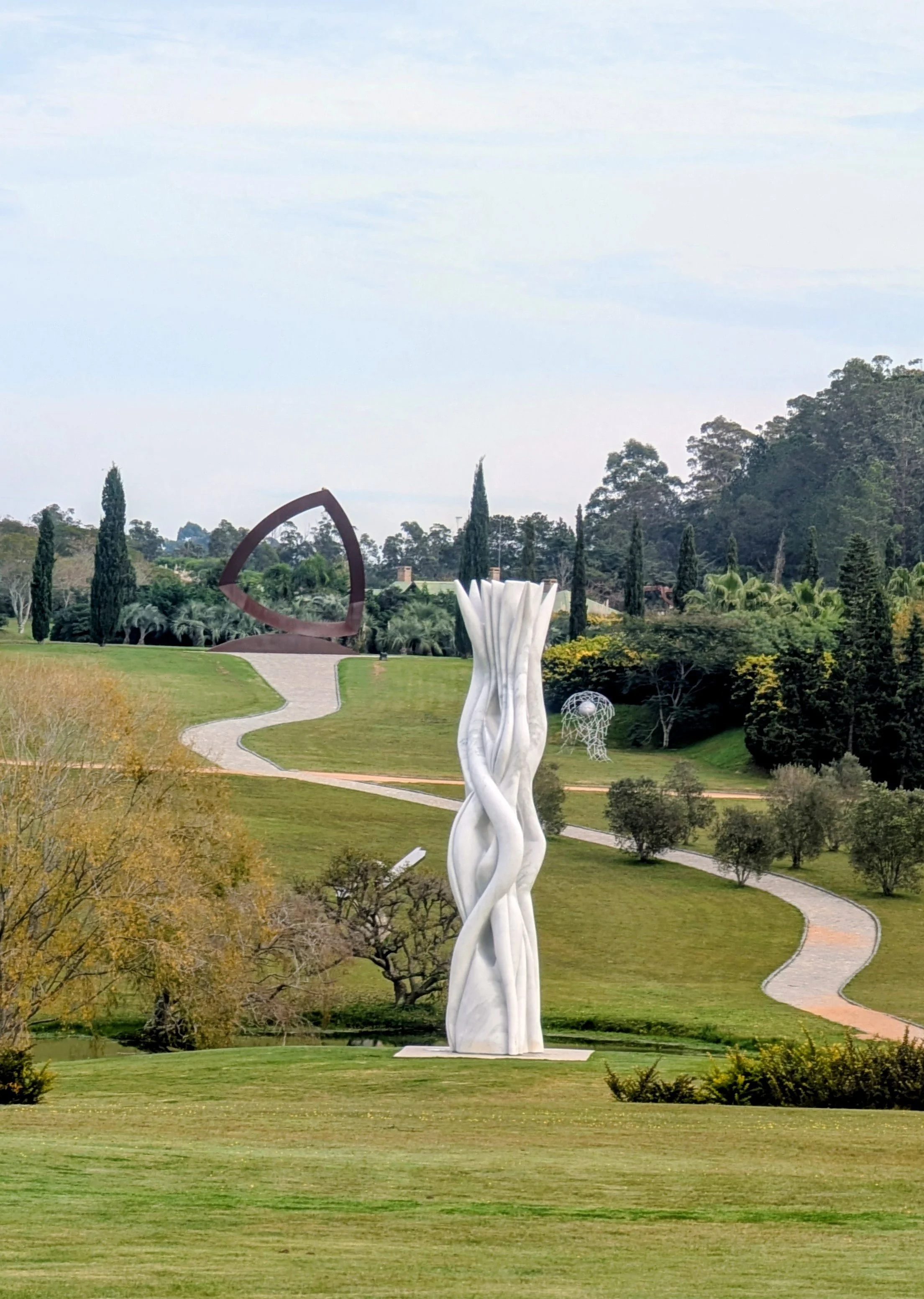
Sculpture garden at the Pablo Atchugarry art museum
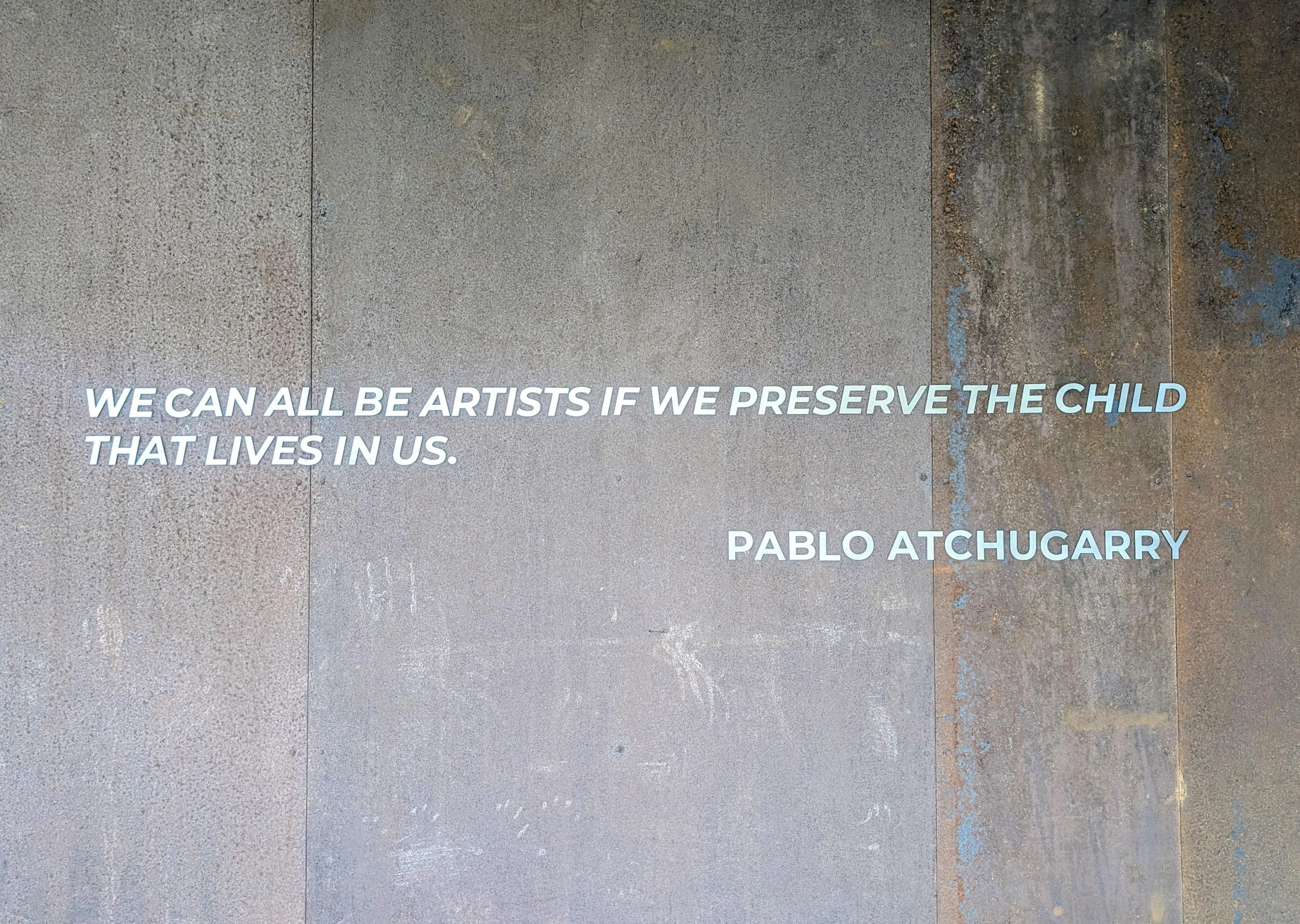
We may not be artists but we try to preserve that child
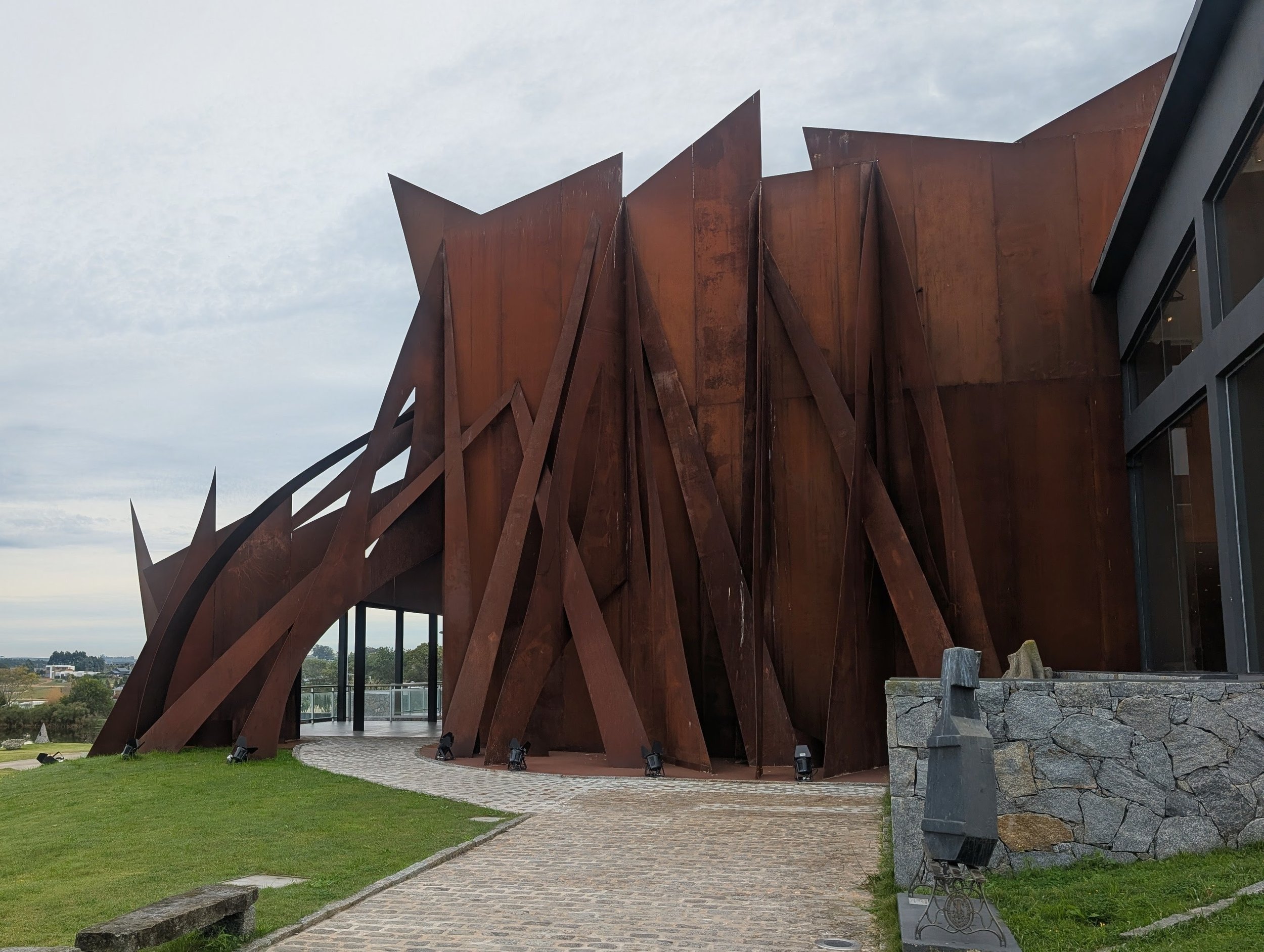
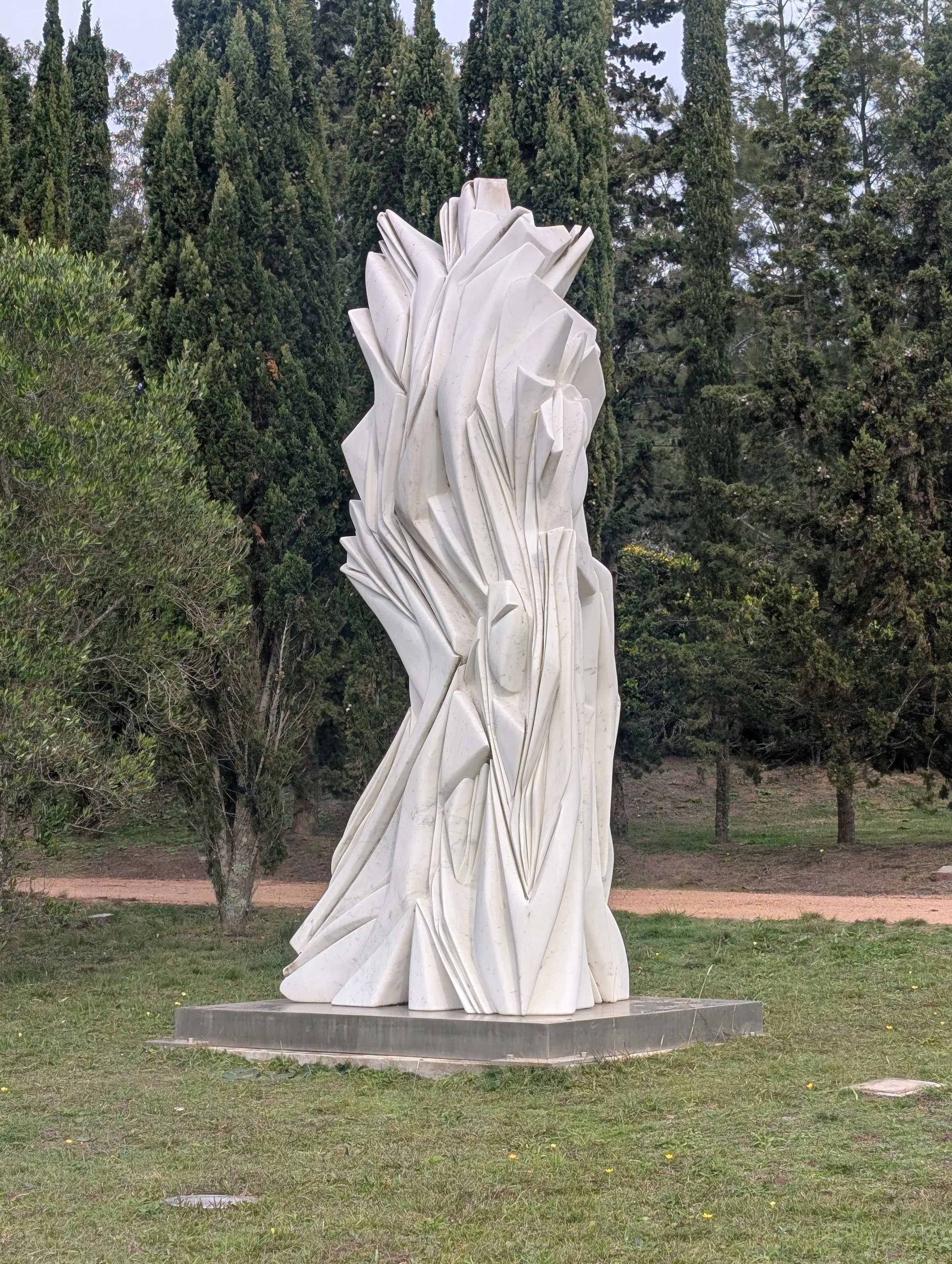
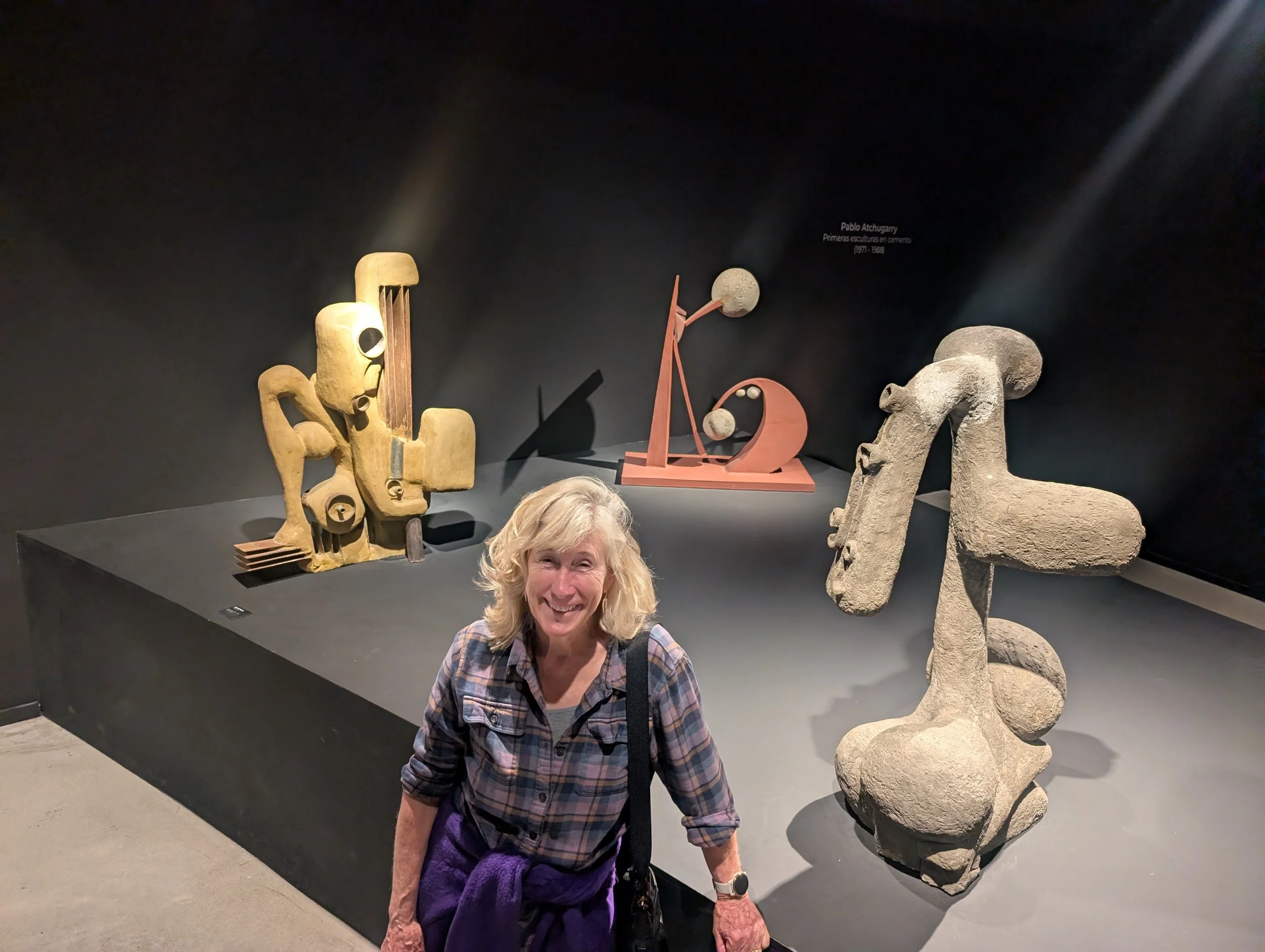
Dawn is in her happy place
Because we found it expensive and very heavy (lots of meat with all those cows!) we did not eat out much in Uruguay. Truck living makes it easy to cook our own food and cater to our own tastes.
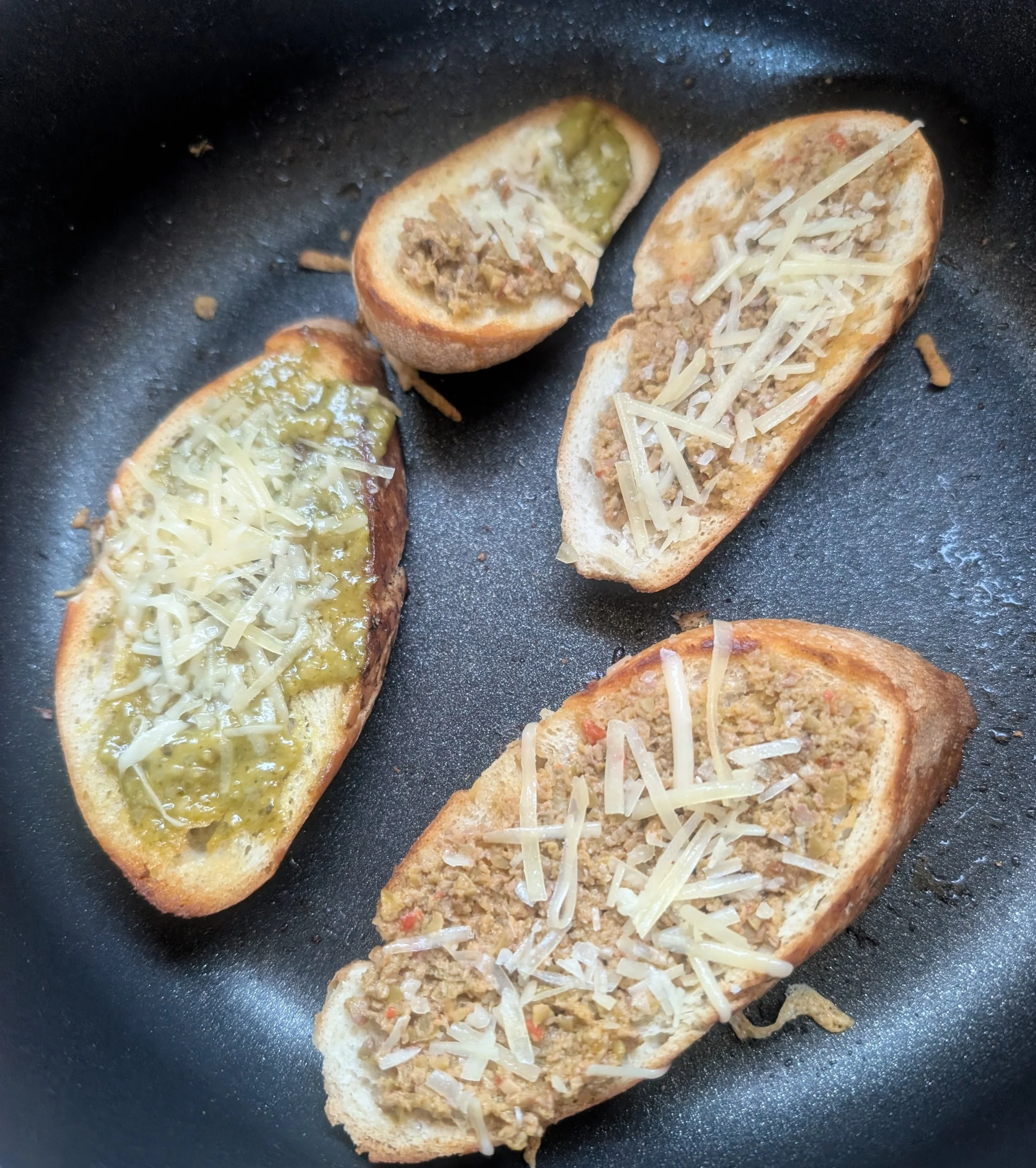
Making use of excellent Uruguayan bread to make toasted appetizers - tapenade and pesto, two favorites when we can find them.
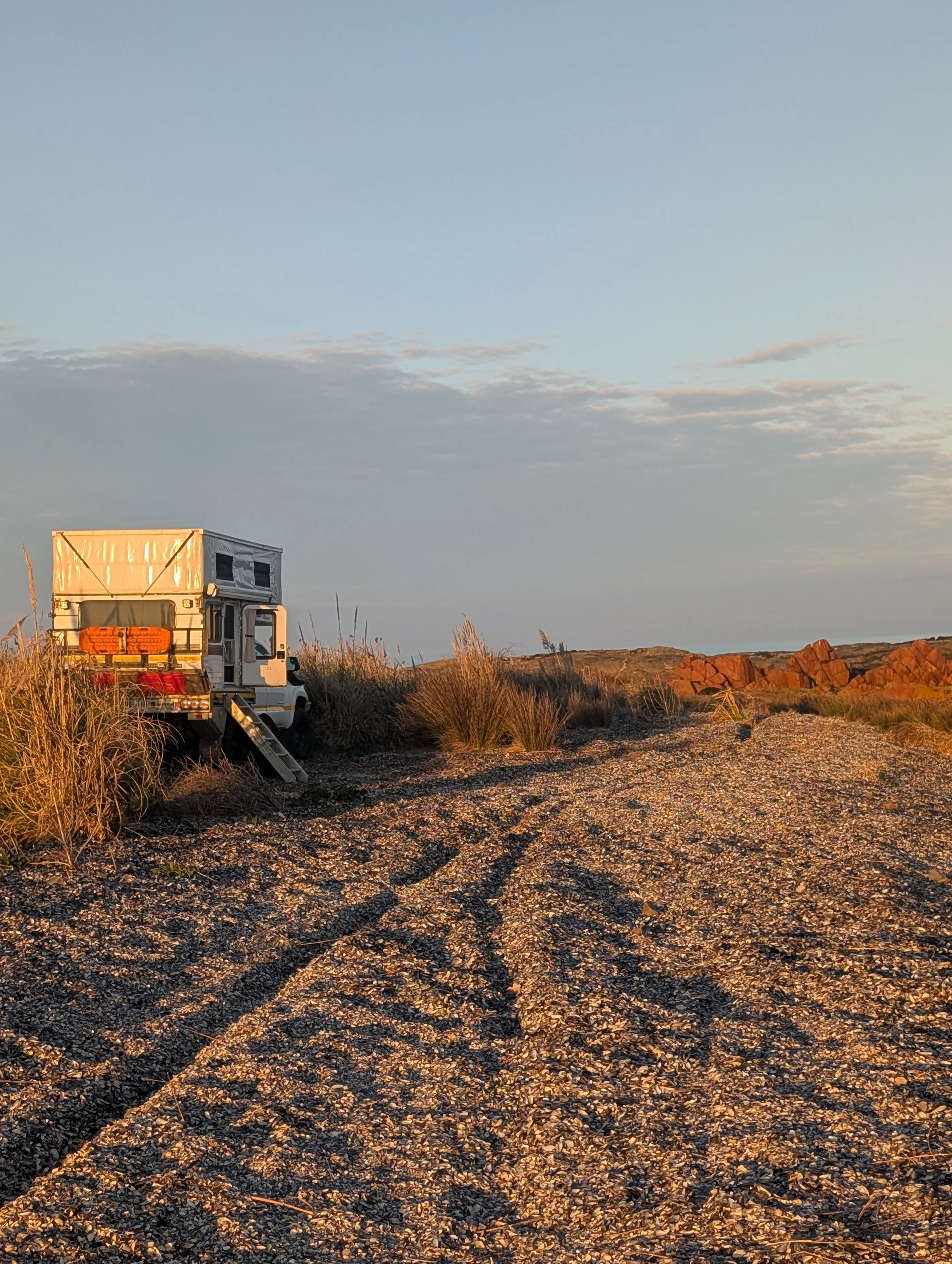
Another amazing beach camp sunset
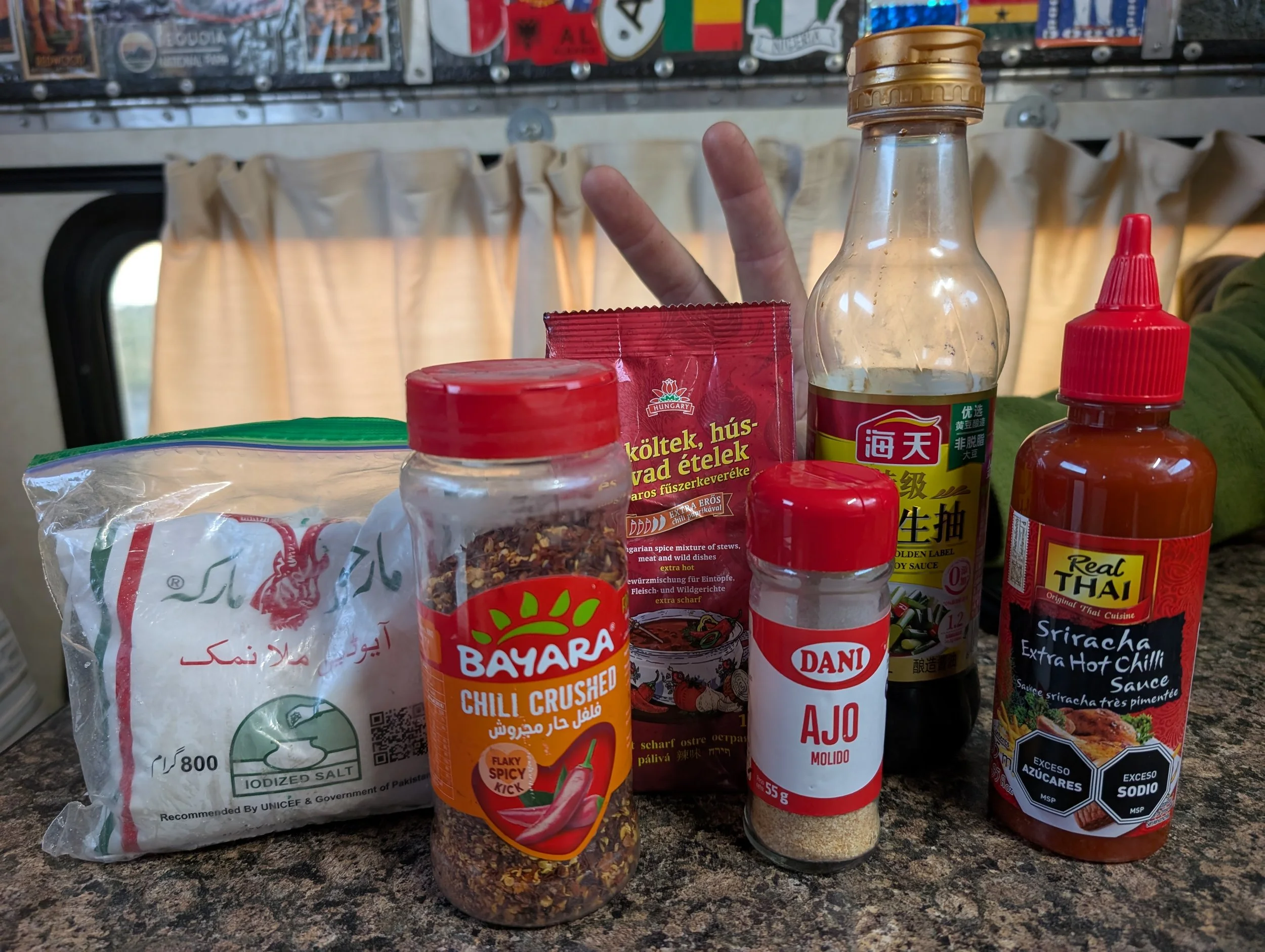
Taking a moment to appreciate where we have been as we survey our spice cabinet- salt from Pakistan, Goulash spice from Hungary, chili from Dubai, garlic from Chile, soy sauce from China and Siracha from Cambodia.
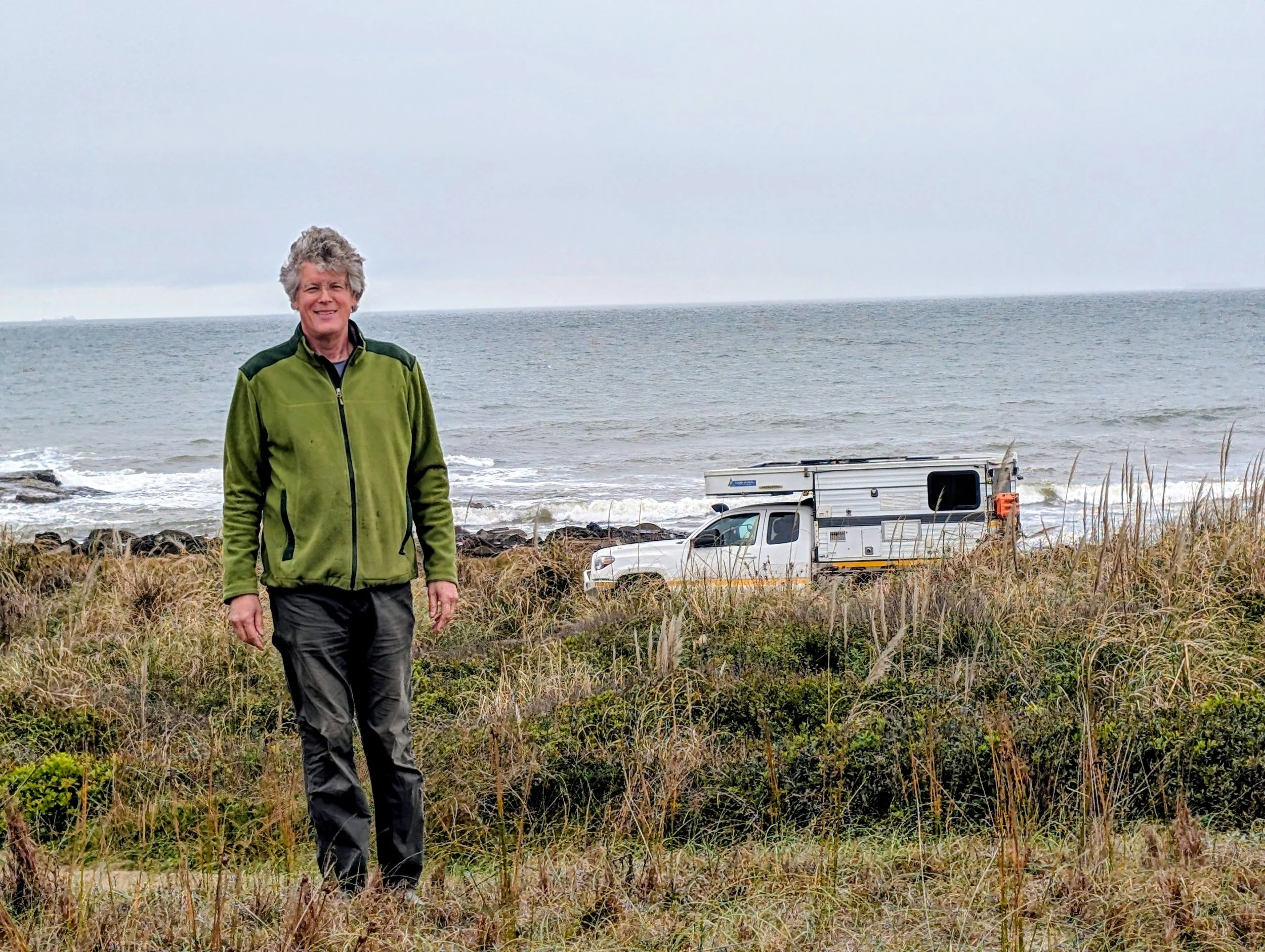
Exploring the coast
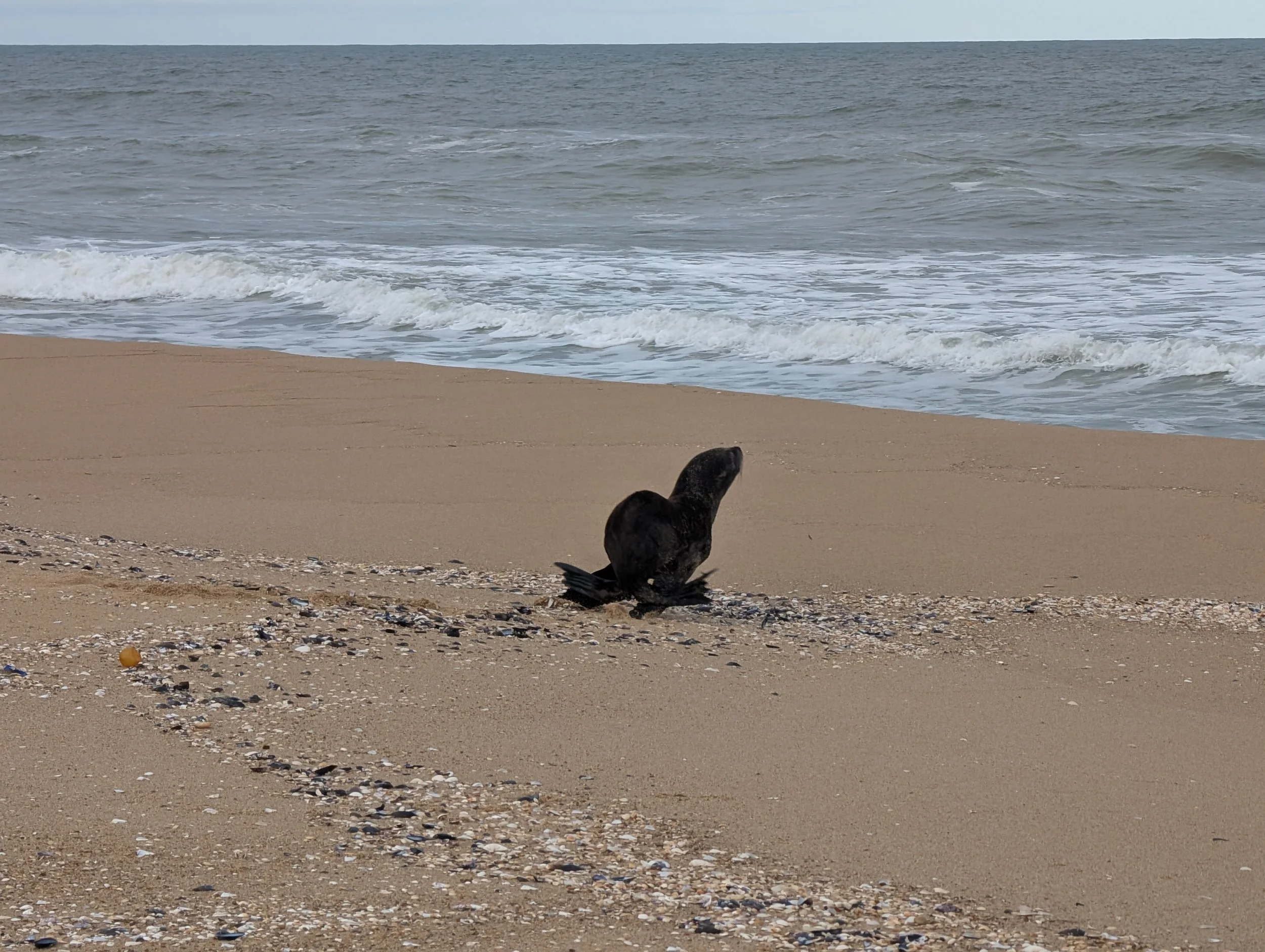
Disturbed a napping seal
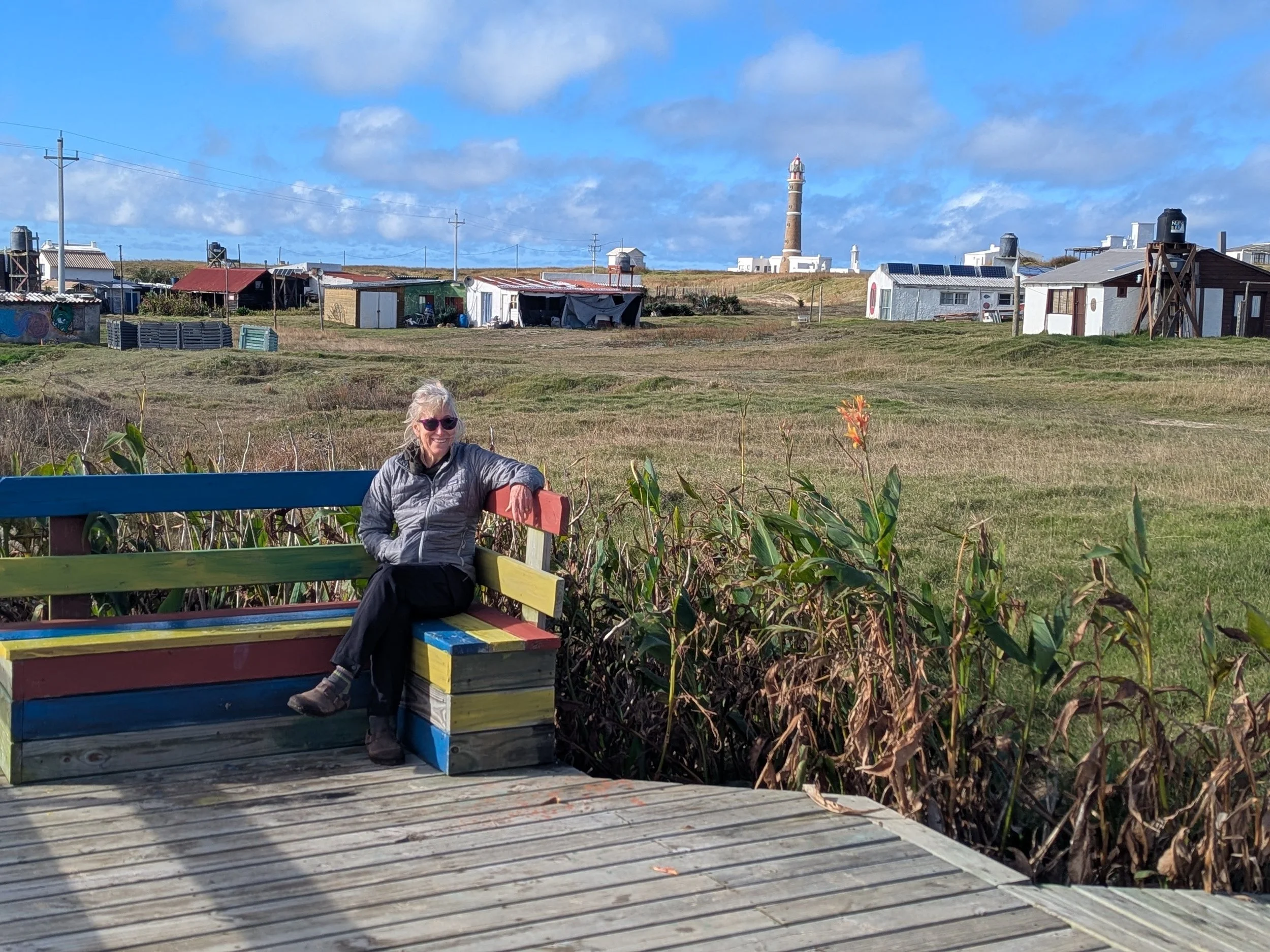
One of our last tourist stops - a day trip out to Cabo Polonio, a small coastal village accessed by 4×4 bus
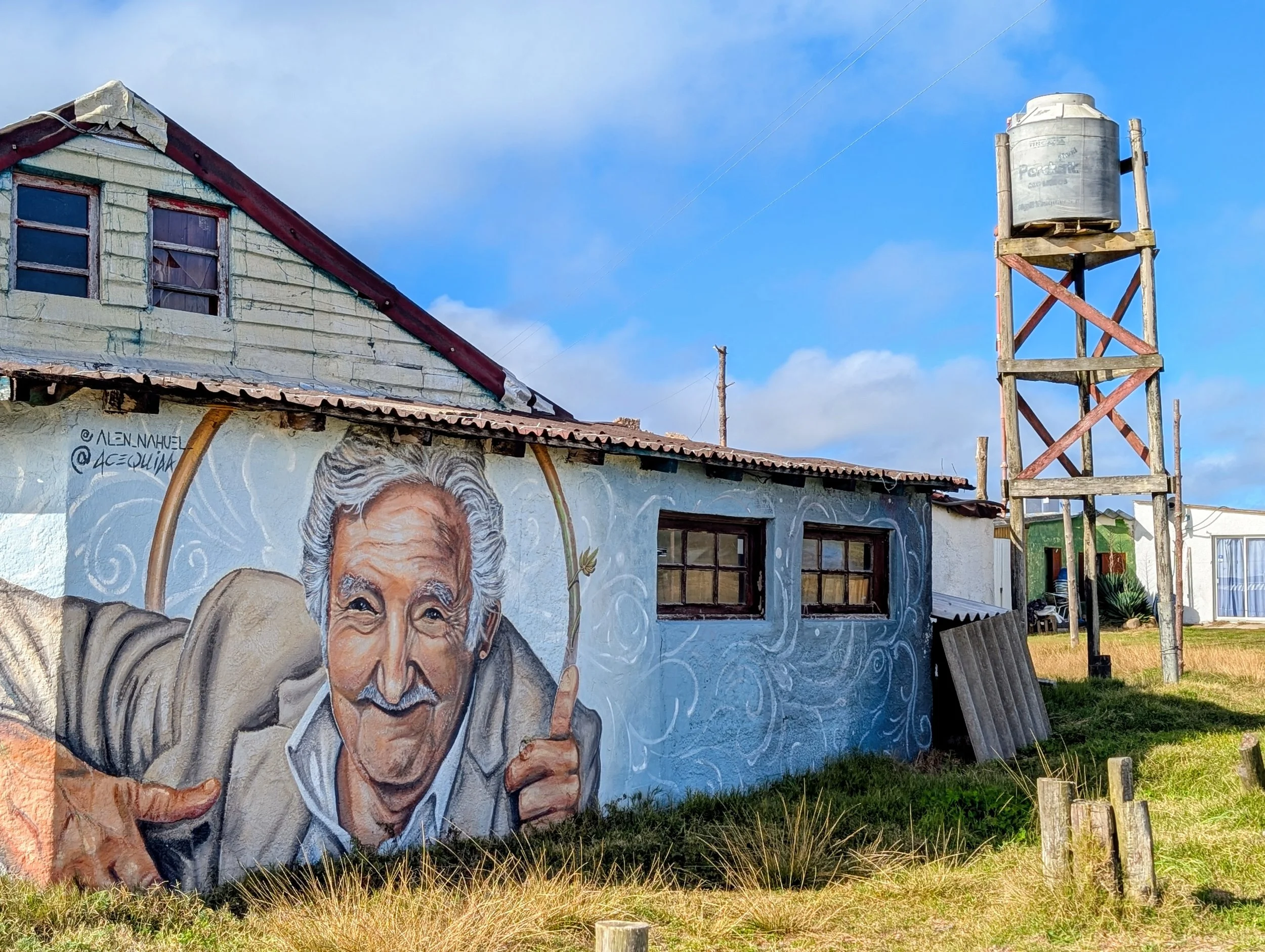
Lots of art around
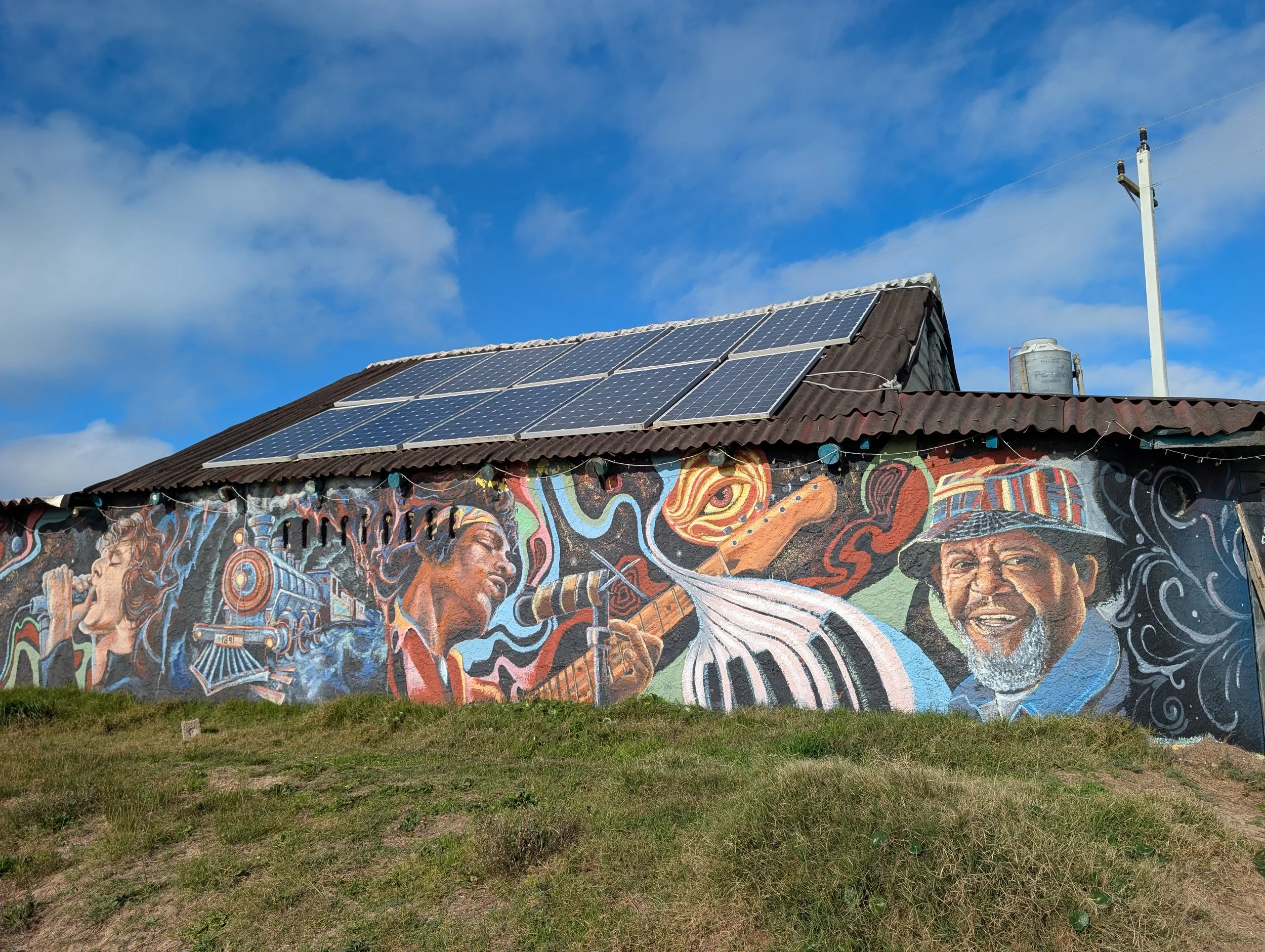
Of course it was one of Dawn’s favorite places in Uruguay
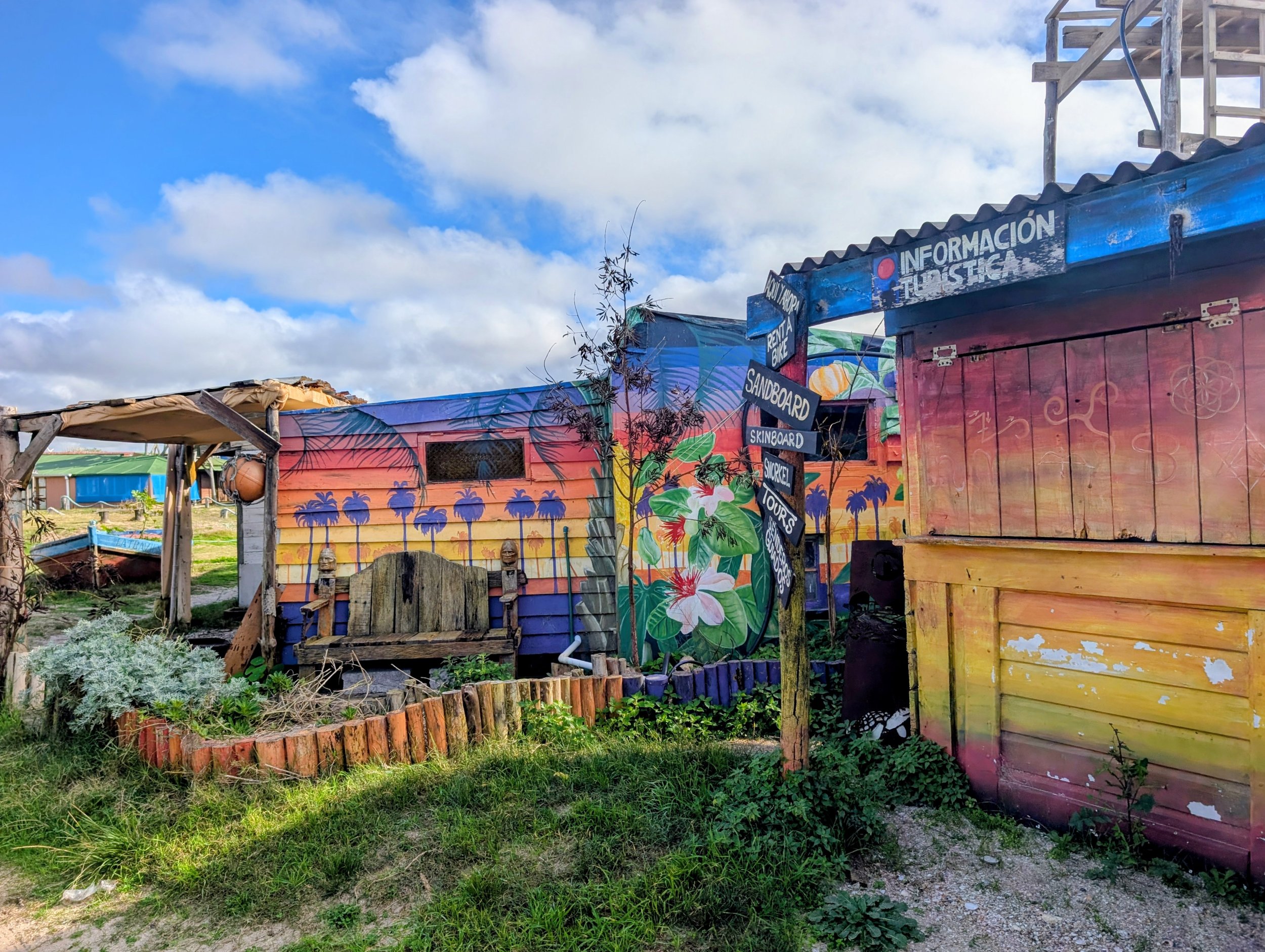
We probably liked it even more as it was outside of tourist season so the standard amenities were closed and we were the only visitors.
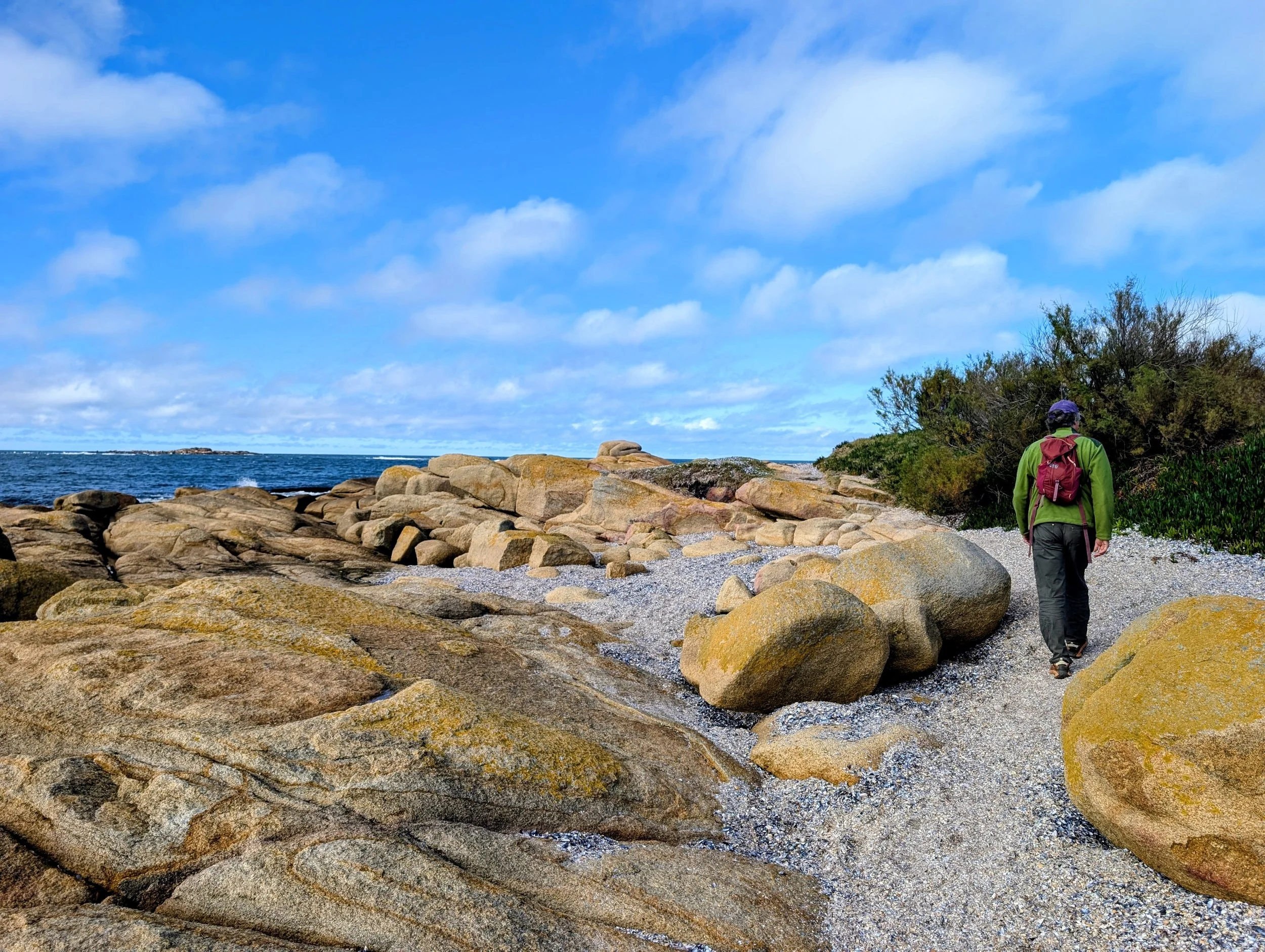
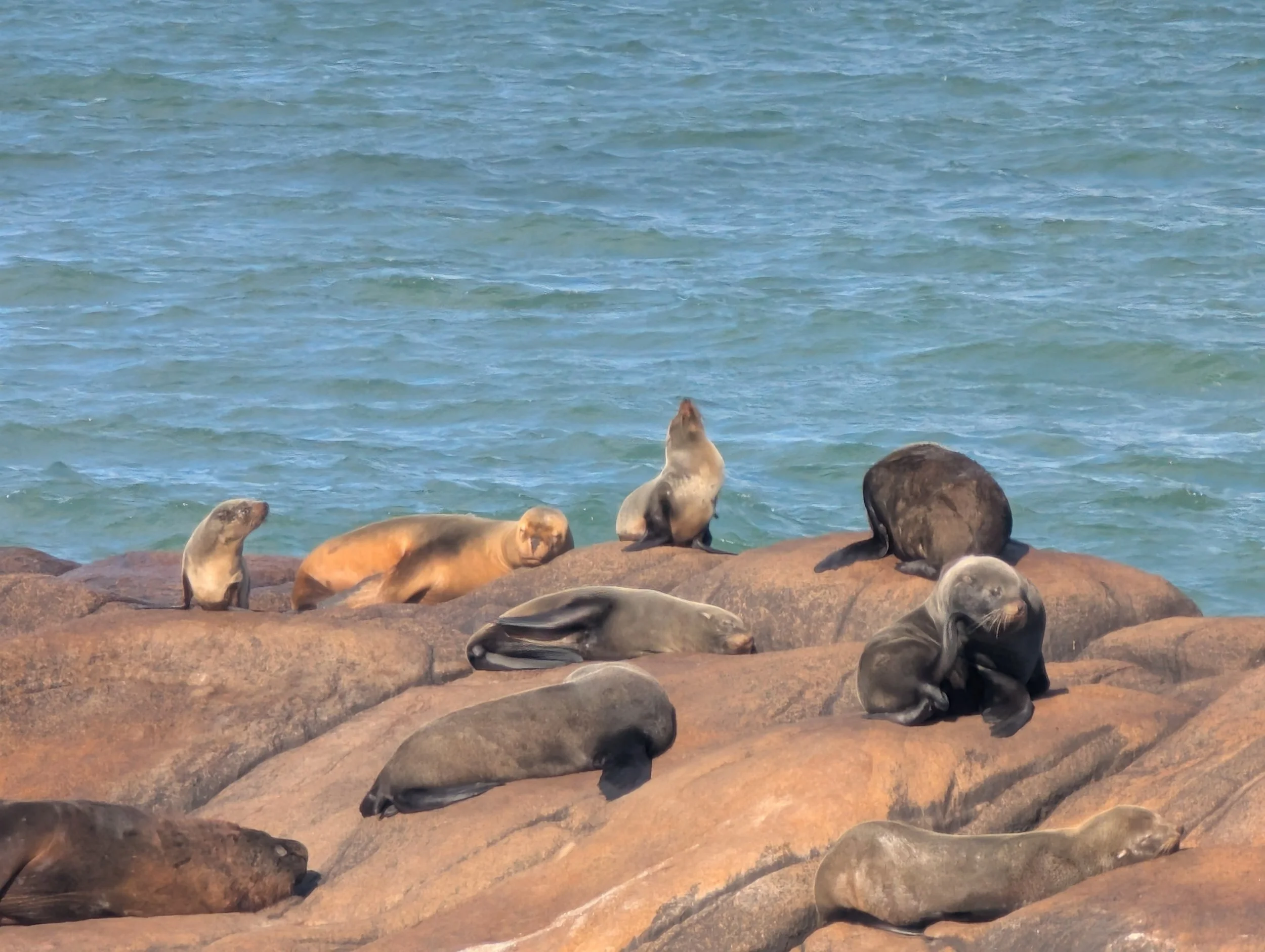
Heading out to the point to find sea lions
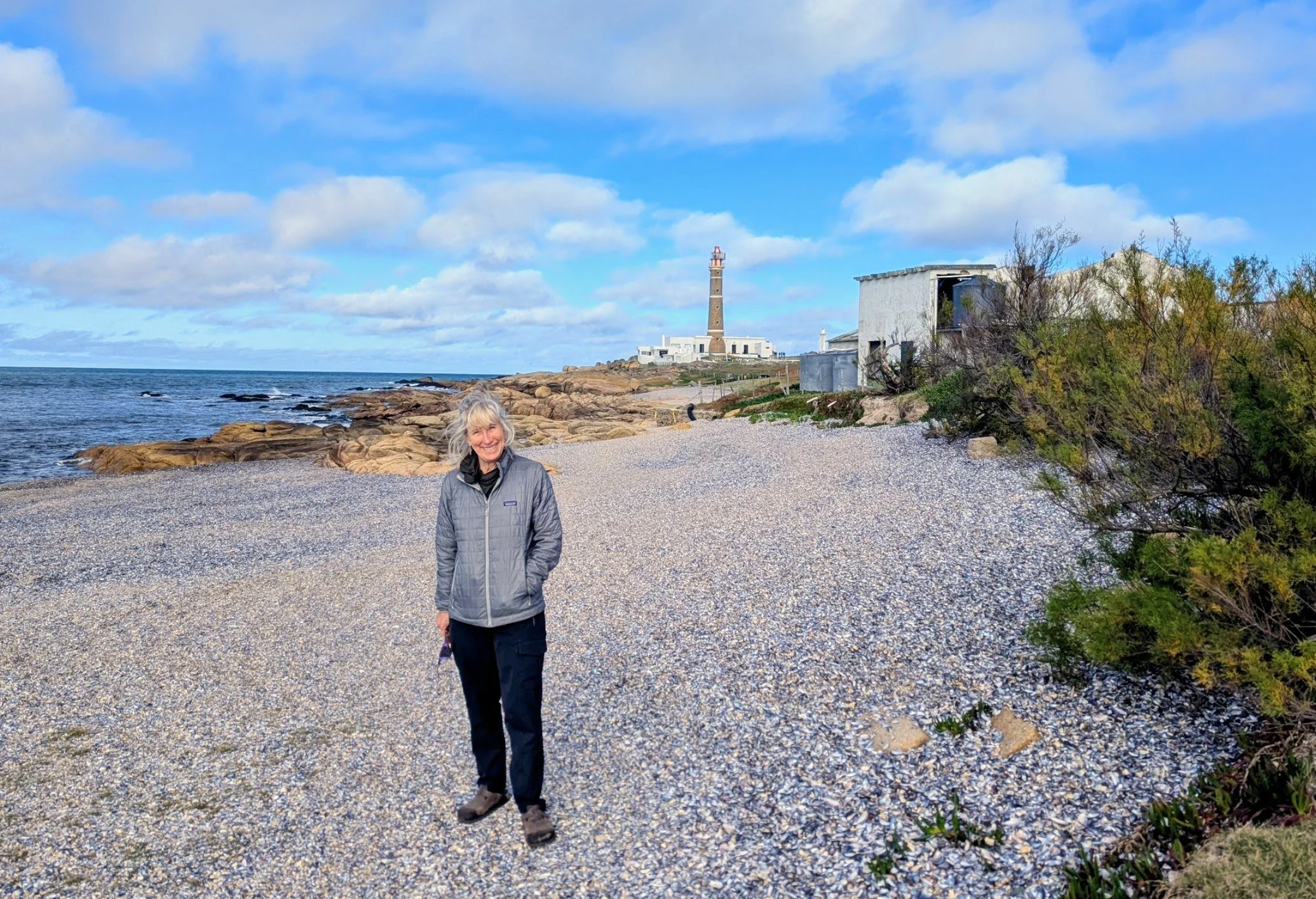
And to see the lighthouse
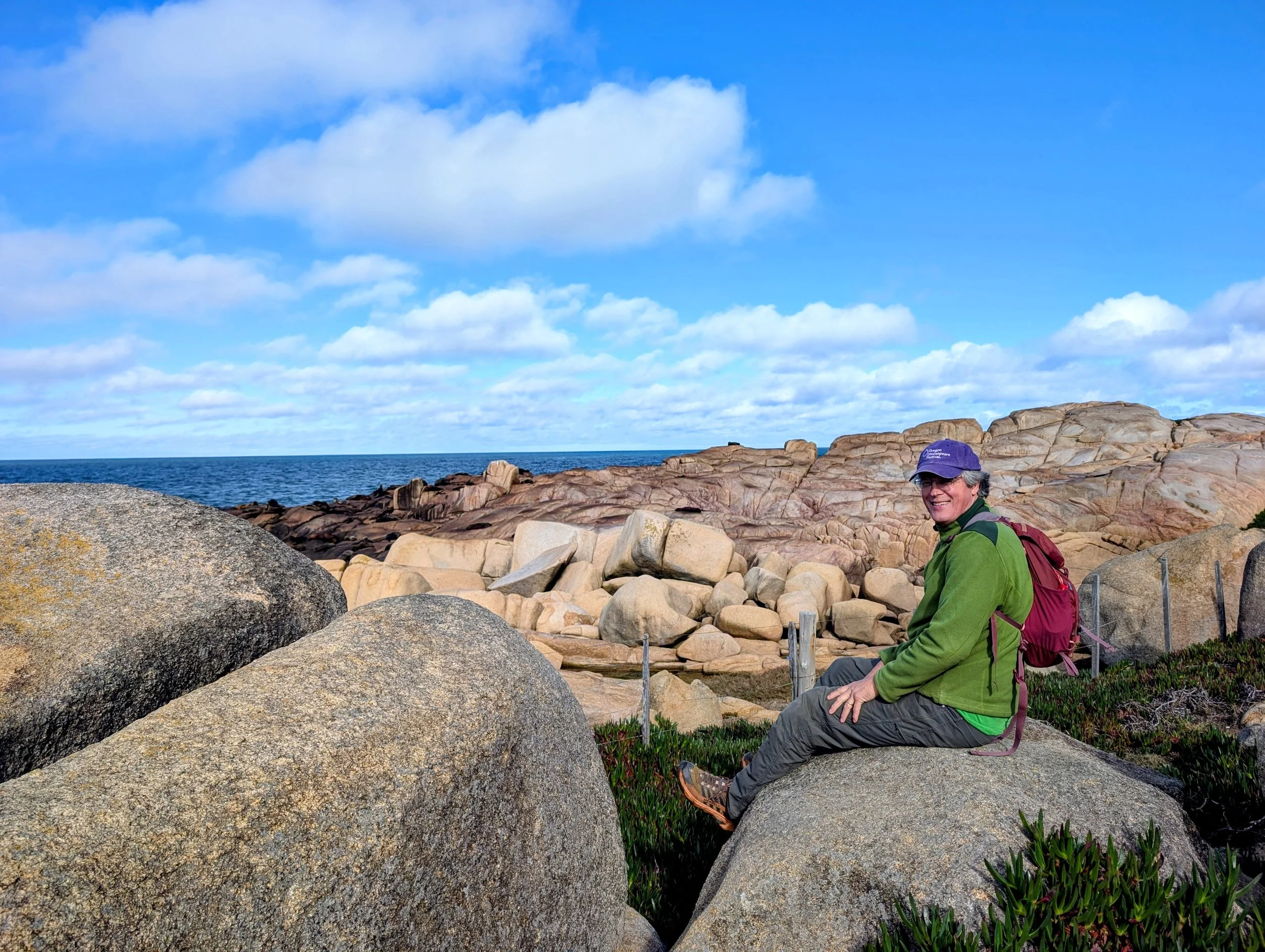
Watching the sea lions’ antics
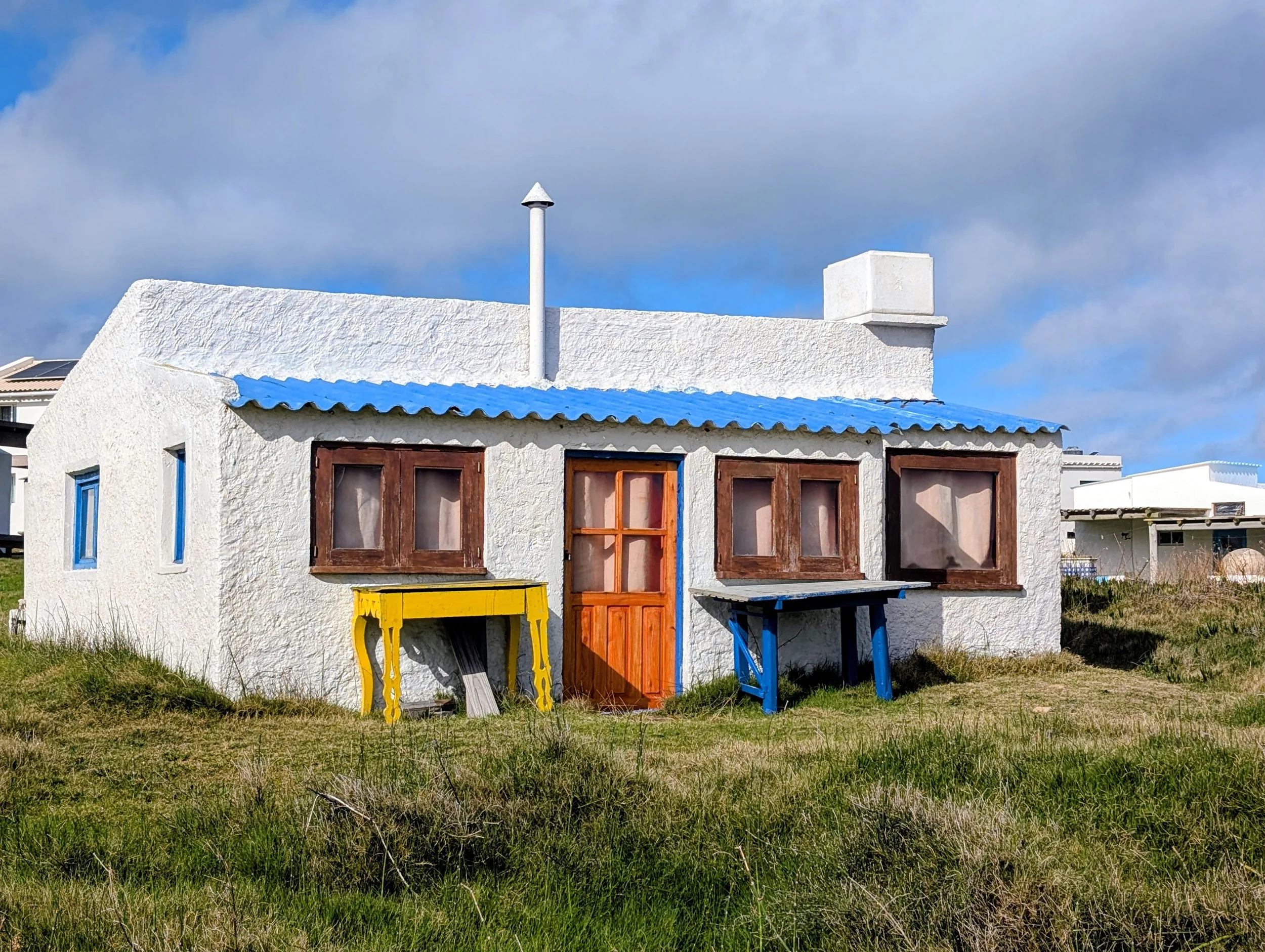
Loving the colorful beachy architecture
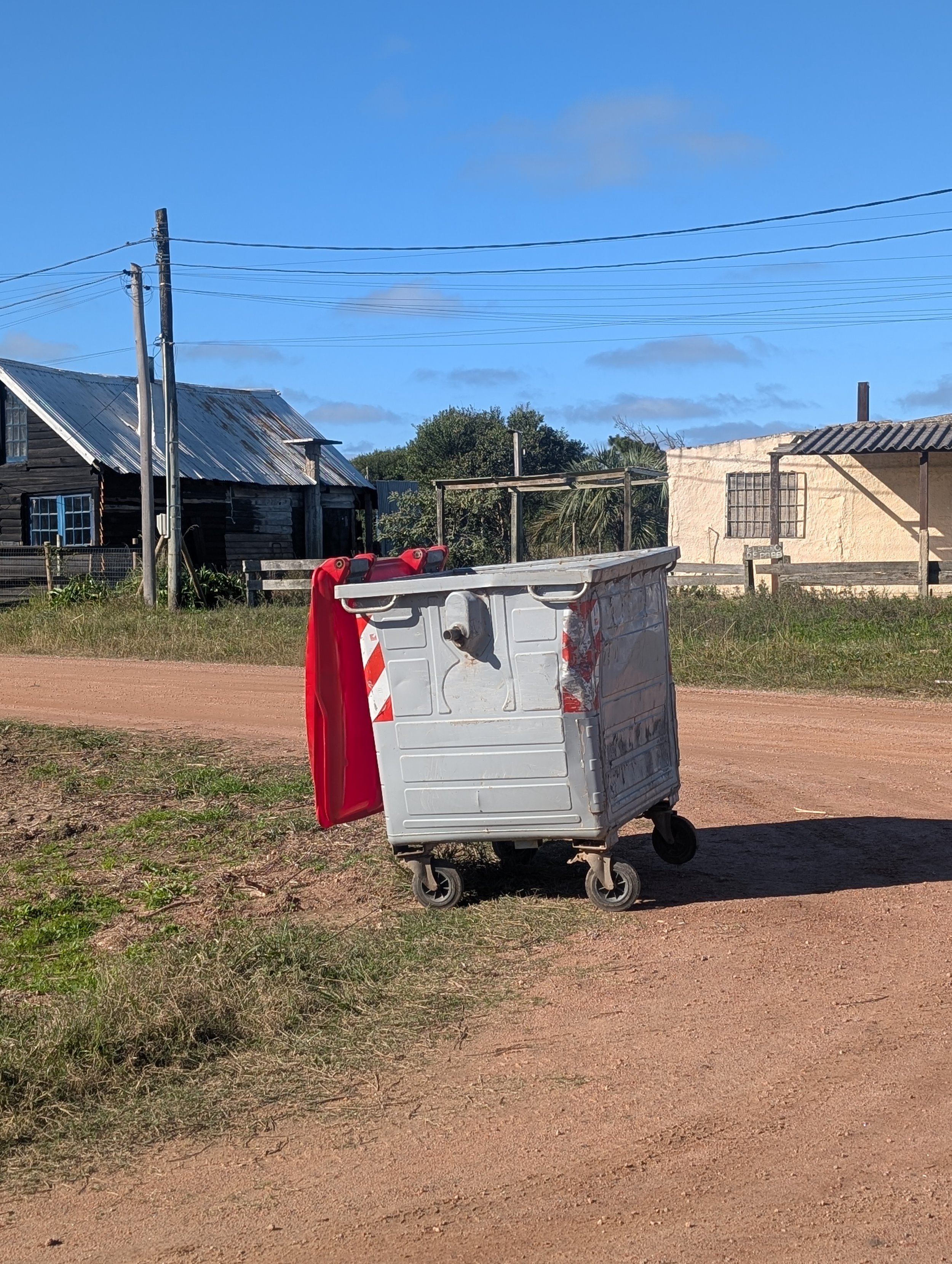
One thing we really appreciated about Uruguay was the multitude of garbage dumpsters wherever we went - it was always easy to dispose of our cooking rubbish and camping sites were relatively clean.
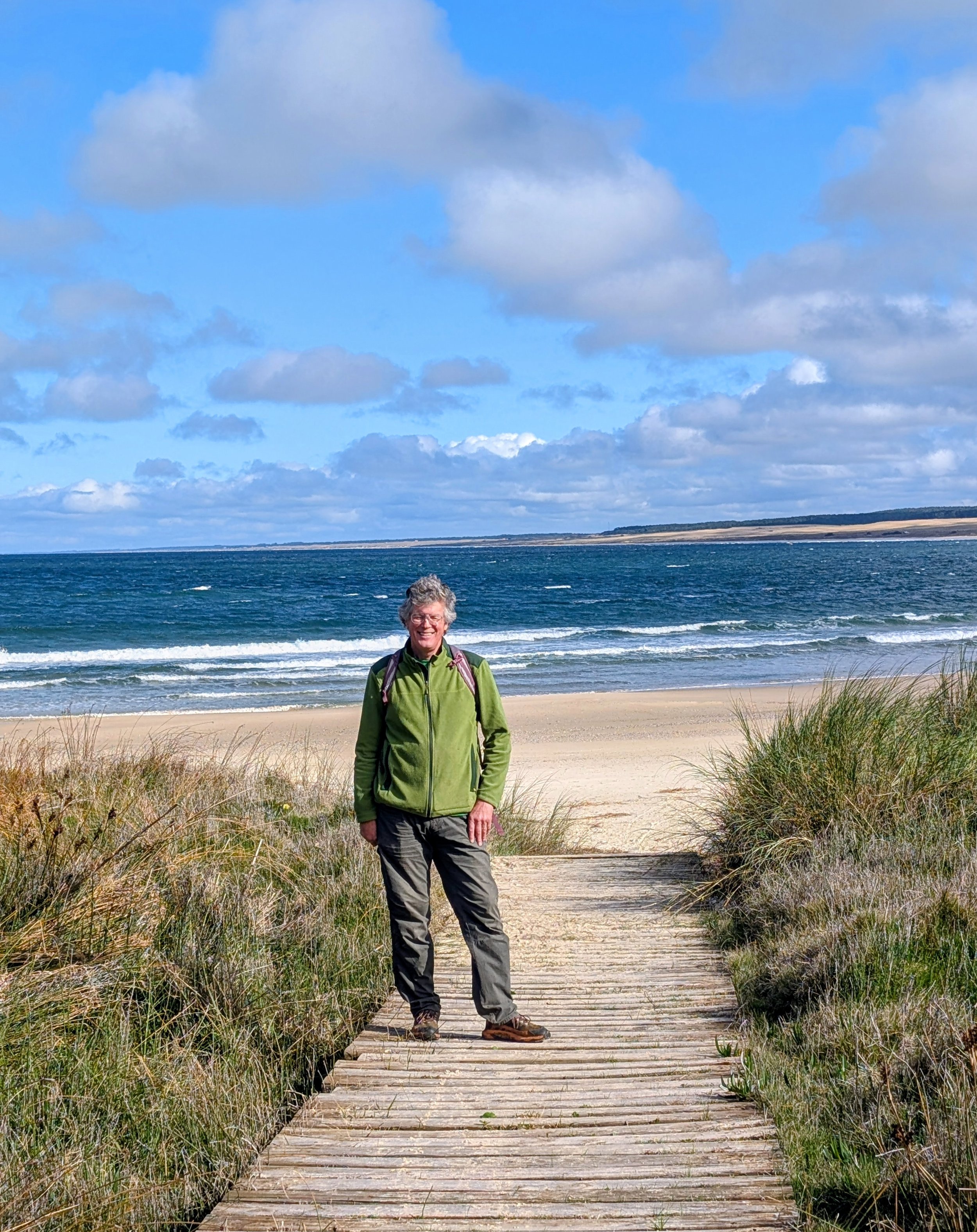
Our final beach walk before leaving Uruguay
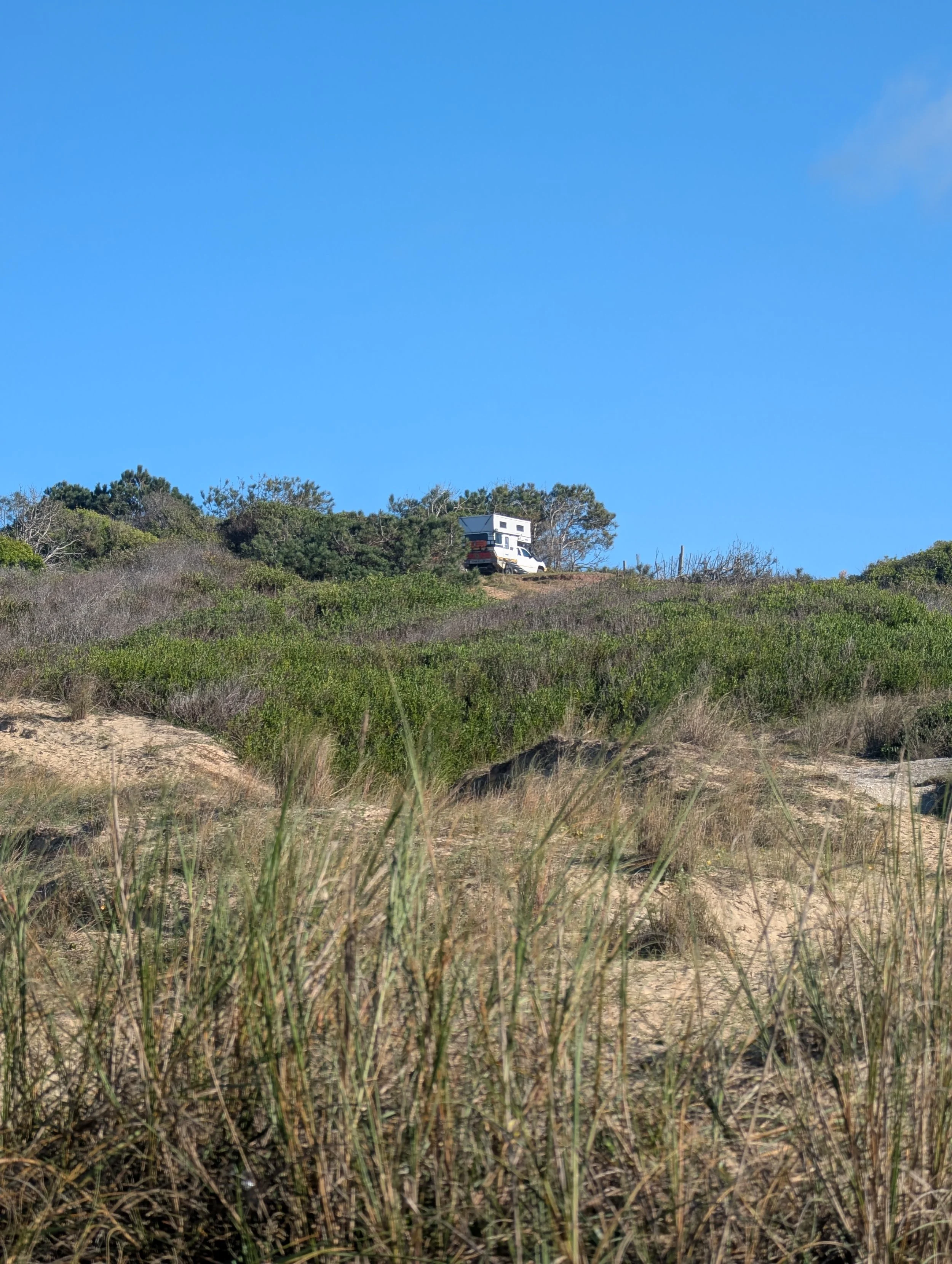
And our last beachcamp
Uruguay was a safe landing spot to take care of much needed maintenance, an easy place to explore and a relaxing place to travel. We appreciated our time there. It may not make our top 10% of countries, (no extreme adrenaline powered adventures or stunning mountain peaks) but it was still a pleasure to visit. Thank you for reading - we are off to Brazil now.