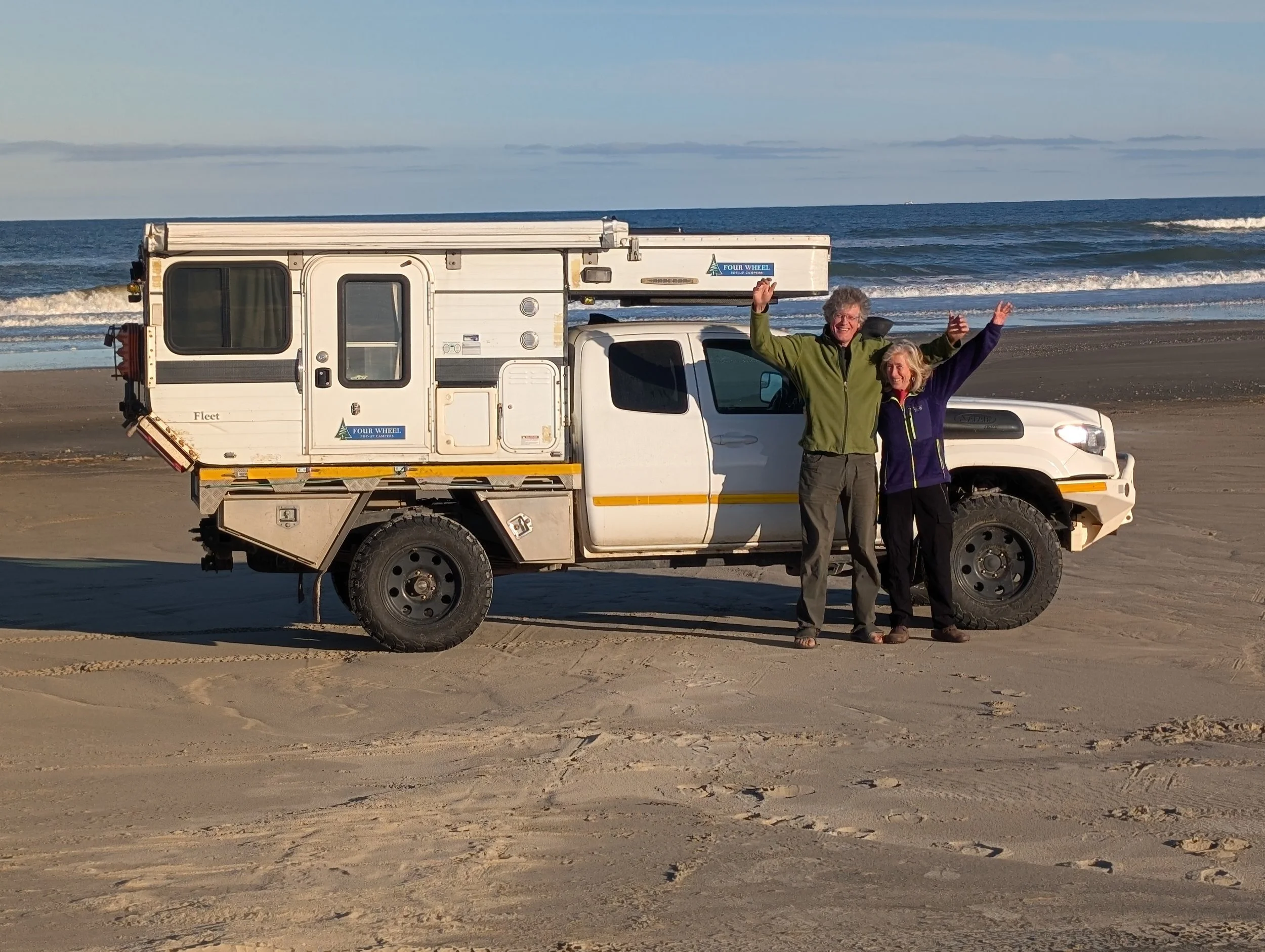
Celebrating our arrival in Brazil - our 100th country in over 6 years of traveling in the truck. We had just entered Brazil from Uruguay and were driving Praia do Cassino - the longest beach in the world at 158 miles long. (We did not drive the whole thing, we just drove far enough to get away from people and spend the night).
Brazil was a little tough for us. There were some epic highs but also some extreme lows. We drove the Pantenal and saw jaguars in the wild, but also had our first robbery with Andy ending up getting stiches in the hospital in Rio de Janeiro. We saw gorgeous and unique national parks like Lencois Maranhenses and cruised the mighty Amazon, but also found ourselves camping in crowded truck stops as we crossed vast distances in this huge country. Brazil is a country with a lot of cultural interest, especially in the big cities with art, music, and dance. But we are not big city people and struggled a little bit with finding the wild beauty along the way that fills our souls.
But we would not write Brazil off as an overlanding destination, we appreciated our time there and came away with an admiration for the land and its people. Brazilians are some of the most welcoming people in the world and even though we did not share a language, we felt their warmth.
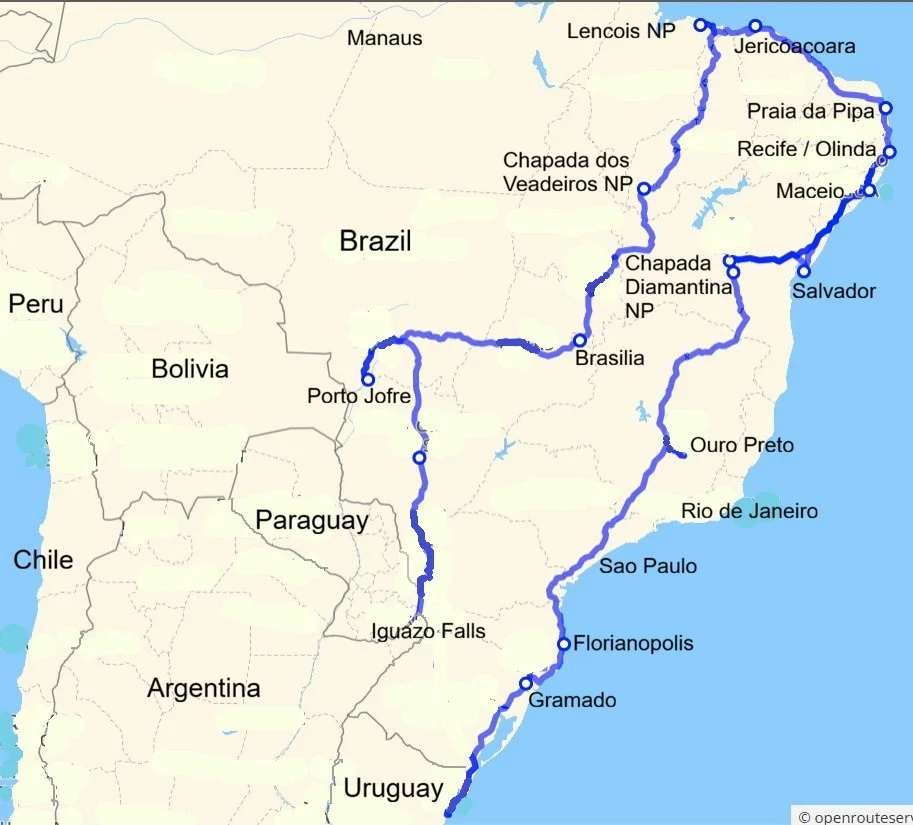
Our over two month, 8,300 miles driving route in Brazil
Brazil covers half of South America. It features the massive Amazon River basin in the north and high plateaus in the south. Indigenous peoples lived on the land for thousands of years until the Portuguese arrived in 1500 and claimed the region. The early colonial economy relied on cutting down brazilwood and growing sugar on large coastal farms. Colonists forced enslaved Indigenous people and millions of captured Africans to do this heavy work. Later, the discovery of gold and diamonds in the eighteenth century shifted wealth and people toward the inland hills.
Brazil won independence from Portugal in 1822 and later ended slavery in 1888. During the late nineteenth and twentieth centuries, the global demand for coffee made southern states rich and built up cities like São Paulo. The government moved the capital inland to Brasília in 1960 to open up the empty center of the country. Today, Brazil boasts the largest economy in South America. Its modern wealth comes from heavy industry, mining, and huge farming exports like soybeans and beef sent around the world.
The mix of cultures and backgrounds evident in the big cities and contrasting with the indigenous villages was something we really enjoyed about Brazil. We grappled with the Portuguese language, but never mastered more than greetings and “thank you”. With very little English spoken, even in the big cities, this made it difficult for us to have meaningful conversations with locals.
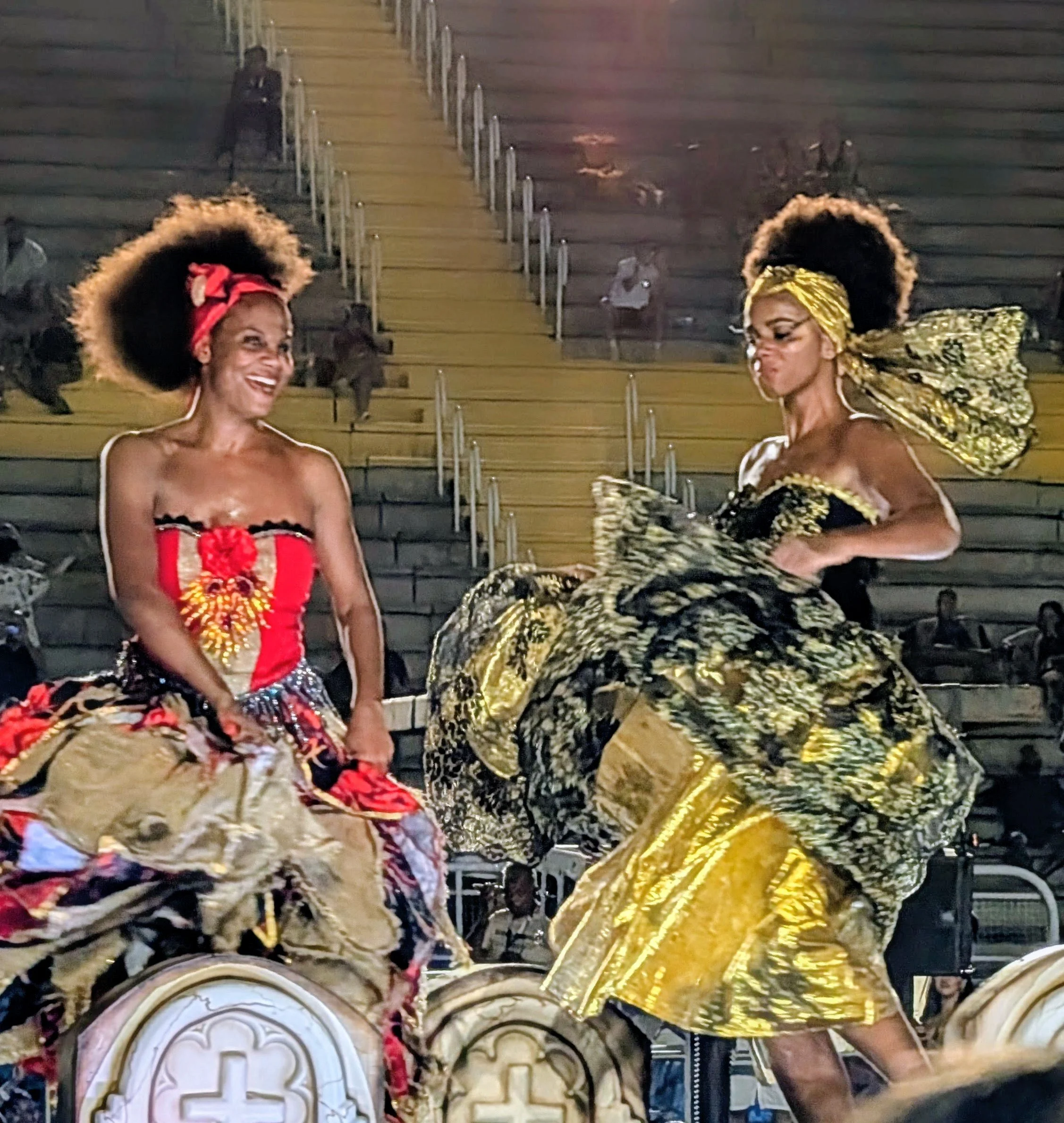
Dancers on a float during Carnaval
Our time in Brazil was split. We left the truck in Uruguay to head home for a few months, and on the way stopped off in Rio de Janeiro in February to experience Carnaval (a lifelong dream of Dawn’s). Later we returned in June to continue exploring the country.
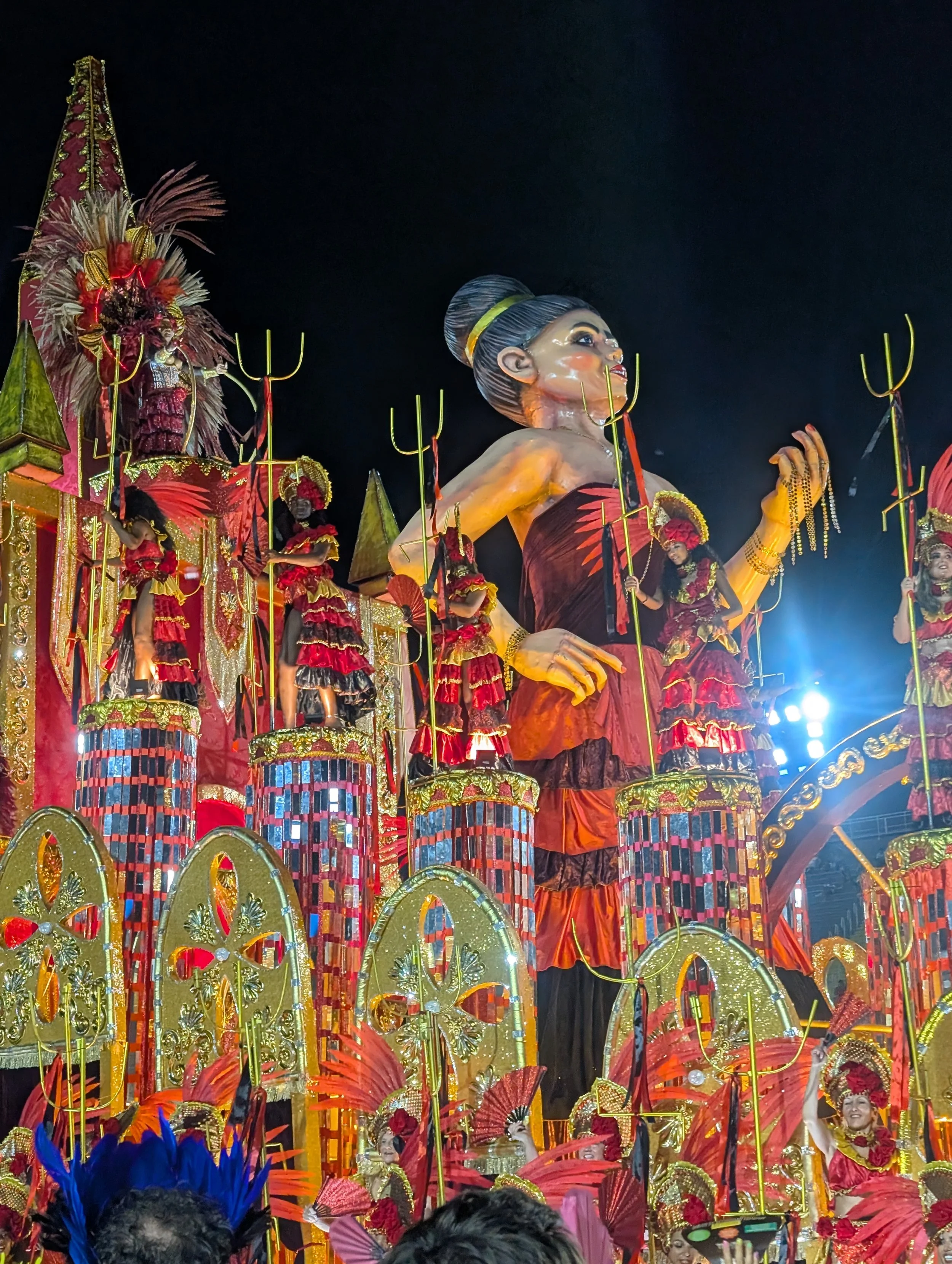
The floats were the most extravagant we had ever seen.
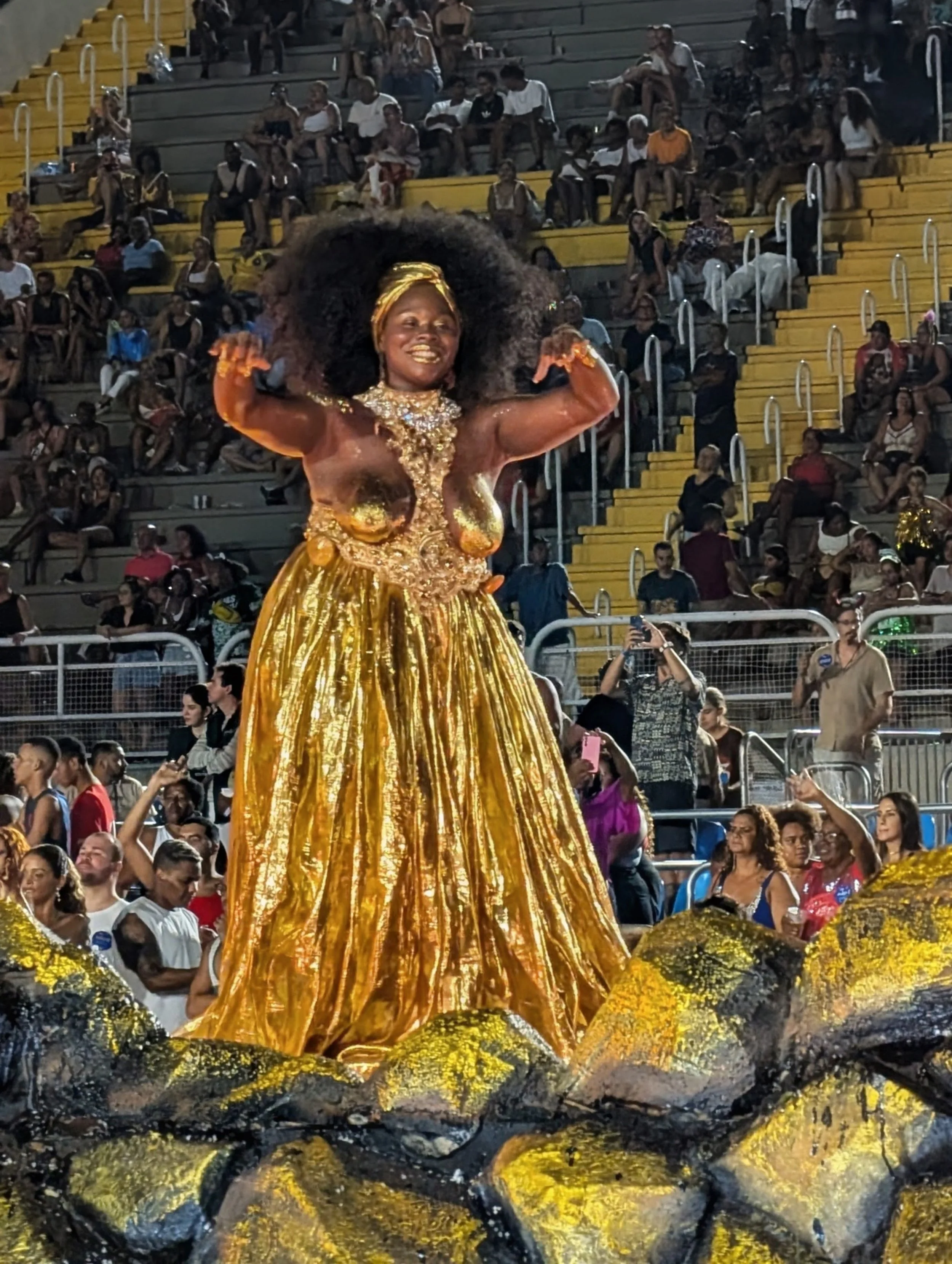
The costumes were magnifcent
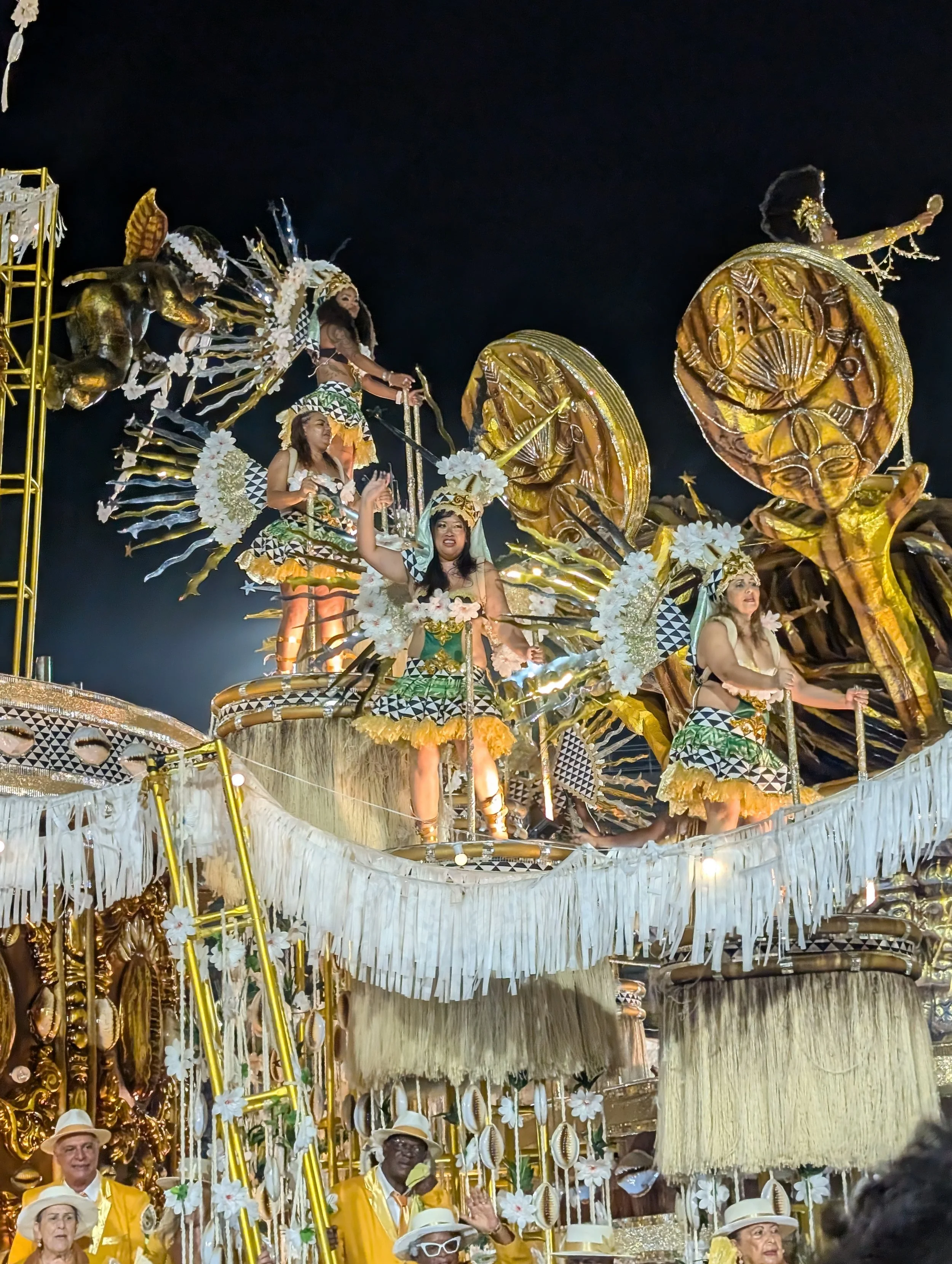
And of course the music was exceptional
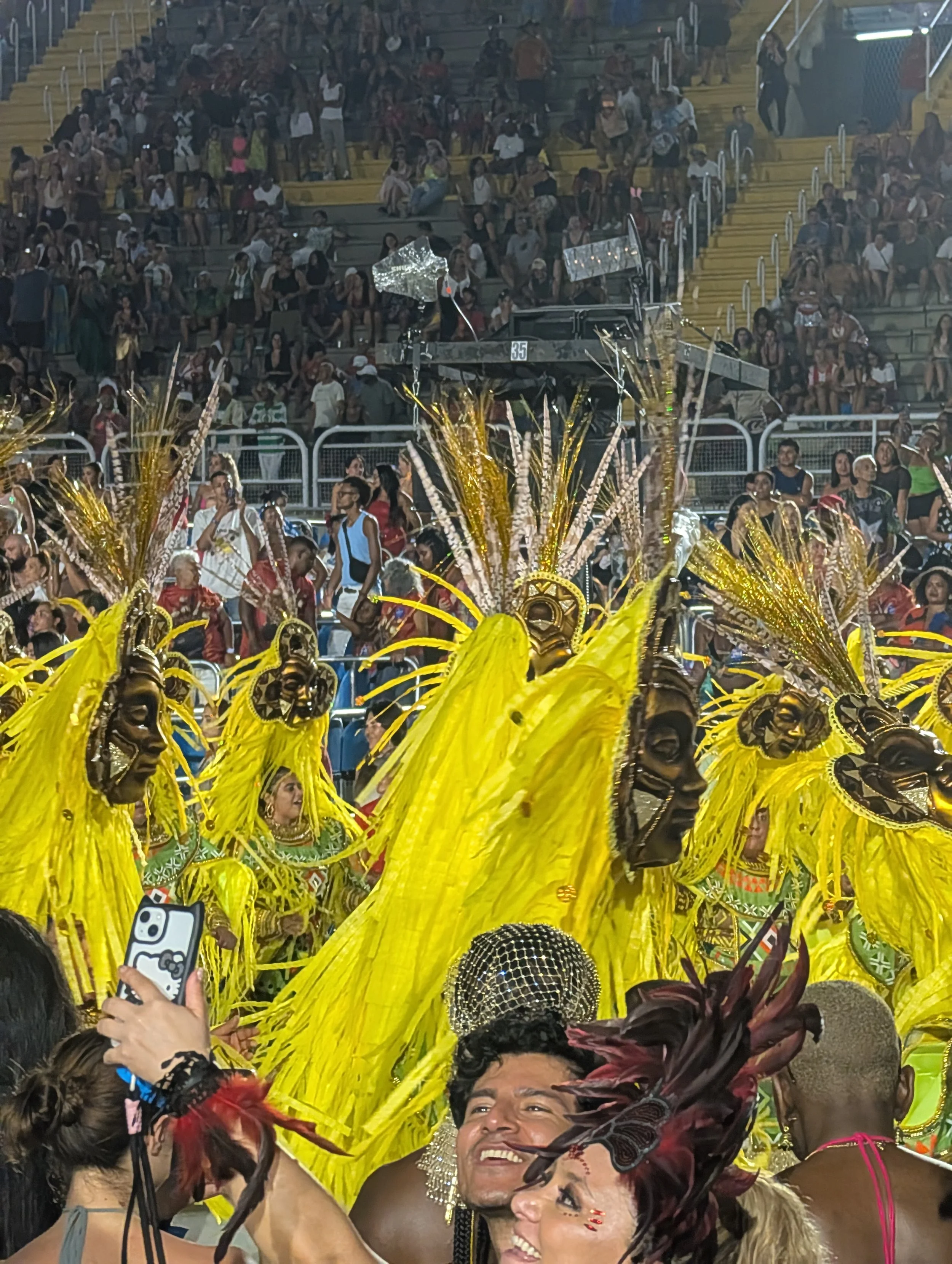
Each float that passed through the Samba Dome was accompanied by scores of uniquely dressed dancers
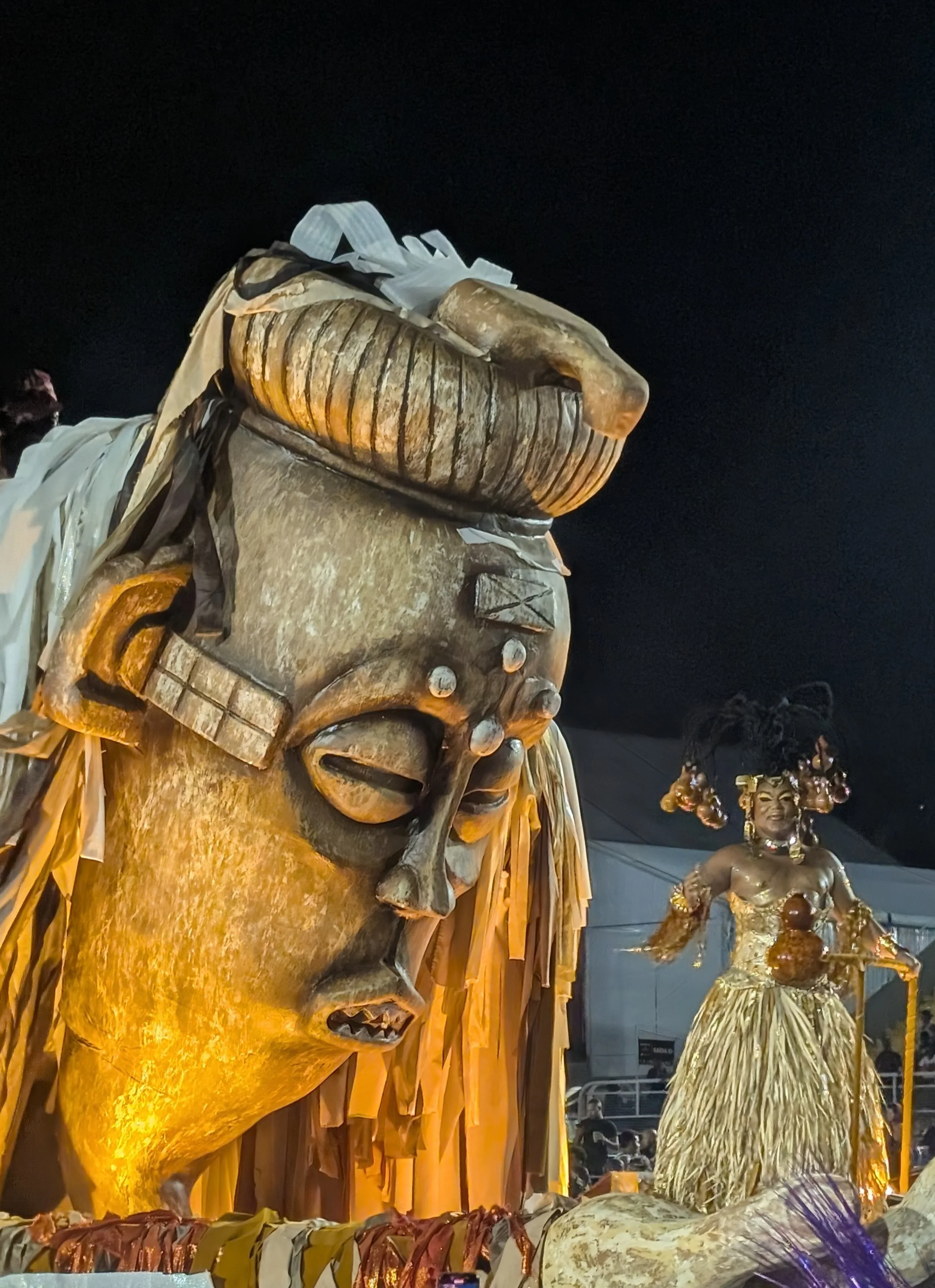
It was the first time in a long time that we were still going strong at 2:30am
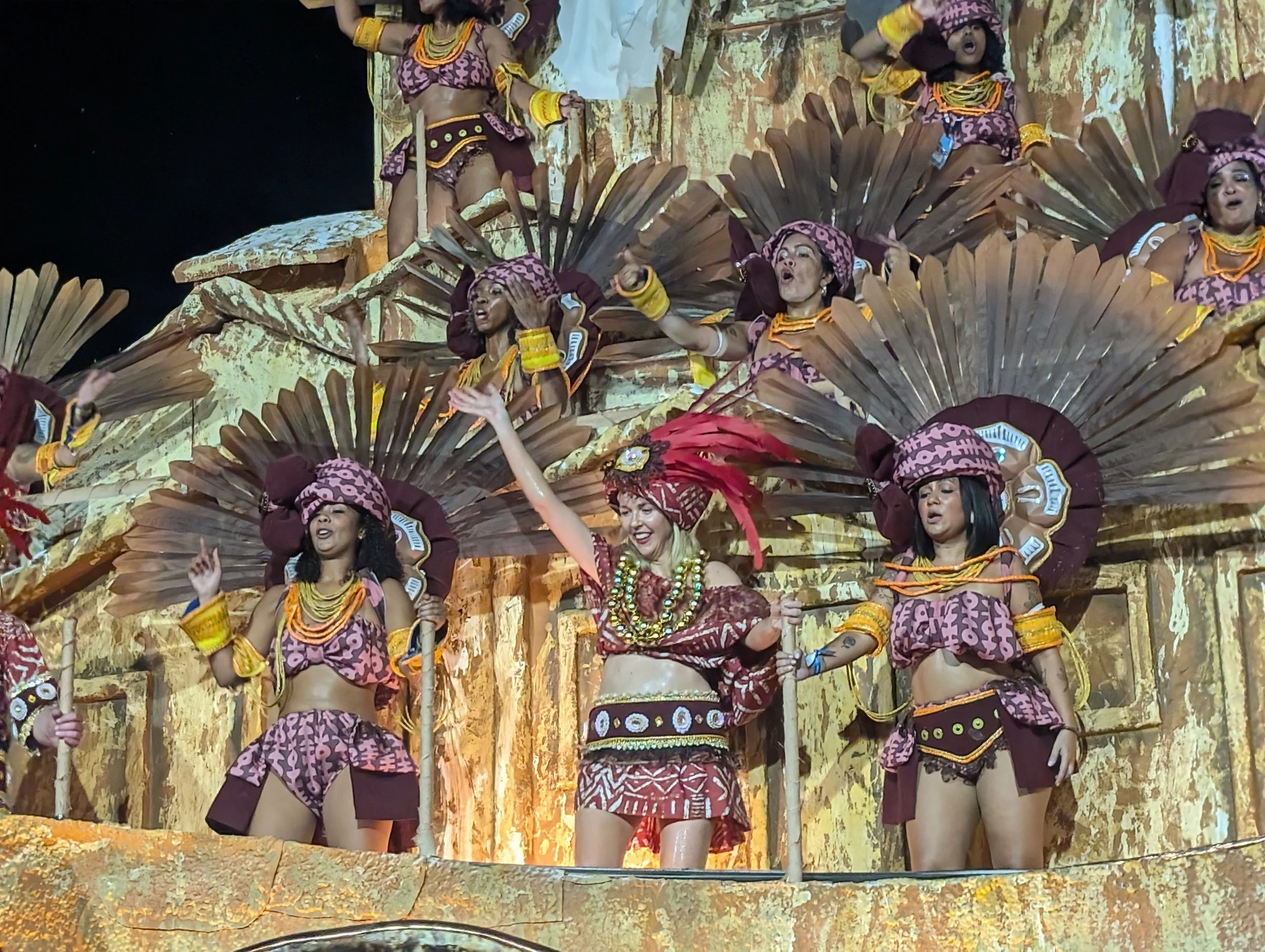
Dawn was in heaven (she has about 100 more pictures but we will spare you)
It was worth the extra trip for us. We had booked tickets online a few months in advance (we did not go to the final weekend which is more expensive and requires more advance planning). It is probably the most spectacular show on earth.
But trouble came the day we were flying back home as we took off on foot to explore some of the neighborhoods of Rio de Janeiro.
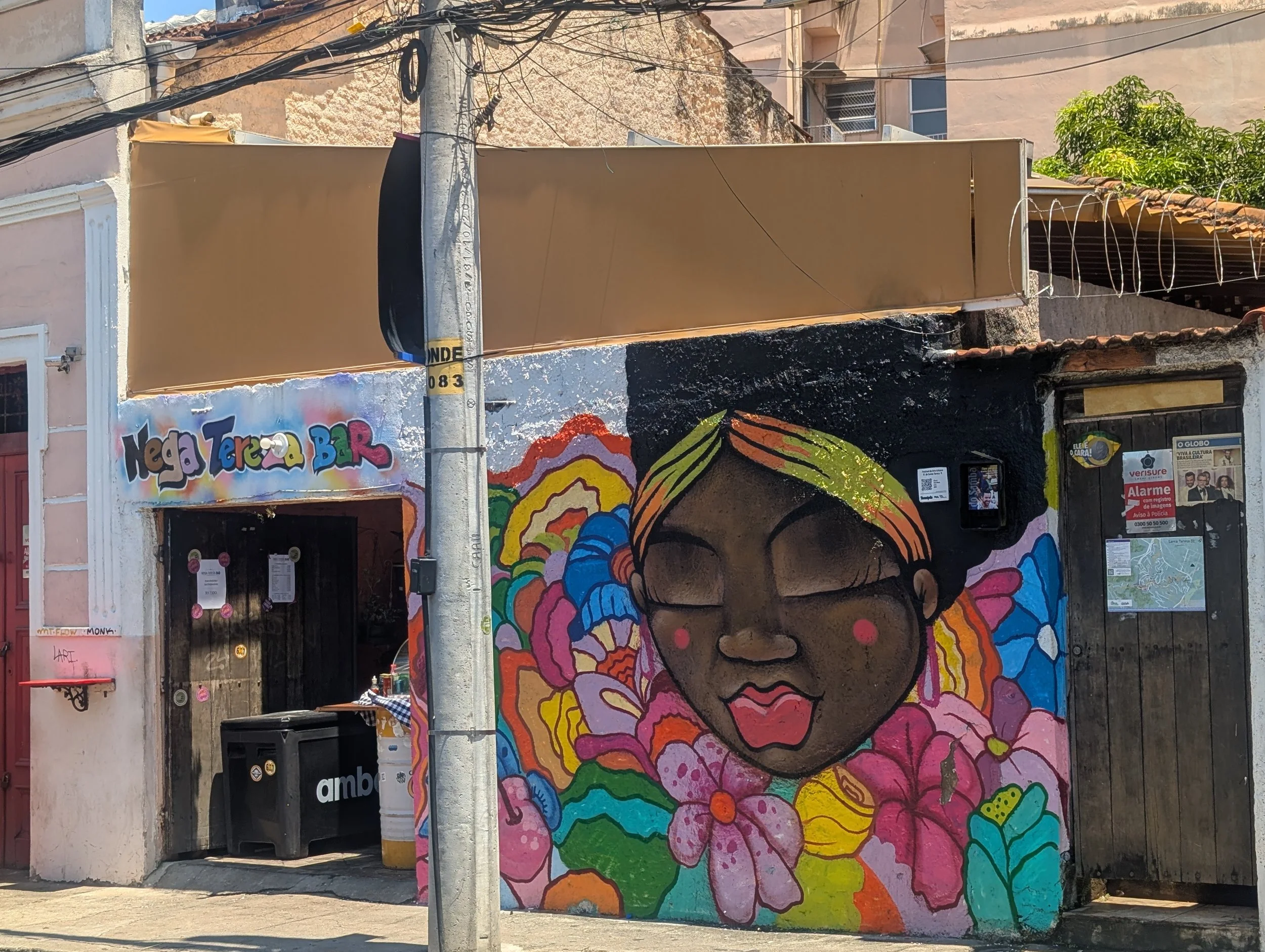
Beautiful street art in Rio
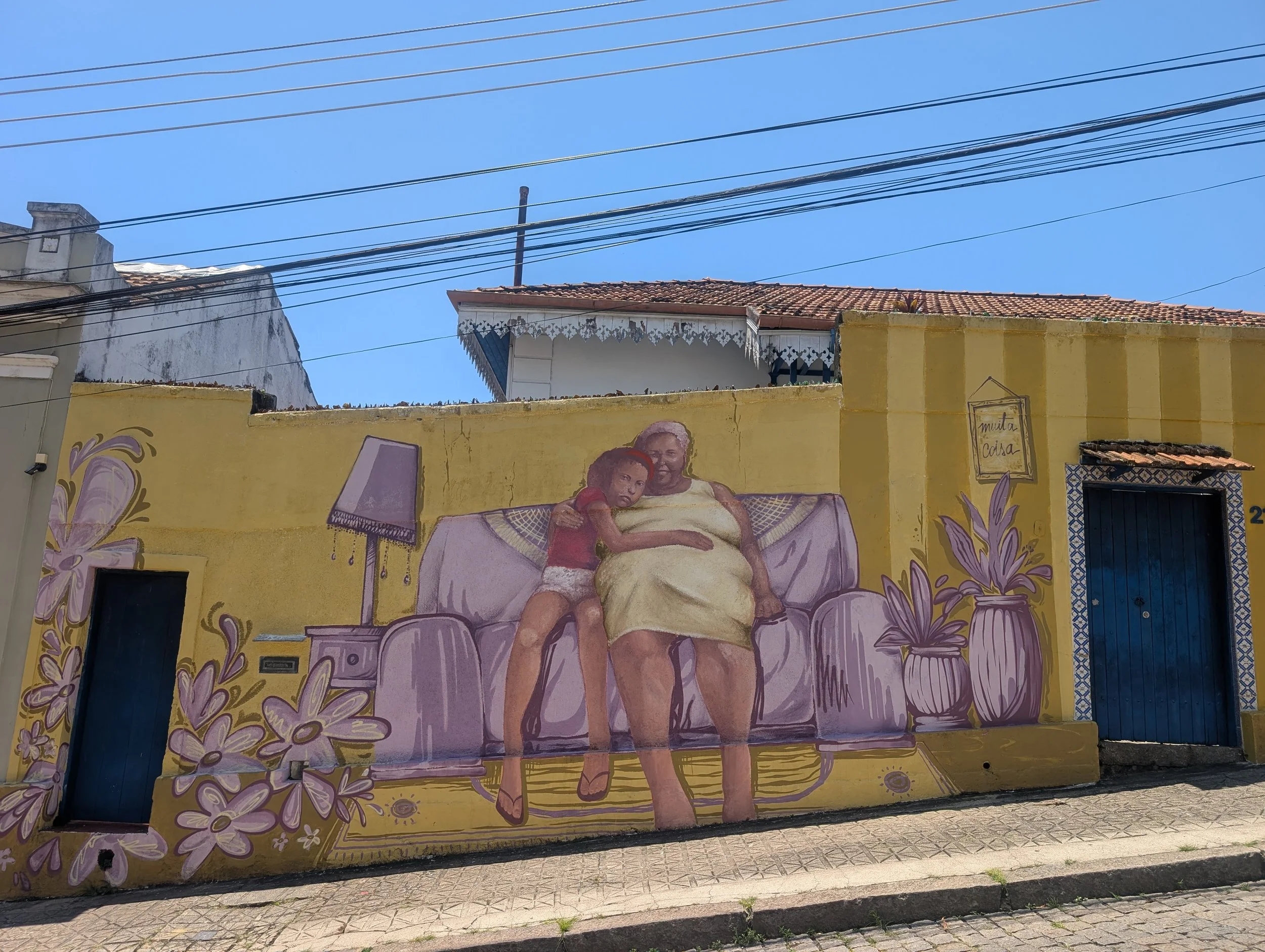
Mural in the Lapa District
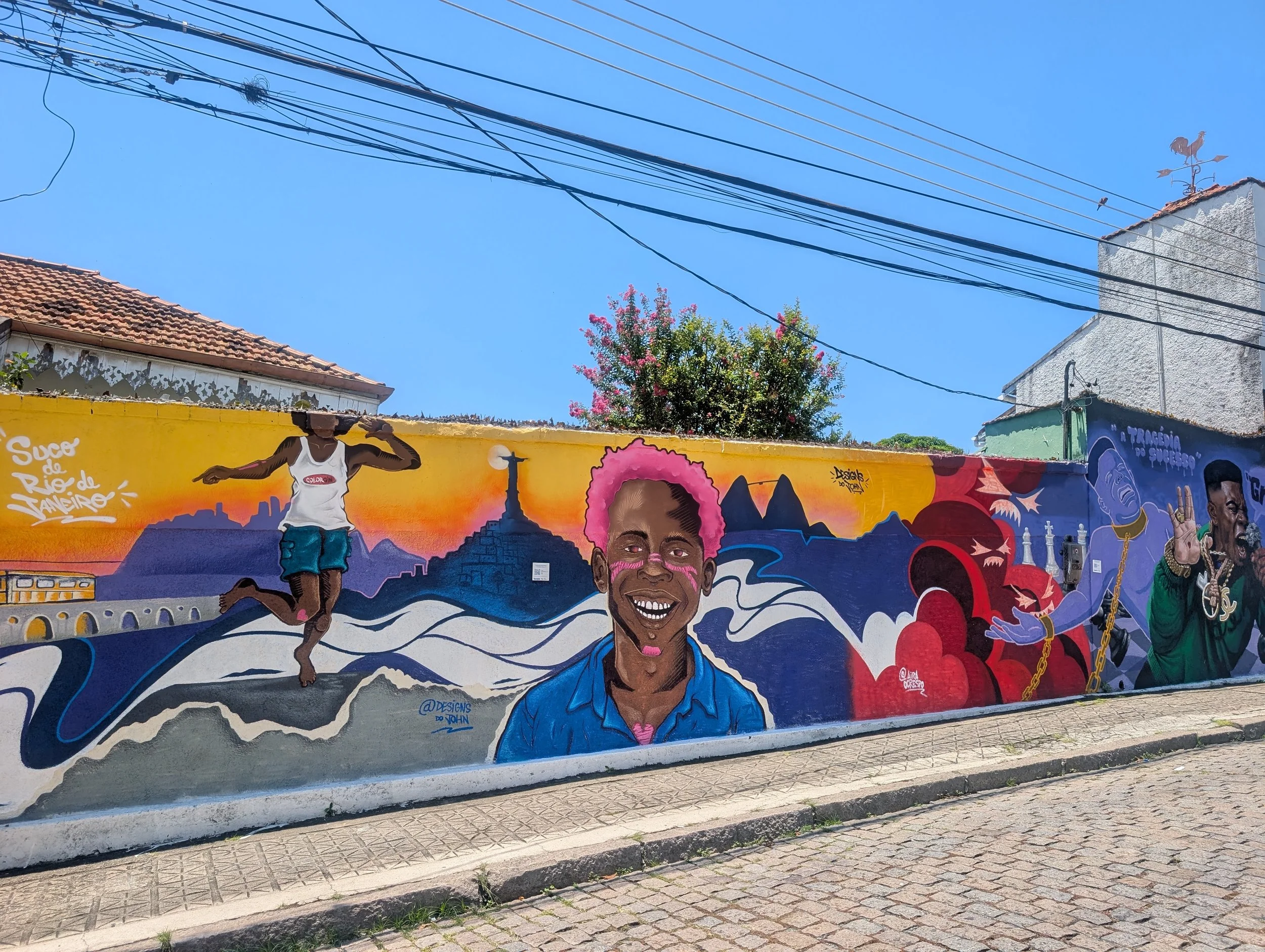
Representing the joy of the city
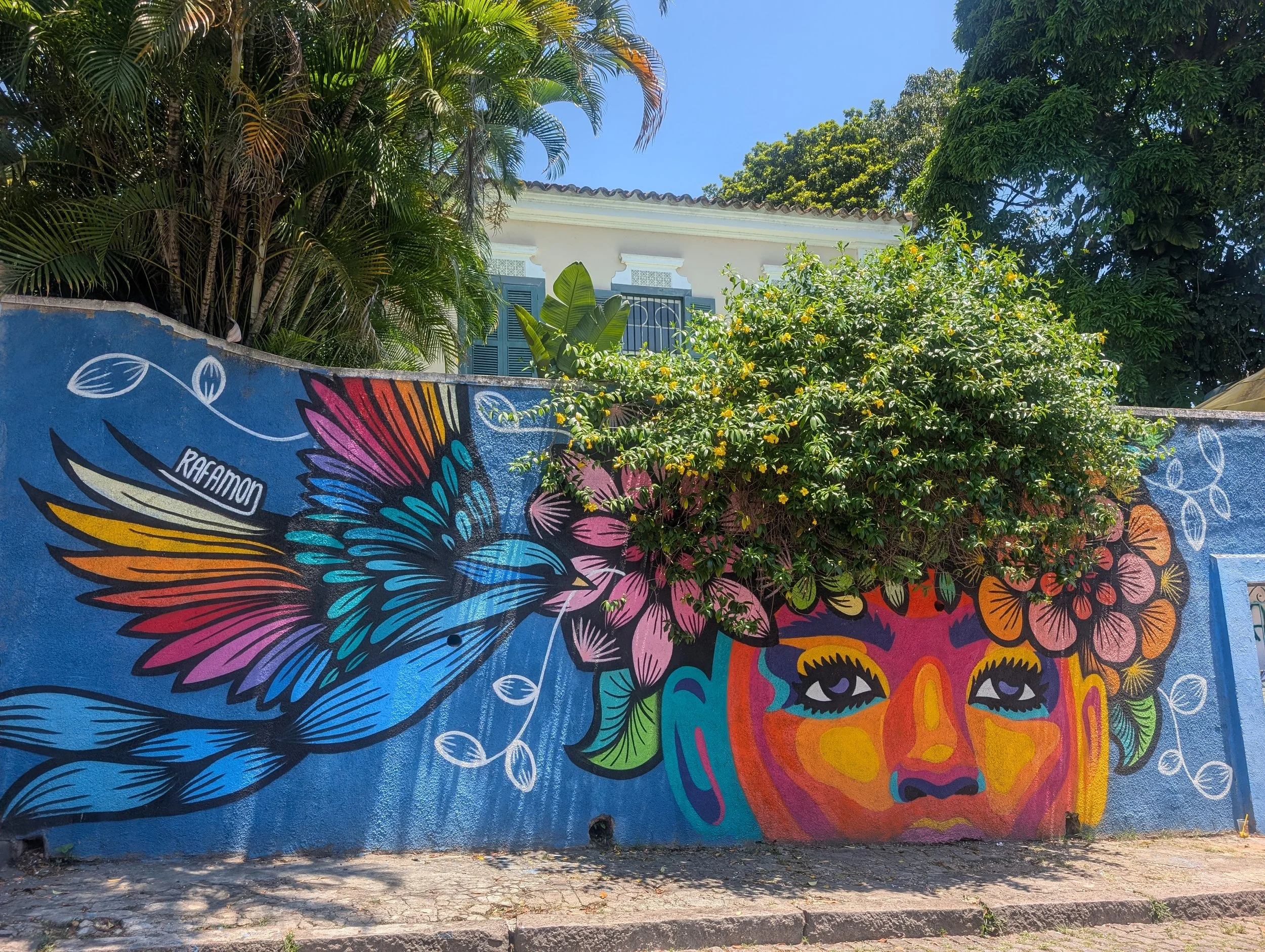
Creative integration of the flora
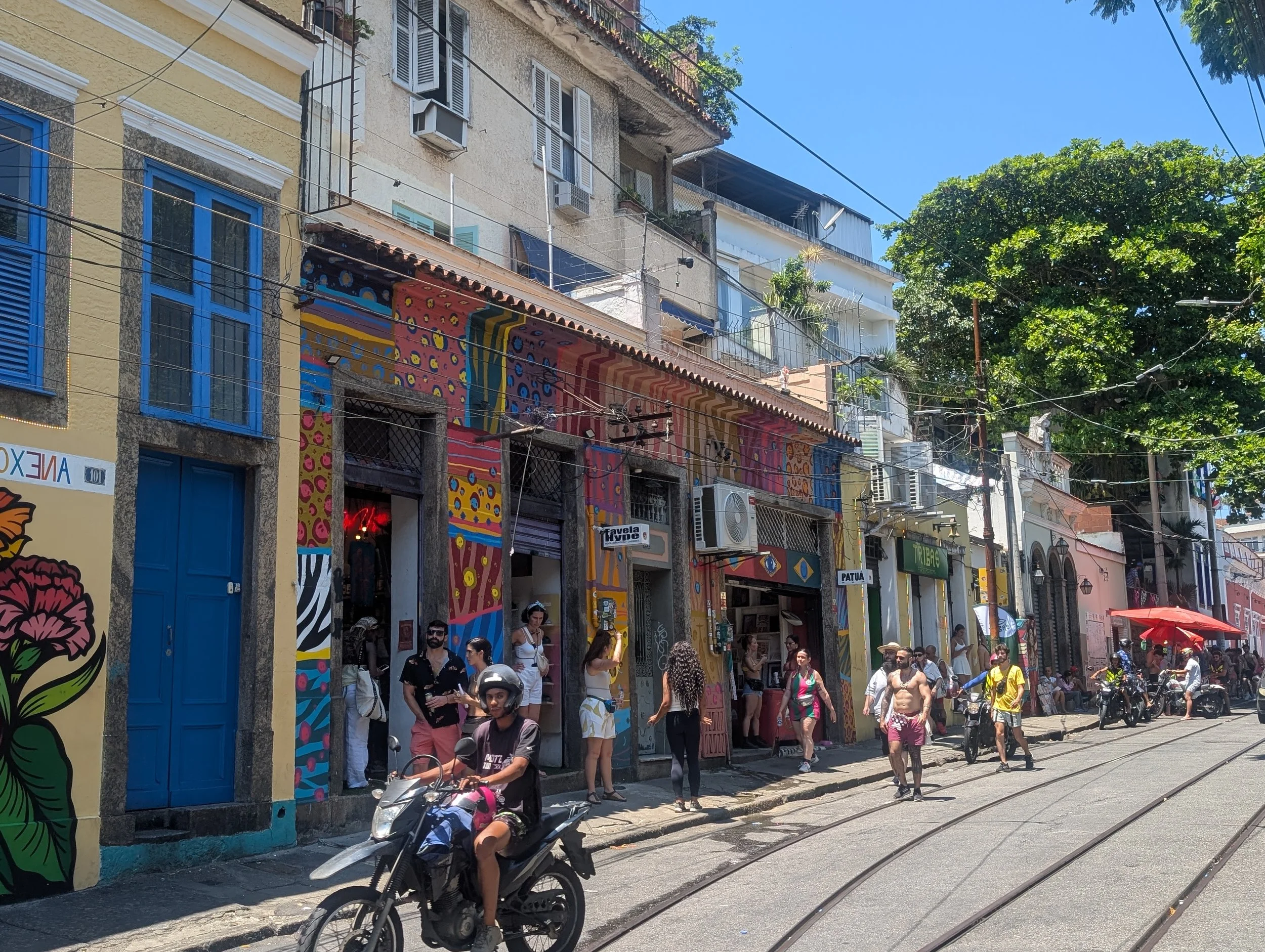
The streets were bustling with Carnaval attendees
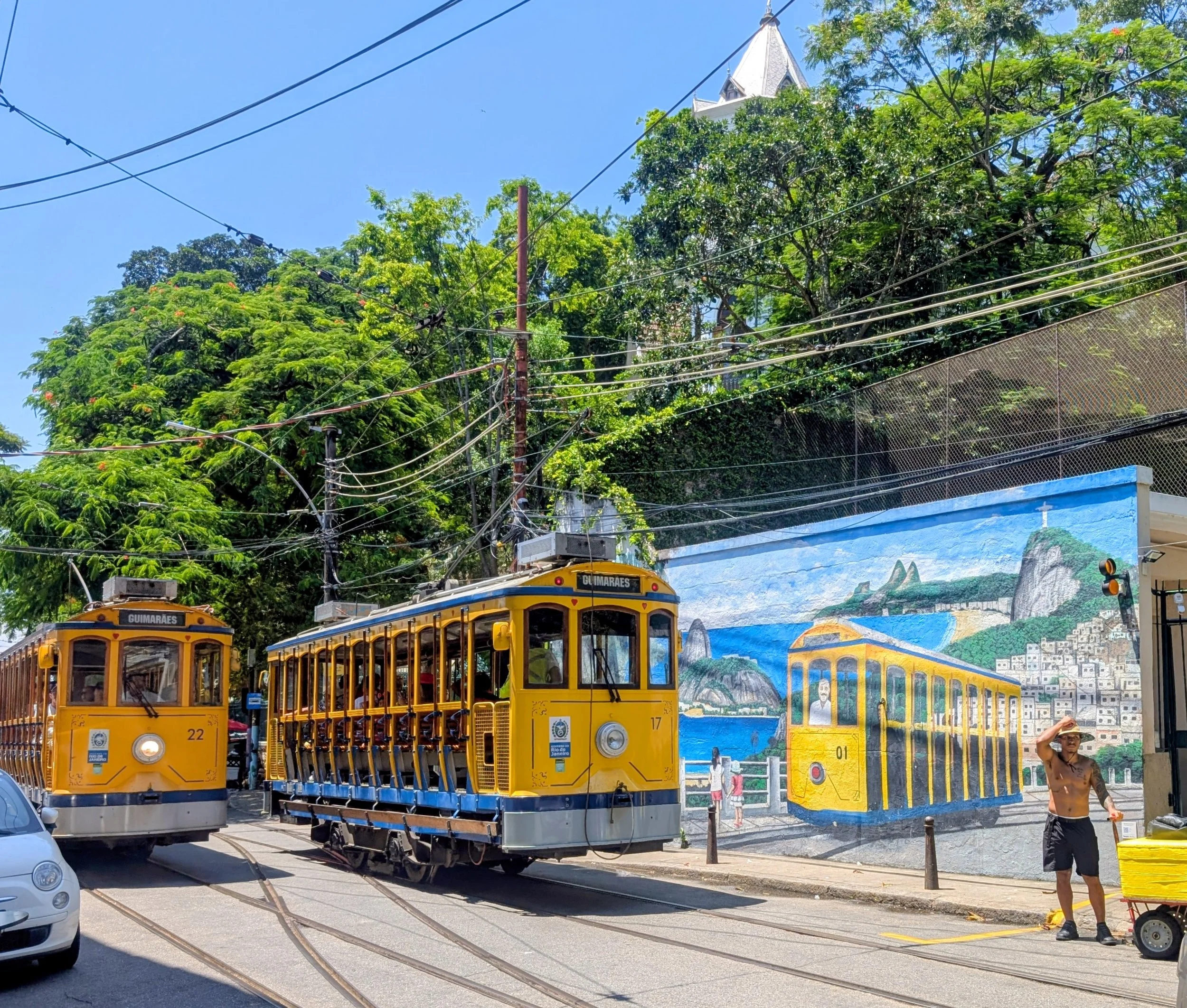
Local trams
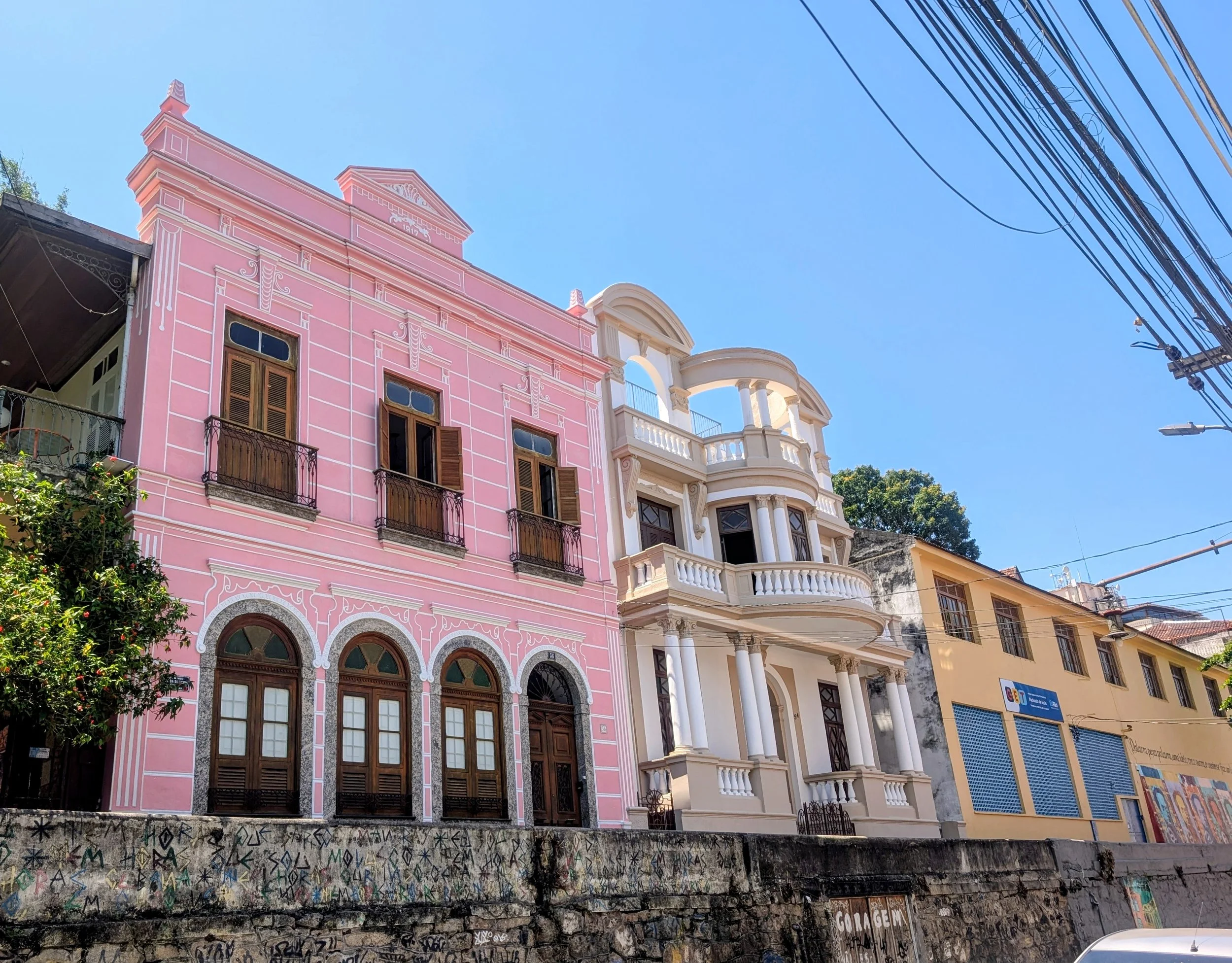
Restored colonial buildings
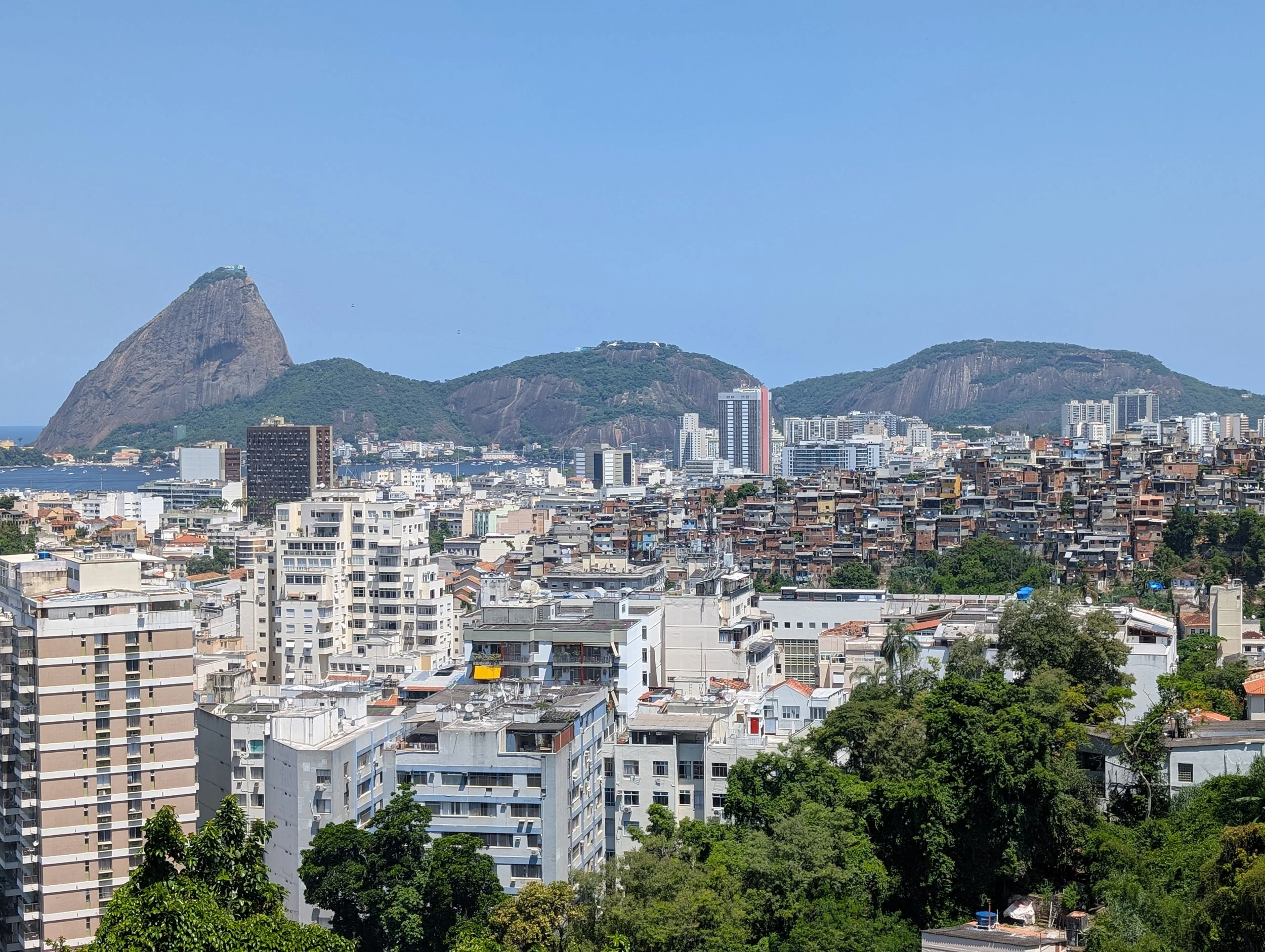
View across Rio de Janeiro
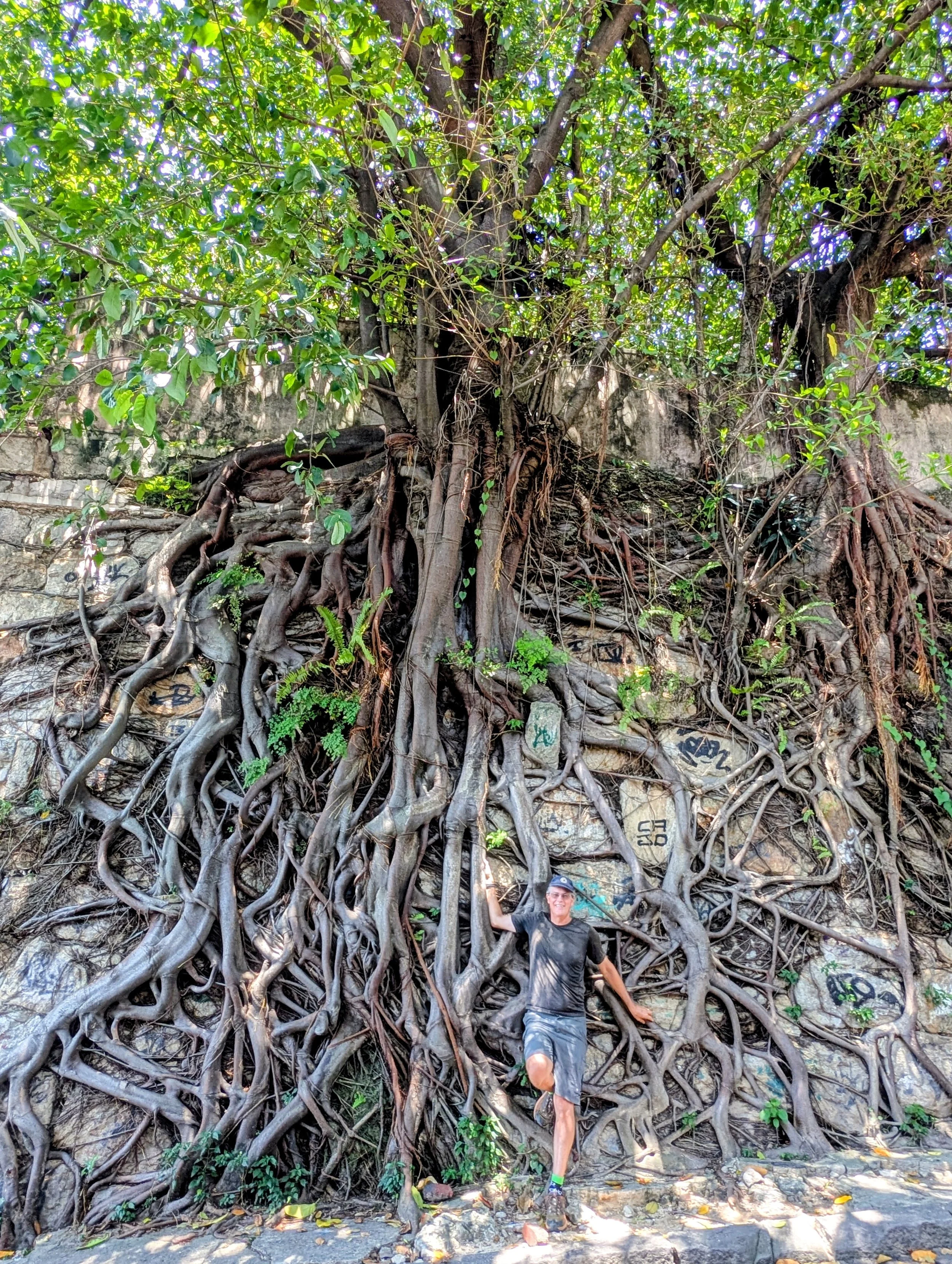
Andy posing by an enormous tree whose root system seemed to be growing up a stone wall
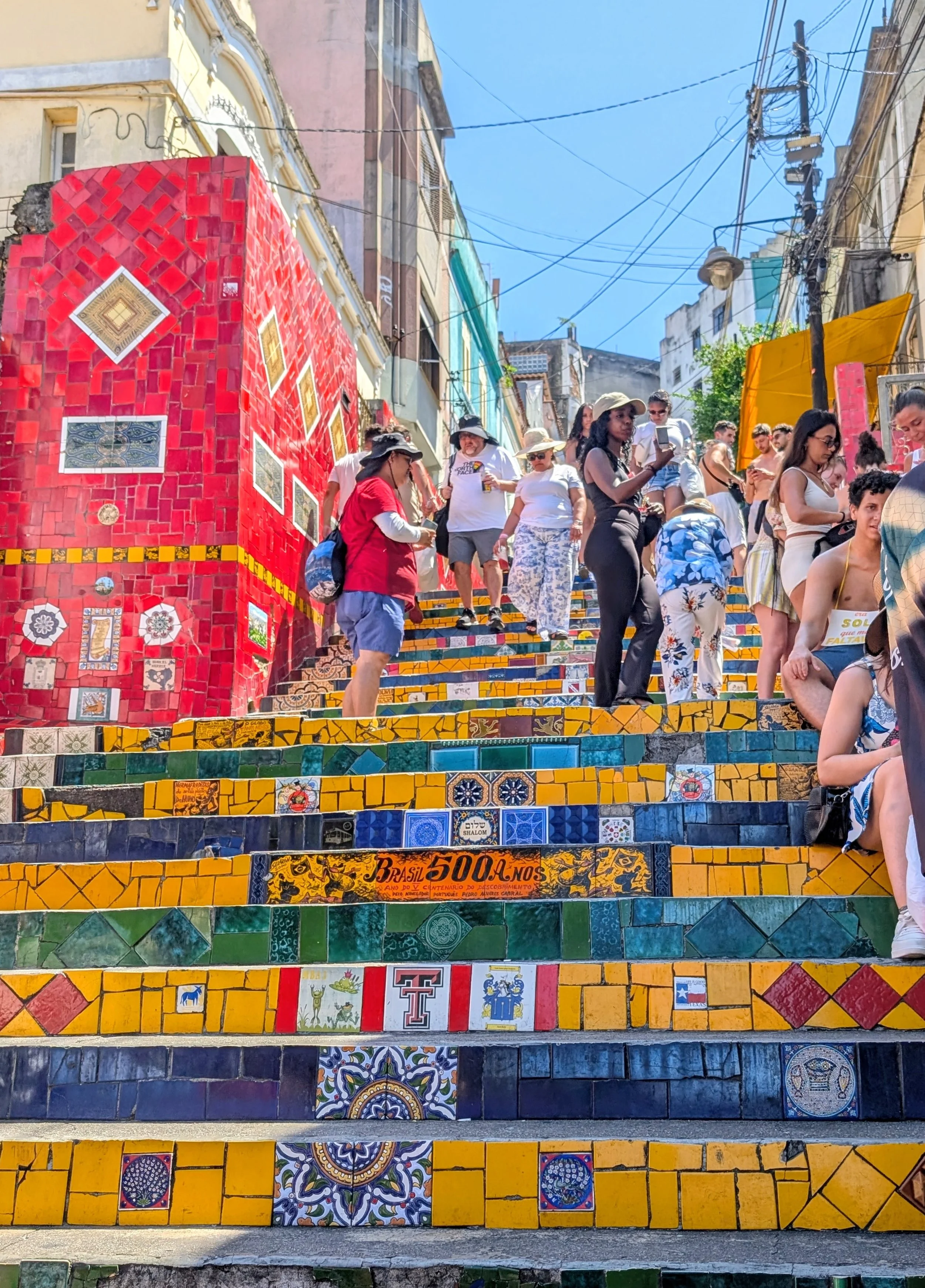
The famous Selaron Staircase
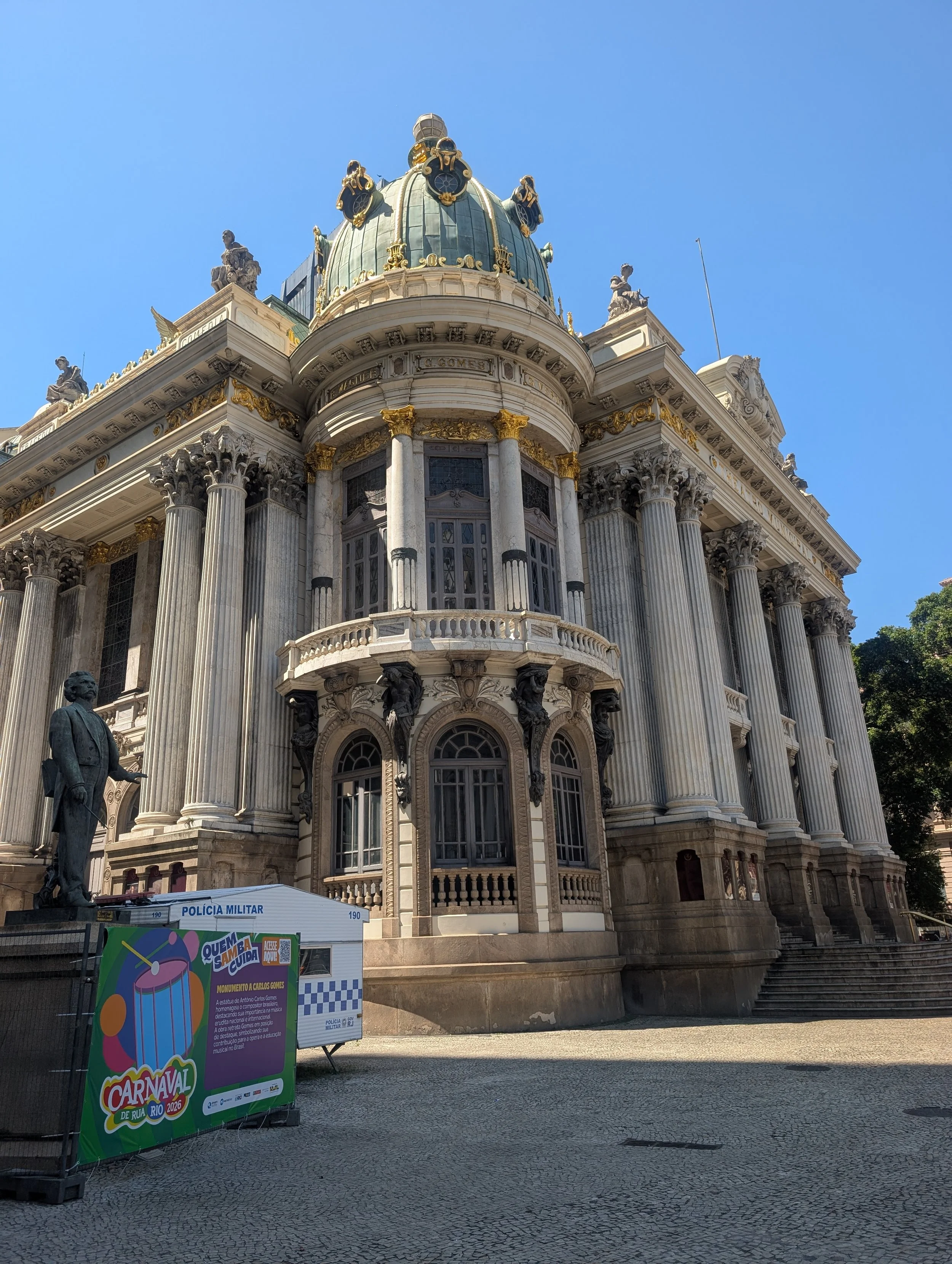
Beautiful old theater
Unfortunately, in the middle of the afternoon of our day exploring the city, we had our first ever robbery in 6 years of travel. Dawn was wearing a thin gold necklace (now we know how stupid that was). A street thief came up behind her and removed it from her neck. She let out with a yelp, feeling someone’s hands around her neck. Andy immediately realized what had happened and took off after the thief. There was a complicated hand off and as the thief met up with a conspirator pretending he was trying to help us. They were surprised by Andy’s size and speed as he came up on them demanding they return the necklace (a birthday gift he had bought in Malaysia) and they resorted to throwing large rocks at his face. He ended up with a broken nose and stitches.
But of course, with every difficulty comes a silver lining. People on the street, families and bystanders came immediately to the rescue. They provided water and bandages and a call to the police. The police came and took us to the hospital where Andy received stitches and a CT scan to confirm his broken nose. We walked out of the ER two hours later (after being assured that all the medical care was free) just in time to board our flight.
It was a lesson learned, we had become sloppy. Dawn was more dressed up than usual, in the spirit of Carnaval, and we were huge targets as obvious tourists. The sad reality was that the whole experience colored the rest of our time in Brazil and we could never quite relax into the country in the same way. We knew that Brazil ranked among the countries with the highest numbers of violent crimes, but we had traveled in places considered “more dangerous,” with no problem so had let our guard down.
But putting our fear aside, we flew back to Brazil in June, rested after time with family and excited to explore our 100th country. We decided to minimize time in big cities (usually our preference anyway) and set out to learn and understand more about the biggest country in South America.
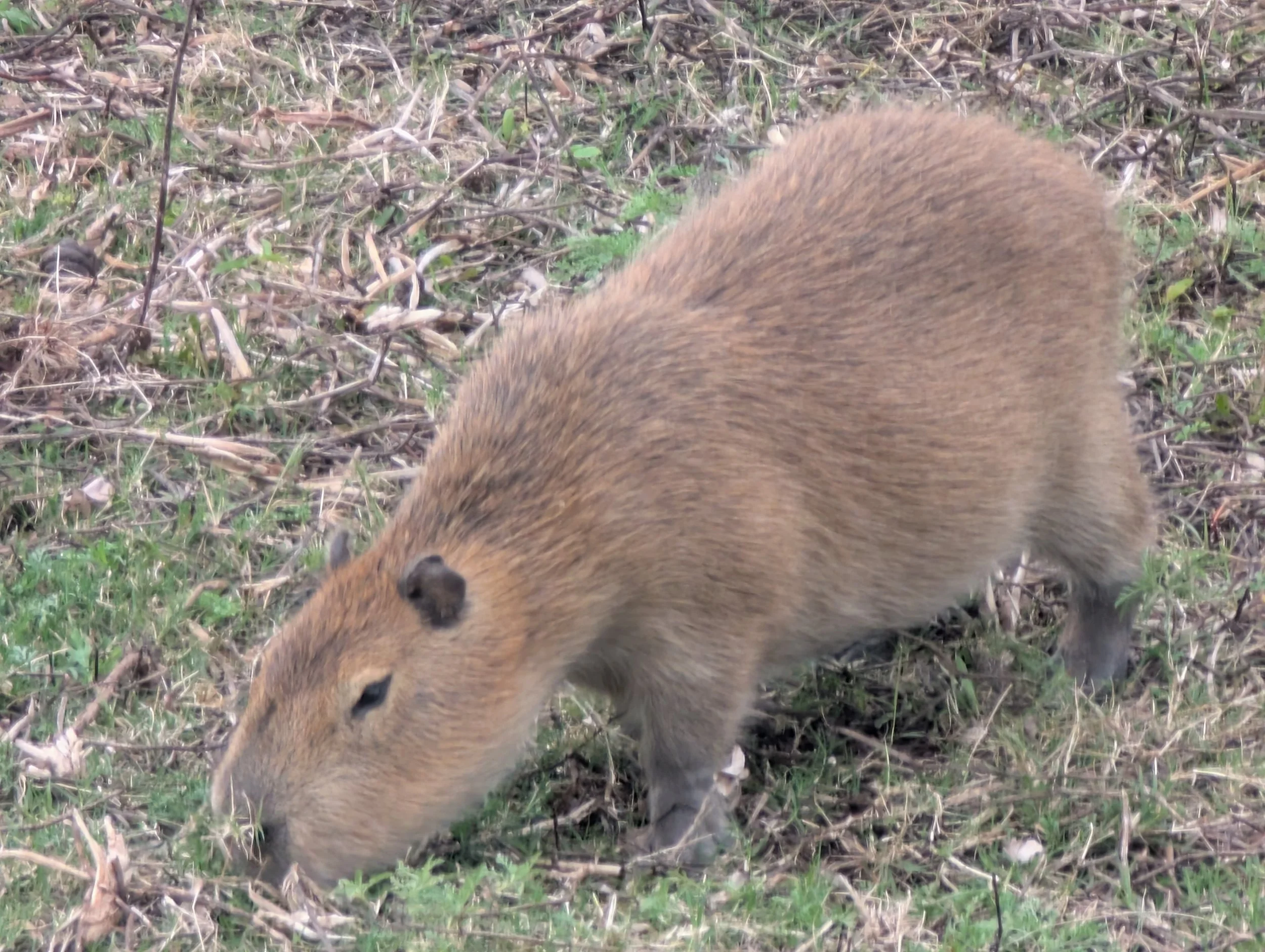
On day 2 we found roadside capybaras! We are sure that people thought we were crazy stopping by the highway to take pictures of over sized rodents but they were unique for us.
In our first few days, we stayed in campgrounds and repeatedly were told by our local hosts that we had to go to the village of Gramado. It was not on our original itinerary, but it was in the mountains and not far off our route so we added it in.
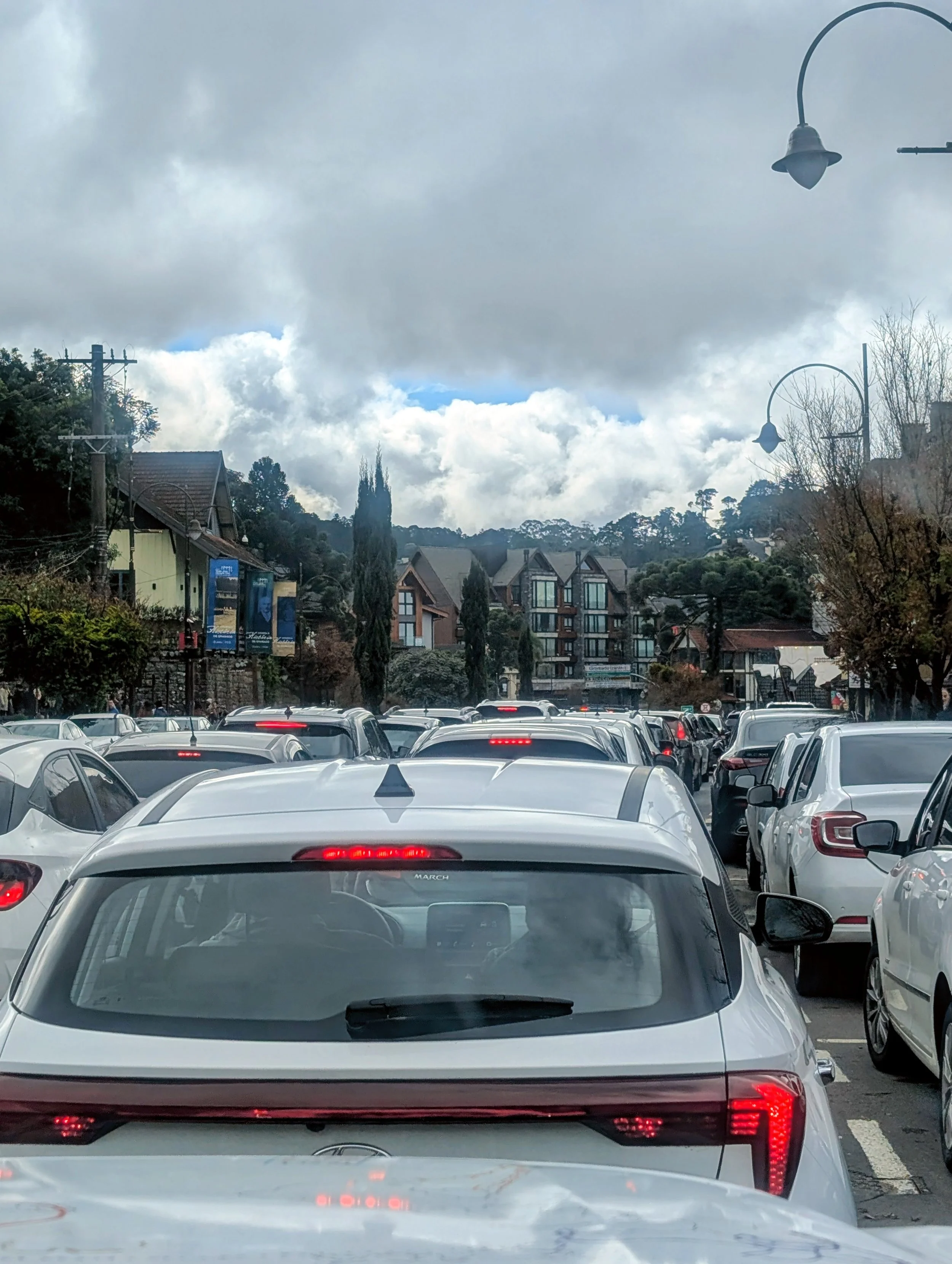
Driving into Gramado in solid traffic on a Friday afternoon
For us, it was a very odd place. Imagine a Bavarian themed town in the Brazilian mountains designed by Walt Disney. It was certainly a popular place, the streets were crowded with vacationing Brazilians and the traffic was insane.
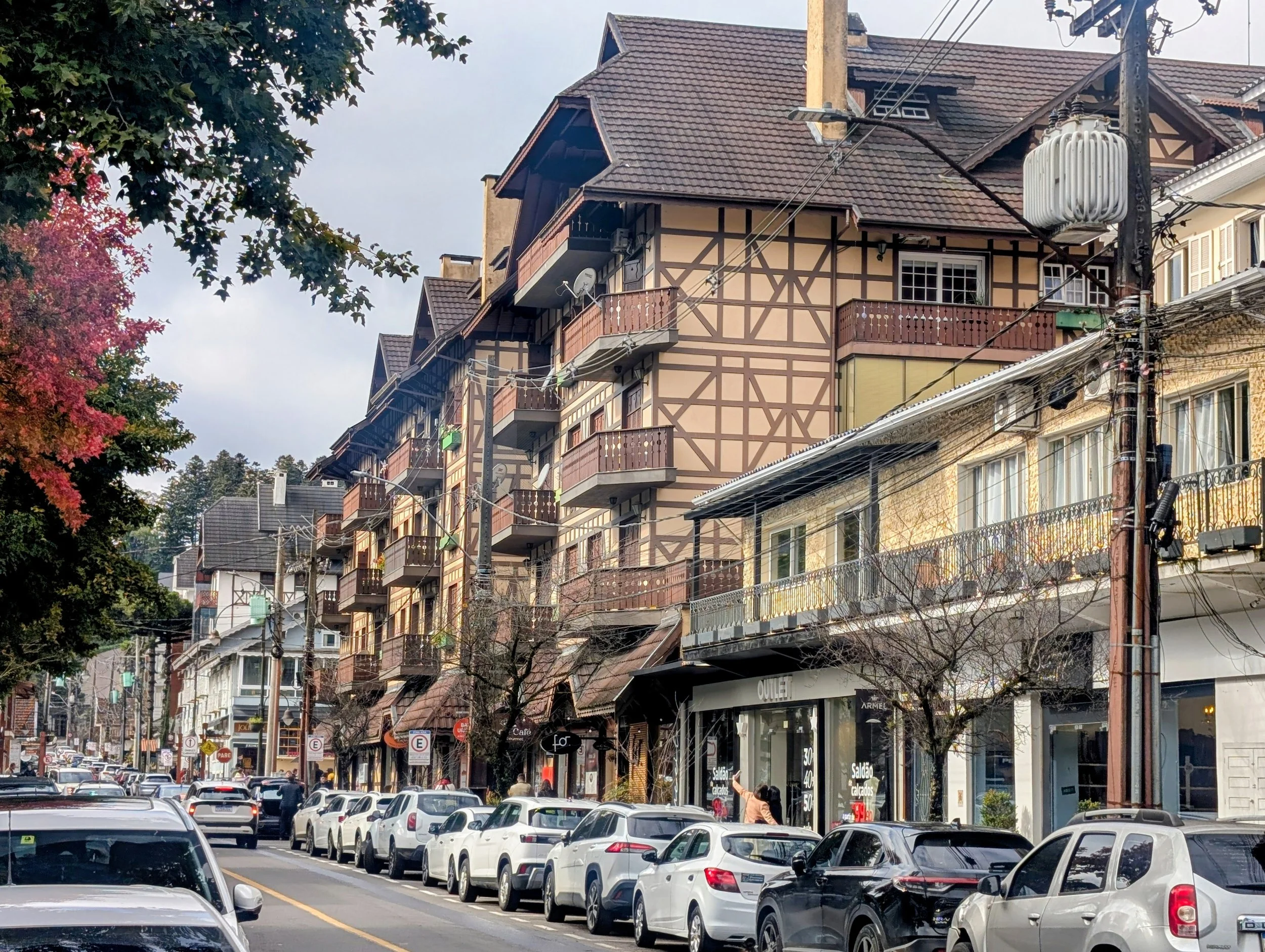
Main street in Gramado with Bavarian architecture
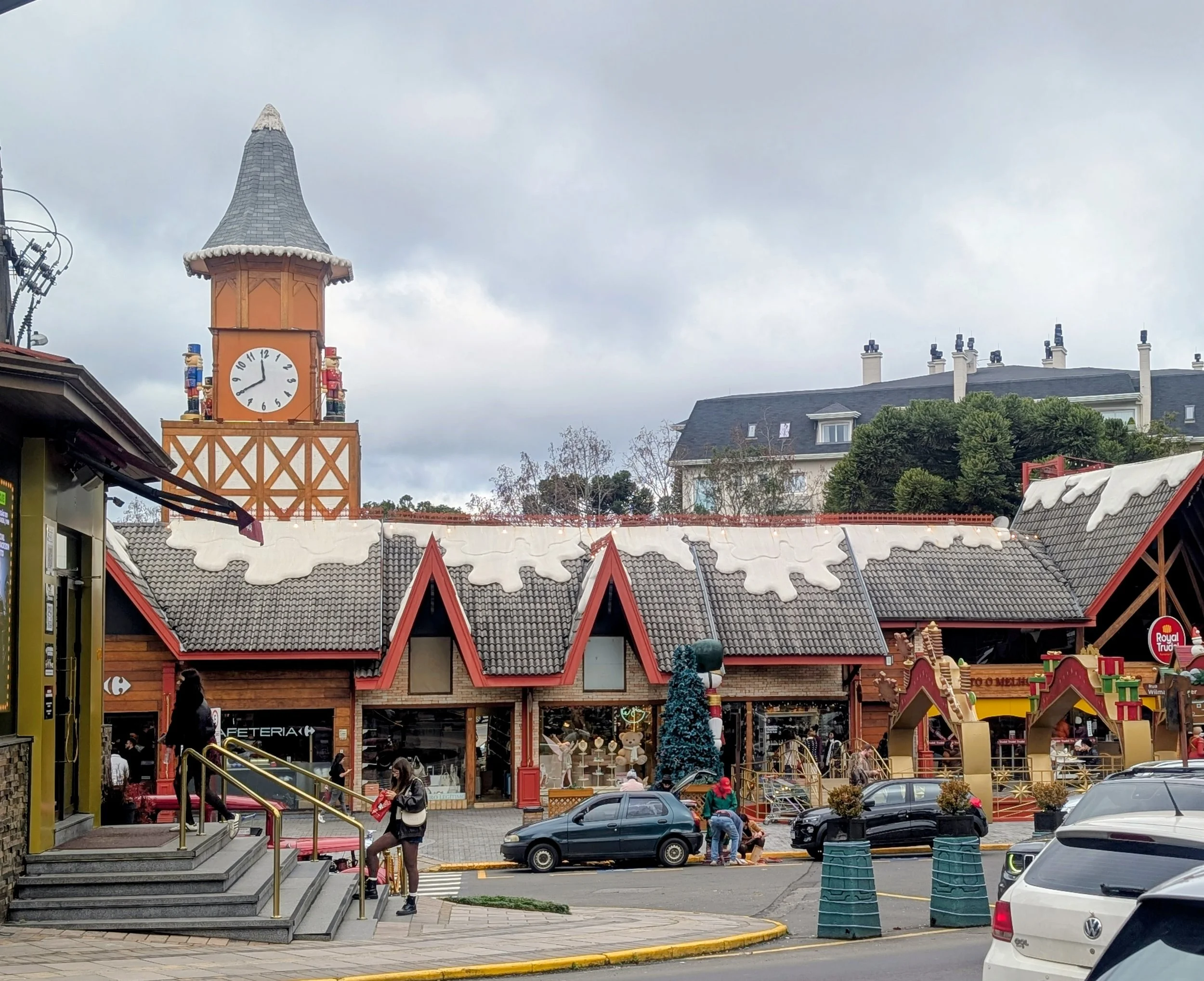
Complete with fake snow
Maybe were still jet lagged and grumpy but it was not our favorite place. We took the opportunity to buy some excellent local chocolate (in a gingerbread themed house) and set out to find a wild spot to camp.
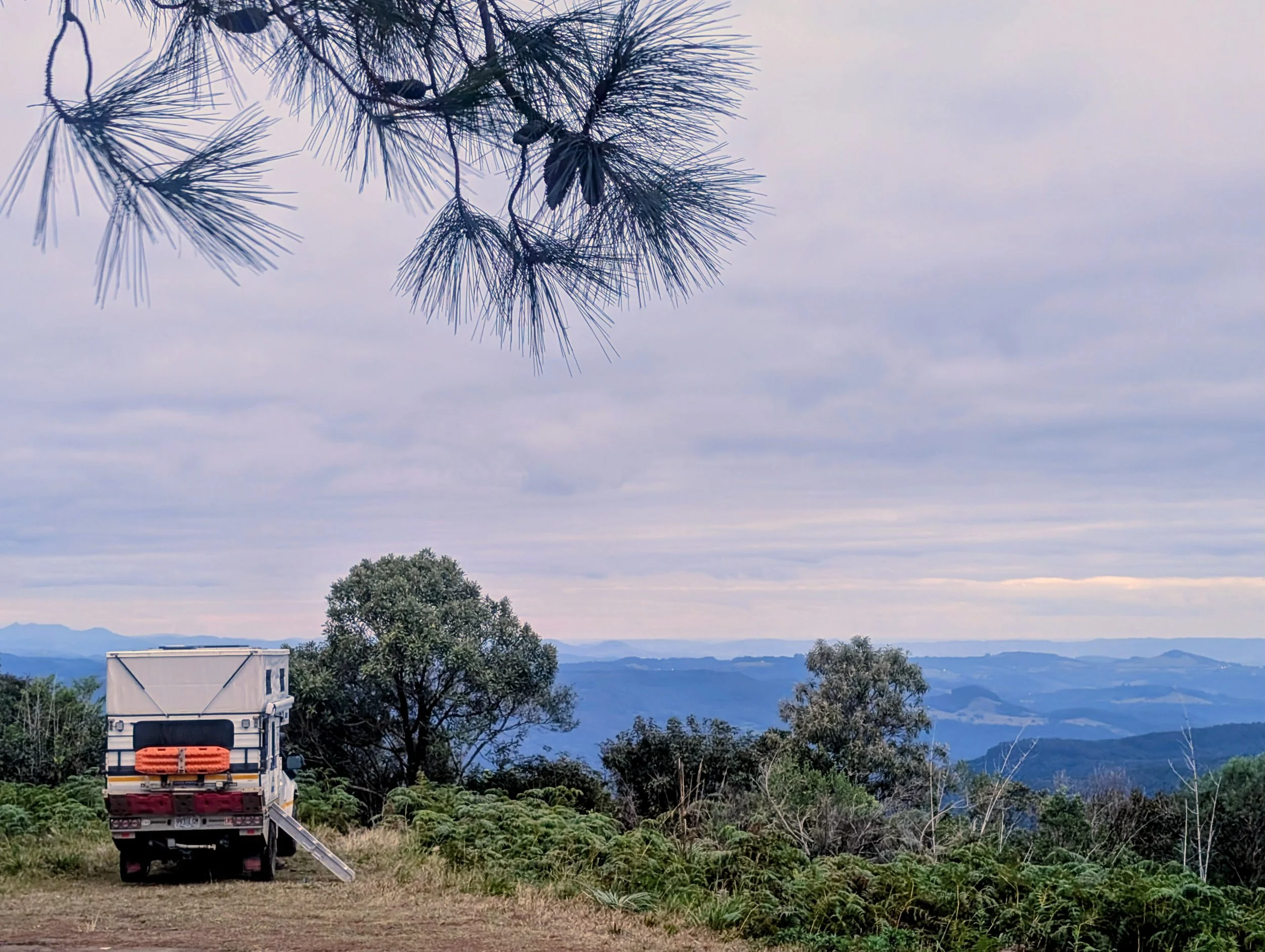
Bluff top mountain camp with a glorious view
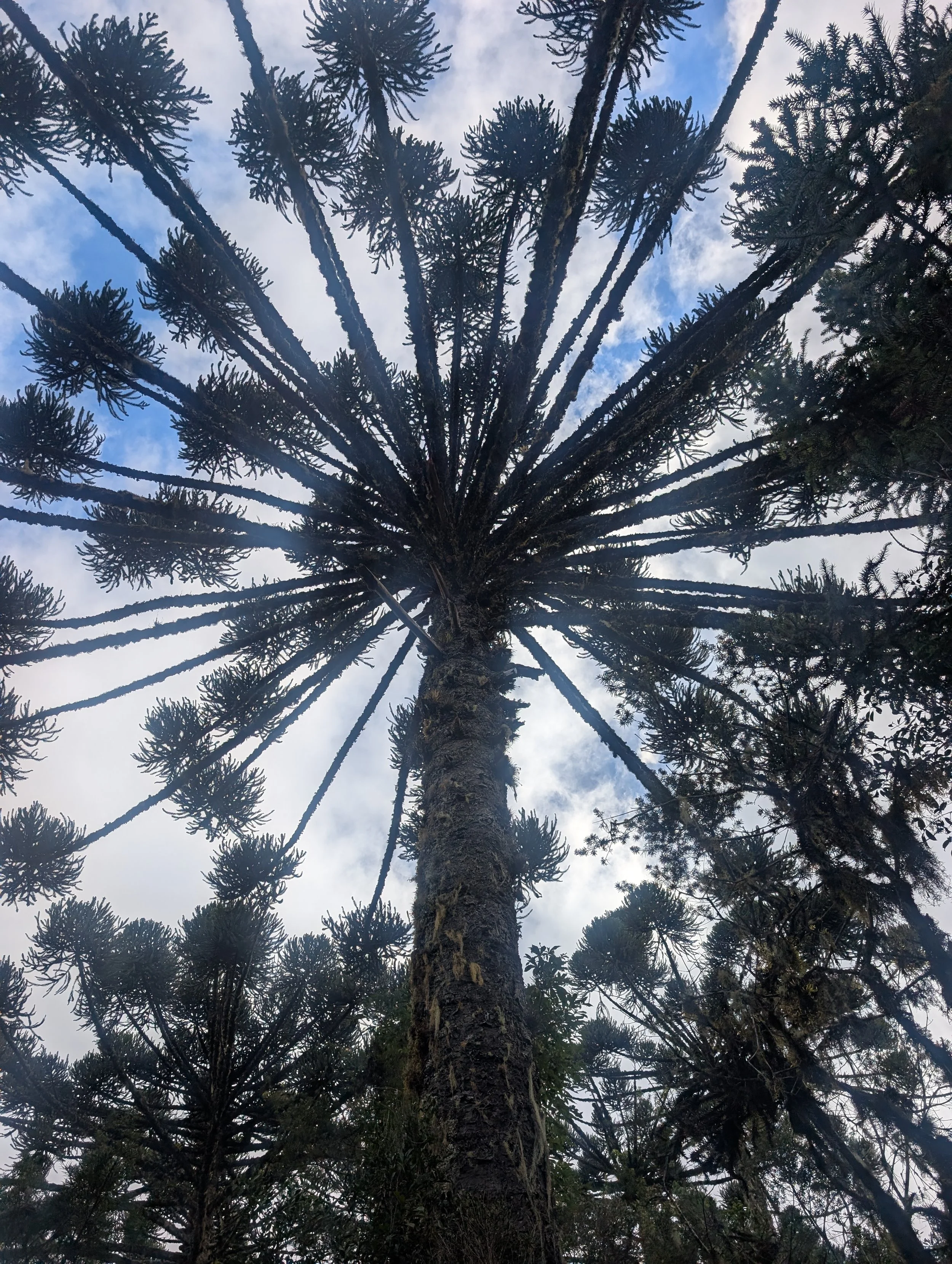
Appreciating the symmetry of the local “monkey pod” trees
Our next stop brought us back to life with its beauty, the canyons of Serra Geral National Park.
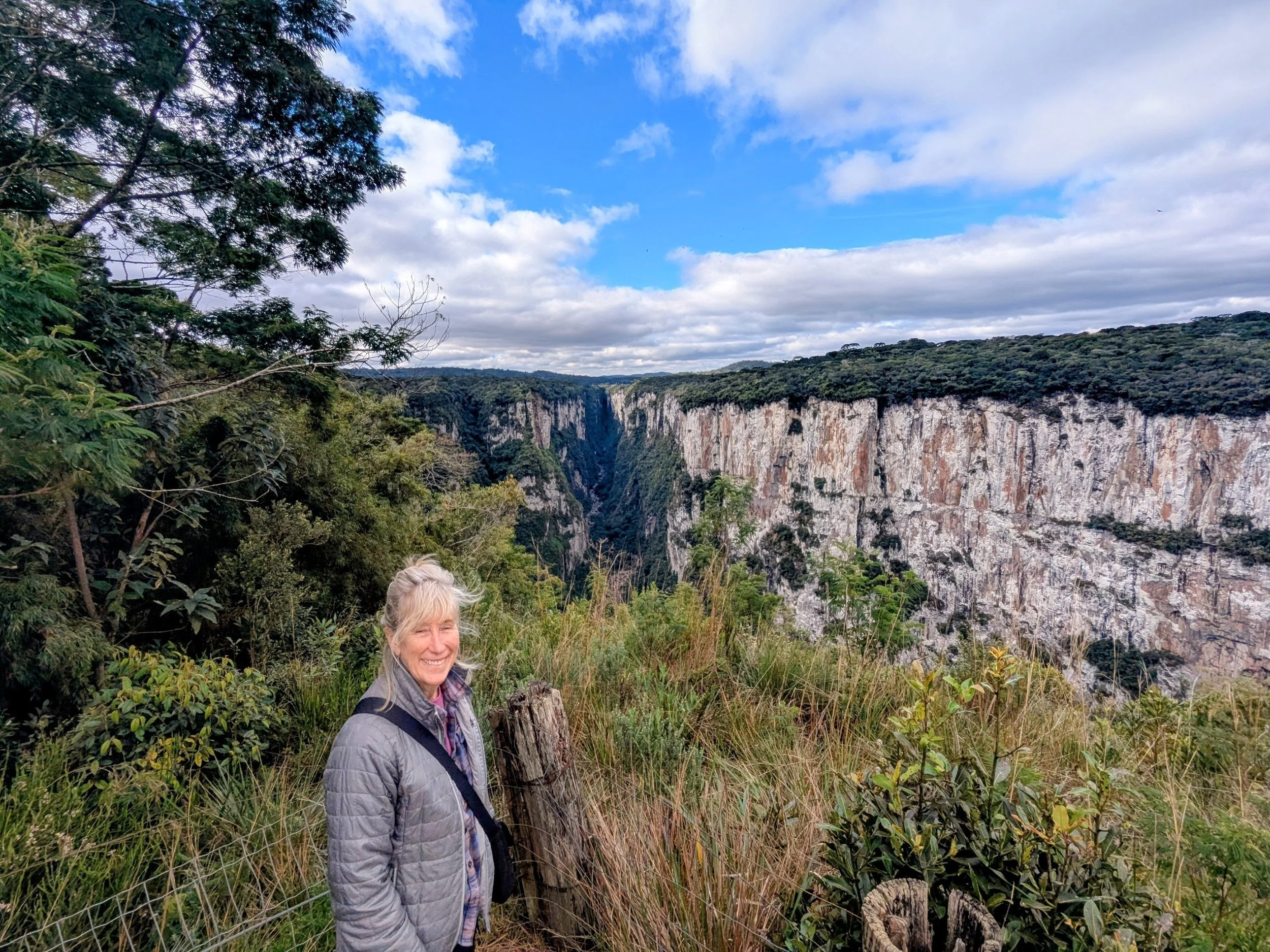
Hiking along the rim of Canion Fortaleza
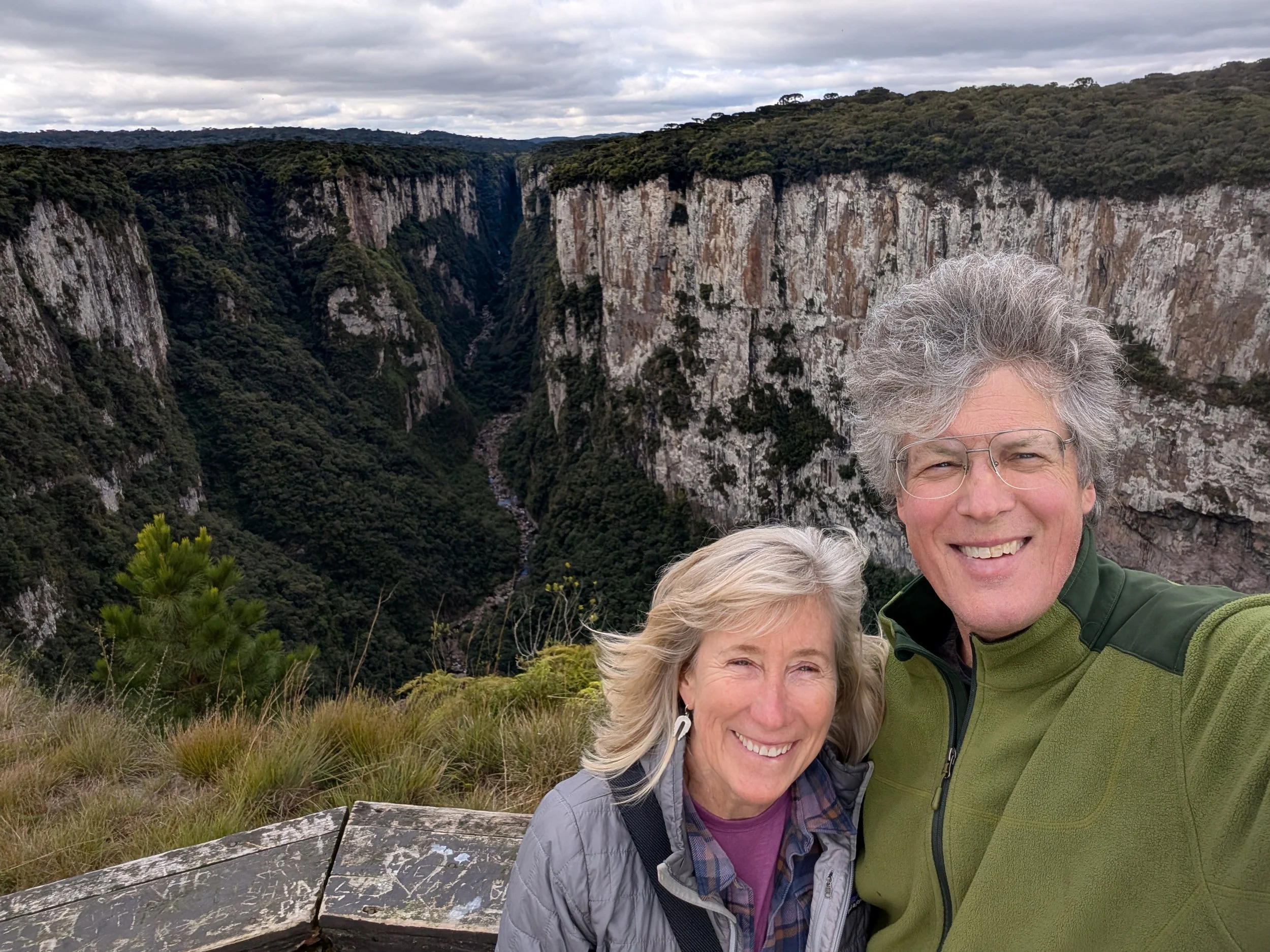
The obligatory happy day selfie
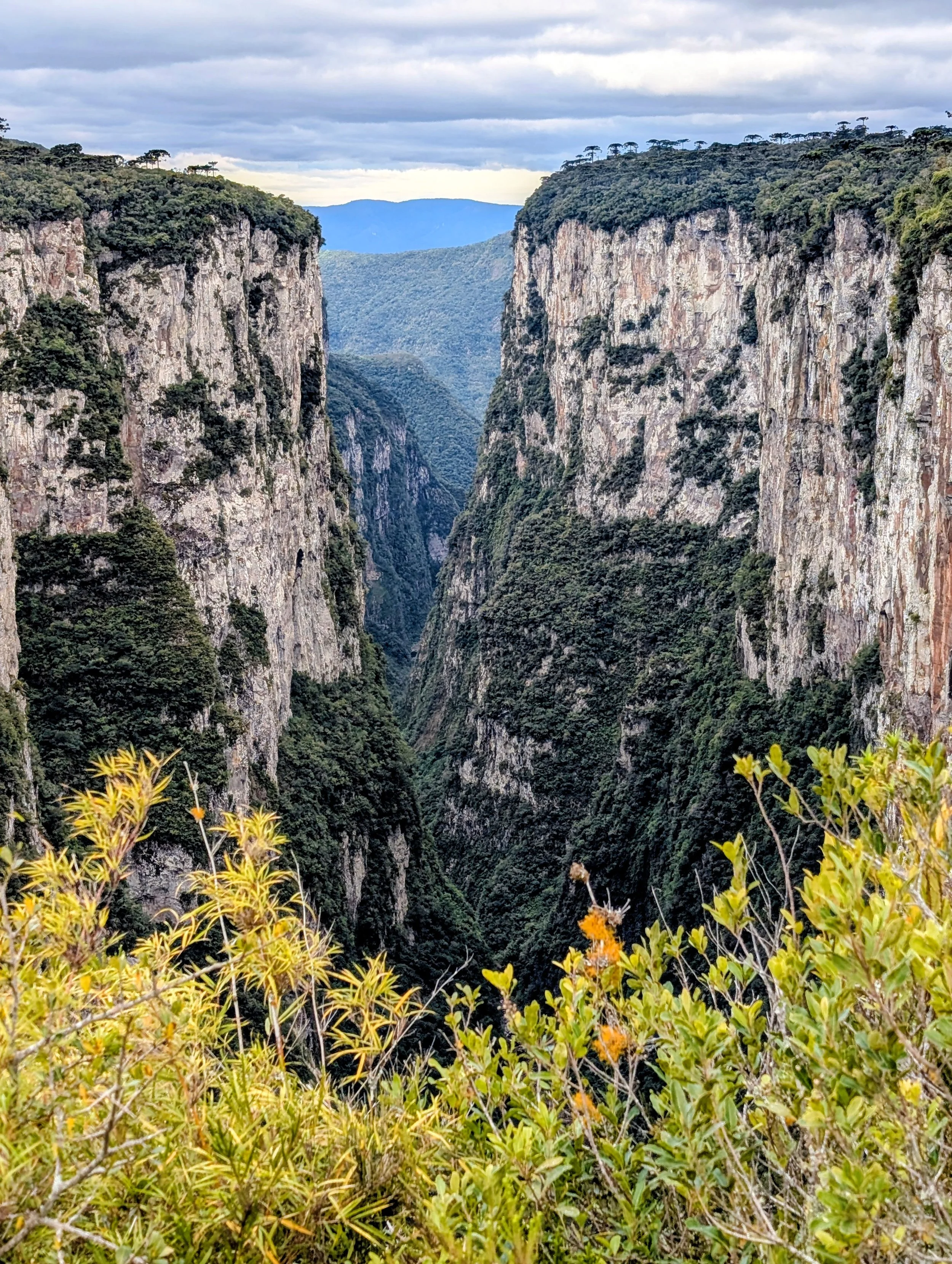
Stunning scenery
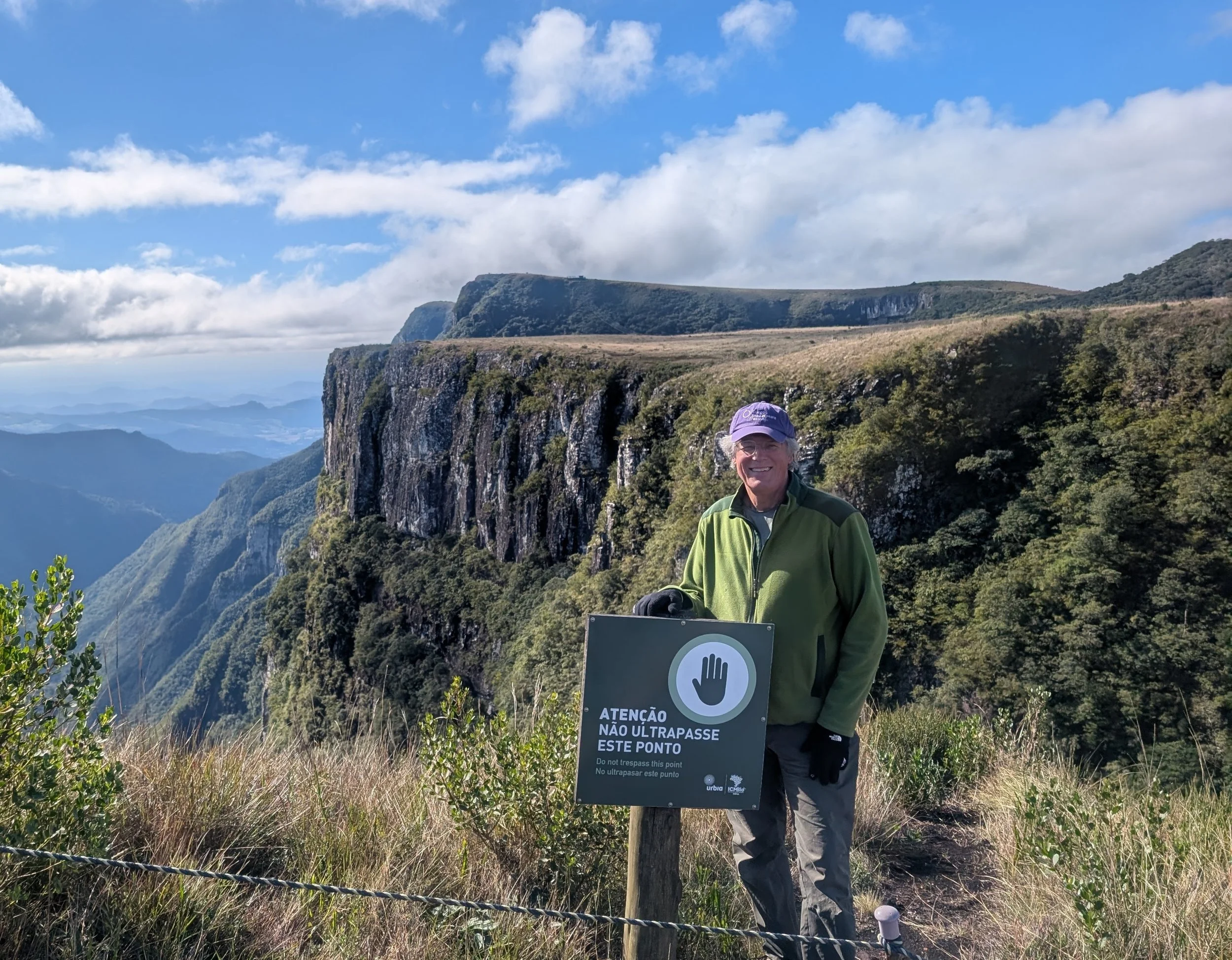
Andy can never resist pushing the boundaries
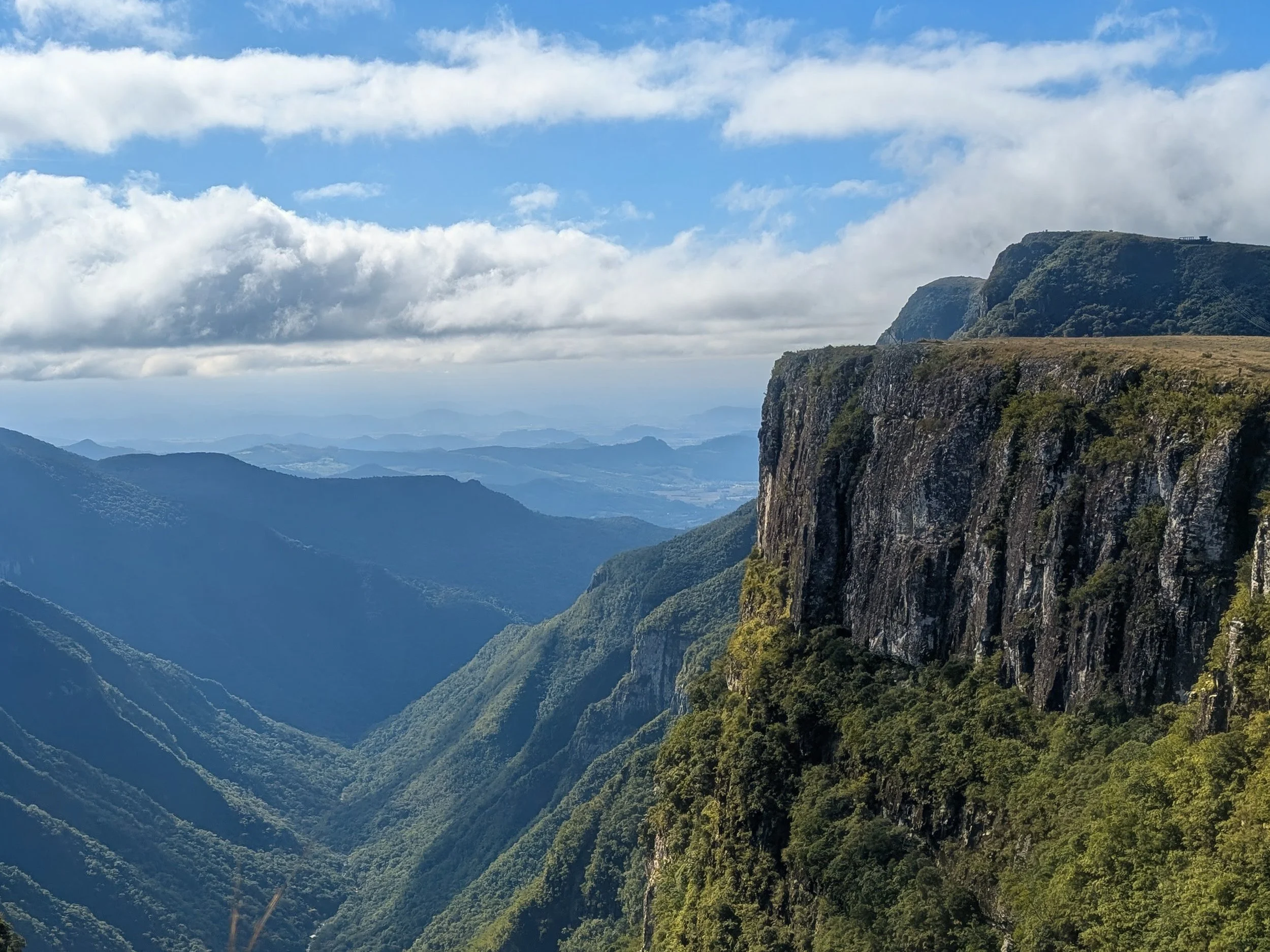
Two days later at a campground, our host asked us what we liked best so far about Brazil and I showed her this picture. She said ‘that is in Brazil???”
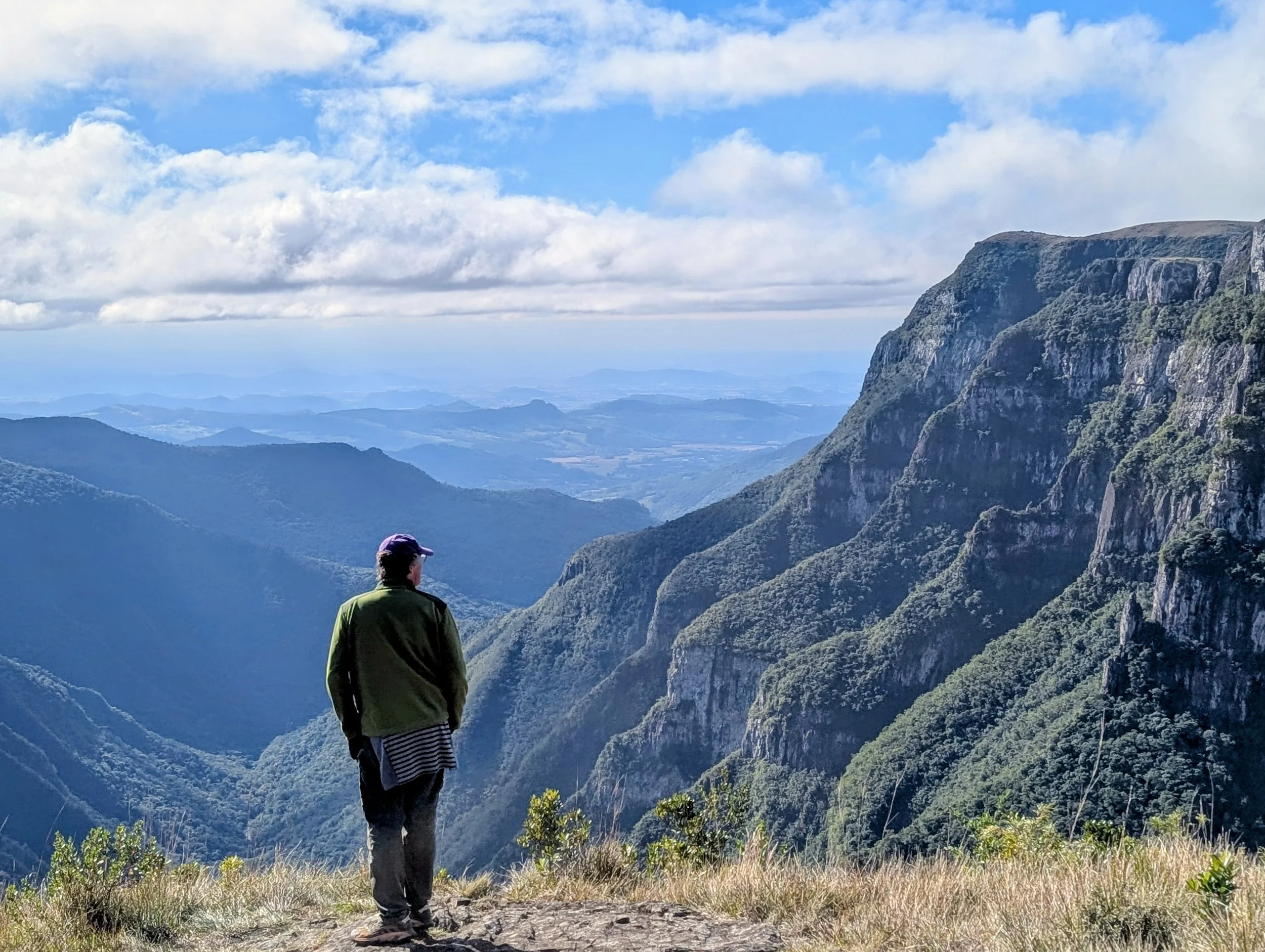
Just breathing it all in
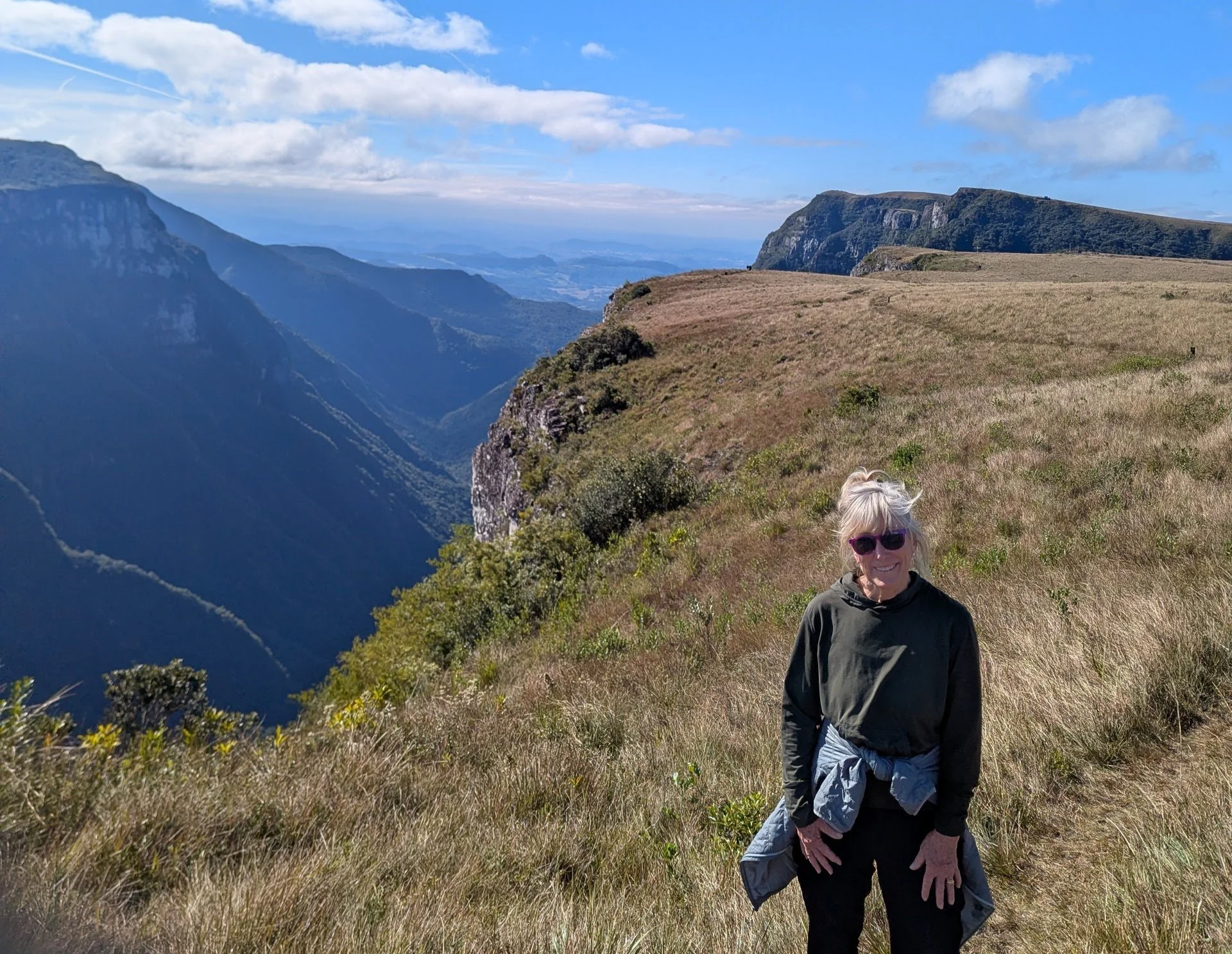
And a second day hiking along the edge of the park’s second major gorge, Itaimbezinho Canyon
Feeling better with some good mountain time, we headed to the coast to start exploring the Atlantic beaches. Our first stop was Praia do Rosa, a beautiful coastal area with small villages and glorious sandy beaches.
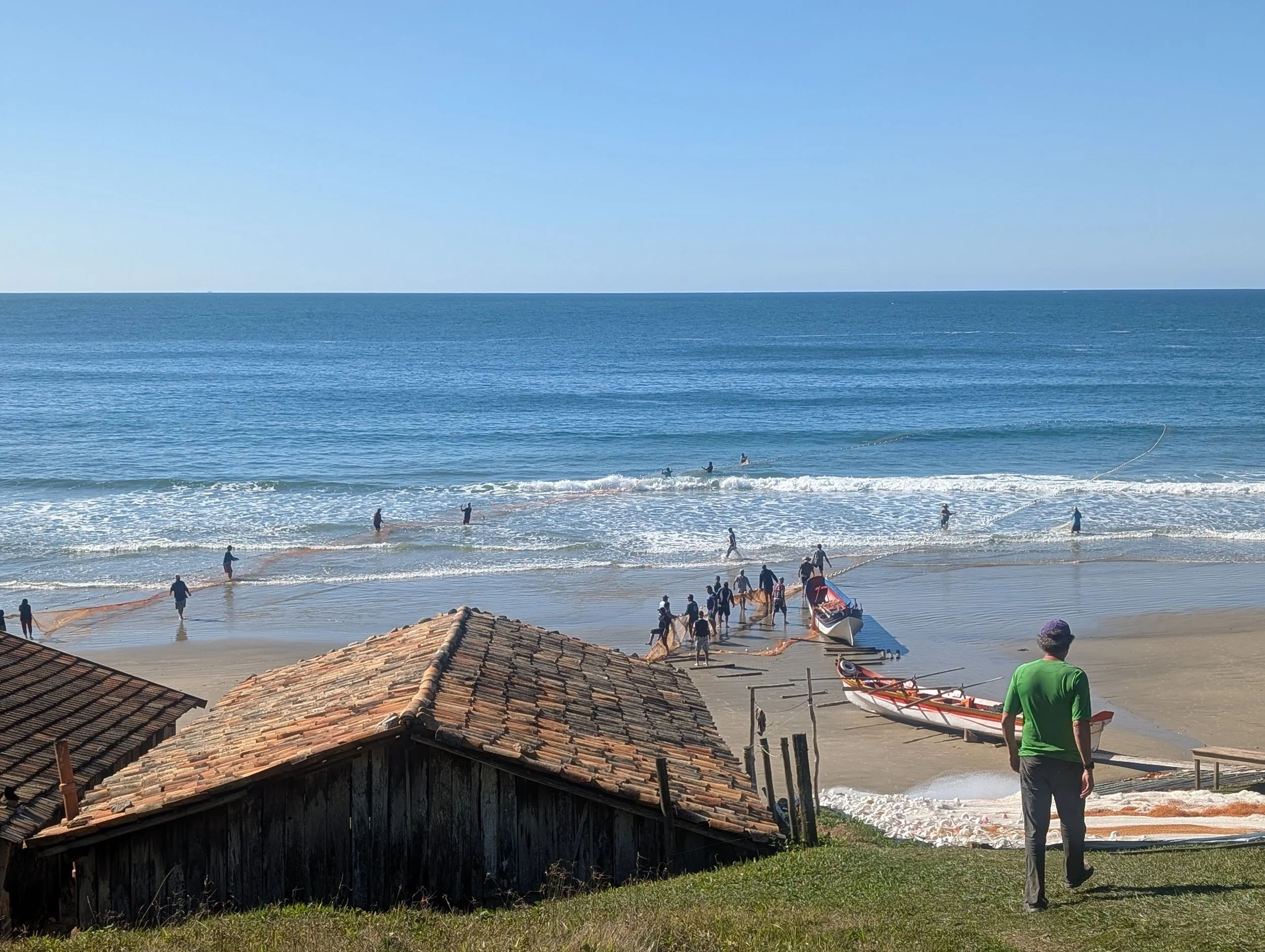
Heading down to check out the village fishing catch - they were pulling in a huge net.
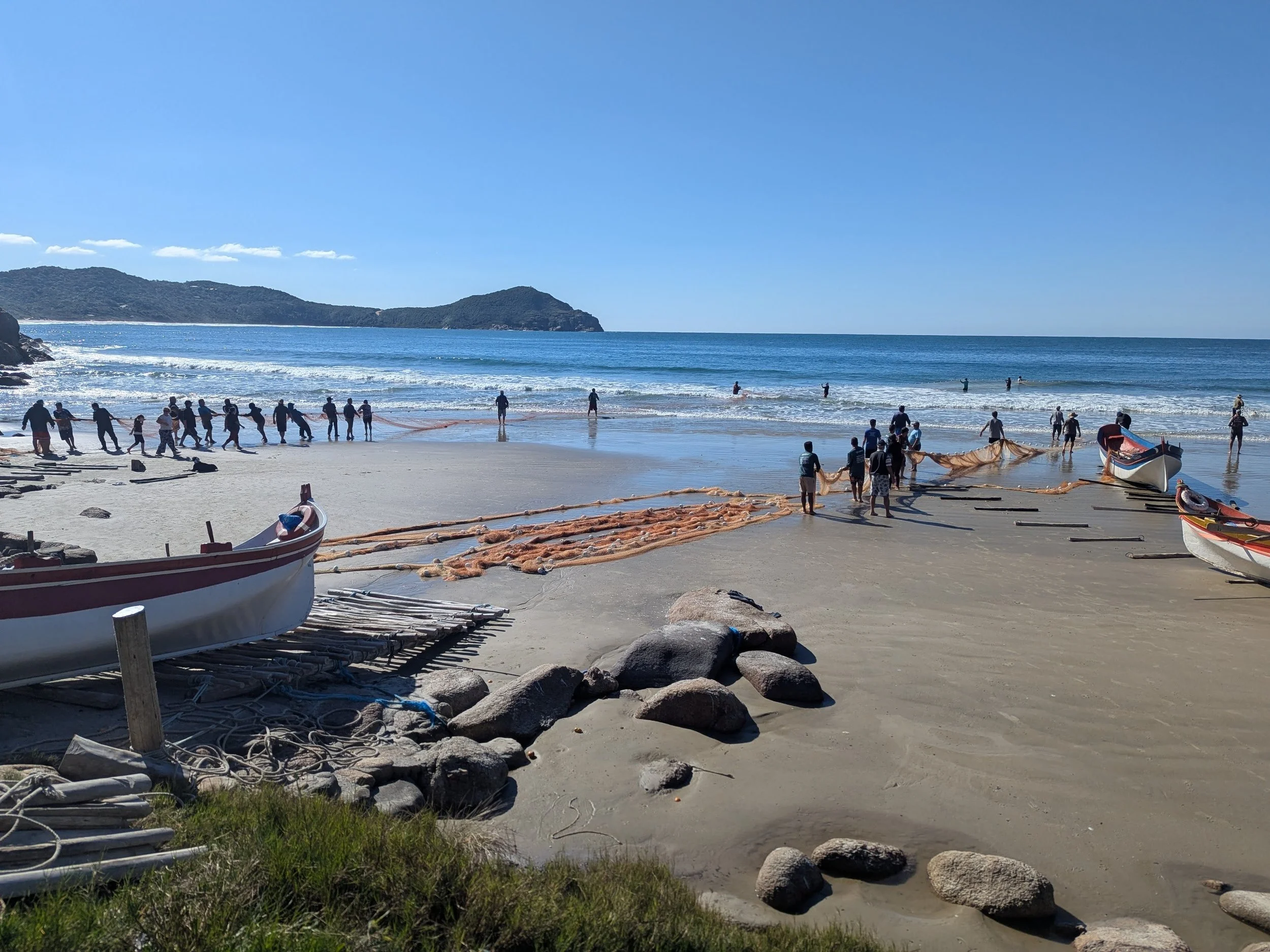
Lots of team work involved, we hadn’t seen anything like it since our time in West Africa,
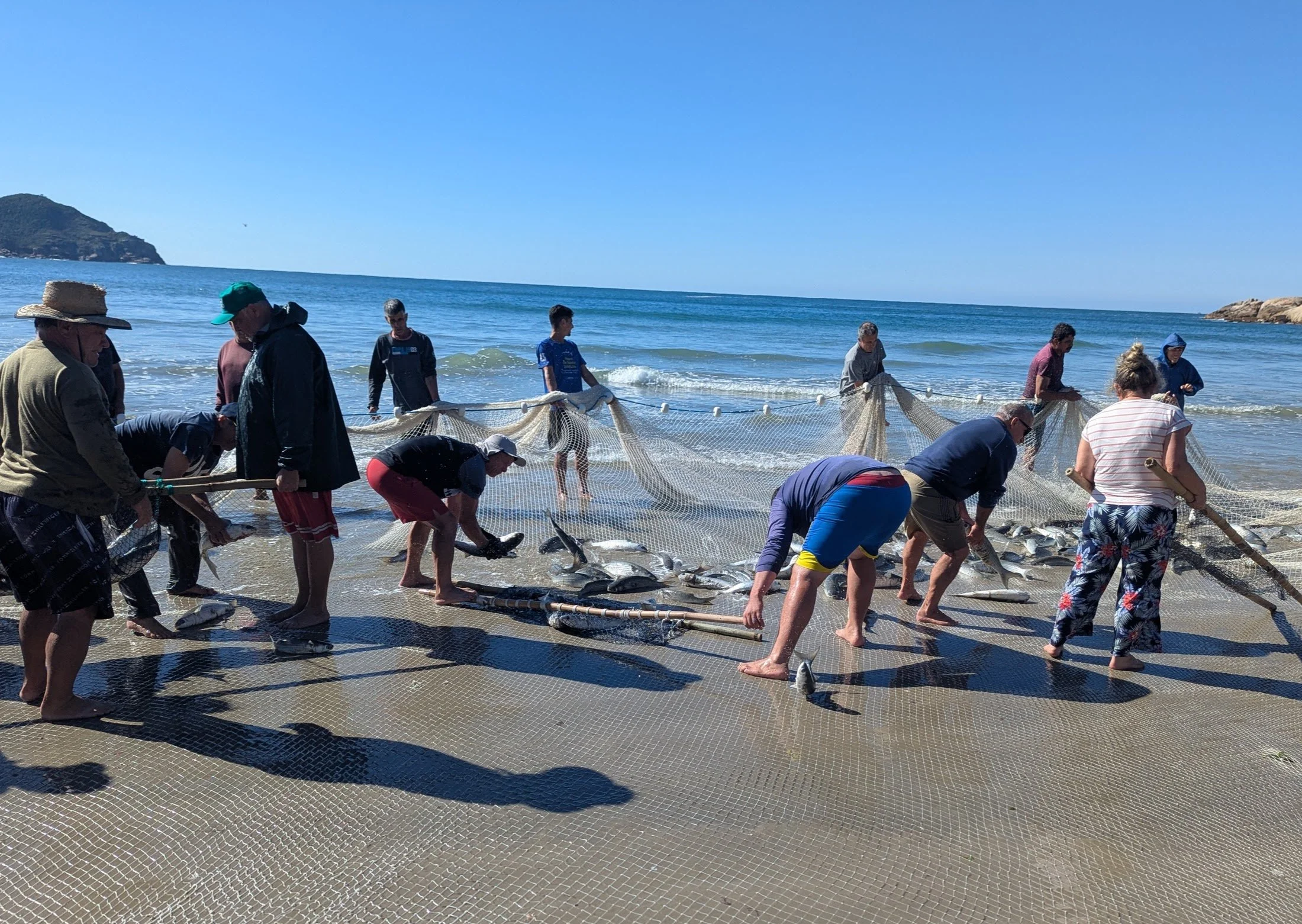
Success!
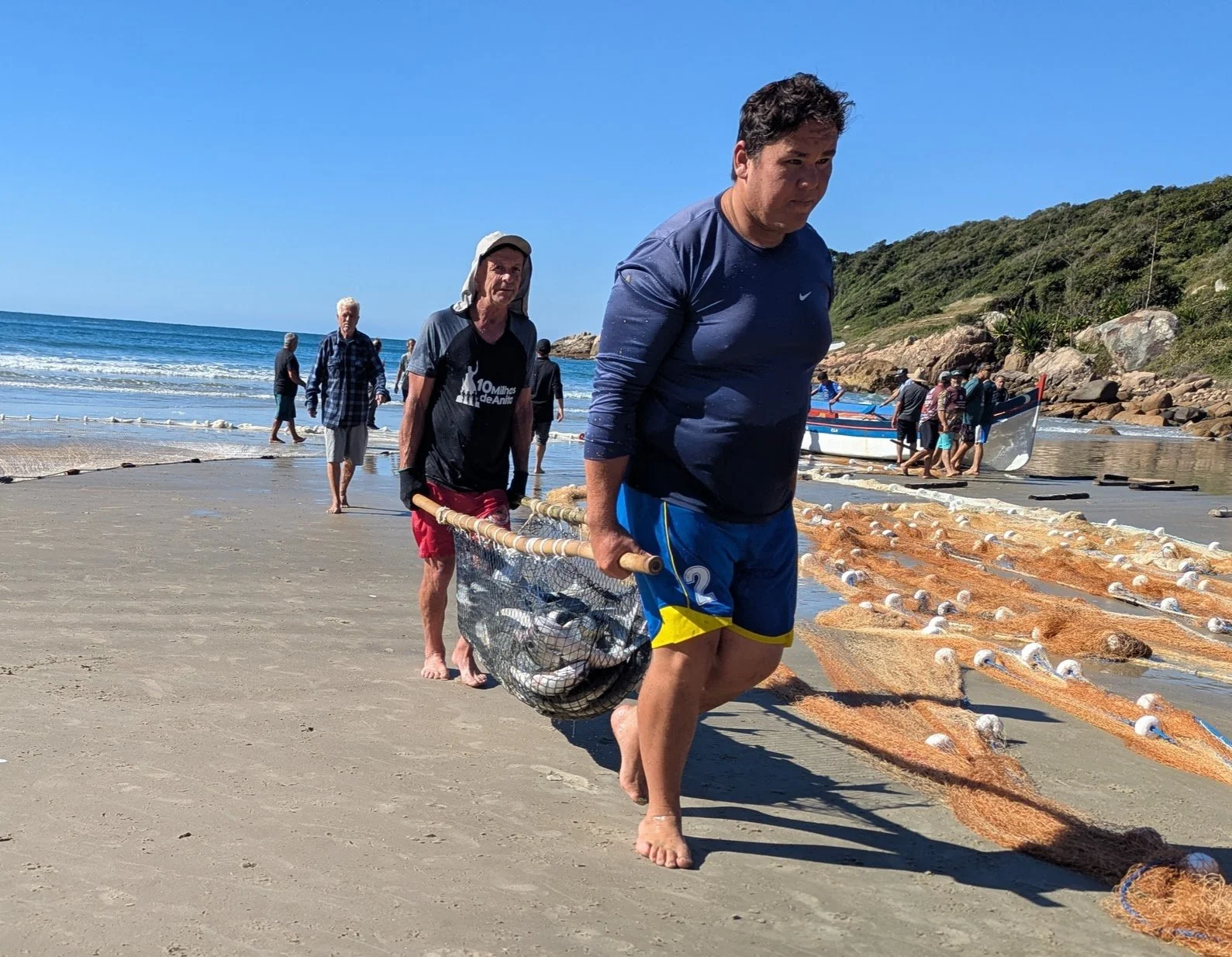
Hauling off the catch of the day
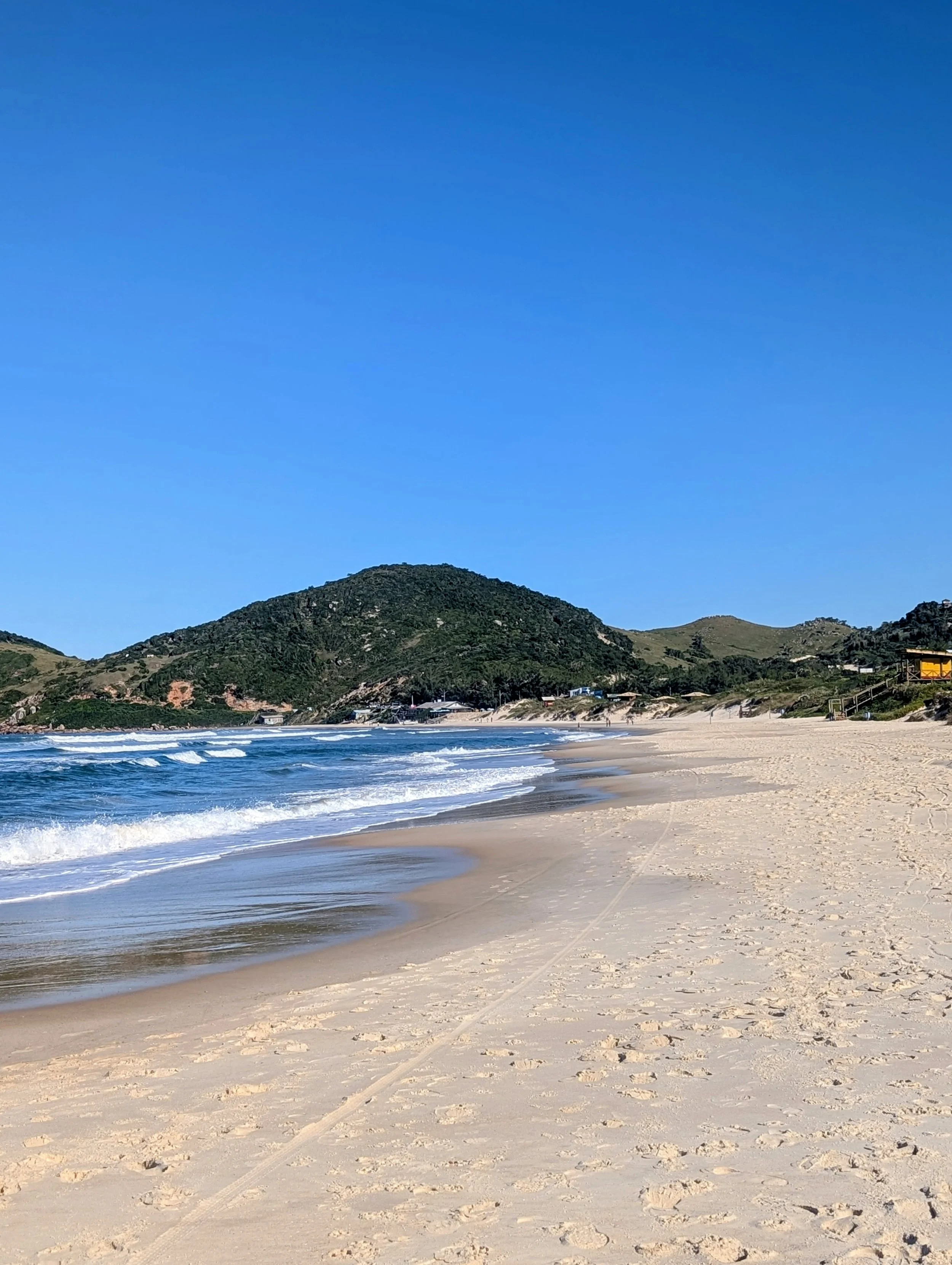
Walking along Praia do Rosa
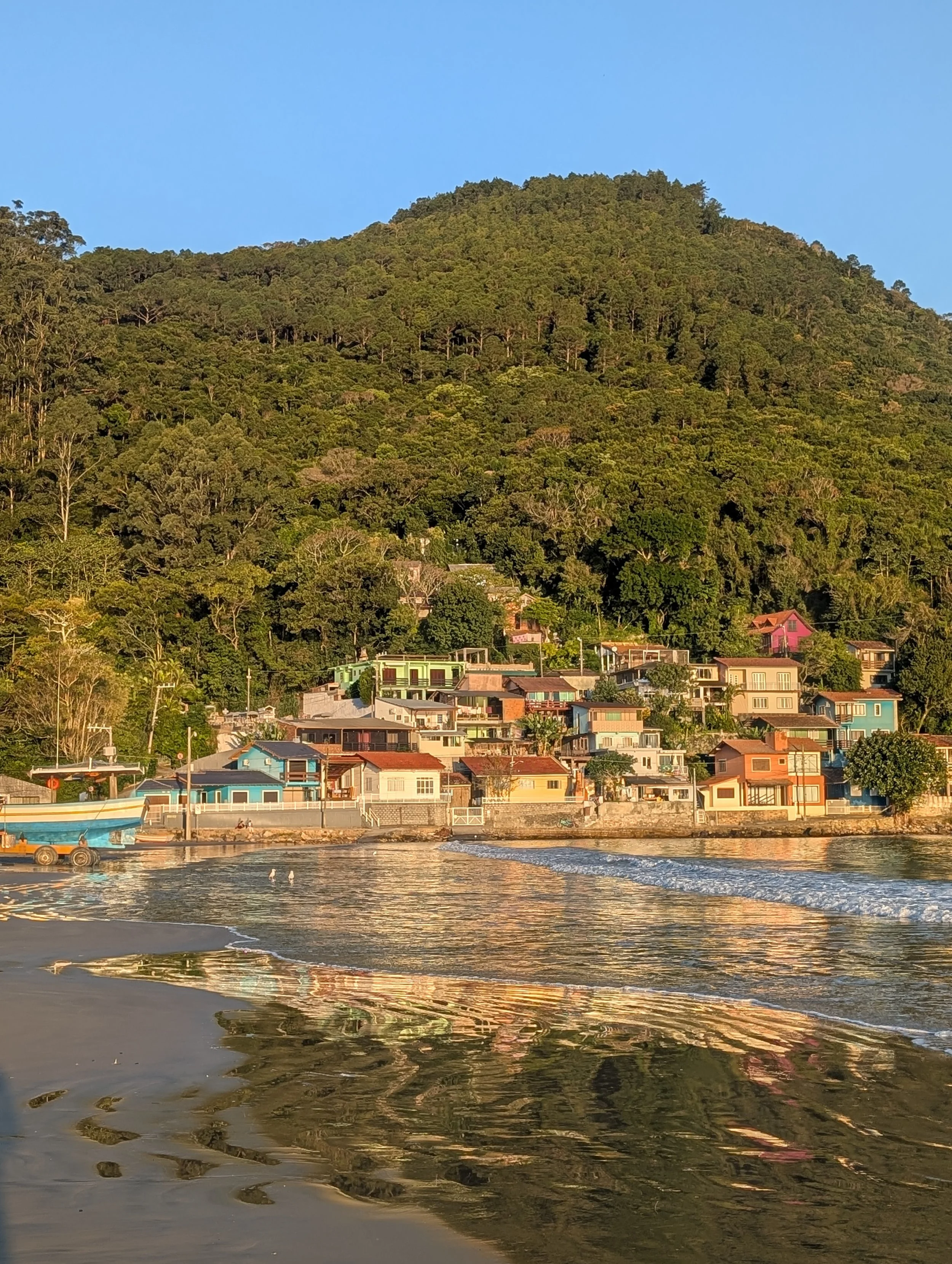
Evening light on a coastal village on the island of Florianopolis
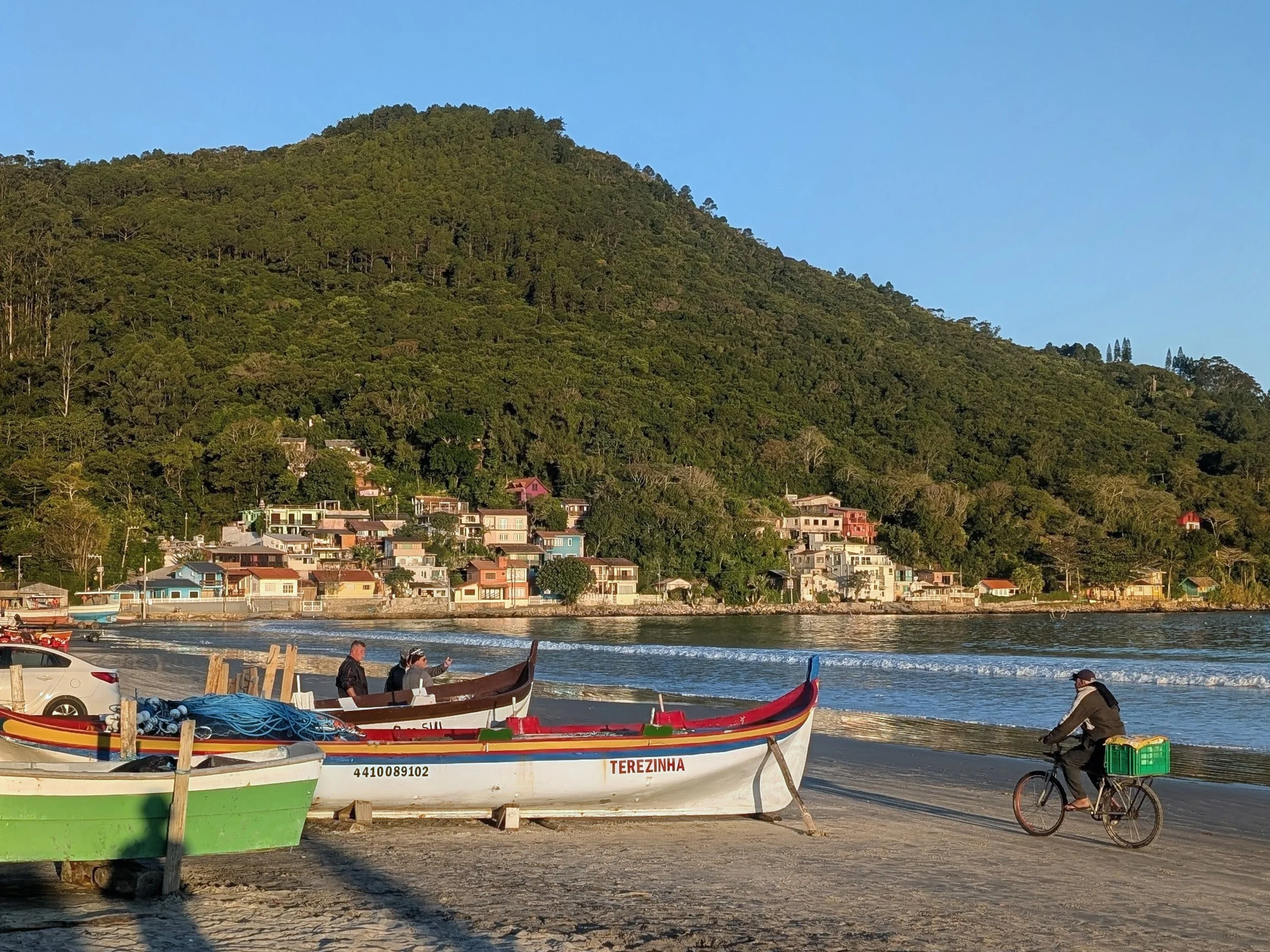
Village life
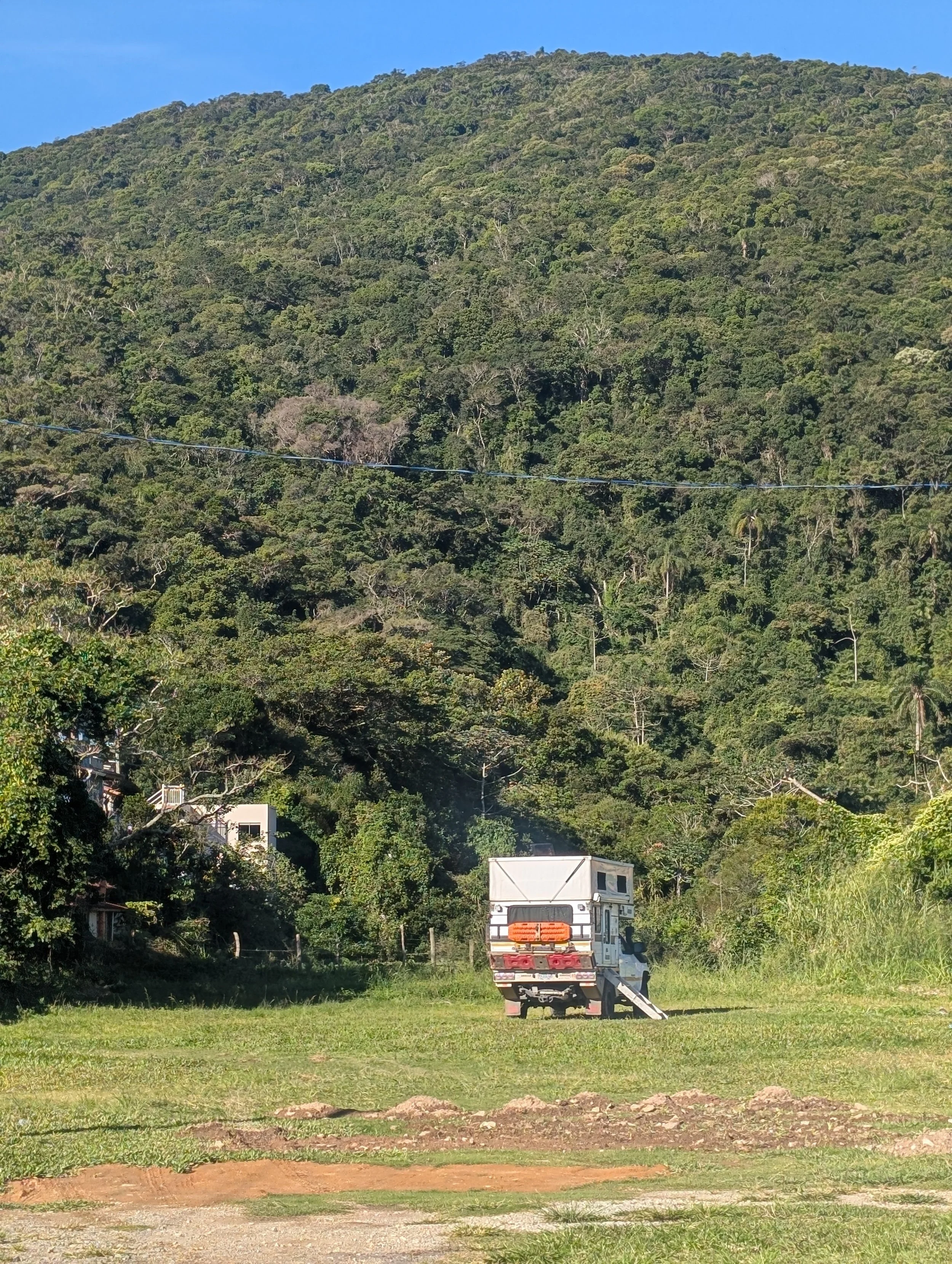
Our “wild camping” site - a grassy field behind a mini market. Nice and quiet.
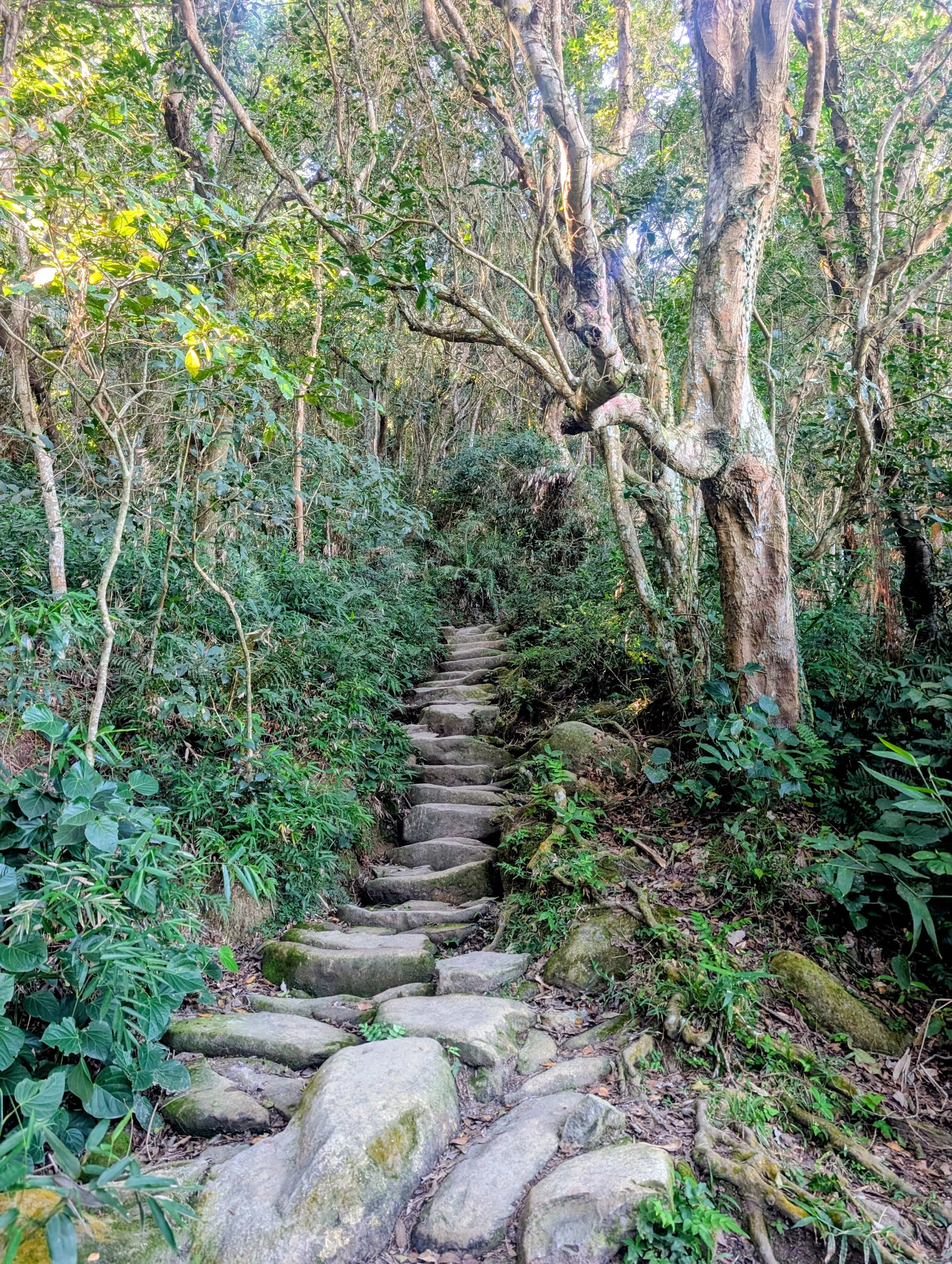
Heading out on a hike to a remote coastal beach
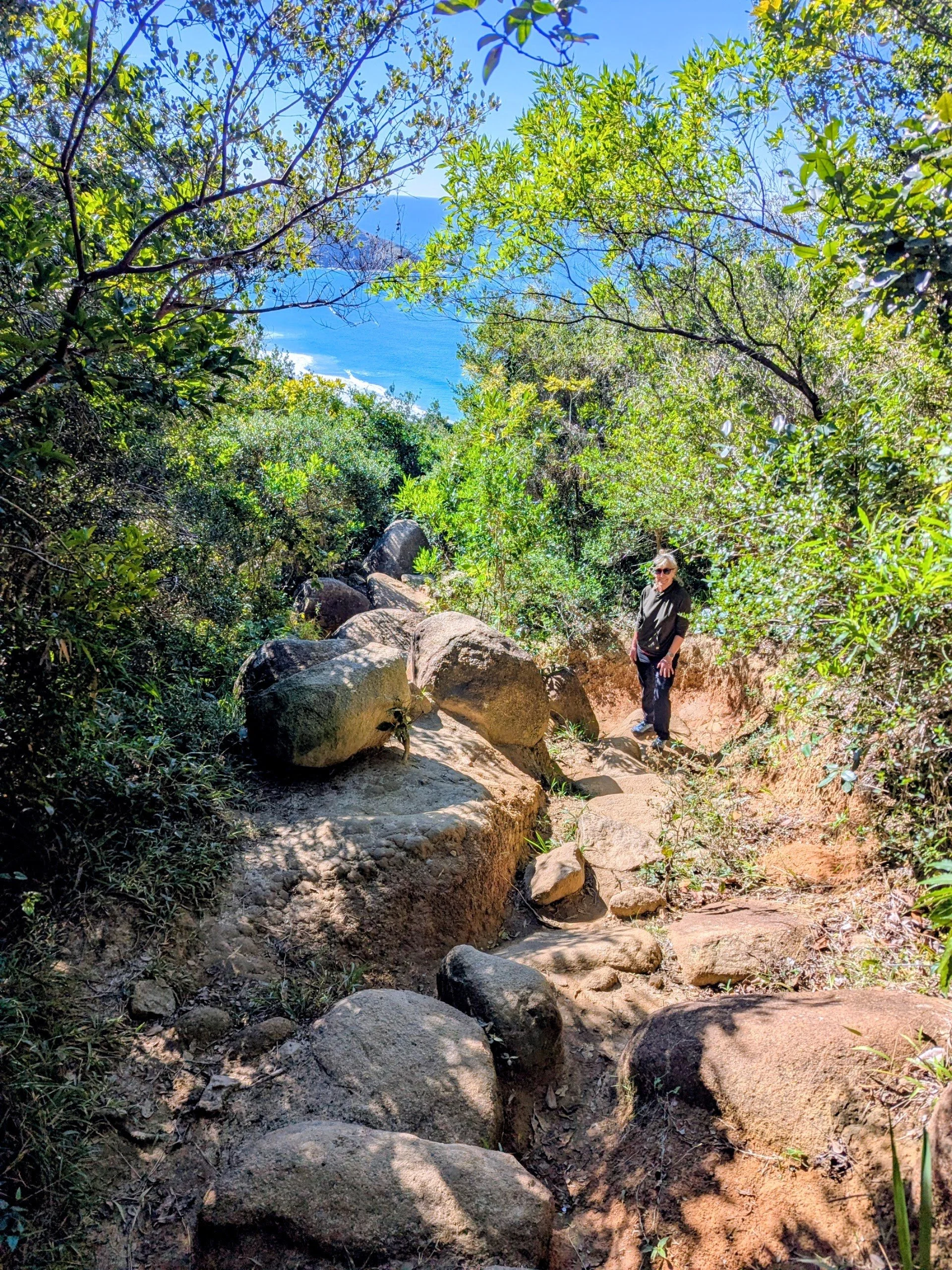
A little steeper than we imagined
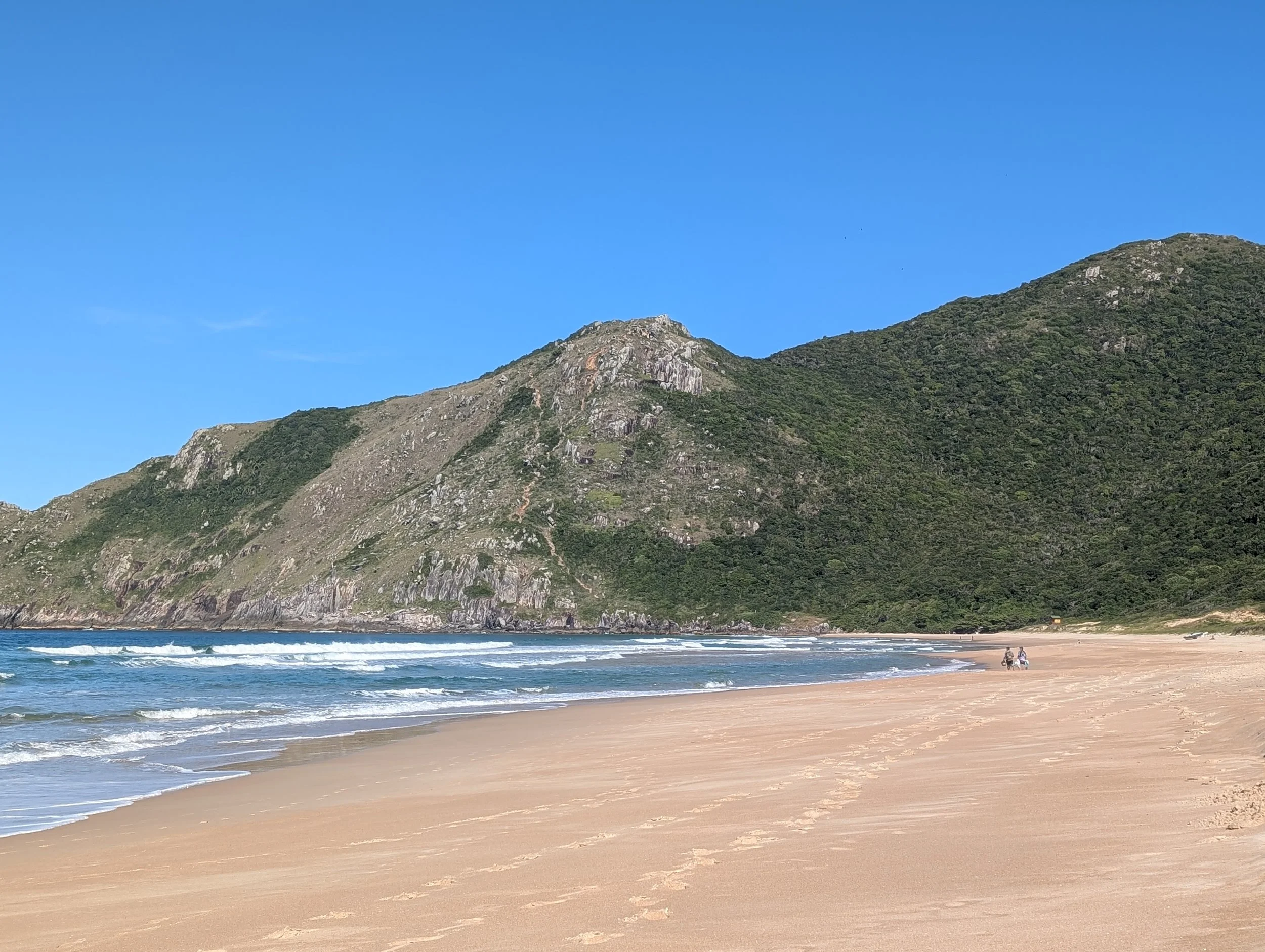
But worth it! Our favorite beach in Brazil - Praia da Lagoinha do Leste - only accessible by foot or boat.
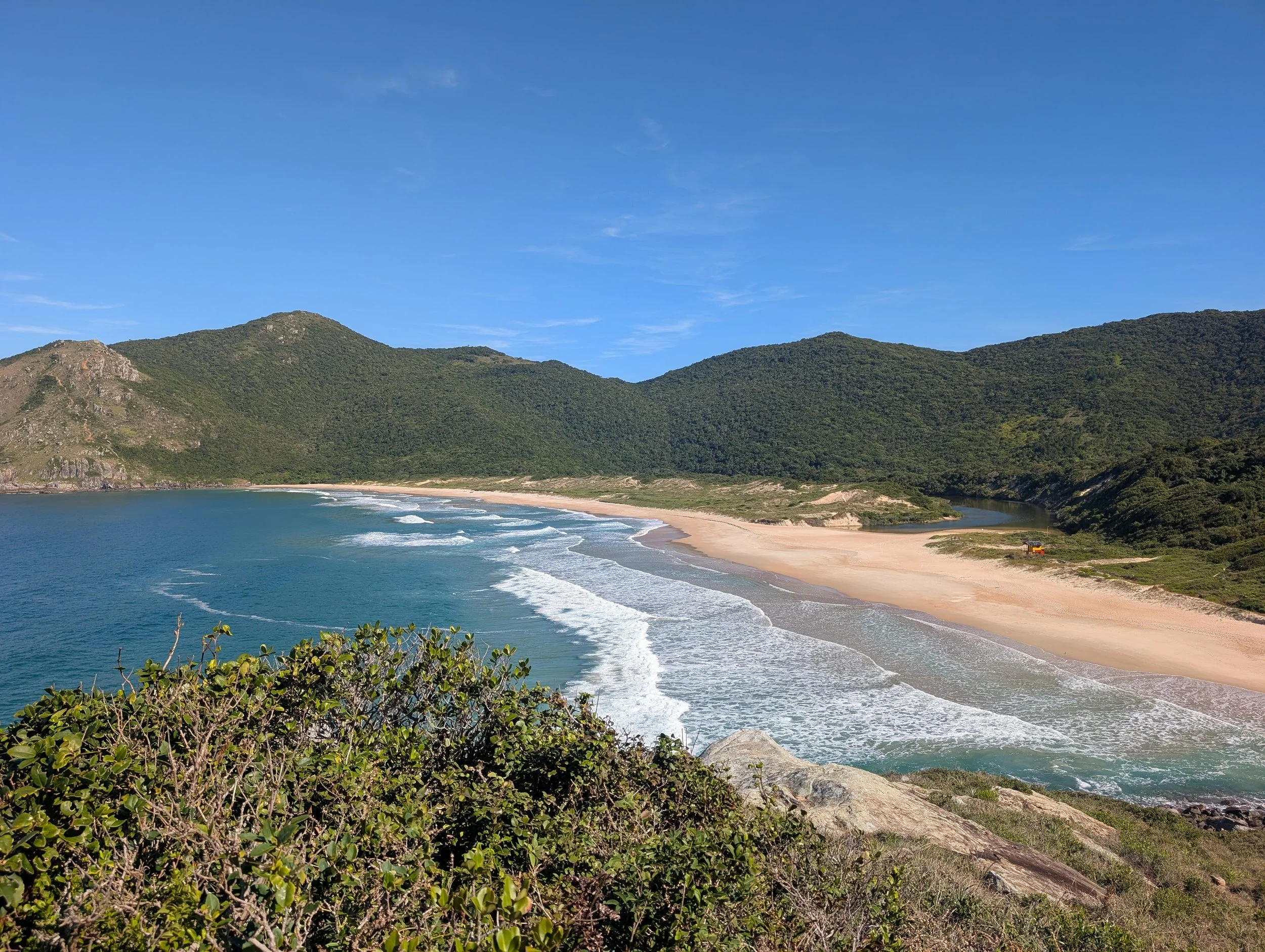
We continued our hike around the headlands - thinking we were in for an easy loop
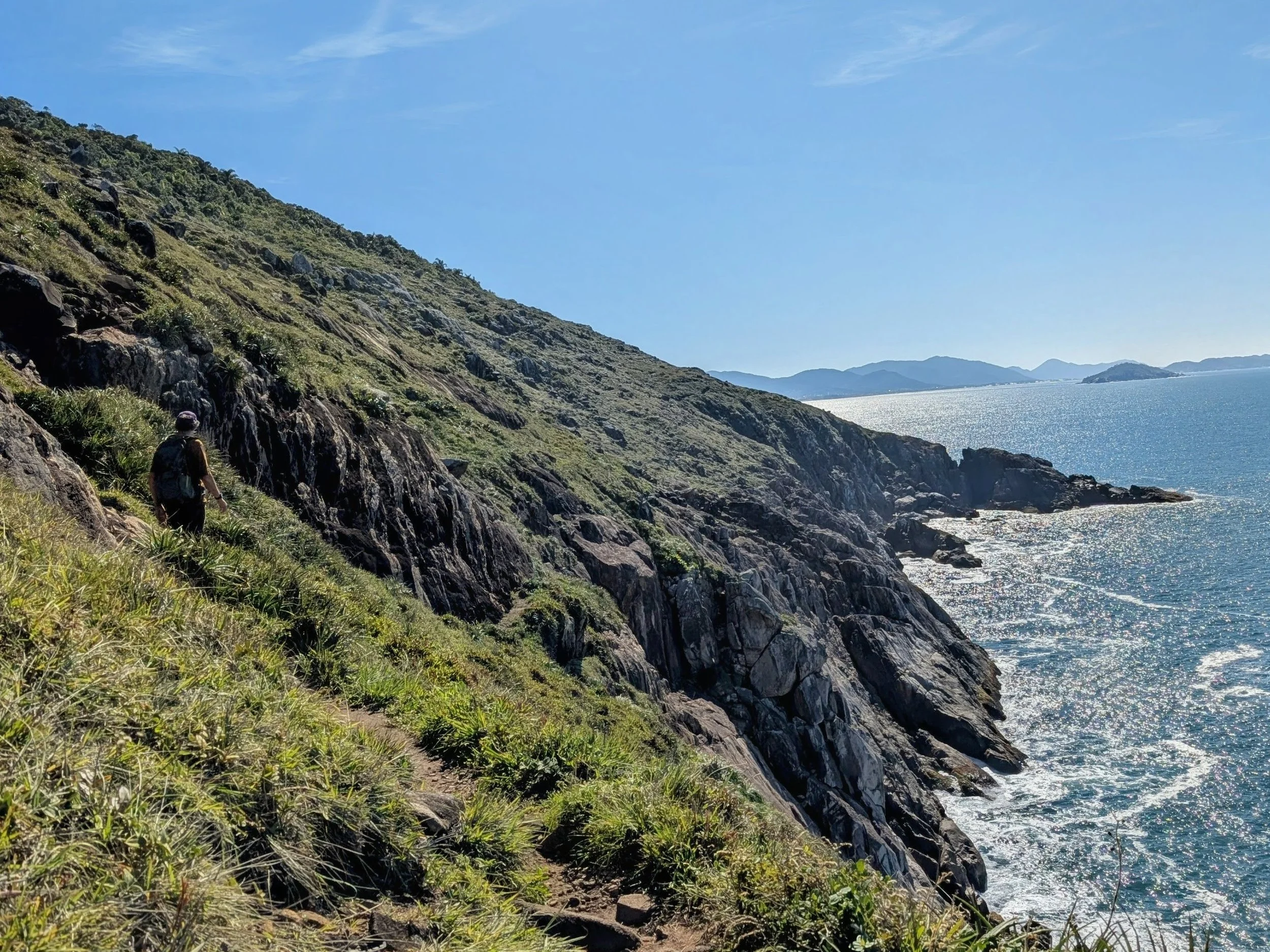
It got rugged! Steep cliffs and gorgeous views. Maybe a little more strenuous than we initially thought but definitely worth it.
During our time in Brazil, we were repeatedly struck by the country’s dramatic contrasts. Nowhere was that clearer than along the coast, where one experience could feel entirely removed from the next. Within two days we went from remote and rugged to urban and glamorous. It was a little shocking to go from what felt like a private beach to Balneário Camboriú, a glittering beach destination framed by high-rises and dense coastal development.
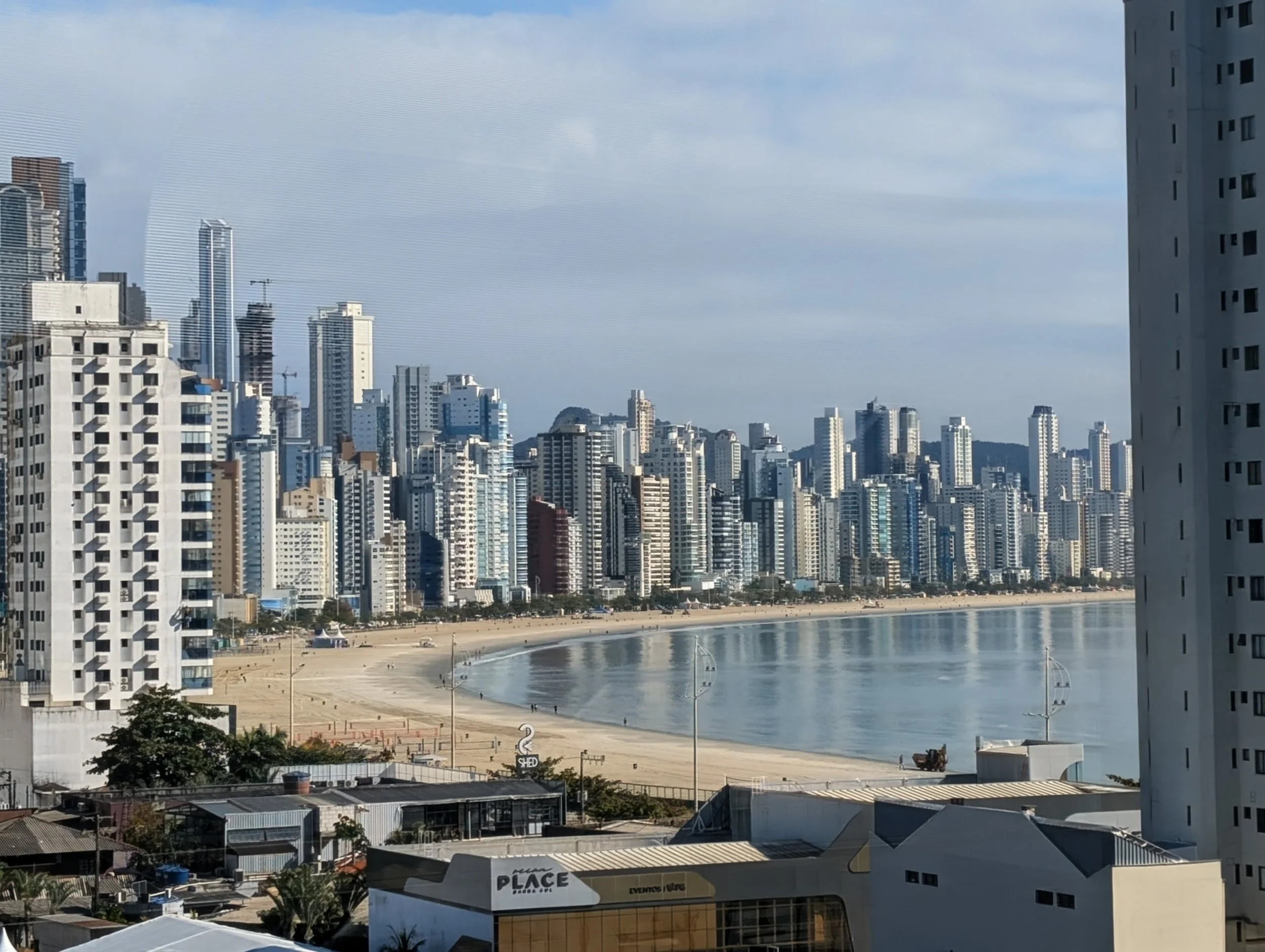
View from the elevator connecting one area of town to the main beach at Balneario Camboriu. It was our first time taking an outside public elevator to the beach.
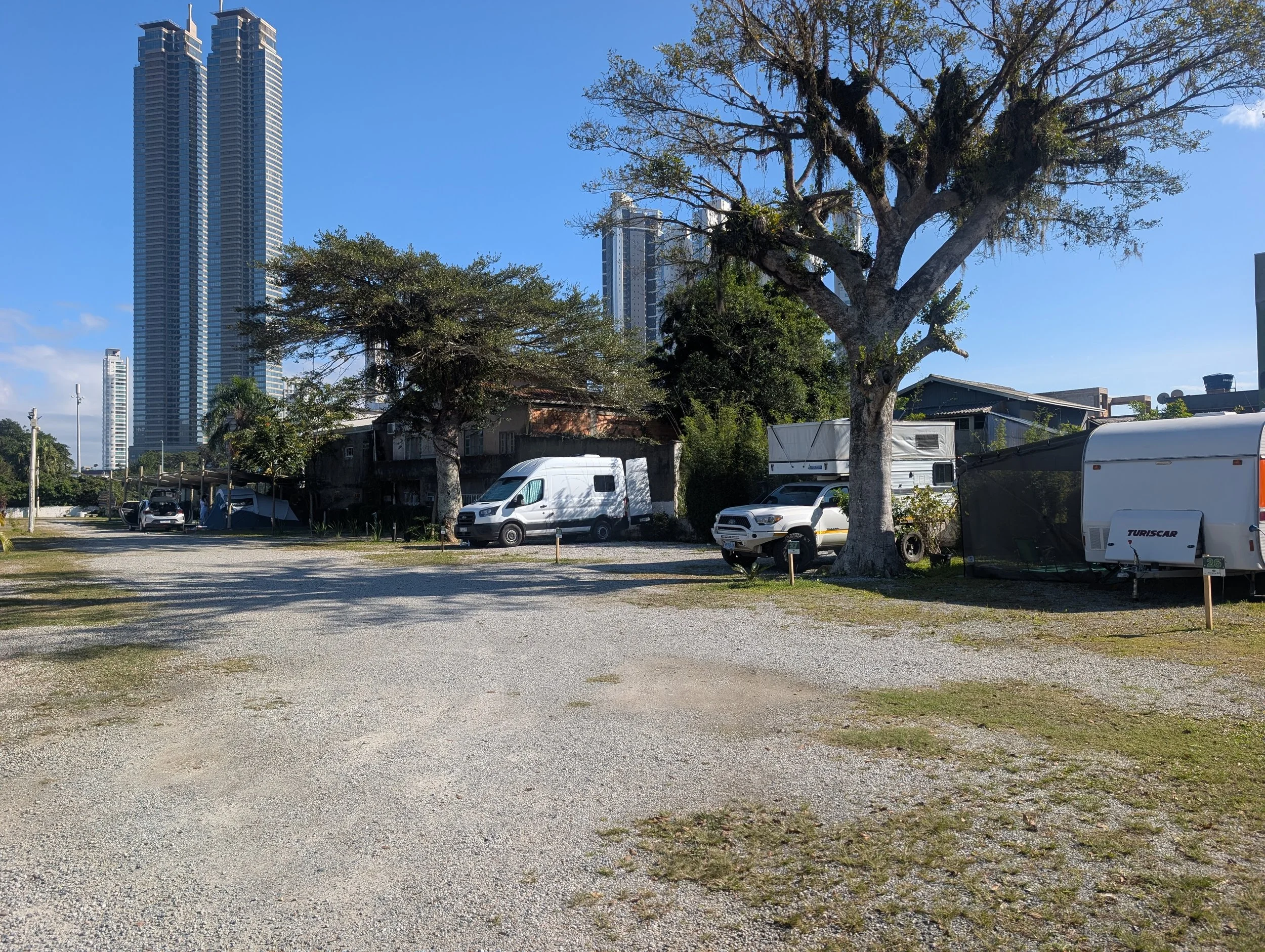
Our urban campground - eerily quiet, but we didn’t mind
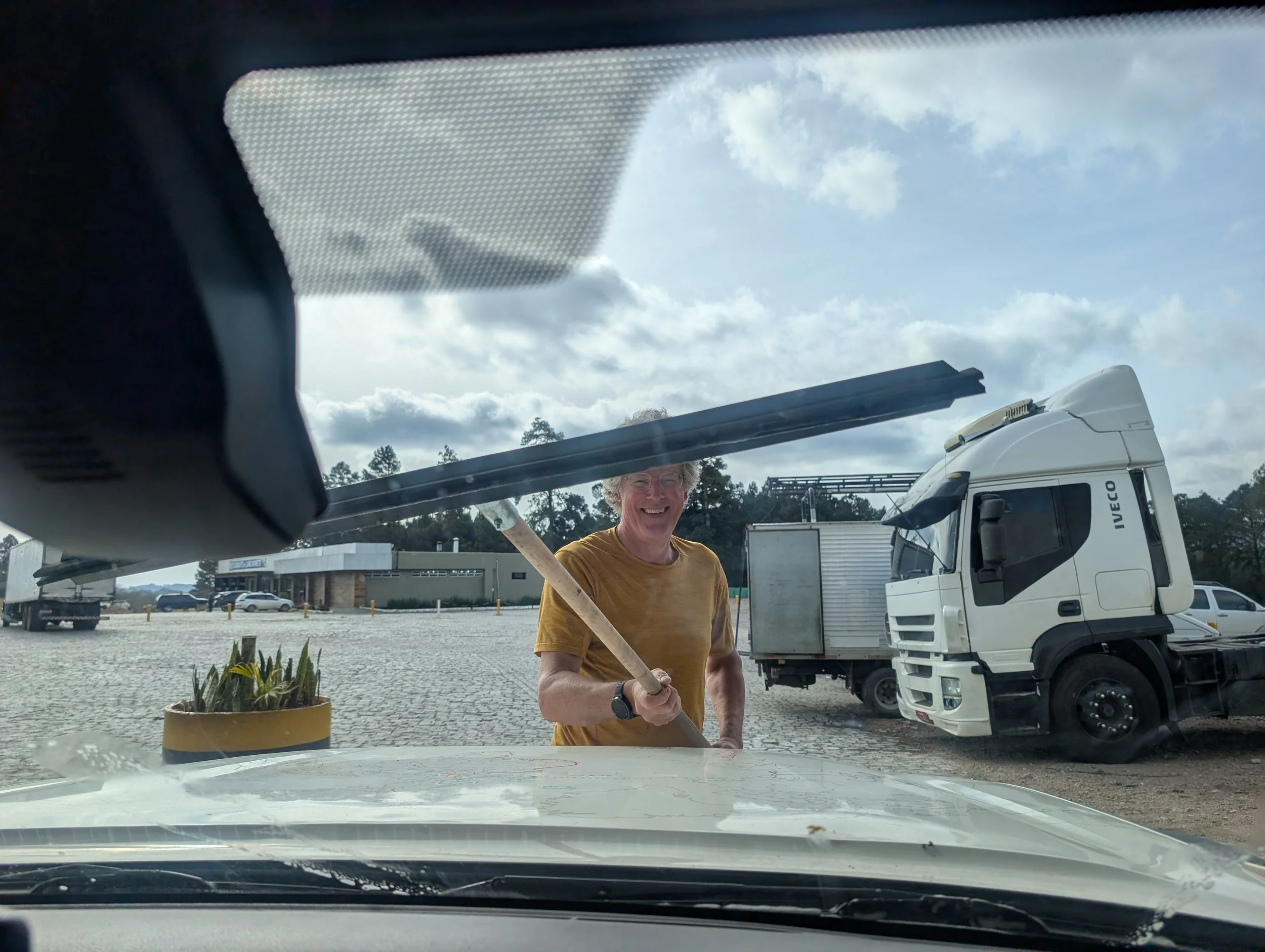
One of Andy’s favorite things about Brazil - huge window cleaners
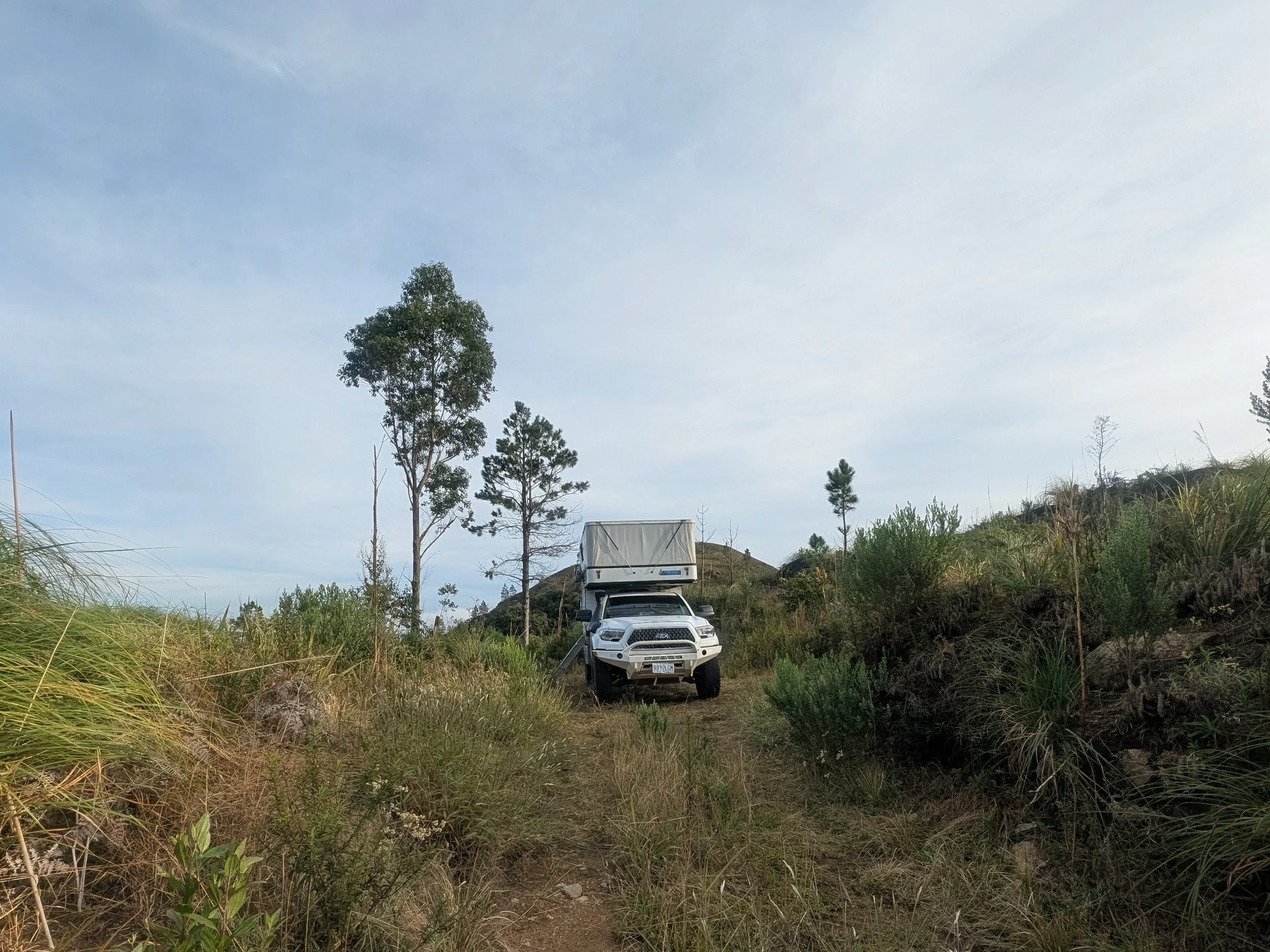
Finding a wild spot tucked away for the night
Camping in Brazil was a mixed bag. Wild camping sites (which in our definition means no people around) were almost impossible to find. On the upside though, campgrounds, from large scale urban centers to small backyard family run sites were common. Typical rates were anywhere from $5 to $12 per person per night, depending on the location and facilities.
Our next planned stop was Sao Paolo. We have found through the years that unless there is a camping situation that allows us to walk to cultural attractions or jump on a really easy public transport system (this second option we have not easily found outside of Europe), we are better off abandoning the truck and staying in the city center. Because we don’t stay long in major cities, this allows us to quickly get the feel of the city and enjoy the food and activity.
We had almost skipped Sao Paolo after our experience in Rio, but in the end decided we needed to get over our unease of big Brazilian cities and dive back in. We are glad we did. We found parking for the truck and a free hotel on our credit card and set off to explore.
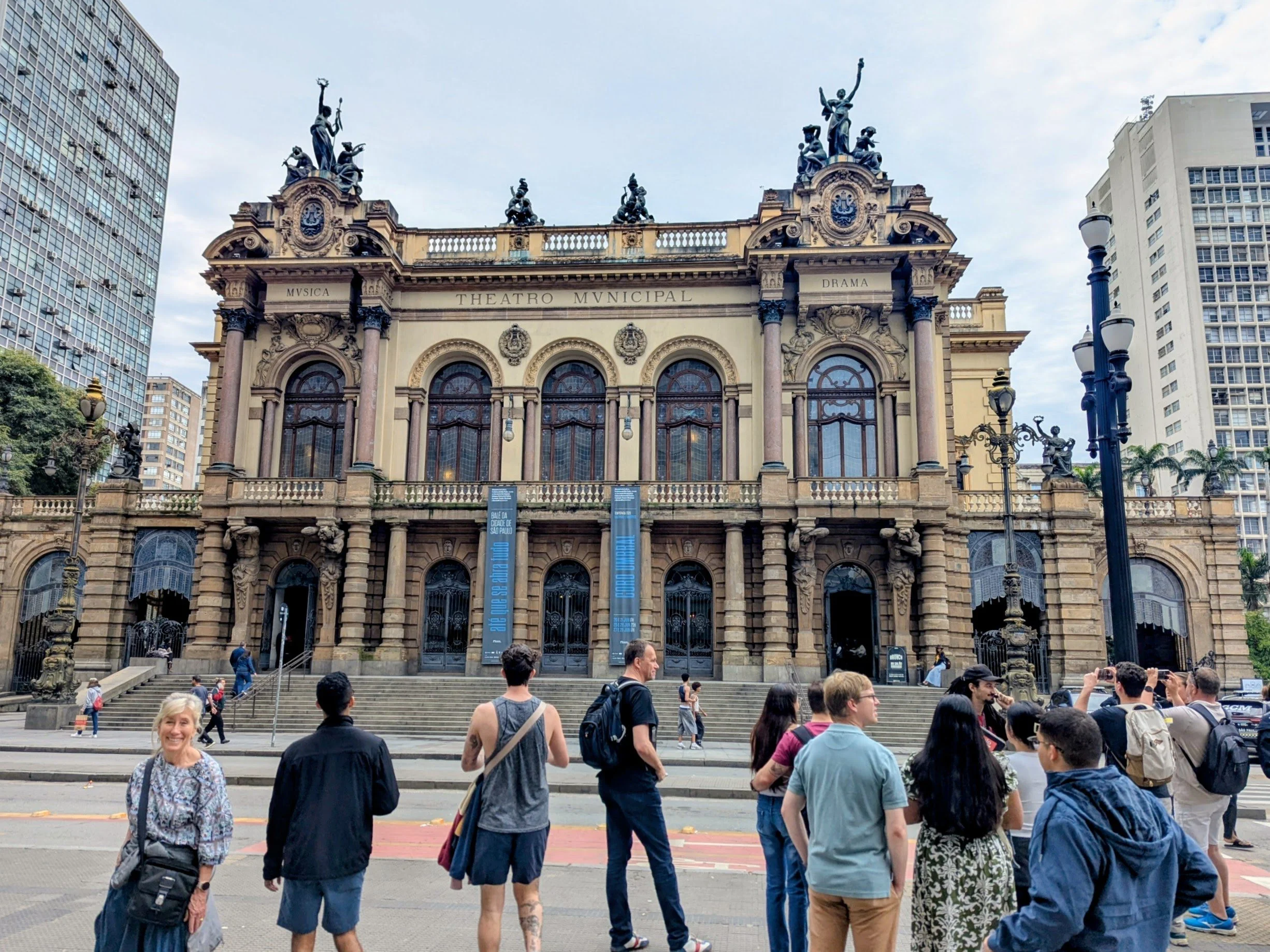
Walking the old town streets of Sao Paolo
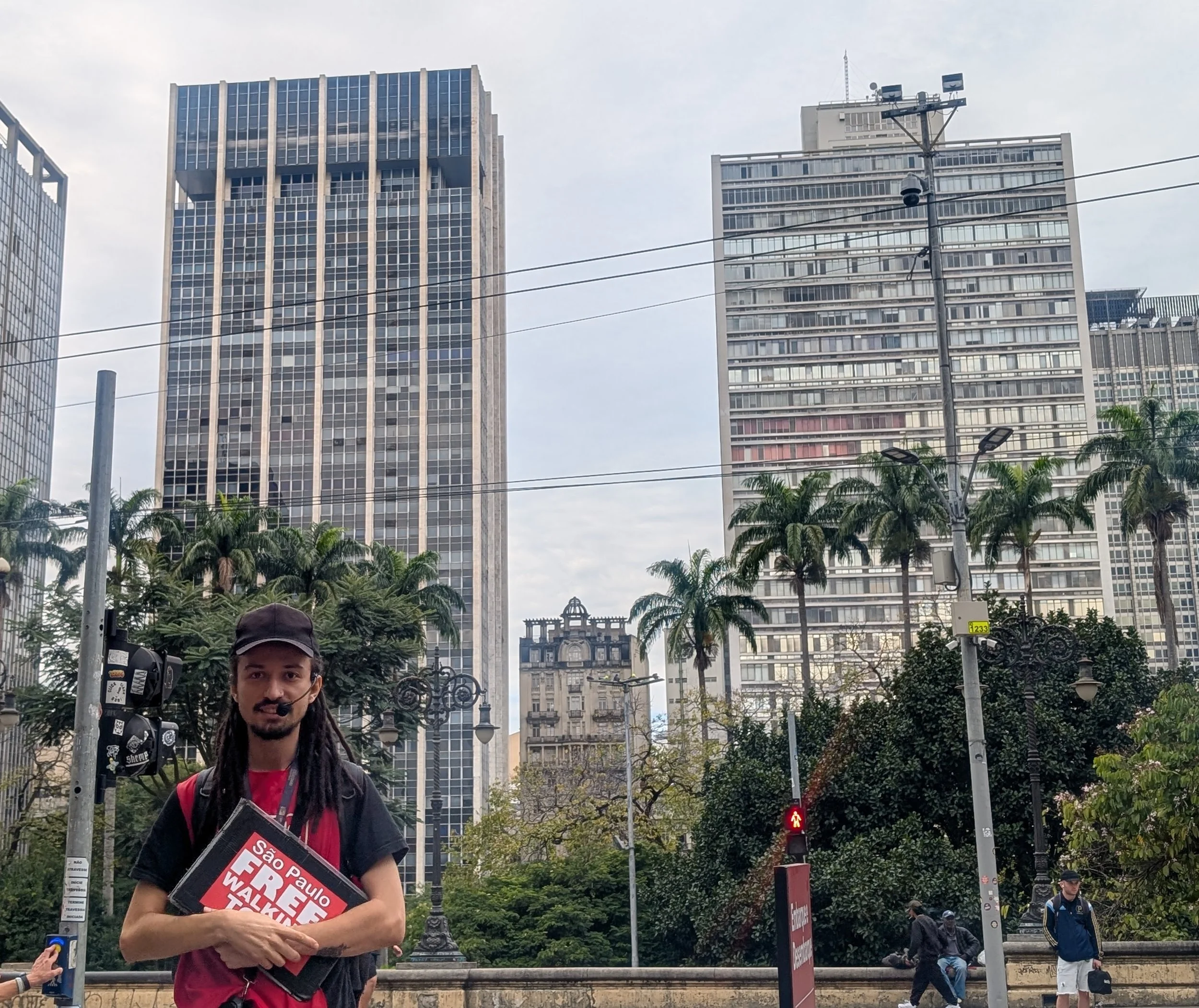
Learning from our Free Walking Tour guide
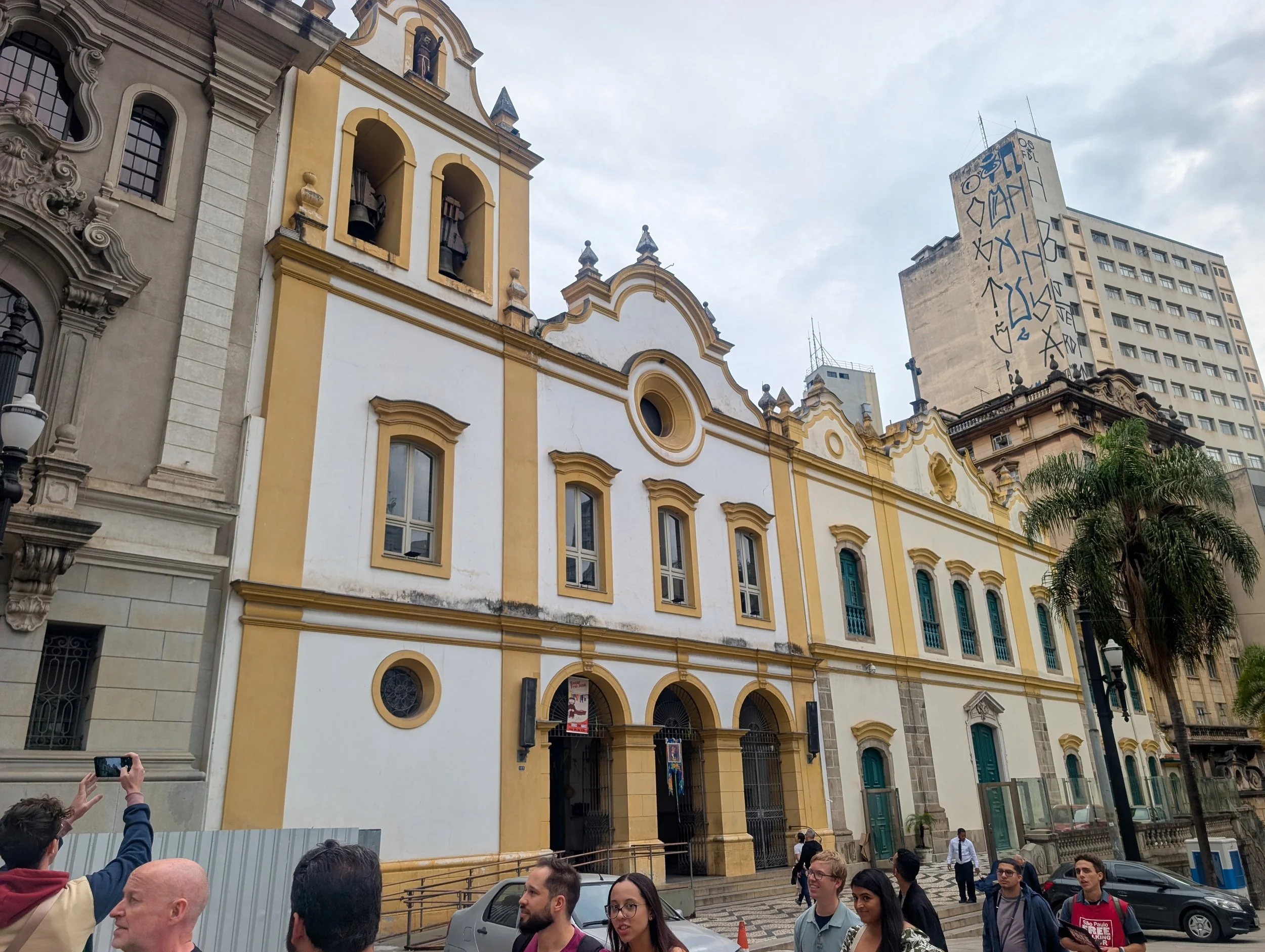
Portuguese influence everywhere - not surprising
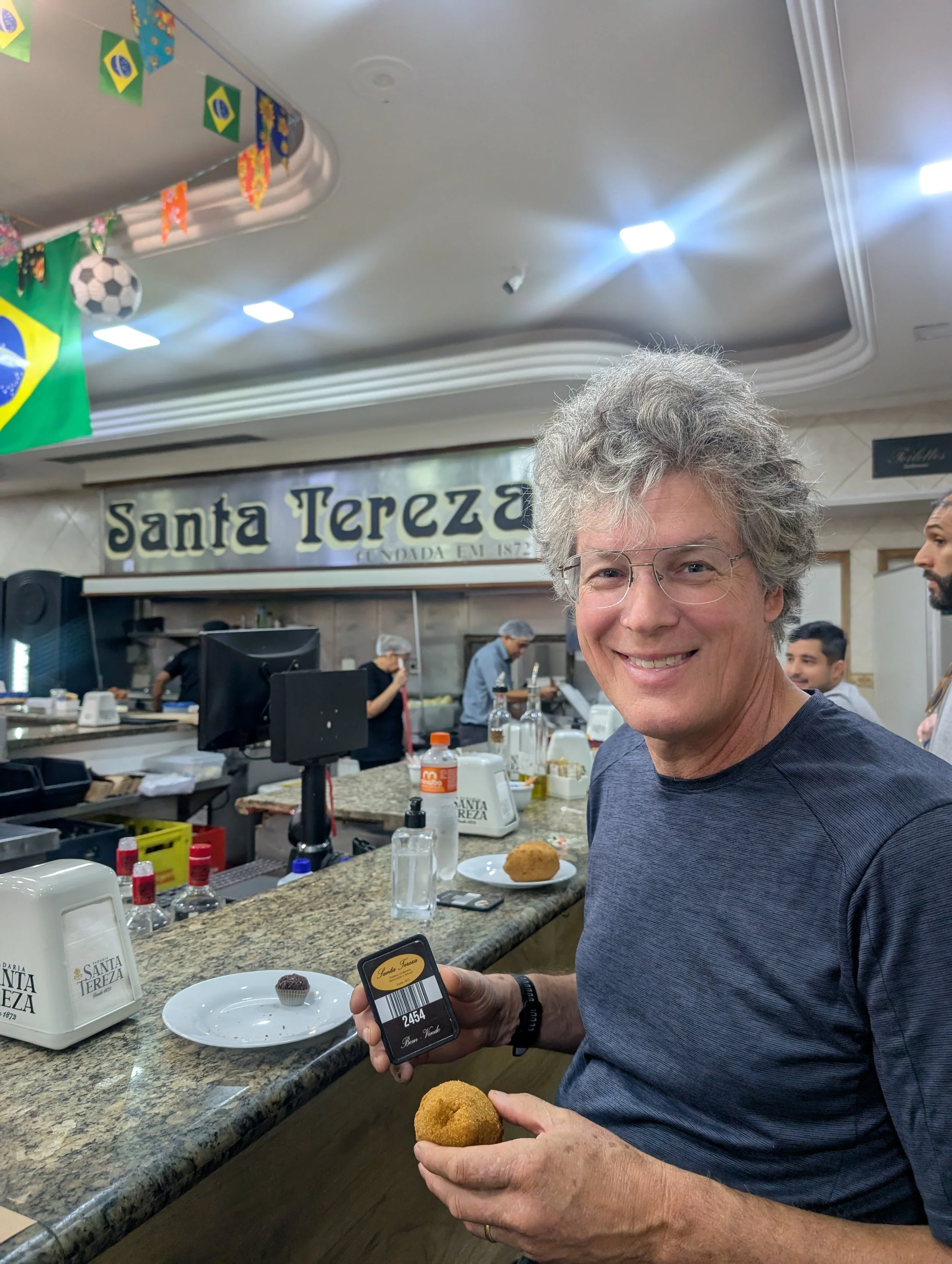
Trying Coxinha - a deep fried conical pastry filled with chicken
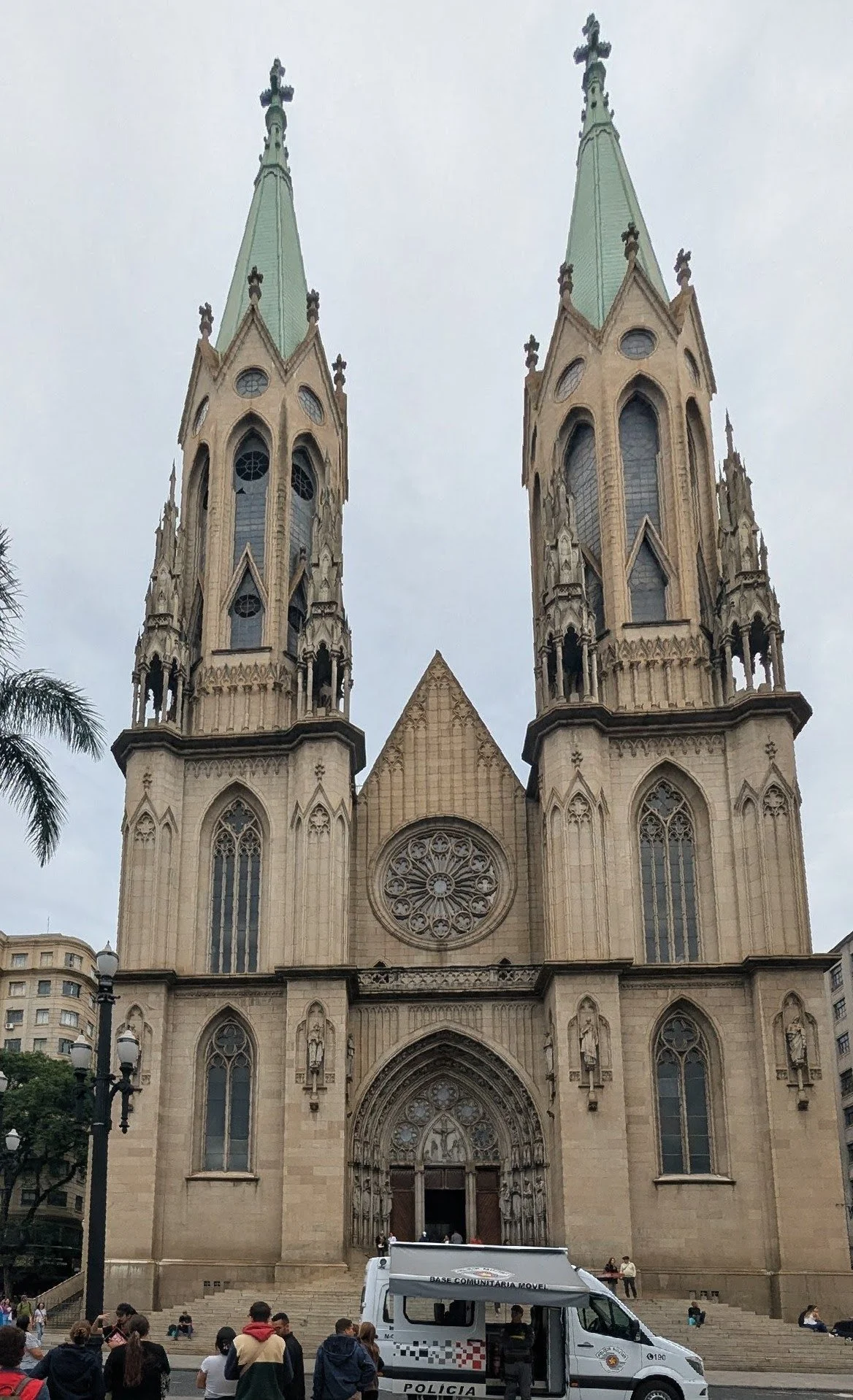
Sao Paolo Cathedral
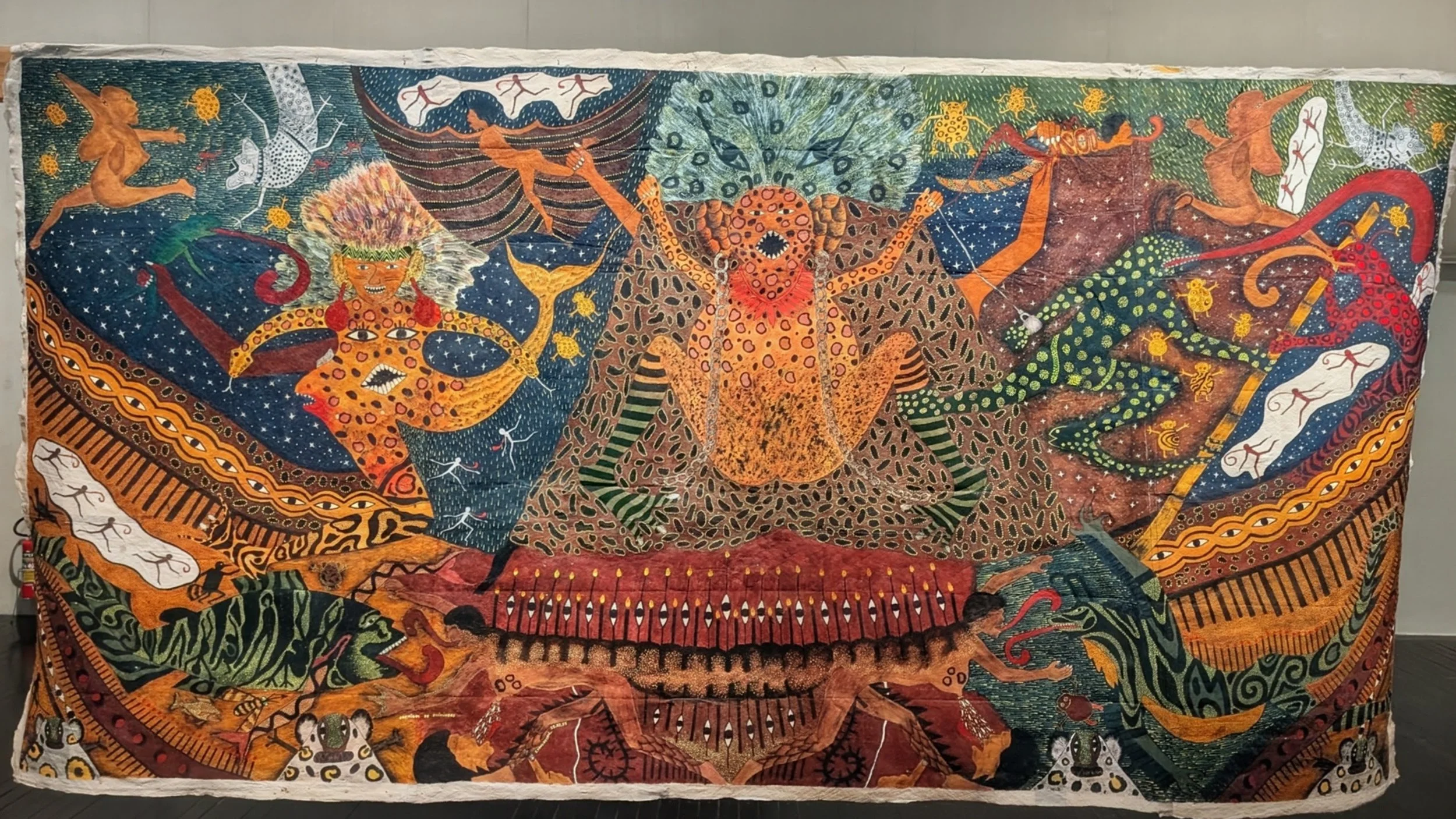
Visit to indigenous art exhibit at the Sao Paolo Museum of Modern Art.
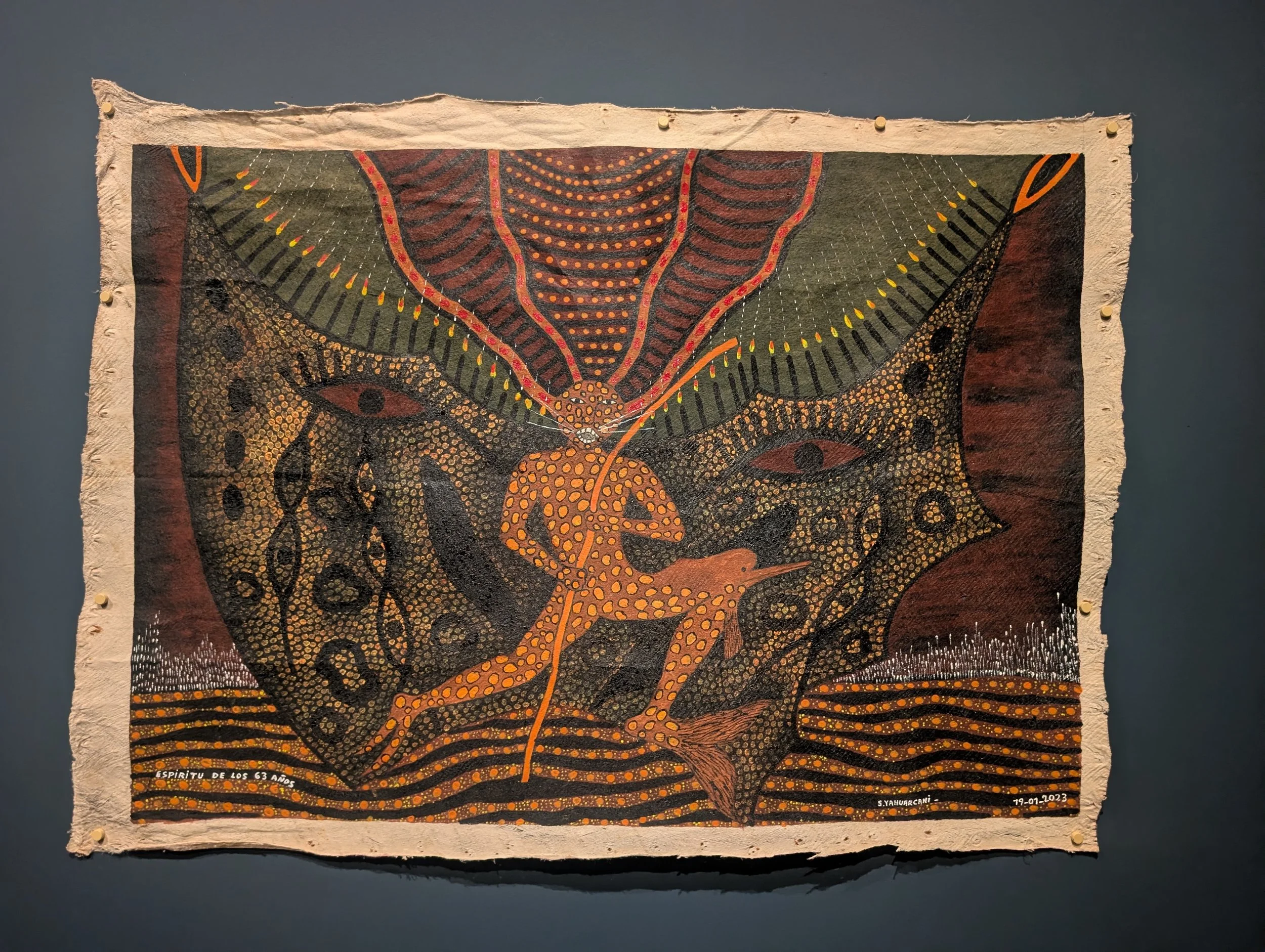
Works by artist Santiago Yuhuarcani, member of the Uitoto people
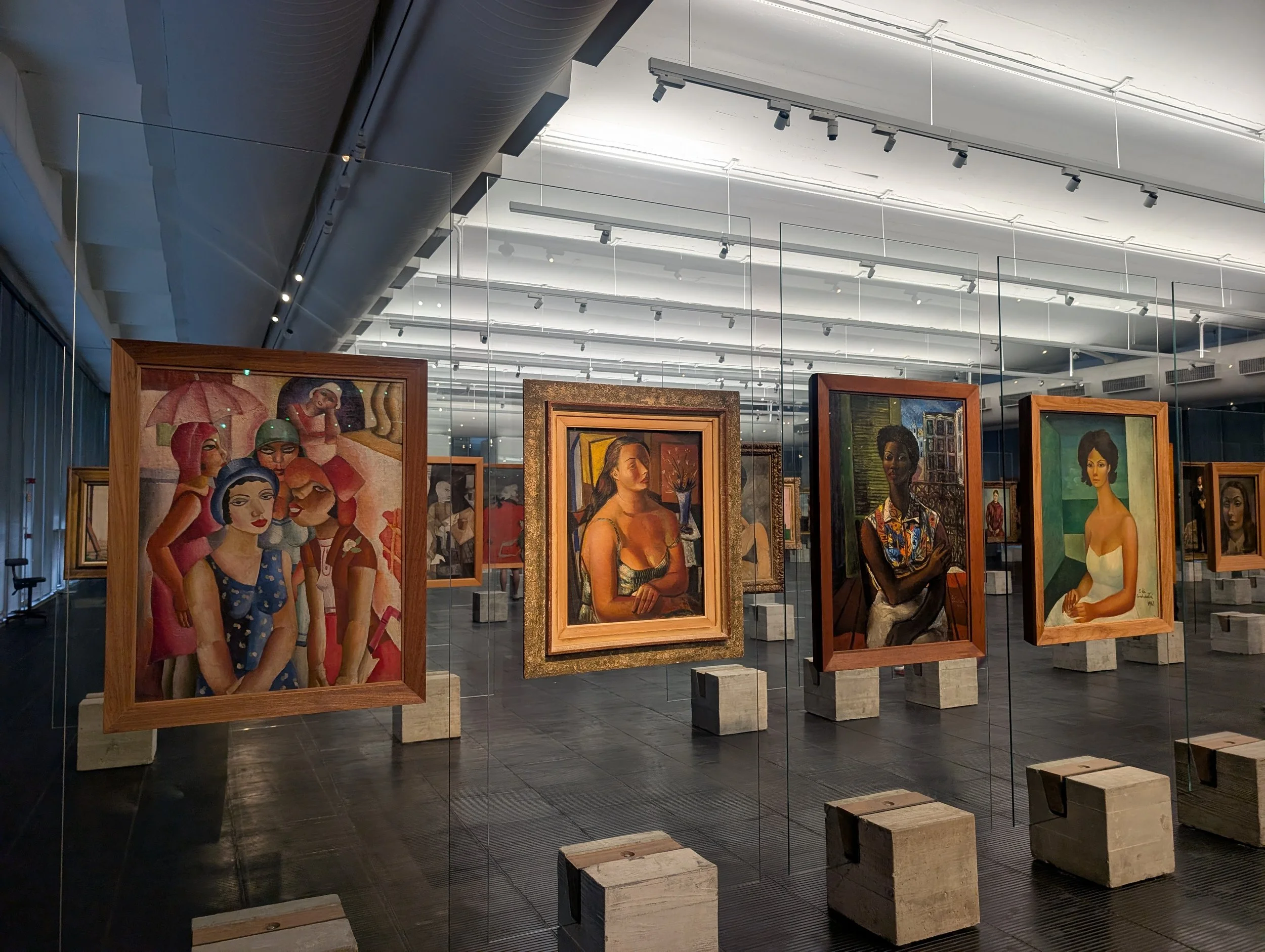
The main exhibits were hung uniquely from the ceiling with wire
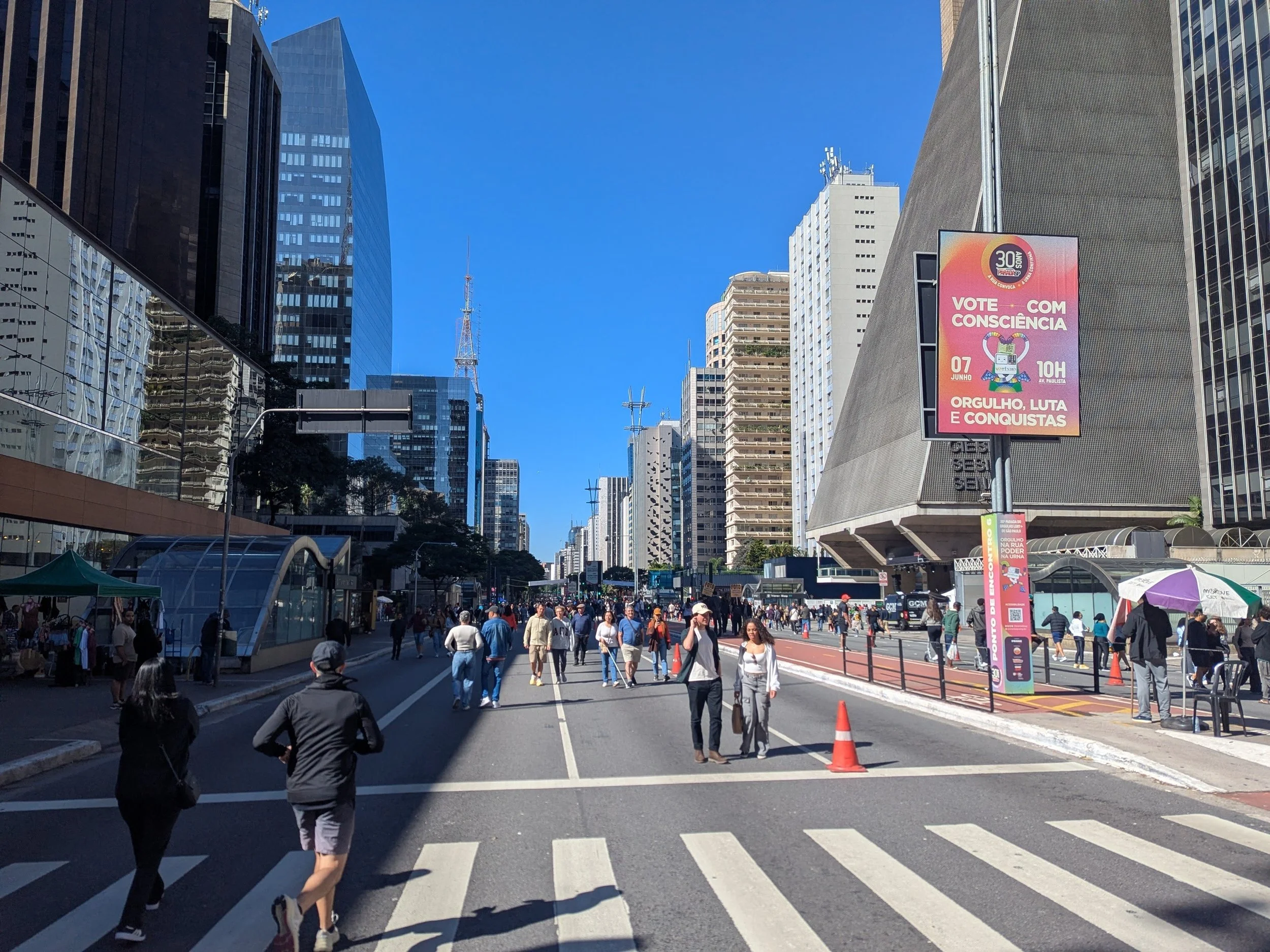
Joining the crowds walking Avenida Paulista on a Sunday
We happily survived Sao Paulo, Dawn got her fill of art, and we left feeling confident again about our ability to stay safe in big cities.
Next on our route was visiting some beautiful old mountain towns with beautifully preserved colorful architecture, steep cobbled streets and an engaging small village culture. Founded during the mid- 18th century during the gold rush days, these cities were remarkably well preserved.
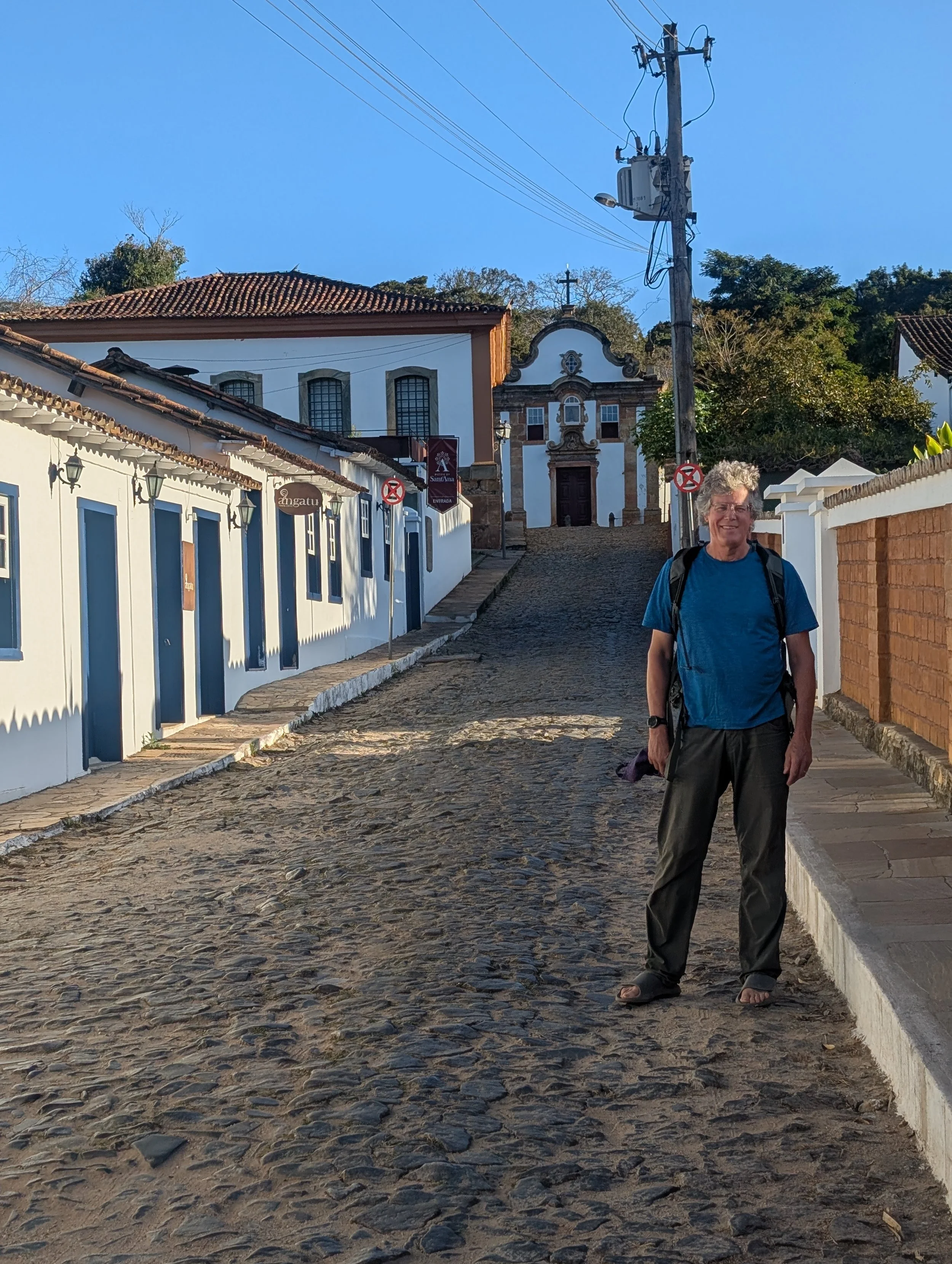
Our first stop, Tiradentes, one of our favorite villages in Brazil
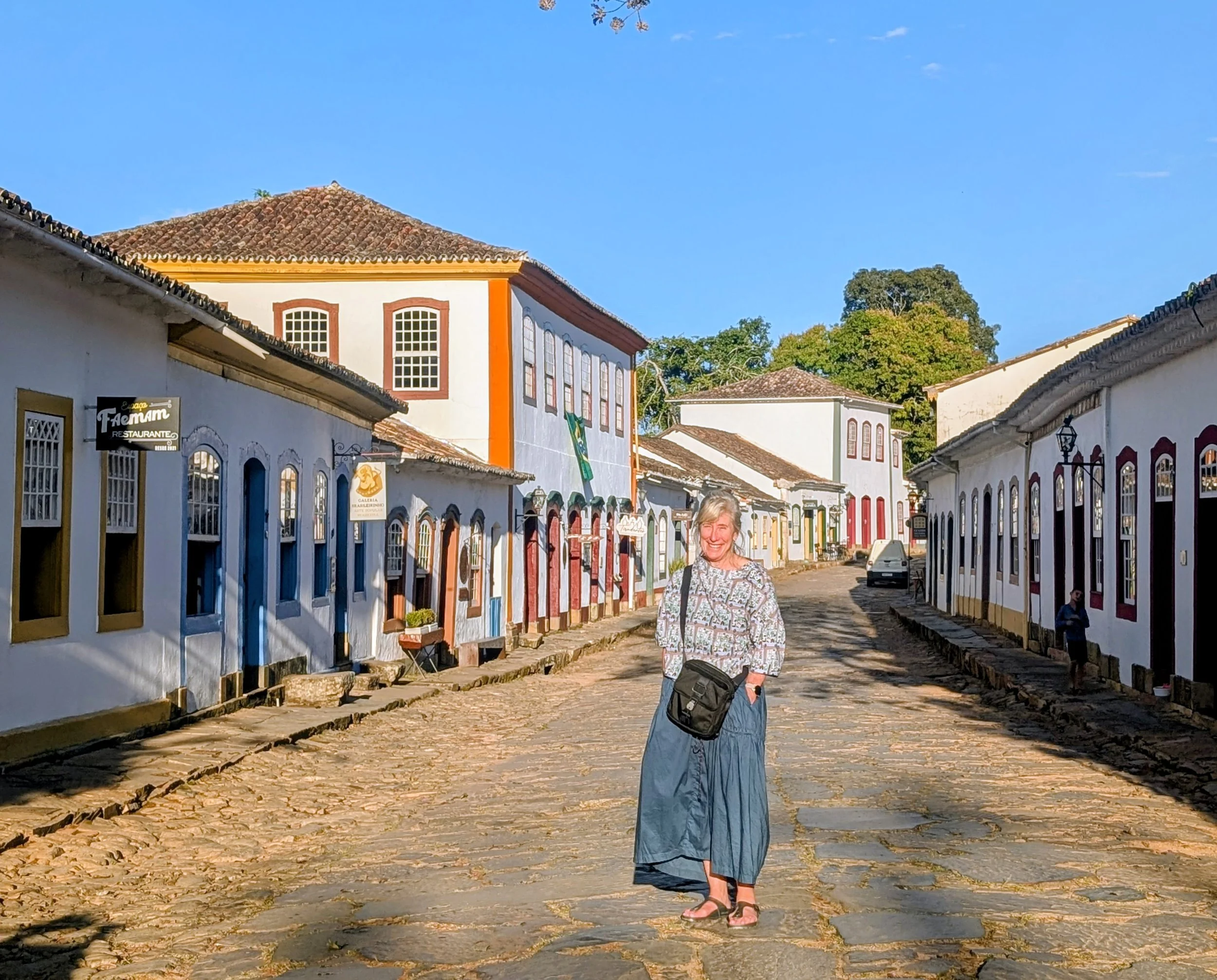
Featuring colorfully painted buildings and cobbled streets
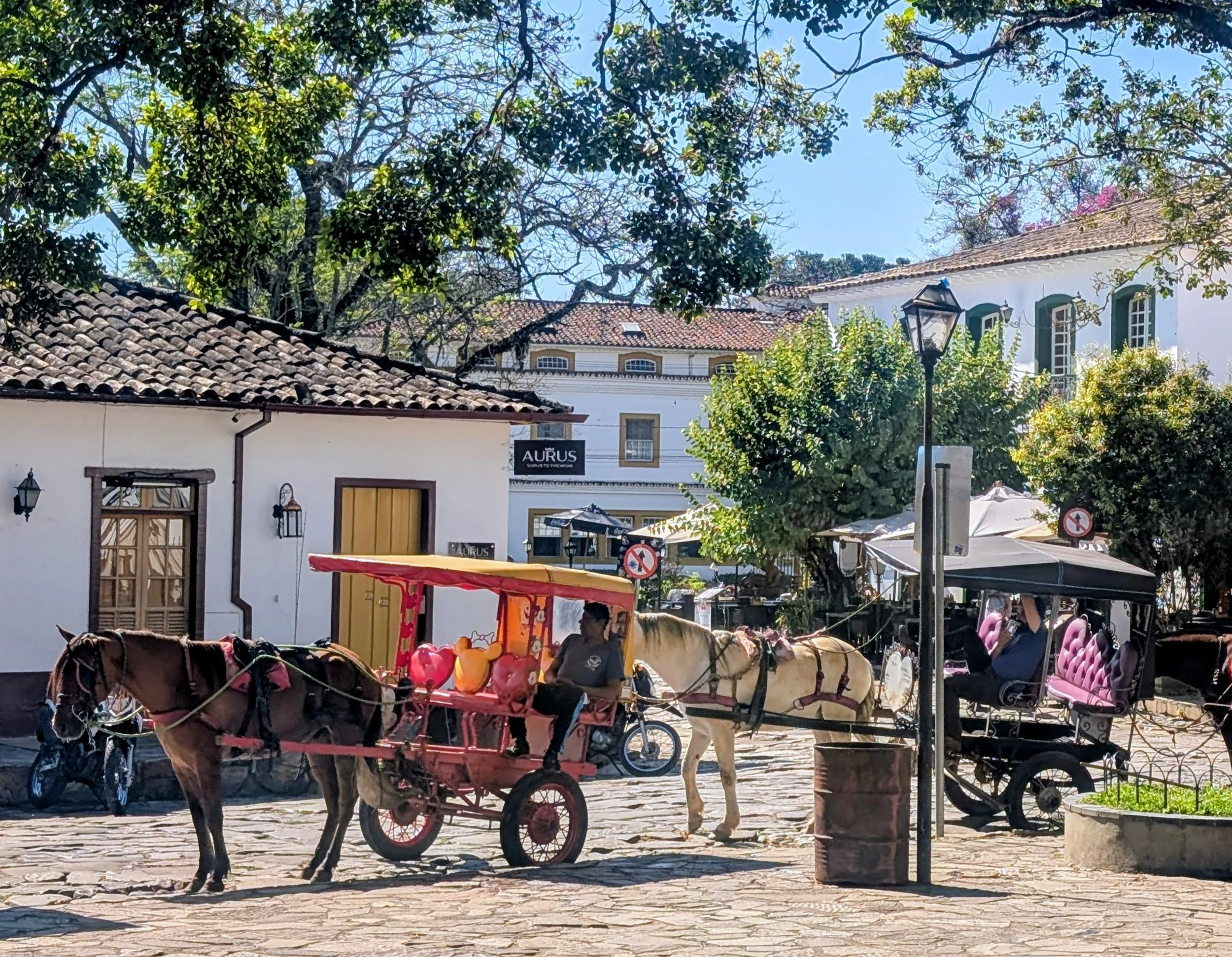
Central plaza of Tiradentes, lined with cafes and art shops
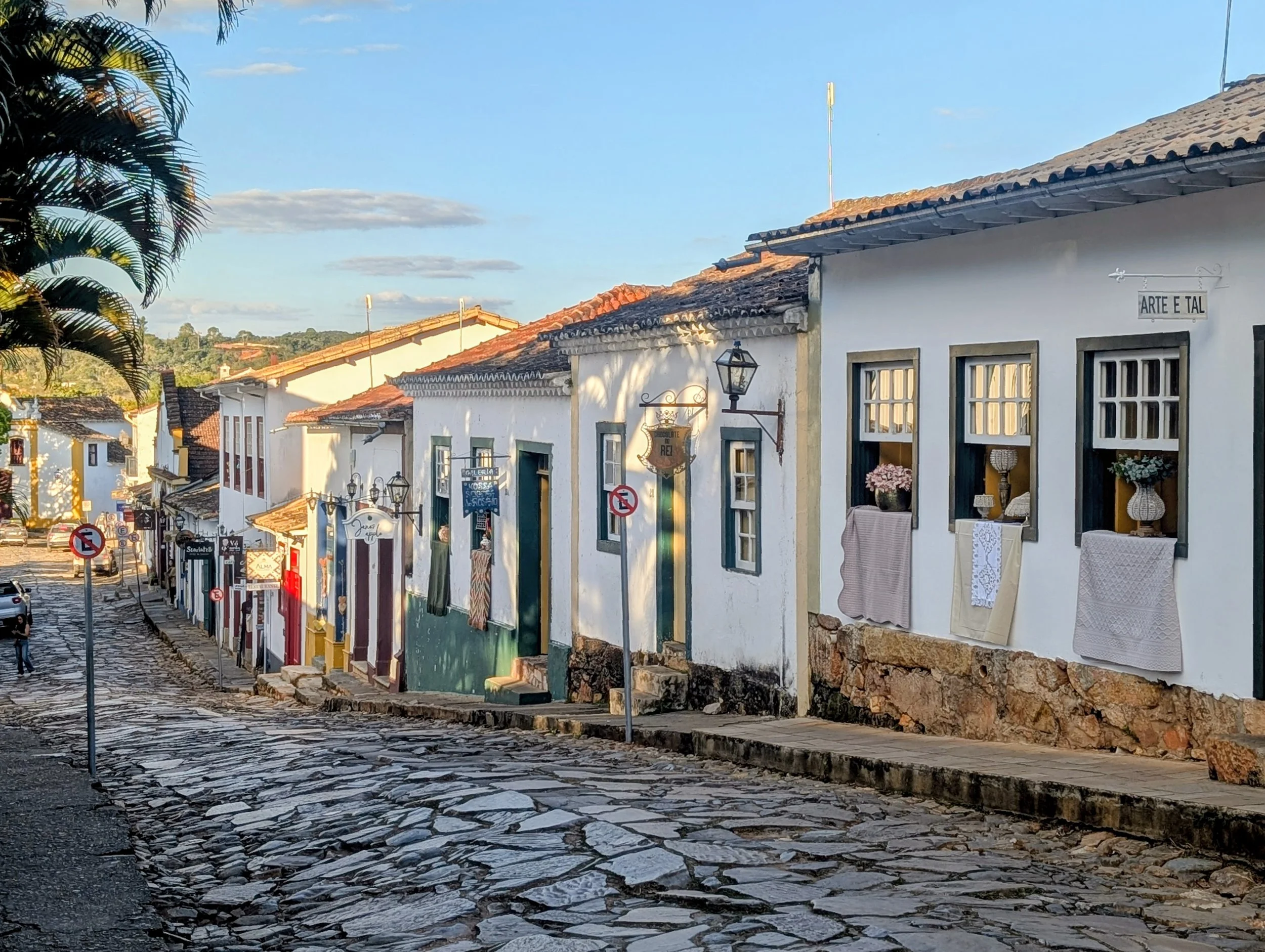
A lovingly preserved village, founded in 1702
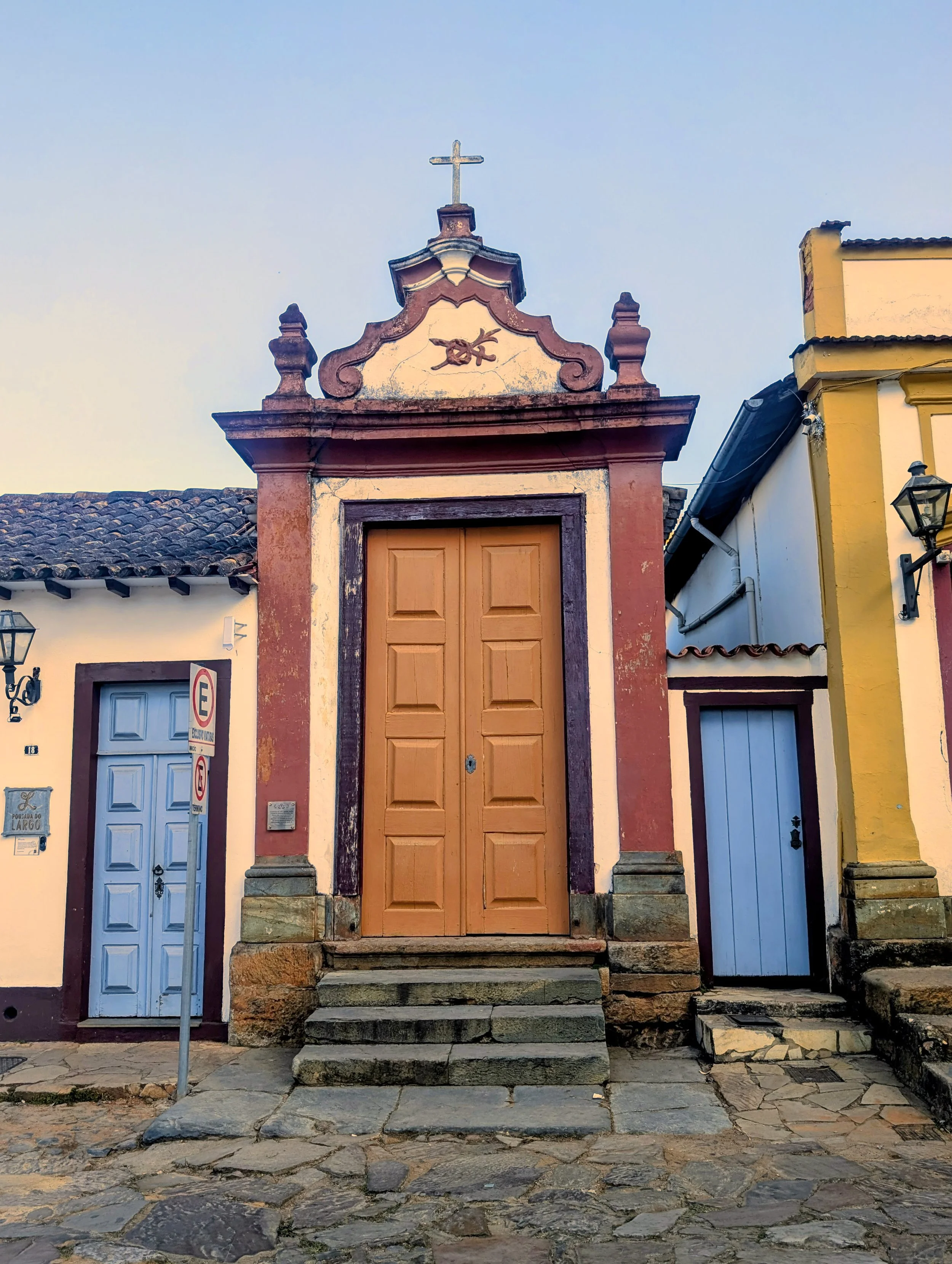
Charming wooden and stone architecture
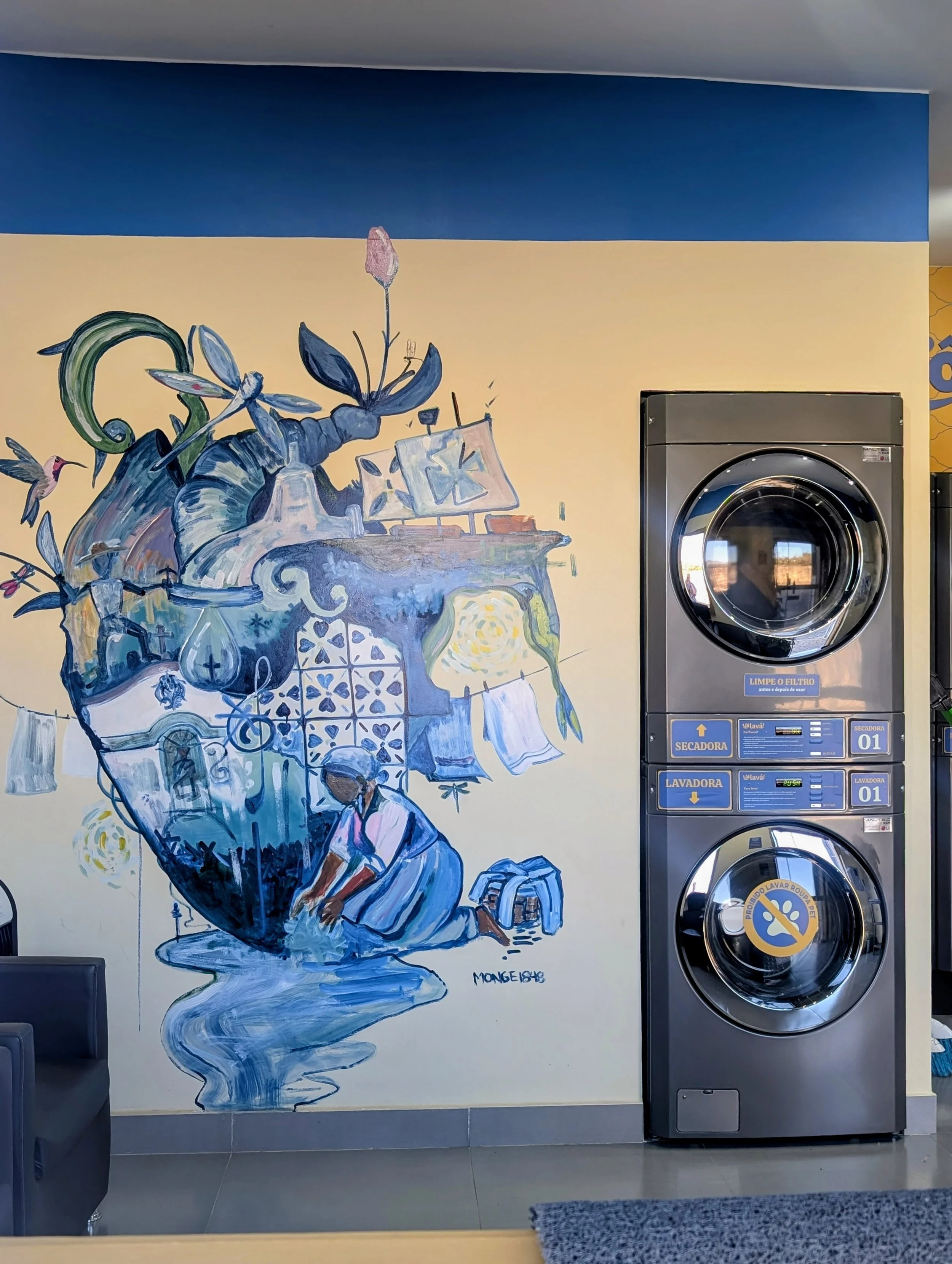
We also took care of business in town - one of Dawn’s favorite things about Brazil, the availability of clean, efficient and inexpensive self service laundromats. Makes life easy. Although we still don’t understand why the automatic payment system always required us to register with our passports . .
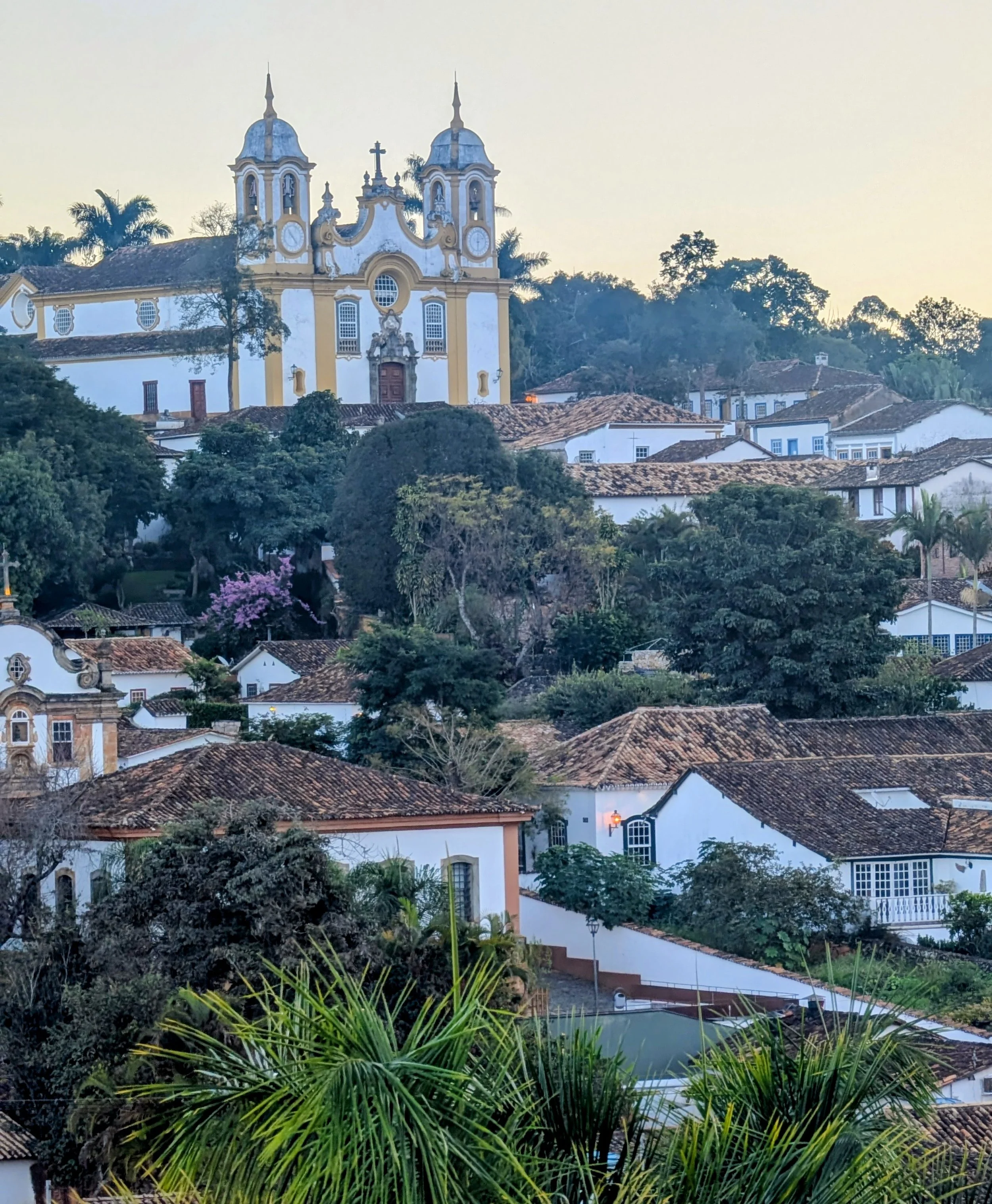
Sunset view across the canyon in Tiradentes
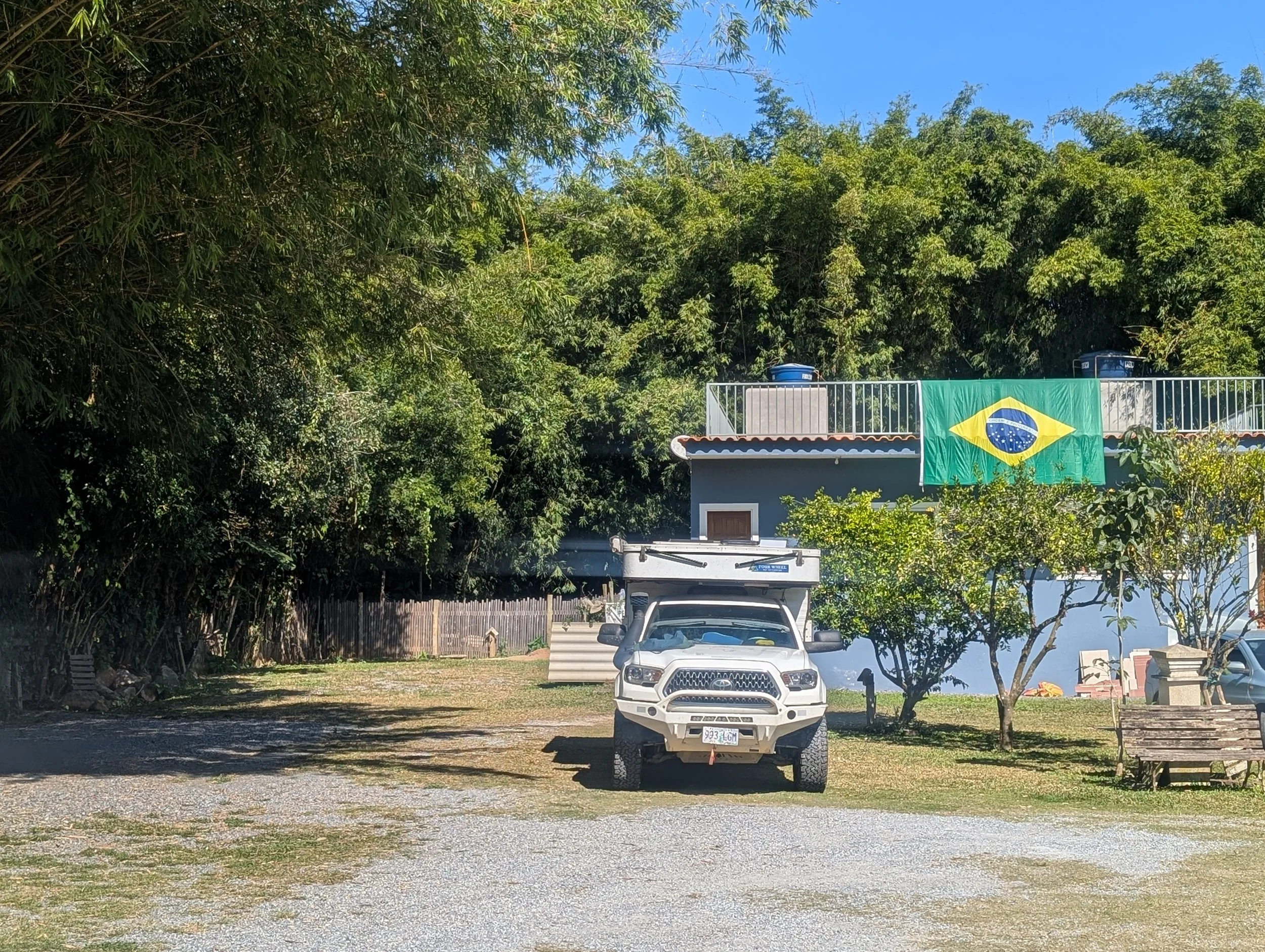
Our lovely backyard family camping spot in Tiradentes
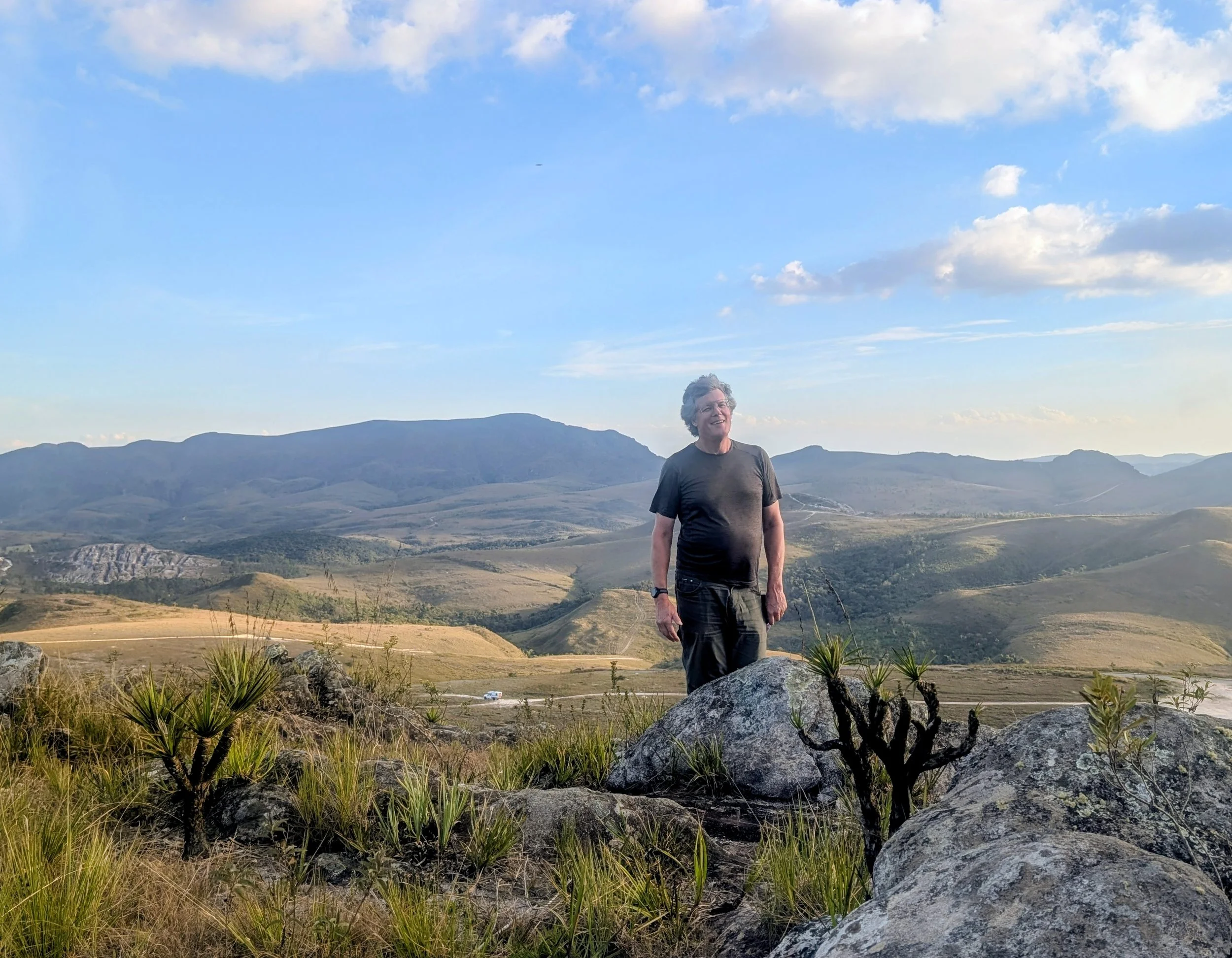
In-between mountain villages we found a wild camping spot and went for a hike (you can see the truck way behind Andy)
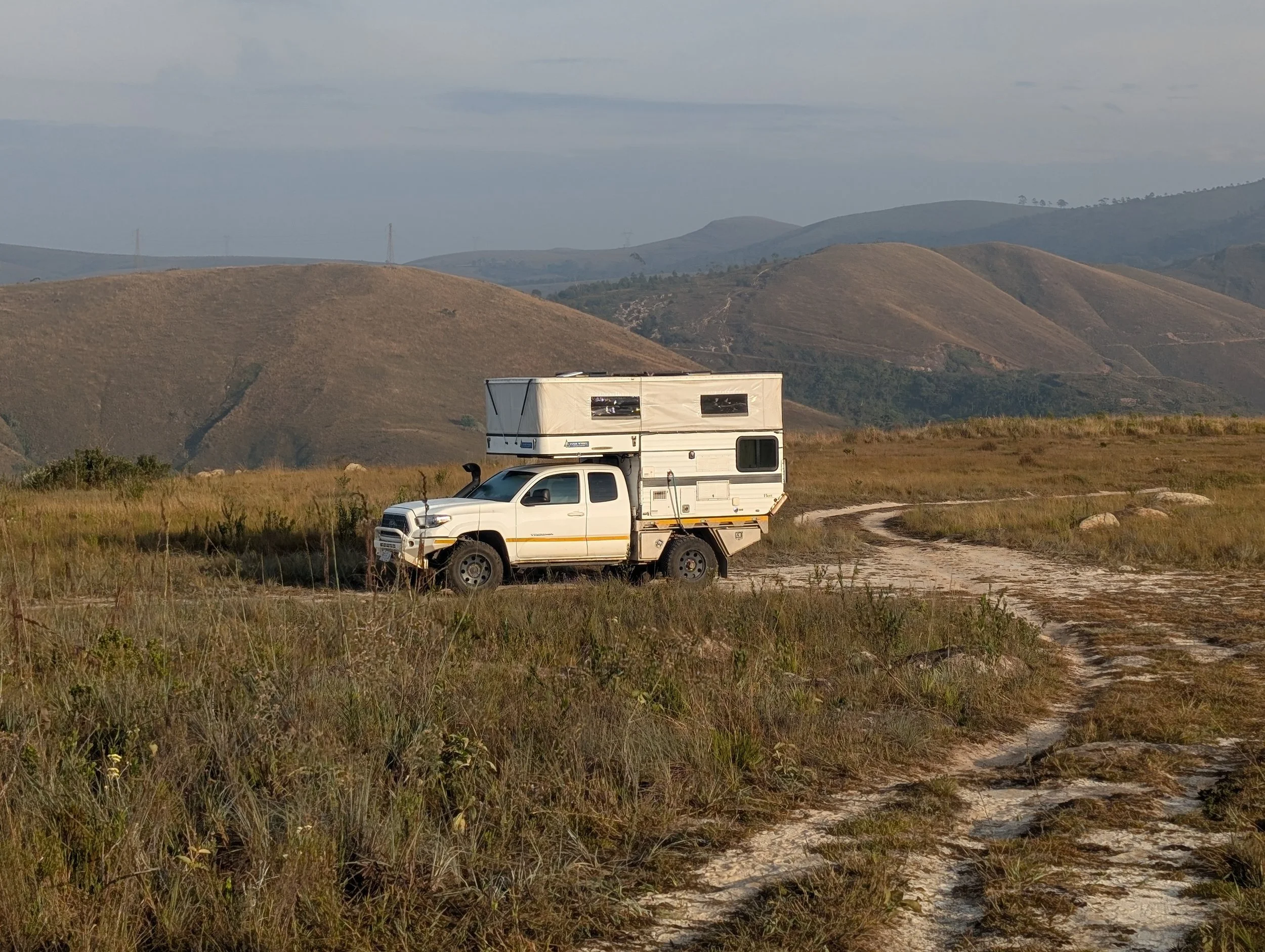
Sunset at camp. Little did we realize that this was one of only a few truely wild campsites
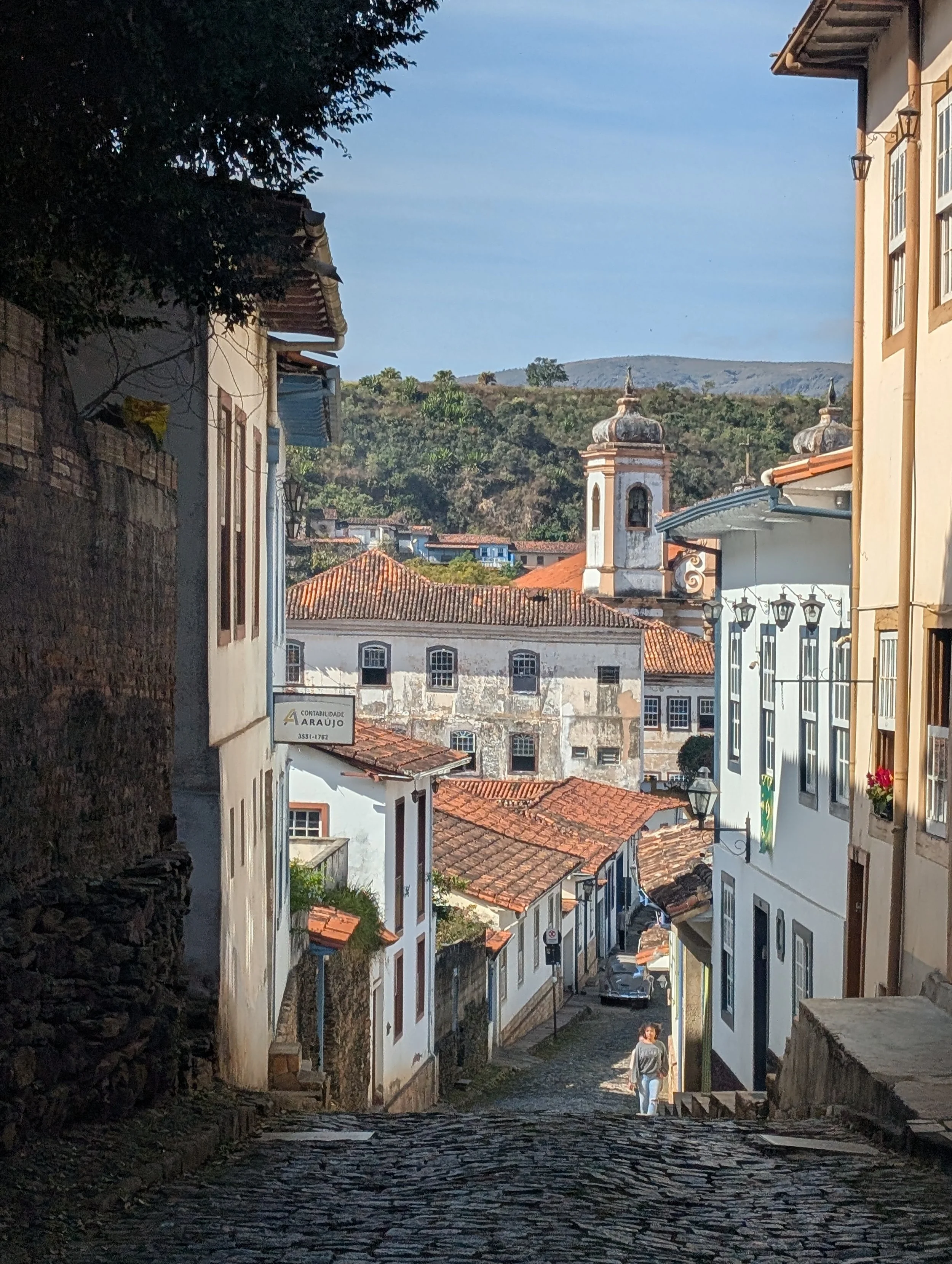
The second mountain gold mining town - Ouro Preto
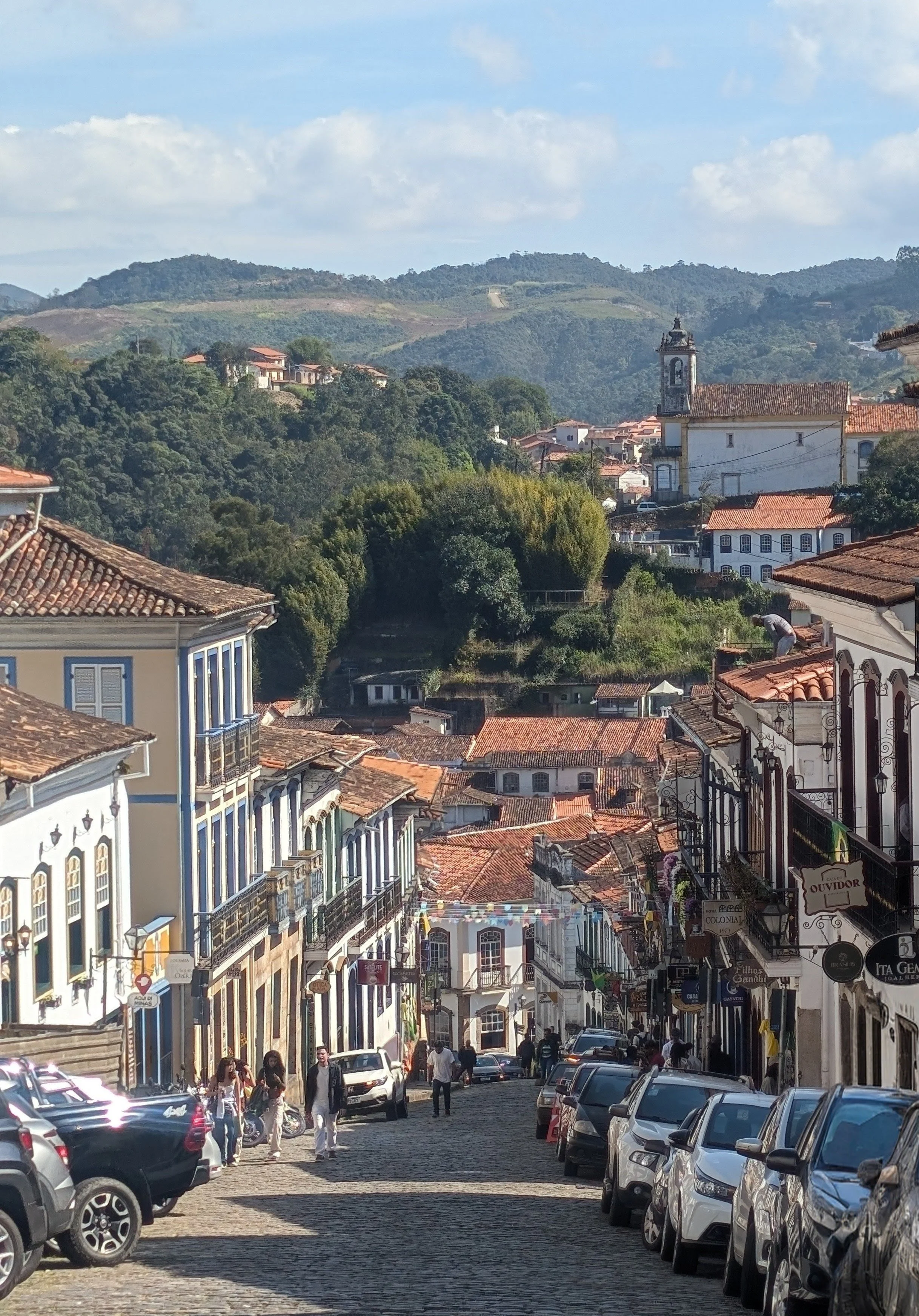
Also with steep, winding cobbled streets, Ouro Preto was a little bigger and more touristy than Tiradentes
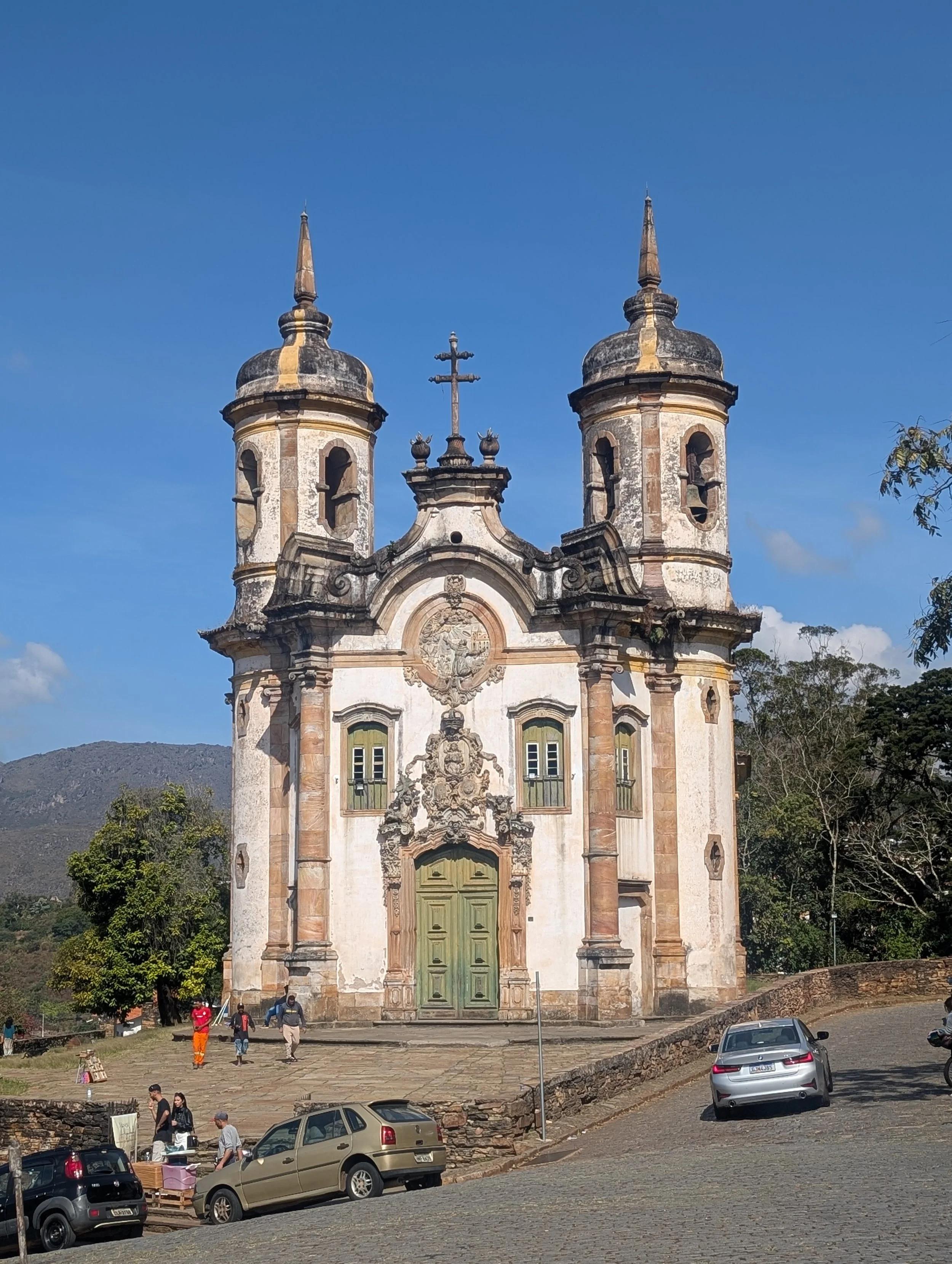
Beautiful Catholic church in Ouro Preto
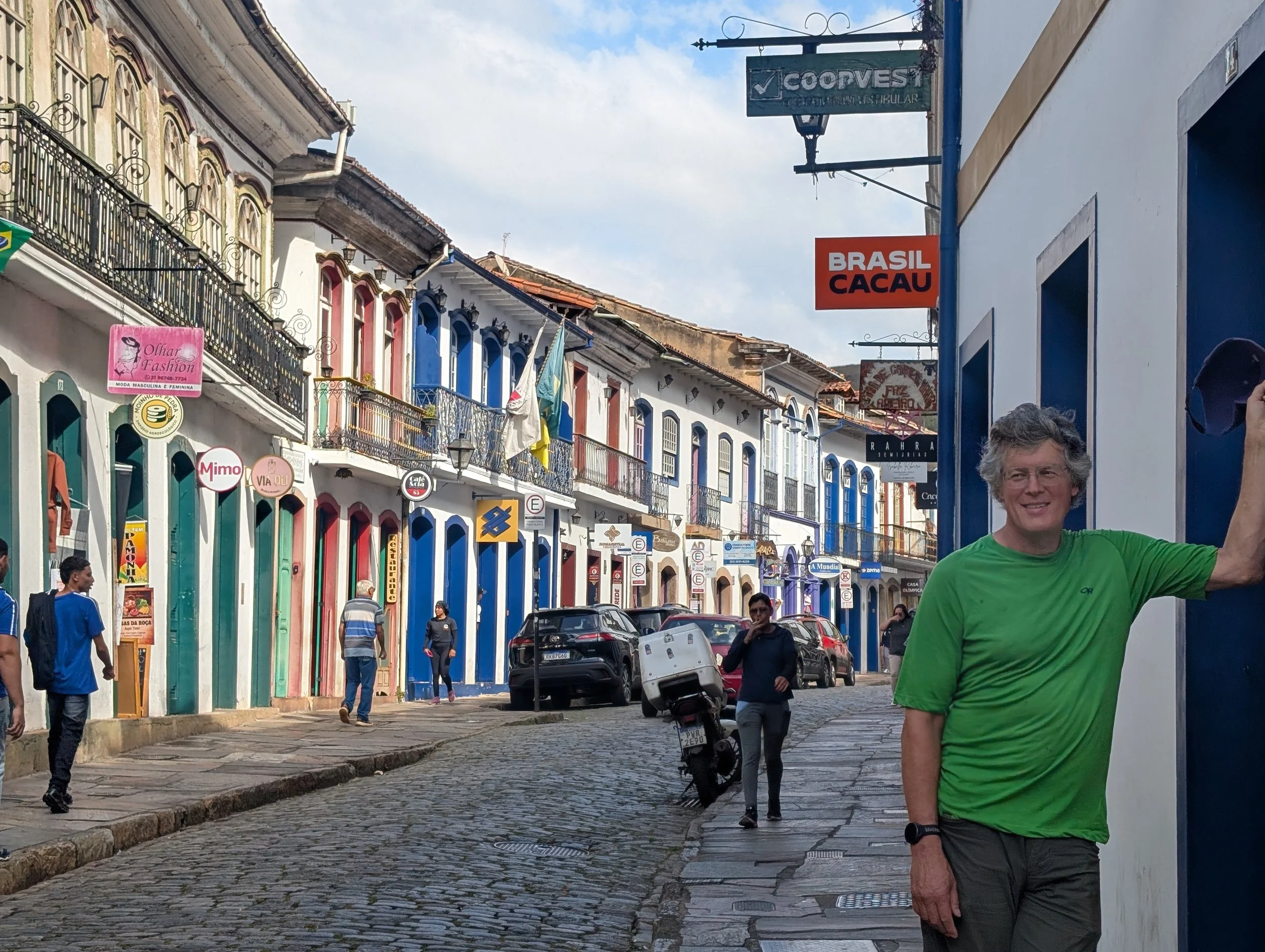
On our way to find chocolate
Once we left the delightful mountain region, we set off on our biggest cross country trek. In retrospect, we probably should not have driven this route. We don’t usually think of flying as an option but in a huge country like Brazil there are times it could make sense. We met travelers who had bought $500 tourist tickets that allowed them to hop around the country for a month. We know we spent more than that driving up to the north coast. We drove 1,550 km up to the city of Salvador with very little to see or do along the route.
This drive stretched us. Brazil relies heavily on trucking for commerce. The highways are filled with slow-moving trucks and are often poorly maintained with axle breaking potholes cropping up at the most unexpected moments. We saw several cars pulled to the side changing tires, presumably from these huge potholes. Speed limits are enforced by thousands and thousands of variously-sized speed bumps at random and sometimes unmarked locations making for more excitement along the way. On the positive side, the drivers are generally cautious, law obeying and courteous and police are inexistent.
Gasoline was also an issue. It was readily available but, by law, it contained 30% ethanol. This caused us to get poor gas mileage but more worryingly, our USA vehicle’s fuel system was not designed to run on that high of percentage as ethanol is quite corrosive. Time will tell if it has suffered long term damage.
Another challenge was the multitude of permanently mounted speed cameras. Normally we drive below the speed limit because, well we’re in a foreign country and our truck is not a high speed vehicle. However, there were thousands of them scattered randomly along the roads and the Brazilian drivers were very diligent about driving well below the posted speed when they passed them. Many times signage would warn about a decreased speed limit before the camera but despite this occasionally we would cruise through these at the otherwise normal limit, oops. We envisioned that when leaving Brazil these blunders would catch up with us, but no we made a clean escape. We will say that between the speed bumps and the speed cameras, Brazil is effectively enforcing strong speed limits without using any visible police force.
The other big downside of this journey was the complete lack of camping infrastructure. We think this is not a common tourist route. Instead, highways are dotted with Postos - combination gas and restaurant stops that cater mostly to truck drivers. On the upside, people with campers are welcome to stay for free and they are secure locations with free restrooms and sometimes even showers. On the negative side, they are often crowded, noisy and dirty. Before Brazil, we had never stayed in a location similar to this but with a complete lack of options, we joined the fray.
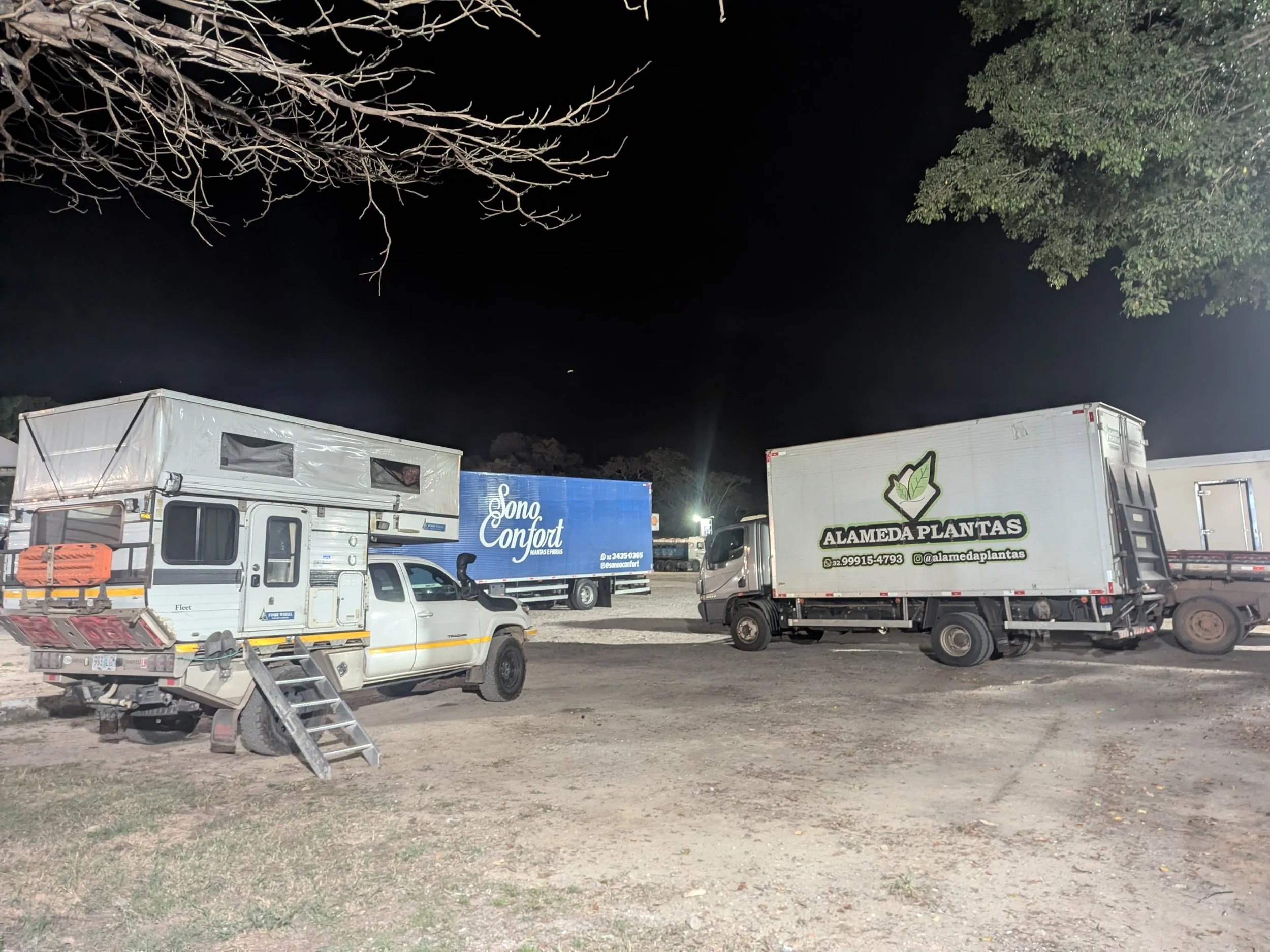
Parked up for the night at a Brazilian Posto - just us and scores of truck drivers
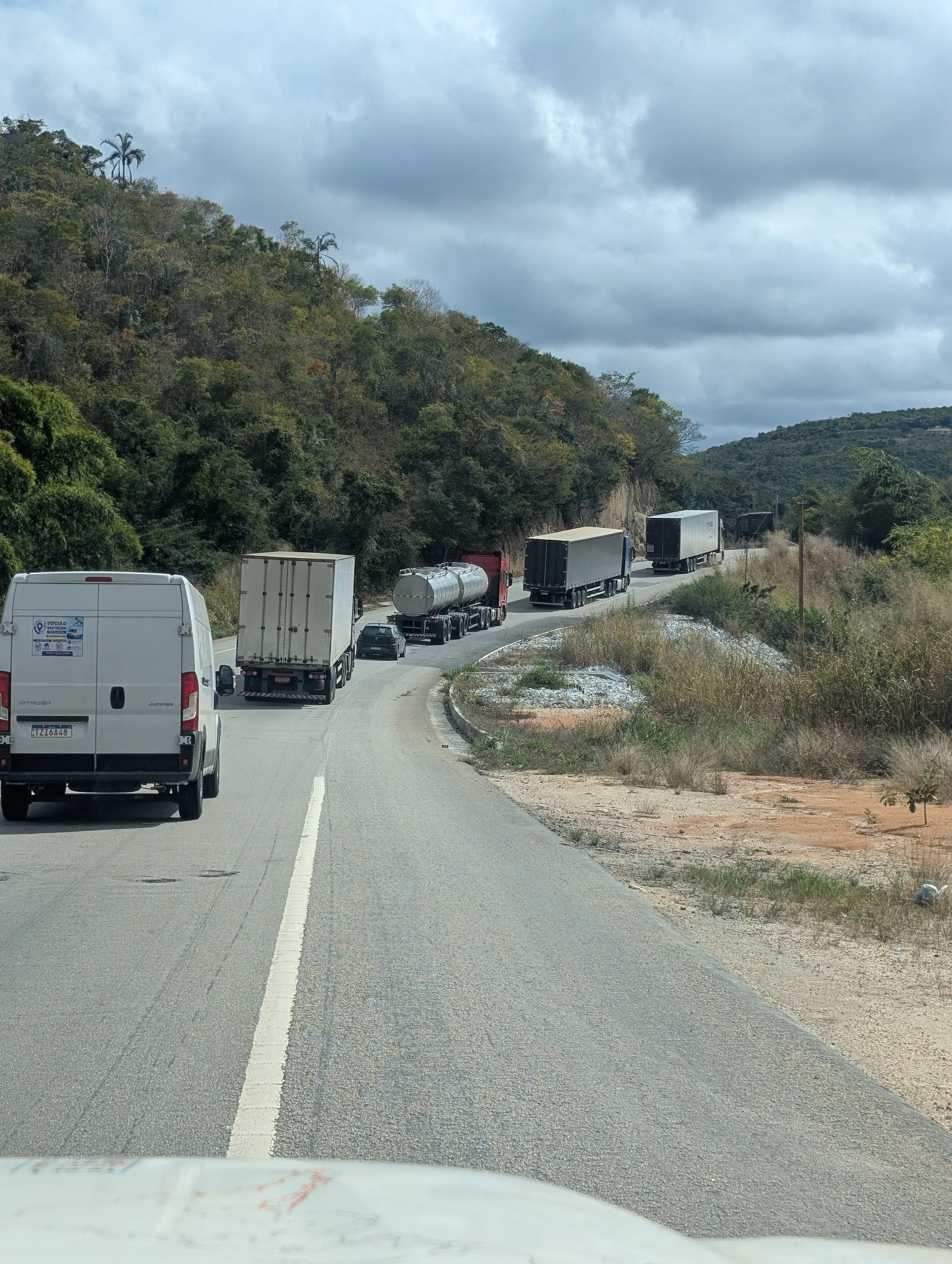
Some typical truck traffic on the highway
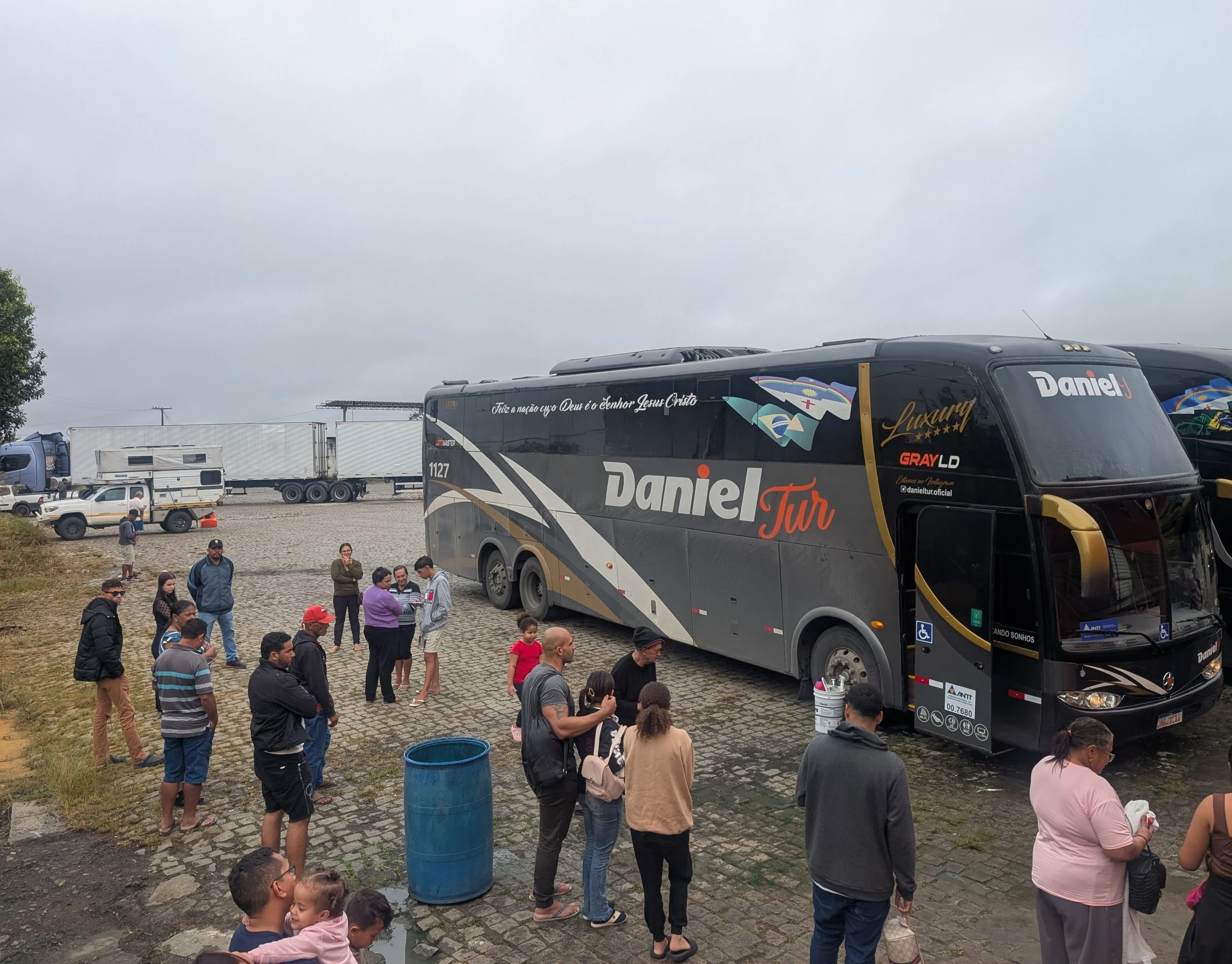
When we woke up in the morning here we realized that our Posto spot was also a popular bus stop
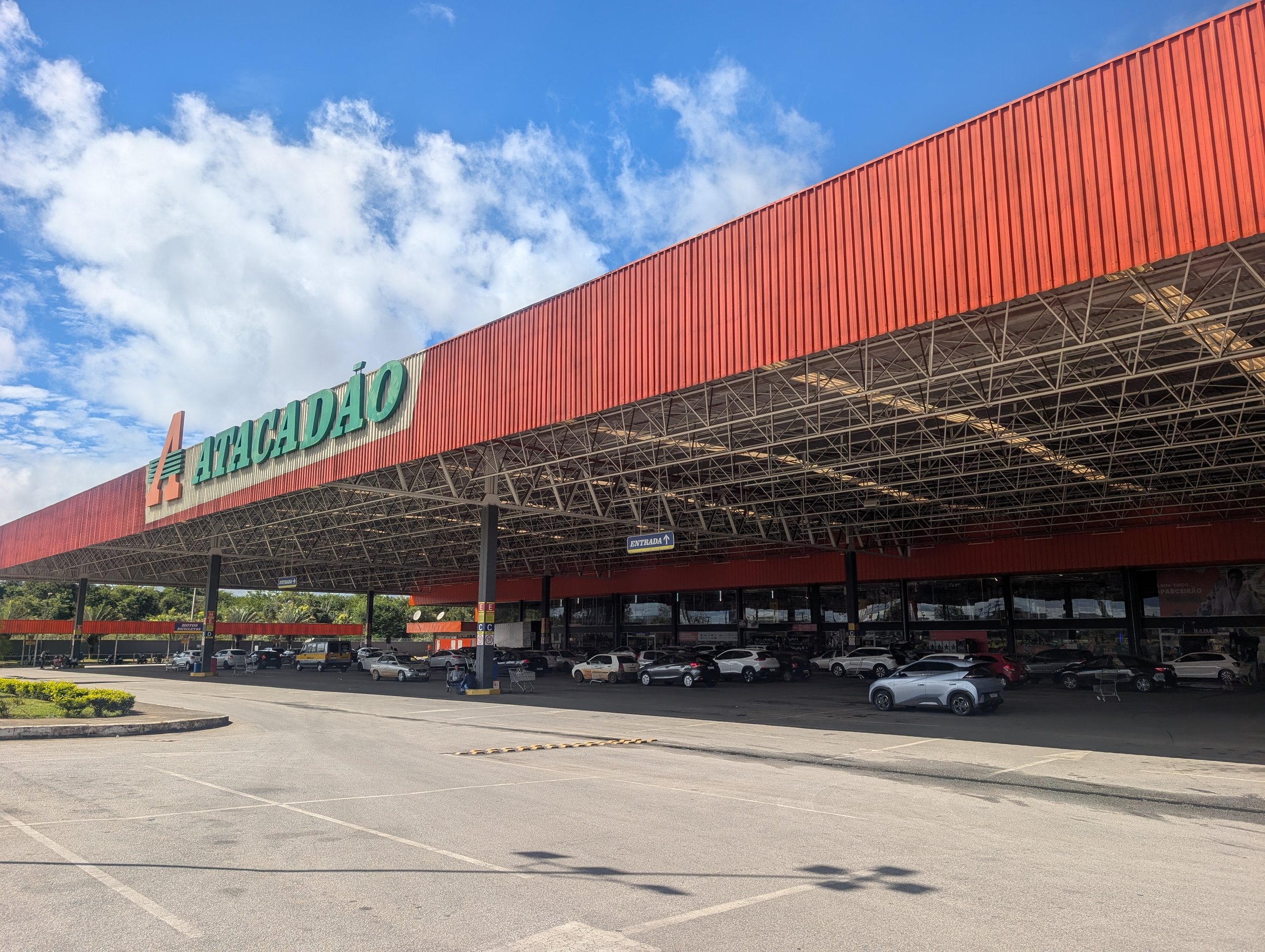
Another thing we appreciated was the ability to find any food - huge warehouse style supermarkets were common as were roadside fresh fruit and vegetable markets. Another point of contrast in Brazil
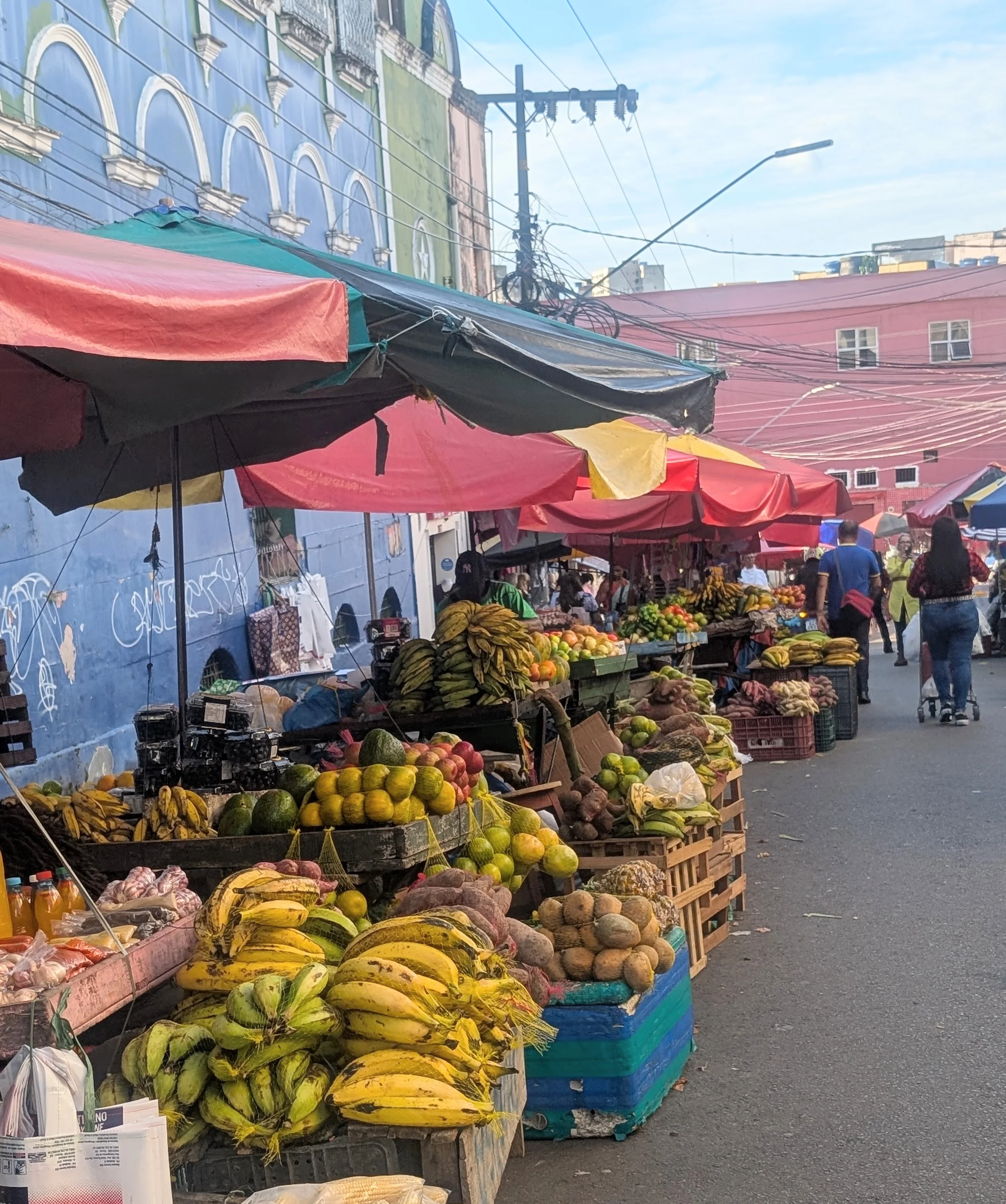
Typical street side fresh produce market. Dawn got used to handing her phone over in calculator mode so sellers could type in an amount
Luckily, after a few days of non-stop driving, we were able to stop off at Chapada Diamante National Park and hike off some of our pent up energy.
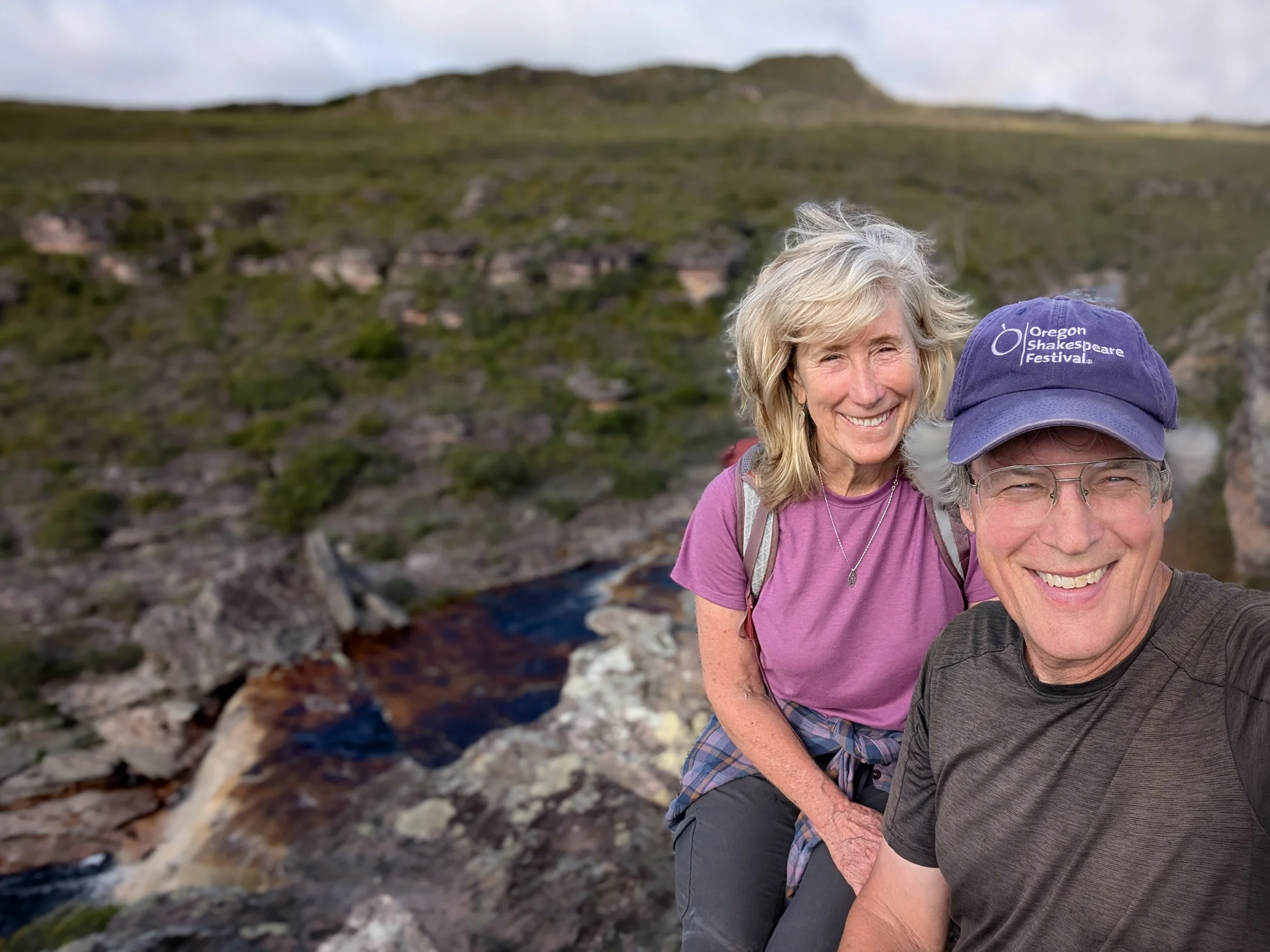
Hiking at Chapada Diamante National Park
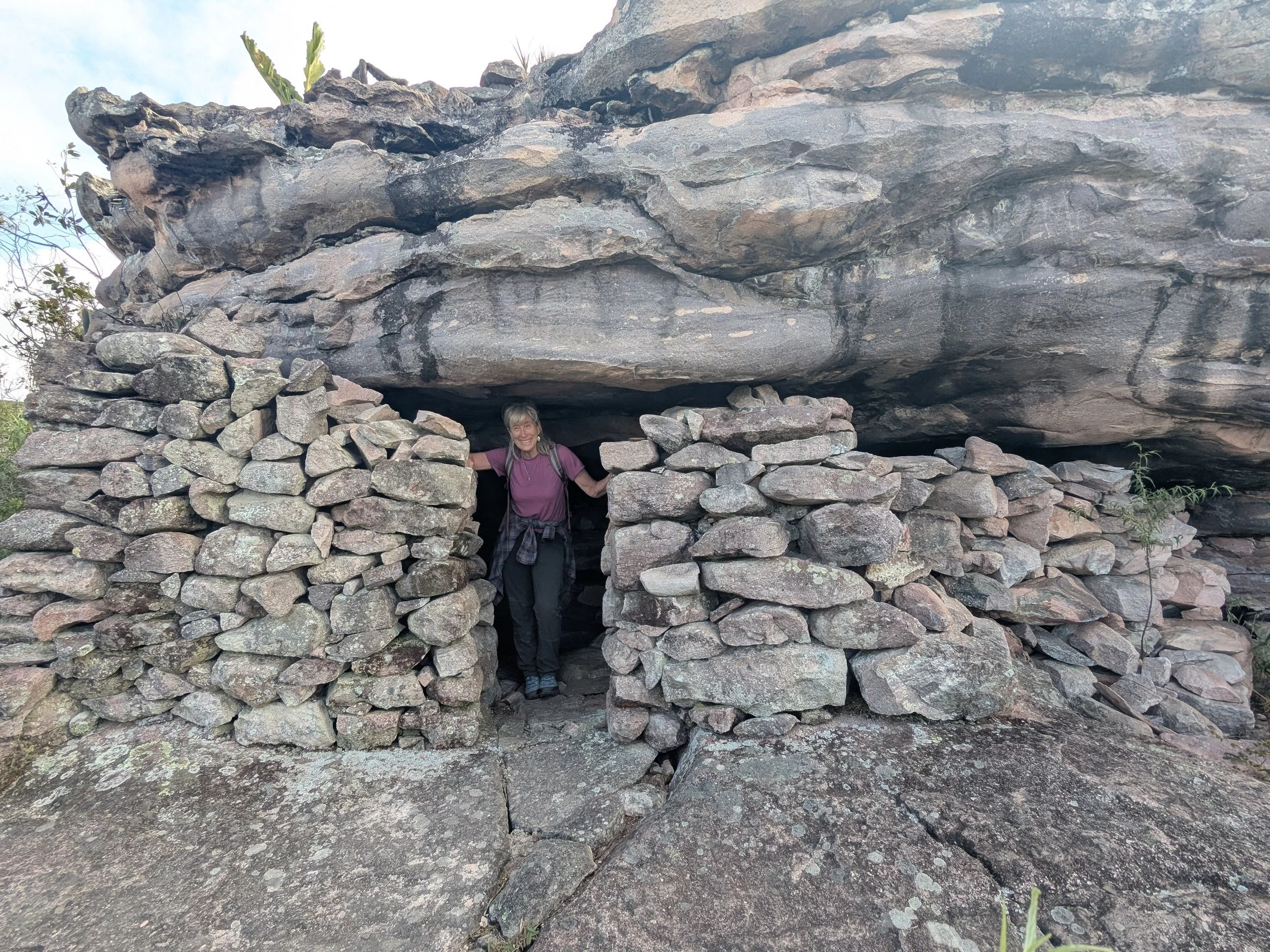
Old miner’s cabin along the way
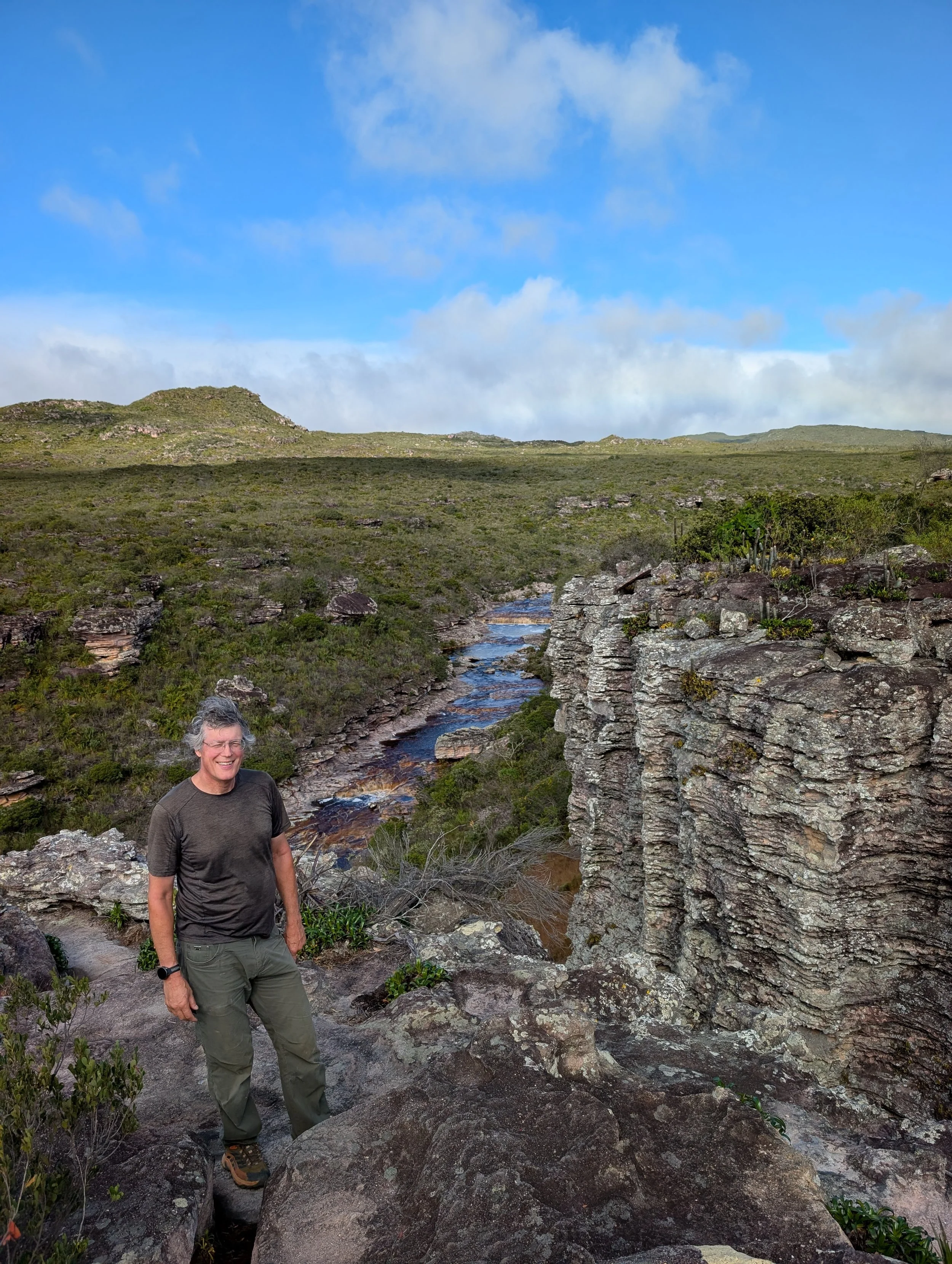
Intriguing rock formations, rivers and green vistas
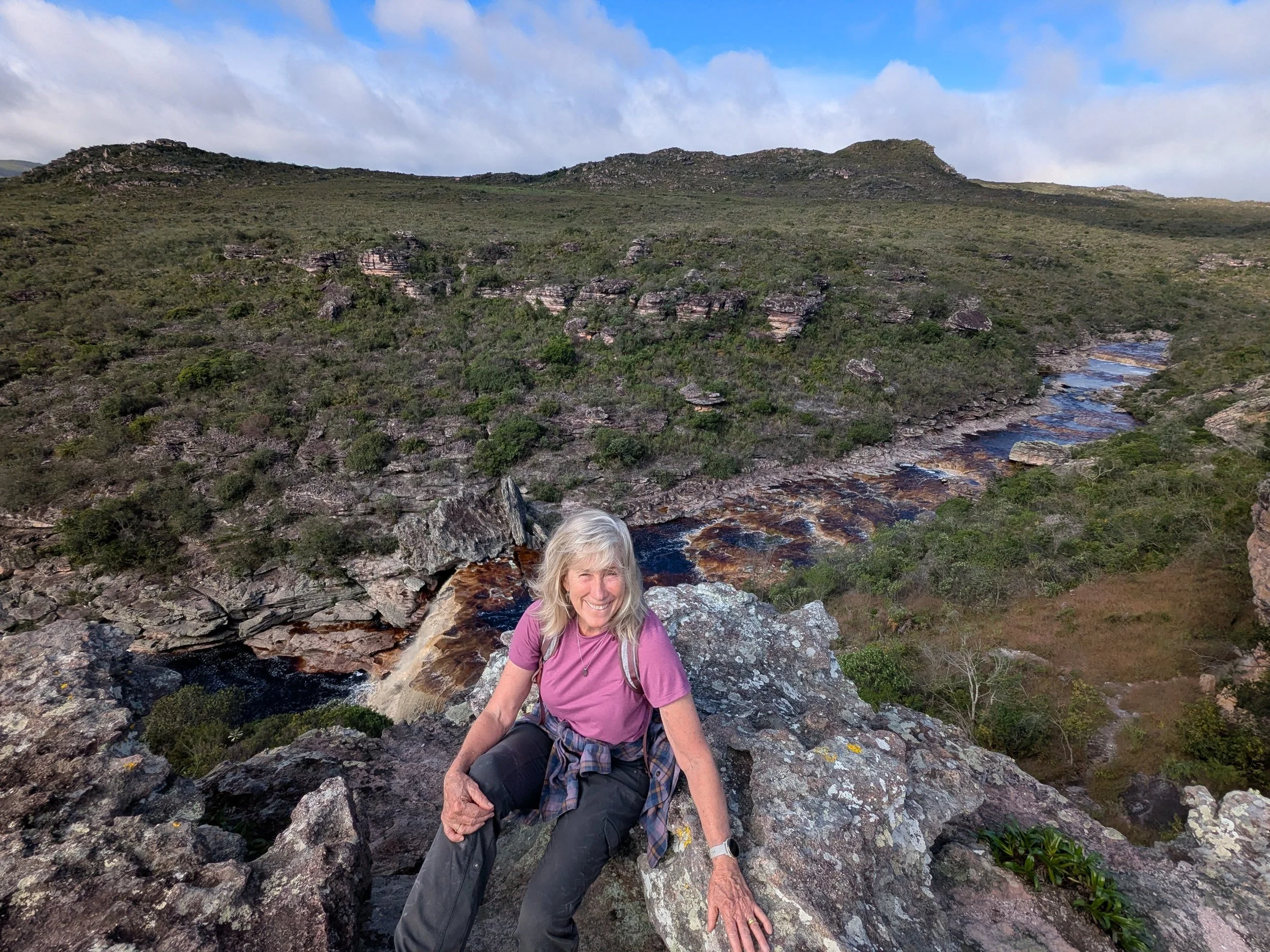
Dawn is just happy not to be on the freeway
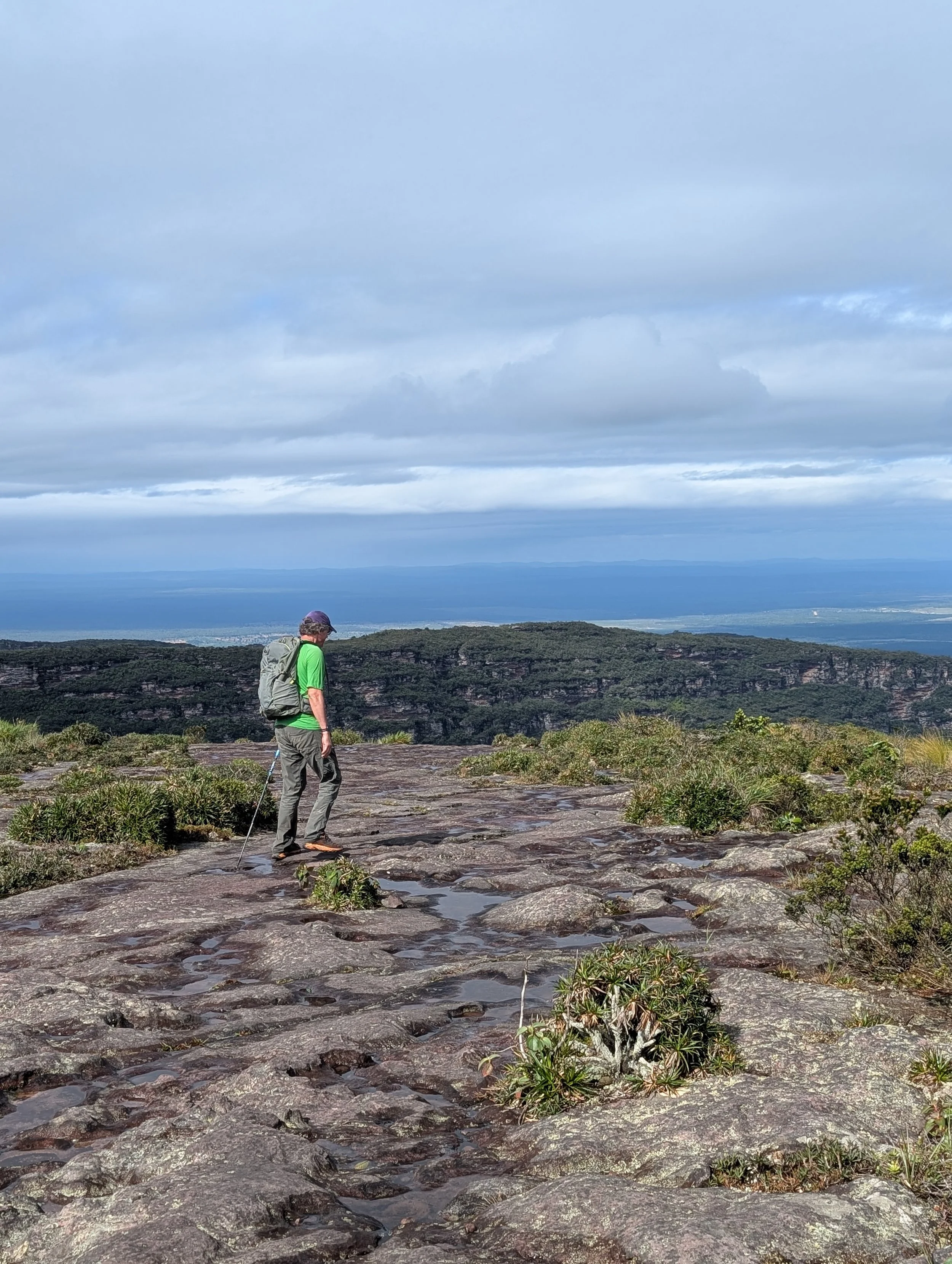
Bluff top
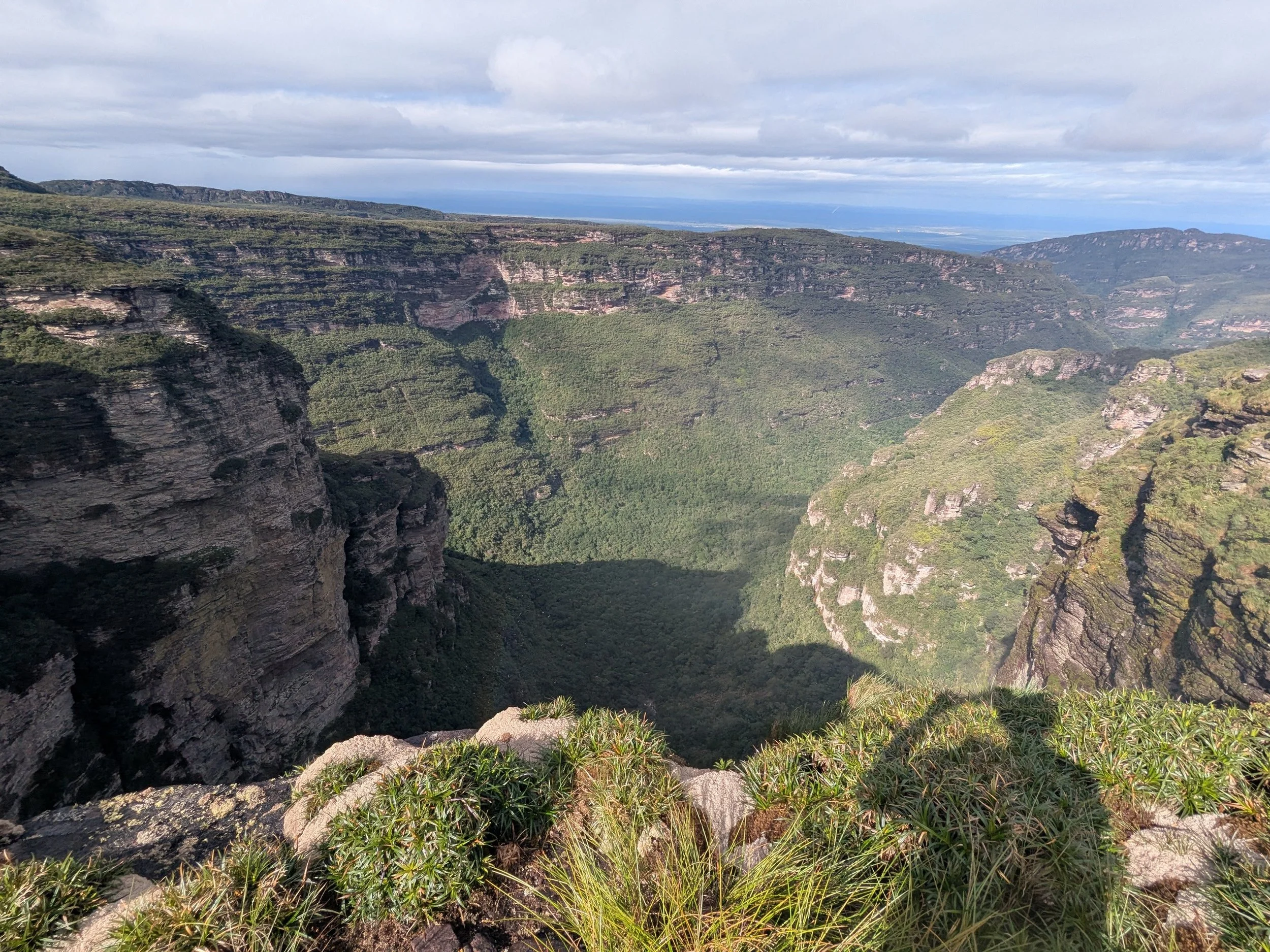
View across the canyon
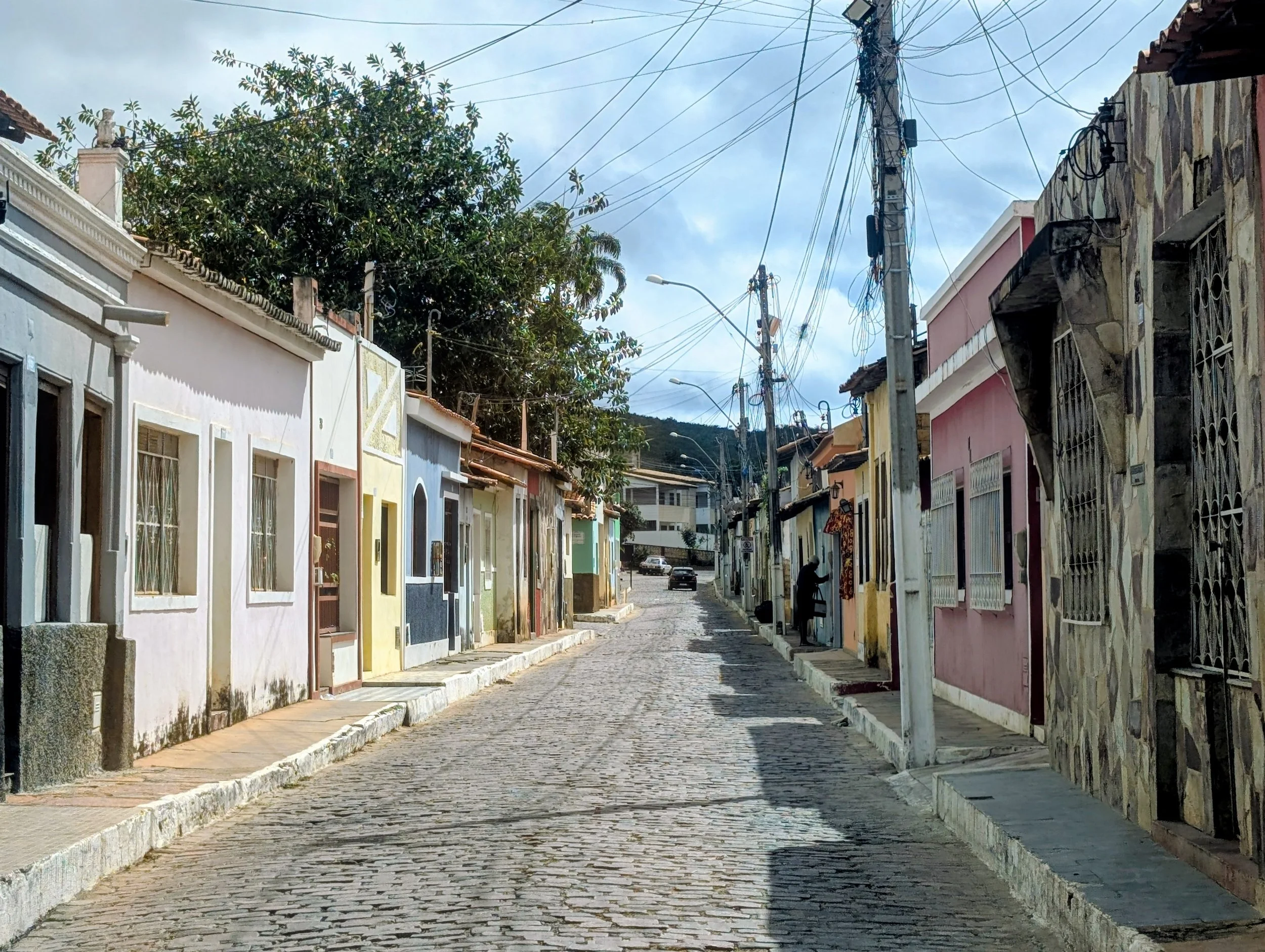
Quiet street of Palmeiras, one of the towns we used as a base to explore the park
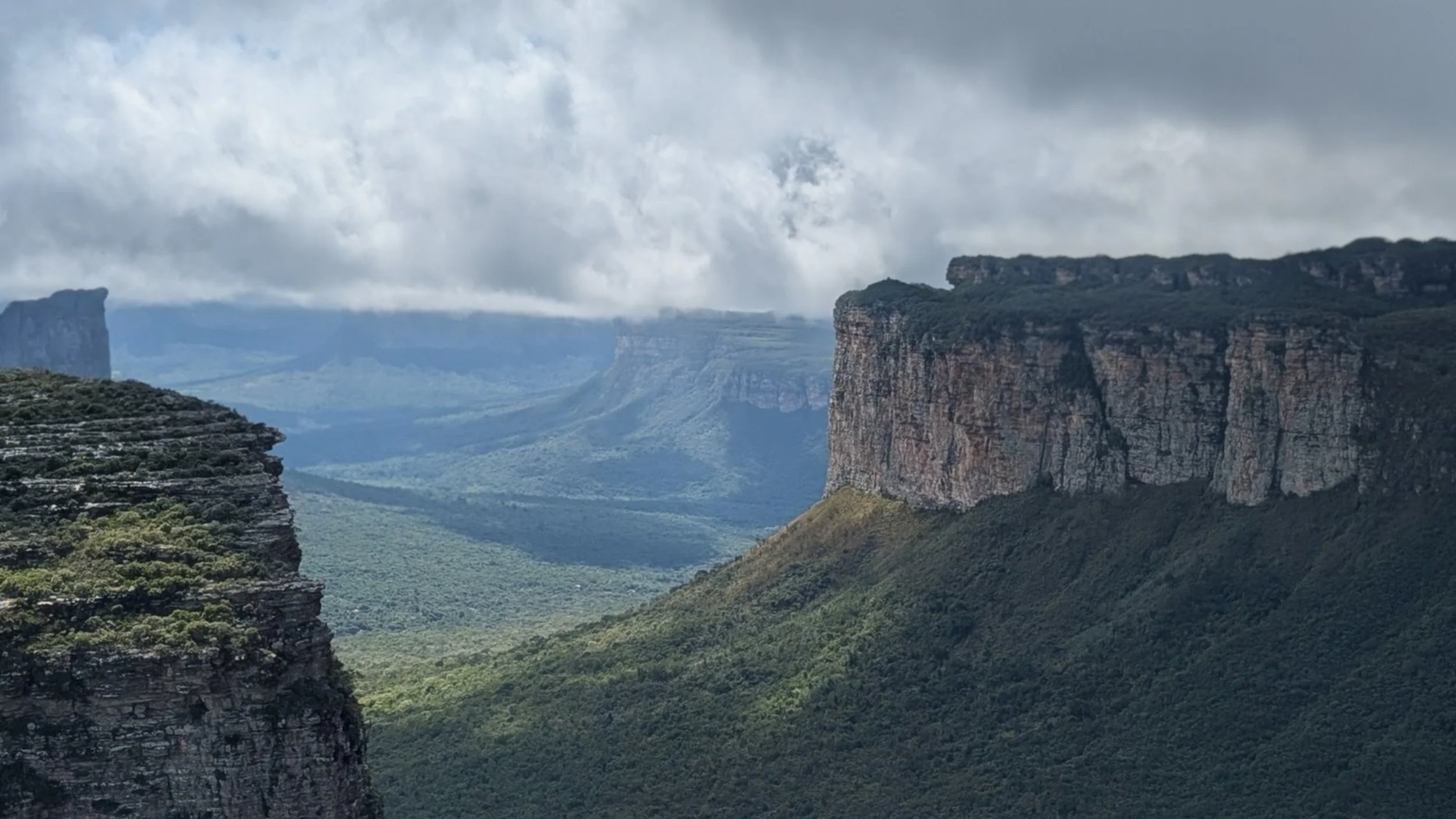
Iconic mesas of Chapada Diamante
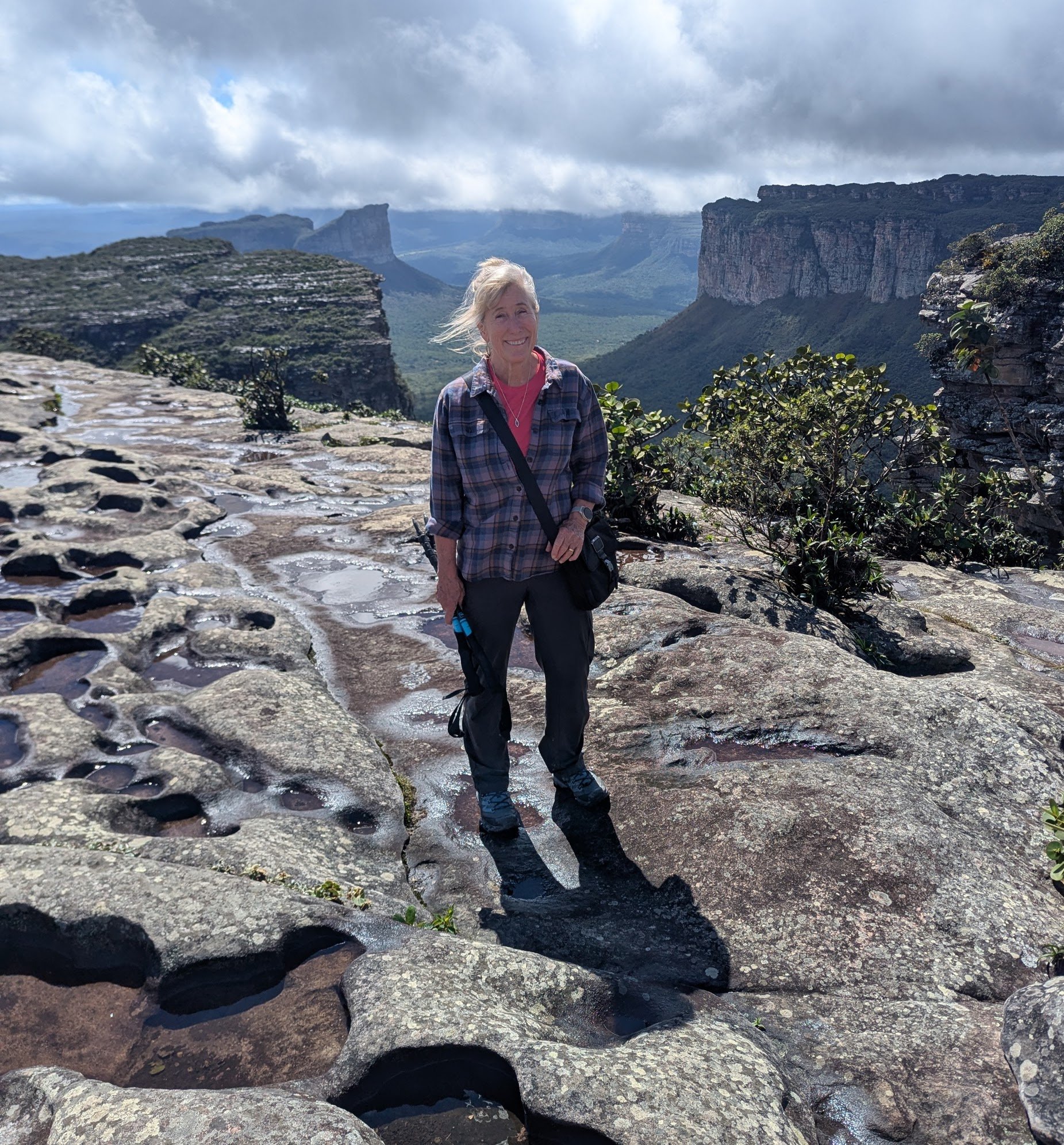
Steep hike to a bluff top for a rewarding canyon view
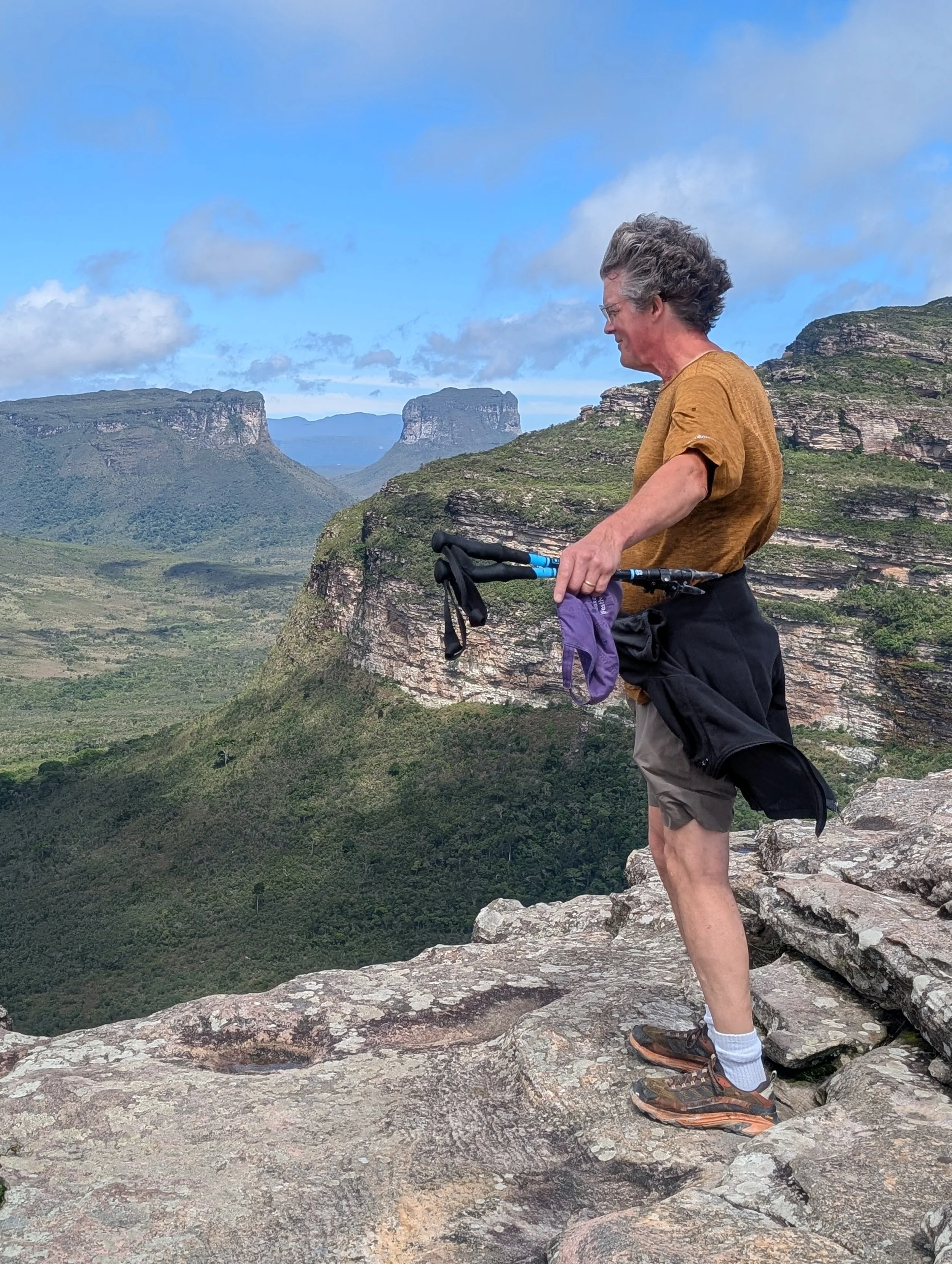
Feeling the breeze
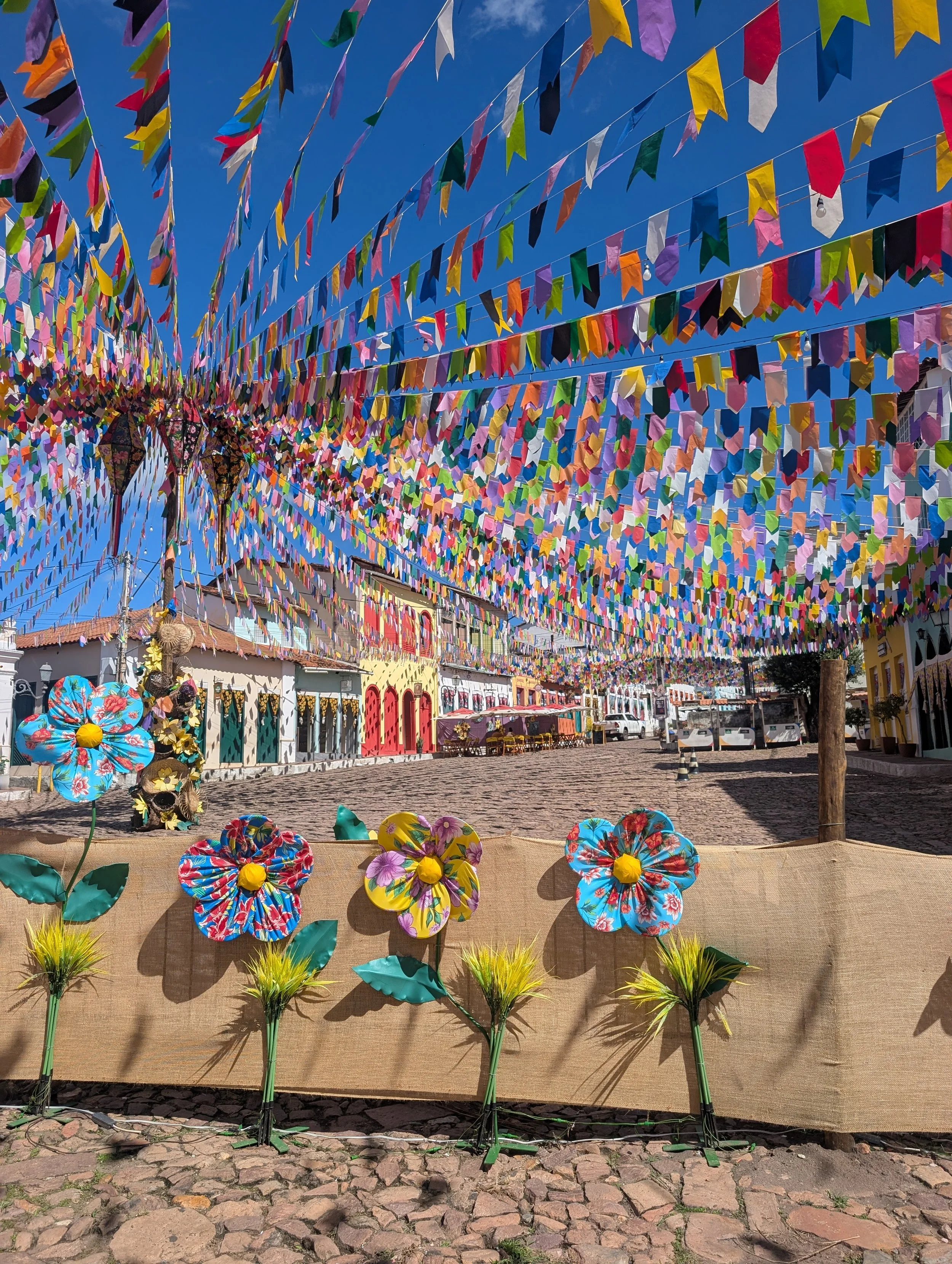
Lencois, the other town we used as a base. Villages in the area were all decorated for the Sao Jao Festival, a celebration of St. John and the harvest.
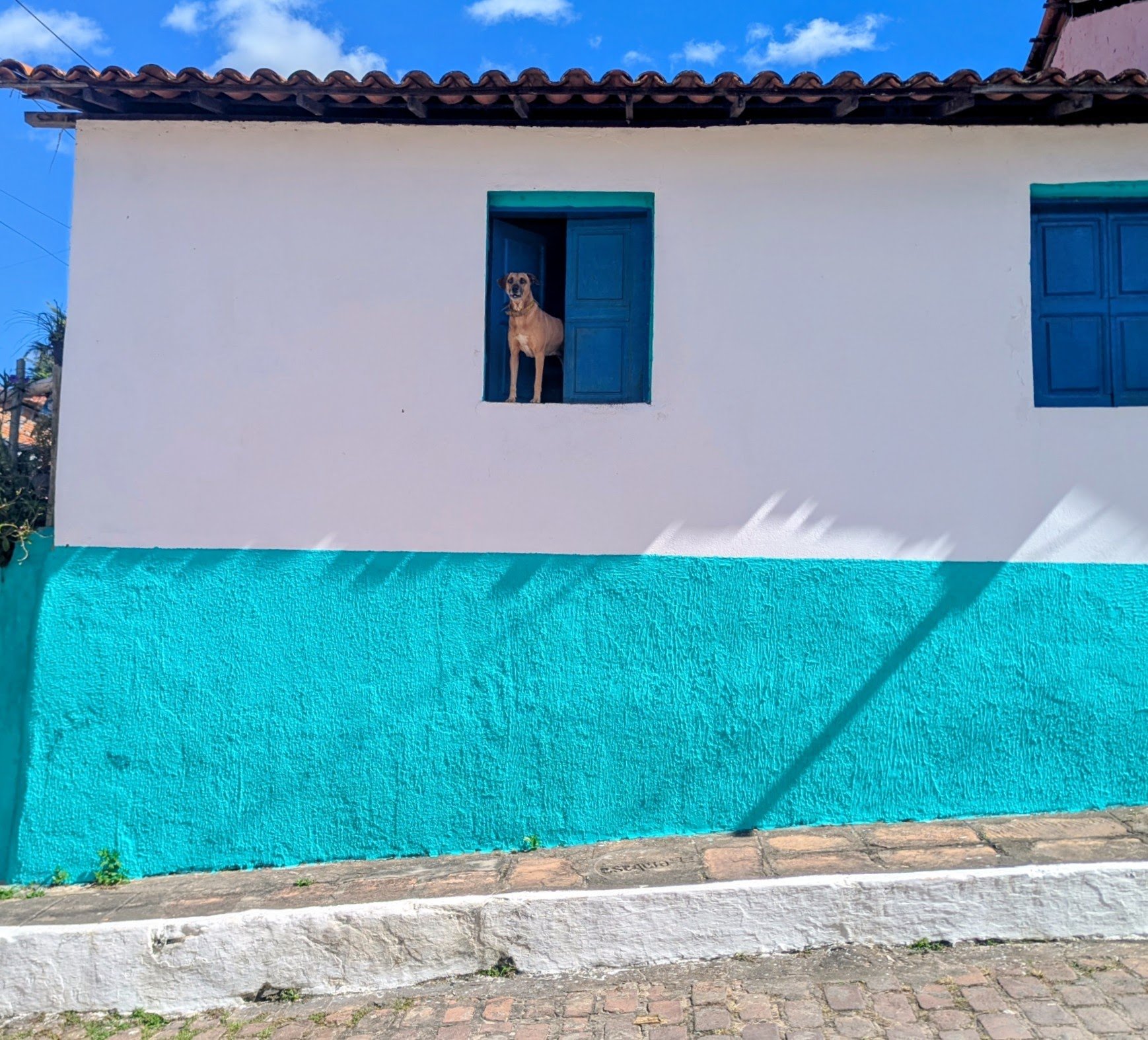
The dog is real
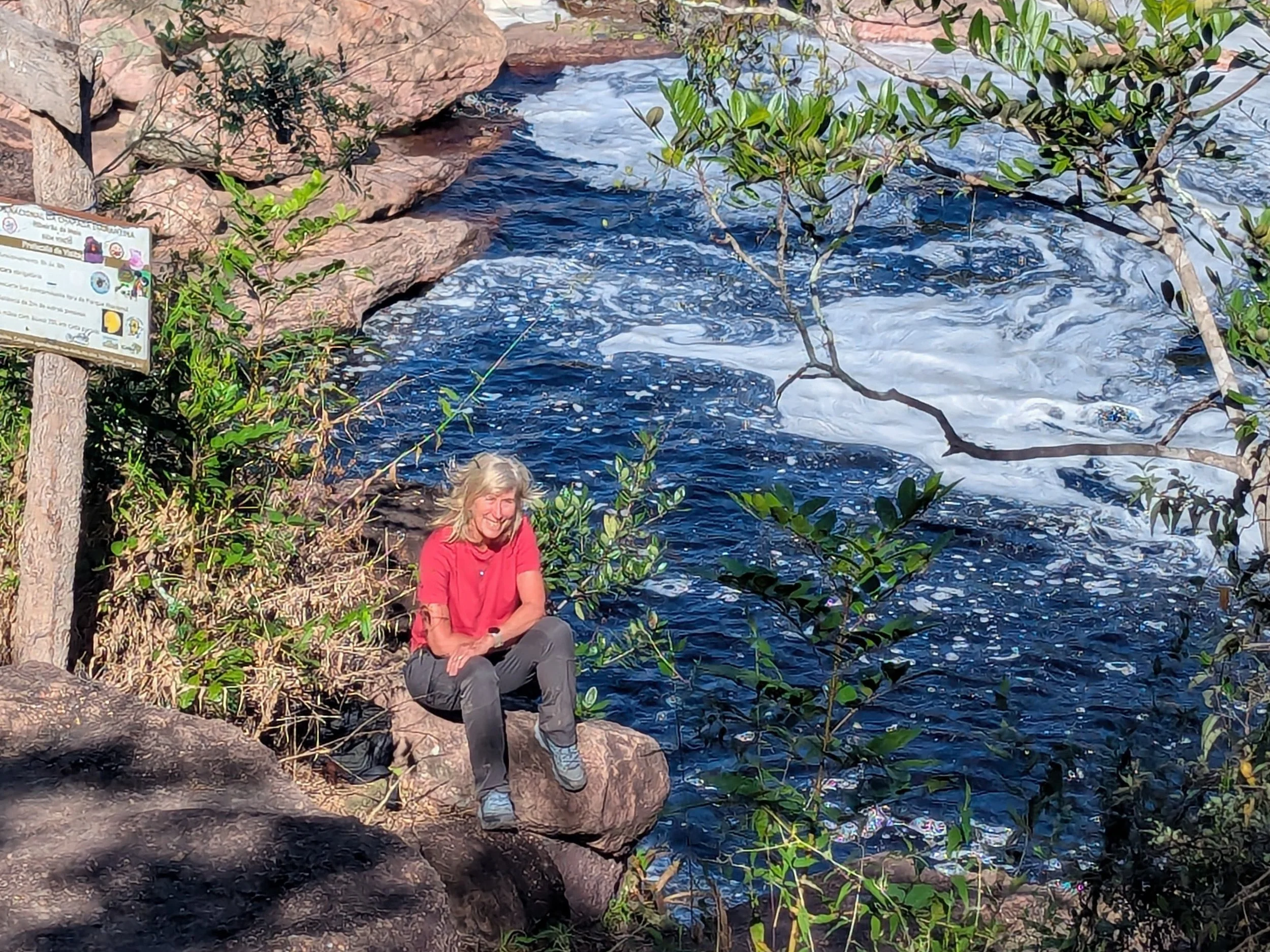
Riverside hike
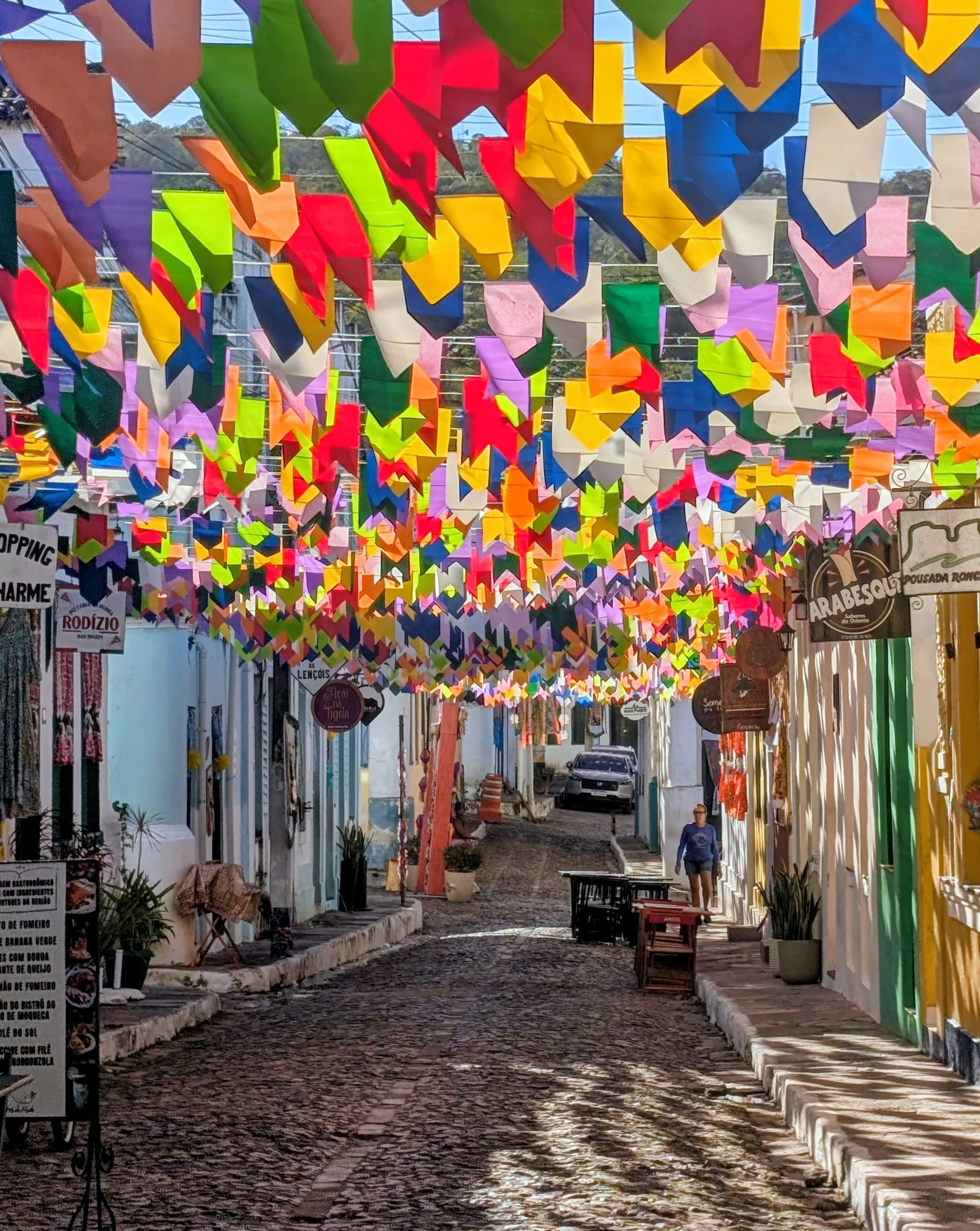
Colorful streets of Lencois
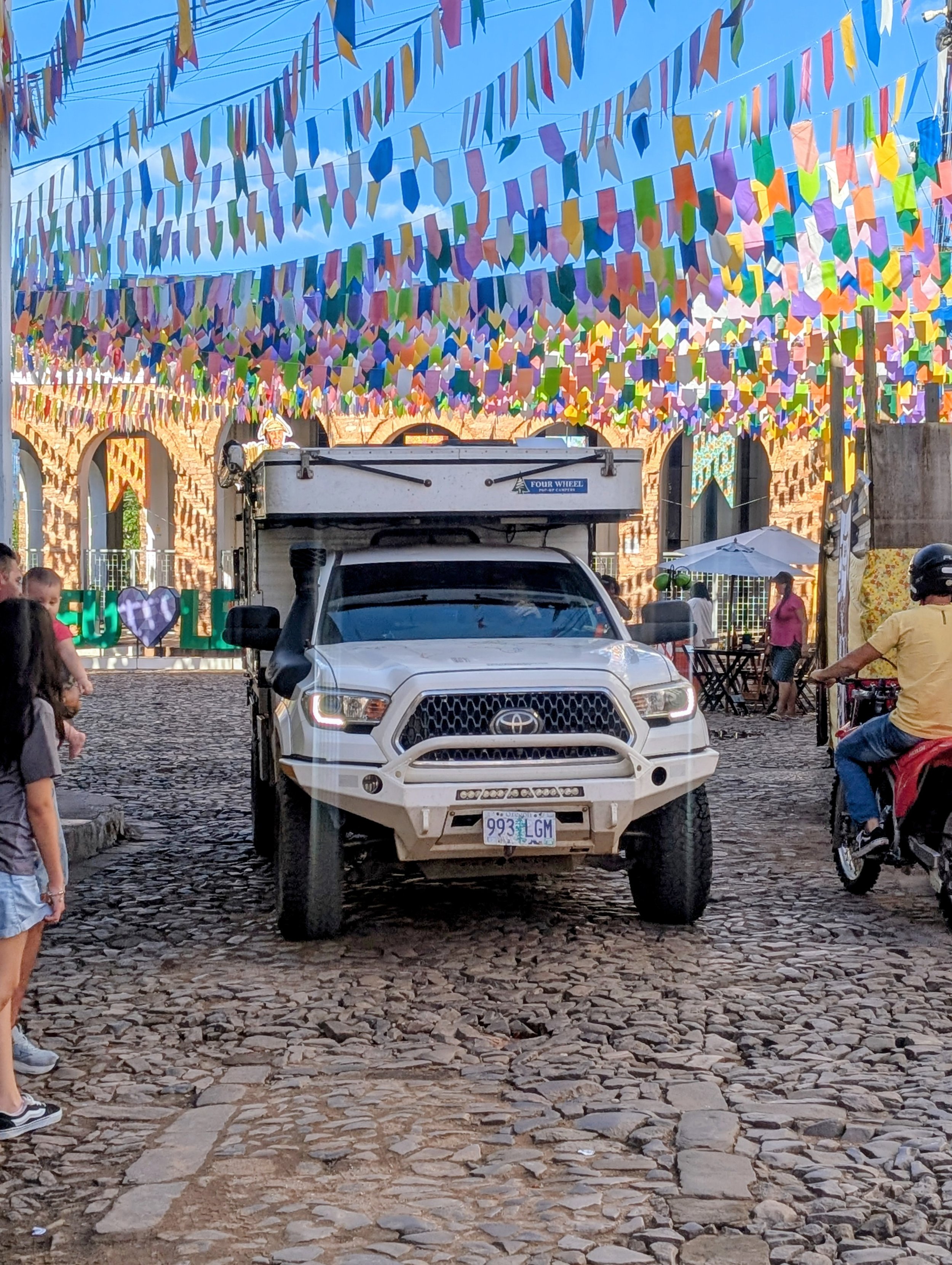
We pre-walked the route to our hotel camping spot to make sure we knew how to get there without getting stuck on a narrow one way cobbled street (we have learned from experience)
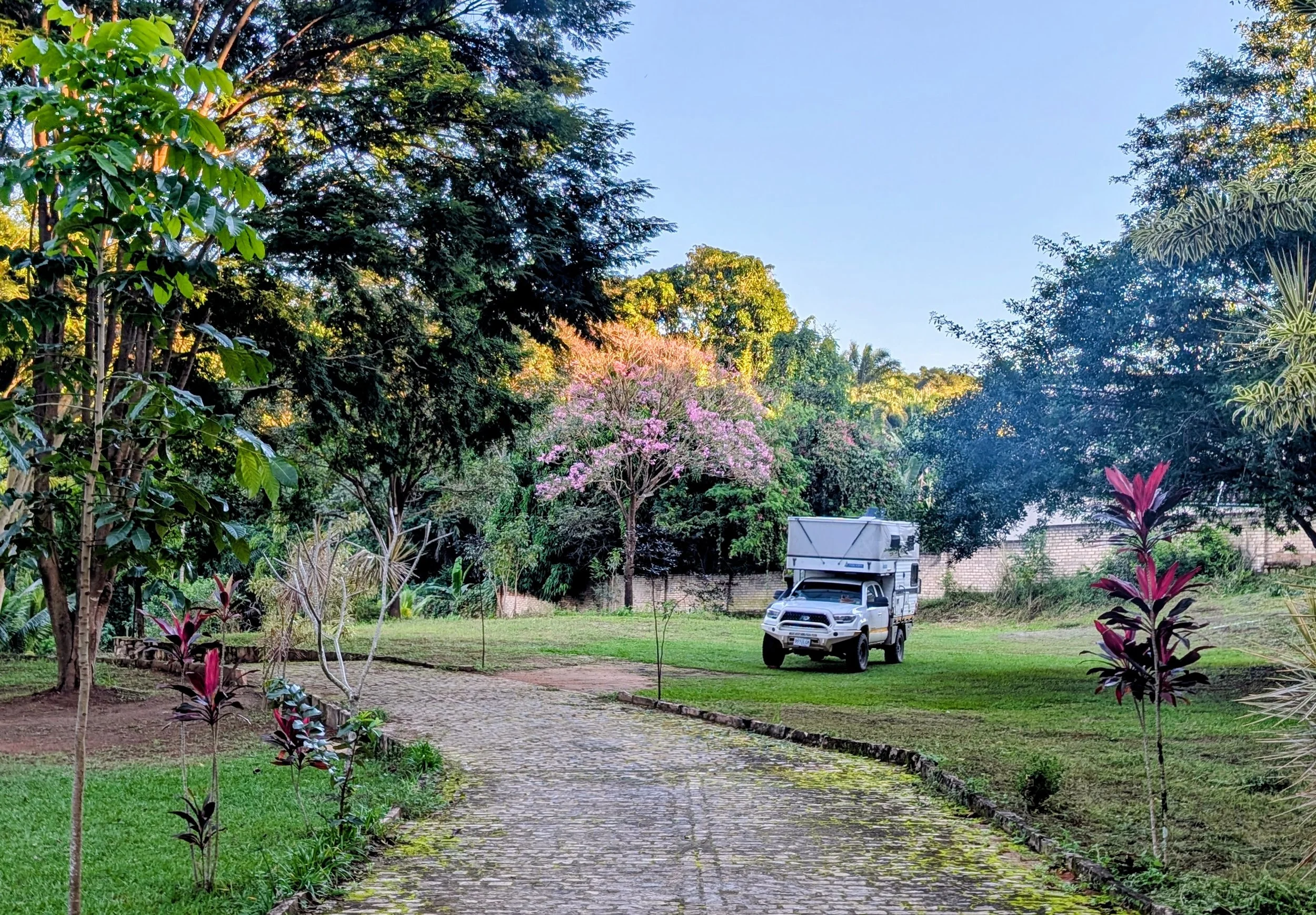
Camping in the garden of a hotel in Lencois
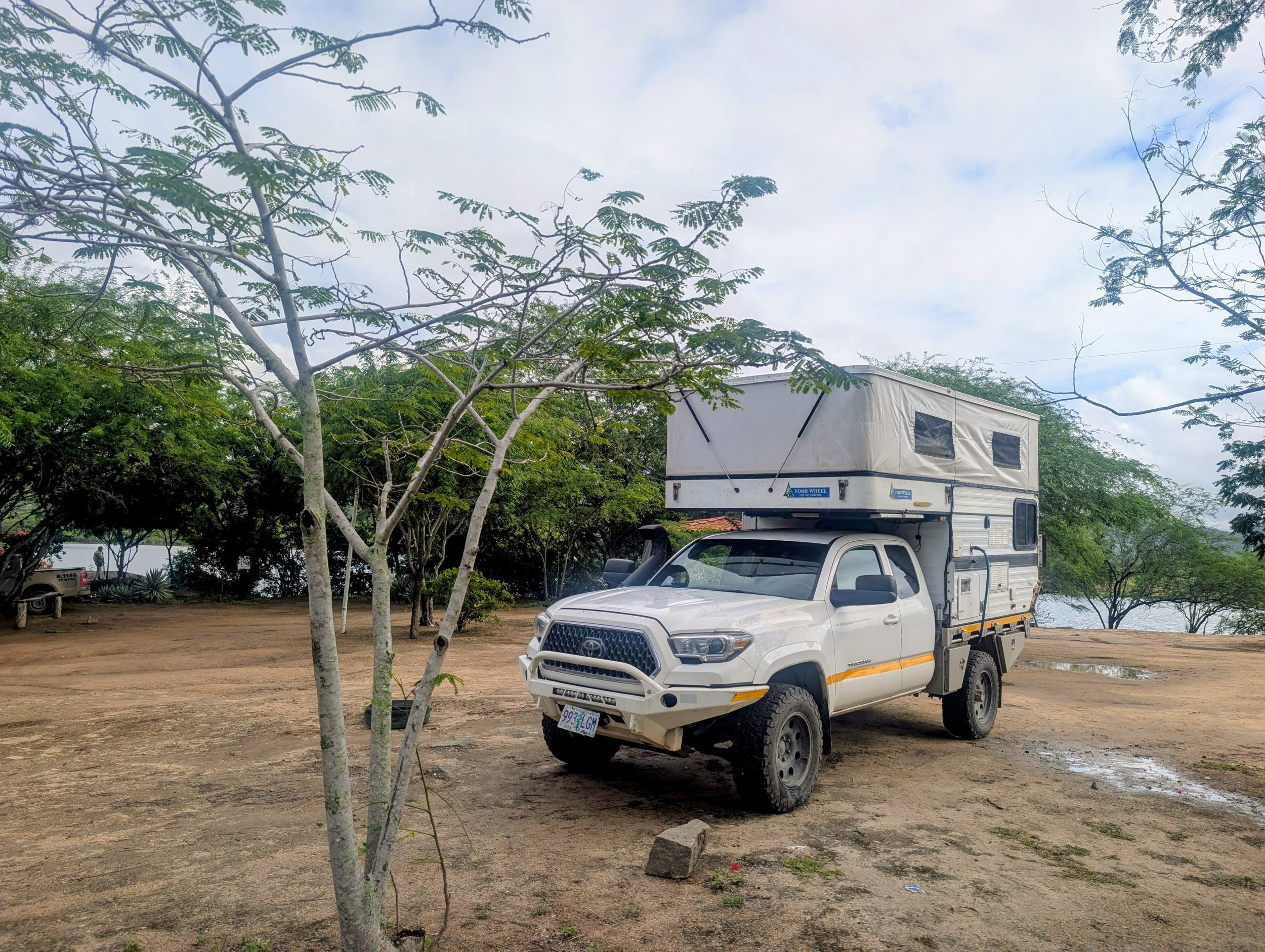
Camping in the park of a small village on route to Salvador
Once again refreshed with mountain air and hiking, we made our way to the city of Salvador. We arrived on a celebration day - the city was alive commemorating their independence from the Portuguese.
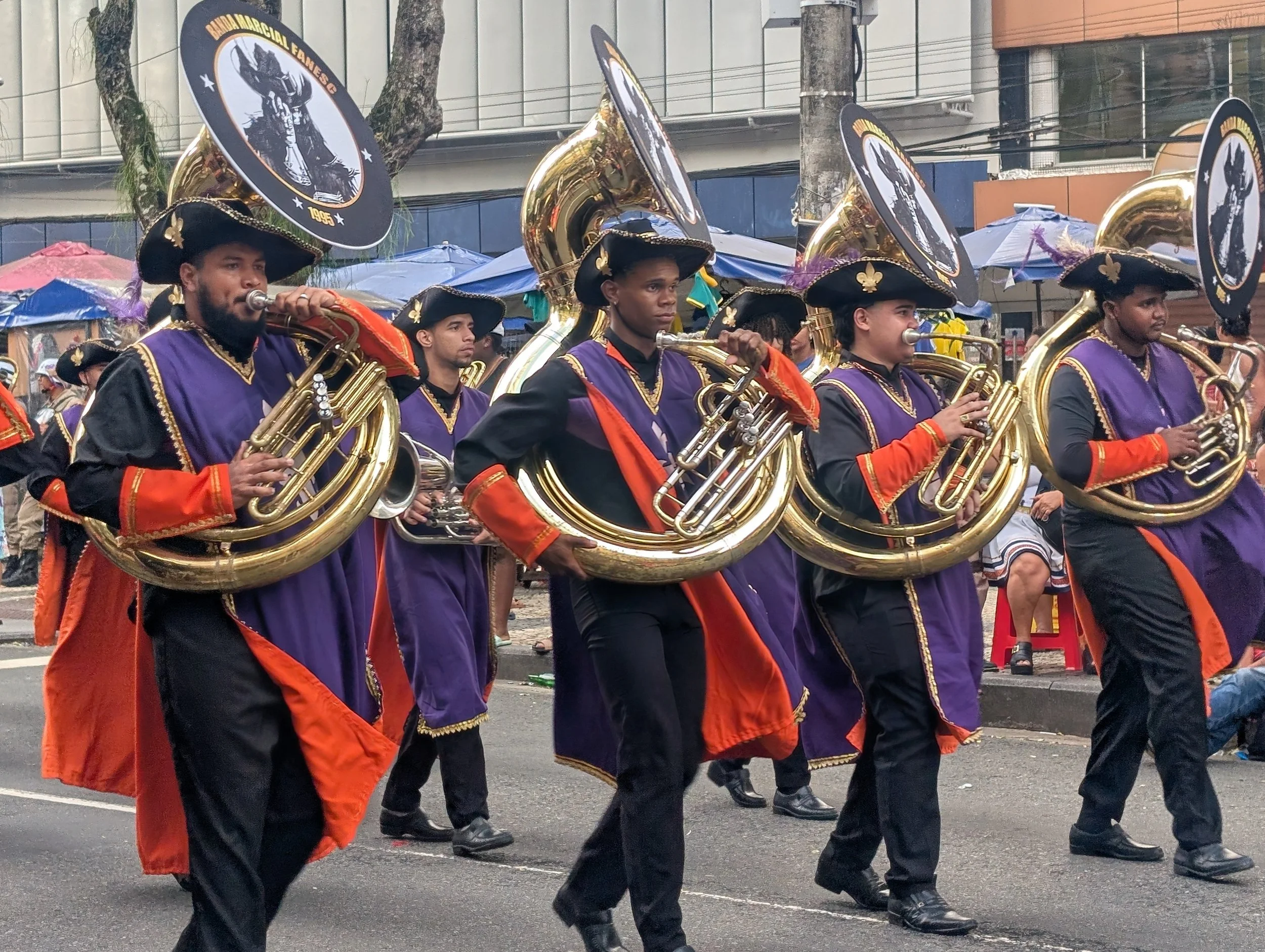
Marching bands in the streets
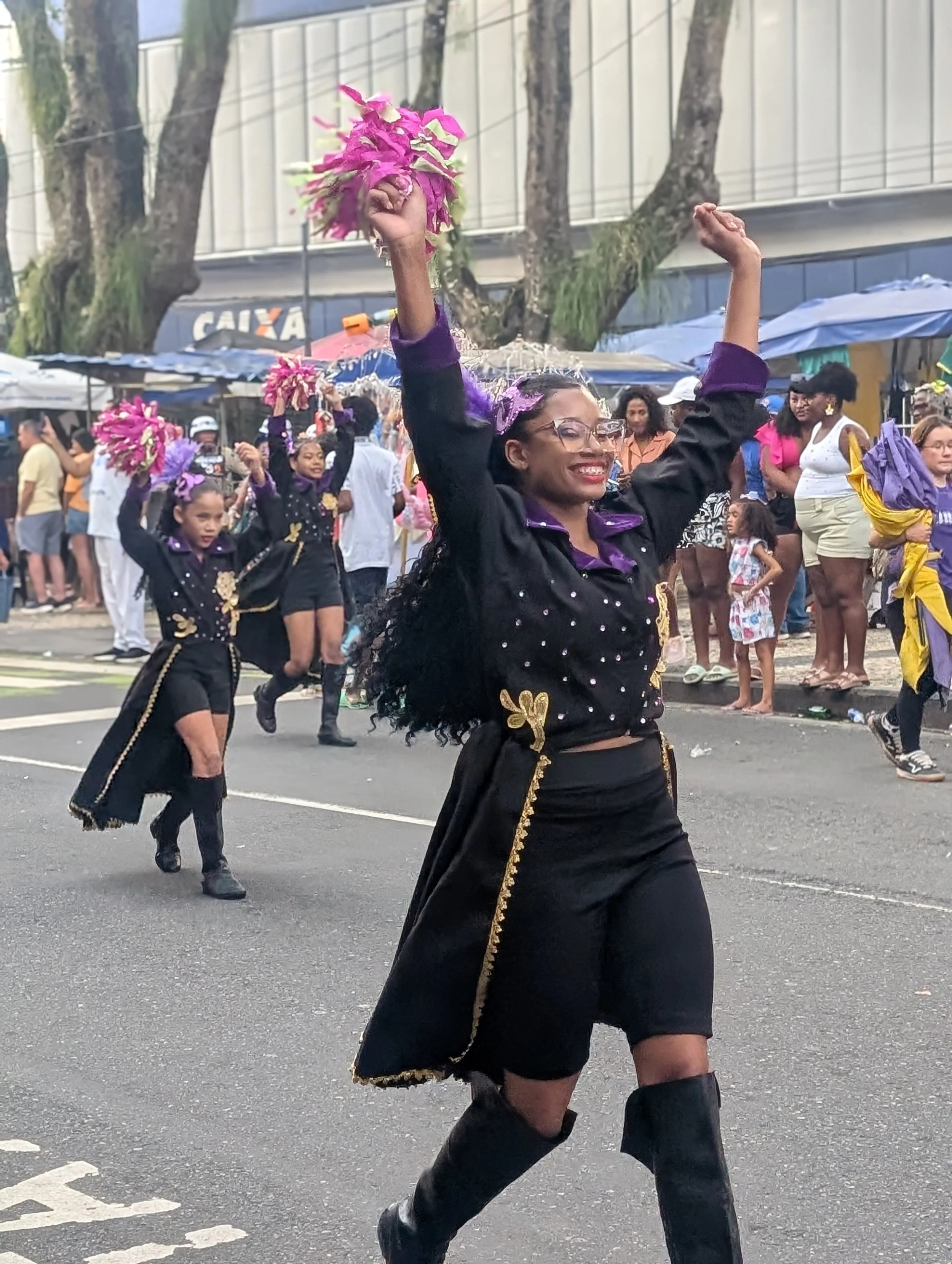
The joy was beautiful to behold
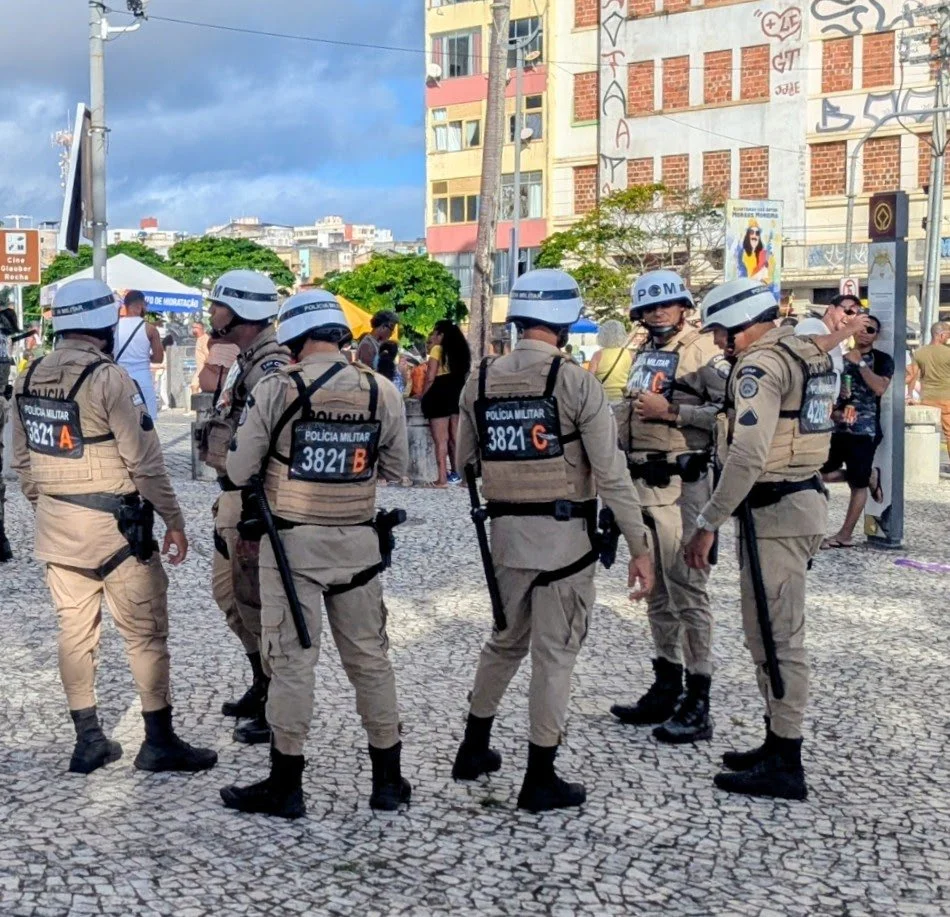
Although the police and military had a strong presence
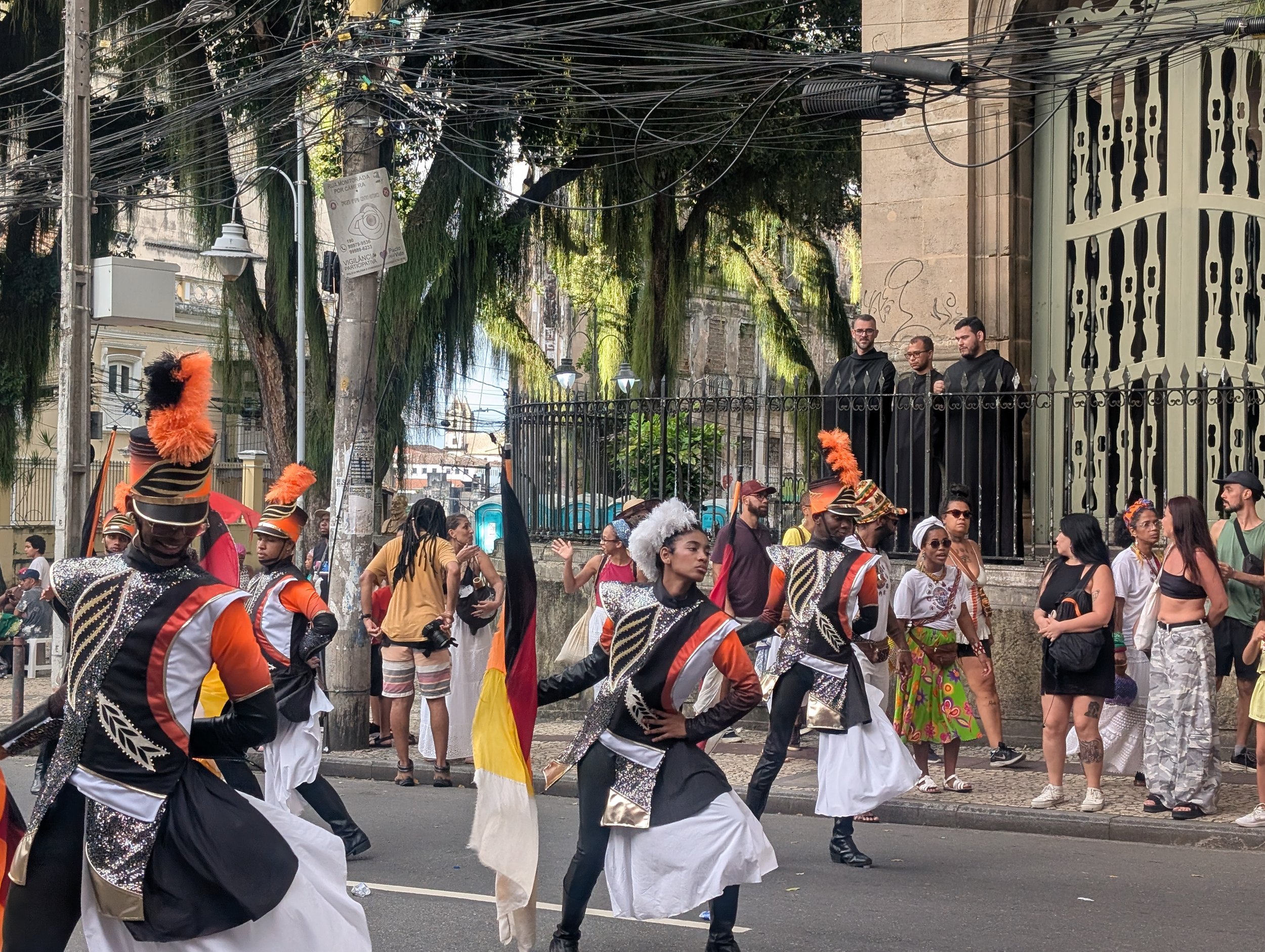
Even the priests had to come out of their church to watch the dancers
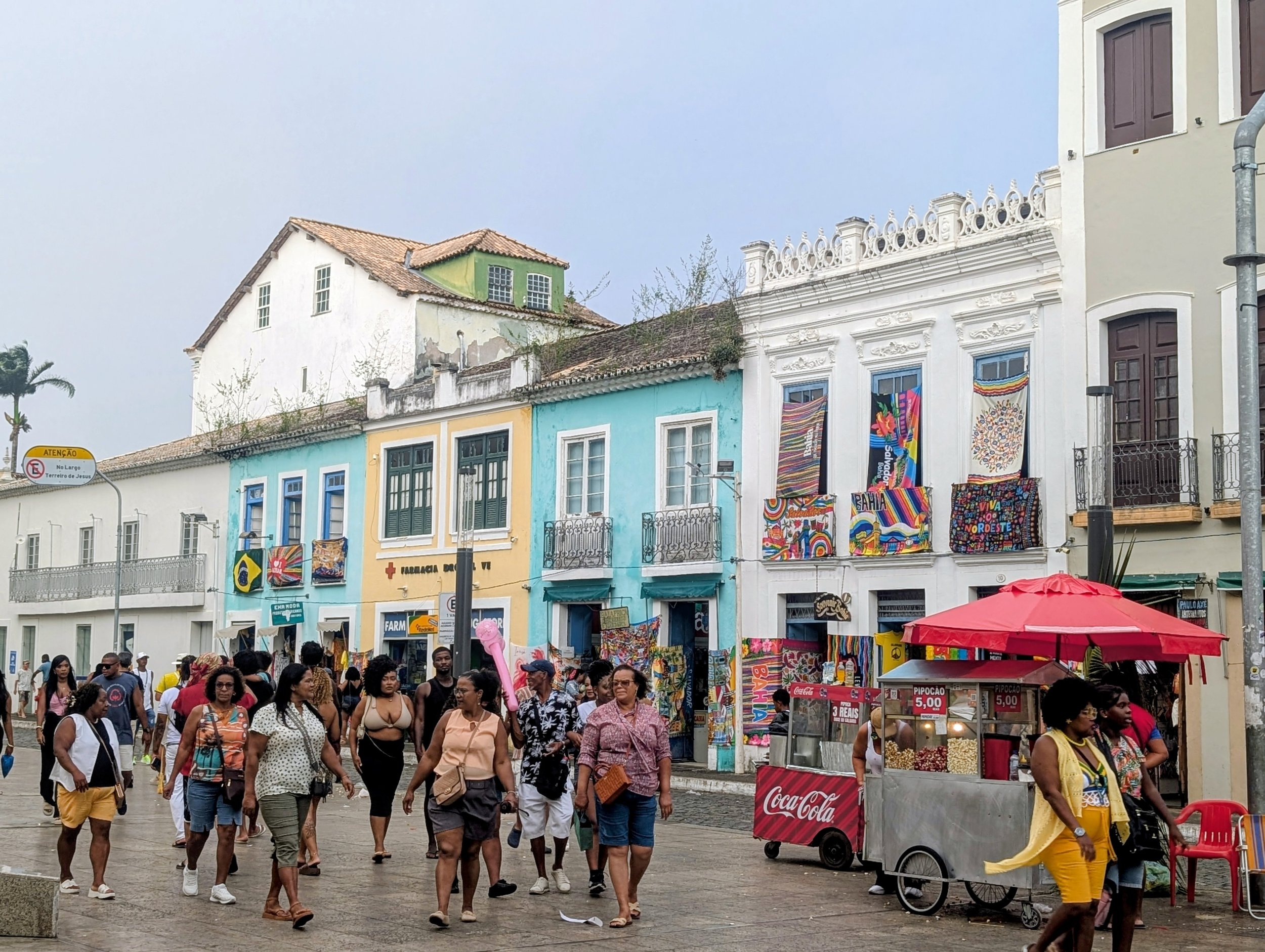
Old town plaza, full of life
In our past travels, we have always taken all “dangerous” descriptors with a grain of salt. We take the time to research the specifics and make decisions about what we think is actually risky for us. There are people, families, children living their lives in places described as “dangerous” or “do not go.” Salvador is commonly described as a “dangerous” city because of violent crime. After our experience in Rio we were a little more nervous than usual but still committed to visiting. It quickly became our favorite Brazilian city. It helped that we arrived on a party day. But the city buzzed with life, color, art and joy. But there is also an ugly history.
Founded by Portuguese settlers in 1549 as the country's first colonial capital, the city quickly grew into a major port for sugarcane and the first large slave market in the New World. The enslaved West Africans brought to Salvador preserved part of their heritage, creating a rich and unique cultural mix and the founding of the Afro-Brazilian culture. We were fascinated by the lively rhythms of the city and vibrant culture.
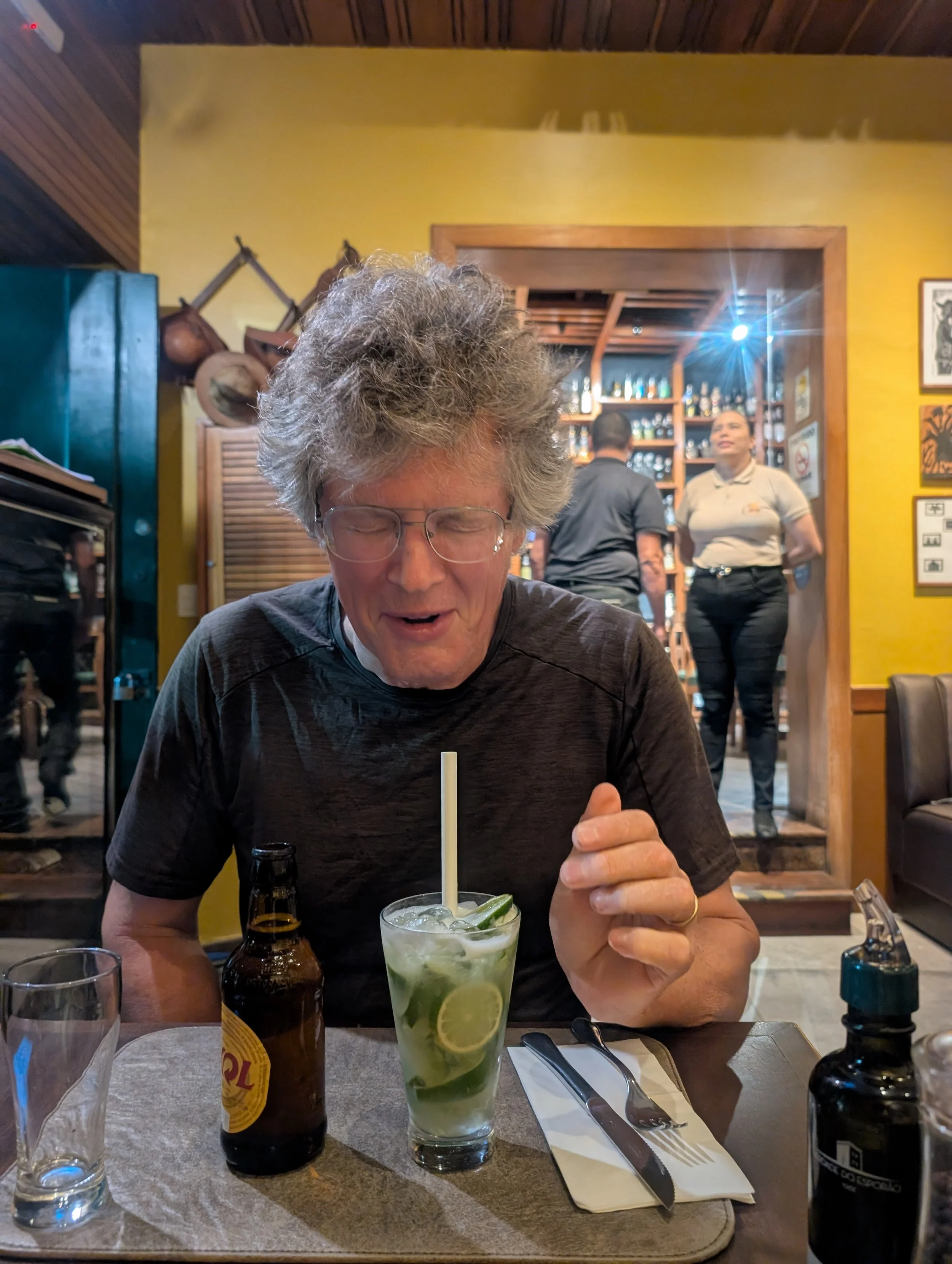
Not a fan of anything sweet, Dawn ordered the local drink - a caipirinha - without sugar. Andy’s face when he tried it. (Andy has never found anything to be “too sweet” and does not understand the concept). Dawn later added sugar…
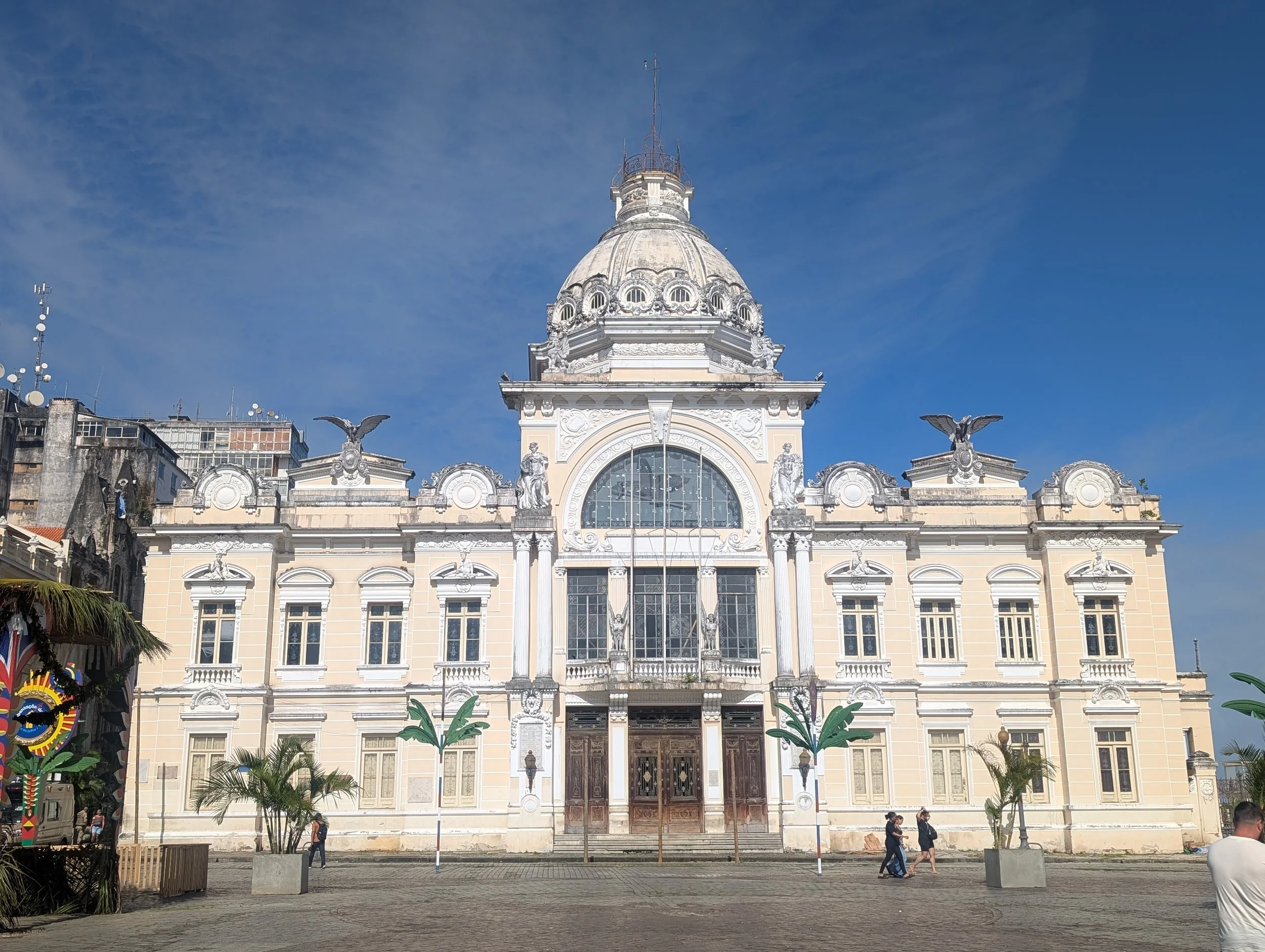
Early morning light on Salvador’s central plaza
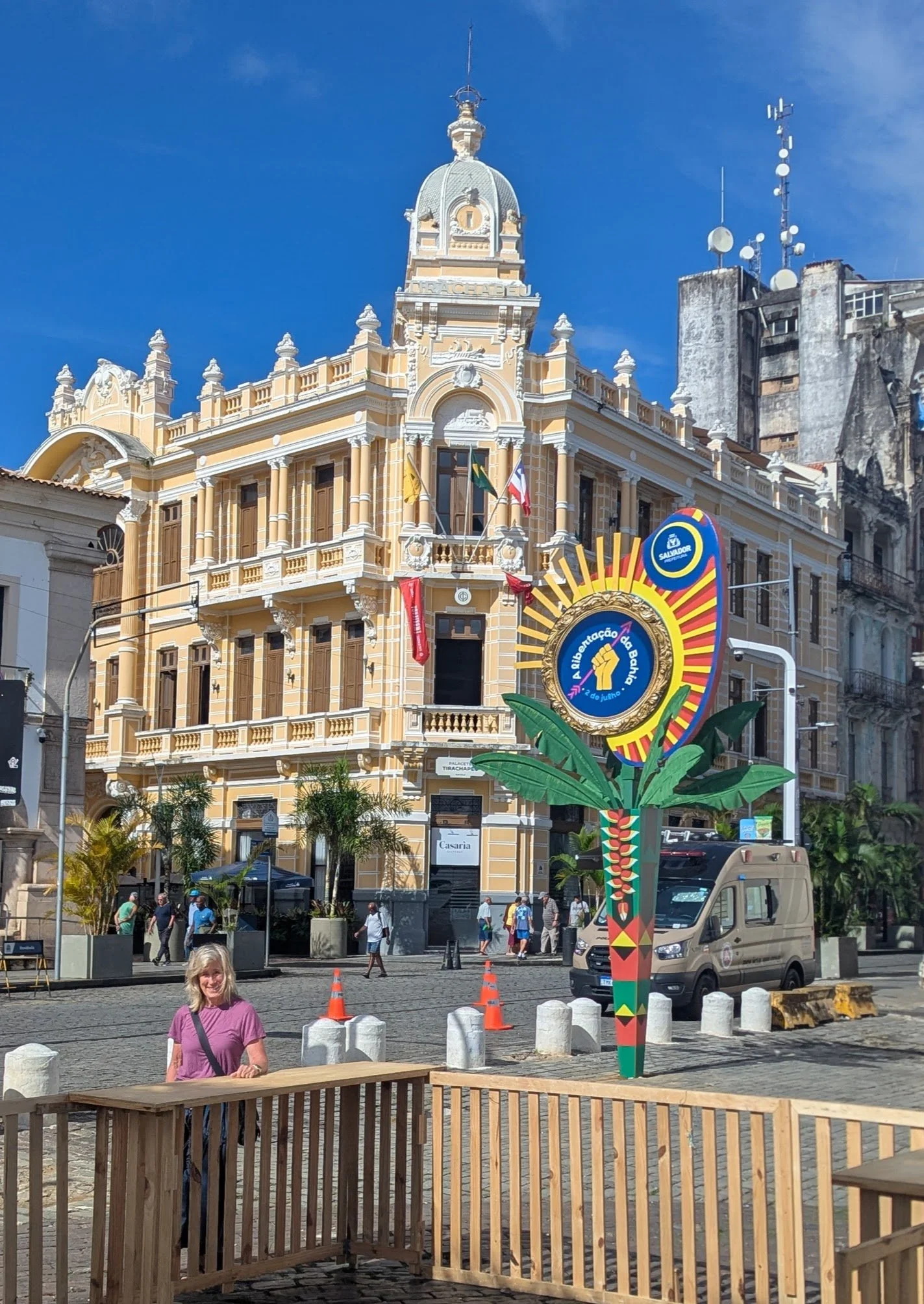
Once again, we had parked the truck on the outskirts, threw some clothes in our backpacks and set off on a short walk to a central hotel. On hyper alert, we speed walked the 20 minute walk through what we immediately sensed and later had confirmed was not a great area to our hotel. (Our hotel receptionist told us he would not walk there.) But it was fine. In the central touristy areas of Salvador, the police presence was high, and maps were handed out to tourists with “safe” and “not safe” roads to walk.
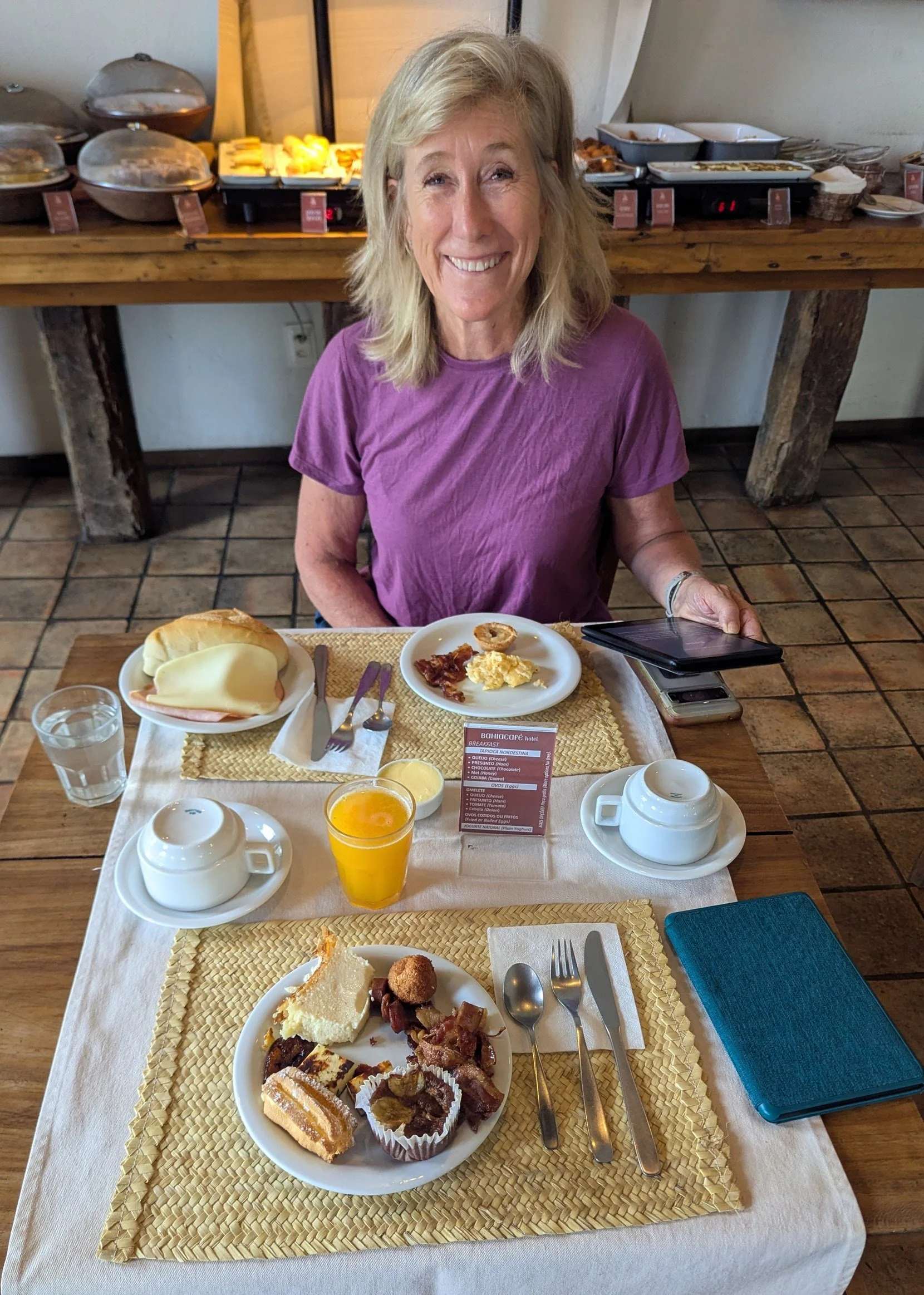
Dawn is loving the variety at the hotel breakfast buffet - a step up from scrambled eggs and rolls in the truck. (Actually it was pretty much the same breakfast but she didn’t have to make it and Andy didn’t have to clean up)
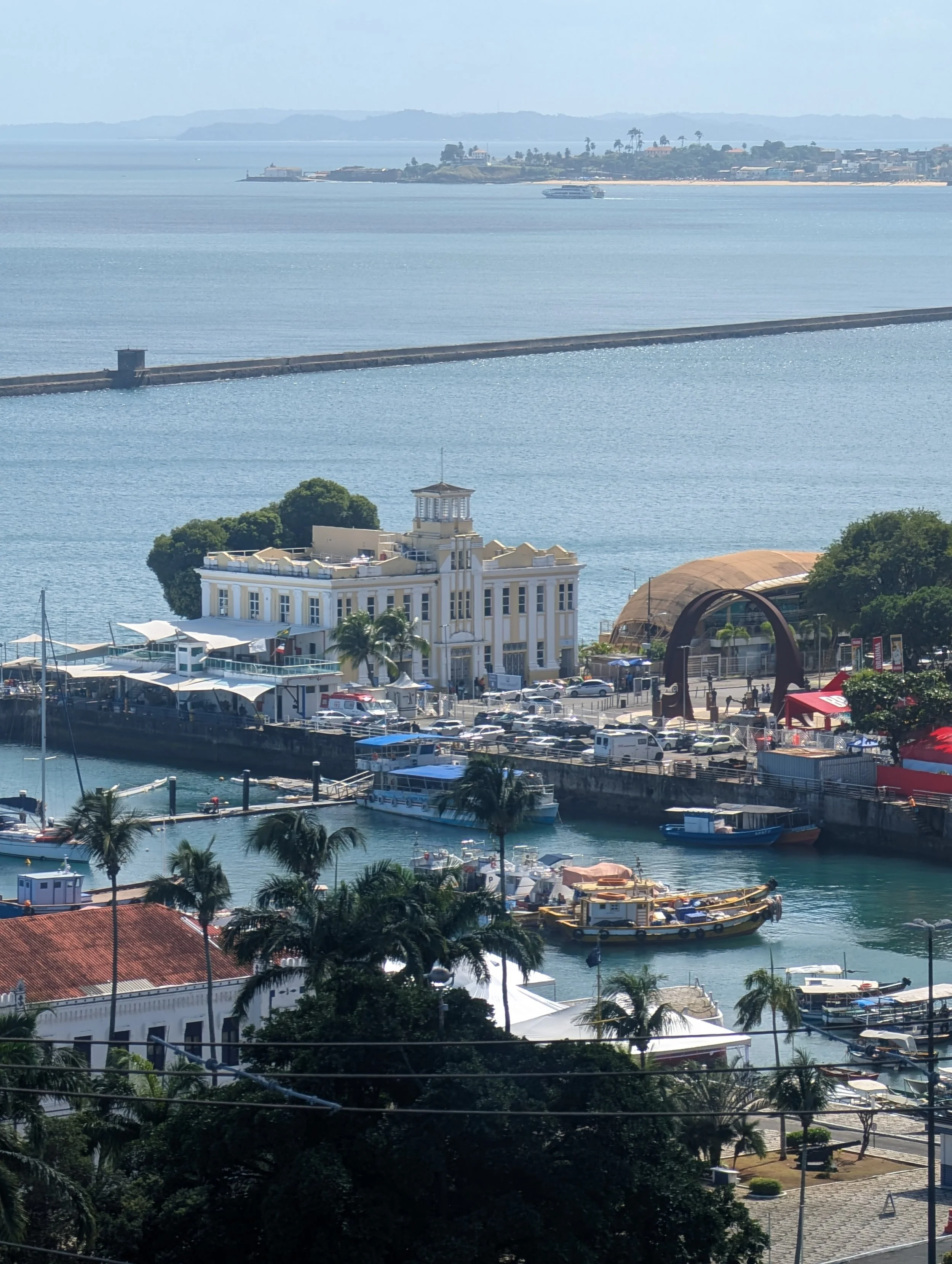
View down to the port in Salvador
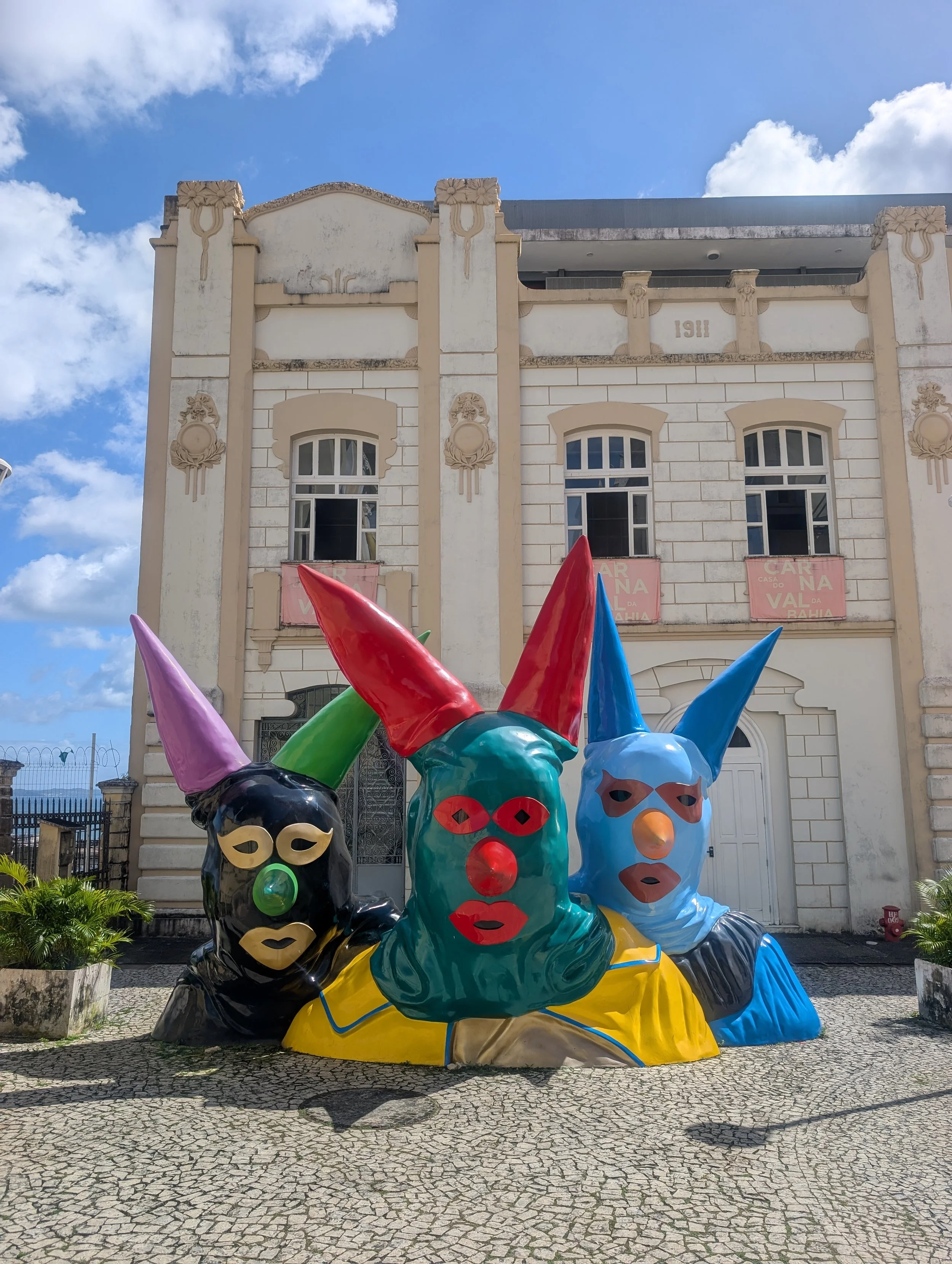
Carnaval statues
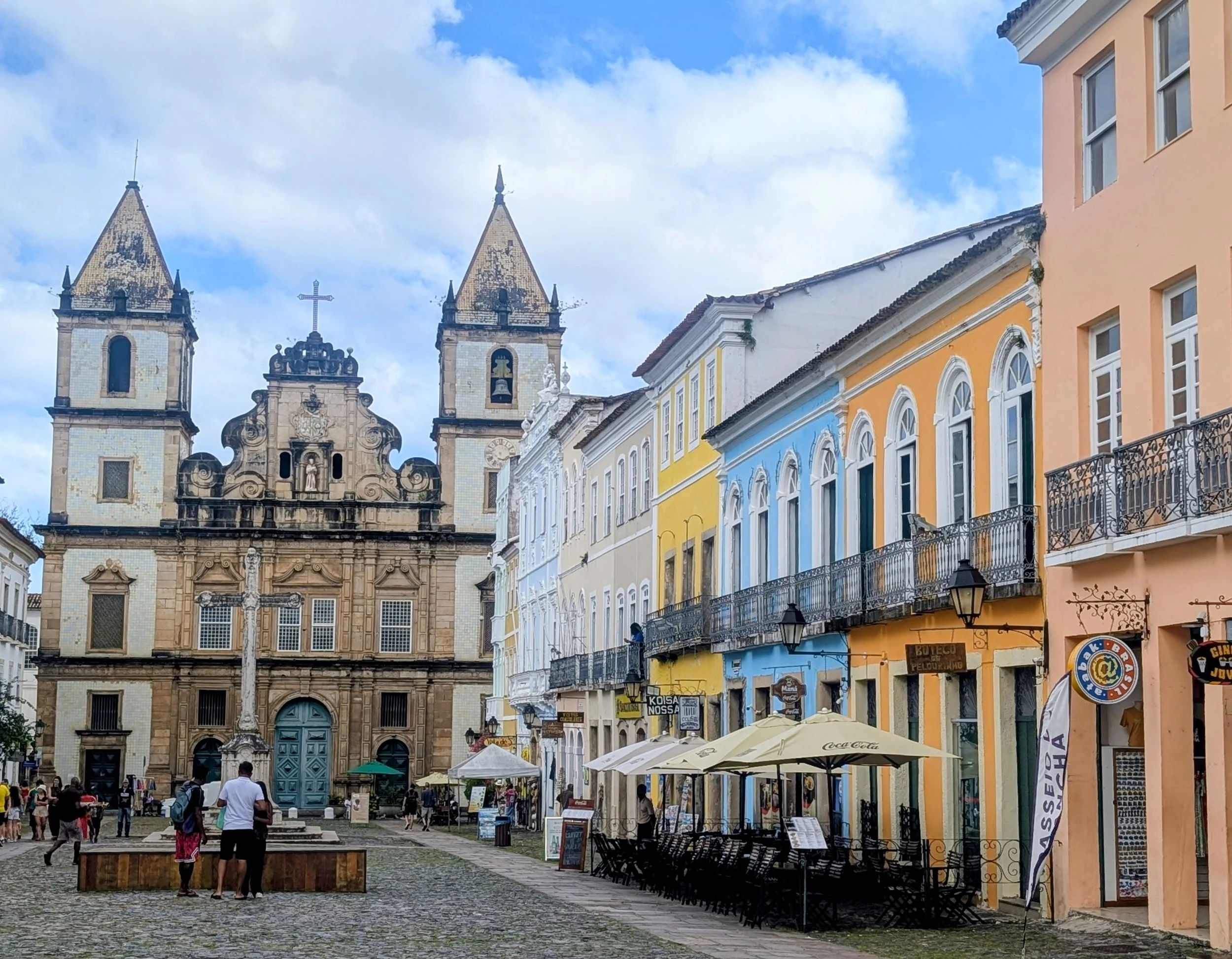
Pelourinho neighborhood in Salvador
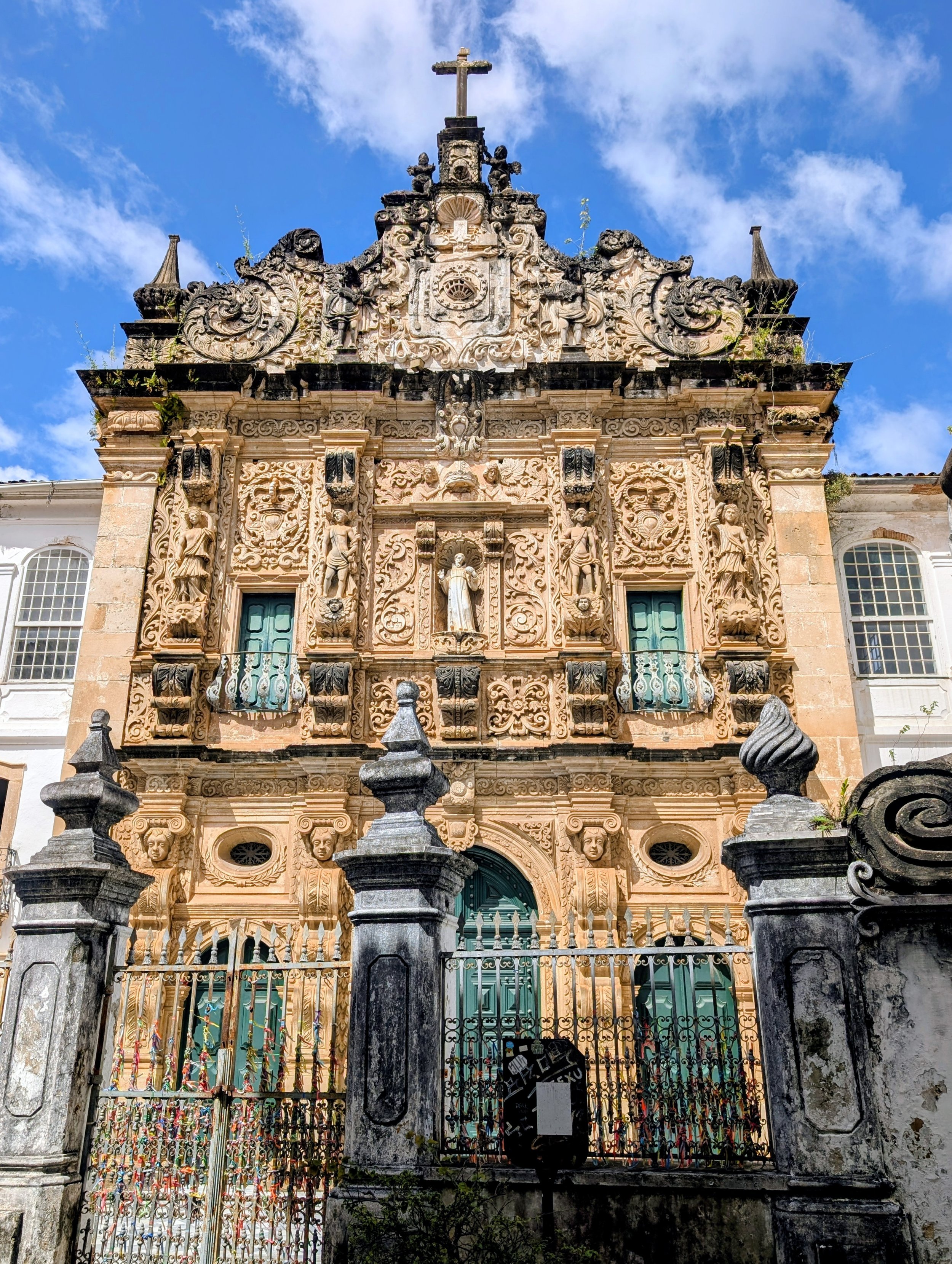
The Golden Church, a famous pilgrimage site
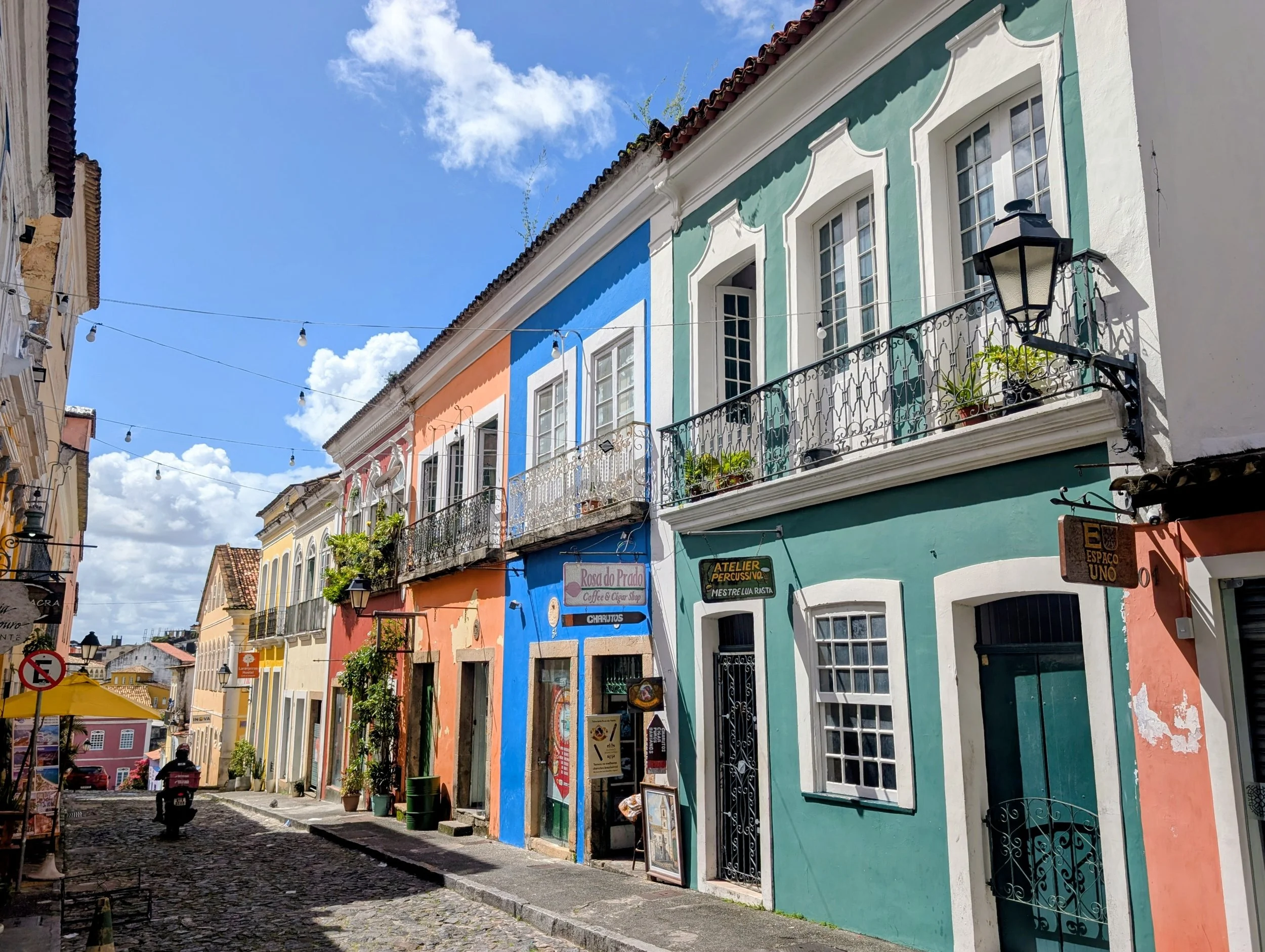
Maybe the most colorful city in the world
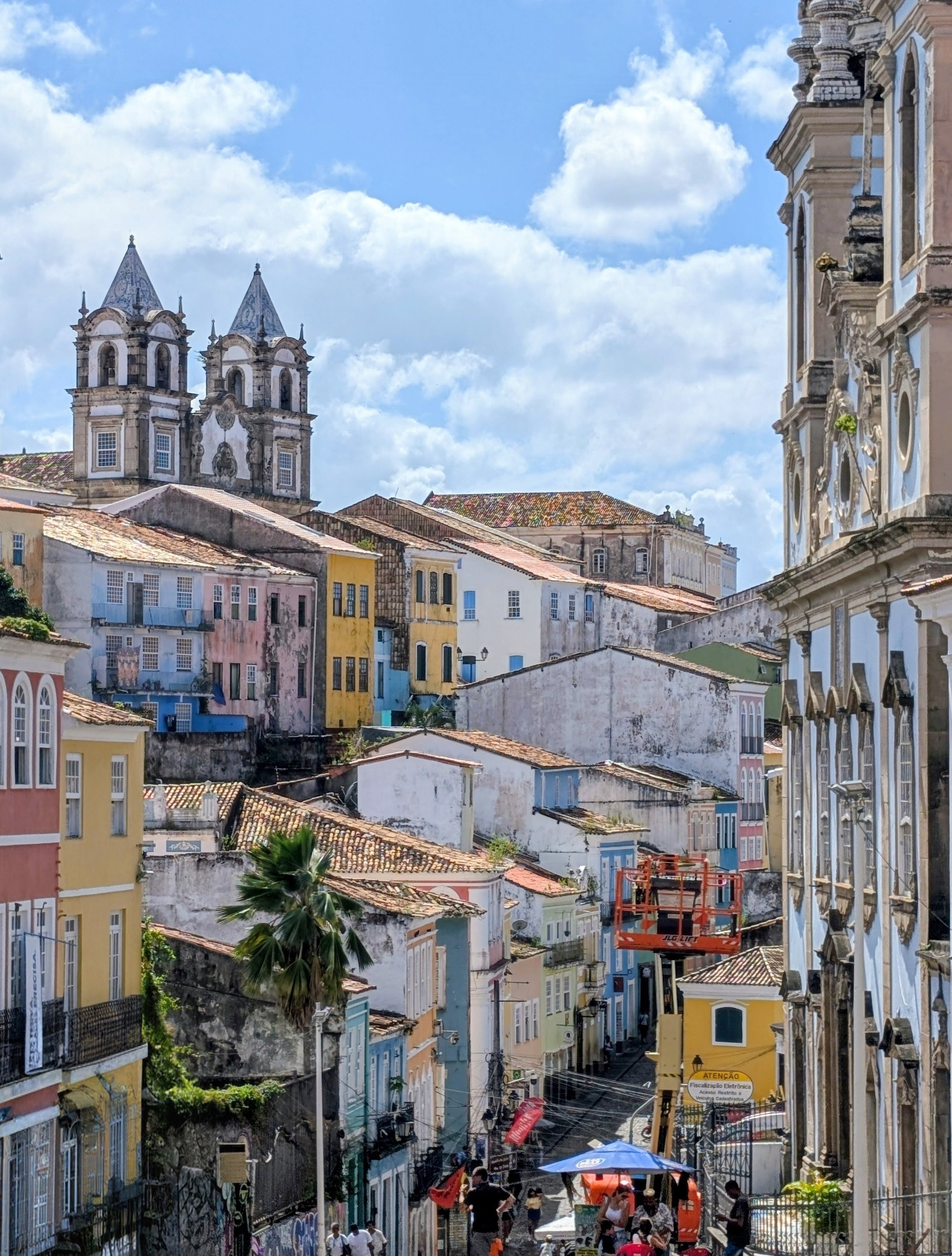
The beauty shines through even with the signs of wear and tear
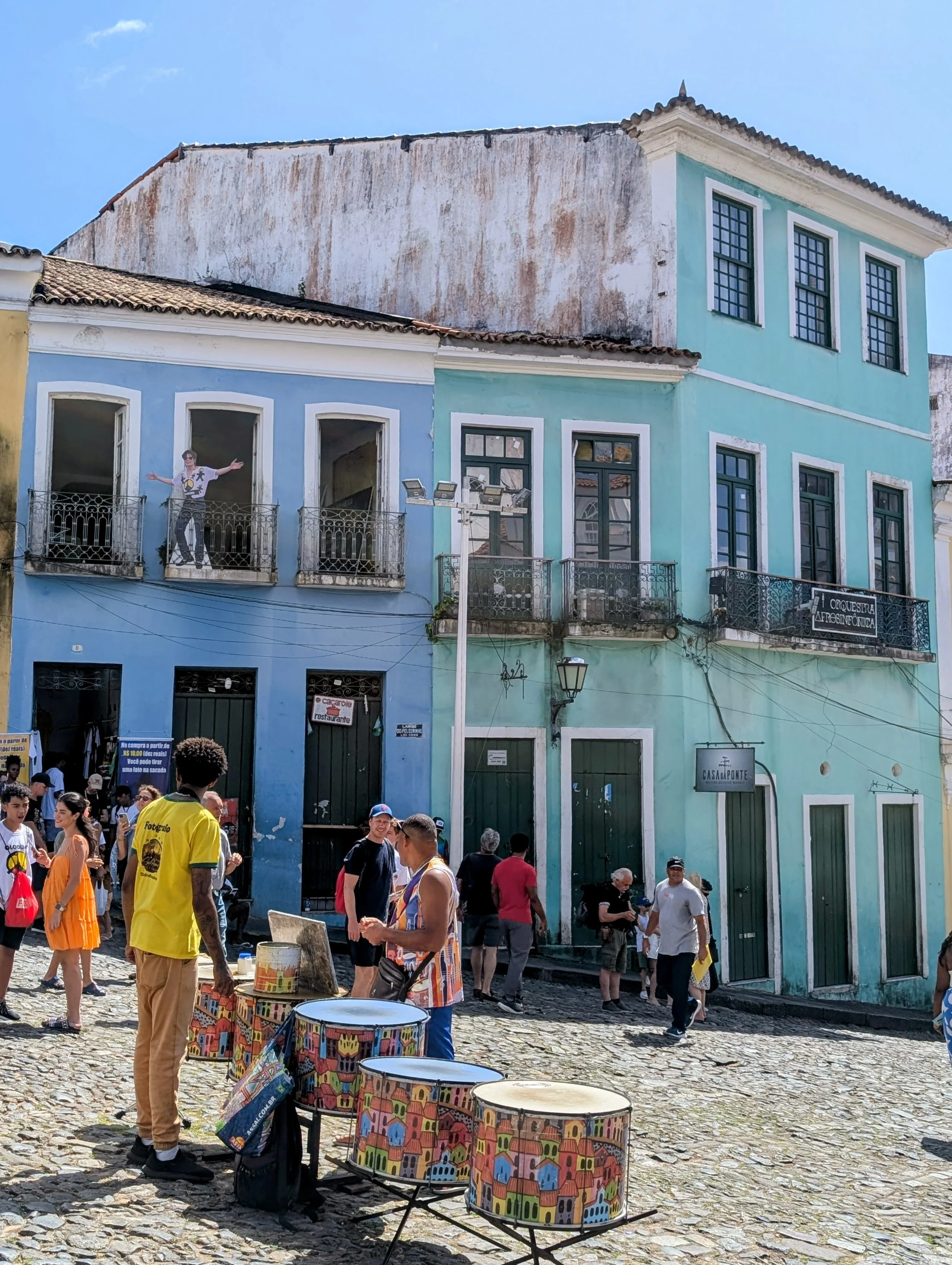
Balcony where Michael Jackson performed in the Spike Lee video filmed in Salvador for “They Don’t Care About Us”
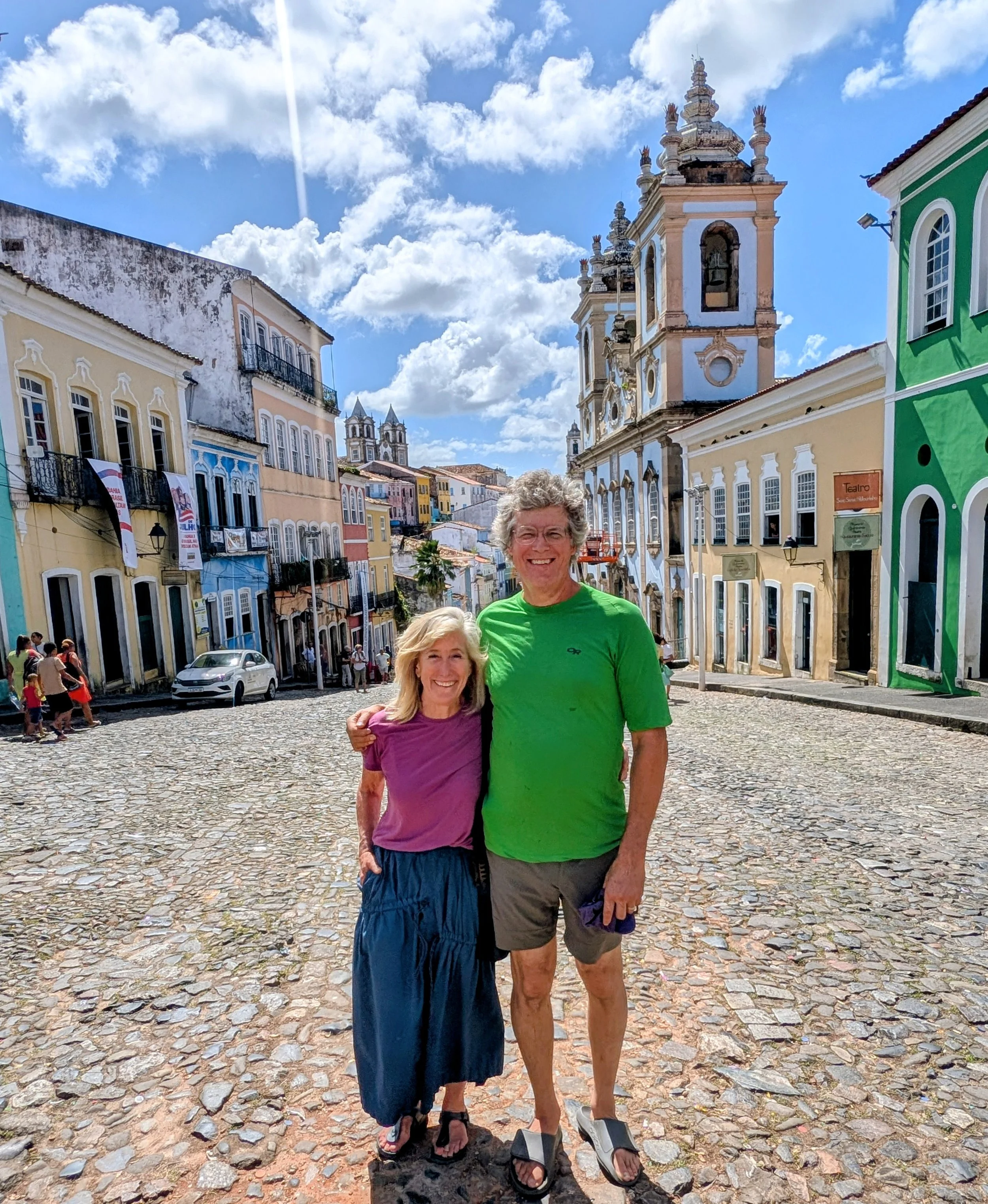
Sometimes everything comes together (the weather, the people, the culture, the architecture, our mood . . ) and we fall in love with a place, that was the case with Salvador
From Salvador, we were flying to Manaus to explore the Amazon. We were very happy to be jumping across the country by plane. We had booked a cruise in the Amazon basin a few months before and it was one of those trips that we decided to spend money on and enjoy the experience - usually we travel pretty basically but we were looking forward to the luxury of being taken care of a week, with nothing for us to plan or think about.
We stored the truck in a well reviewed long term parking lot near the airport and were off.
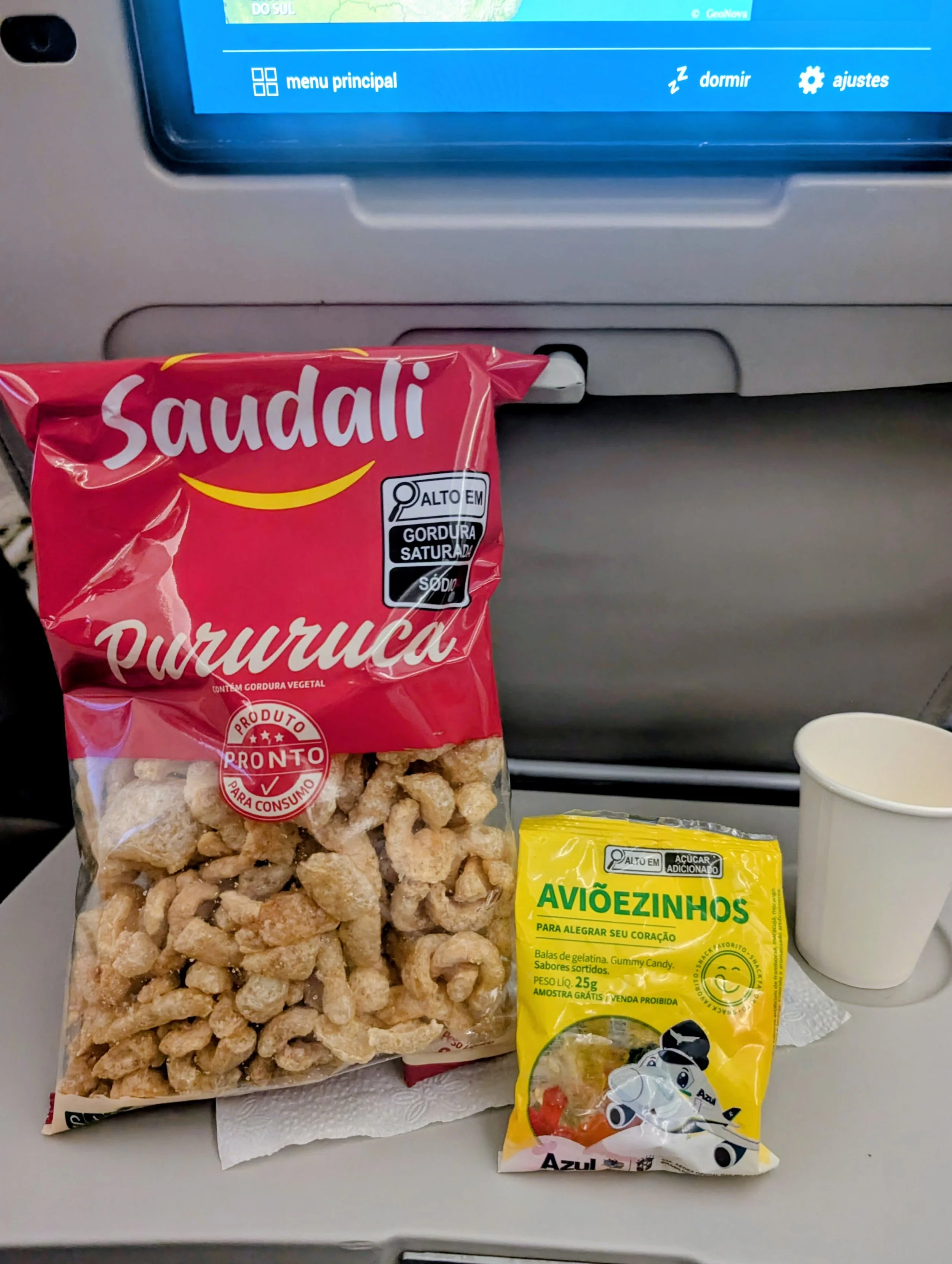
Possibly the strangest plane snack we have ever been given - a giant bag of pork rinds and airplane gummies.
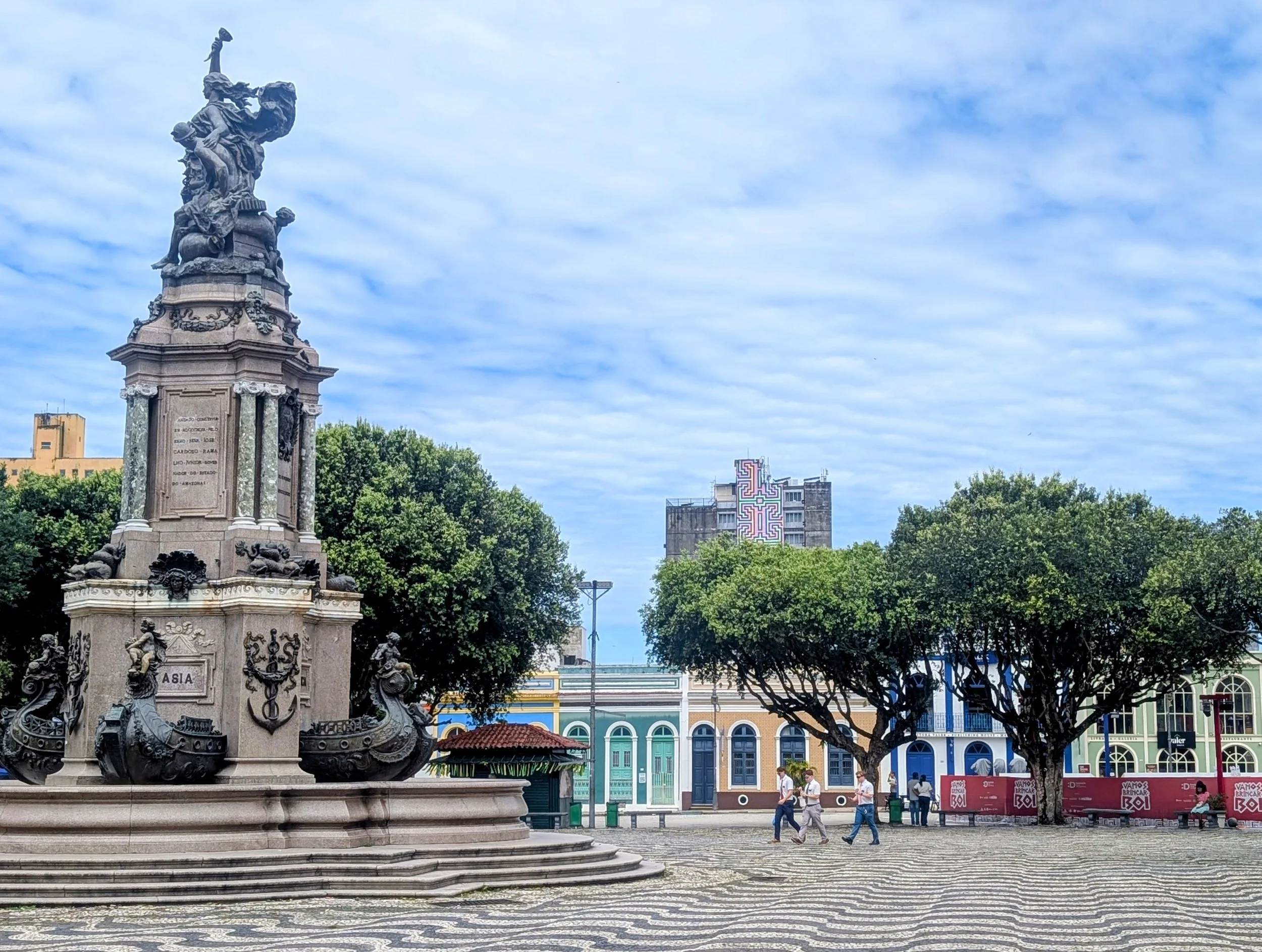
Old town plaza in Manaus
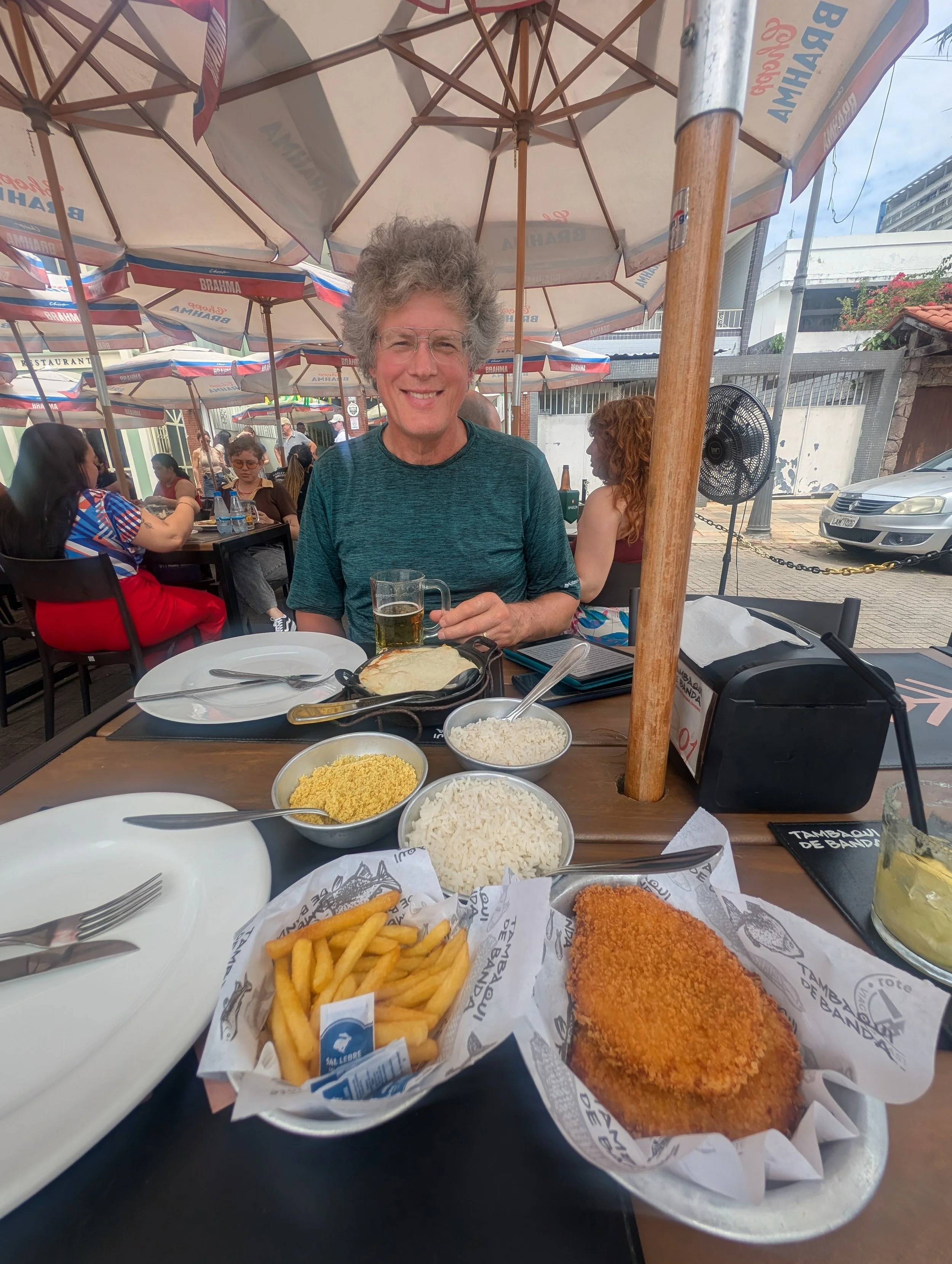
Sampling the local fish for lunch. Andy needing a haircut
Manaus is a bustling port town on the Amazon river and only a small part of the city caters to tourists. The 2.2 million residents live in an urban environment deep in the rainforest which is not readily accessible by road.
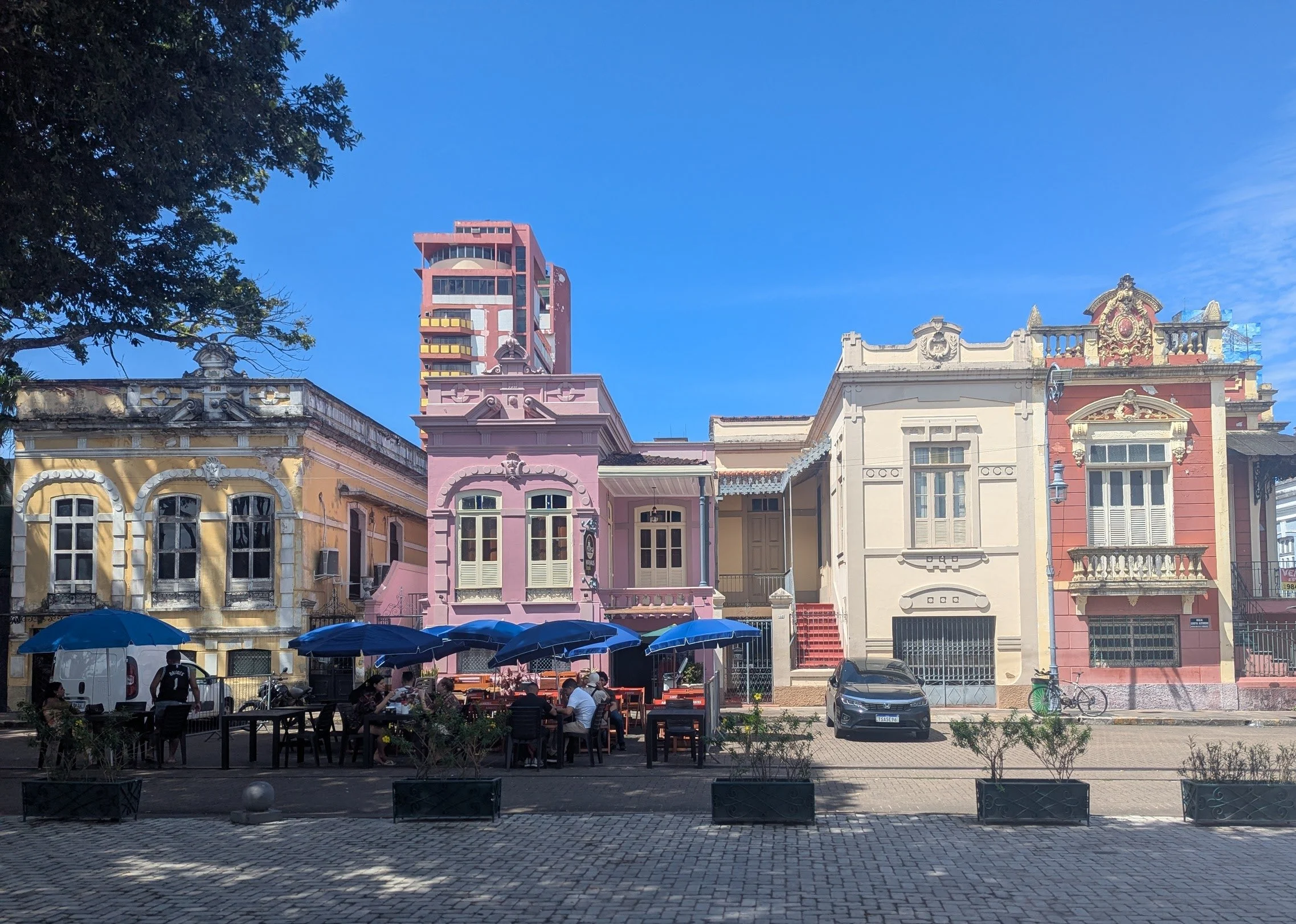
Manaus historic plaza
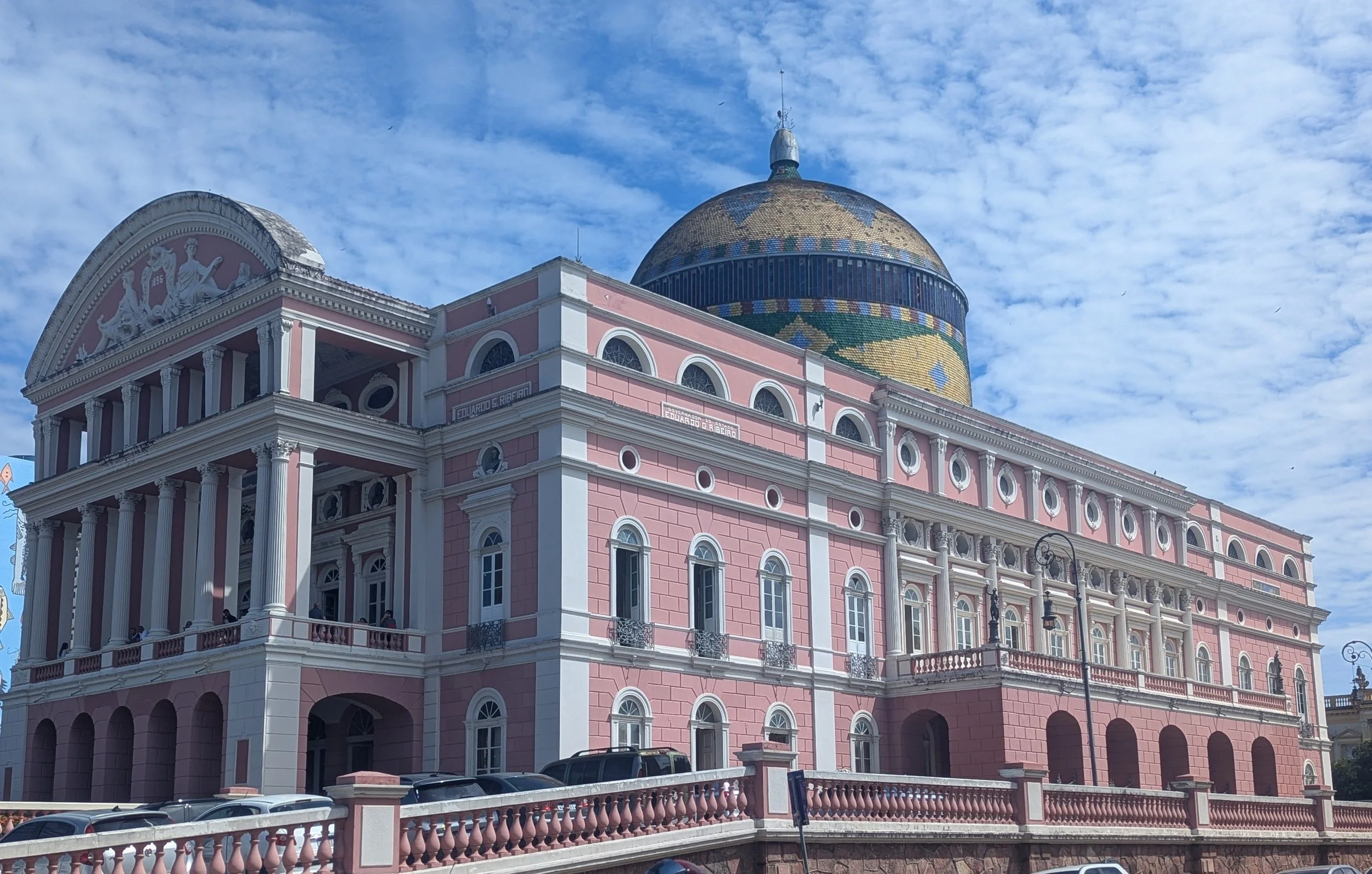
Manaus opera house
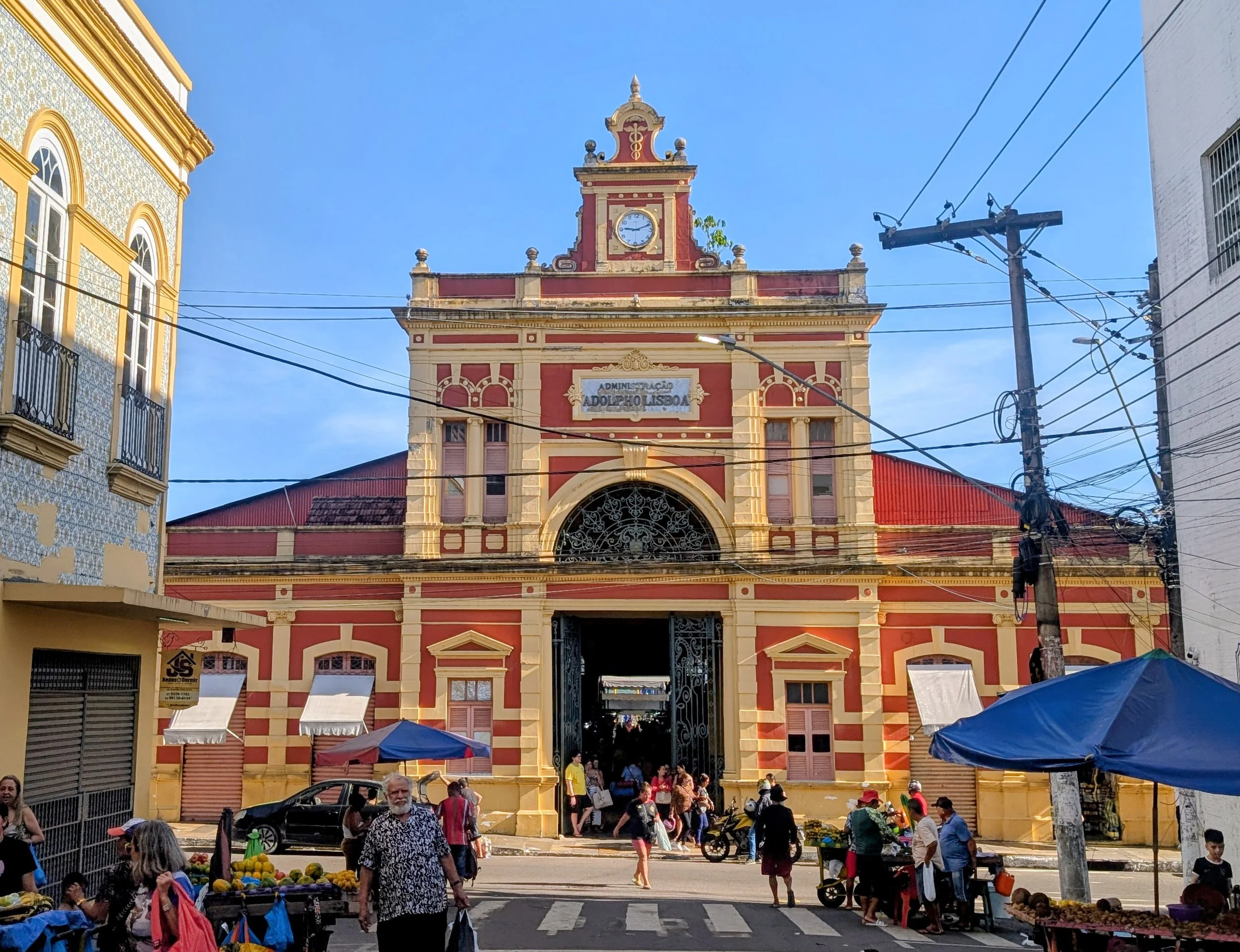
Central market in Manaus, similar to other cities in Brazil, the central market is a collection of individual sellers, grouped by product and you can typically find almost anything from food to clothing to household goods.
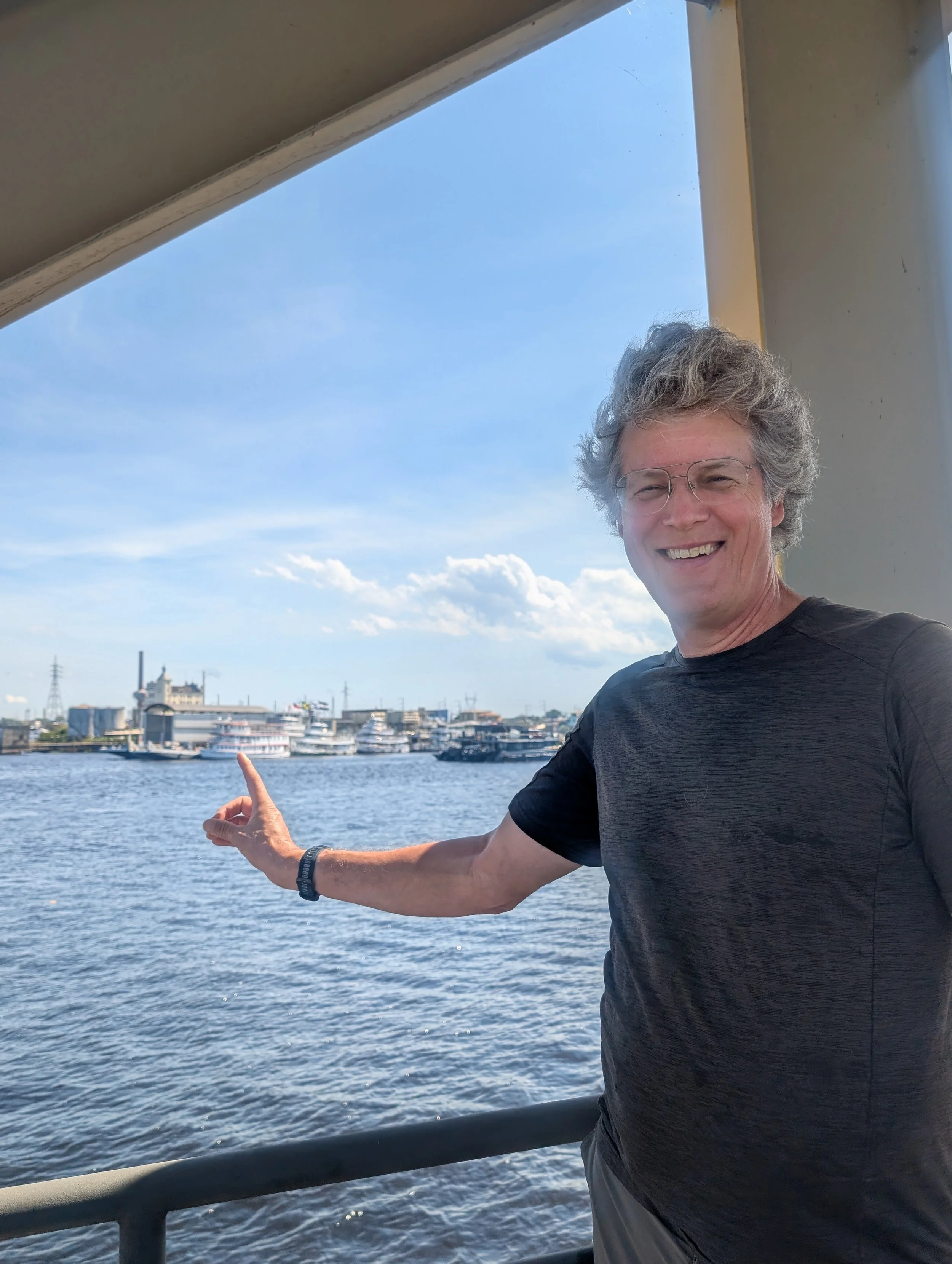
On our walk along the waterfront the day before our cruise we happened to spot the boat we knew we would be going on
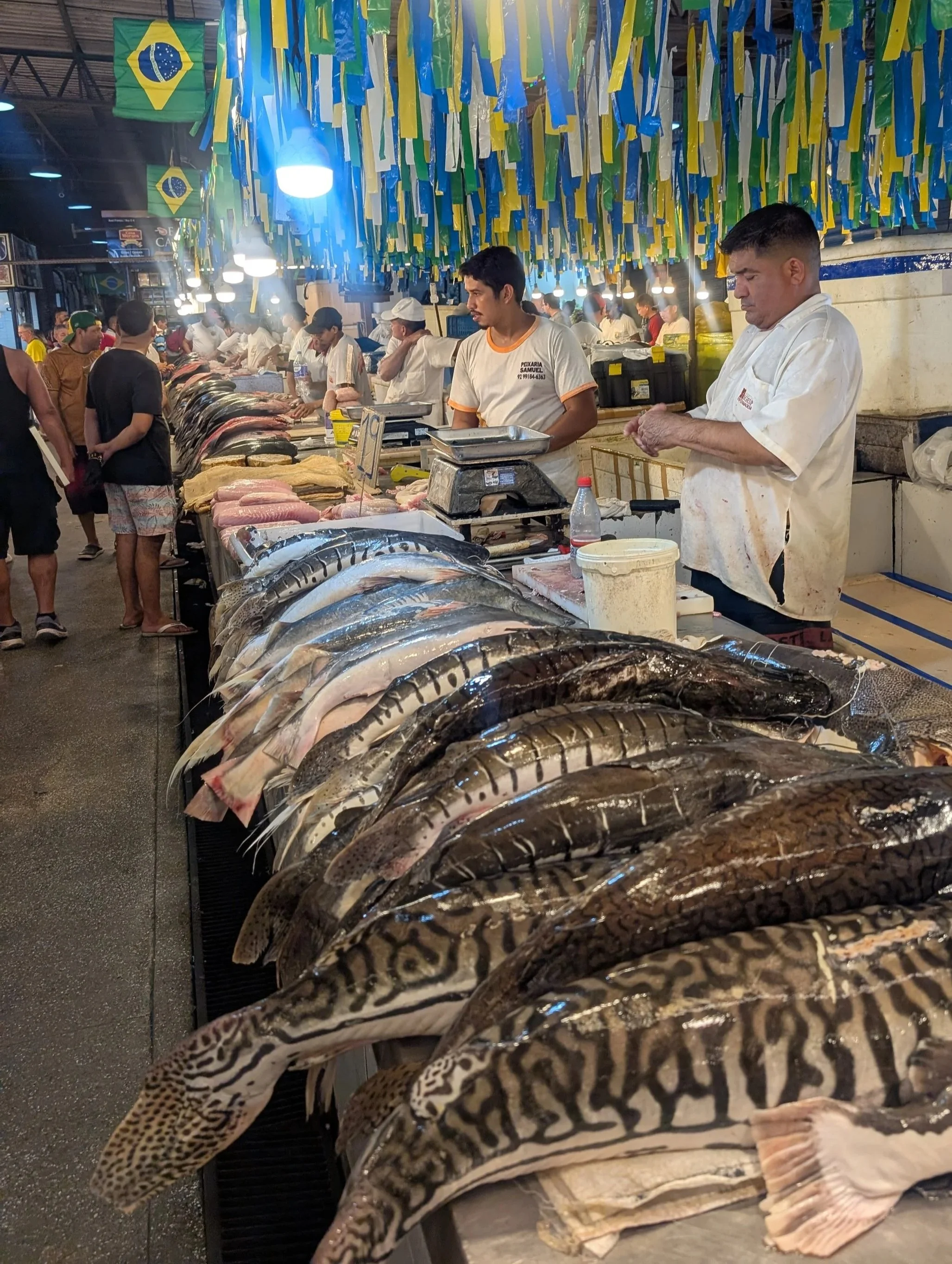
Manaus fish market
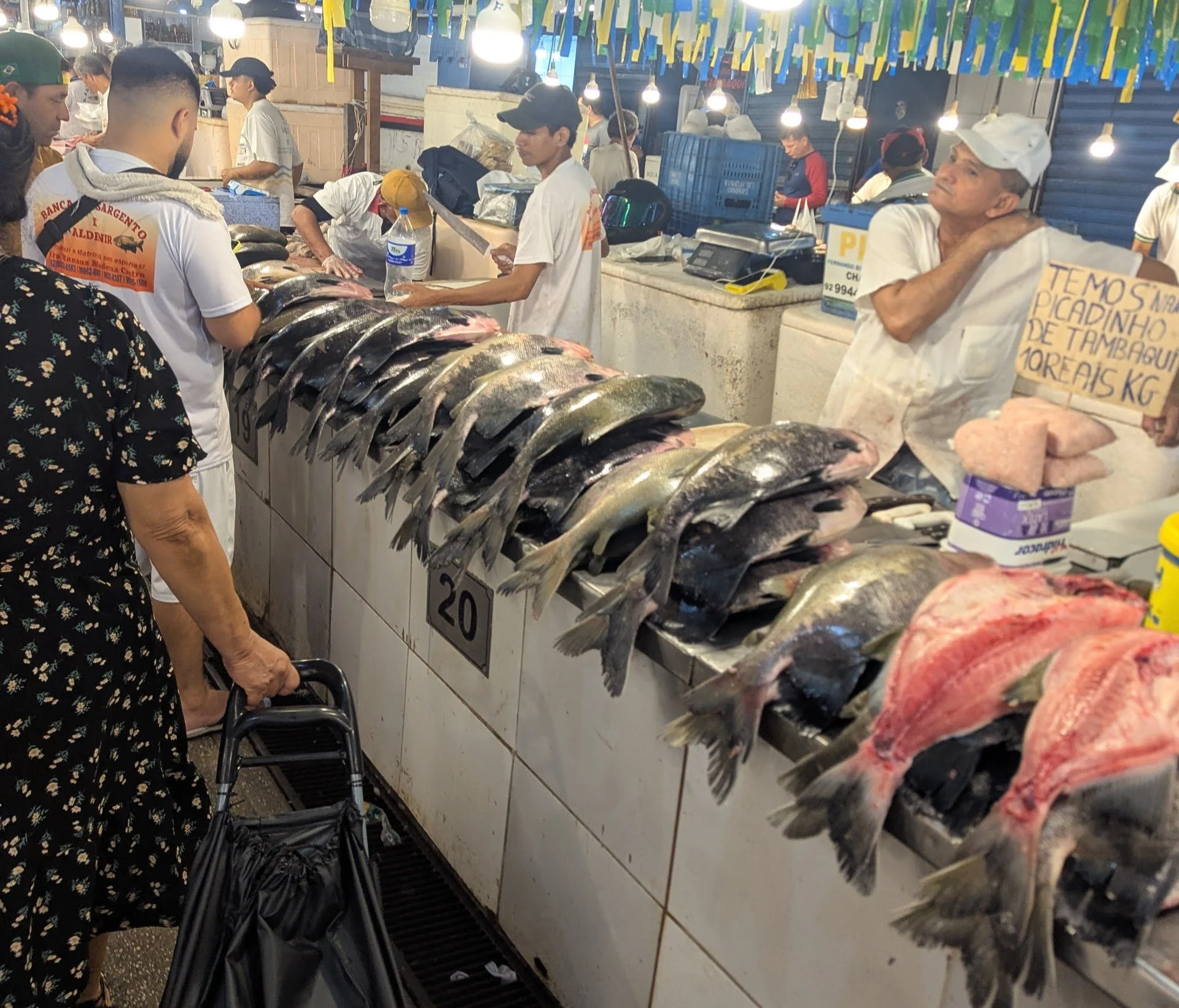
Lots of choices
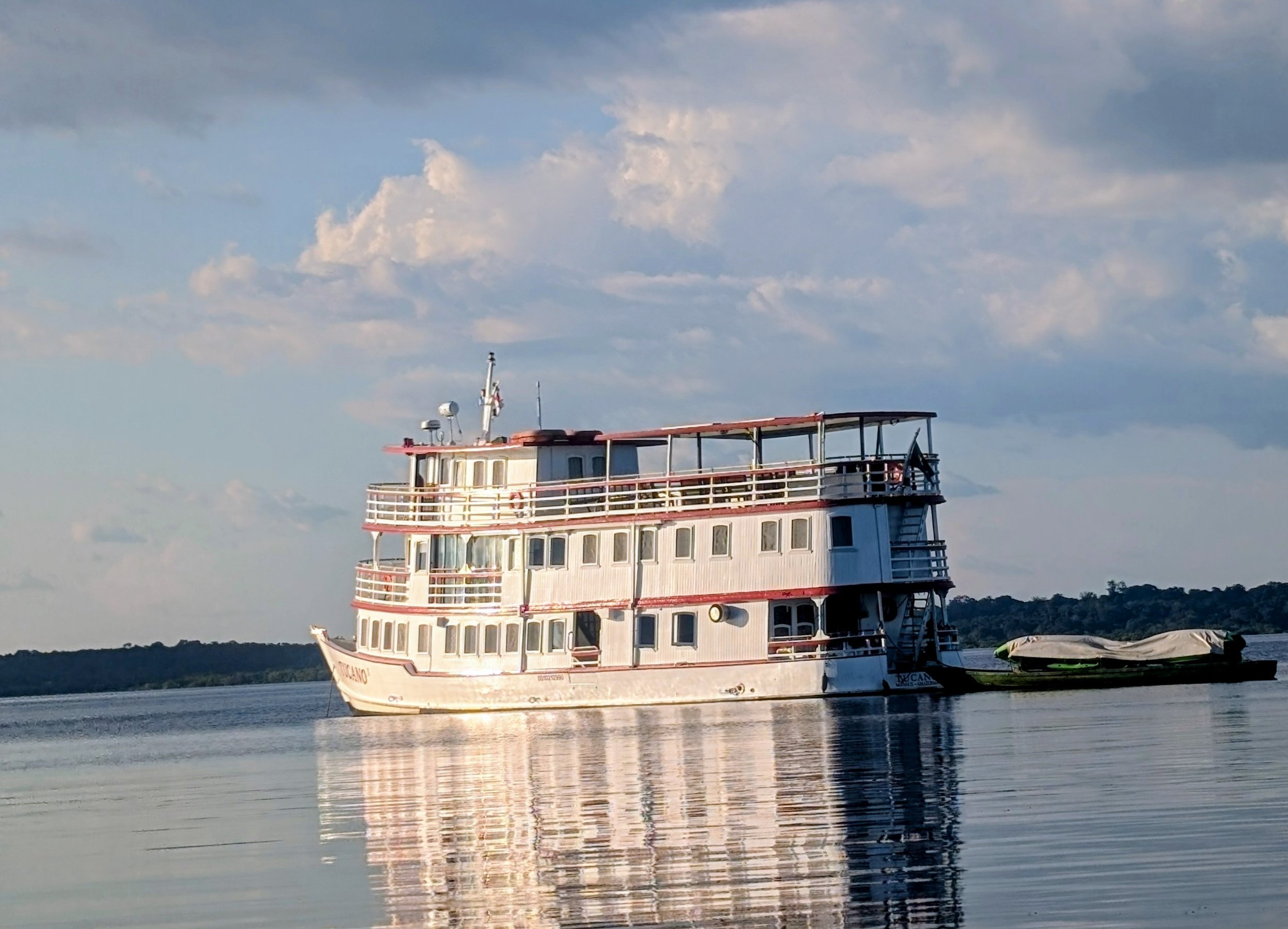
The Tucano - our home for 5 days
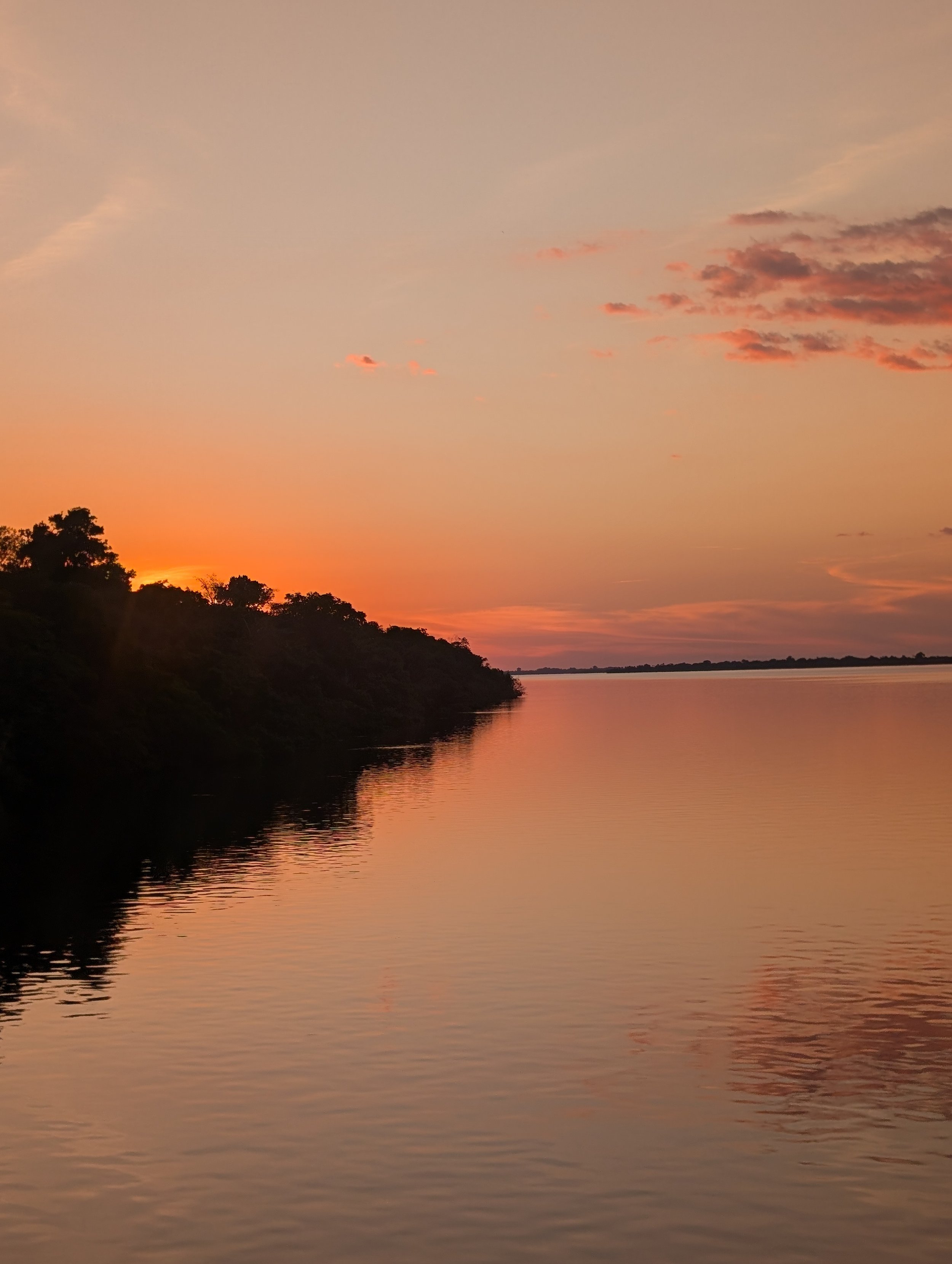
Our first sunset on the Rio Negro
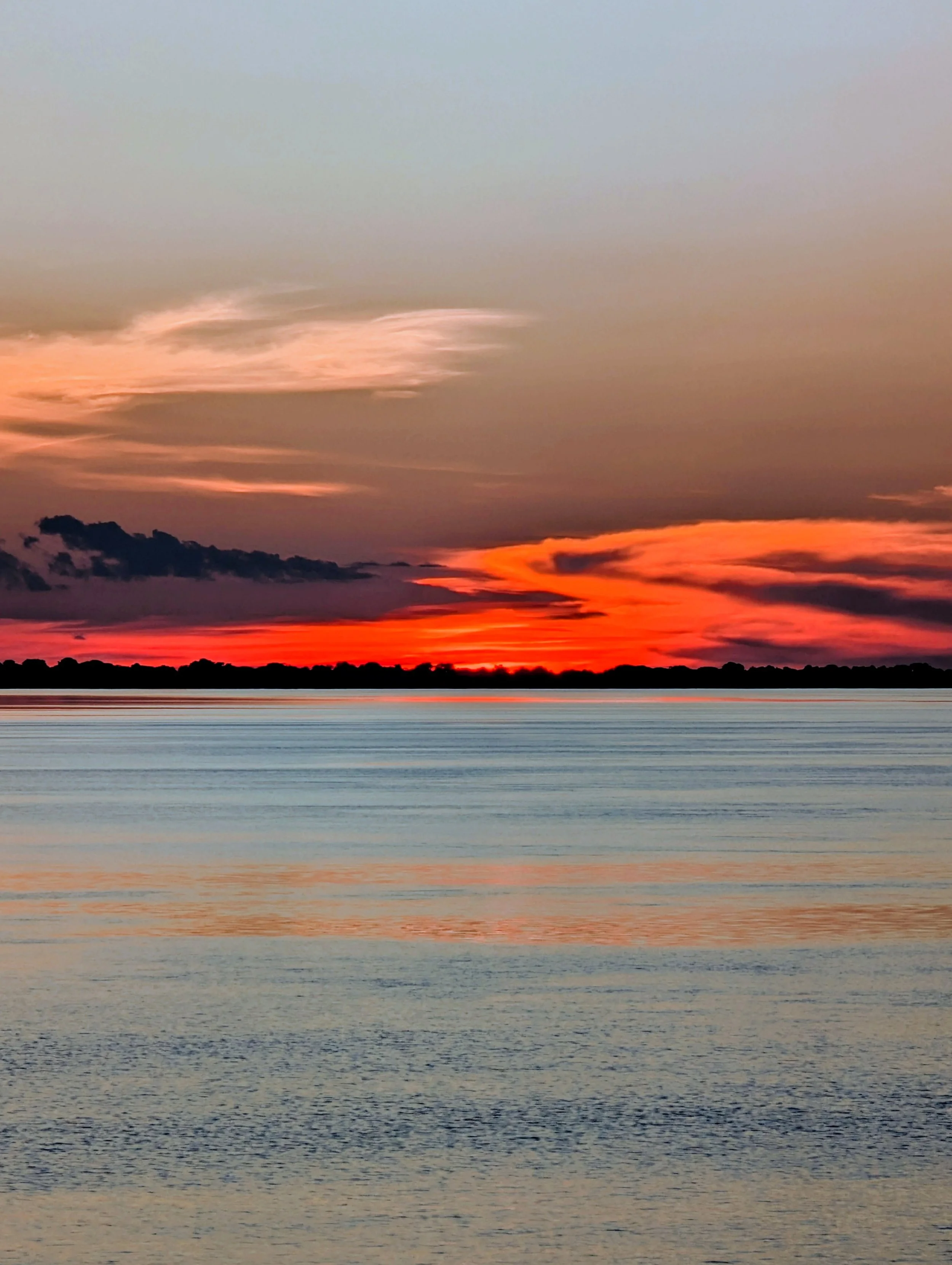
It just kept getting better
We had booked a five day cruise on a “small boat” (there were 10 guests) but to us it felt huge. Our cabin was bigger than our camper. Having three meals cooked for us and all of our activities planned was incredible. The boat traveled the Rio Negro and the Amazon river with the Rio Negro being the more remote area.
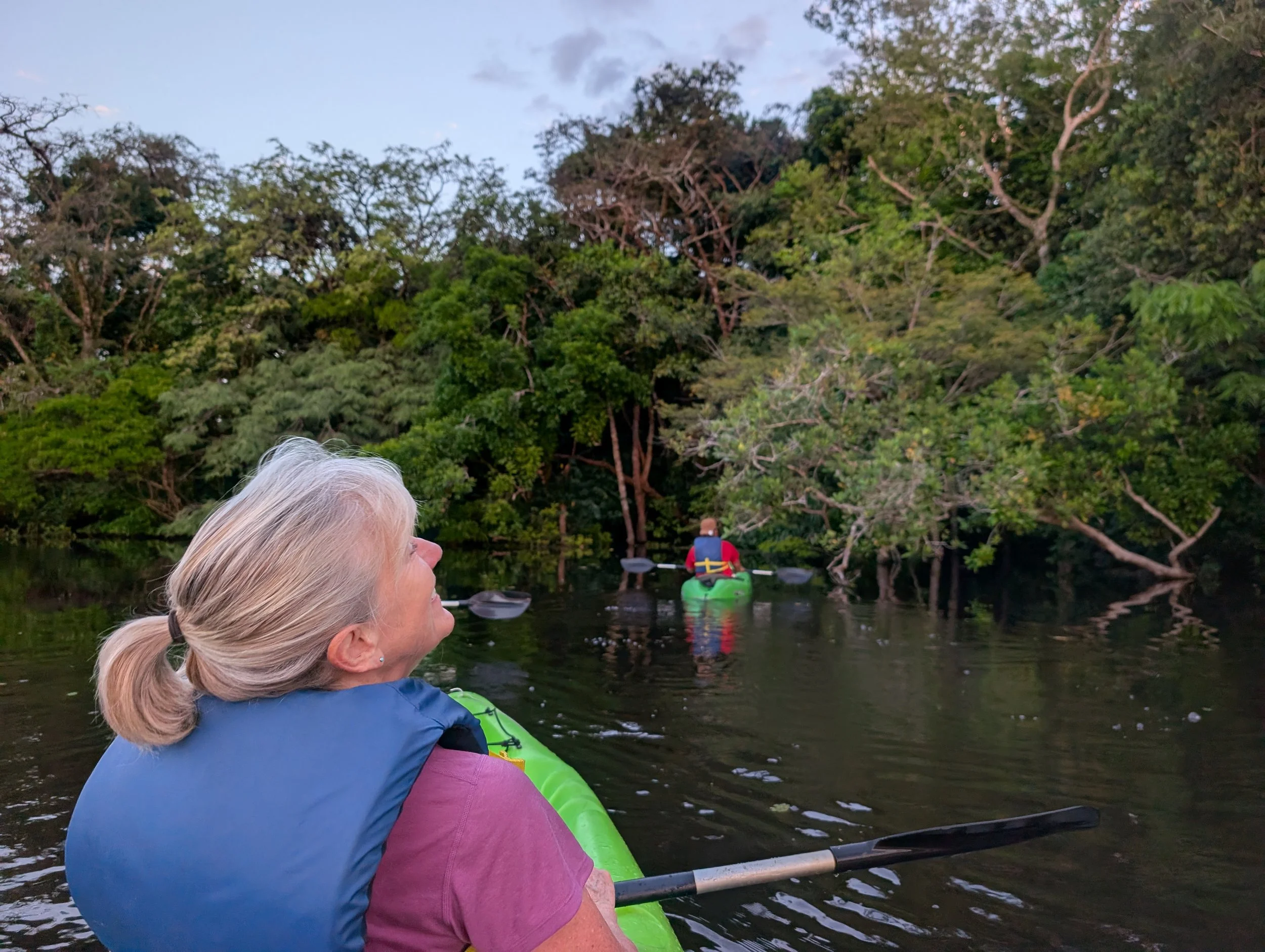
Our favorite daily activity - the morning kayak
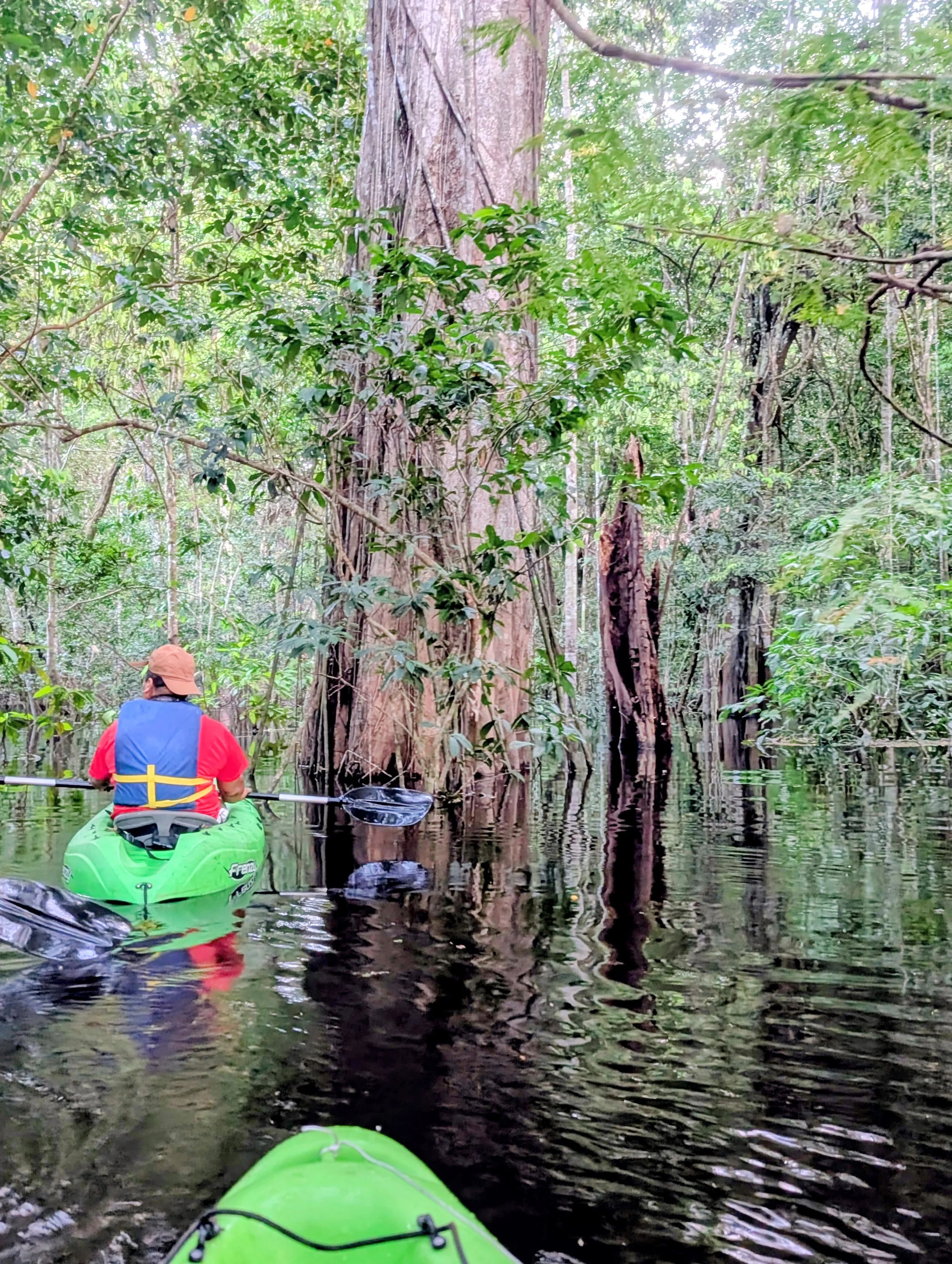
So peaceful
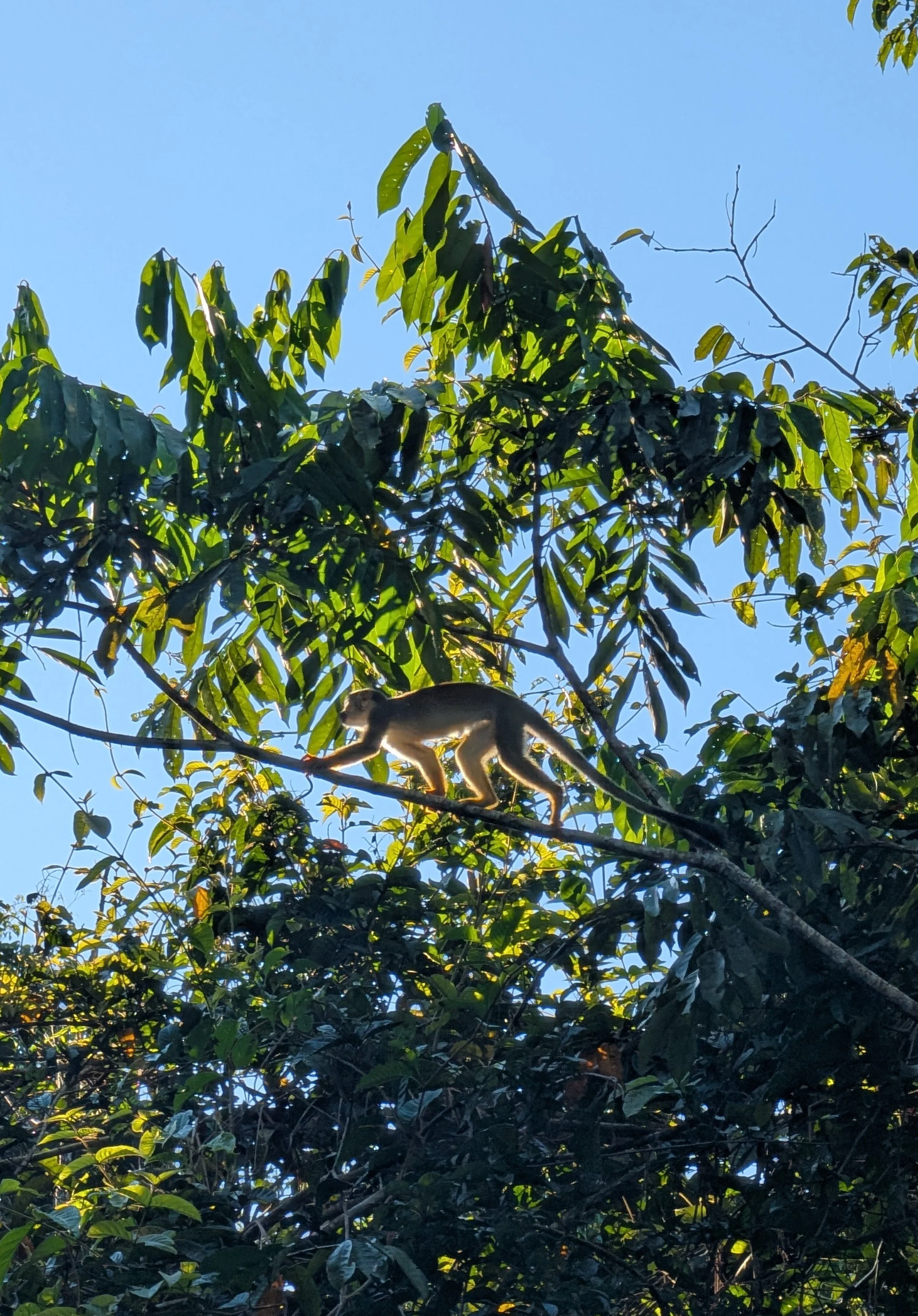
Daily monkey fix
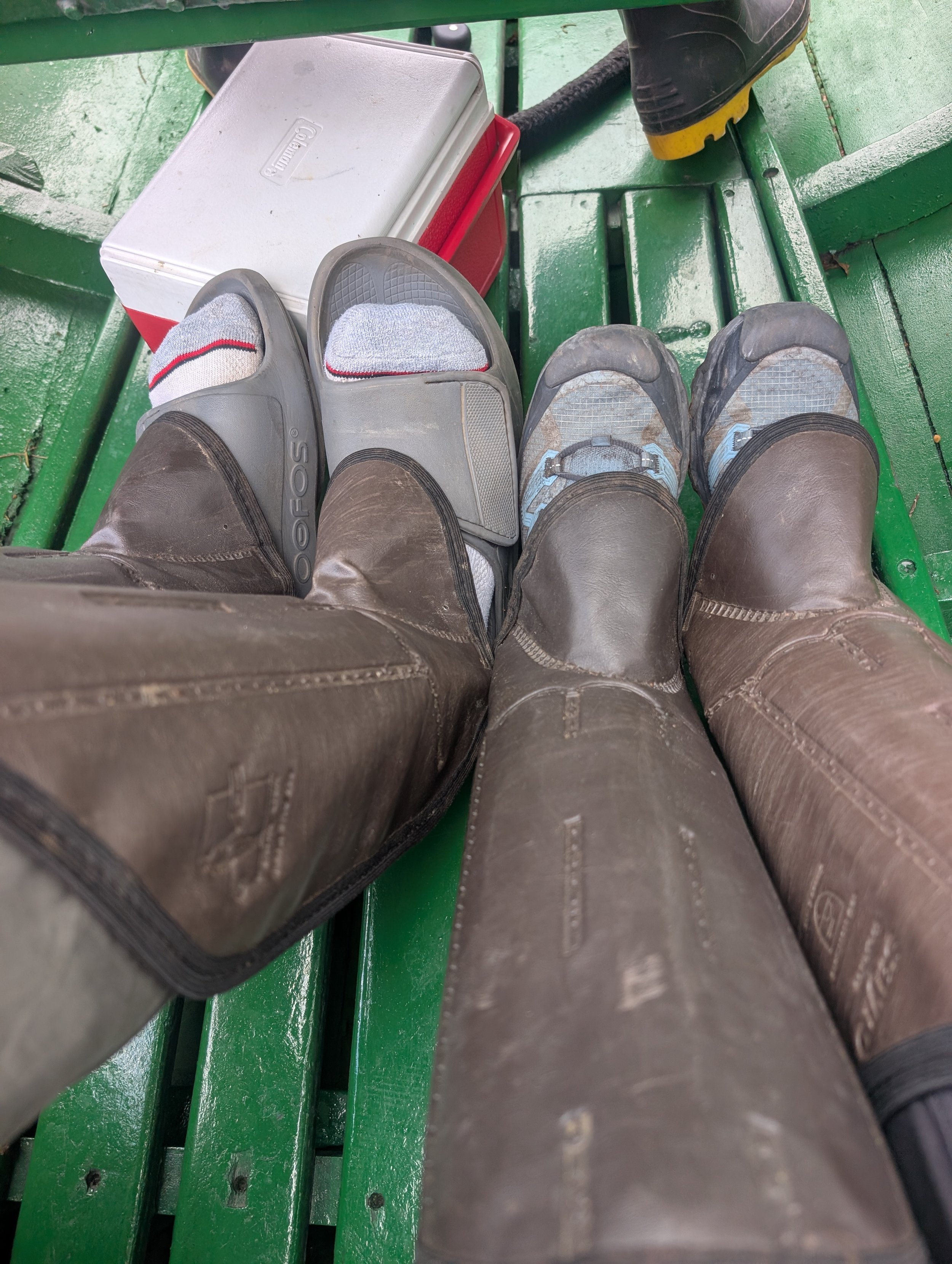
For jungle hikes we were required to wear snake gators - unfortunately Andy forgot his hiking shoes so had to wear his gators with his sandals.
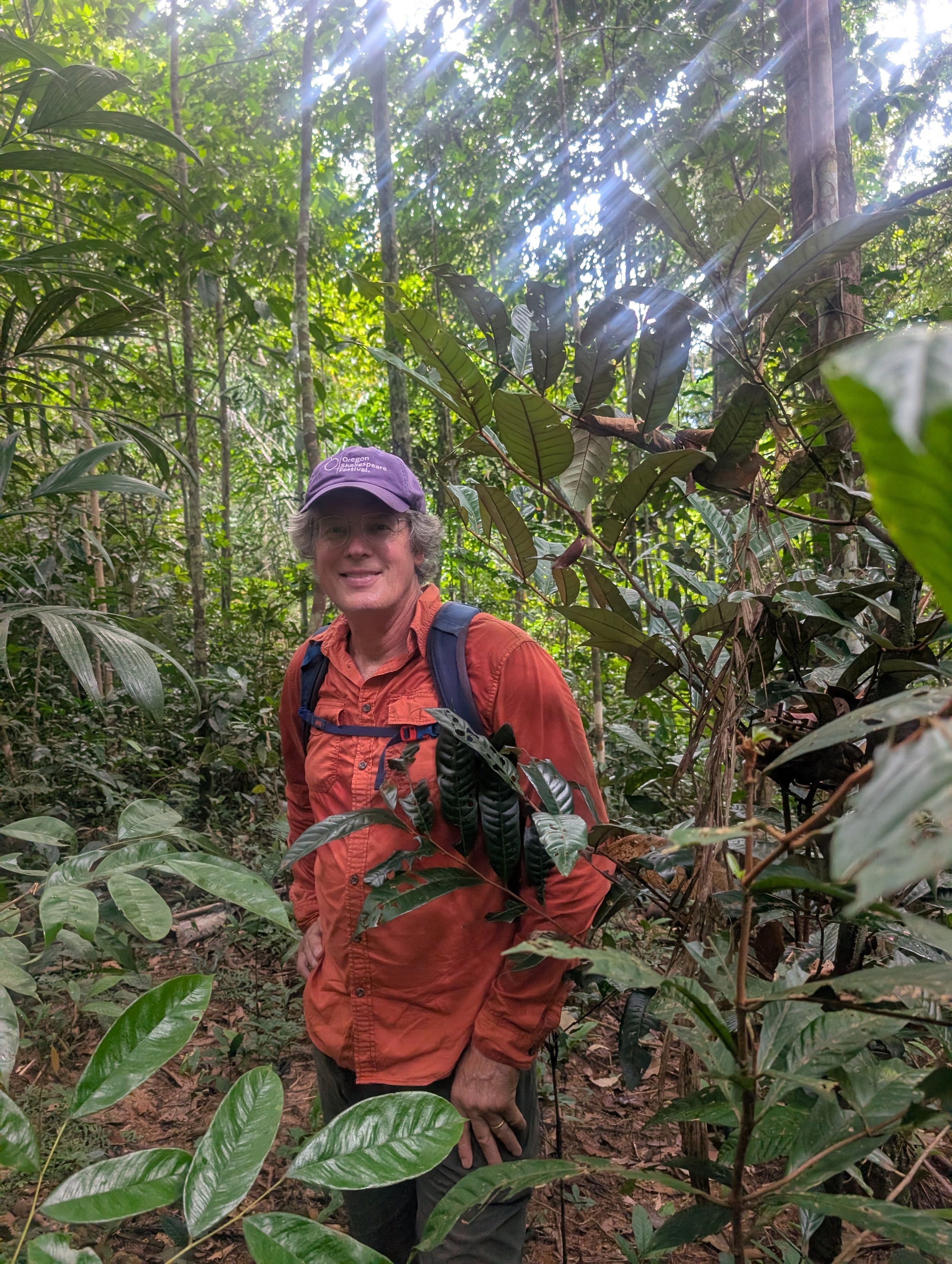
Wandering in the jungle (literally, there were no trails, we just followed our guide with a machete which he only used when really necessary)
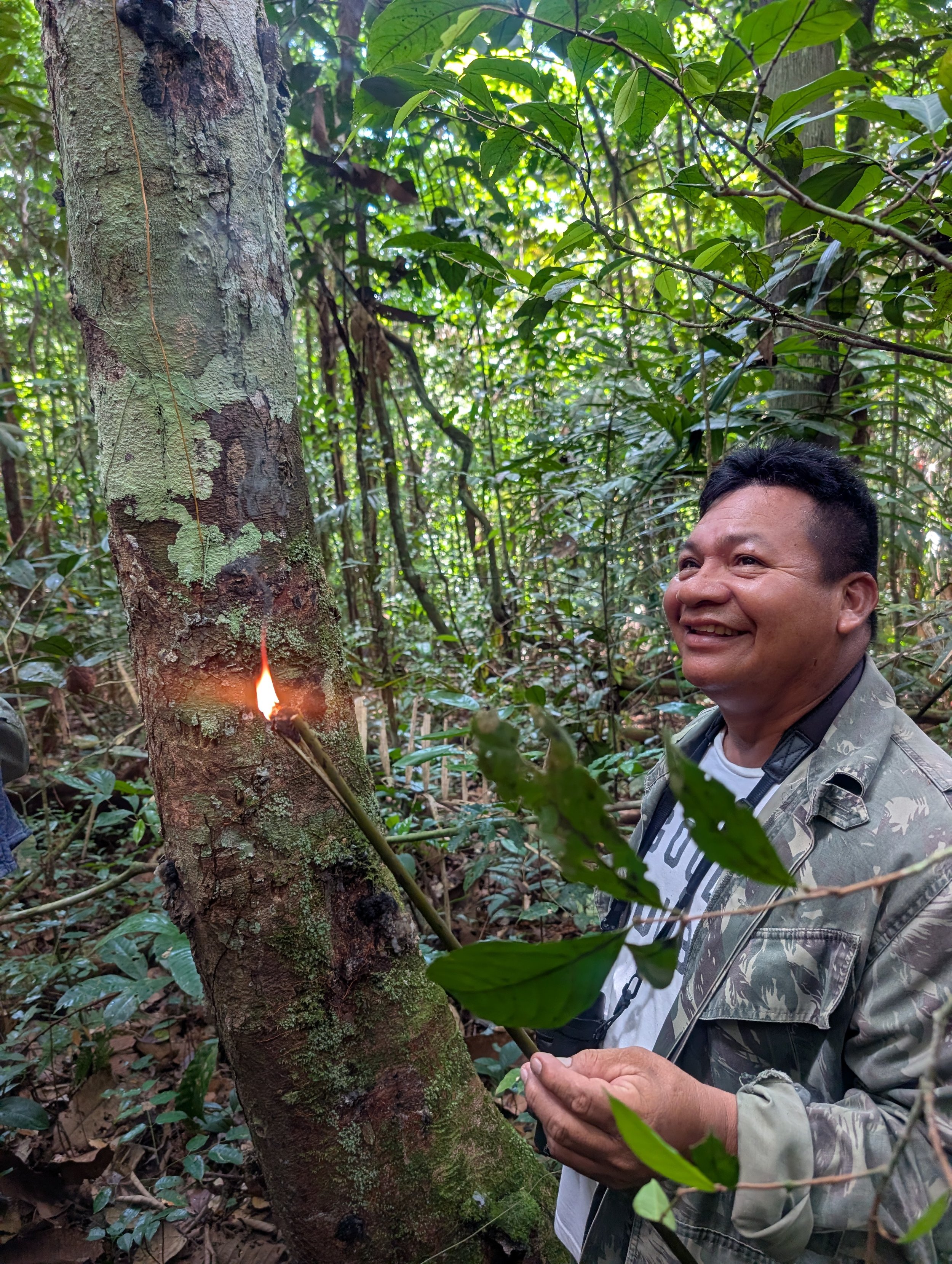
Our guide, Osma, demonstrating how his tribe makes lanterns from tree resin. He grew up 300km up river from Manaus and came to the city for economic opportunities.
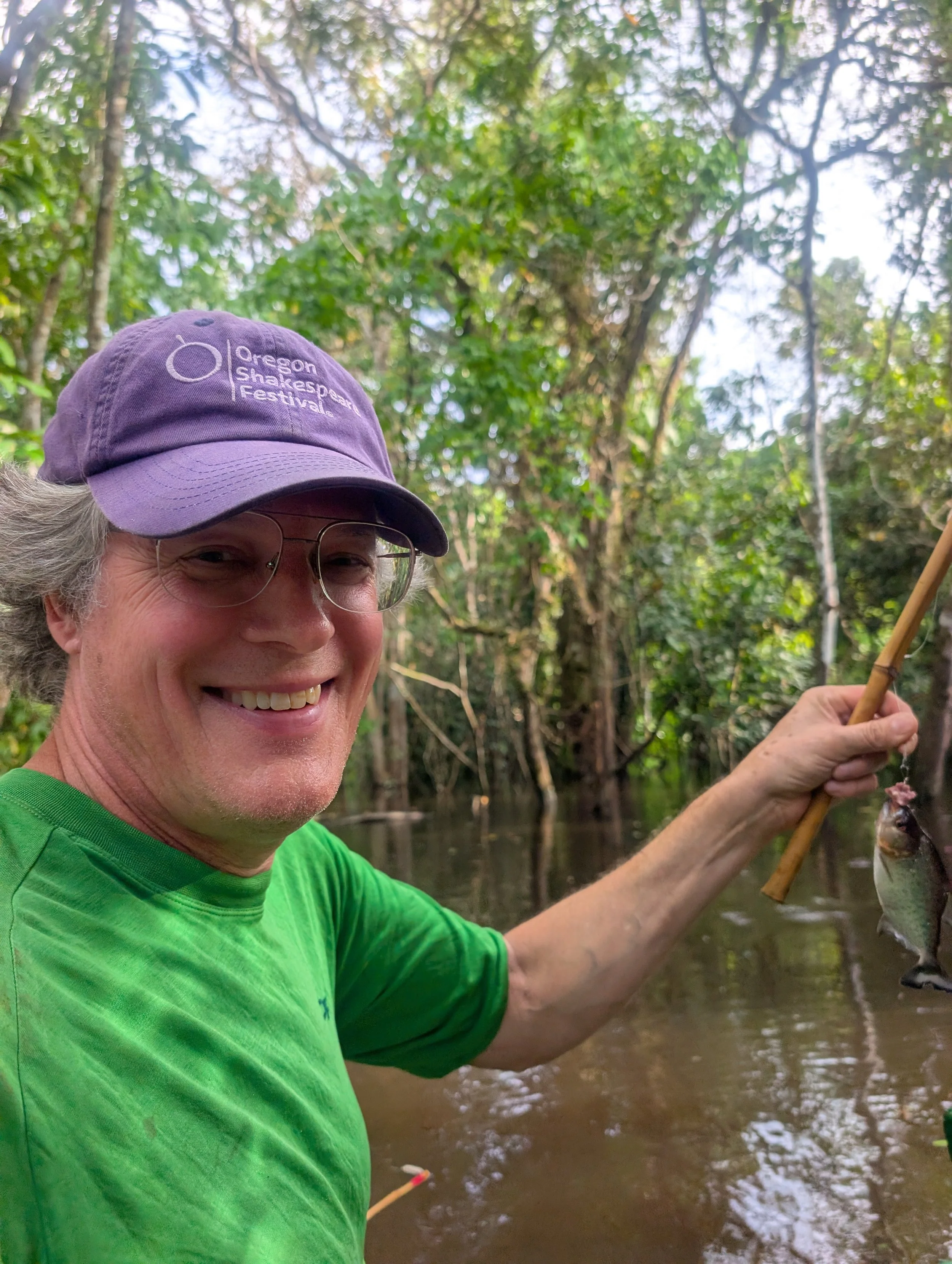
Andy’s first piranha catch. It was ridiculously easy to catch them. You use a bamboo fishing pole, put some raw meat on a hook and slap the water with the pole. Fish on. We later ate them for dinner.
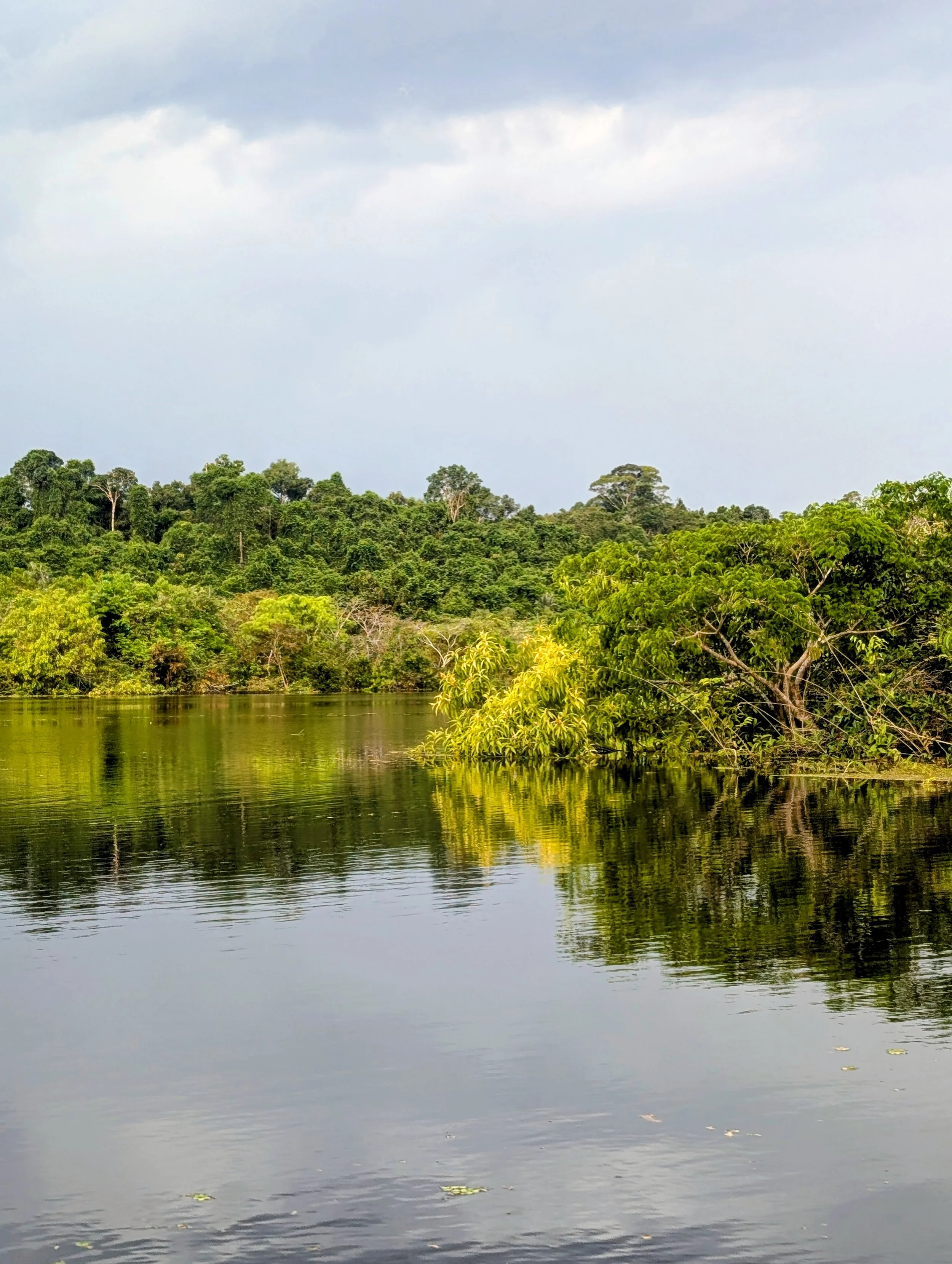
Morning light from the kayaks
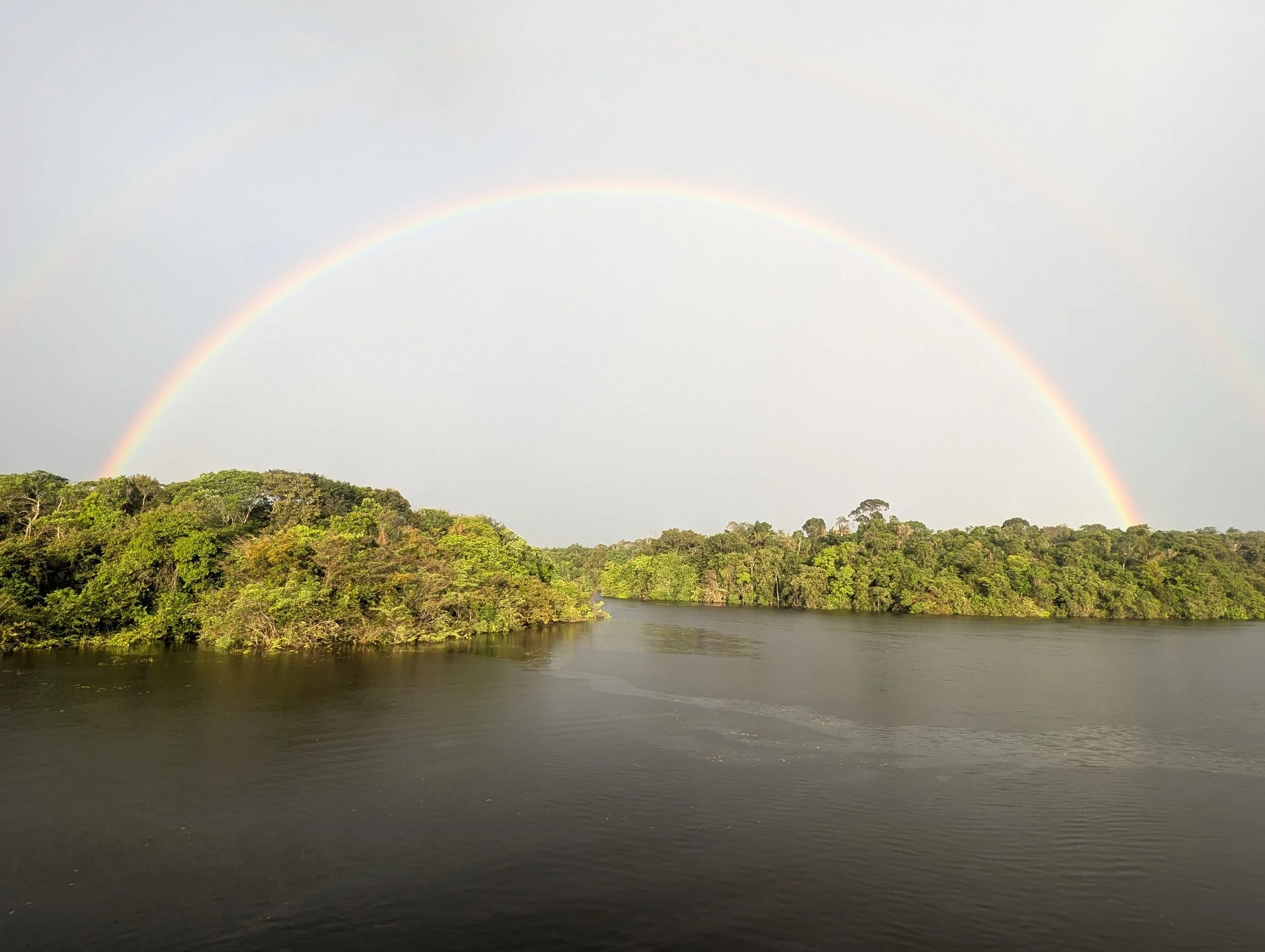
Magical
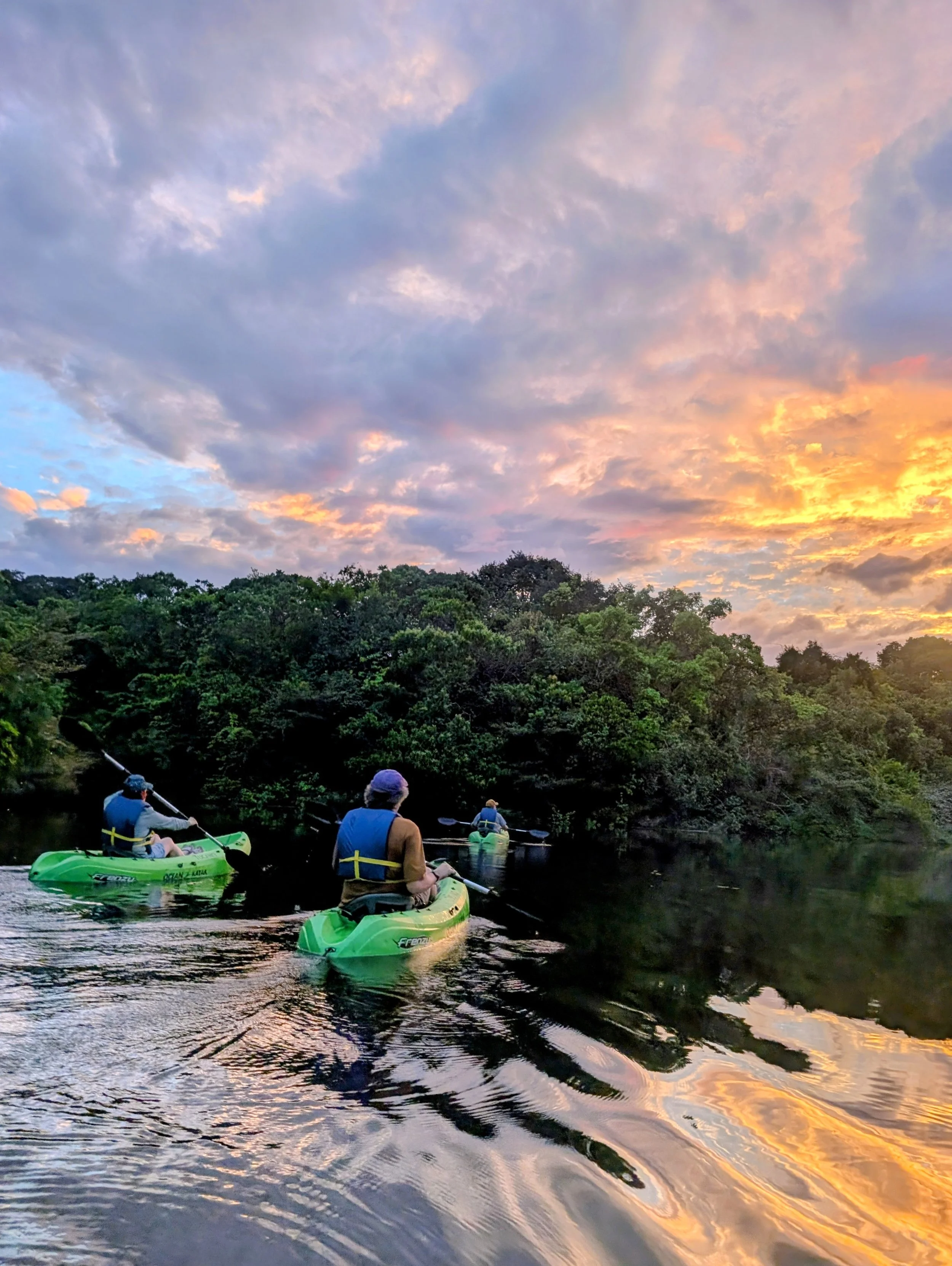
Optional morning activities were a motorized dinghy ride or kayaks, we always chose the kayaks
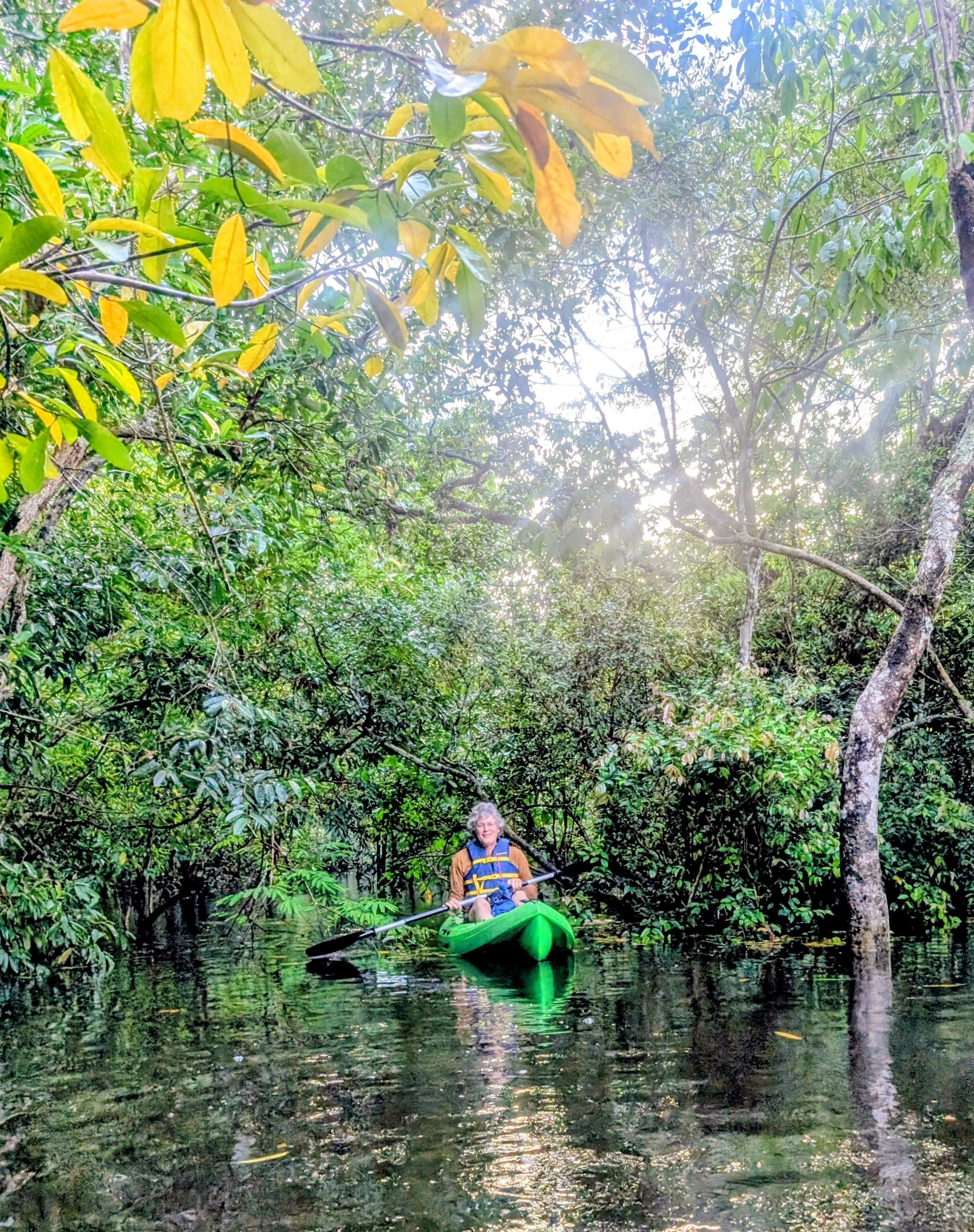
Navigating dense waterways
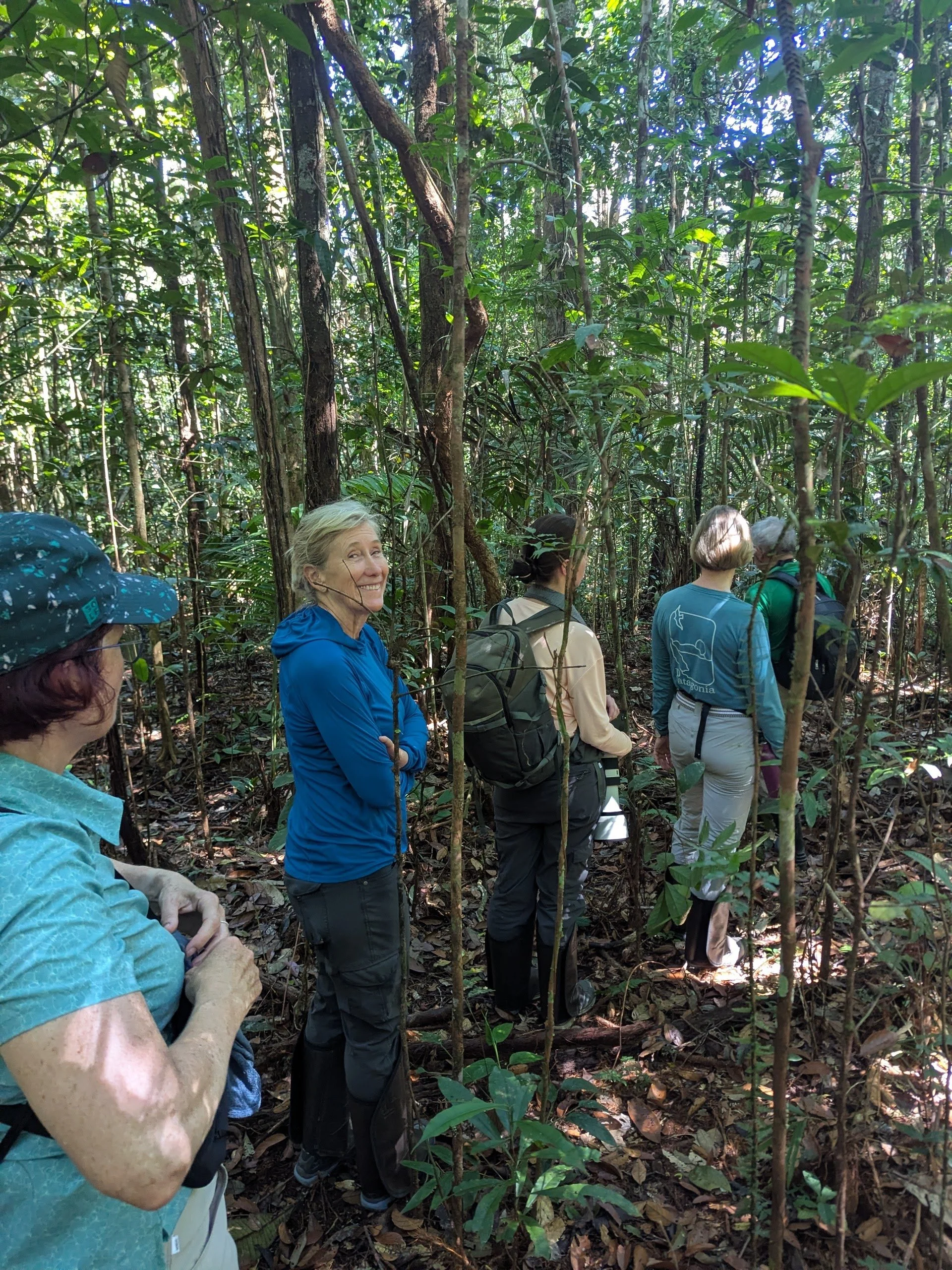
Working our way through the jungle on a hike.
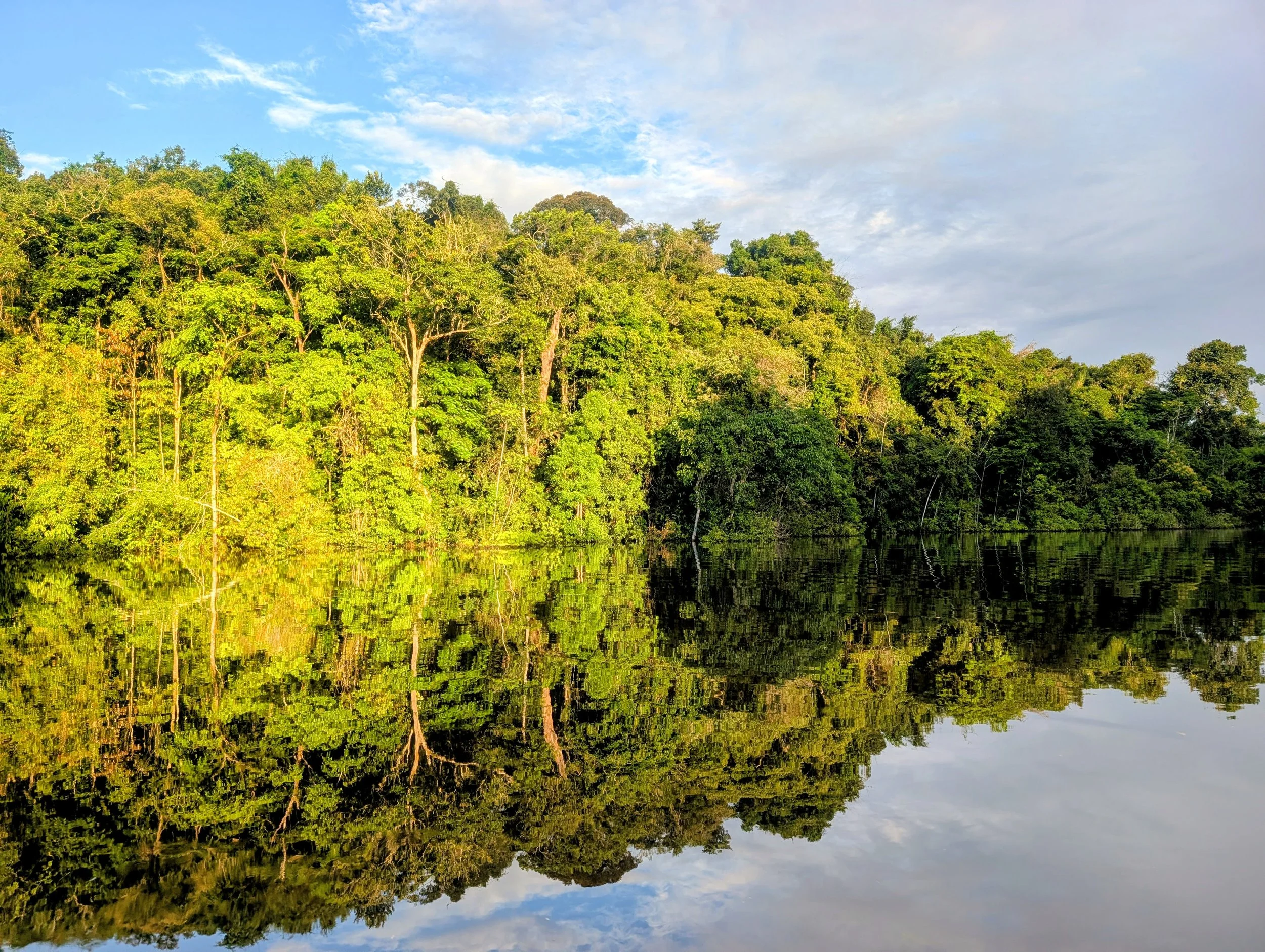
Perfect reflections on the water
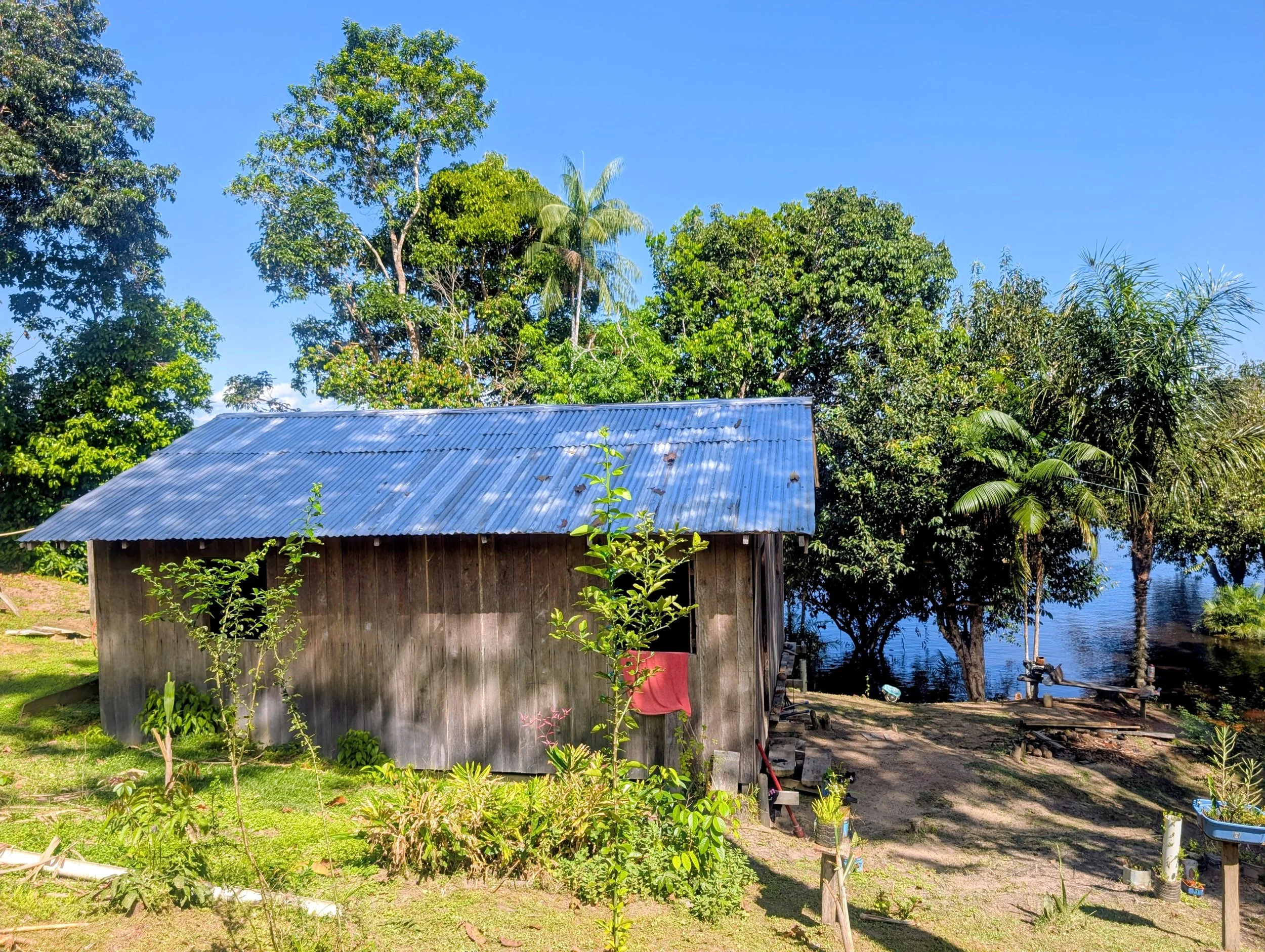
Visit to a local family living at the water’s edge
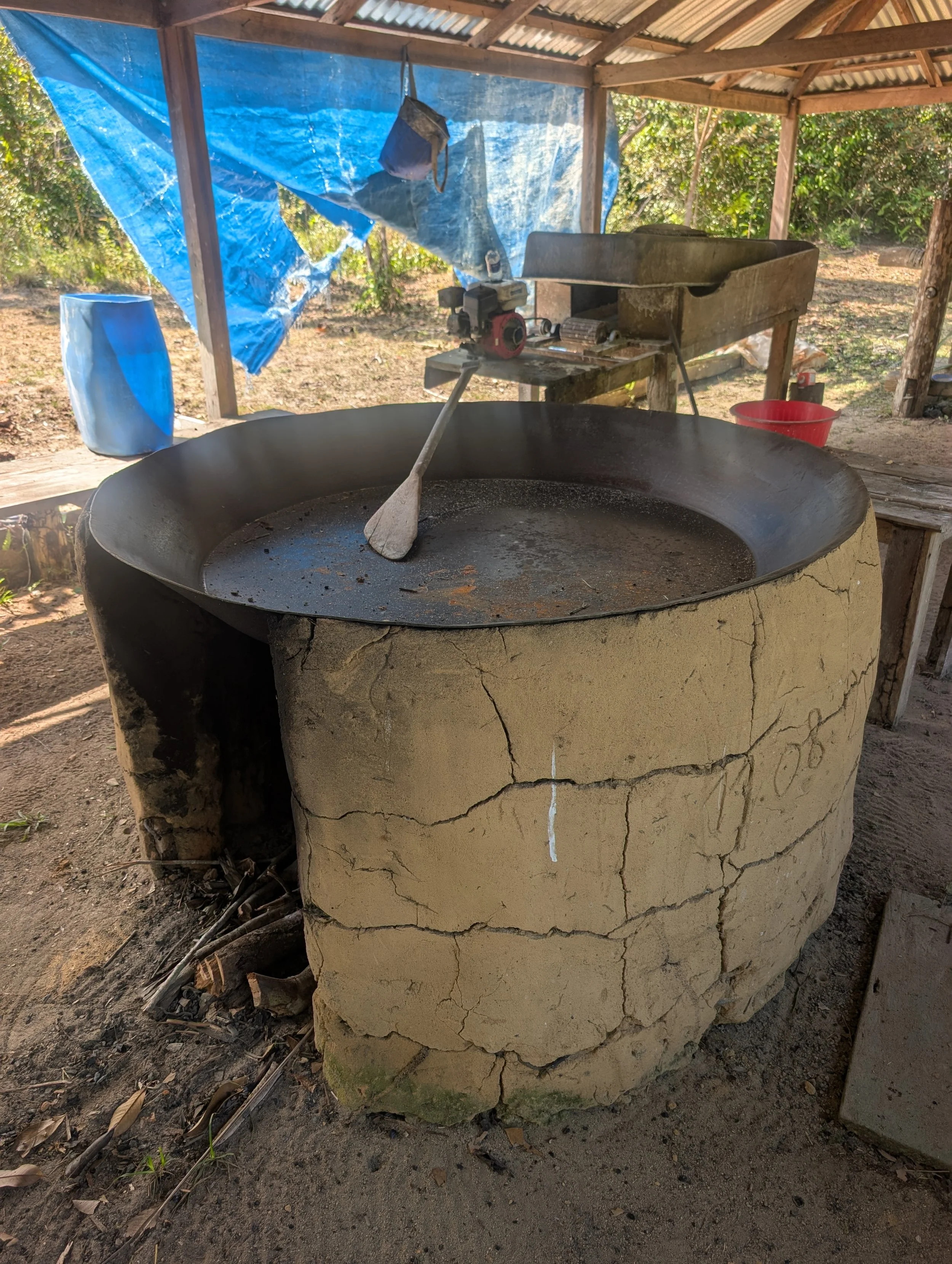
Oven to cook root vegetables
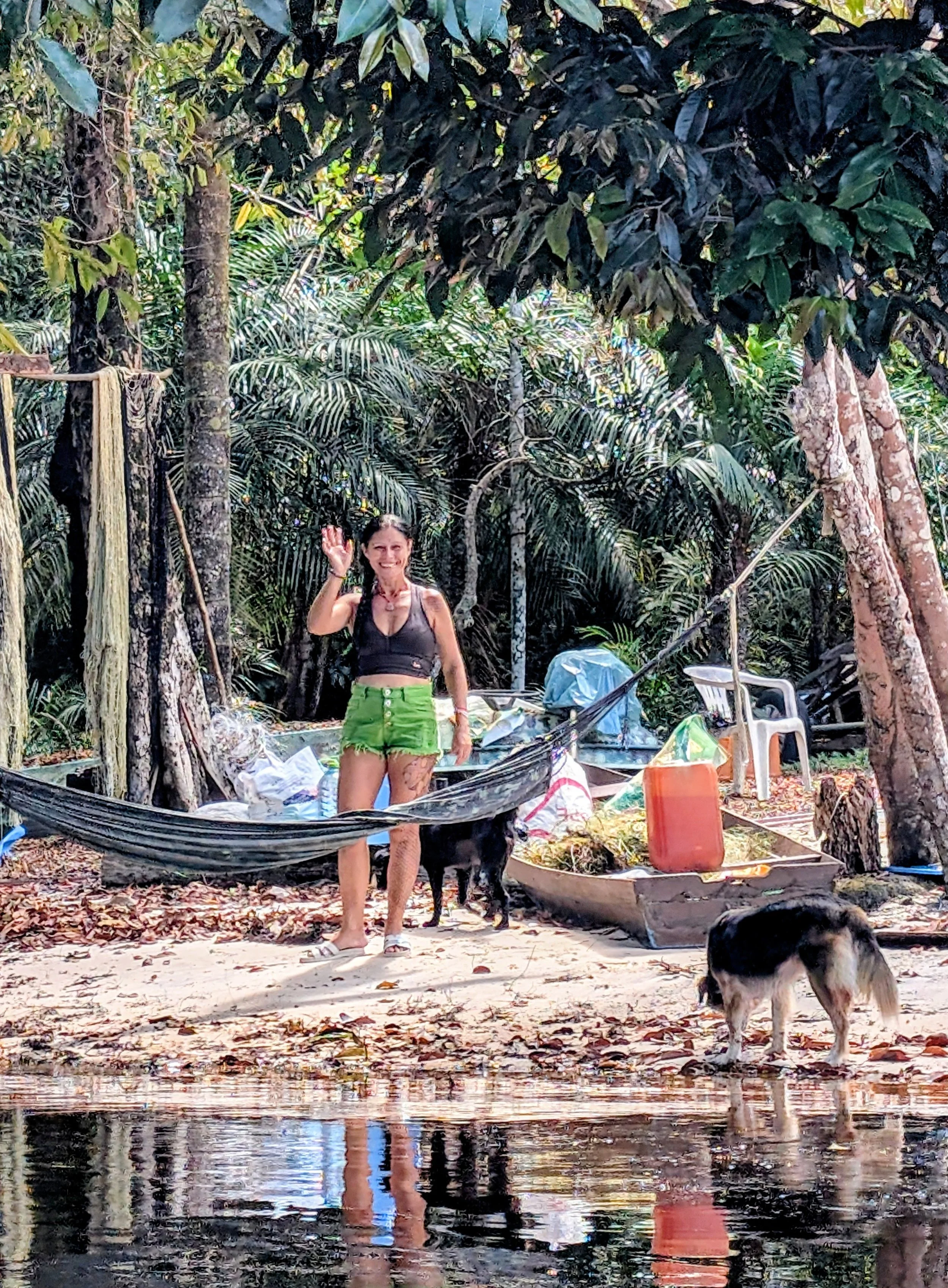
A friendly wave from our hostess
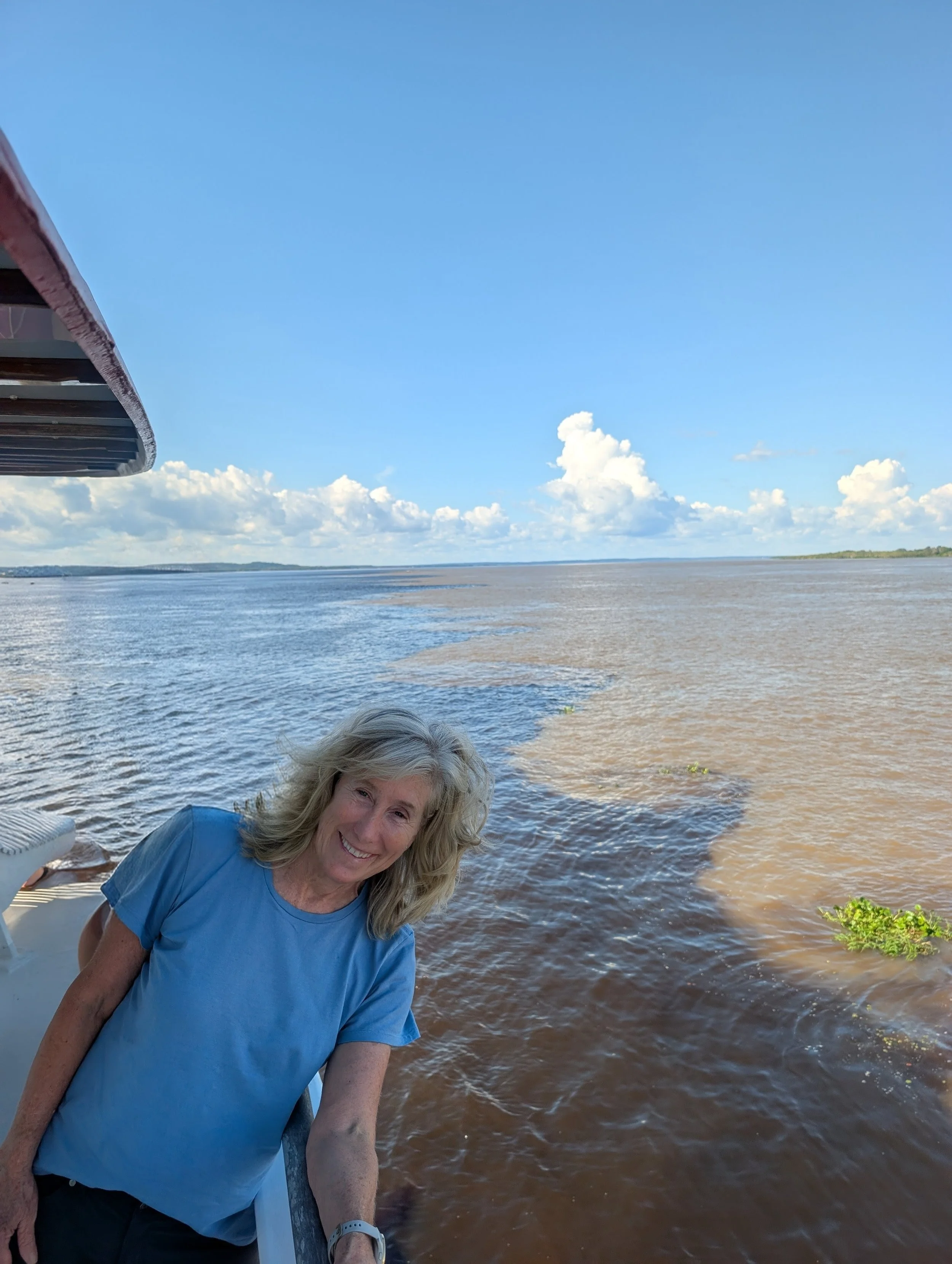
The confluence of the Rio Negro (dark water) and the Amazon (lighter water), this line goes on for miles
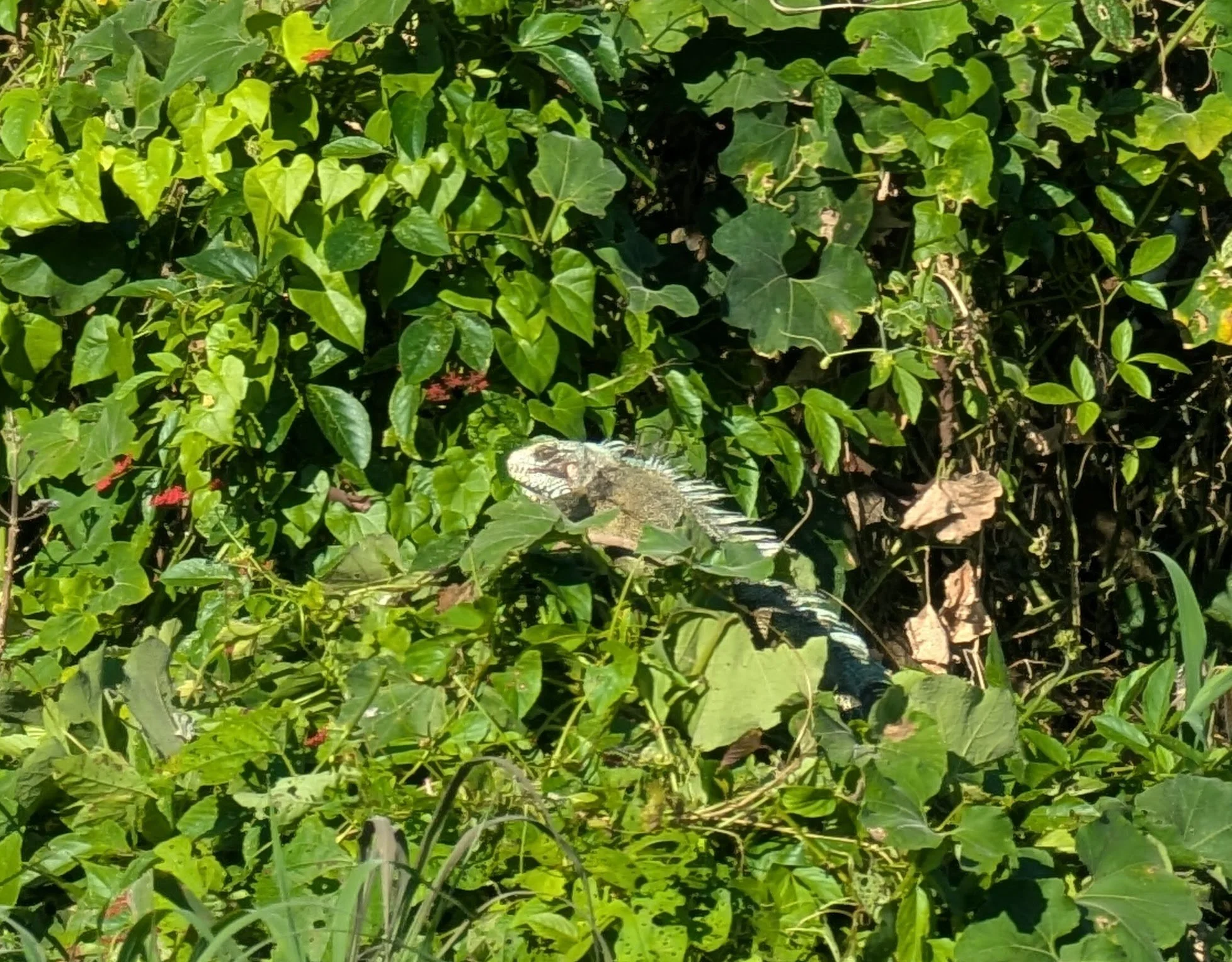
Iguana hiding in the forest
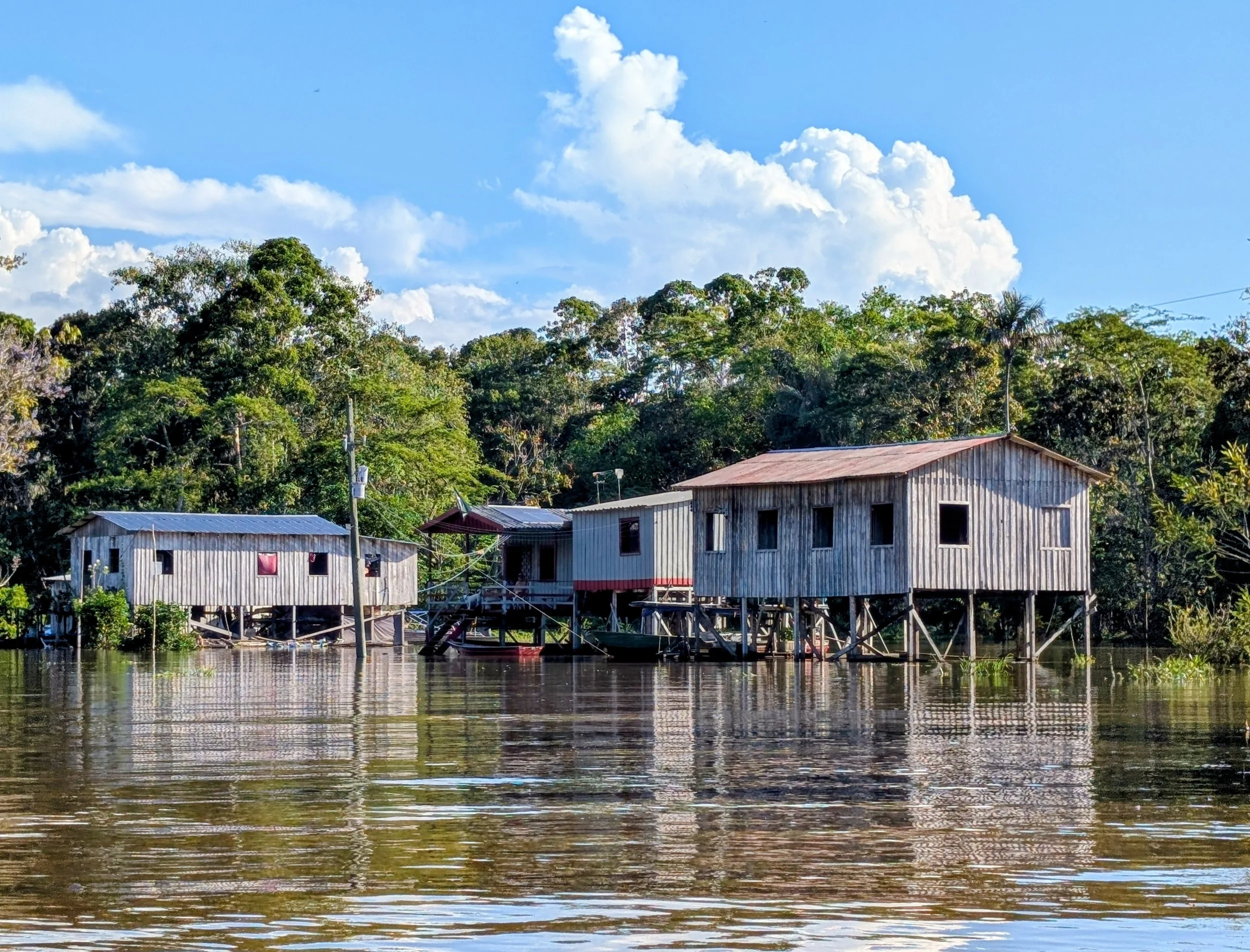
Houses built on stilts along the Amazon river
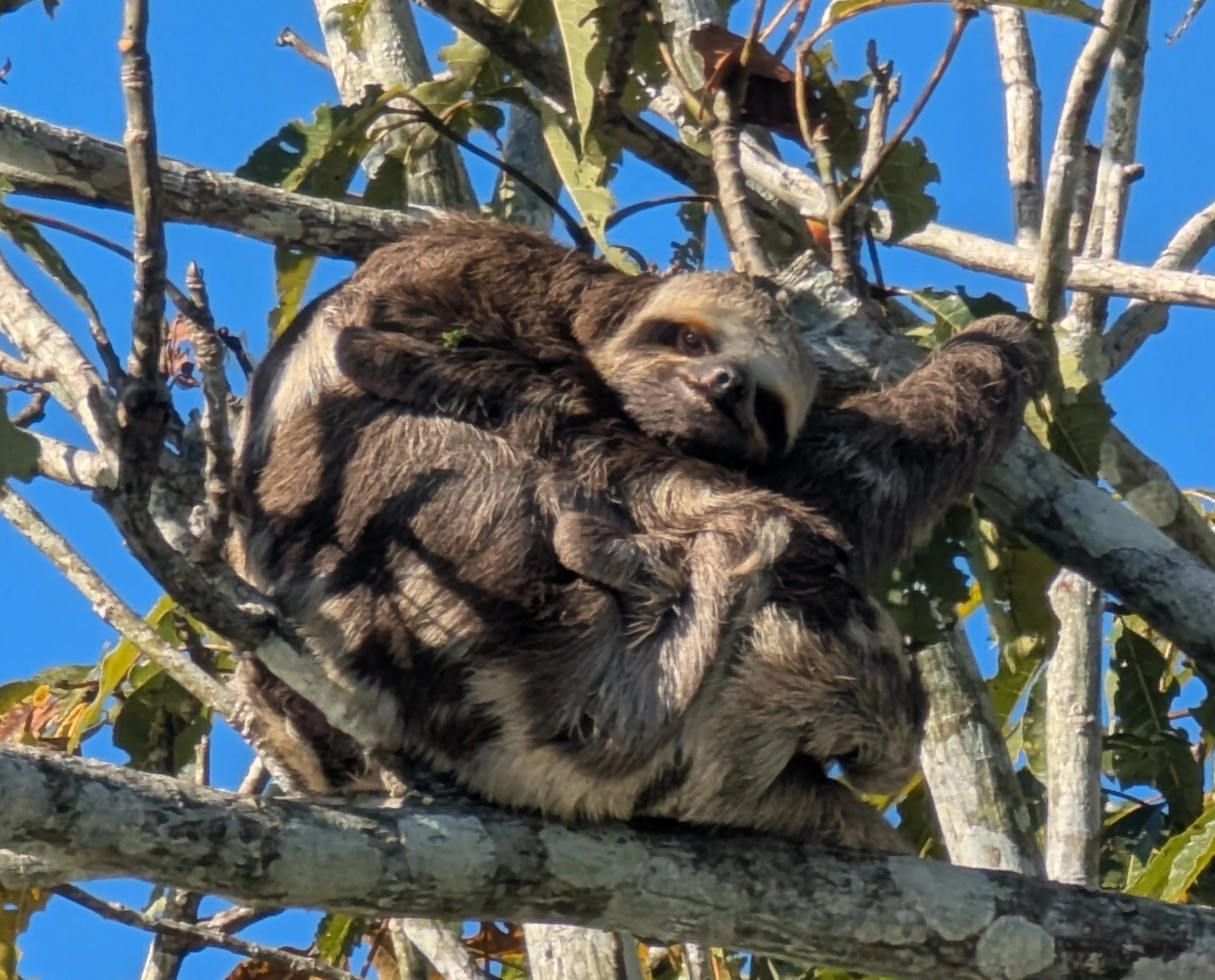
Found a sloth with a baby!
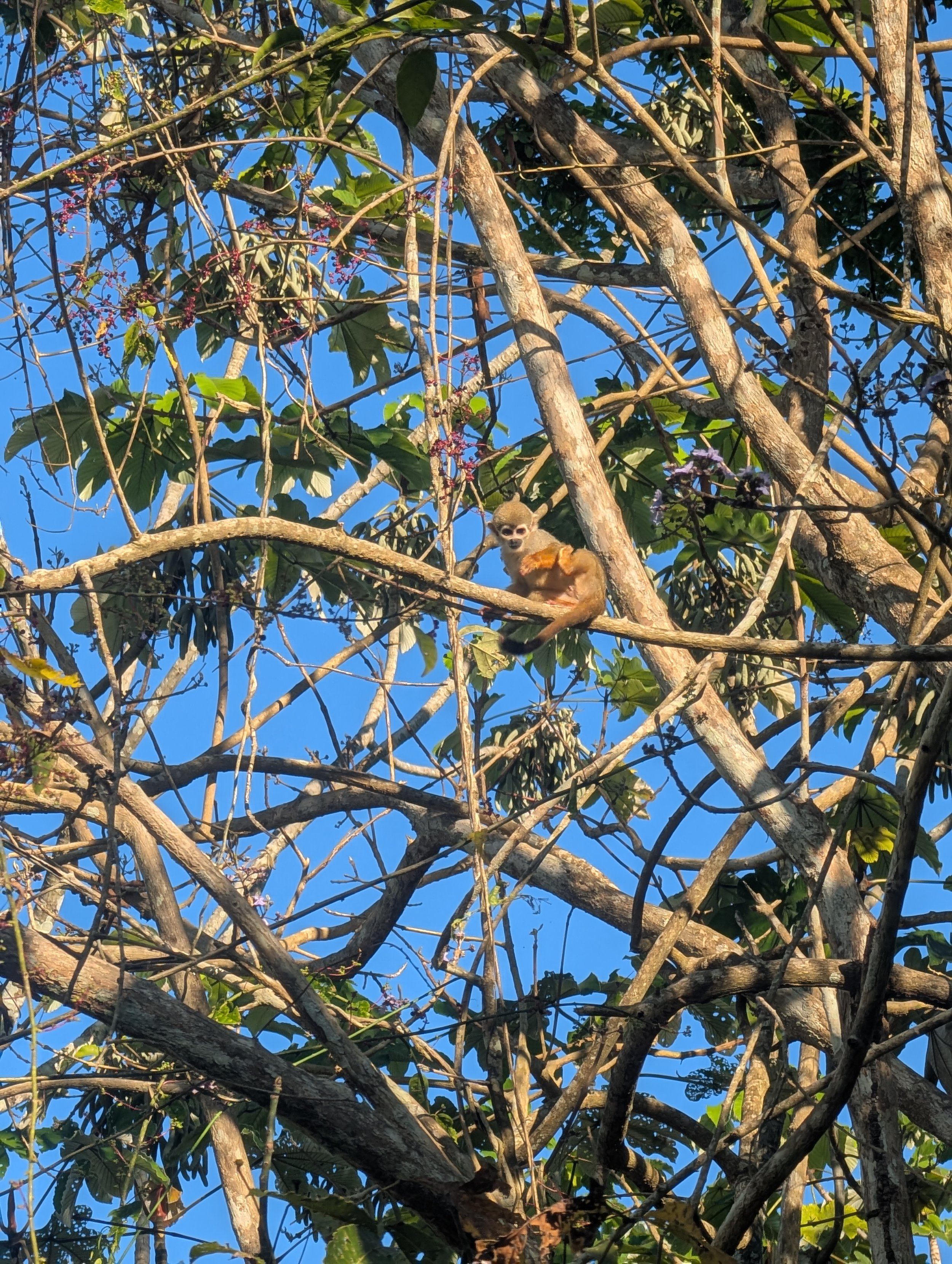
And a squirrel monkey
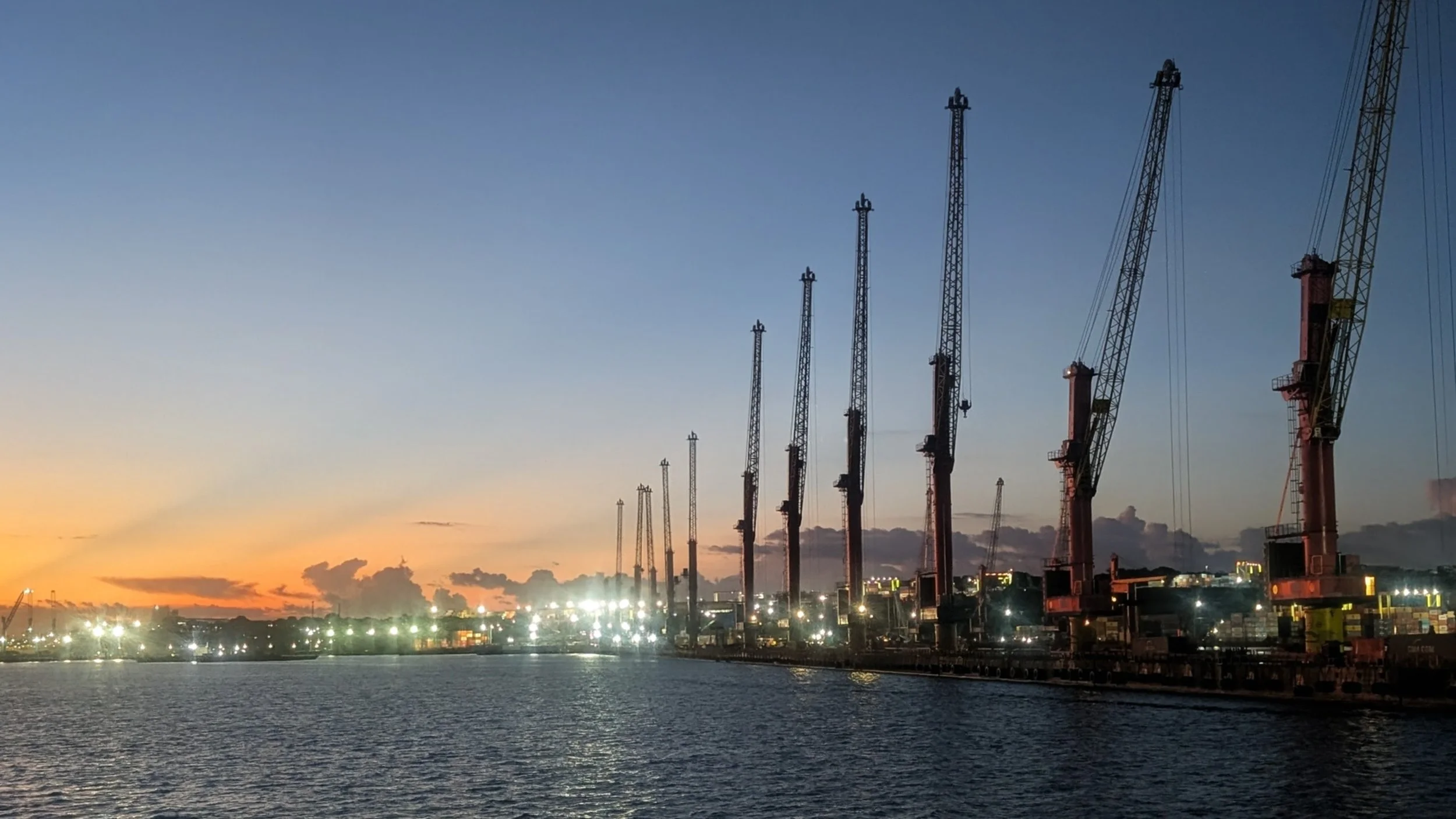
Final evening, arriving back in Manaus and realizing how huge the port really is
Well fed and rested from our Amazon adventure, we flew back from Manaus to Salvador, picked up the truck, re-stocked the supplies and continued our journey heading up the eastern coast.
As an aside, we chose this way of travel and the pace we hold ourselves to. We love the flexibility and the intimacy of overland travel we are staying in and going through places most visitors never see. But it takes a lot of energy to be continuously planning driving routes, places to stay, places to buy supplies and the local attractions we should see. The brief respite of the Amazon cruise came at the right time for us and made us think more about the benefits of slowing down a little.
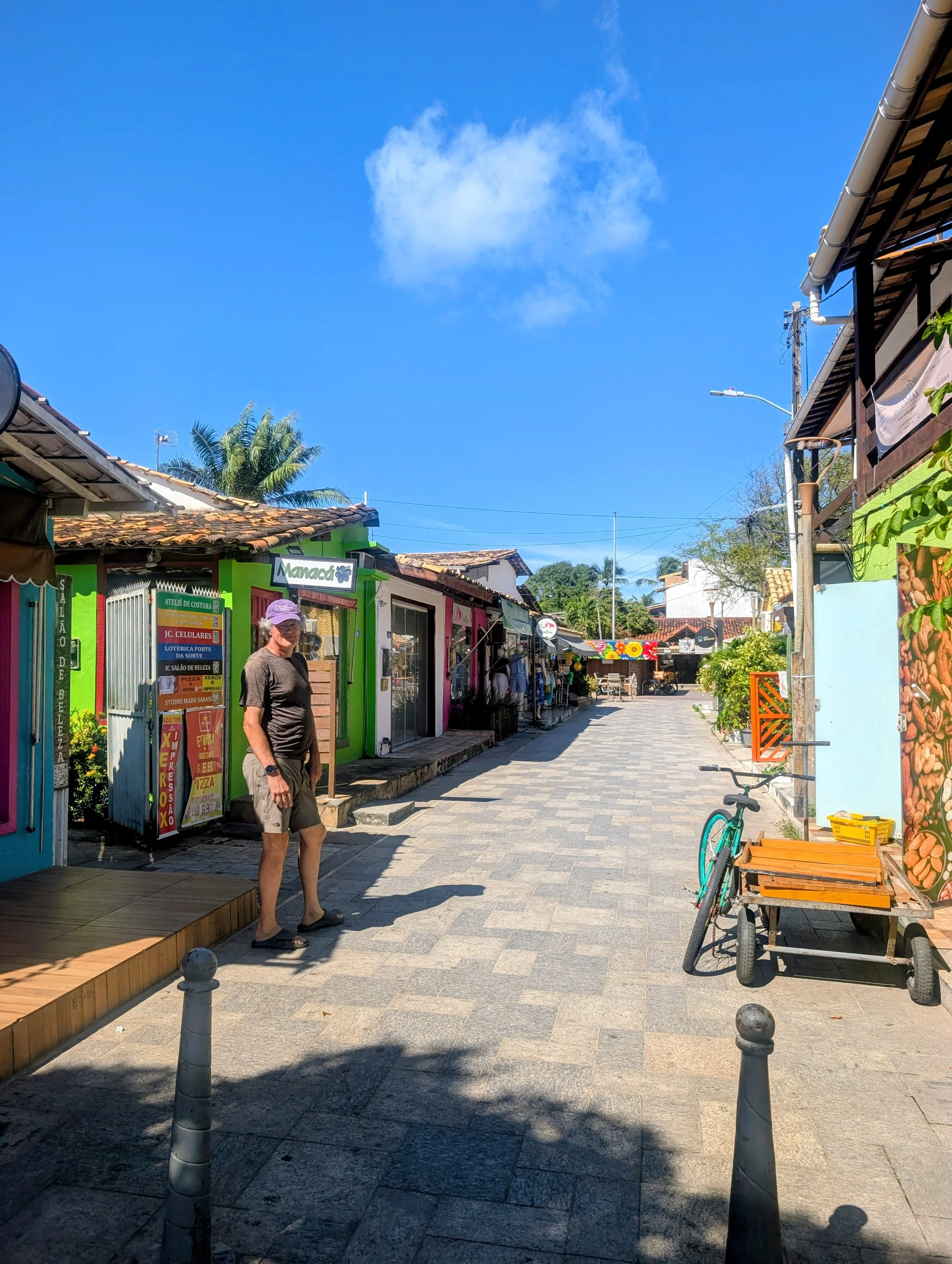
Walking the pedestrian streets of beach town Praia do Forte
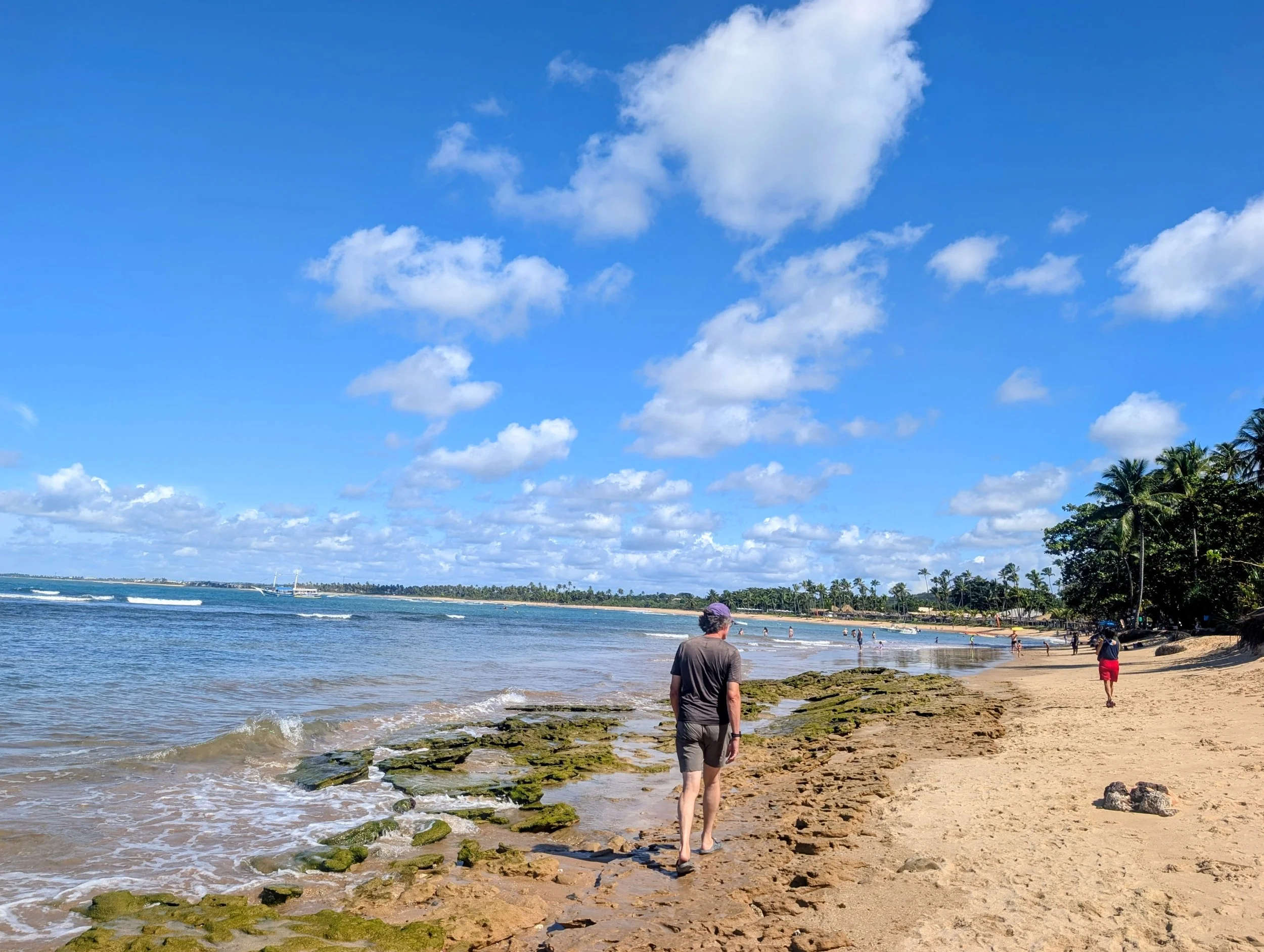
Praia do Forte (praia means beach in Portuguese)
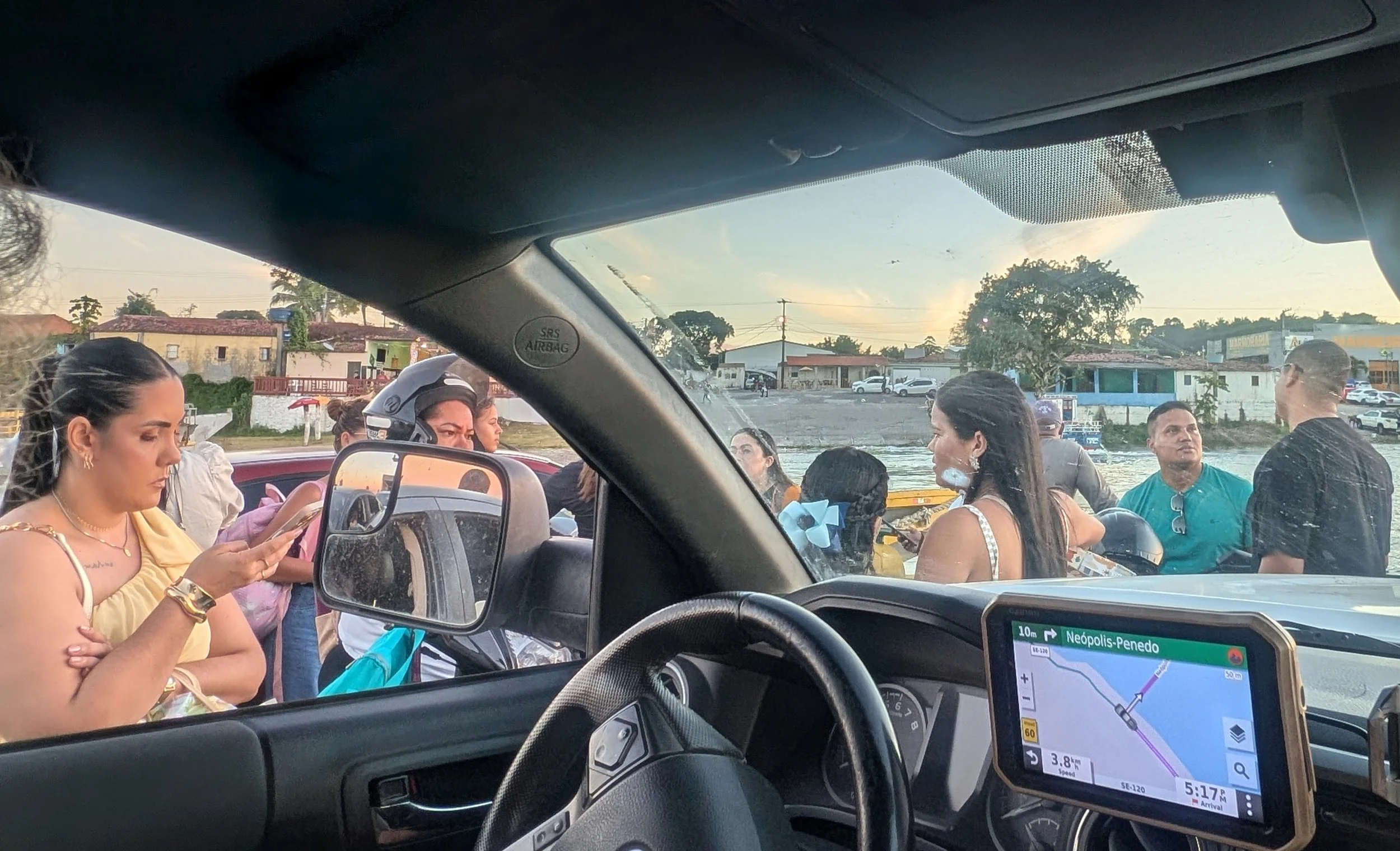
Our Google maps navigation took us on a route involving a small river ferry (we hadn’t looked closely enough in advance). Luckily they squeezed us on with the pedestrians and motorcycles.
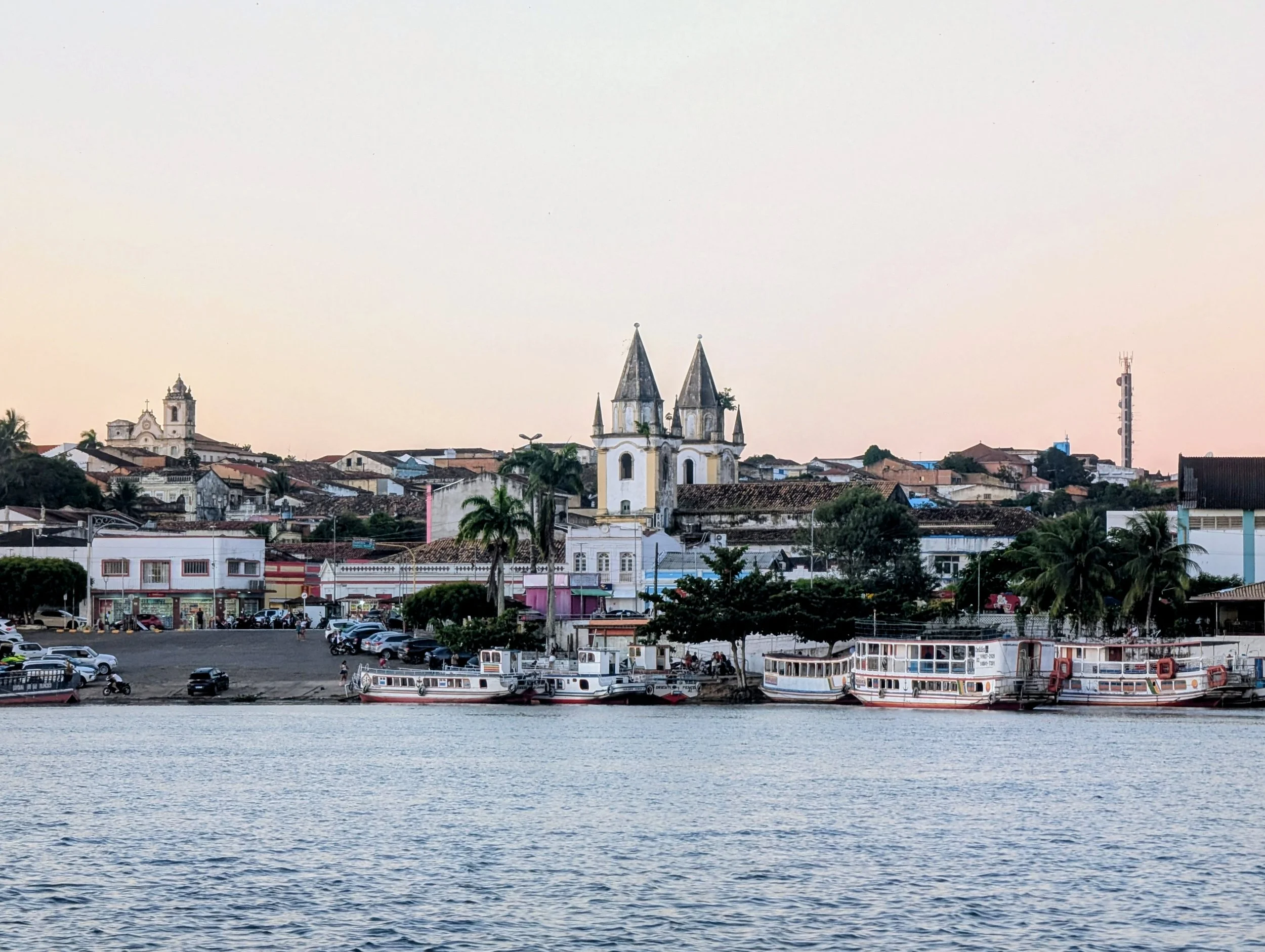
View from the river ferry of Penedo, we hadn’t planned on visiting but it was a lovely village. Sometimes the places you stumble upon end up being better than places you planned to go to,
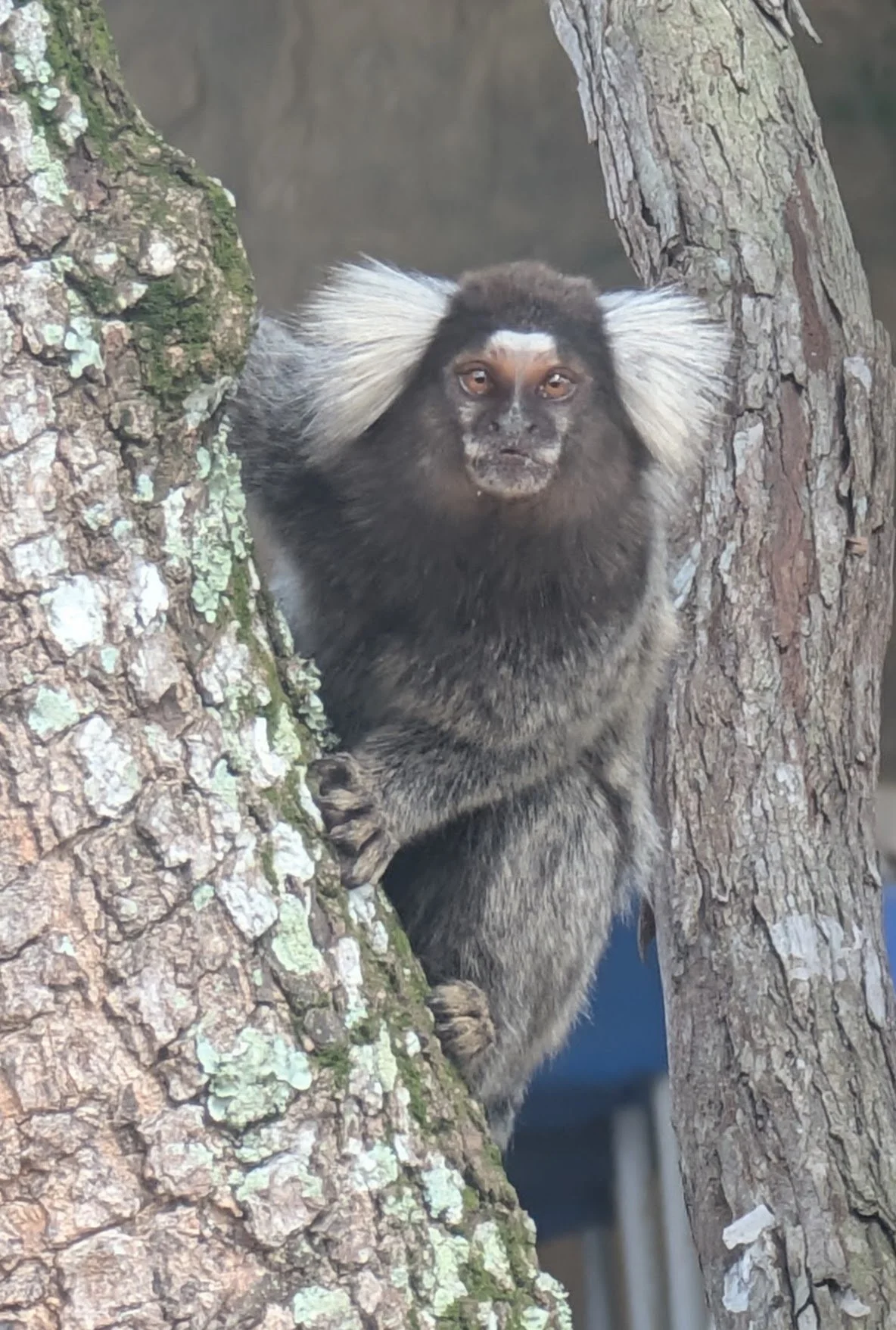
Crazy monkeys at our rustic campground
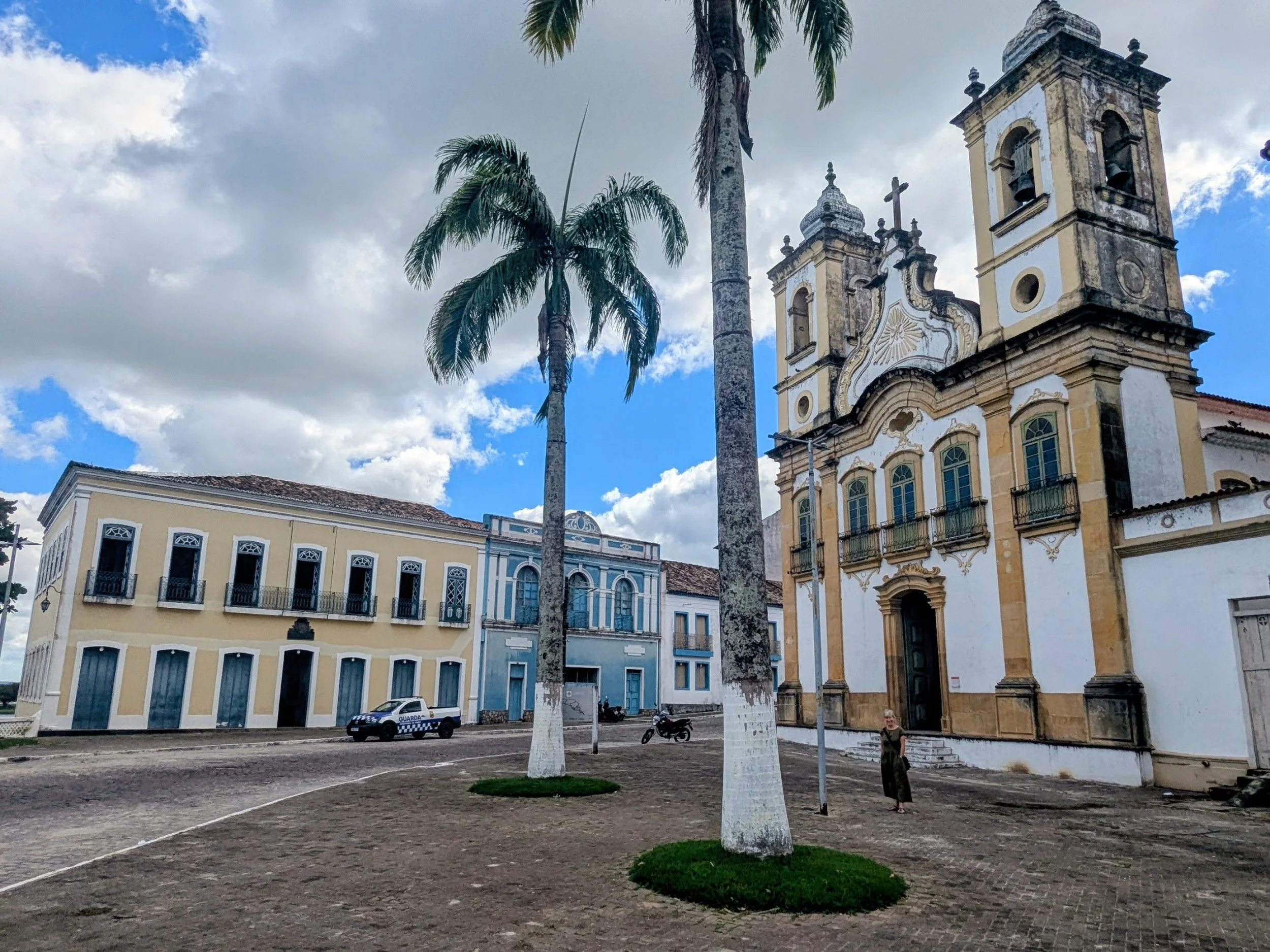
Main square of Penedo
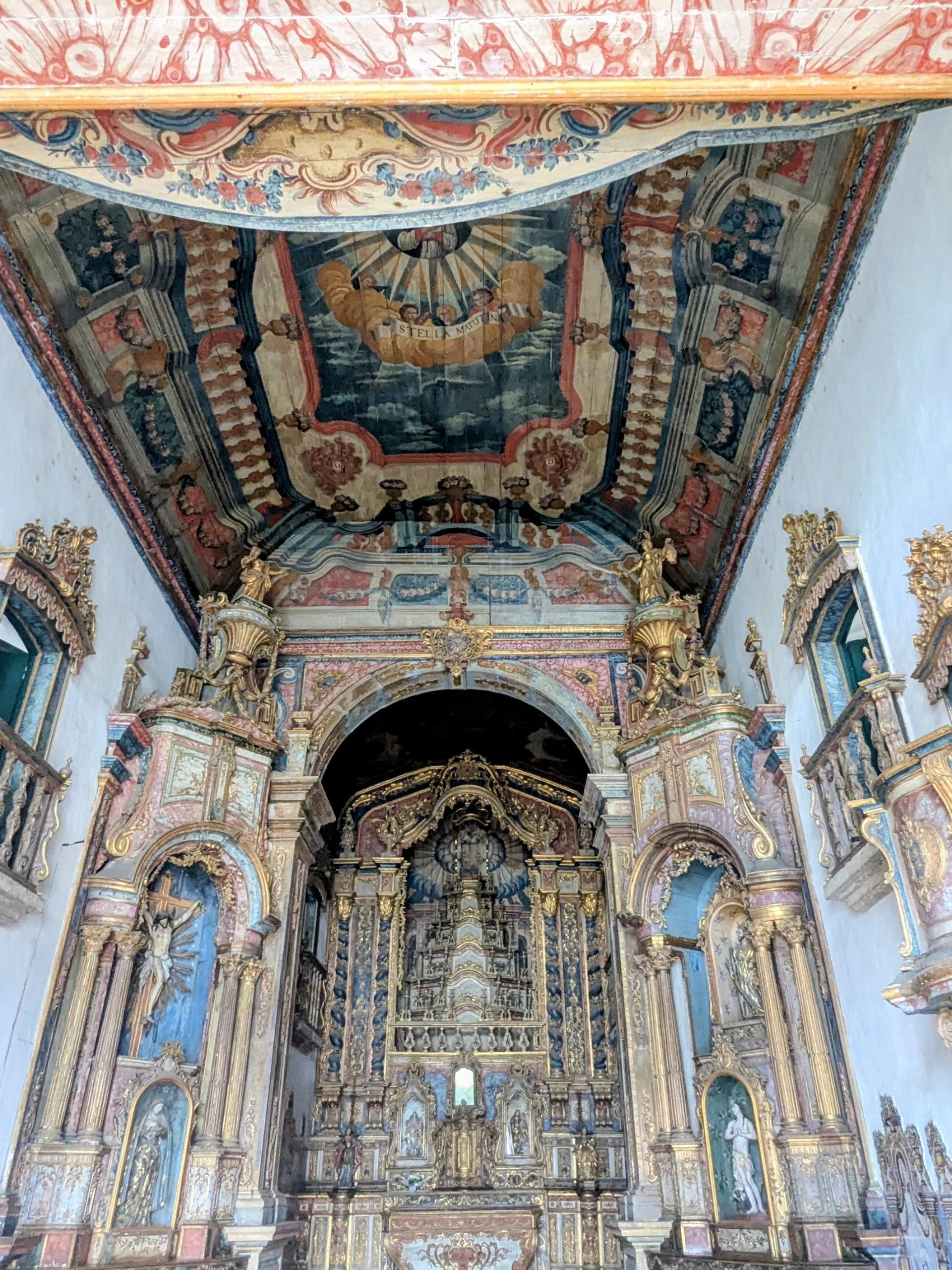
Impressively ornate church
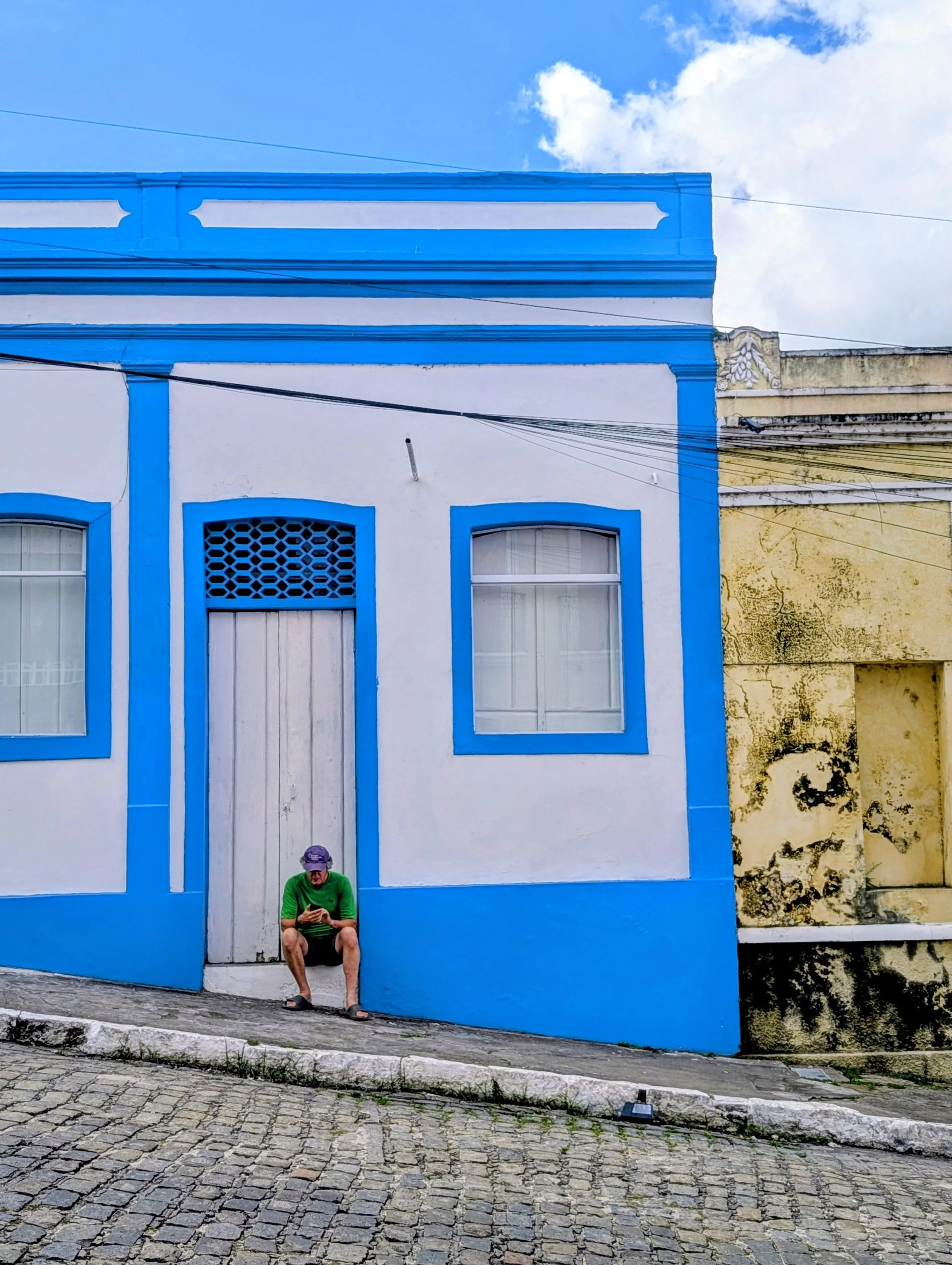
Andy resting while Dawn explores local craft stores.
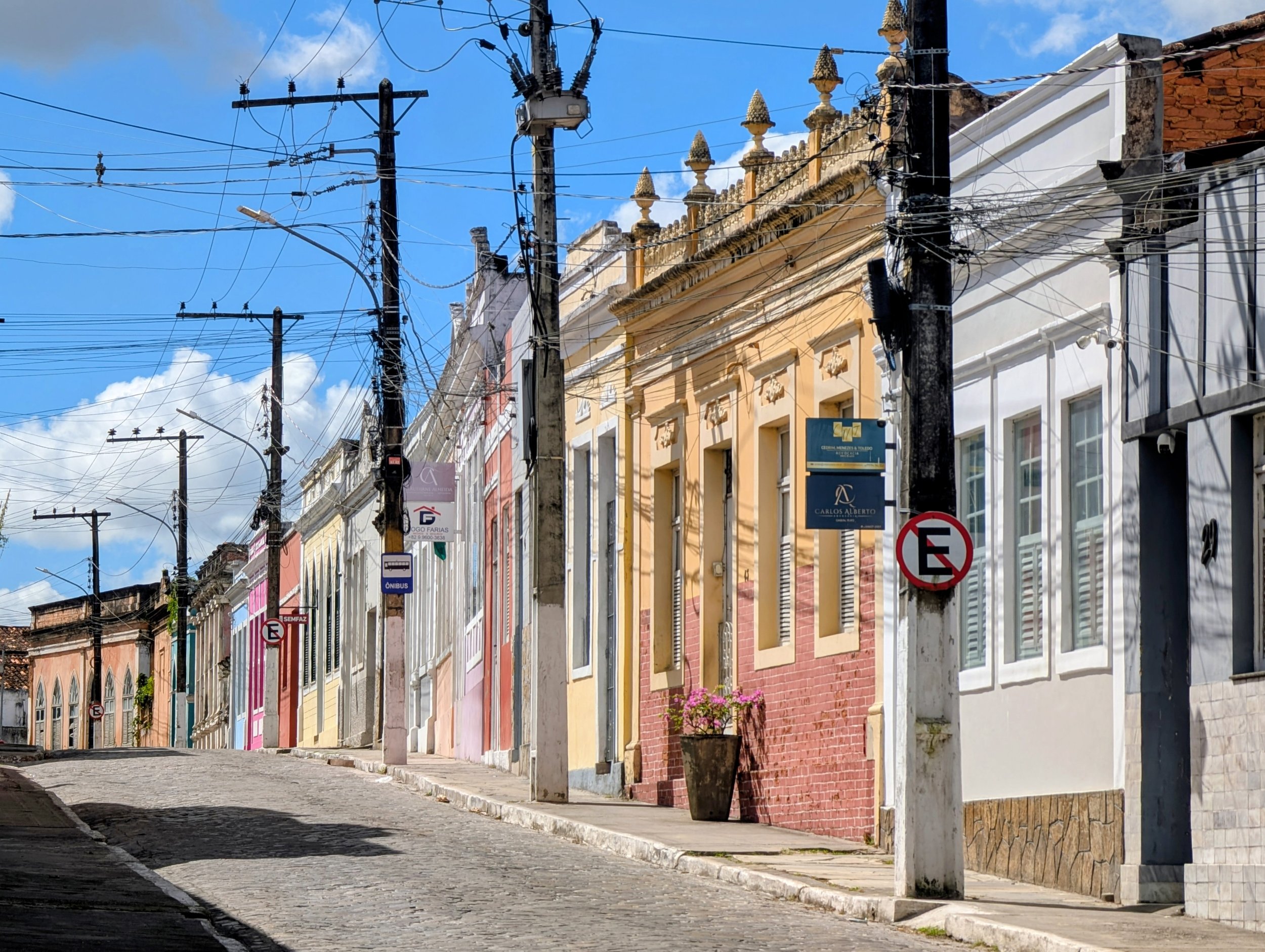
Delightful side streets. But even this village was a bit of a wake up call - we were wandering aimlessly when a woman called to us in Portuguese from her porch and explained that we should not keep going down her hill as we would enter a dangerous neighborhood and be robbed. (Luckily we understood “perigosa” and “roubada” We could see that the houses ahead did look more informal and self-built. We thanked her and turned around.
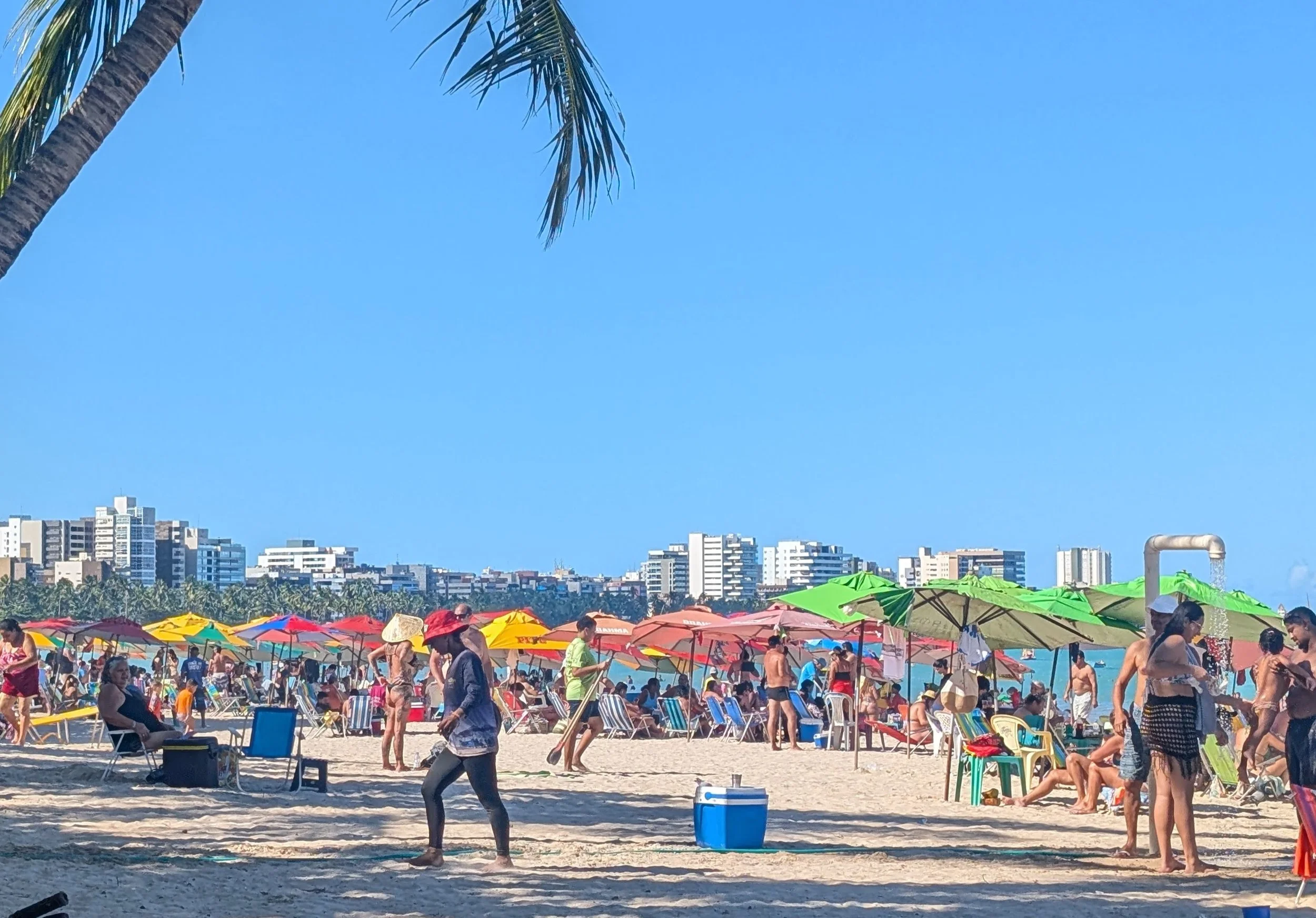
And then on the other end of the spectrum, the highly popular beaches of Maceio
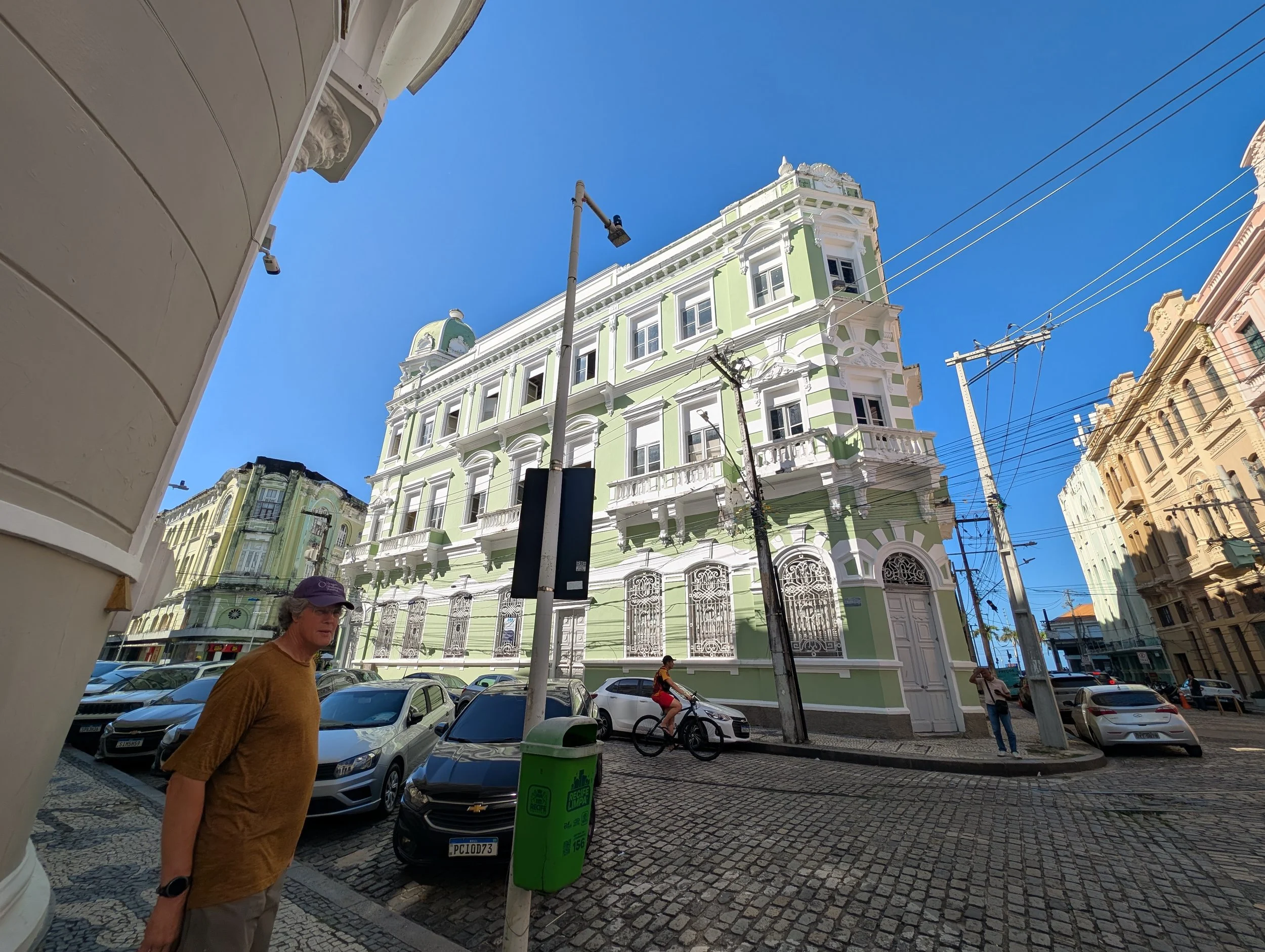
Which also had its share of restored colonial buildings
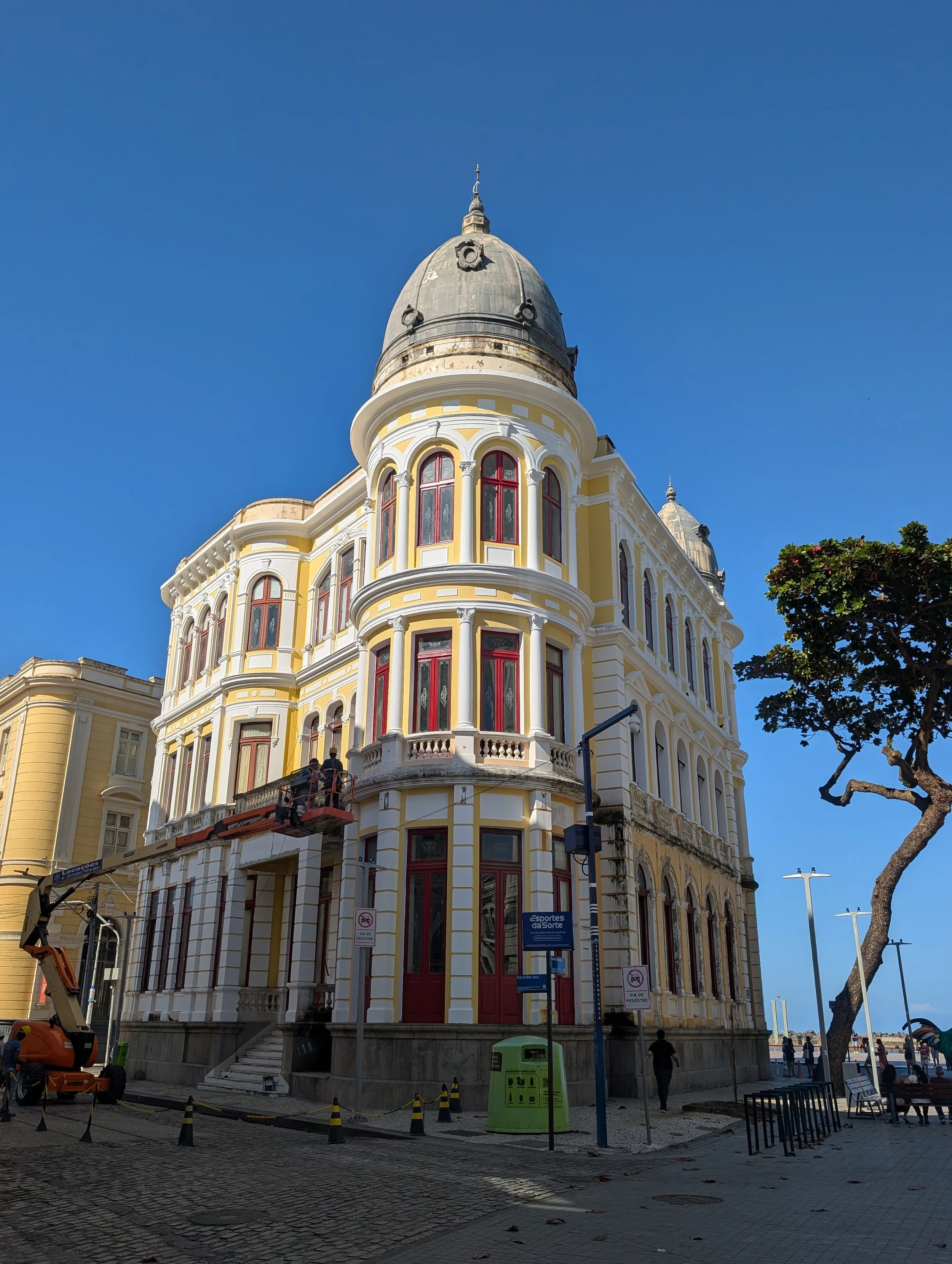
Old town Maceio
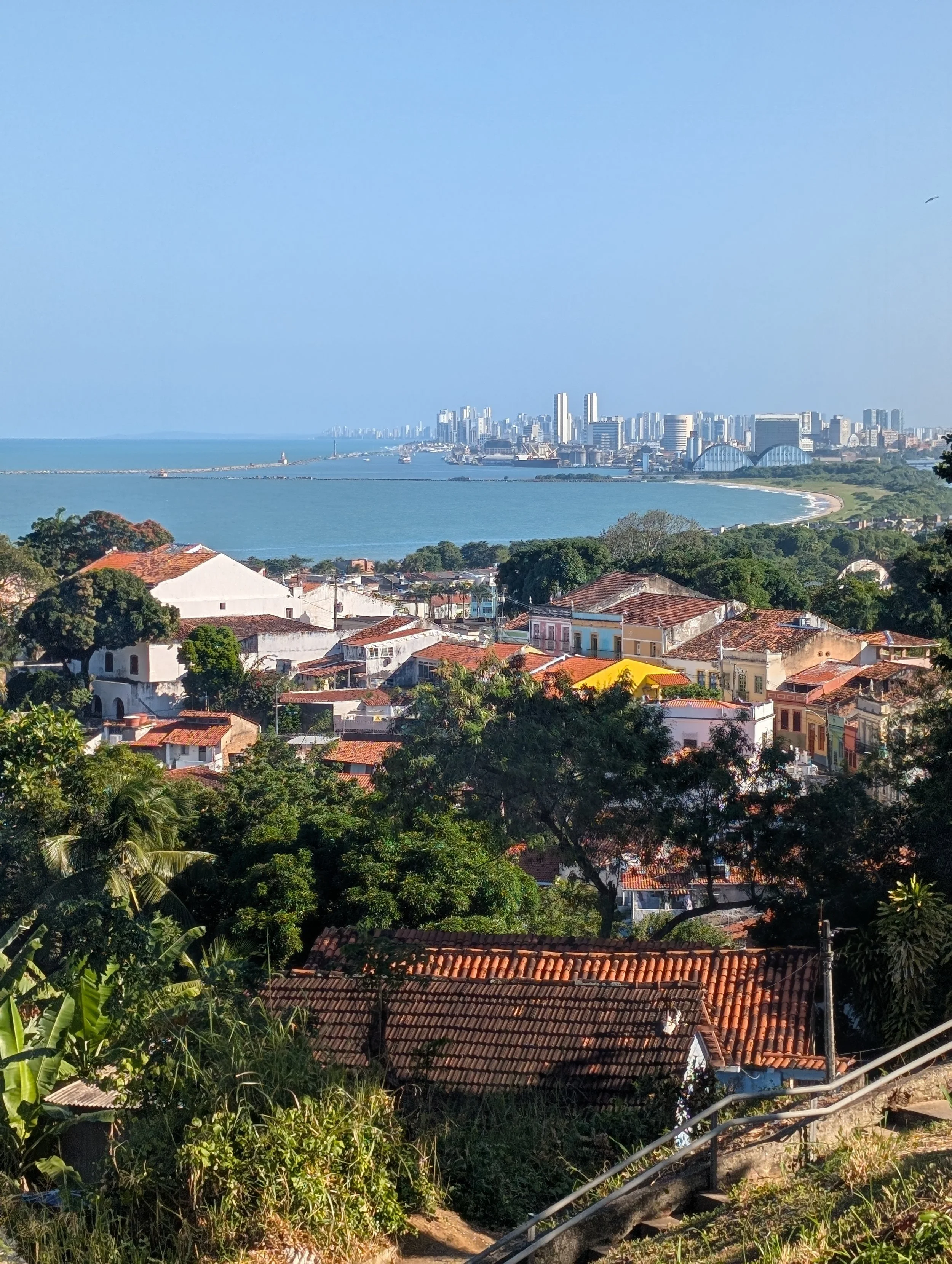
Hill top view from Olinda
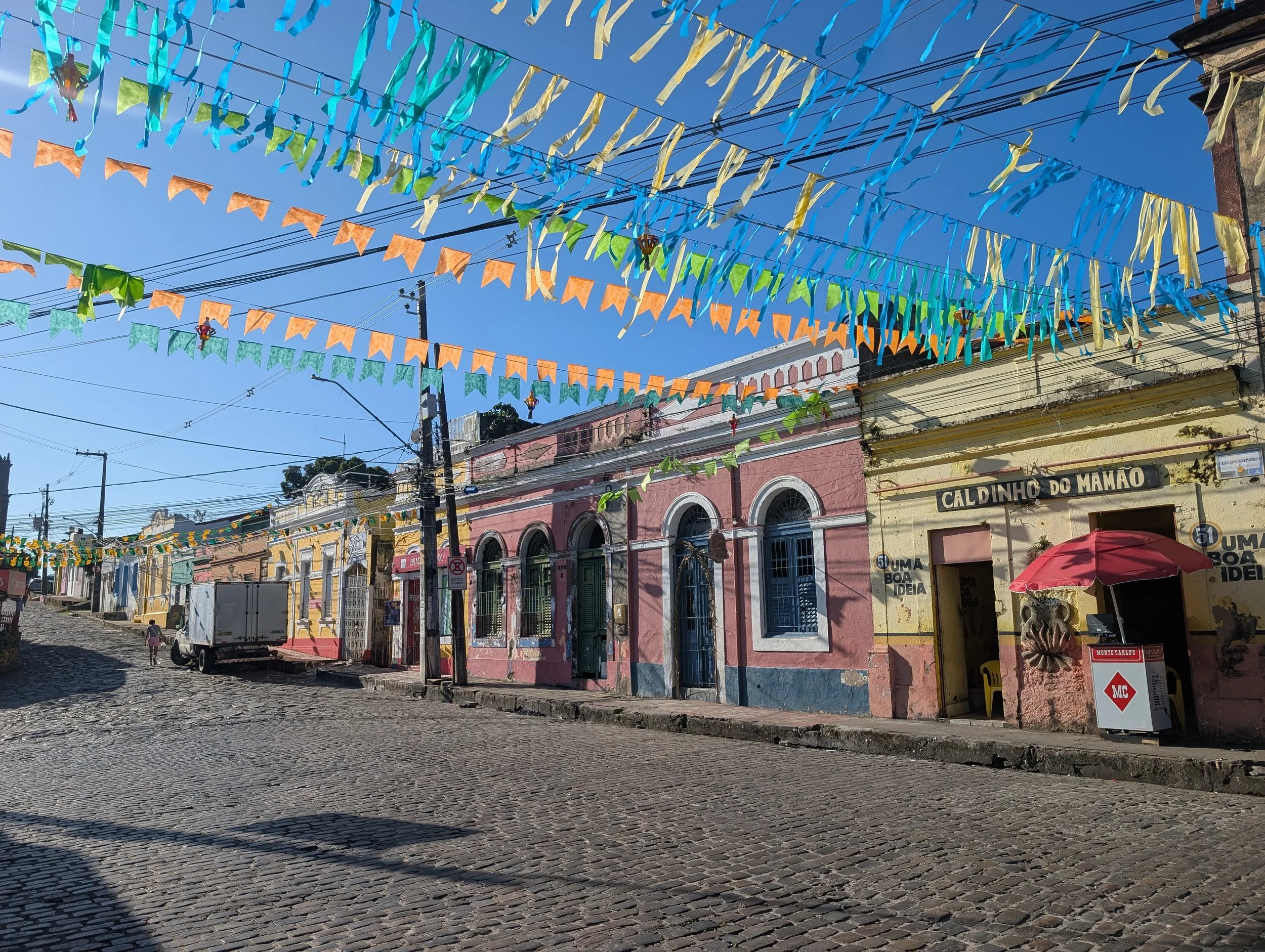
Cobblestone streets of old town Olinda
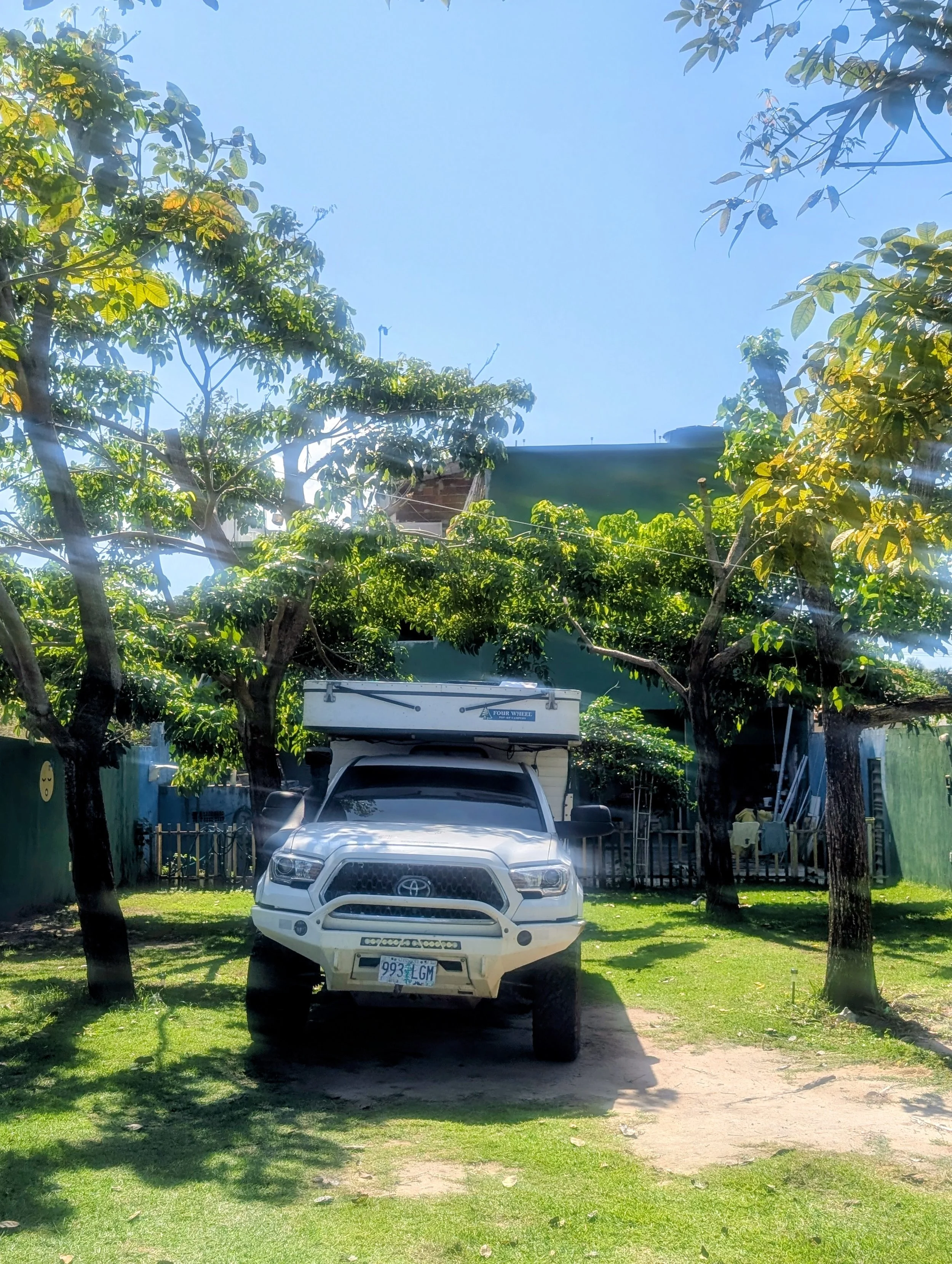
Another backyard camp - usually we were the only ones staying
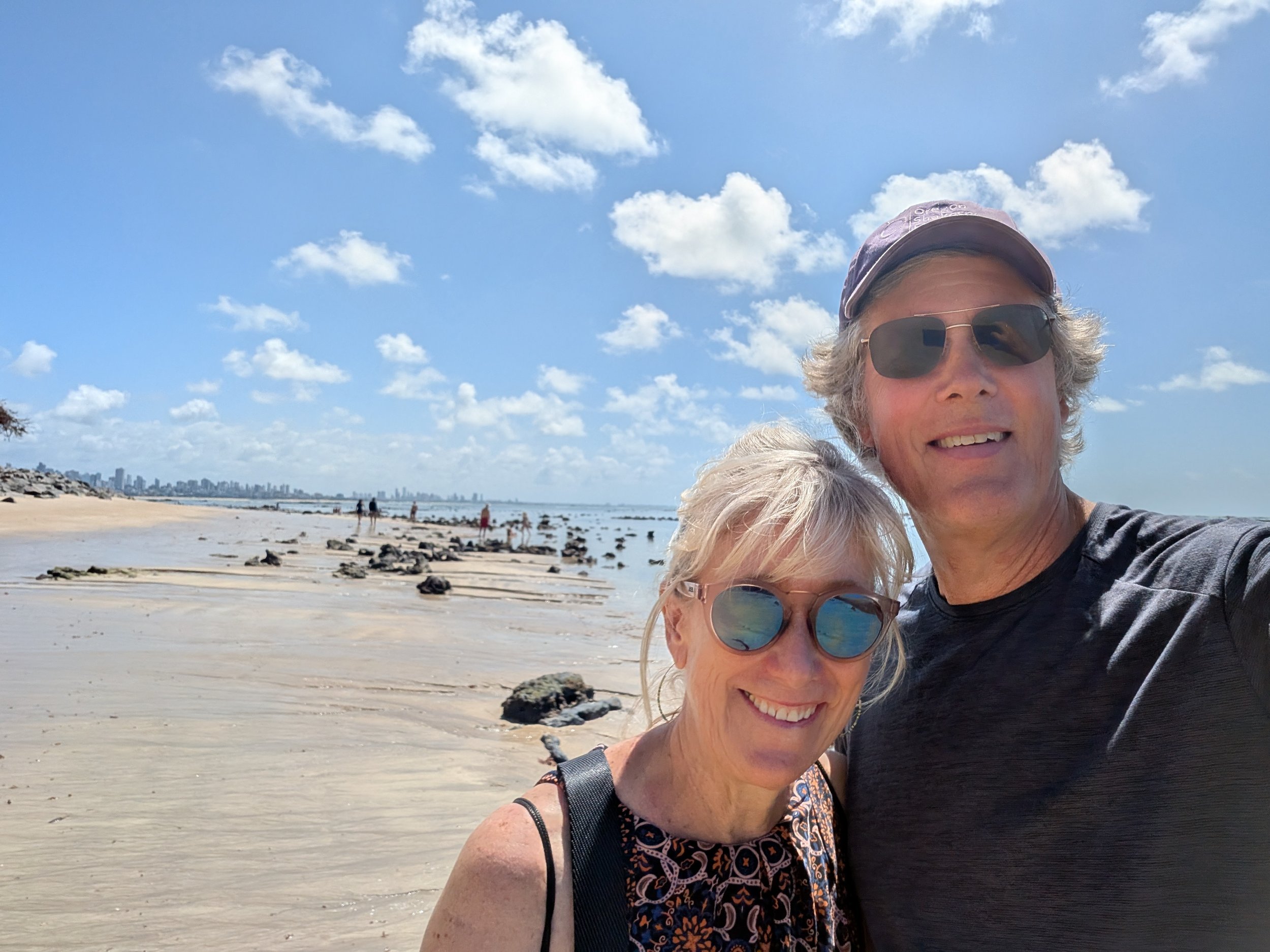
Made it to the farthest eastern point of South America!
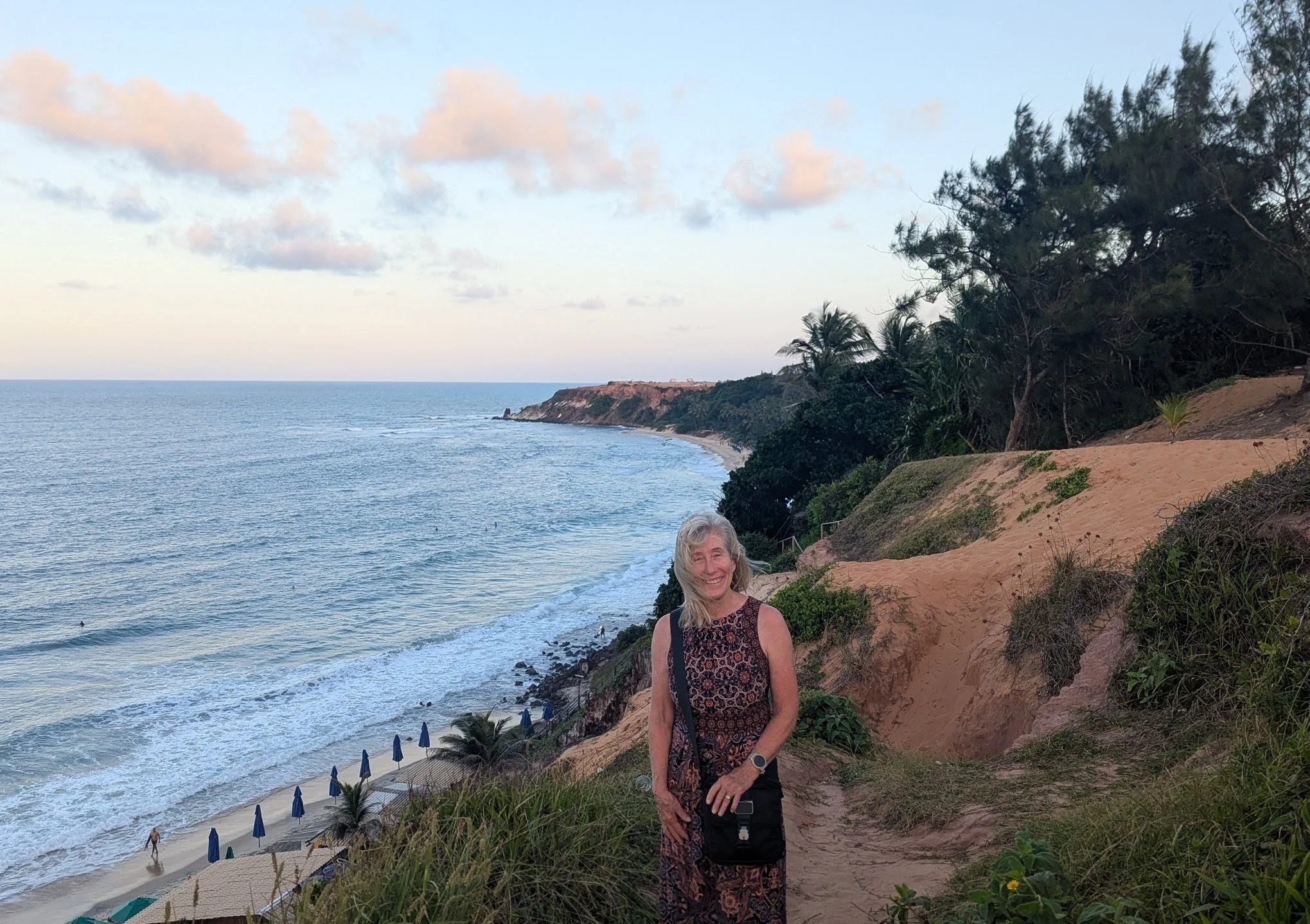
Praia do Pipa, one of our favorite small beach towns along the way
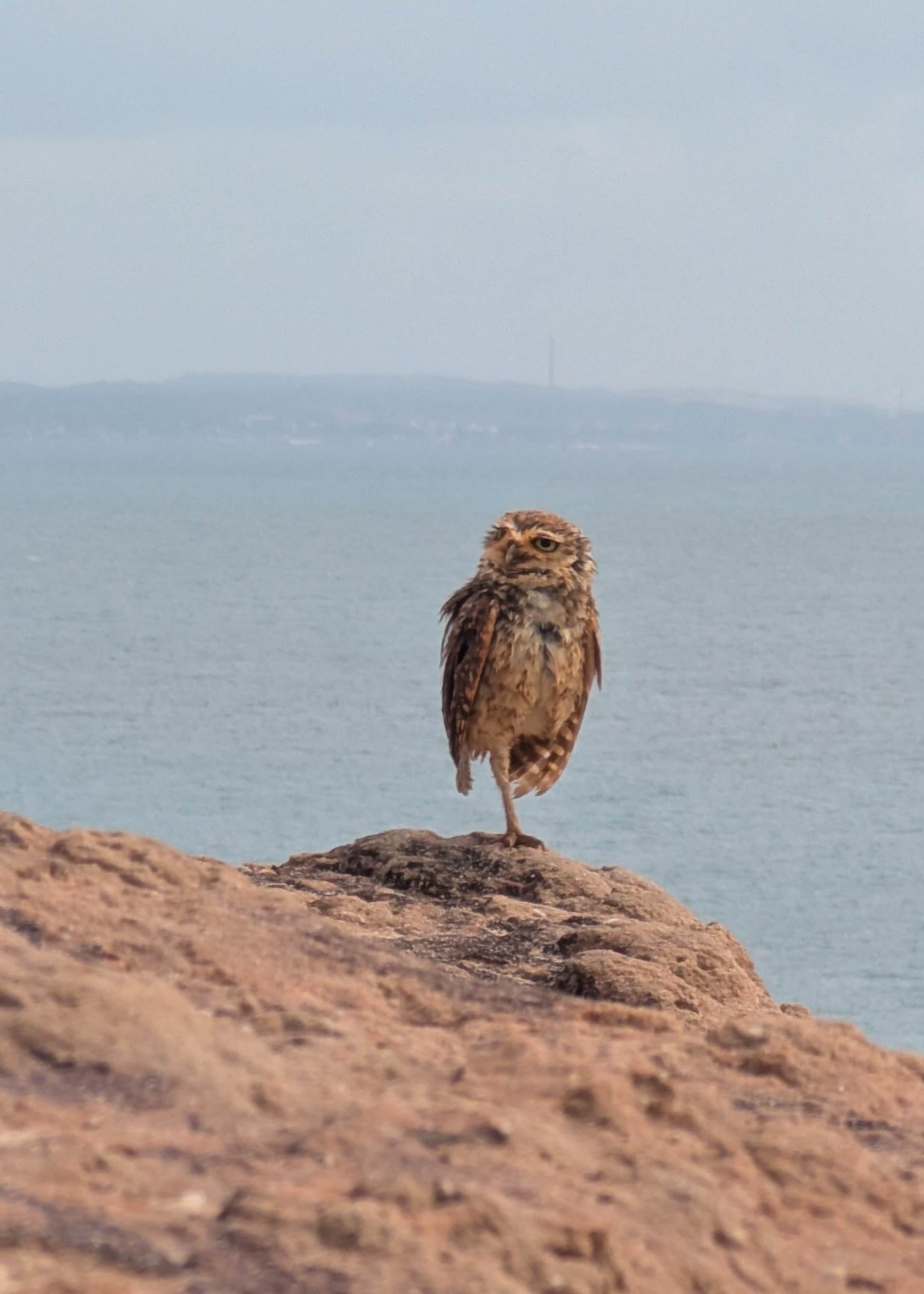
Thrilled to find burrowing owls on our walk at Pipa Beach
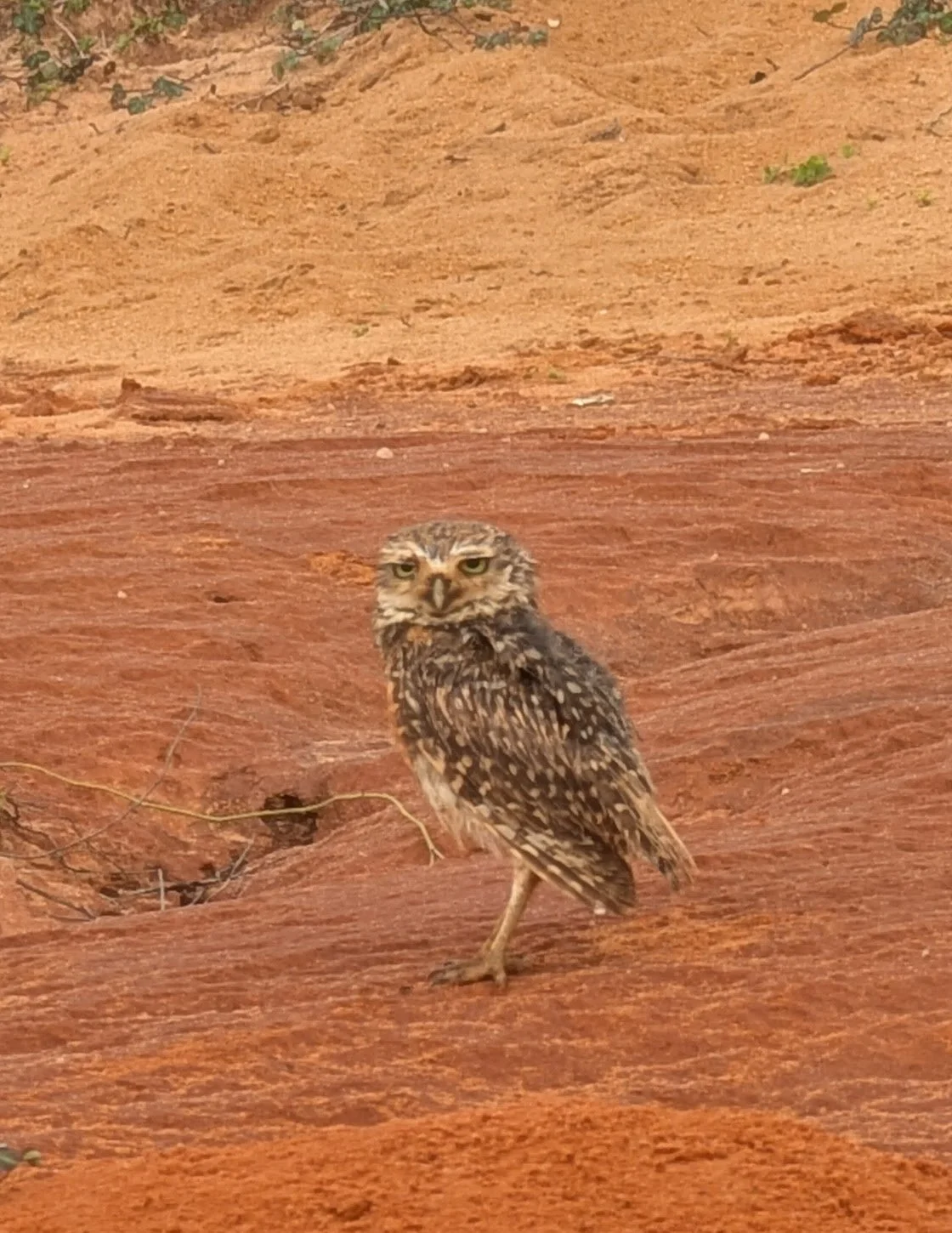
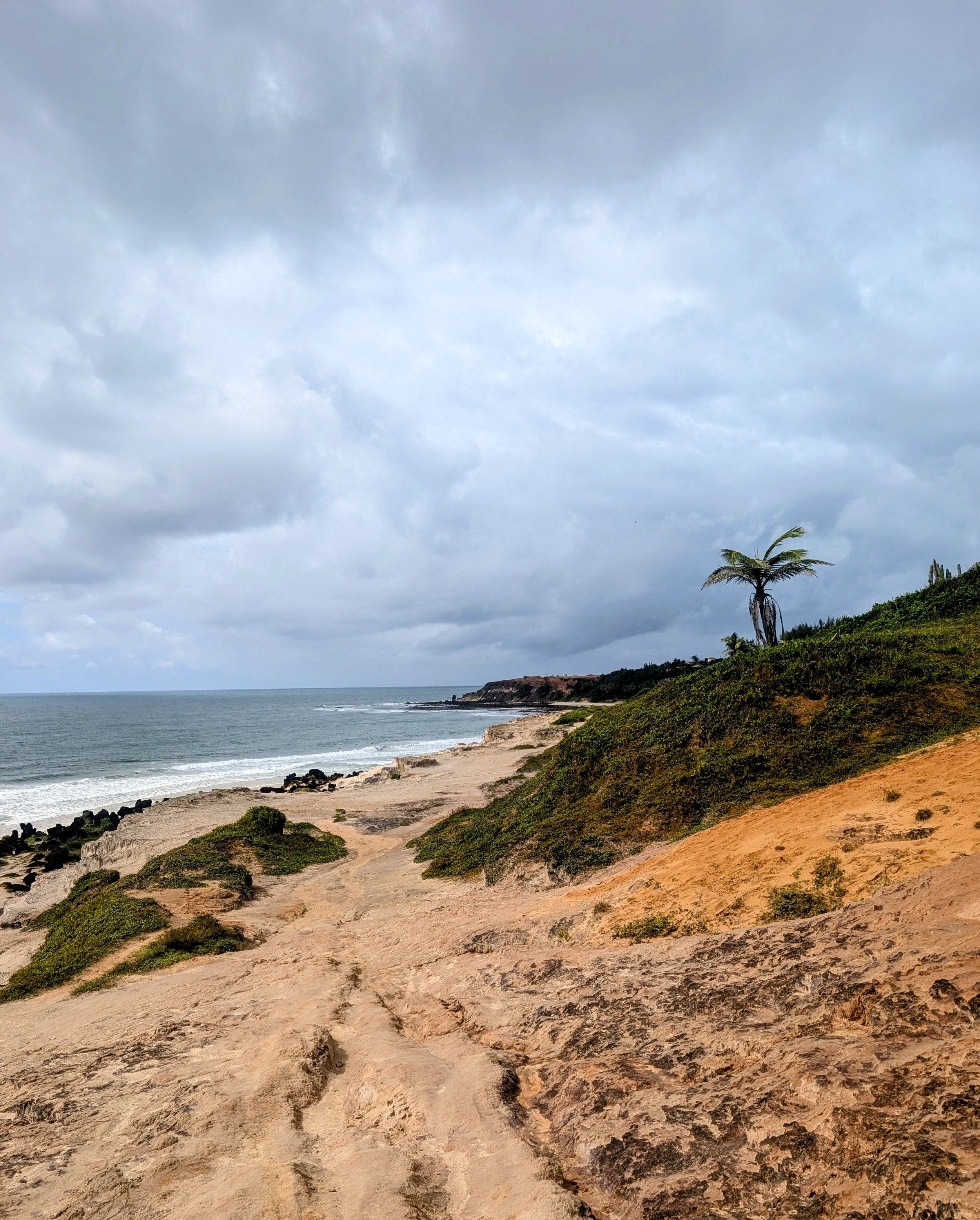
So much beautiful coastline, we preferred the remote beaches over the high rise beaches (no surprise there)
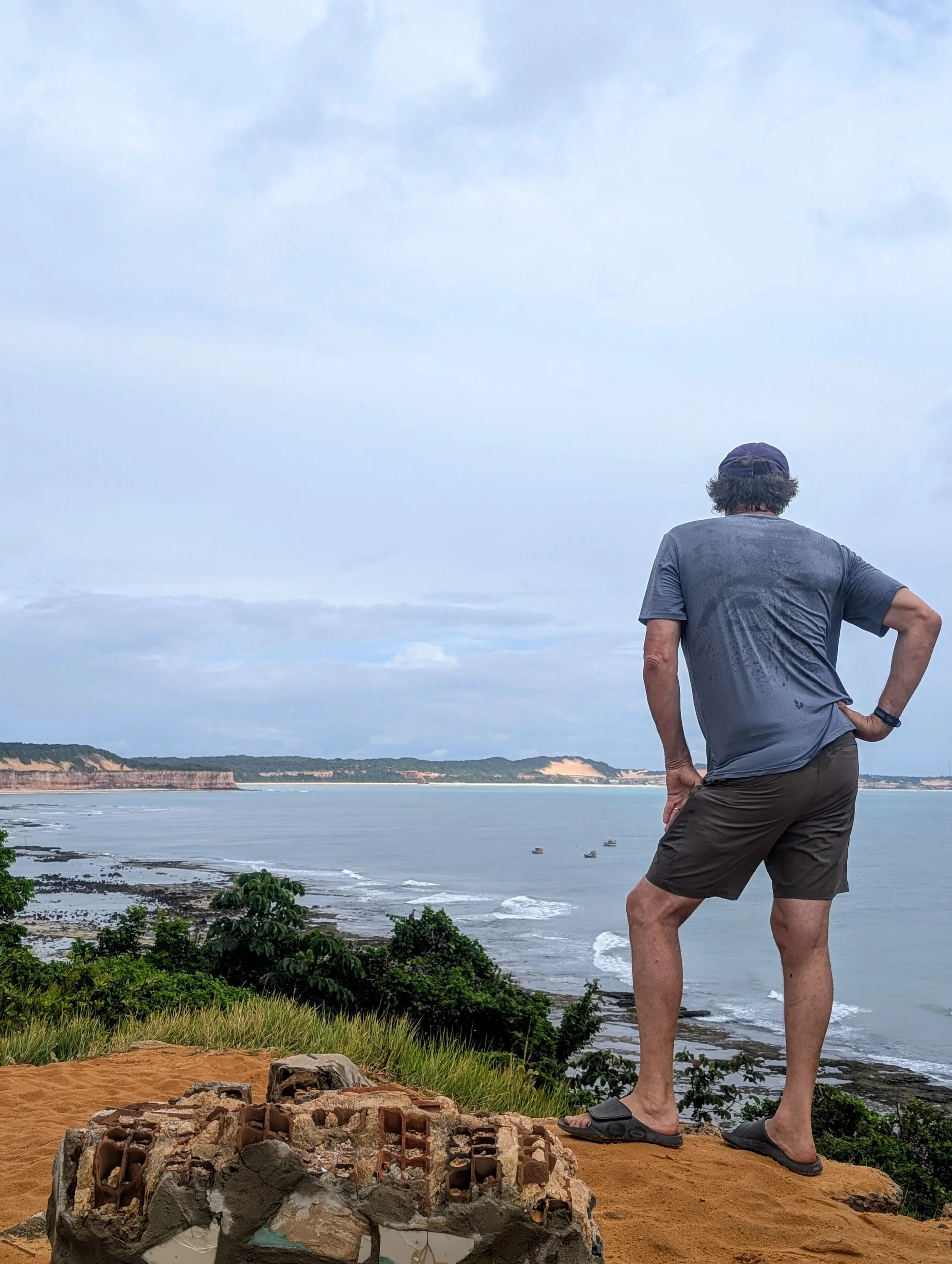
Andy contemplating life at Pipa Beach
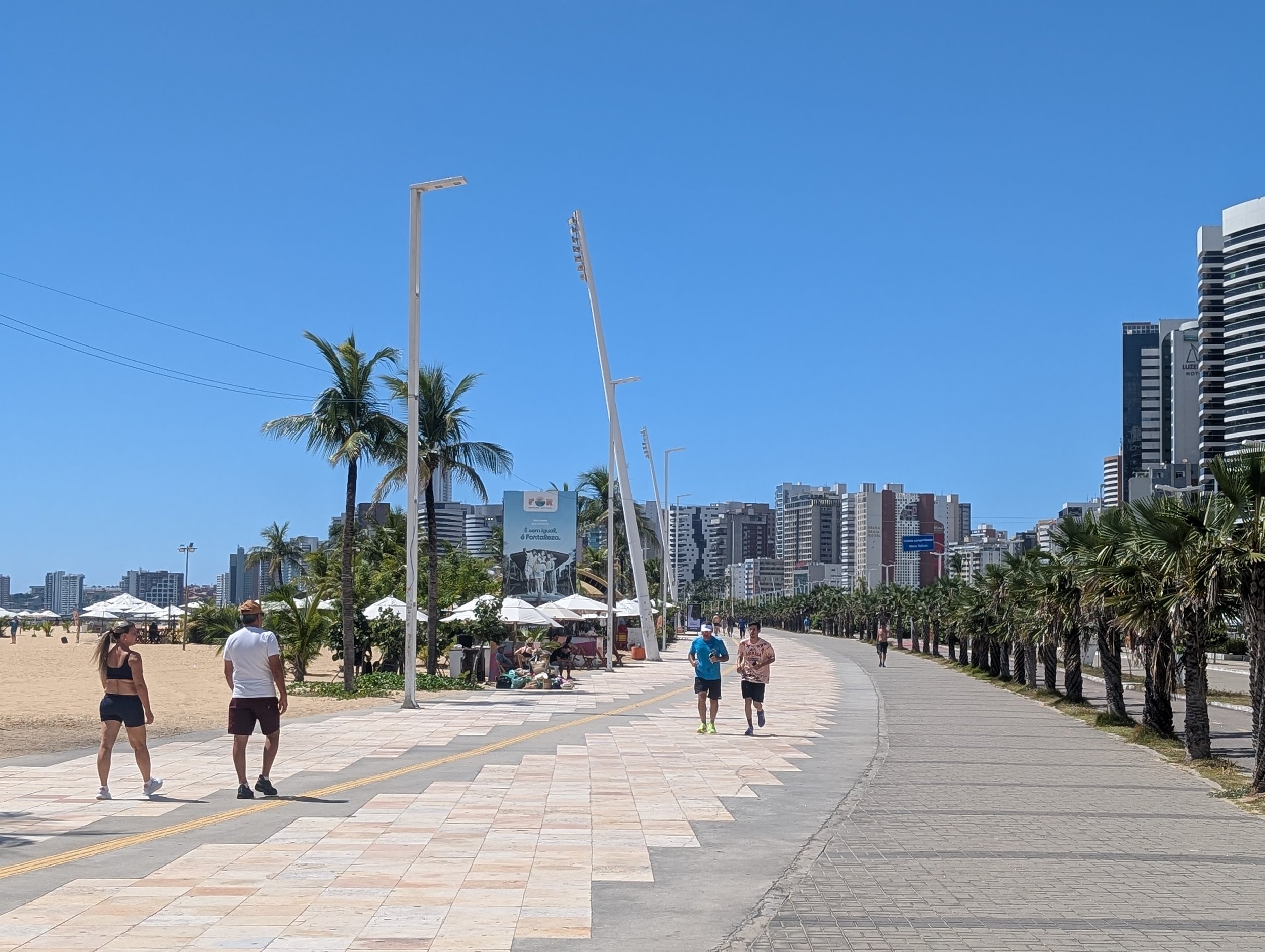
And then, once again the opposite. We did enjoy walking the costanera’s - coastal boardwalks in the big cities in Brazil though. This one in Fortaleza was one of the longest and most impressively built.
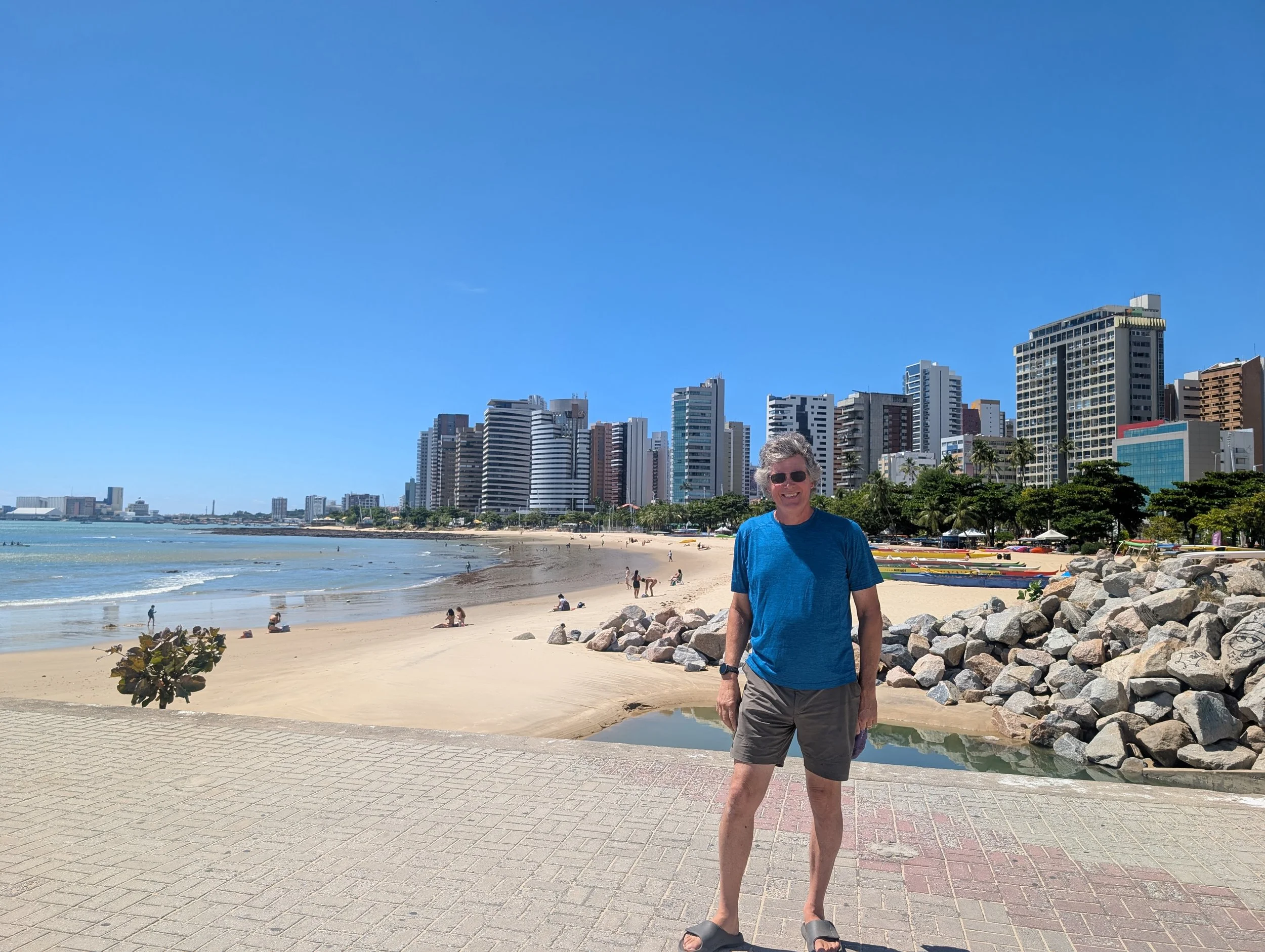
Fortaleza coastline
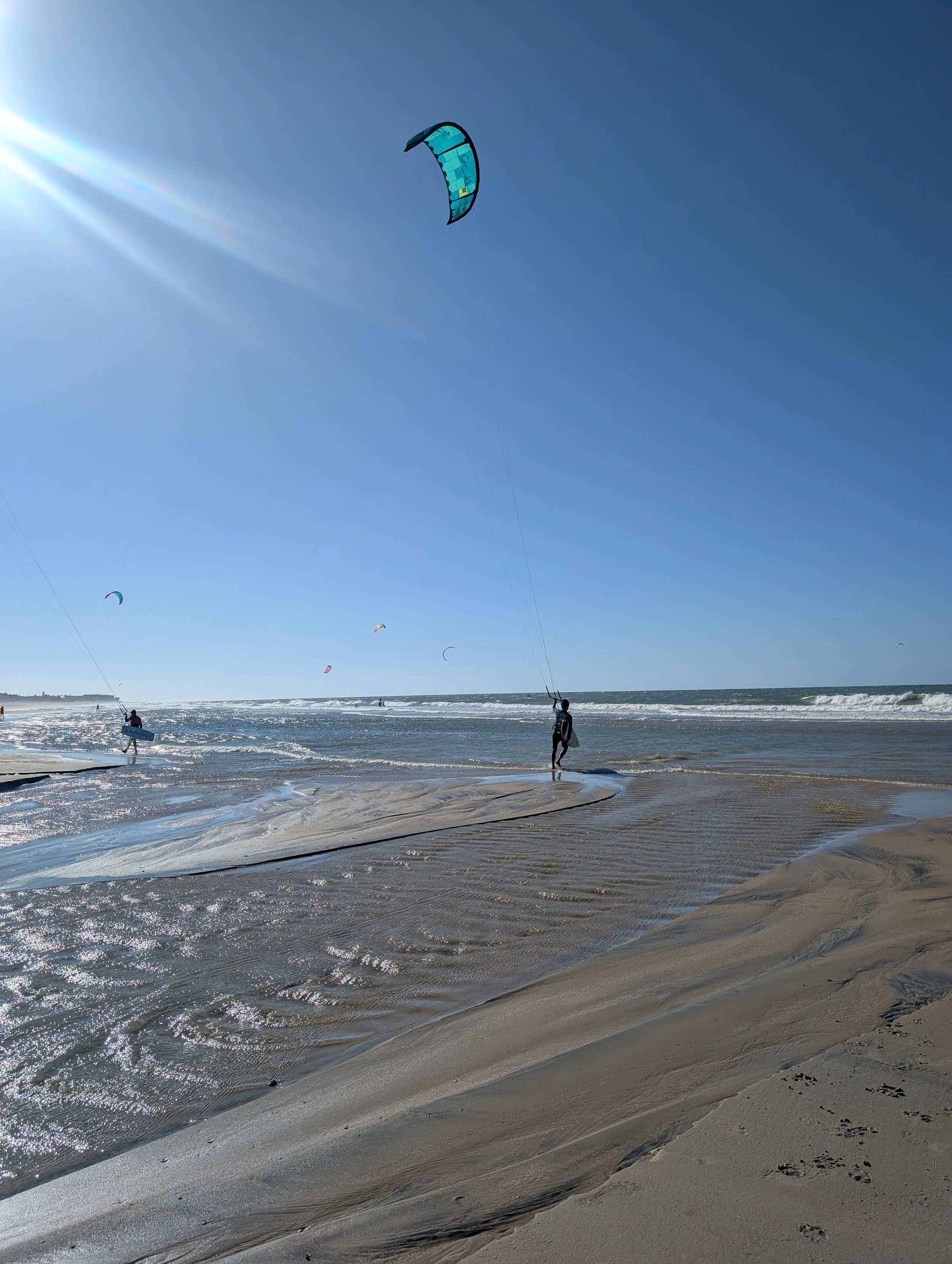
Back to the small town beach - as we started heading west along the northern coast, kite surfing became popular as in this small town of Guarijo
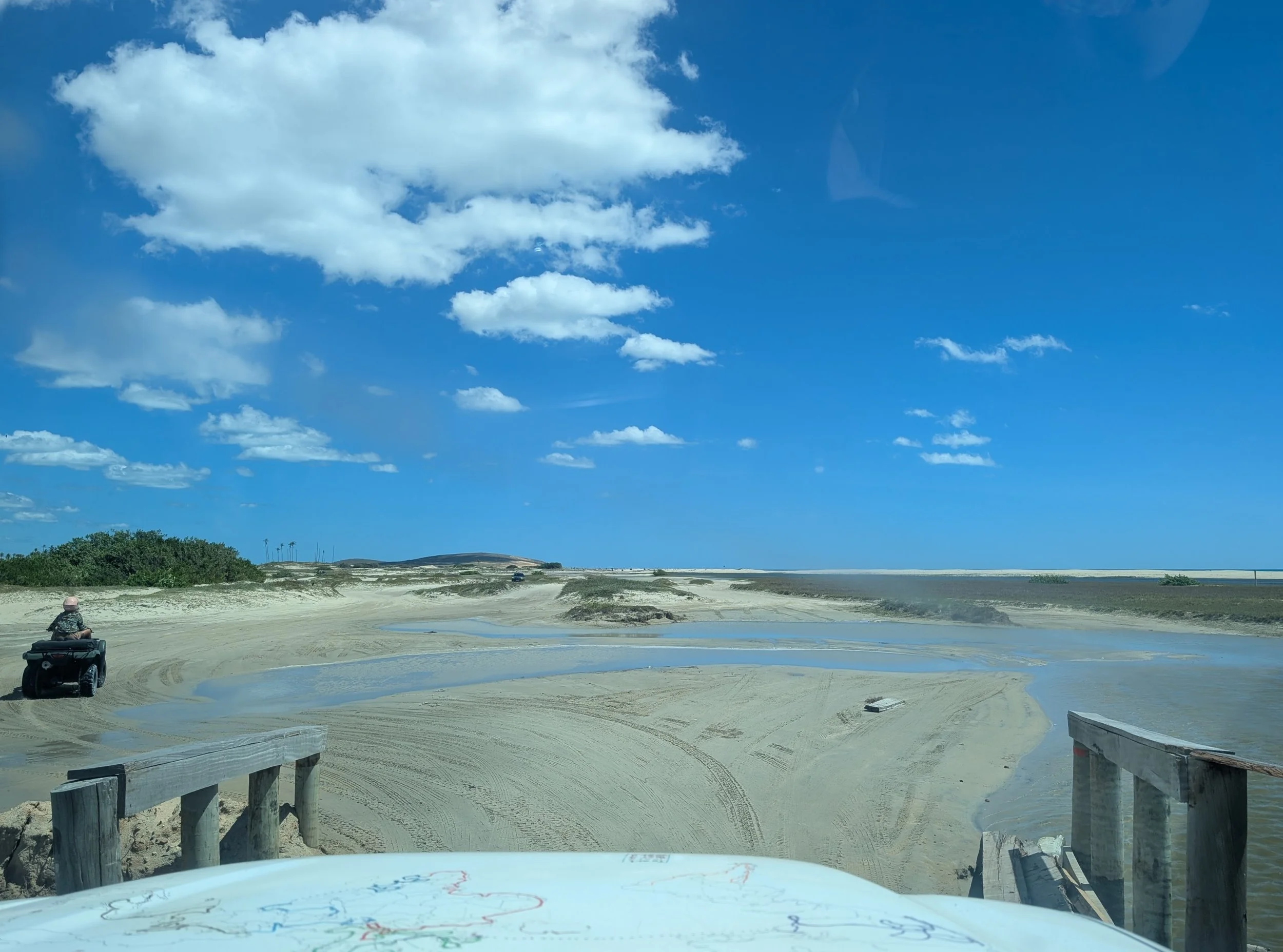
Driving the sandy beach road into Jericoacoara
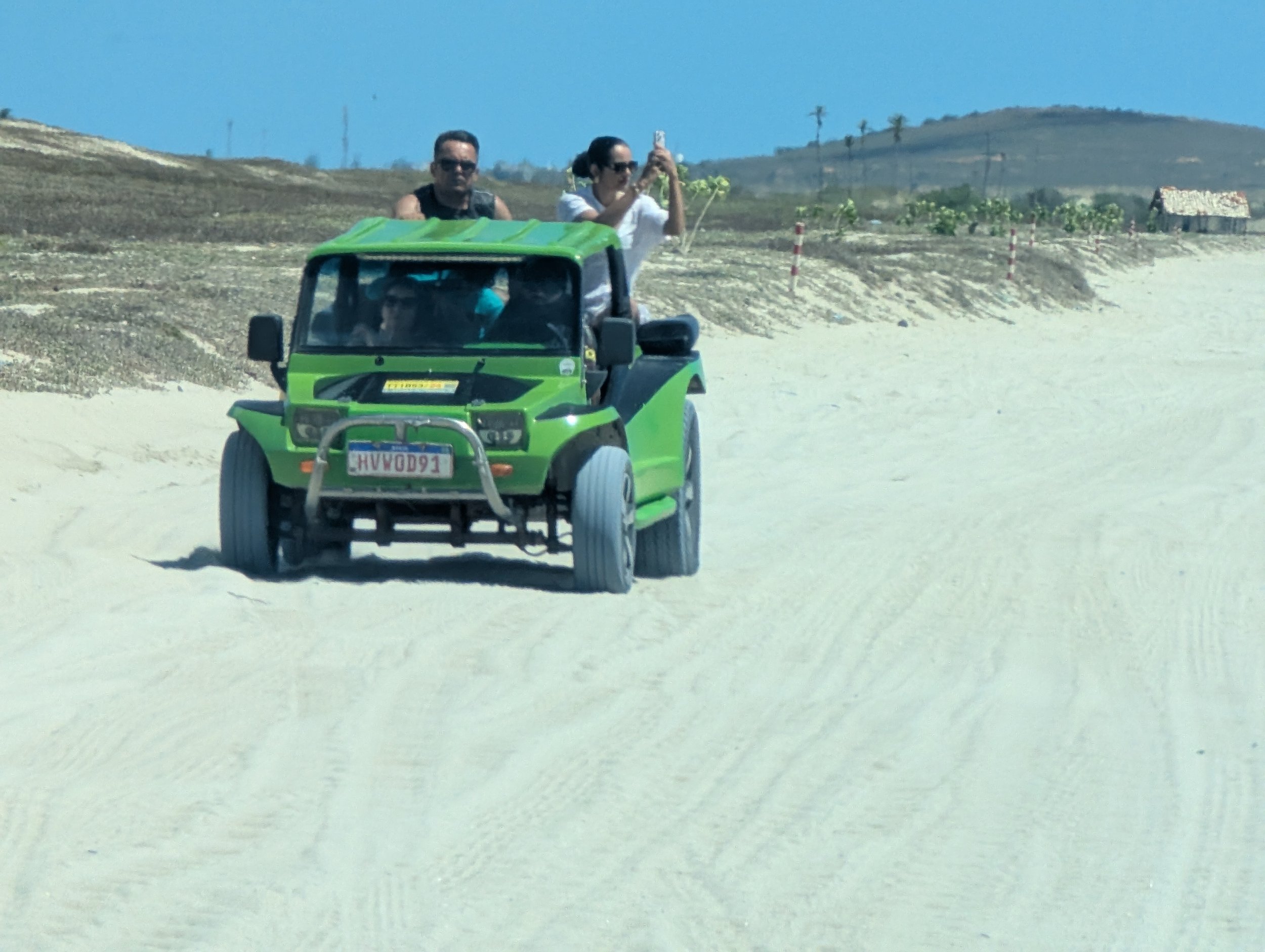
Brazilians love their unique dune buggies
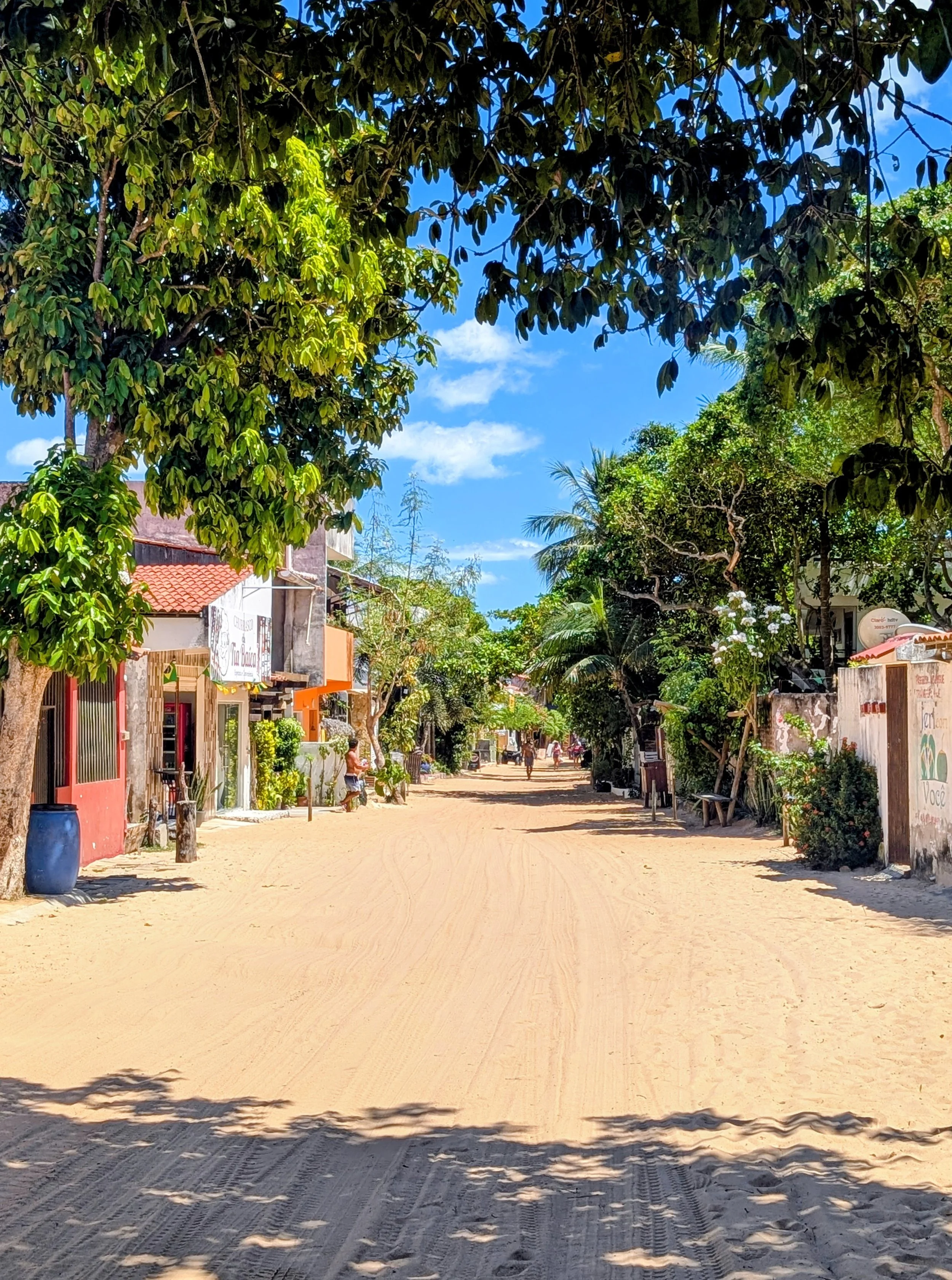
Wandering the sandy streets of Jericoacoara, a popular vacation destination accessible by 4×4 bus or driving a 4×4 beach road
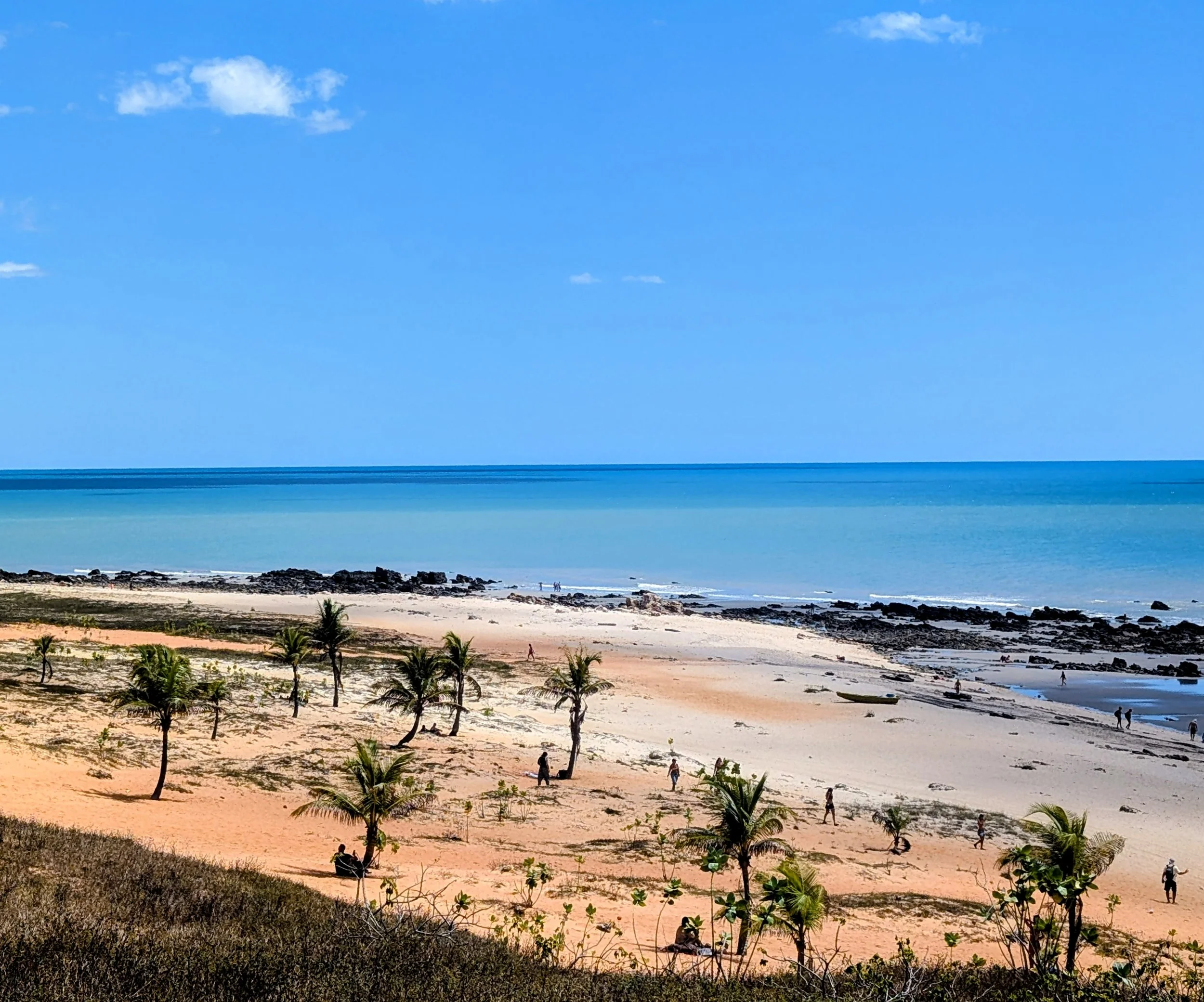
Coast line at Jericoacoara
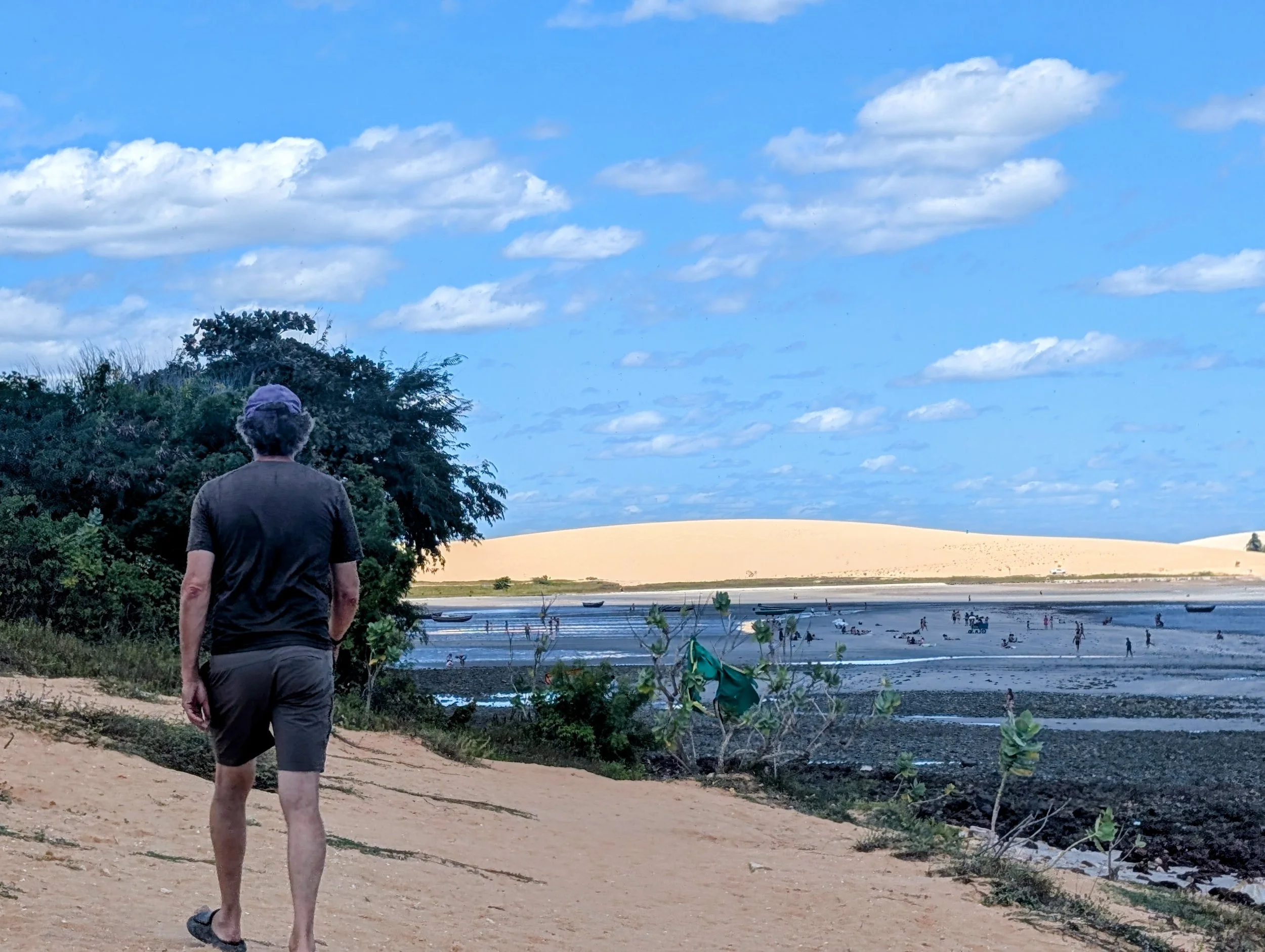
The beaches were scenic and charming
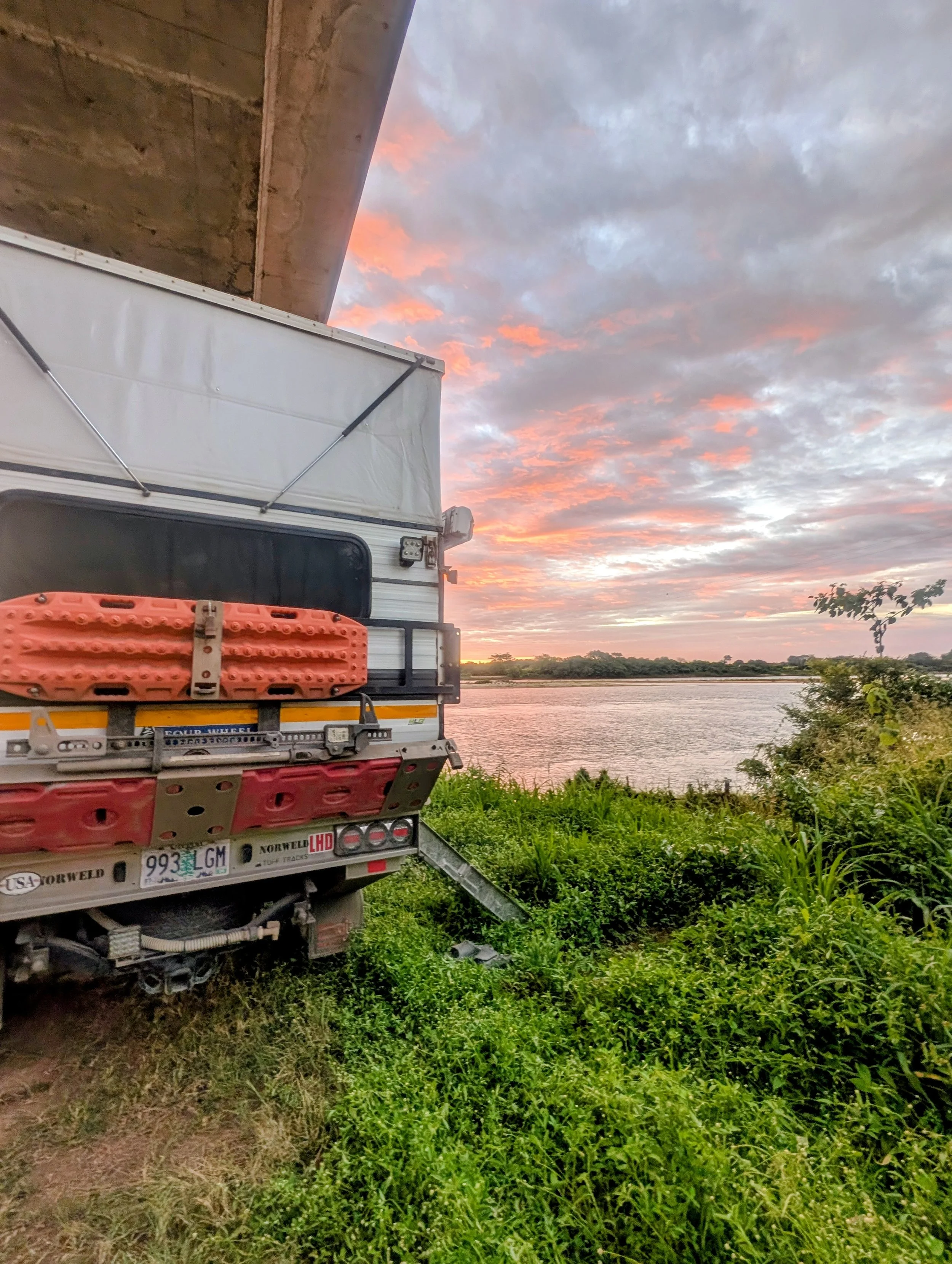
Camping en route under a freeway bridge - actually surprisingly quiet. One of our very few “wild” camping sites
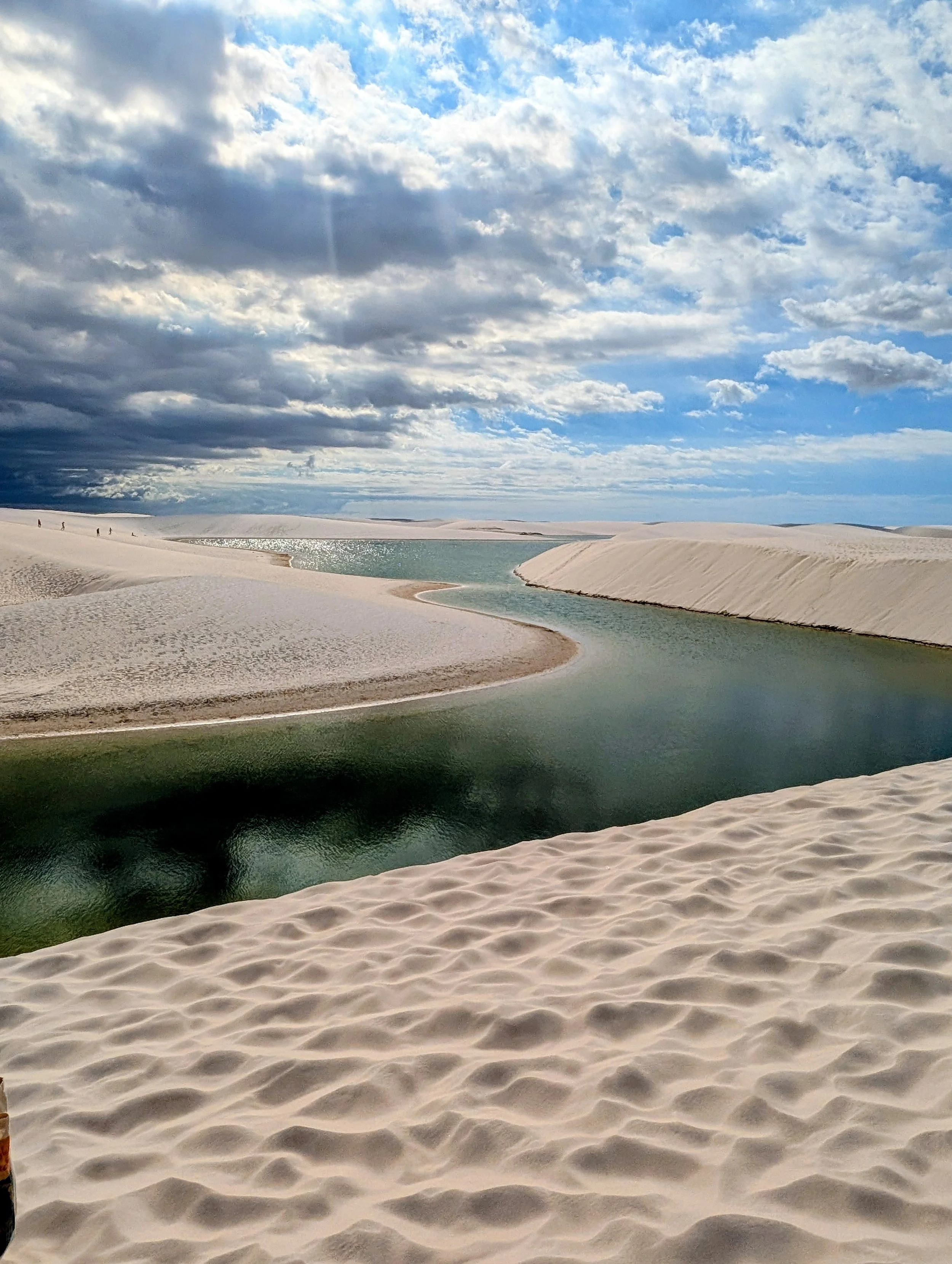
We were really looking forward to our next destination and it did not disappoint. Parque Nacional dos Lençóis Maranhenses is a unique sand dune ecosystem with pools of brilliant blue and green fresh water.
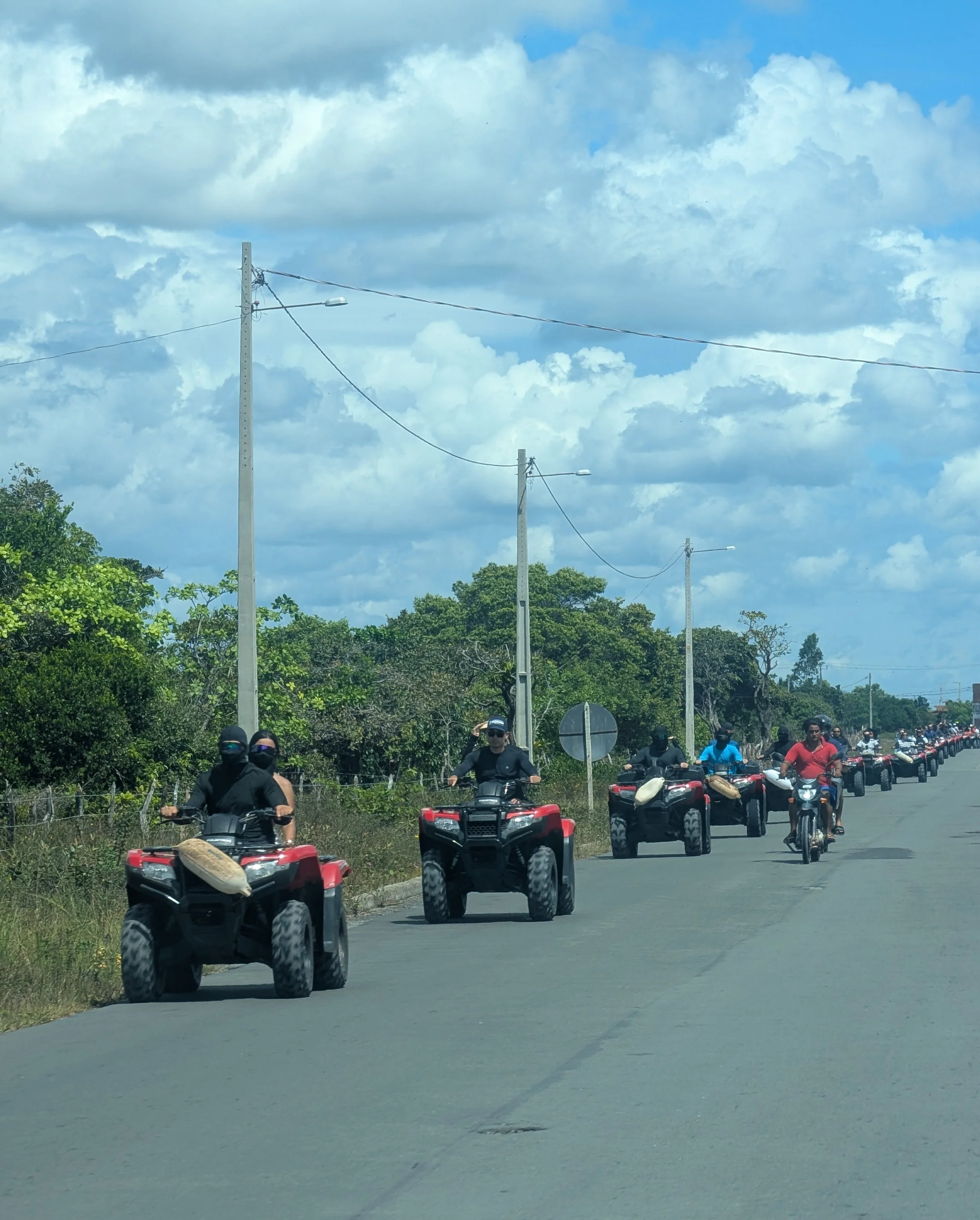
Passing tours heading into the park as we are arriving in town
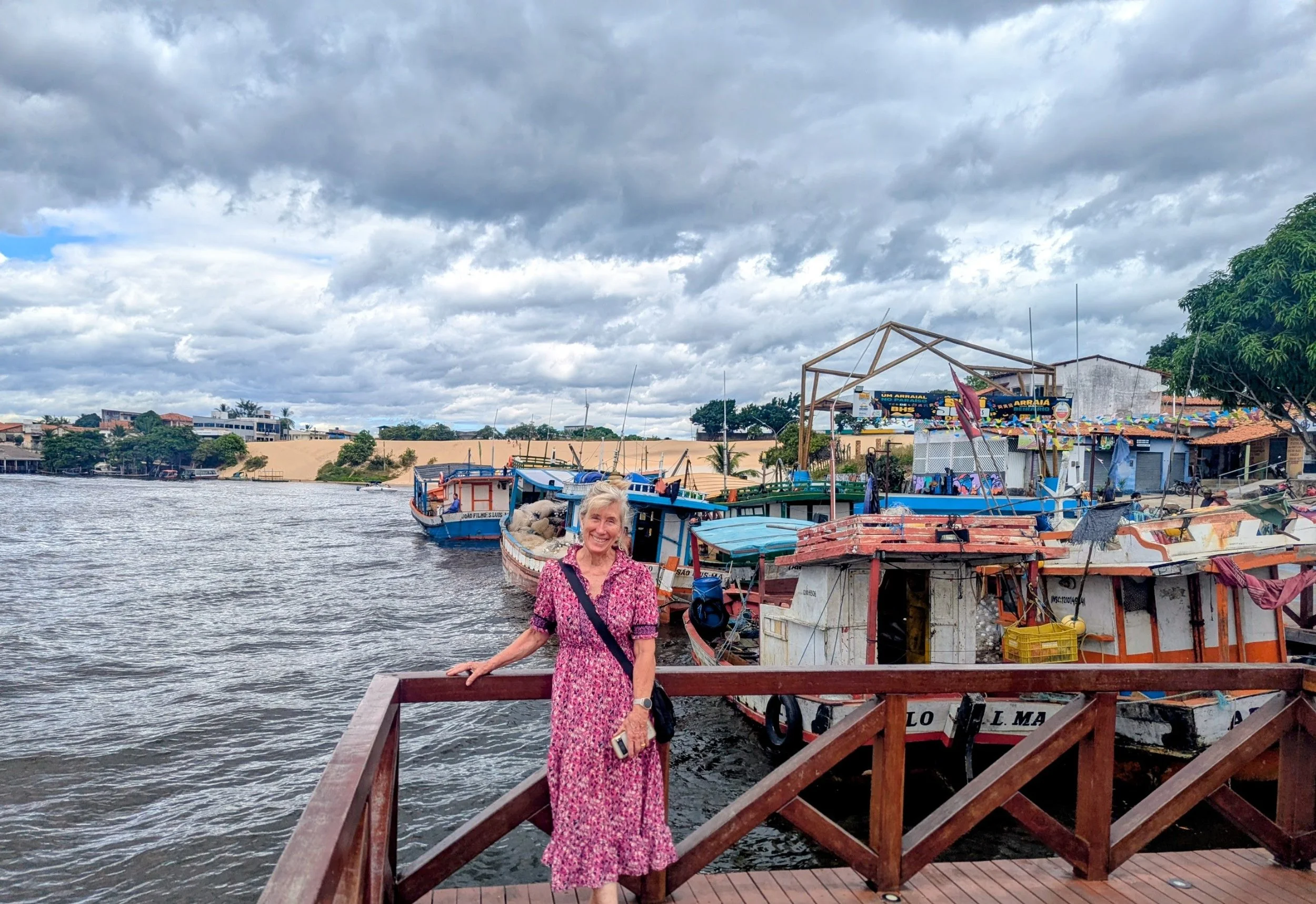
Village of Barreirinhas, closest to park entry
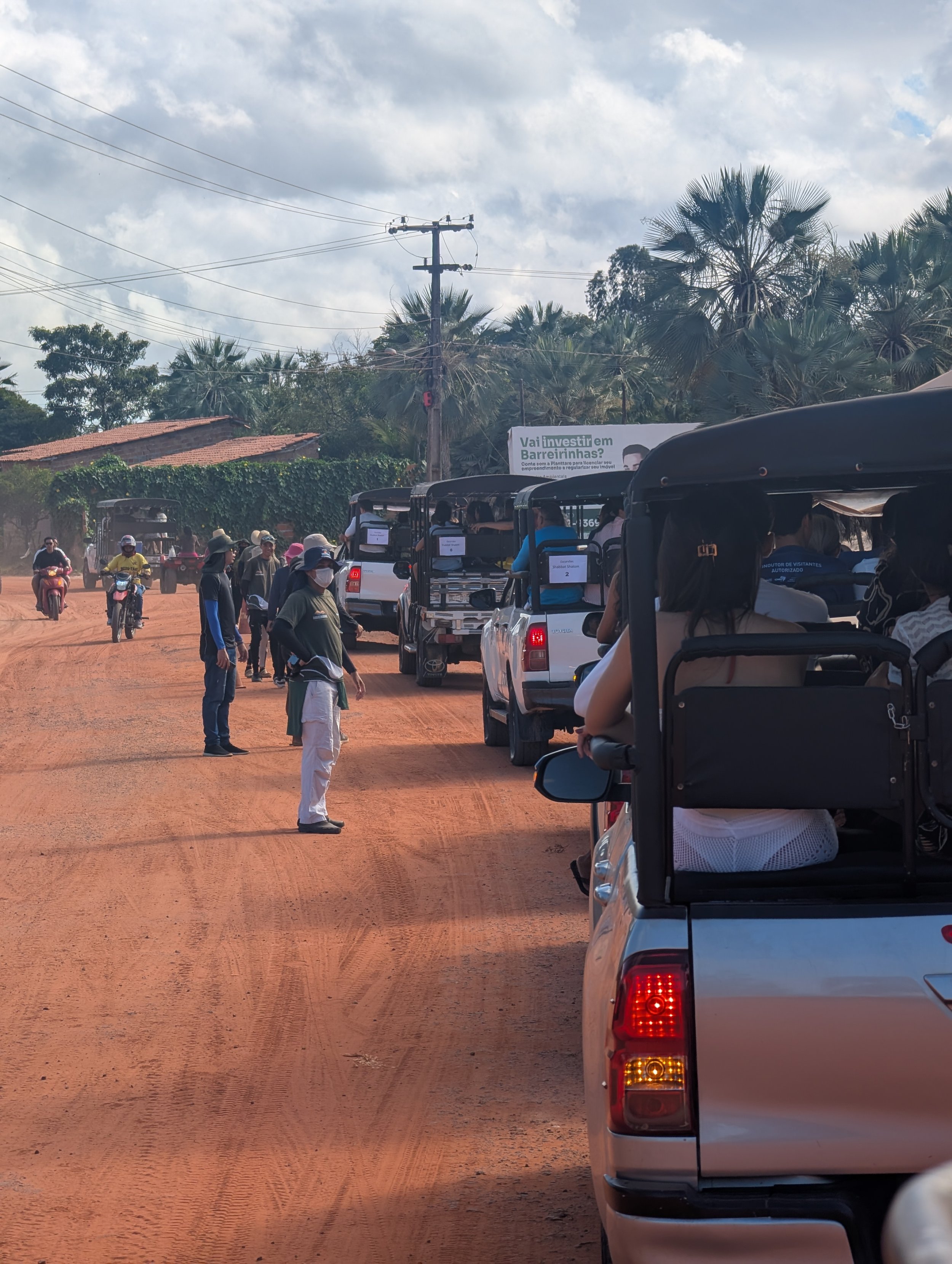
Unfortunately you are not allowed to drive into the park yourself, we are in the line up with our tour waiting to enter, this was probably our single most touristy day in Brazil
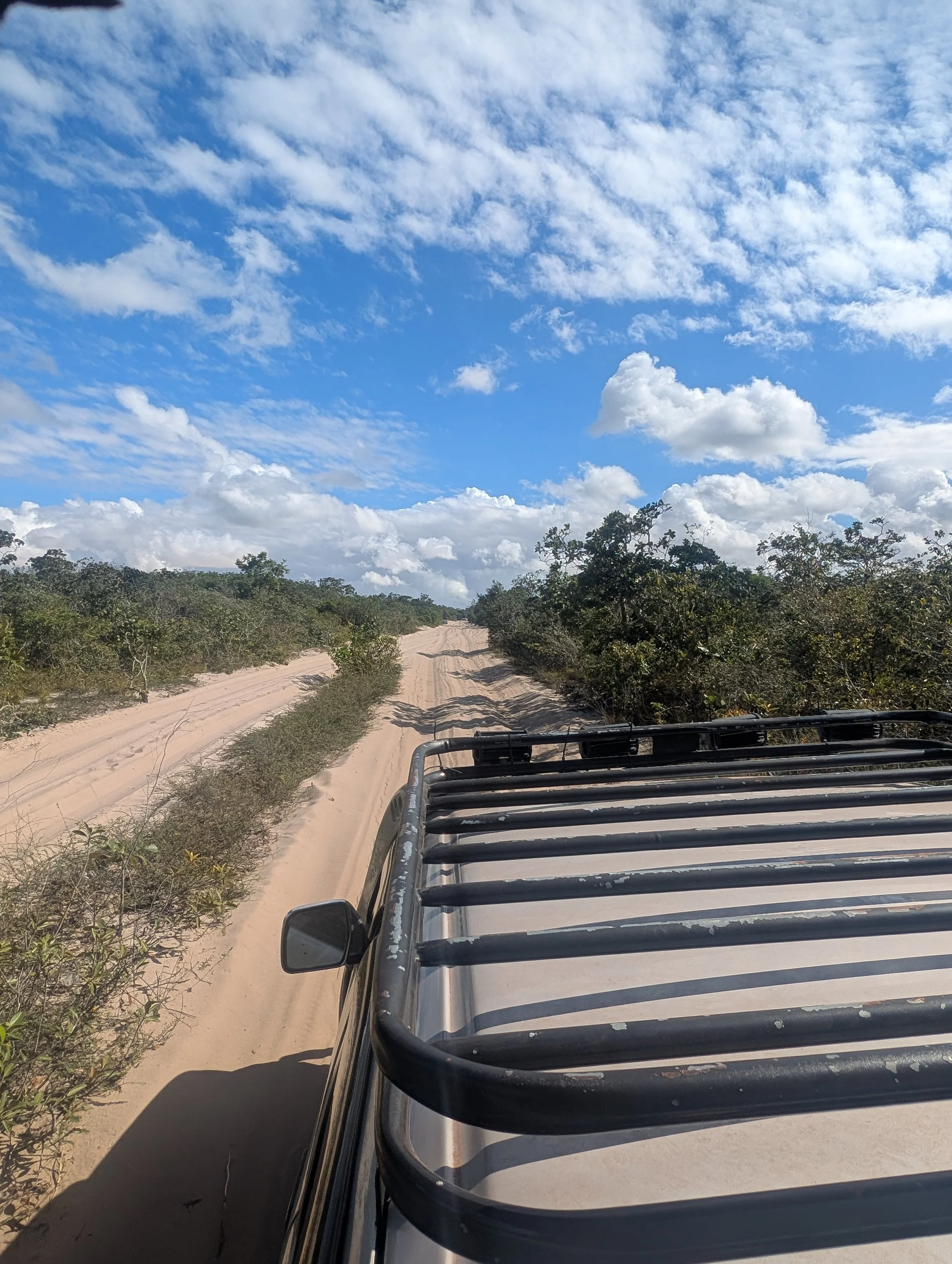
Bumpy, sandy ride into the park
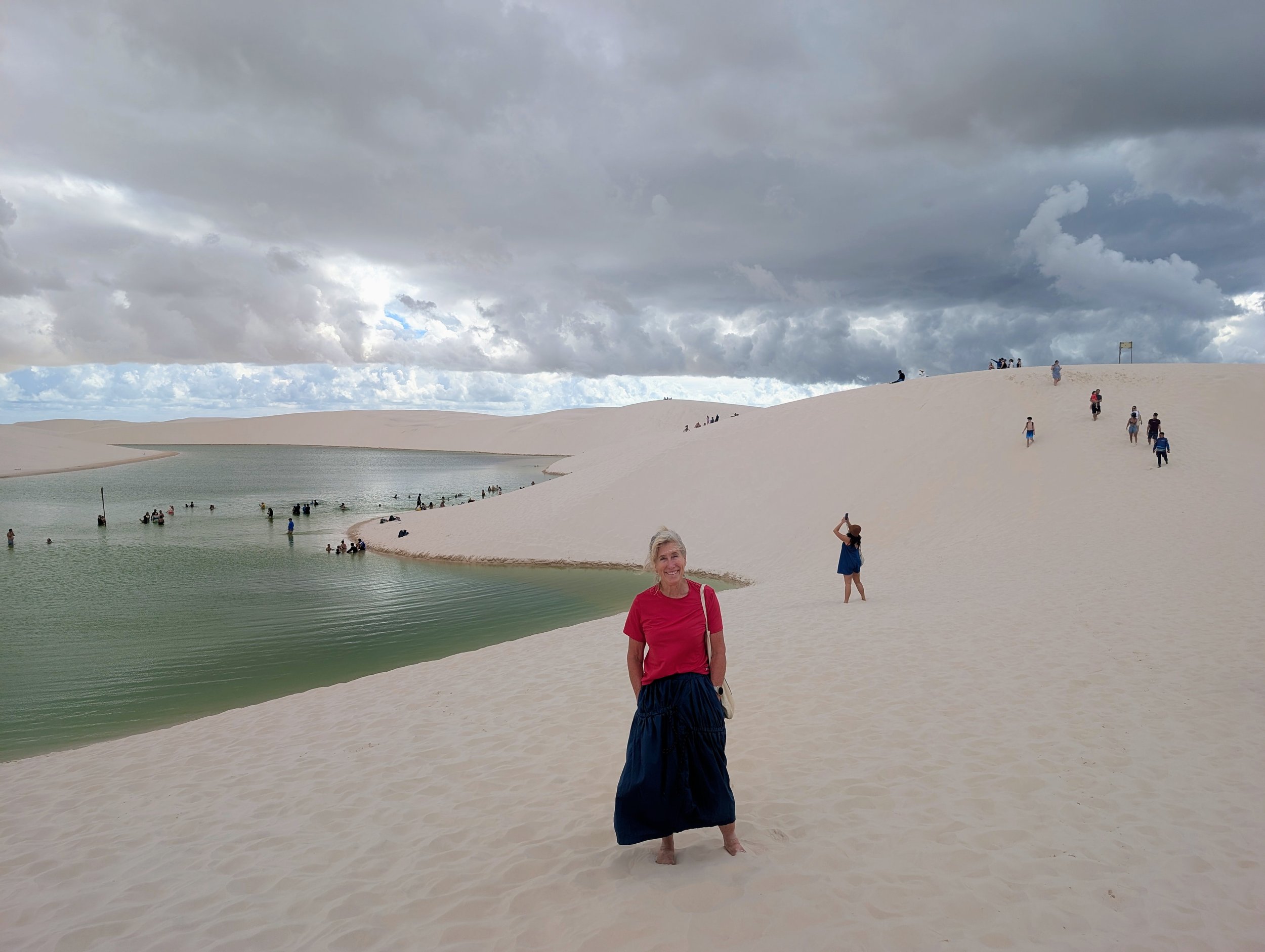
Walking the dunes of Parque Nacional dos Lençóis Maranhenses
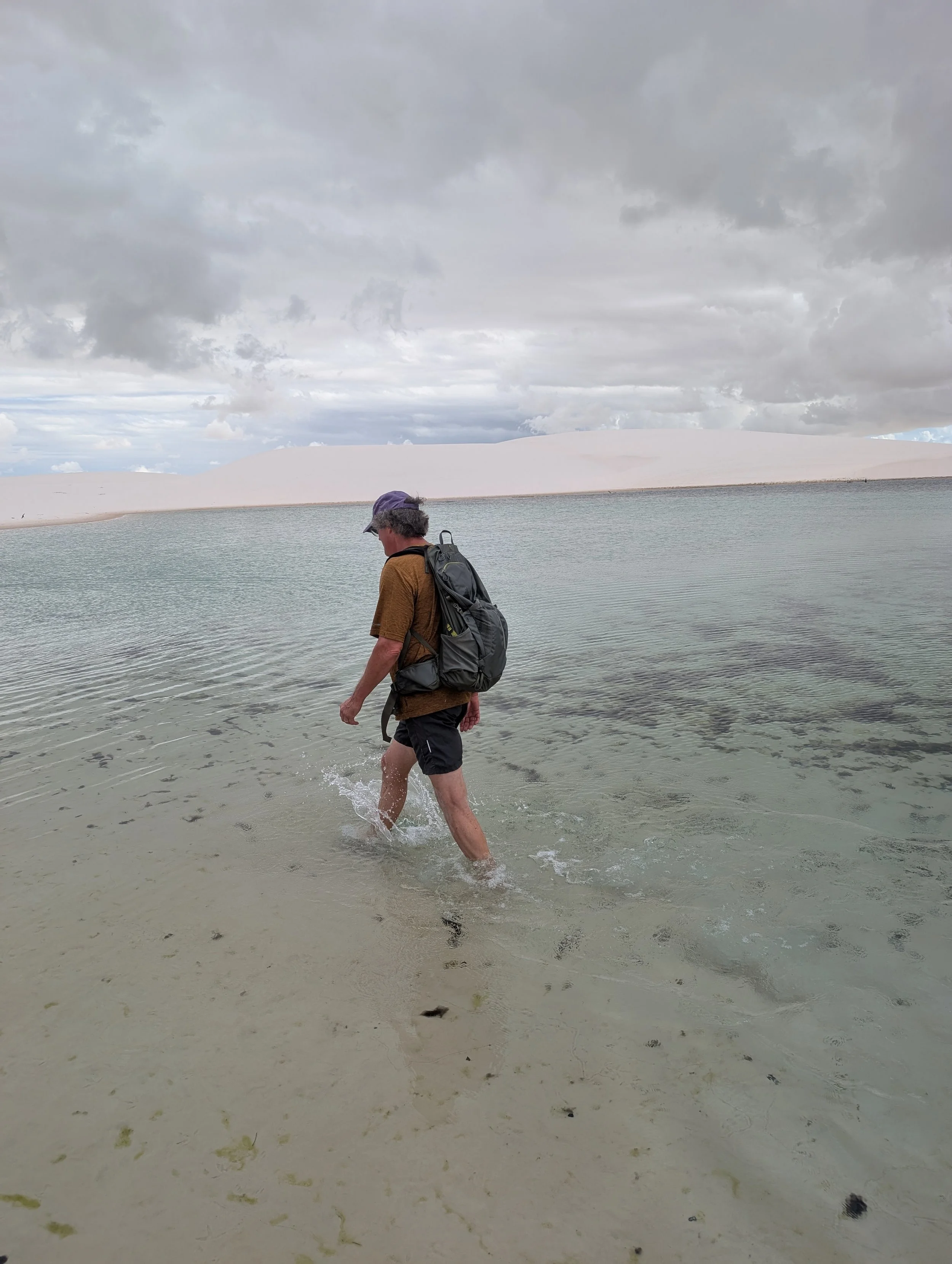
Our guide took us quickly away from most of the people
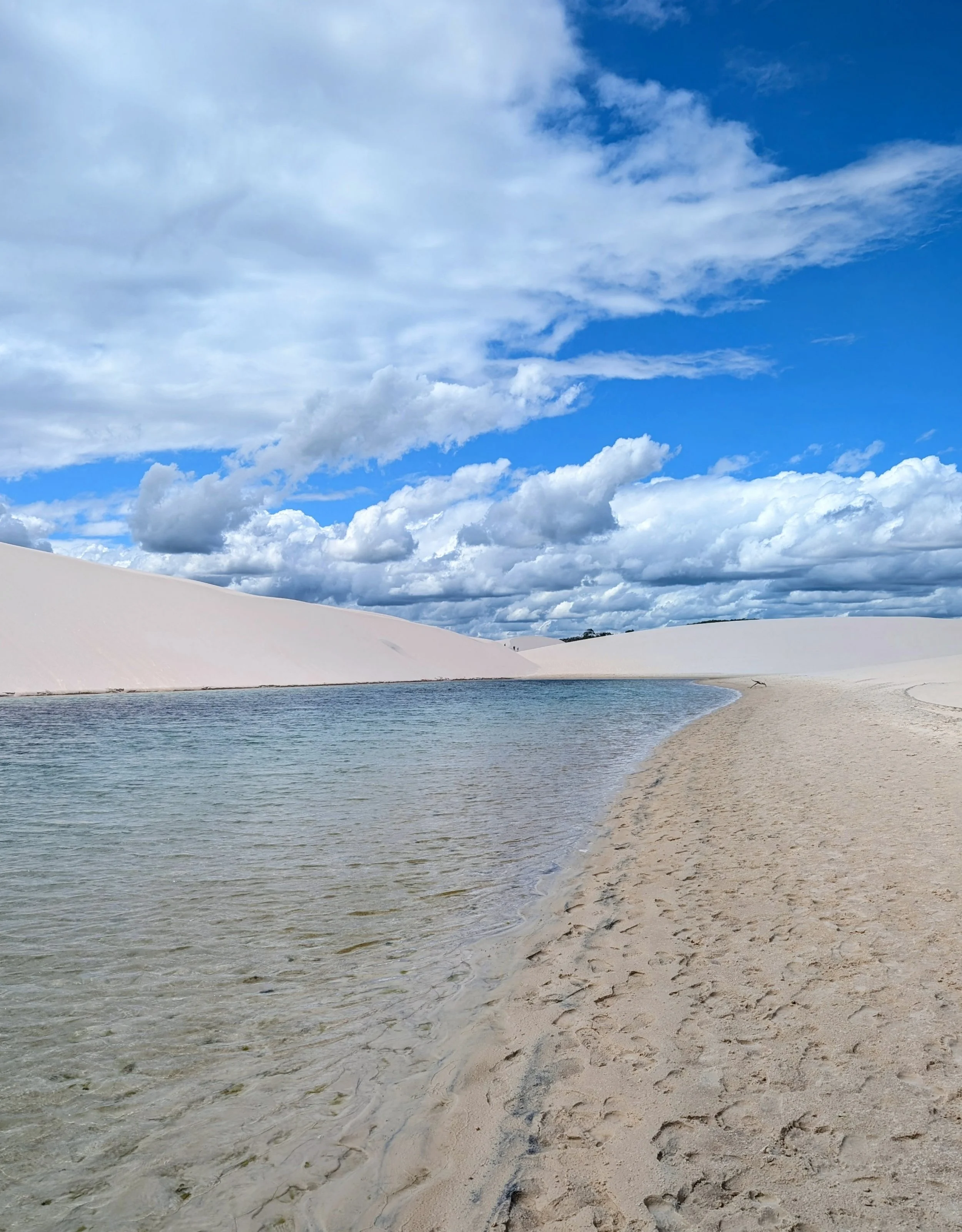
We swam and waded in six different pools
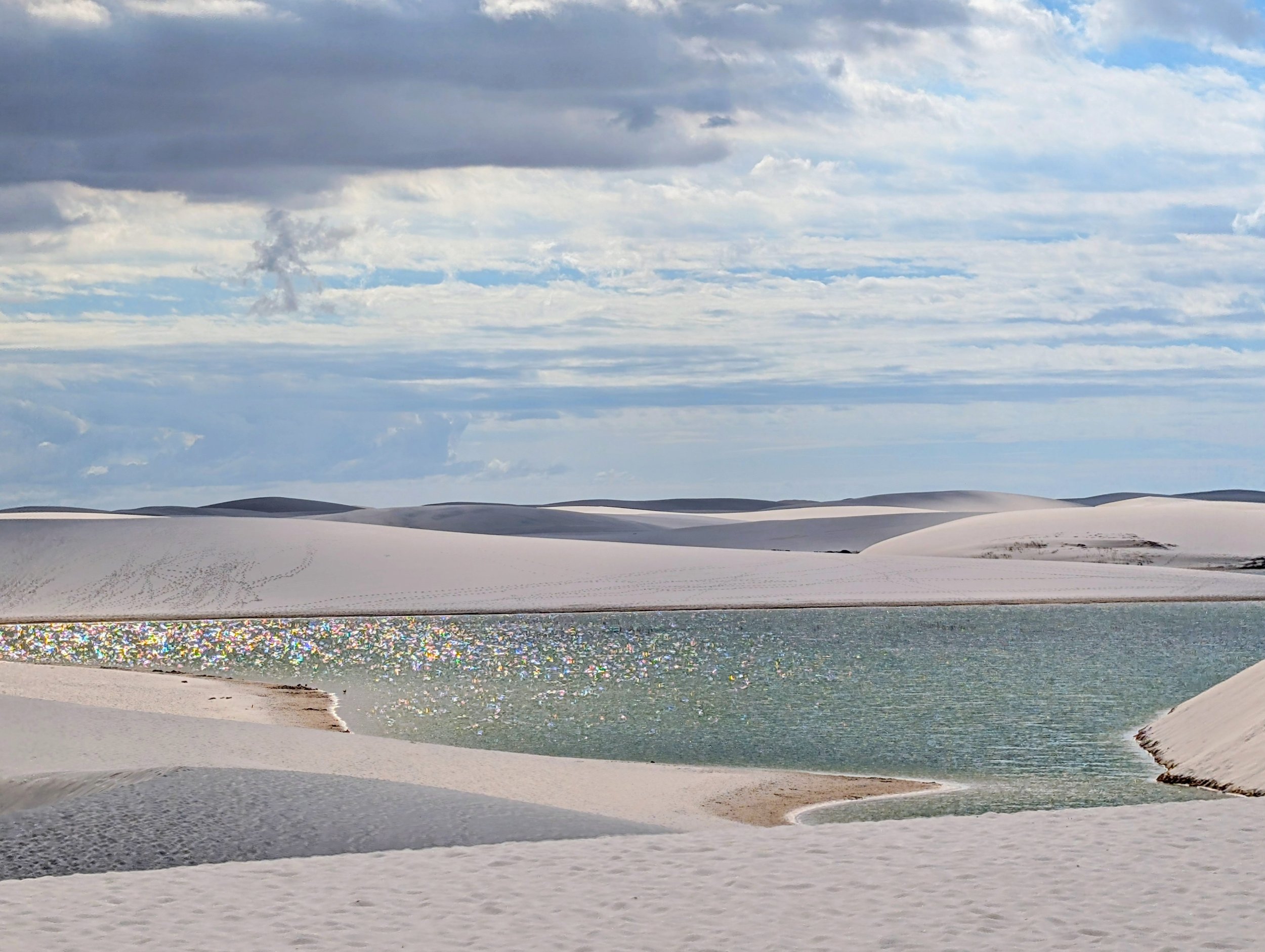
The colors changed with the light
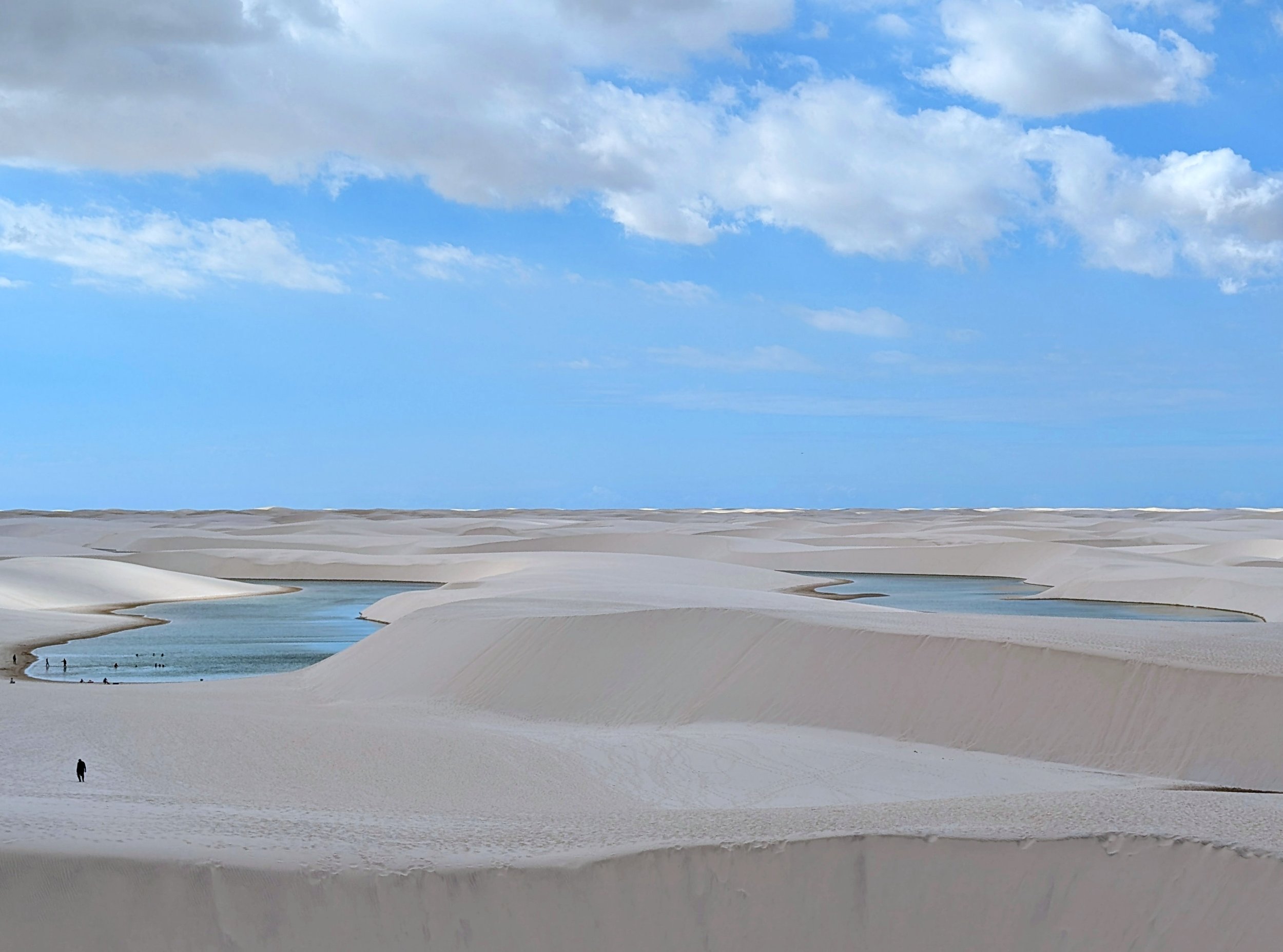
It really was a stunning place
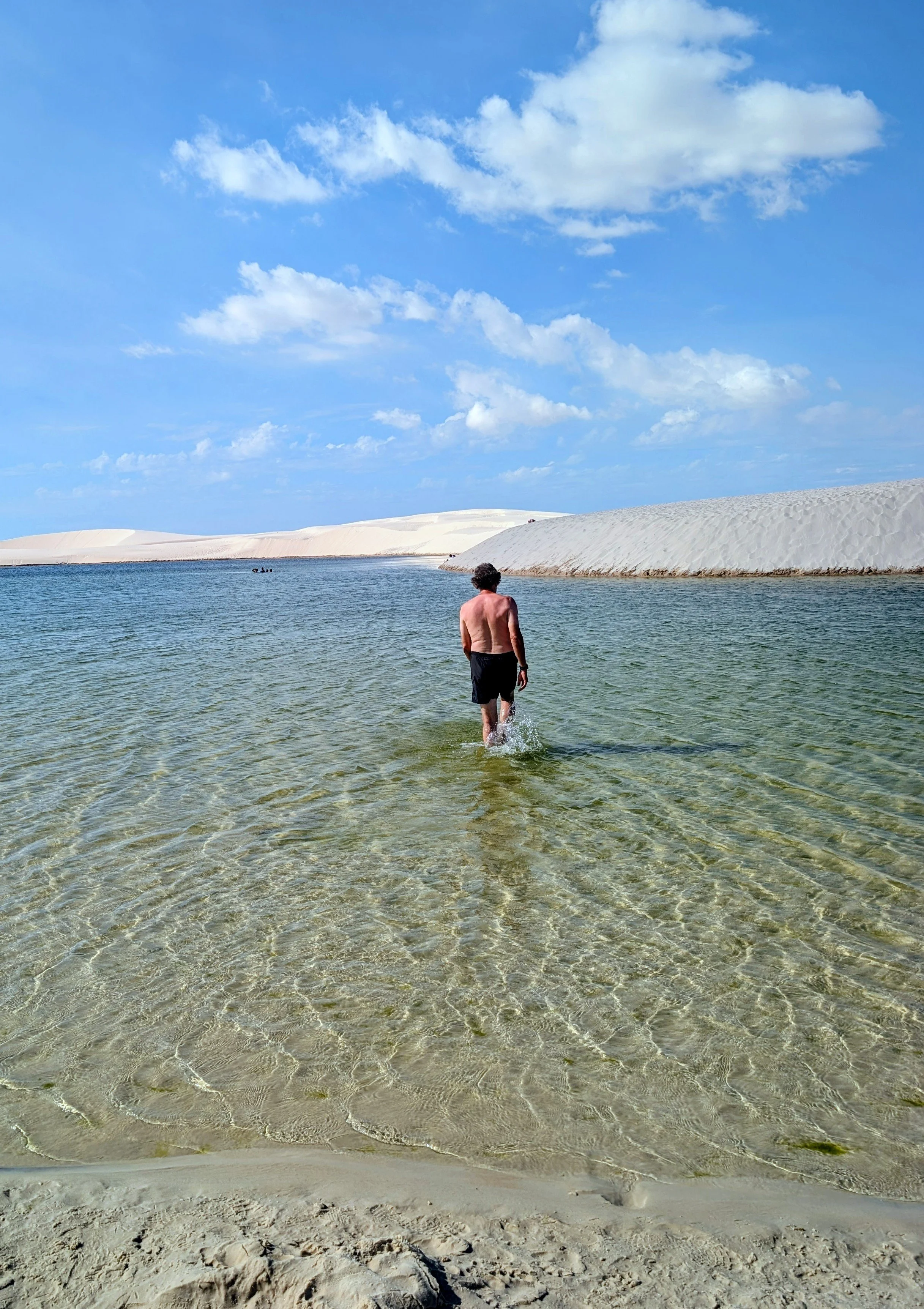
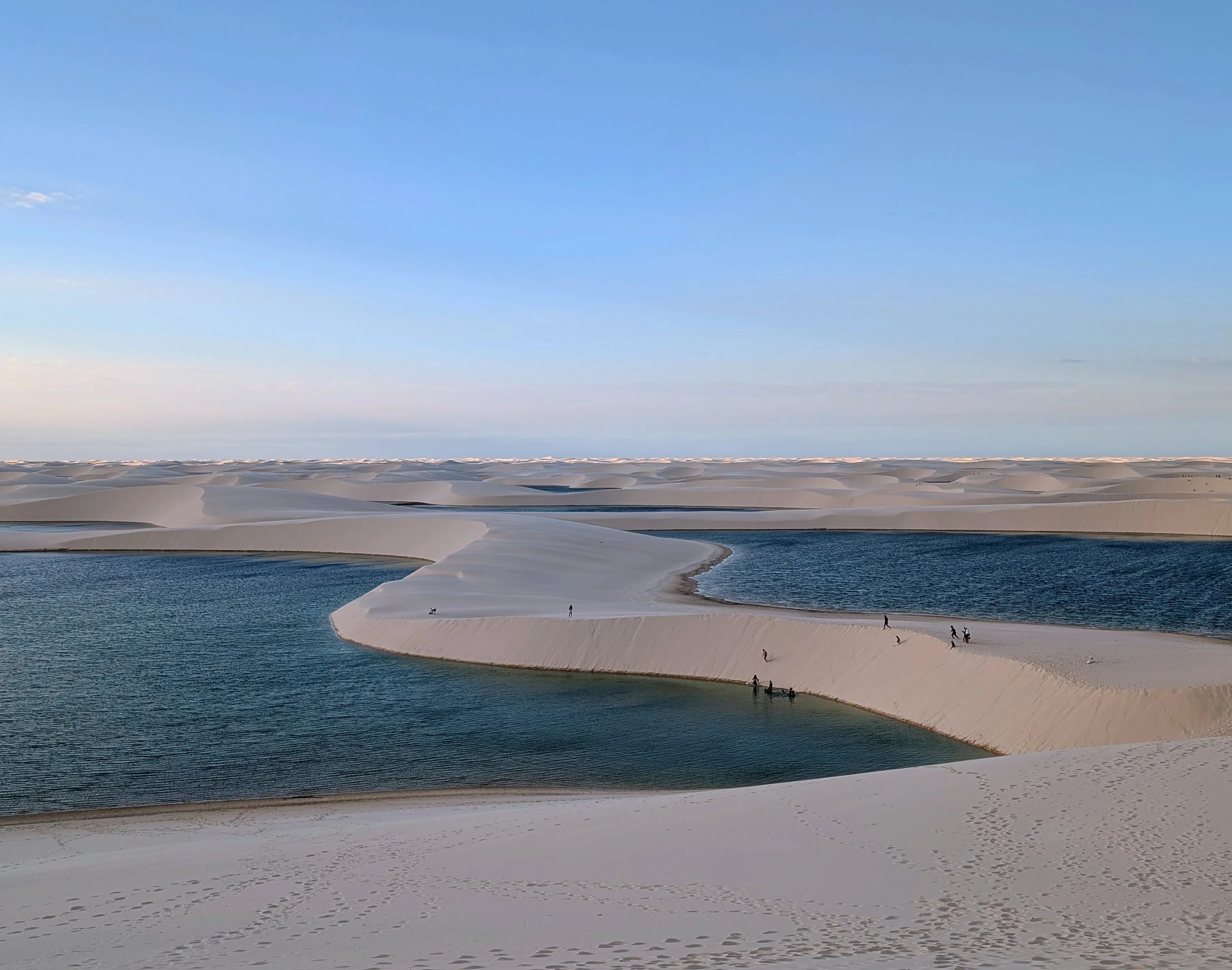
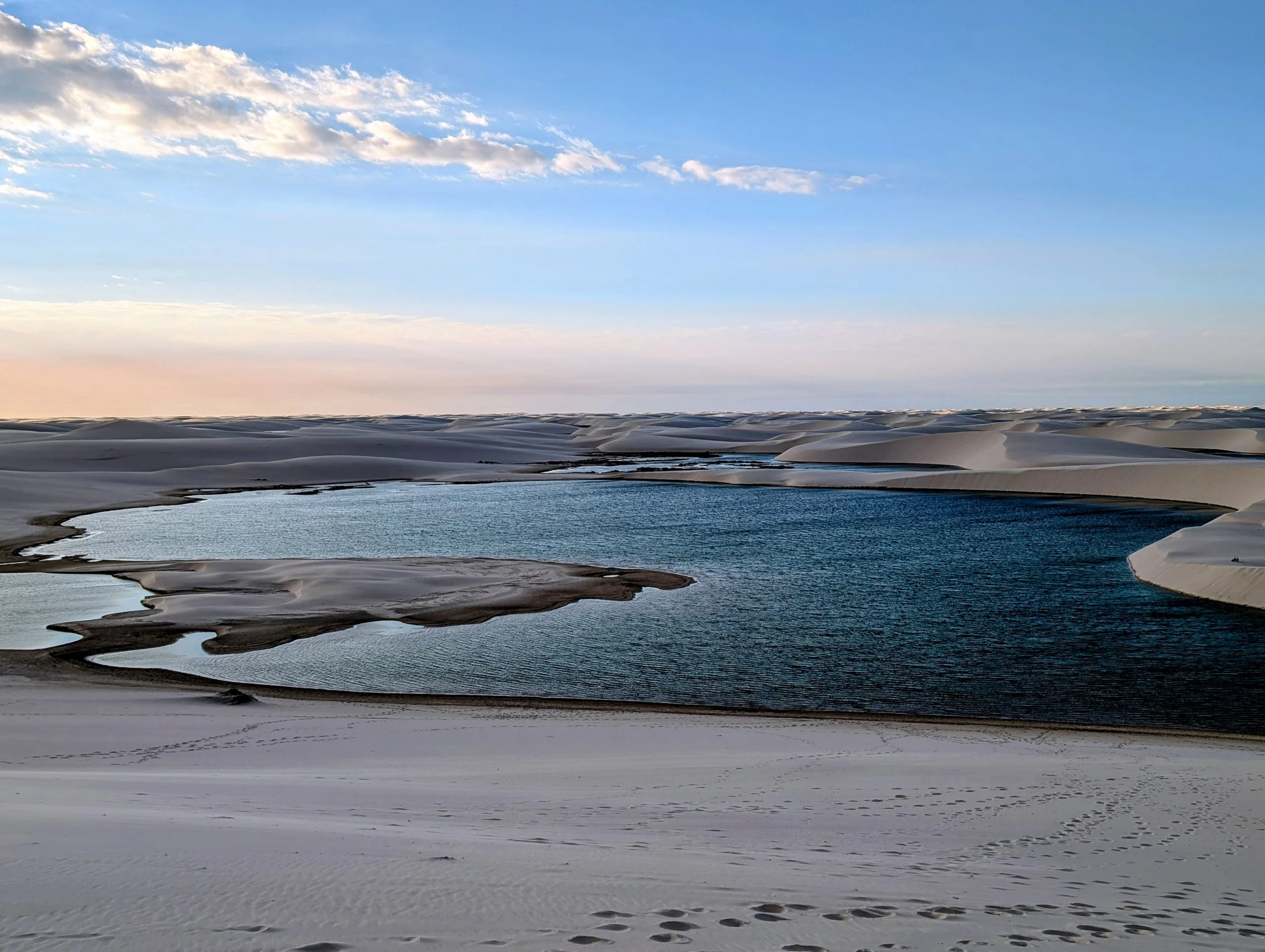
Sunset on the water
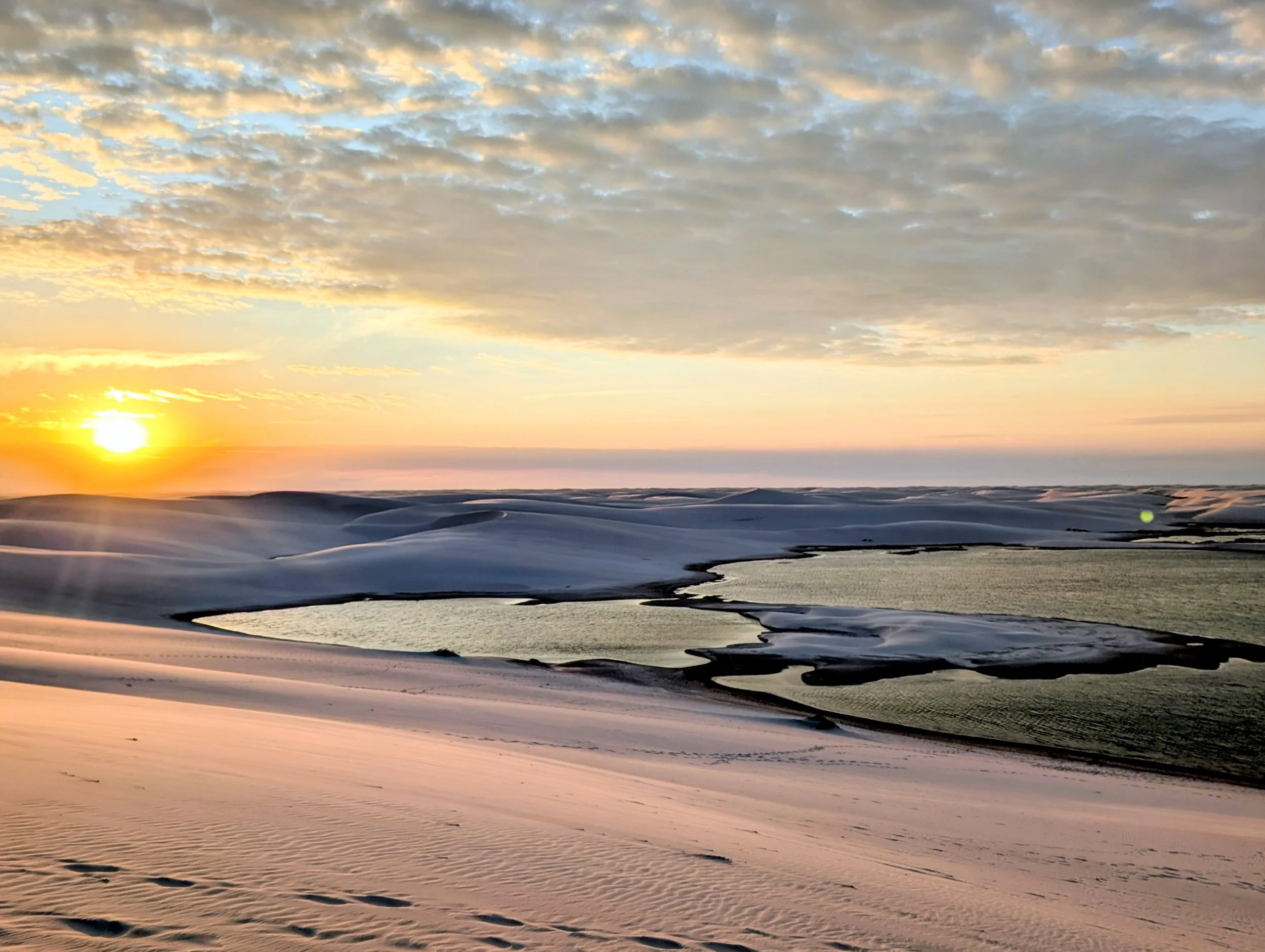
A day well spent
During our time in Brazil we had to book several tours to places we would not have been able to access on our own - Lencois Maranhenses, the Amazon, the Pantanal river, and other national park trails. Our best tip for people planning something similar is to read reviews of tour companies online and check out booking sites like Get Your Guide or Trip Advisor, but when possible, to book directly with the tour company. Typically you can find their Whatsapp number or contact info online. We were shocked to see prices inflated by up to 300% on the big booking sites.
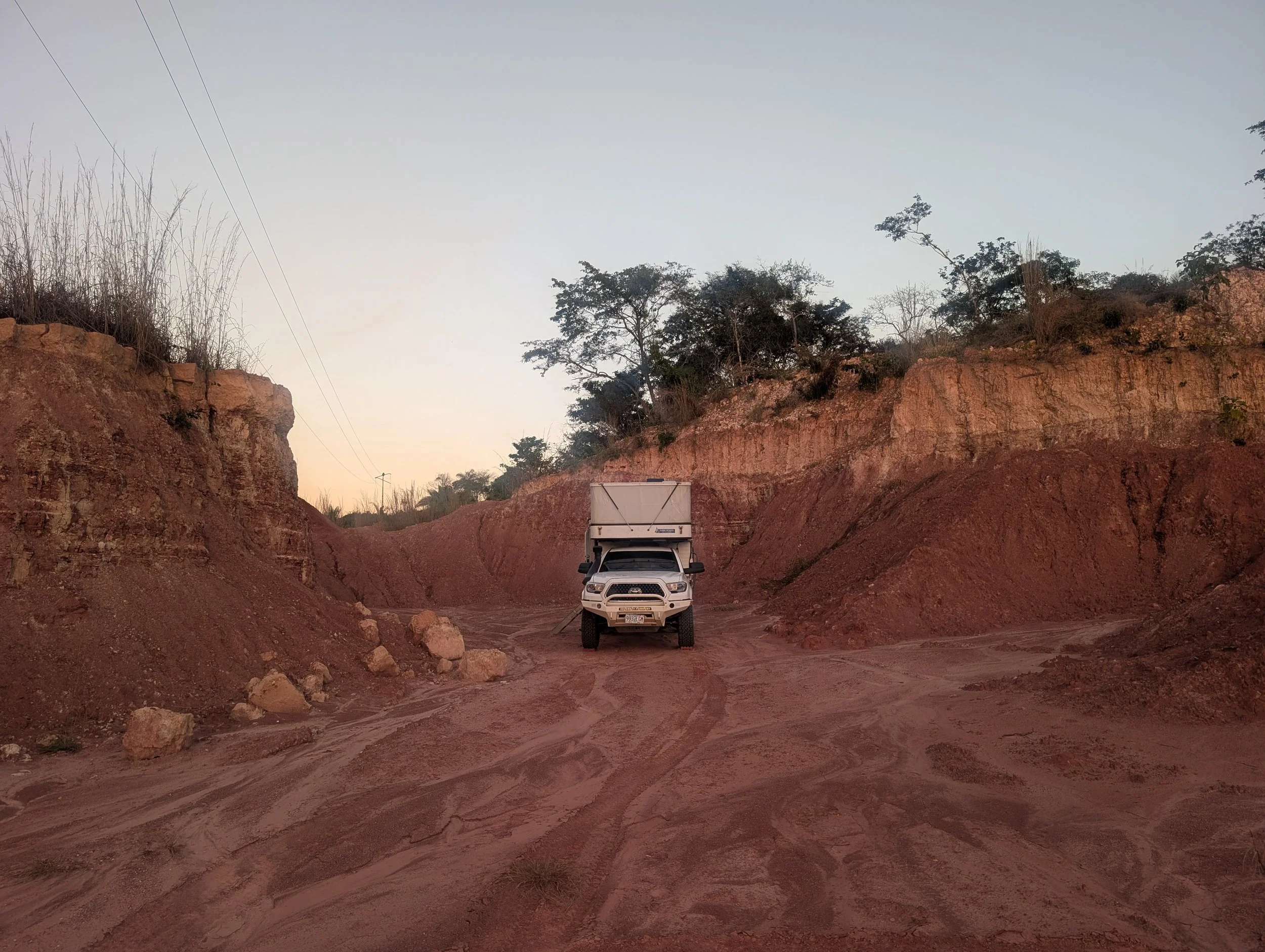
Another big cross country drive - we were desperate not to stay in a Posto so found an abandoned quarry site along the way - one of our favorites across the world, always empty, flat and quiet, and no one cares if you stay there.
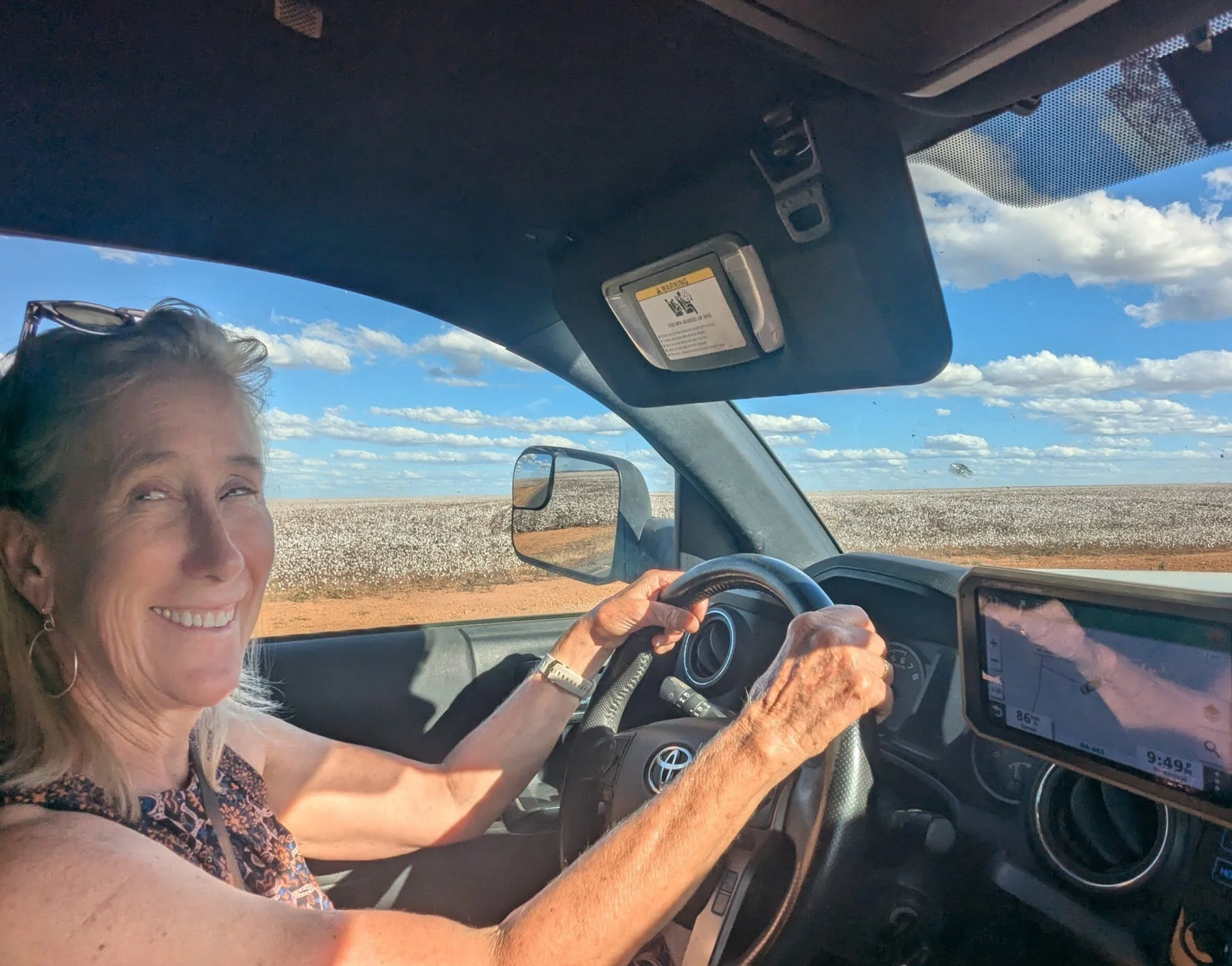
Dawn’s turn at the wheel - a whole day of driving through cotton fields
Once again we were on a huge cross country drive, this time heading back south towards the Pantanal. But we found some joy along the way.
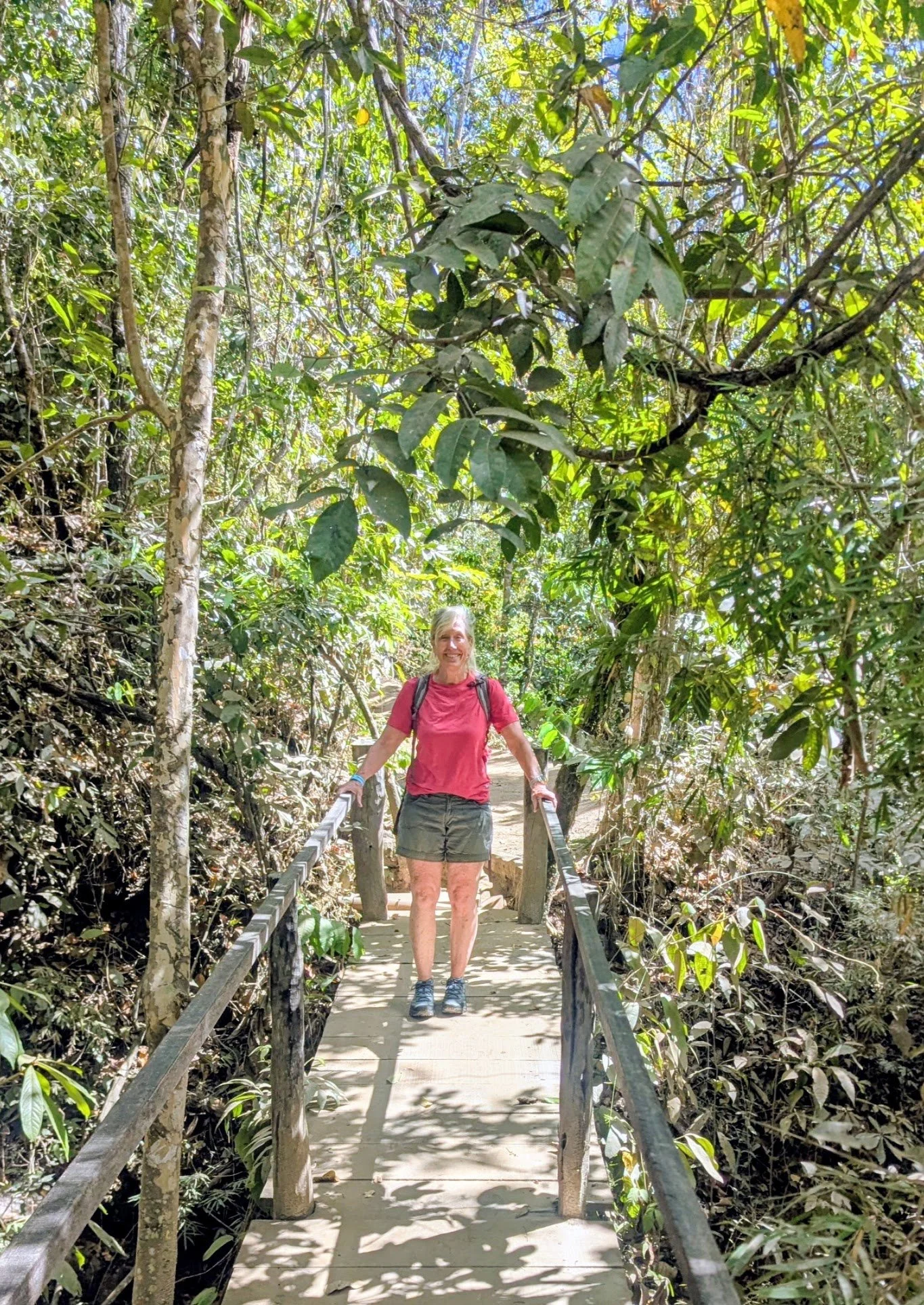
Waterfall hike at Chapada dos Veadeiros
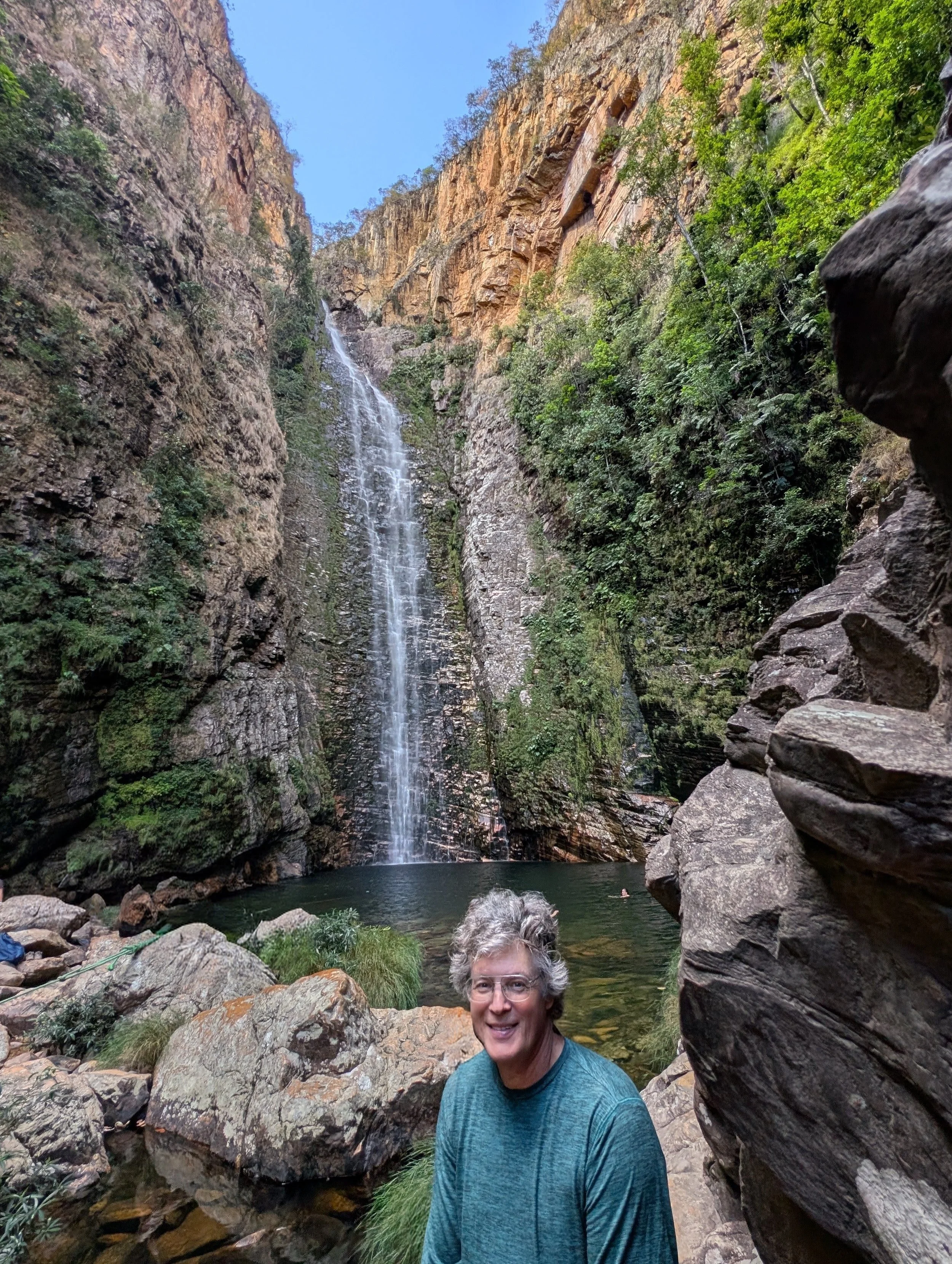
Made it to the waterfall
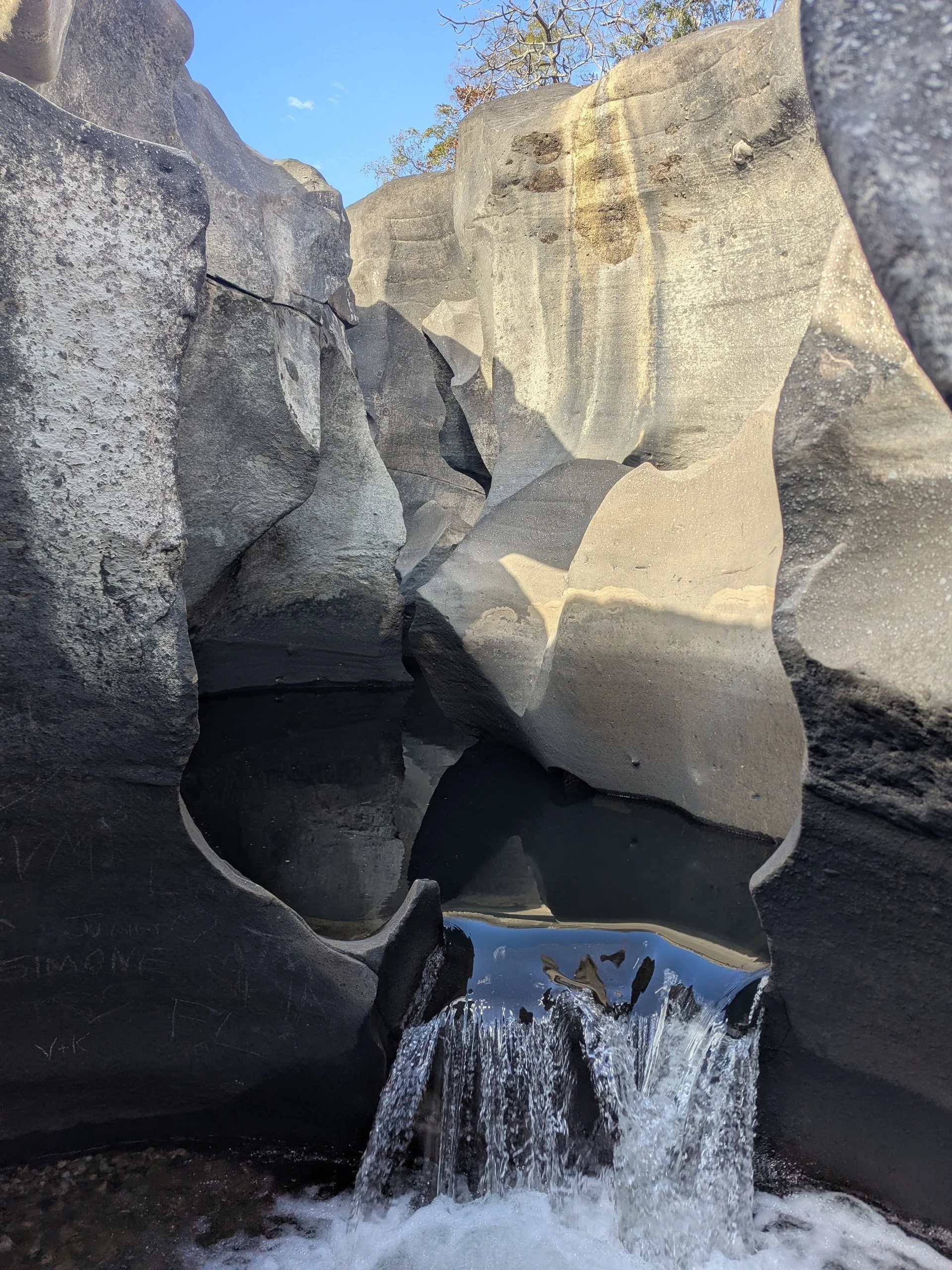
Vale da Lua in Chapada dos Veadeiros
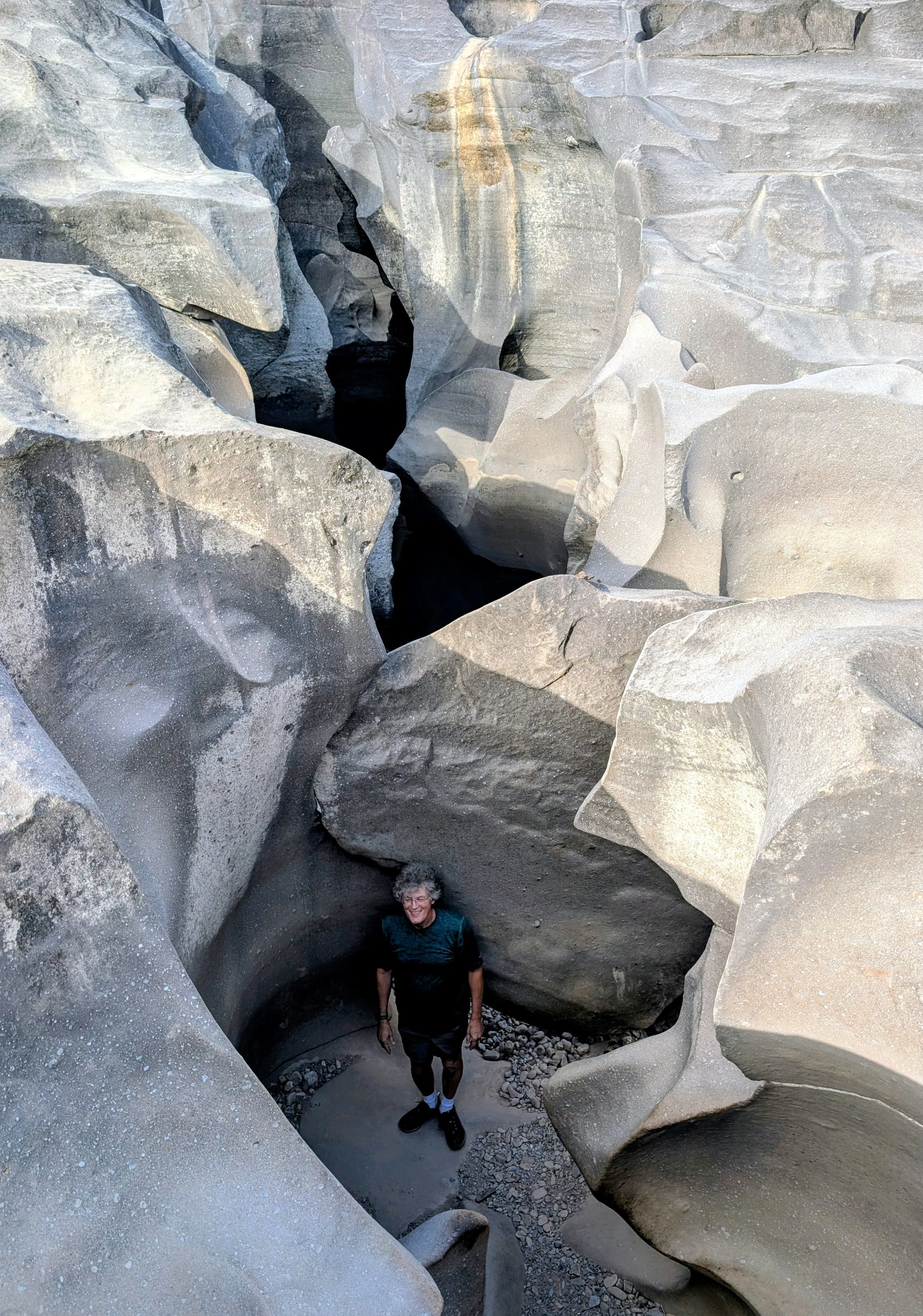
The national park system in Brazil was interesting, it seemed to be typically a series of privately owned concessions and inholdings. You would pay per hike or per area you wanted to access. Often guides are required. We generally sought out trails we could do on our own, as we enjoy the journey and the challenge of figuring out our own routes,
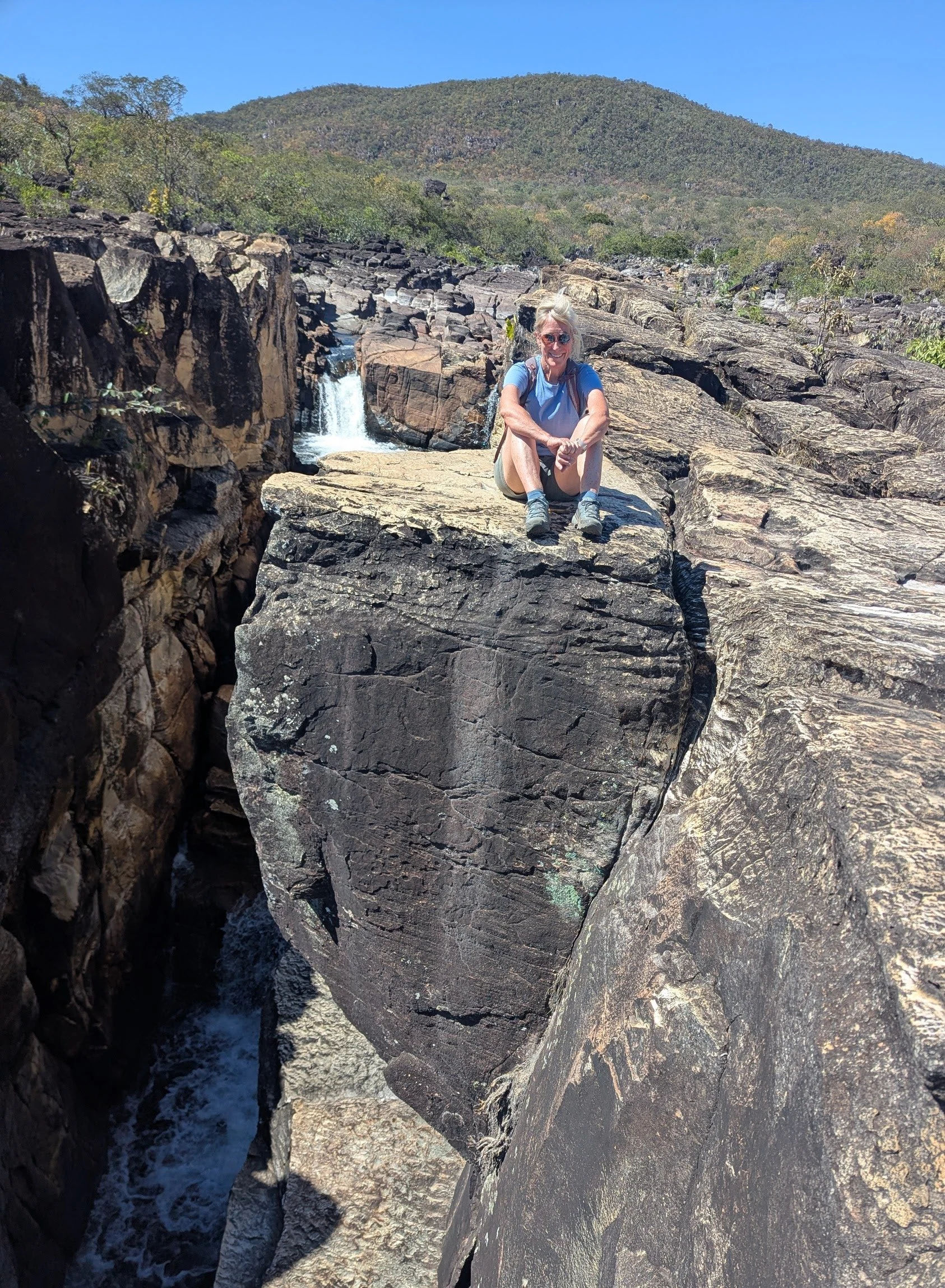
Canyon hike at Chapada dos Veadeiros
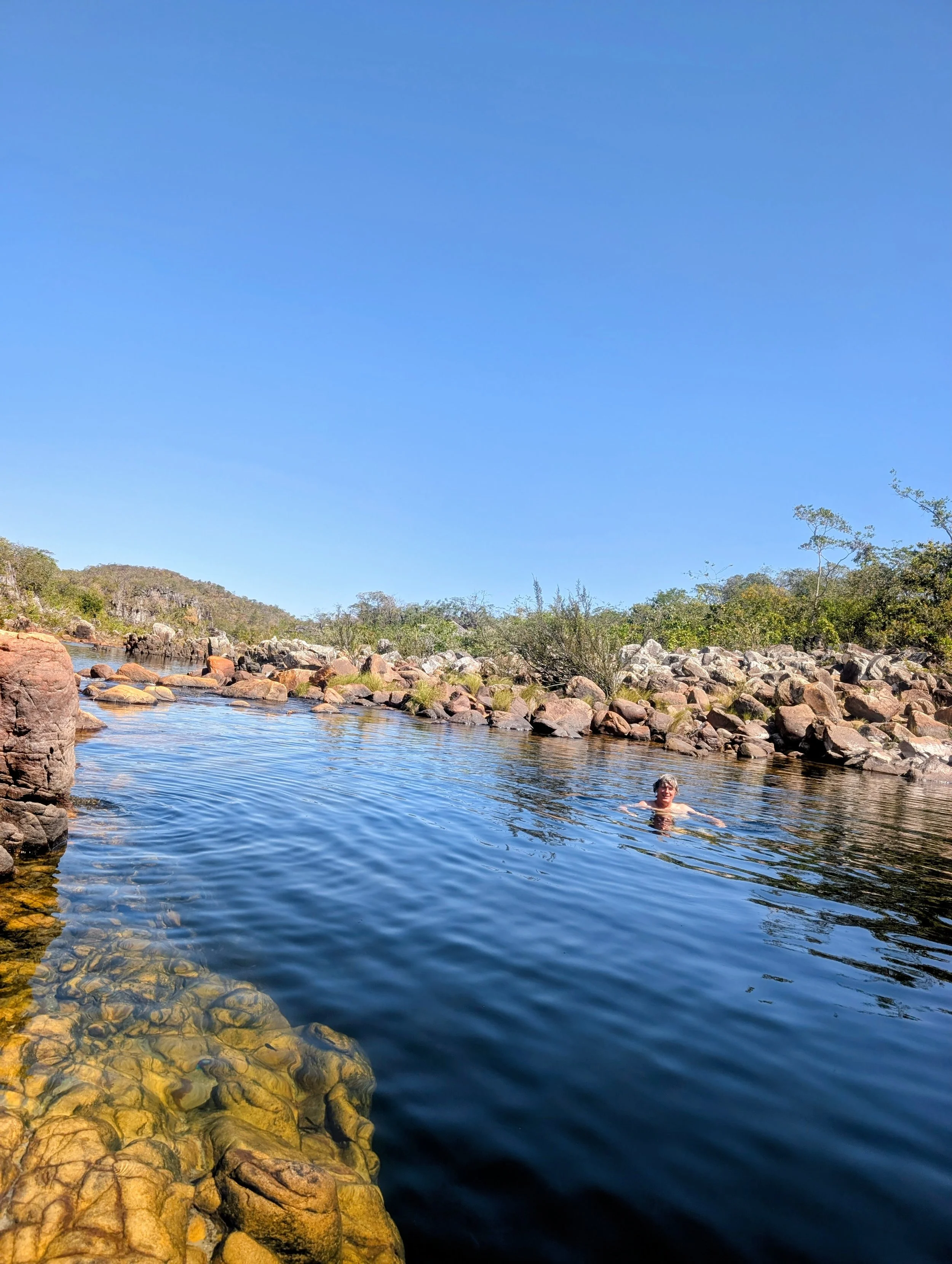
Complete with a swim
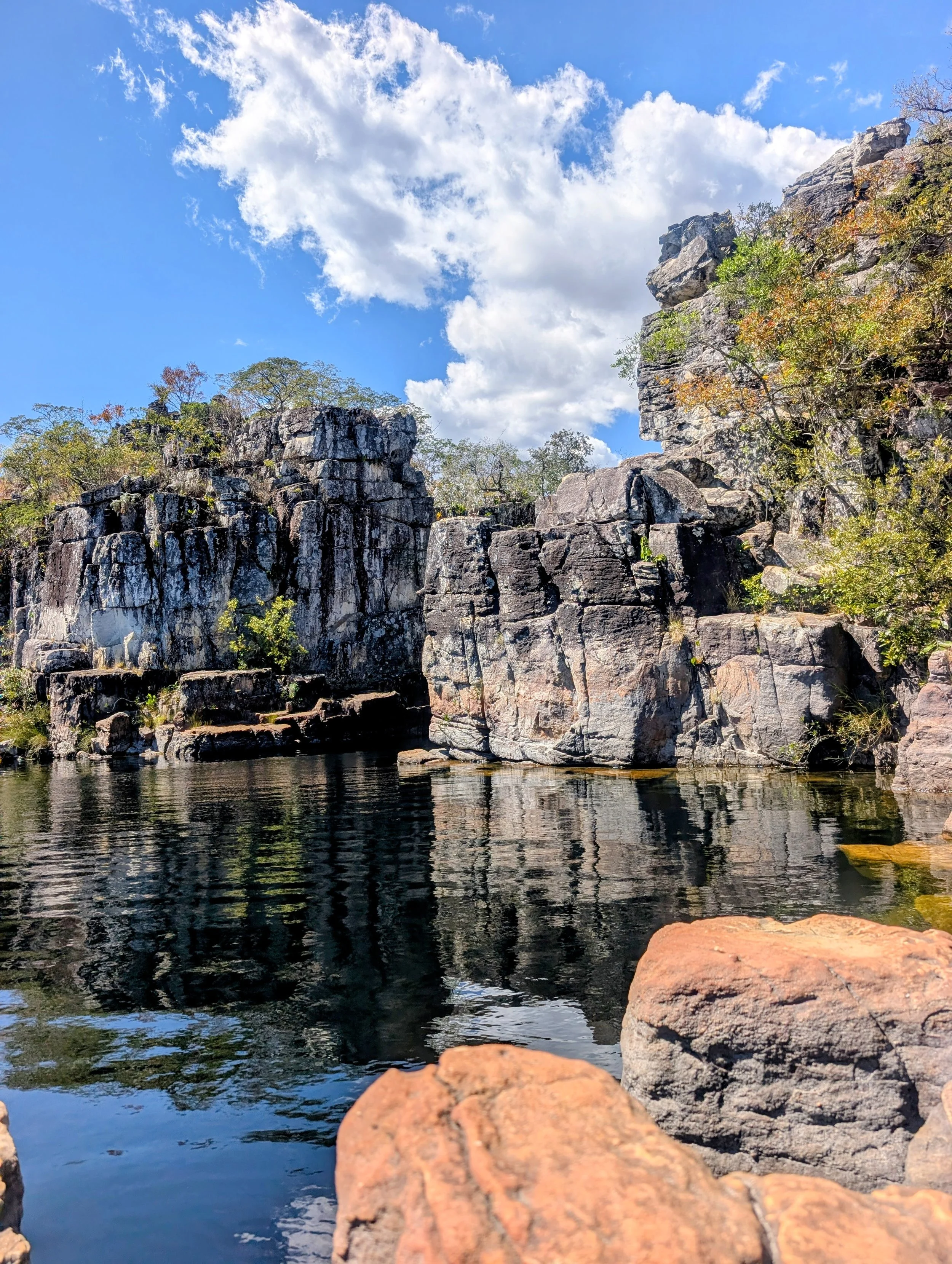
Gorgeous reflections
Our mid way supply point was the city of Brasilia - maybe one of our least favorite places in Brazil. It lies in the middle of the central flat plateaus of the country. The city was planned and built in the 1950’s when the political powers decided to move the capital from Rio de Janeiro to the center of the country. The city is laid out in an interesting semi-circle with a clean gridwork and enormous wide avenues (no trees) and modernist (for the 1950’s buildings). For us, it lacked soul. But it was certainly an easy place to navigate and re-supply.
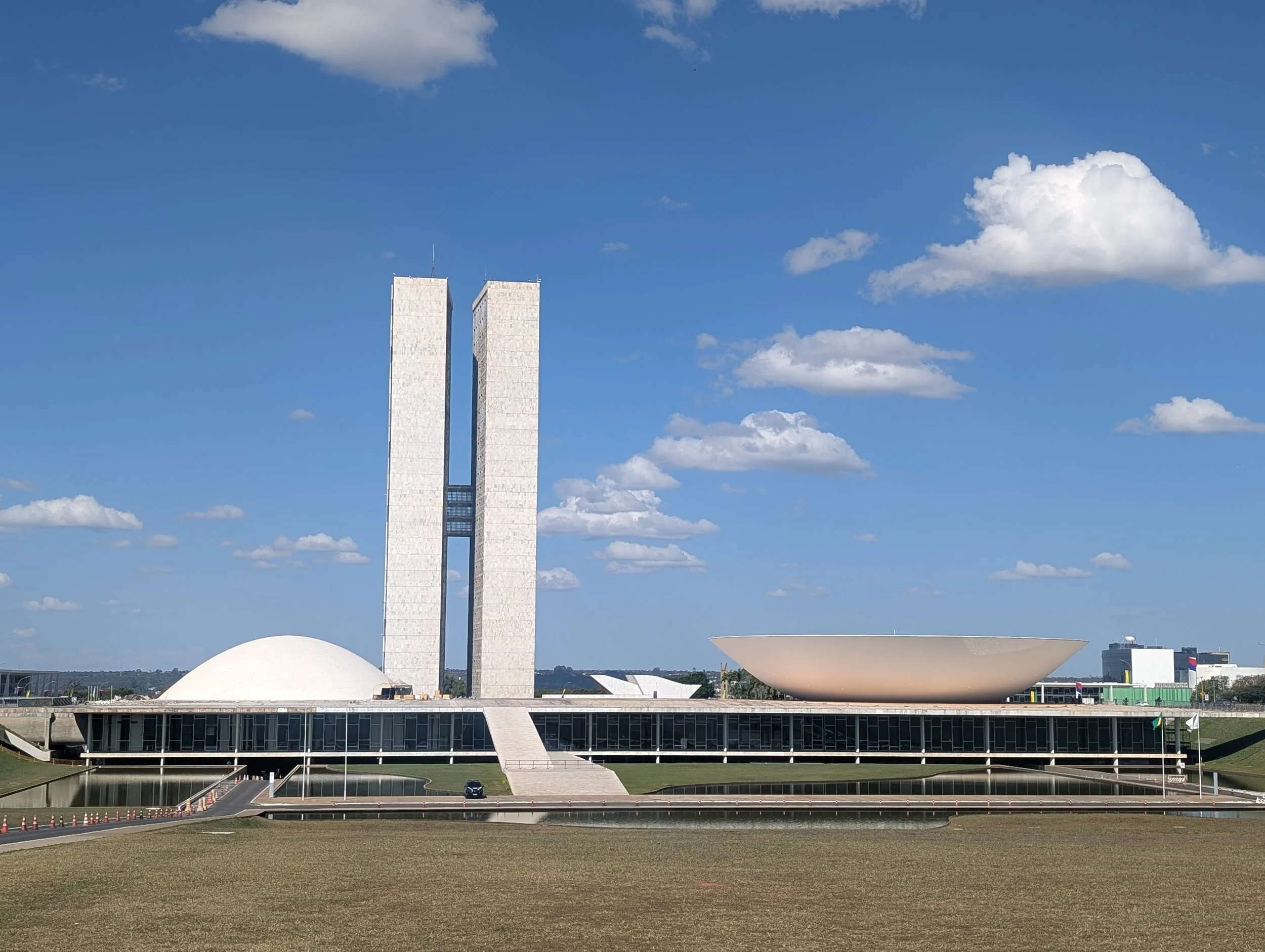
Government offices in Brasilia
The whole city was built in under four years which meant it lacked variety and a sense of history. It must have been a huge architectural feat but we were unable to appreciate it.
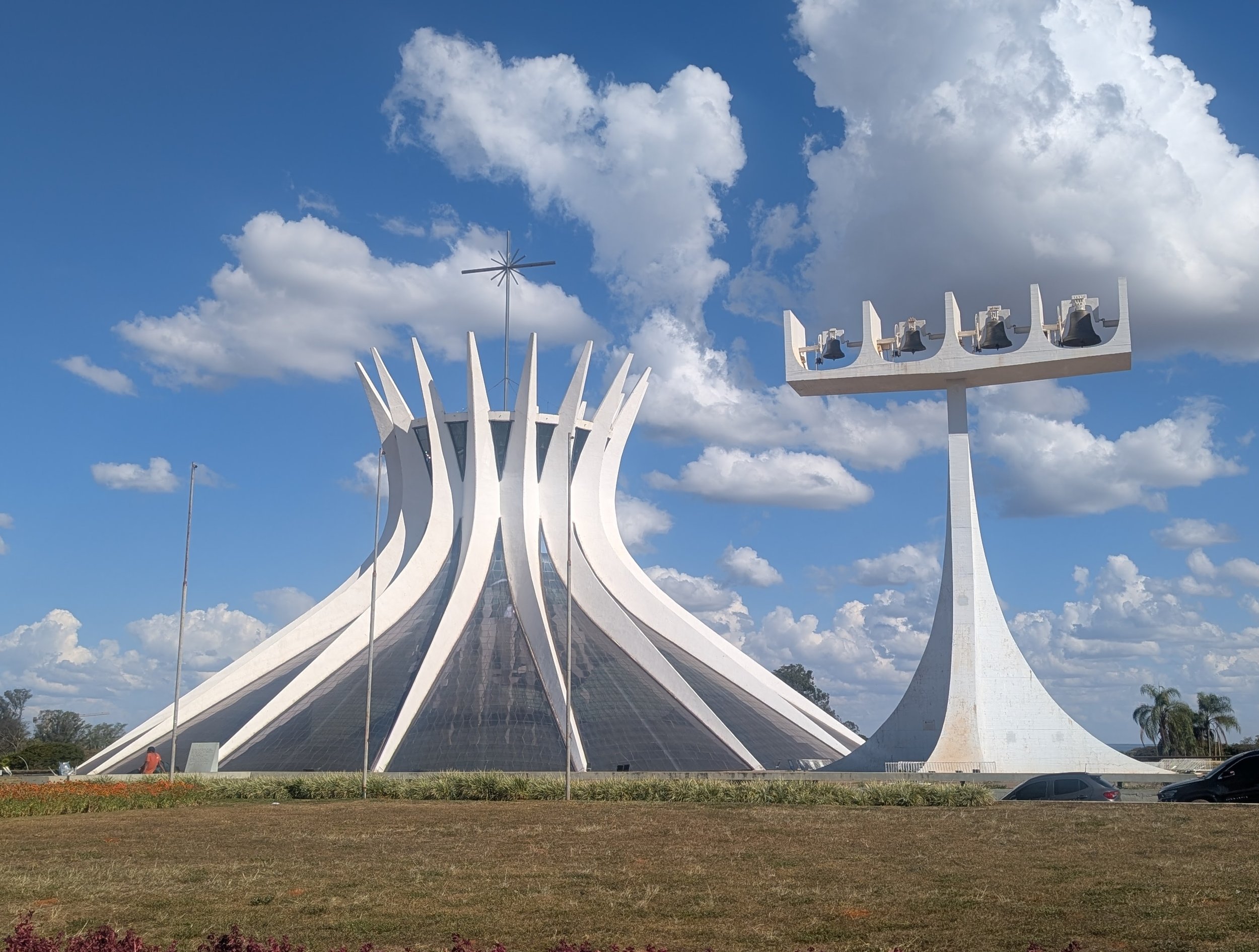
Catedral Metropolitana Nossa Senora Aparecida
We left Brasilia full of supplies and resumed our journey into the Pantanal.
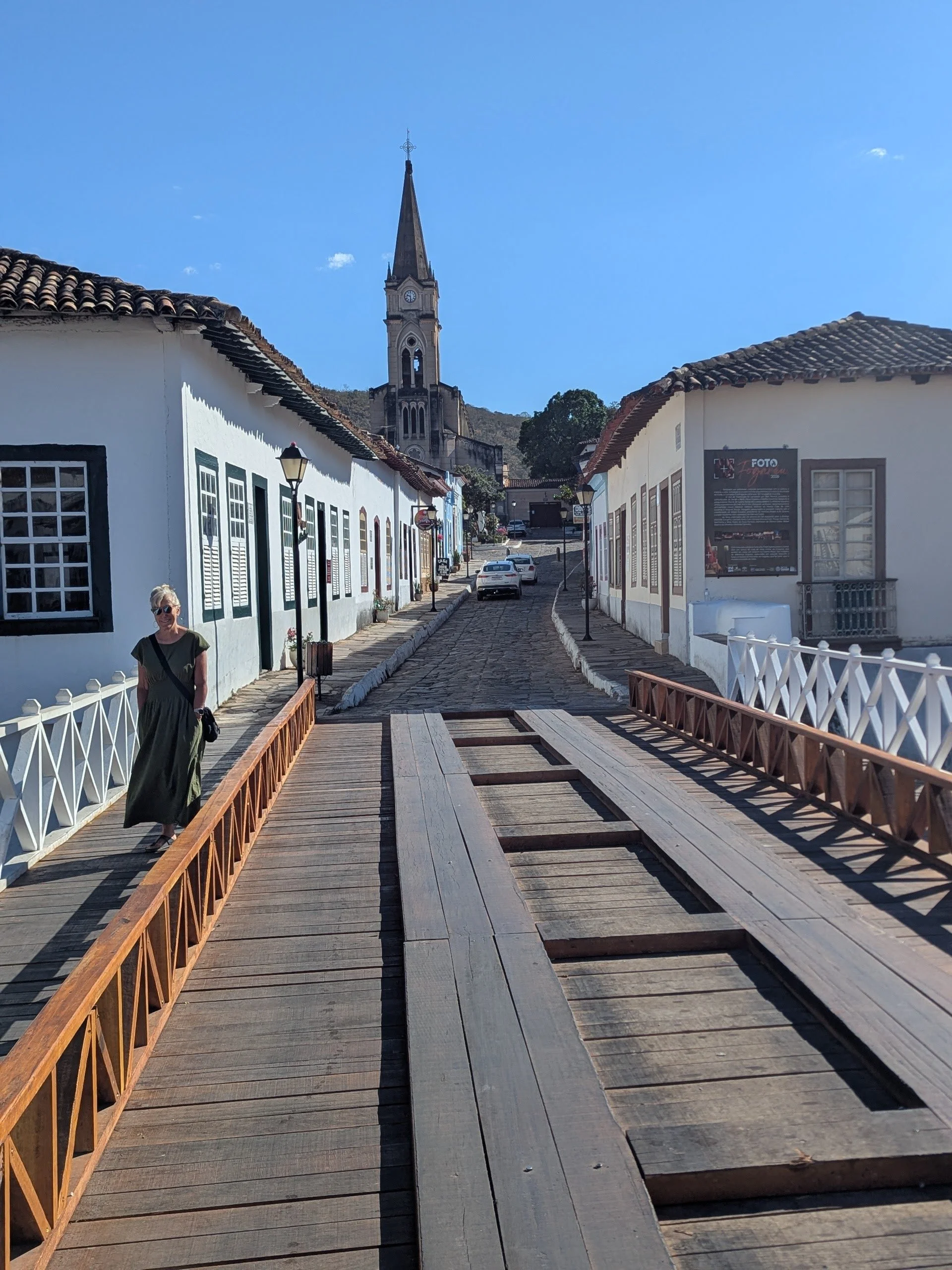
Brief stopover in the village of Goias along the way
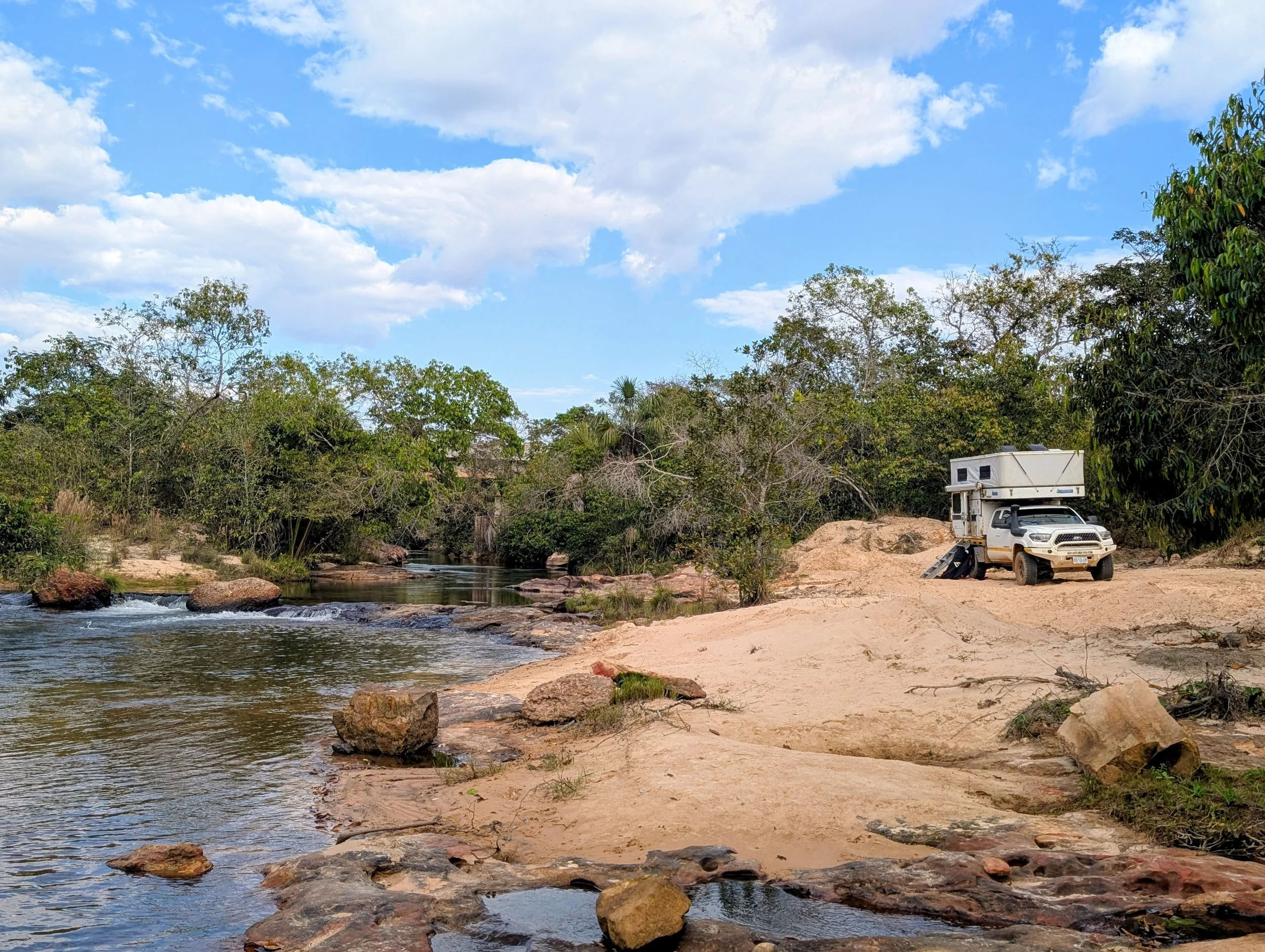
Found a river side wild camp!
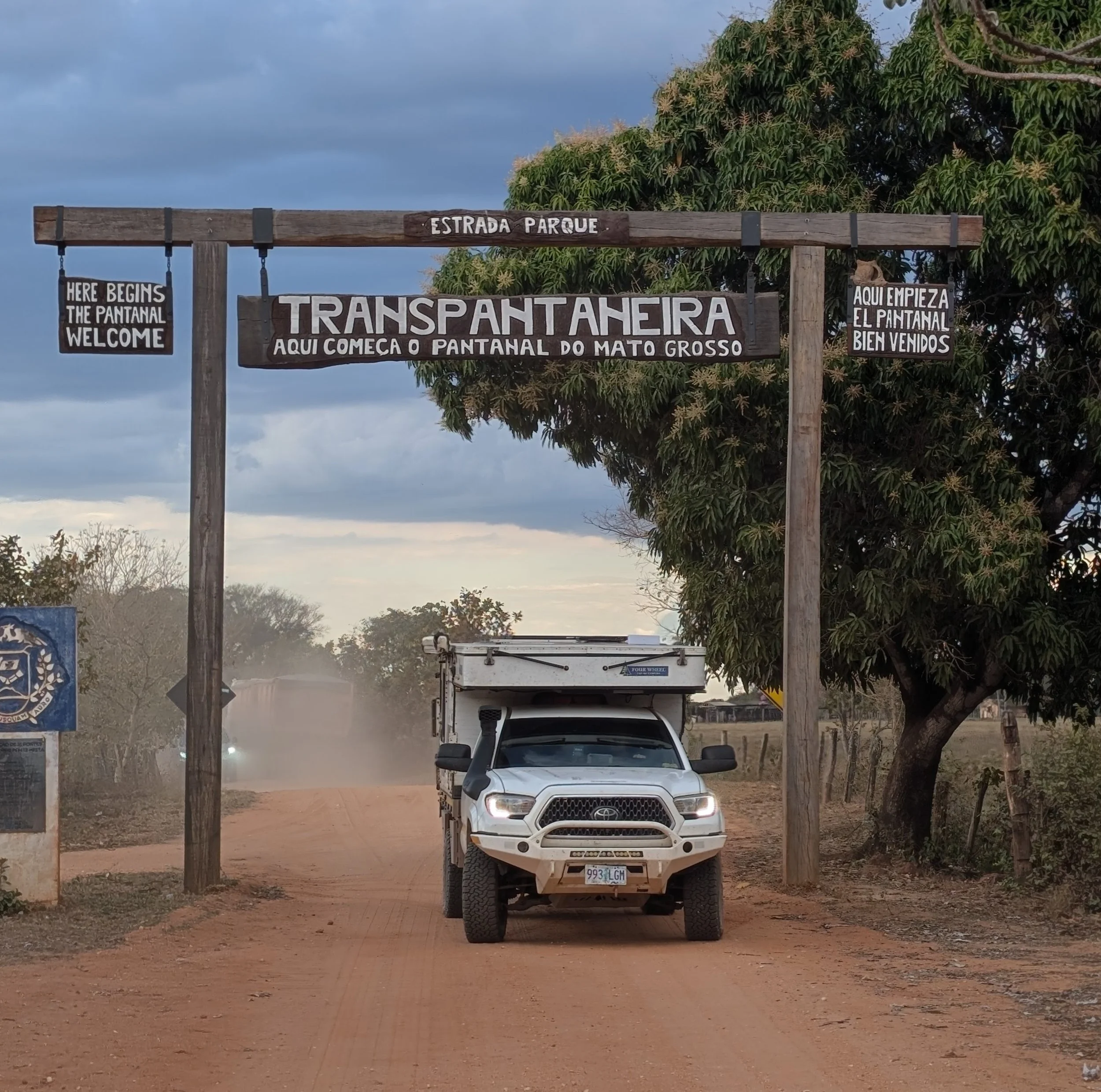
Finally, we made to the beginning of the Transpantaneira, the start of the road into the northern Pantanal
Exploring the Pantanal was one of the things we were most looking forward to in Brazil. We could not wait to drive through the vast wetlands and, hopefully, find jaguars. The Transpantaneira itself had an interesting history. In the 1970’s the government embarked on building a road to connect cattle ranching communities in the area. Unfortunately the realities of building a wetland road became too difficult and they abandoned the project. Now there is a 147km dirt road that leads from the town of Pocone out to the tiny hamlet of Porto Jofre where it ends at the Cuiabá River. Driving this road has become a classic overland experience.
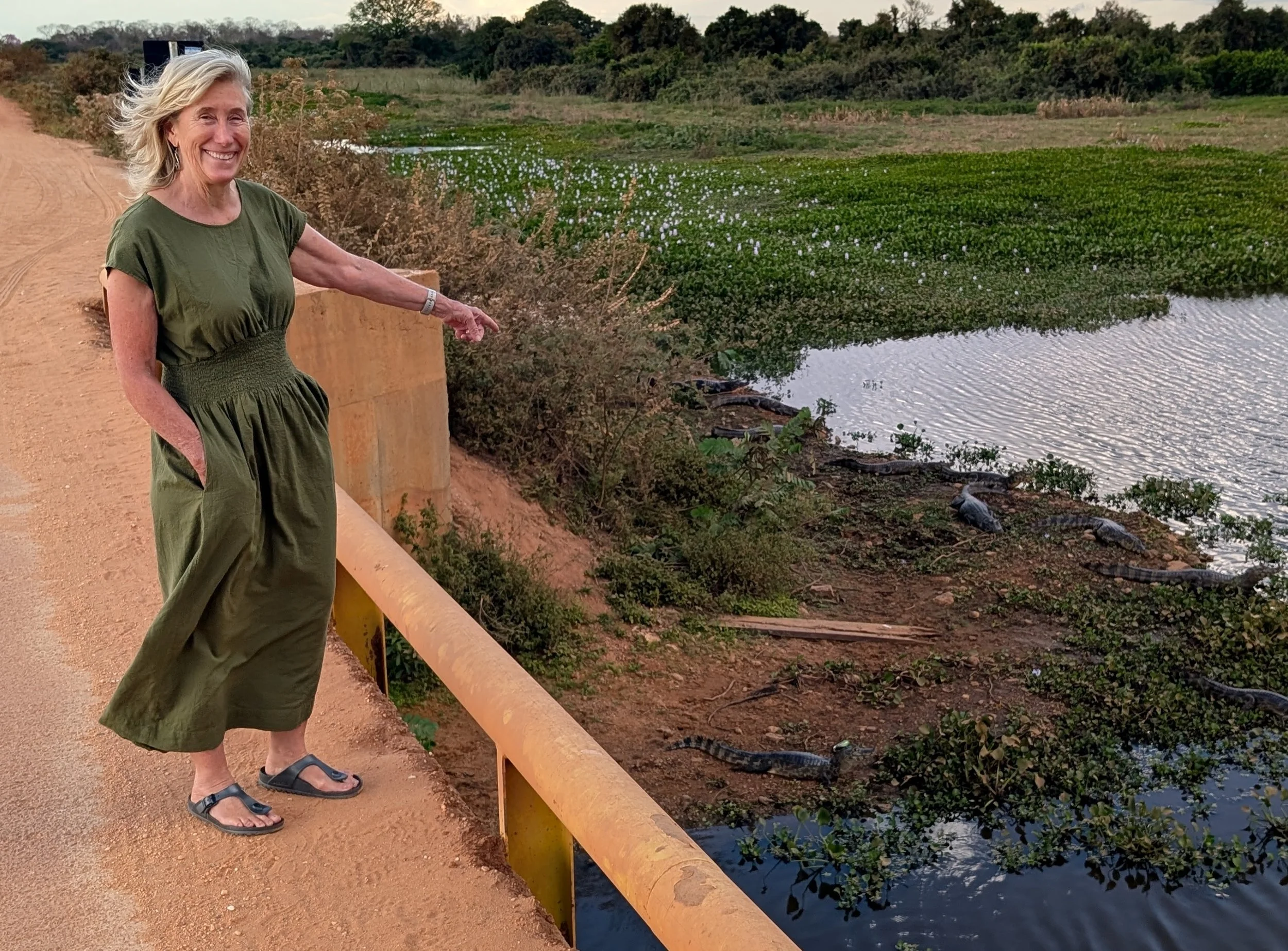
Almost immediately we found scores of caiman on the dirt bank. Dawn was excited.
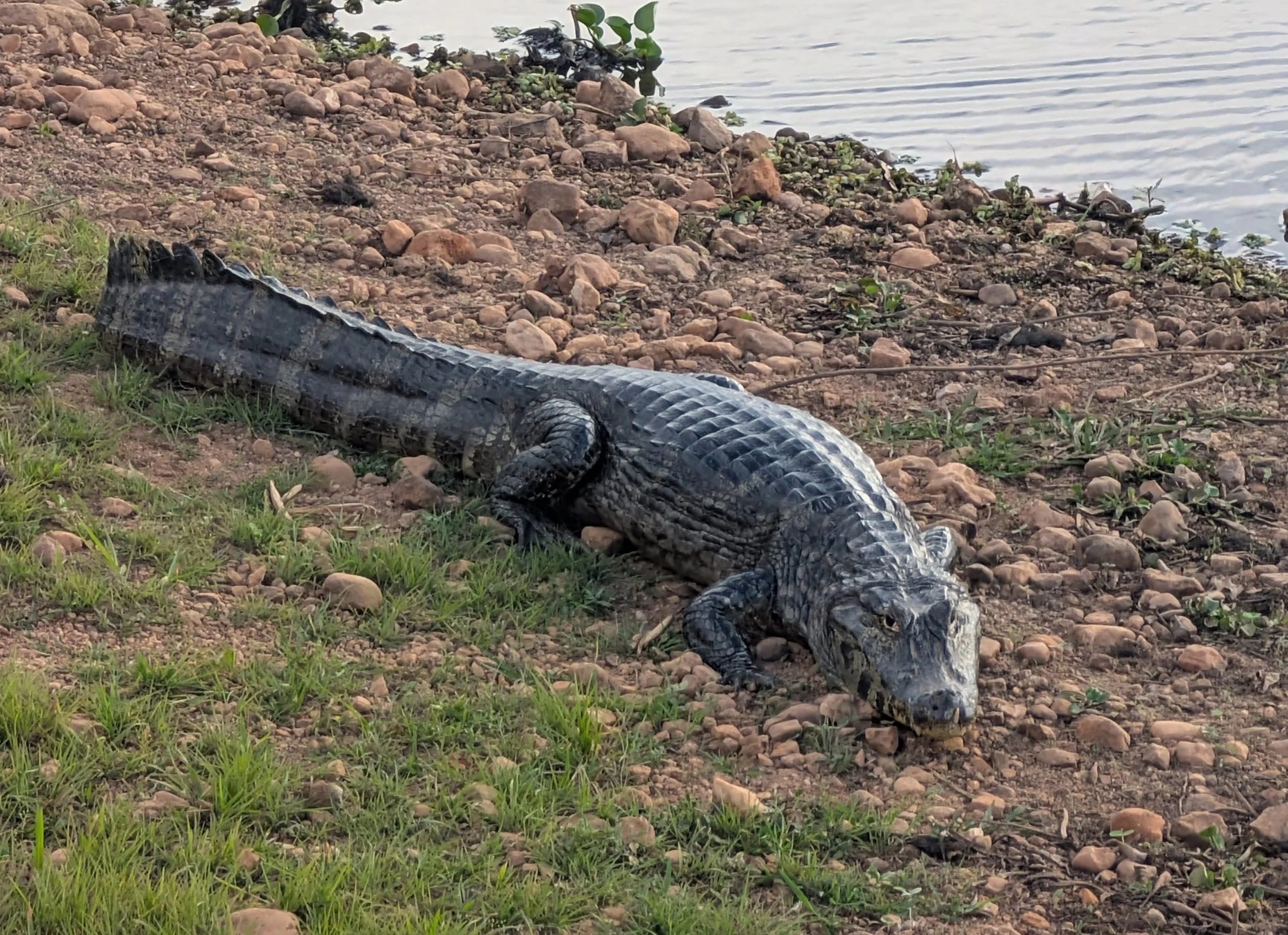
It felt like they had some ownership over the area
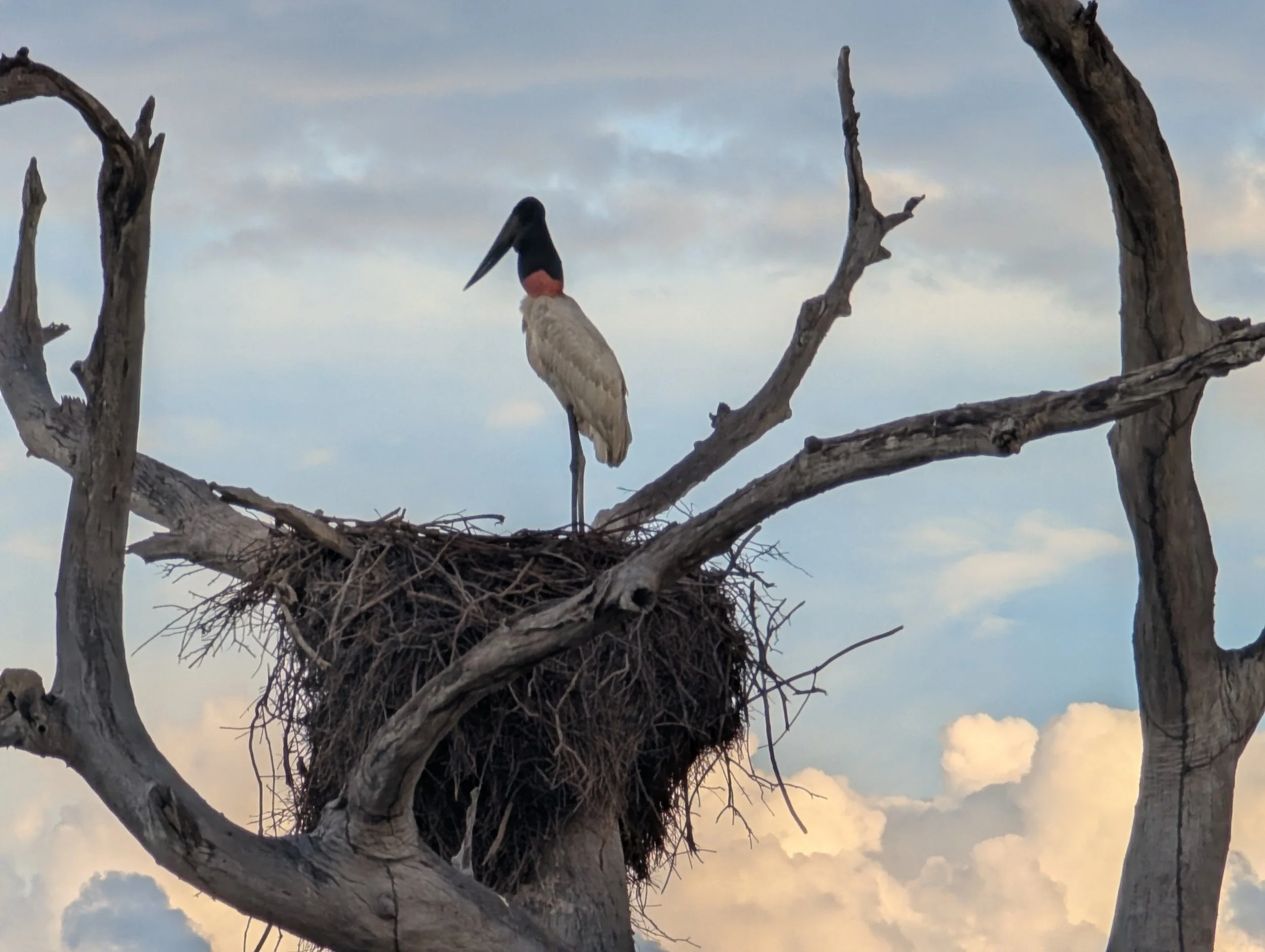
These huge storks were fascinating to watch
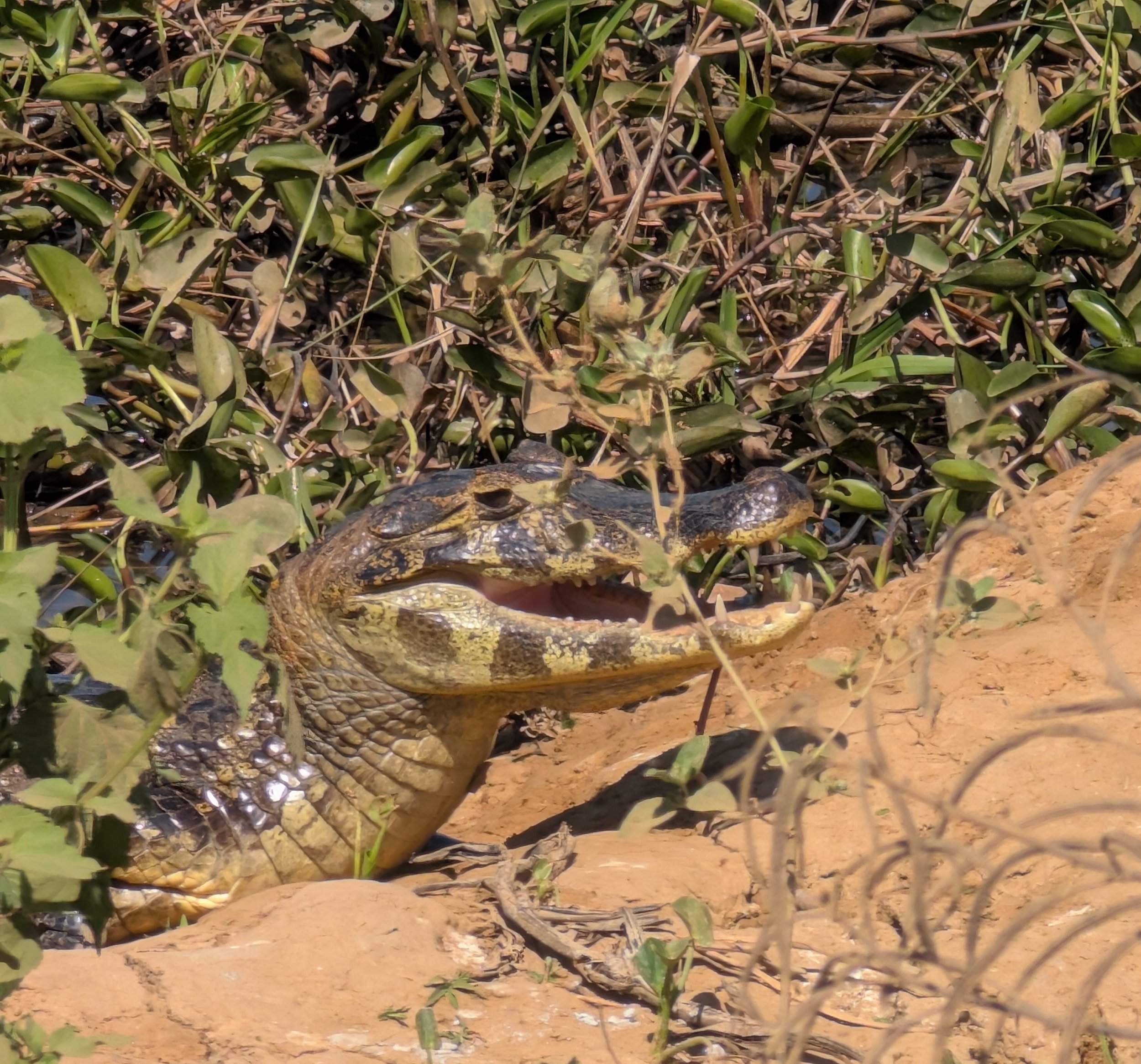
Camouflage at work
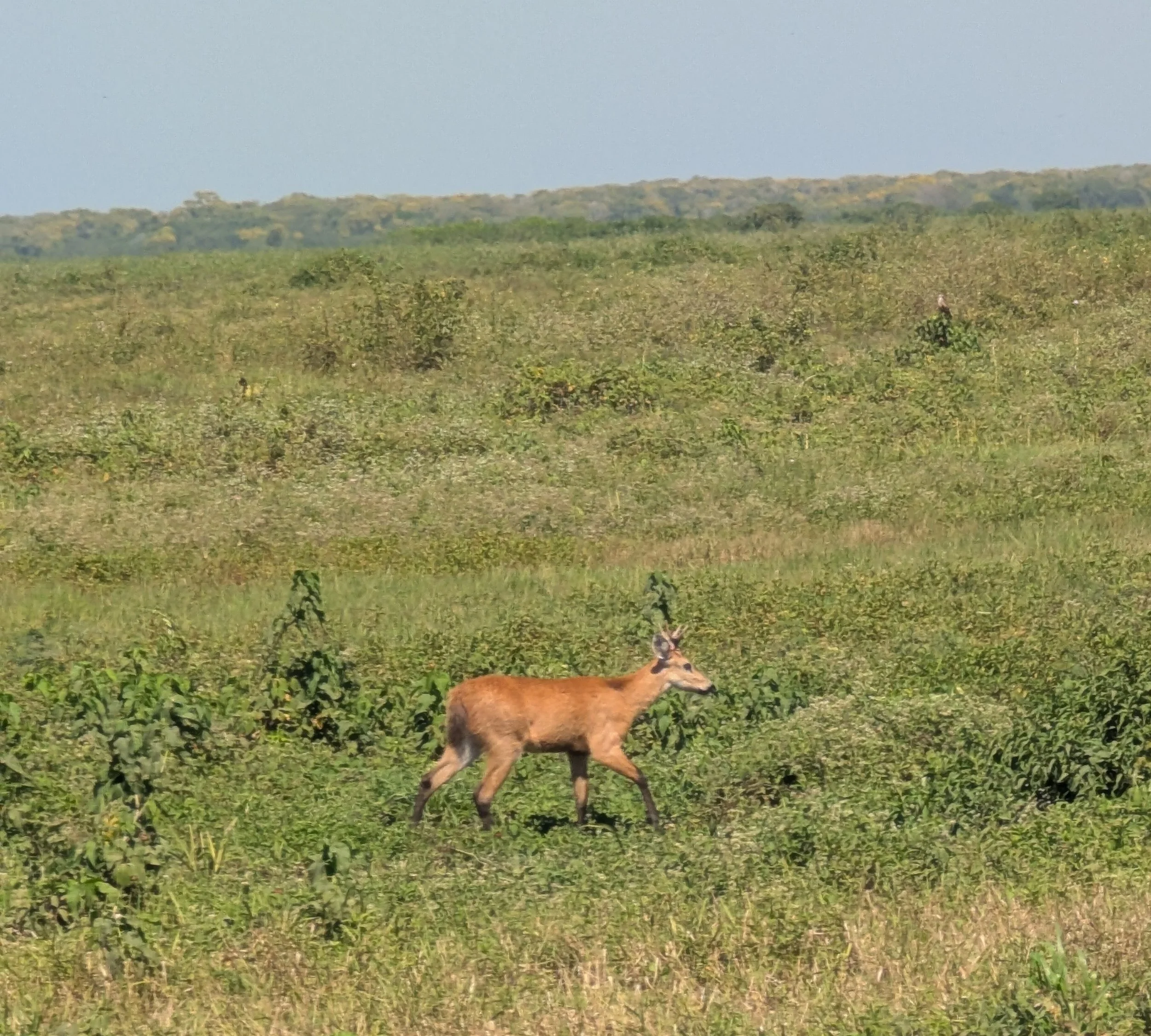
Native deer - we don’t know what kind
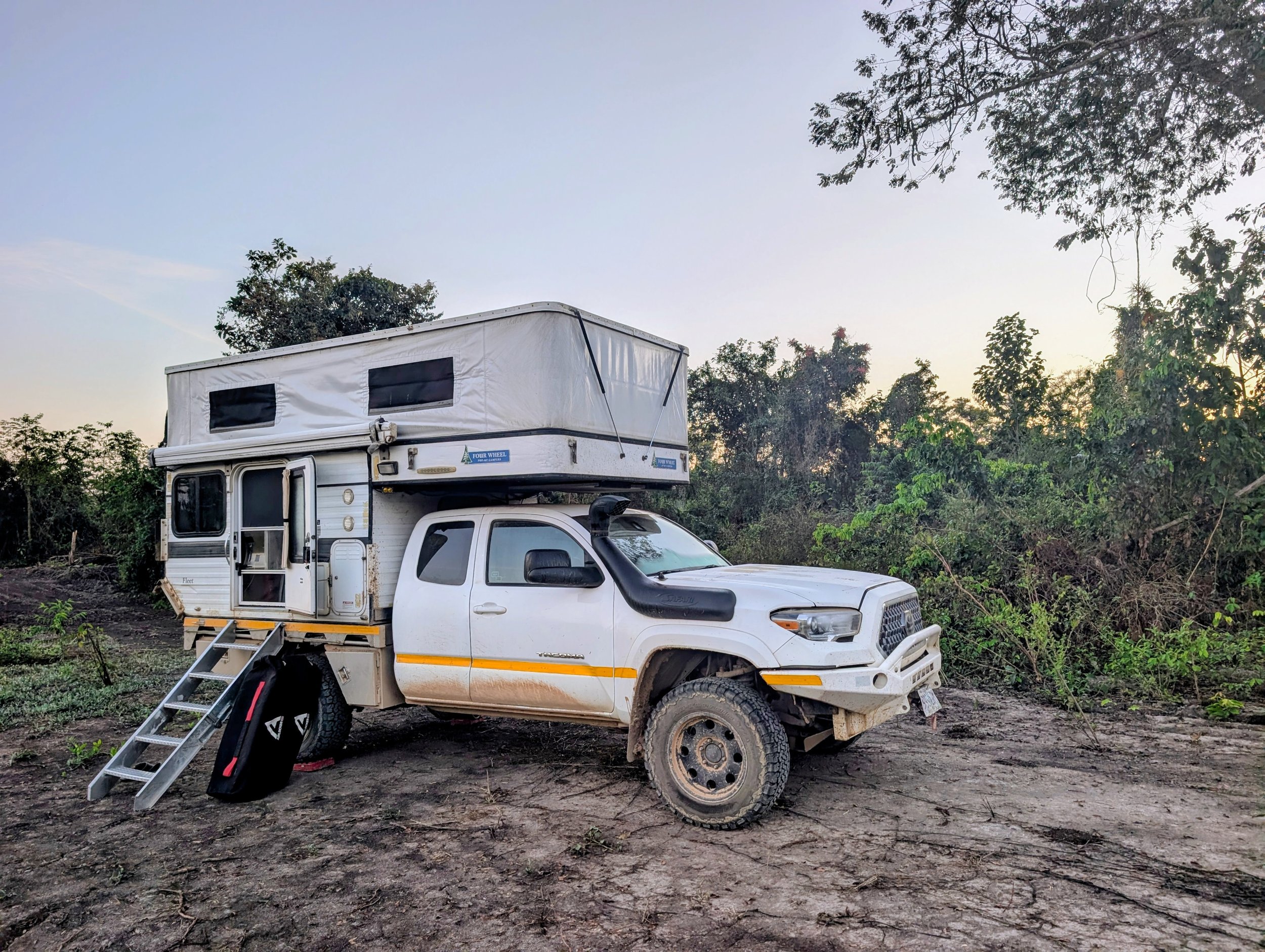
Camping along the way in the Pantanal. We knew there were possibly jaguars around but were not too concerned at this point - we had not yet seen how big and muscular they actually are.
The drive out to Porto Jofre was surprisingly easy. The dirt road was in decent shape. We did not have any intimate encounters with scary wildlife and were actually surprised by how much of the road was lined with cattle ranches.
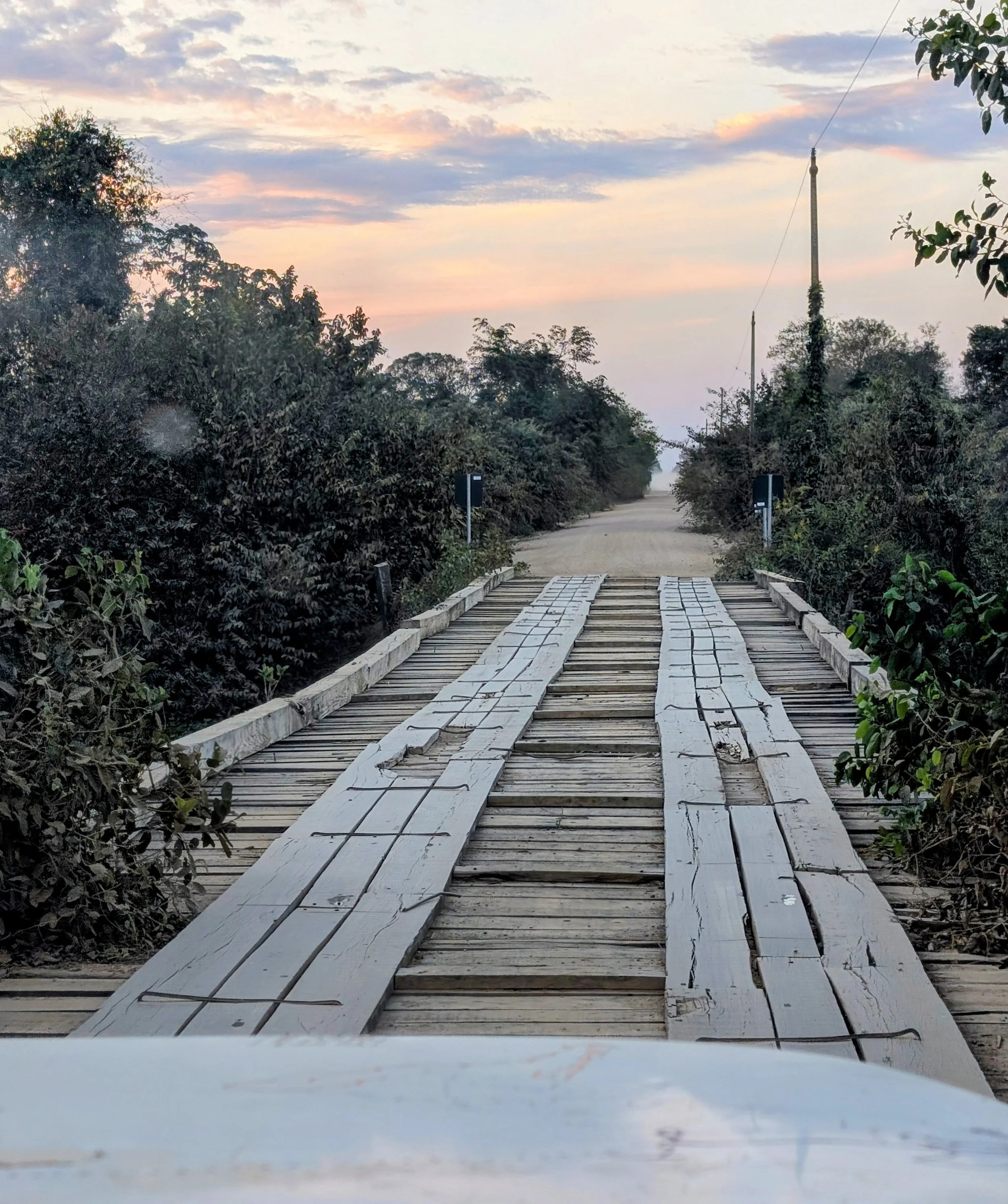
The Transpantaneira features 122 bridges, originally all wooden like this one but many have now been replaced by concrete.
We had booked online with a guide to take us along the Cuiabá River to find jaguars so had high hopes as we pulled into town. We had never seen a jaguar in the wild. But we were also a little nervous, we tried several times with guides to find tigers in the wild in India with no success. It’s nature, so you never know.
We boarded our boat with another tourist family from Brazil and set out at 7am.
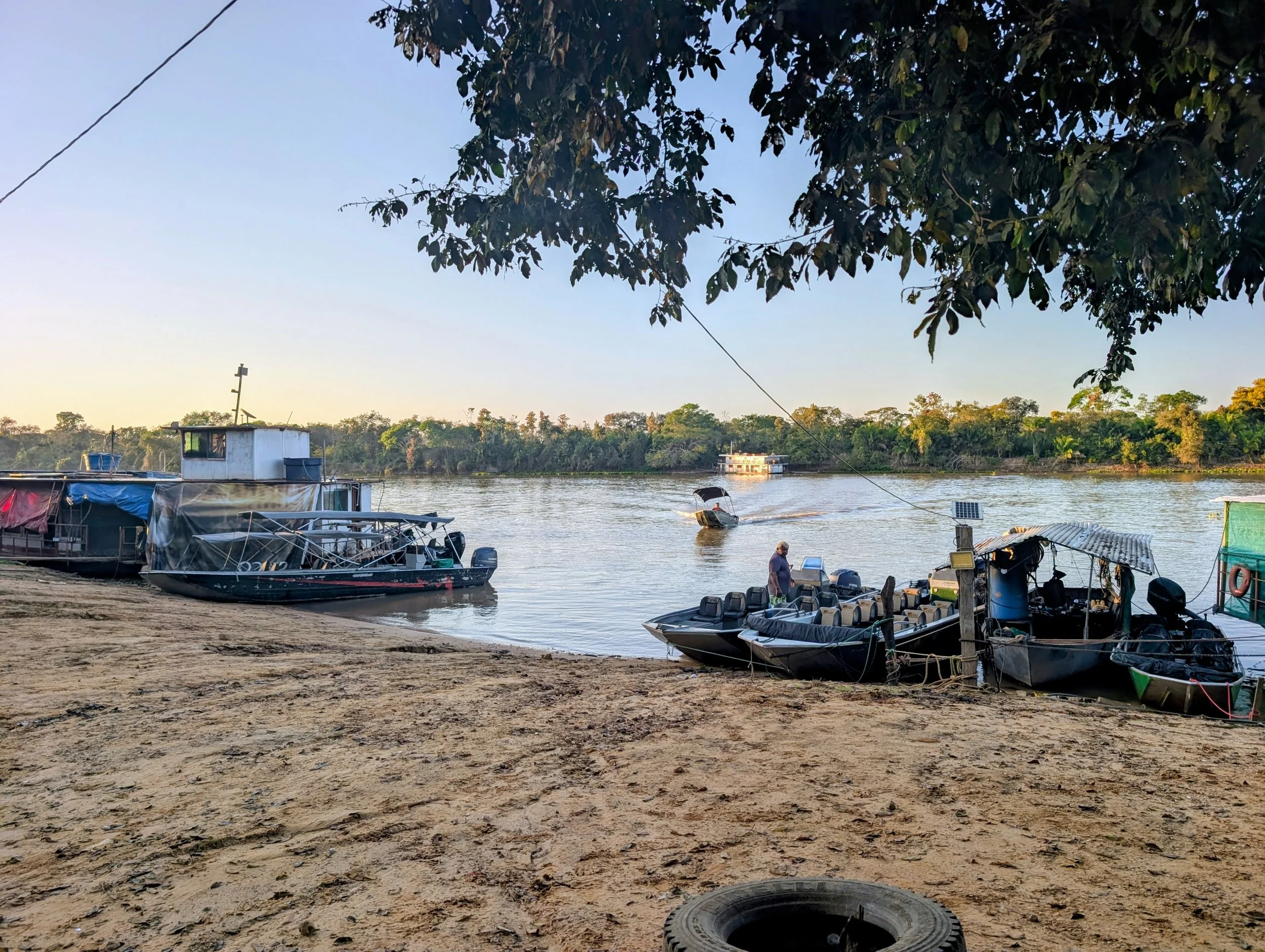
Riverside in Porto Jofre, our boat incoming to pick us up
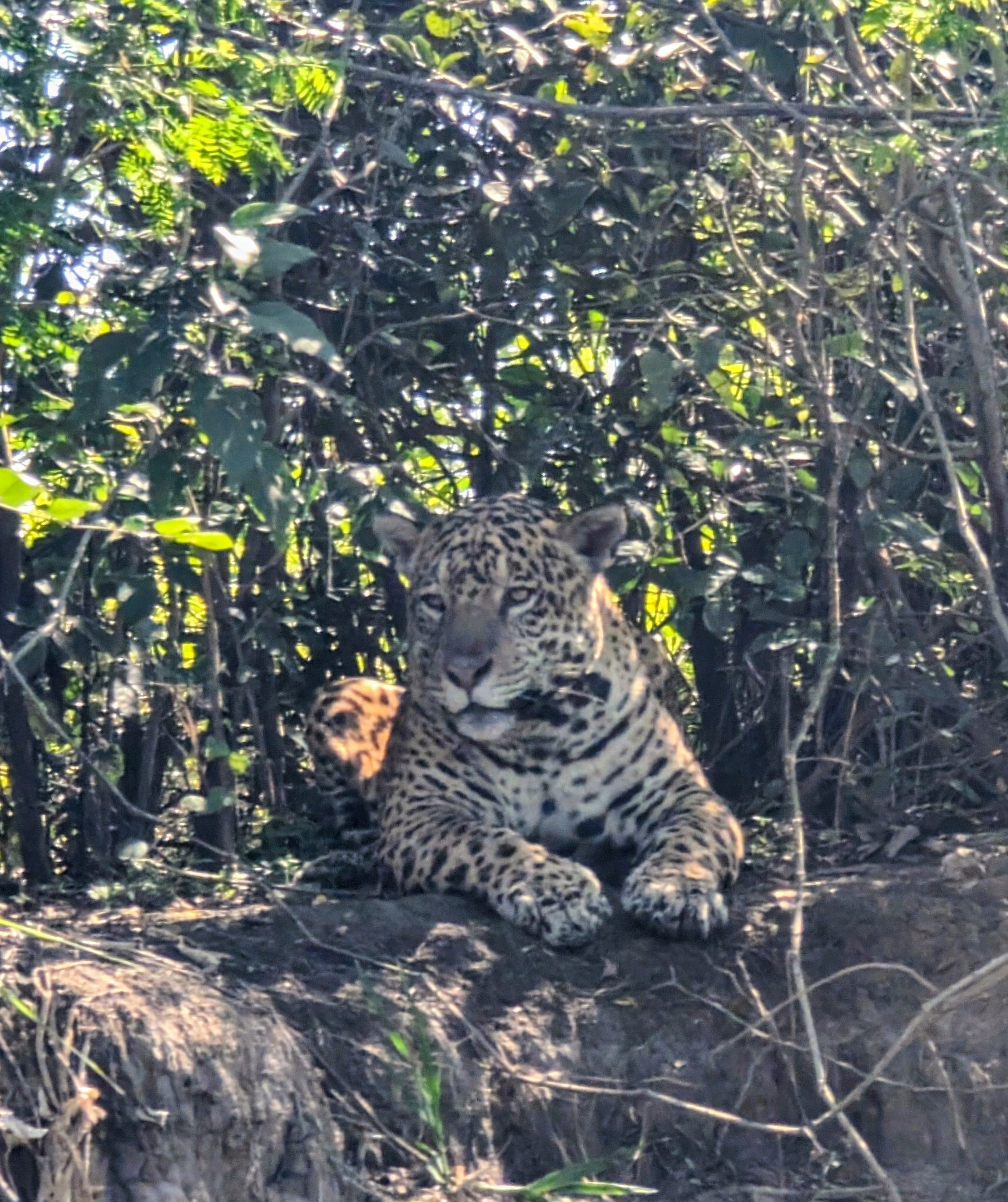
Our first jaguar sighting! A big male surveying the river.
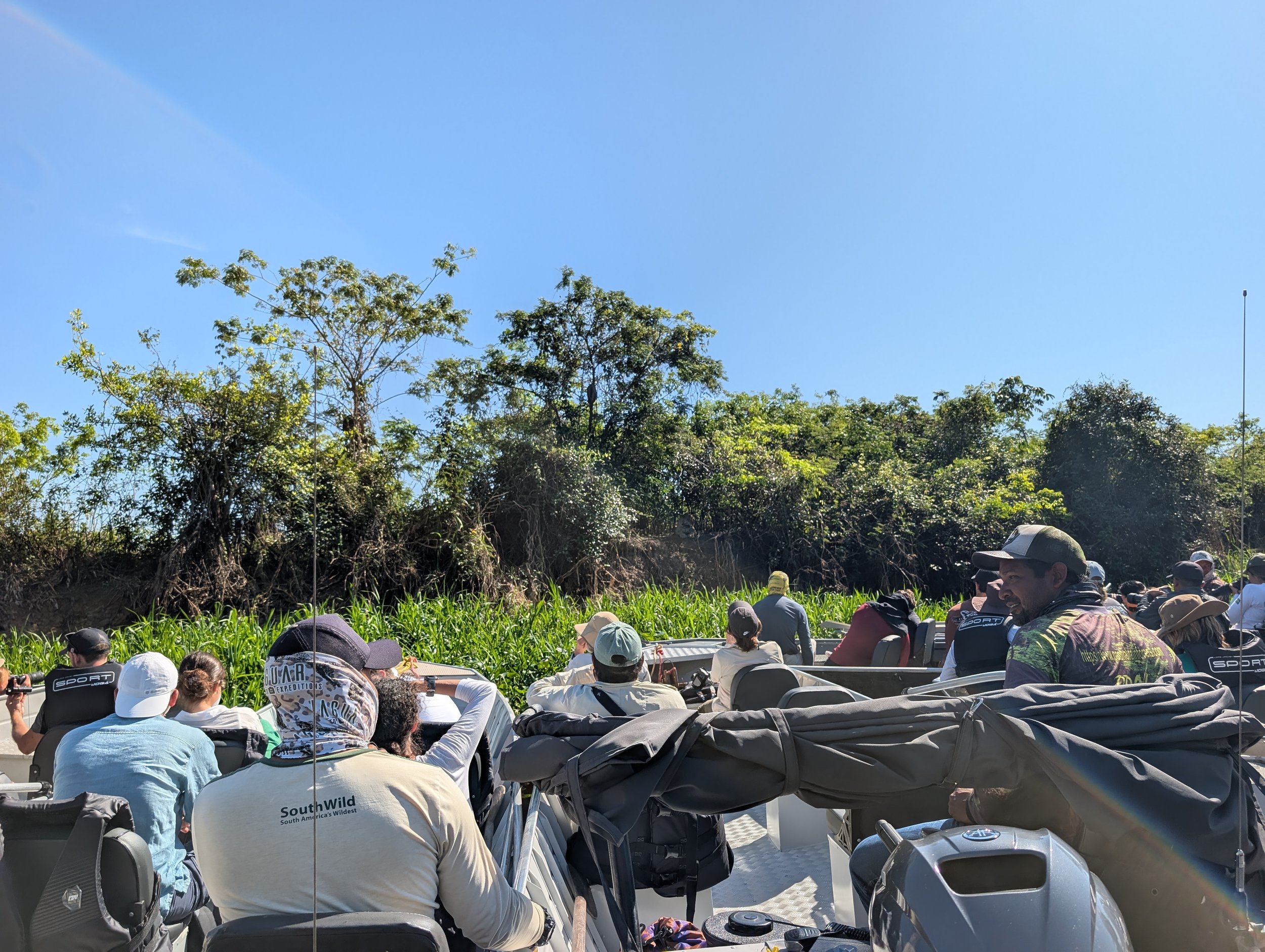
The reality of watching the big male jaguar on the bank.. Not as bad as a typical African safari, but boats were definitely jockeying for their clients to have the best view. Luckily everyone peacefully took turns.
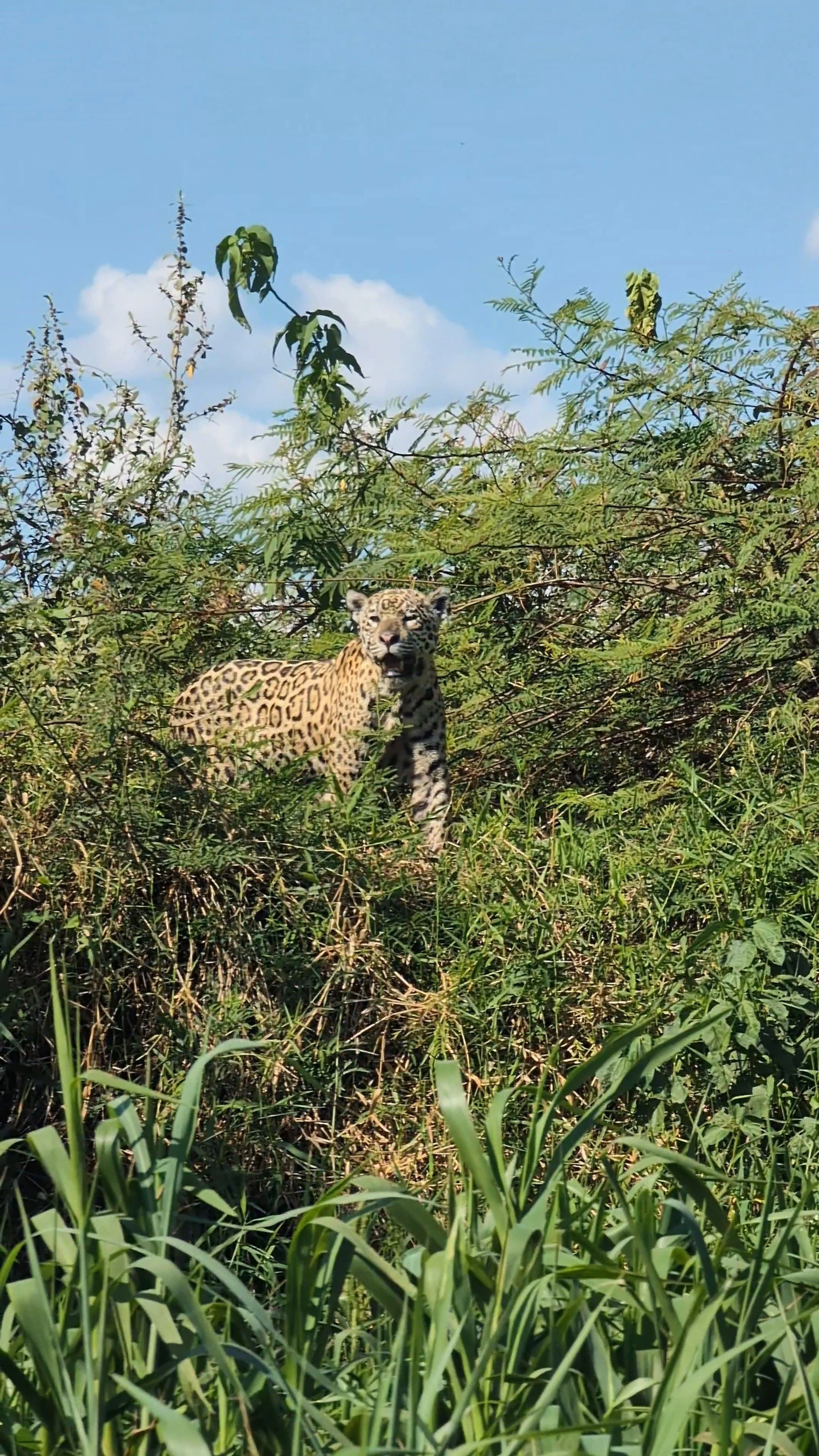
Following a female along the river as she hunts, this sighting was much more private, only two boats.
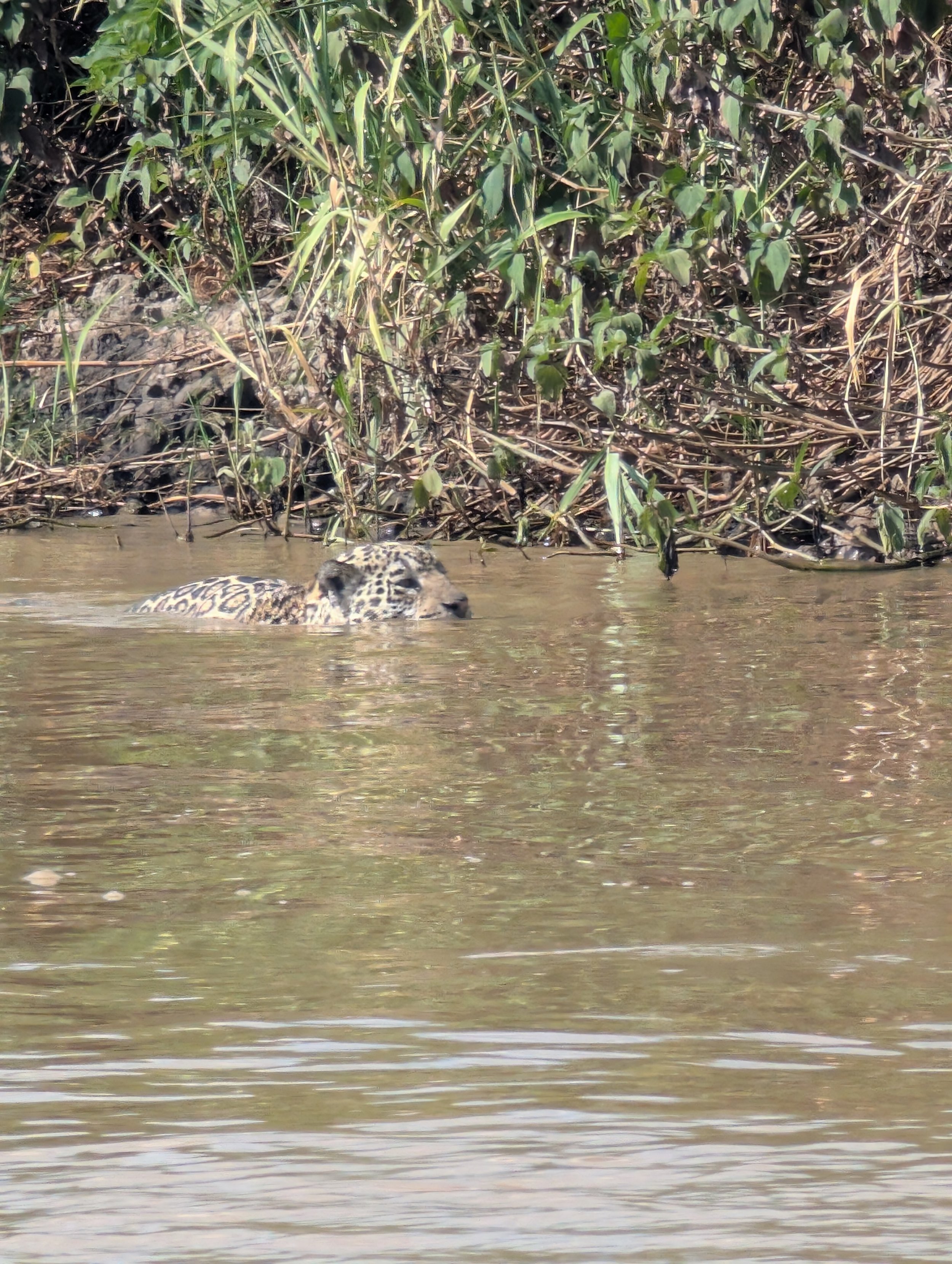
We didn’t realize how much jaguars swam
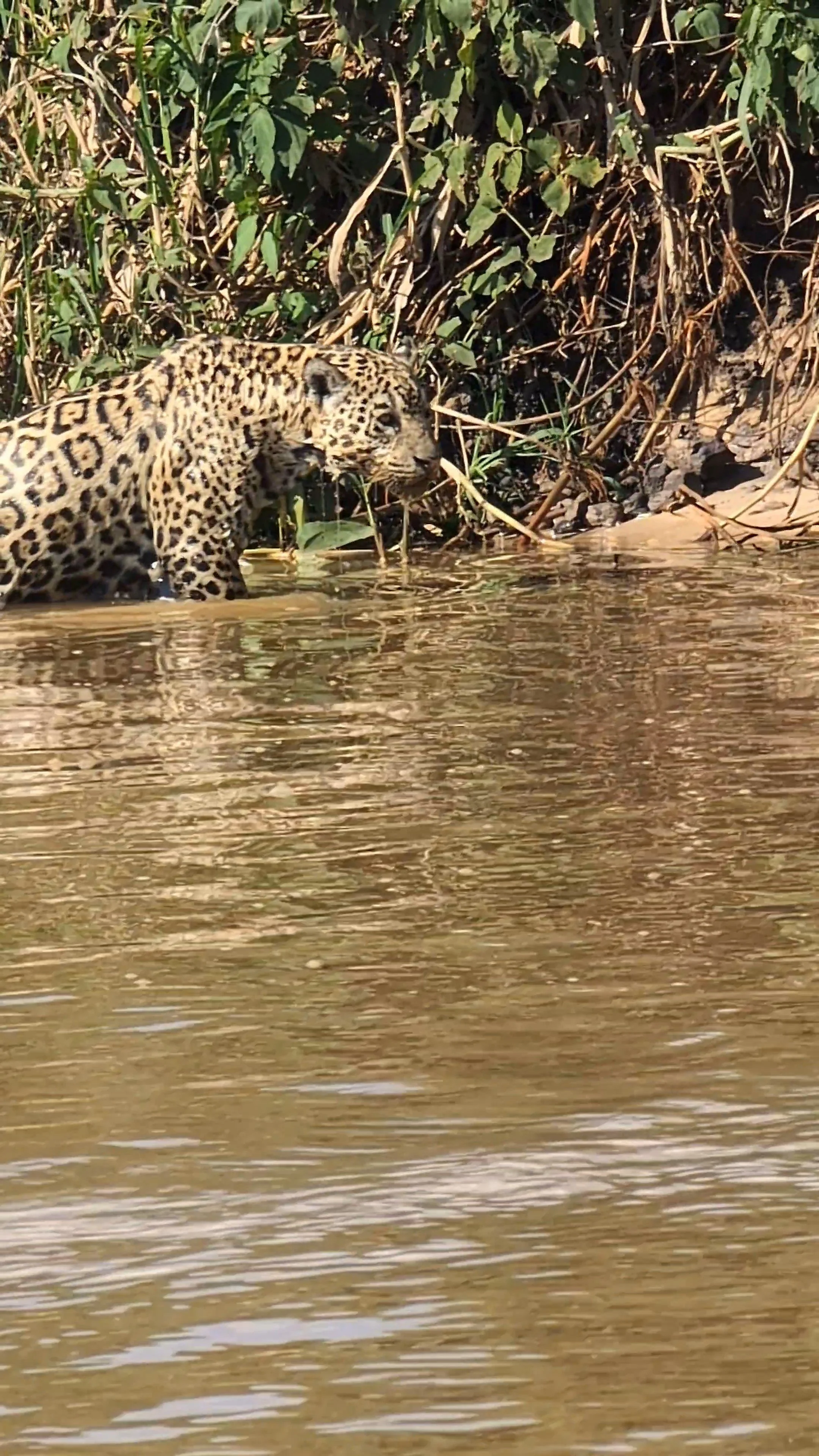
Overall we were surprised by their size and muscularity
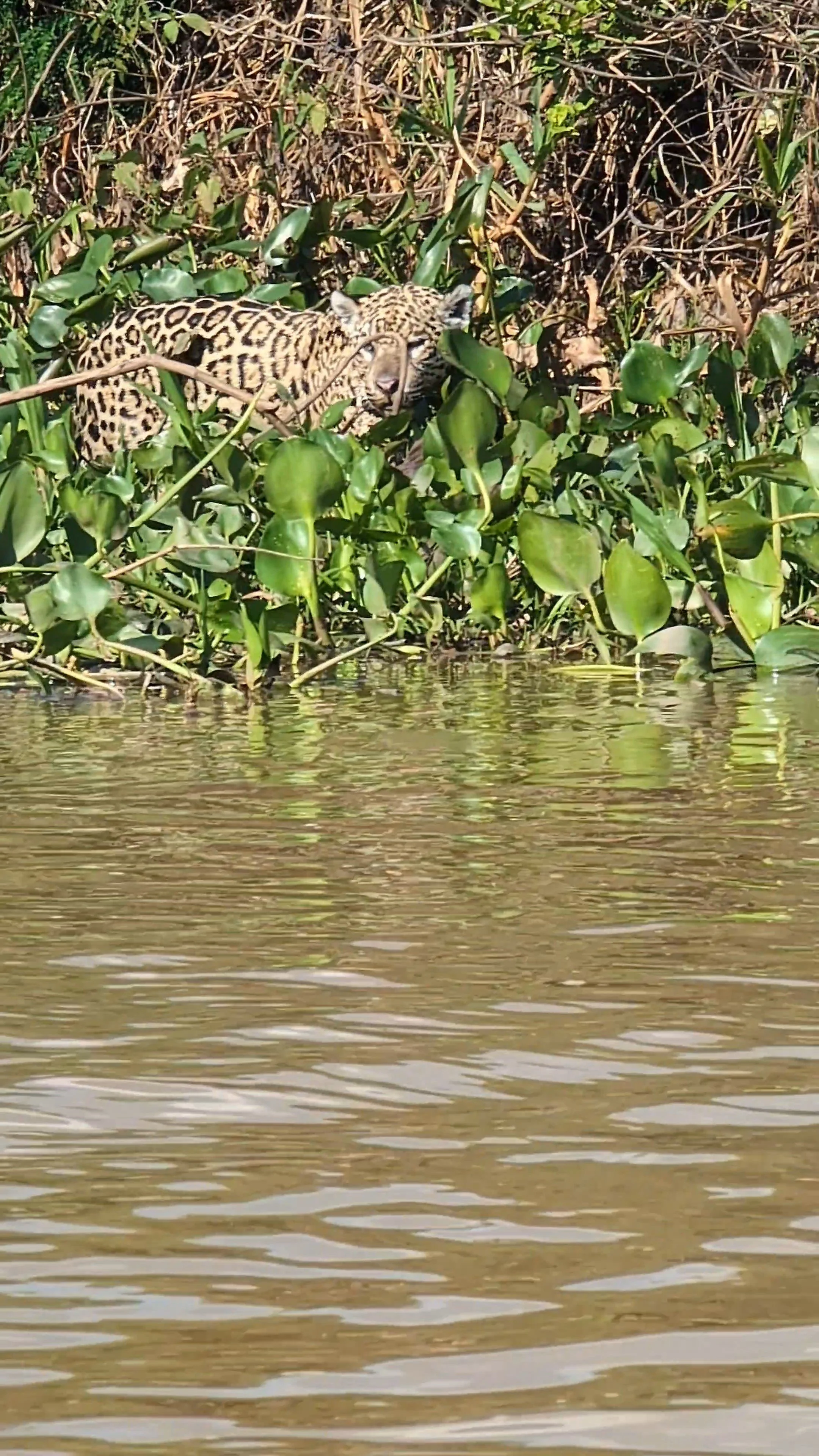
What an awesome day!
Our tour operator provided us all with a hearty local home cooked lunch that we ate on the boat, and we made it back by 4pm. Having seen four jaguars we were satisfied and happy.
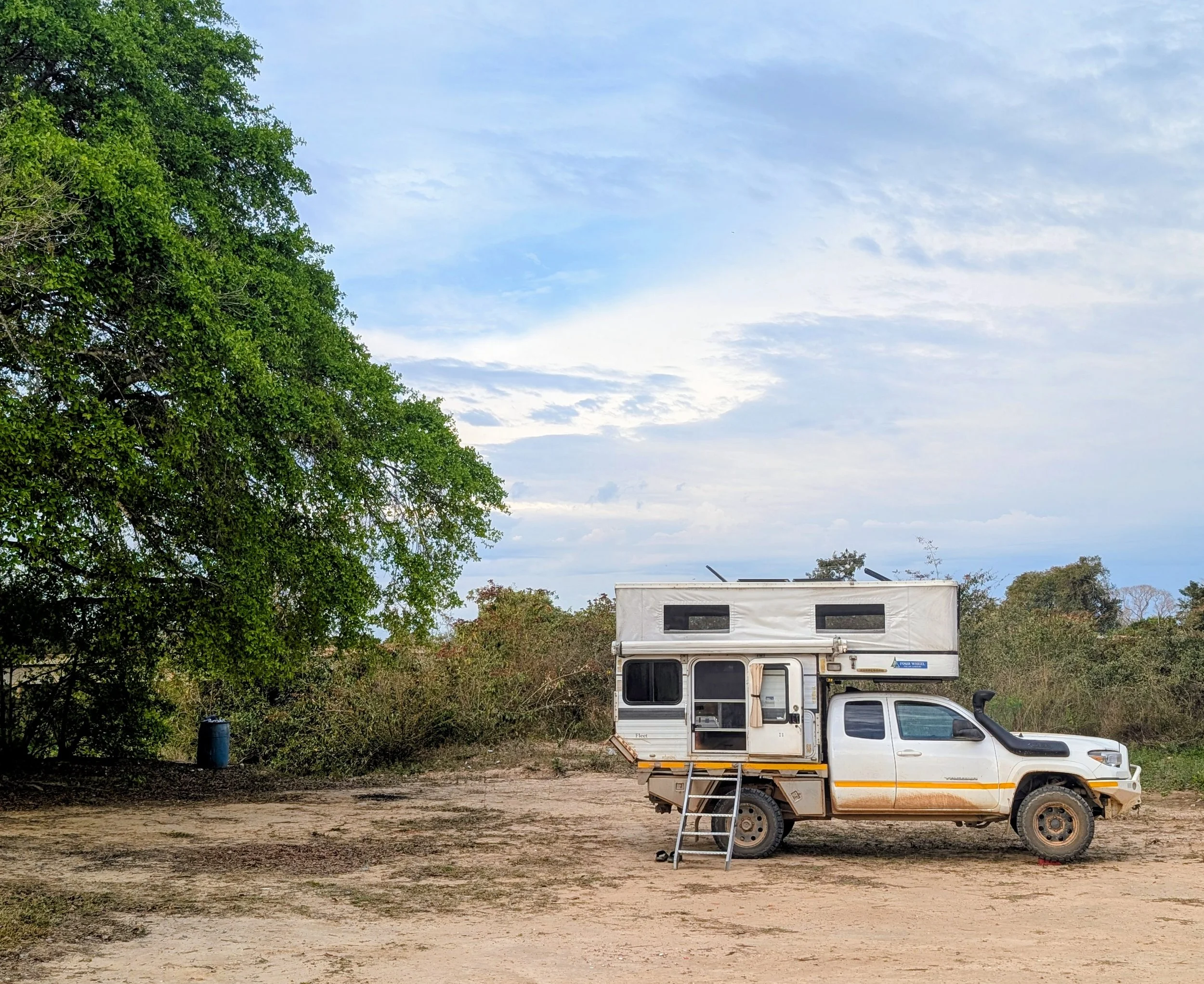
Camping along the road on the way out
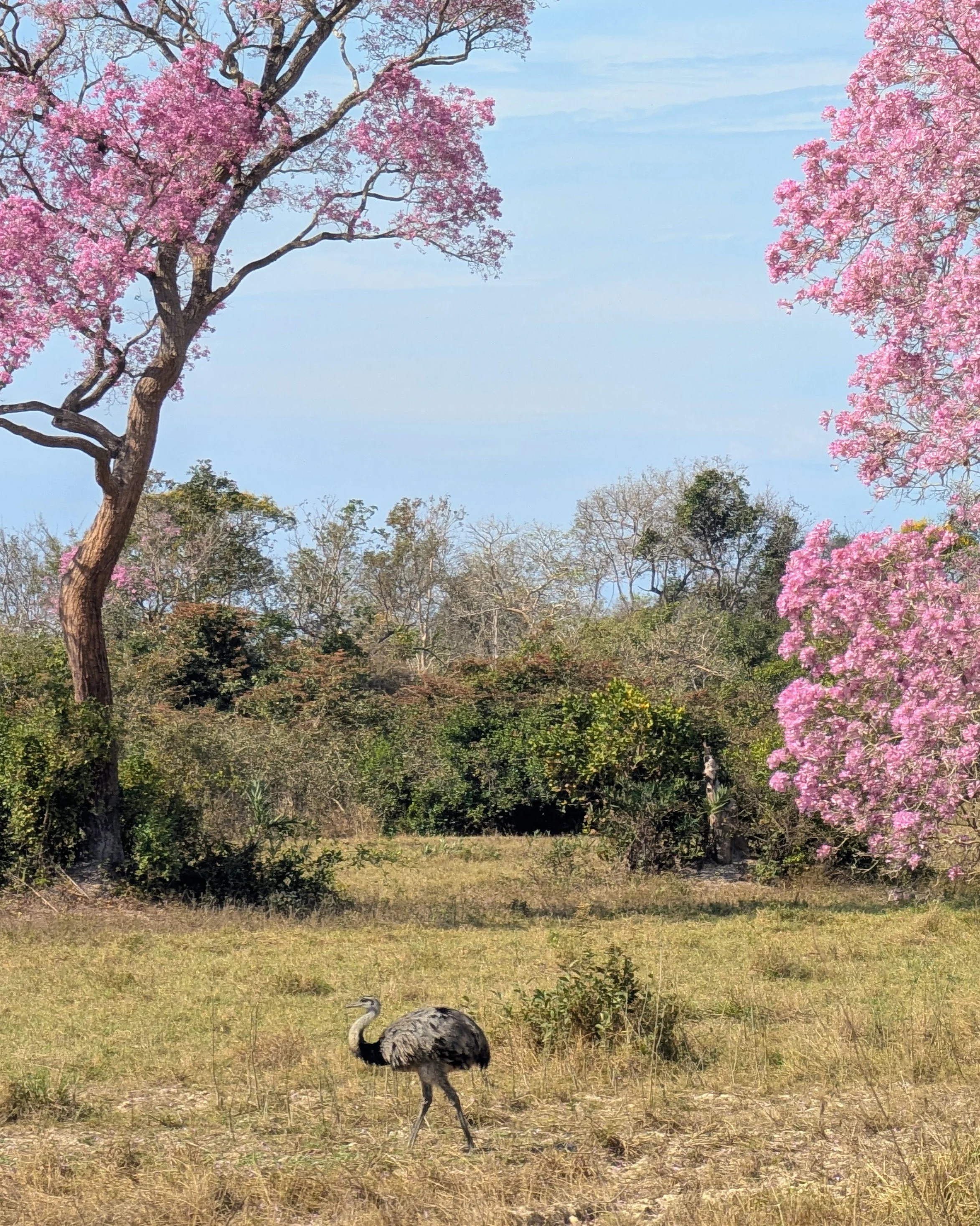
Rhea along the way
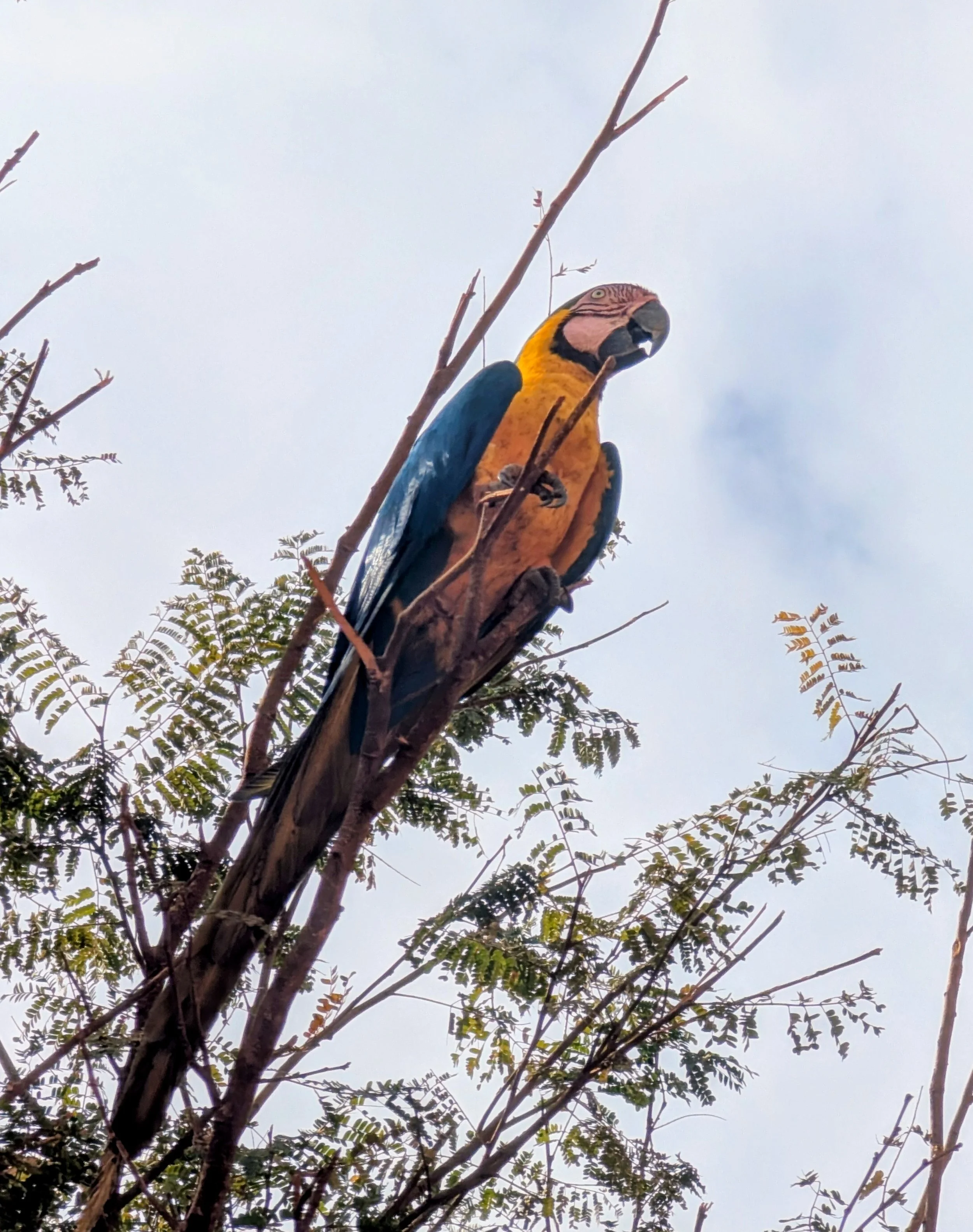
You would think this macaw was in the Pantanal, but we actually found it in a tree in a truck stop along the highway
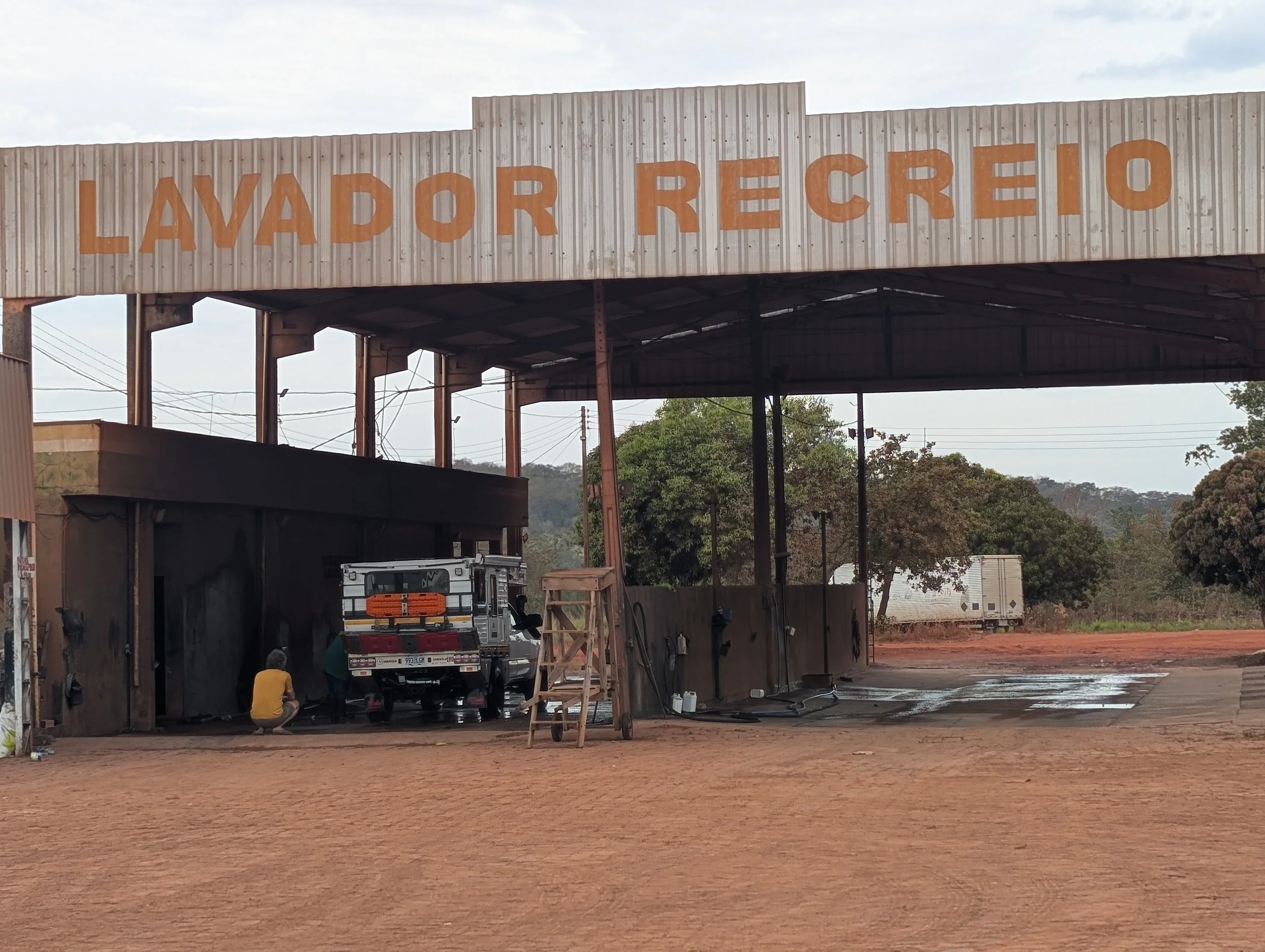
Having the mud washed off the truck
We had left the main Pantanal road, but continued driving some wildlife laden dirt roads as we made our way to our final destination in Brazil - Iguazu Falls.
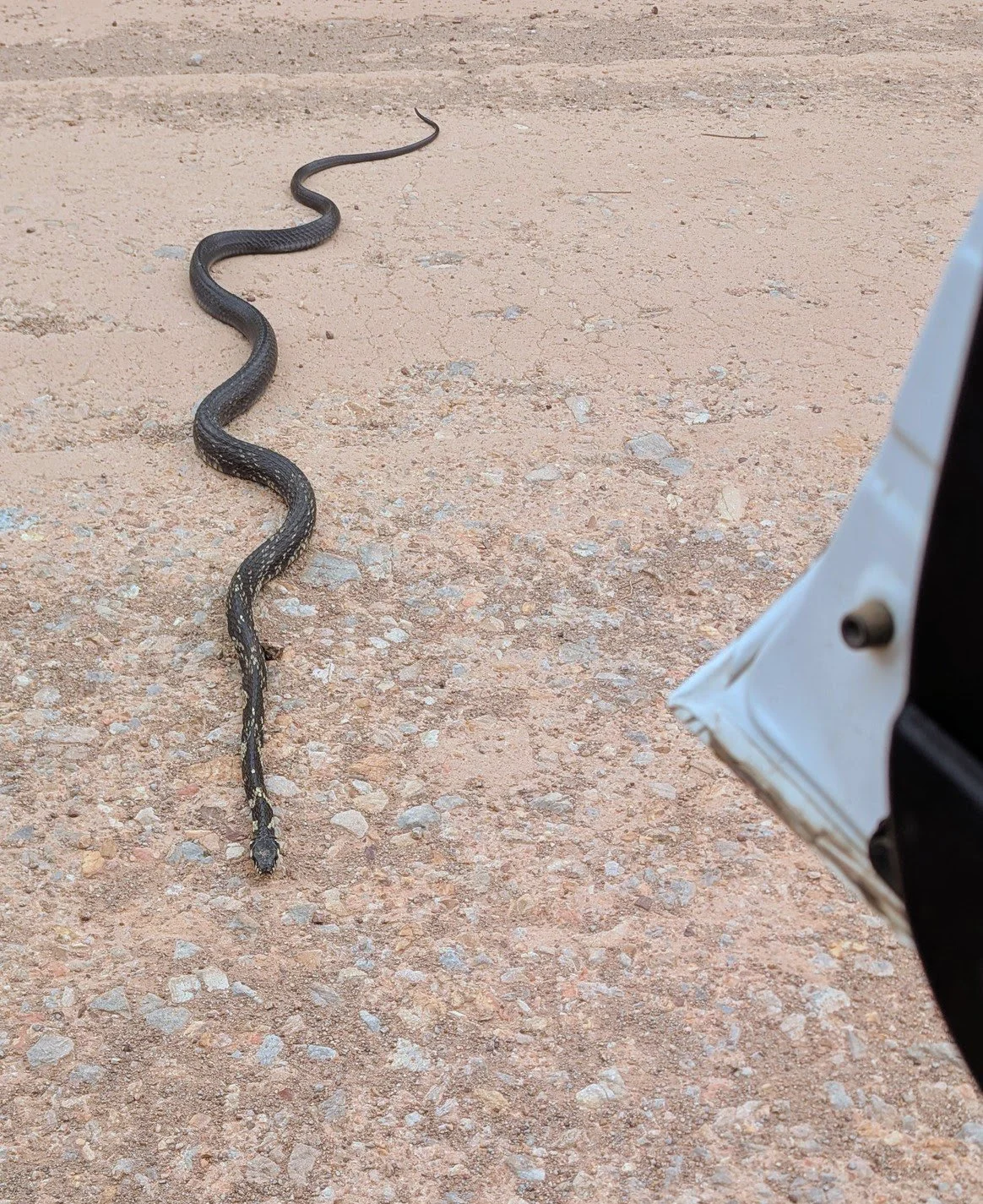
Huge snake crossing the road
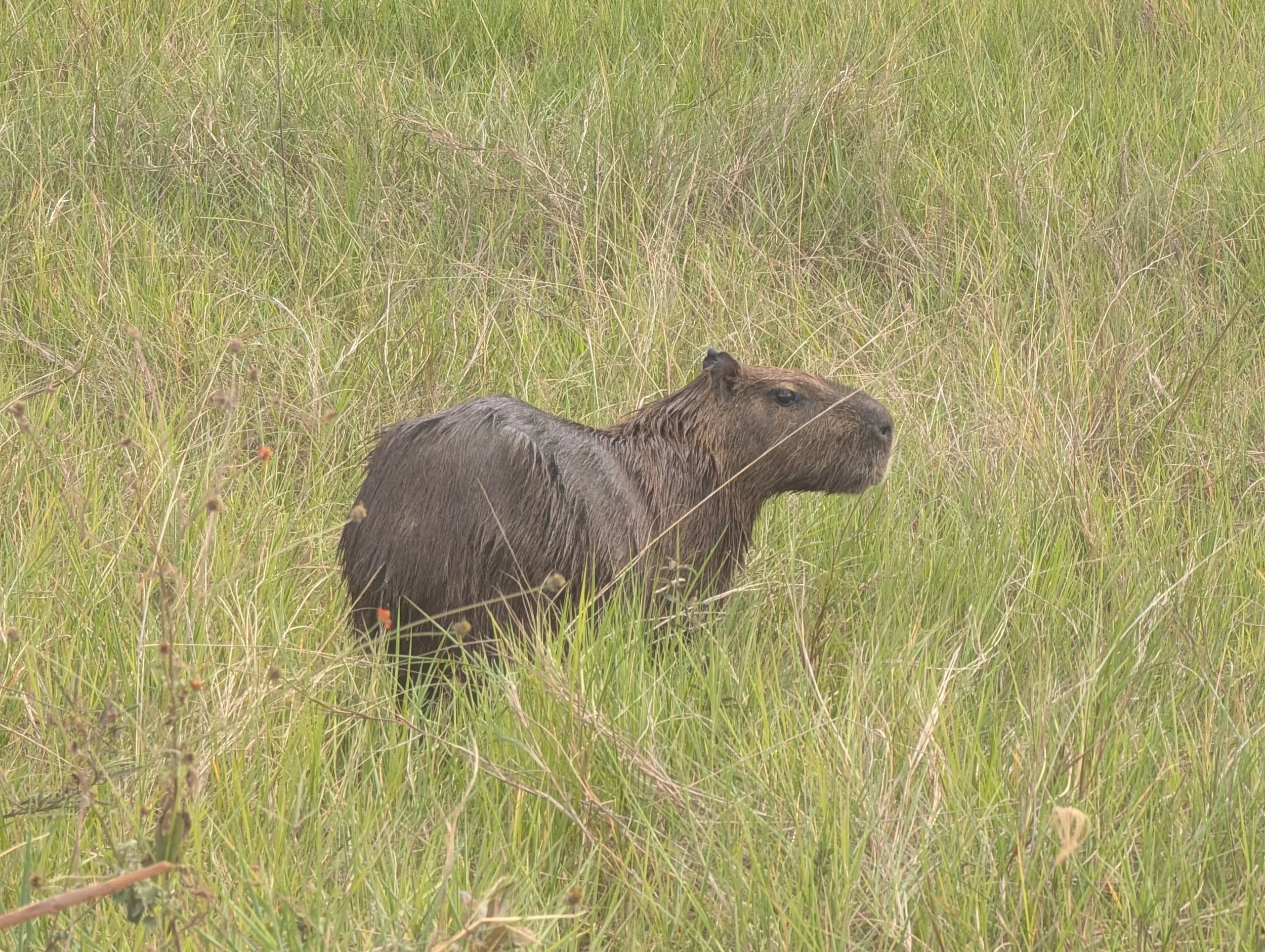
Our last capybara!
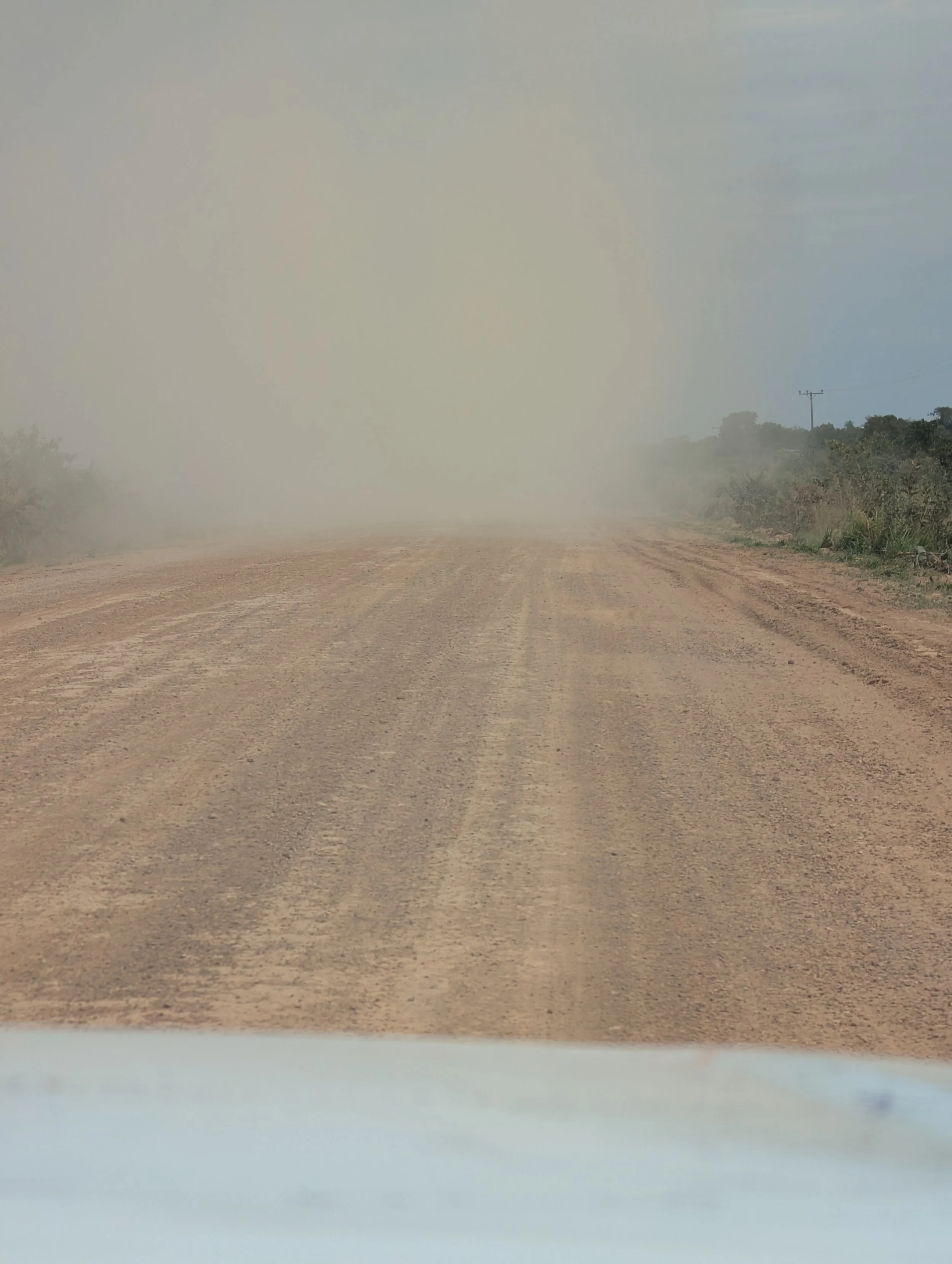
Typical dust cloud from other trucks on the road
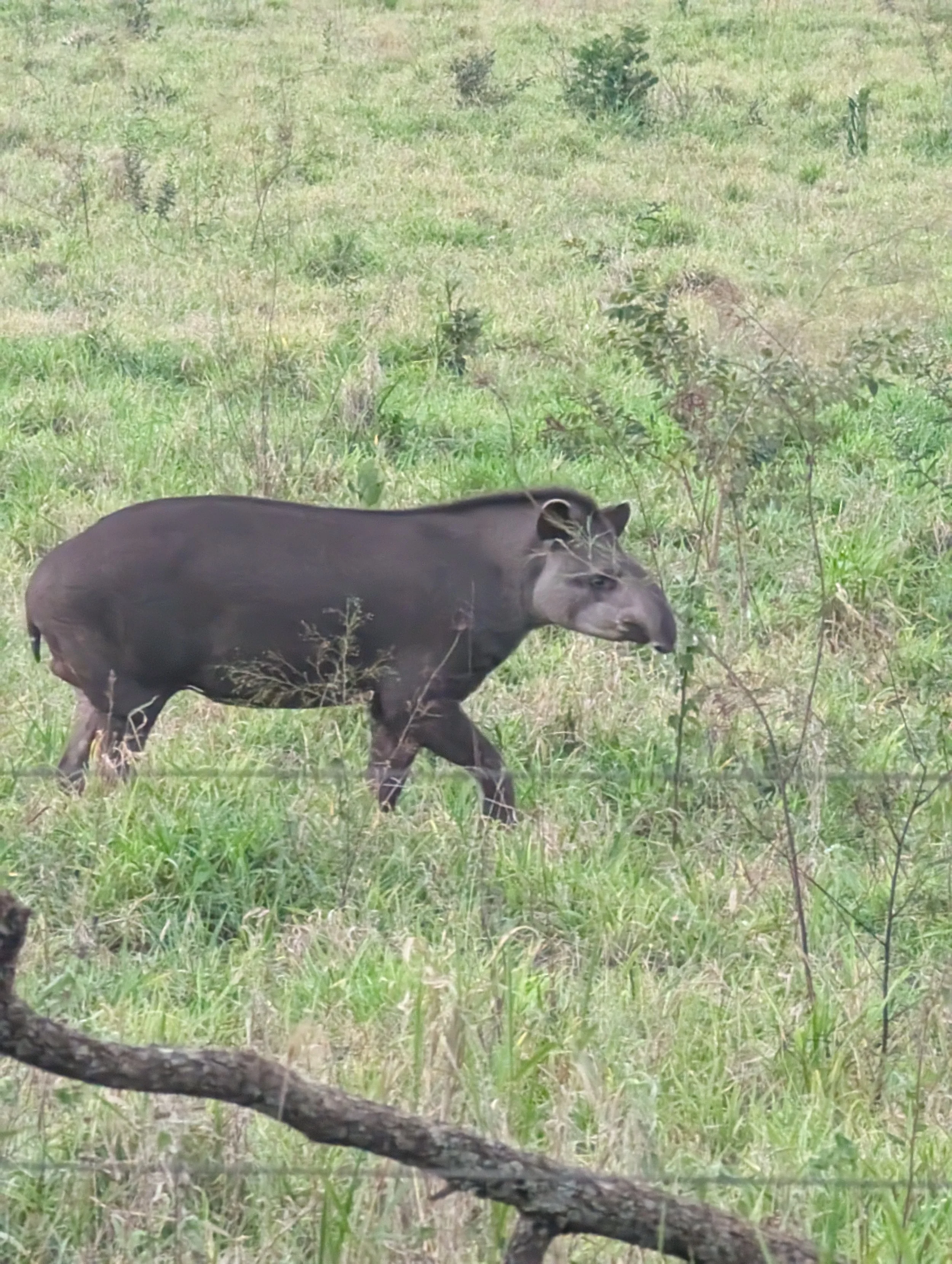
Roadside tapir
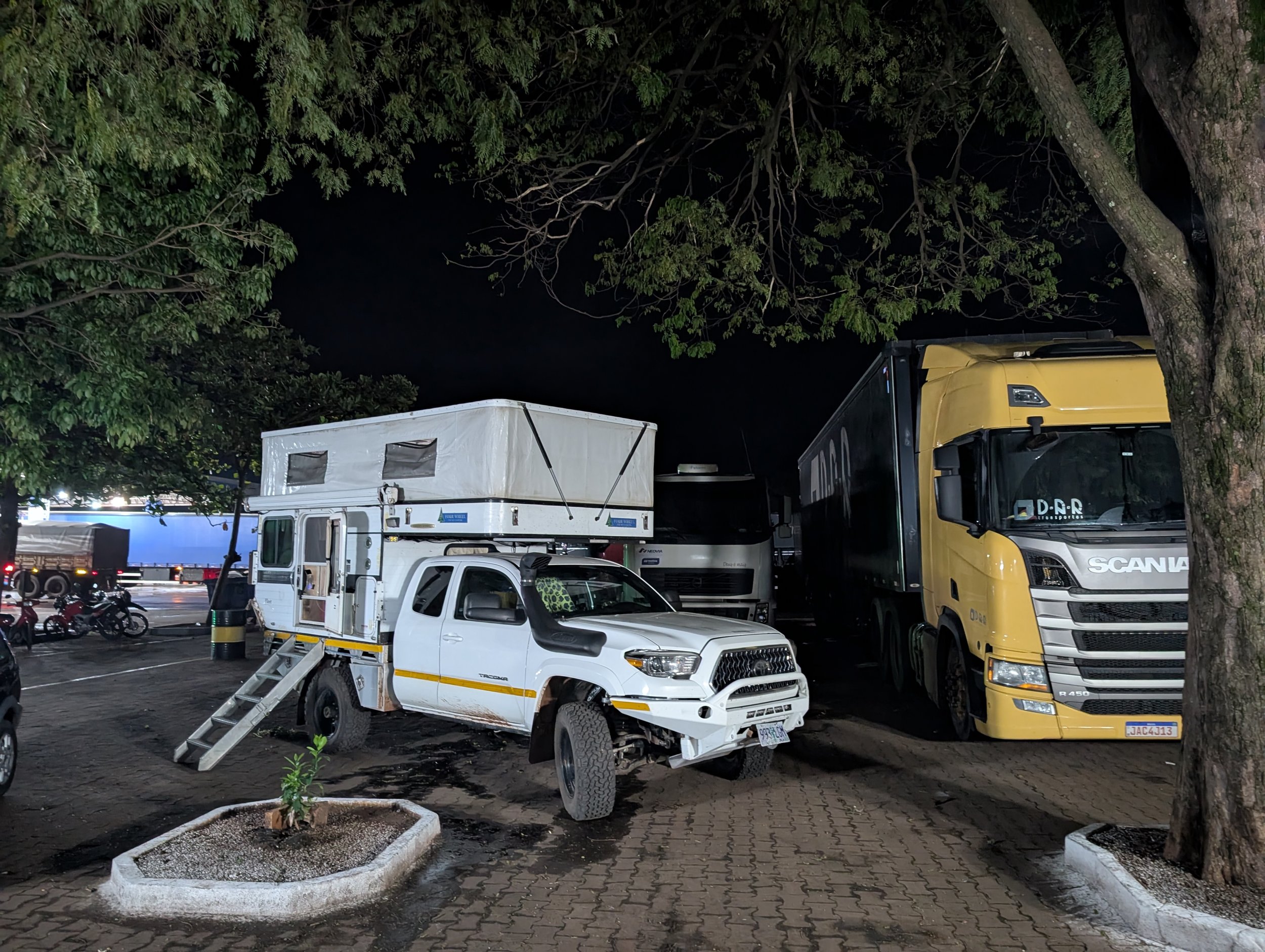
We had to stay in another Posto - no other options on the way
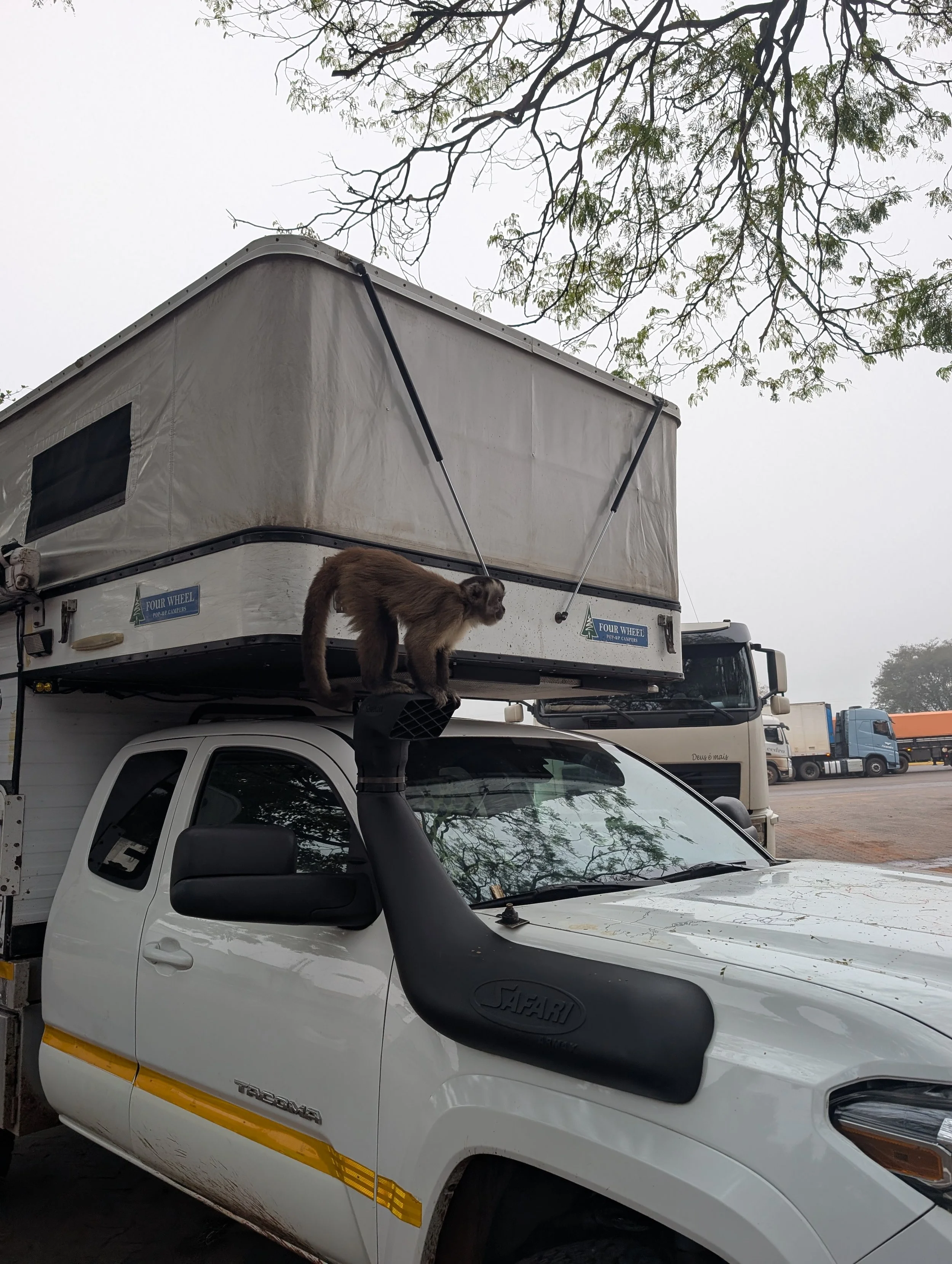
But this one had monkeys!
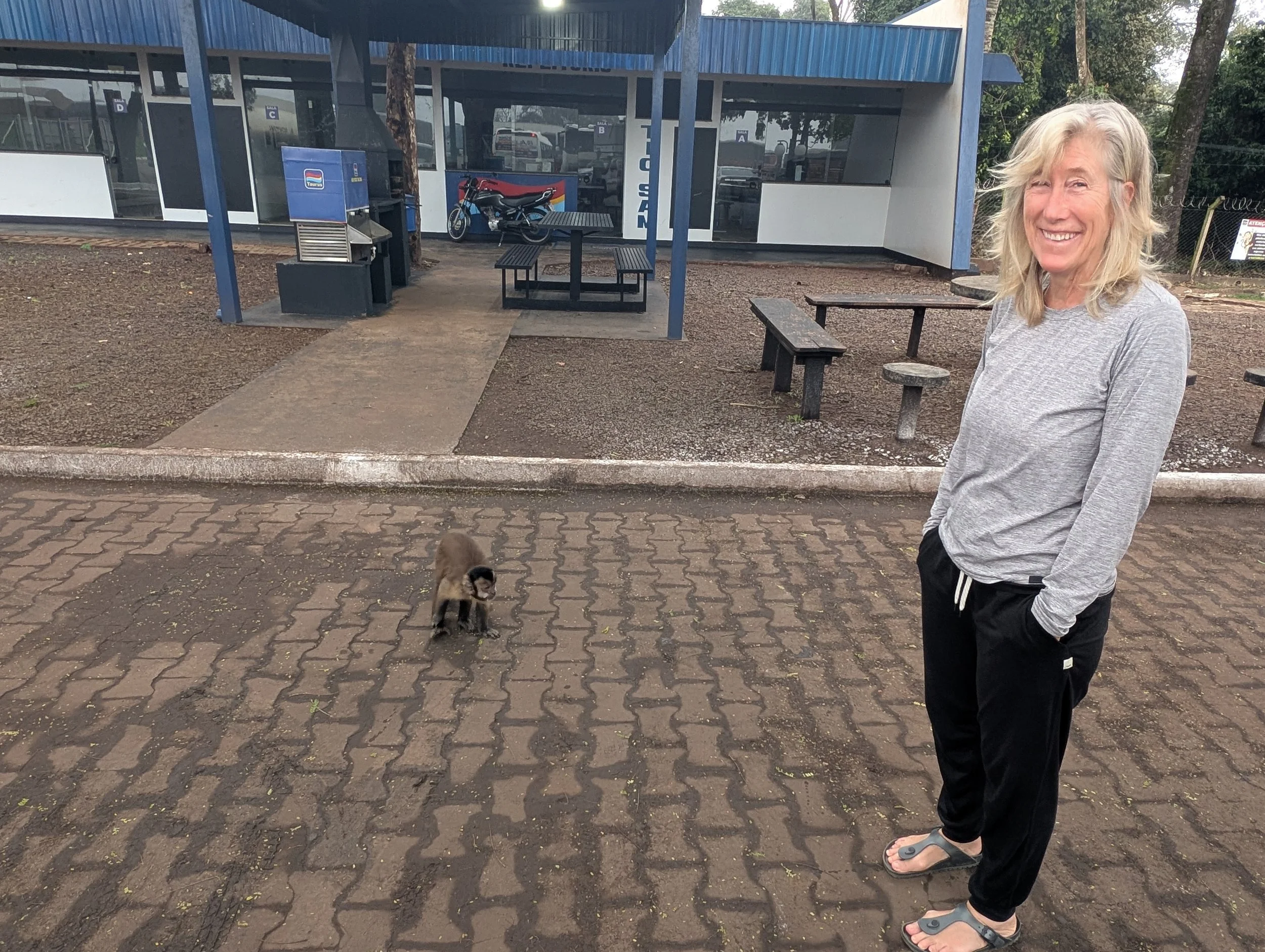
Dawn was pretty happy about the monkeys - even though it was before coffee
Before we knew it we had arrived at our final stop in Brazil - the iconic Iguazu Falls. The name comes from the Guarani language meaning “big water.” The largest waterfall system on earth, it spans 1.7 miles along the border of Brazil and Argentina.
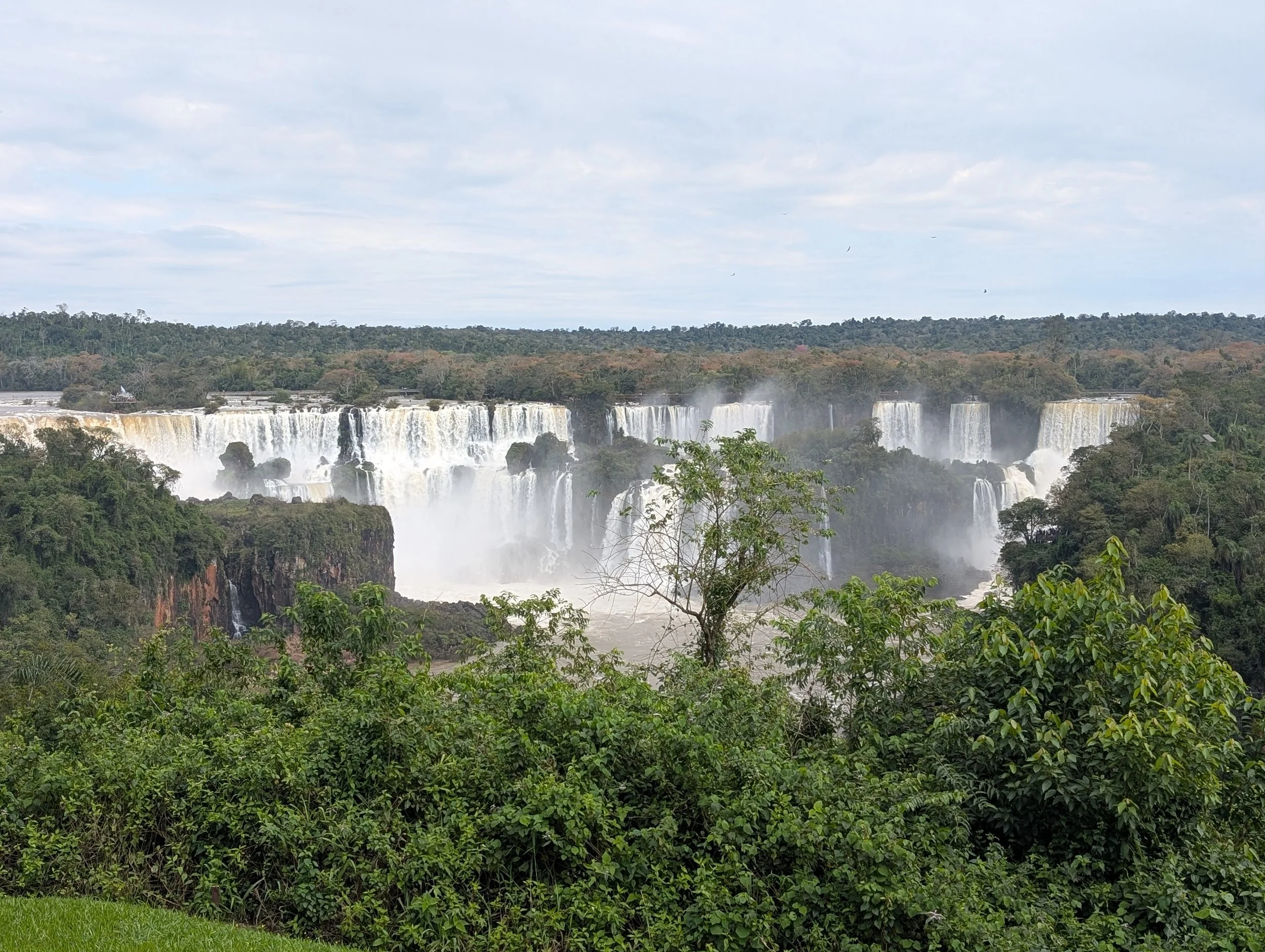
Our very first view of Iguazu Falls from the trail
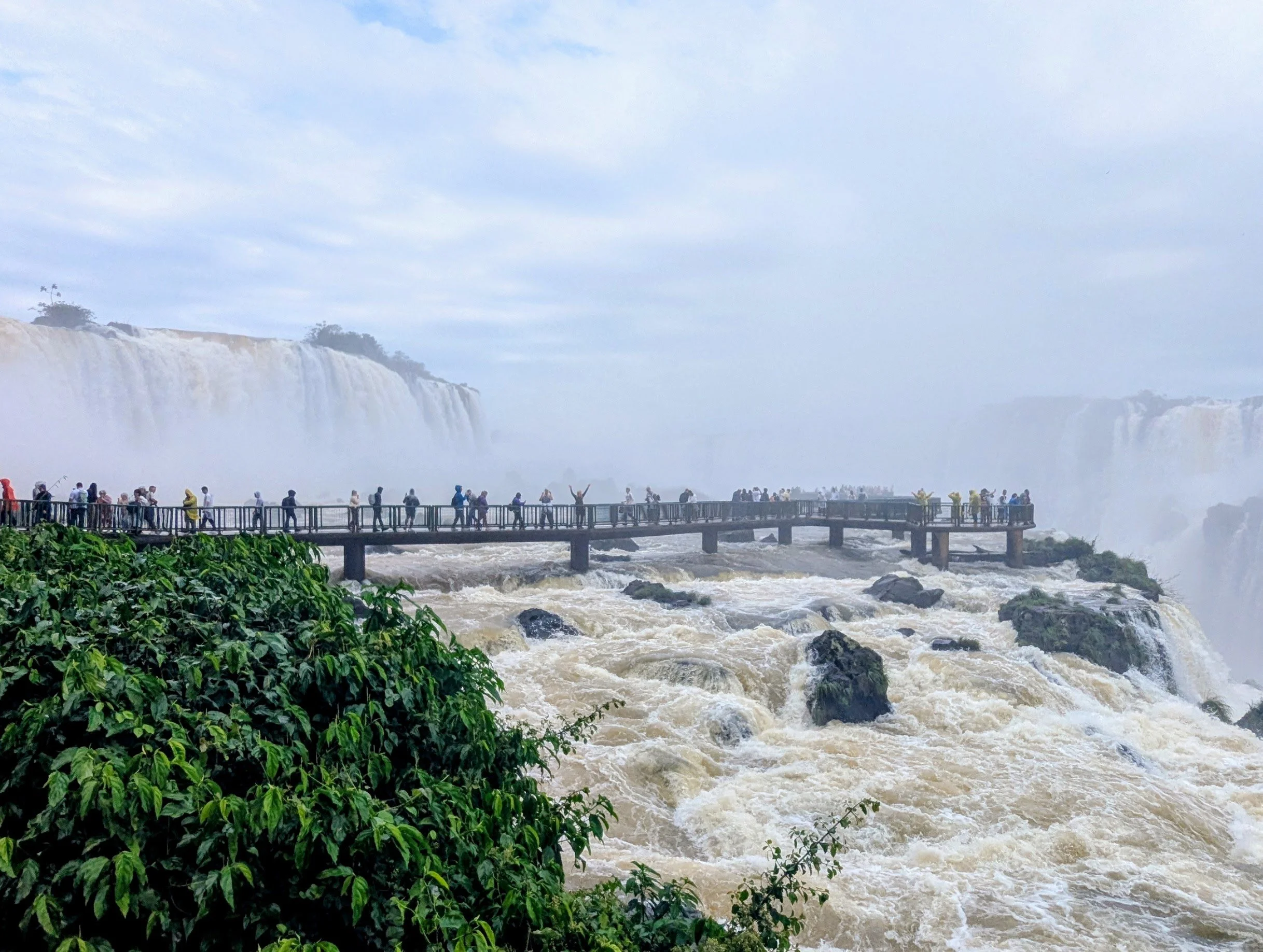
Walk way out to the edge (that is Dawn out there with her arms up)
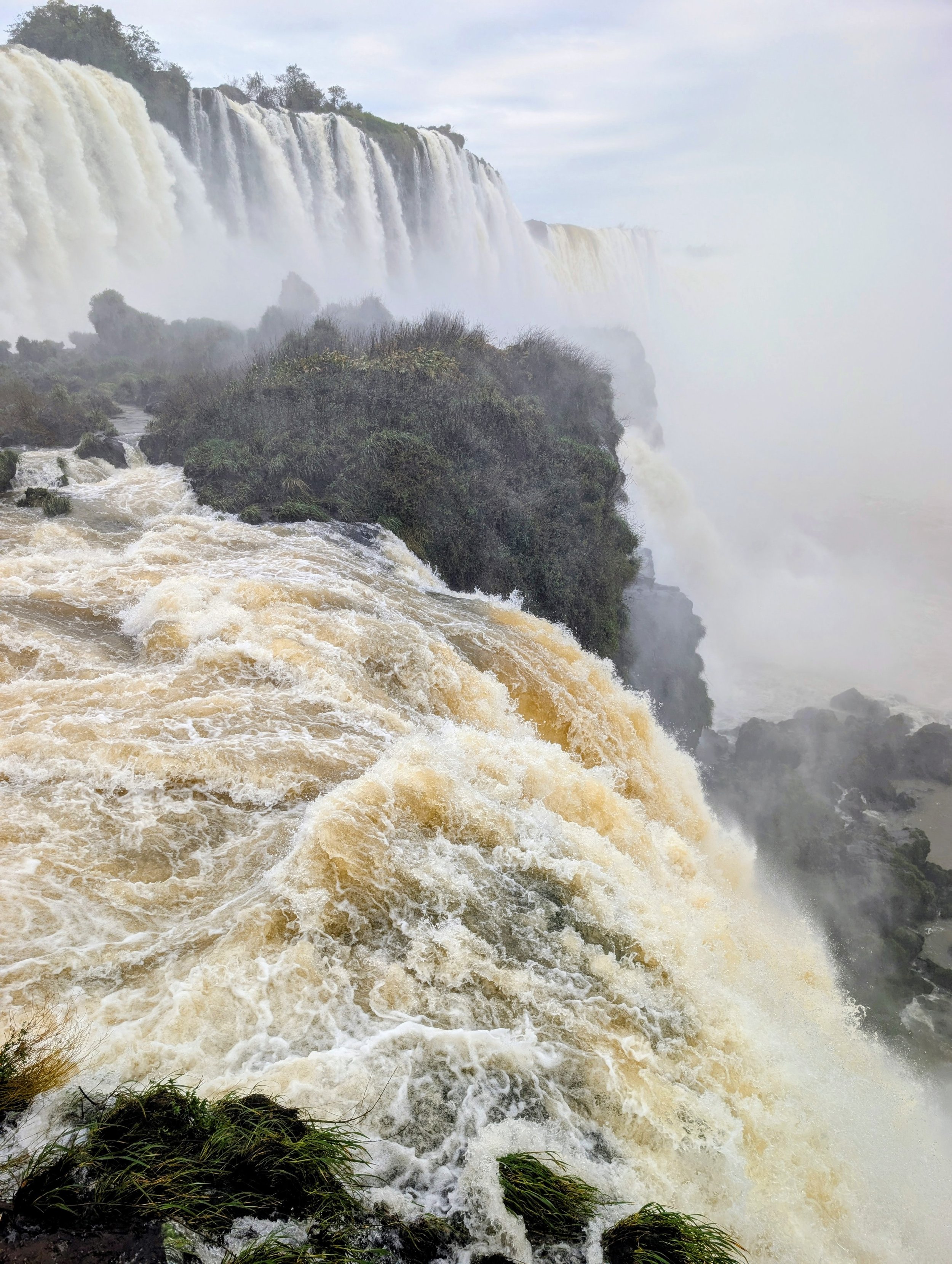
Such an impressive amount of water
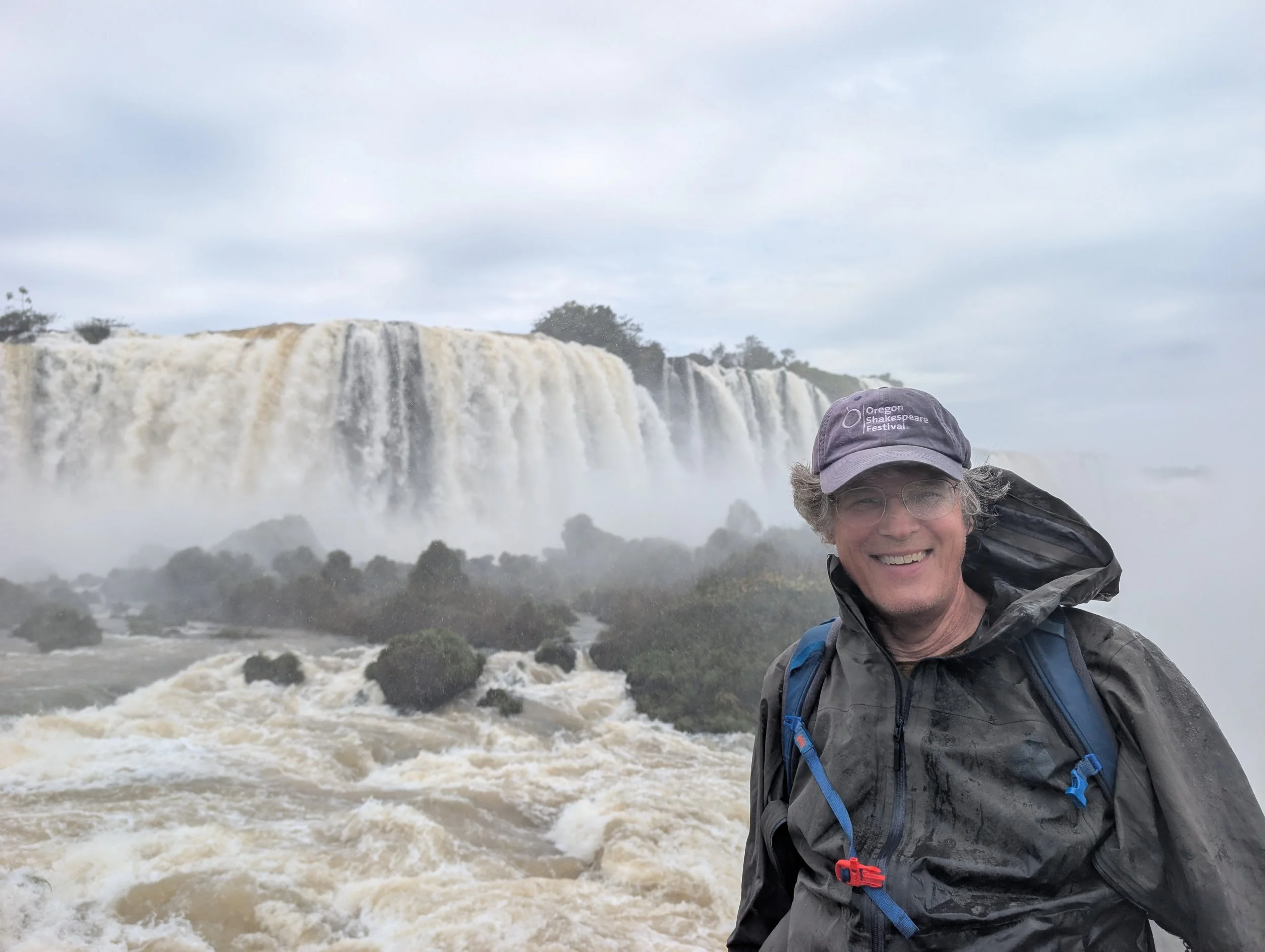
There is no way to escape the spray
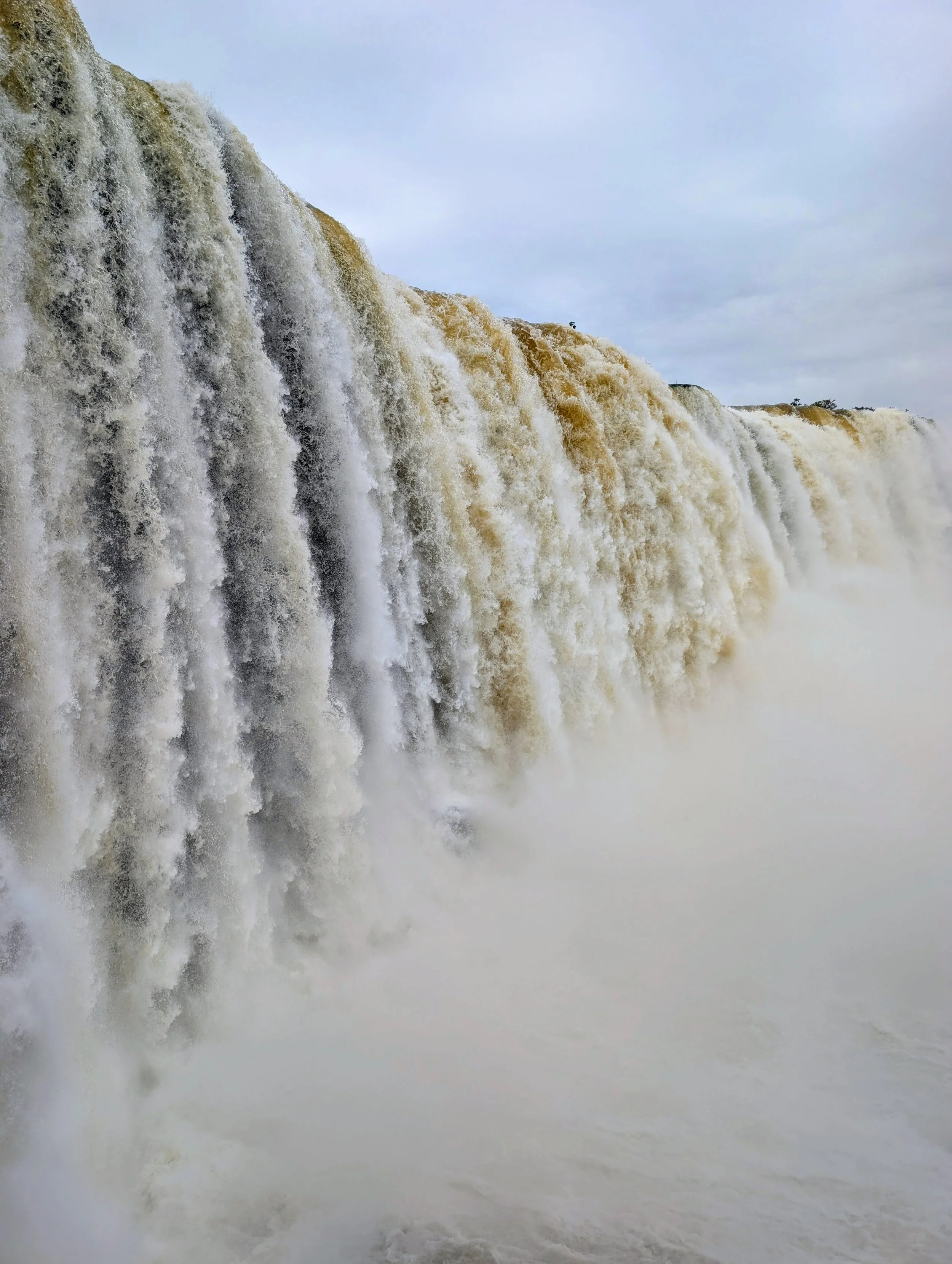
Majestic
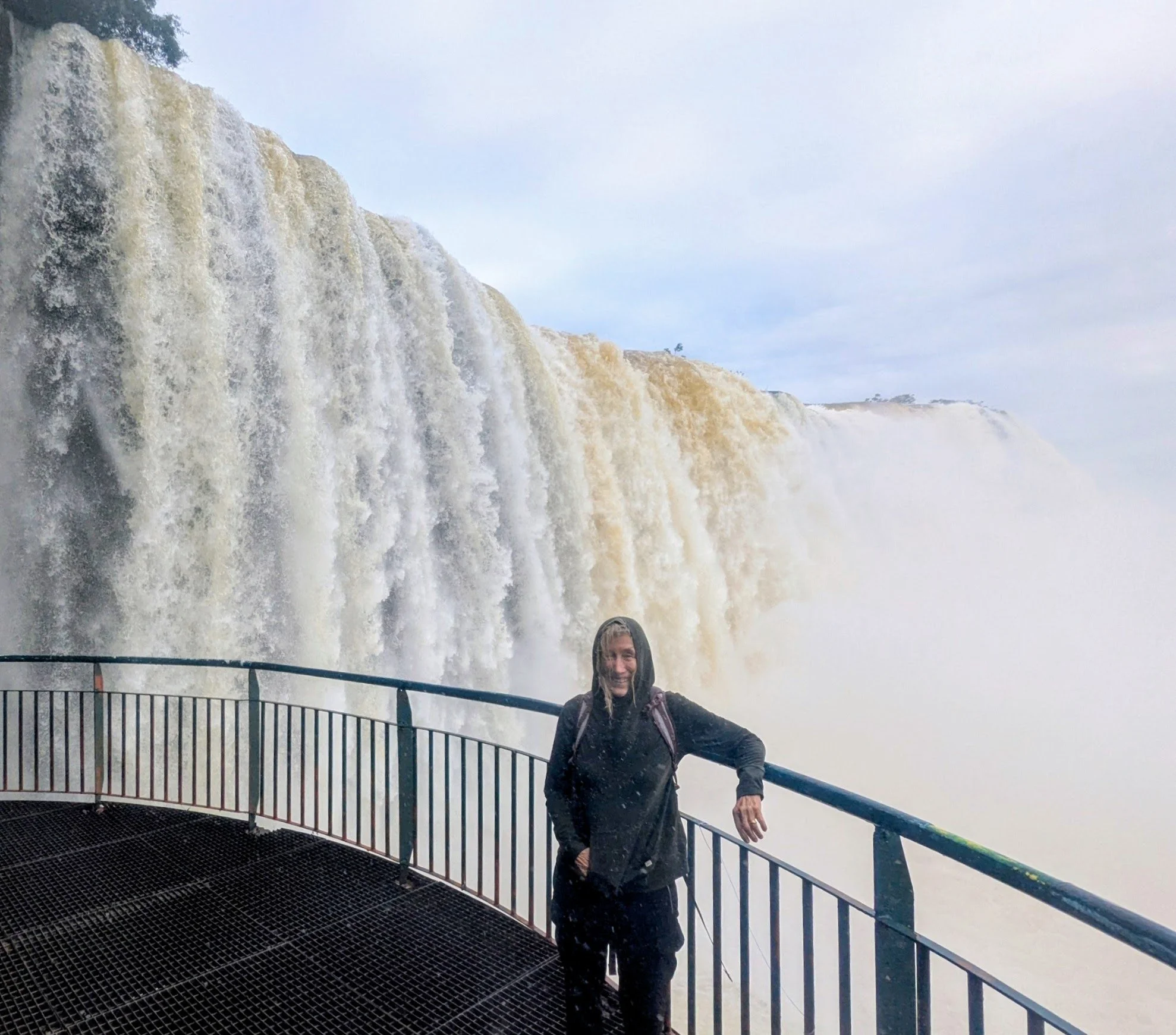
And just a little wet
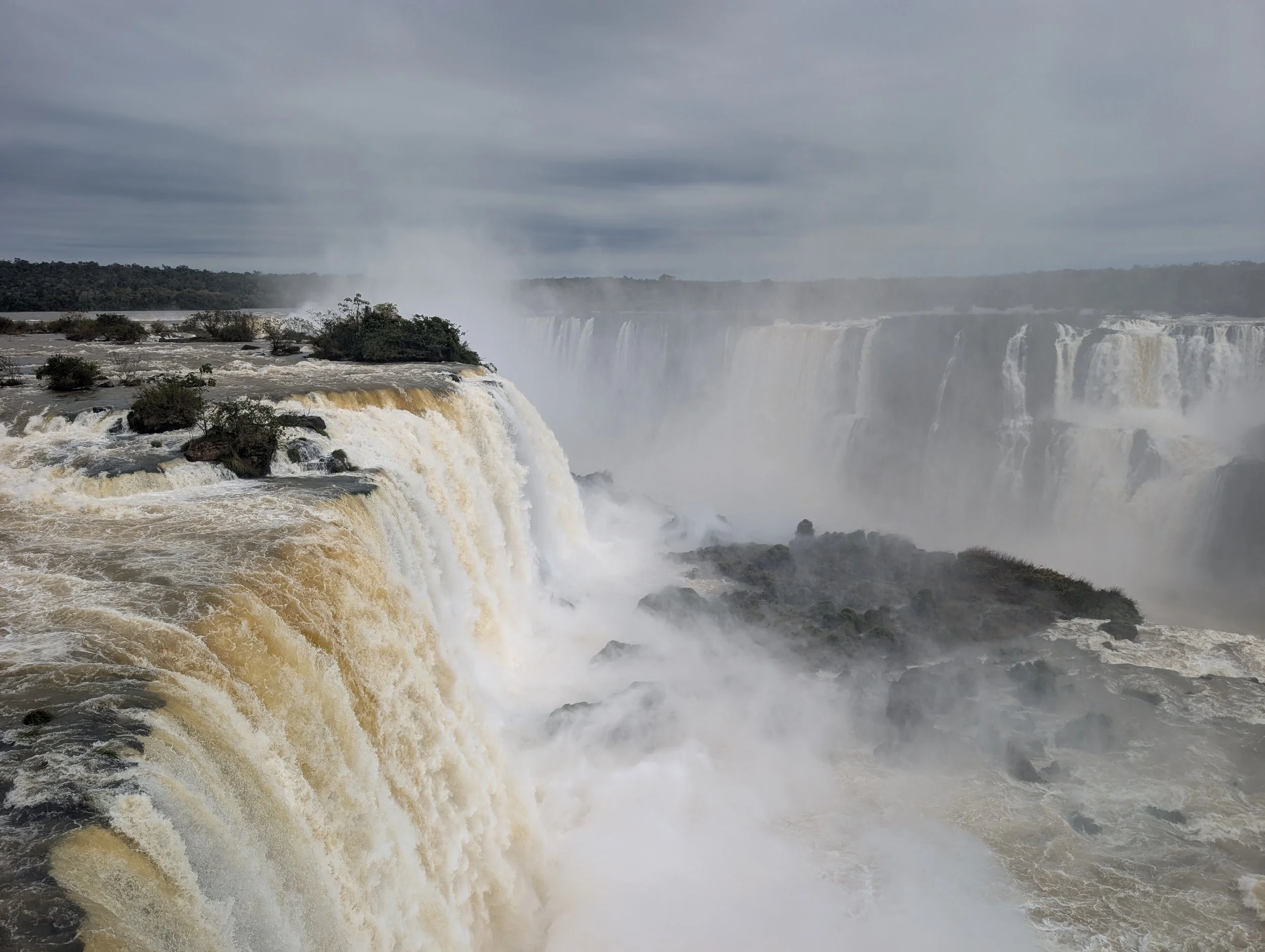
A stunning place
It was a beautiful and impressive place. The park was well designed with trails and view points and despite the inevitable crowds, you felt like you could feel the magic of the falls. The whole experience really let you feel the power of nature. For us it definitely ranked up there with viewing Victoria Falls.
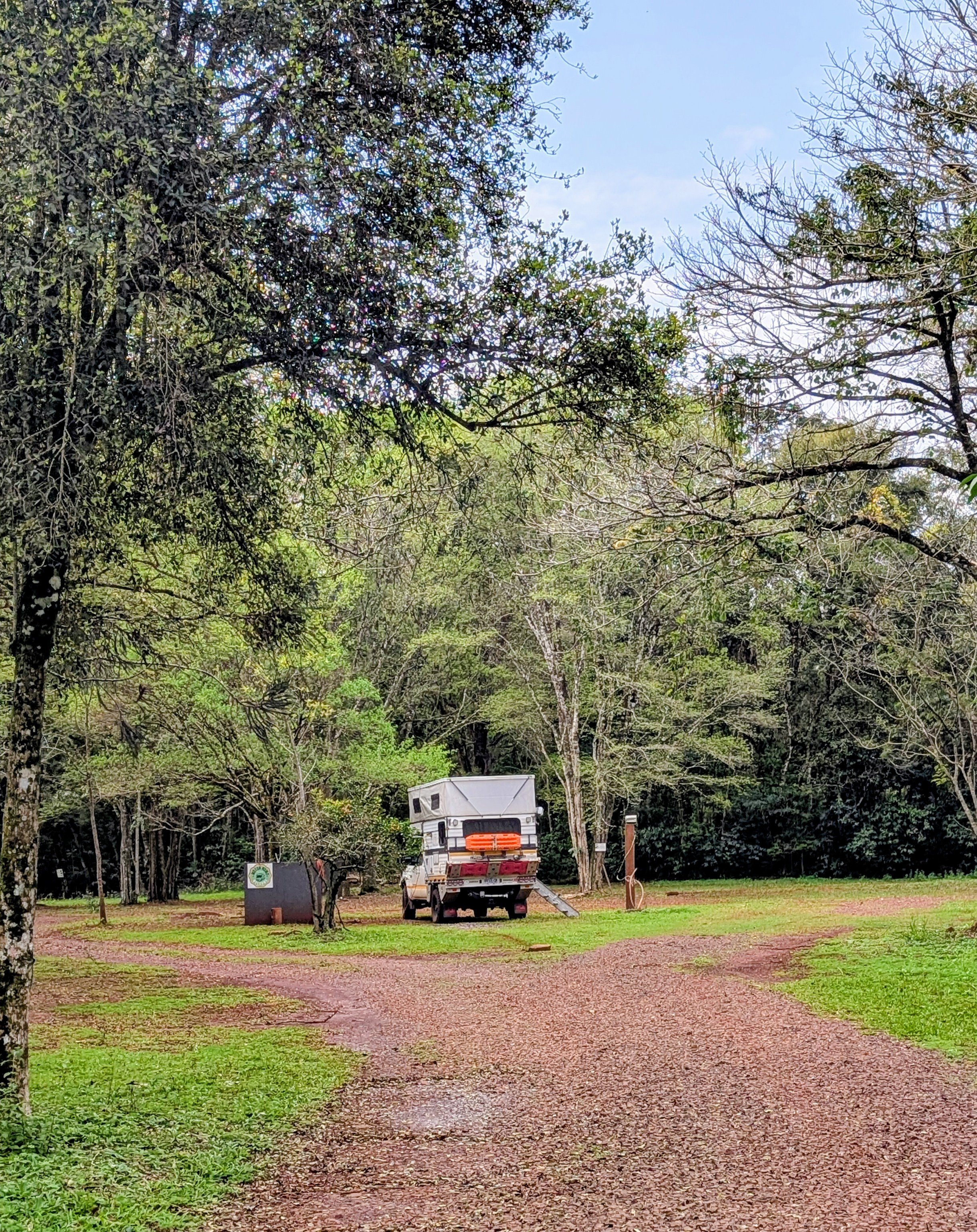
Camping at the Eco Hostel within walking distance of Iguazu Falls
Well that is it for our time in Brazil! Looking back, we saw and did a lot. There are so many places to see and things to do in Brazil, here are our top six (in order from most favorite):
Pantanal River Safari
Amazon River Cruise
Iguazu Falls
Parque Nacional dos Lençóis Maranhenses
Salvador
Mountain gold mining villages - Tiradentes and Ouro Preto
A big post for a big country. Thank you for staying with us!