Argentina
Part 1 - October 26 - November 12
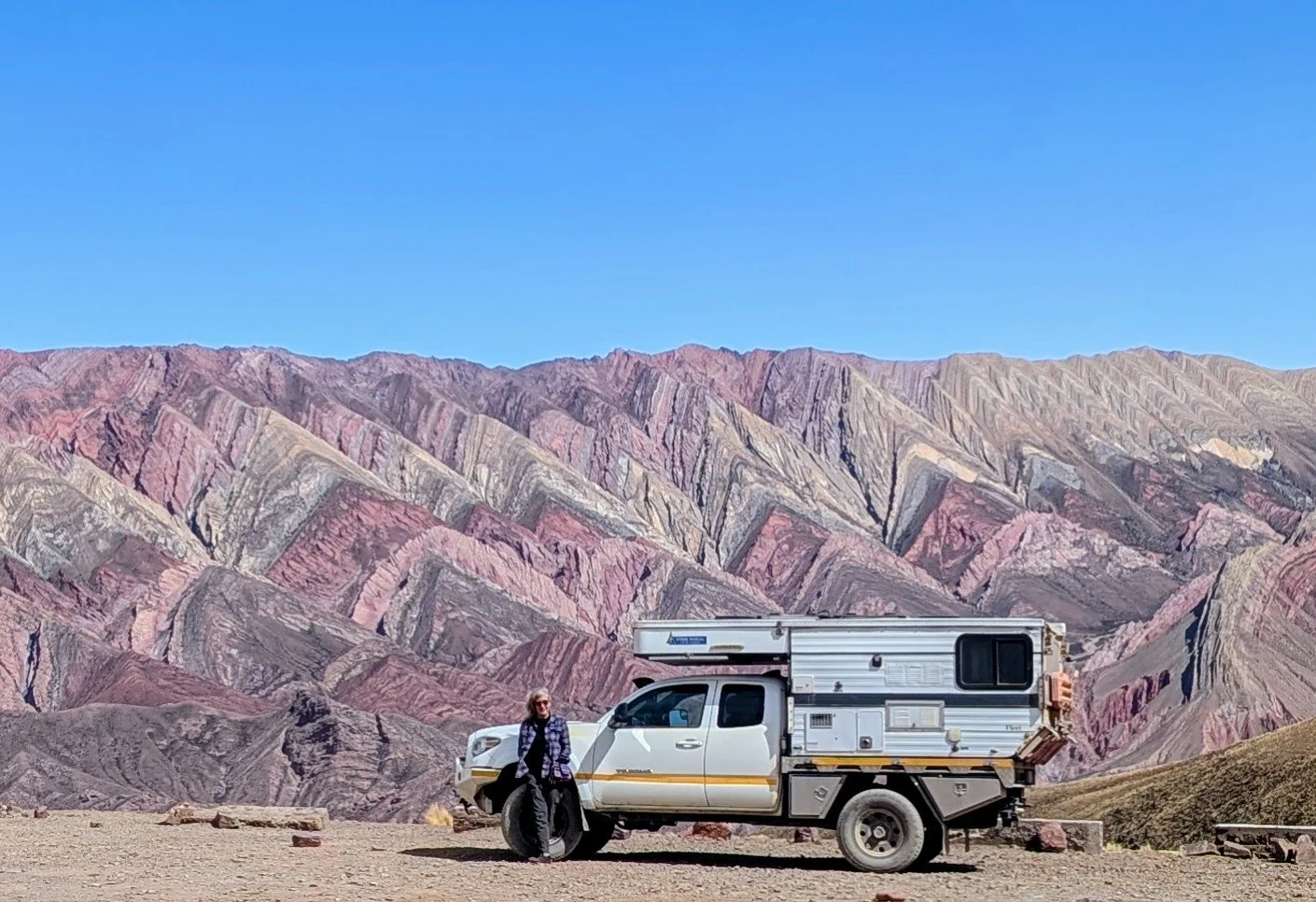
The colorful mountains outside of Humahuaca in Northern Argentina - Mirador del Hornocal
Its hard for us to write about Argentina without including a comparison to its neighboring country of Chile. For much of the nine weeks we spent in the Argentina, we were also criss-crossing the borders between the two countries on a regular basis, driving through the desert and over the Andes along the way. While Chile is a long narrow country between the ocean and the mountains, Argentina is almost four times bigger in land mass. Chile’s geography meant almost every day was spectacular. In contrast, Argentina has vast areas of flat grassland in addition to gorgeous mountains and wild coast. The best days in Argentina were all time travel highlights, but these were tempered with long driving days through mostly uninspiring pampas land.
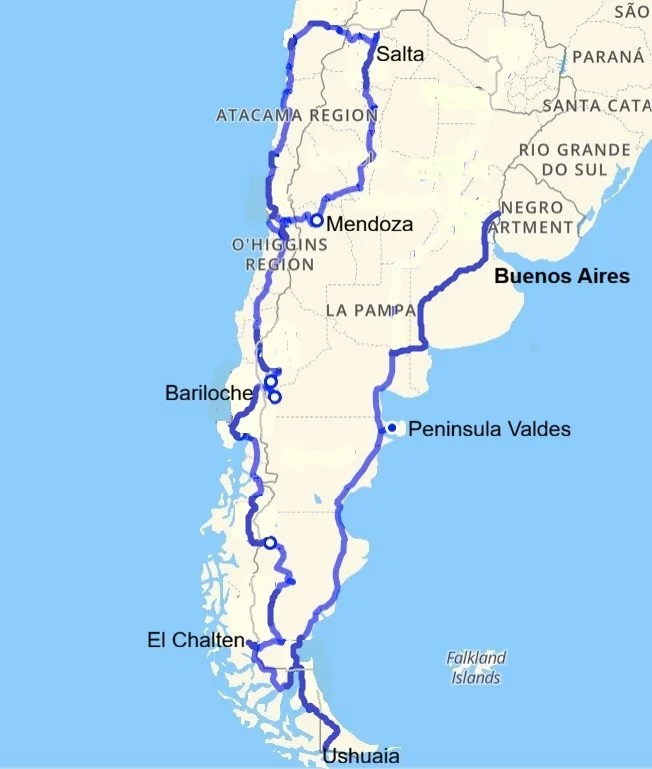
Our nine week, 3600 mile route through Argentina. The mileage sounds low as we covered the route from El Chalten down and back to Ushuaia with our children by bus and plane.
The language and food was similar in the two countries - although Argentinians love beef more than anywhere else we have ever been. A typical dinner - parrilla - is a big plate of barbequed beef. The more extroverted culture of the Argentinians meant we were regularly and warmly invited to family parrilla night. The two countries also share the custom of observing siesta hours. We love the idea in theory but in practical terms it was often a challenge for us. Everything shuts down from about 1pm-4pm while people rest with family, take some time off and eat a big meal. Businesses re-open in the evening and especially in Argentina, a lot of dinner restaurants don’t start service until 8pm. Our daily routine is to hit the road around 10am, drive a few hours then arrive in a town or cultural attraction for the afternoon, then find camp by 5pm. So we had to adjust if we had any errands to run. Luckily, most tourist attractions did not observe the siesta.
Argentina’s economy is less stable than Chile’s and the country struggles with inflation. Cash is king and hard to come by. People were hungry for US dollars and businesses were offering steep discounts for cash payments. The ATM system is crazy -when we were there, the government had regulated a maximum 60,000 peso withdrawal at a time (about $45) and the fee was about $15 per transaction. Luckily our international debit card (Charles Schwab) reverses all ATM fees, but ATMs were insanely expensive. Wire transfers between people were common but our US banks do not easily allow for that payment method. So we would spend up to 20 minutes at ATM’s repeatedly pulling out cash to get enough for travel expenses or truck repairs (more on that later). Most businesses took credit cards with a few exceptions - like auto mechanics.
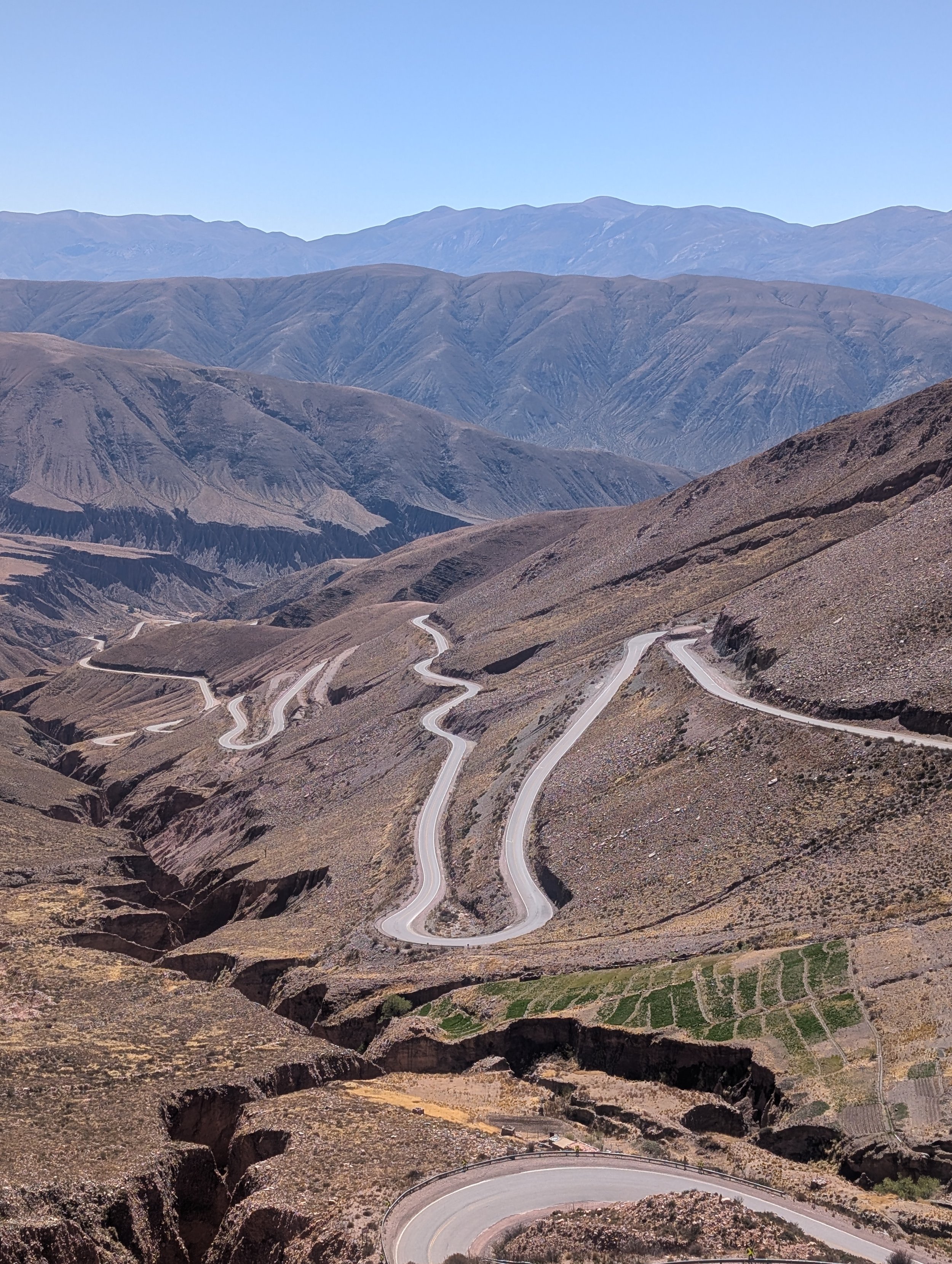
Our first entry into Argentina from Chile, across a high mountain pass outside of San Pedro de Atacama in Chile into the Jujuy province of Argentina
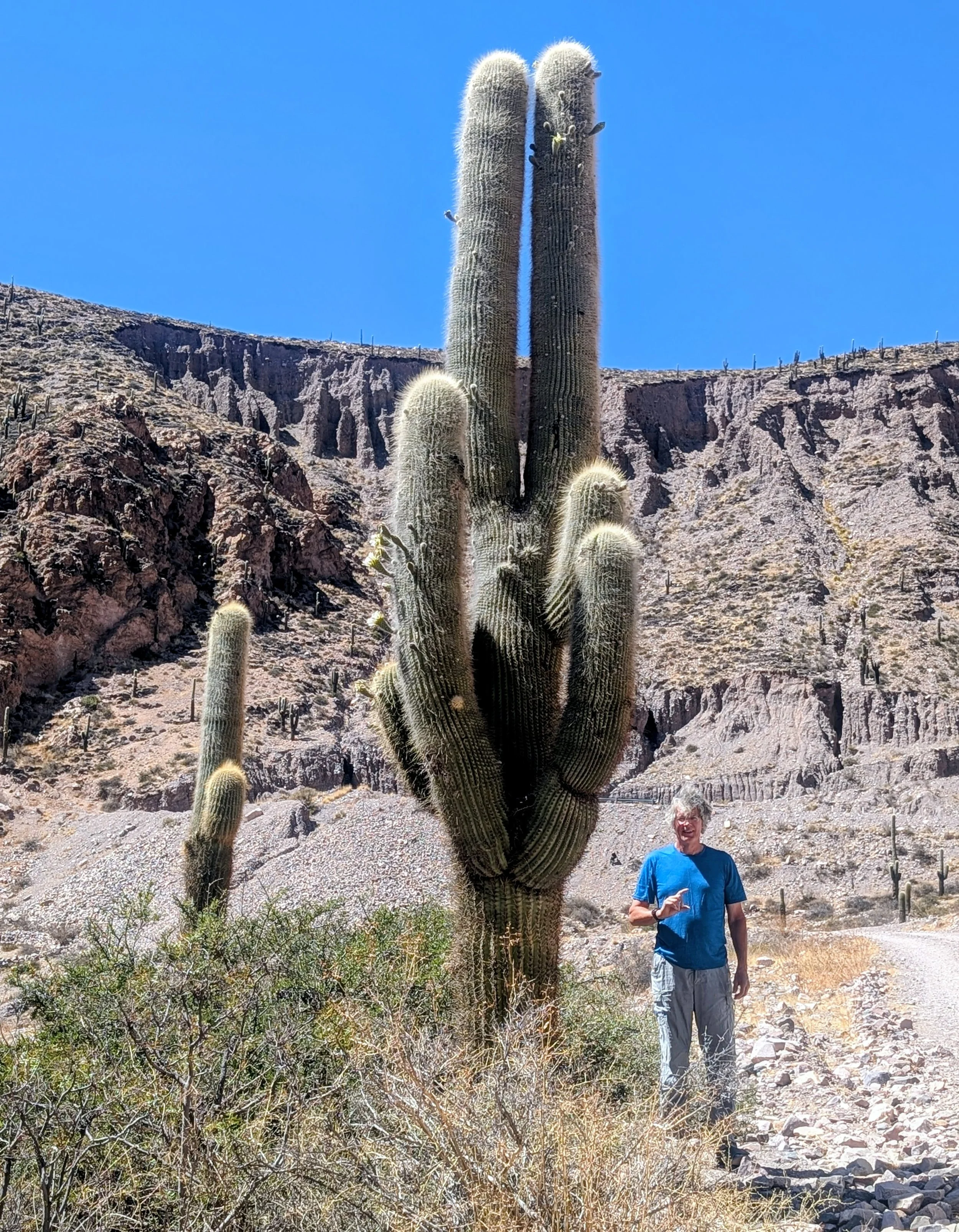
Andy loved the huge Argentinian cardón in the north
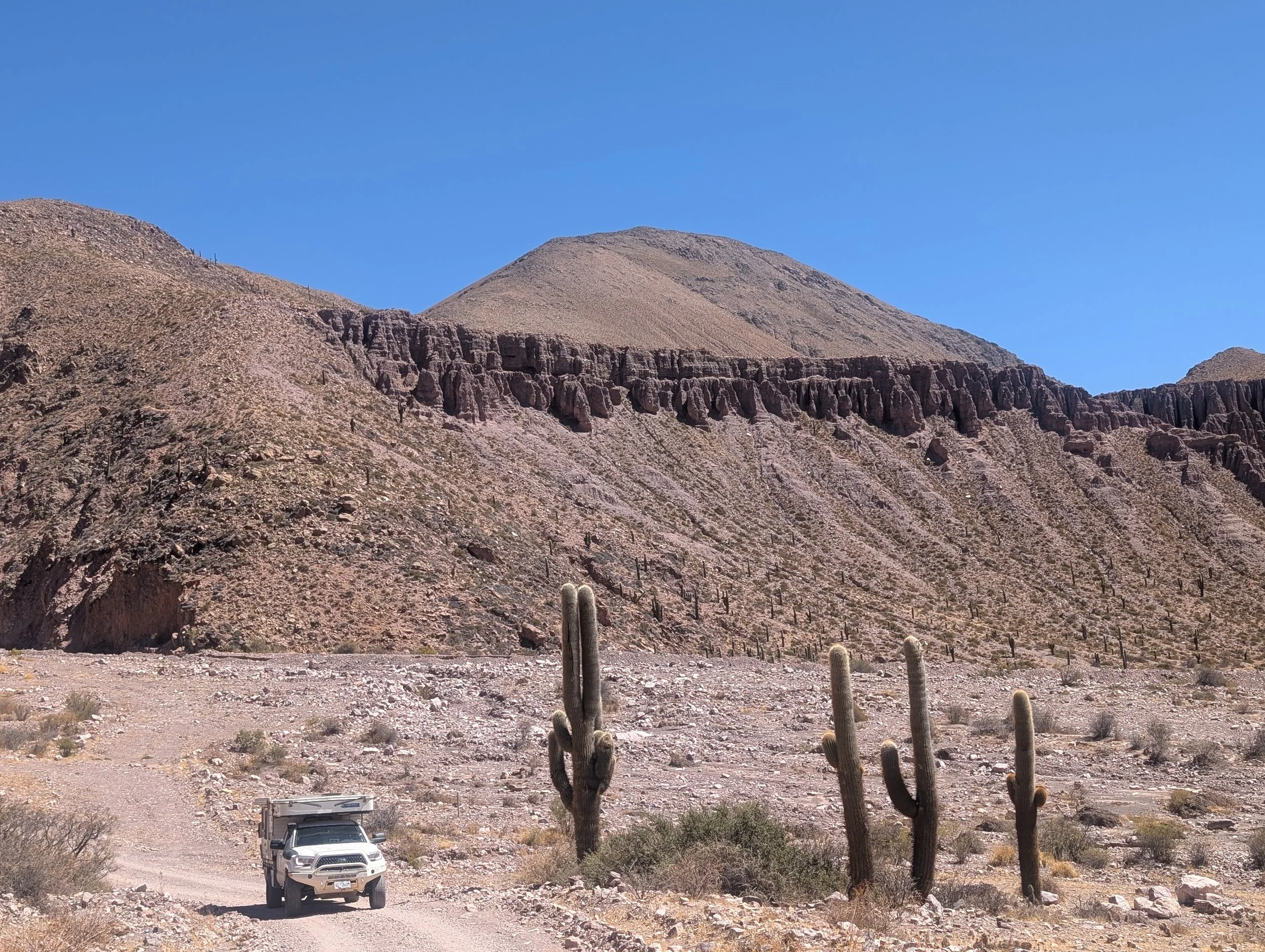
Northern Argentina desert
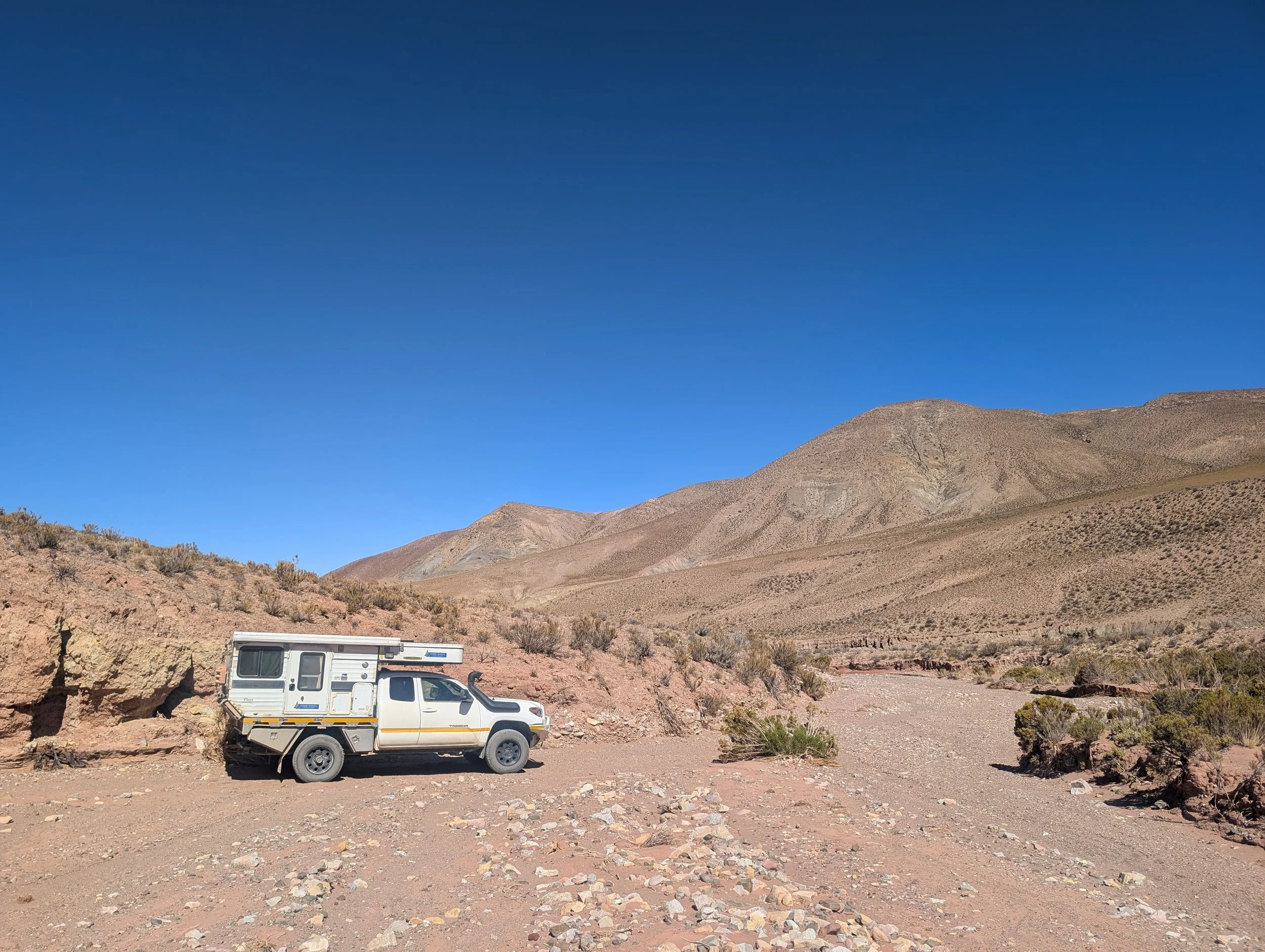
Pulling into camp
Wild camping was easy in Argentina and in the north we quickly found our favorite place - dry riverbeds. They were not privately owned, provided a flat resting spot and it was easy to drive far enough to get away from roads and people.
The Argentinian desert was colorful and varied - a great place to explore and hike. In the late spring, the weather was mild, reaching a high of 70’ during the day and cooling to 50’ or so at night.
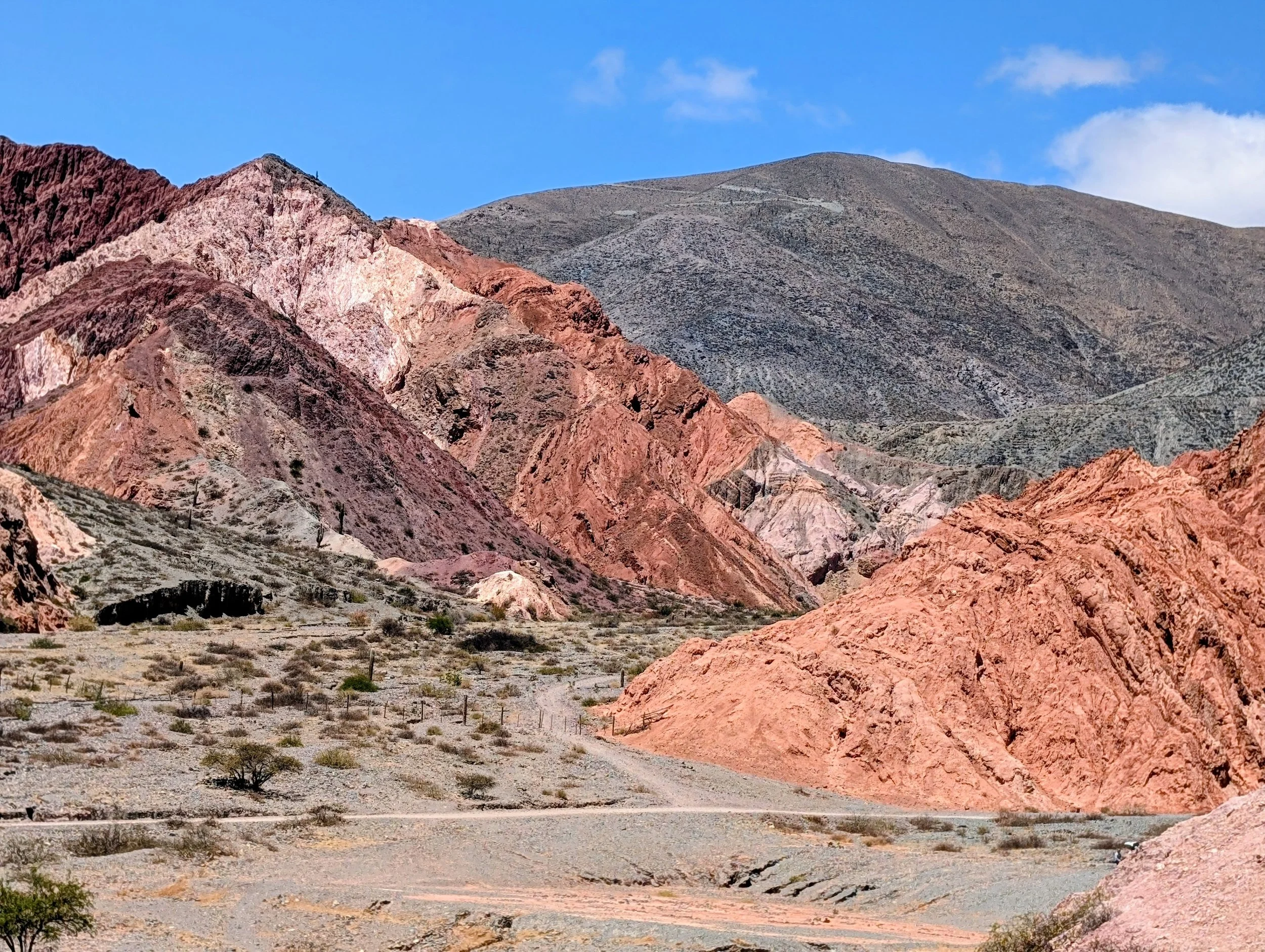
Hiking in the desert hills outside Purmamarca
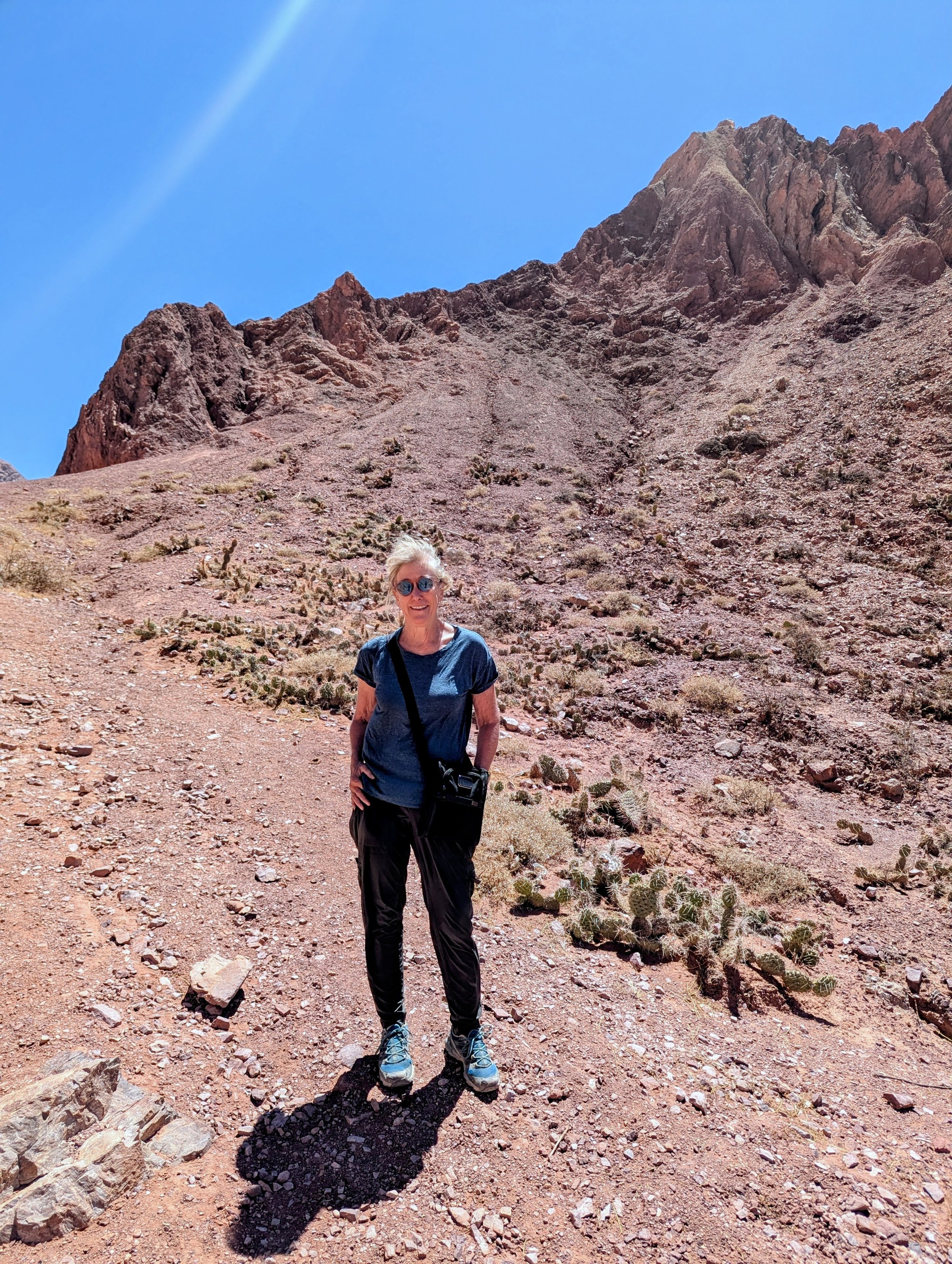
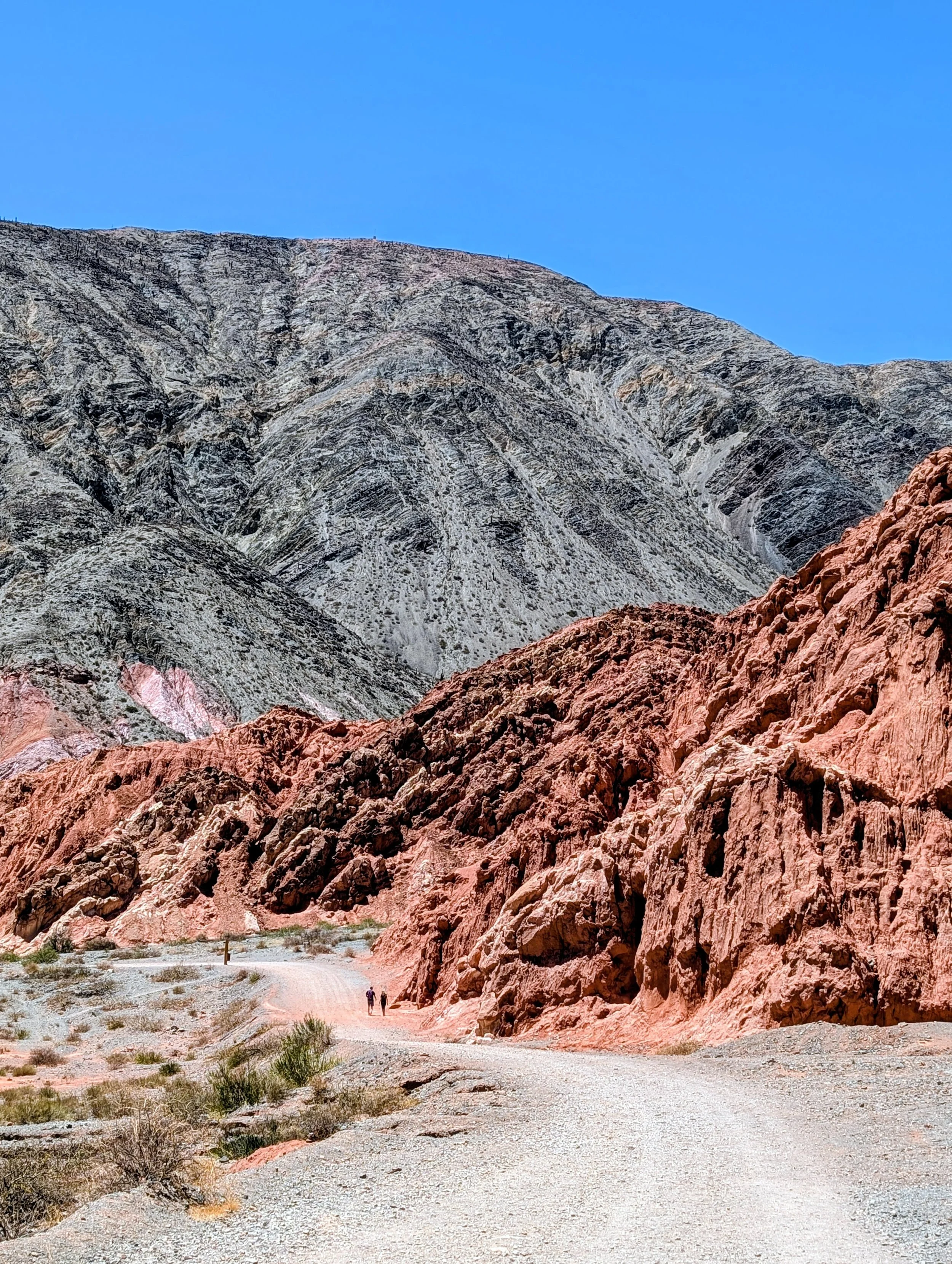
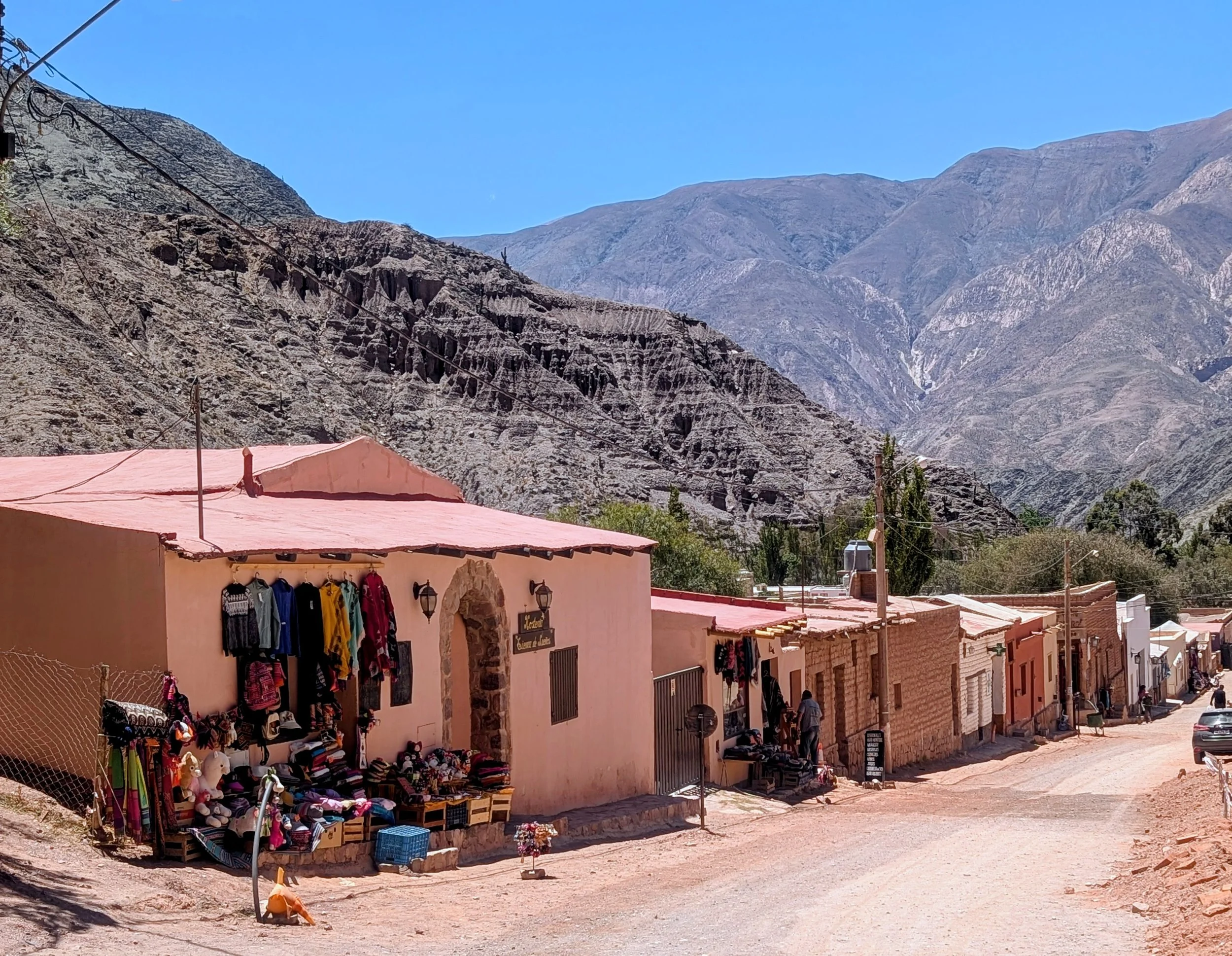
Purmamarca - built out of the surrounding earth
The village of Pumamarca charmed us. Full of artists and crafts, its peaceful shady central square was an appealing place to hang out.
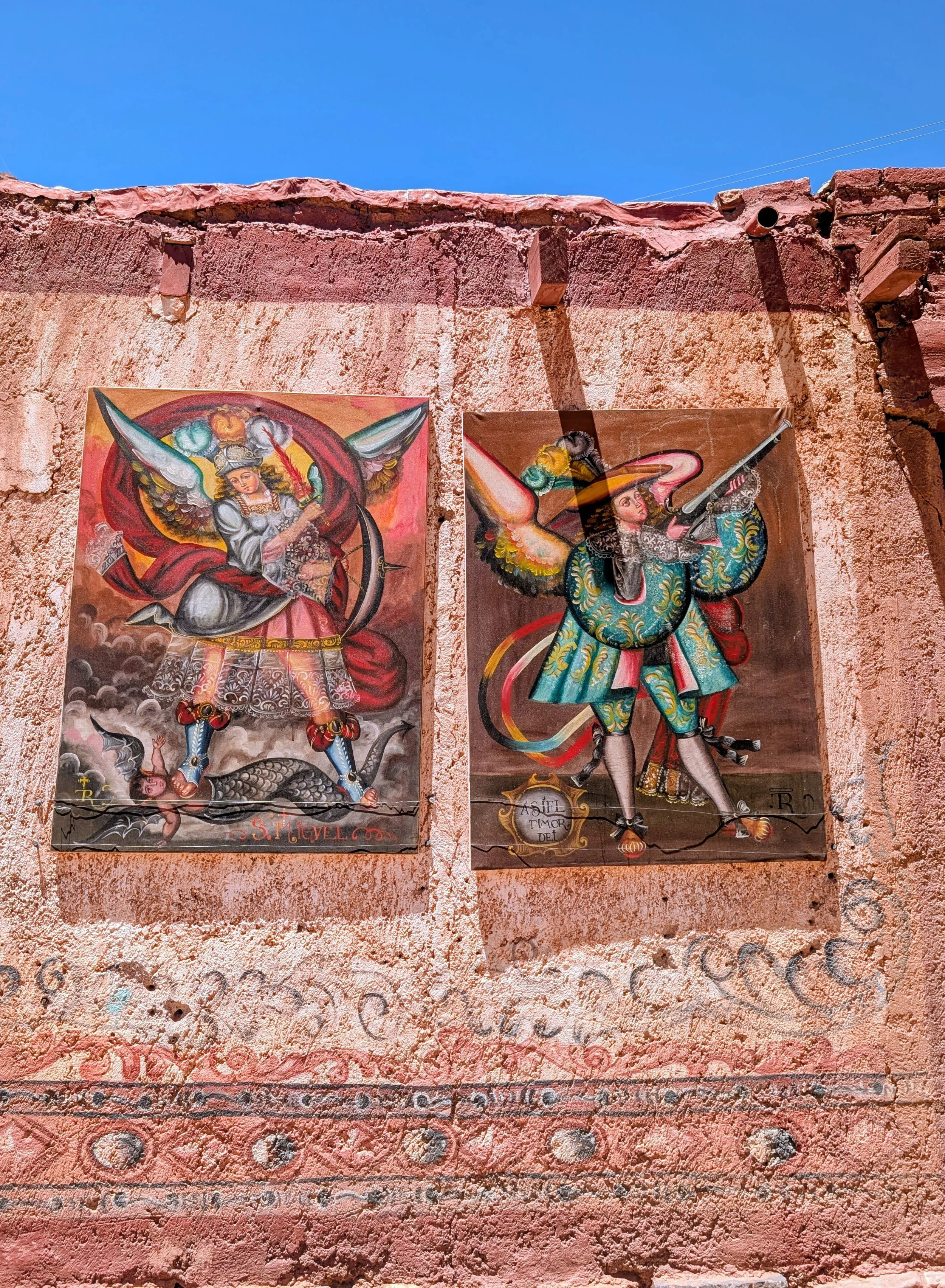
Even the private houses were artistically painted
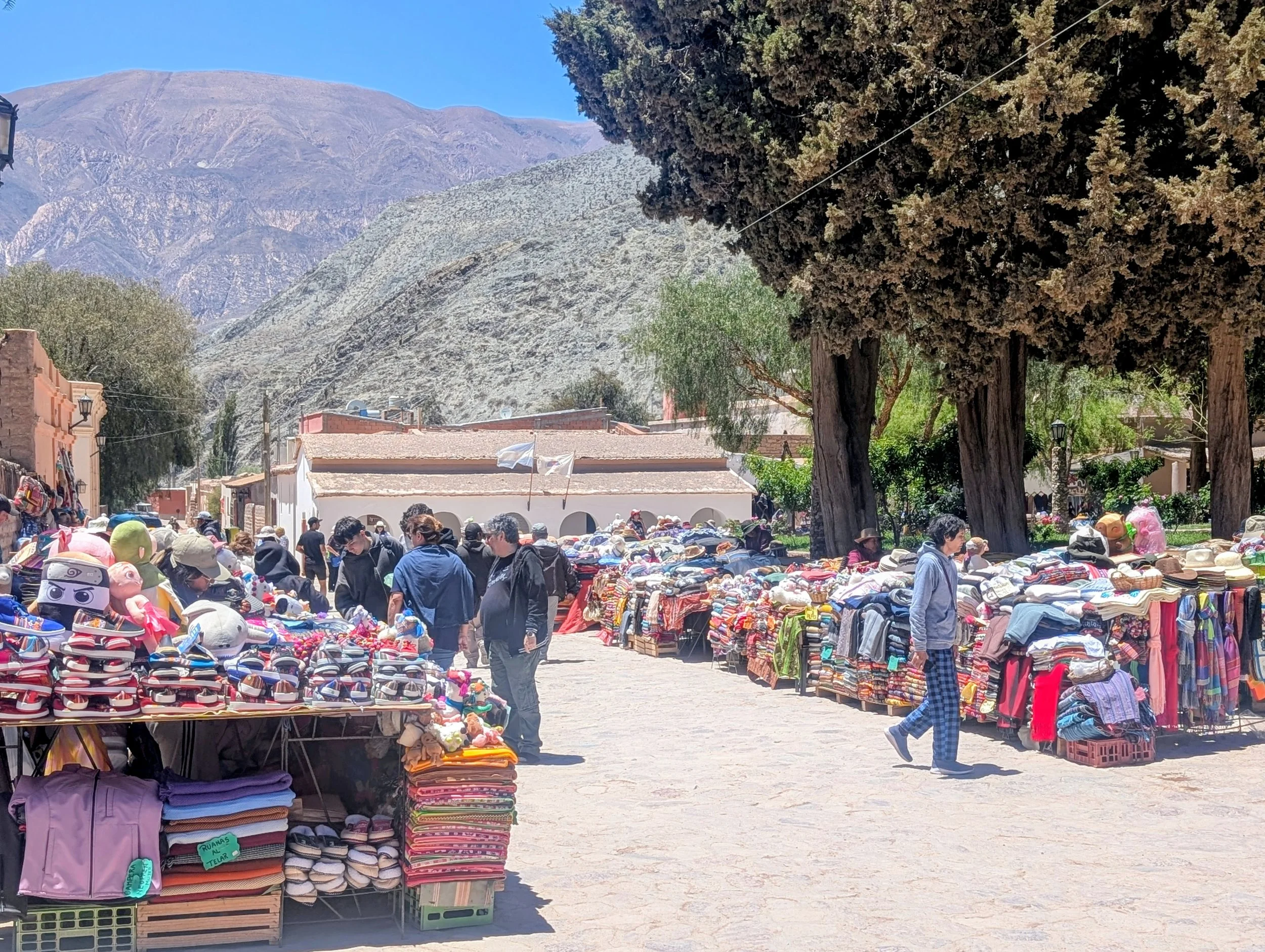
Fabric crafts for sale in the central square of Purmamarca
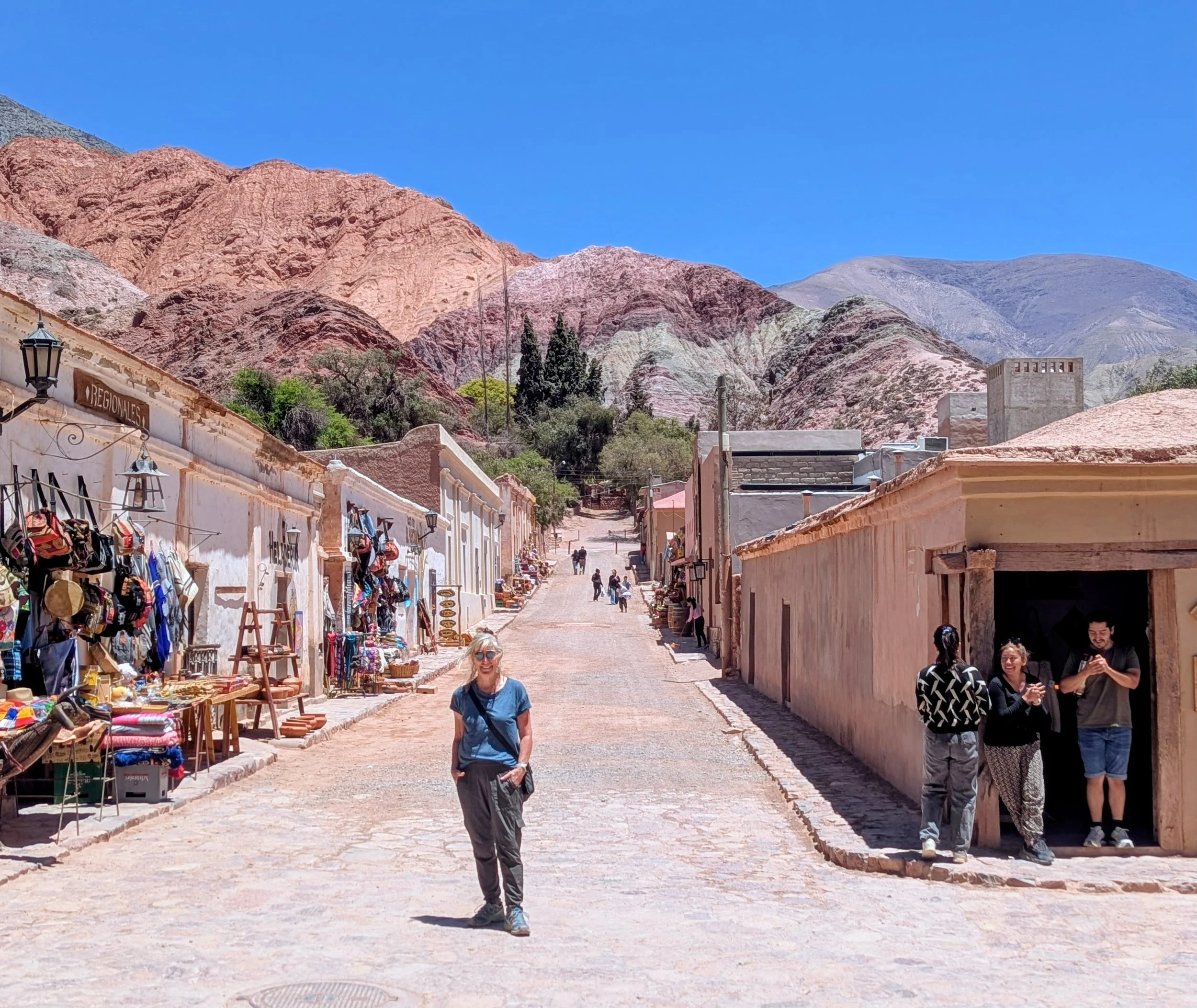
It was one of our favorite small villages to visit
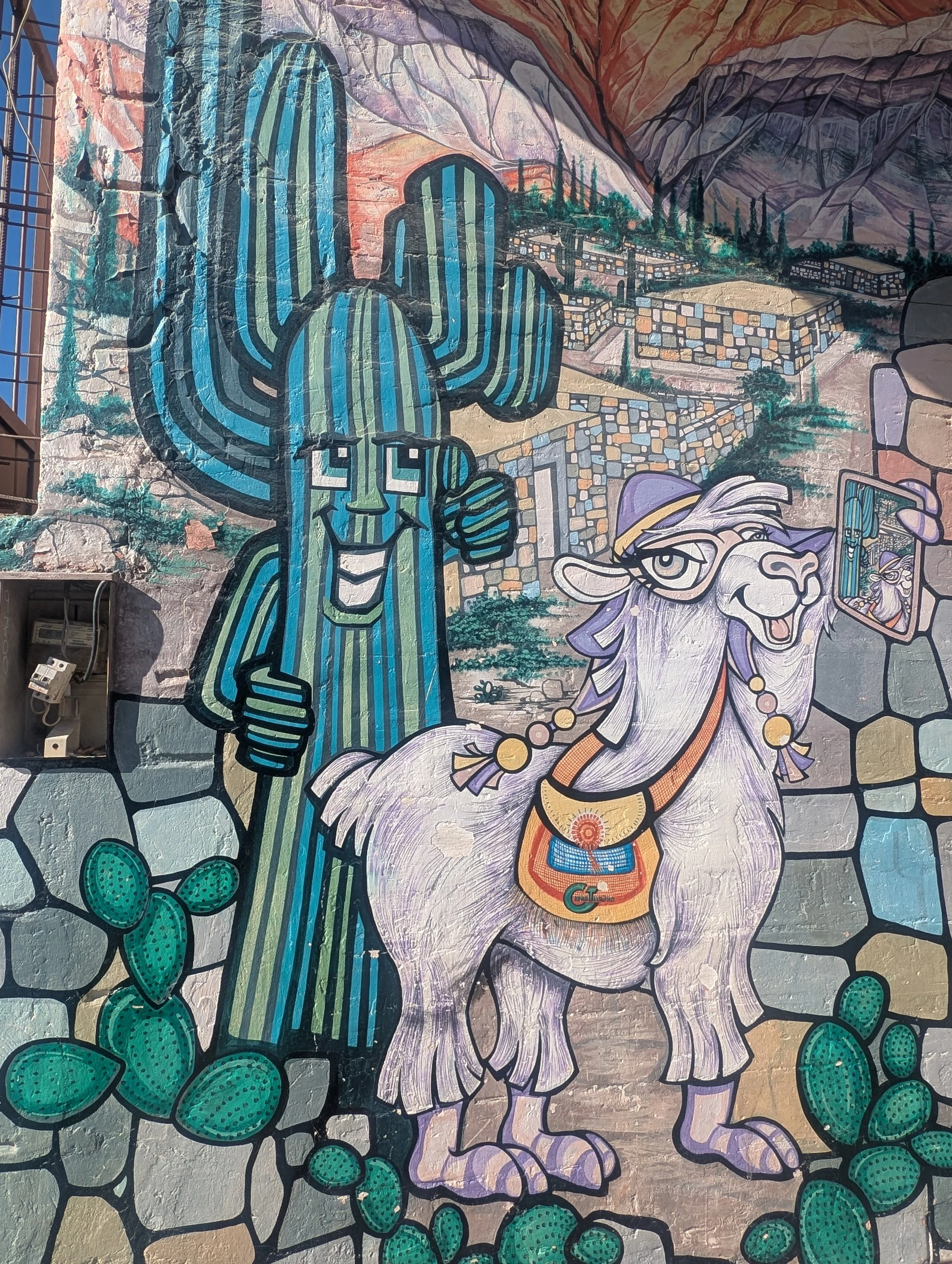
Whimsical murals everywhere
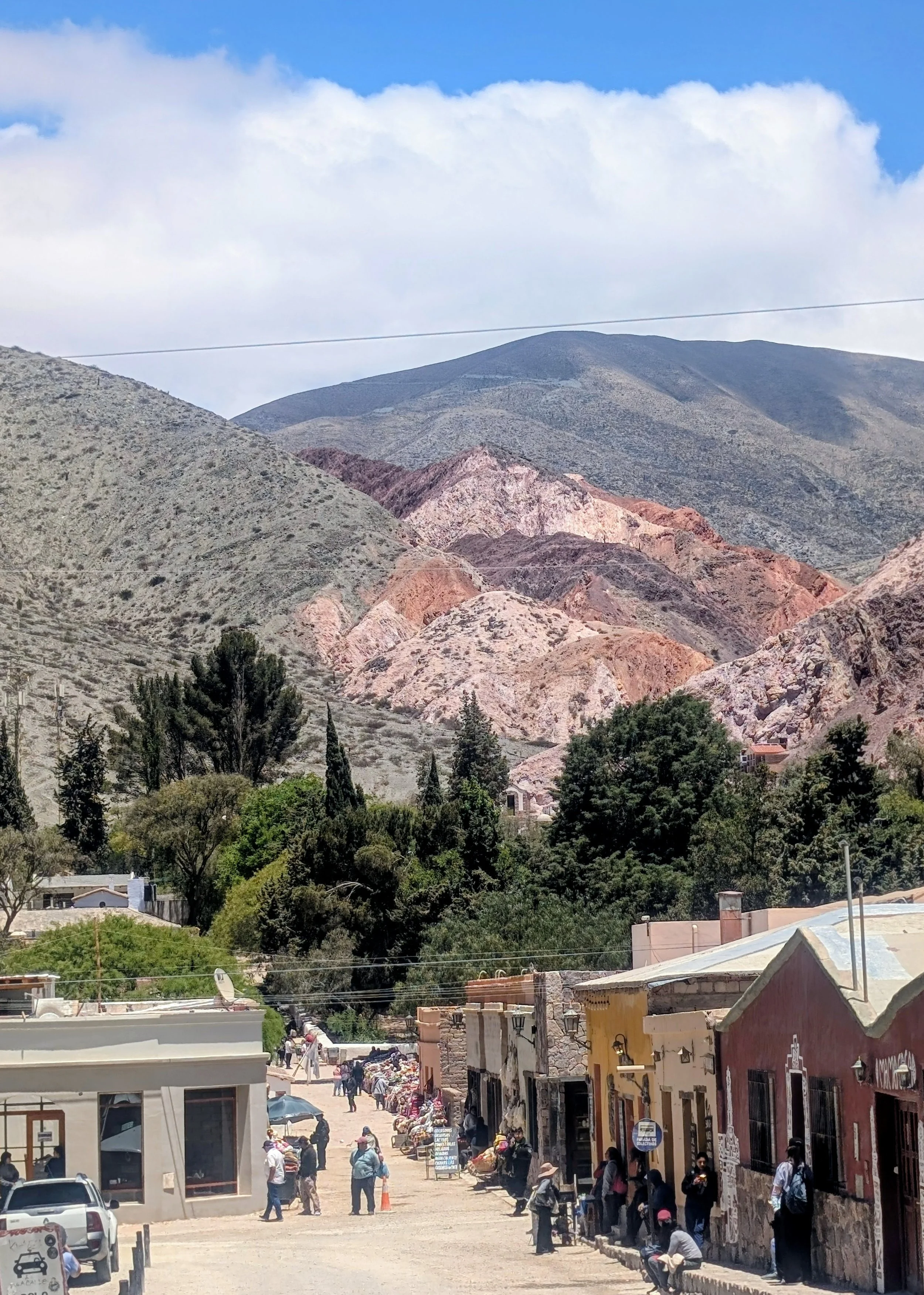
Nestled in the desert hills
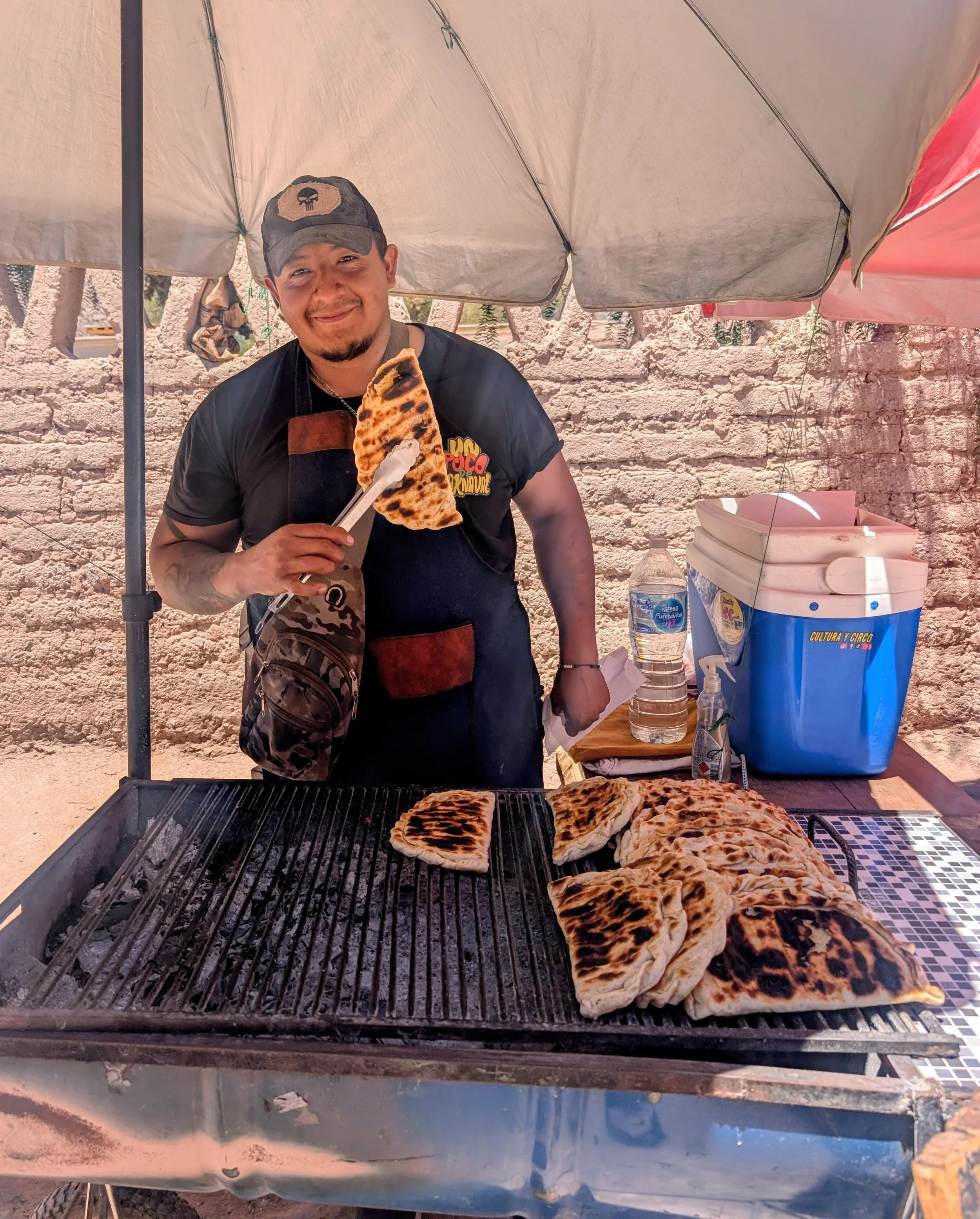
Street food! Trying out tortillas rellenos
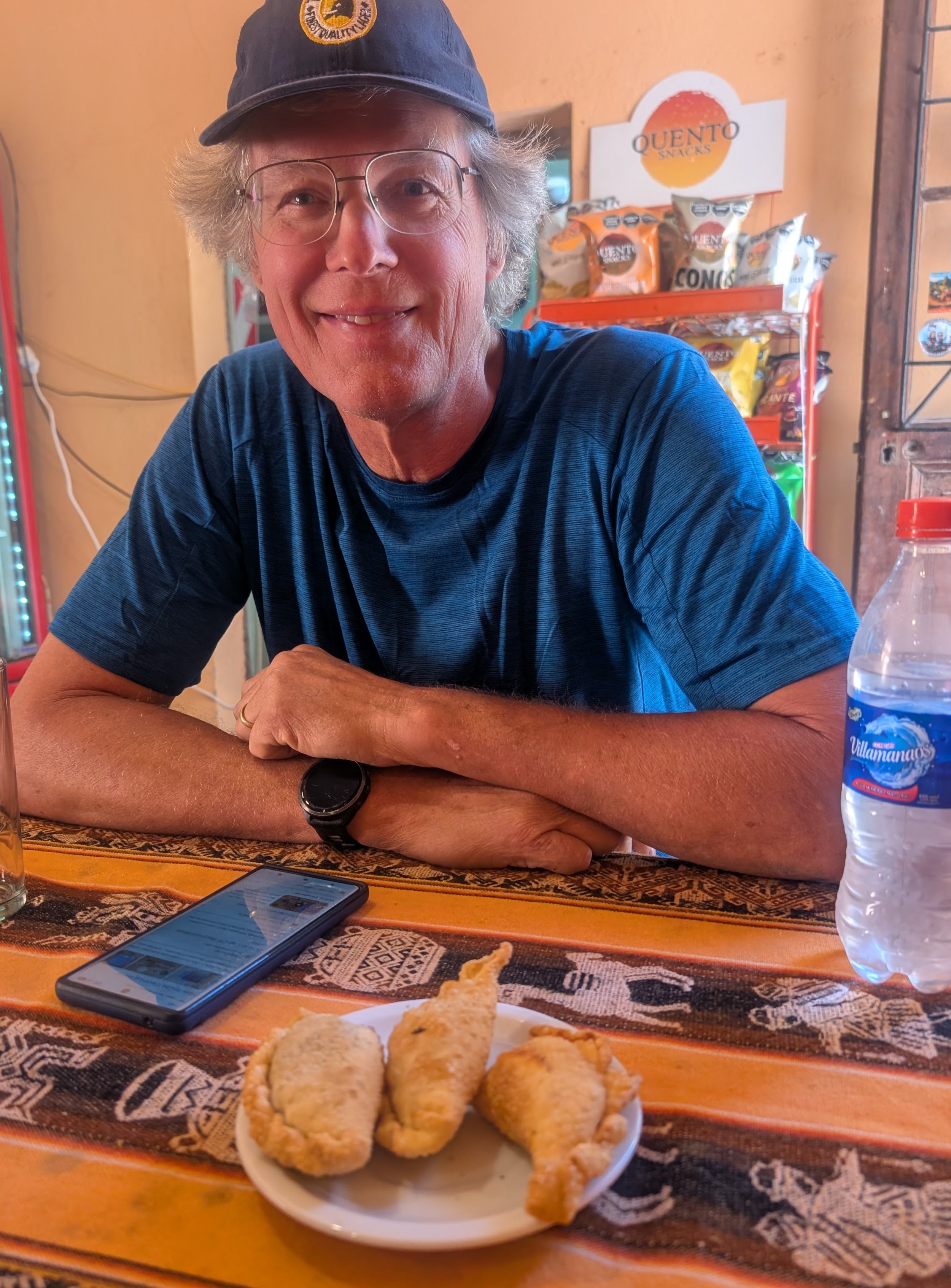
And our first Argentinian empanadas - they quickly became a favorite quick snack
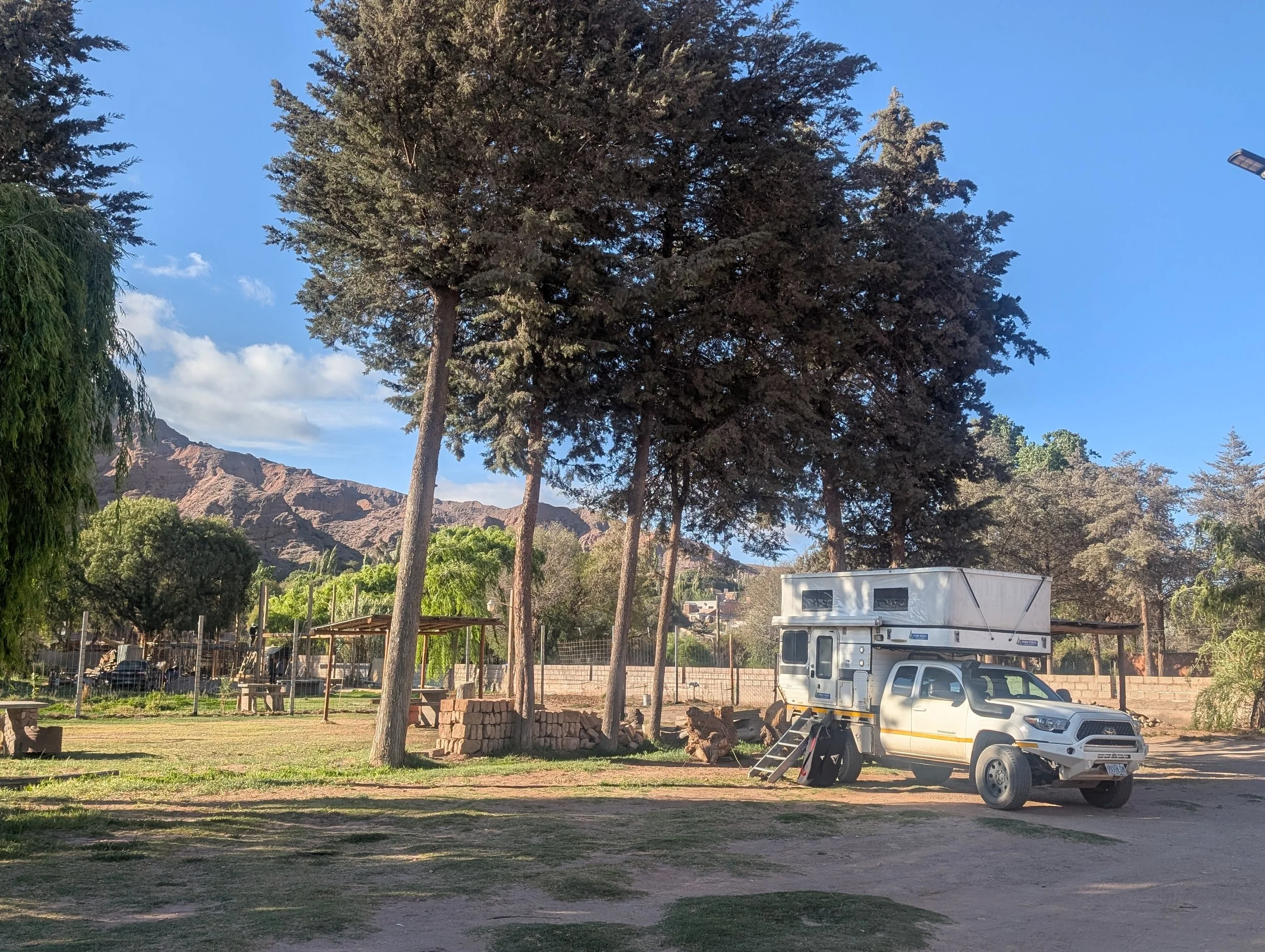
Feeling like a shower, we pulled into a campground in Tilcara, we were the only campers there
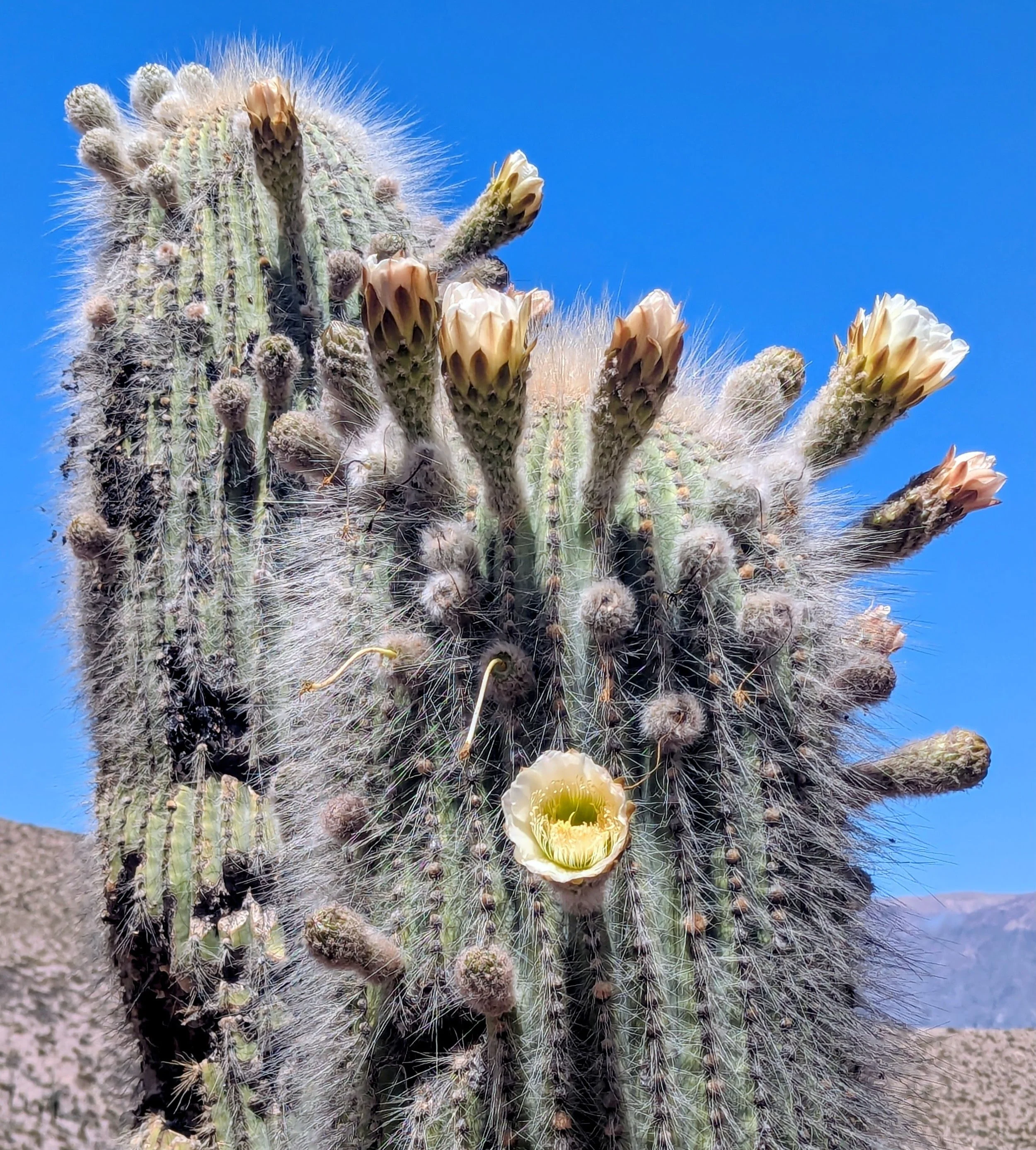
The desert in bloom
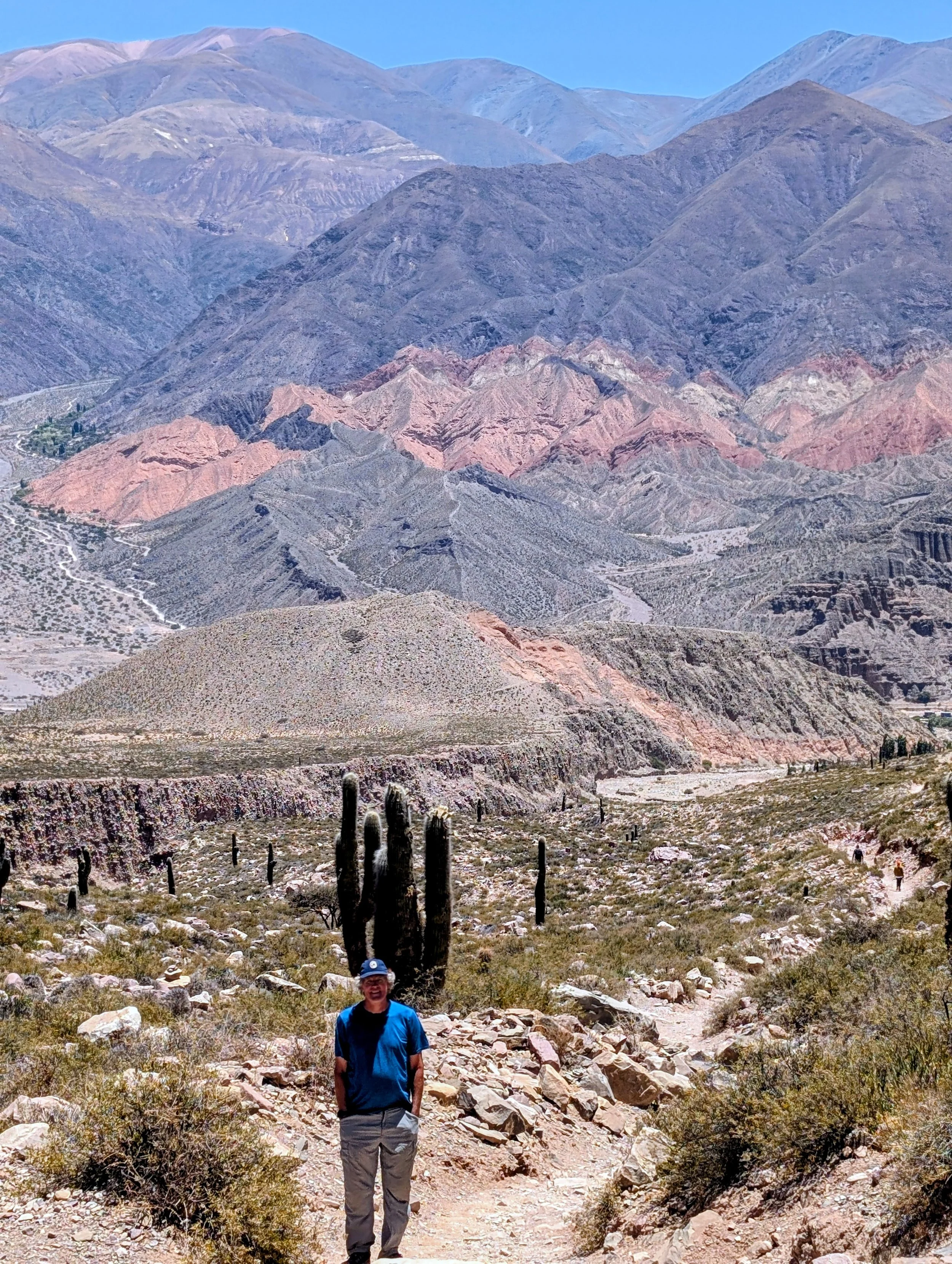
Desert hike above Tilcara
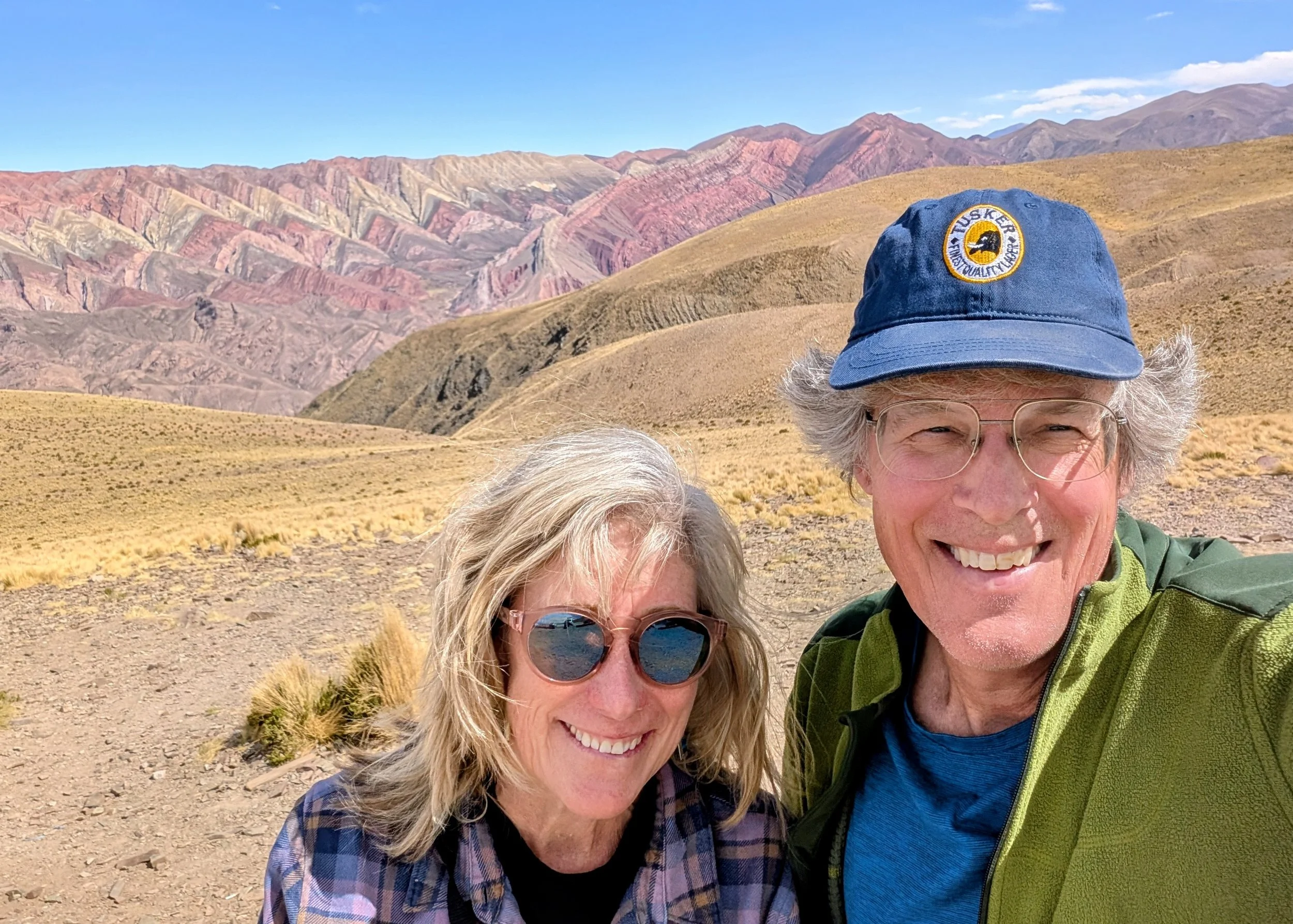
Feeling good about life, mirador outside Humahuaca
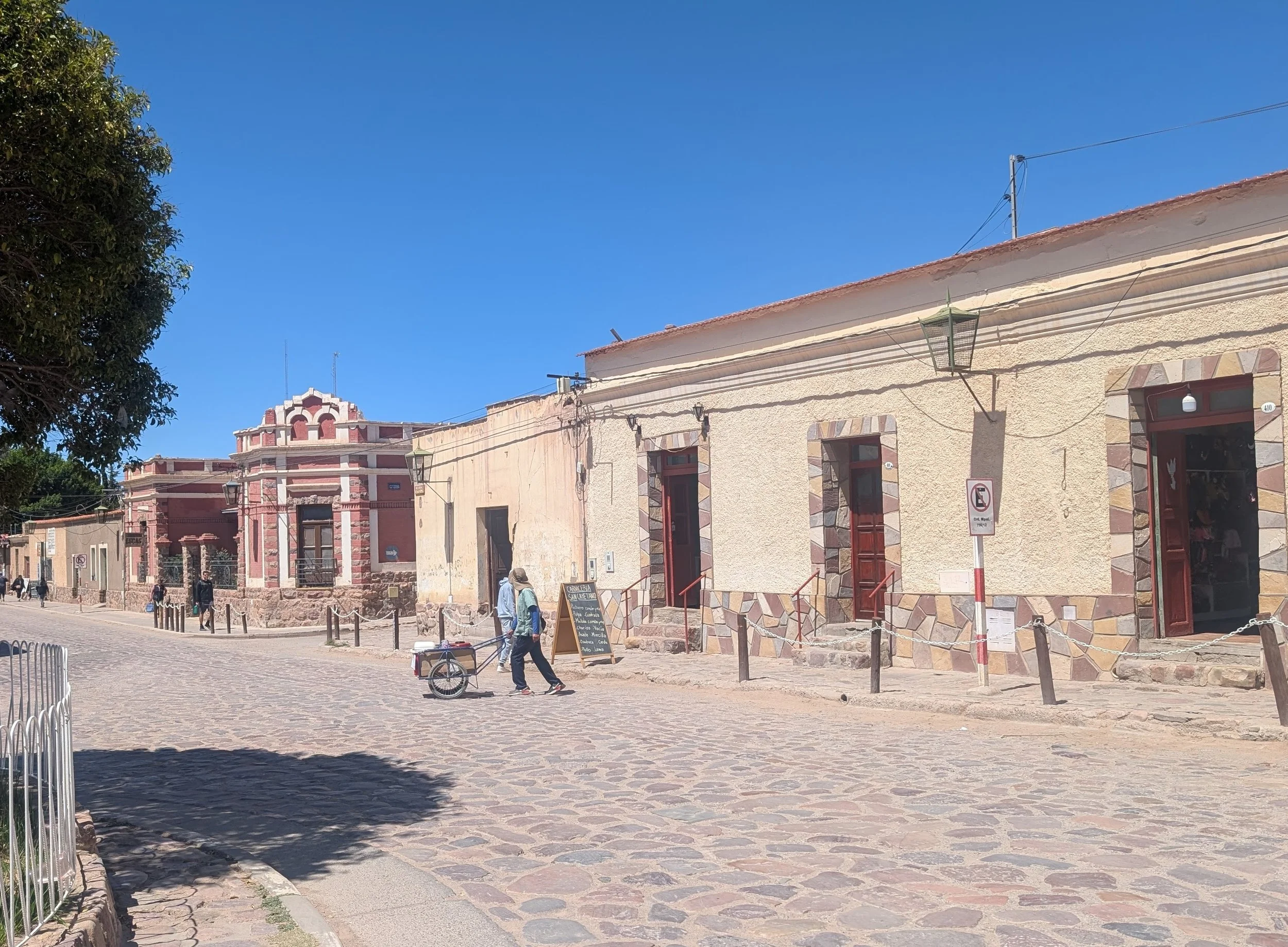
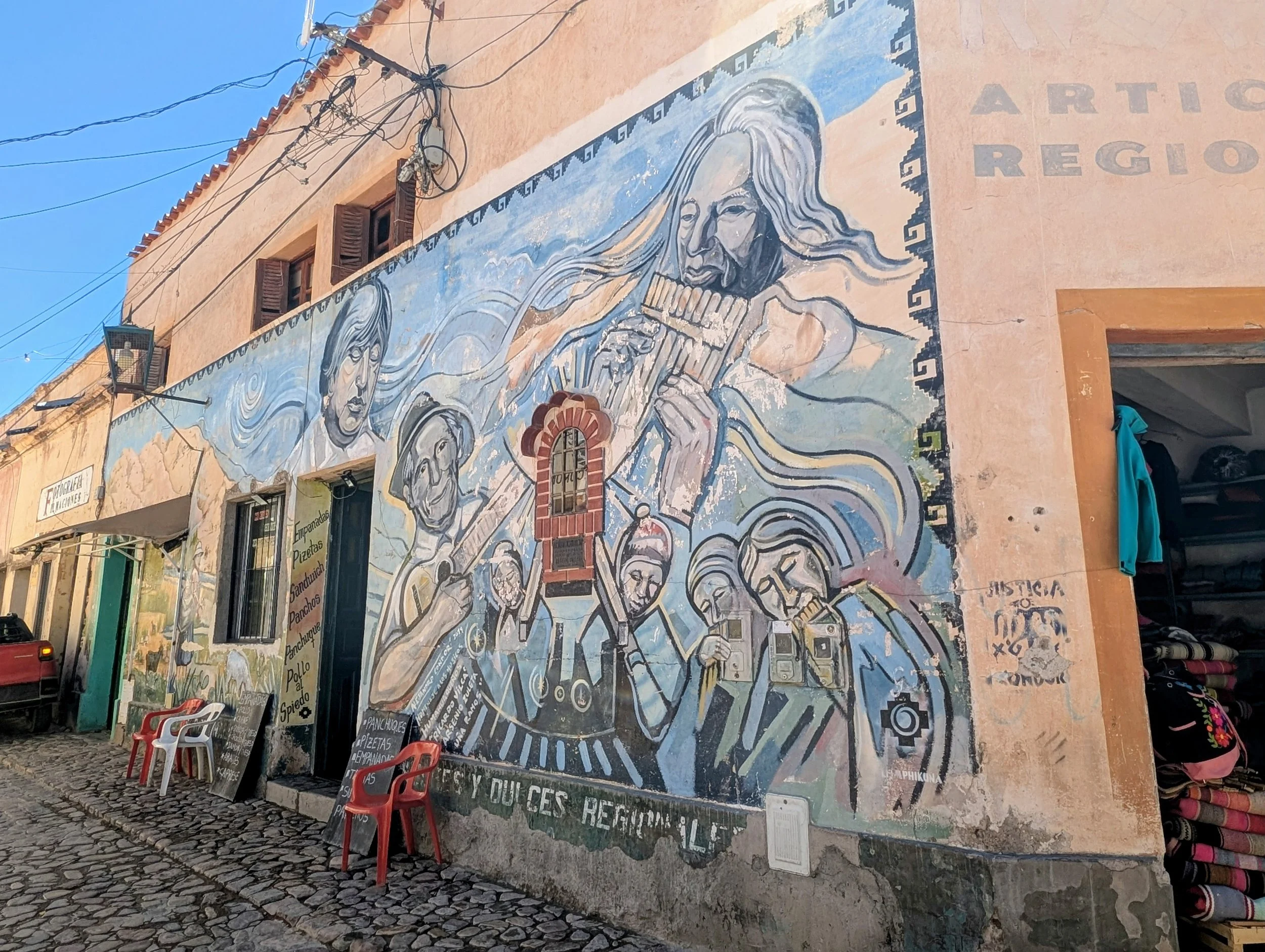
Cobbled streets of Humahuaca
The northern Argentina desert region - especially Jujuy province was a highlight for us. The desert landscapes were stunning. We found intriguing canyon and hills hikes and enjoyed our breaks in the small villages, each with a unique character. But common to them all was a beautiful design aesthetic, building out of local materials and incorporating art.
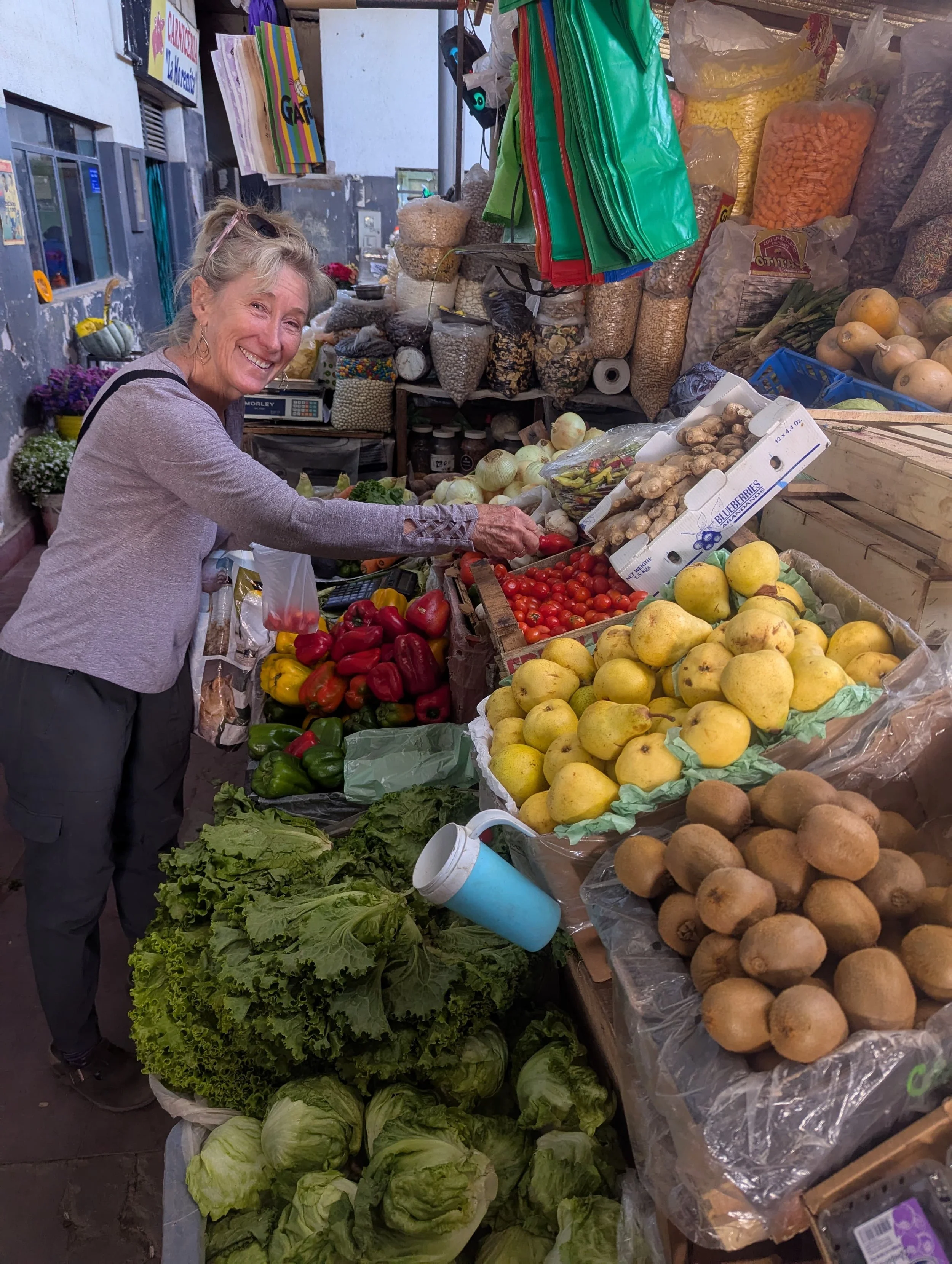
Shopping at the local market
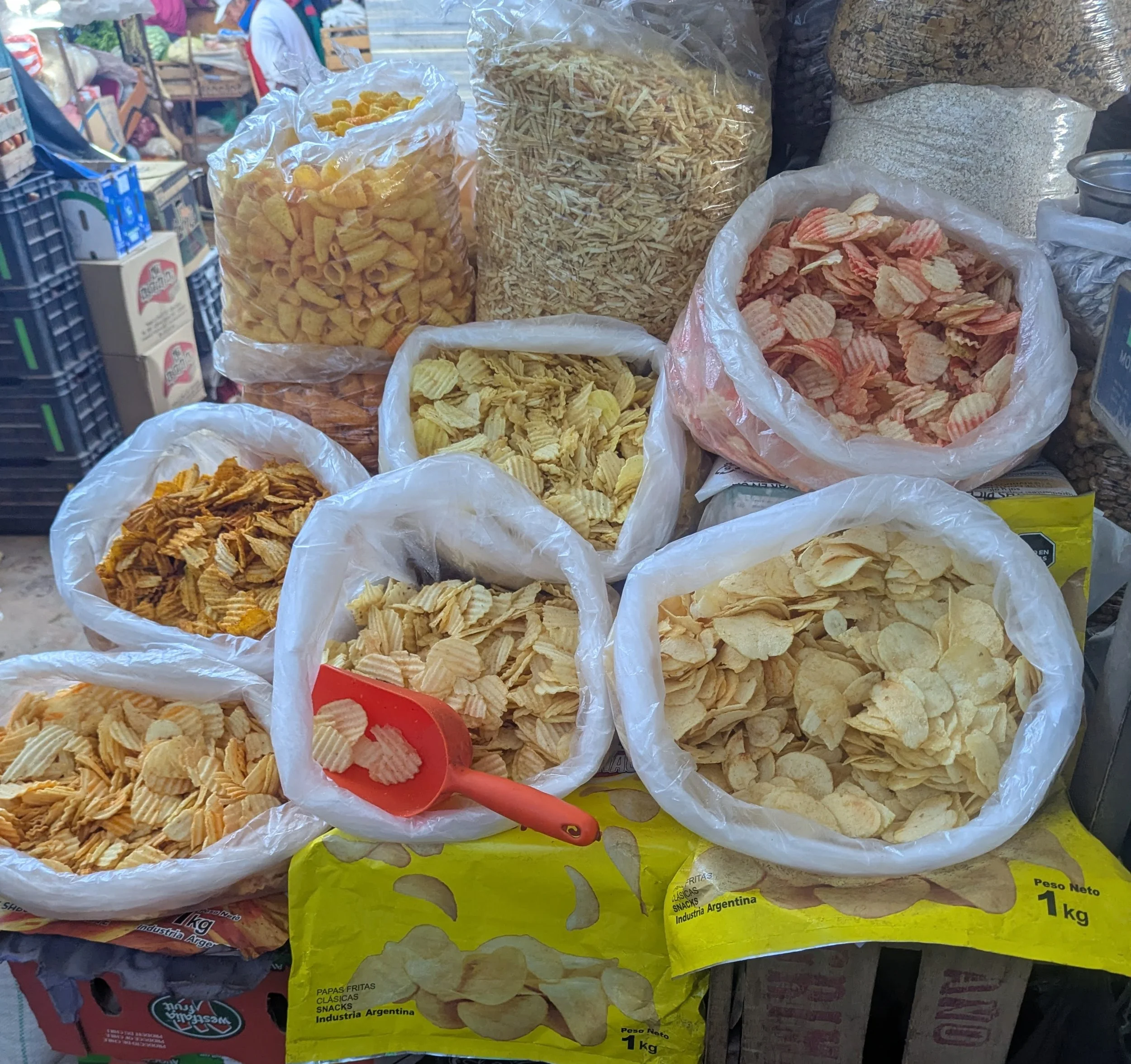
Everything for sale in bulk
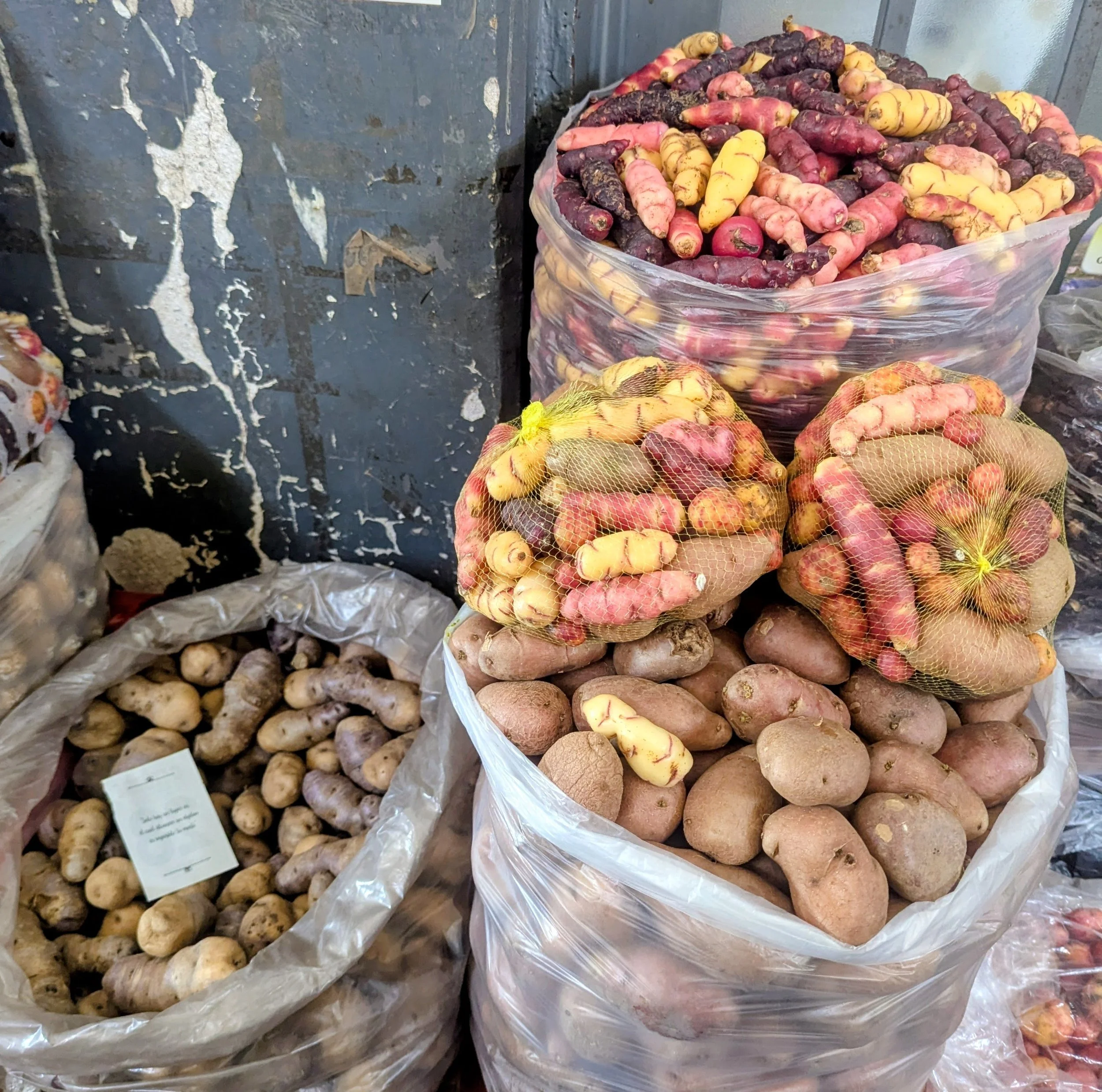
Most colorful potatoes we have seen
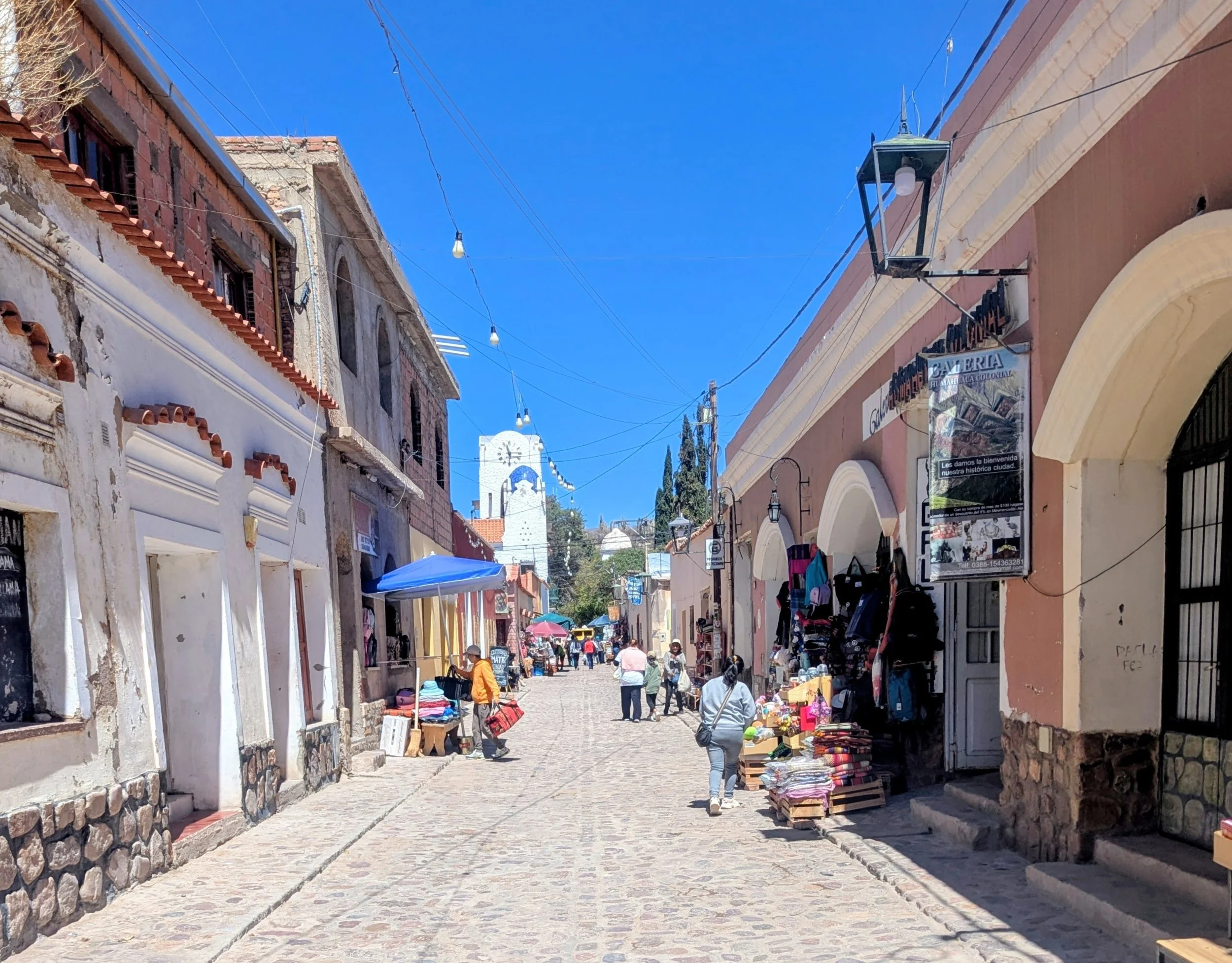
Bigger than Purmamarca, Humahuaca was just as charming
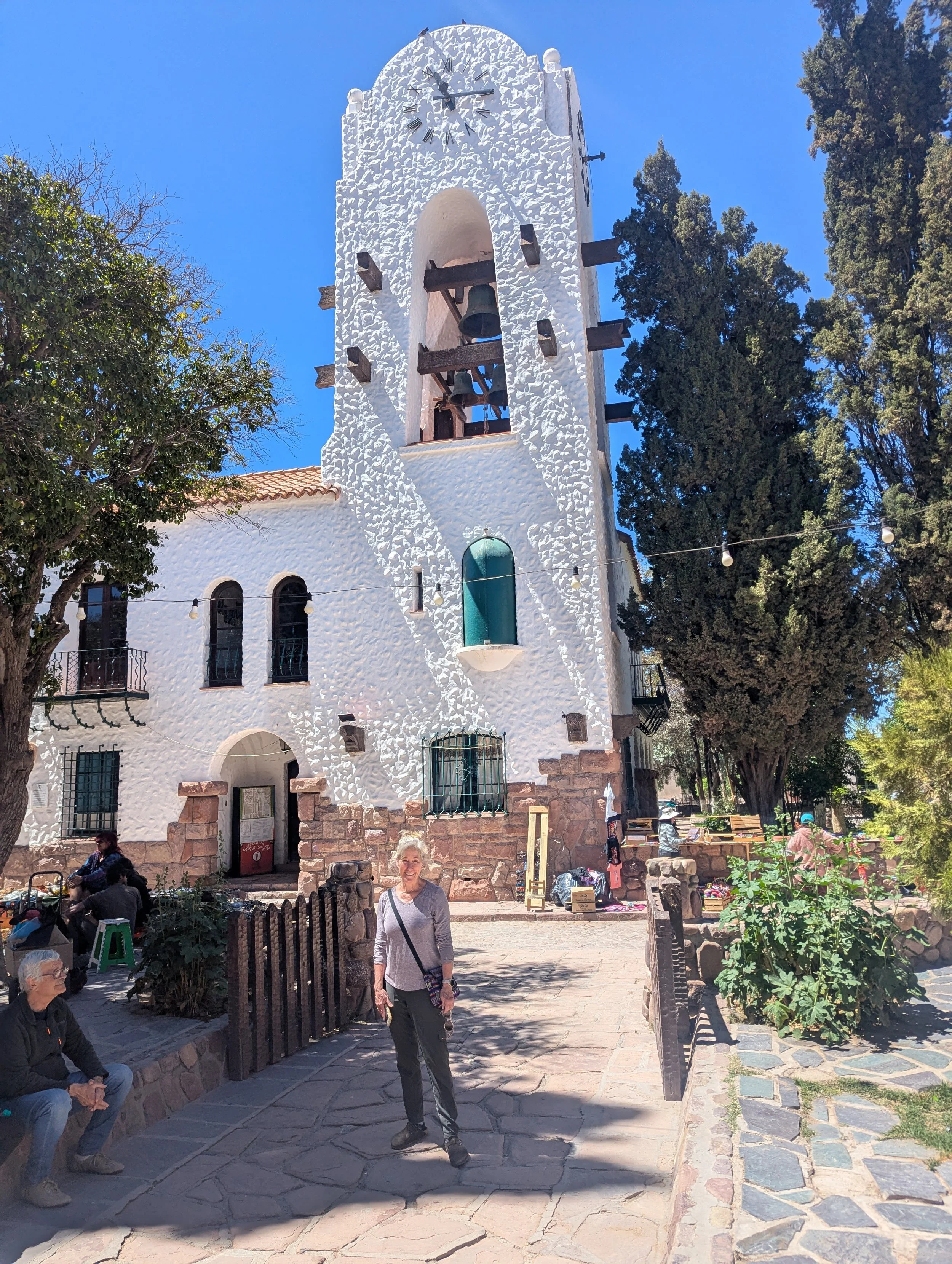
We were learning that every village had a central shady square and usually at least one old church on it
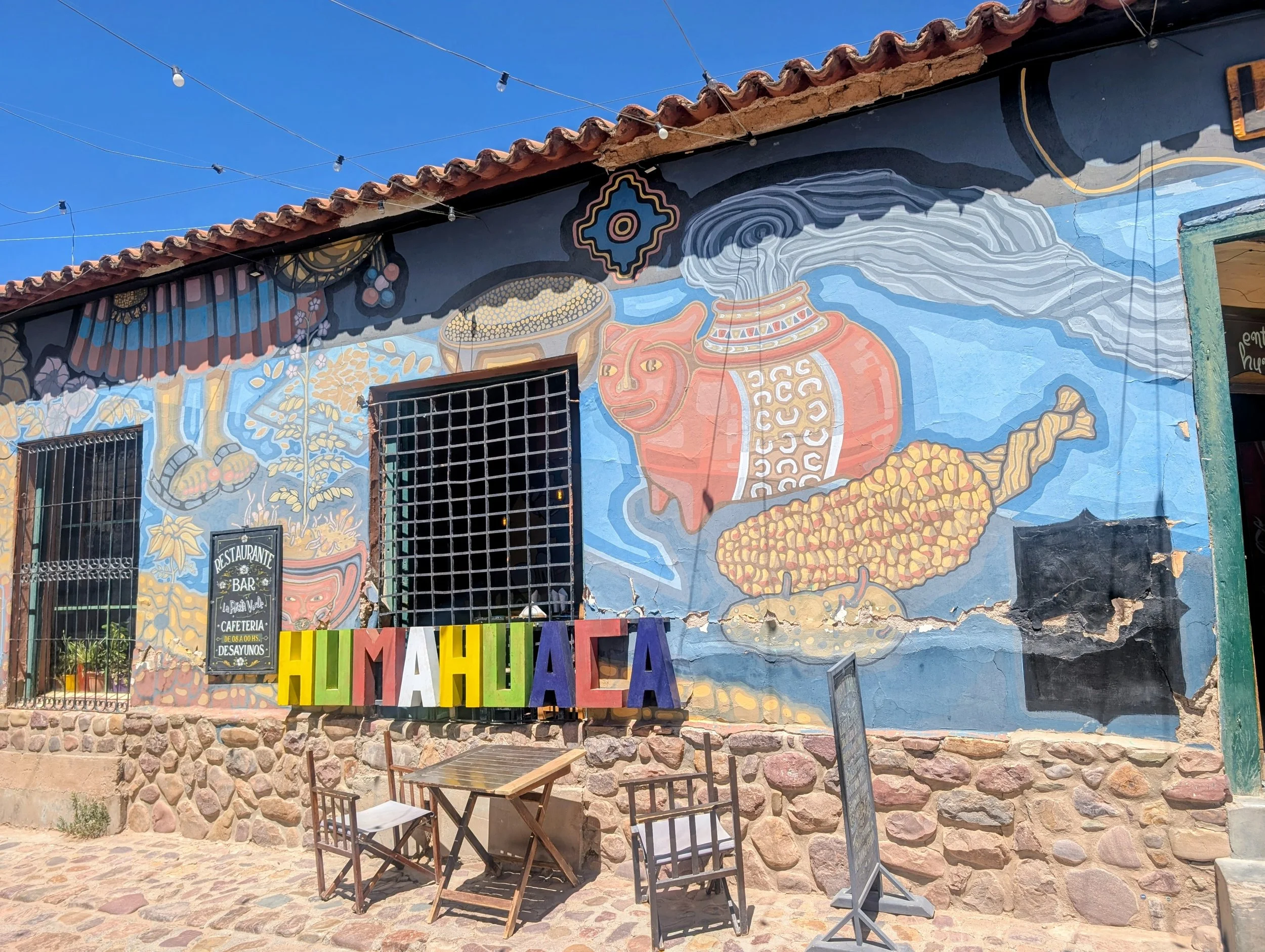
Buildings were all colorfully painted - lots of artists around
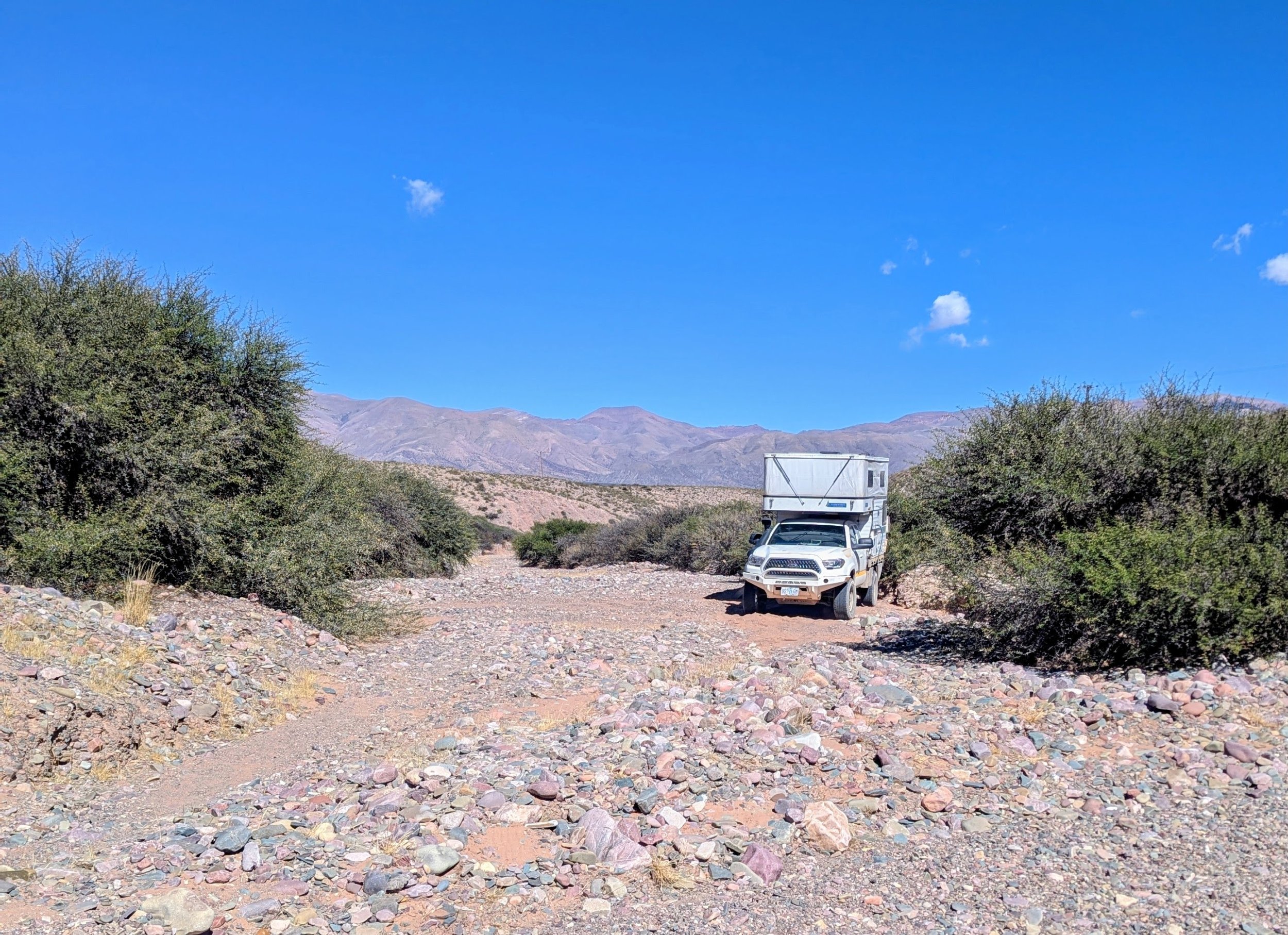
Another dry river bed camp!
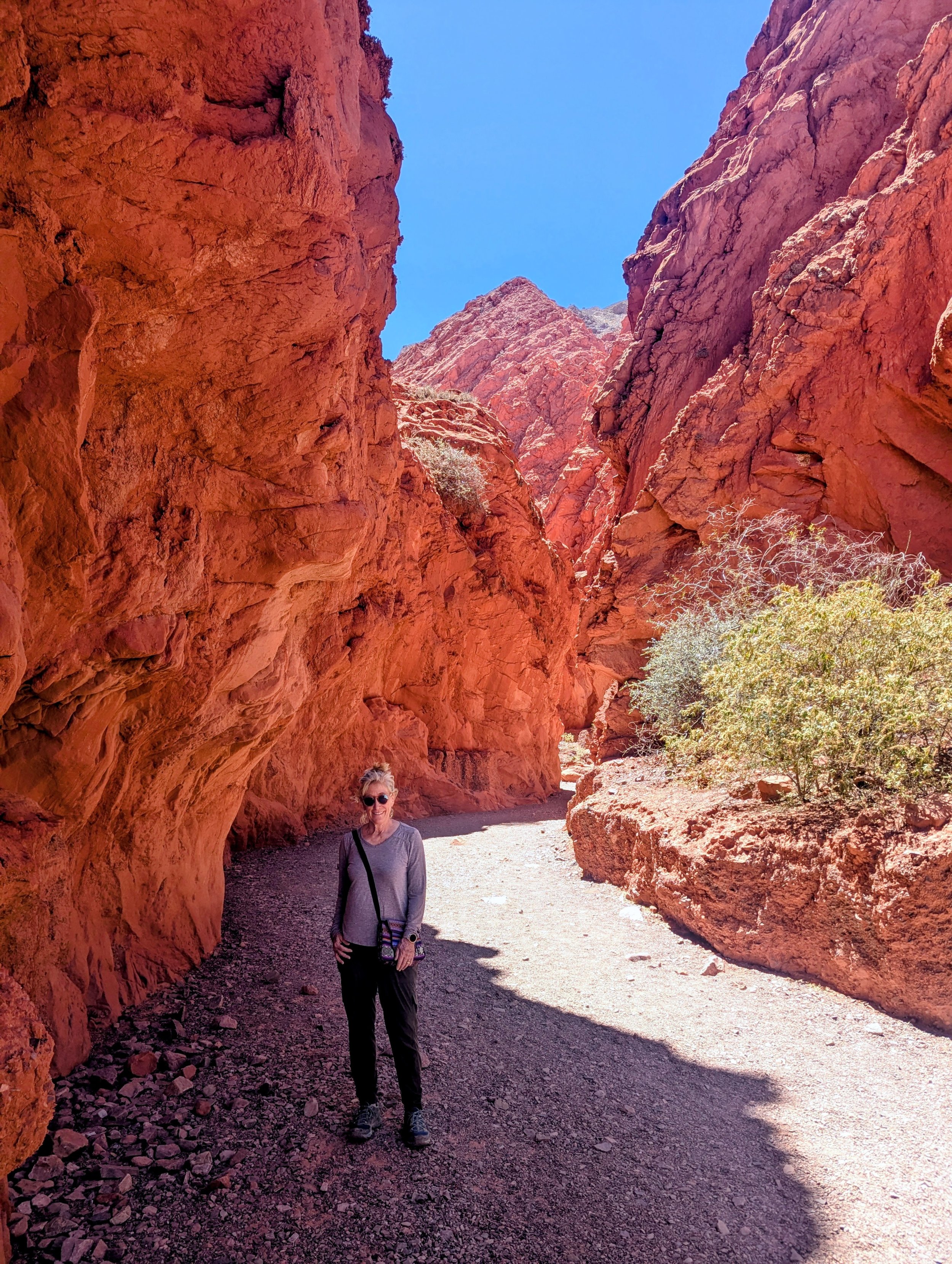
Hiking in the Quebrada de las Senoritas outside of Uquia
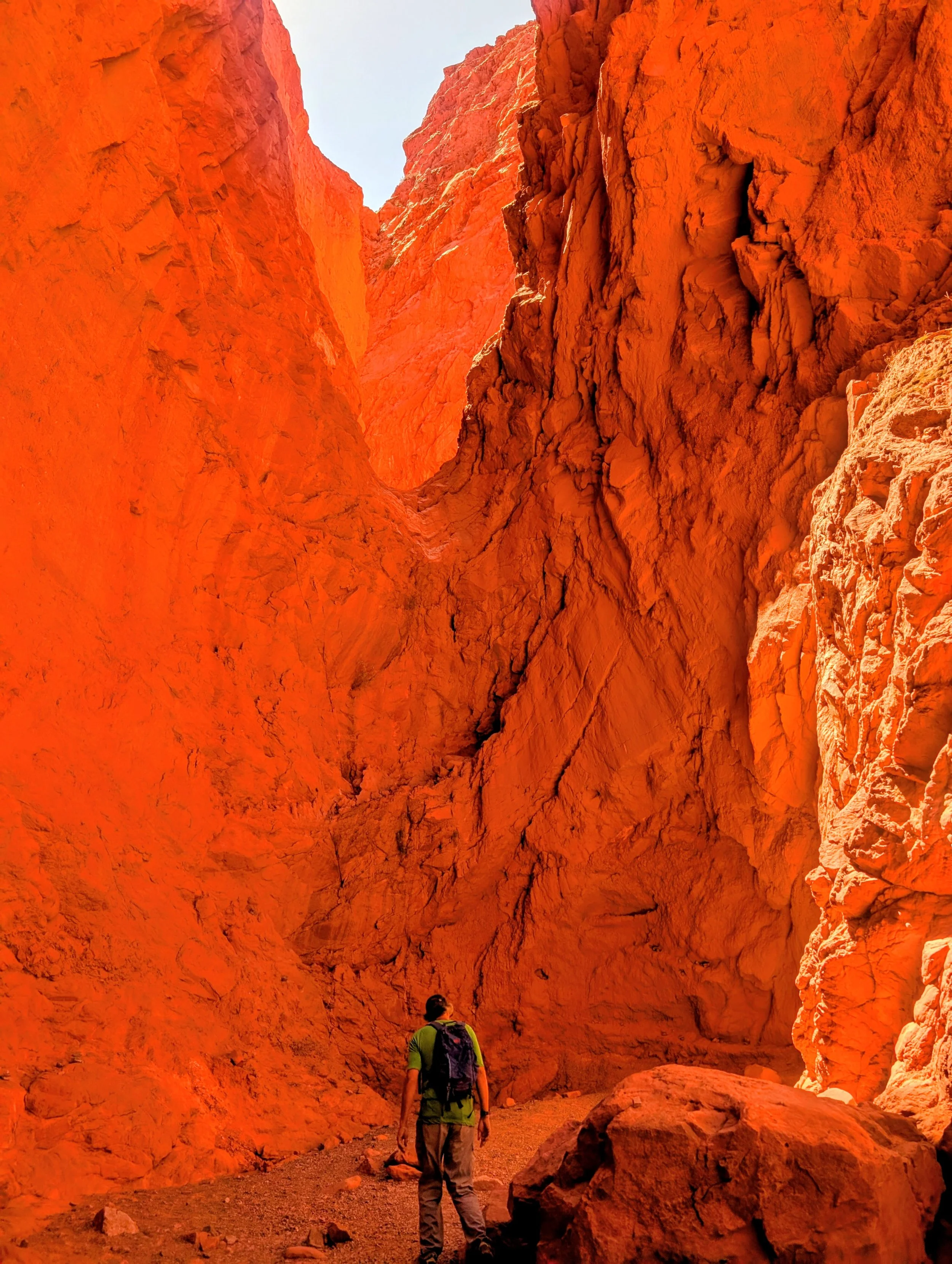
Named after an Incan legend about three young women fleeing the Spanish Conquistadors
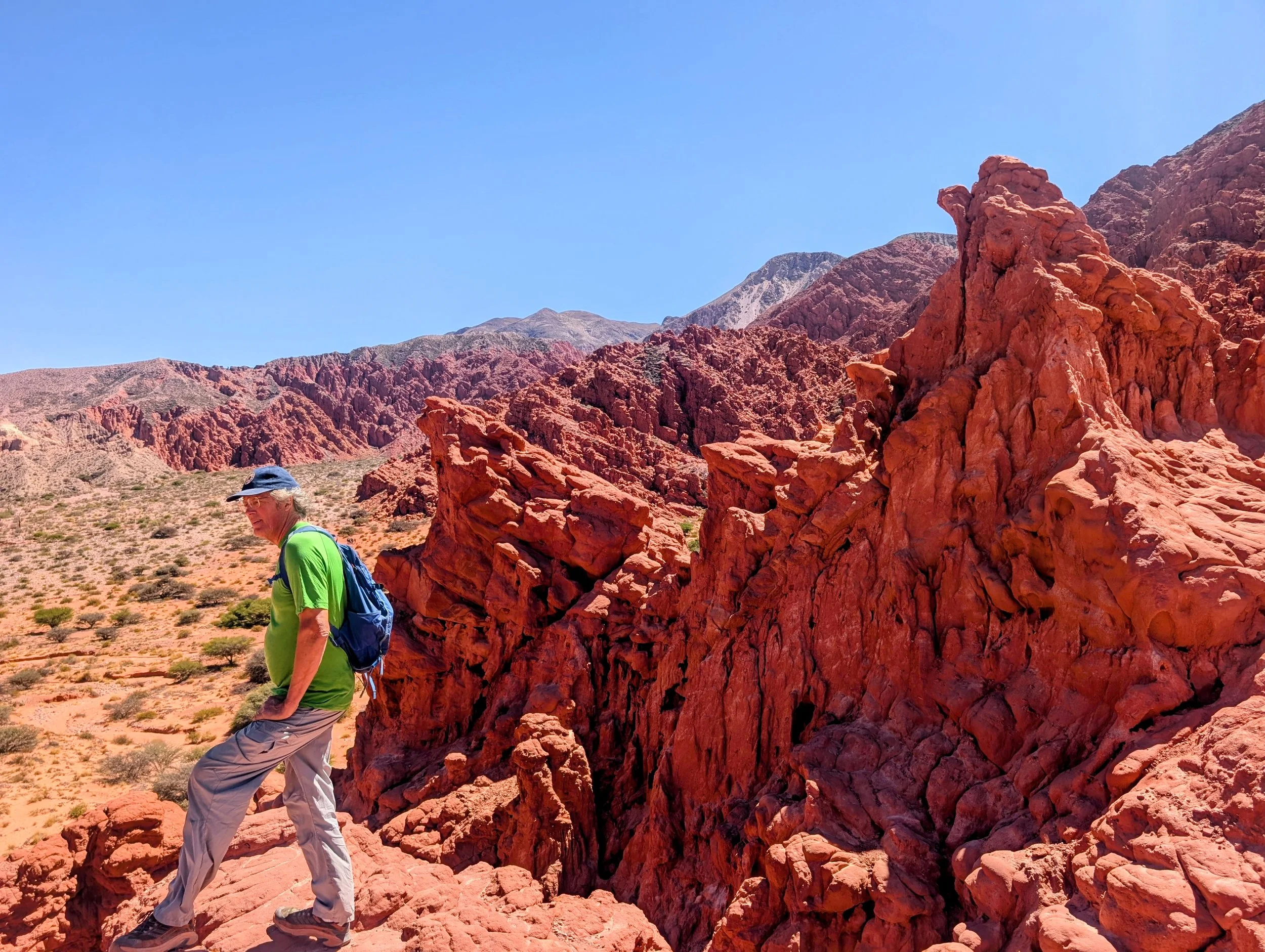
As the legend goes, the canyons are the young women who were killed and petrified in the earth
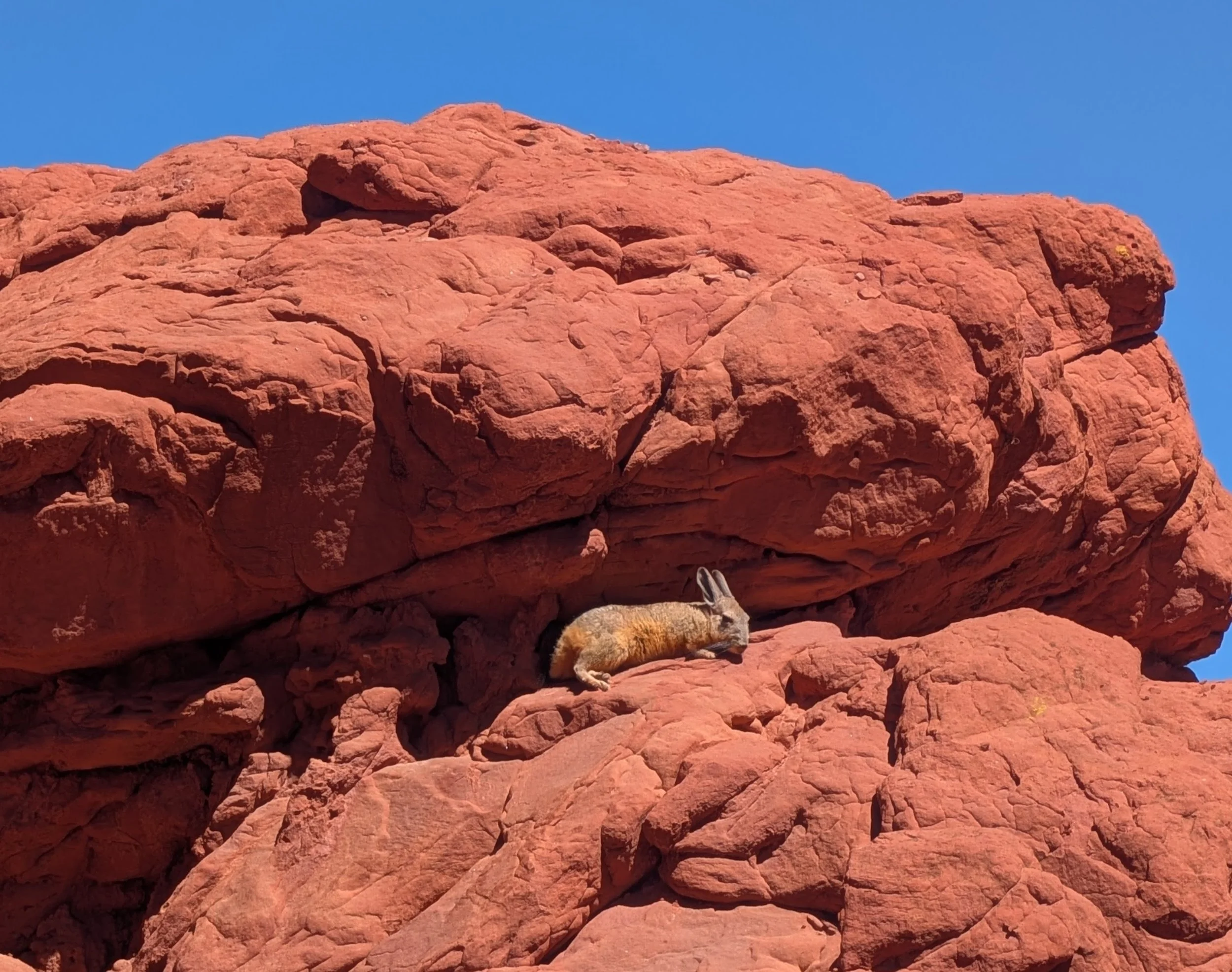
A colorful, chameleon-like rabbit
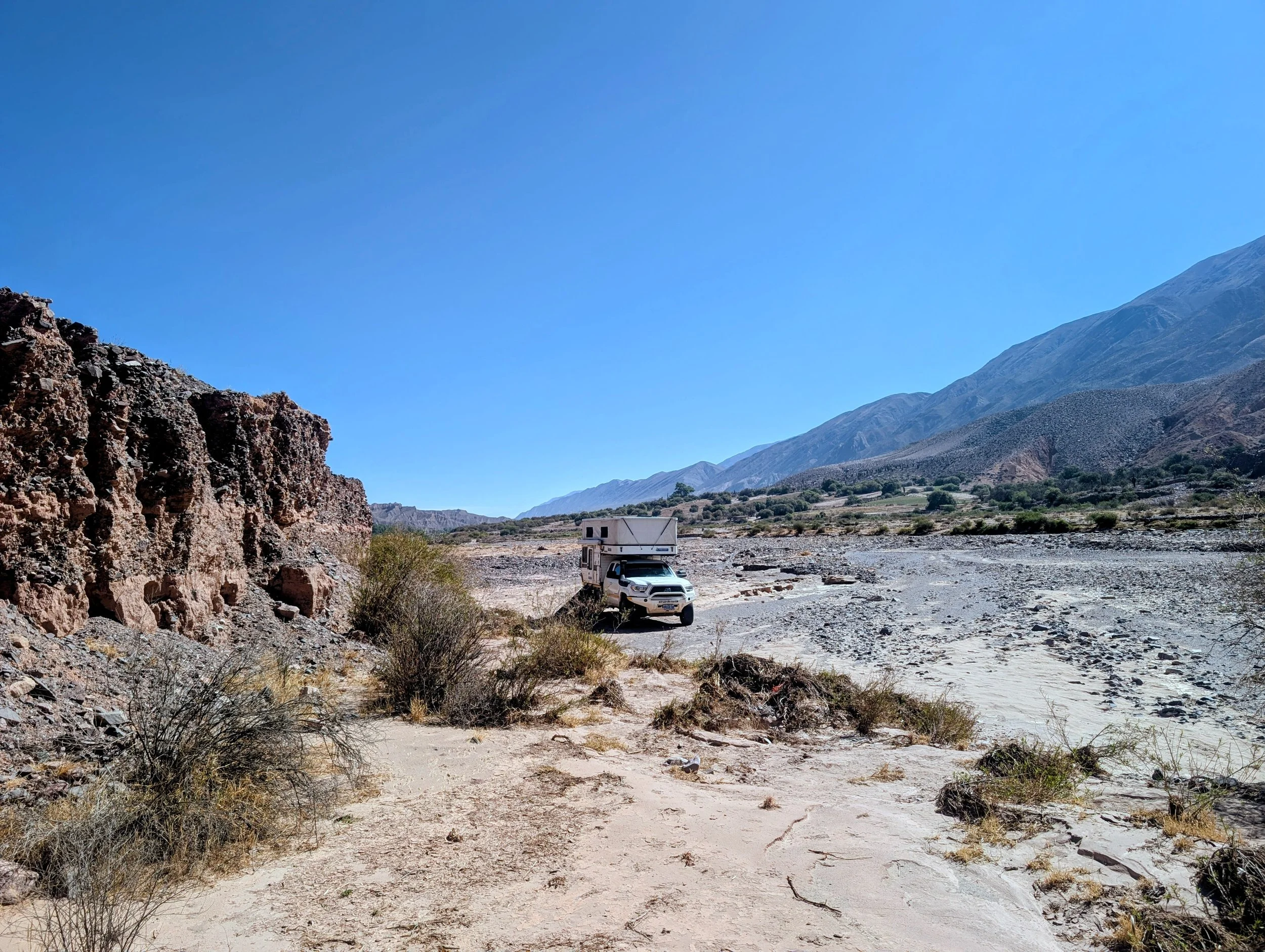
Yup - another dry river bed
Our tour of the northern region ended in the provincial capital of Salta. Known for its Spanish, colonial architecture it is frequently mentioned by Argentinians as an example of one of their most beautiful cities. Approaching tourist season, the town was bursting with local tour groups and the cafes were filled with patrons. We could appreciate its splendor, but did not find it as intriguing as some of the other smaller towns in the north. But it was definitely worth a visit.
In general we found the Argentinians to be more gregarious then their more serious Chilean neighbors. They were curious about our travels, what we had seen in their county and what we thought. There is clearly a lot of justified national pride in the attractions the country has to offer.
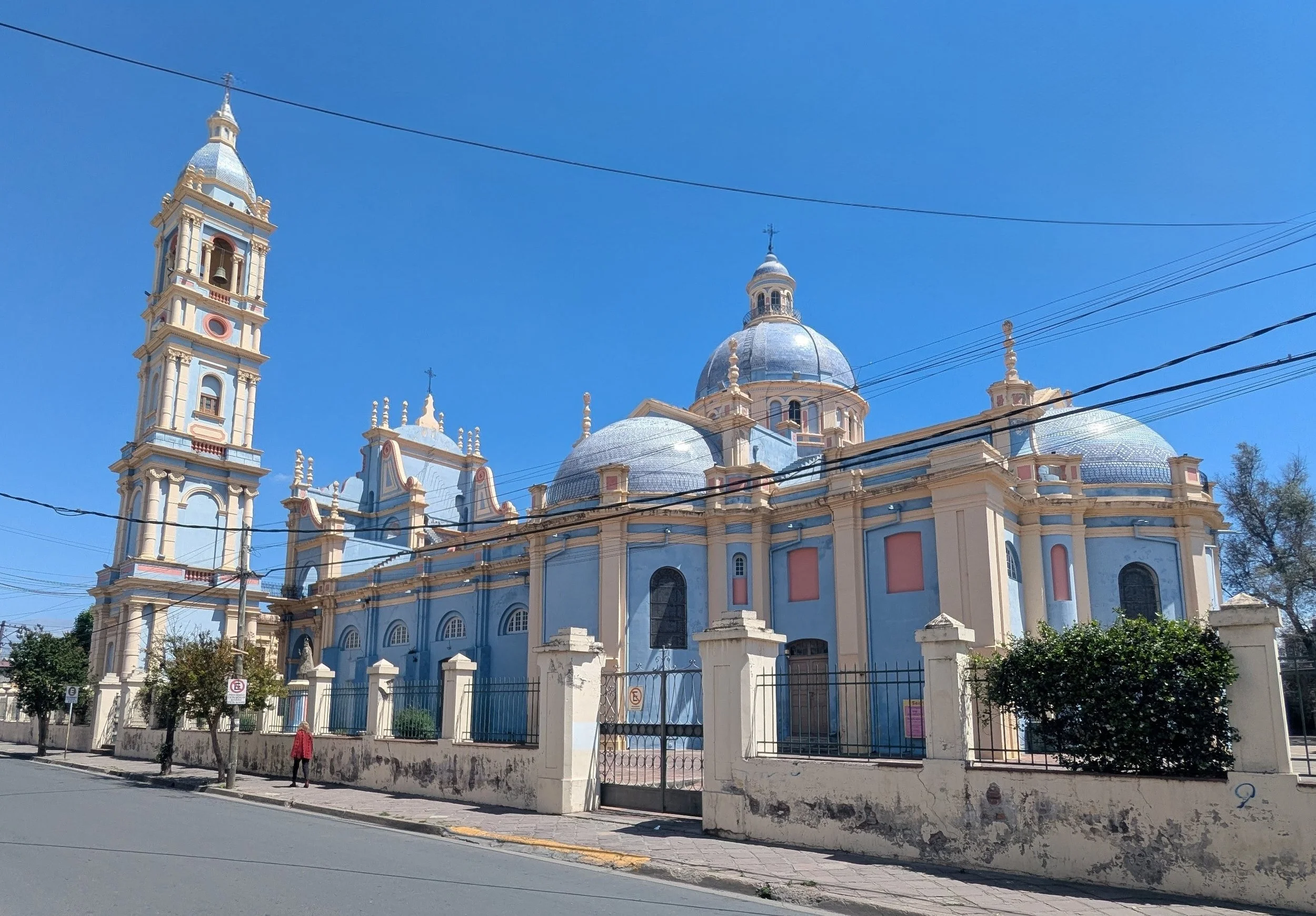
Well preserved colonial buildings that Salta is known for
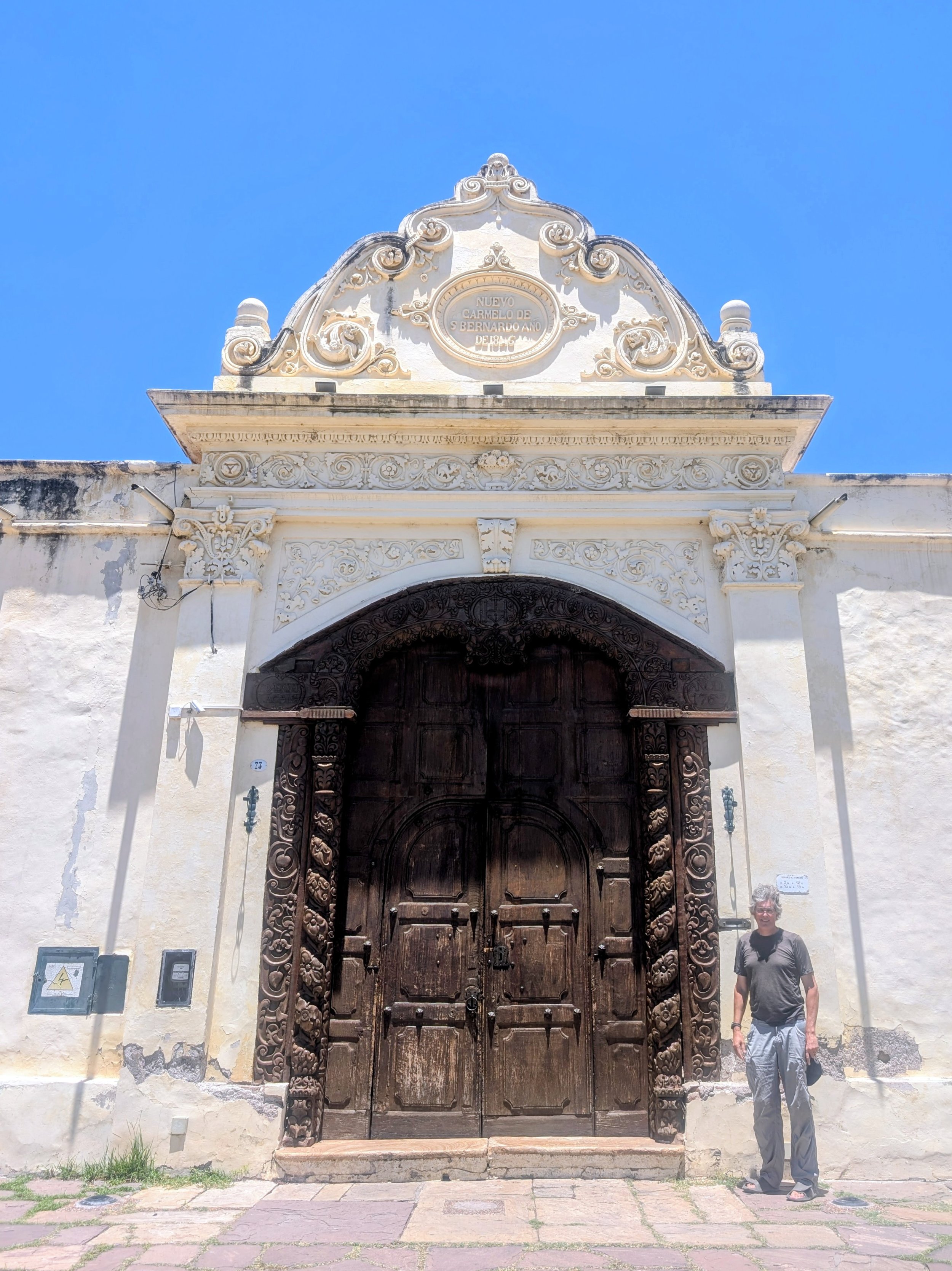
Door to an old convent - Andy loves an old wooden door
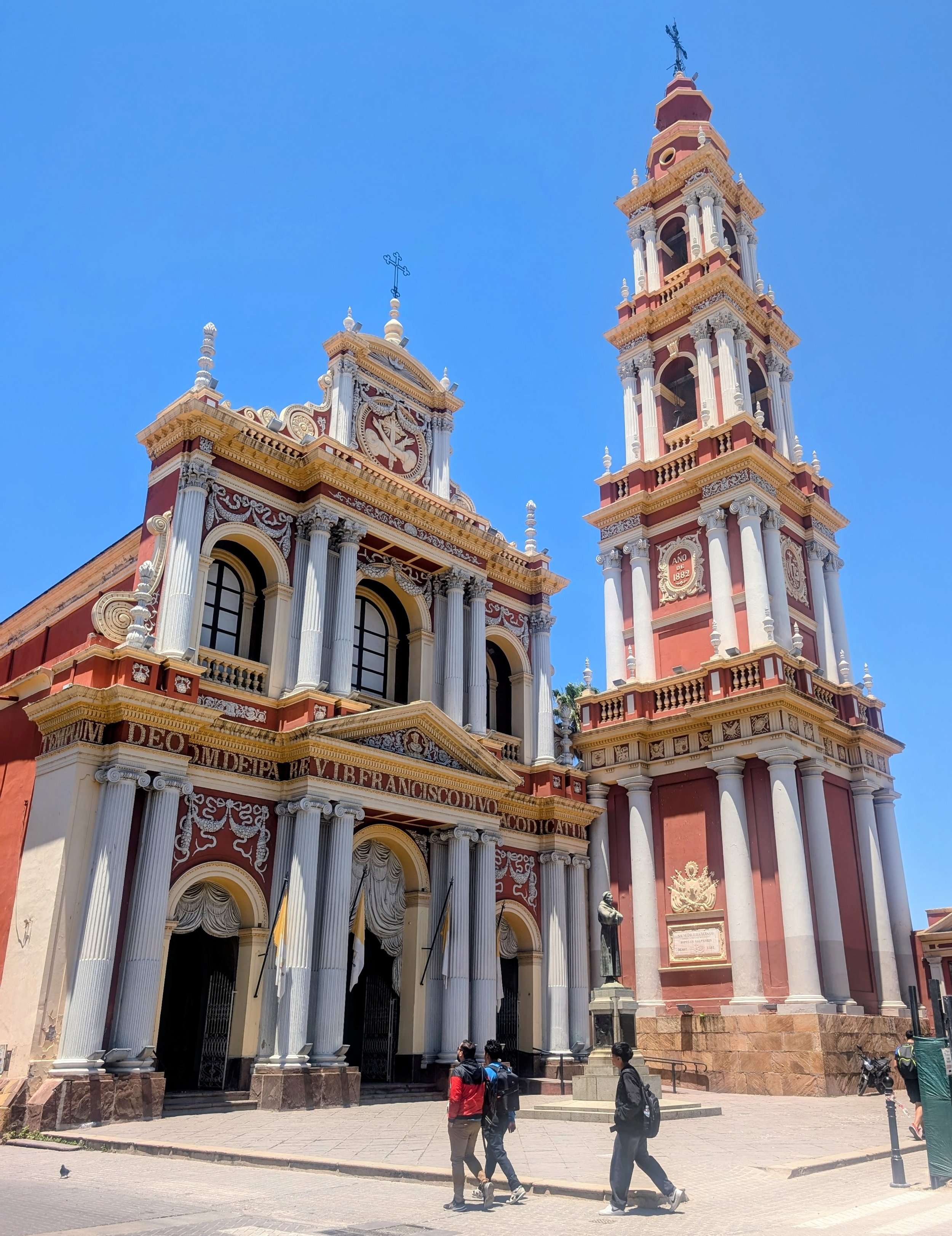
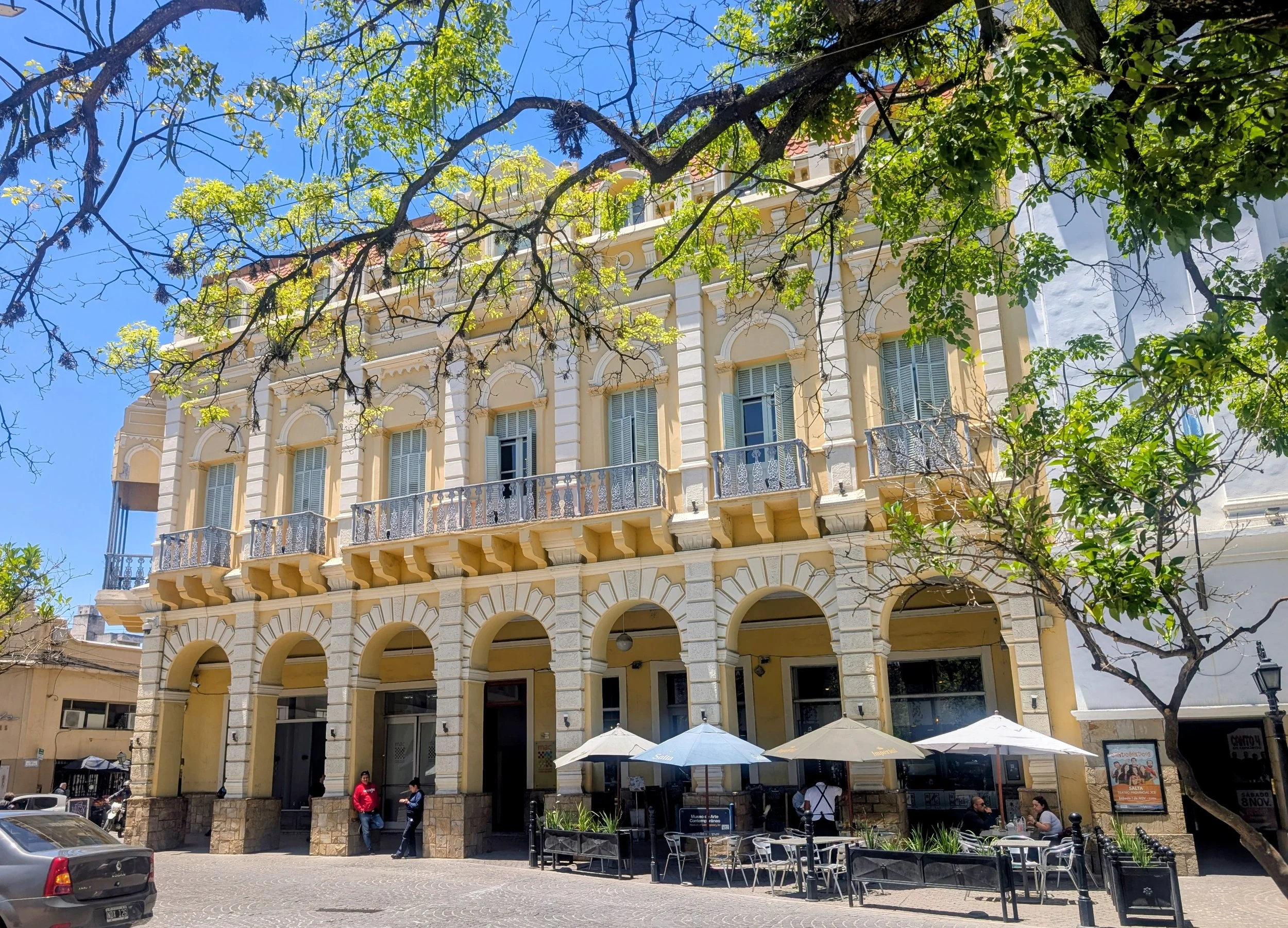
Central square lined with cafes
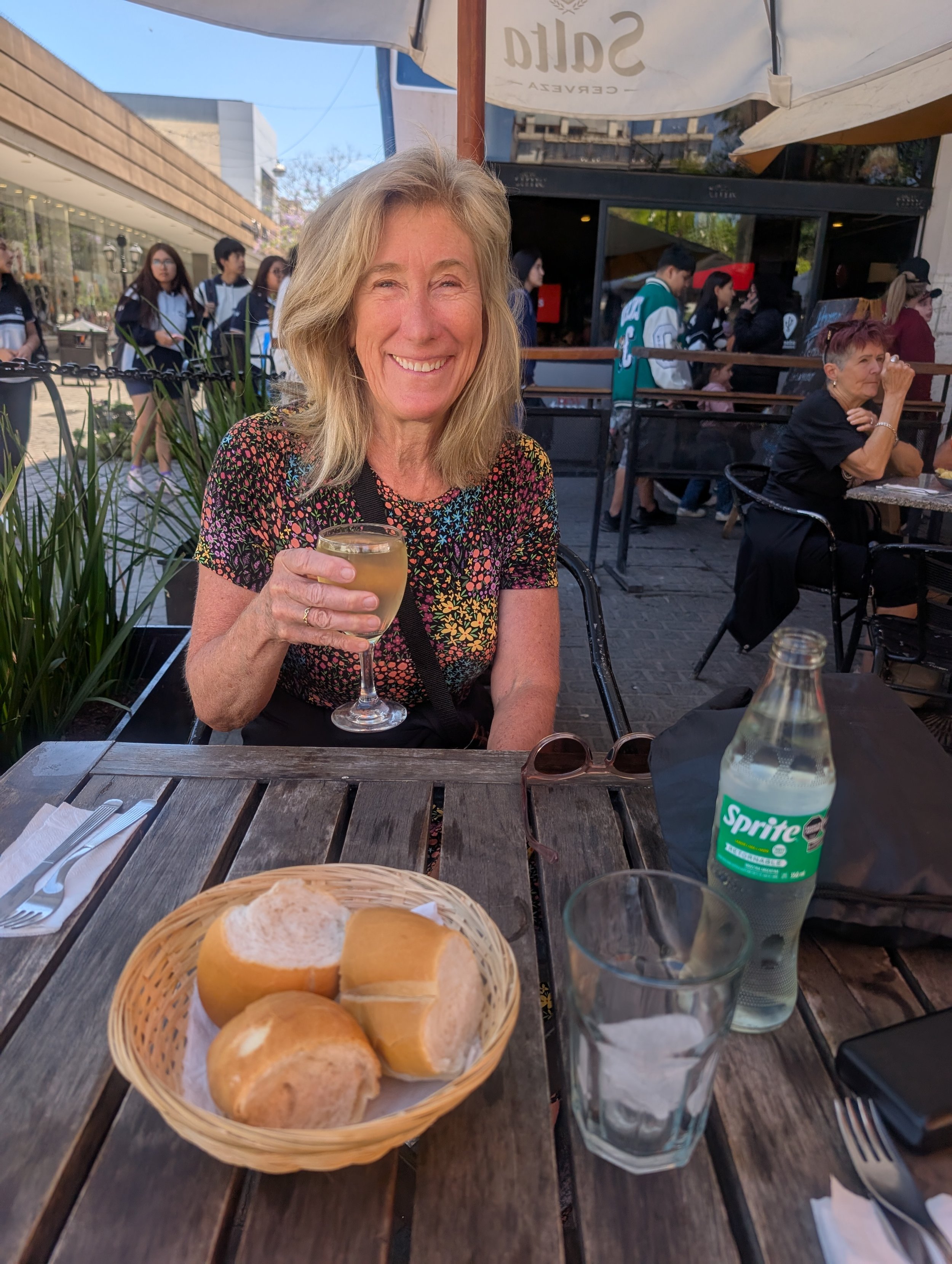
Our first time seeing wine as the cheapest drink on the menu (cheaper than water). So Dawn had to day drink.
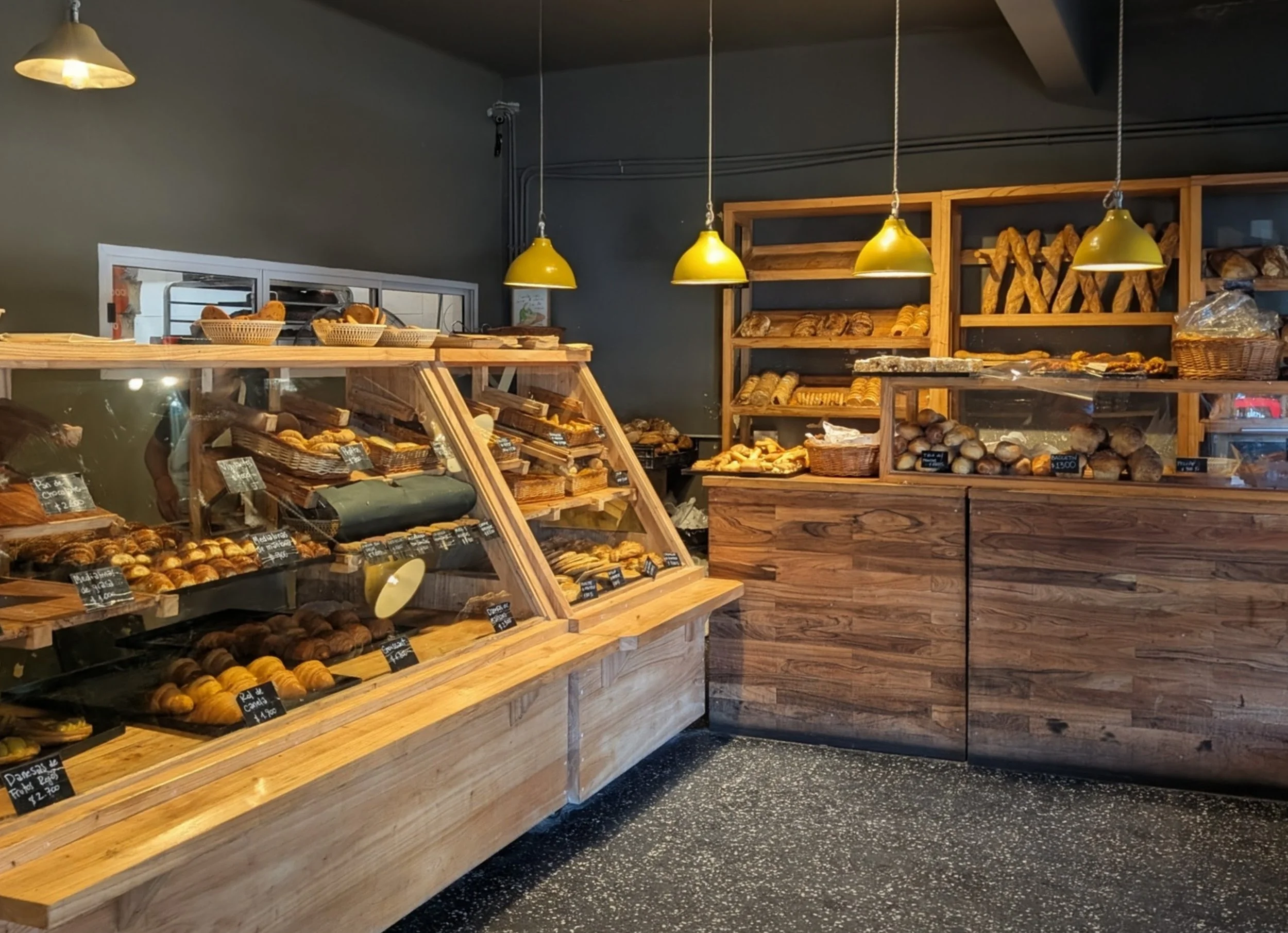
And we continue our love affair with panaderias
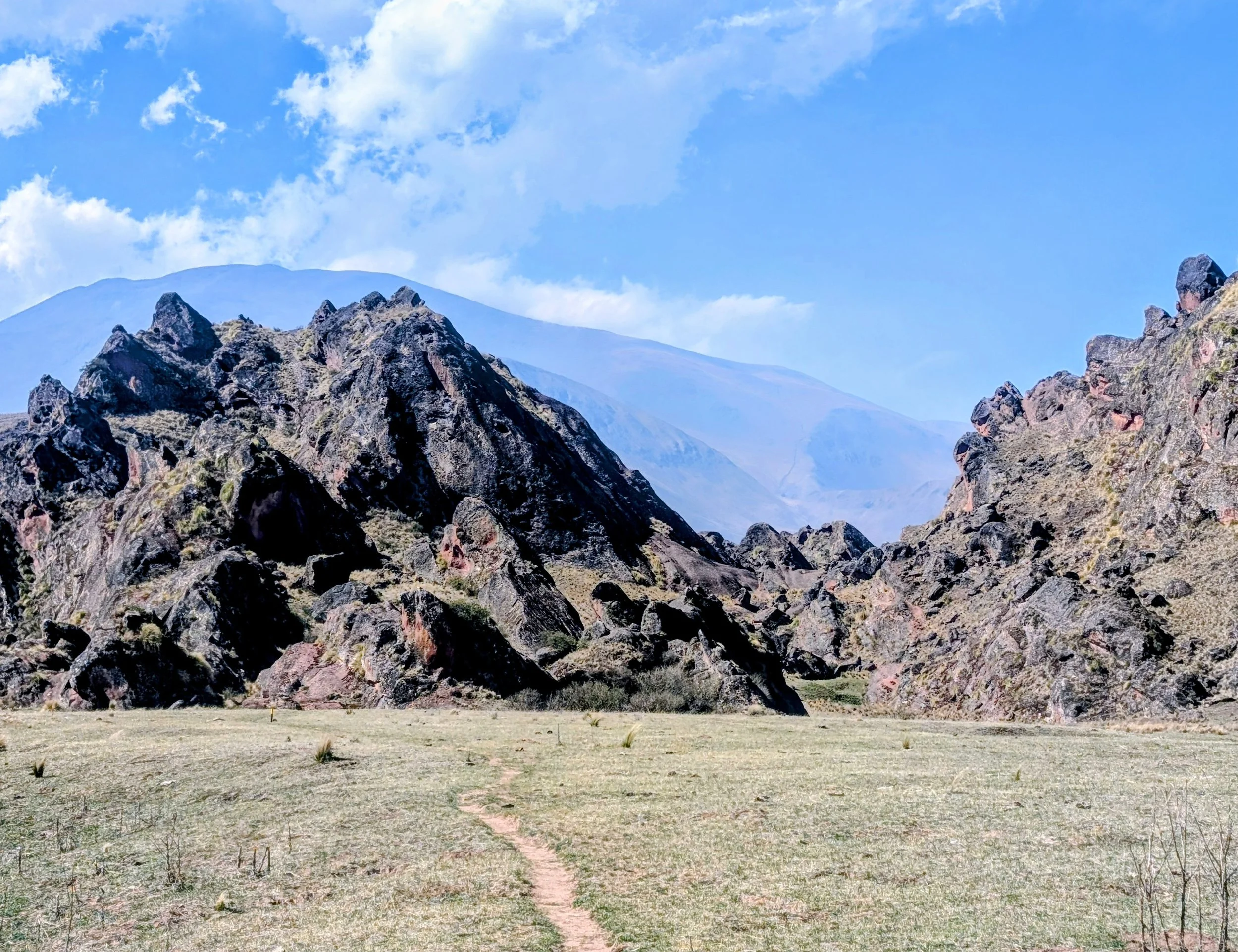
Hiking in the Valle Encanto, Salta province
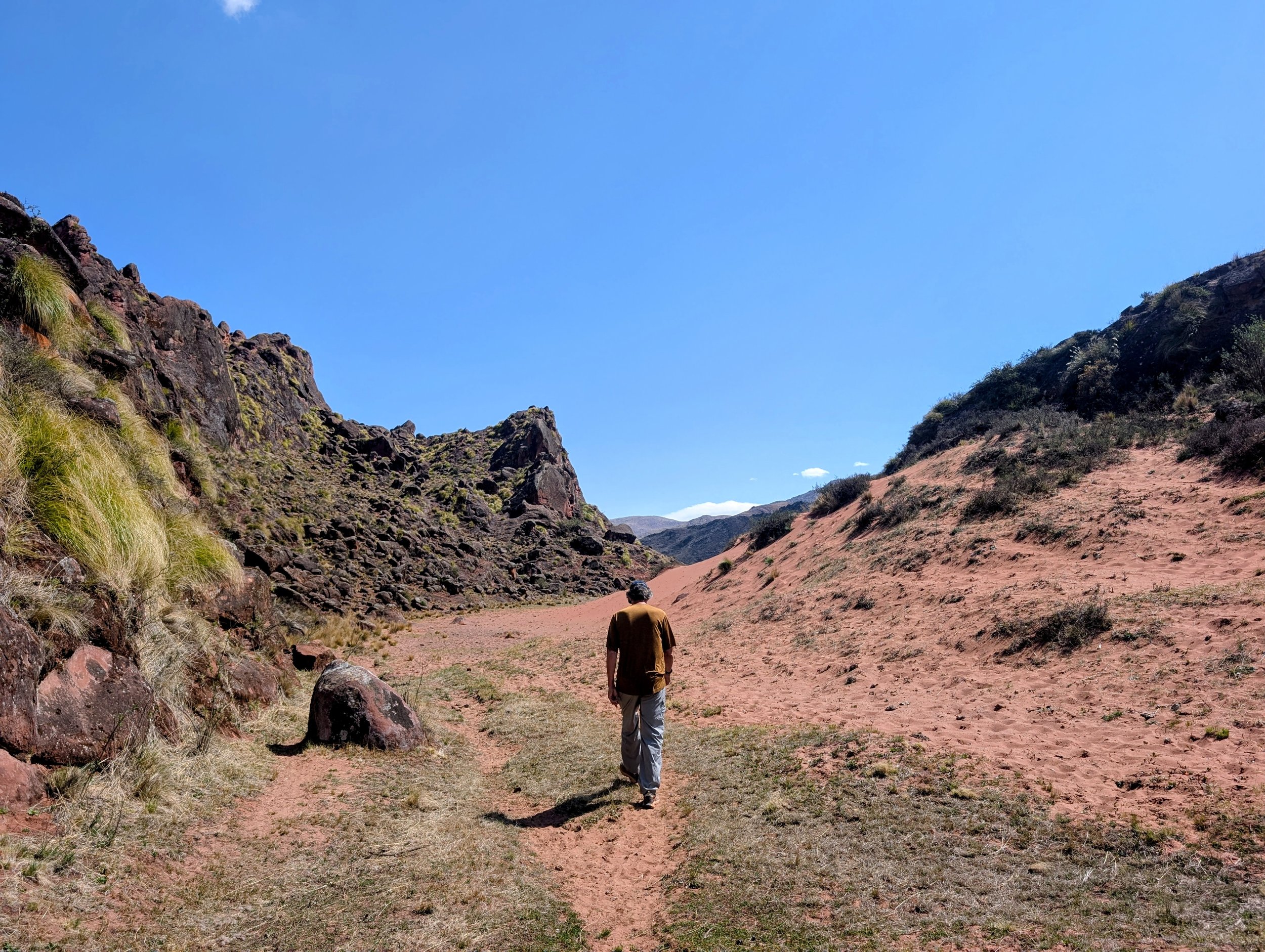
Not a soul around
Then our official drive south began, following the iconic route 40. Argentina’s longest highway, route 40 stretches 3200 miles from the northern border to Patagonia.
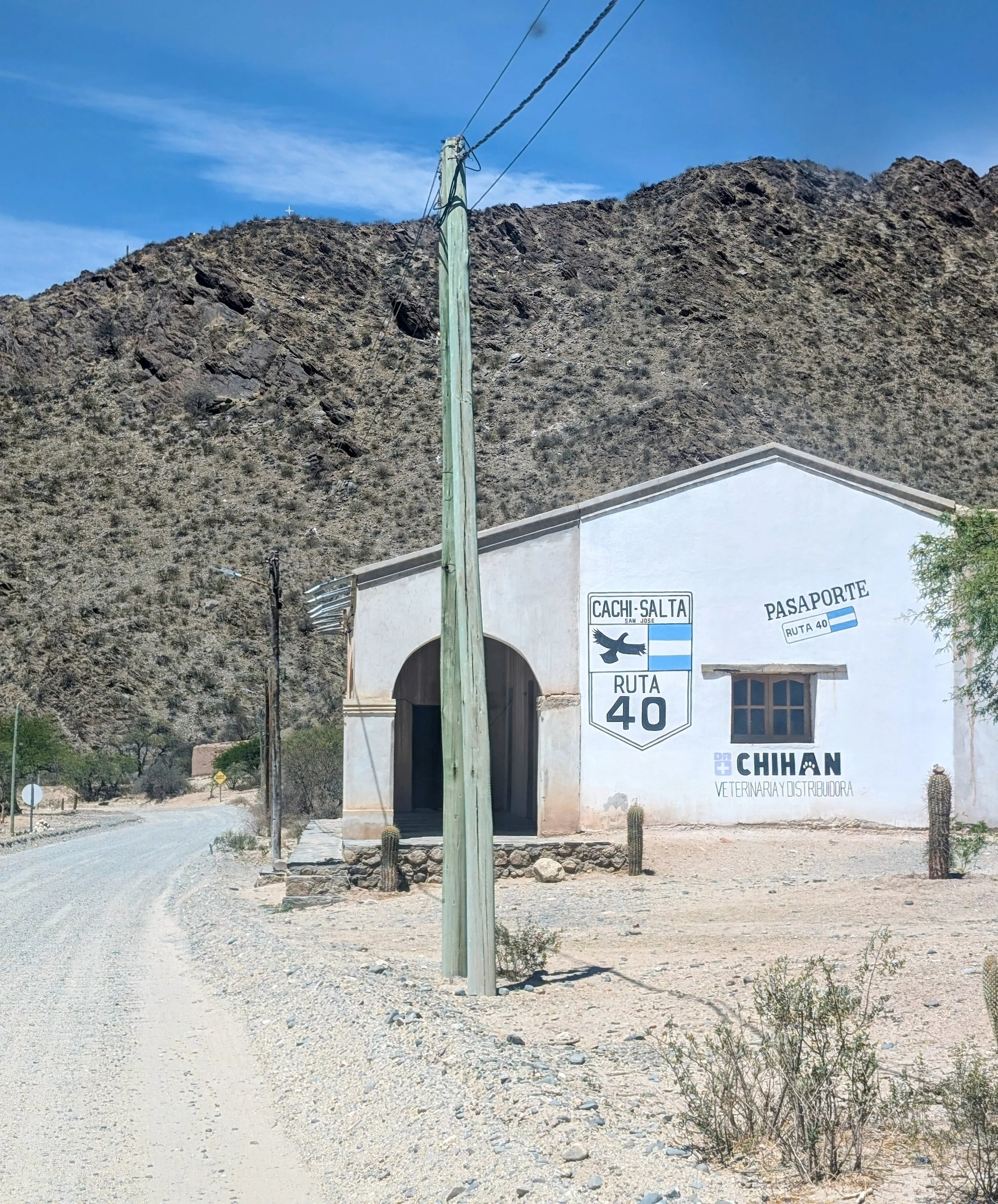
One of the world’s longest continuous roads
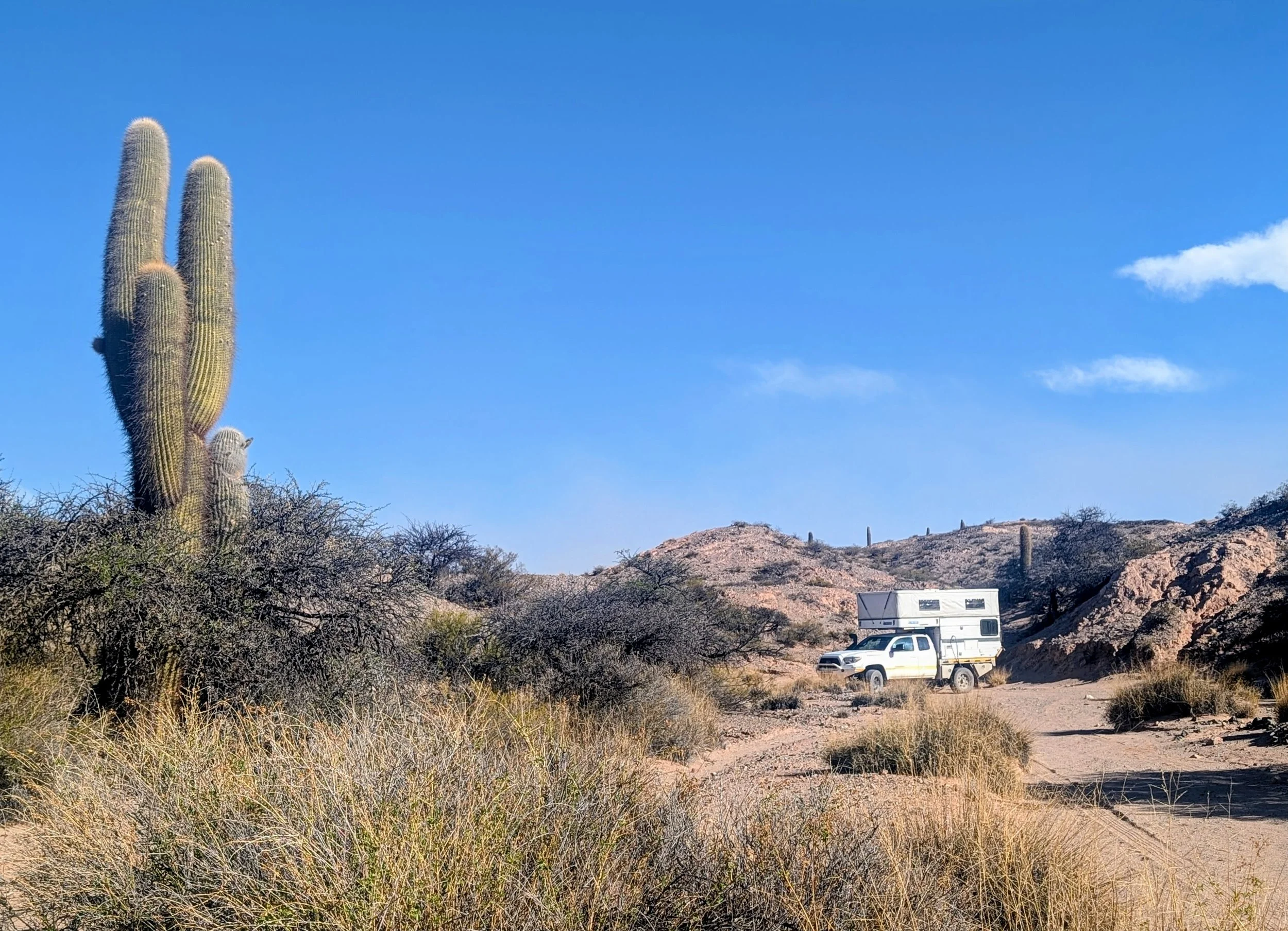
Desert camp along the way
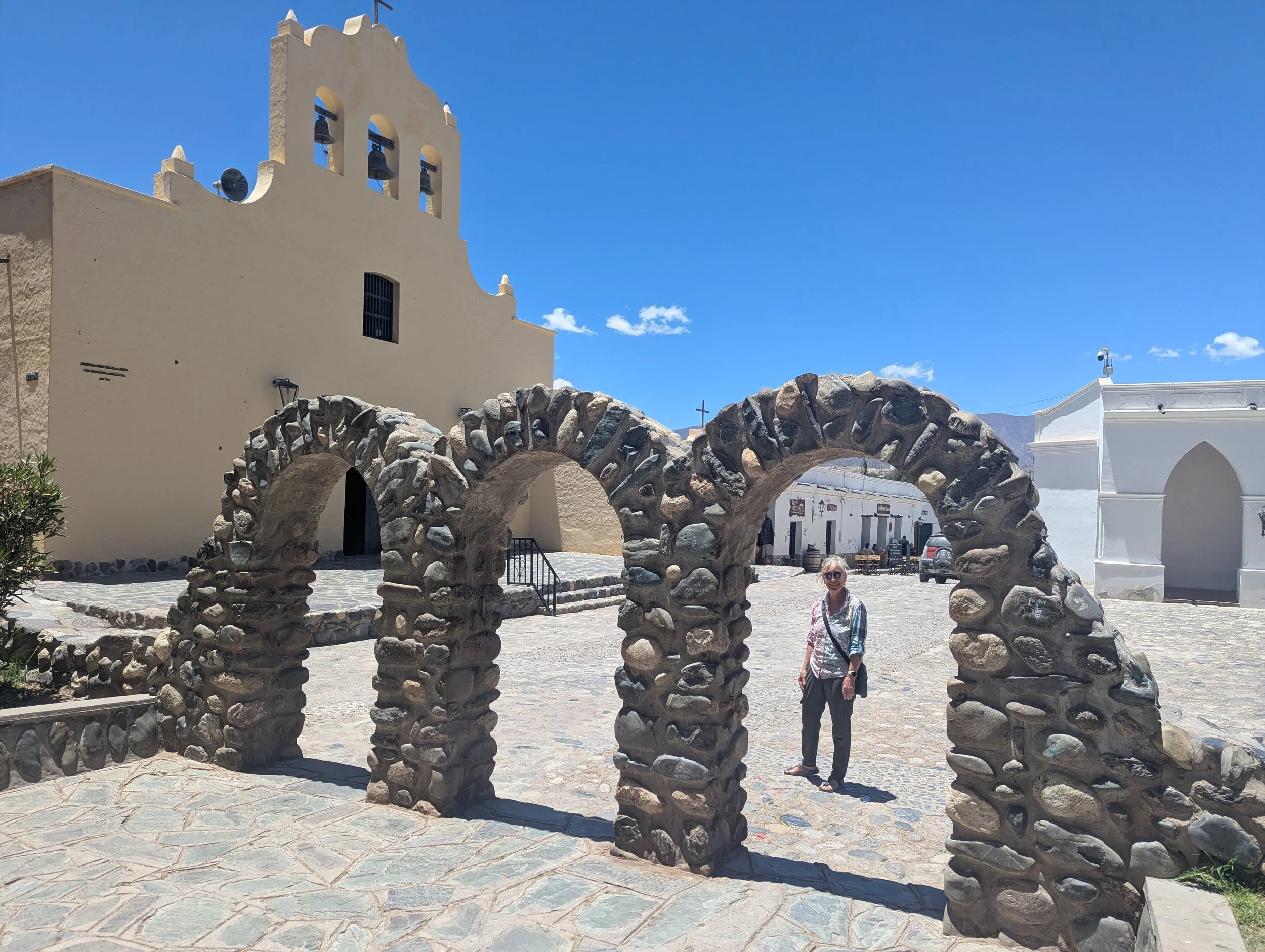
Village of Cachi
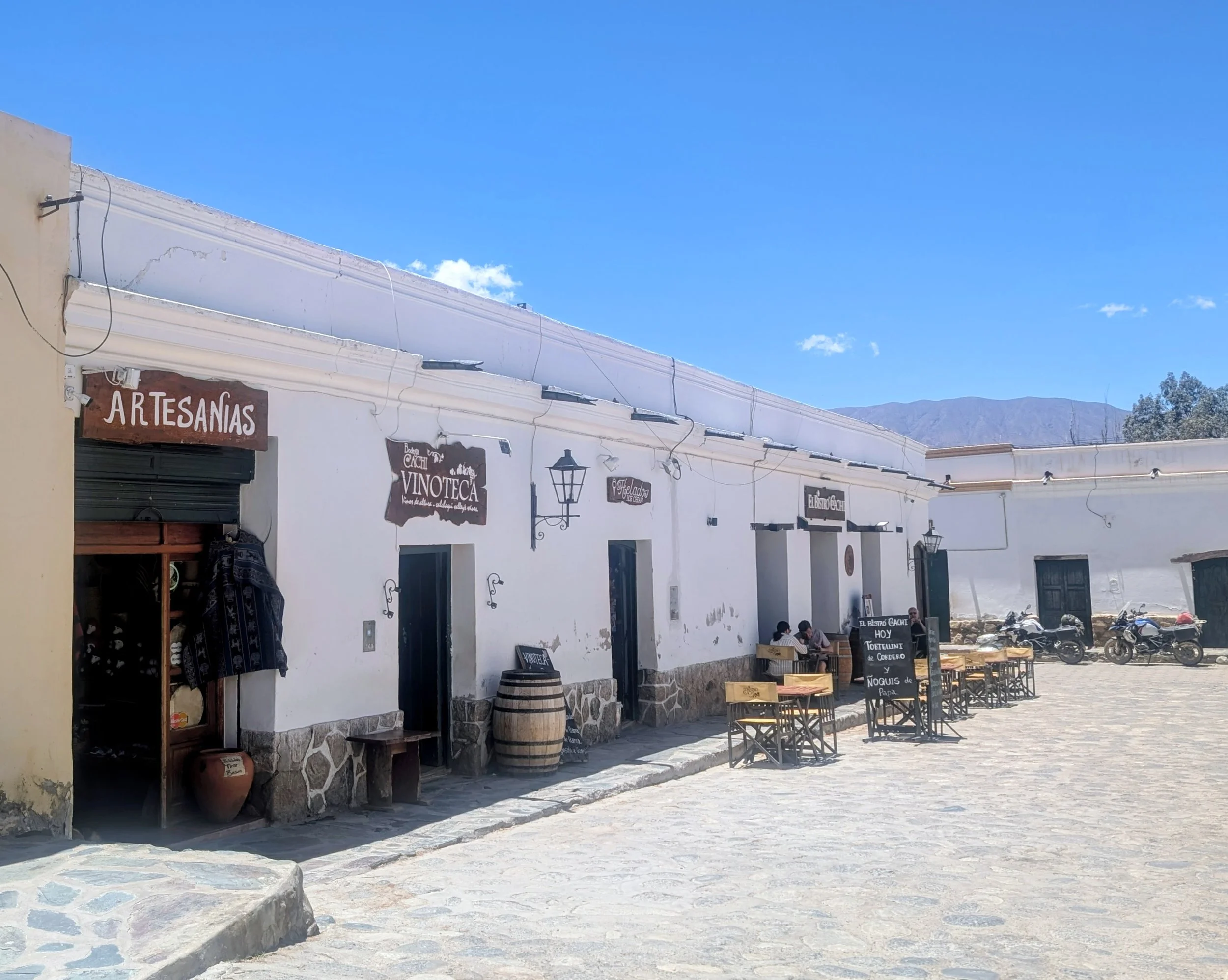
Artists and wine
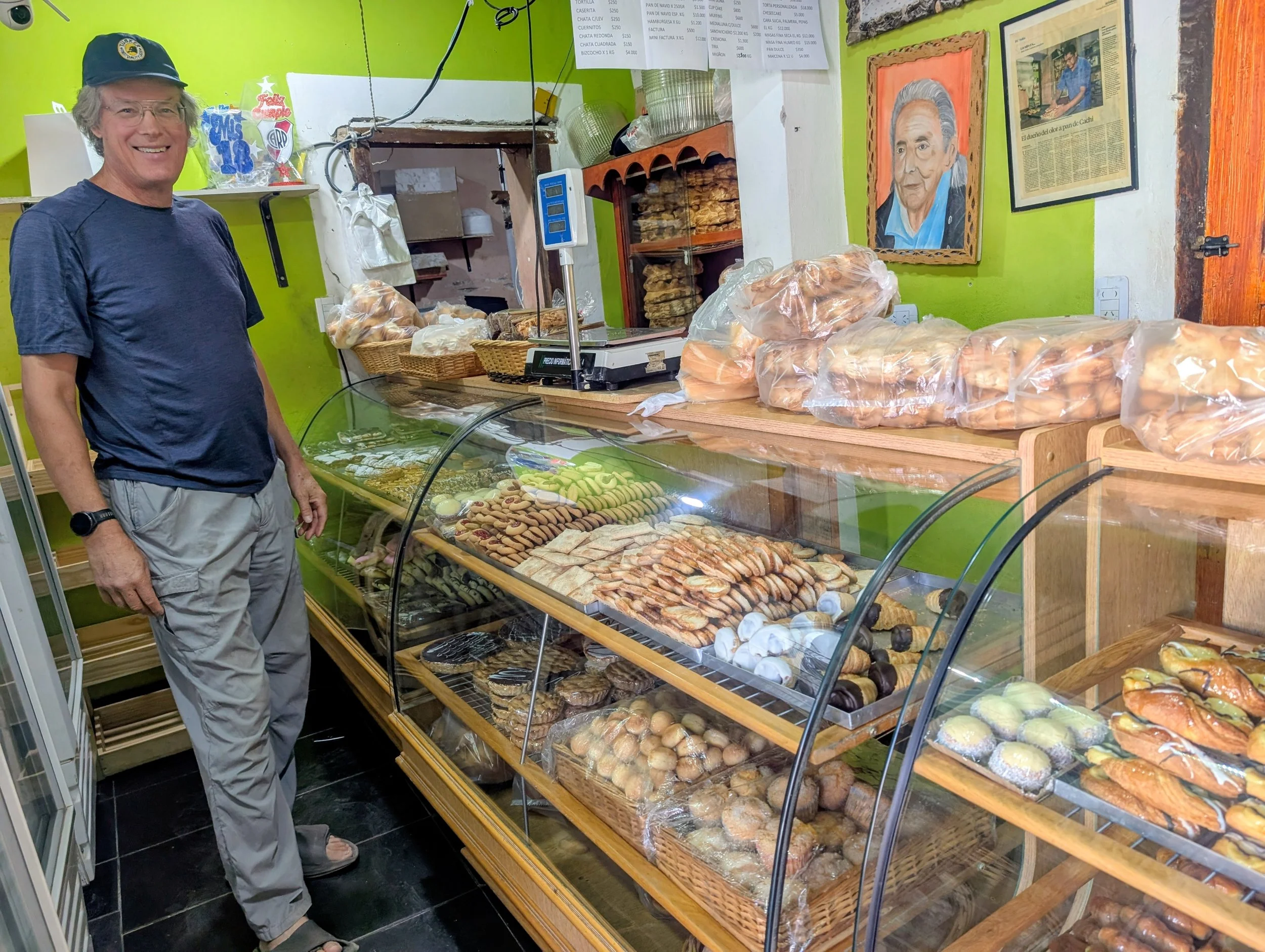
And of course - our favorite
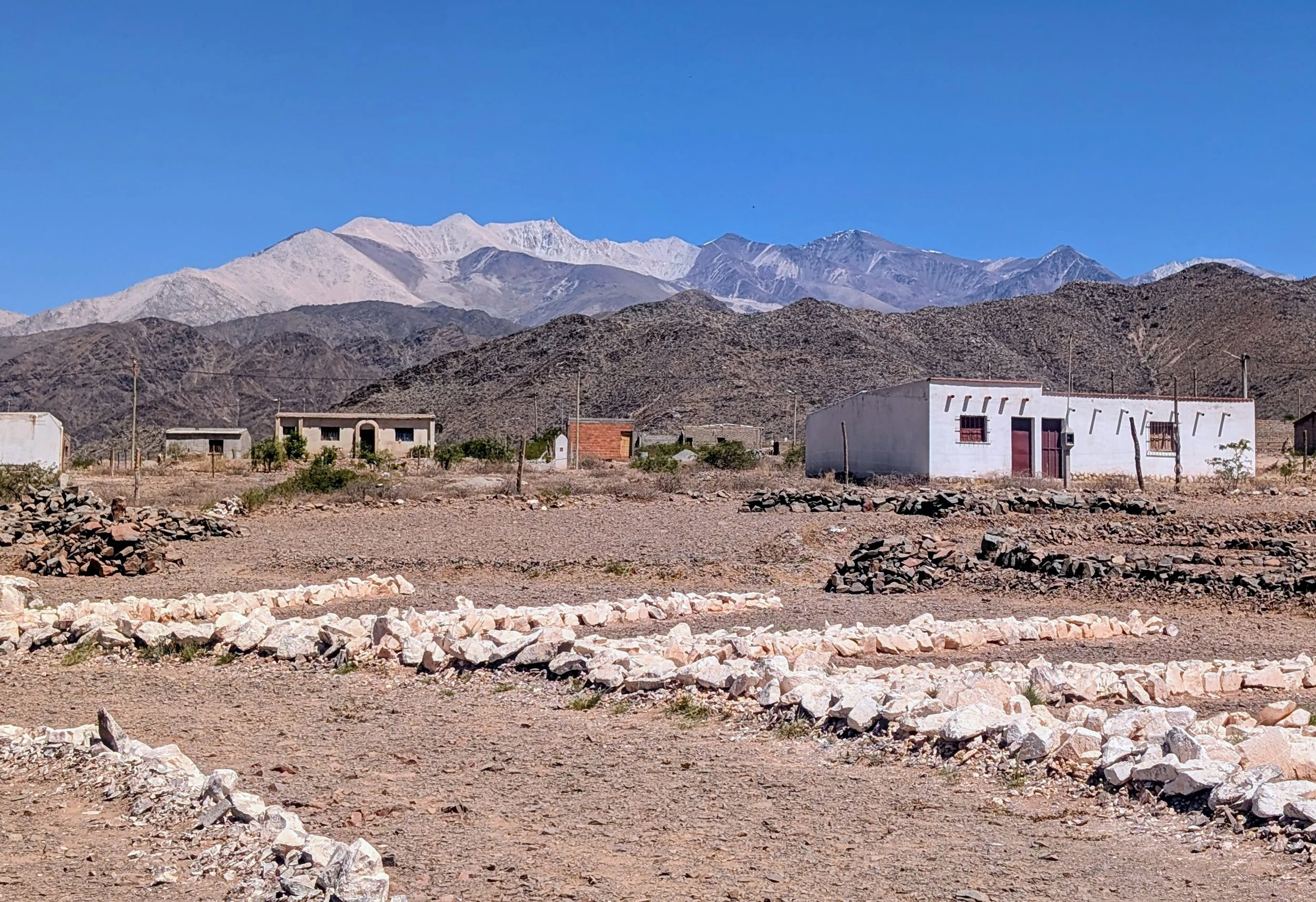
Odd site outside of town with an art installation of a huge star of rocks - supposedly an alien landing site
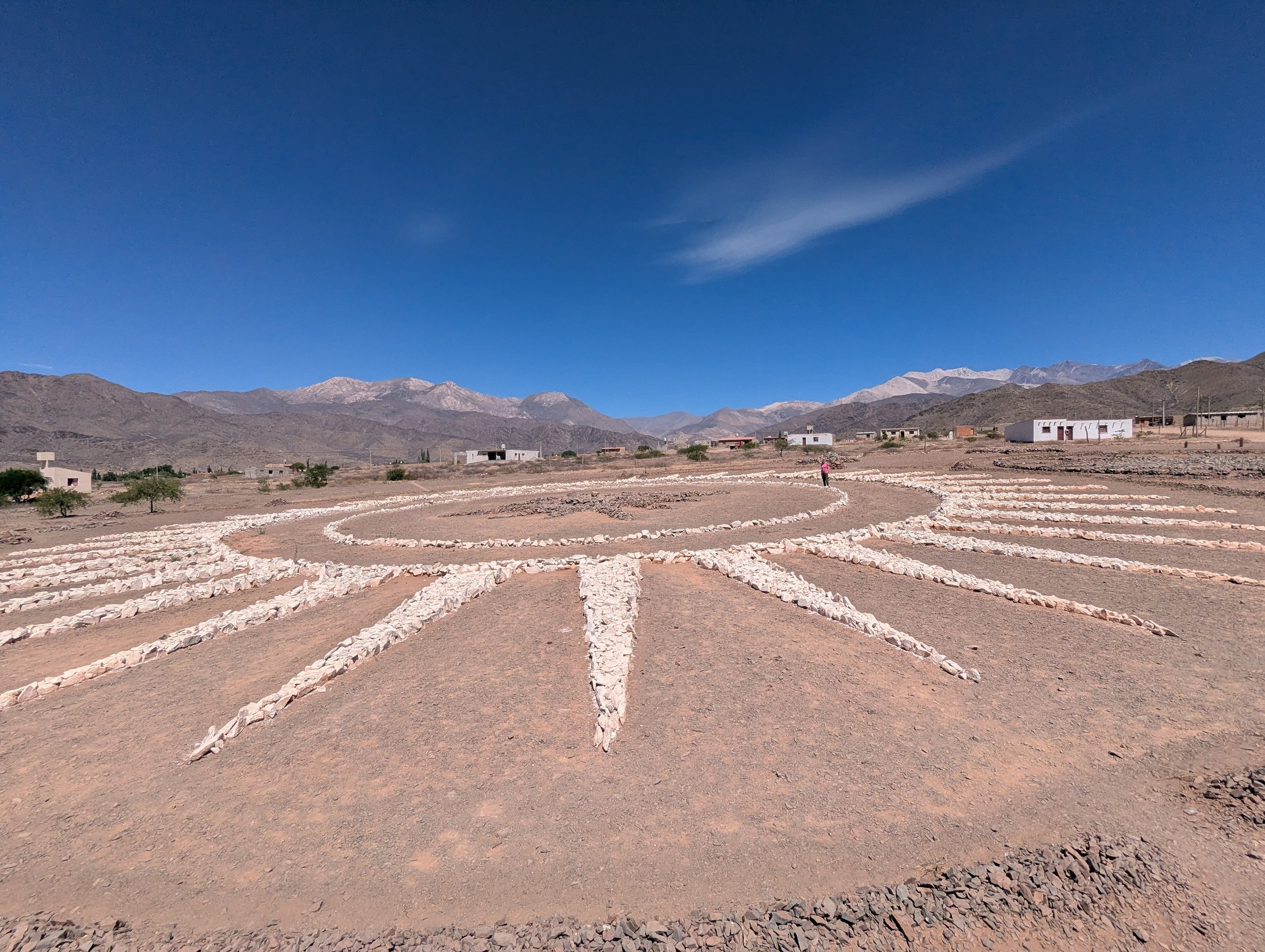
Feels alien
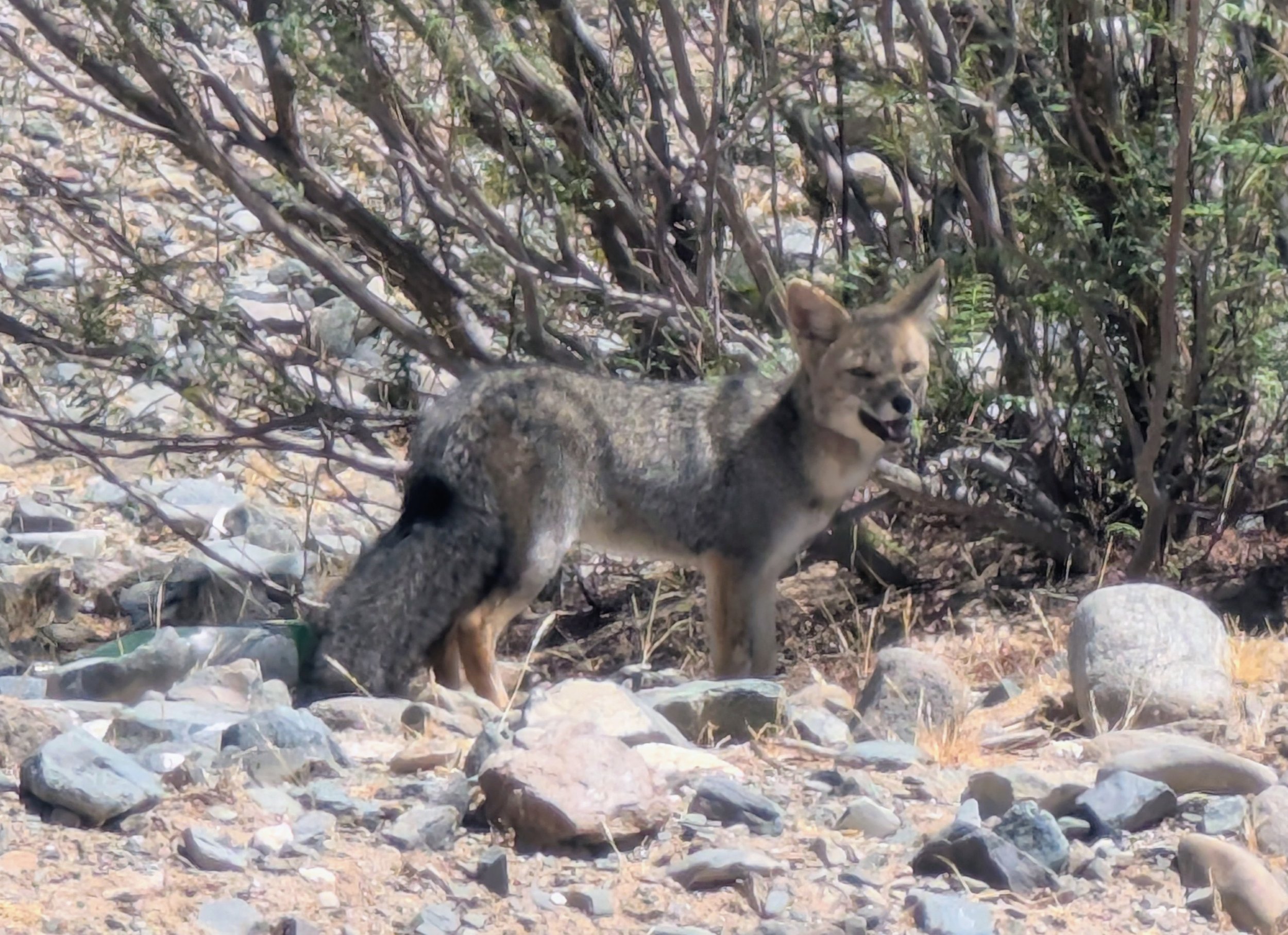
Desert fox - zorro - checking us out
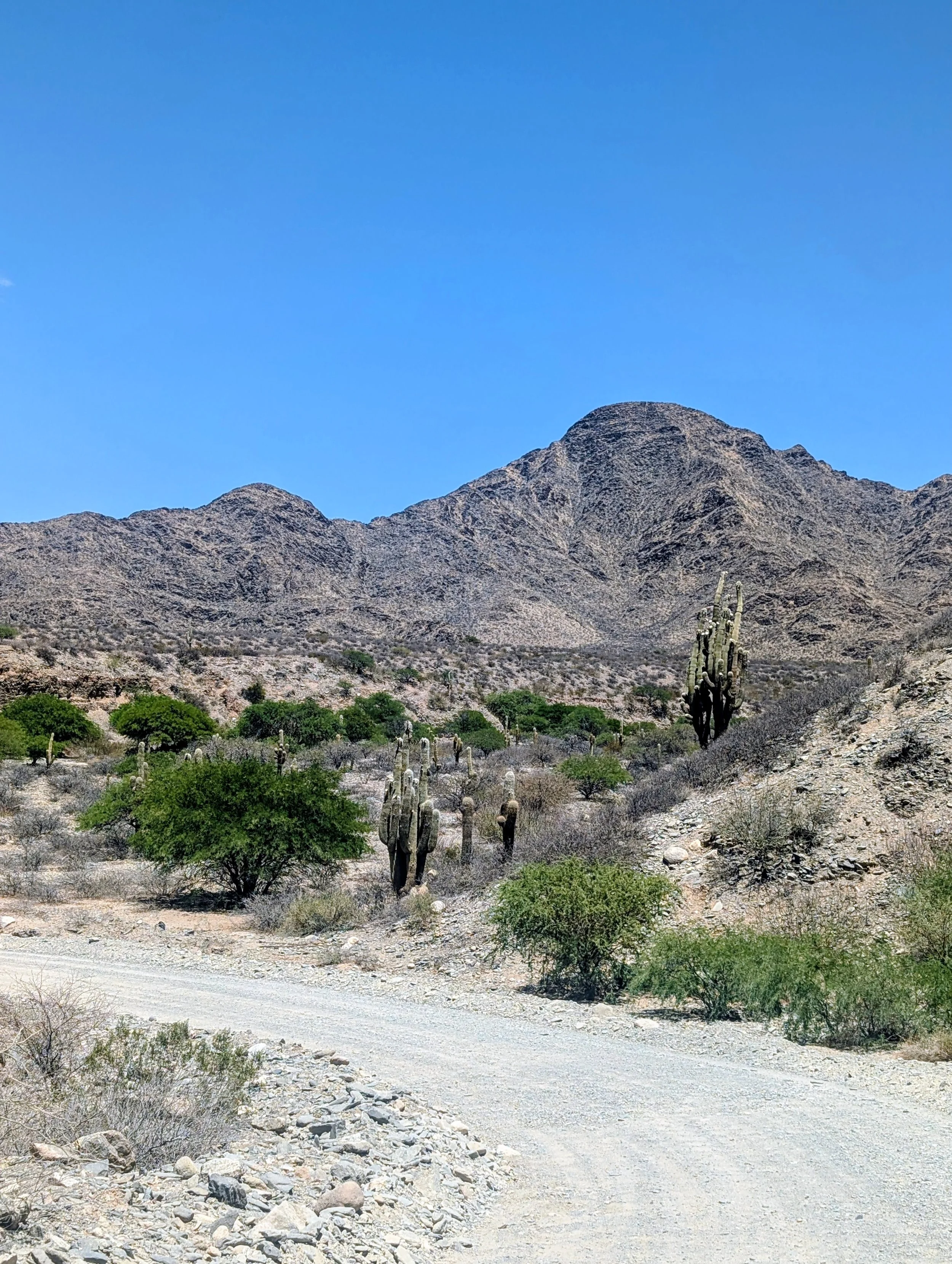
Ruta 40 in the north - not always paved but still a good road
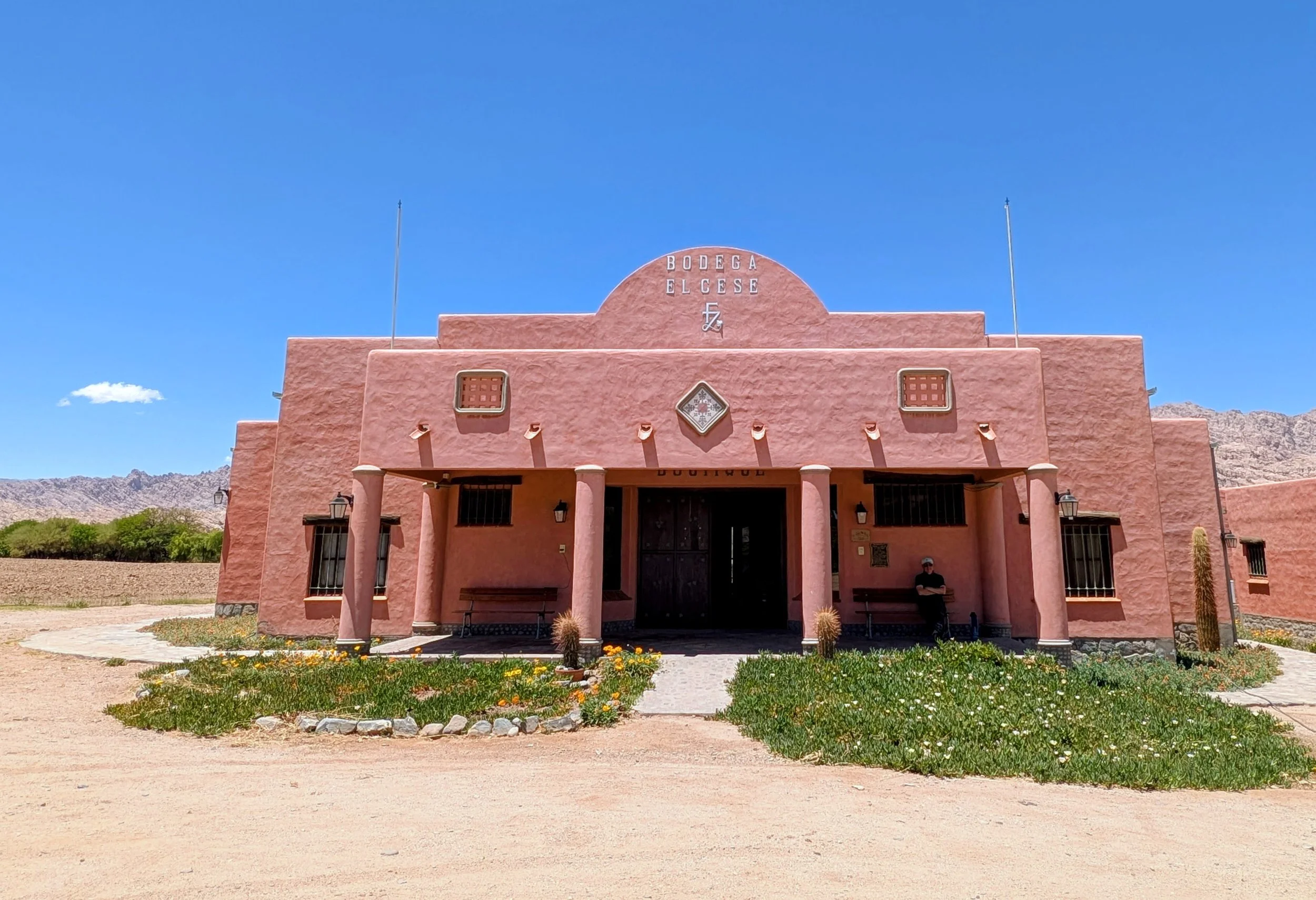
Little bodega - family winery - along the way
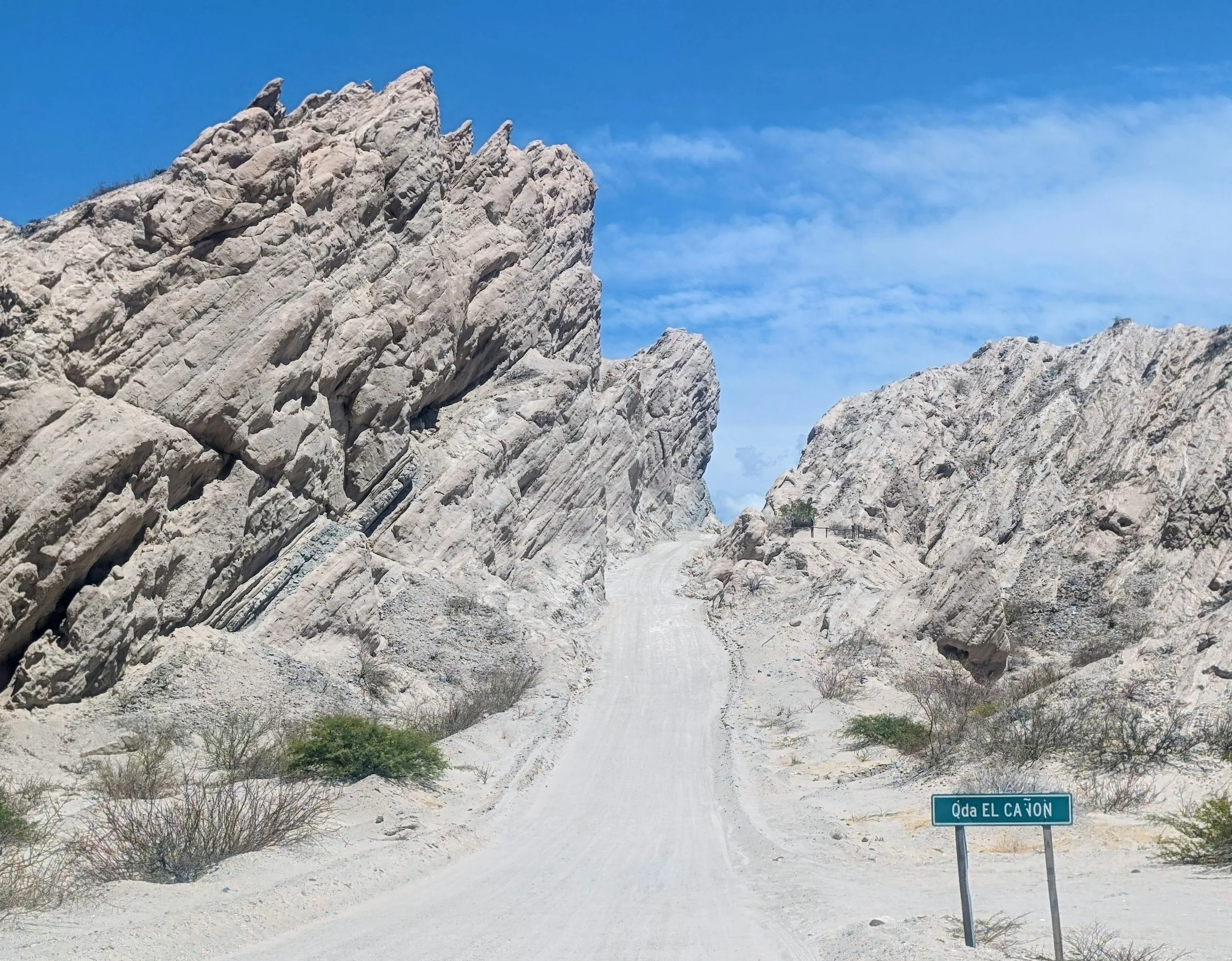
Driving into Quebrada de las Flechas
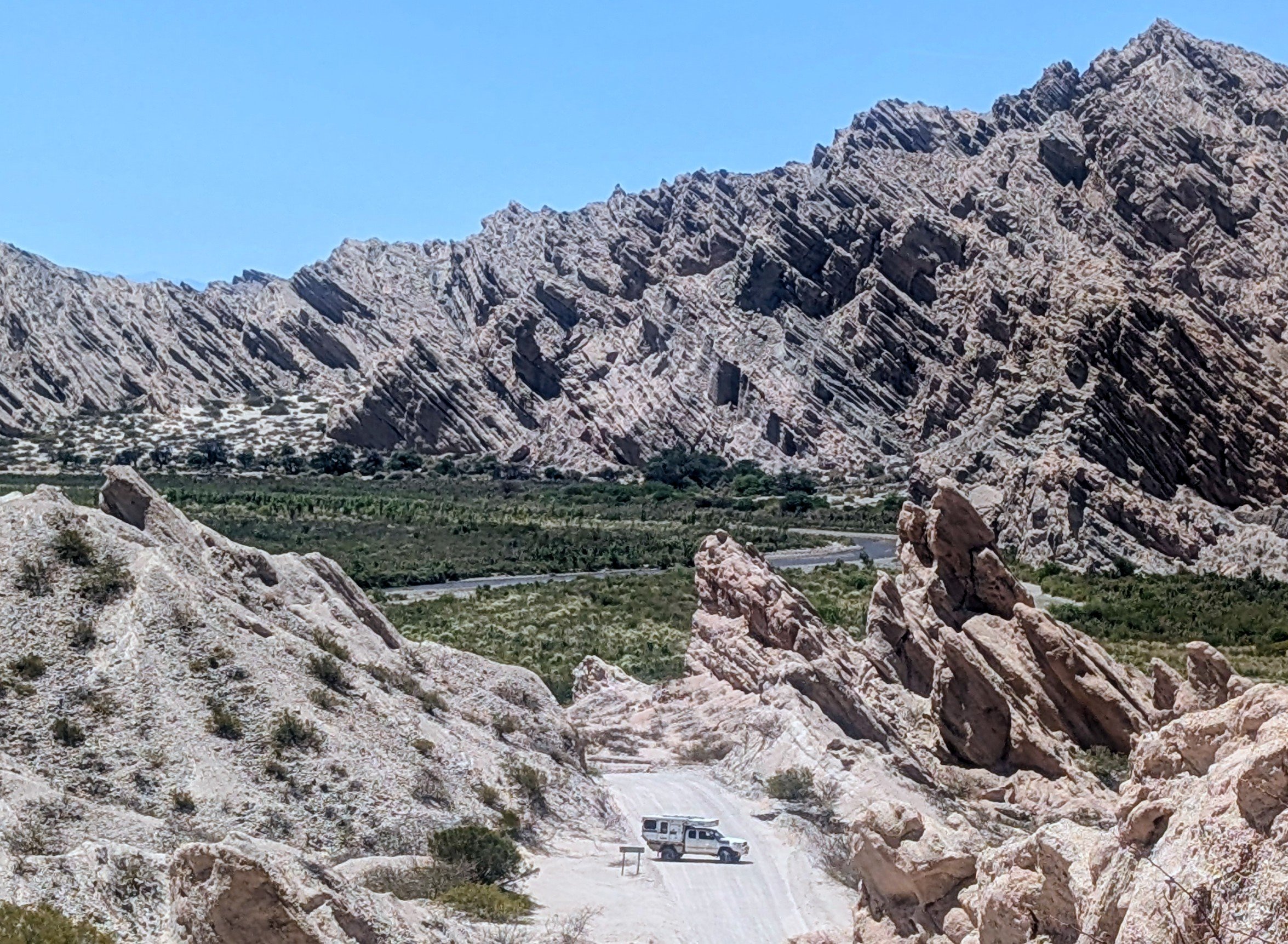
Stunning - there are many “quebradas” or ravines in the Argentinian desert to explore
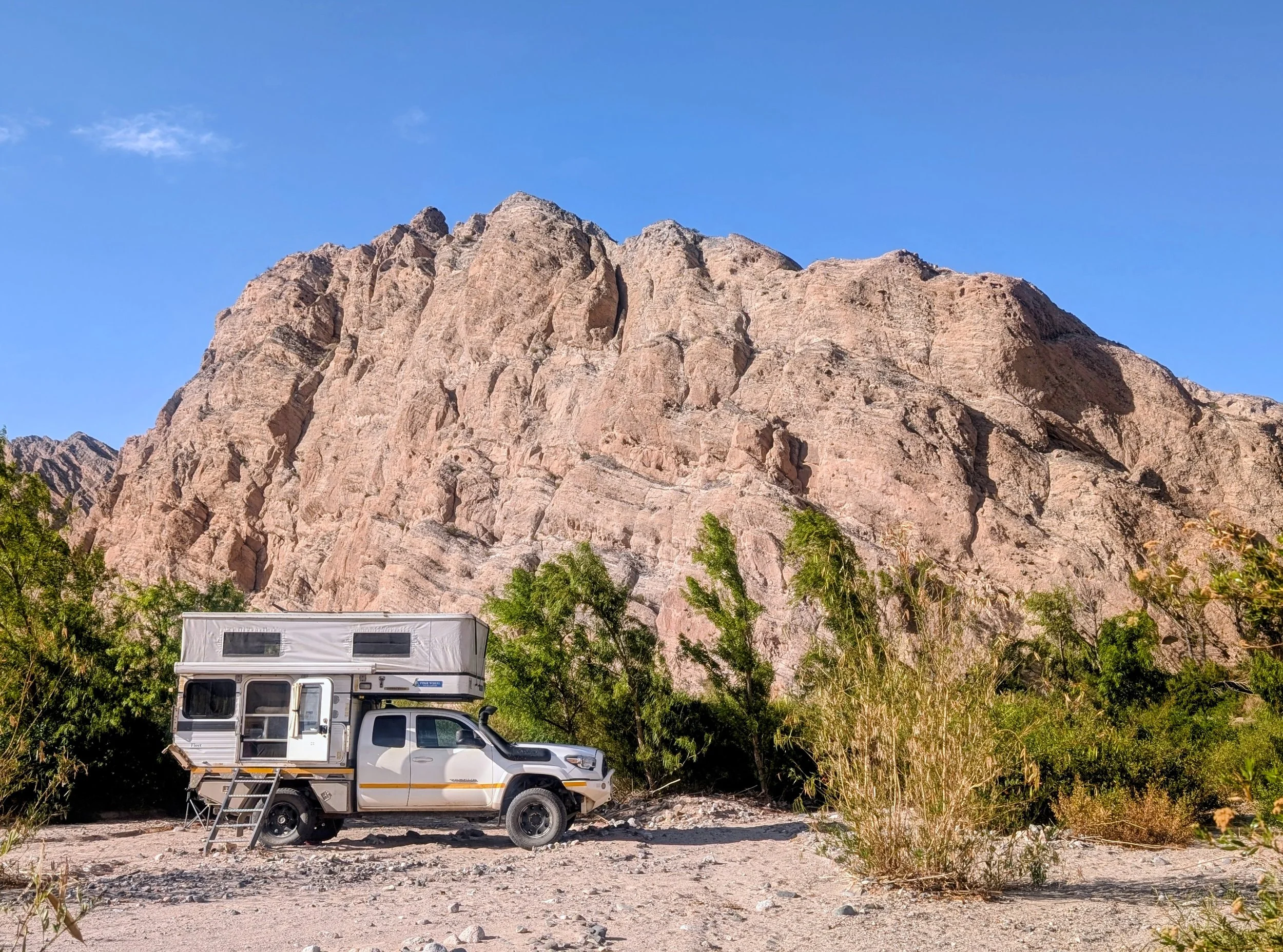
Desert camp in the quebrada
As we got closer to Mendoza, the wineries got bigger, more complex and with huge vineyards. Dawn was getting excited.
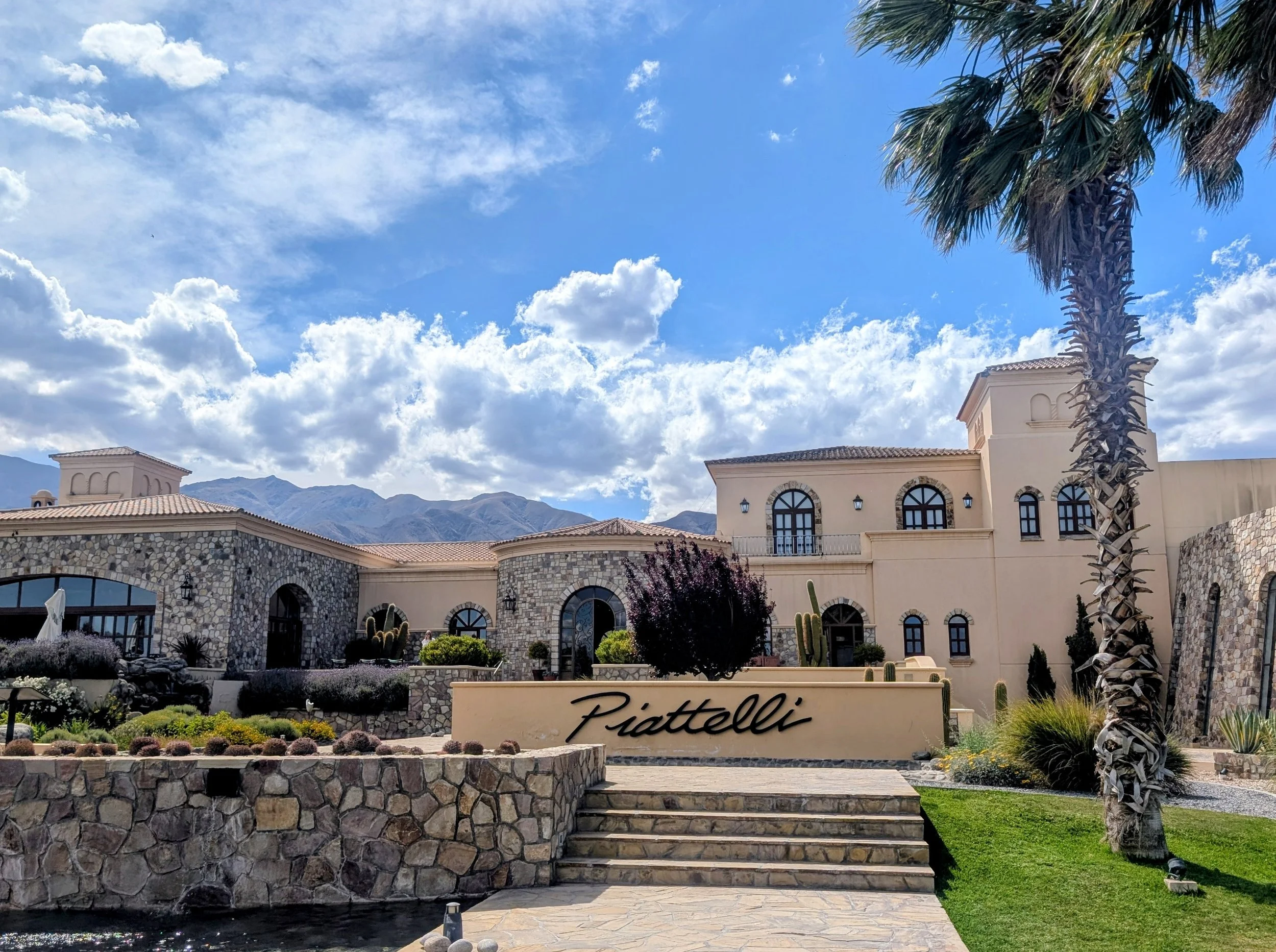
Stopping at a highly rated winery along the way. We were a little disappointed to find out on the tour that it was actually American owned.
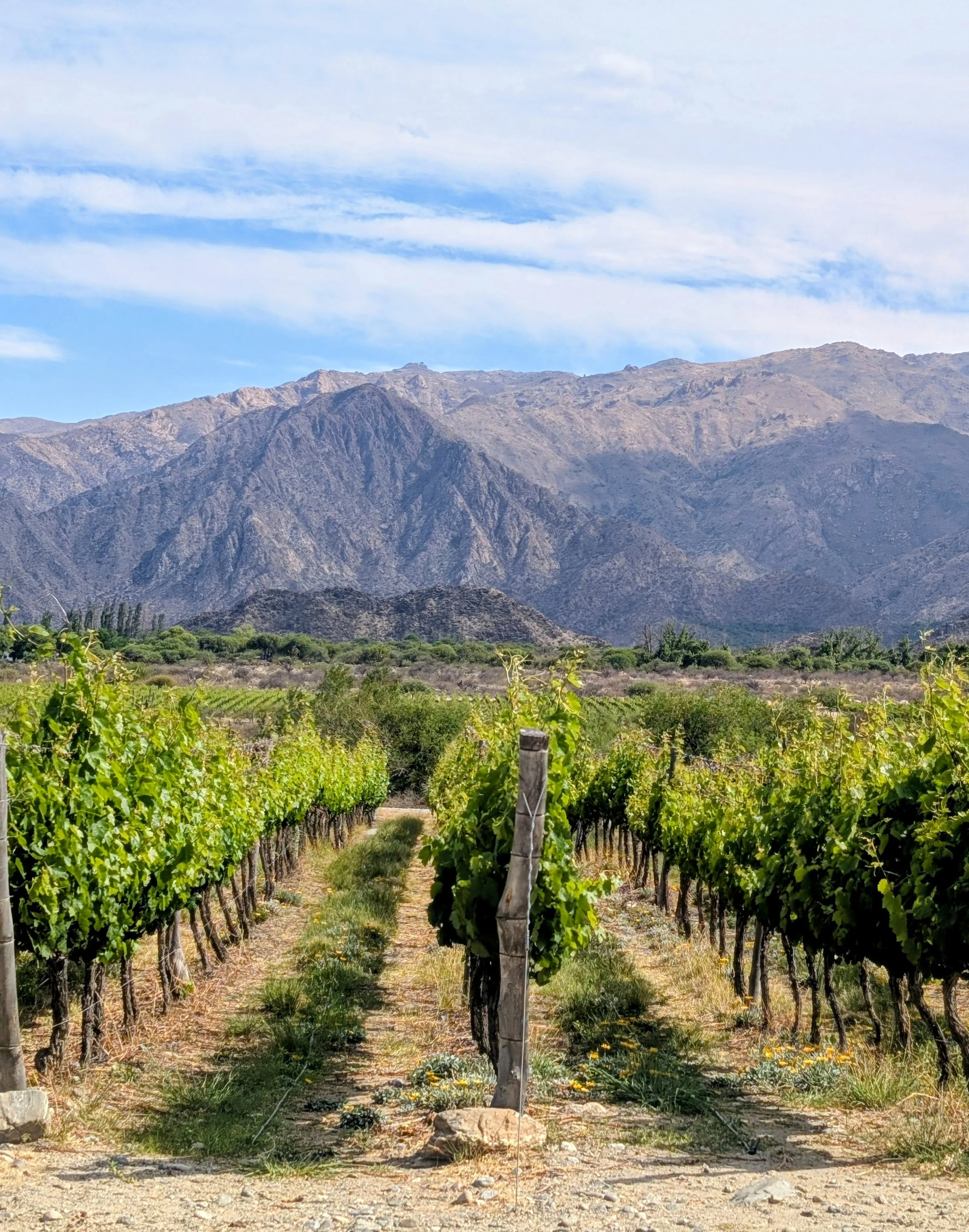
But at least locally grown, and excellent wine
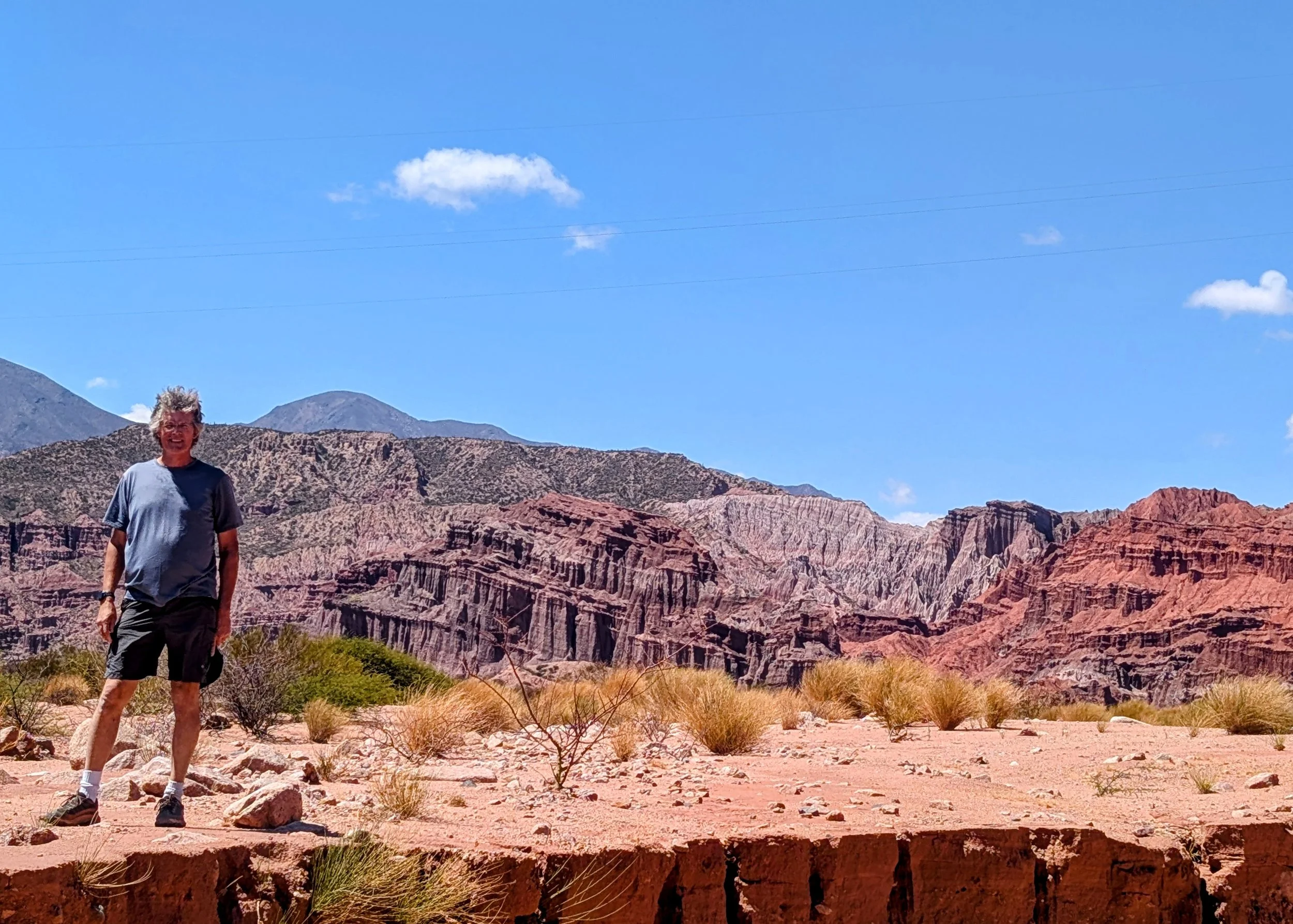
Always finding places to walk along the route
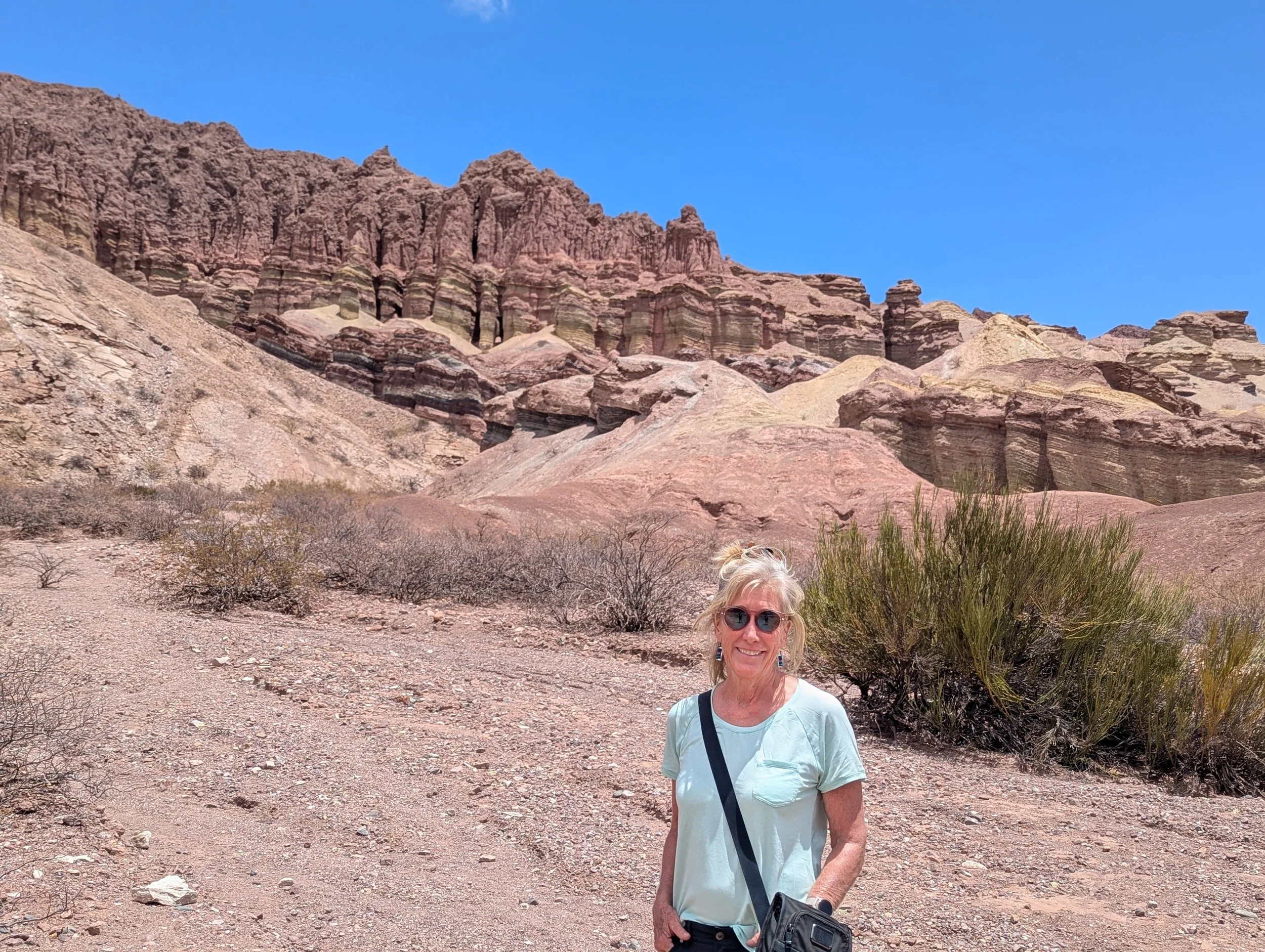
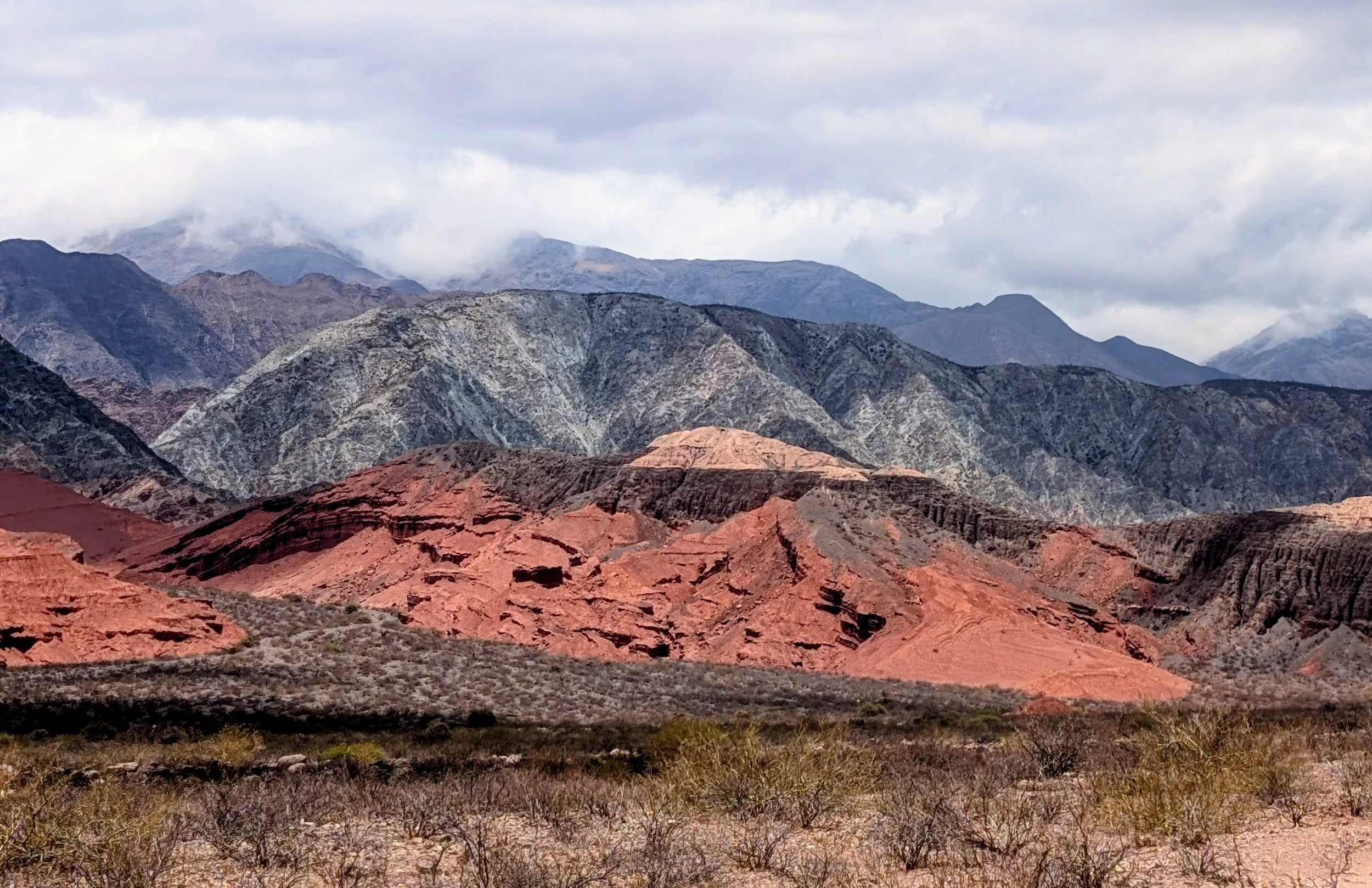
And still colorful desert hills, even as we headed south
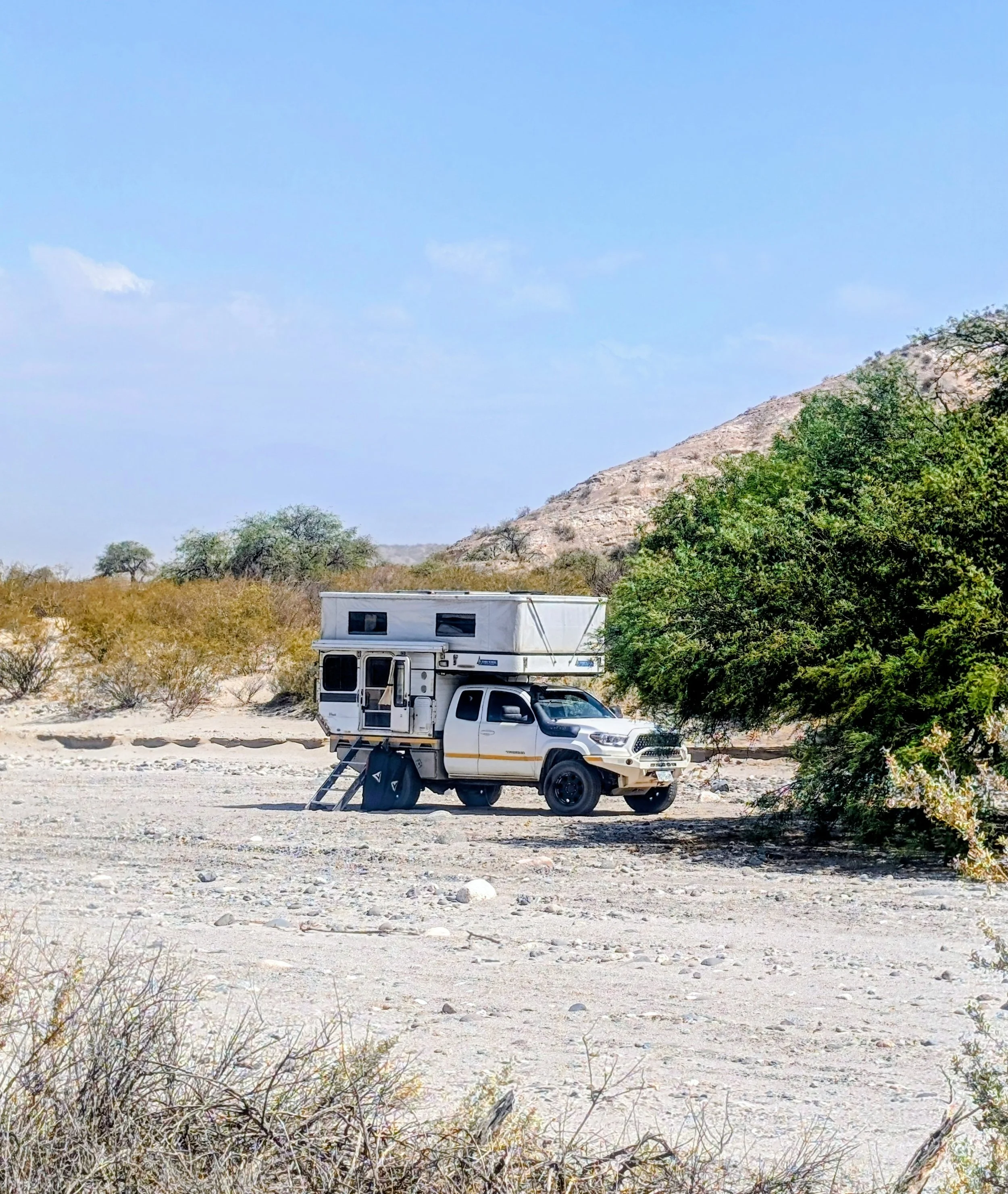
And yet another dry river bed camp . .
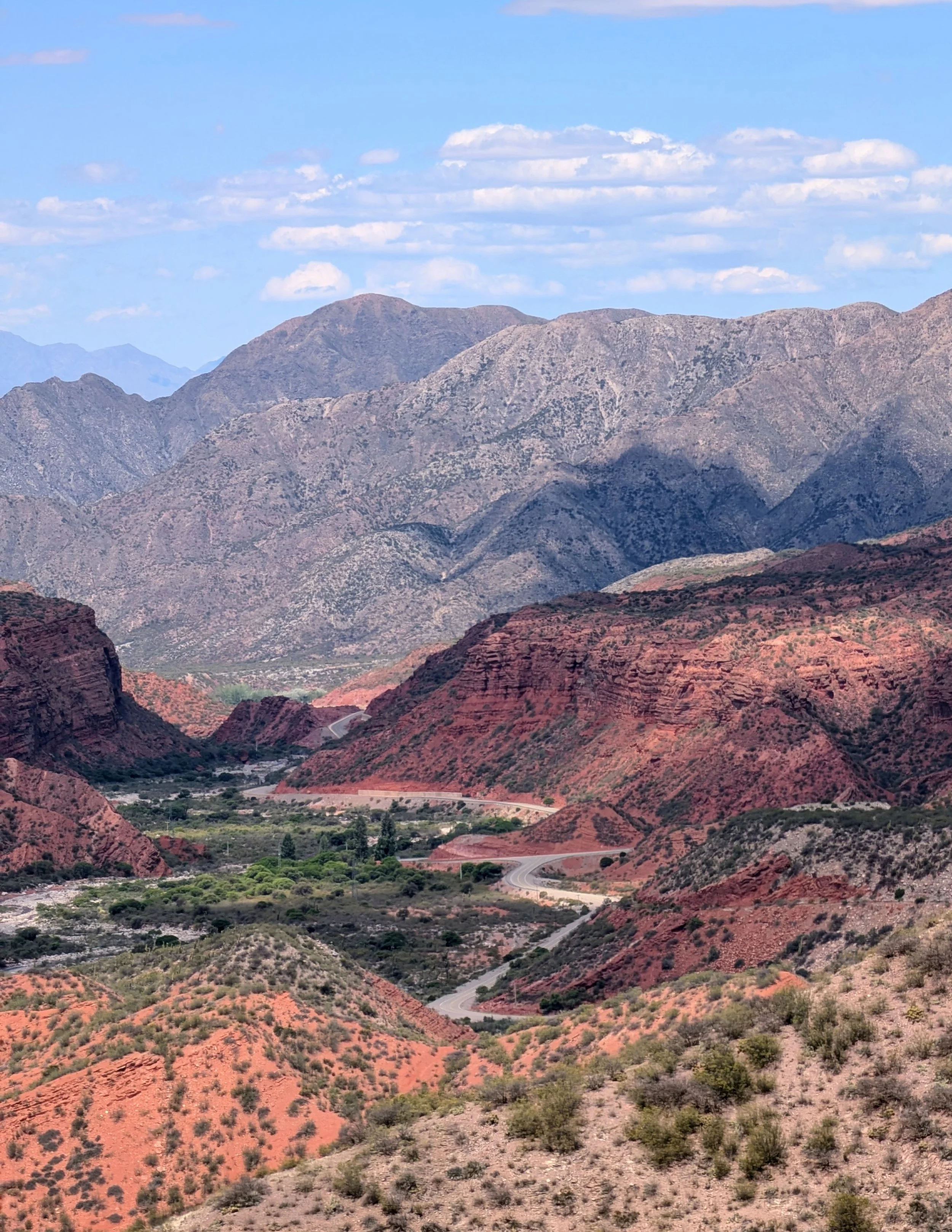
Gorgeous red valley along the way
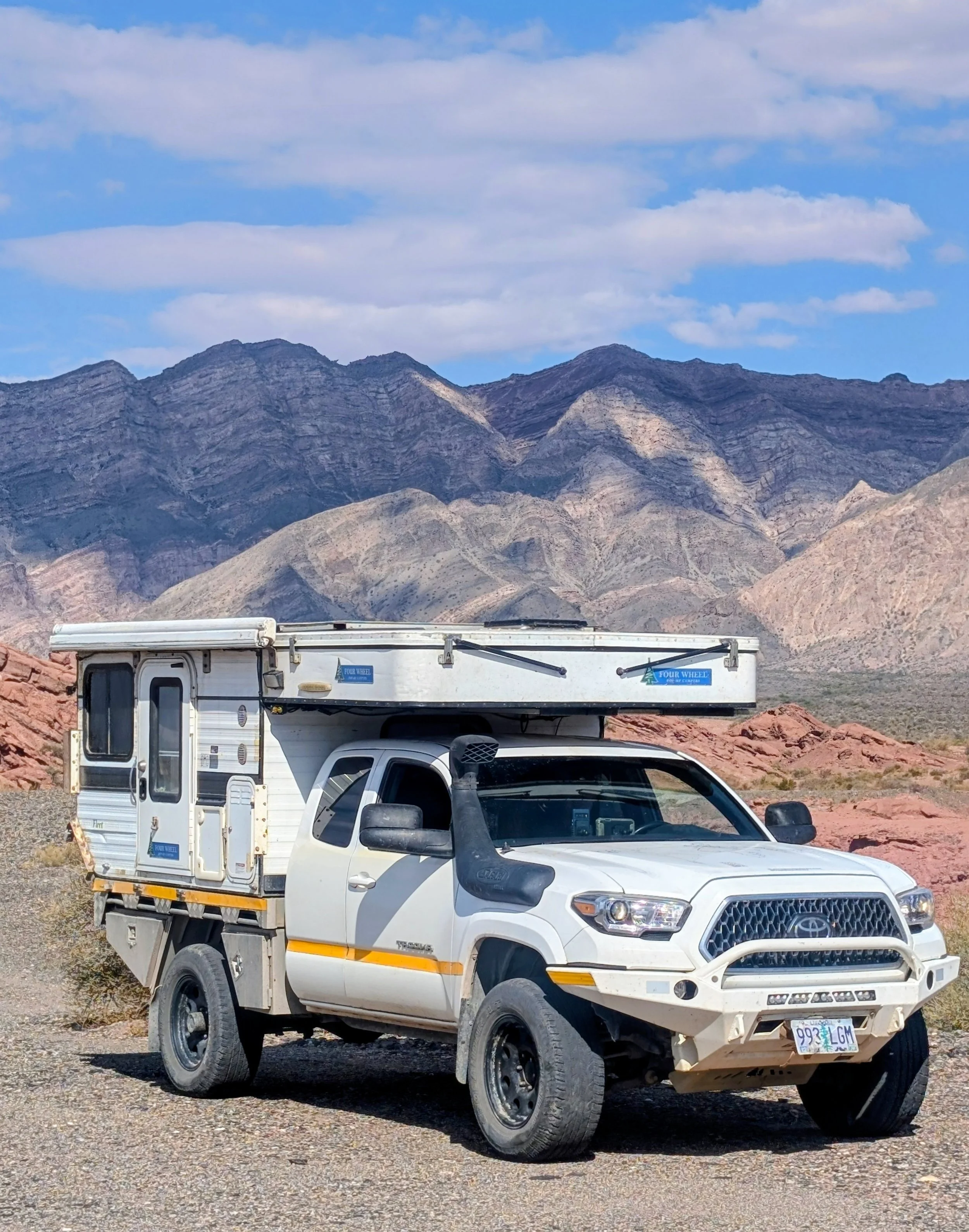
Posing the truck in the sun
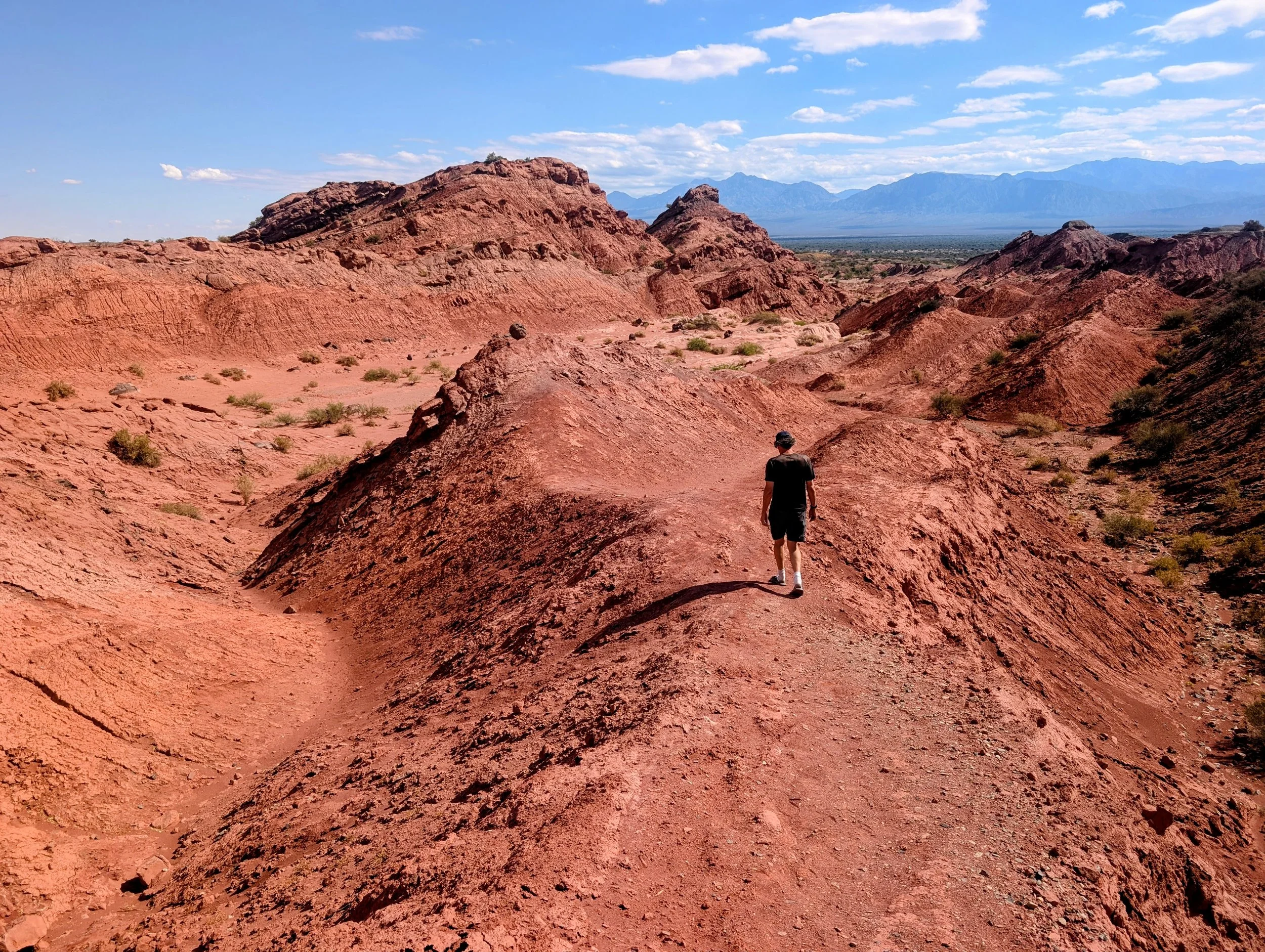
Afternoon walk break
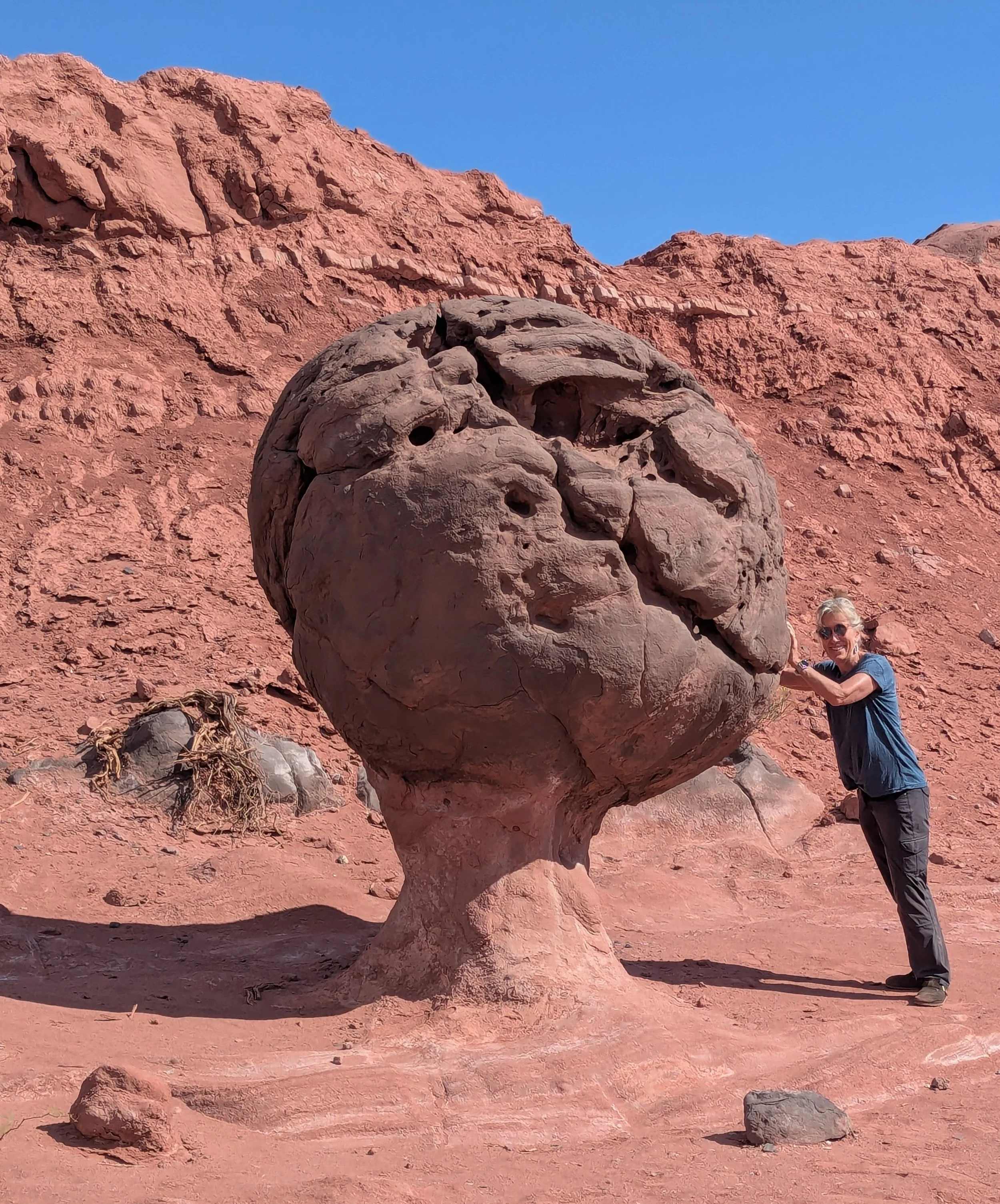
Dawn testing her strength - not even close
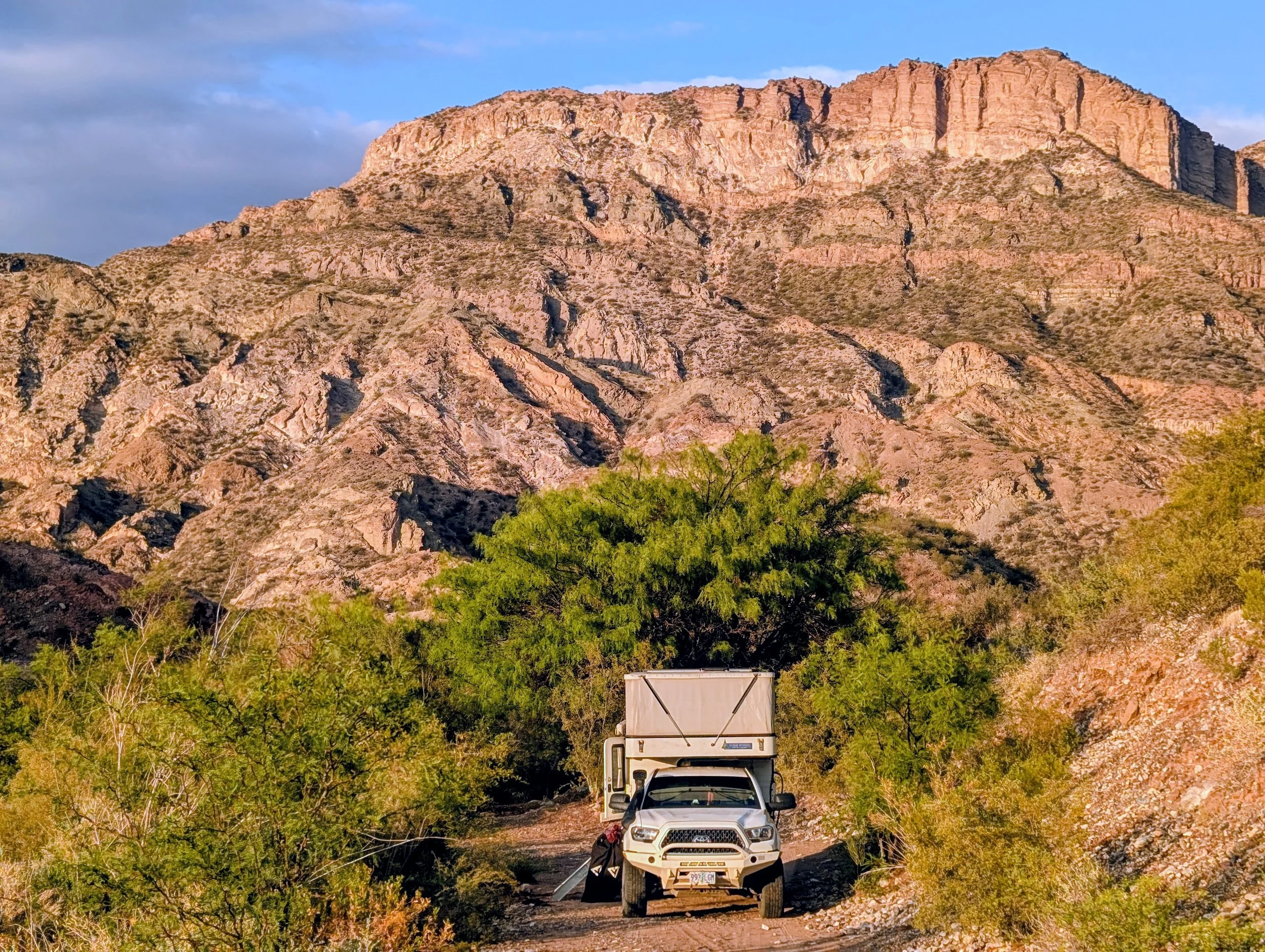
Actually, not a dry river bed
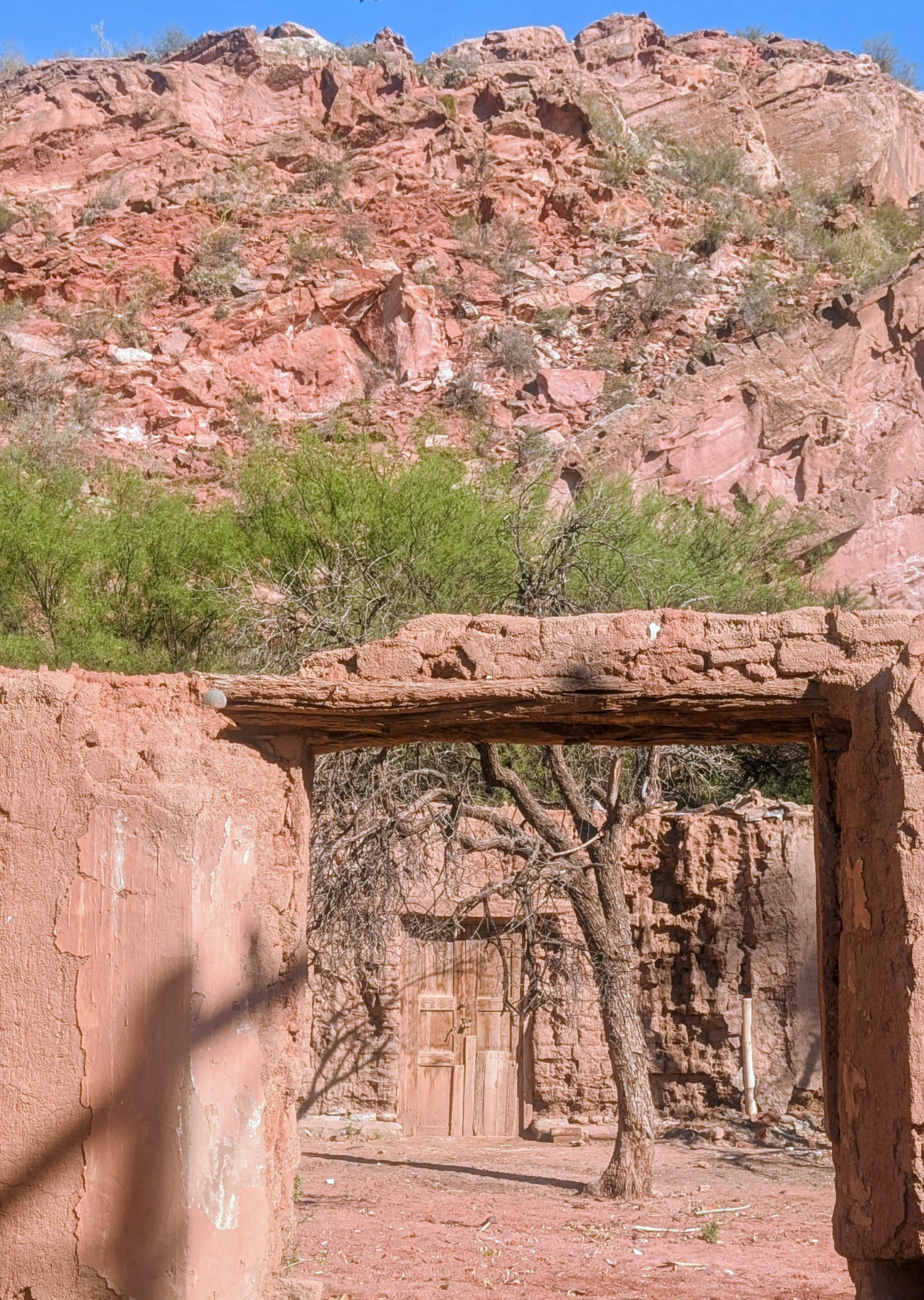
Walking through tiny villages, appreciating the architecture
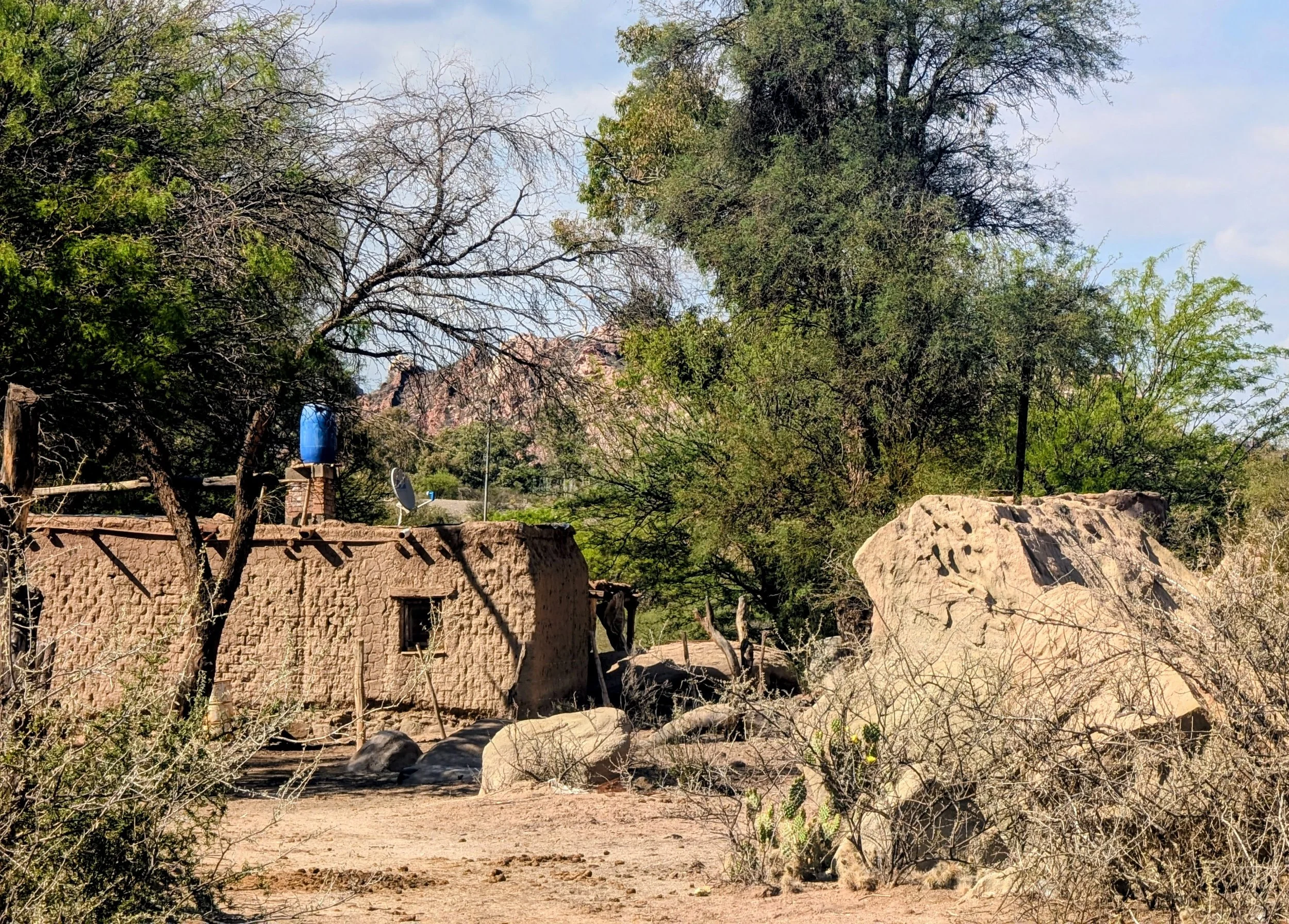
The clay homes matching the earth
We arrived in Mendoza, our first major Argentinian urban center, a little tired, dirty and hungry. Luckily we were able to find a downtown hotel with parking that fit our height so we settled in to explore the city from an air conditioned room with plumbing - luxury.
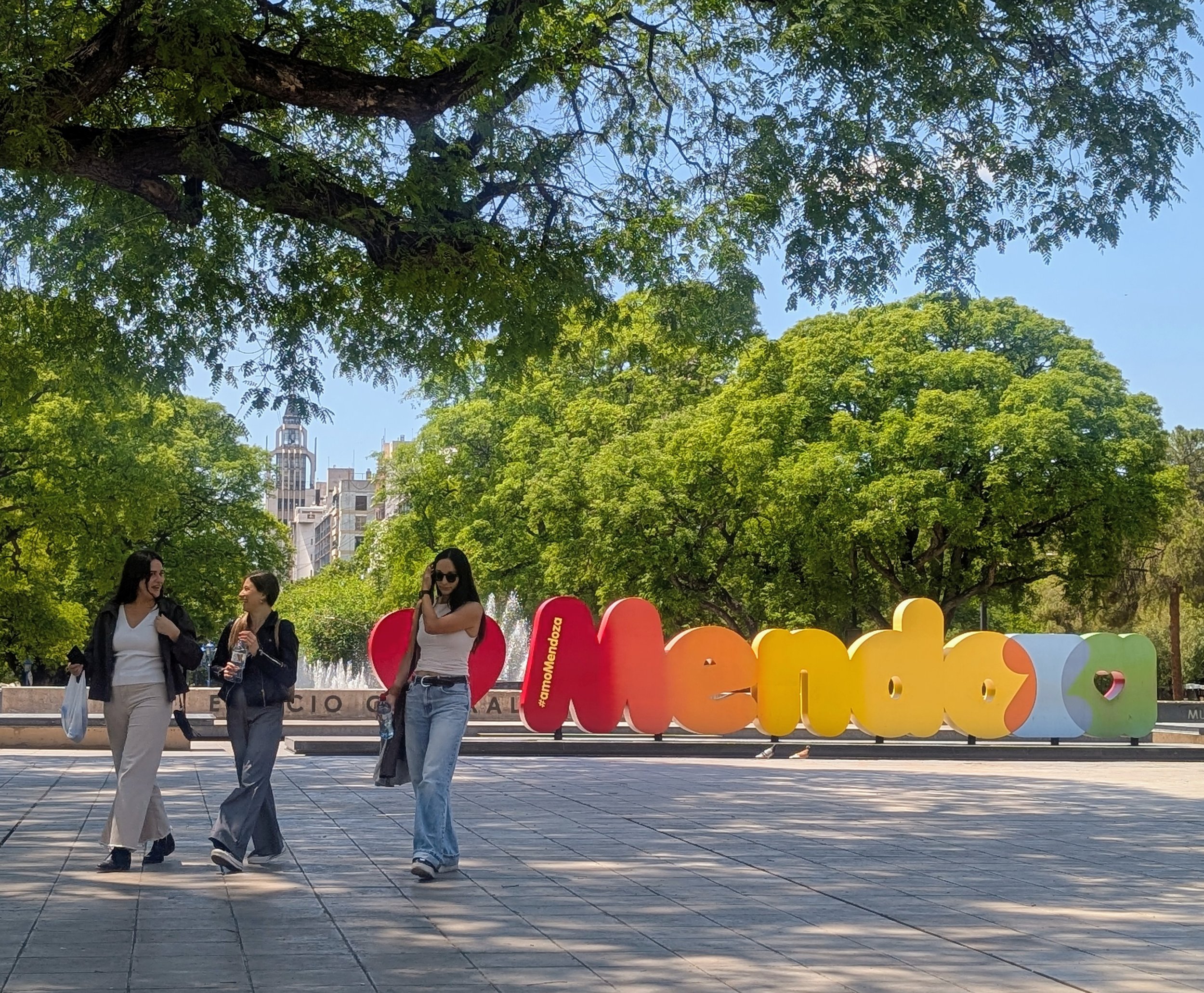
Central Mendoza - Plaza des Armas (or “parade grounds”) many South American cities have a central plaza with the same name
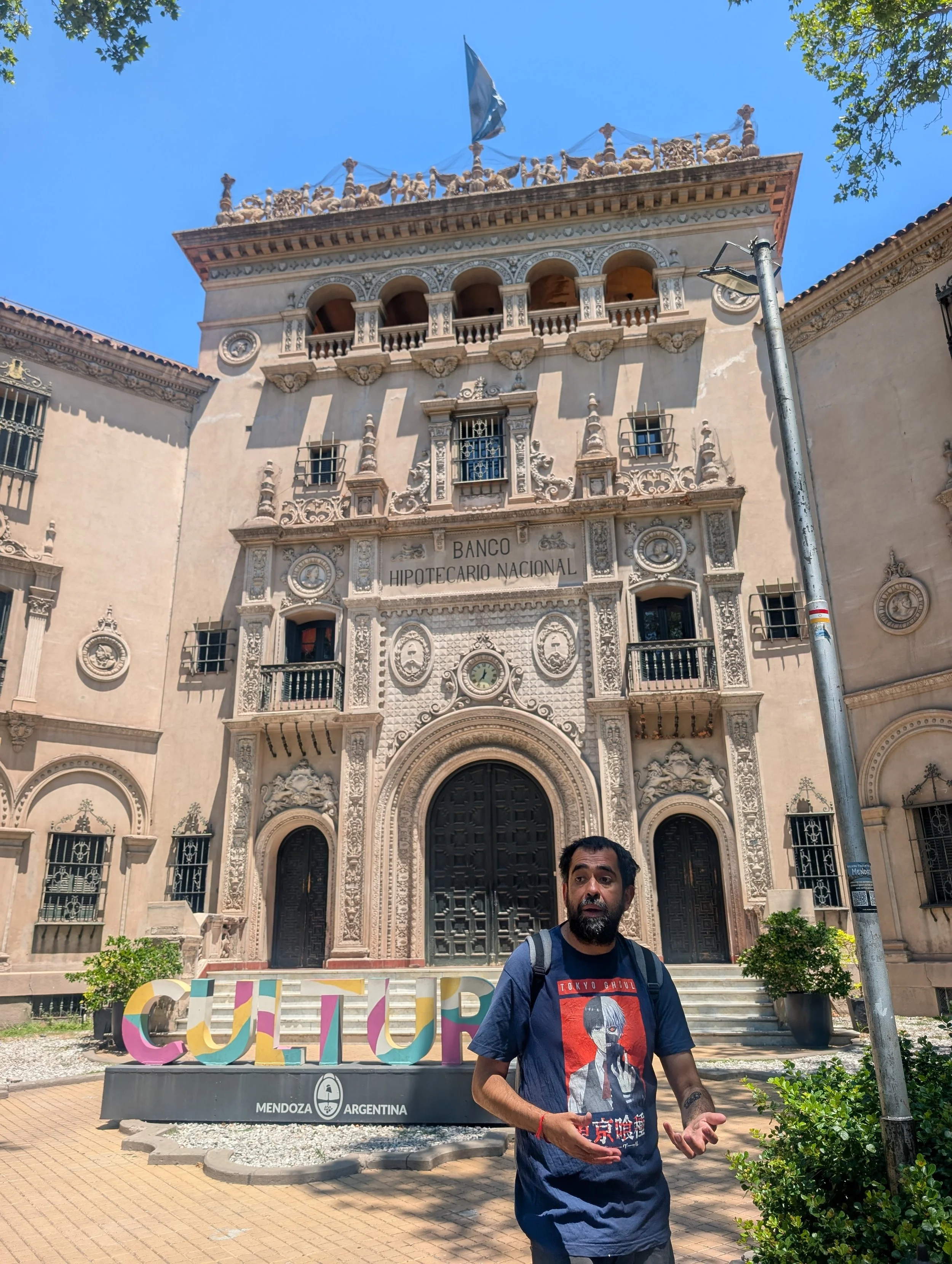
Our free walking tour guide giving us an animated history lesson
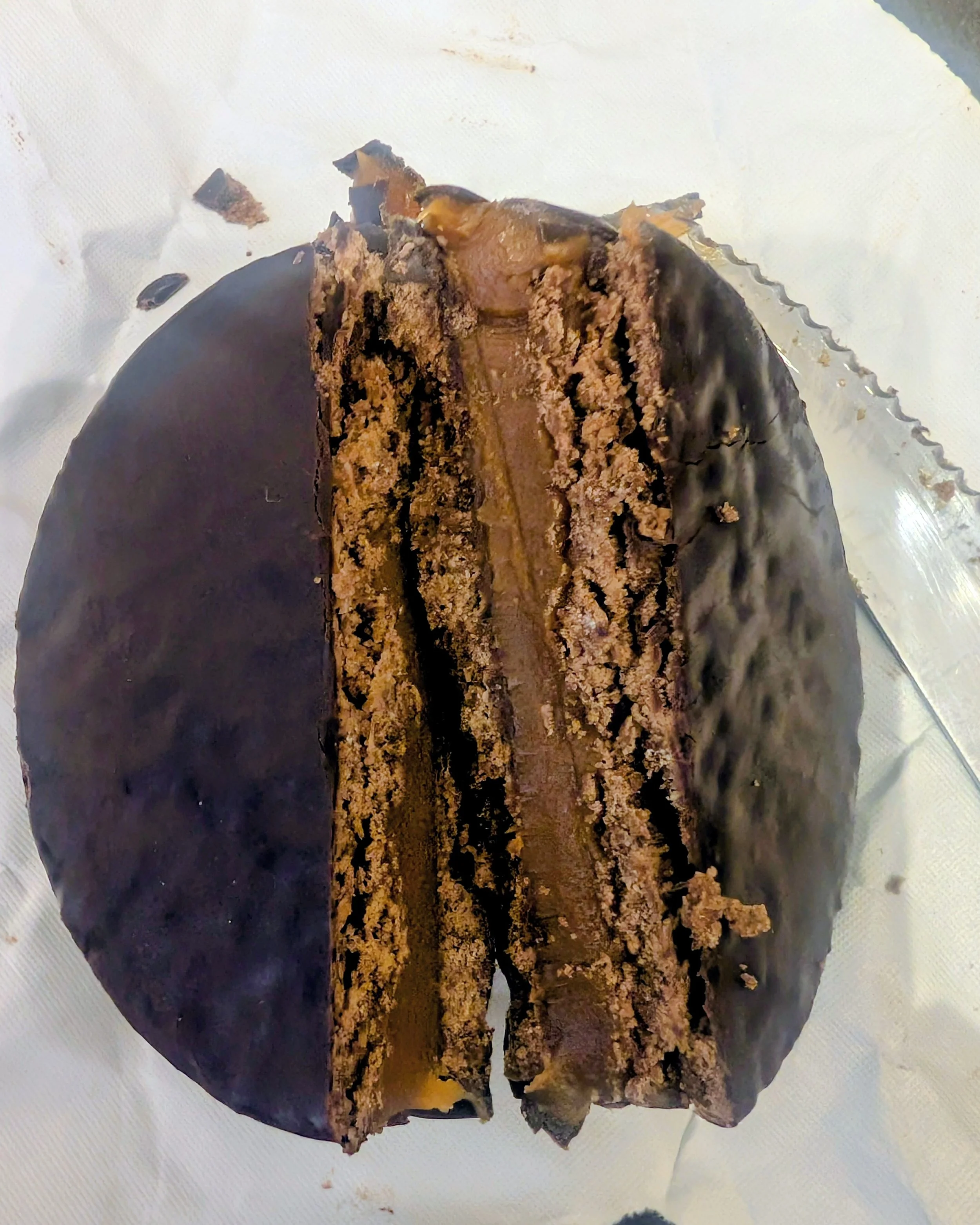
Our first alfajores - an Argentinian dessert cookie, filled with dulce de leche and coated in chocolate
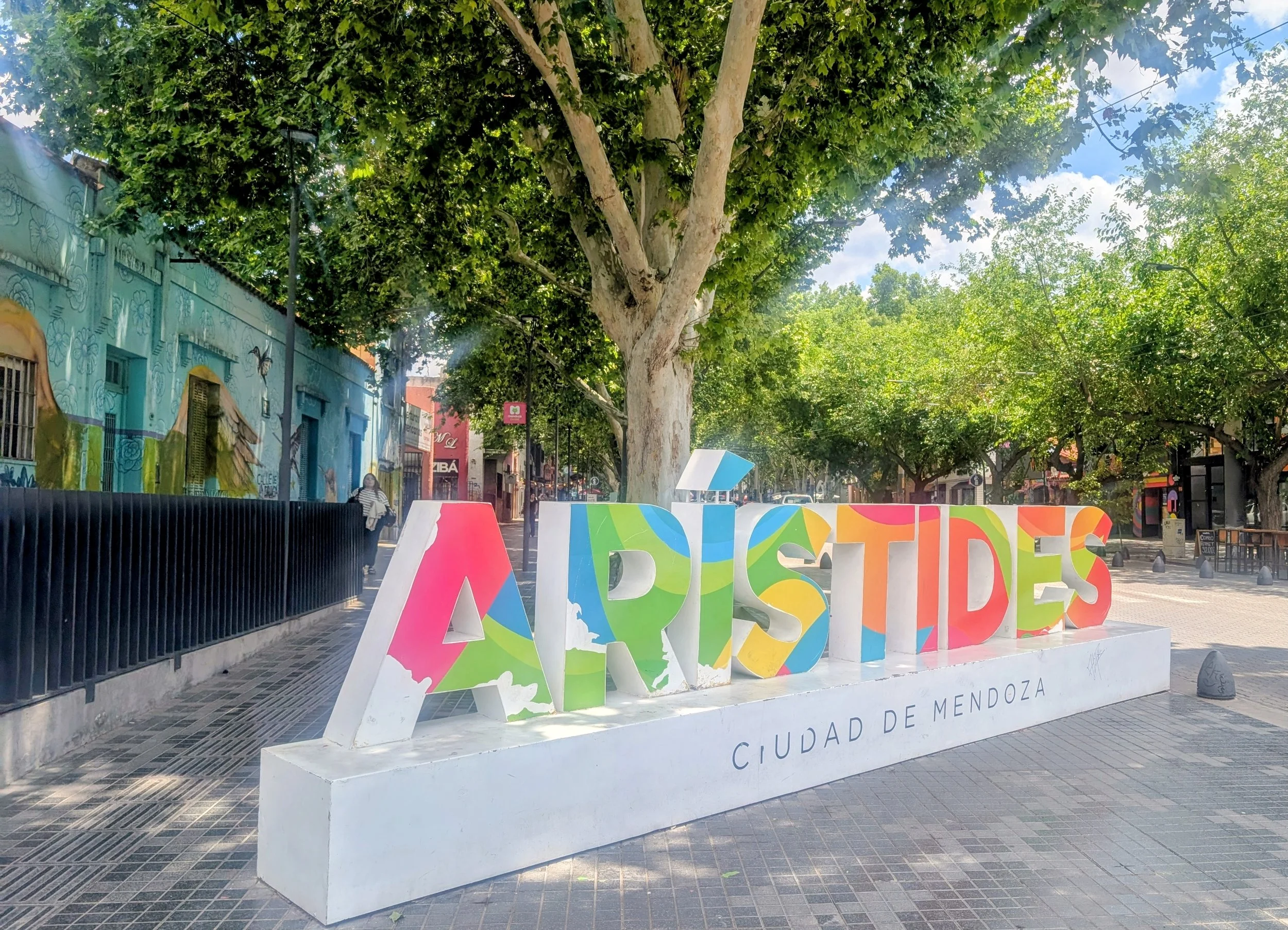
We found our favorite street - expensive but interesting cafes and bars
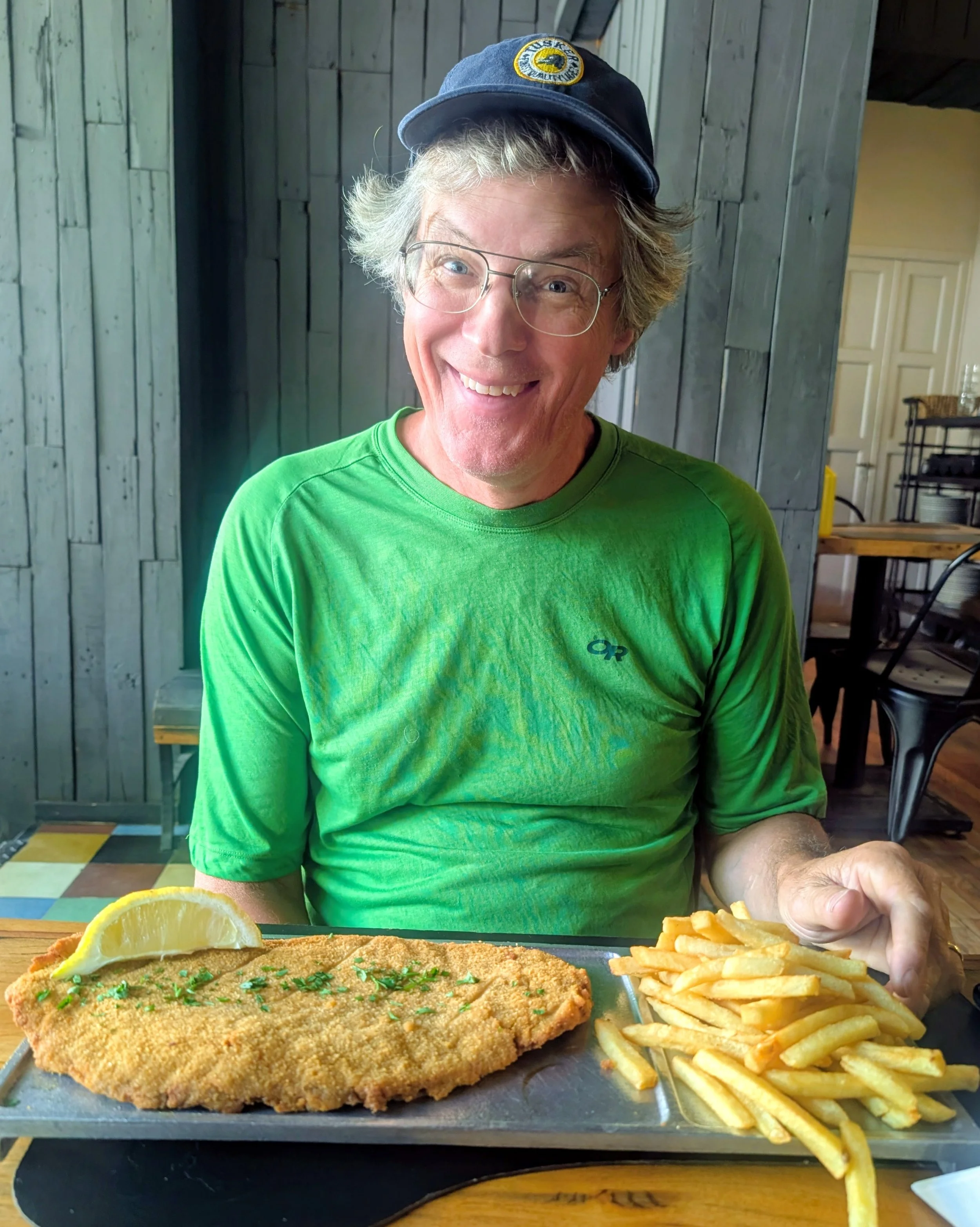
Andy a little overwhelmed by the size of his milenesa - breaded steak, a popular dish in Argentina
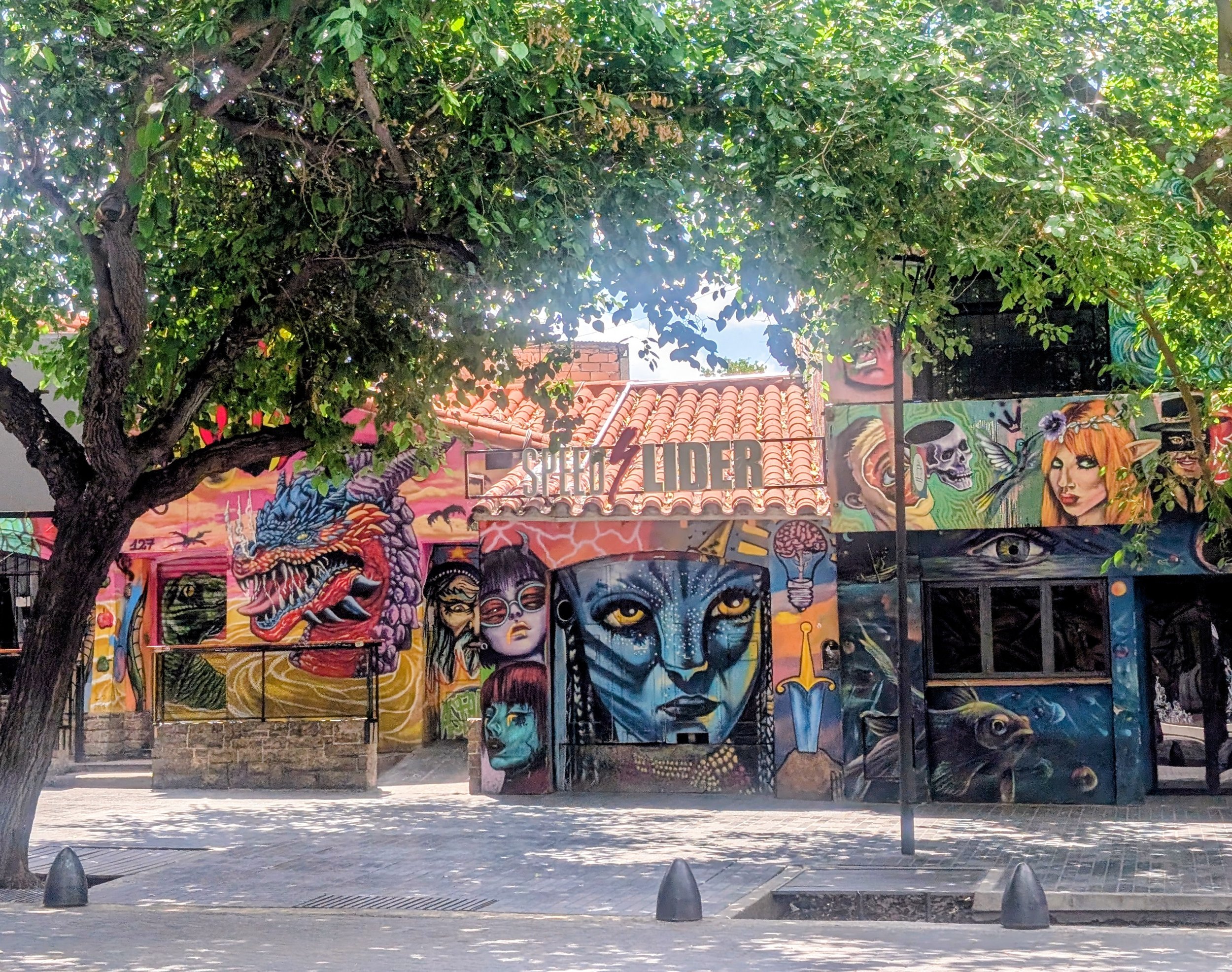
Street art on Aristides Street
We enjoyed Mendoza - it’s wide streets were lined with big leafy trees, interesting neighborhoods, and great food and wine everywhere. We ended up extending our stay - moving to an Airbnb on the outskirts where we could continue exploring and do our laundry. Mendoza felt slower paced than most cities we had been to it’s size - we felt relaxed and rejuvenated by the time we left. We always felt safe there although were surprised one day as we were walking into town to be stopped by the local police. He told us we were about to enter a very dangerous barrio (neighborhood) and gave us a ride to where we were going, pointing out the main streets to stick to on our way back. Such kindness, Argentinian hospitality continued to amaze us.
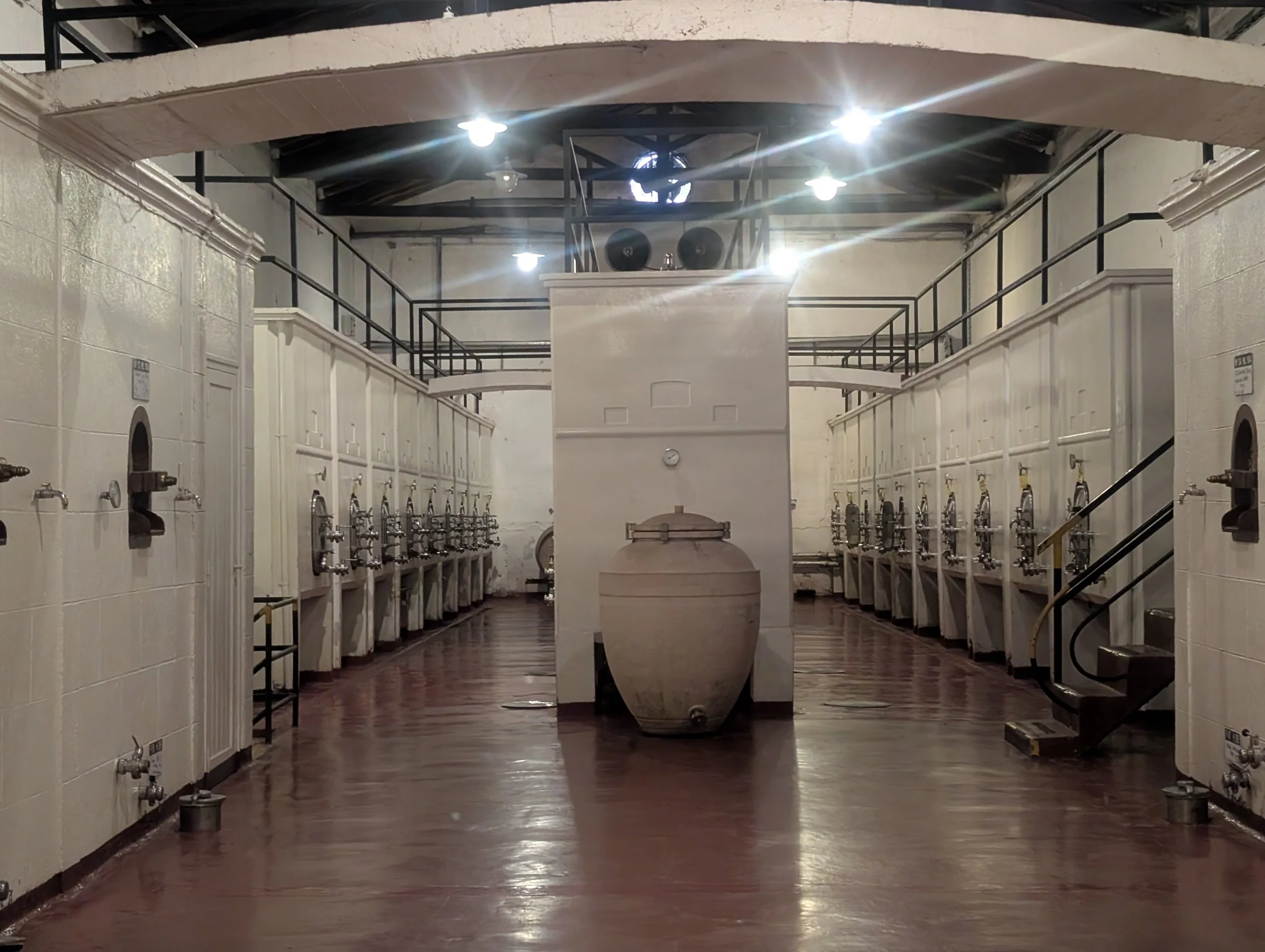
A visit to Norton winery in the wine district outside of Mendoza
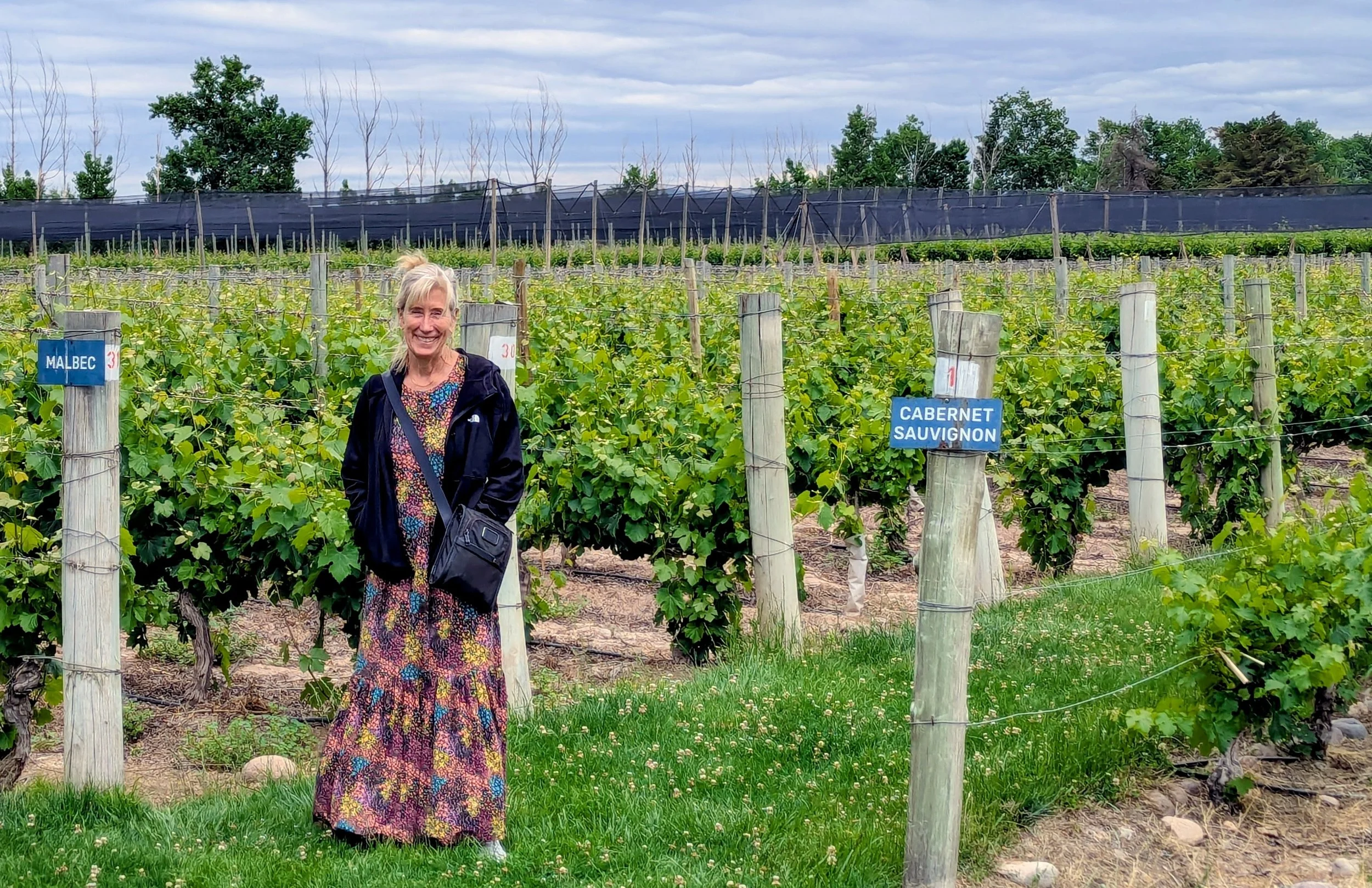
Dawn is loving the Argentinian malbecs
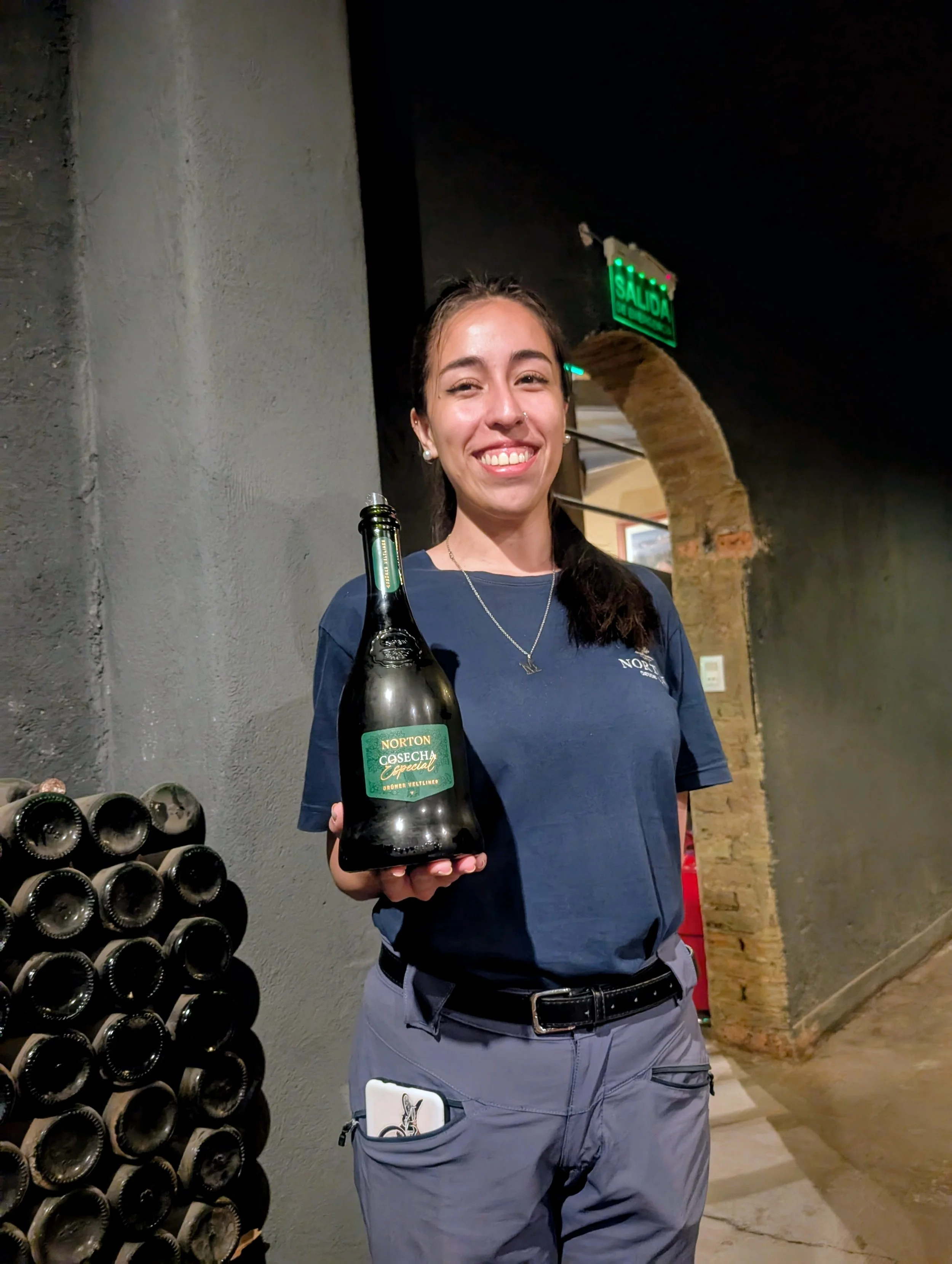
Our lovely tour guide at Norton winery
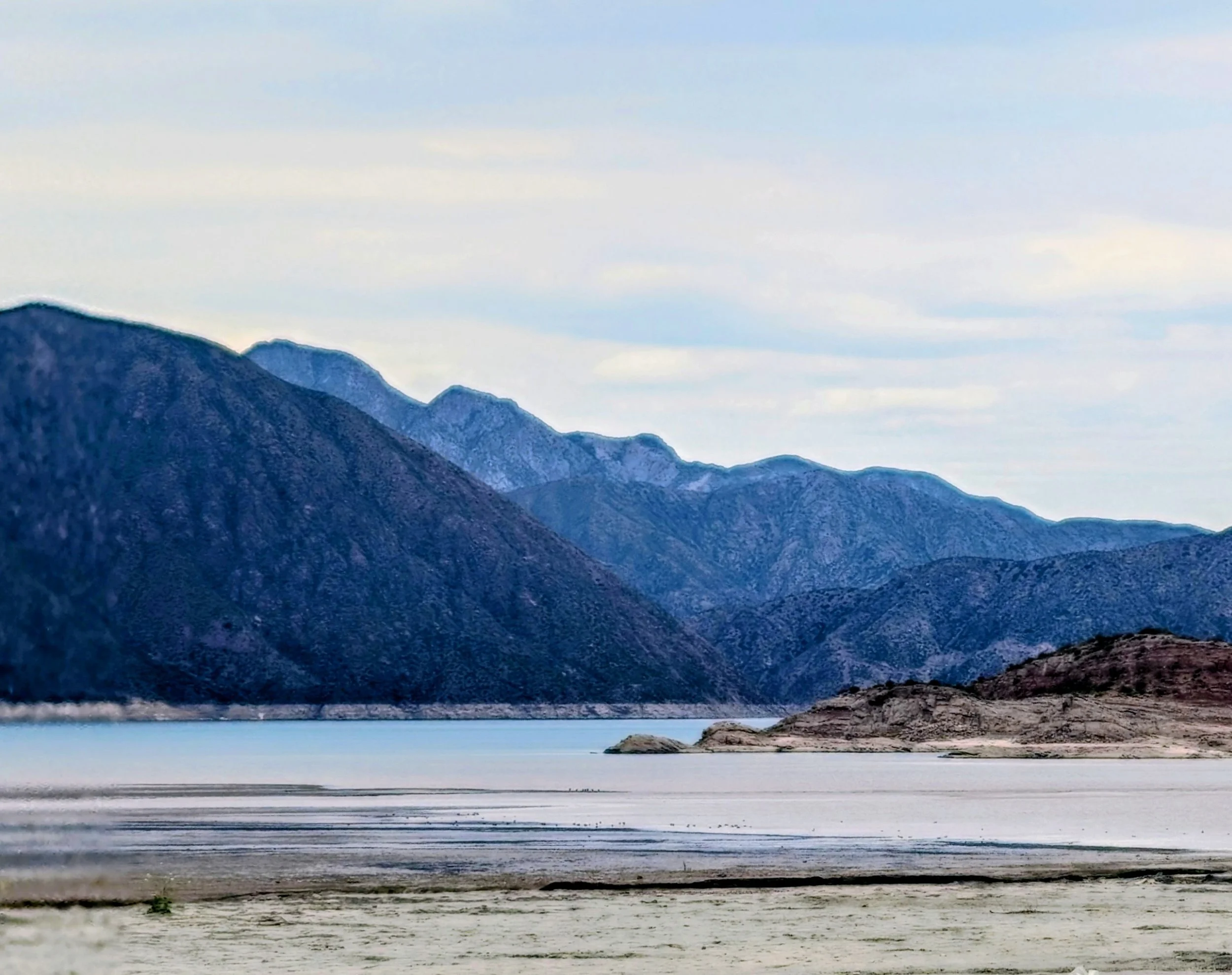
Lake Portrerillos on the drive from Mendoza to Santiago
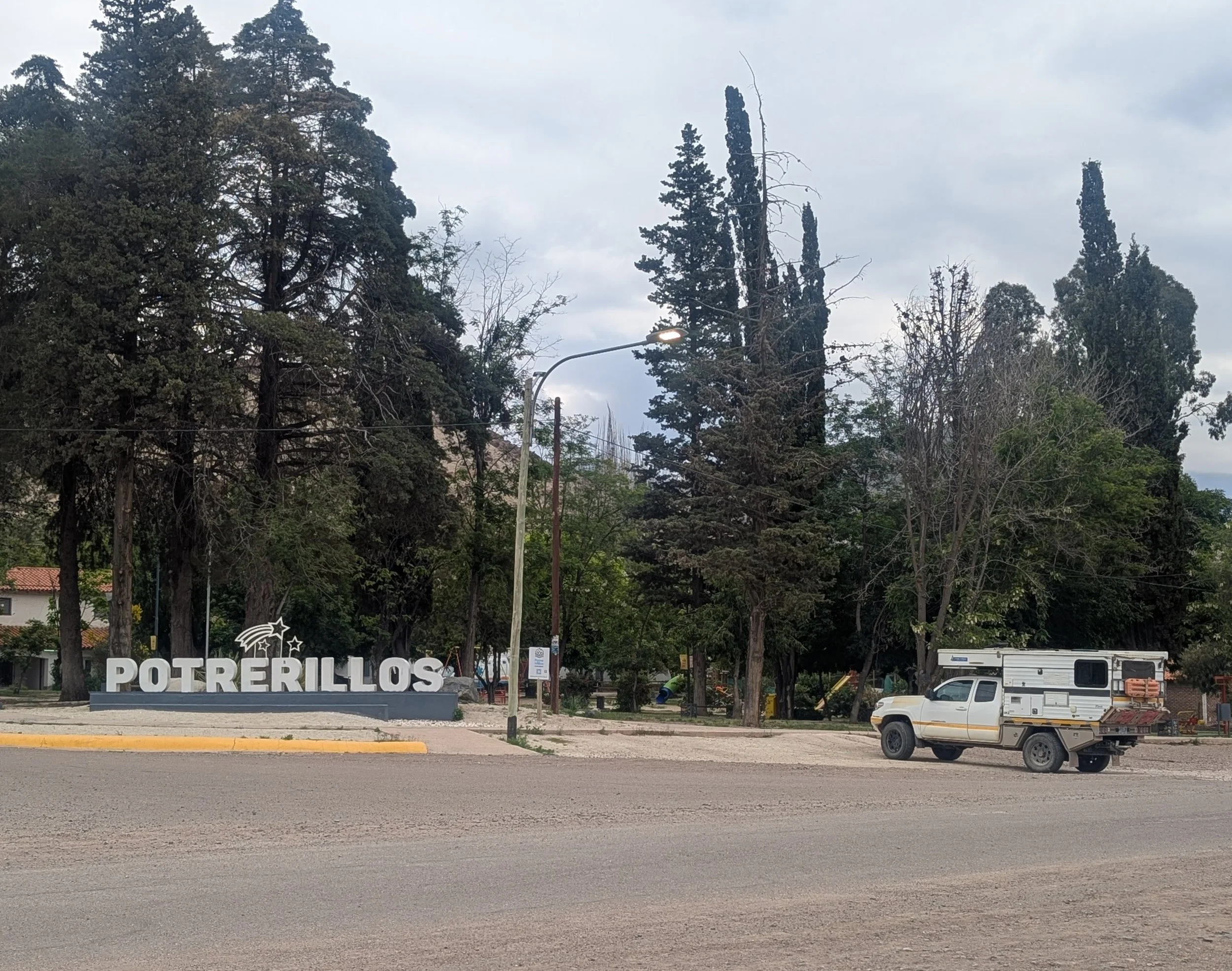
A popular holiday town, we were the only visitors off season
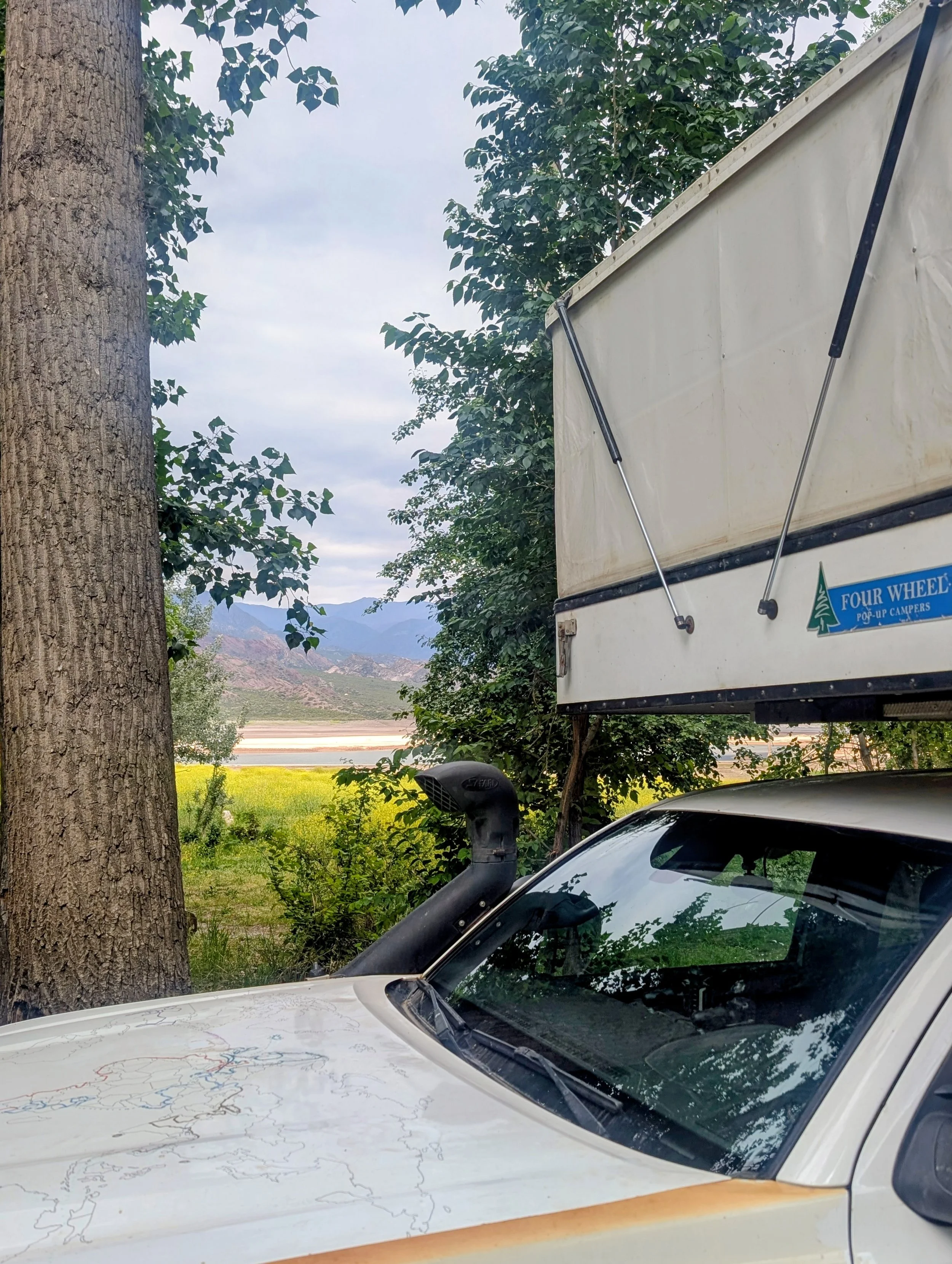
Wild camp with a view of Lake Portrerillos
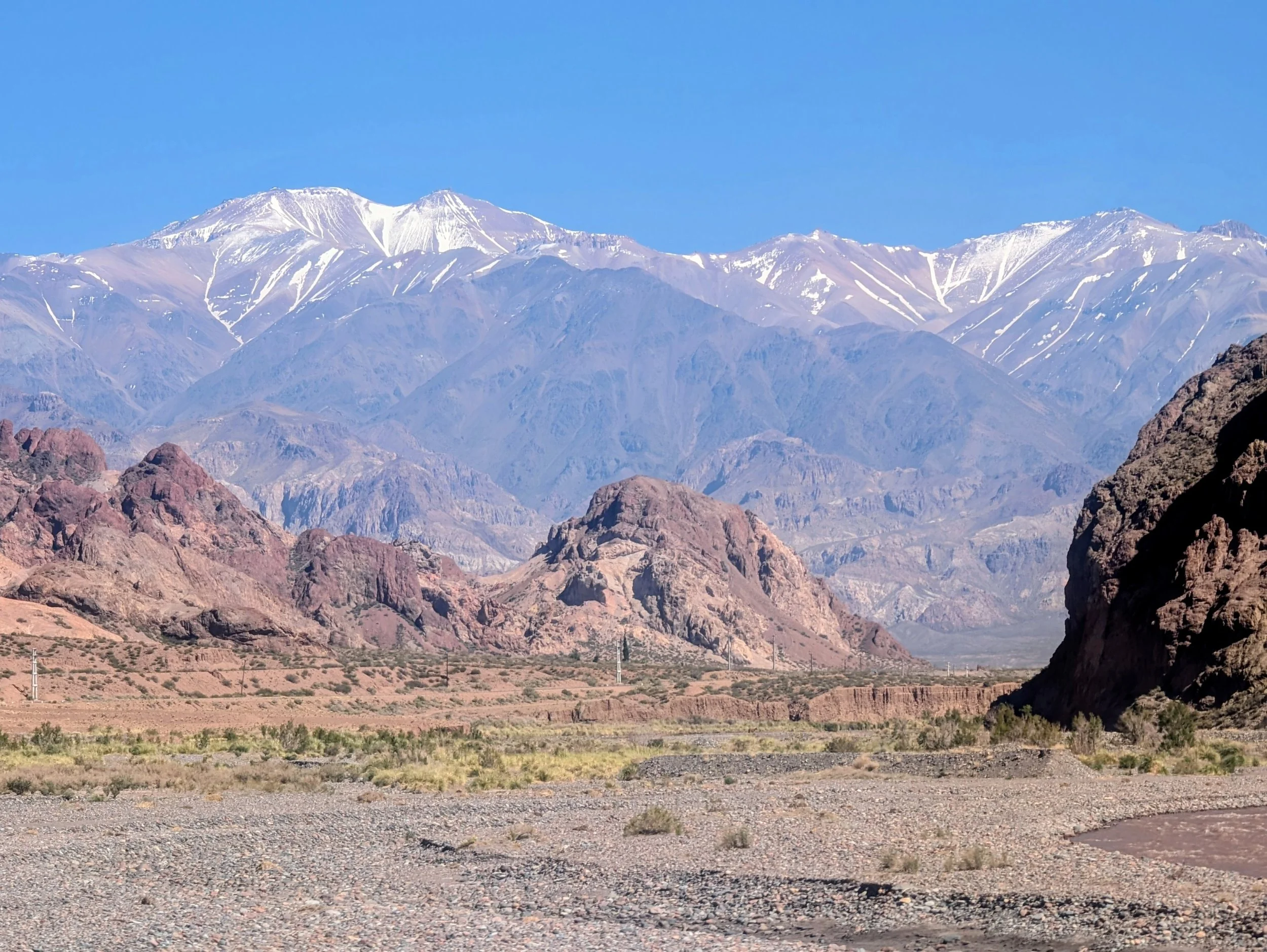
Heading over the Andes on our journey from Mendoza to Santiago
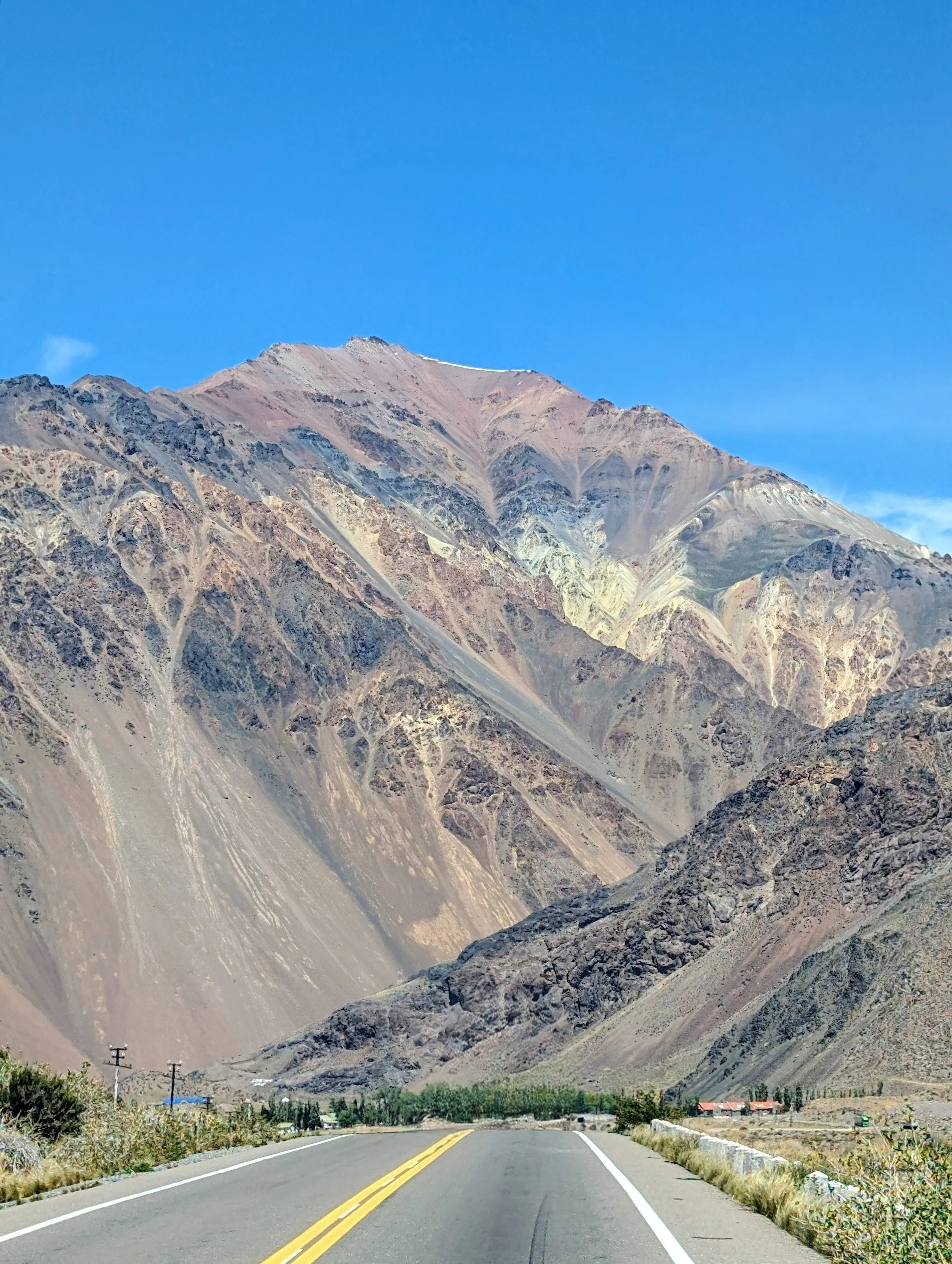
Gorgeous drive
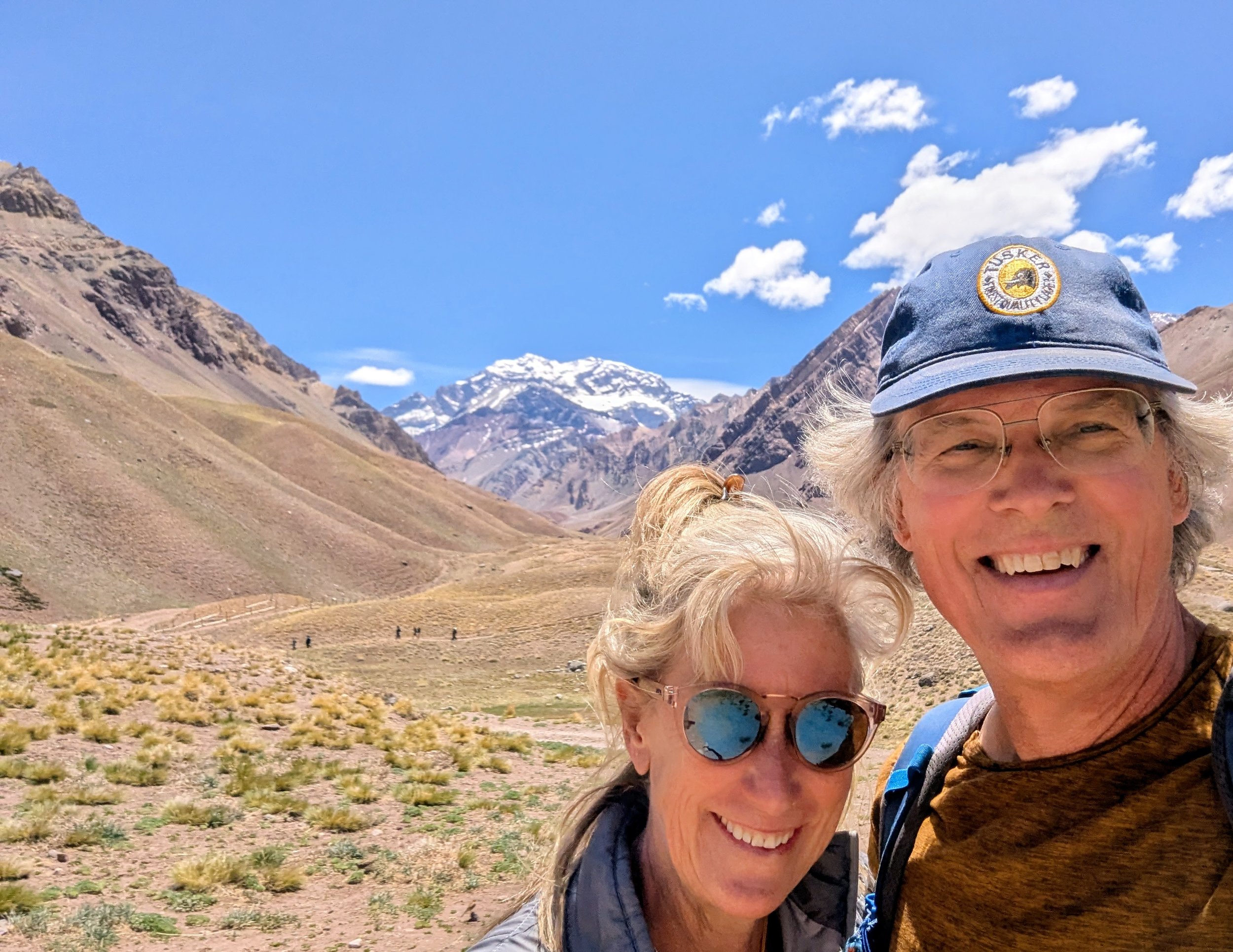
Stopping off to walk the approach trail to Mount Aconcagua
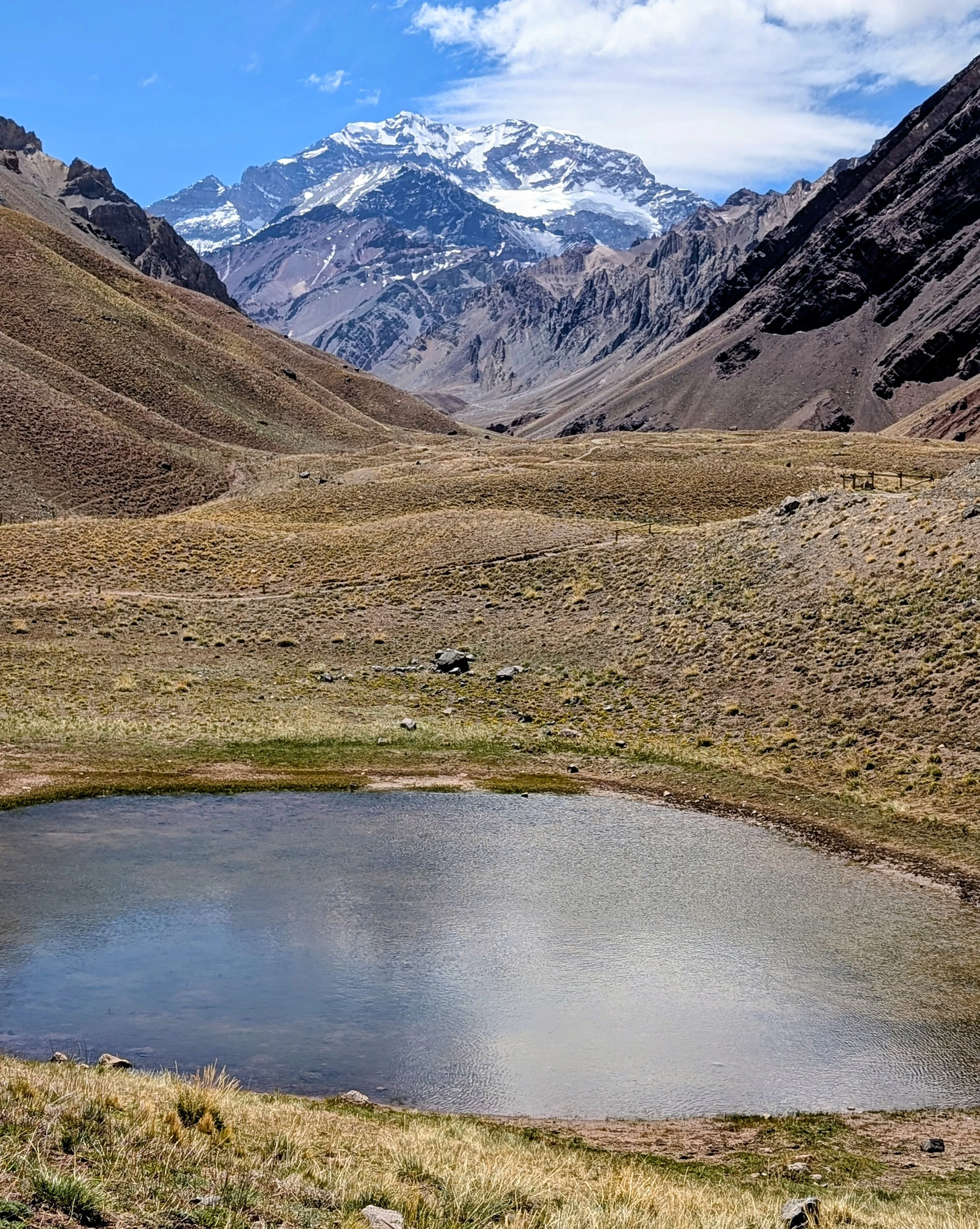
Back up to over 10,000’
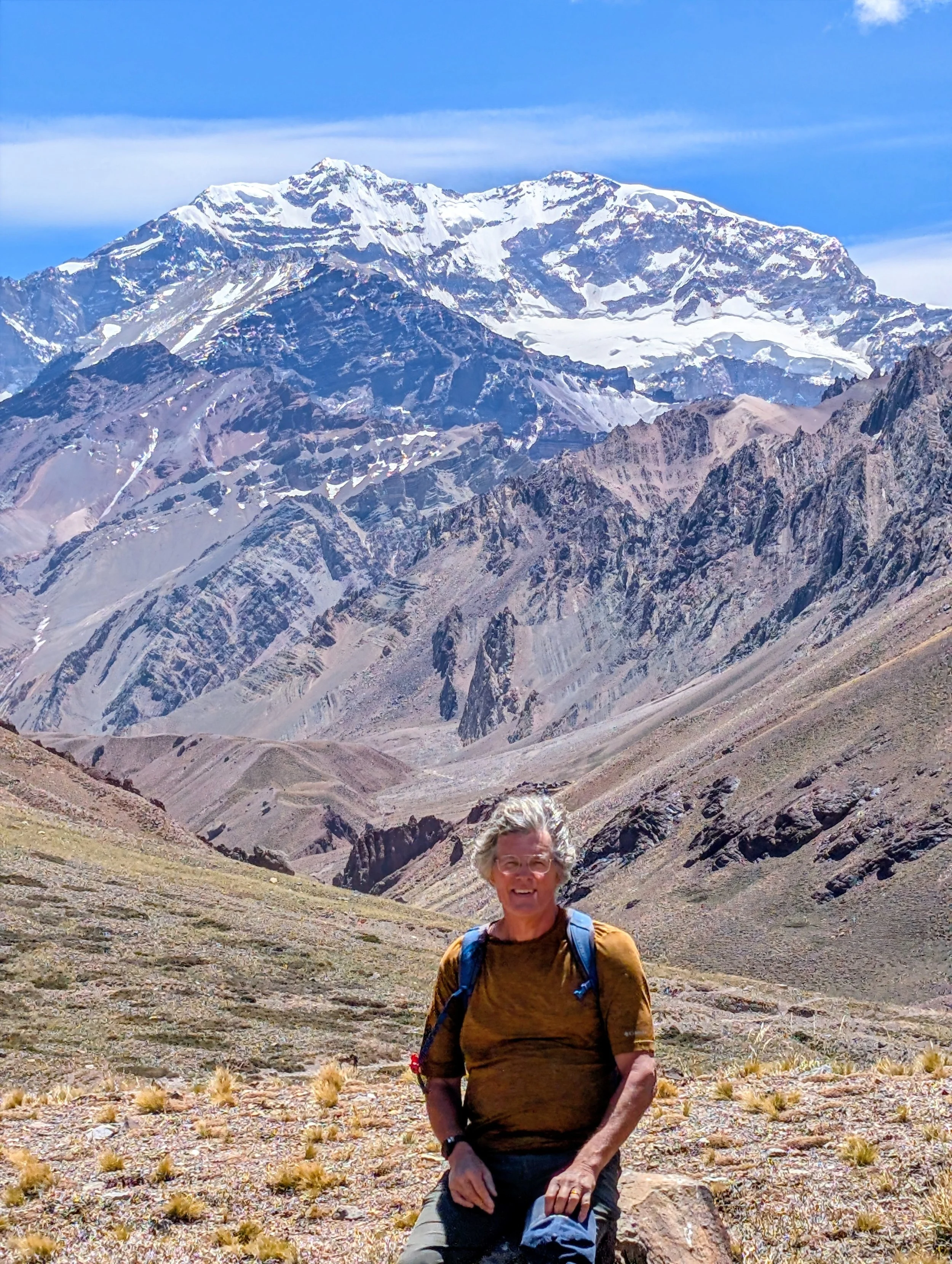
This was the closest we got to Aconcagua this time - Andy had climbed it to 10,000 feet a few decades ago
That was it for our first introduction to Argentina. The people, food and geography had been outstanding and we were ready to return.
Part 2 - November 23 - December 2
We next entered central Argentina near the world class trout fishing destination, Chimehuin River. Andy was excited to try his hand.
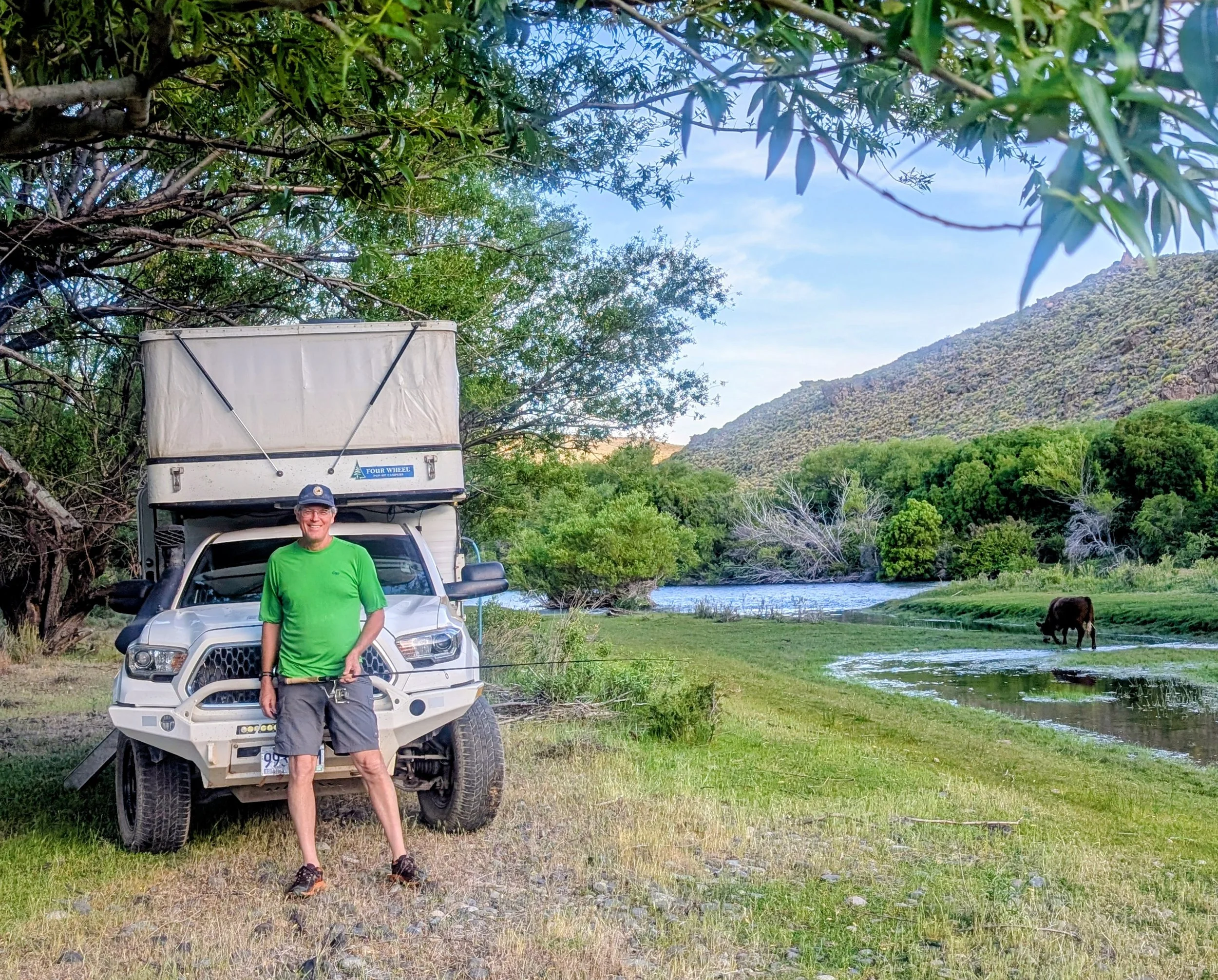
Camping along the Chimehuin River on Machupe tribal land - we paid a small fee to the tribe for access and the ability to camp wherever we wanted
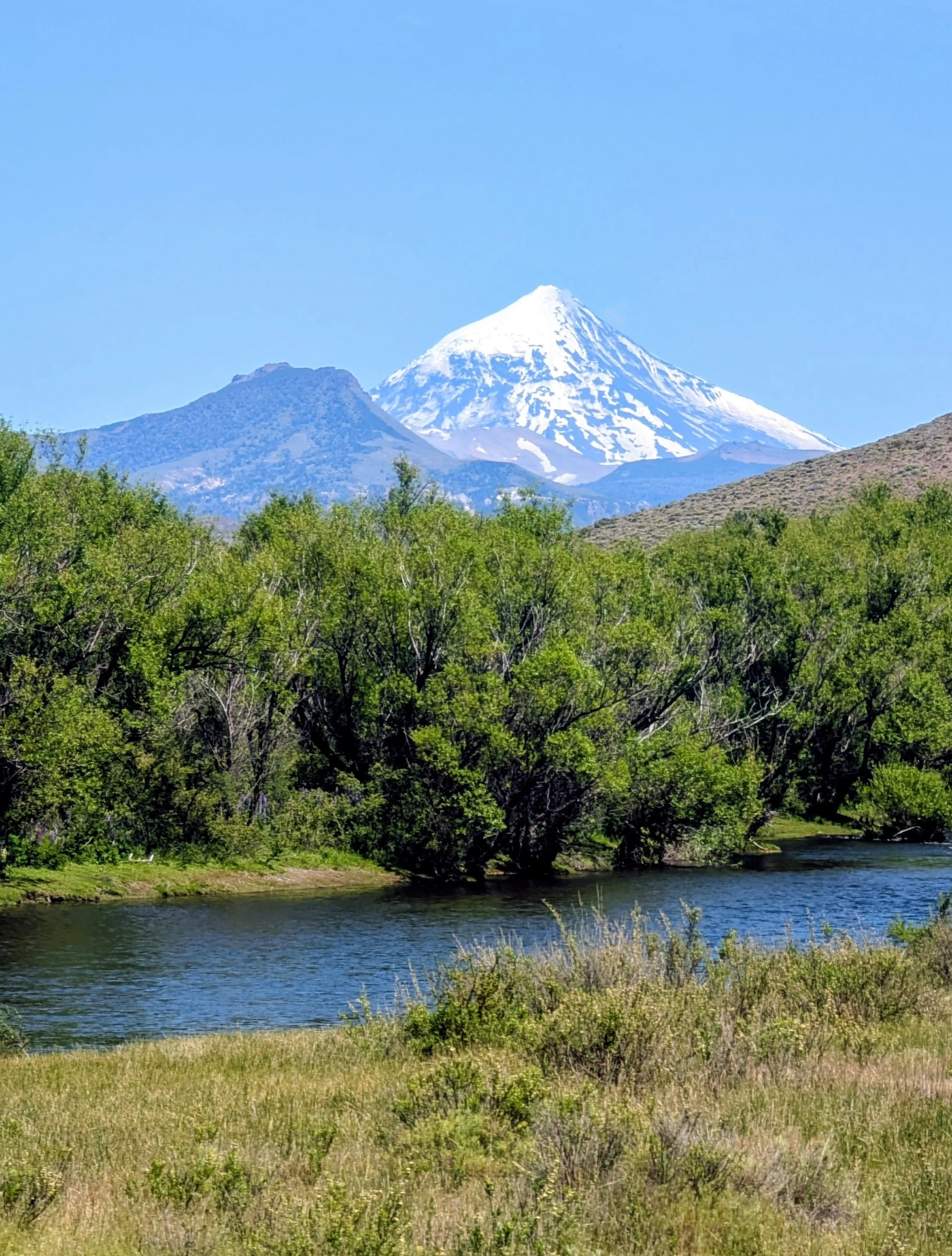
Beautiful river and volcanoes in the distance
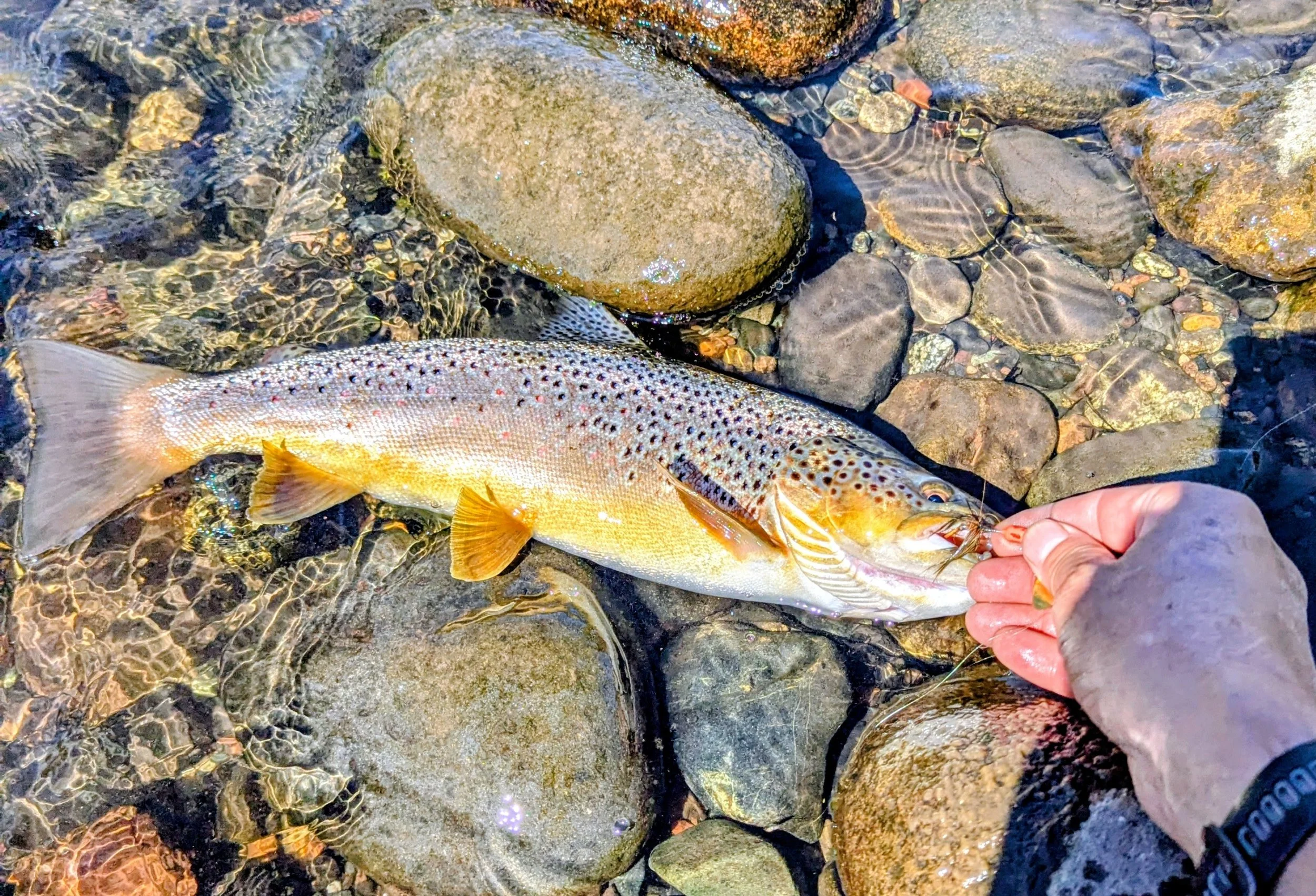
Successful fishing, a beautiful 2lb brown trout
Our next adventure was to drive the famous Seven Lakes route - popular with Argentinians and foreign tourists alike. The almost 70 mile section of route 40 is easy to drive and there was a lot to see along the way - volcano views, riverside camps and lake vistas.
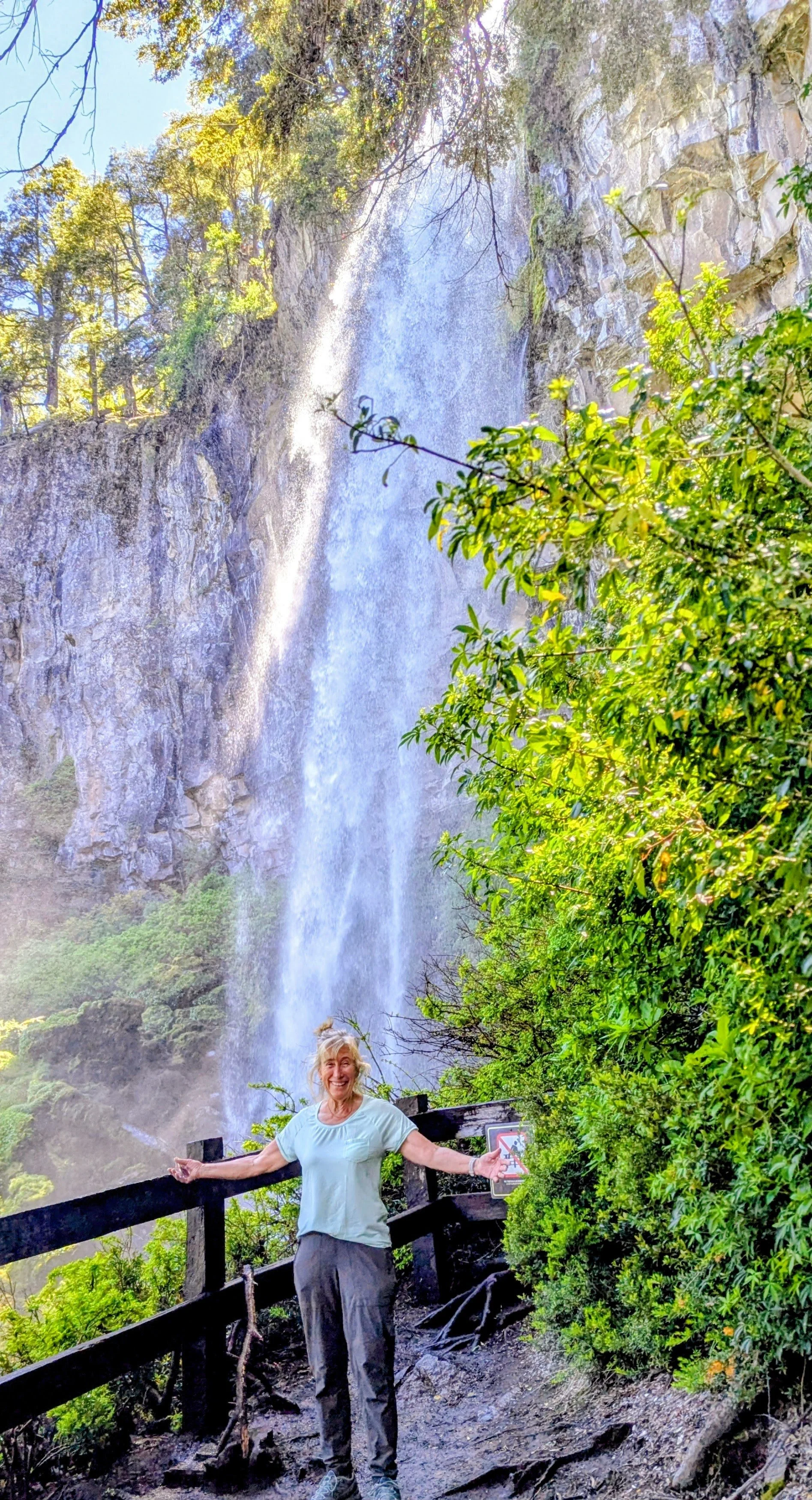
Waterfall day hike
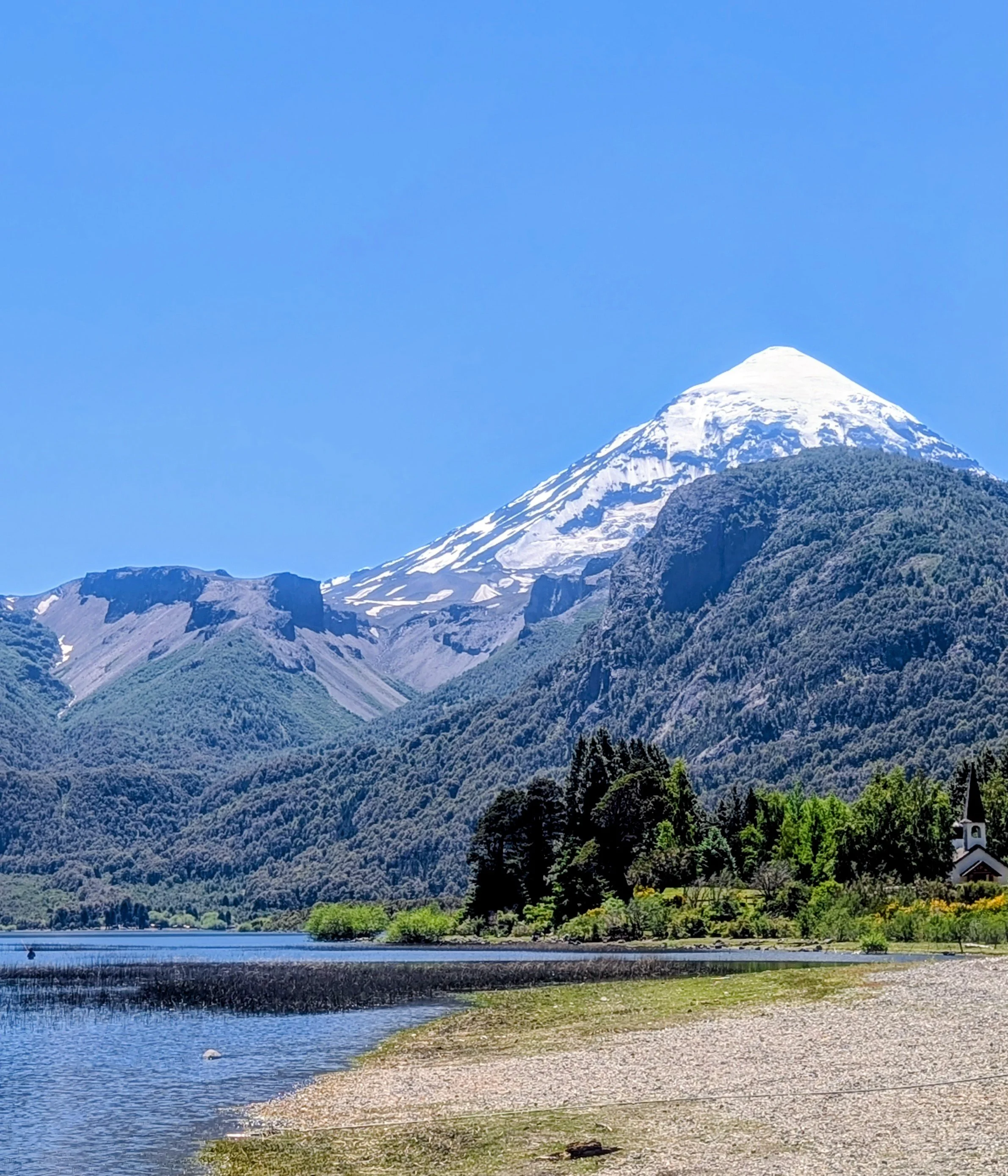
Classic lake/volcano view on the Seven Lakes route
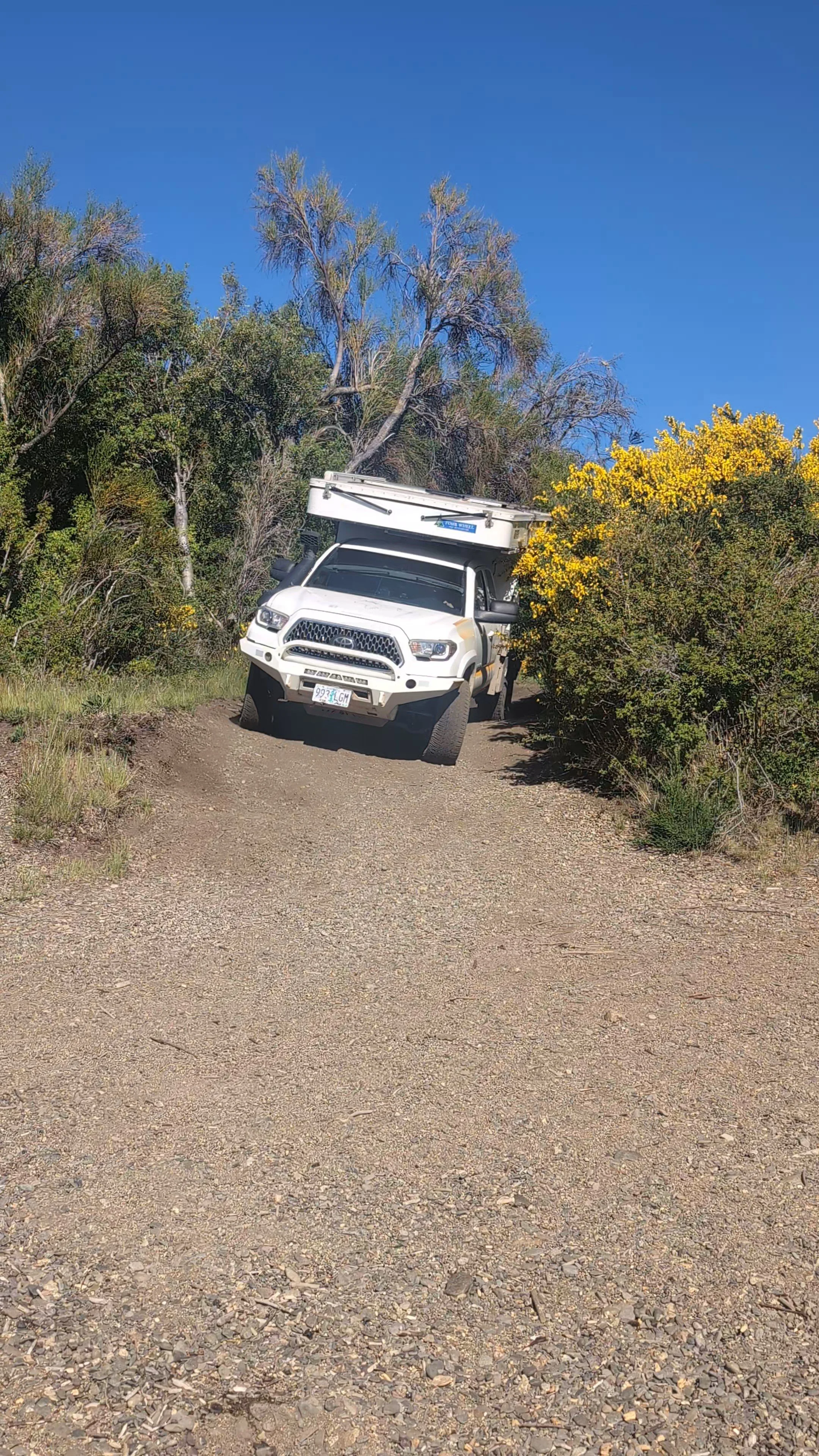
Squeezing our way down to a lakeside camp
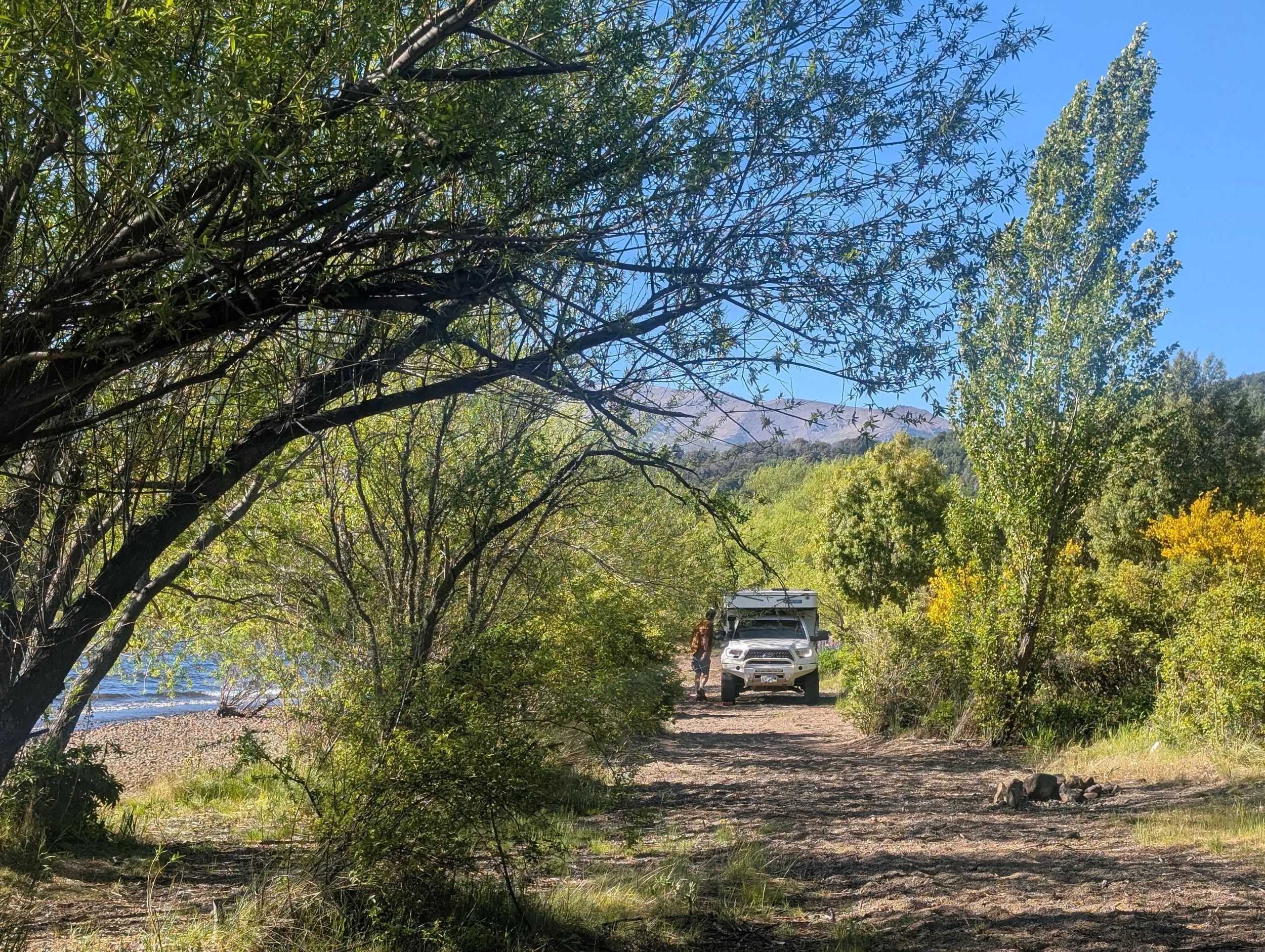
Waterfront camp
We arrived in San Martin de Los Andes, a popular lakeside town on the route, just in time to celebrate Thanksgiving in a place with excellent restaurants.
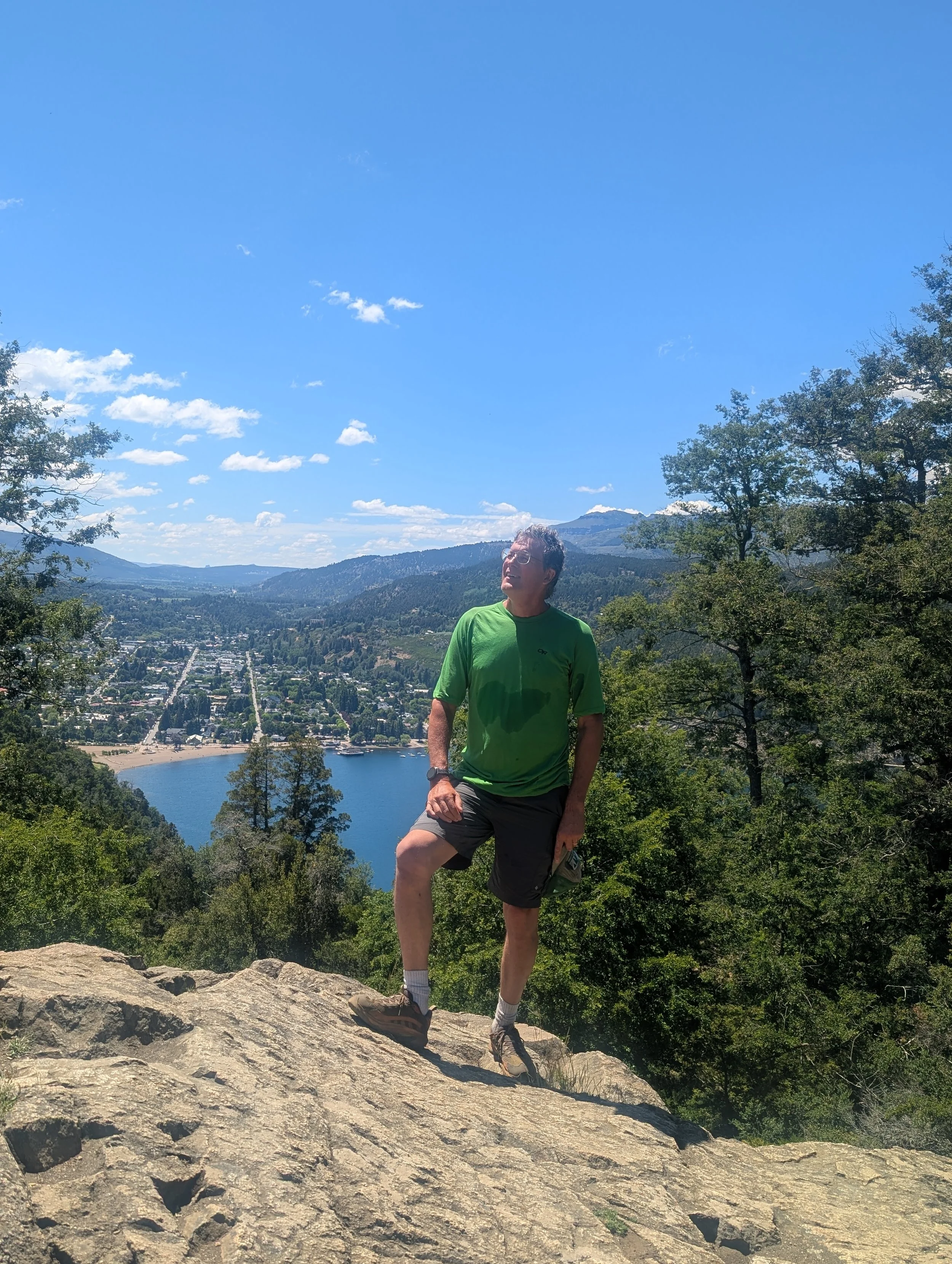
Hike above San Martin de los Andes, Andy is finding his light for the photo
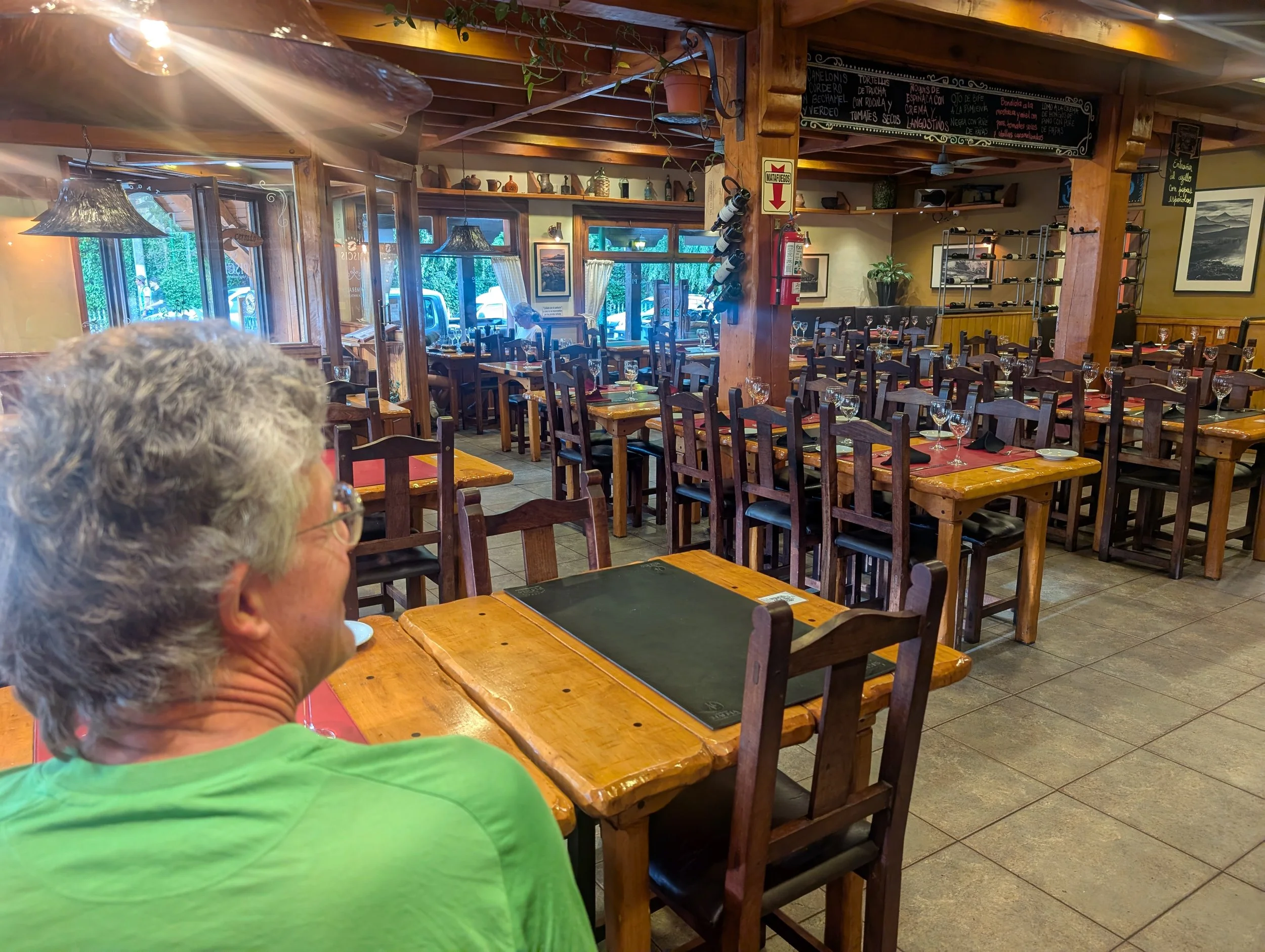
Excited to try our first parrilla for Thanksgiving dinner we arrived at the empty restaurant at 7:30, the only patrons for about an hour
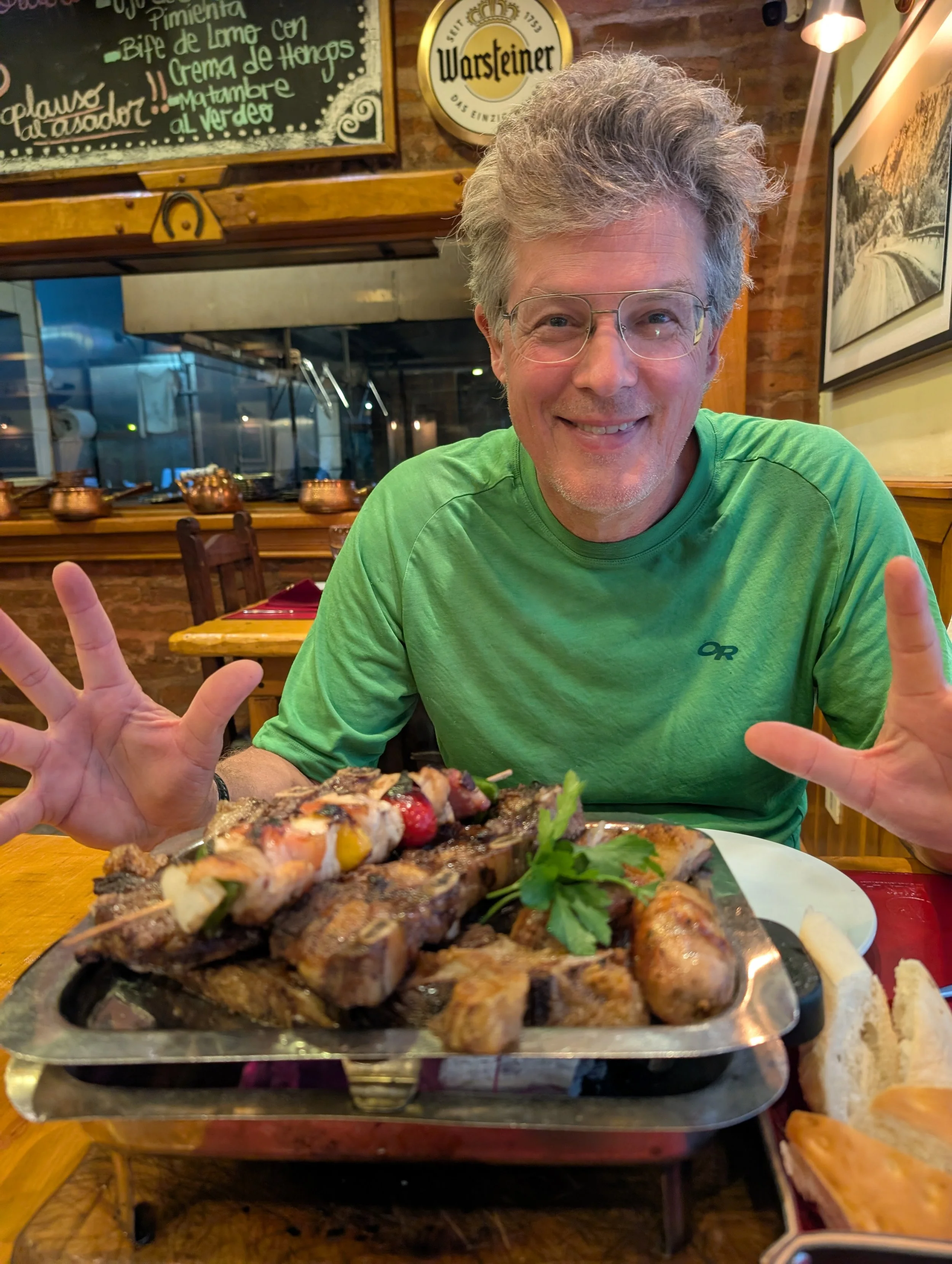
Andy’s parrilla - enormous plate of barbecued beef
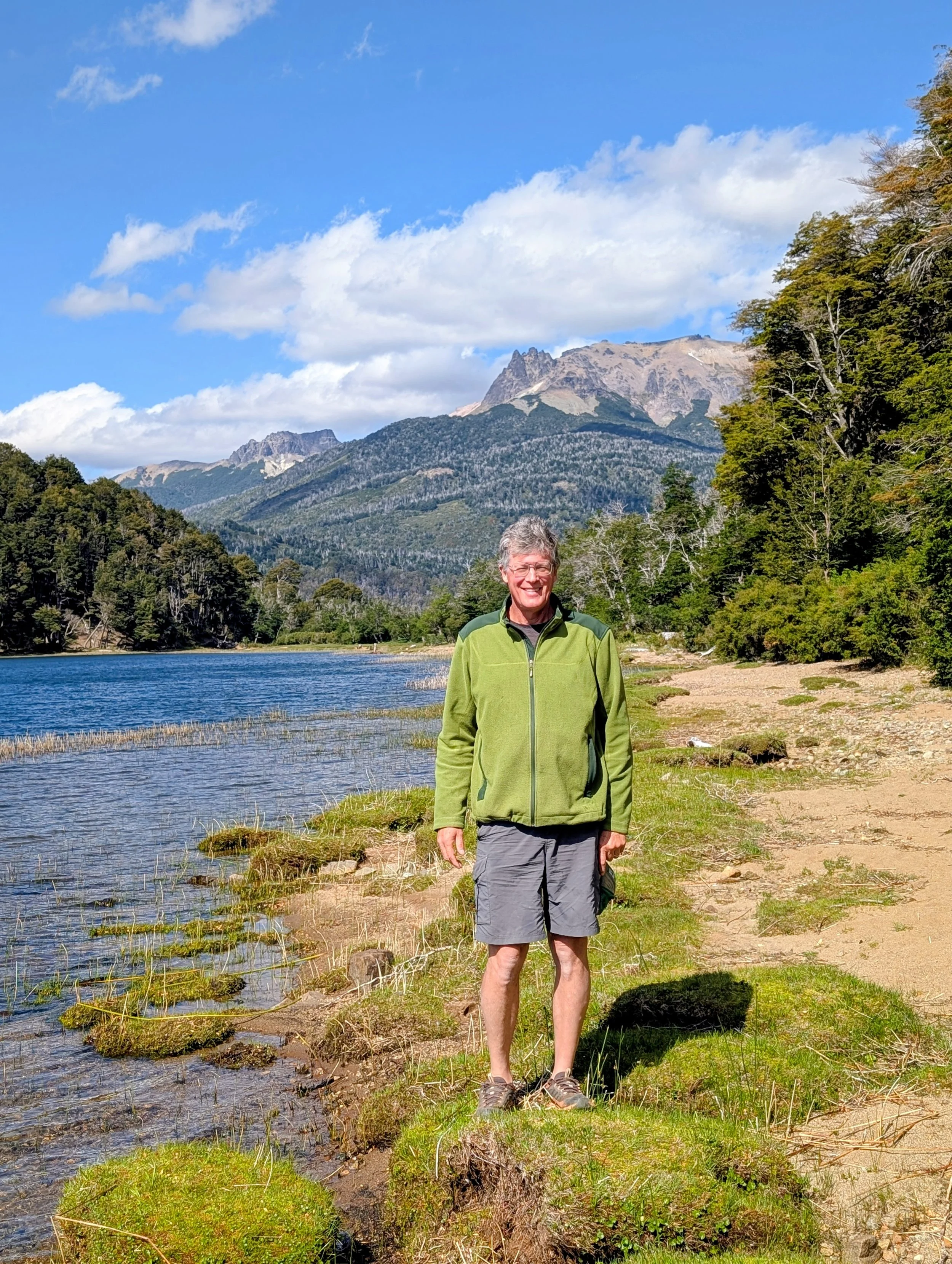
Continuing the Seven Lakes Route
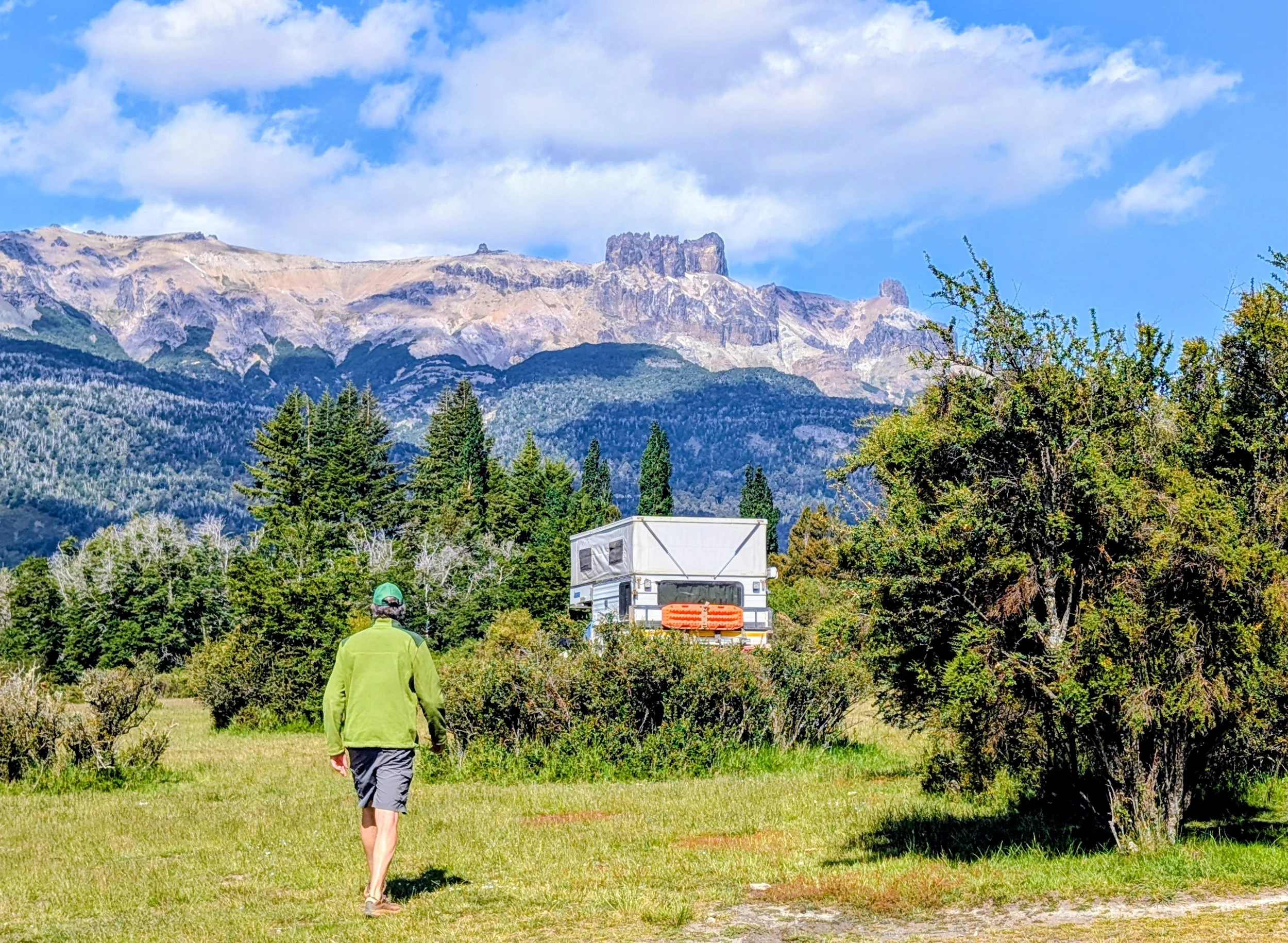
Free campground along the way
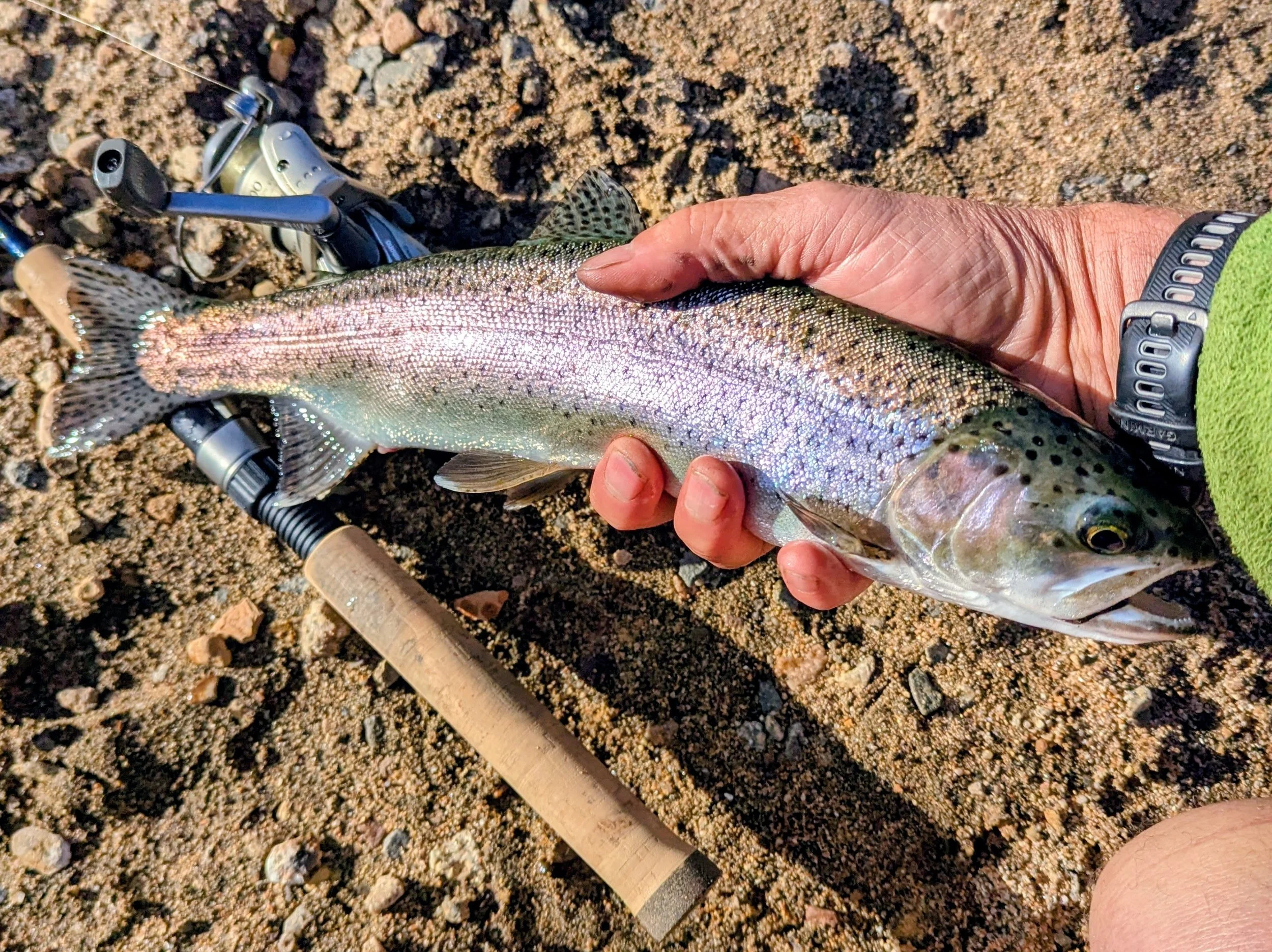
More fishing! This time a rainbow trout
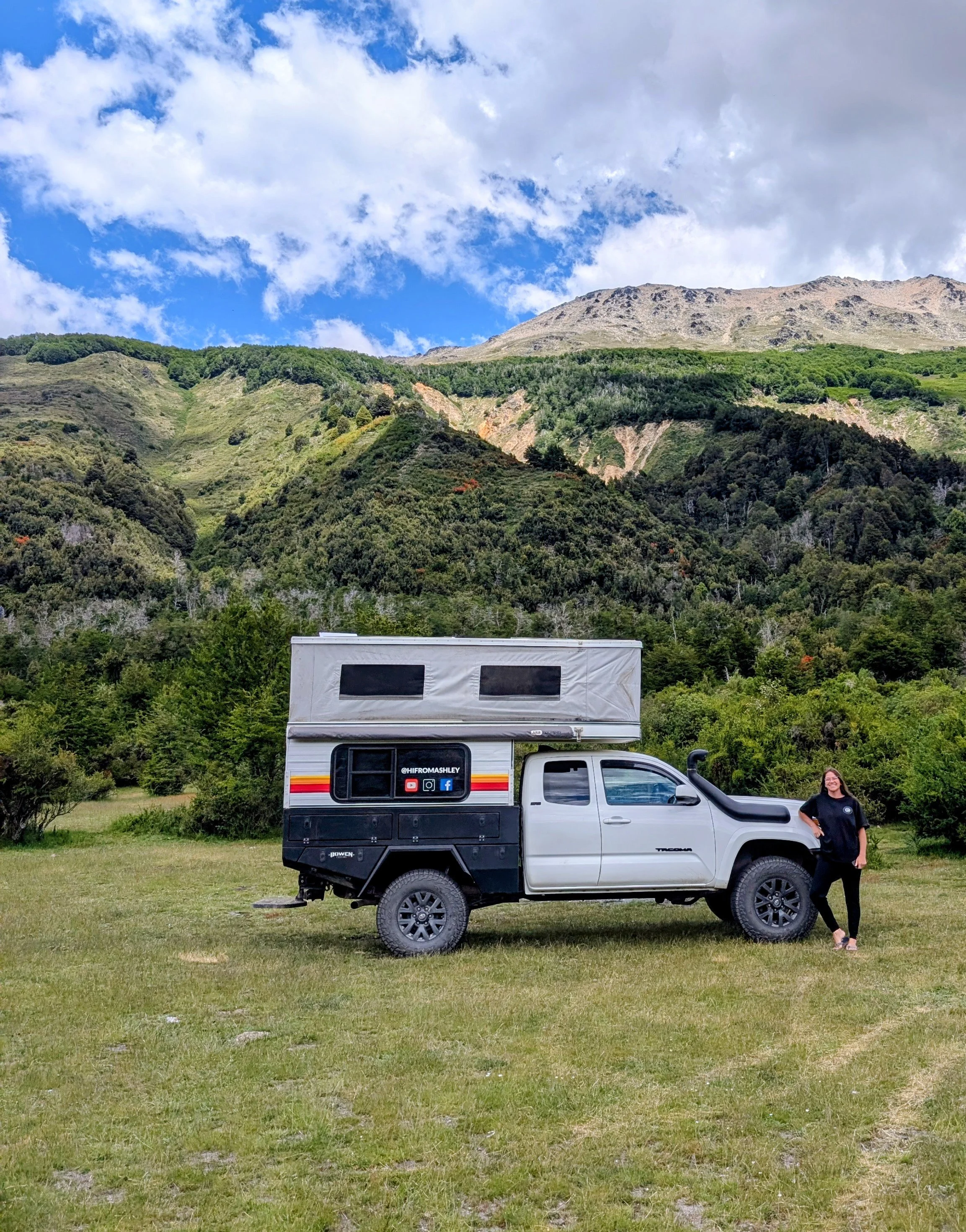
Meet up with Ashley - another Tacoma driver from the US we had been messaging for years. Lovely to share a bottle of Malbec and stories
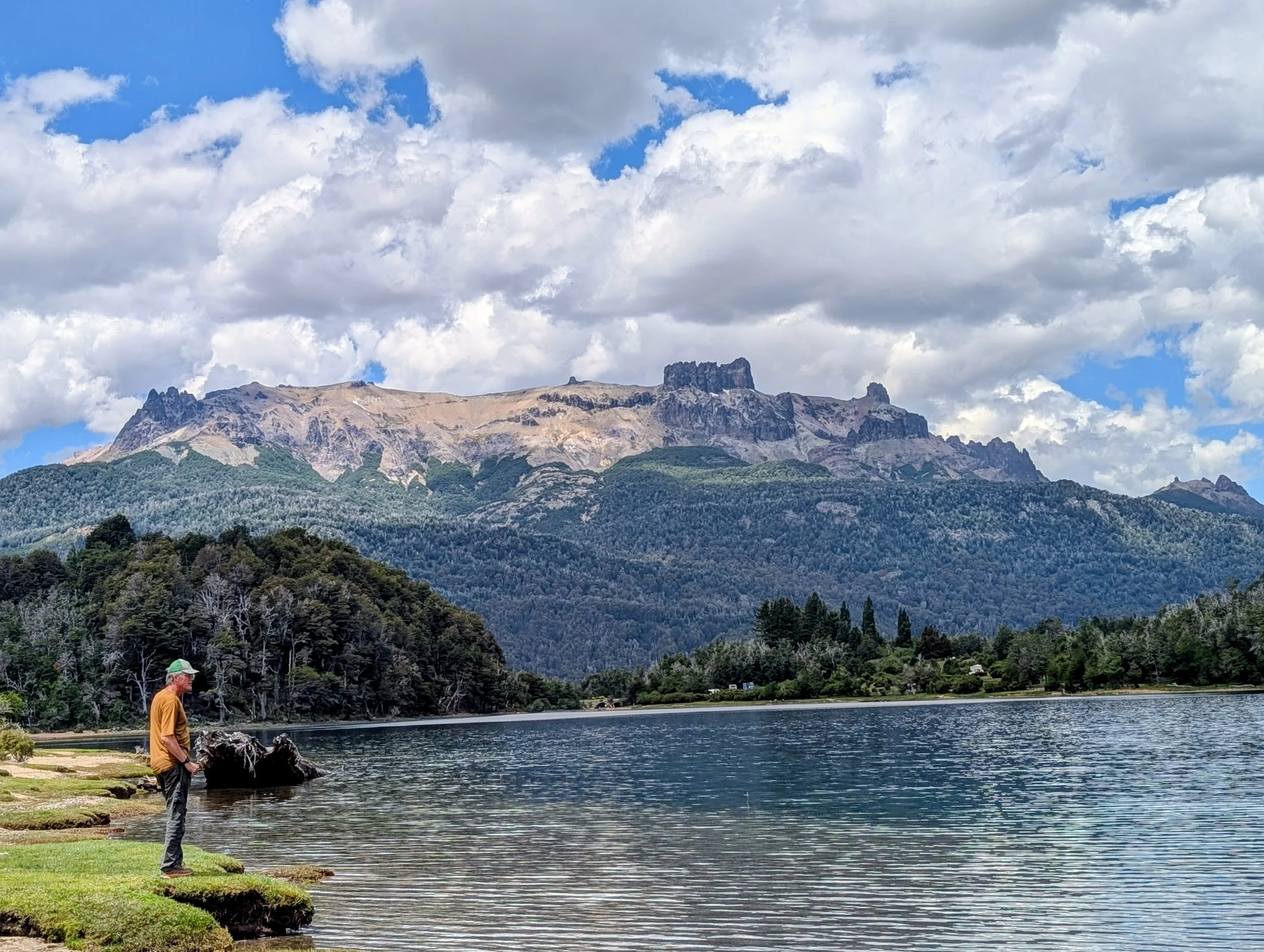
Andy is looking for fish
We had heard positive things about the Patagonian mountain town of Bariloche - set on the glacial Nahuel Huapi lake. We were intrigued by its renowned beauty. But, similar to Valparaiso in Chile, it had a terrible reputation for foreign vehicle break-ins. On our first walk there, we passed a foreign-plated vehicle with a recently broken window. We were concerned about the truck so opted to camp outside of town and when we came in to explore parked in a secure lot with a guard (for about $1 an hour).
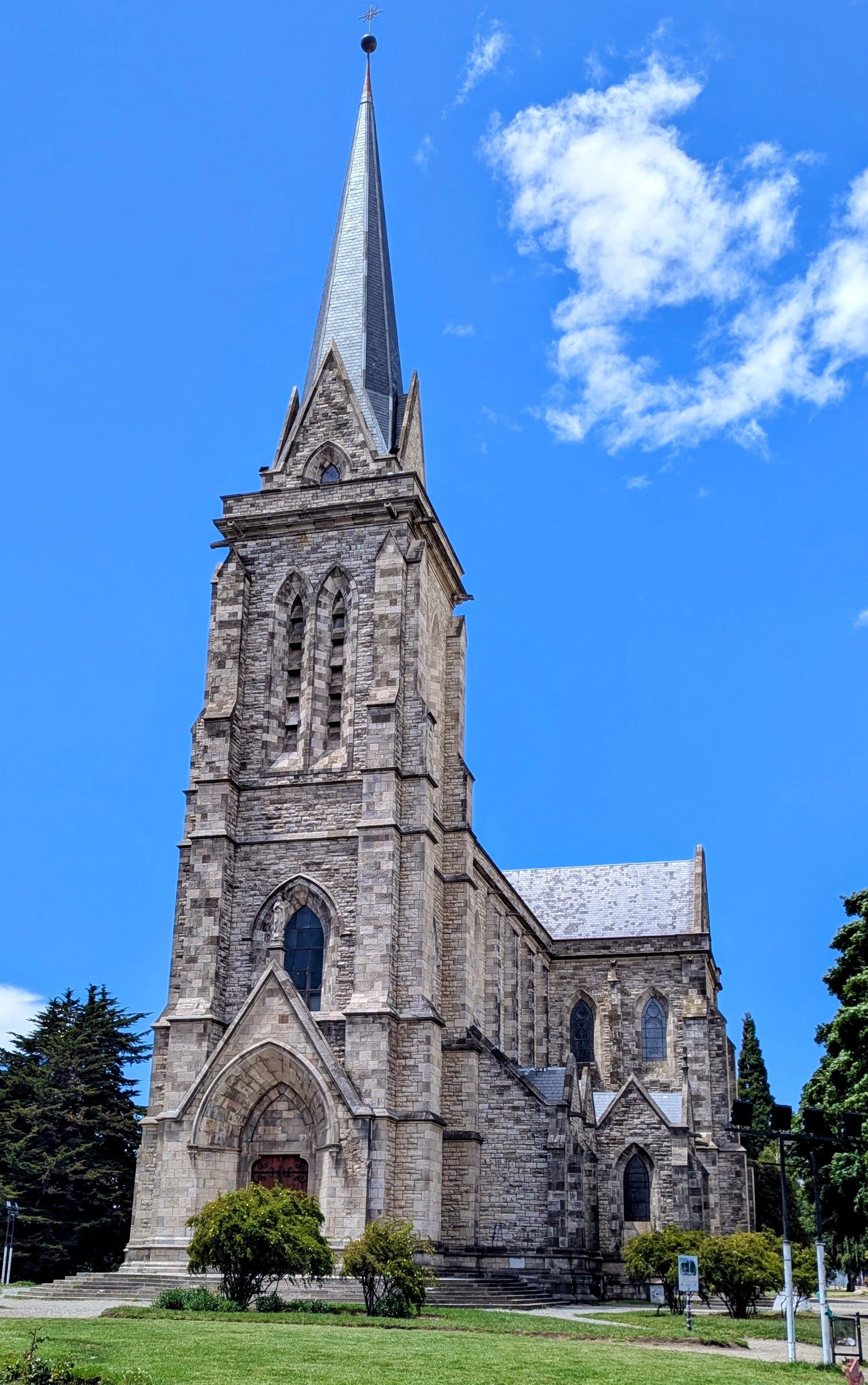
Iconic Bariloche church - Catedral Nuestra Senora del Nahuel Huapi
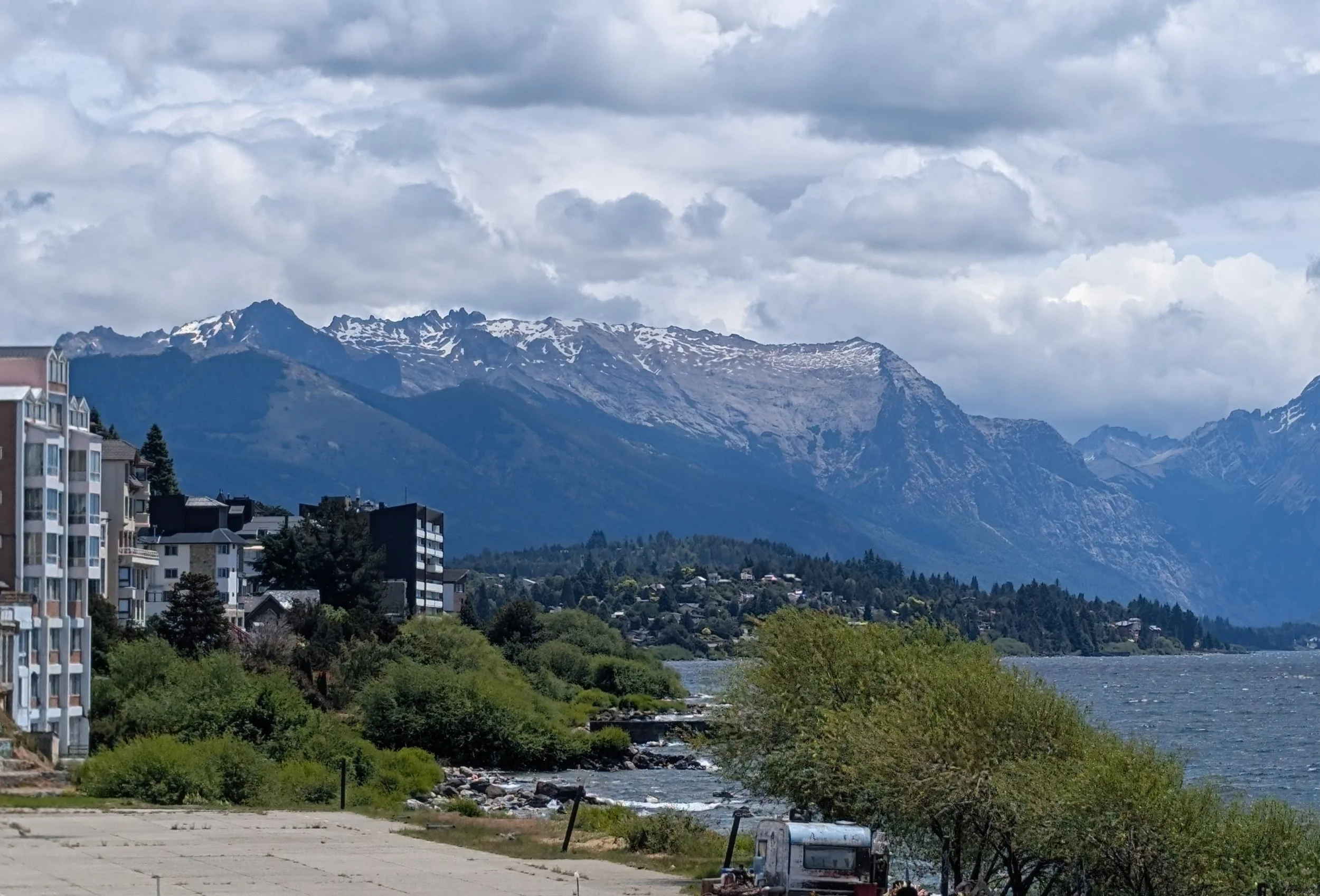
Bariloche - perched lakeside with the Andes as a backdrop
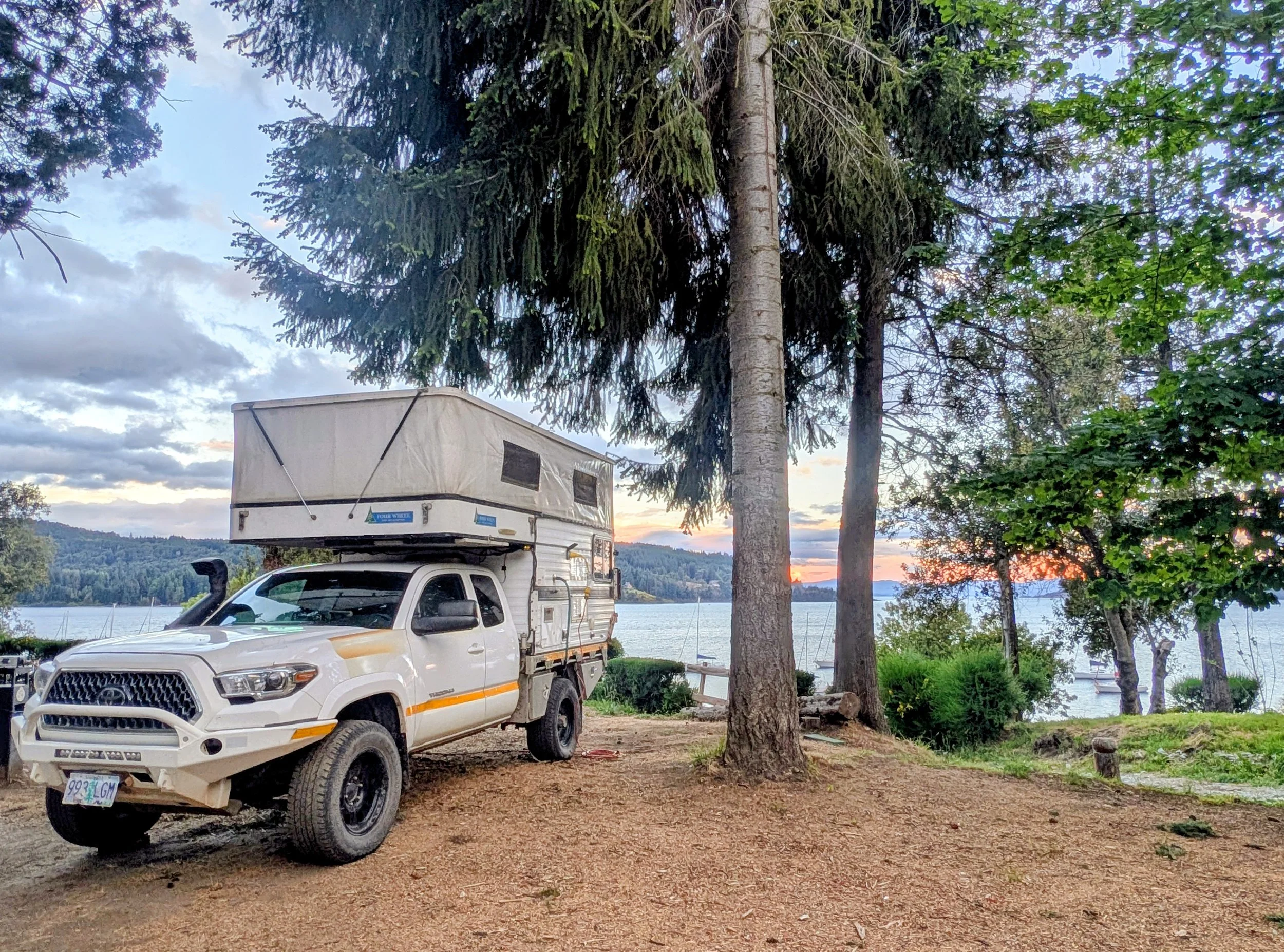
Our campground outside Bariloche
We were happy to satisfy our curiosity about what the famous Bariloche is like but did not find the town itself to be inspiring. The busy central area had several streets crowded with souvenir shops and (very) expensive cafes. It seemed that the charm of the town was more in its proximity to natural beauty than what the town itself had to offer. But, as we have said repeatedly, we are always happiest in the mountains and nature, away from people. So any review we give of a city has to be taken with that in mind. Also, we almost never stay long enough to scratch below the surface and find the unexpected and lovely surprises we know cities always have - somewhere.
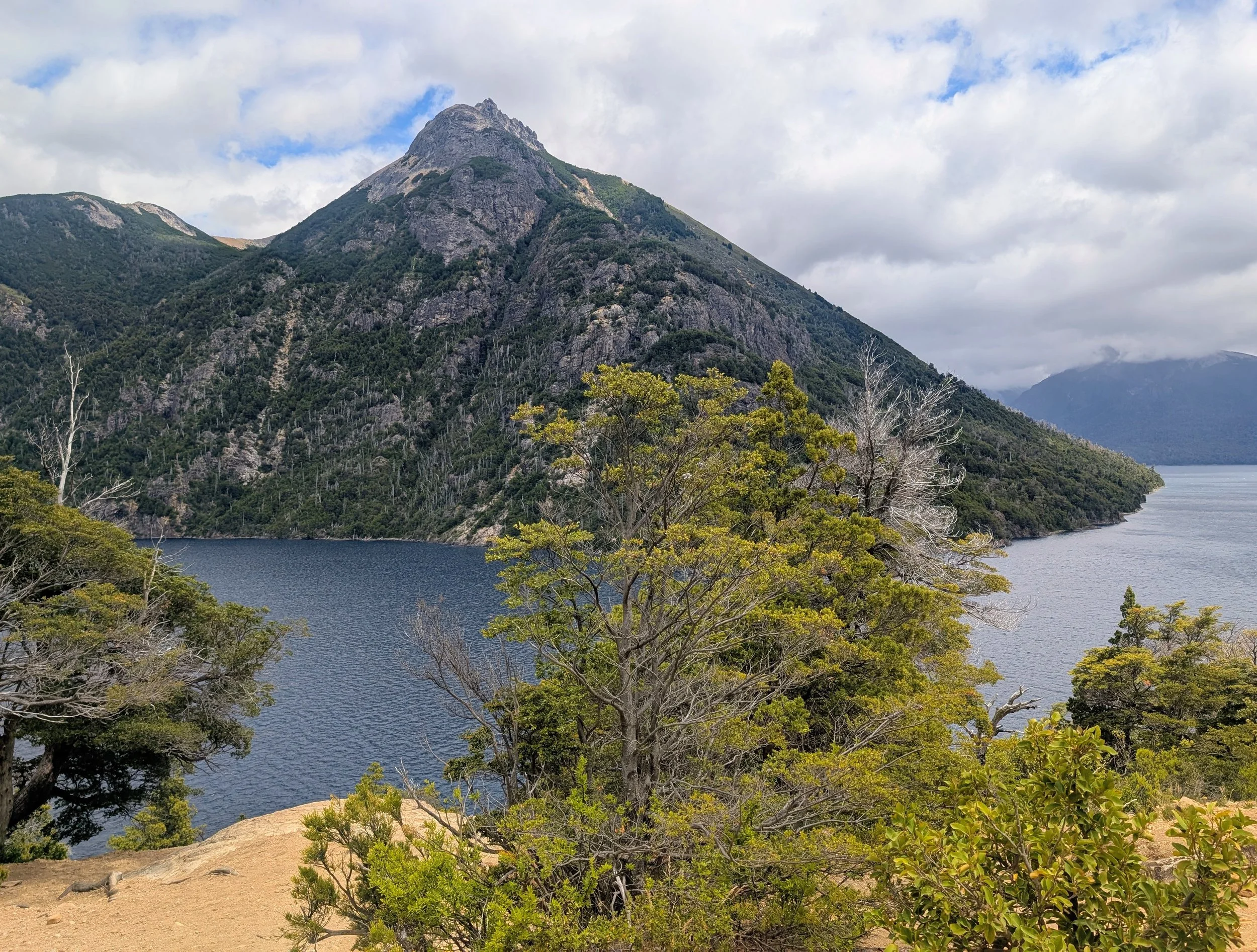
Our favorite thing we did in the area was to drive the Circuito Chico (Small Circuit) a 30 mile scenic loop outside offering beautiful forested hikes and stunning views of the Nahuel Huapi and Moreno lakes, and the Andes
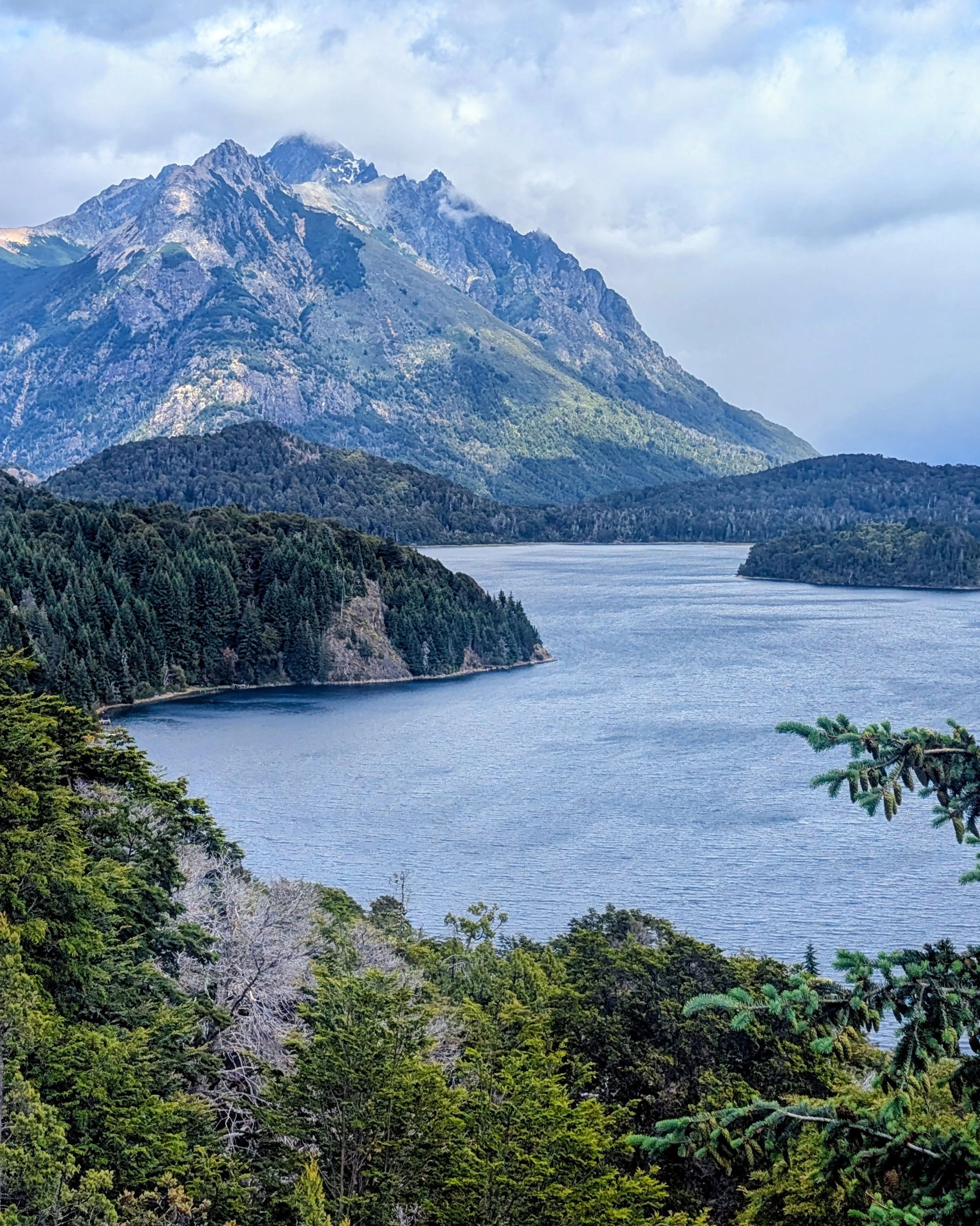
Mountain and lake views along the Circuito Chico
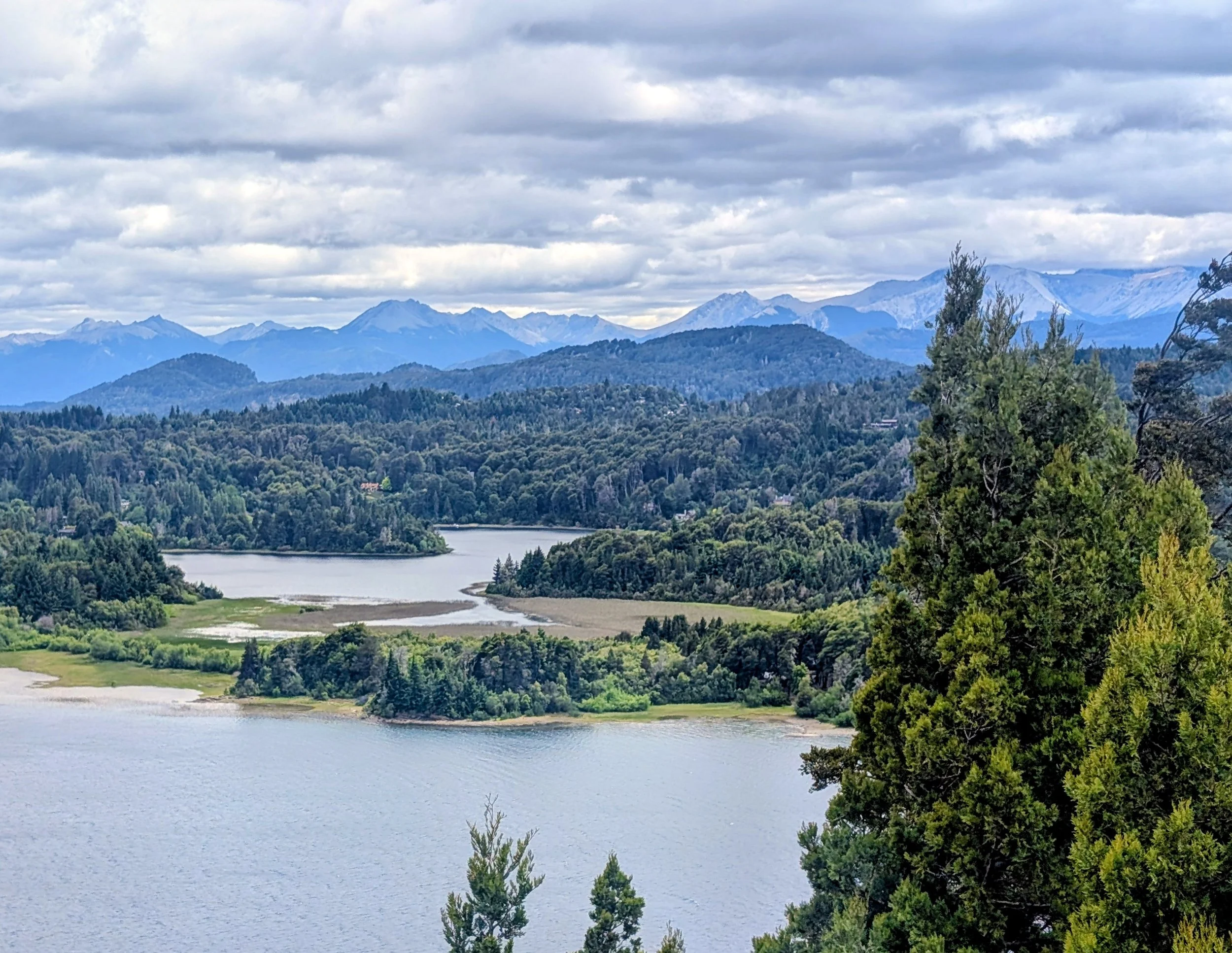
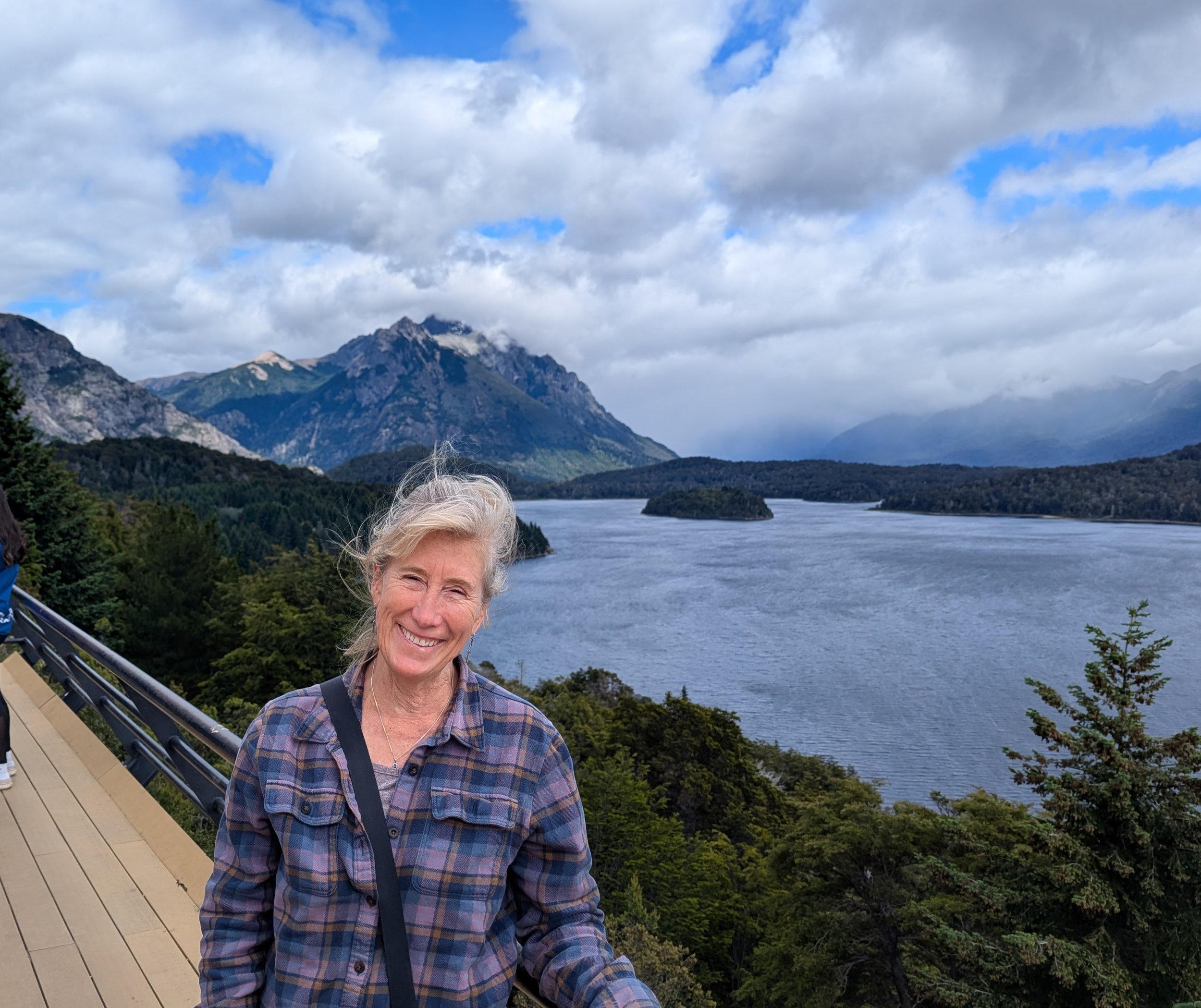
View from a three mile hike along the way
With Andy’s love of trees, we also sought out the arrayanes - a South American myrtle known for their color and twisted trunks. We thought the easy four mile Sendero de los Arrayanes along the Circuito Chico gave us the best experience with these gnarly giants.
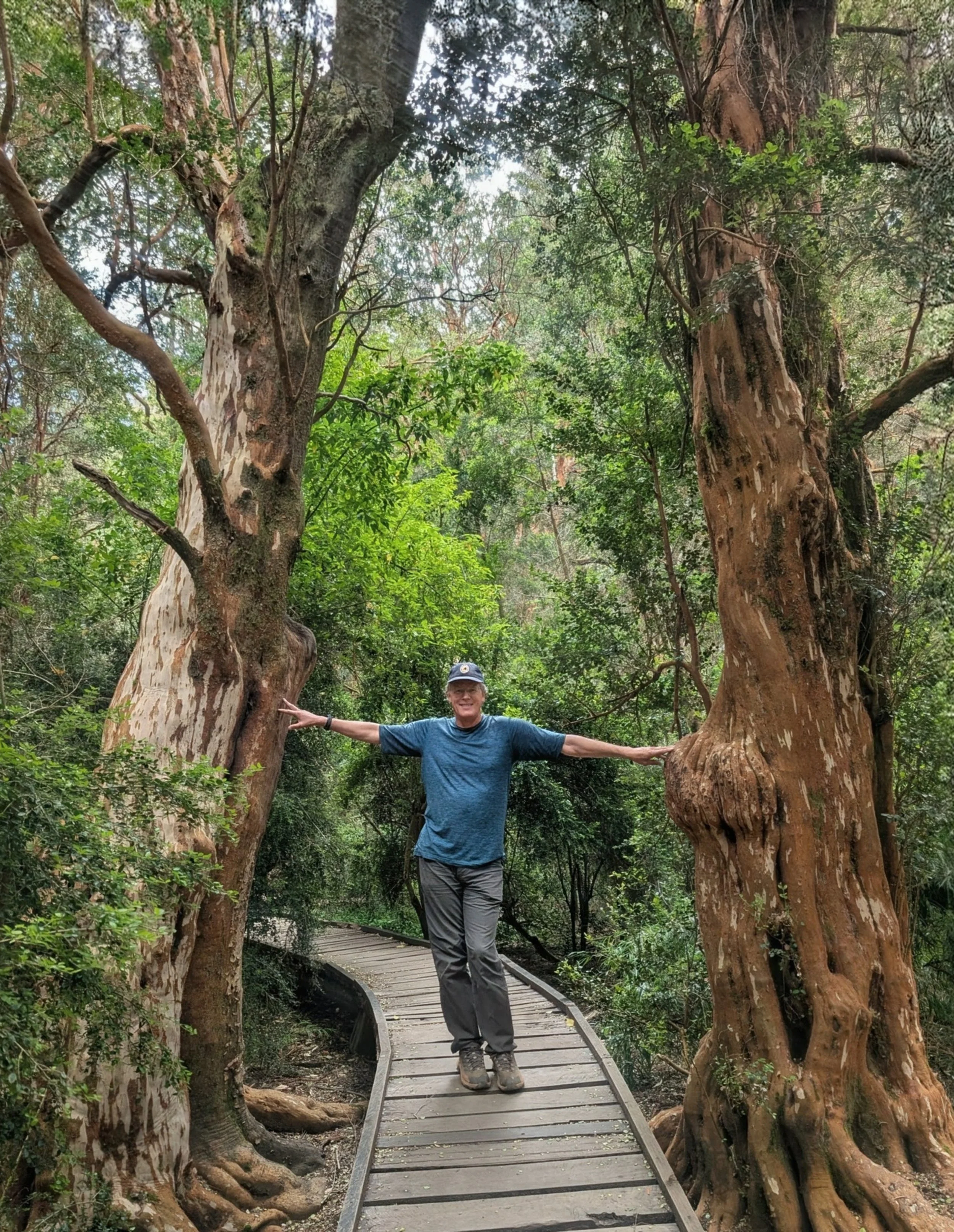
Andy and the arrayanes
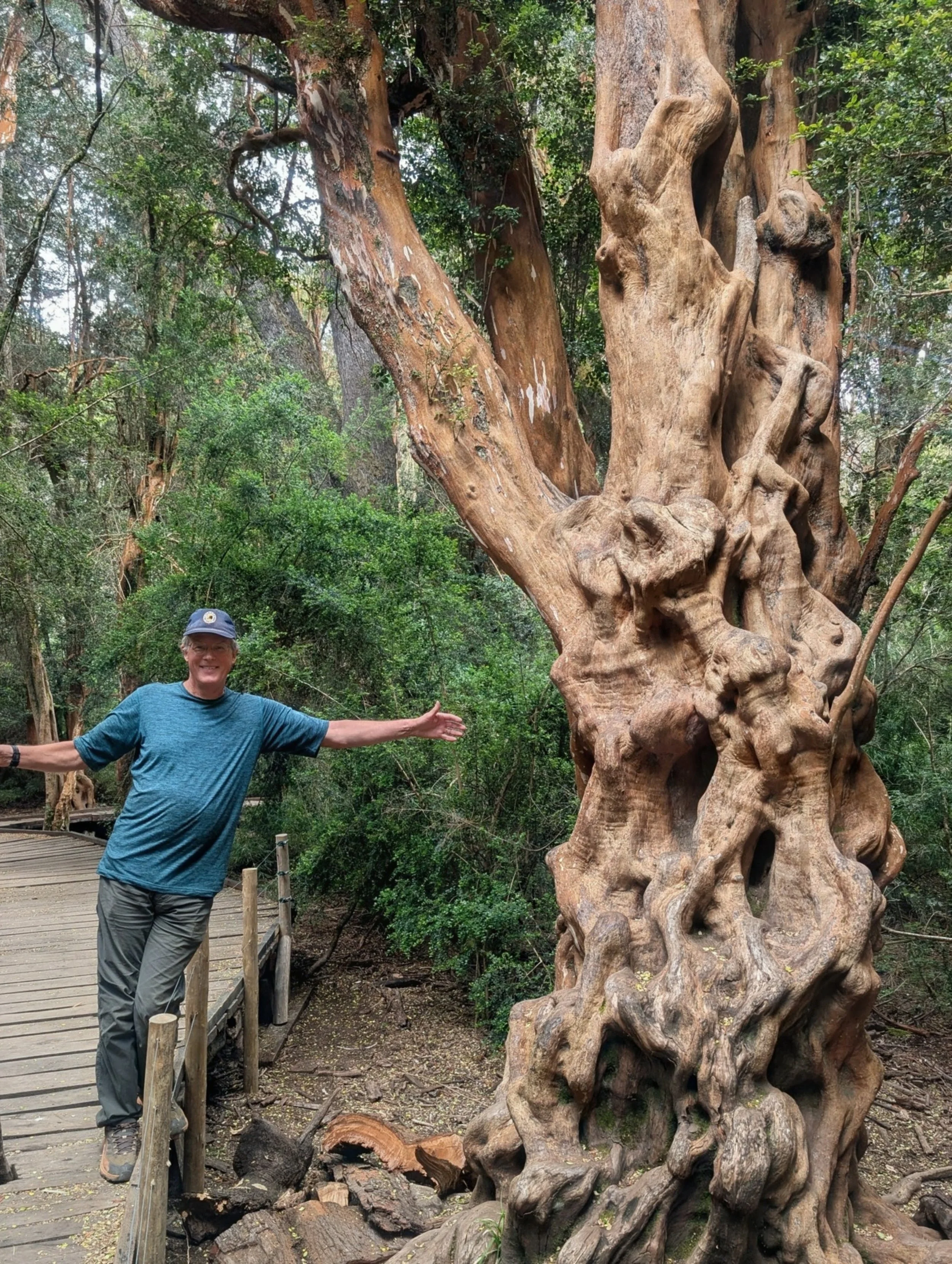
We also did a fourteen mile out and back hike out of Villa Angostura to a Bosque de los Arrayanes, but we thought the trees were smaller and fewer than those on the hike off of the Circuito Chico.
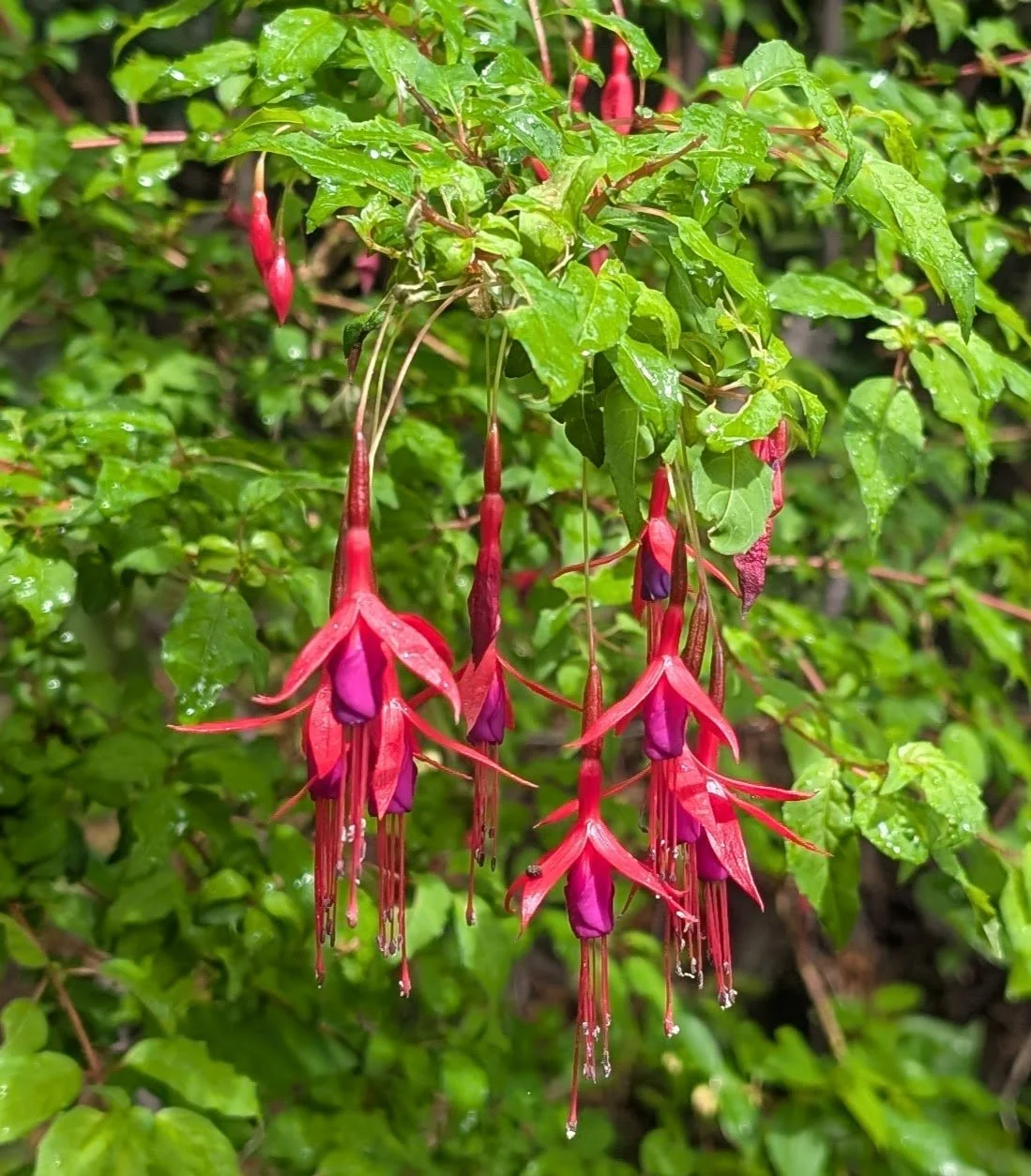
Dawn is loving seeing wild fuchsias in bloom
And then it was time to return to Chile, we were starting to feel the pull of Patagonia and its iconic mountains and were excited to head further south to explore the region from both sides of the border.
Part 3 - December 14 - January 7
A Patagonian Family Christmas
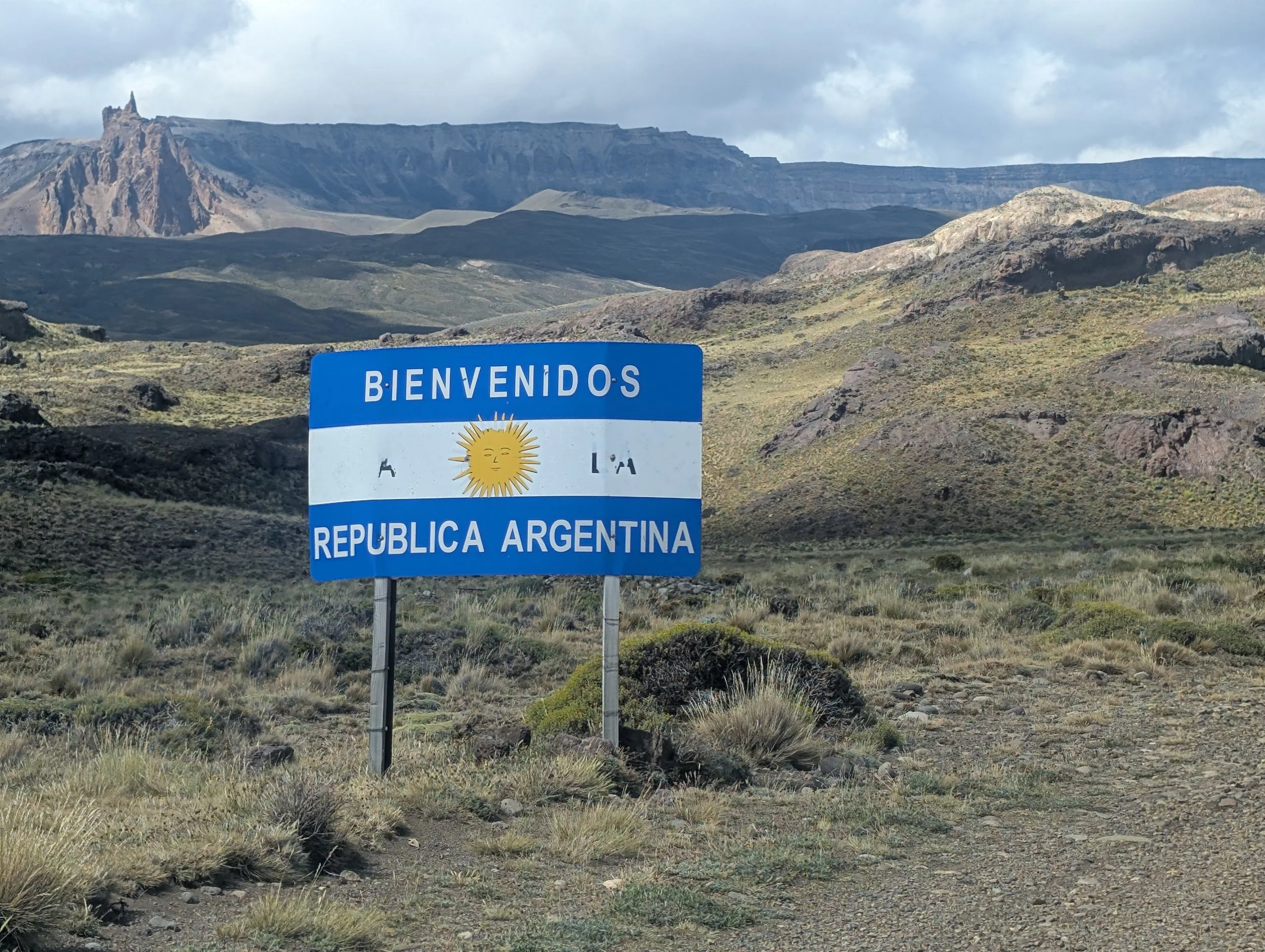
Our third entry into Argentina was at the tiny Paso Roballos crossing
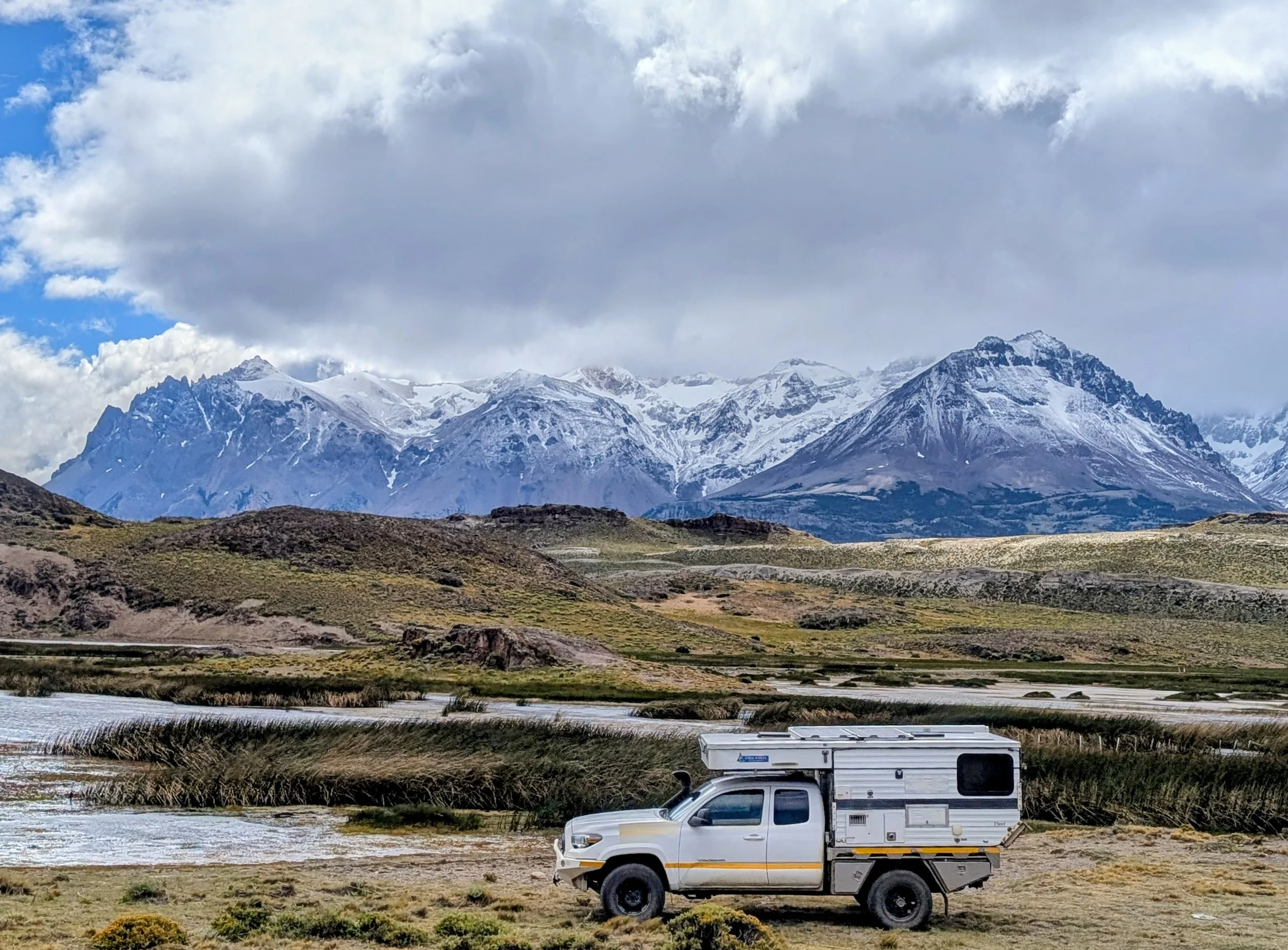
Starting to feel more like the iconic Patagonia for us - windswept bleak landscapes with snow capped mountains
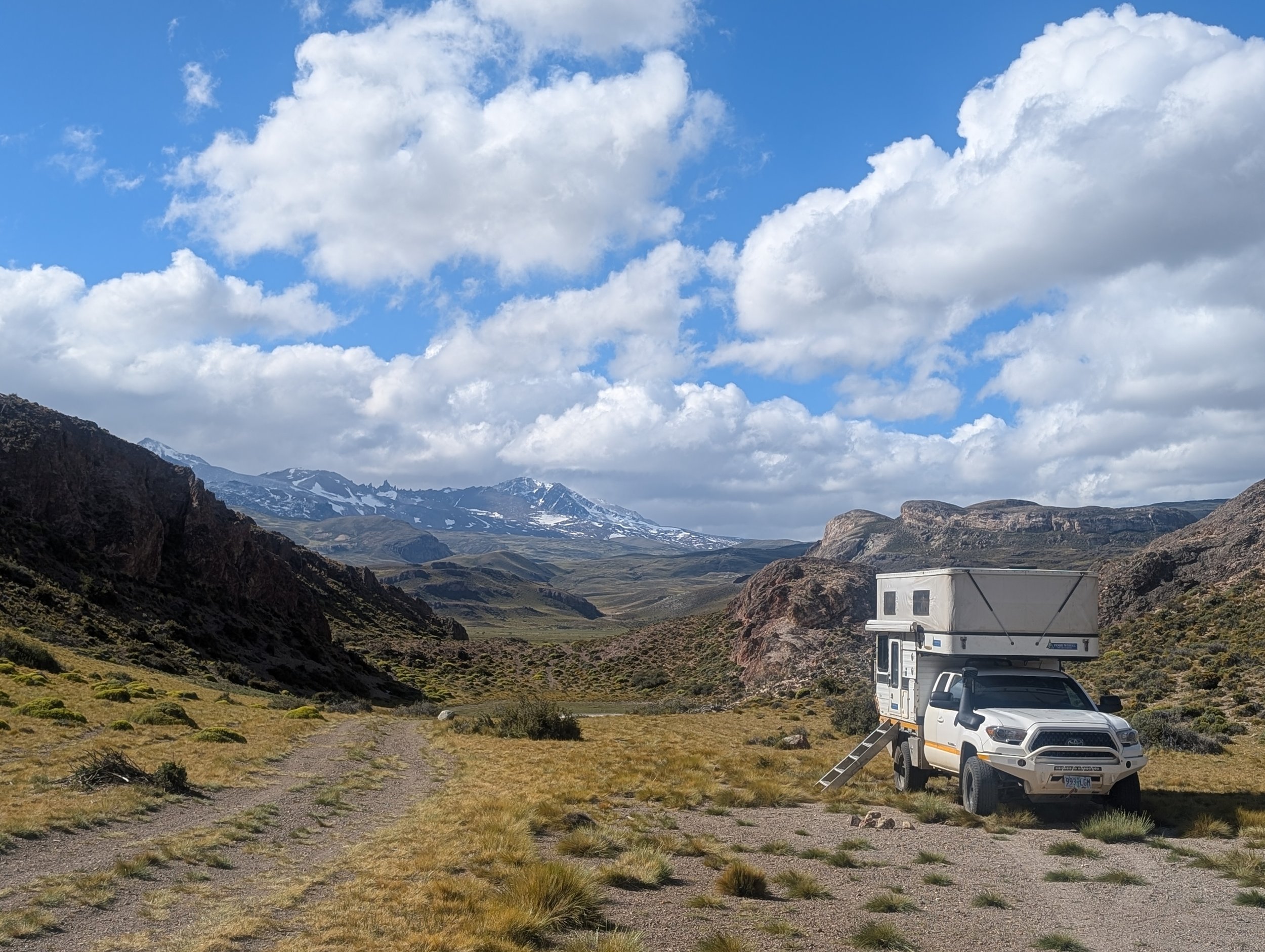
Camped in a side canyon trying to escape the wind - it didn’t work, one of our worst nights of sleep to date
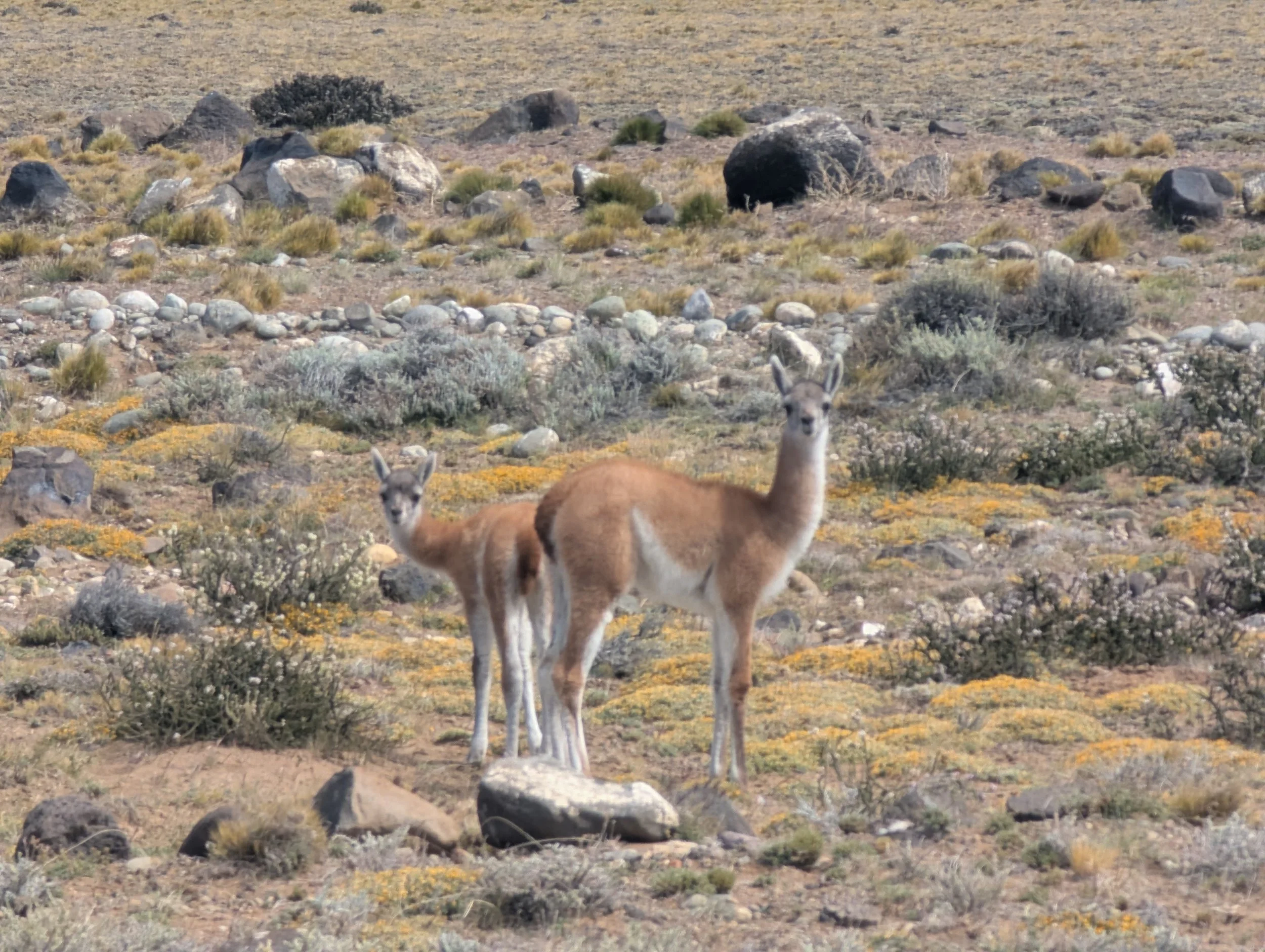
Roadside guanacos
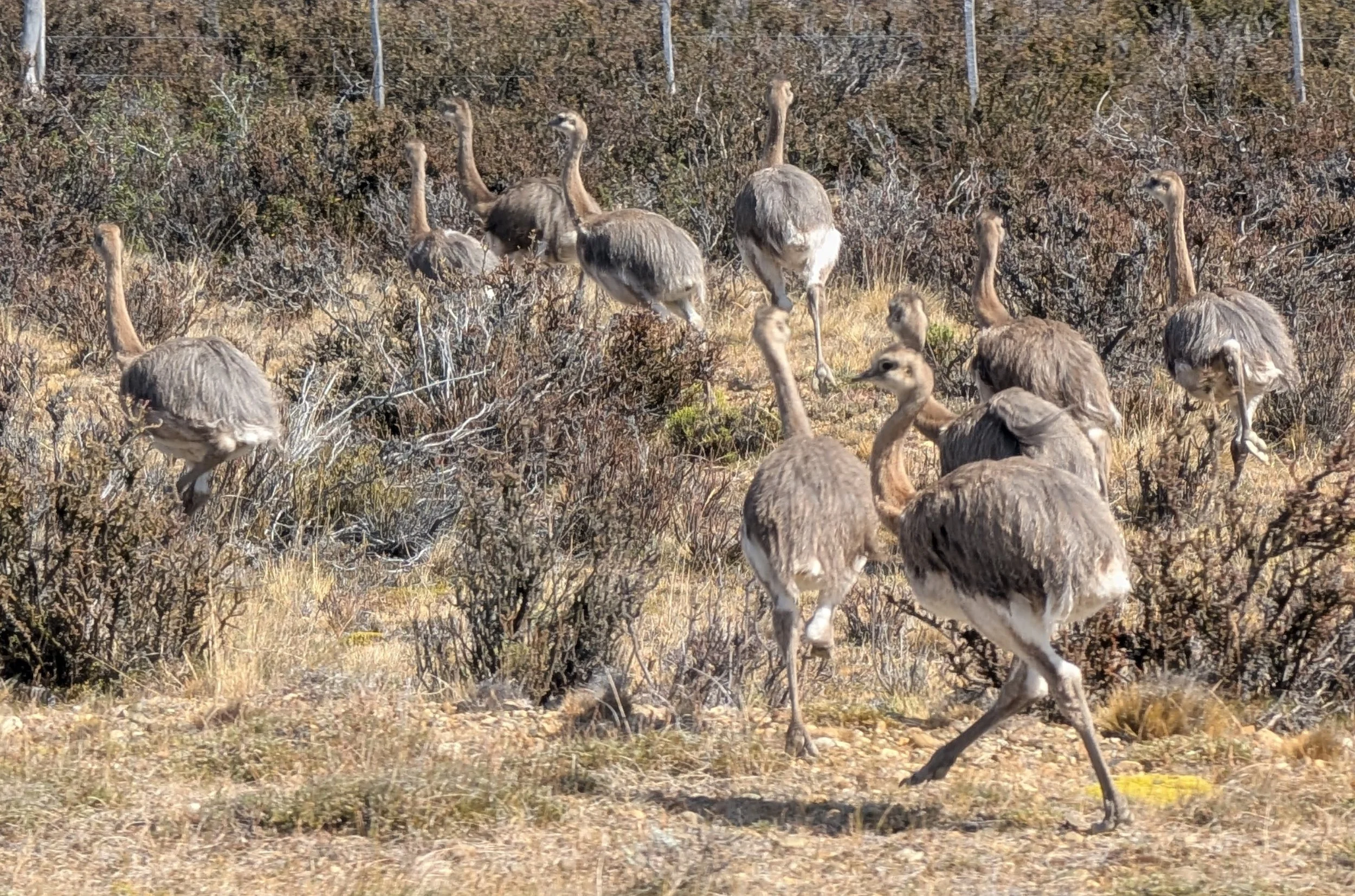
Roadside rheas - South American ostriches
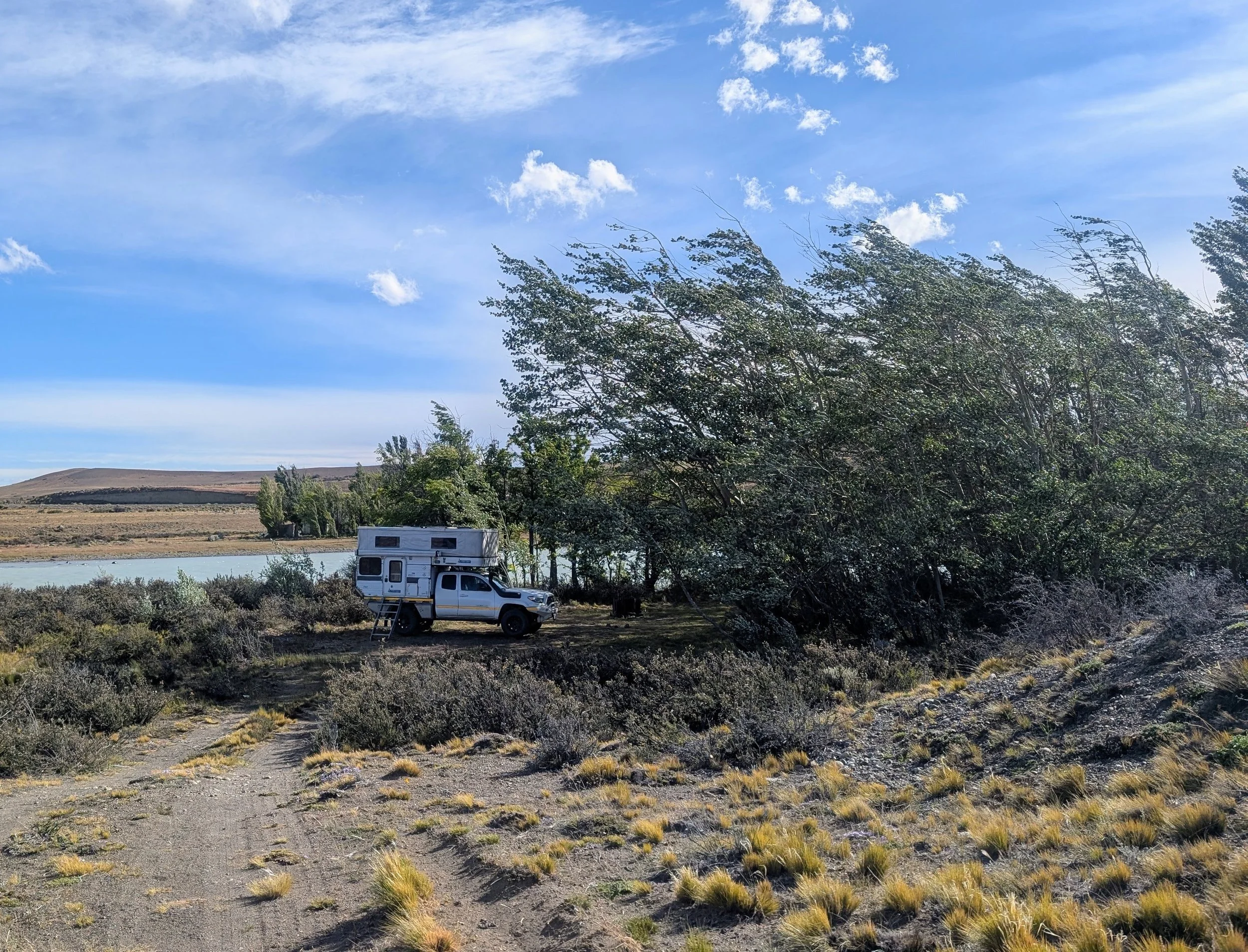
Another, more successful attempt to get out of the overnight wind - excellent grove of trees as a windblock
We quickly made our way to El Calafate where we were abandoning the truck for a bit. This is where we indulgently abandon our normal format and cover our Patagonian family Christmas. We had flown our three children and two of their partners to Buenos Aires to do a two week Patagonia tour together. Since our truck cannot transport seven people, we were switching to planes and buses. We chose an itinerary that gave everyone the highlights of Argentinian and Patagonia - three days in Buenos Aires, flying to El Calafate, for three days (we normally would not have spent that long there but it included Christmas day) then taking the bus to El Chalten for three days, returning by bus to El Calafate then flying down to Ushuaia.
We apologize to our readers who are reading for overlanding content or trip planning tips - the next two weeks are just us loving being with family and posting our favorite moments. The only downside to living life on the road as we have been is missing these beautiful people. The two weeks we spent with them was filled with joy.
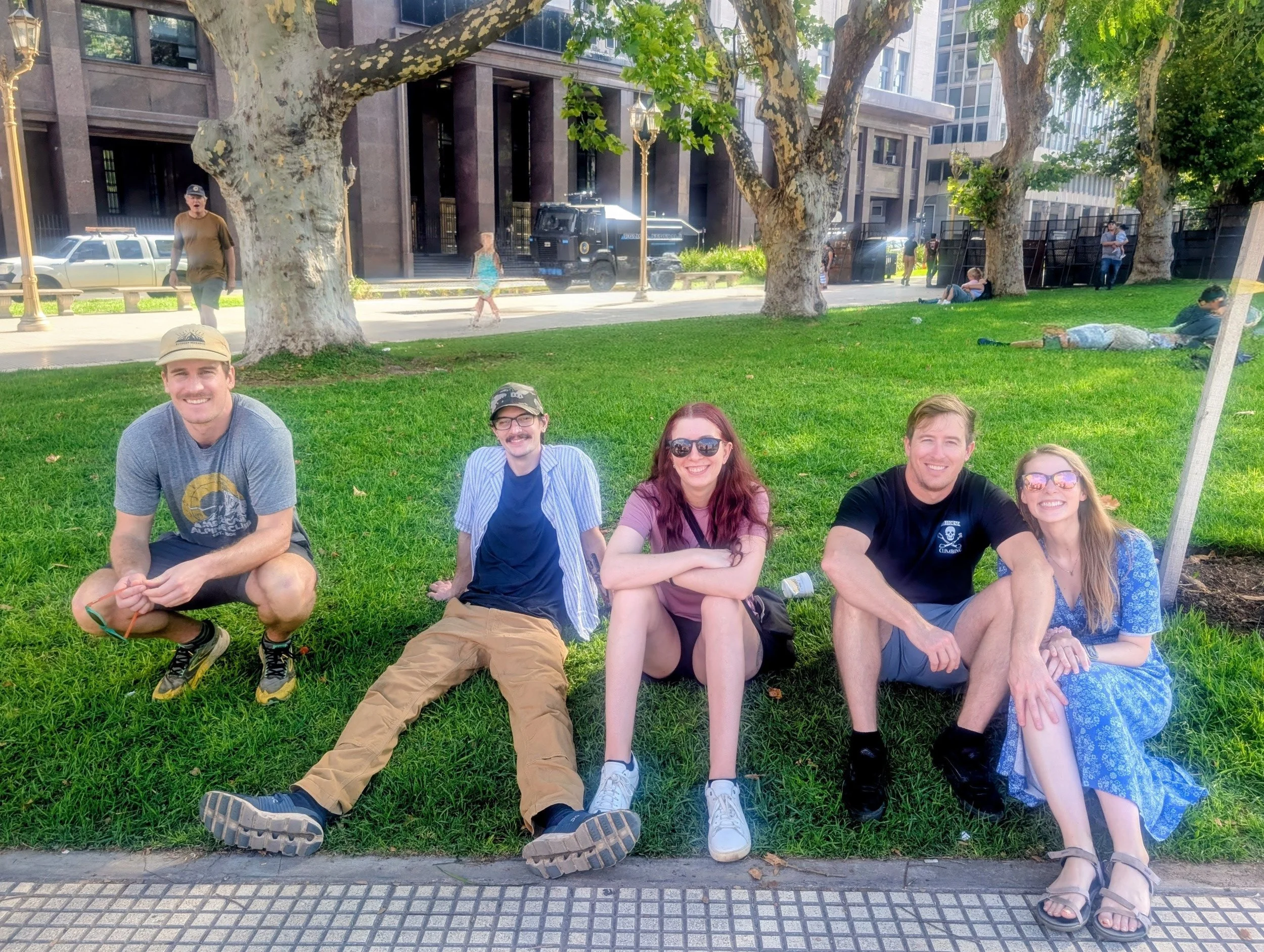
Meeting up with the next generation in Buenos Aires - Trevor, Nick, Claire, Nicholas, Medora
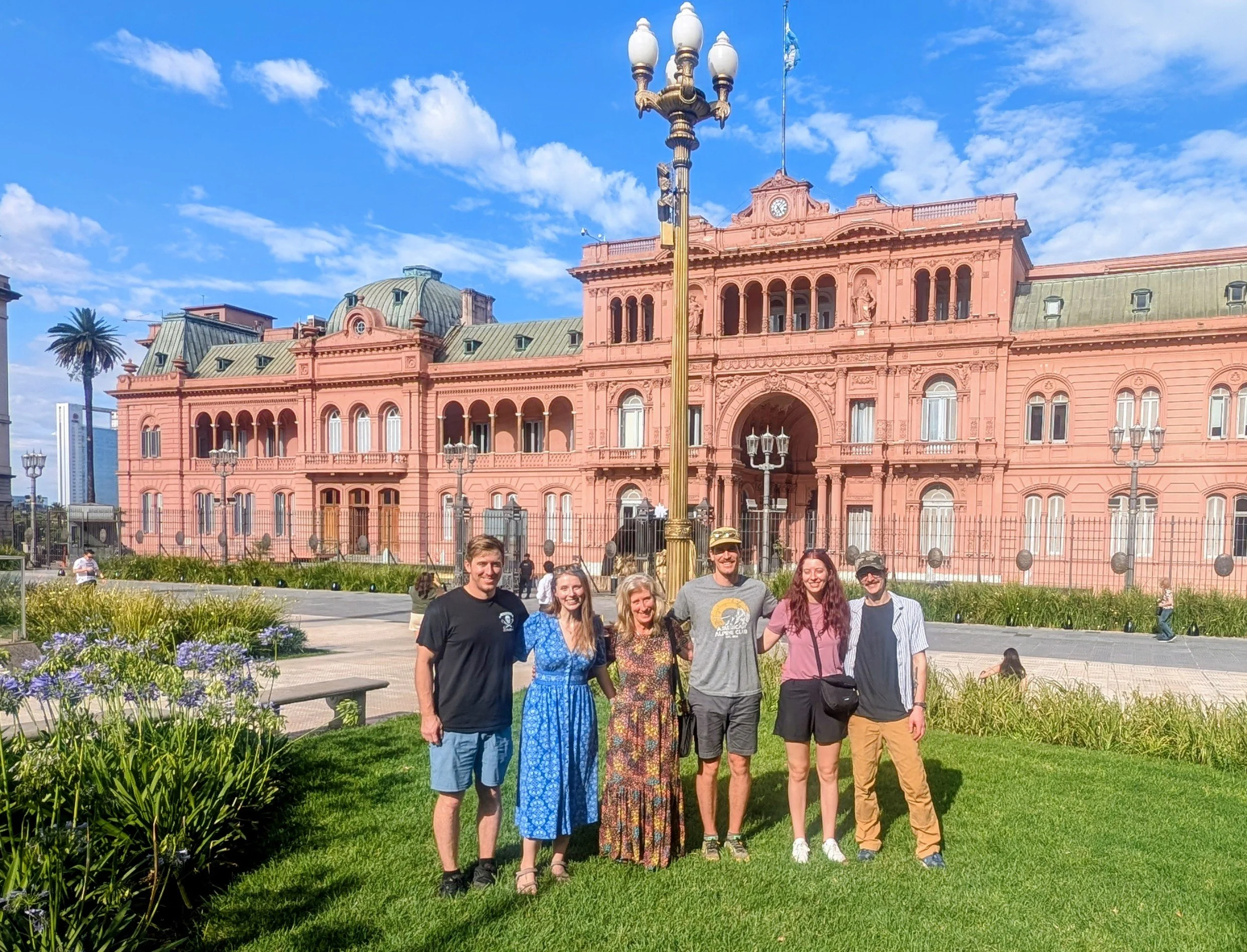
Exploring the city center
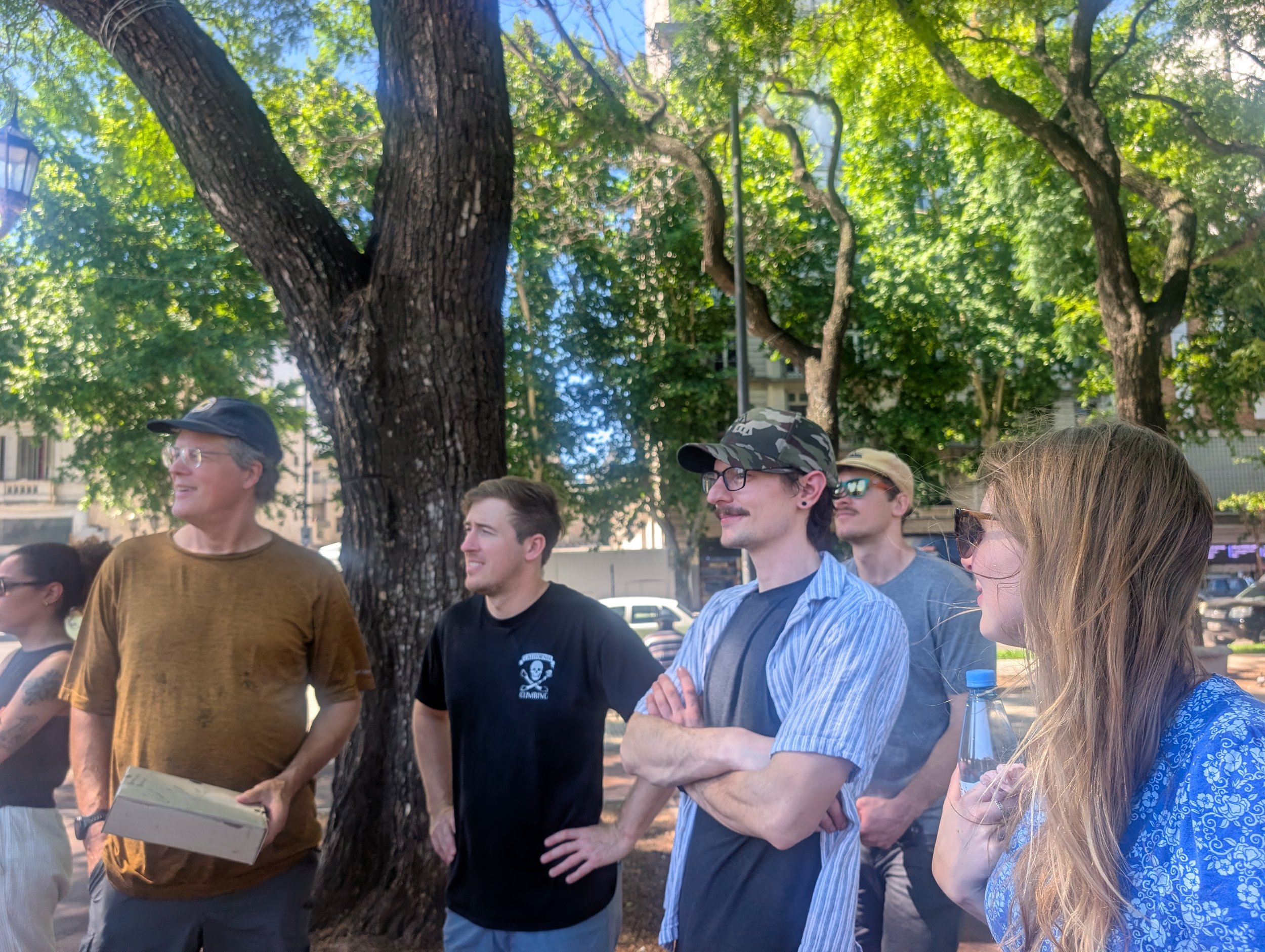
Giving full attention to our walking tour guide
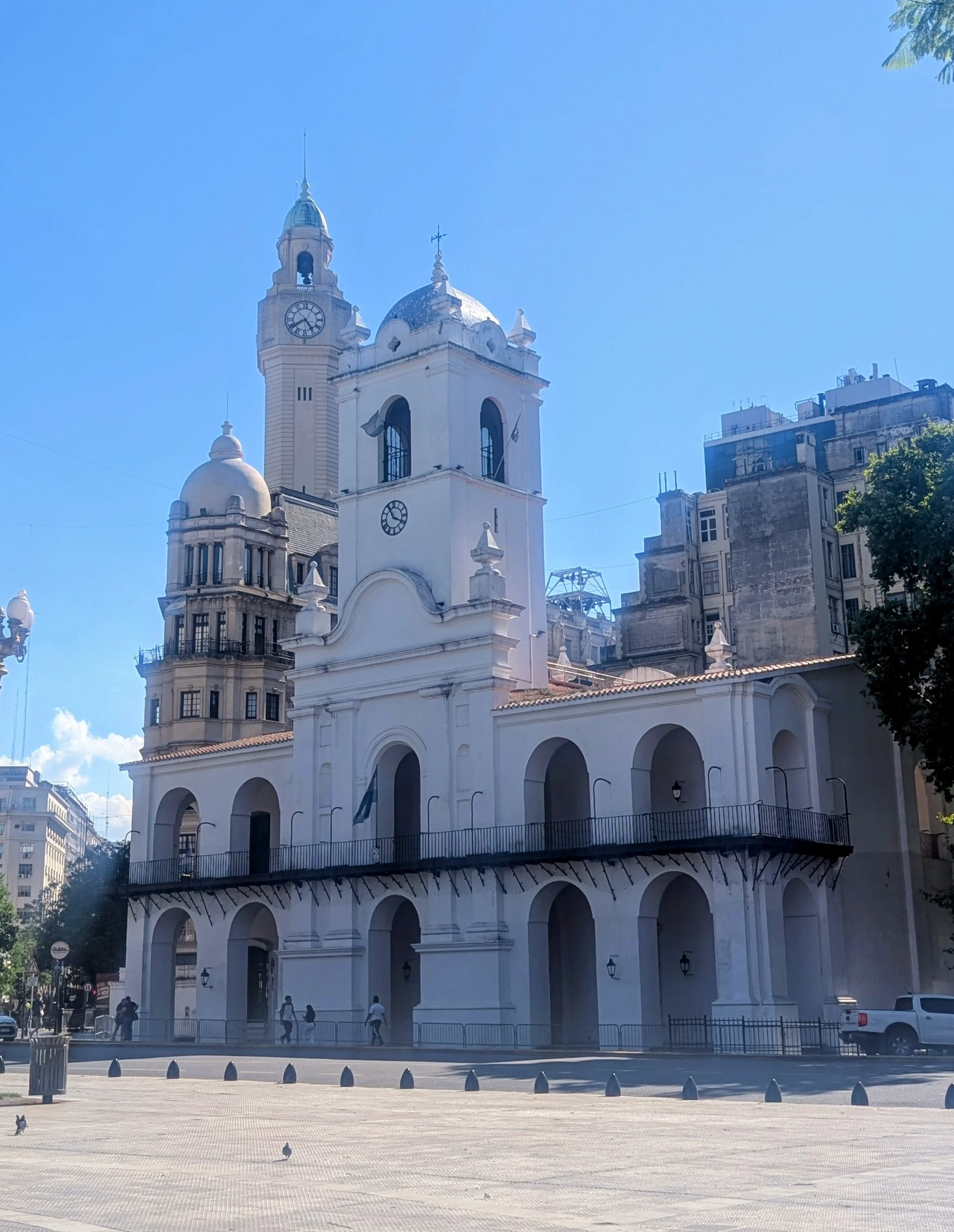
Beautiful buildings around the Plaza de Mayo, the main city square in Buenos Aires, formed in 1884
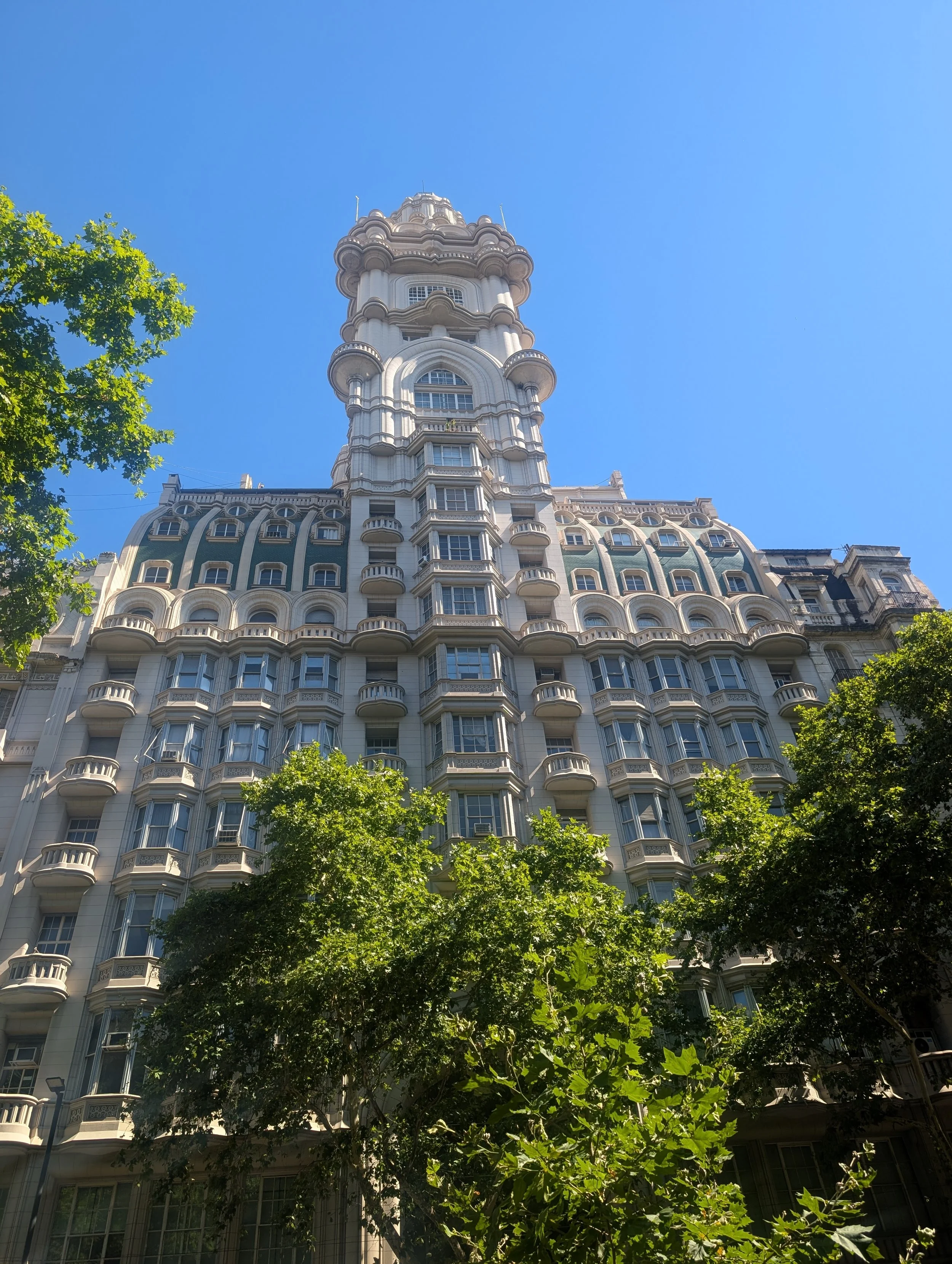
Building inspired by Dante’s Inferno - with the bottom level being hell, the middle purgatory and the top heaven
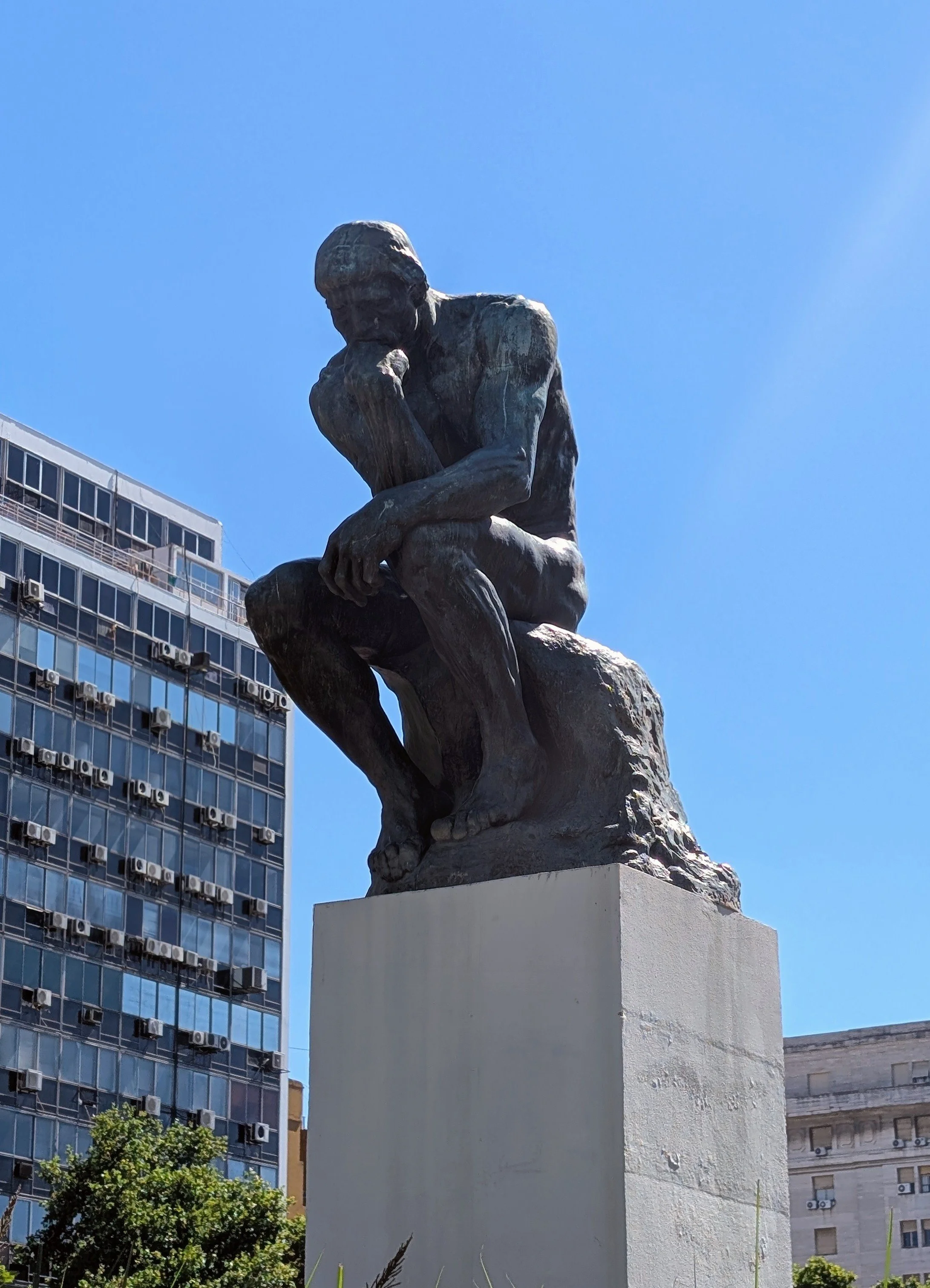
Auguste Rodin’s “The Thinker” cast authorized by the artist and brought to Buenos Aires in 1907
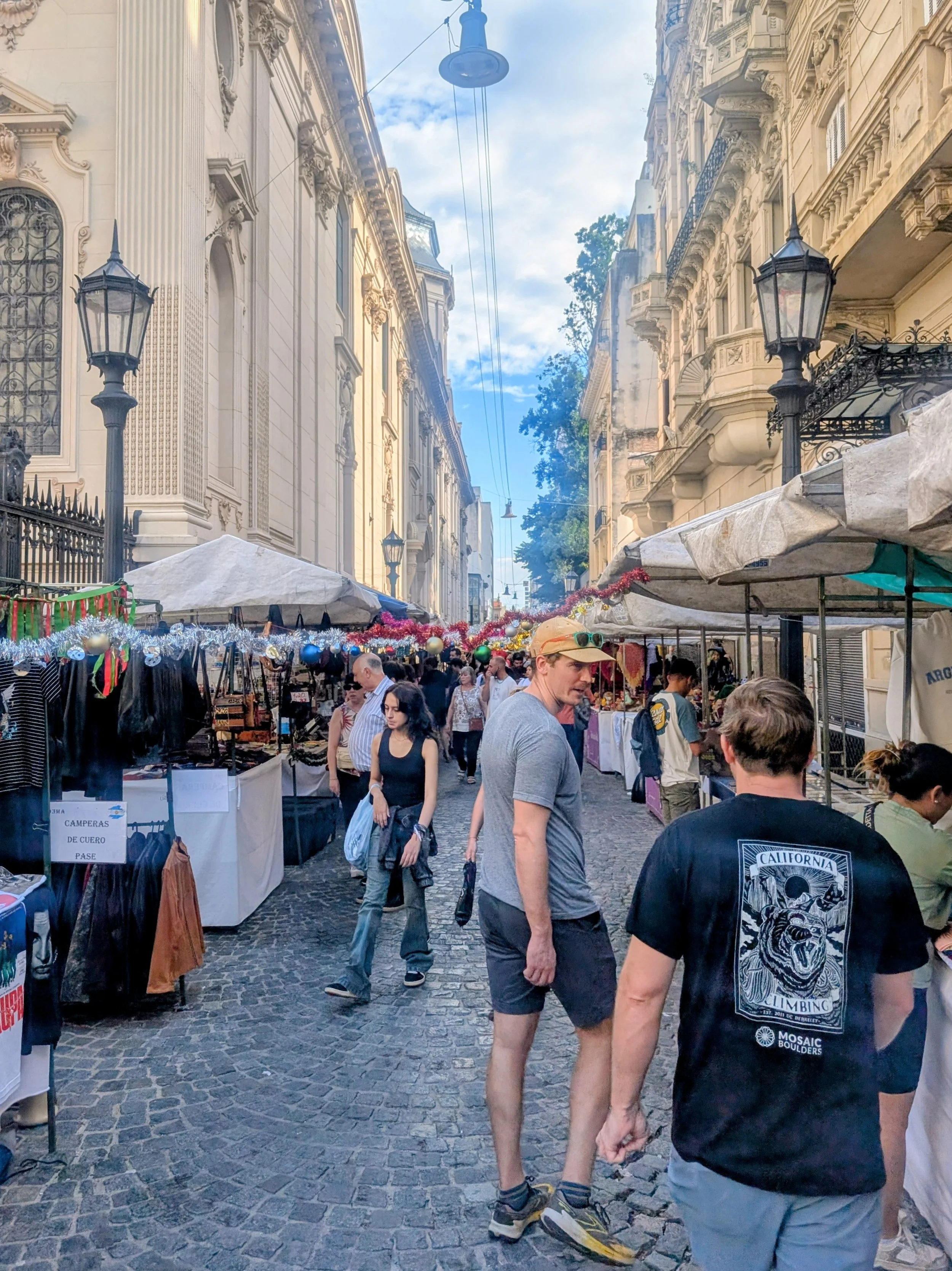
Wandering the cobbled old streets - found a street fair
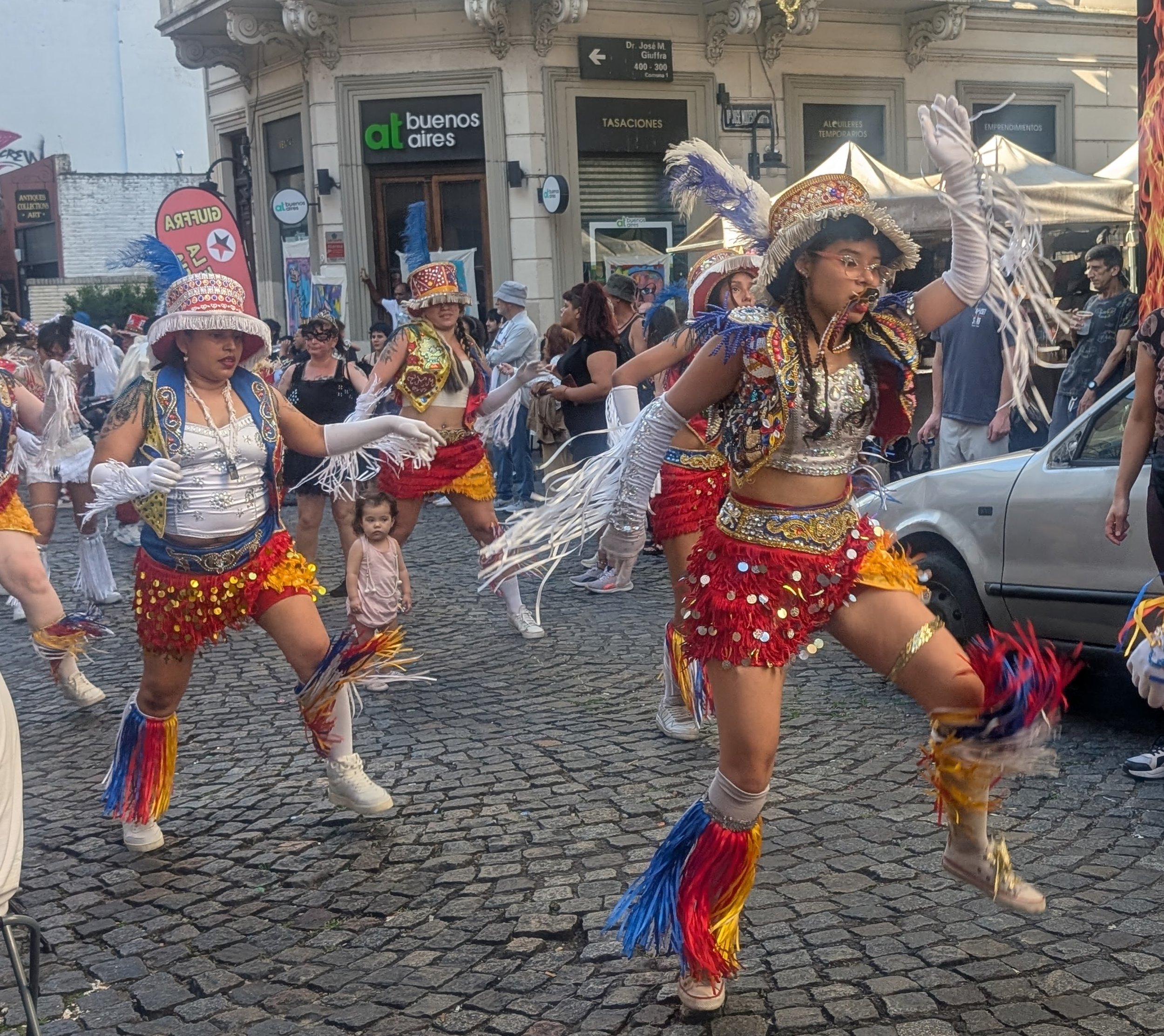
And a pre-Carnaval parade
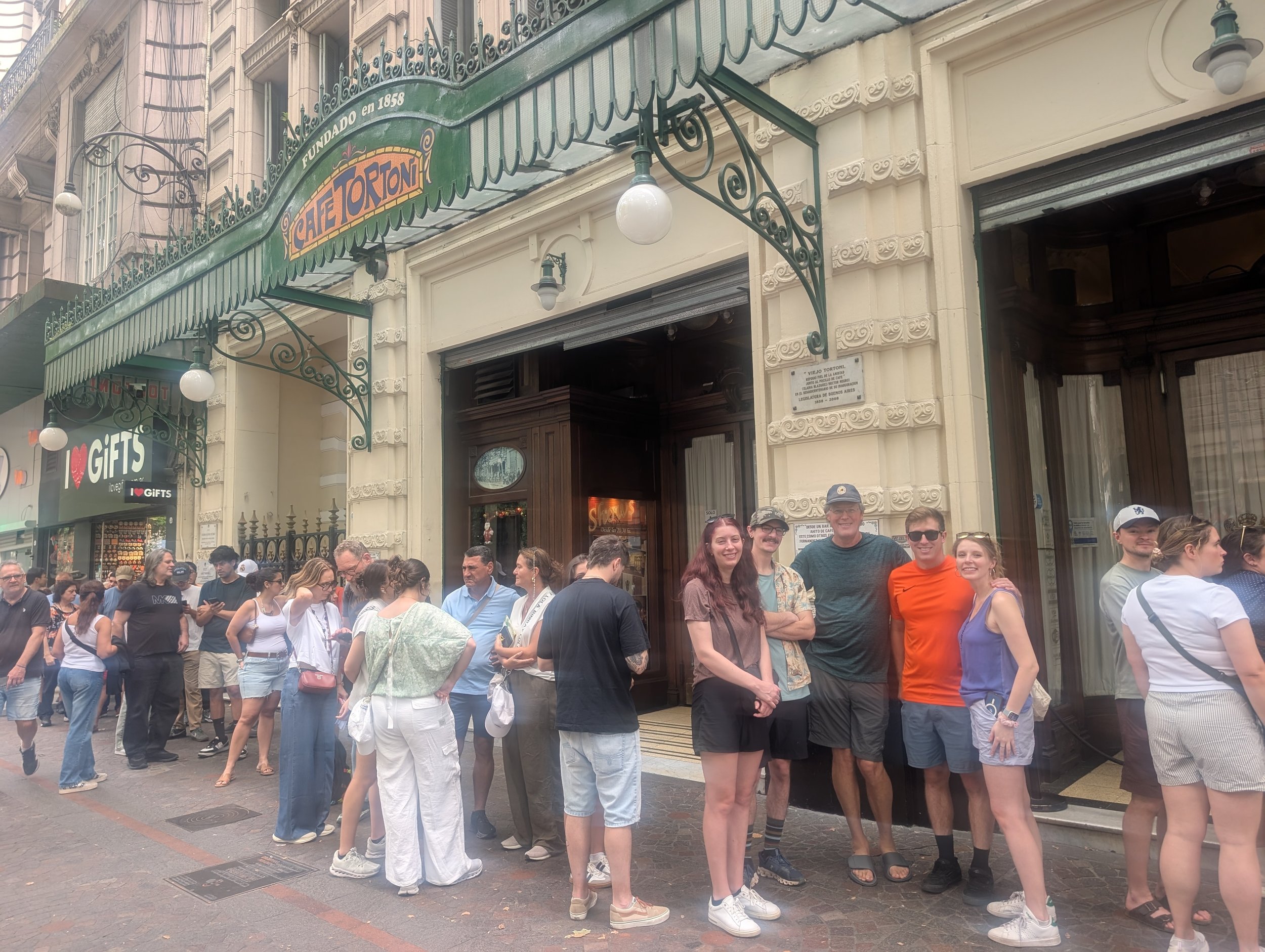
Standing in line for morning coffee and snack at the oldest cafe in the city - Cafe Tortoni. It happened to be across the street from our Airbnb apartment and it took us a few days to figure out why there was always a line out front.
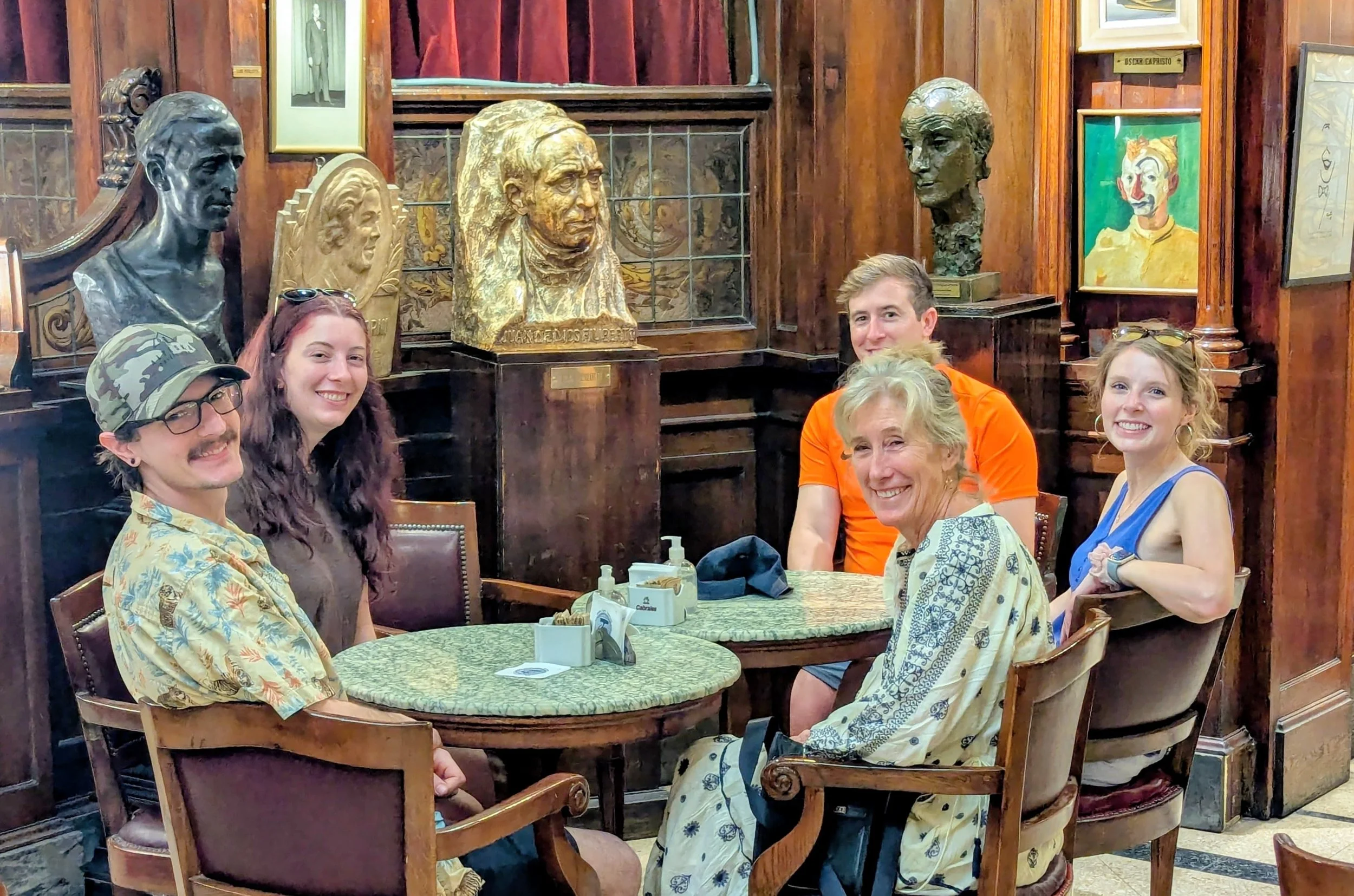
We felt like we were eating in a history museum
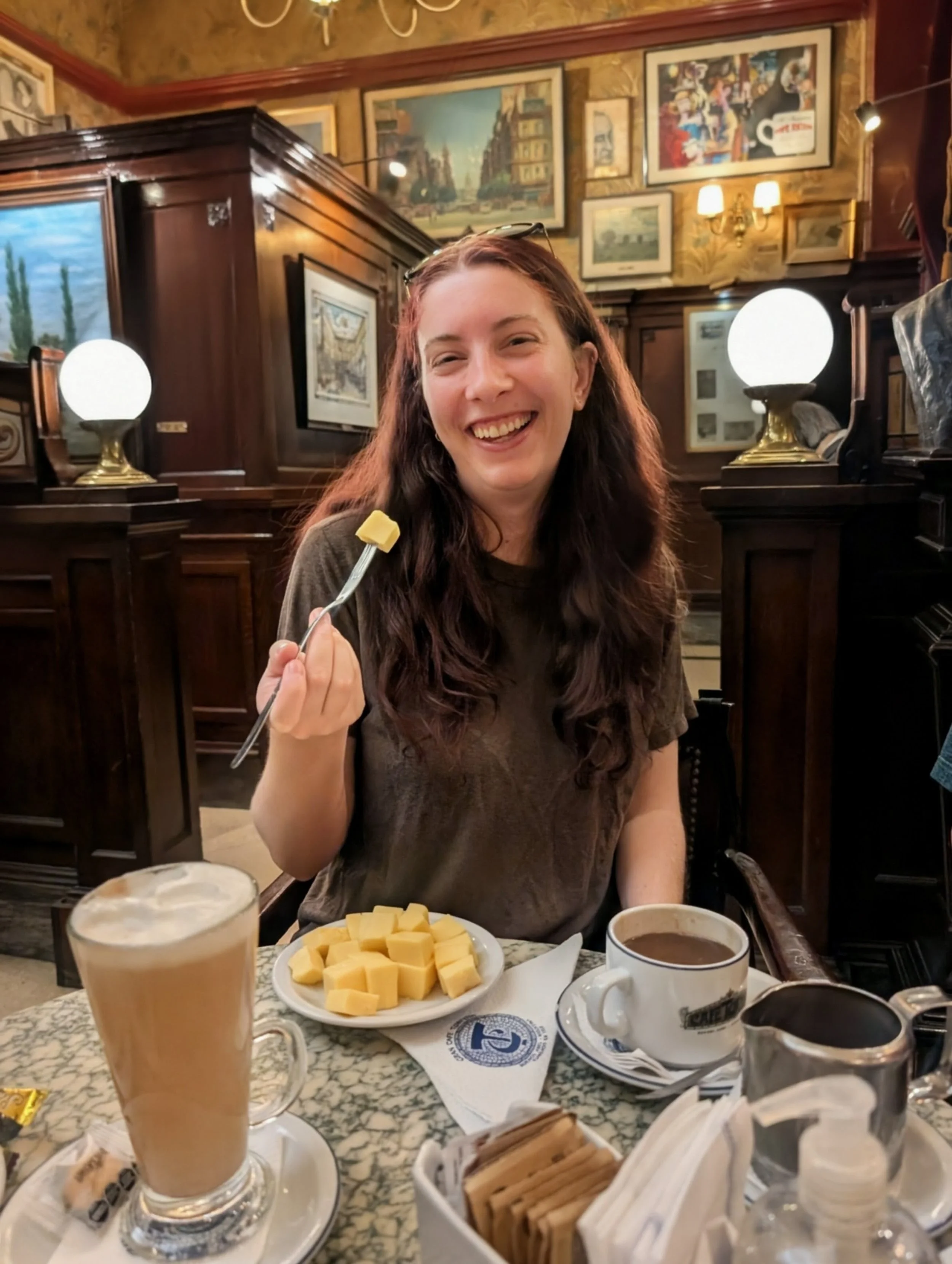
Our daughter Claire’s first time ordering food in Argentina - she thought “un plato de queso” would be interesting. It was definitely as described.
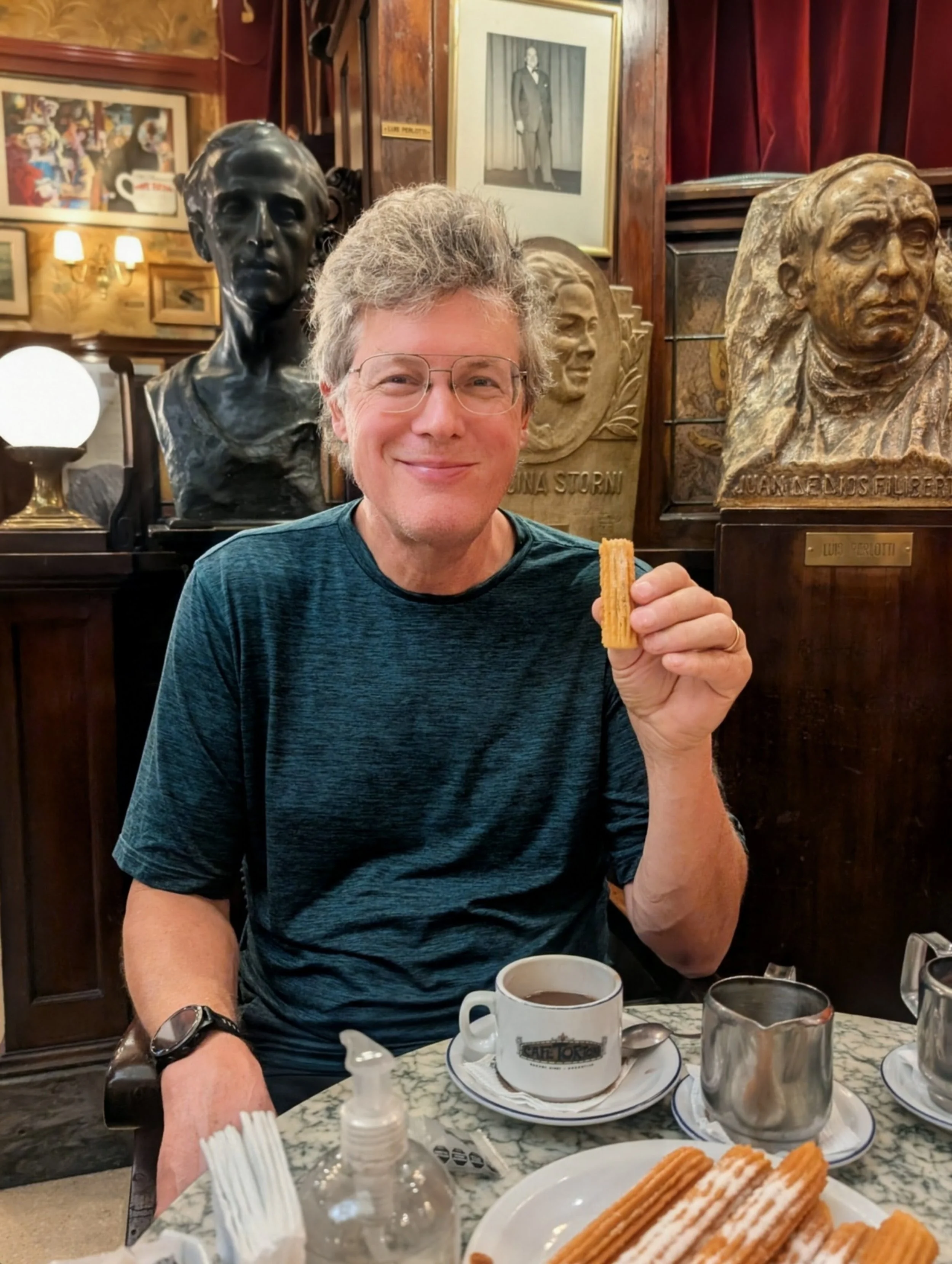
Andy was all about the churros with chocolate dipping sauce
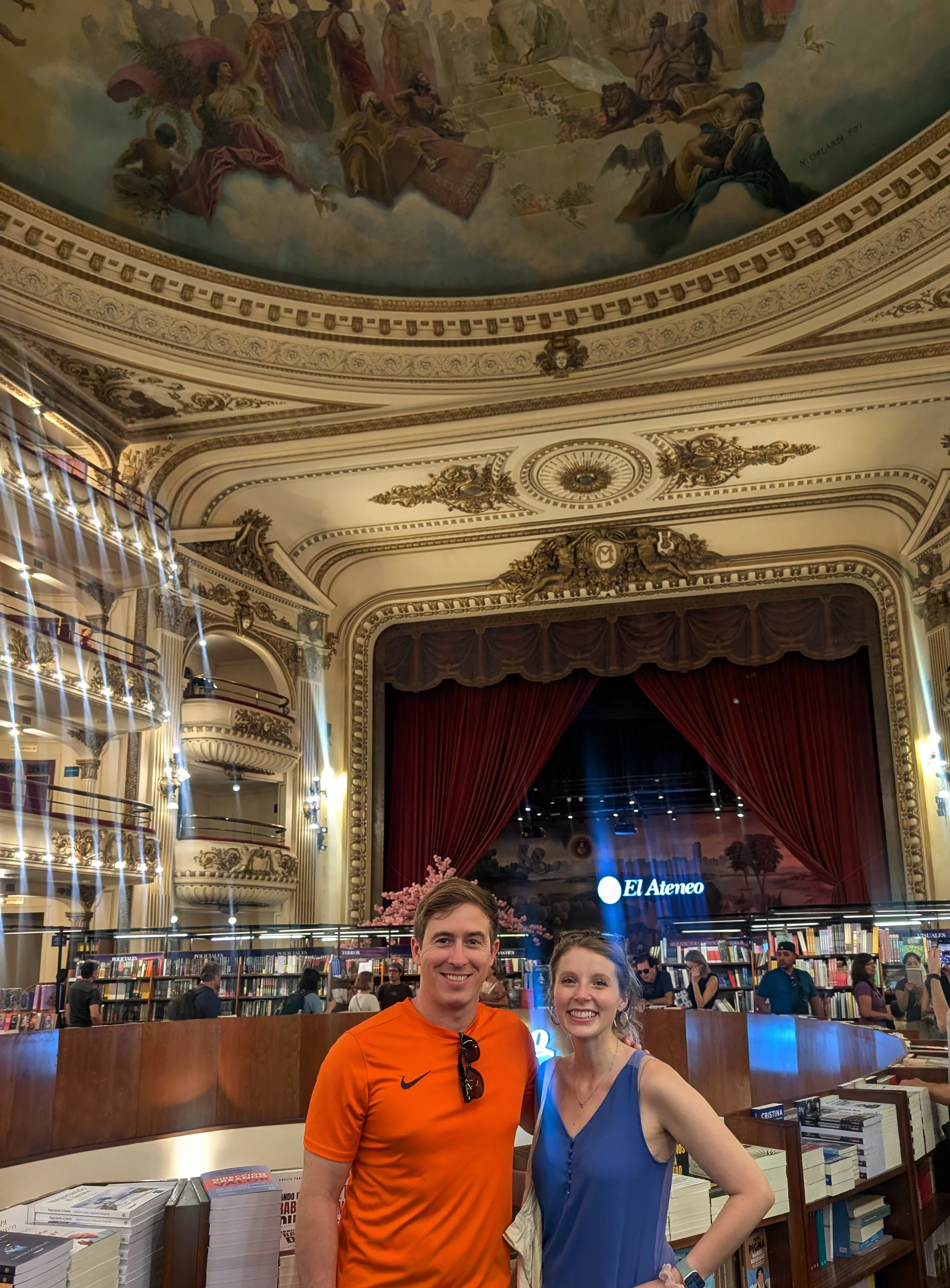
Our oldest son Nicholas and his girlfriend Medora in El Ateneo - what National Geographic designated as “the world’s most beautiful book store” - spread across an old theater
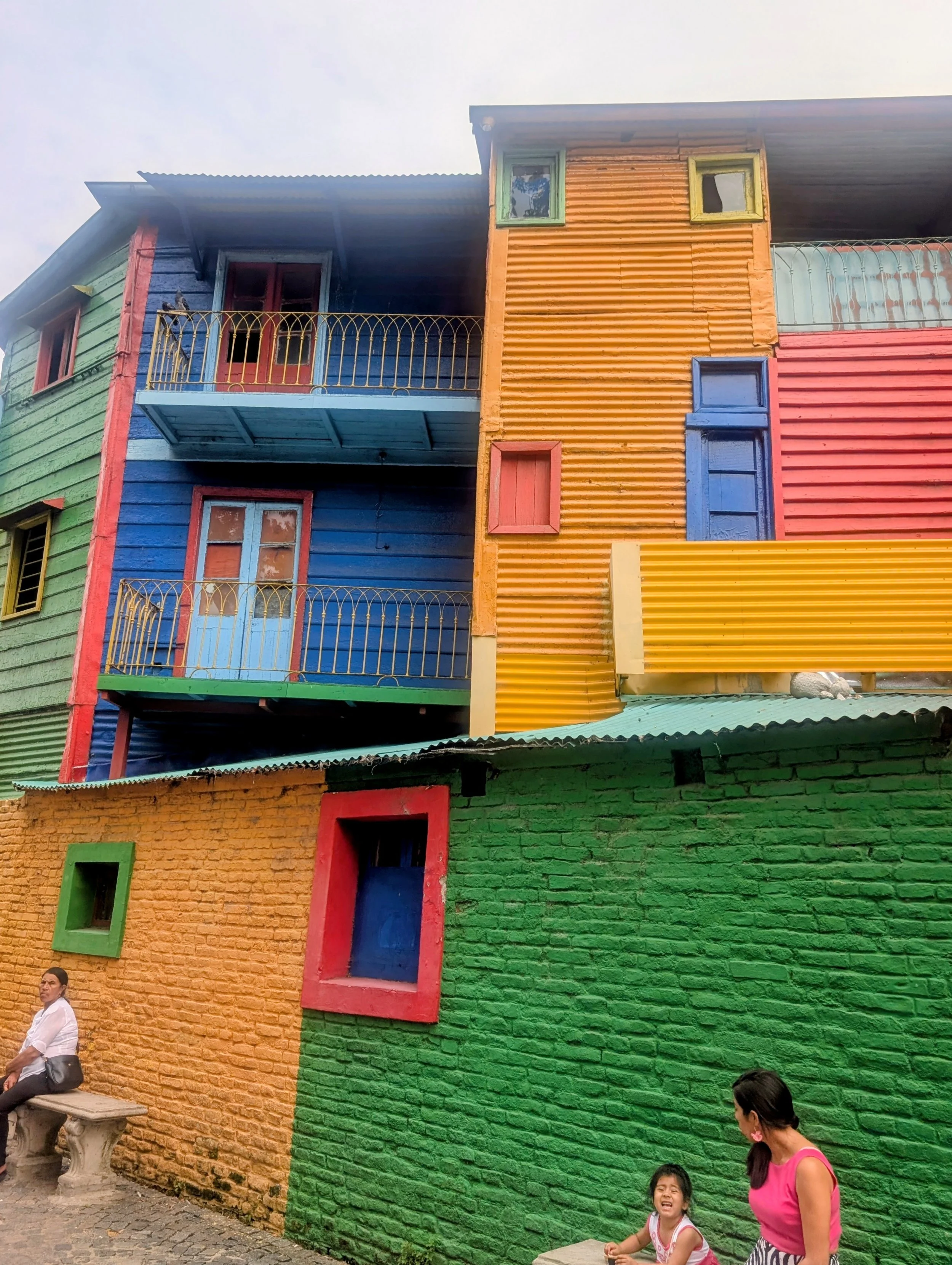
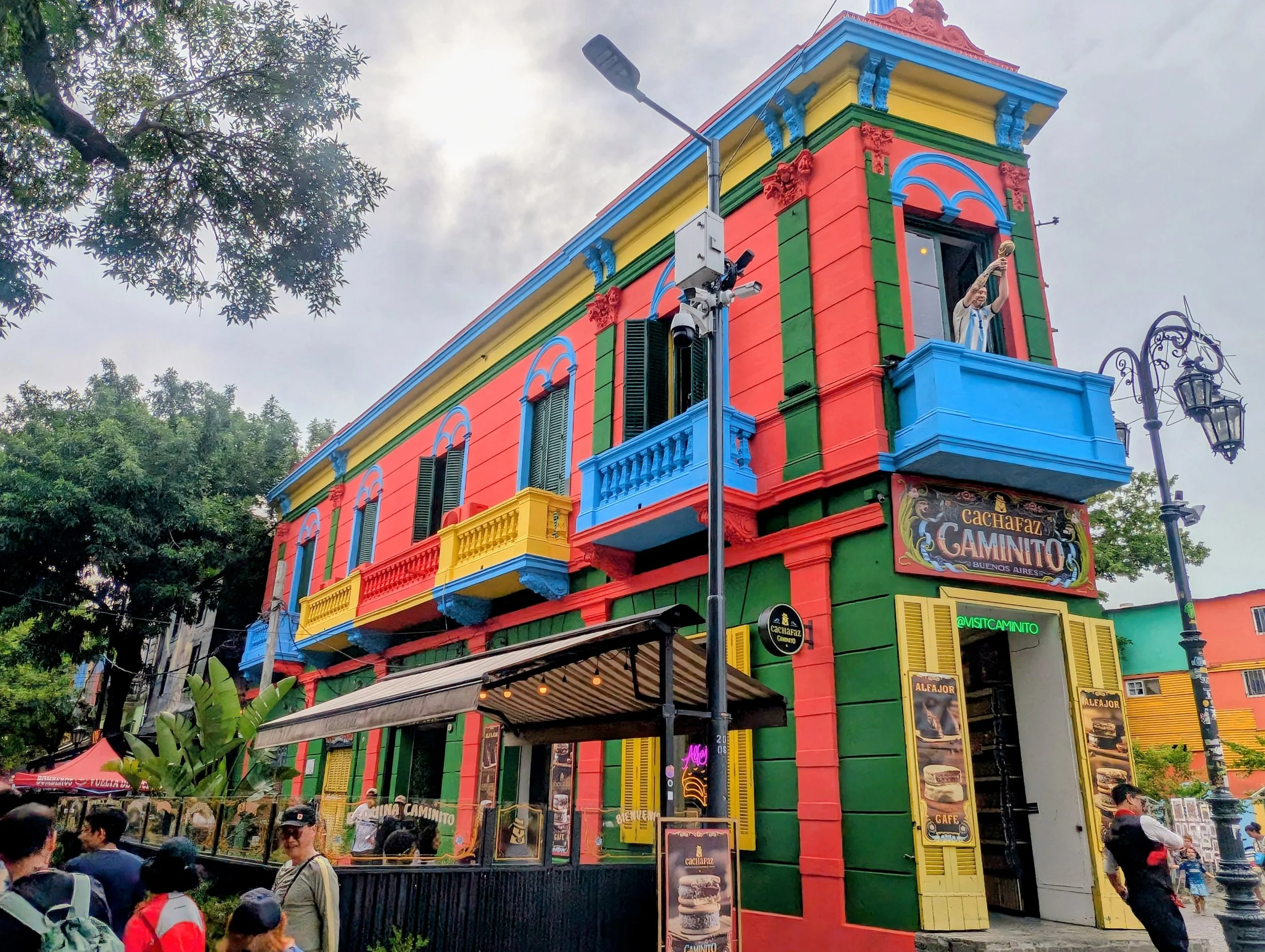
Visiting the colorfully painted La Boca neighborhood
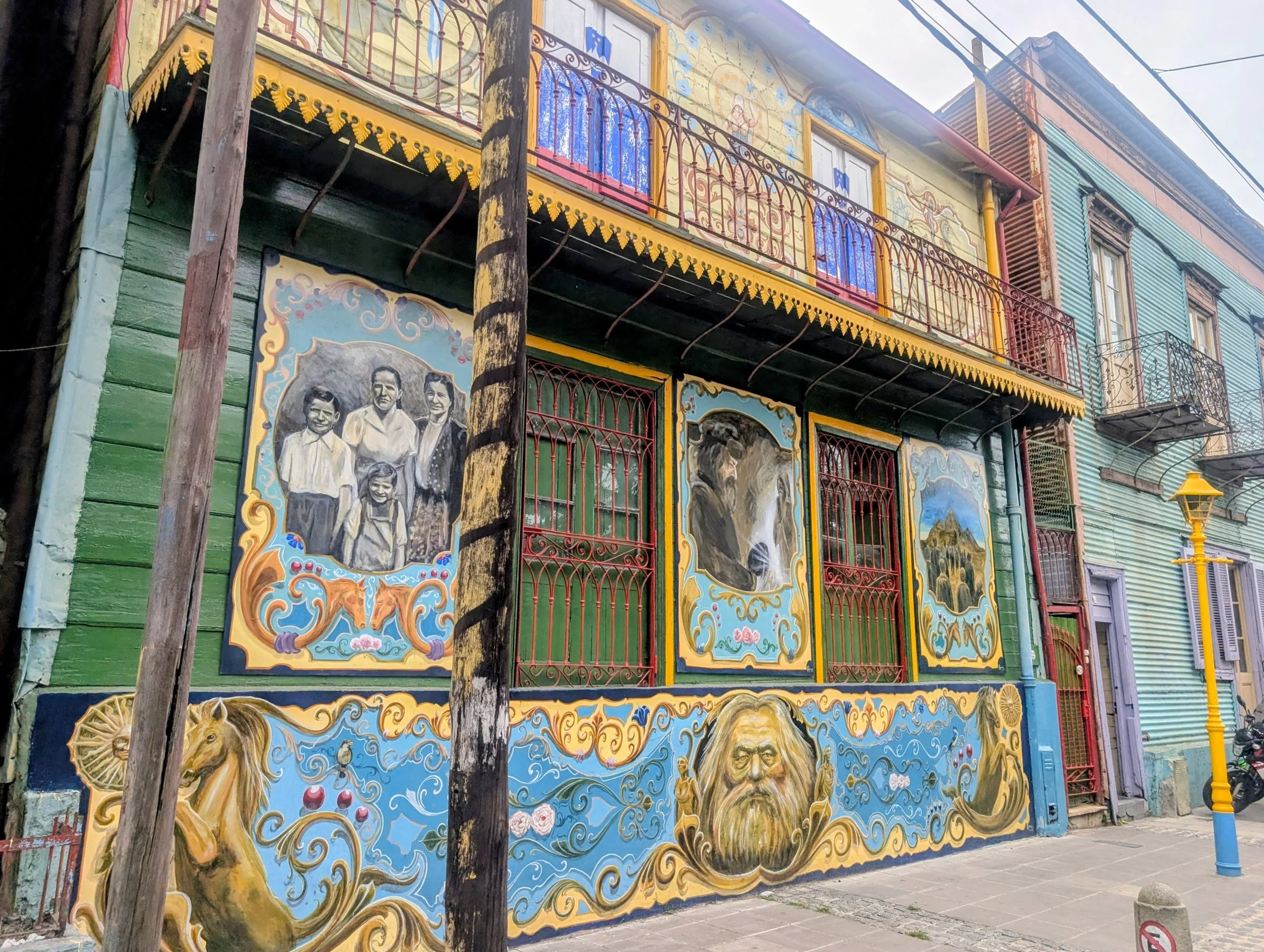
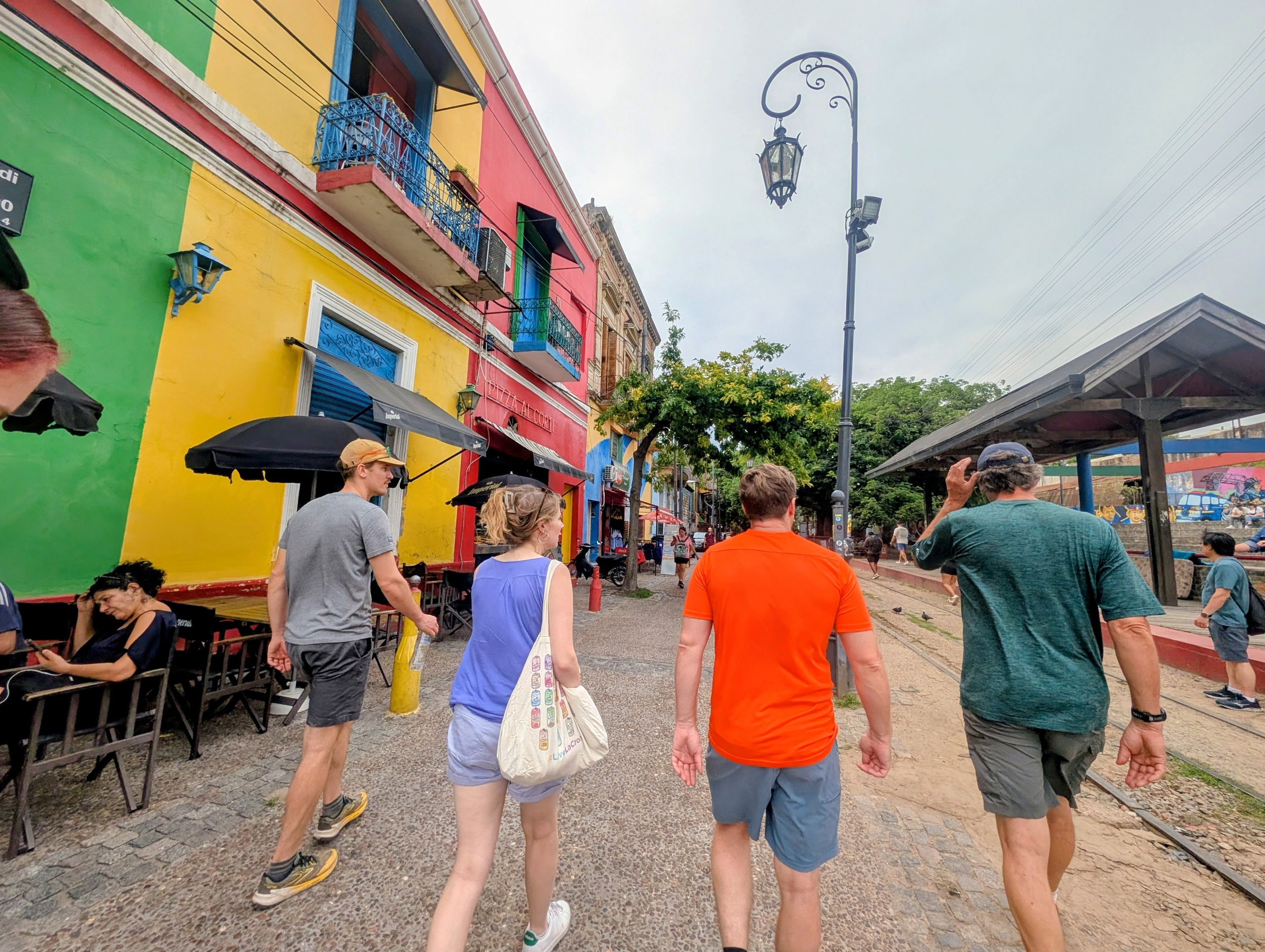
Appreciating that everyone has the same energy level, interest and motivation to walk for hours to explore a new city
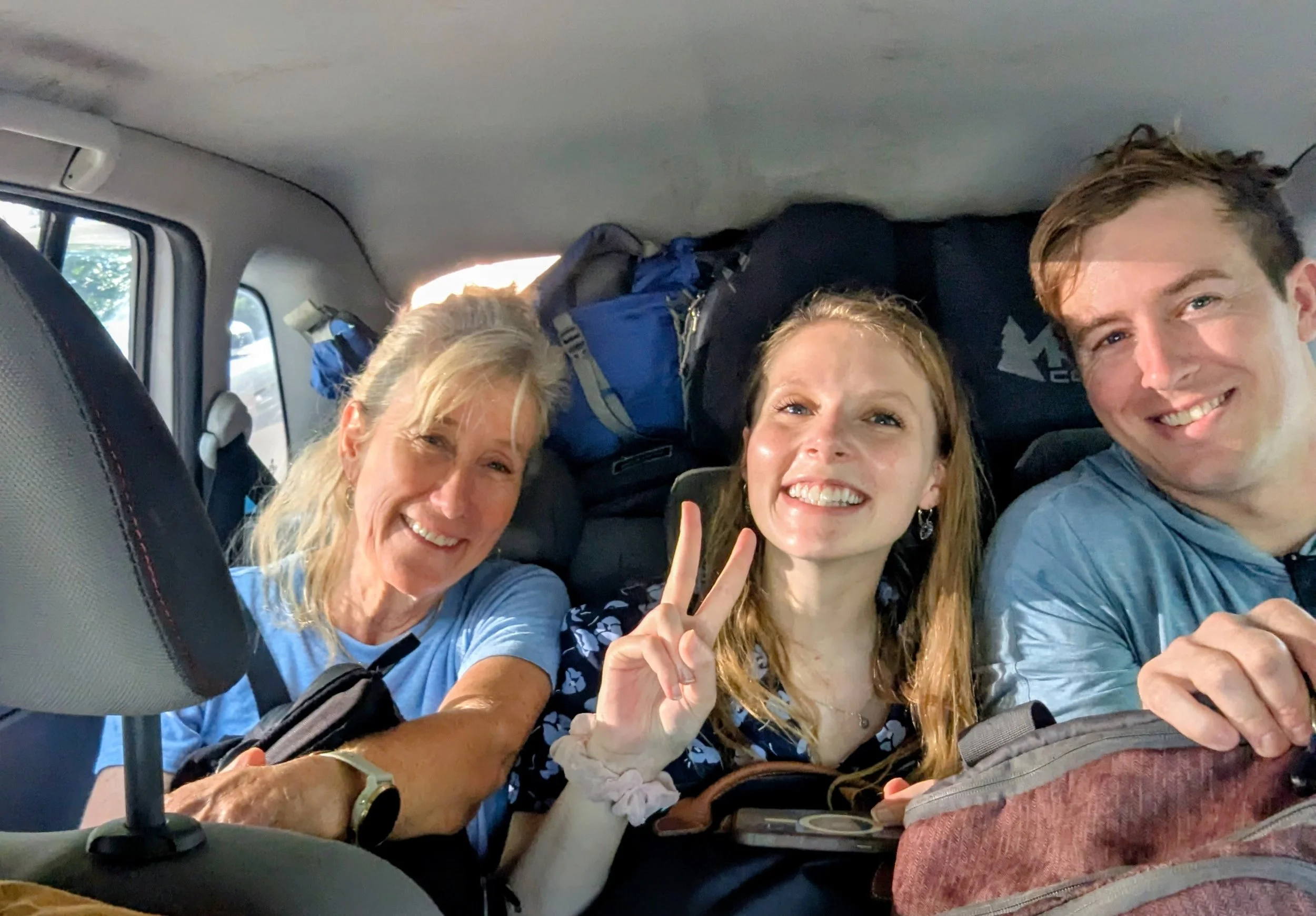
Leaving Buenos Aires - time to fly to El Calafate. Conquering the challenge of transportation for seven people and LOTS of luggage (Nicholas and Medora arrived in Buenos Aires from several months of living and working in the Netherlands so they had some extra). It took multiple Ubers.
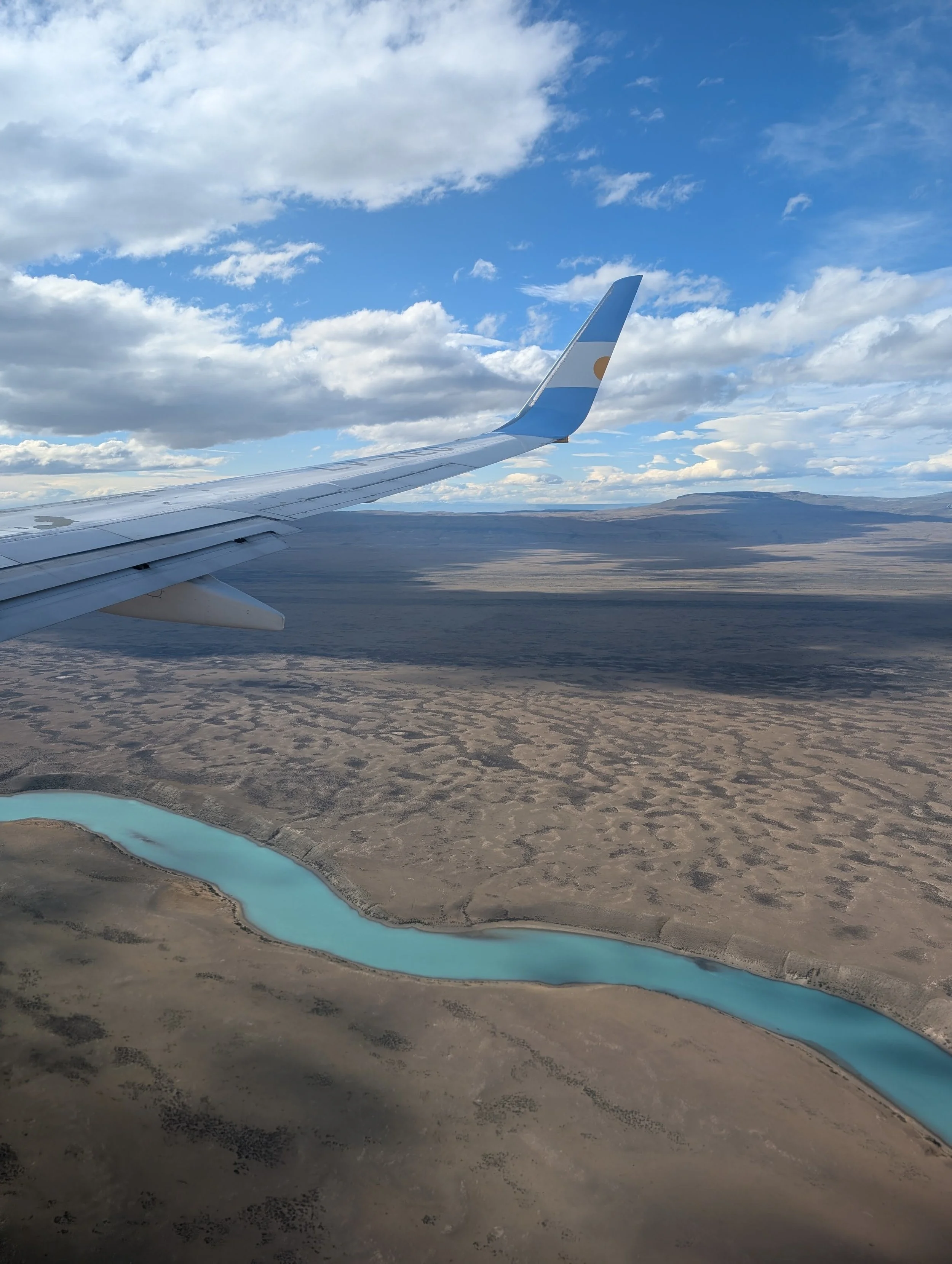
Glacial river from the air - flying into El Calafate
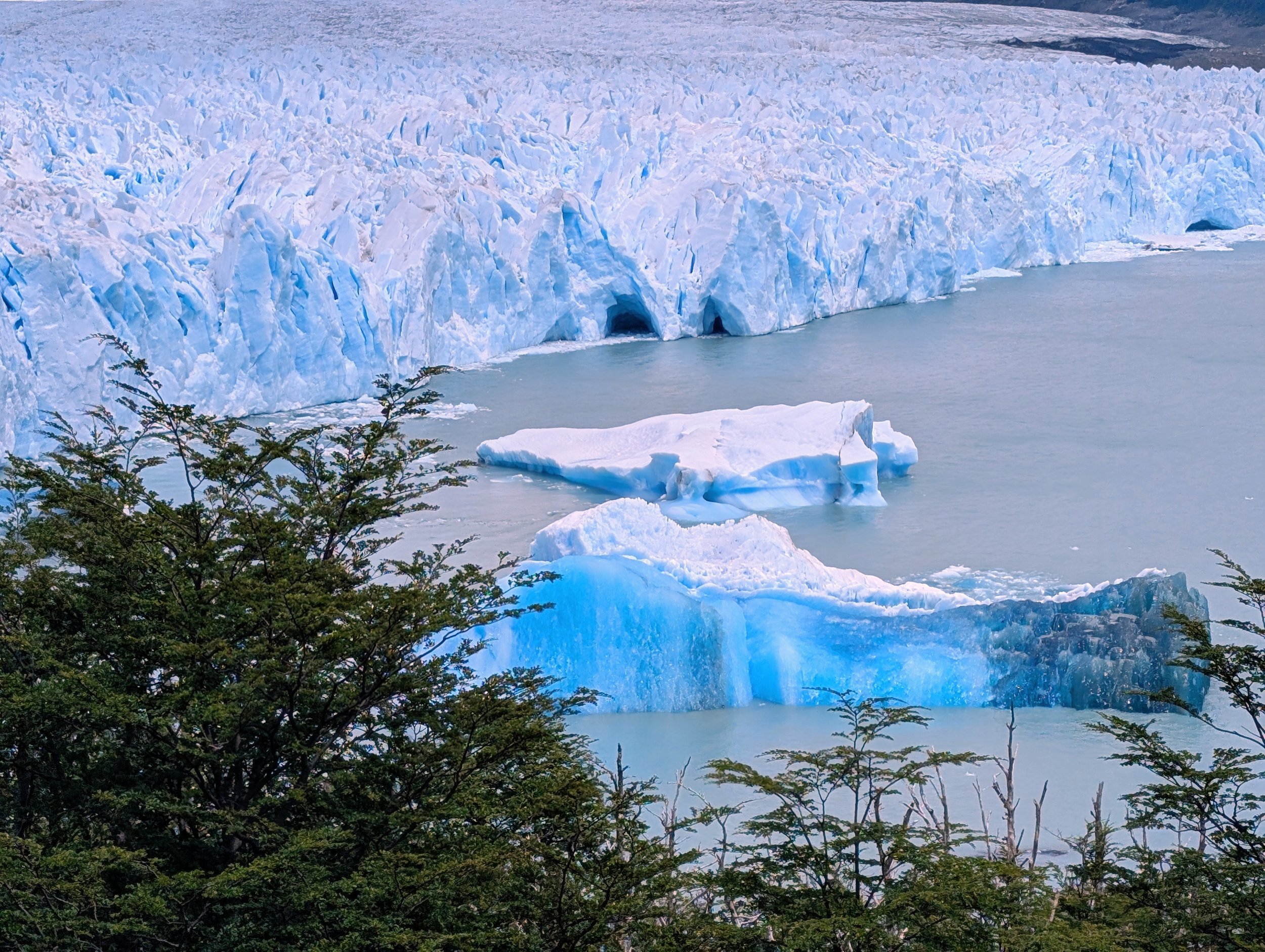
Visiting Perito Moreno Glacier outside of El Calafate
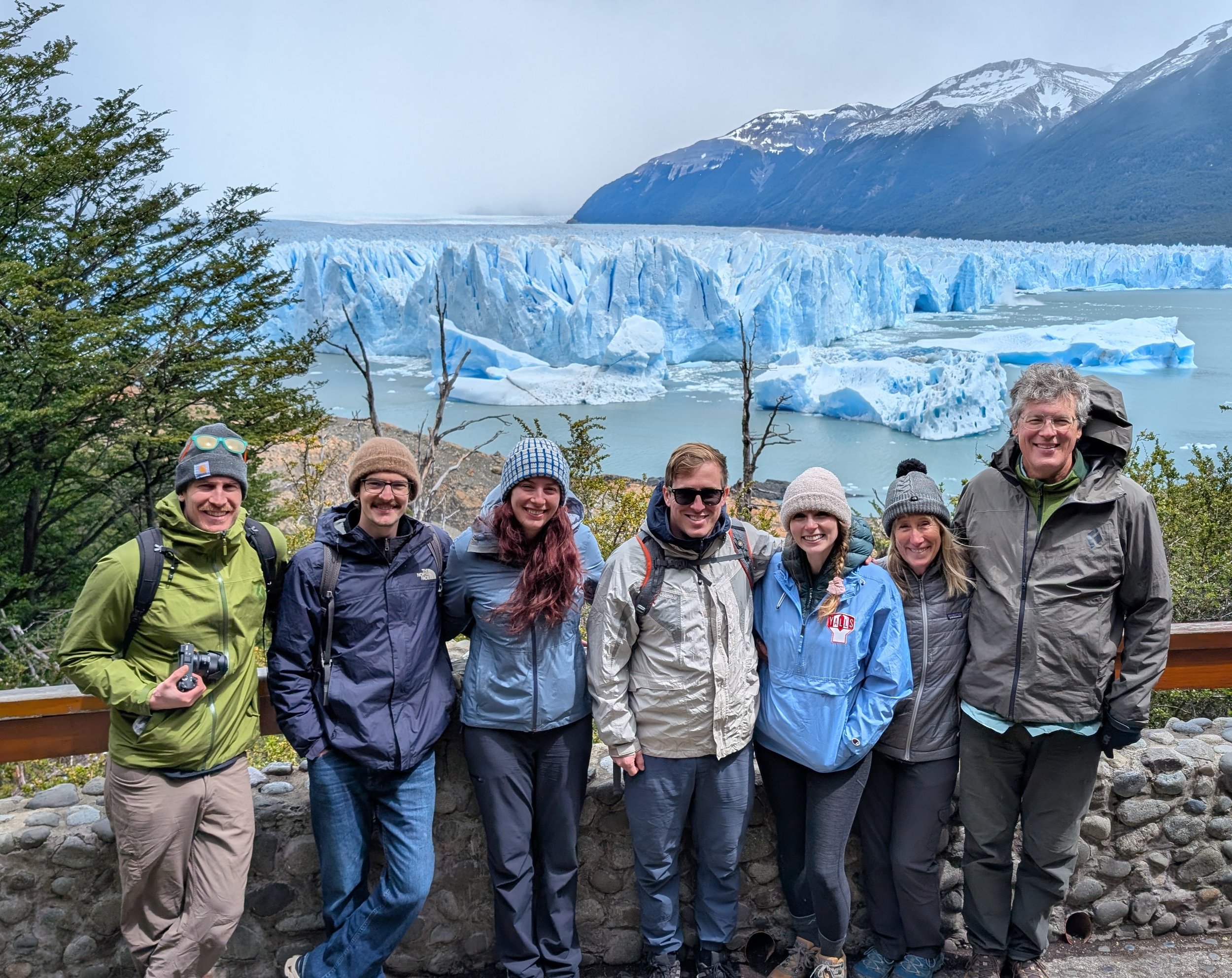
Happy family group photo
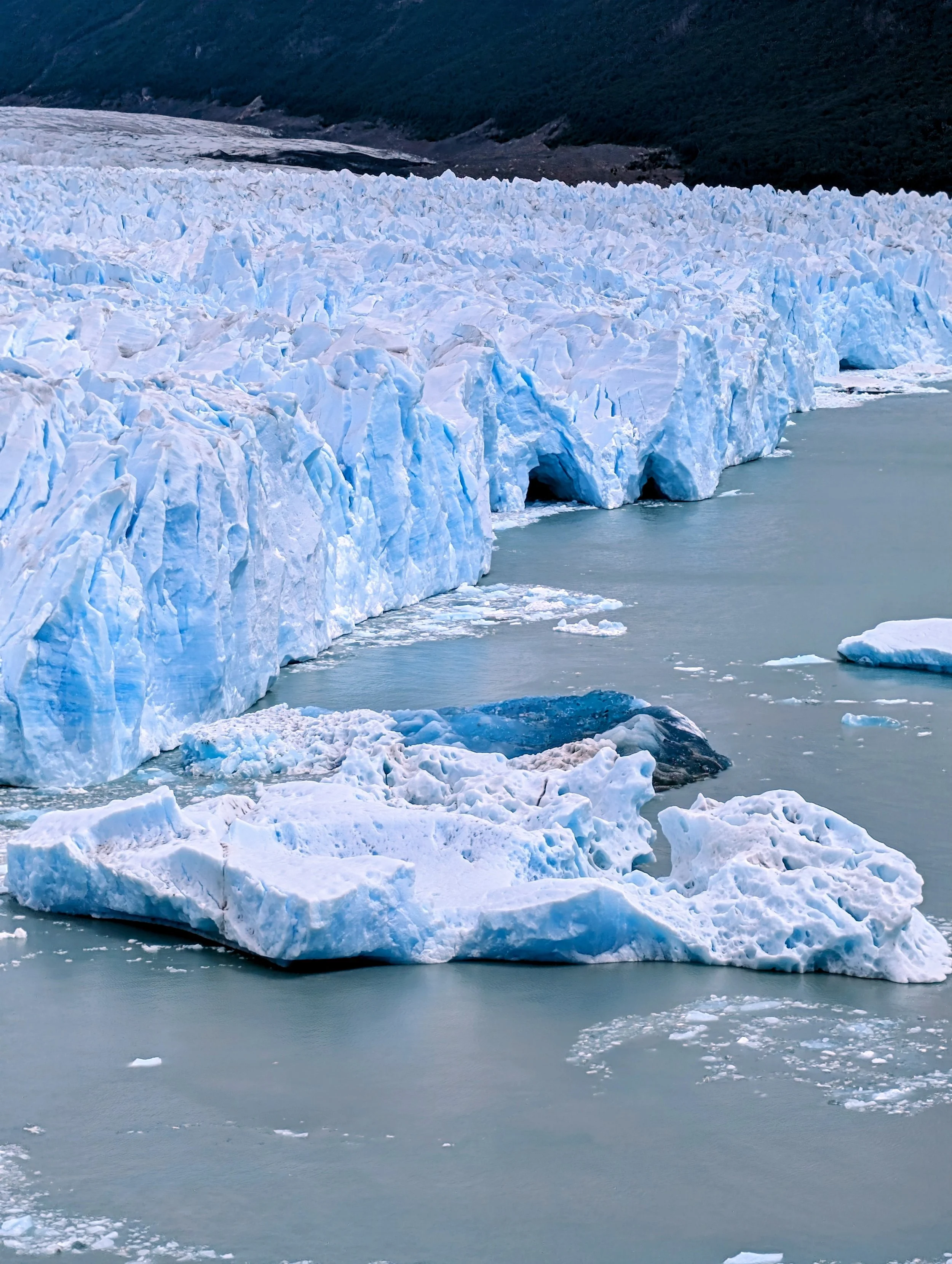
One of the biggest glaciers we have ever seen
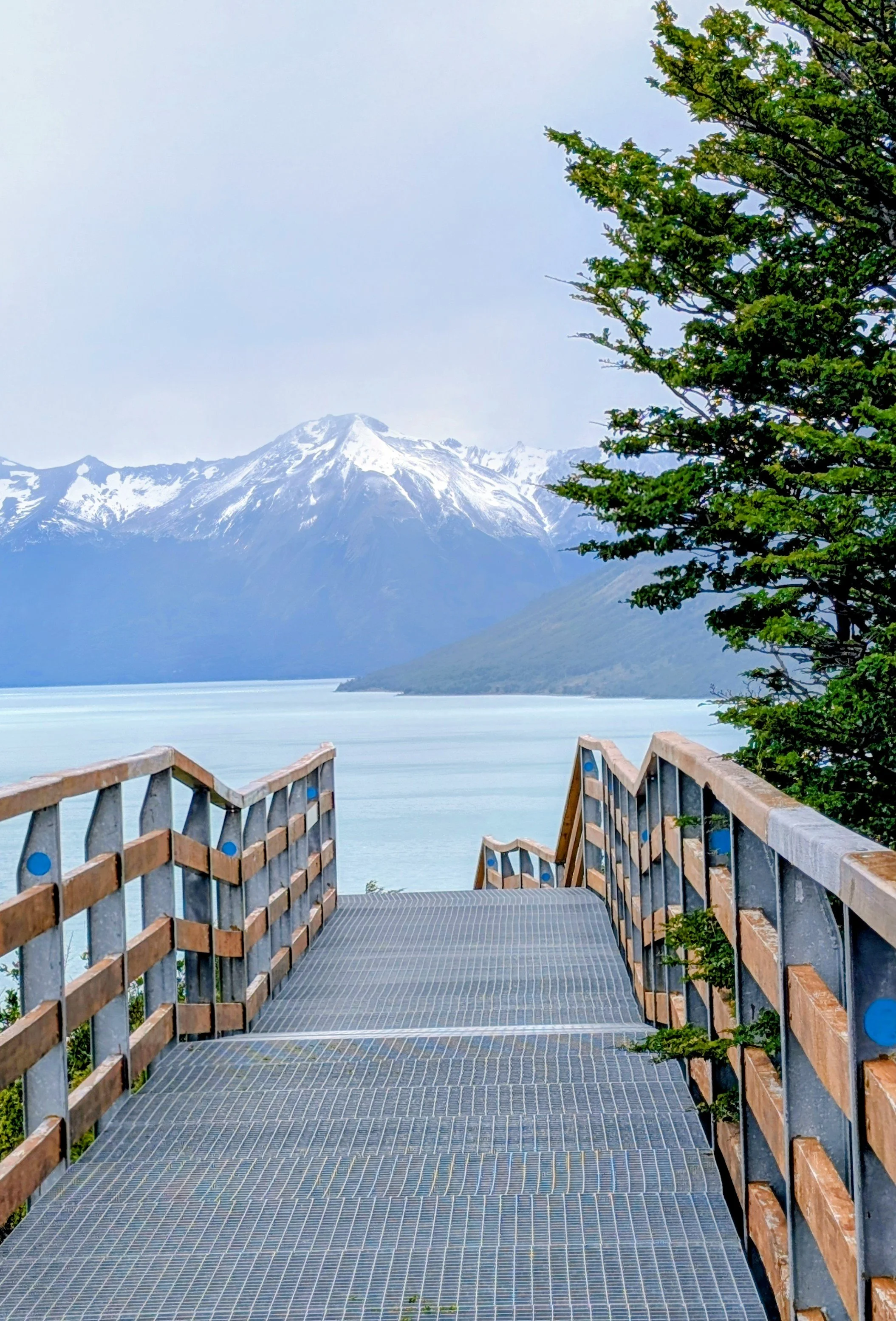
Miles of boardwalk to explore
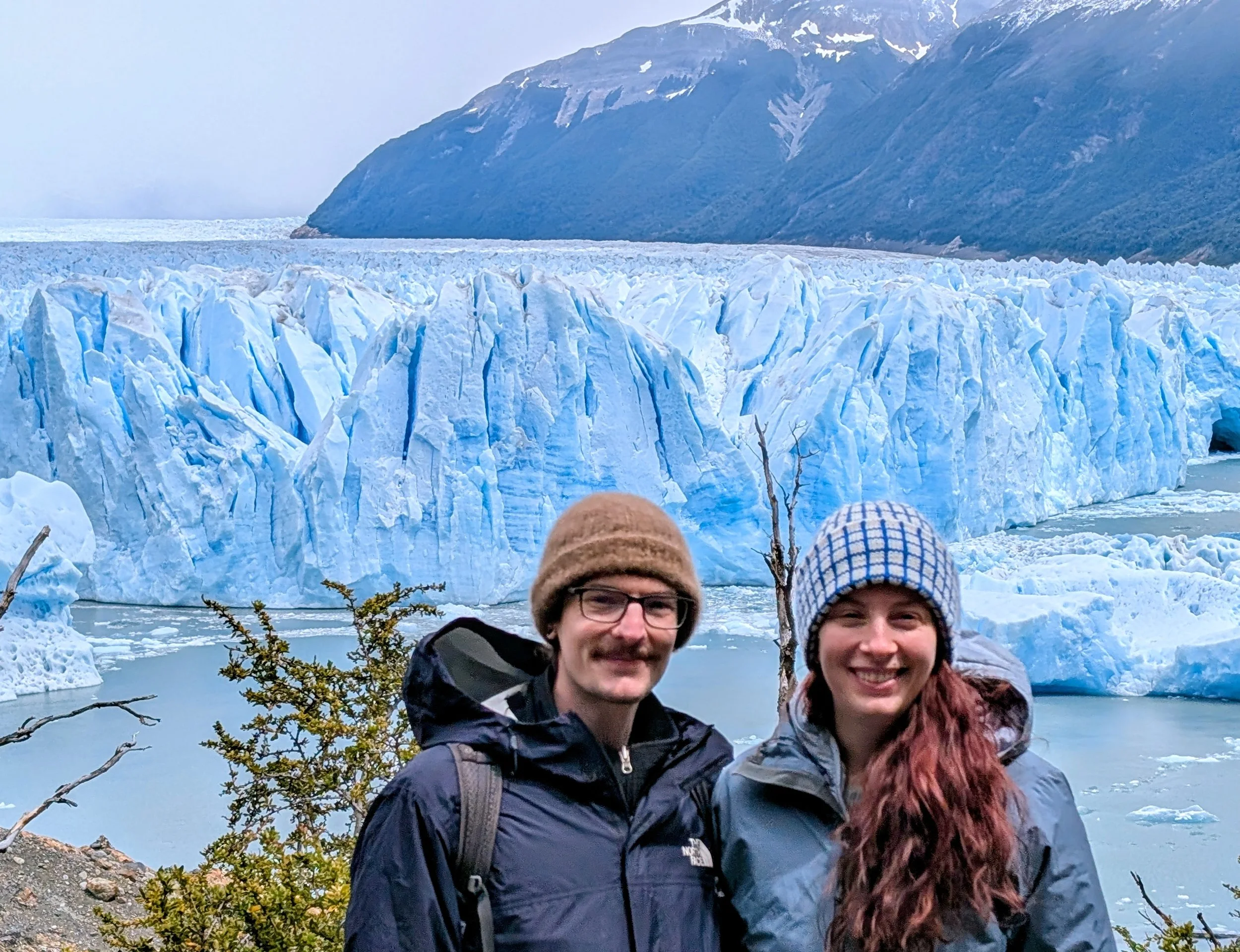
Our daughter Claire and her boyfriend NIck
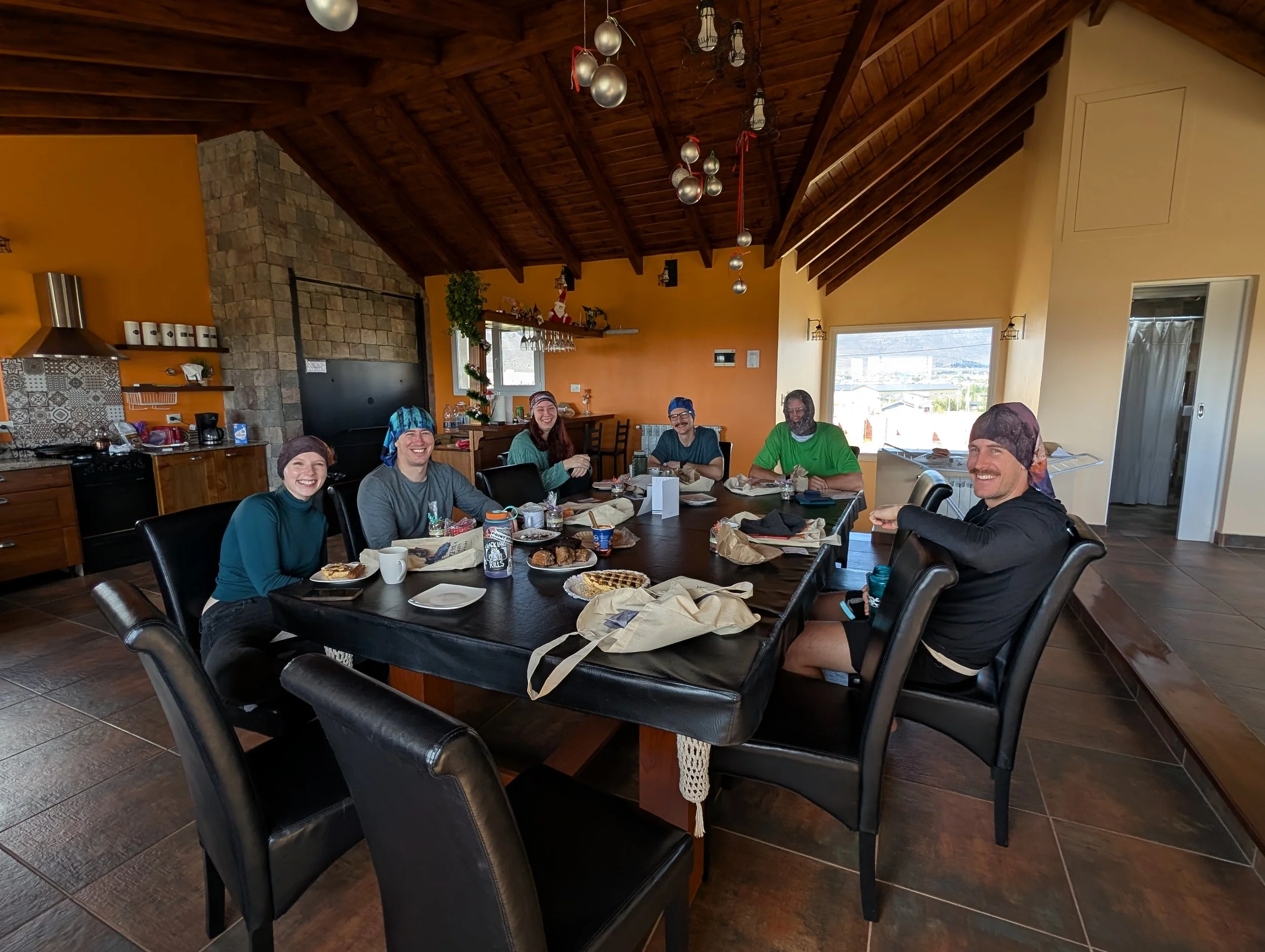
Christmas morning breakfast - featuring a lot of Argentinia facturas (sweet pastries) and dulce de leche.
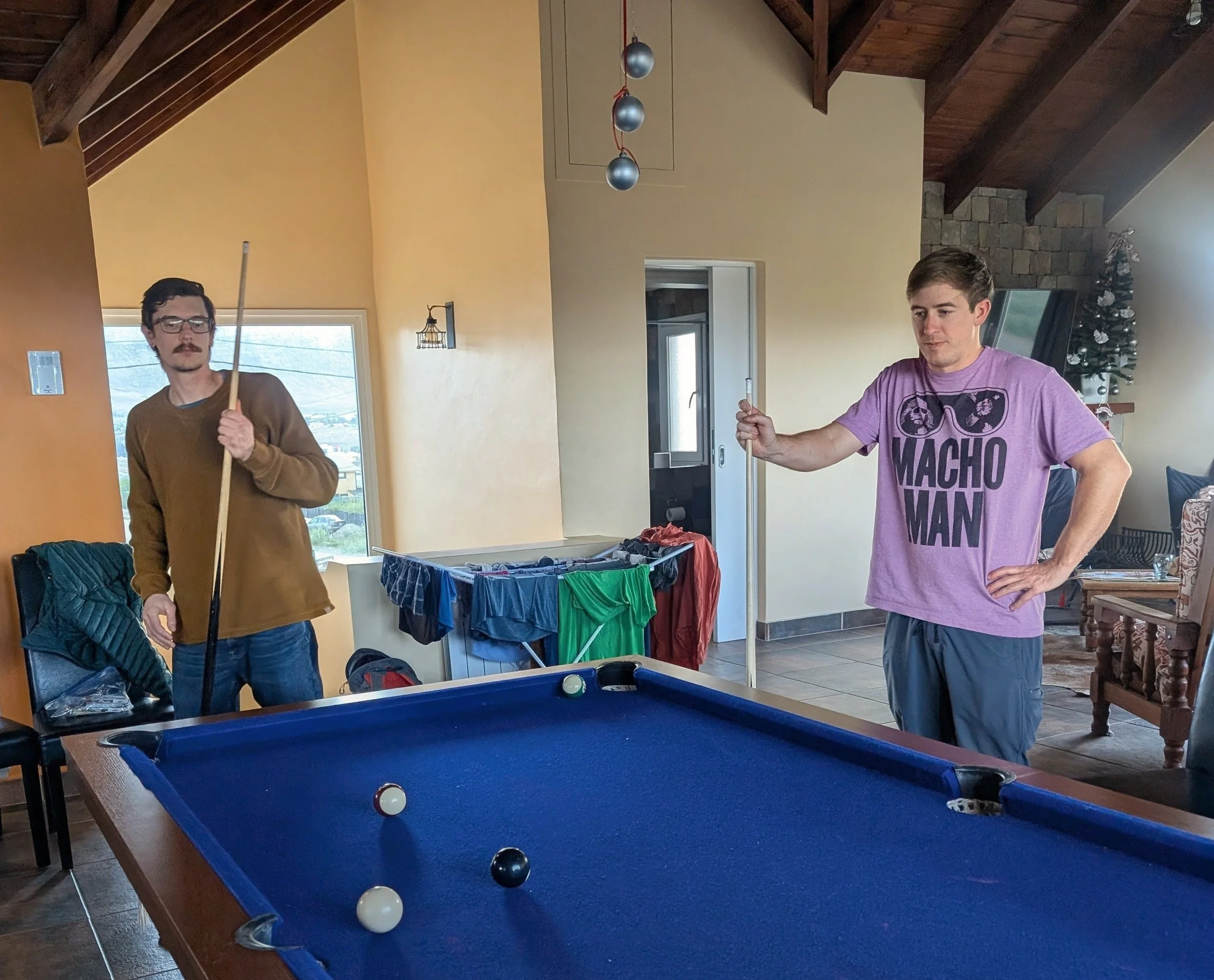
Christmas day activities at the Airbnb, (Plus chores too - note the laundry in the background)
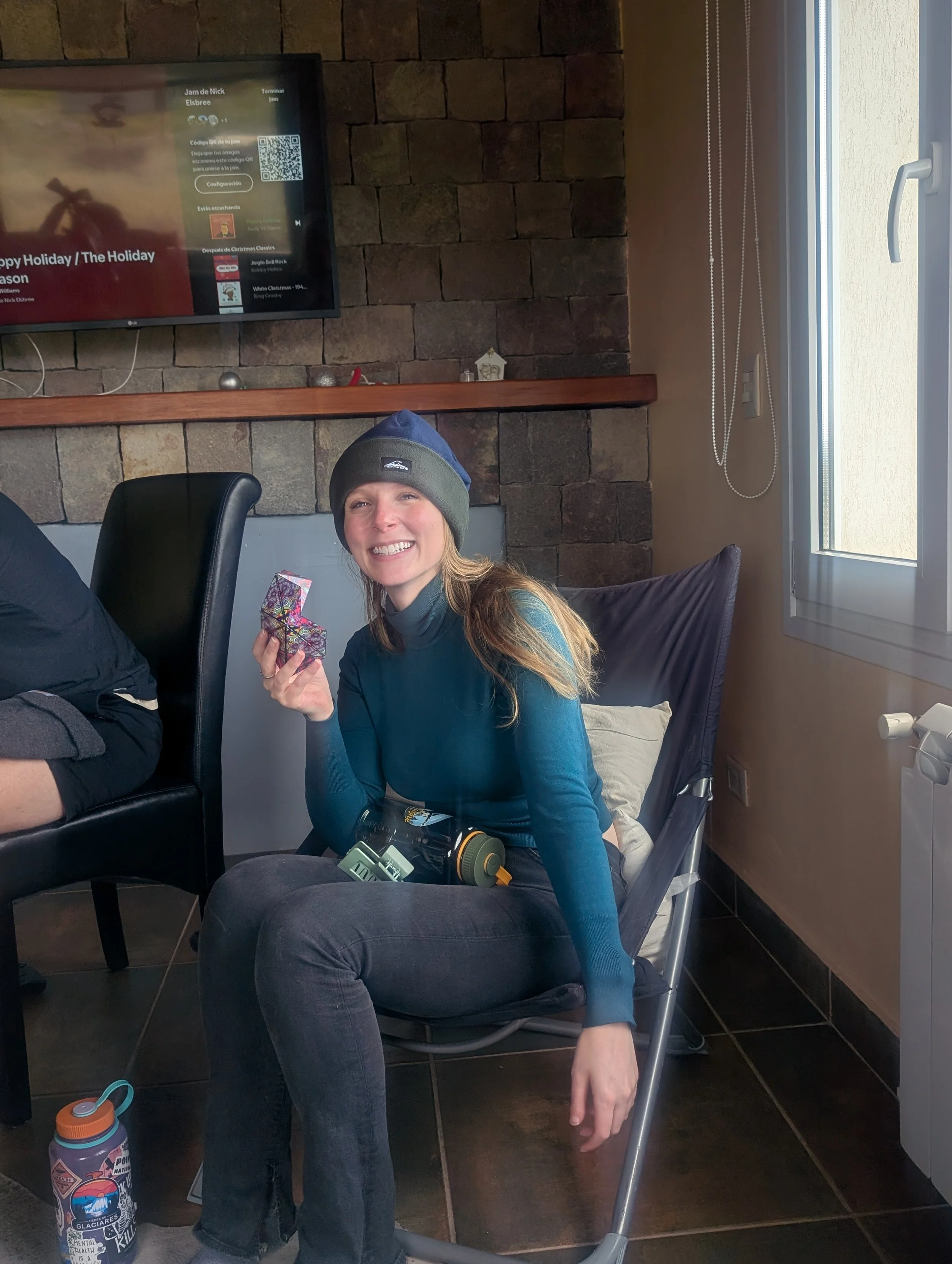
Medora’s first Elsbree traveling Christmas White Elephant gift exchange
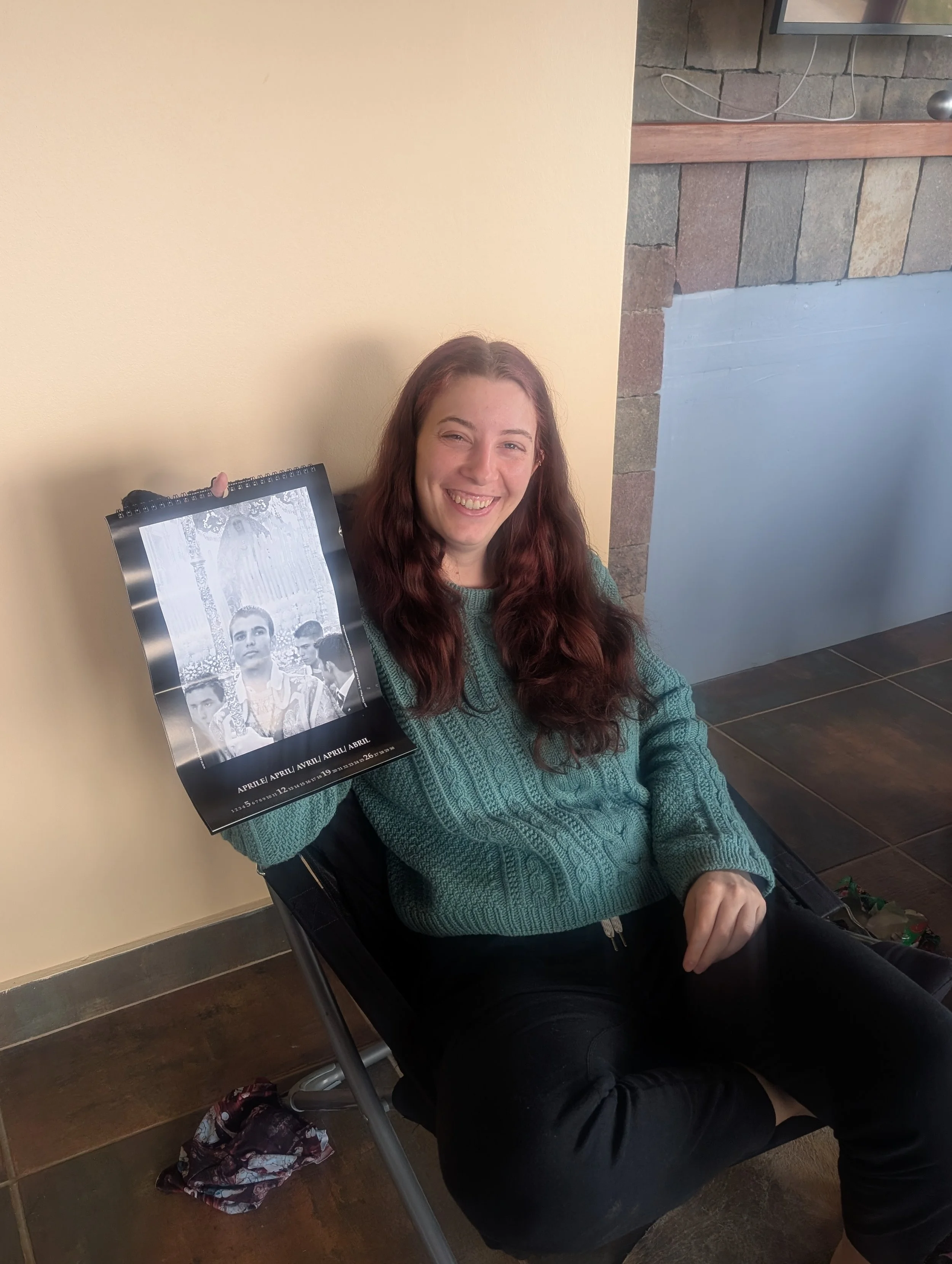
Claire scores the Vatican “Sexy Priest” calendar for her gift
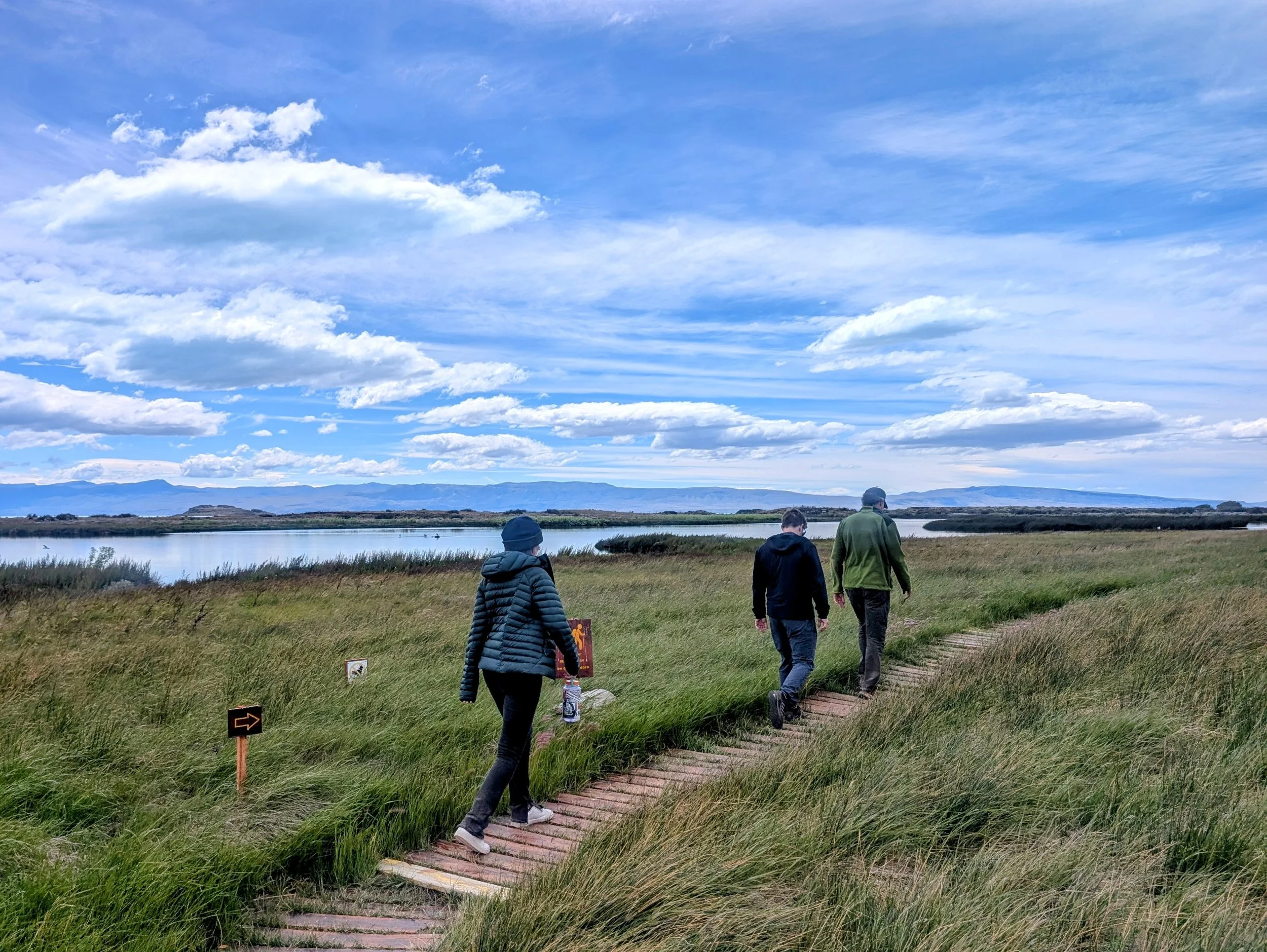
Christmas day walk through a bird reserve
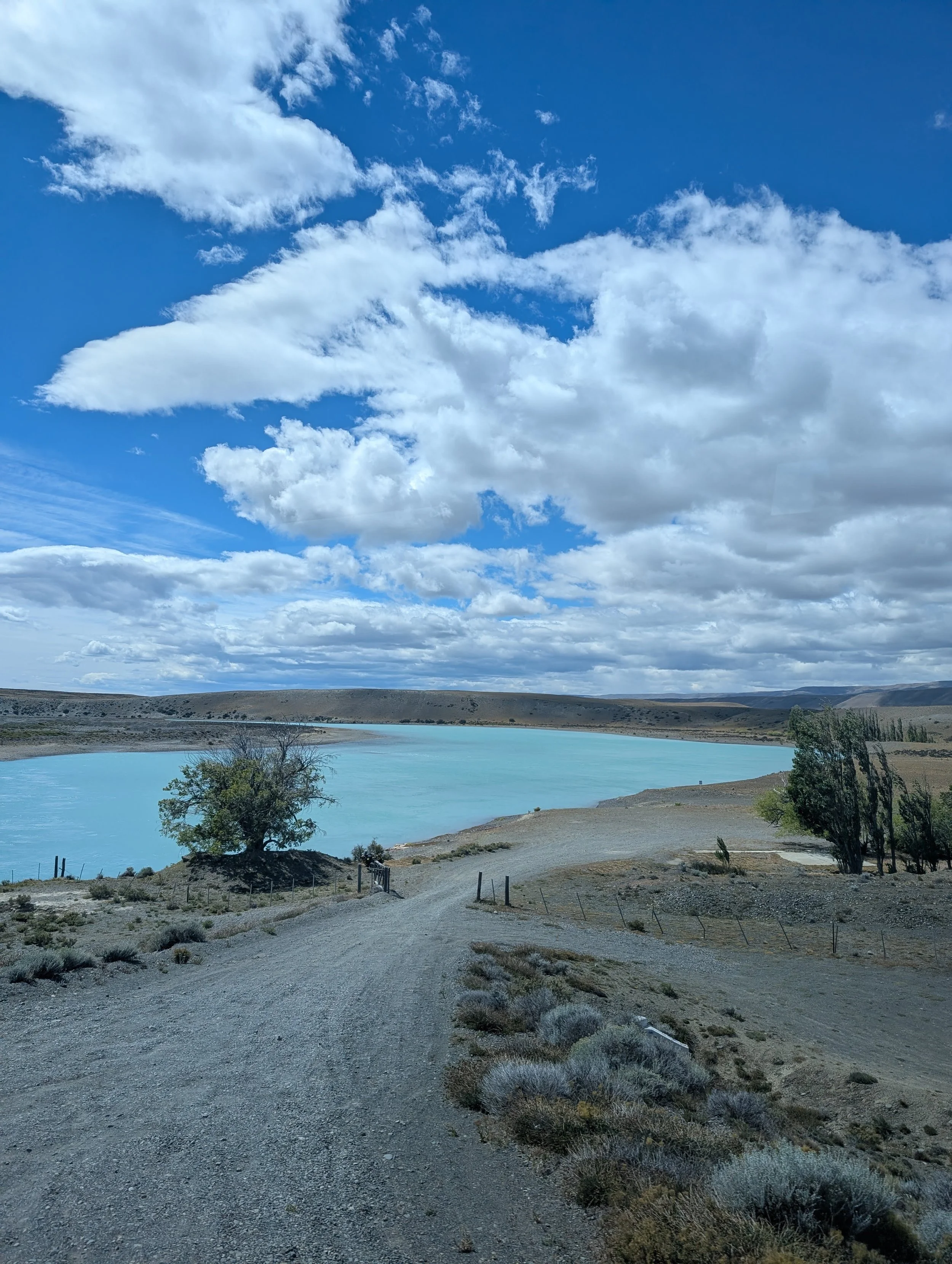
Glacial lake by El Calafate
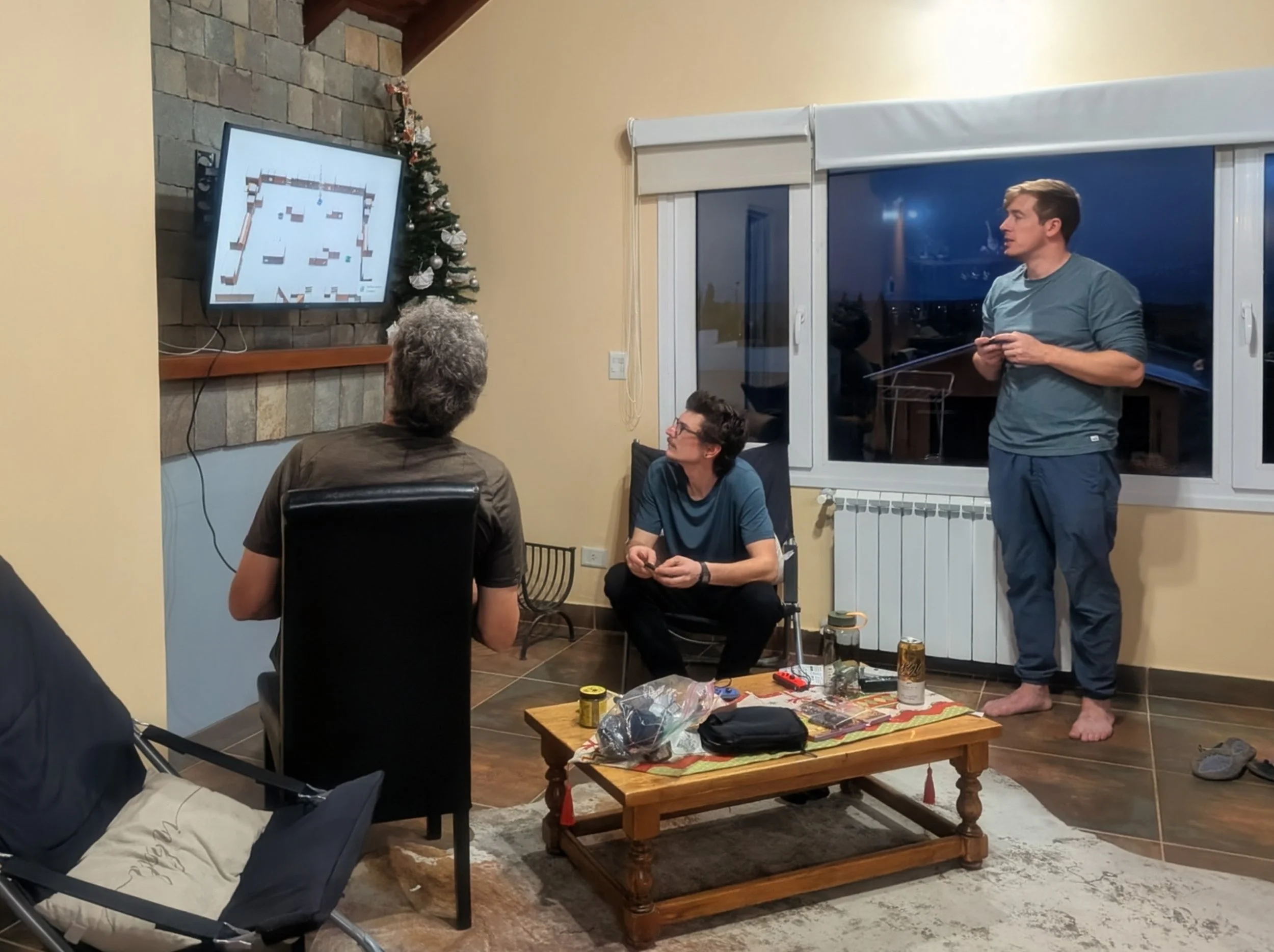
And another Christmas day activity
We could not have had a better Christmas day - the company made it for us. El Calafate was Patagonia windy and cold and the scenery was exceptional. Aside from visiting the glacier Perito Moreno, there is not a lot to do locally but we were fine with that.
Our next stop was El Chalten. Since El Calafate has the only airport in this region of Patagonia, we walked down the hill to the bus stop and rode 90 minutes to El Chalten.
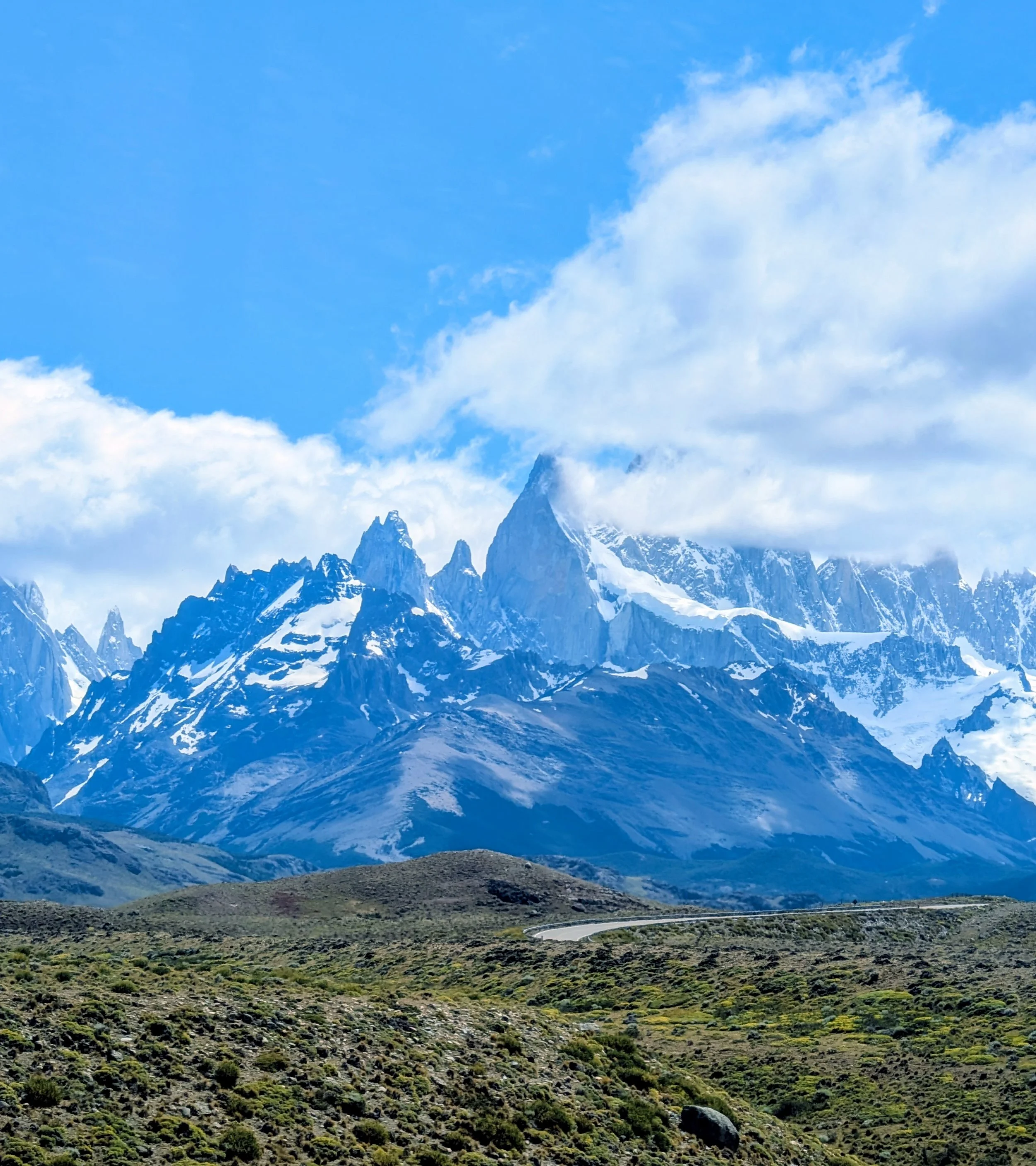
View along the road to El Chalten - Fitz Roy looming large
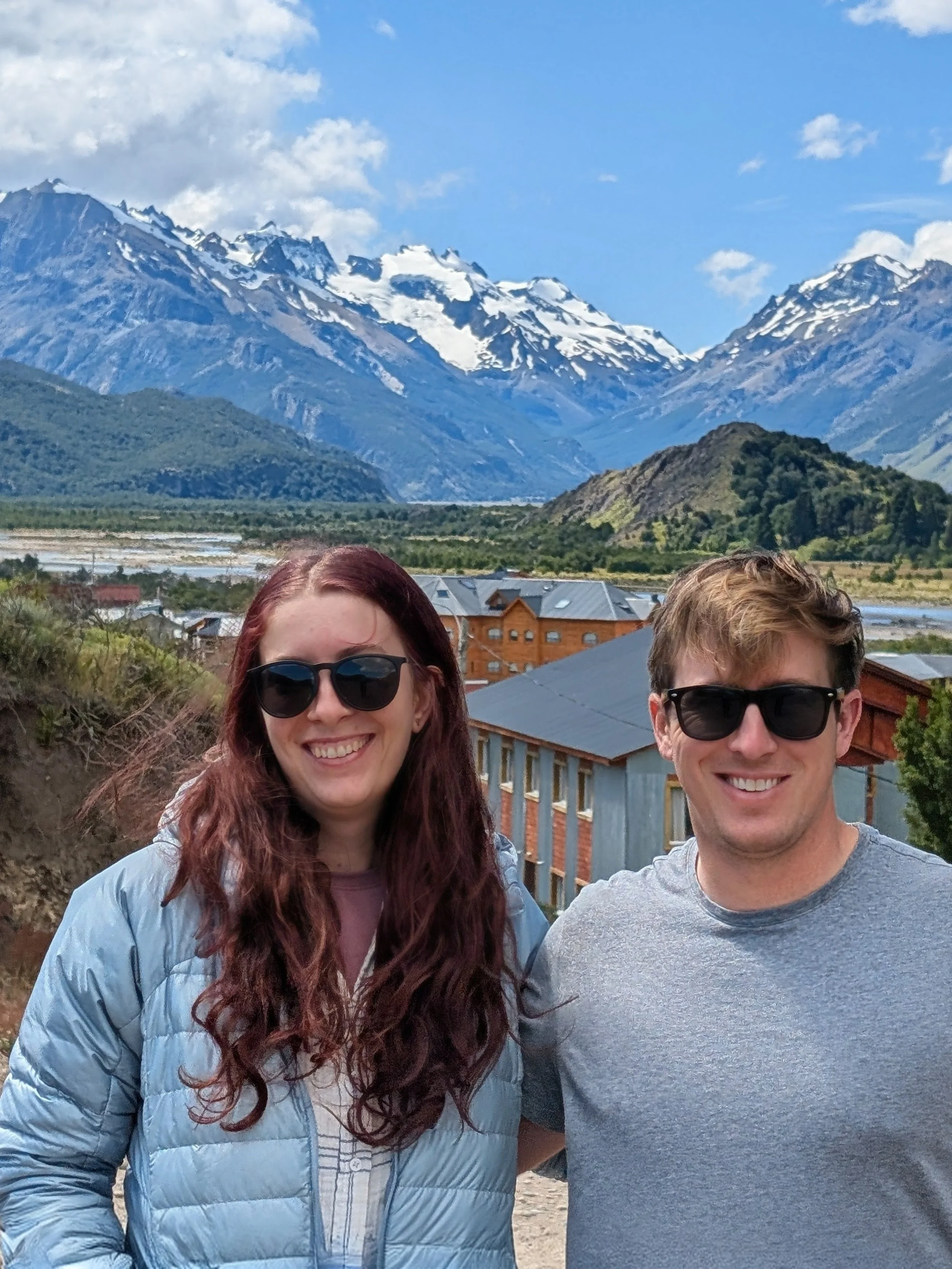
Claire and Nicholas in El Chalten
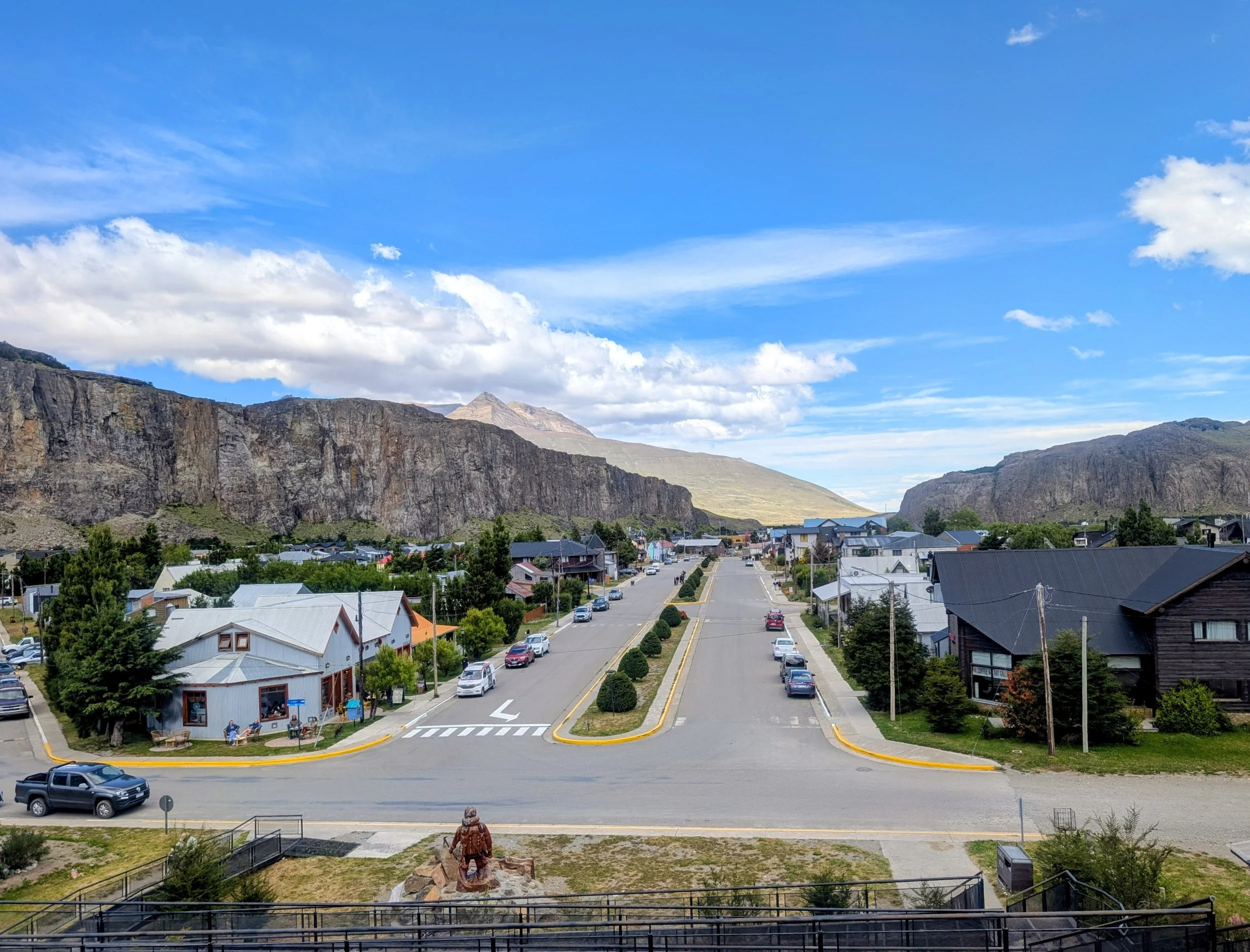
View to downtown El Chalten
El Chalten boasted a few blocks of restaurants and bars and many hostels and guest houses. Much smaller than El Calafate, it felt much more like a small outdoor adventure jumping off point.
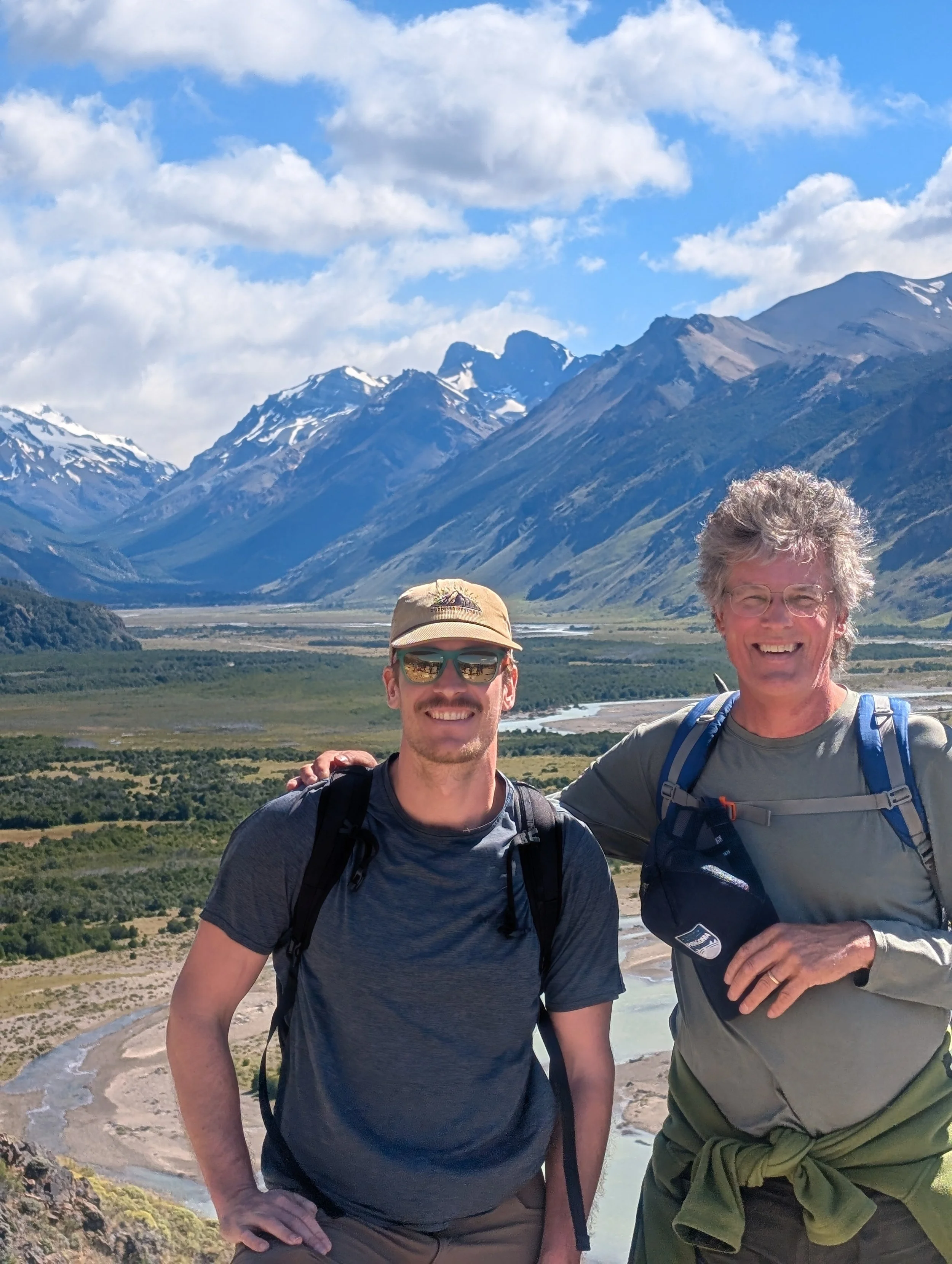
Our younger son Trevor and Andy - heading out on the classic El Chalten hike - La Laguna de los Tres, a difficult 22 km out and back hike to a glacial lake at the base of Fitz Roy.
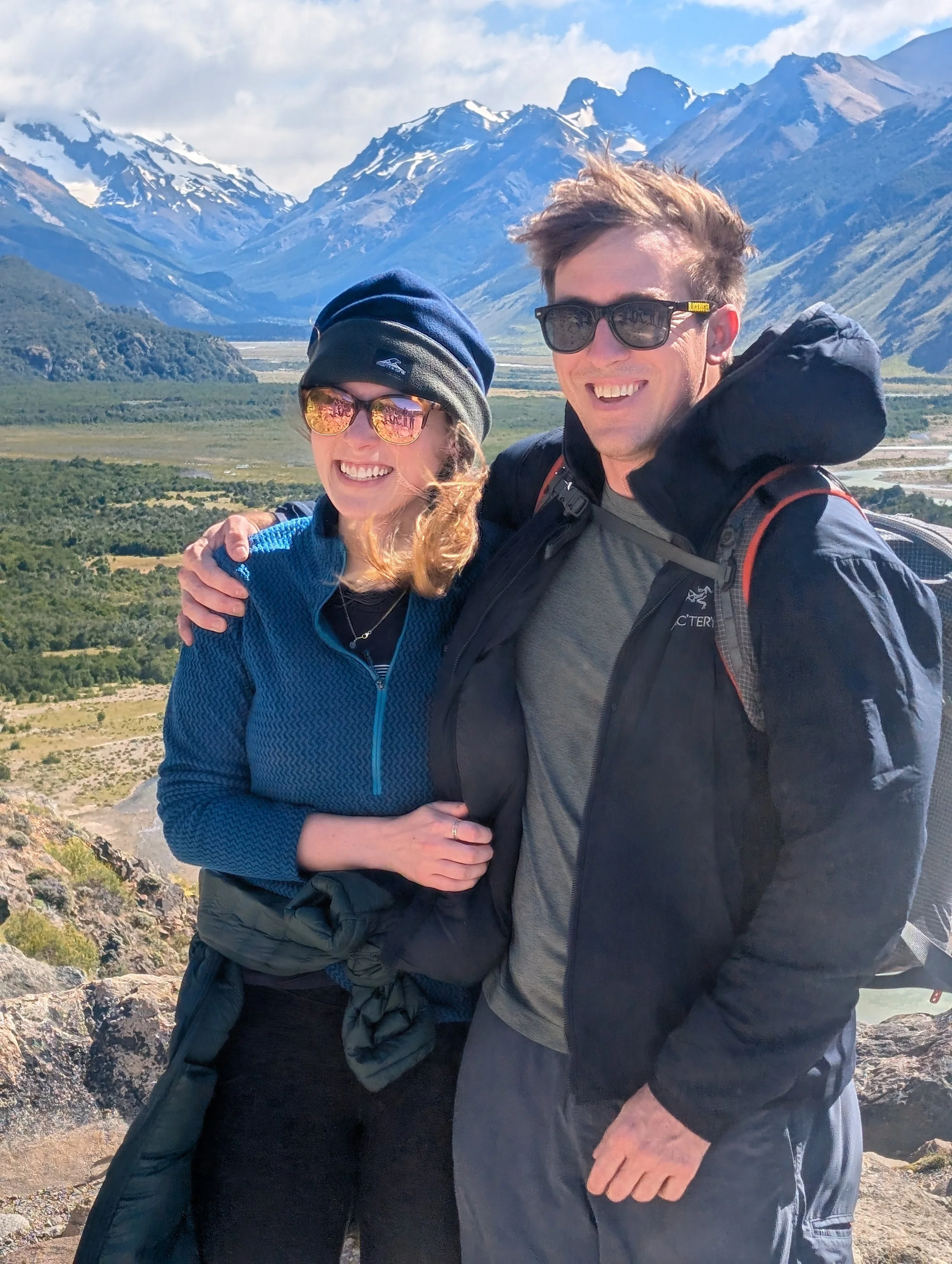
This will be Medora’s first long hike, she’s up for it
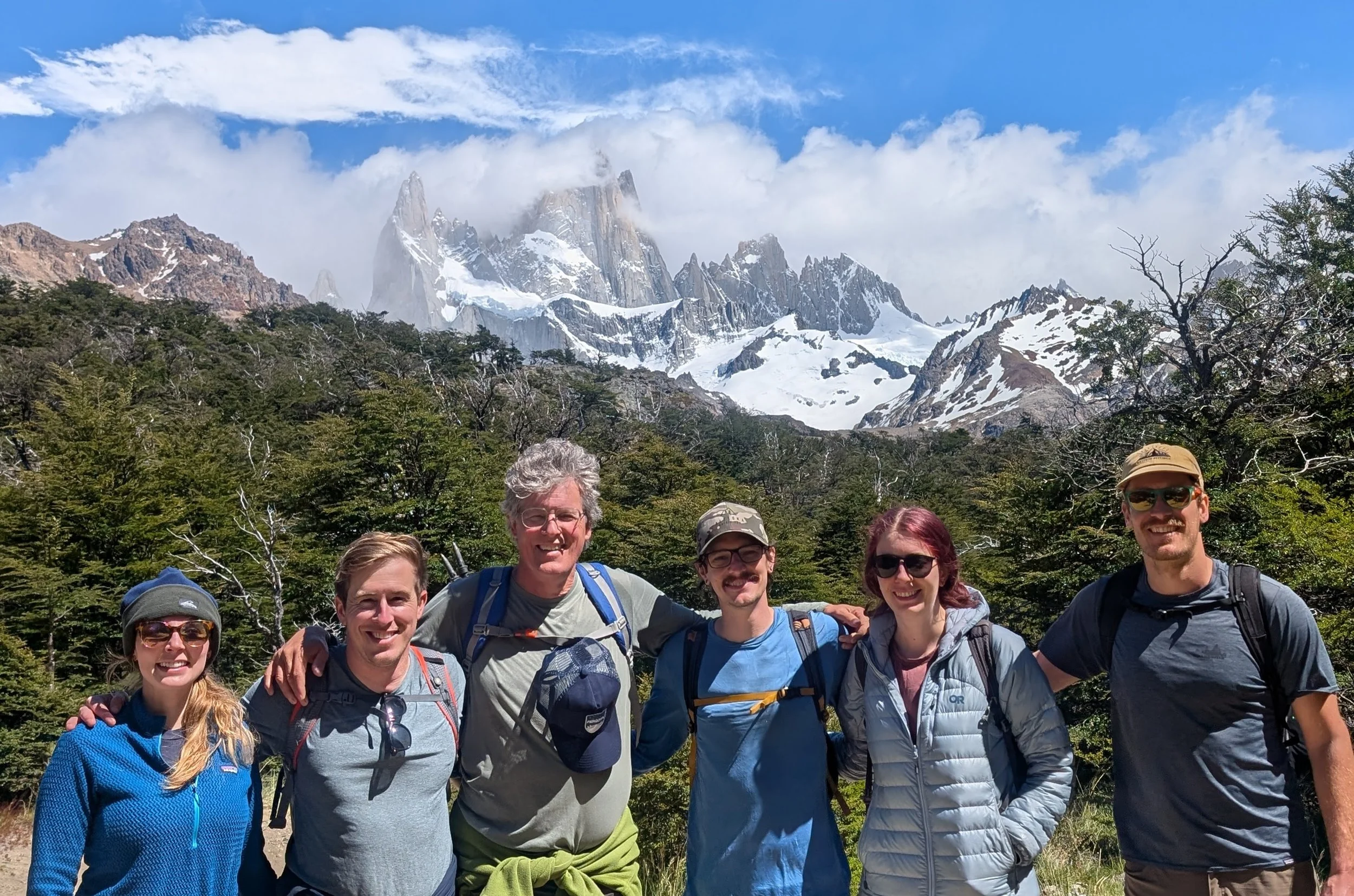
Half way in - still smiling!
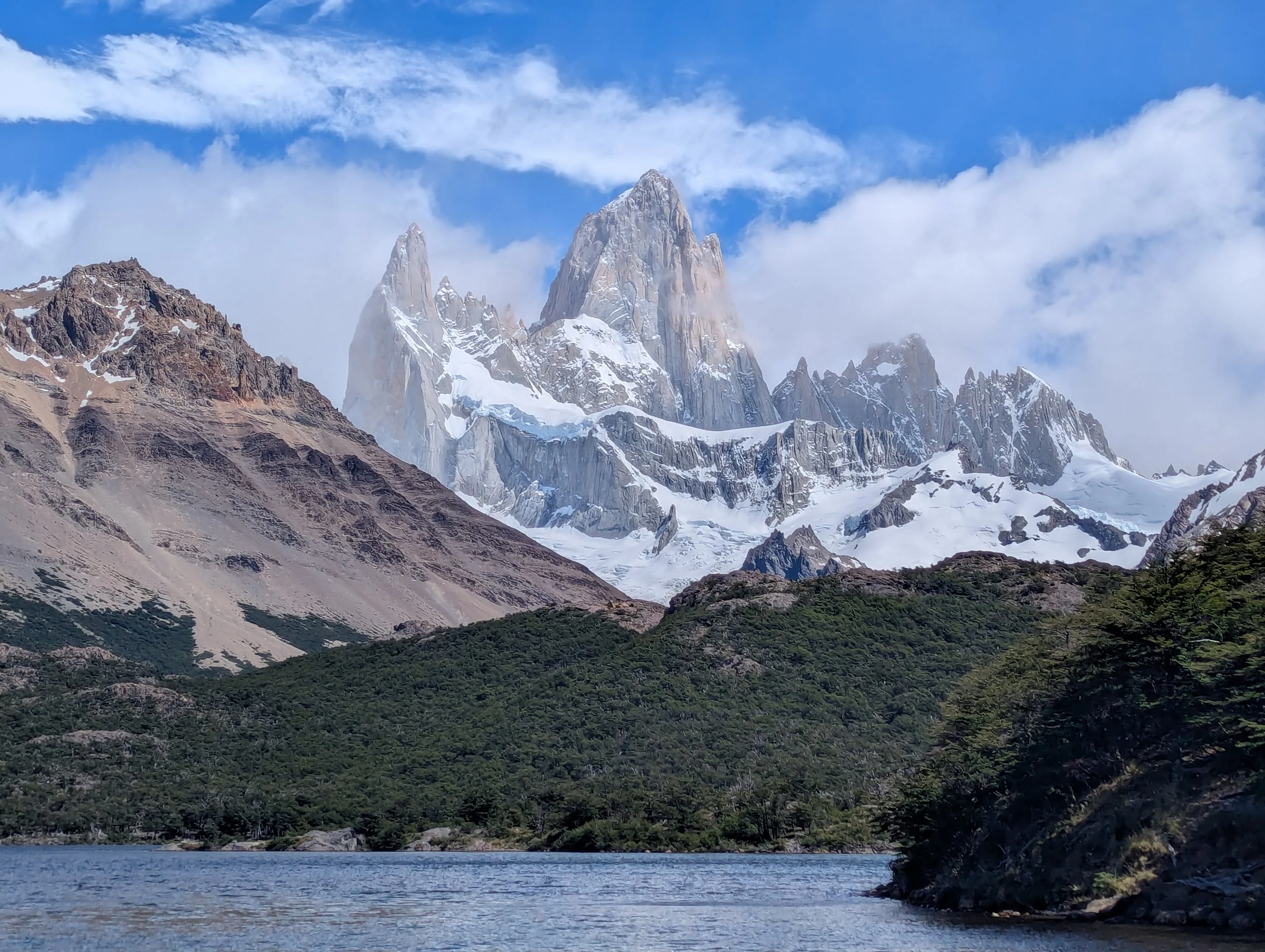
We are blessed with a day with clear views on these iconic peaks
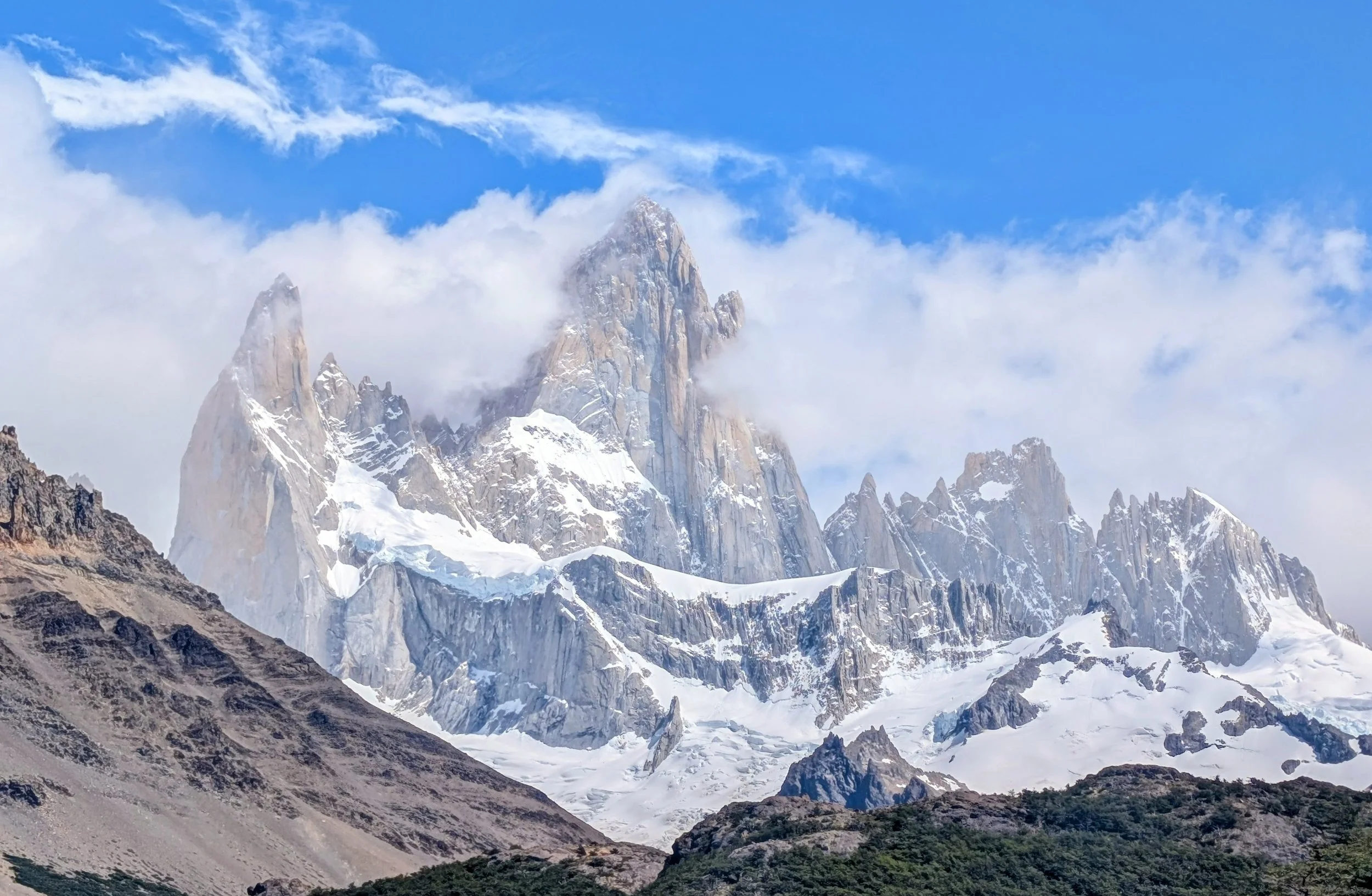
WOW!
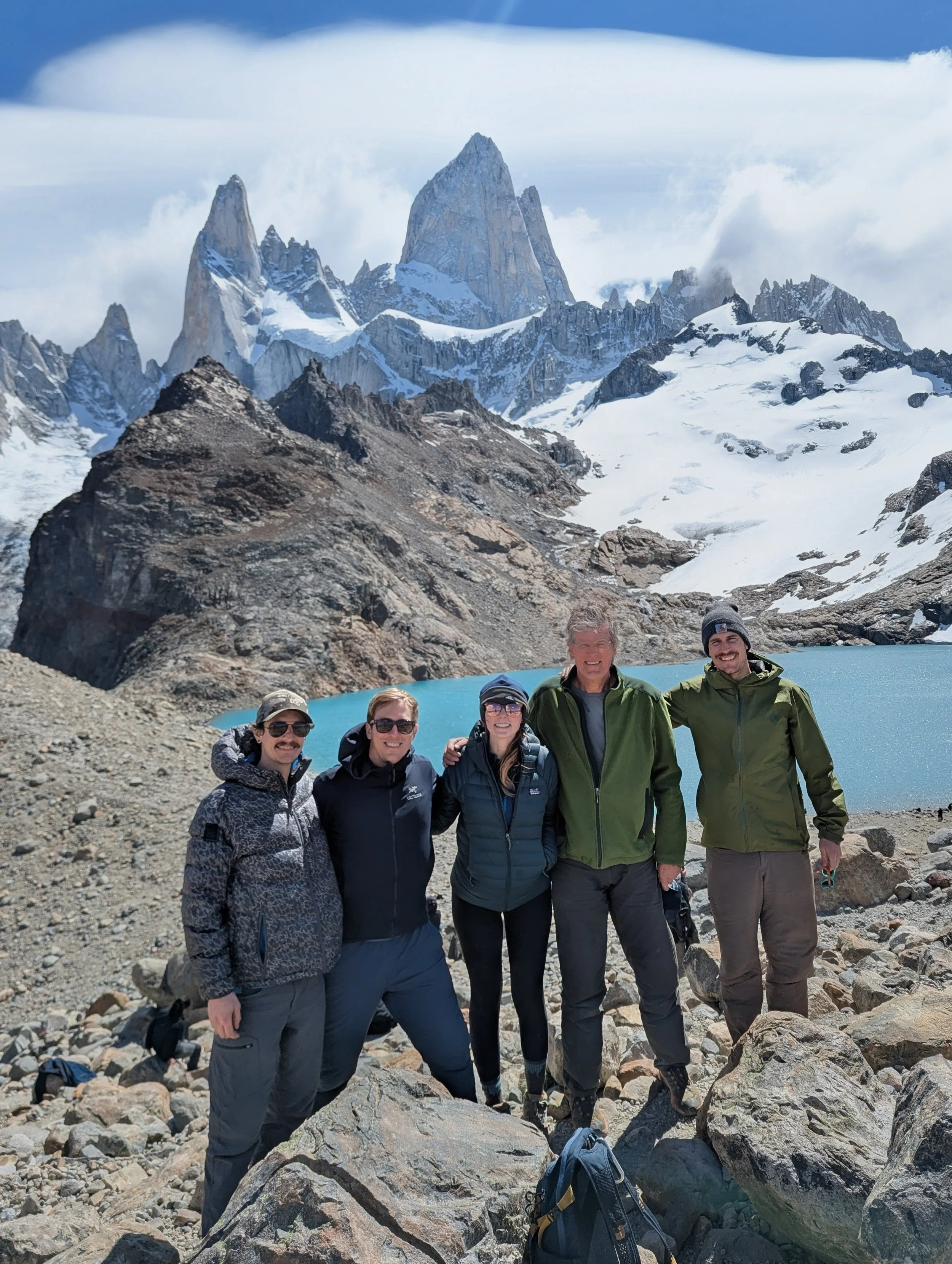
Made it! One of the best views in the world. (Dawn and Claire did not make it all the way - a rogue gust of wind blew something painful into Claire’s eye and she could not see. As a side note, they walked back into town to the hospital and met within 10 minutes with a kind nurse who was patient with our terrible Spanish. He numbed her eye, removed the foreign object and she was good to go. When we tried to pay he said it was free, or we could donate something. We gave a small donation and left the hospital 20 minutes after arriving with Claire once again able to smile and open her eye.)
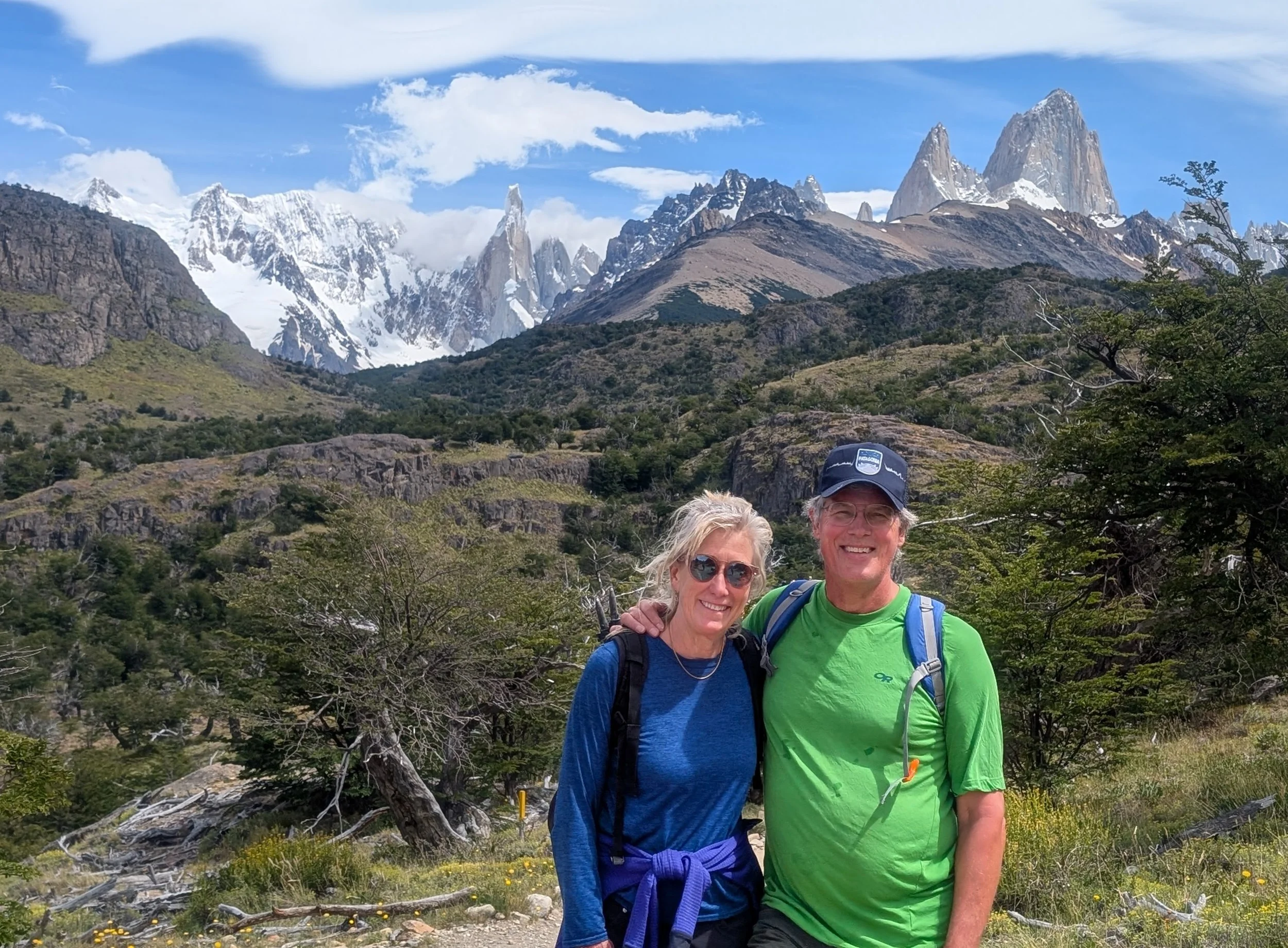
The next day’s hike - heading into Laguna Torre (slightly shorter steep hike today, only 20 km roundtrip)
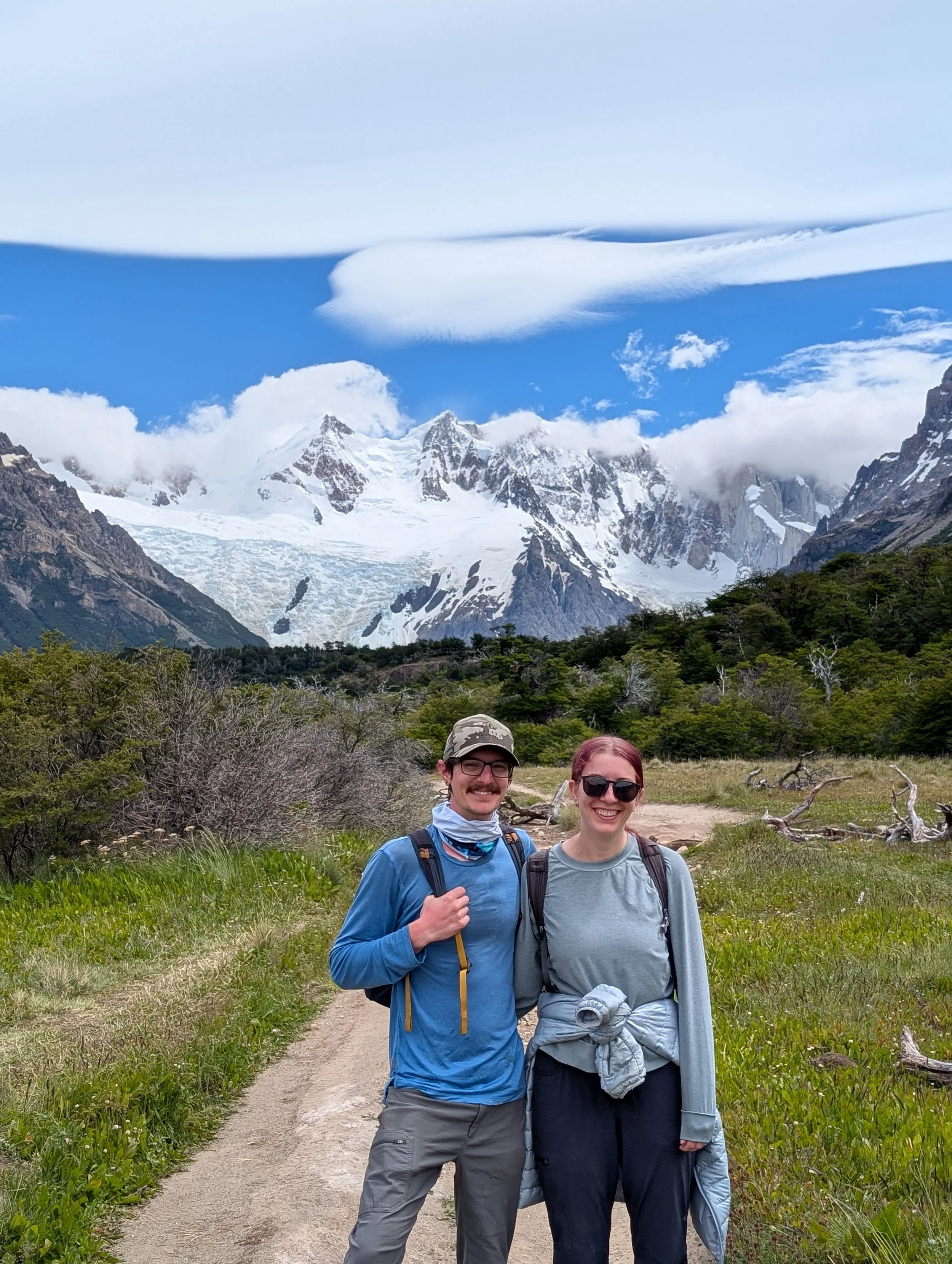
Nick and Claire - always up for a hike
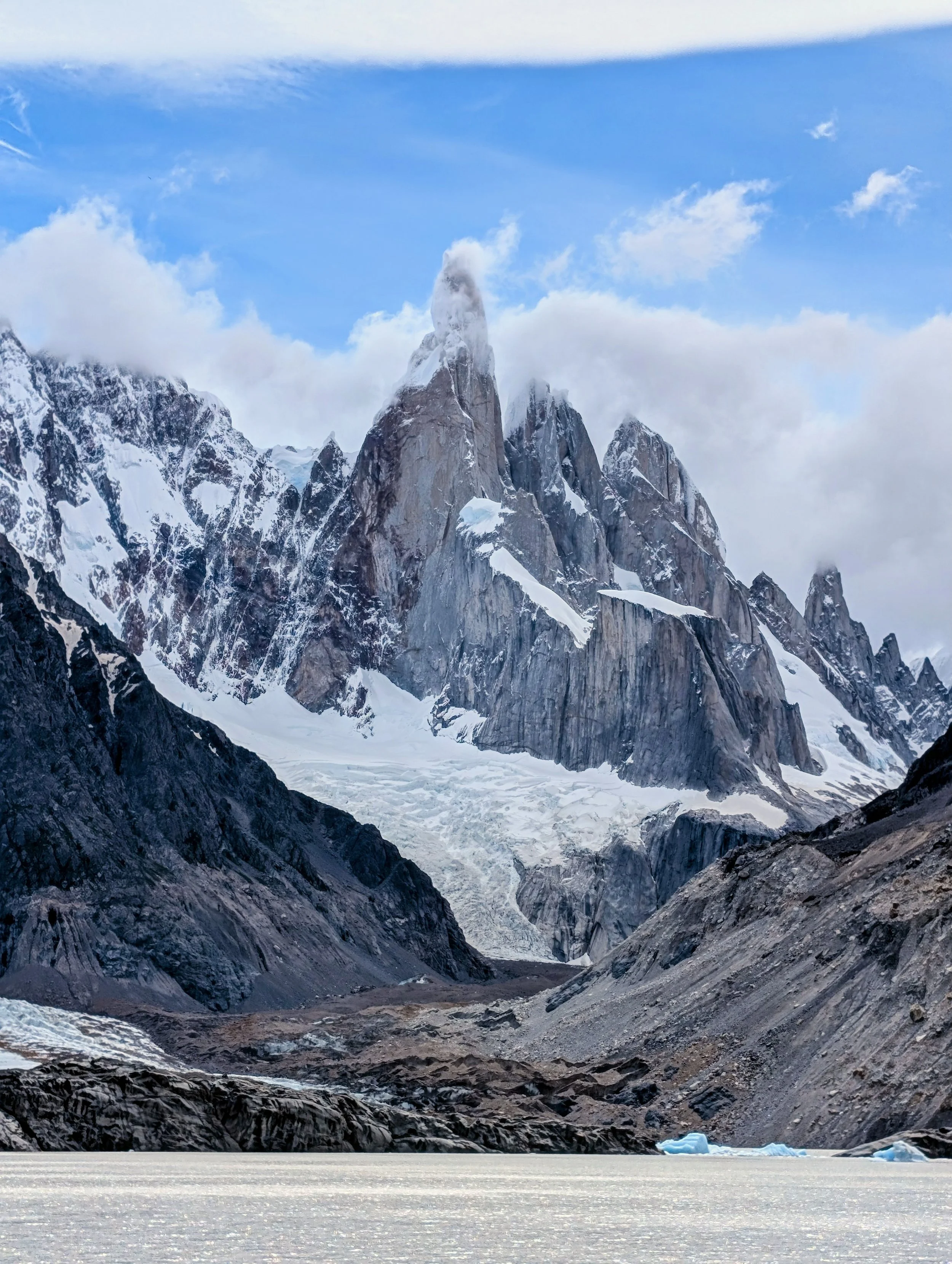
Laguna Torre, at the base of Cerro Torre
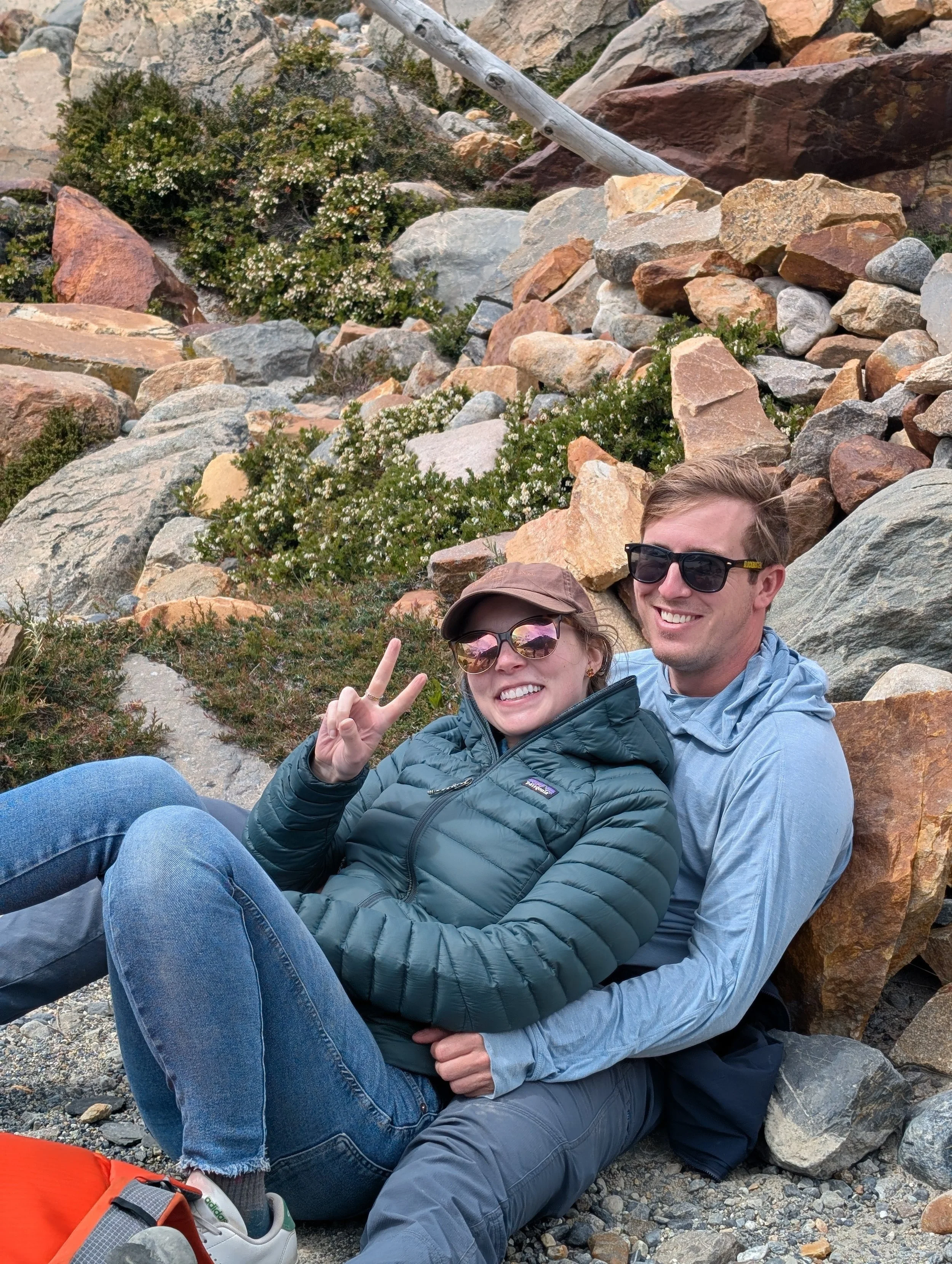
Time for a rest
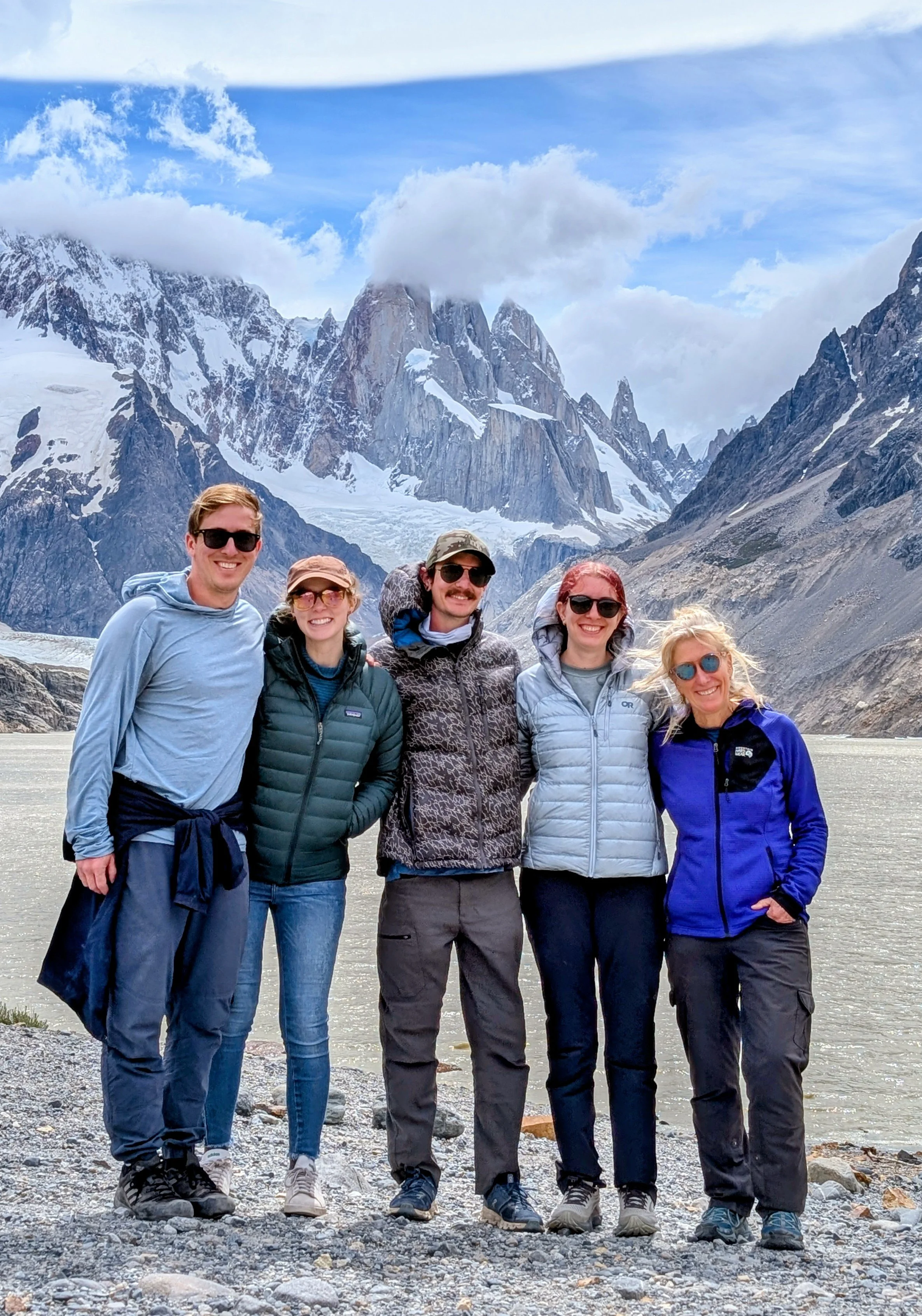
Another incredible view
Our time in El Chalten was excellent - the weather treated us well and we were able to complete the two main hikes, both of which leave right out of town. Our only logistics challenge was that since we booked six months in advance for high season, we had to split into two accommodations but we still managed plenty of time together. A little sore (at least Dawn and Andy were), we got on the bus to return to El Calafate where we had flights down to Ushuaia at the southern tip of Argentina.
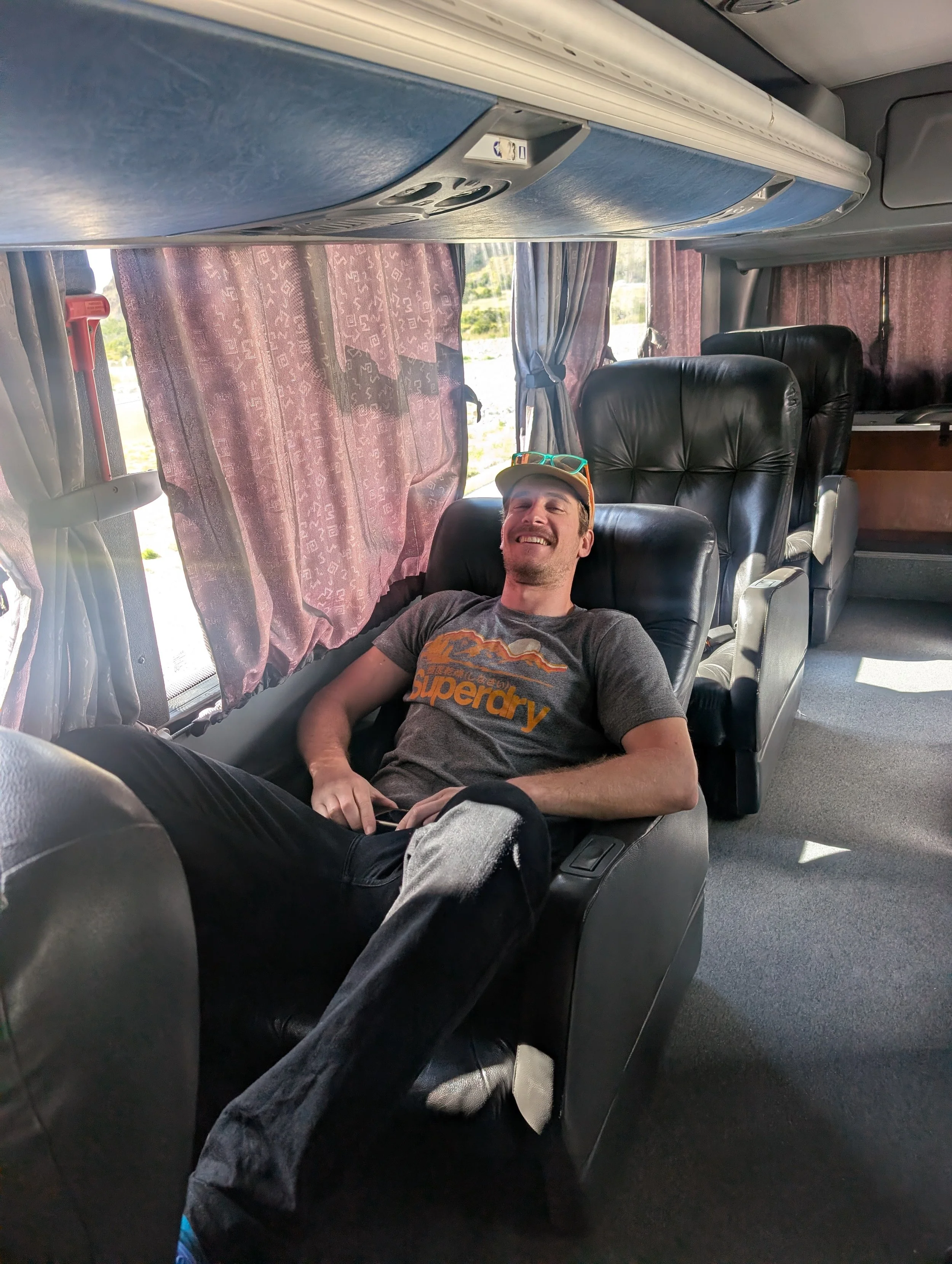
Trevor appreciating the comfortable seats. It was easy to book and use the bus system- we used Plataforma 10 which gives you the bus options and allows you to book tickets online and even pick your seats.
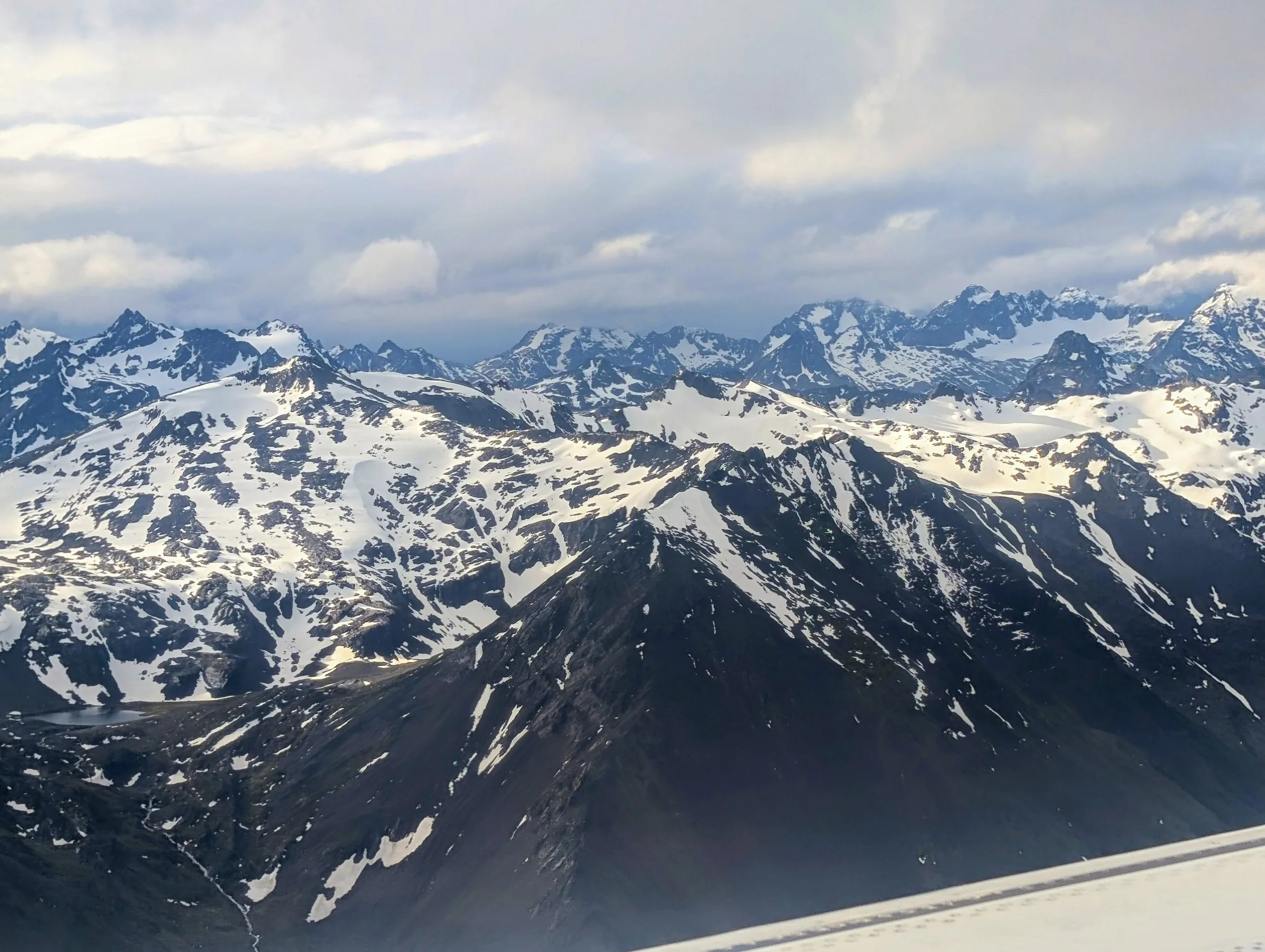
Flying into Ushuaia
Ushuaia was the bittersweet end. Some of us stayed six days, but slowly people were pealing off as they had to get back to real life and commitments. Trevor had actually left the day before so we were already missing him.
But Ushuaia meant penguins!! And we were all excited. Nicholas had booked a day trip out to the nearest penguin colony. We were loaded in a passenger van, driven 90 minutes, transfered to a rubber dingy then taken 30 minutes out to the penguin colony. Of course it was way beyond worth it.
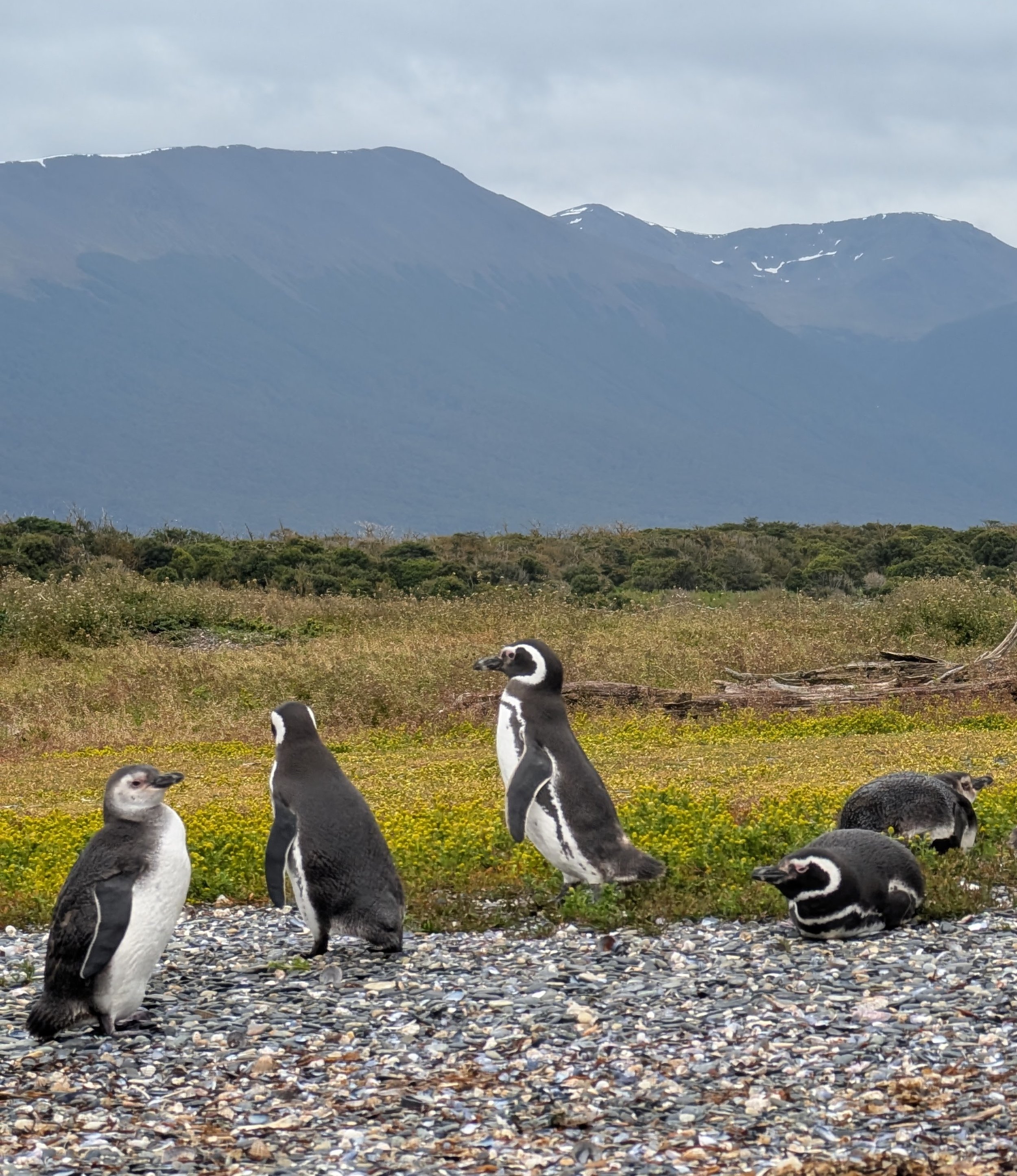
Magellanic penguins
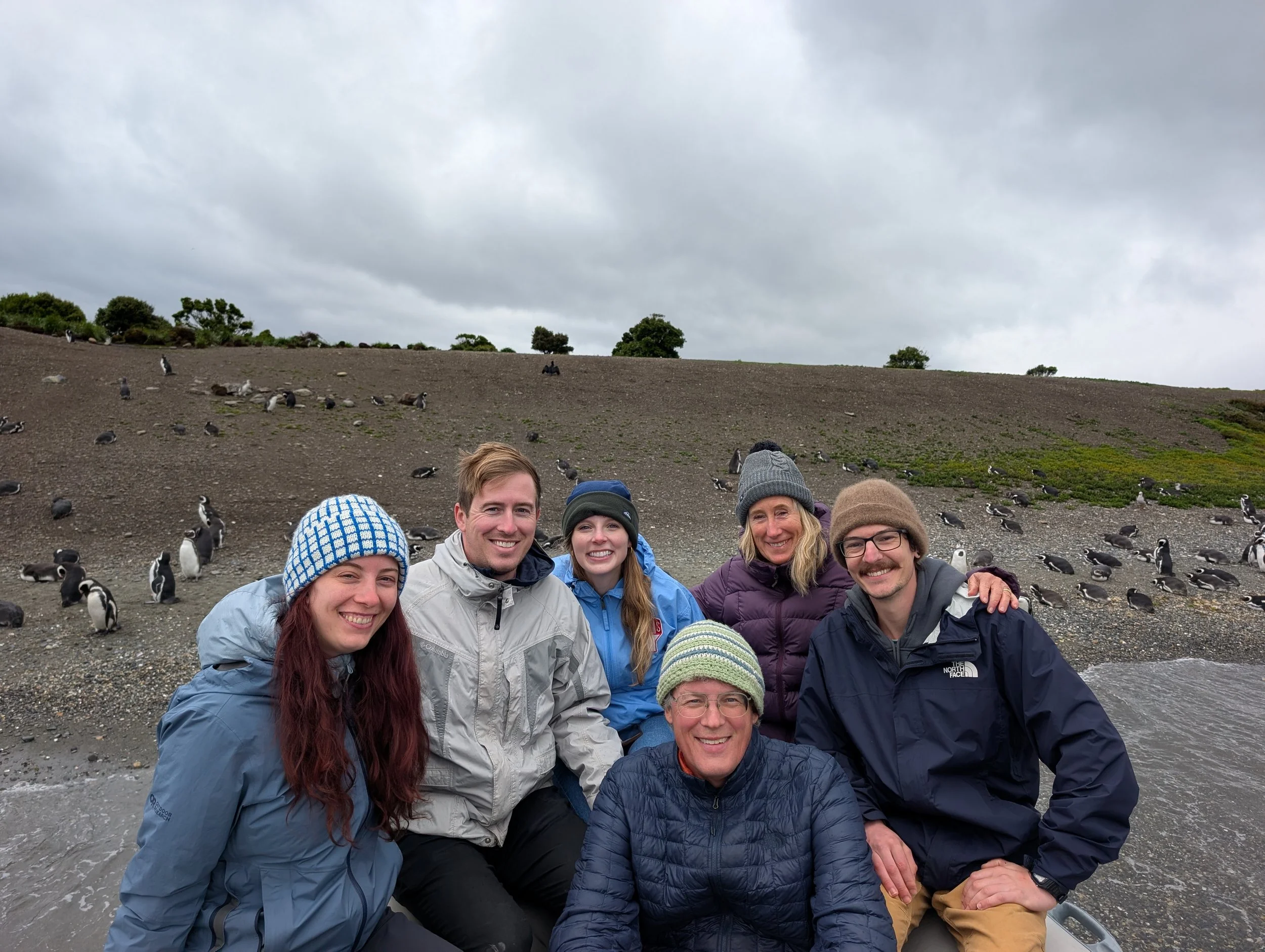
Have to do the group family/penguin photo
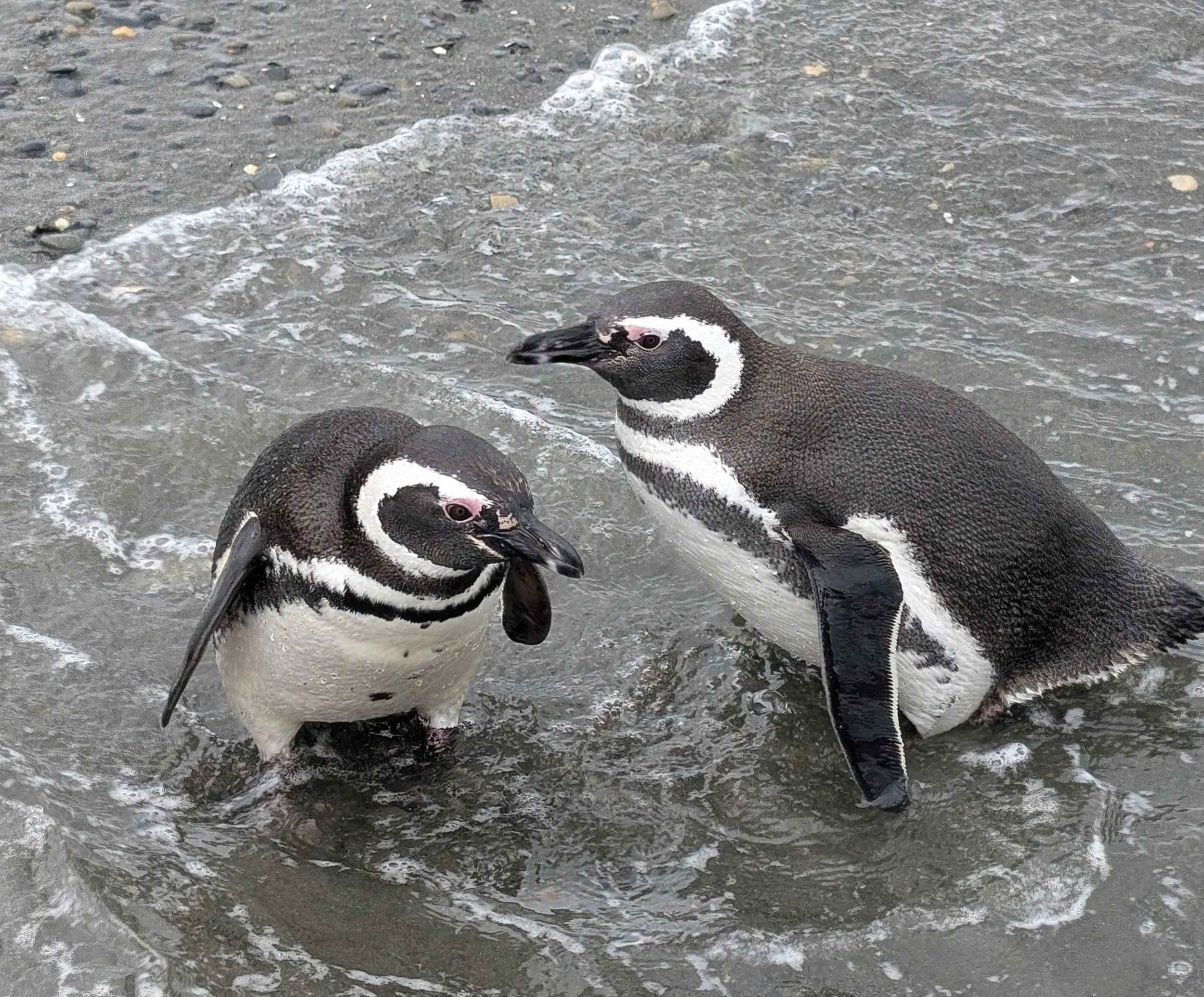
Best part was watching them play in the water
Because for us, every day is better with a hike, the next day we hired a driver to take us out to the Laguna Esmarelda trailhead.
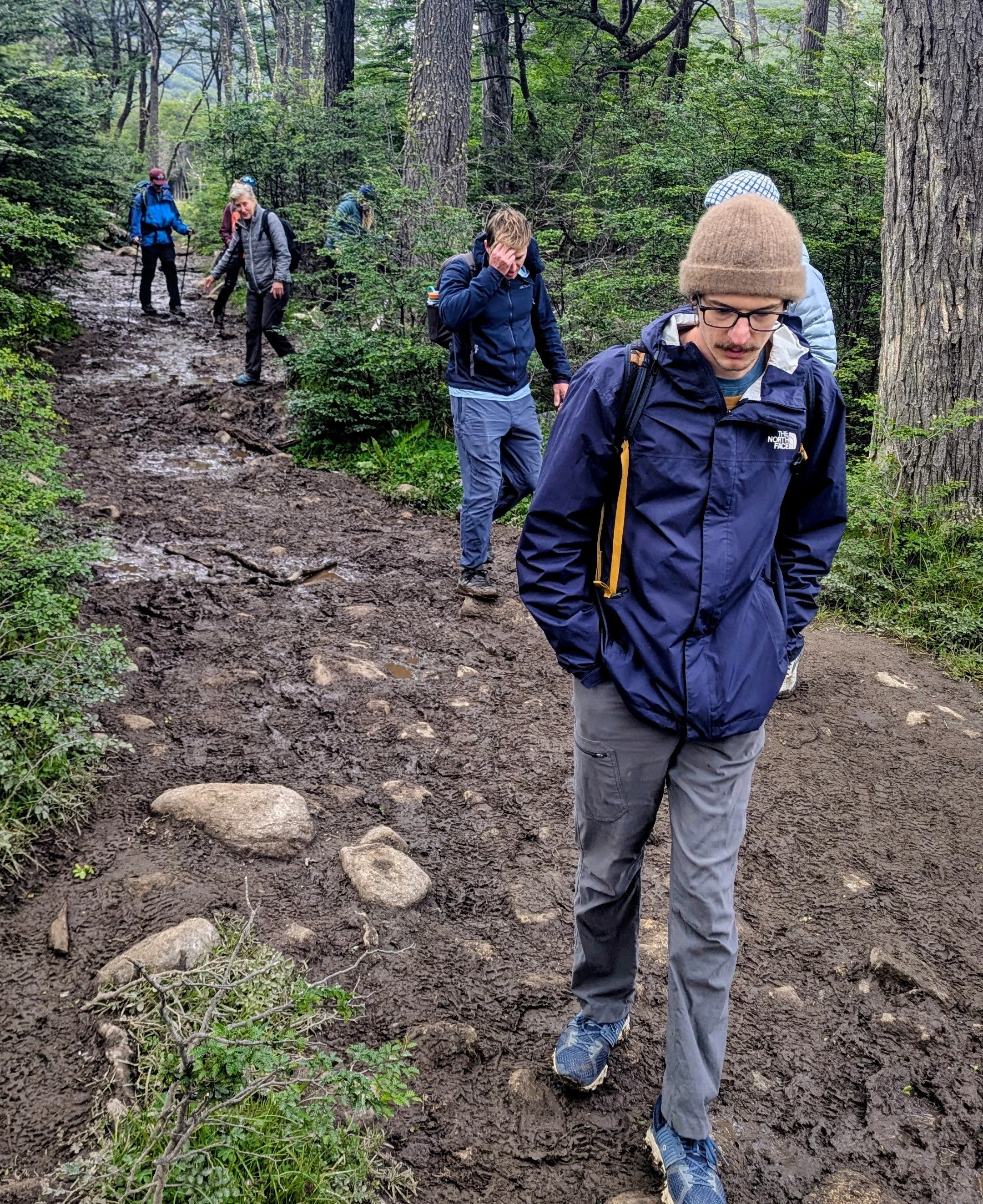
This hike was relatively short - 9km out and back, but quite possibly the muddiest hike we have ever done
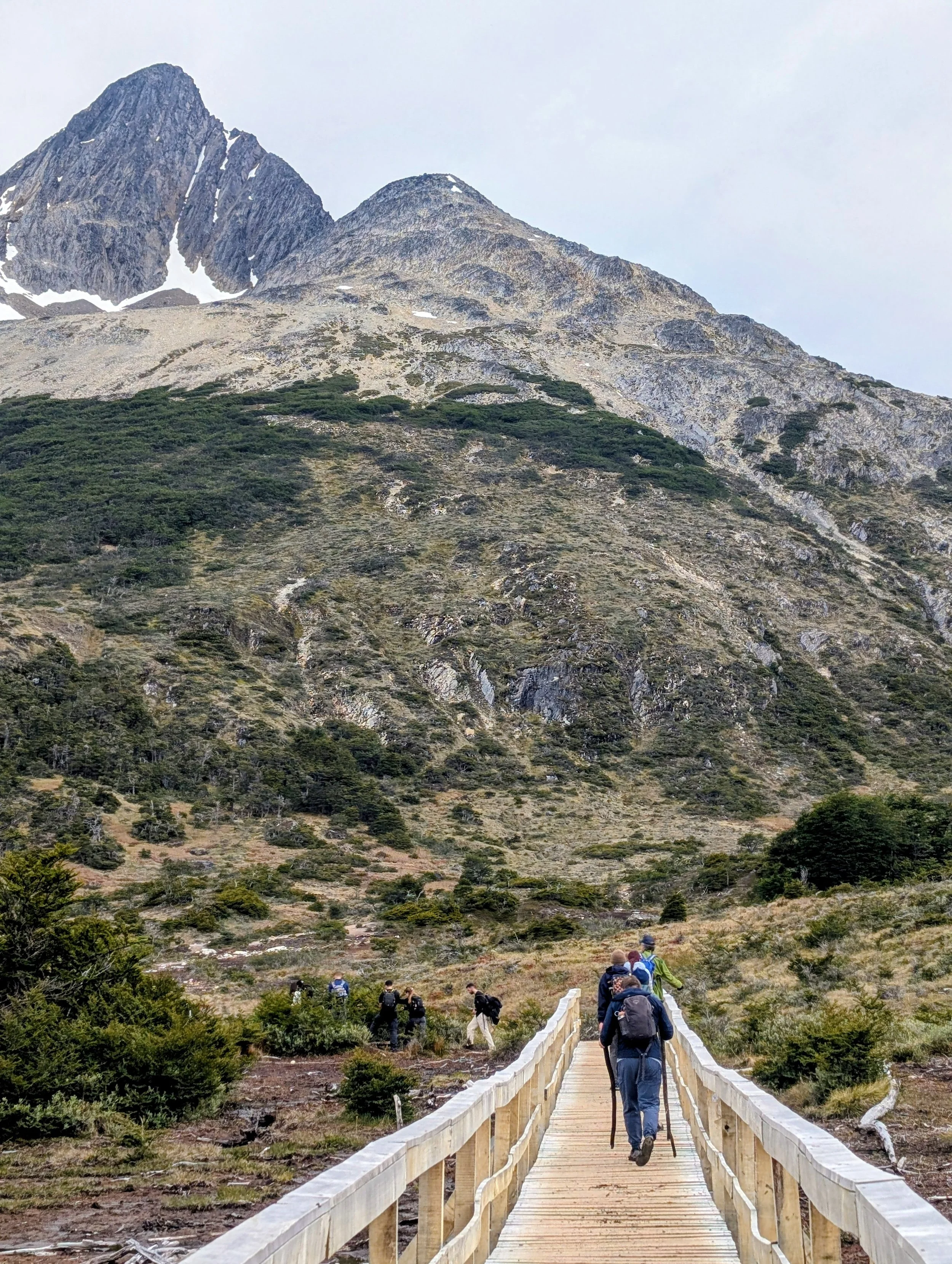
Very grateful for the occasional boardwalks
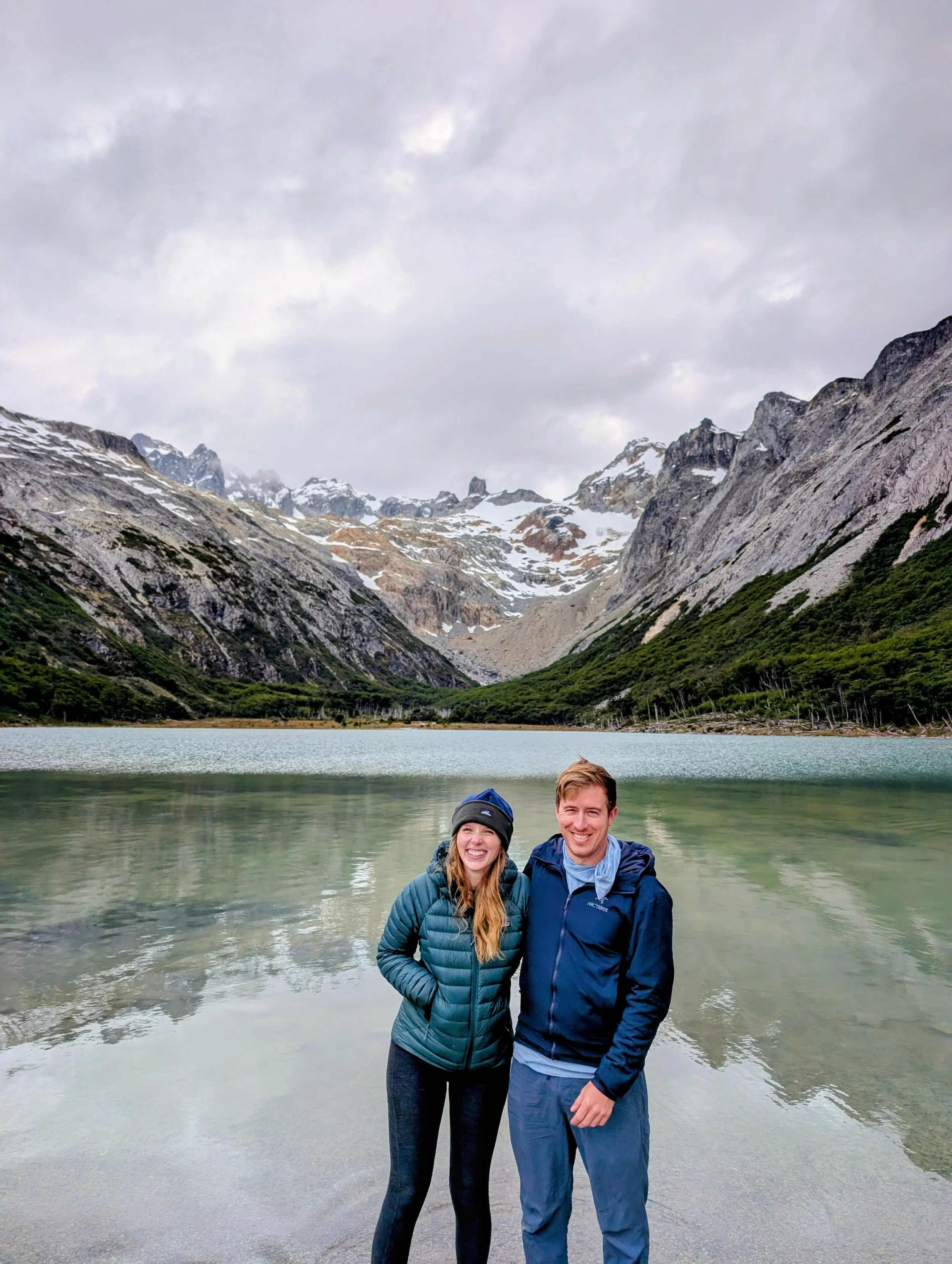
But the final view was worth it - we see how the lake got its name
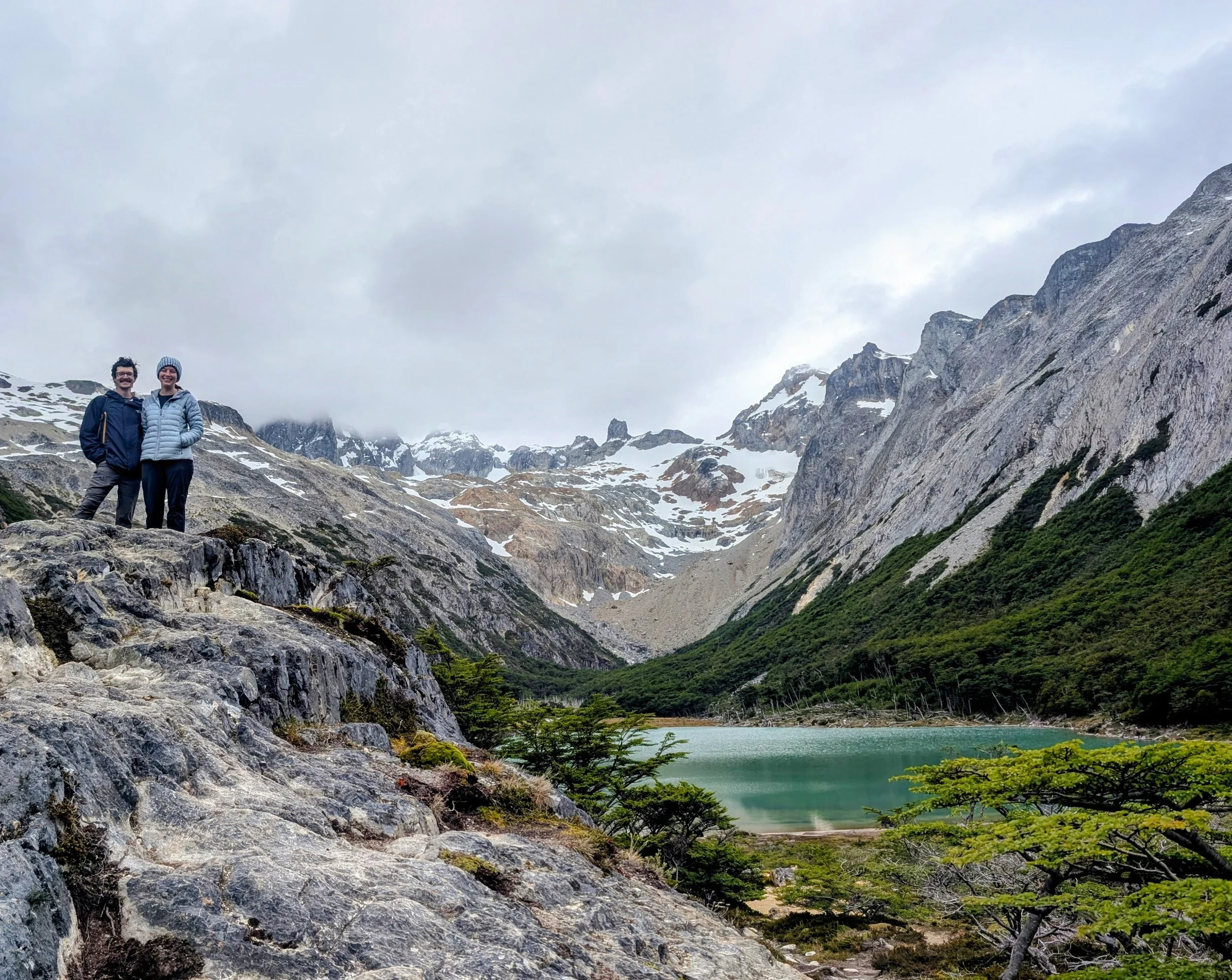
Nick and Claire enjoying the view from up high
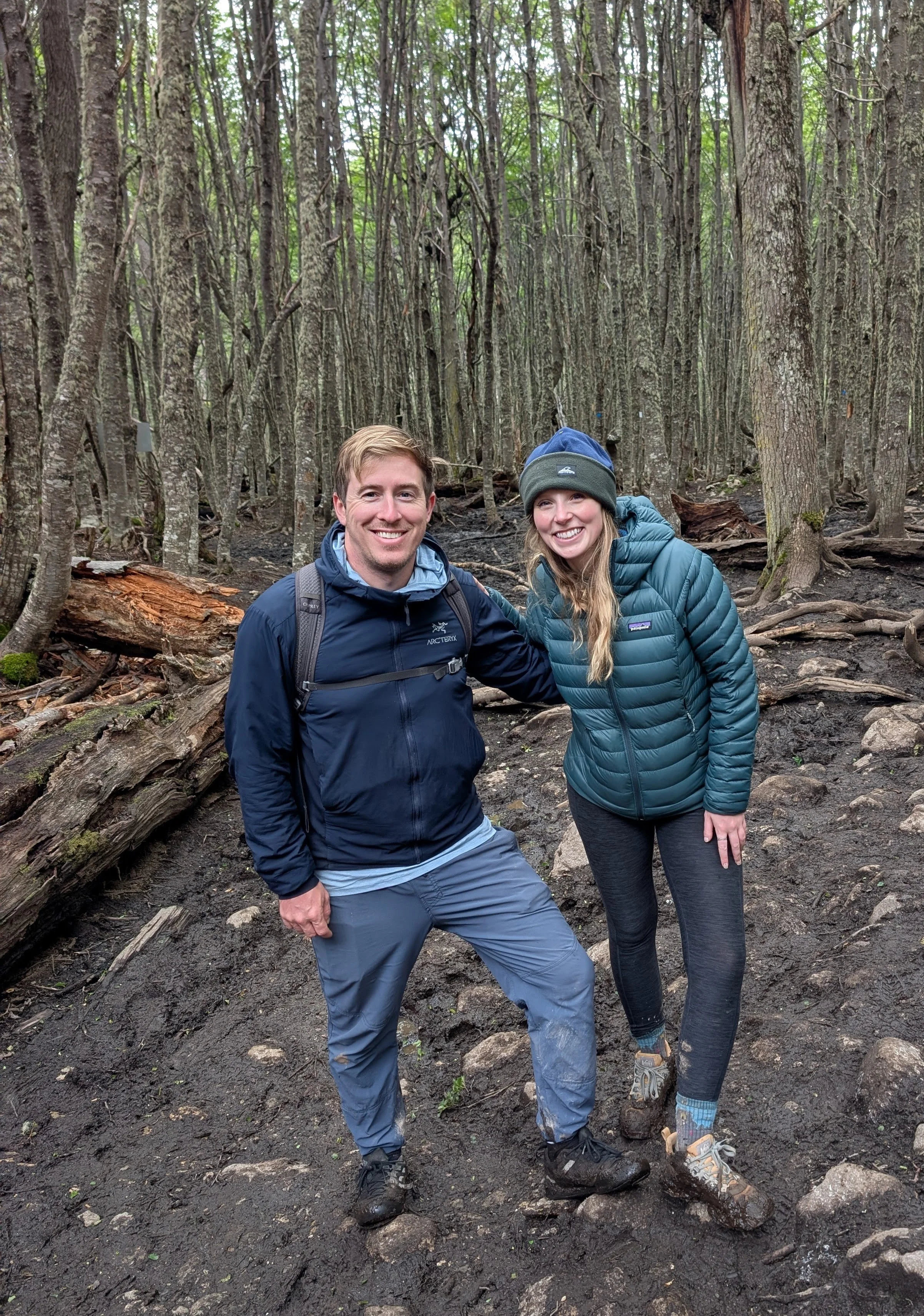
Embracing the suck of the mud
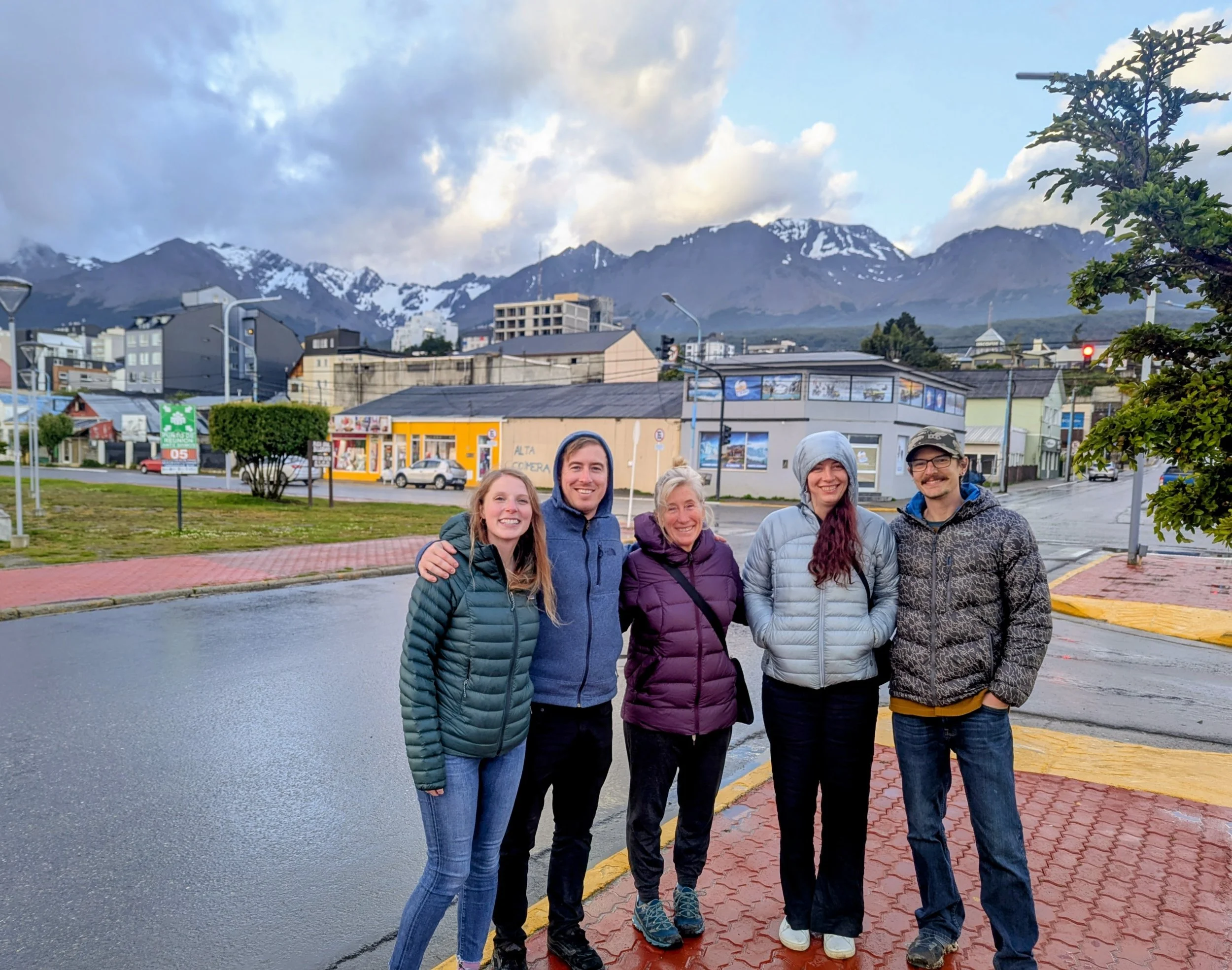
Wondering the streets of Ushuaia, surrounded by mountains and water
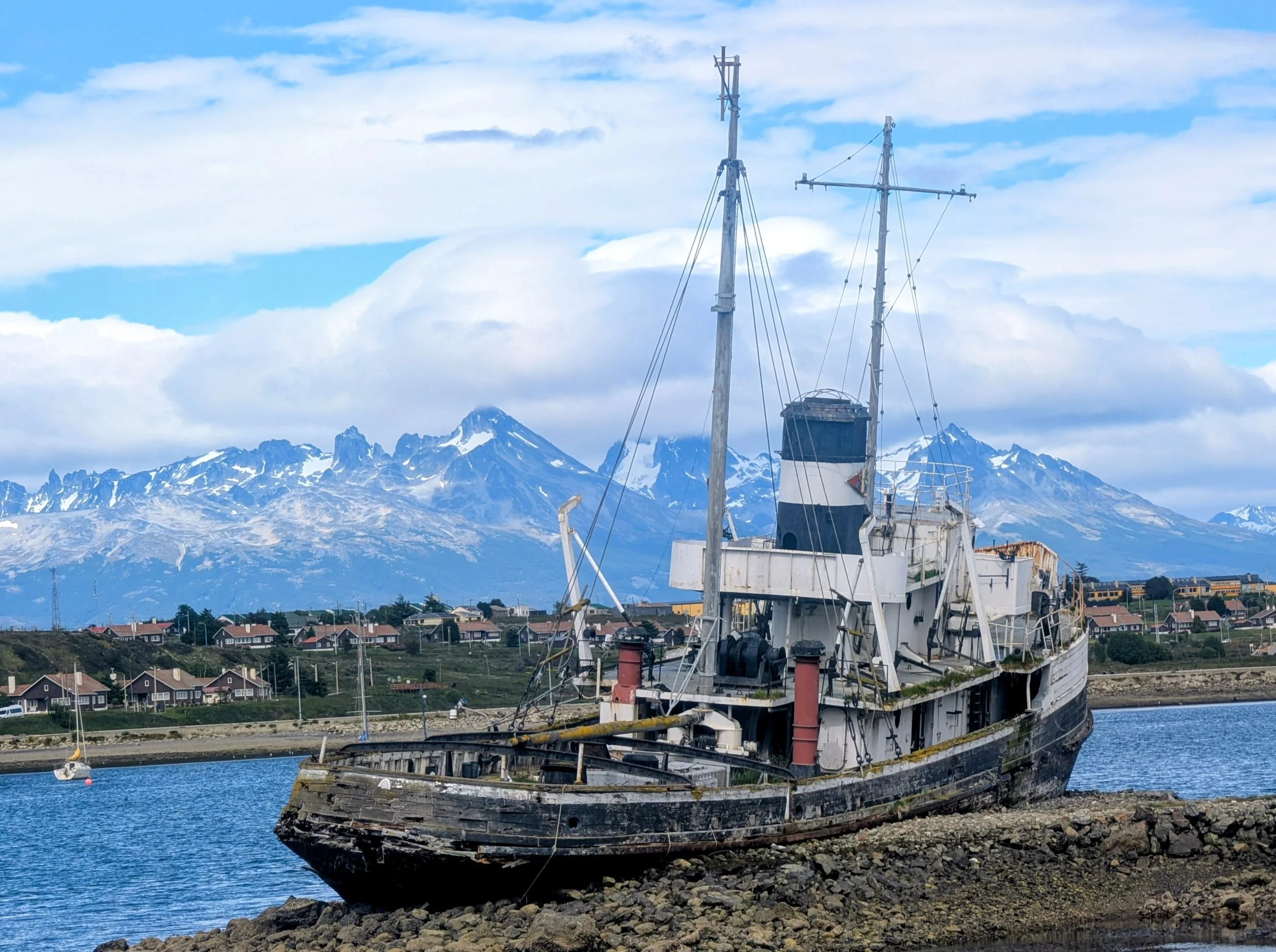
Ship wreck in the harbor
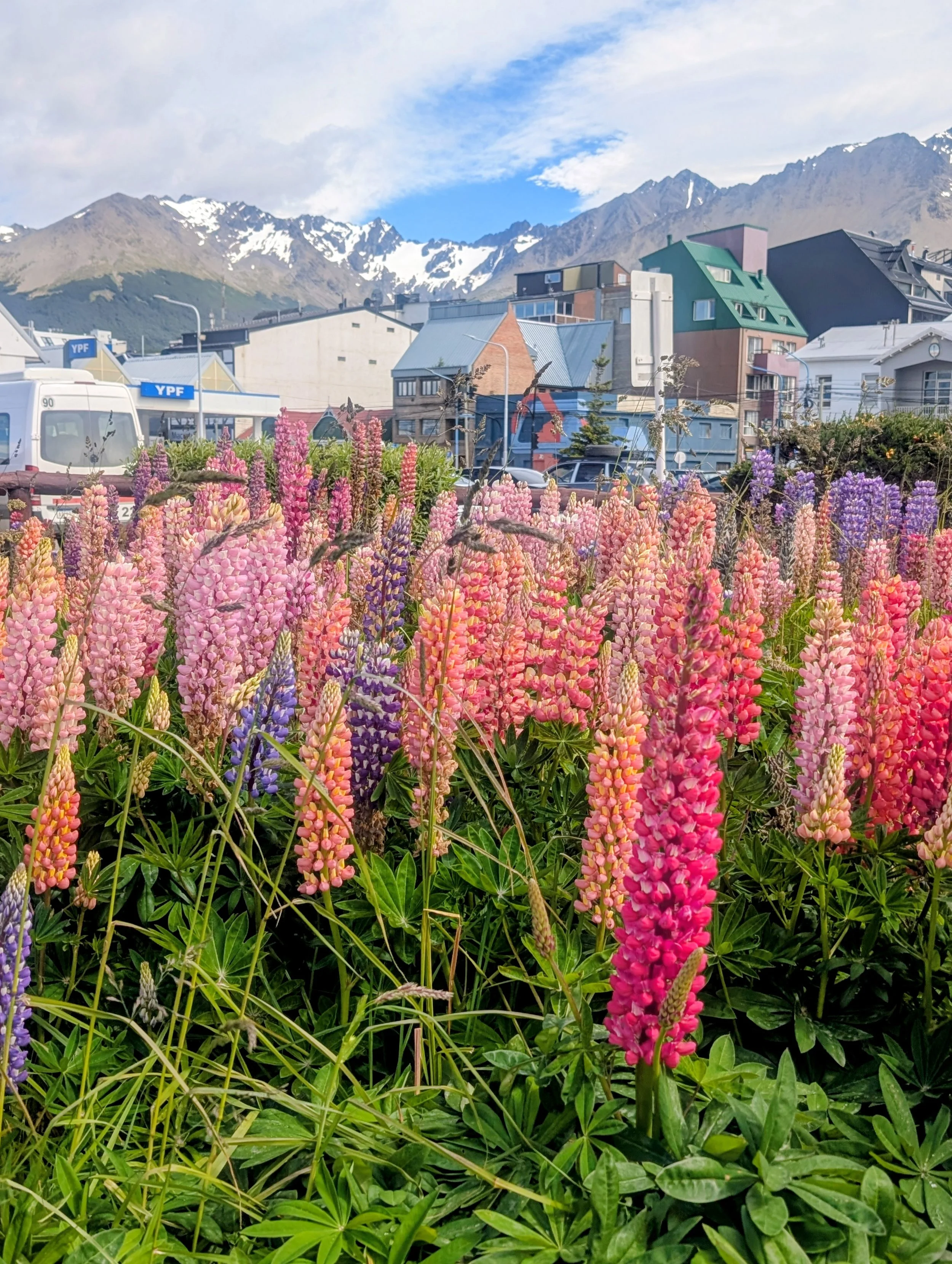
Middle of summer - wildflowers in bloom
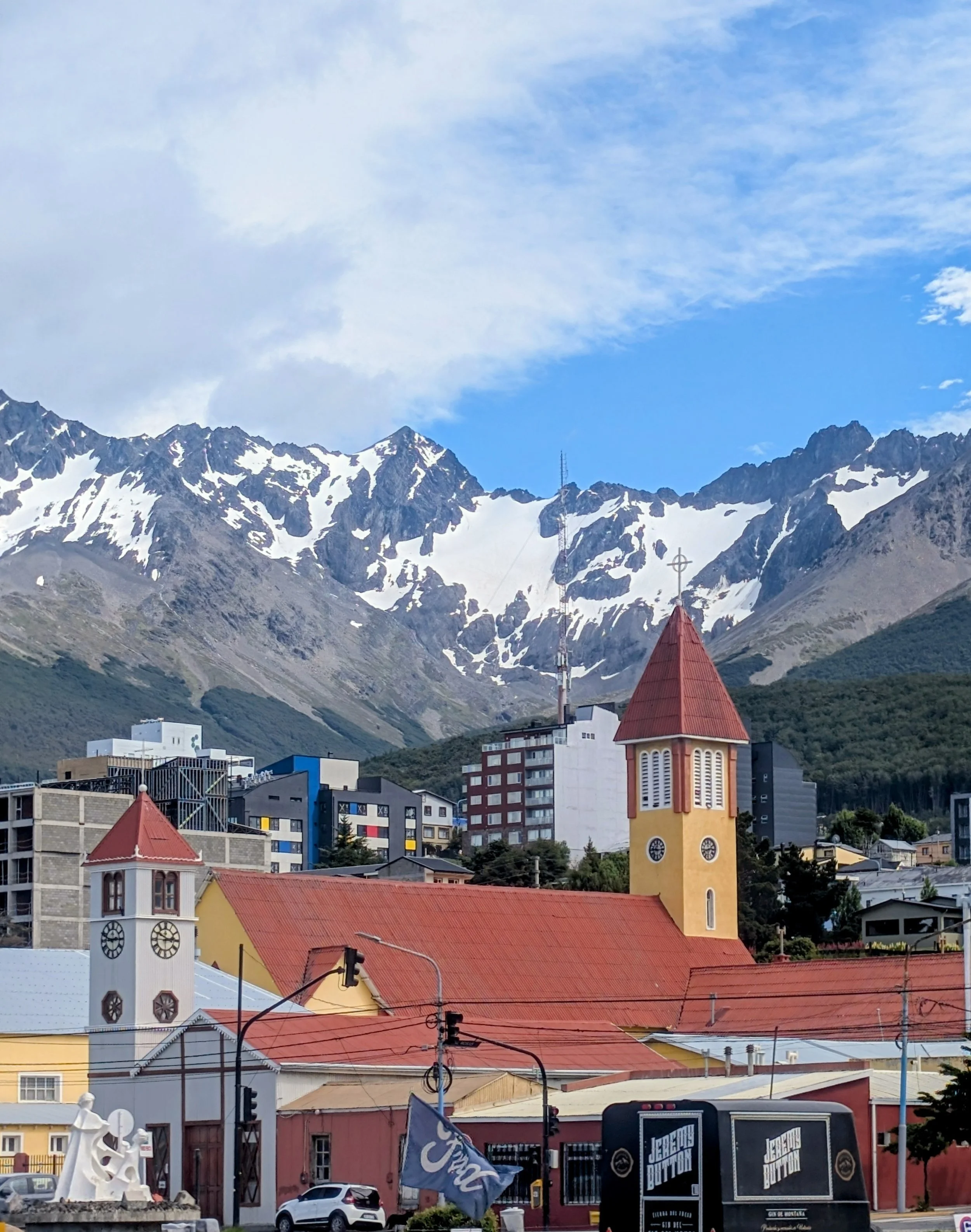
View to the glacier above town
Ushuaia felt like another classic “jumping off for adventure” town. The rhythms of the downtown tourist area were set by the arrival and departure of the Antarctic Cruises from the port. The downtown streets with bars, cafes and souvenir shops were lively and appealing.
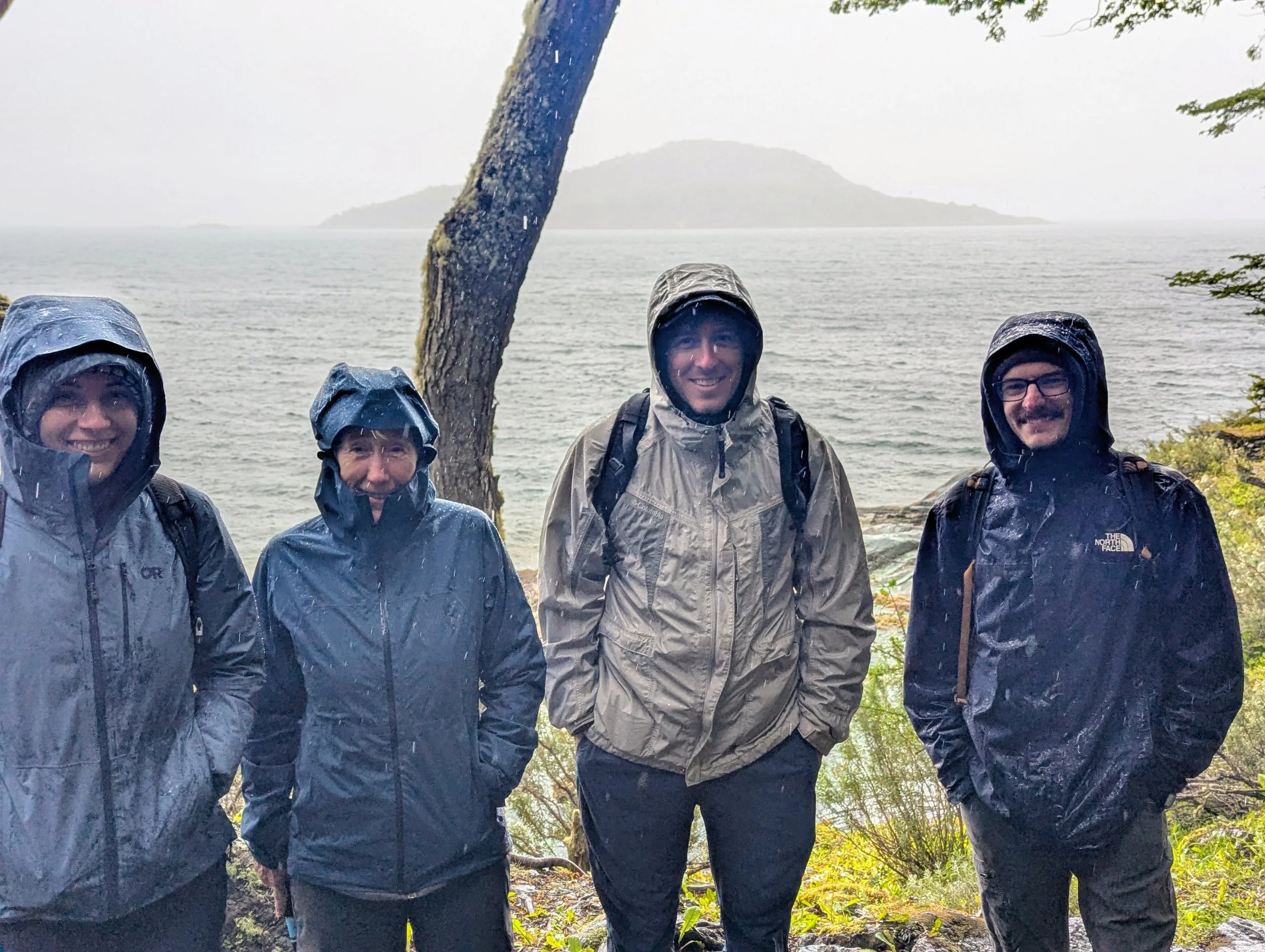
The weather did not 100% cooperate - our rainy coastal hike in Tierra del Fuego National Park
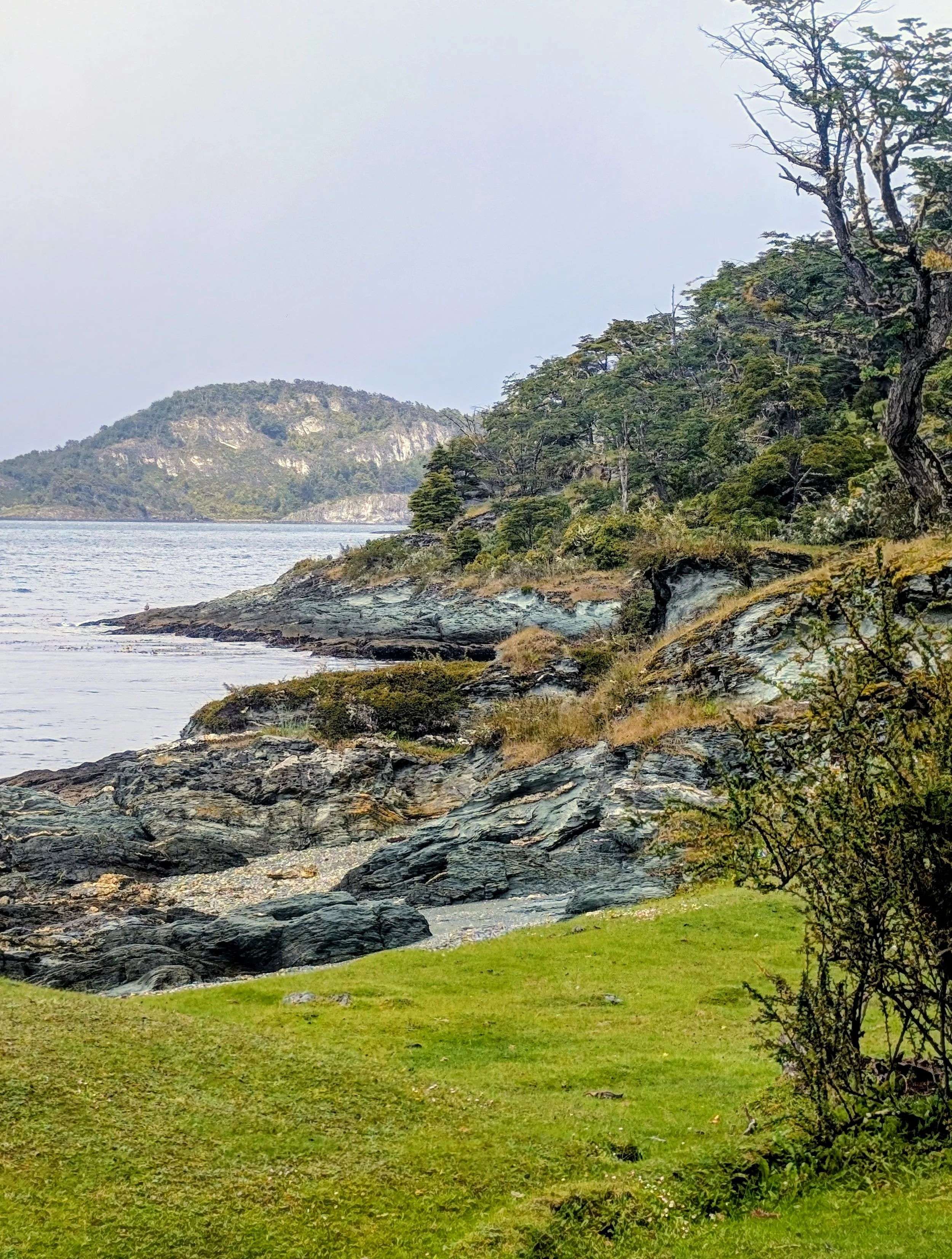
But it eventually cleared up
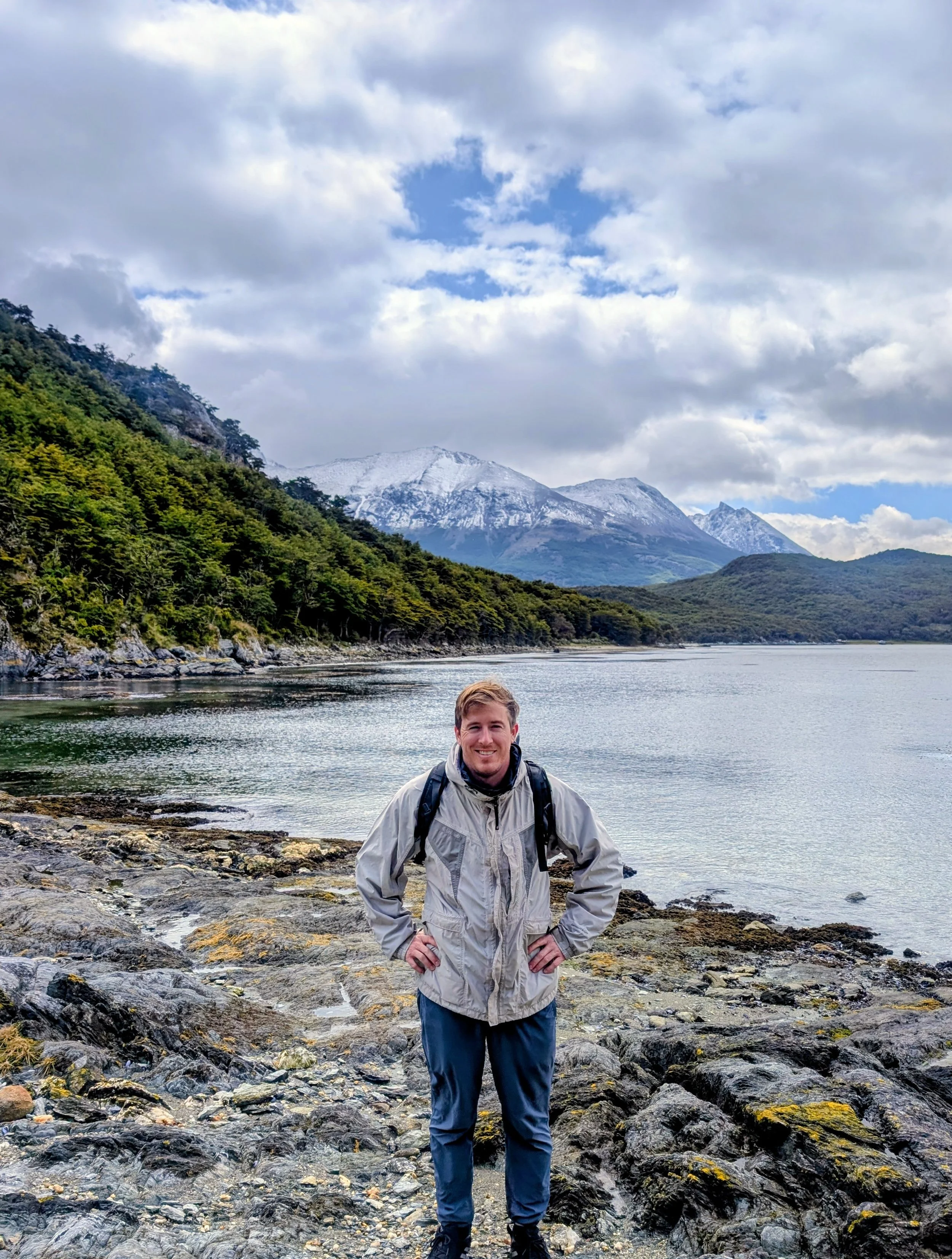
Senda Costera hike in Tierra del Fuego National Park - 8 km one way
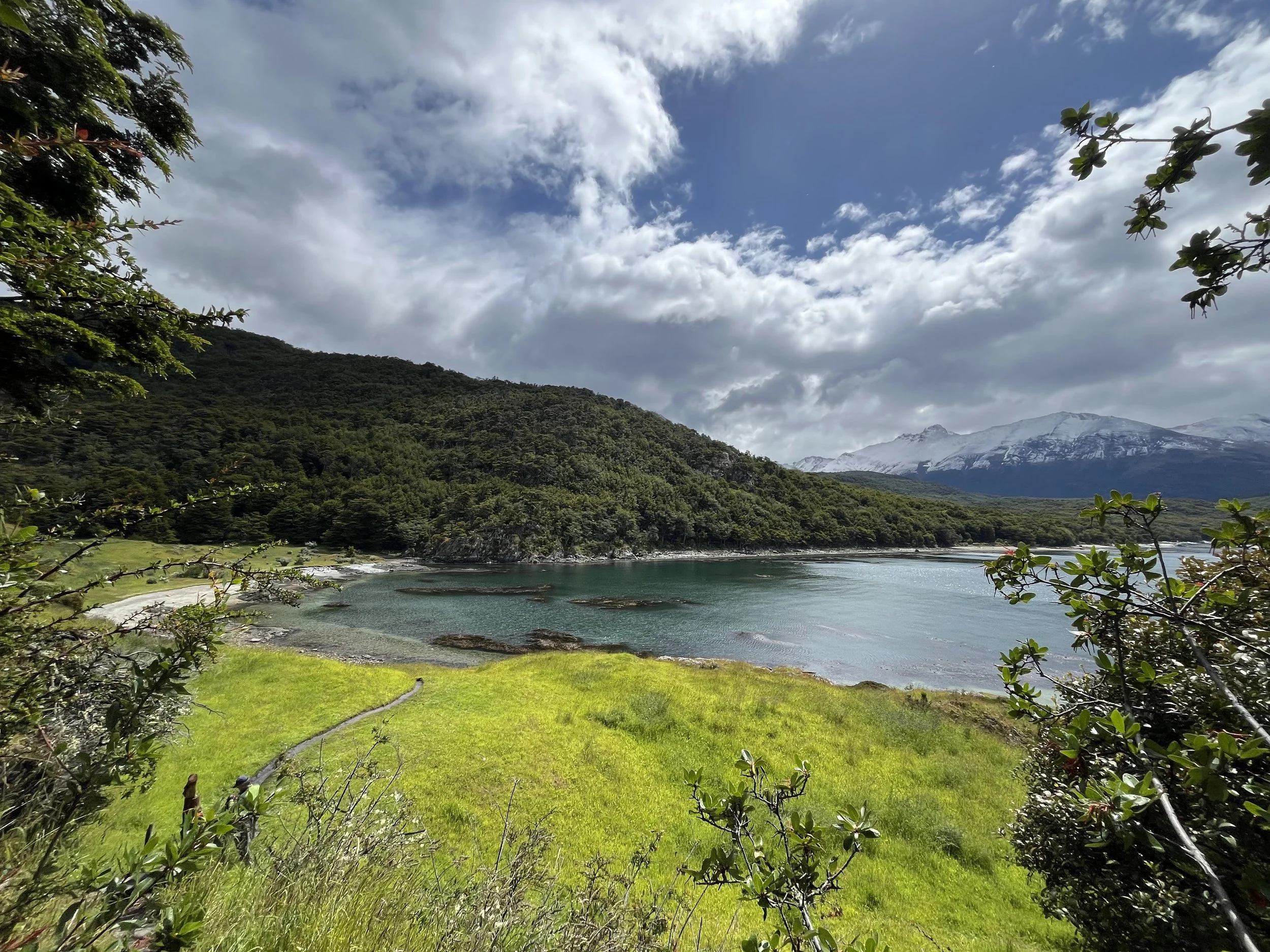
Beautiful views
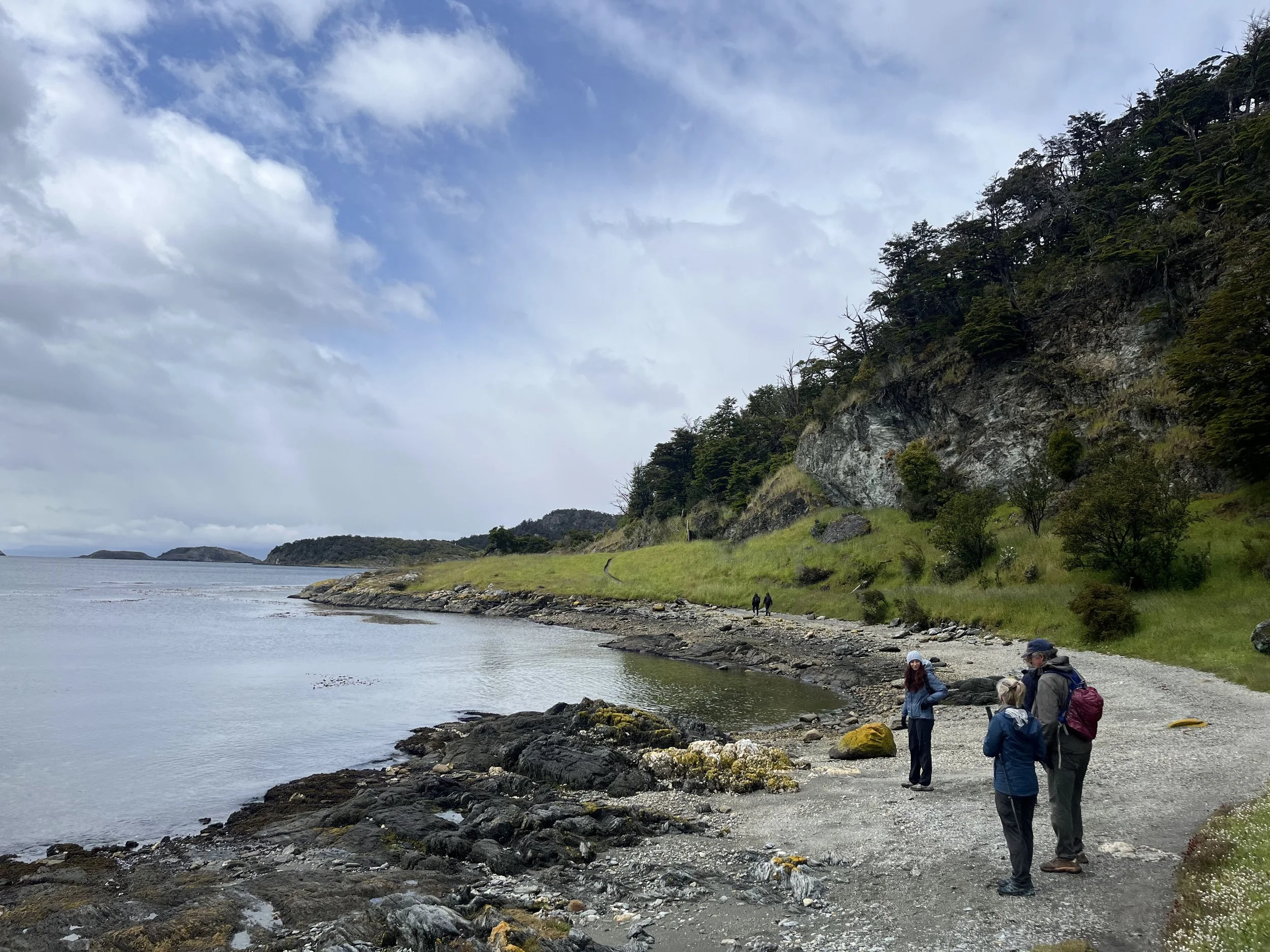
And mostly a nice flat hike
In Ushuaia we had been using a combination of Uber, private driver and tourist buses for transportation. The challenge in taking Uber to a trailhead was that there was no coverage to contact someone for a ride back. So we contracted with private drivers who were willing to return for us or, when the schedule worked took tourist shuttles that left from the port. But in our last days we were only four people so rented a car to explore a little more freely.
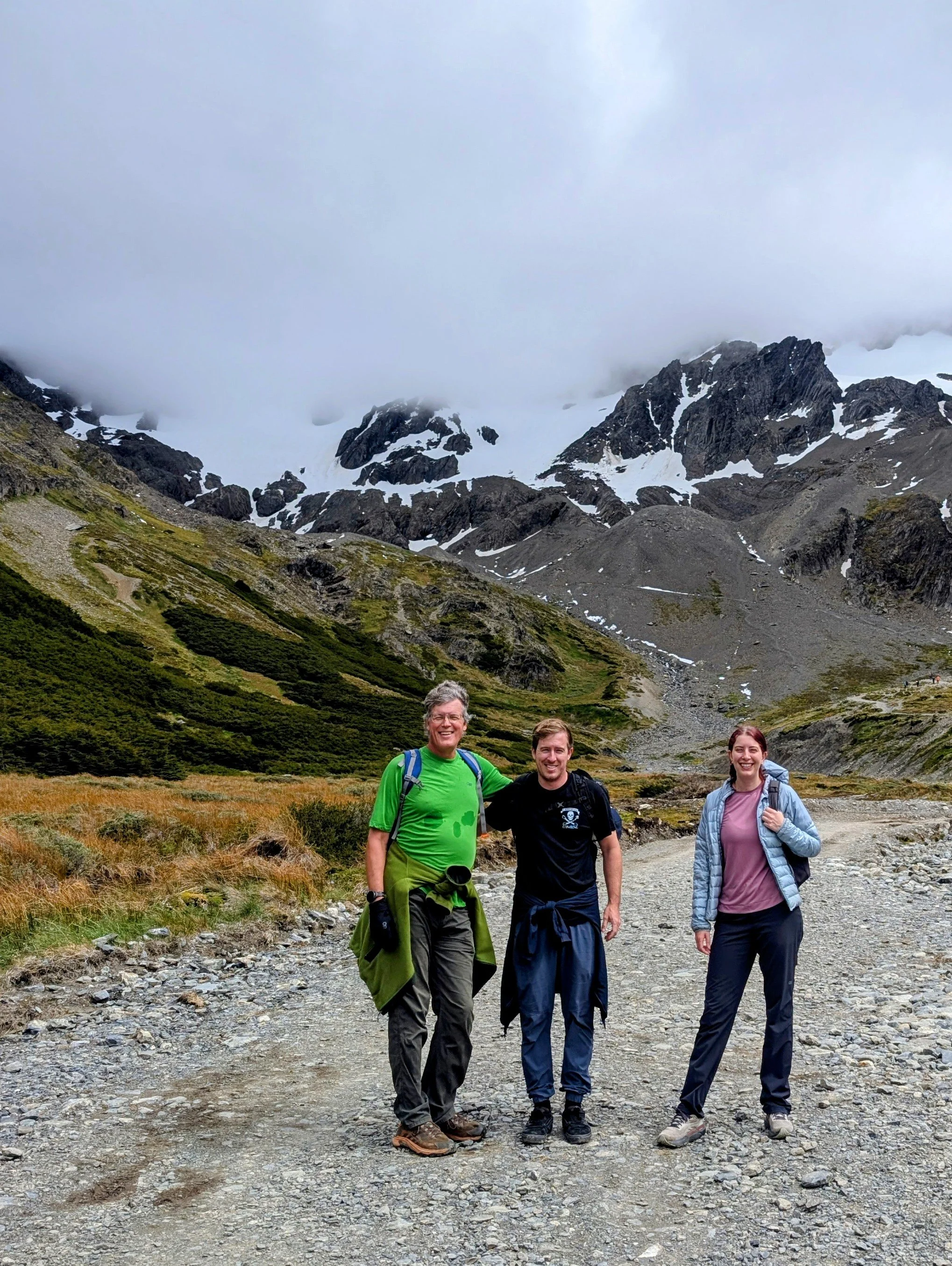
Our group is shrinking - today’s outing, a hike to the base of the Martial Glacier in the canyon above Ushuaia
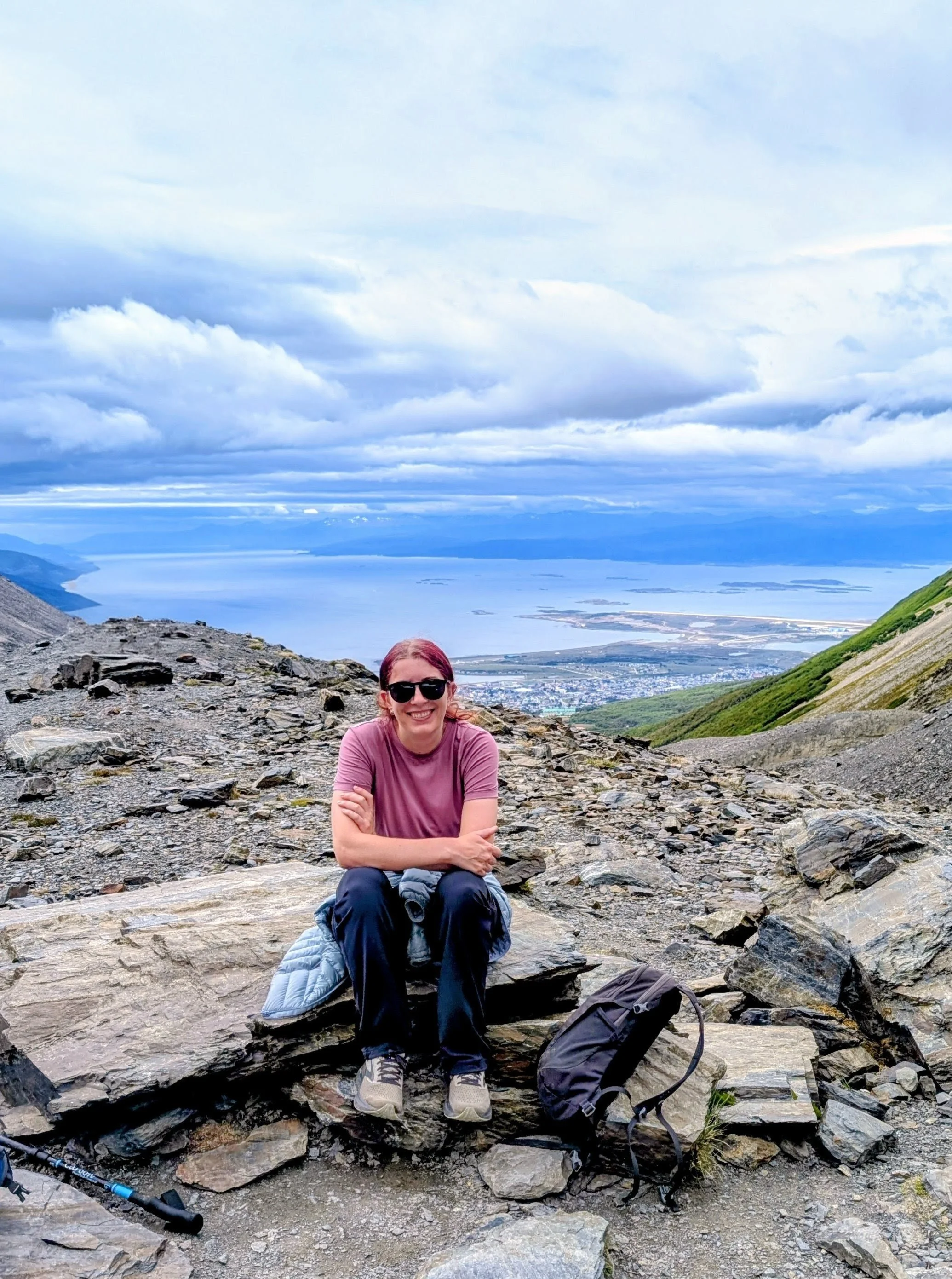
Also providing excellent views down over the town
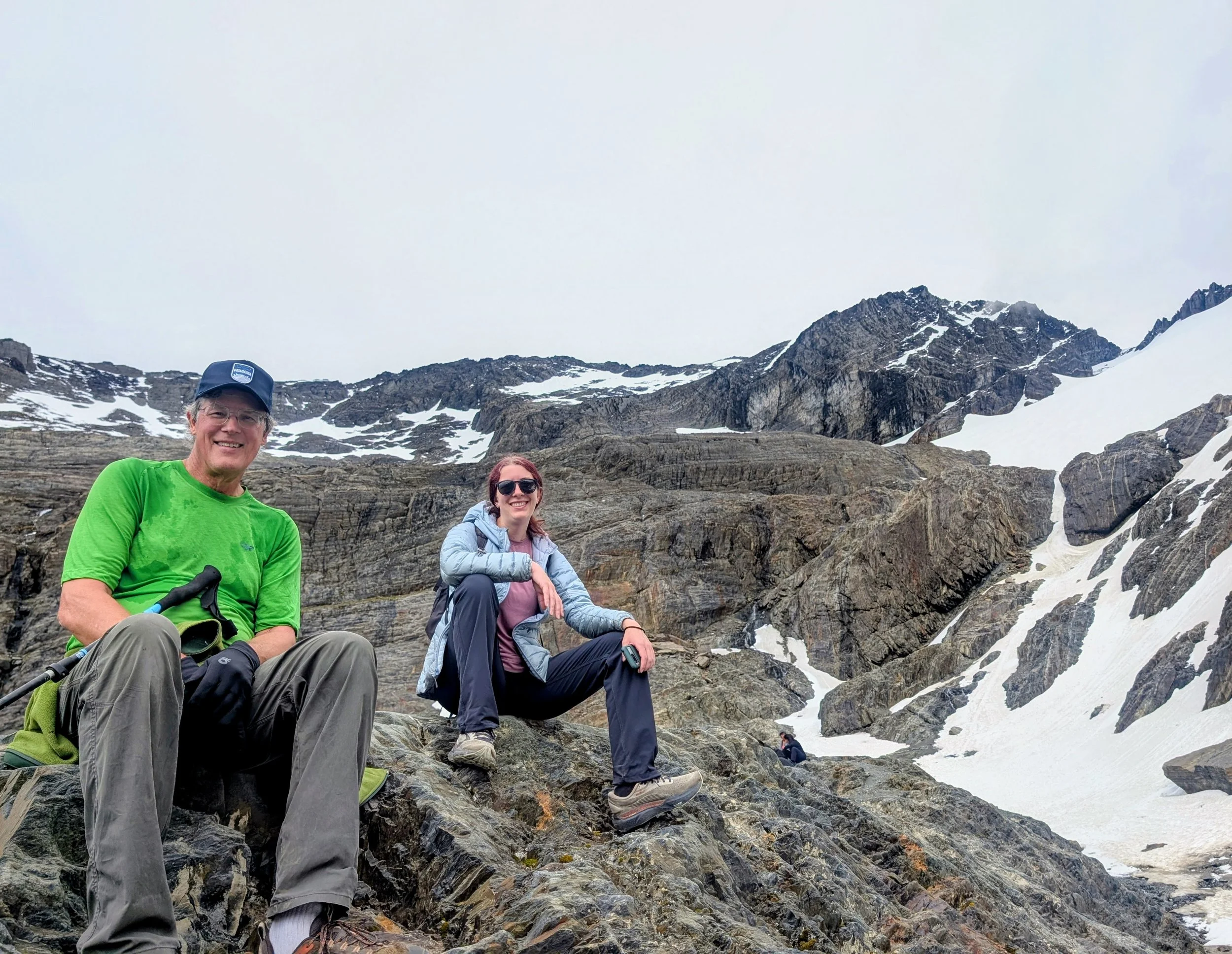
Chilling by the glacier
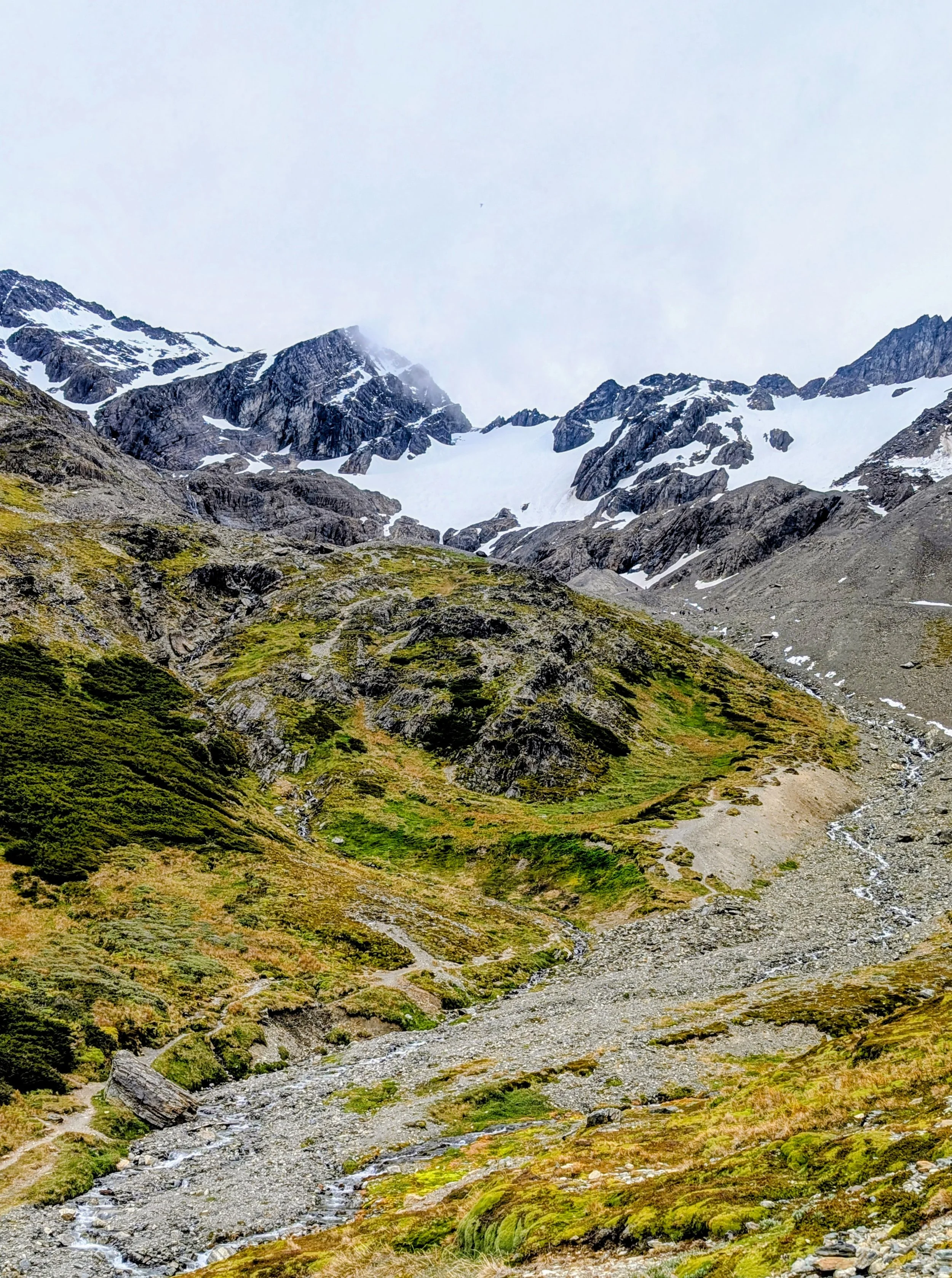
Appreciating the alpine greenery
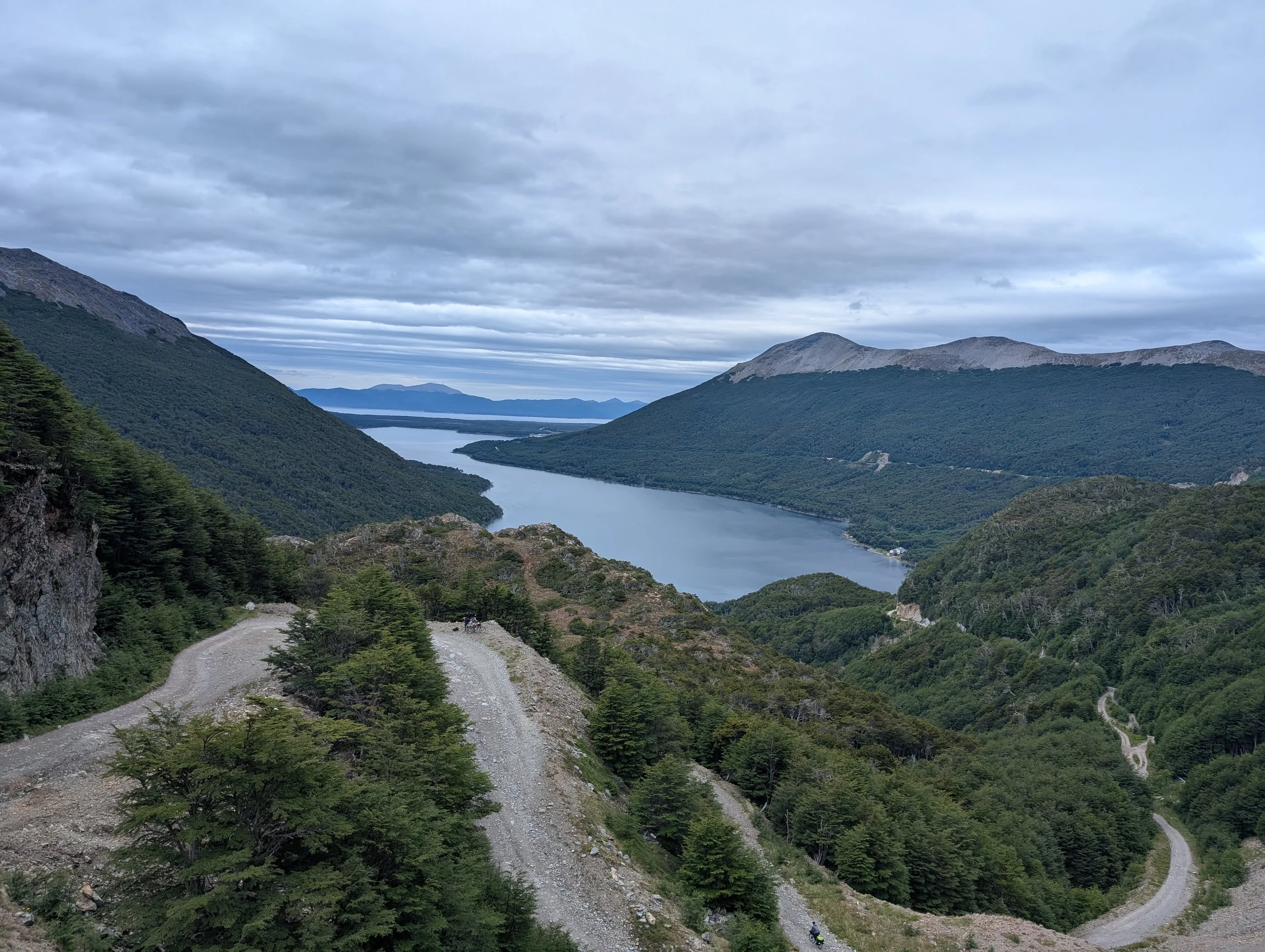
Drive out to Garibaldi Pass - about 30 minutes from Ushuaia
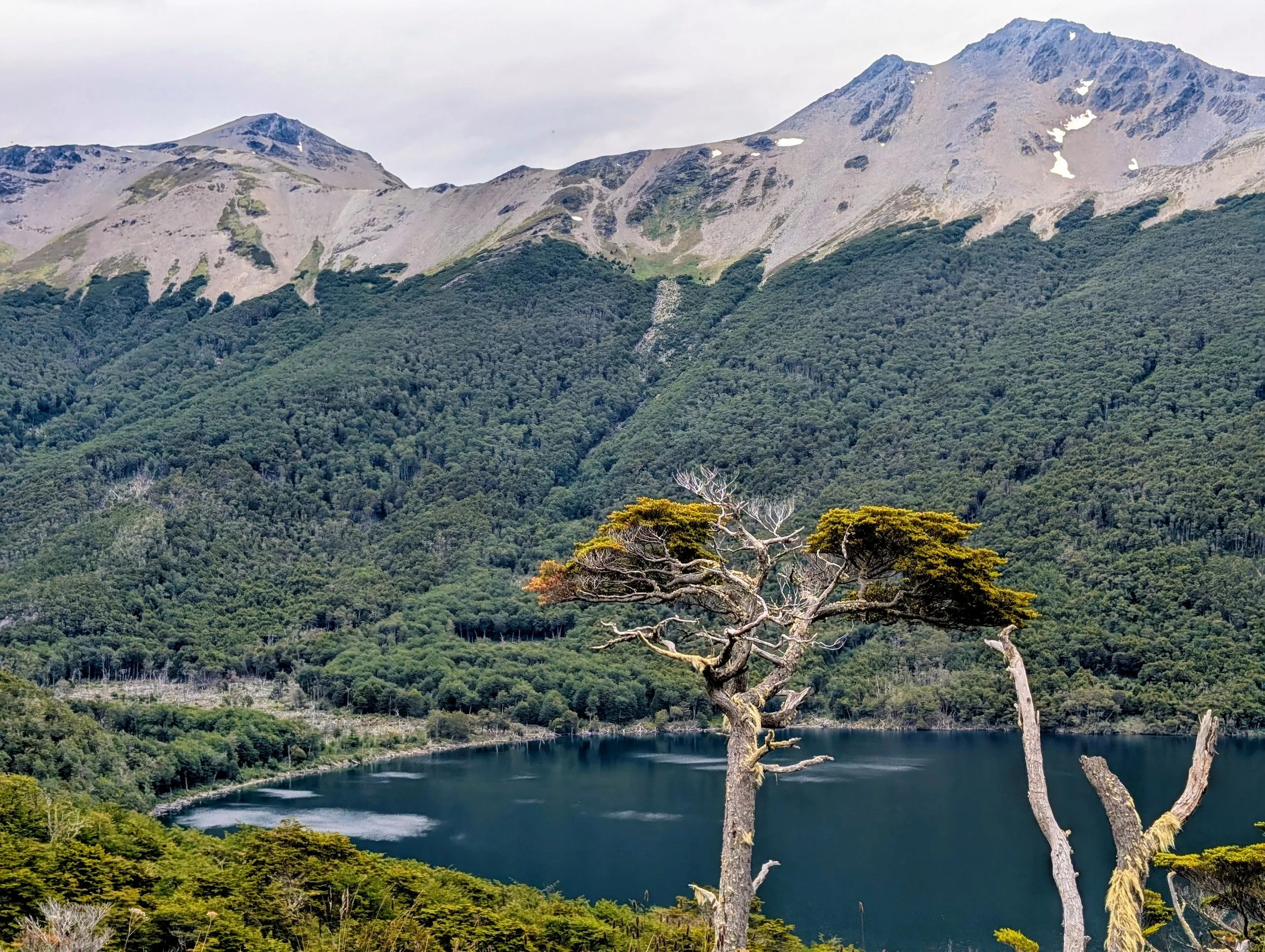
Lago Escondido - 45 minutes driving from Ushuaia
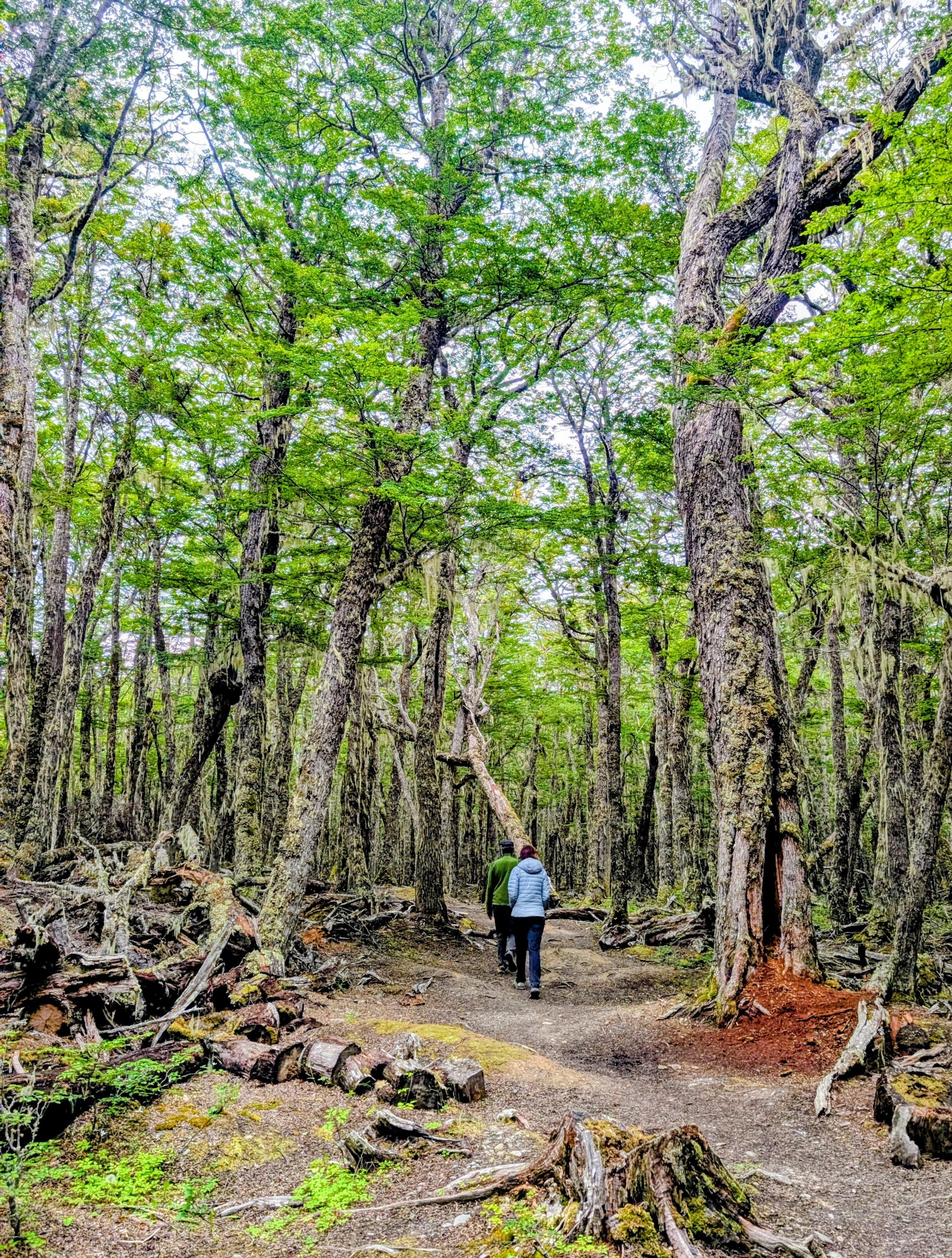
Forested hike to the edge of Lake Escondido
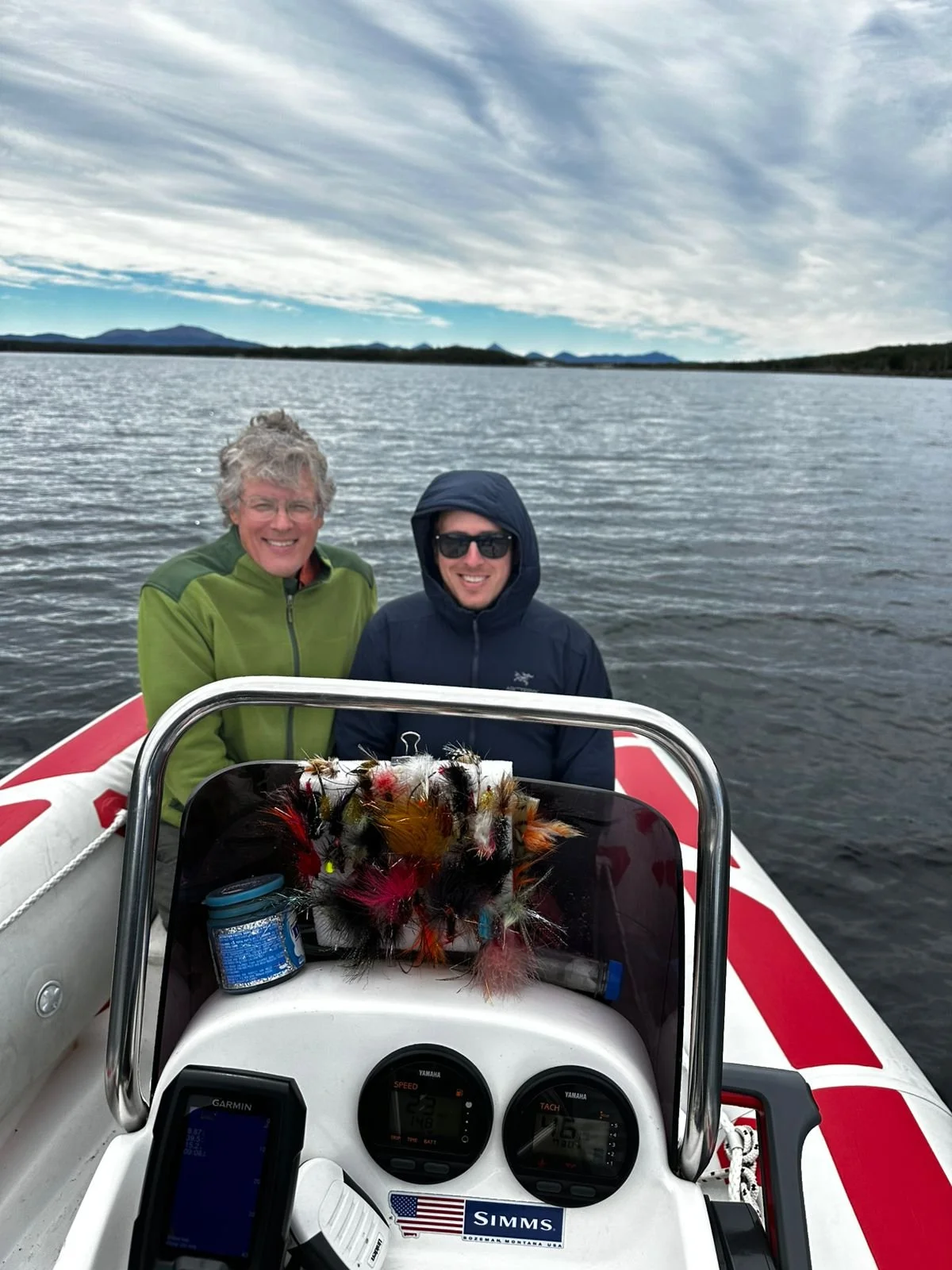
Andy and Nicholas heading out to fish on Lago Escondido
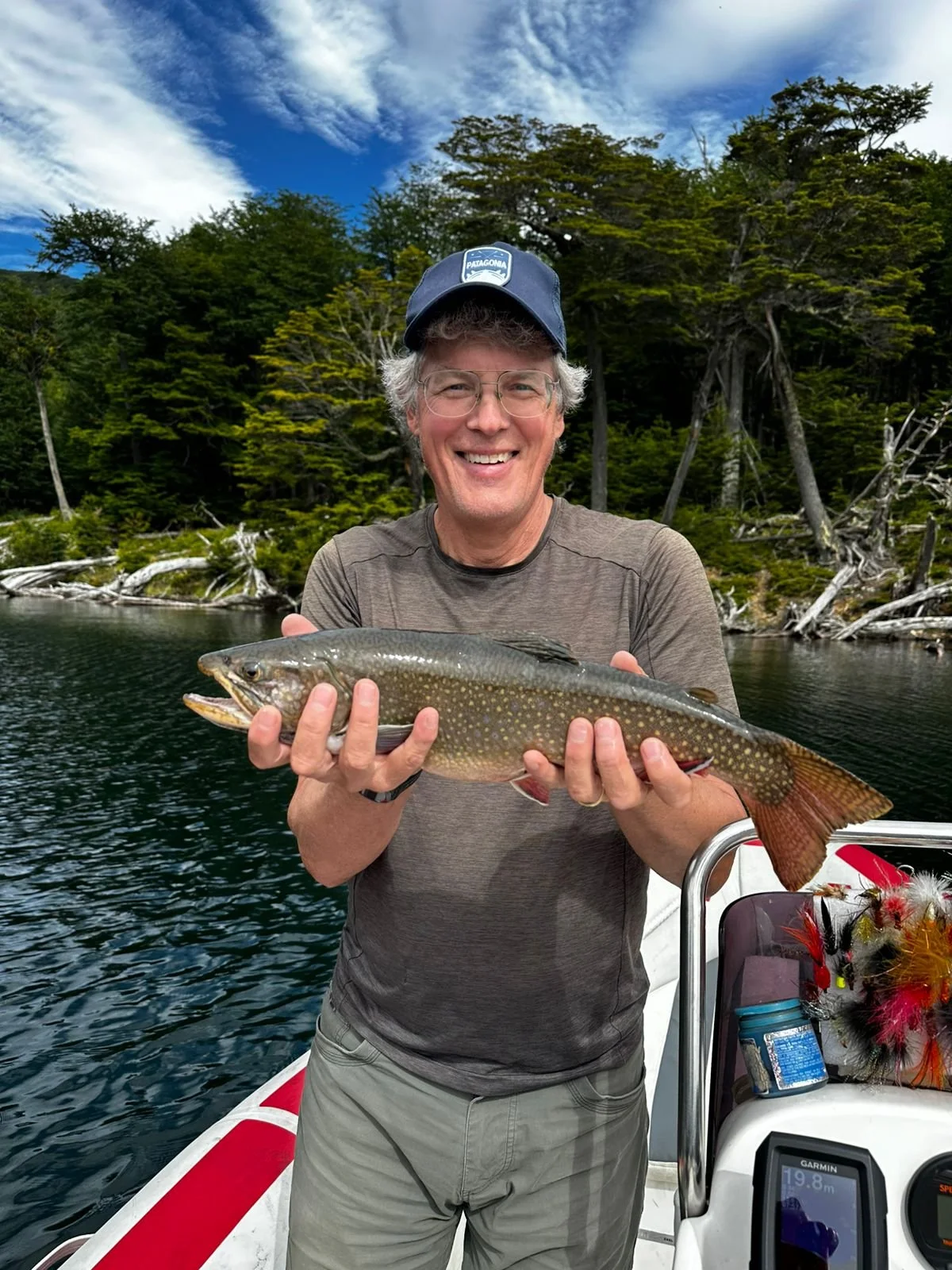
Success!
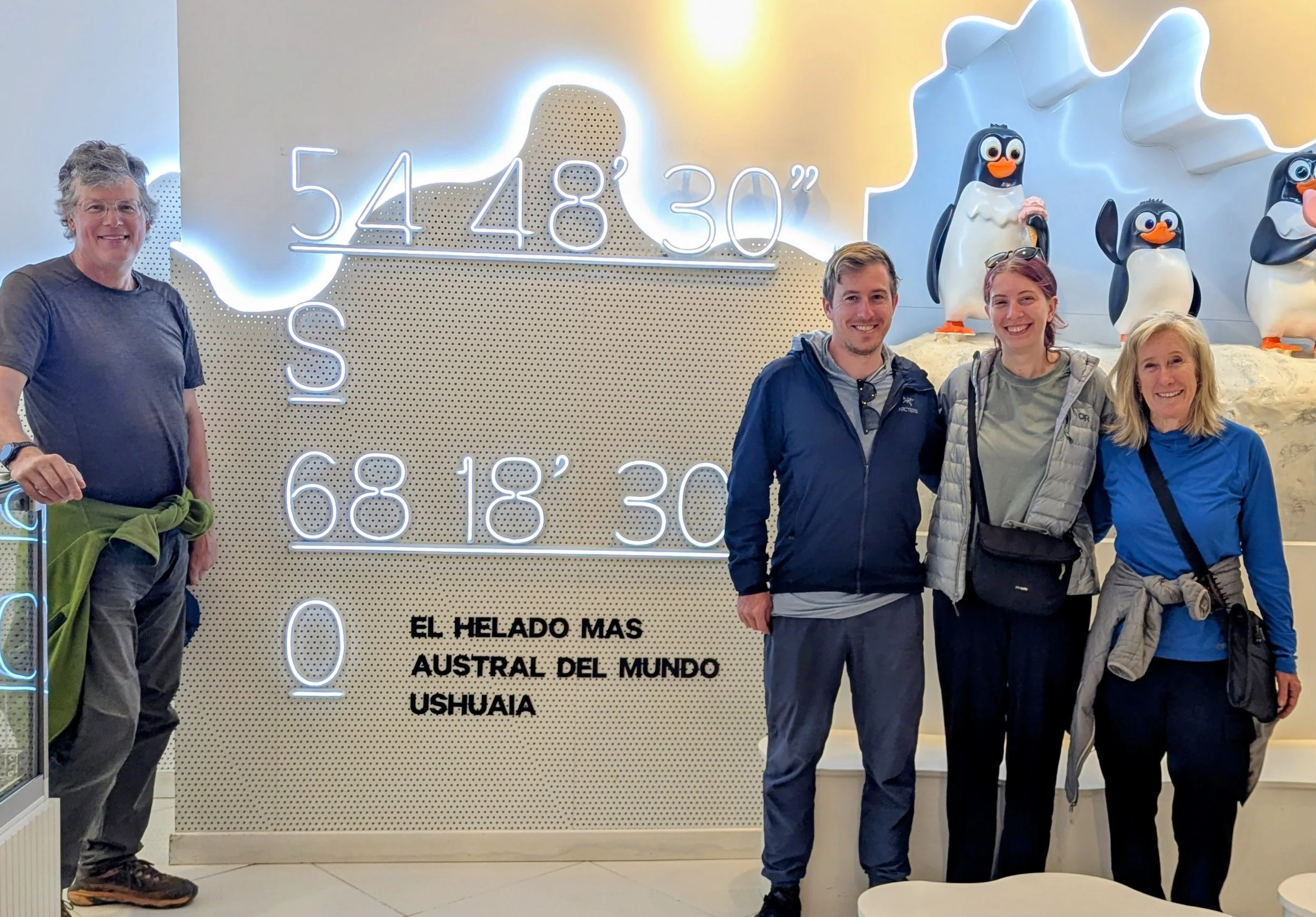
We are down to four people from seven, consoling ourselves at the southern most gelato store
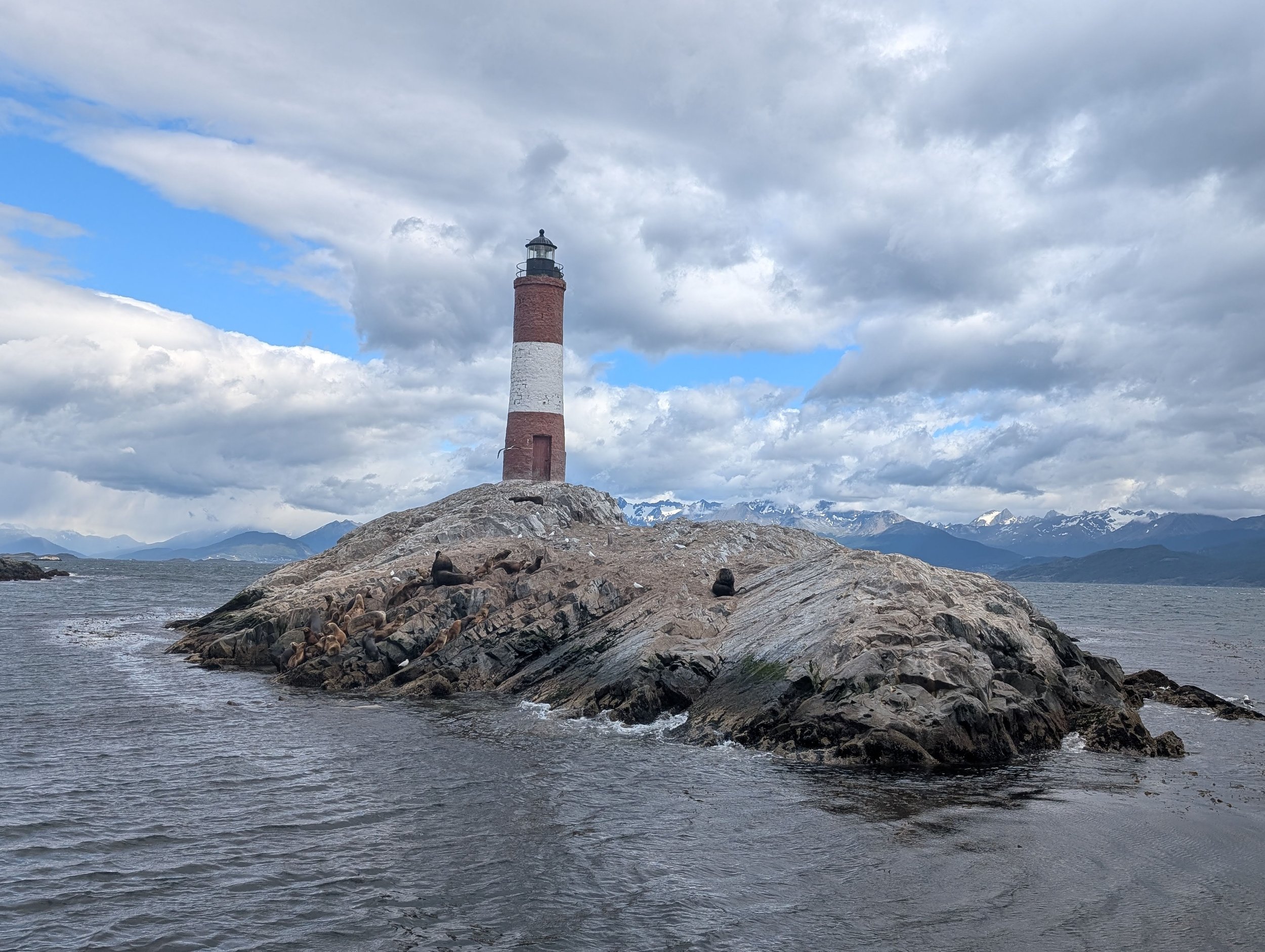
Last day in Ushuaia - boat trip to see the iconic lighthouse (faro)
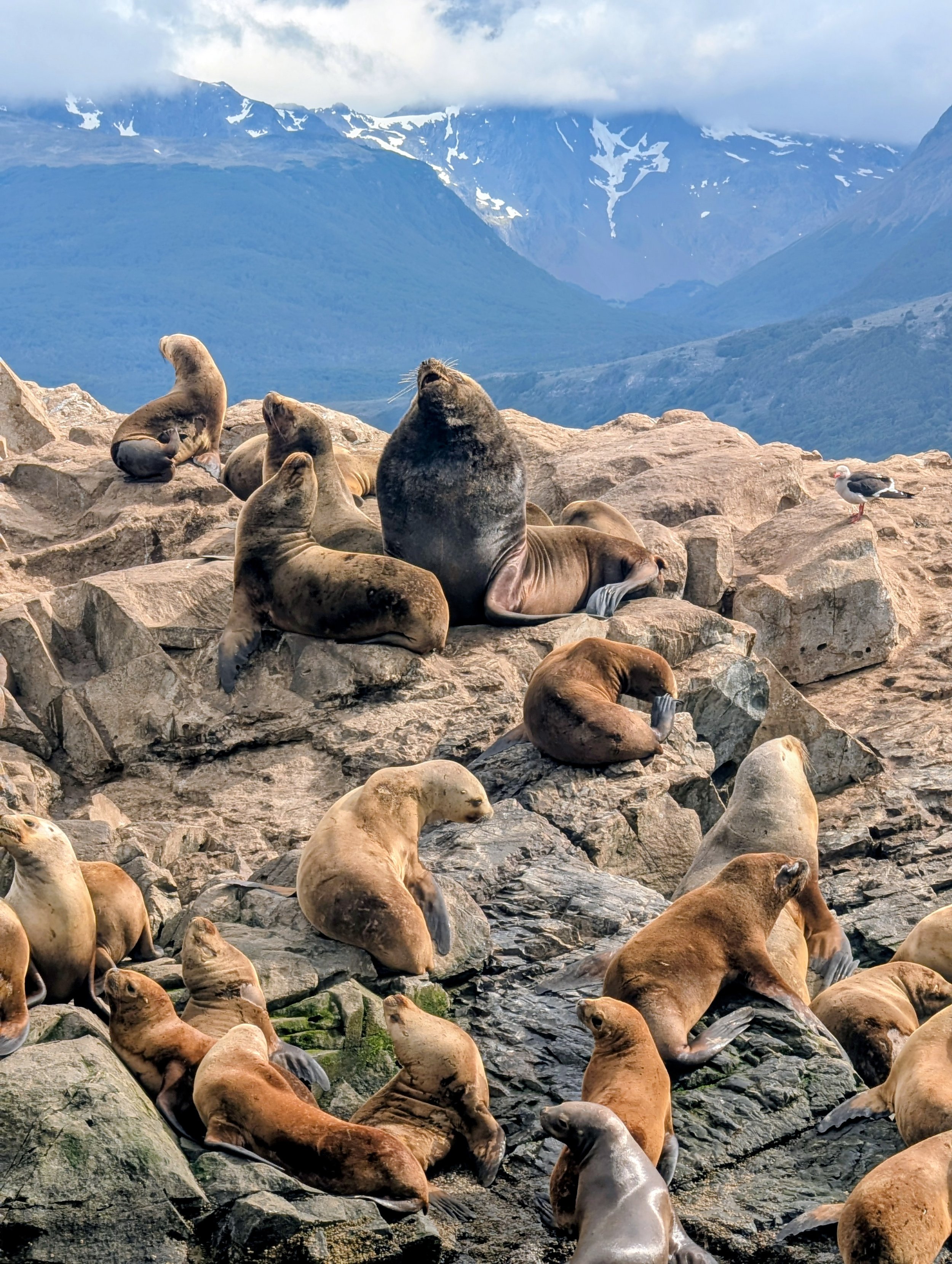
Complete with it’s own sea lion colony
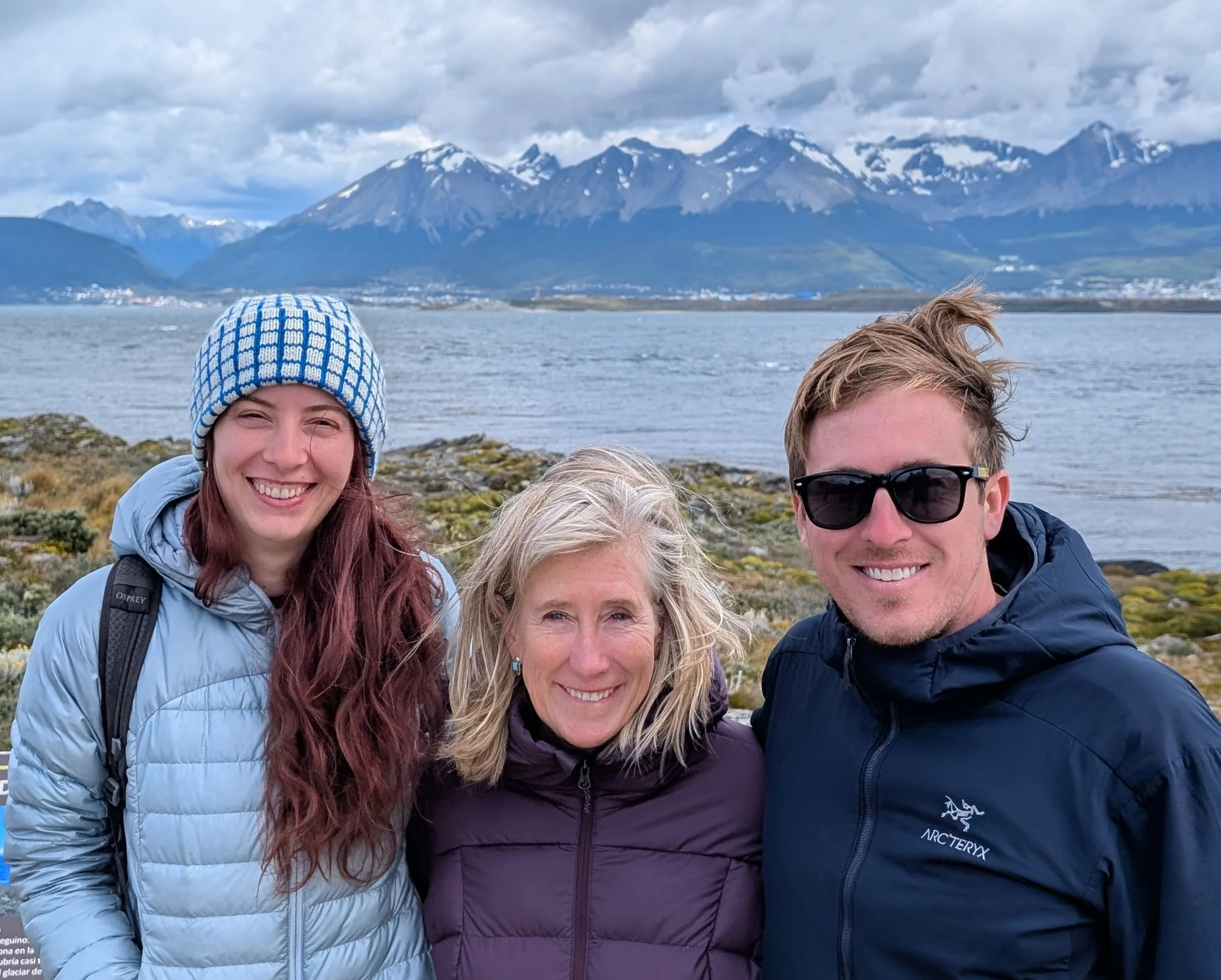
Ushuaia in the background and that’s a wrap for family time
A huge shout out of thanks to our family for joining us for the Christmas holiday. We are beyond grateful. And now, back to our regular programming, life on the road.
Part 4 - January 15-30
We boarded a plane in Ushuaia to return to El Calafate where our truck had been with a local mechanic for two weeks. When our son Trevor flew into Argentina he brought a new fuel pump and a new brake booster which was being installed in our absence. We picked our truck up, happy for the new fixes and started heading north.
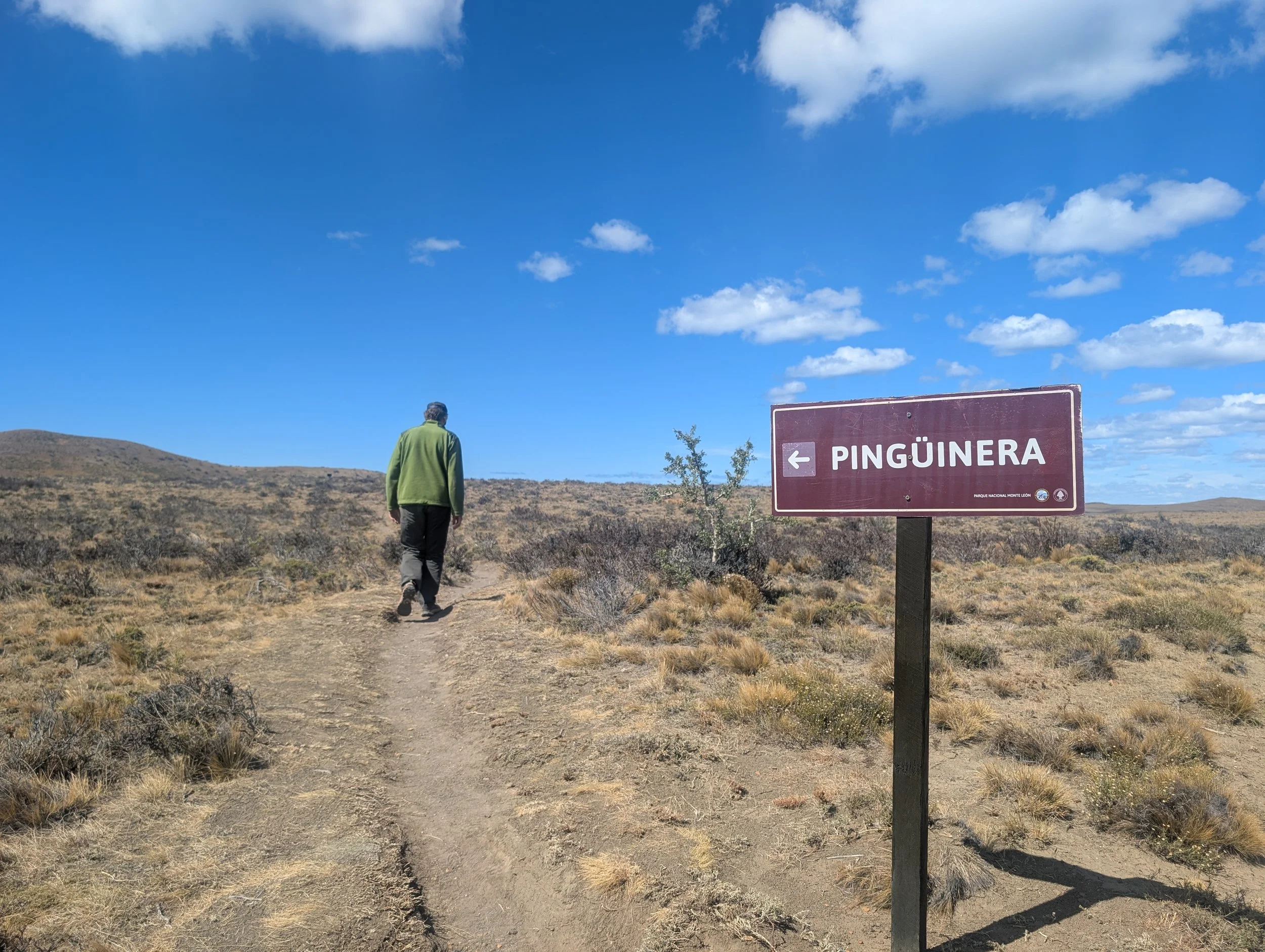
Walking in to Monte Leon Penguin reserve on the Atlantic side of Argentina.
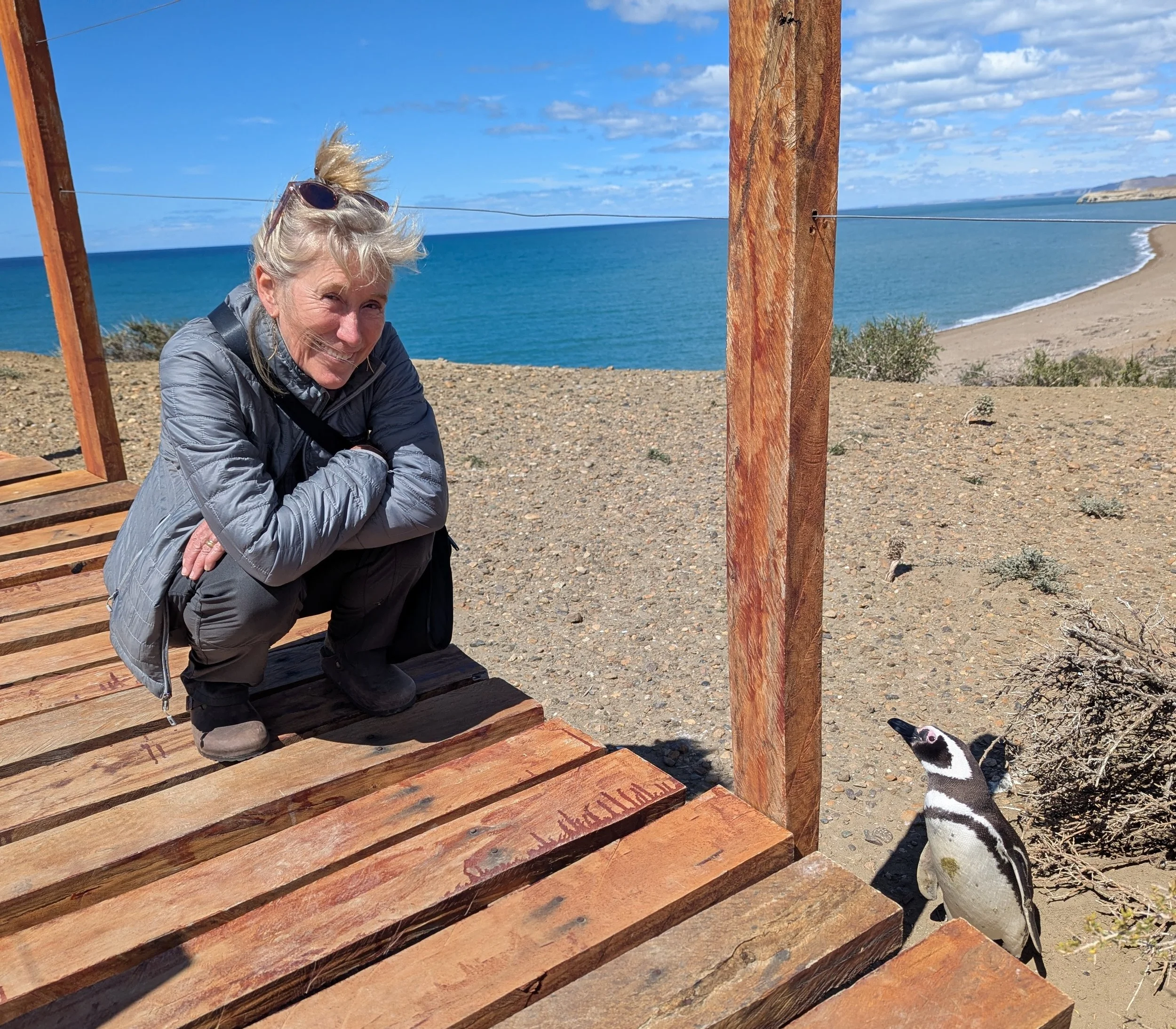
Monte Leon was an awesome place to view Magallenic penuins nesting - free to visit and you can explore on your own.
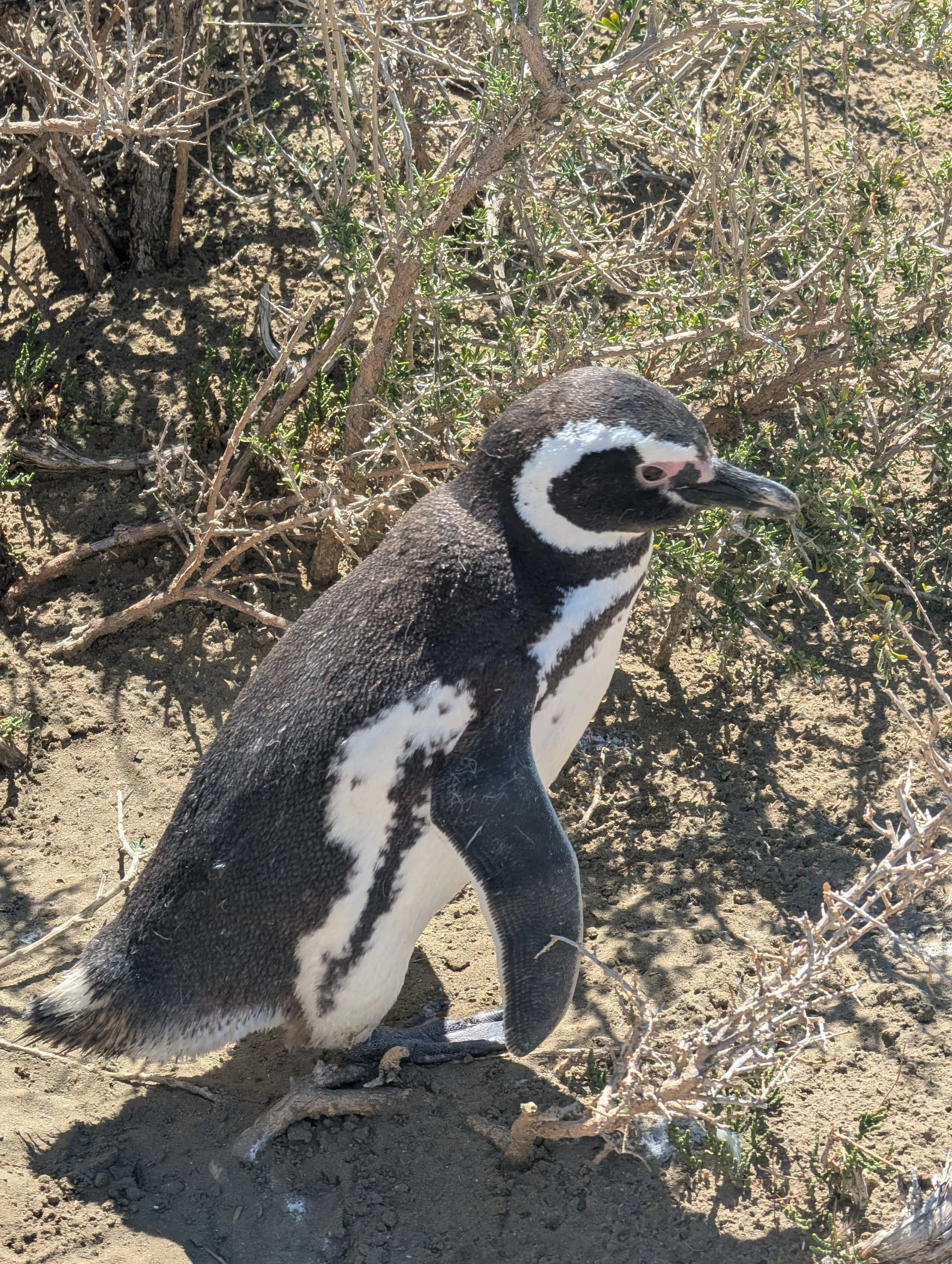
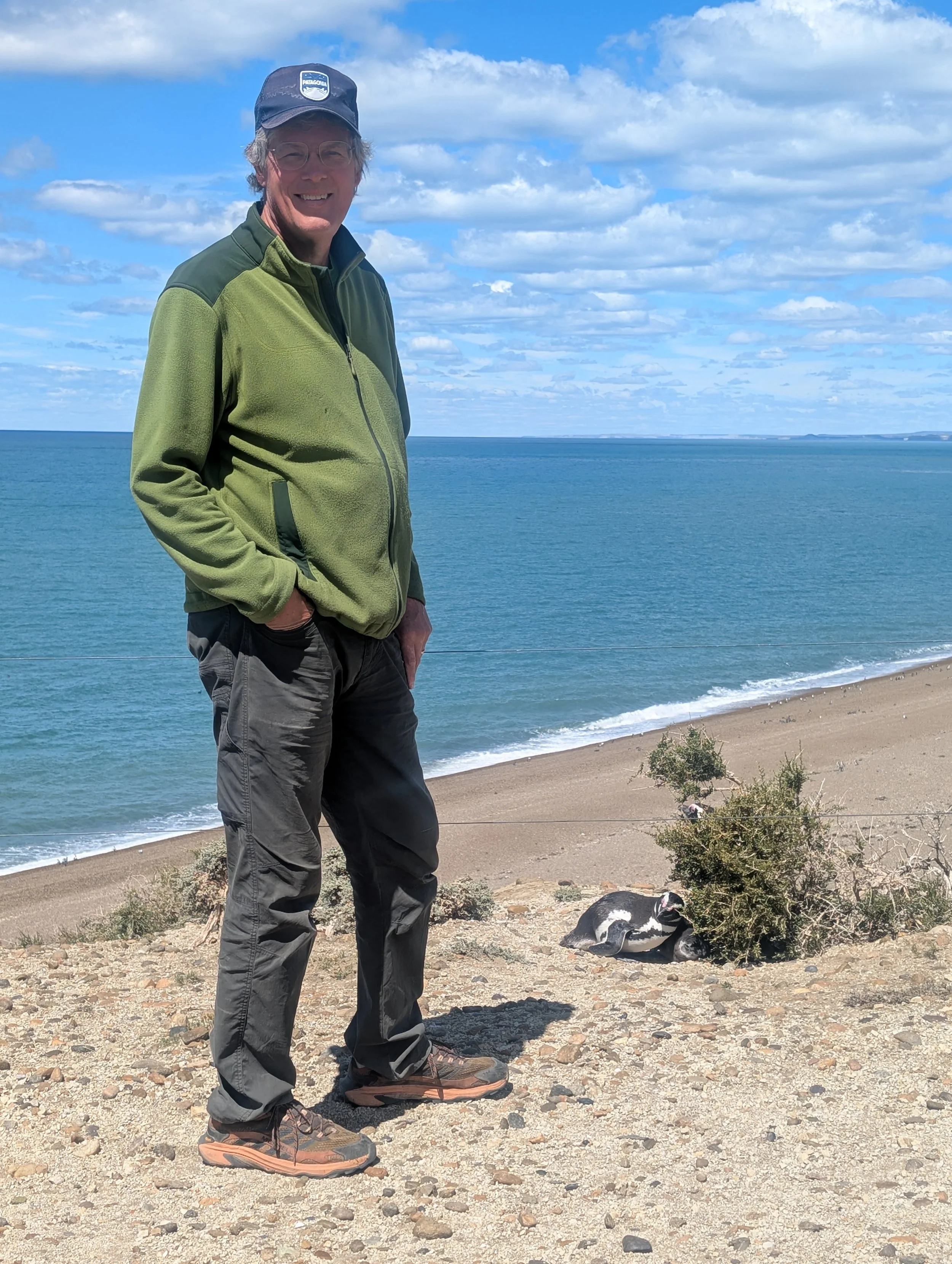
They were not at all worried about us
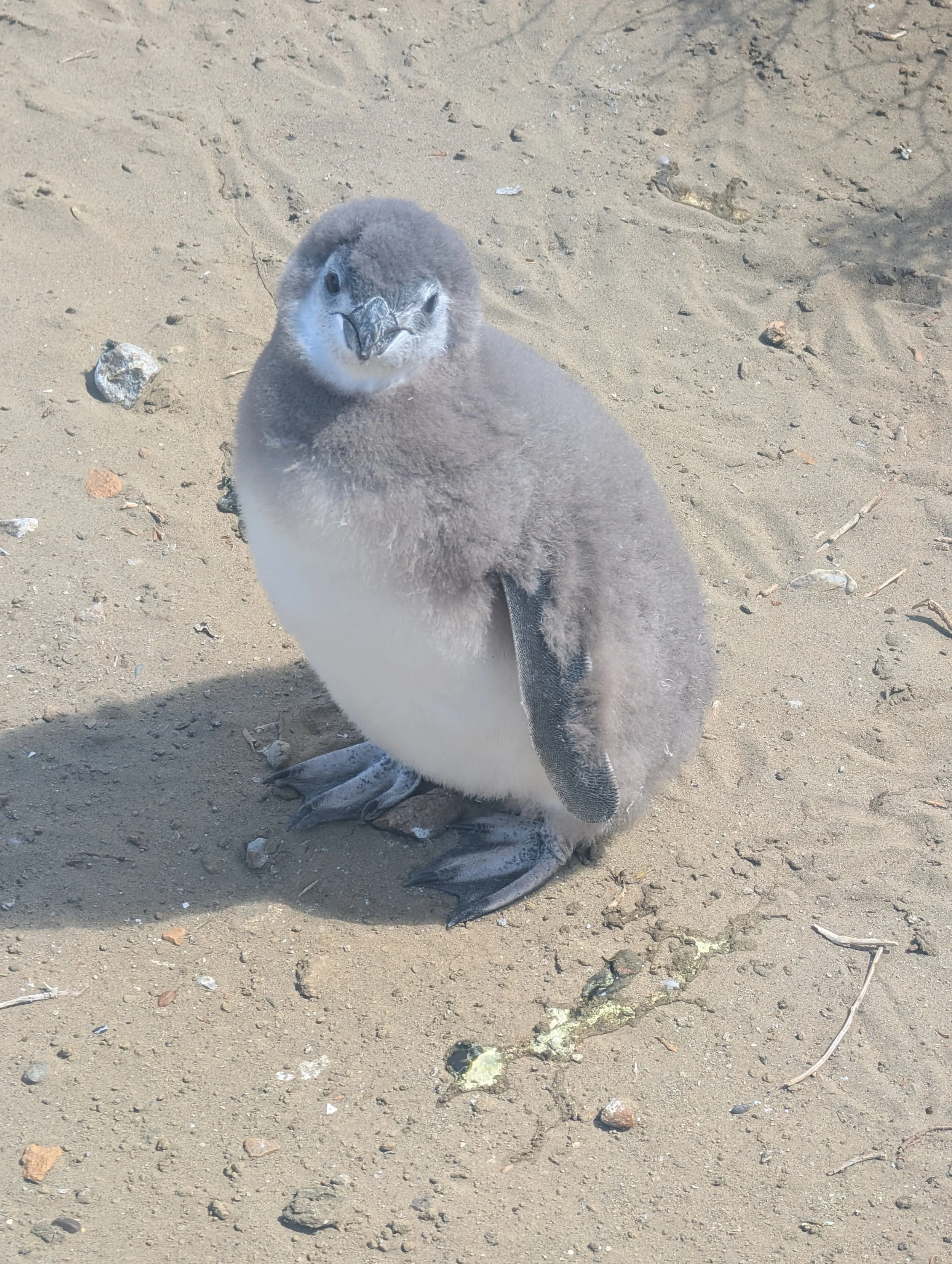
A juvenile - no black and white markings yet
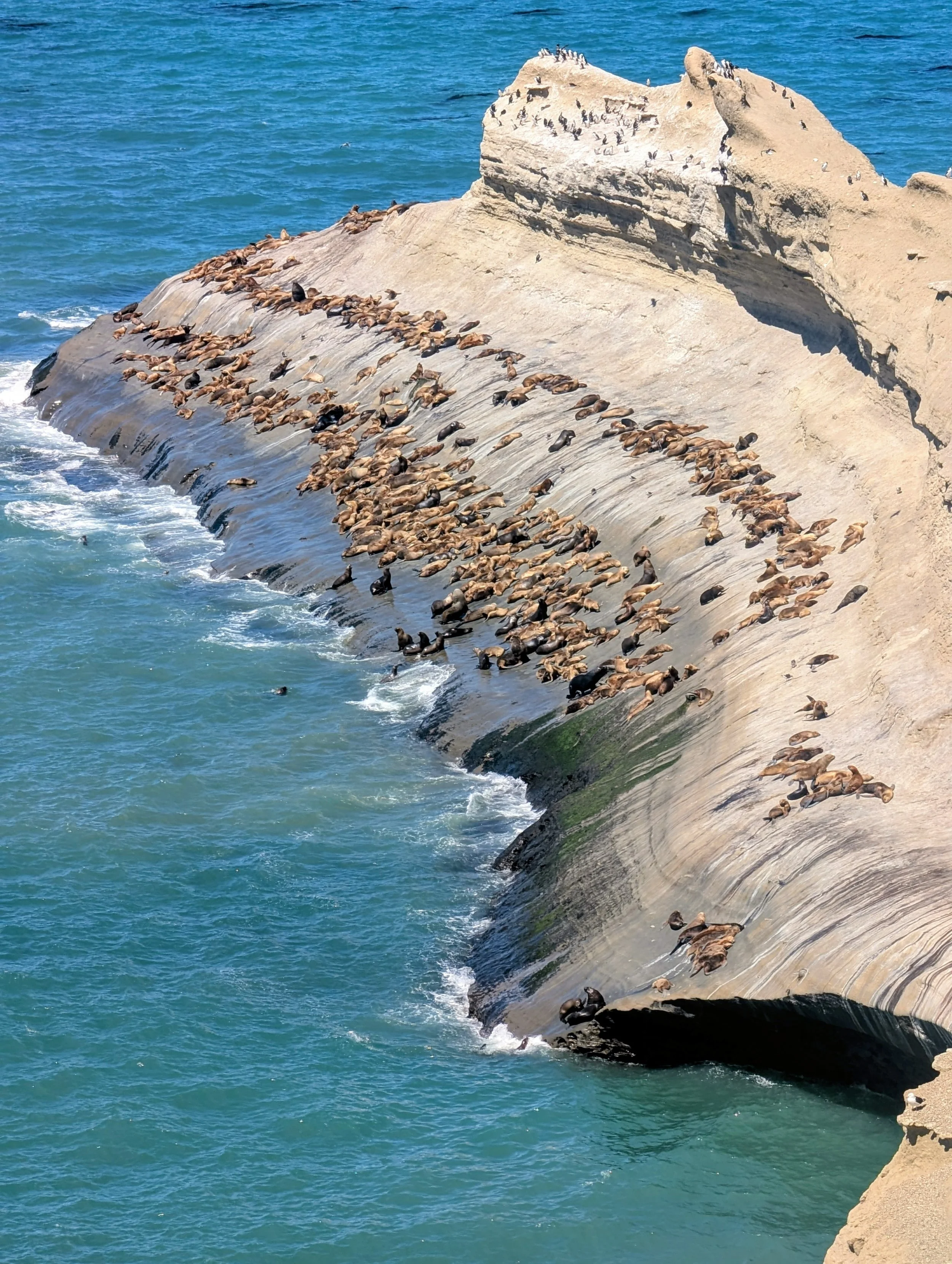
The reserve also had a substantial sea lion colony
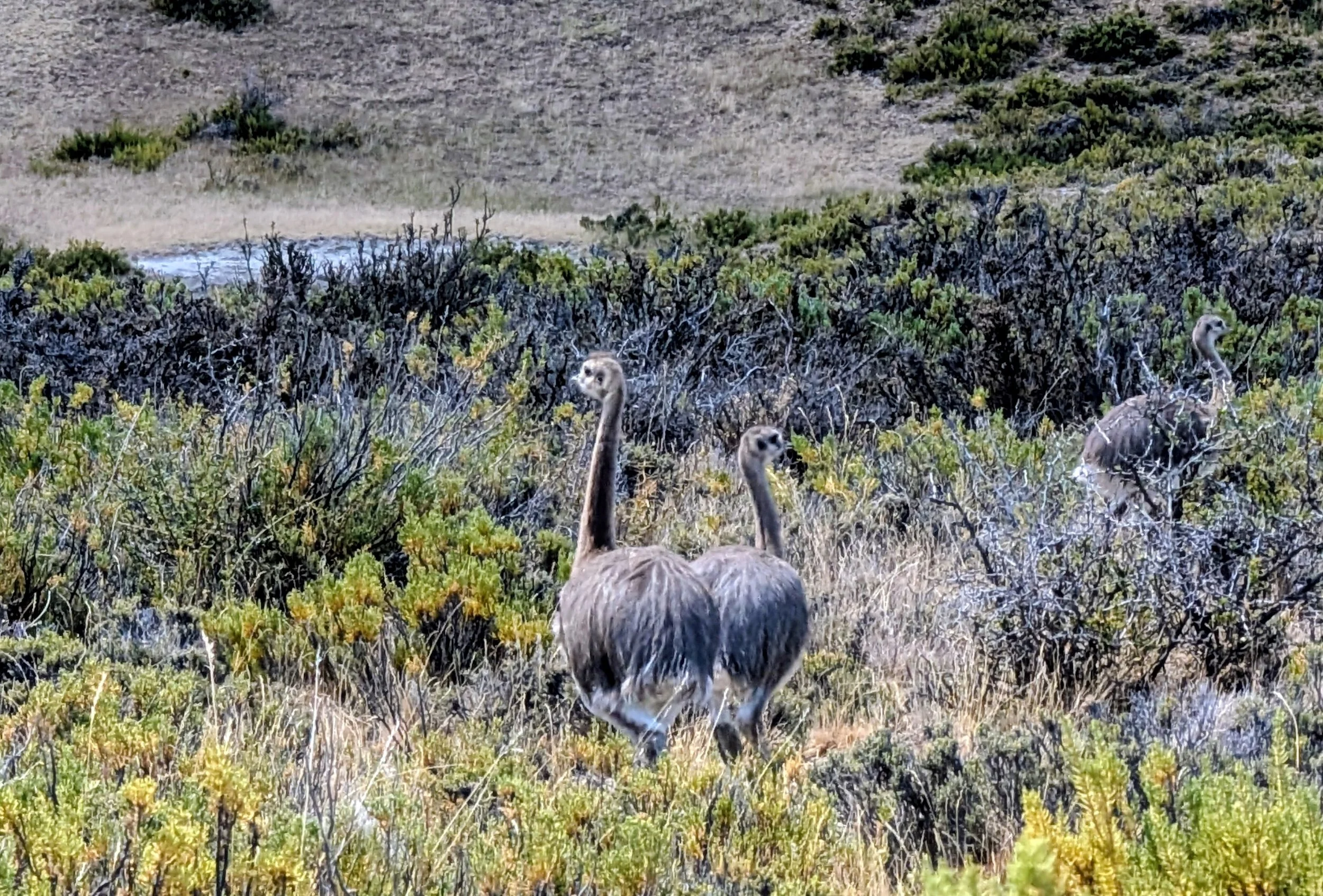
More roadside rheas
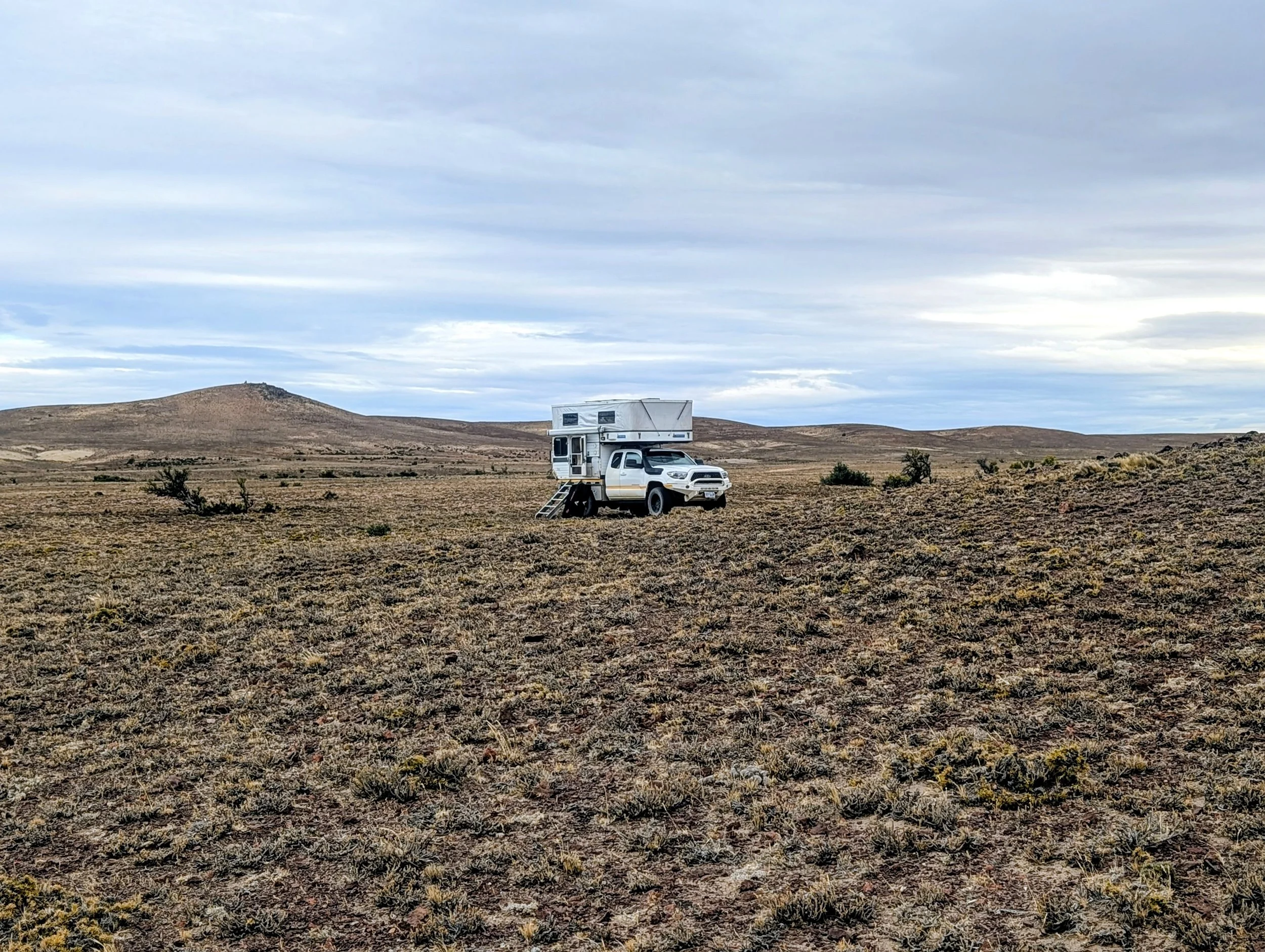
Now the less inspiring drive across the dry Argentinian grass lands in the middle of the country - desert like brush camp in the middle of nowhere.
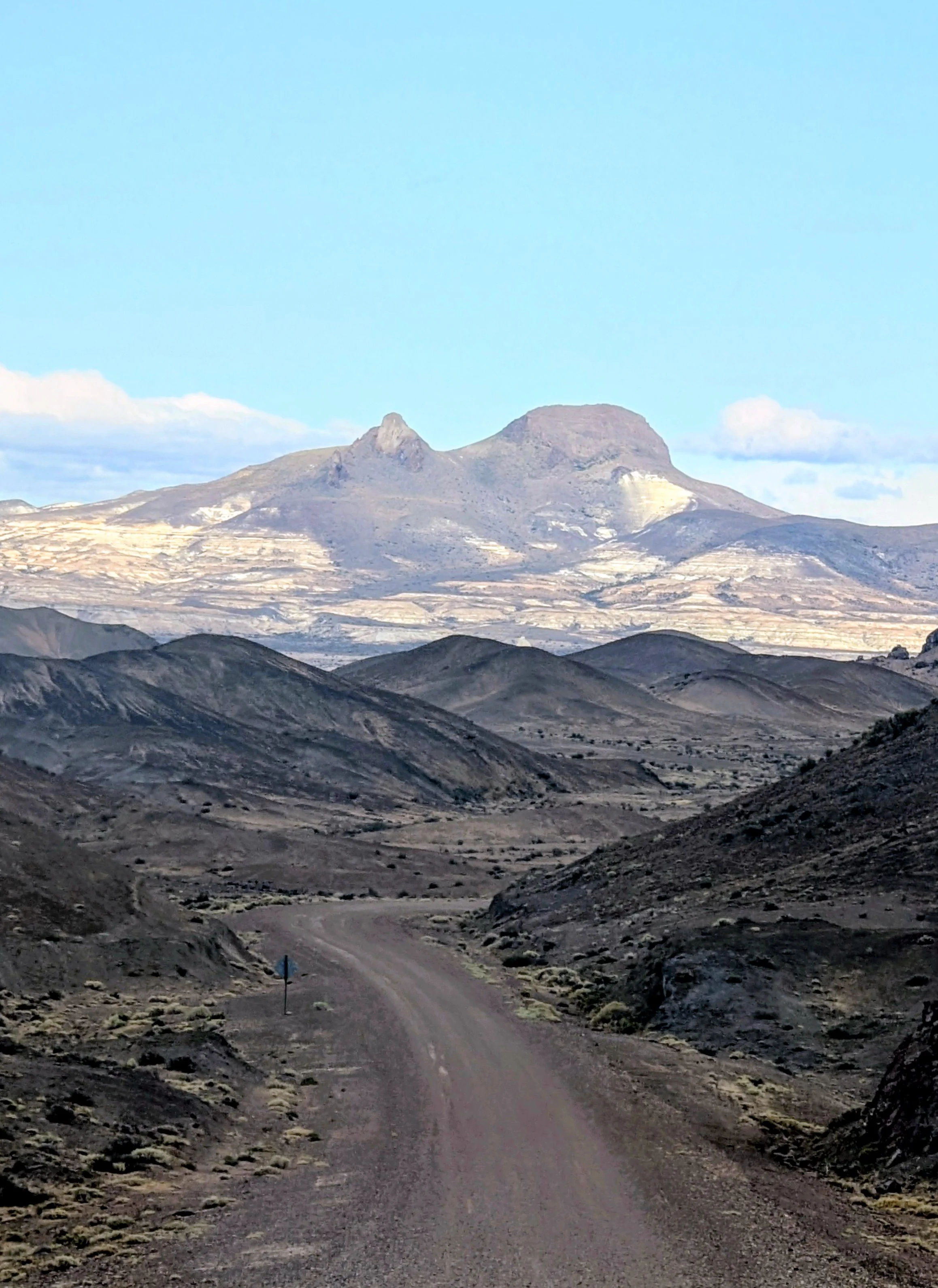
Side trip out to the Petrified Forest National Park
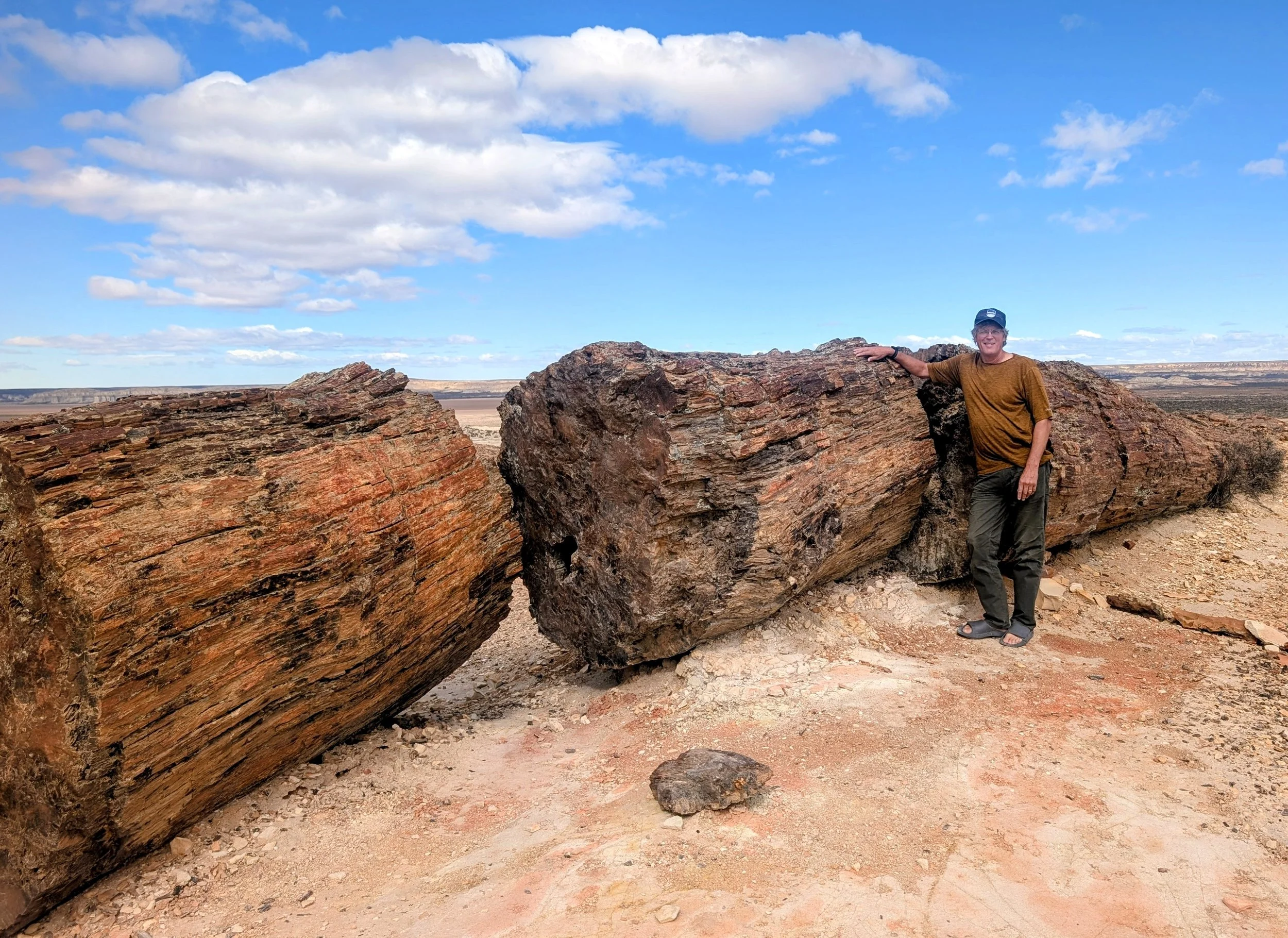
Some of the largest petrified wood we have ever seen
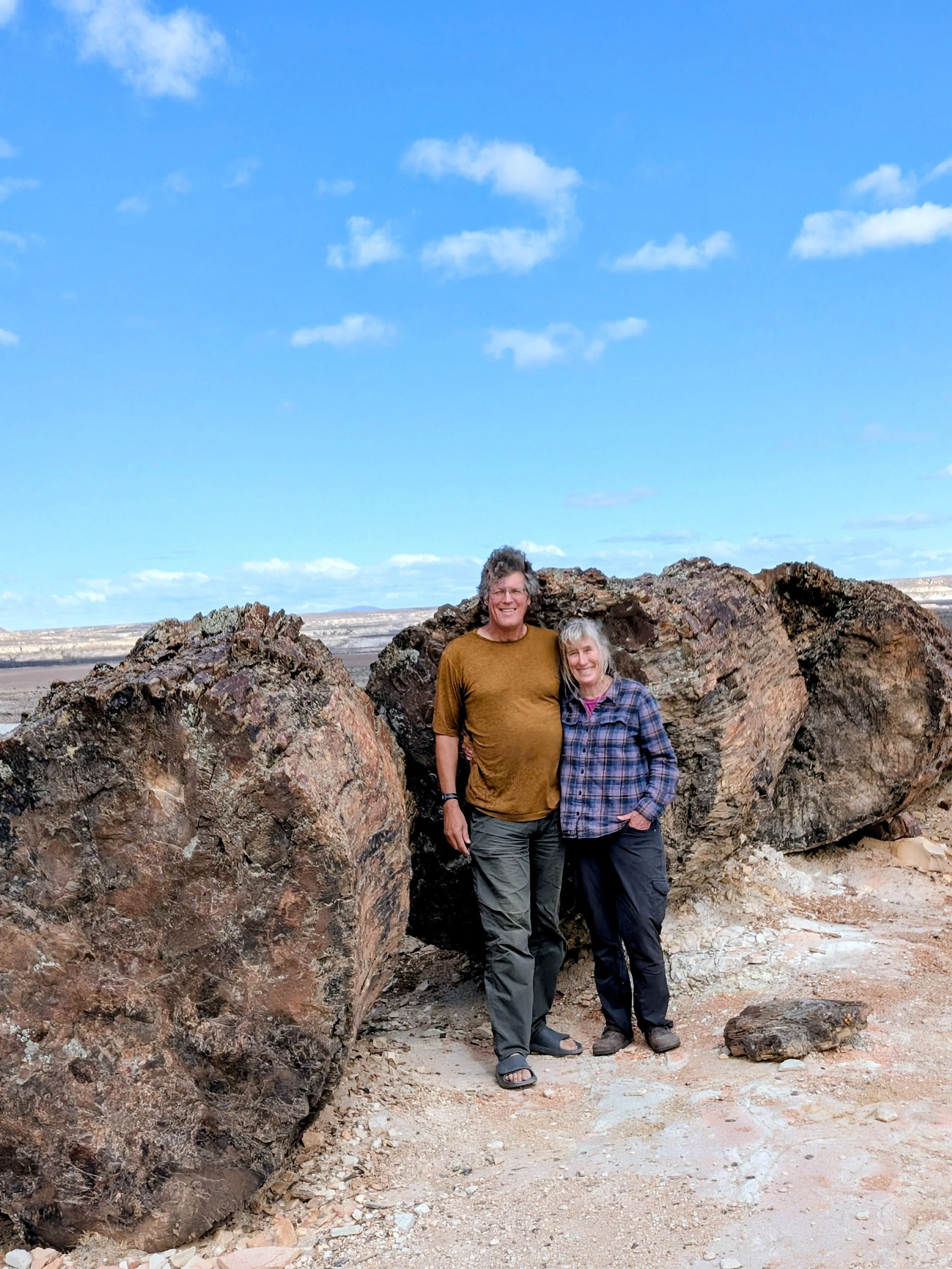
Also free to visit!
And now begins our tale of woe. Our last ten days in Argentina were fraught with multiple breakdowns - a total of seven. We have always been happy with our decision to buy a new vehicle in the hope that repairs would be minimal. But it seemed like six years and 140,000 miles of hard driving in an over-weighted vehicle had finally caught up with us. We had multiple issues hit us at once, but the first primary one was that we were springing fuel leaks (we had just had the fuel pump replaced and it seemed that while the pump itself was replaced, the old lines were not). When we returned from our petrified forest walk, we could smell gas. Andy noticed a small fuel leak. So we crossed our fingers and drove into the nearest town to find a mechanic. In general, we use a combination of iOverlander posted recommendations and general Google searches to find people. We found someone able to work on the truck in Caleta Oliva. Once siesta hours were over, he cheerfully got to work replacing the fuel lines break.
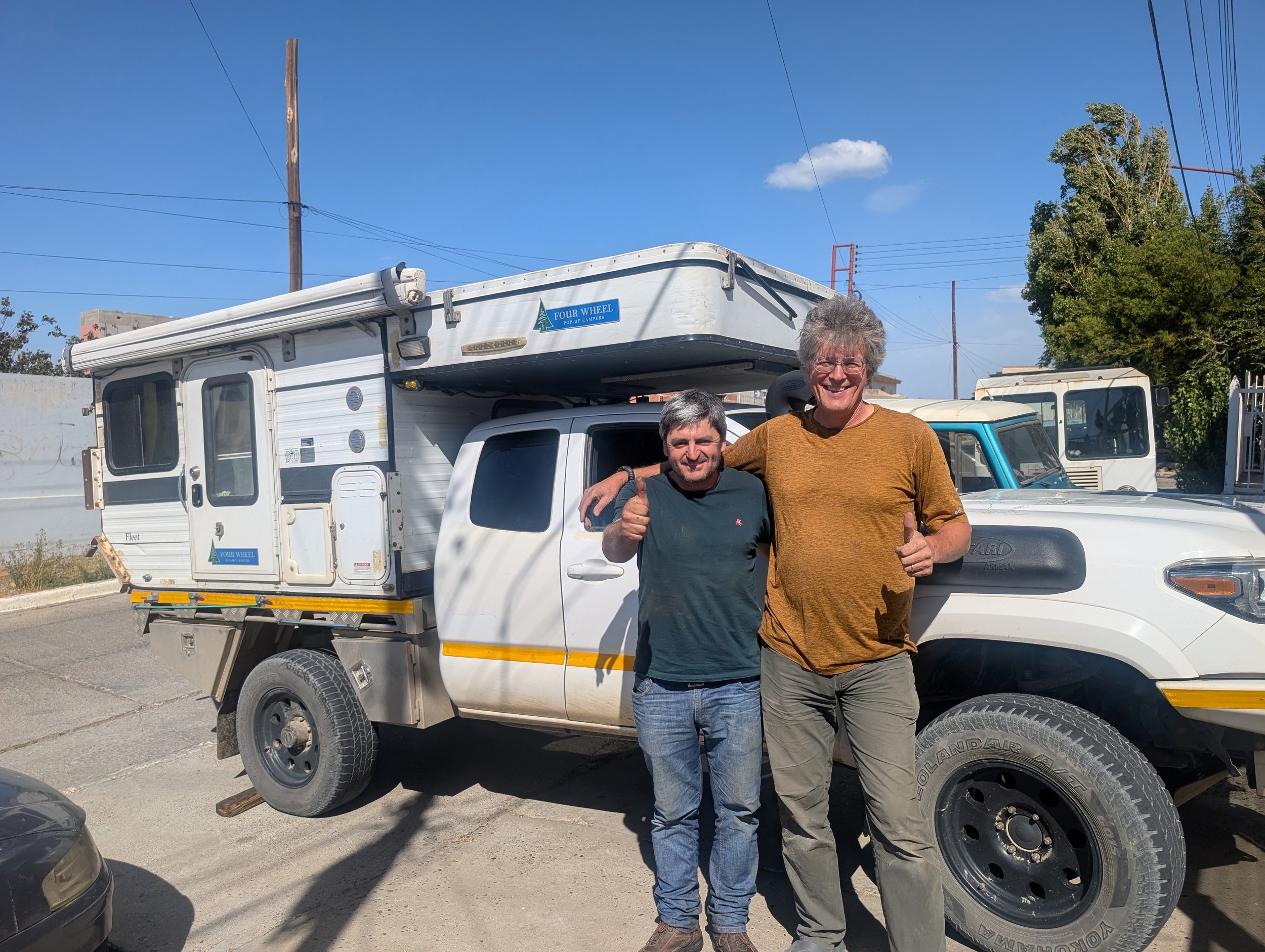
First of seven attempted fuel leak fixes
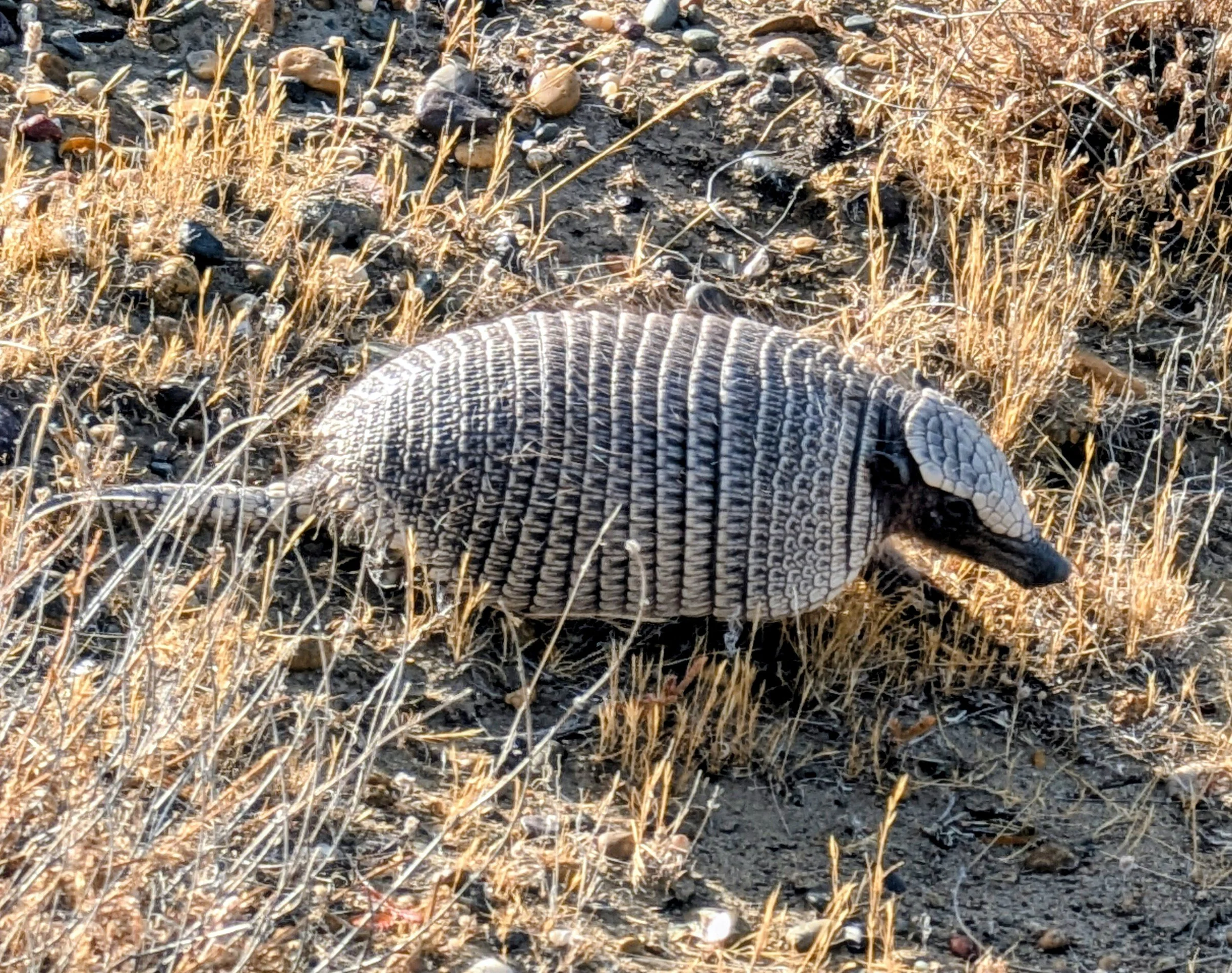
At this point we were optimistic about the problem being fixed so headed out to a beach camp, thrilled to encounter this little guy on the way
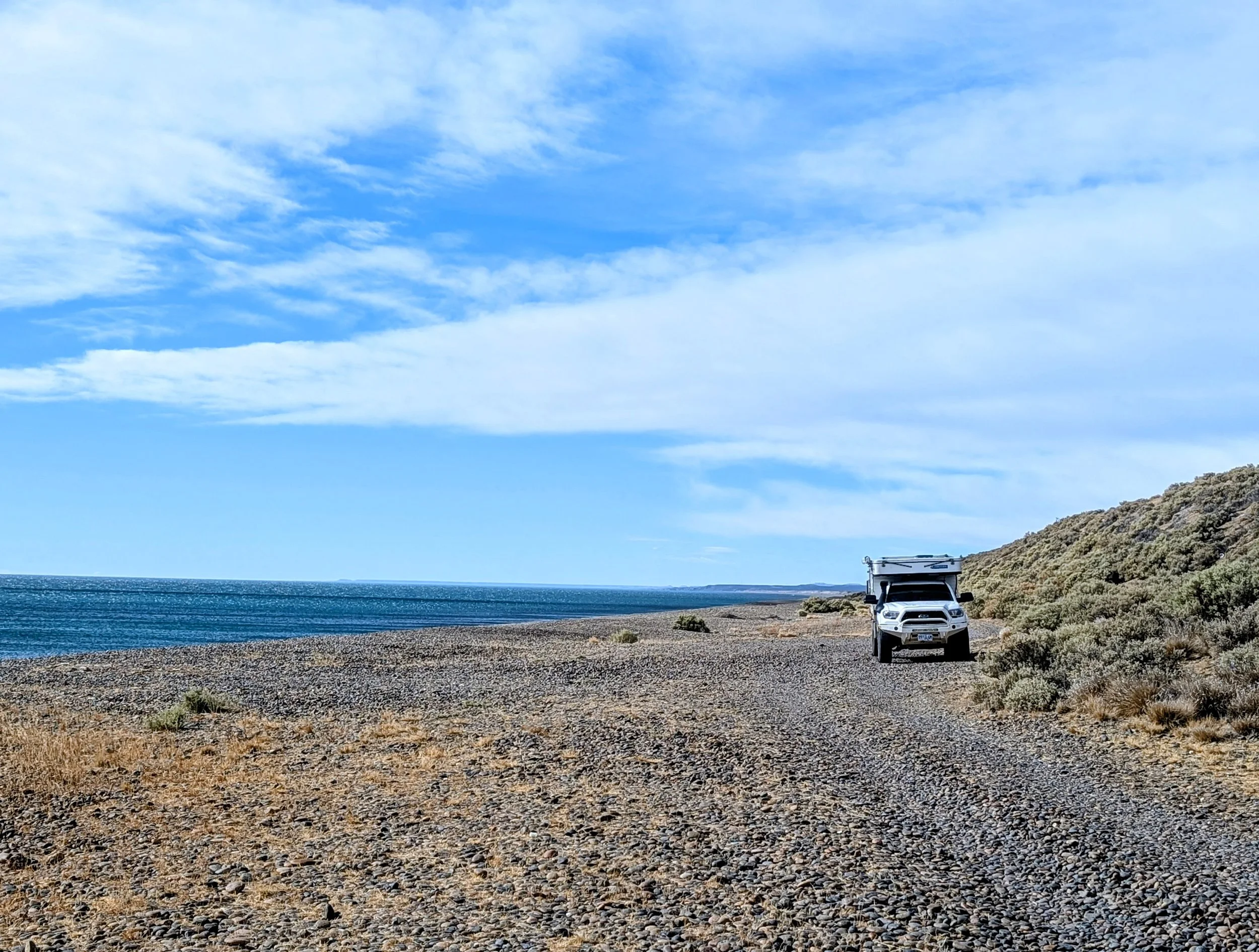
Remote beach camp
The next morning we hit the road, and at a gas station stop noticed we were leaking fuel again.
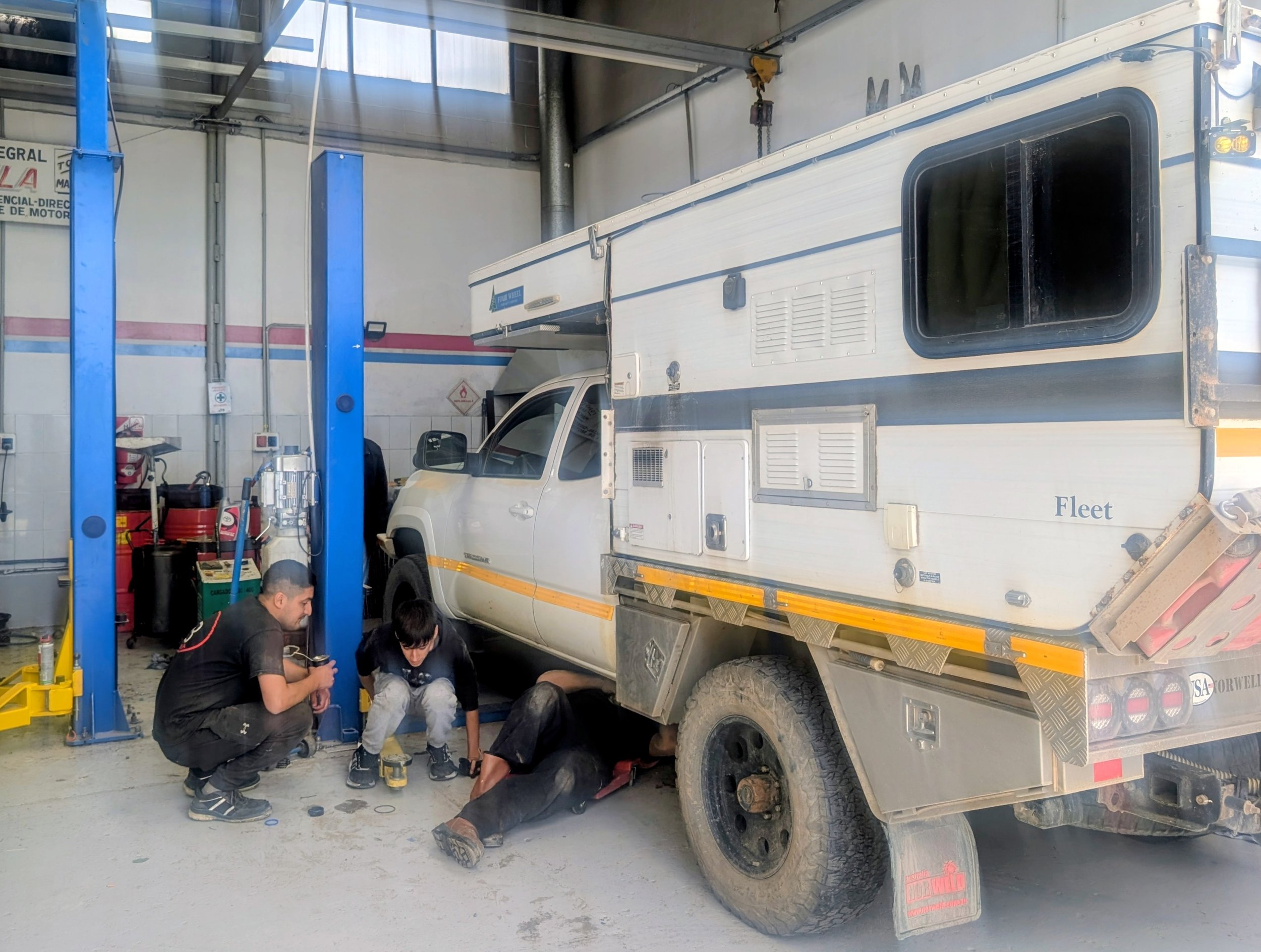
Second attempt at replacing leaking fuel lines and connections
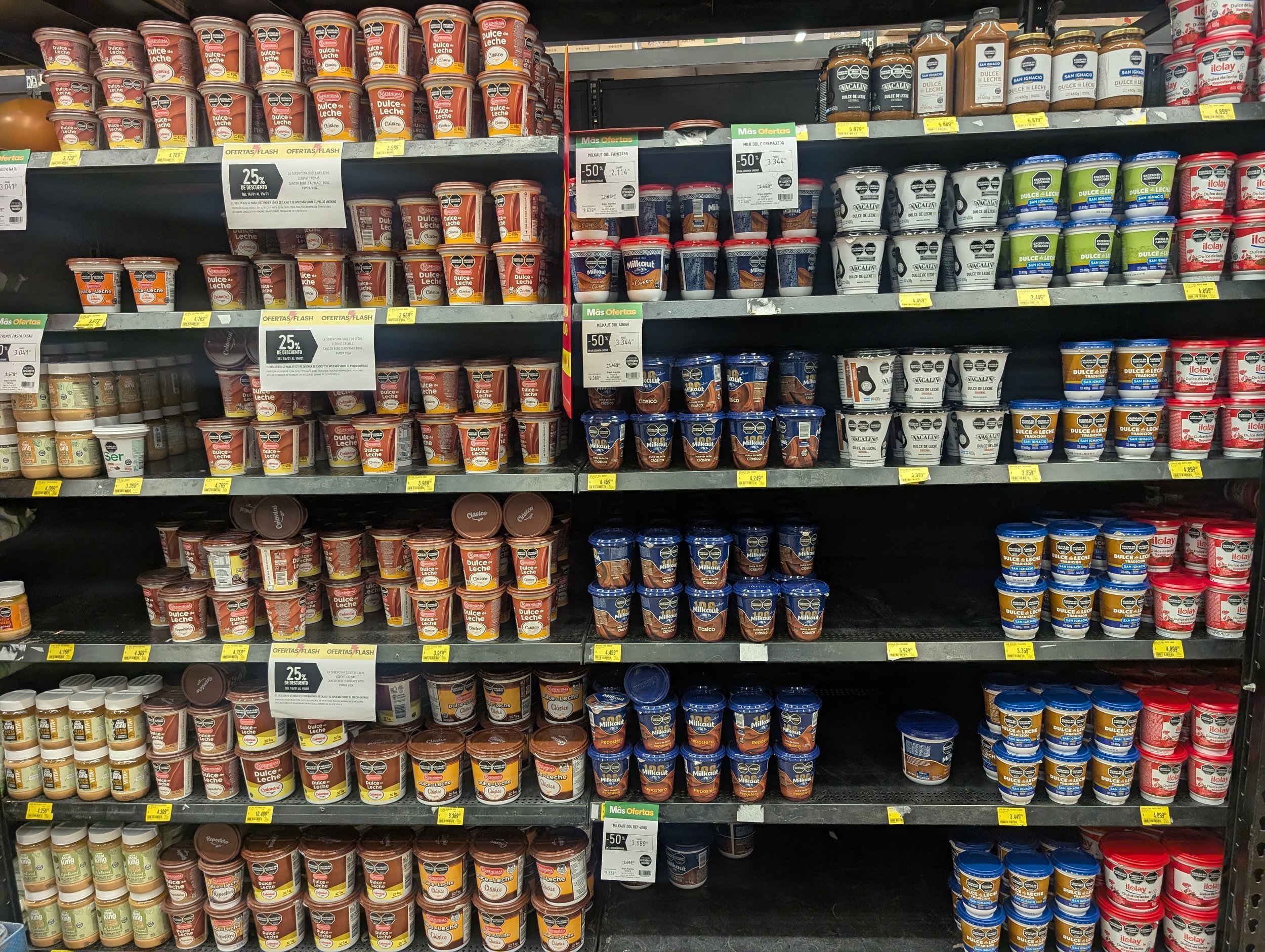
Re-stocking groceries - amazed at the full aisle of dulce de leche products, we had been hoping to find peanut butter but no luck
Once again convinced the problem was fixed, we headed to the coast to find elephant seals. Unfortunately the males with the huge noses were out at sea, but we found lots of females and calves.
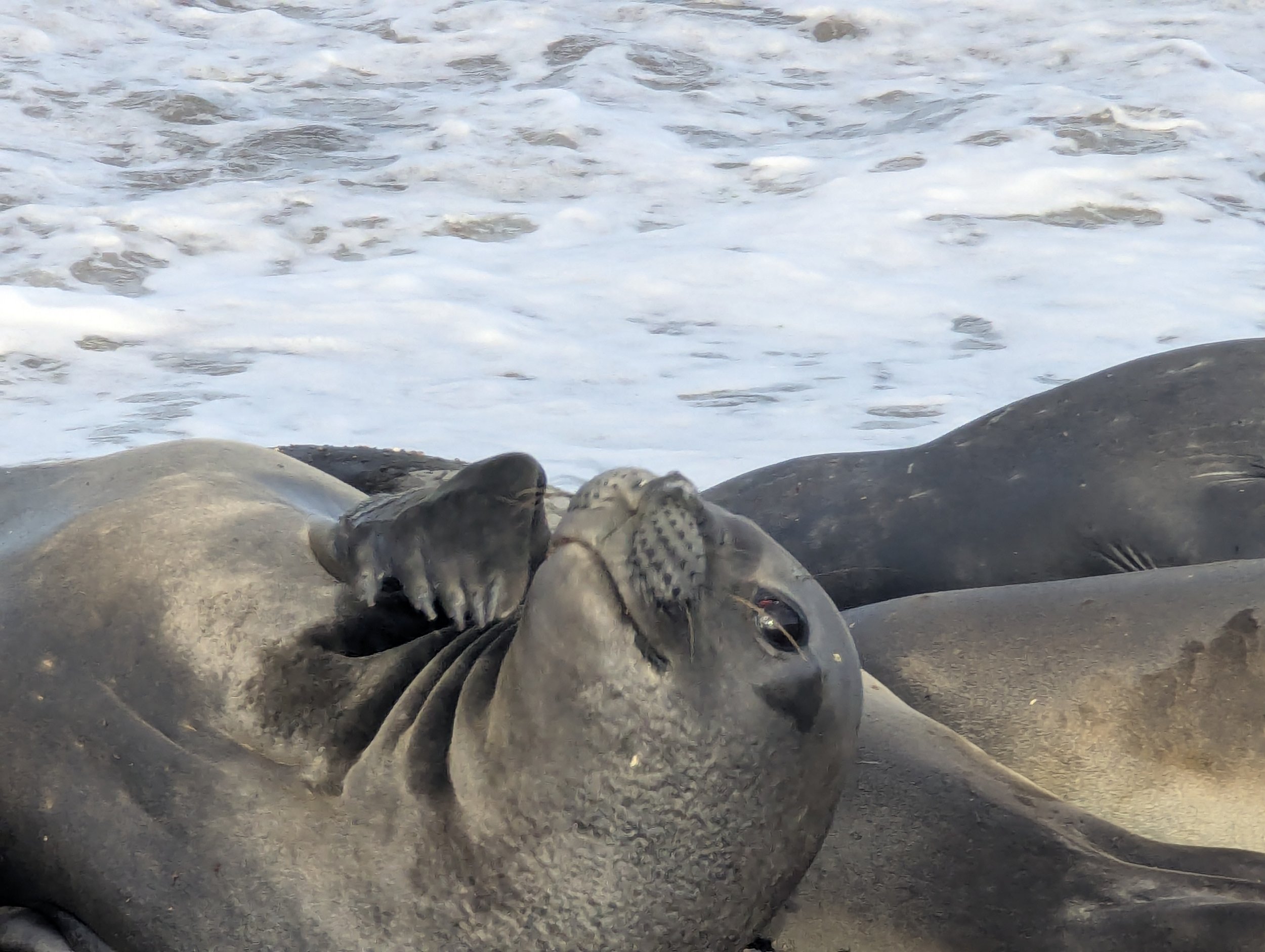
Playa Isla Escondida, beach south of Trelew where we camped with elephant seals
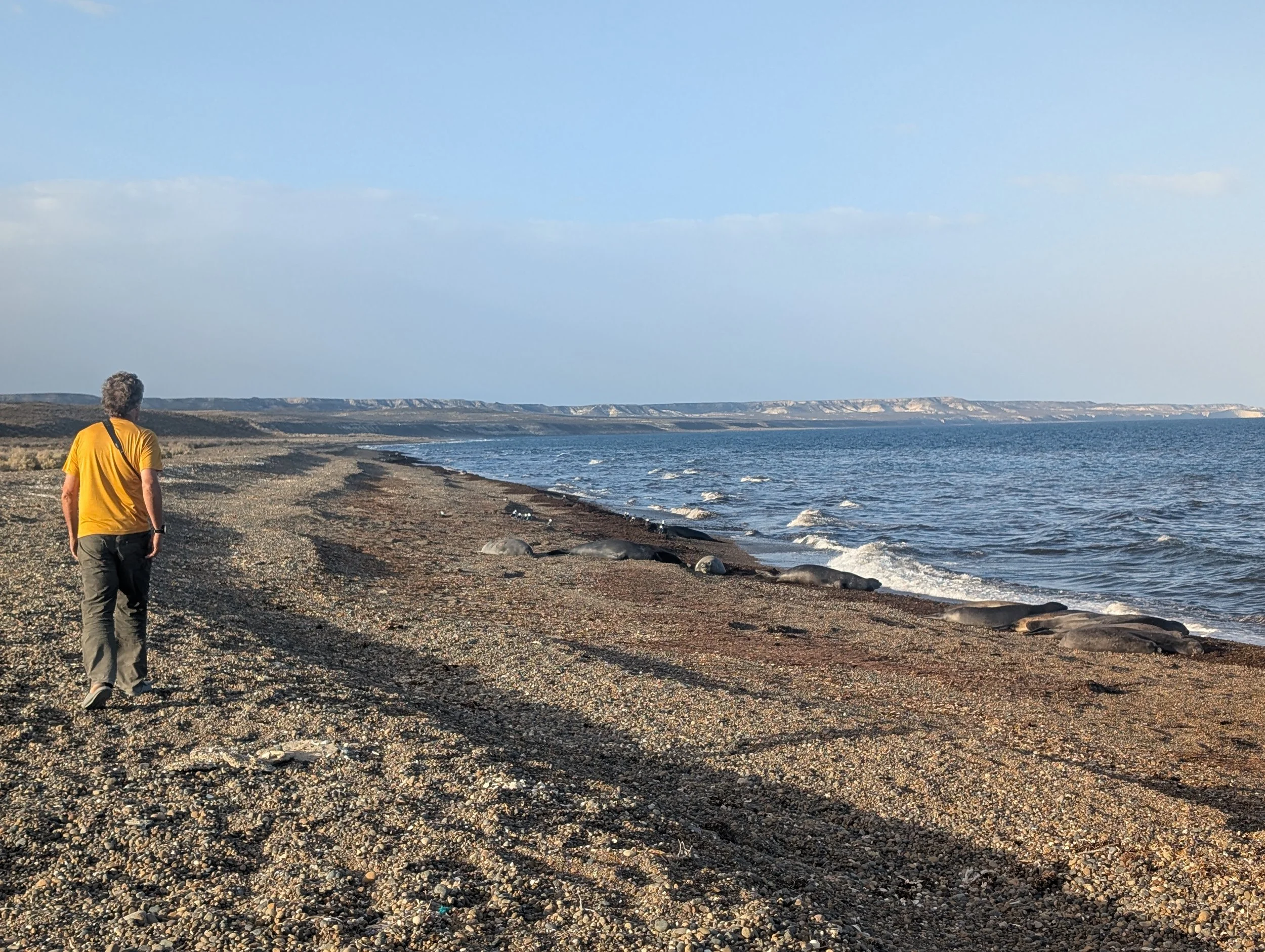
Evening walk on seal covered beach
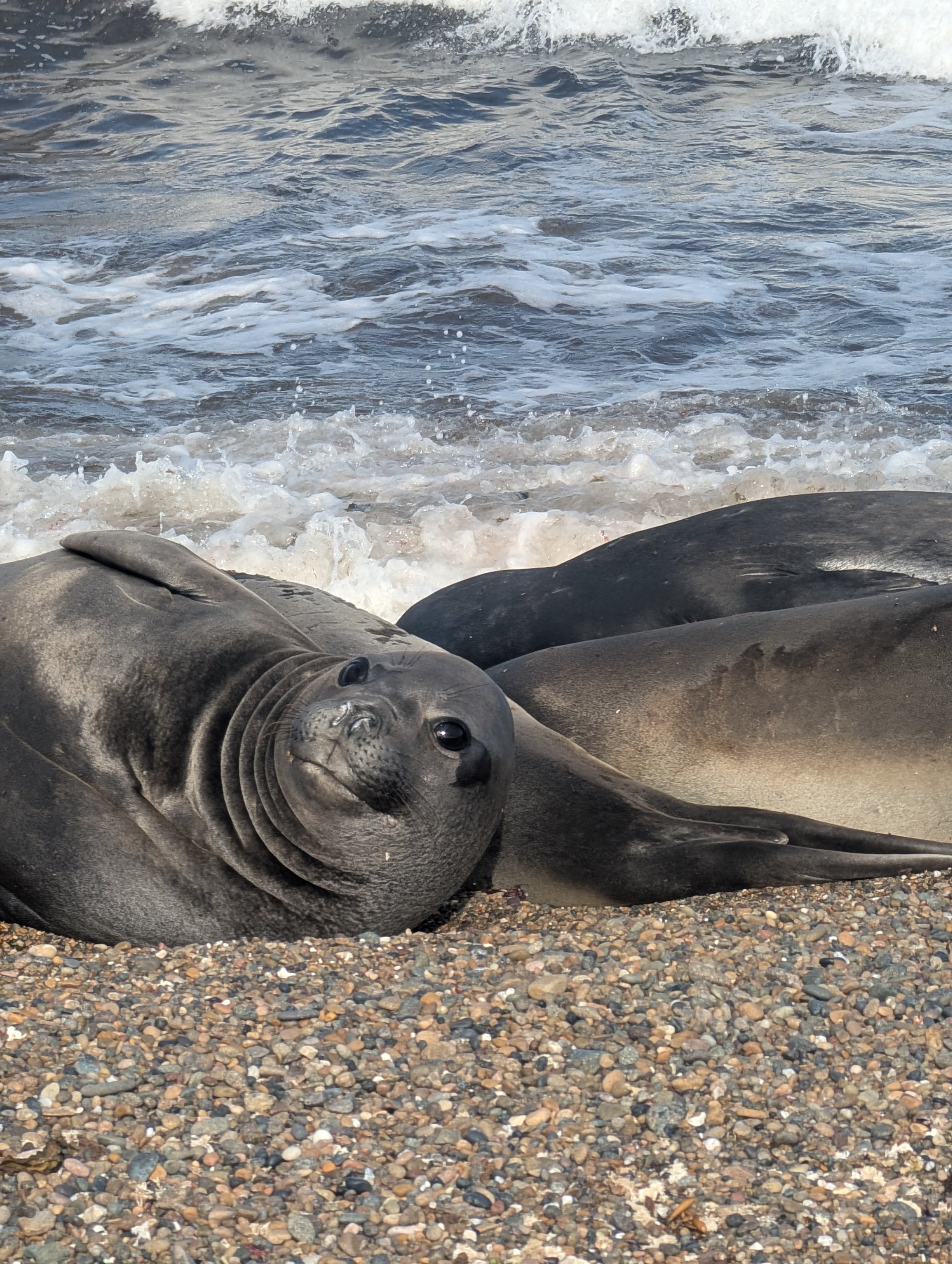
Pretty darn cute
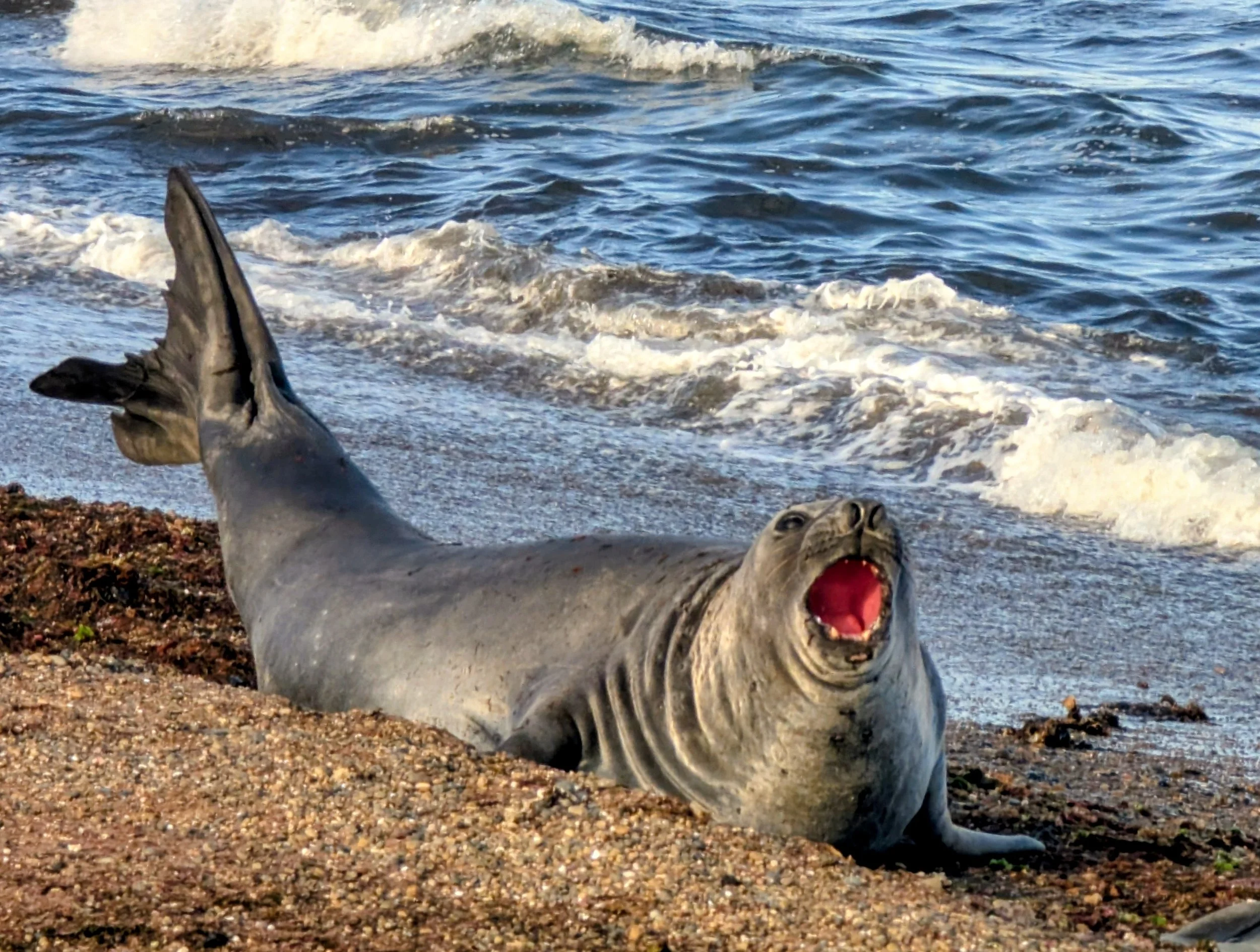
But a few fights broke out
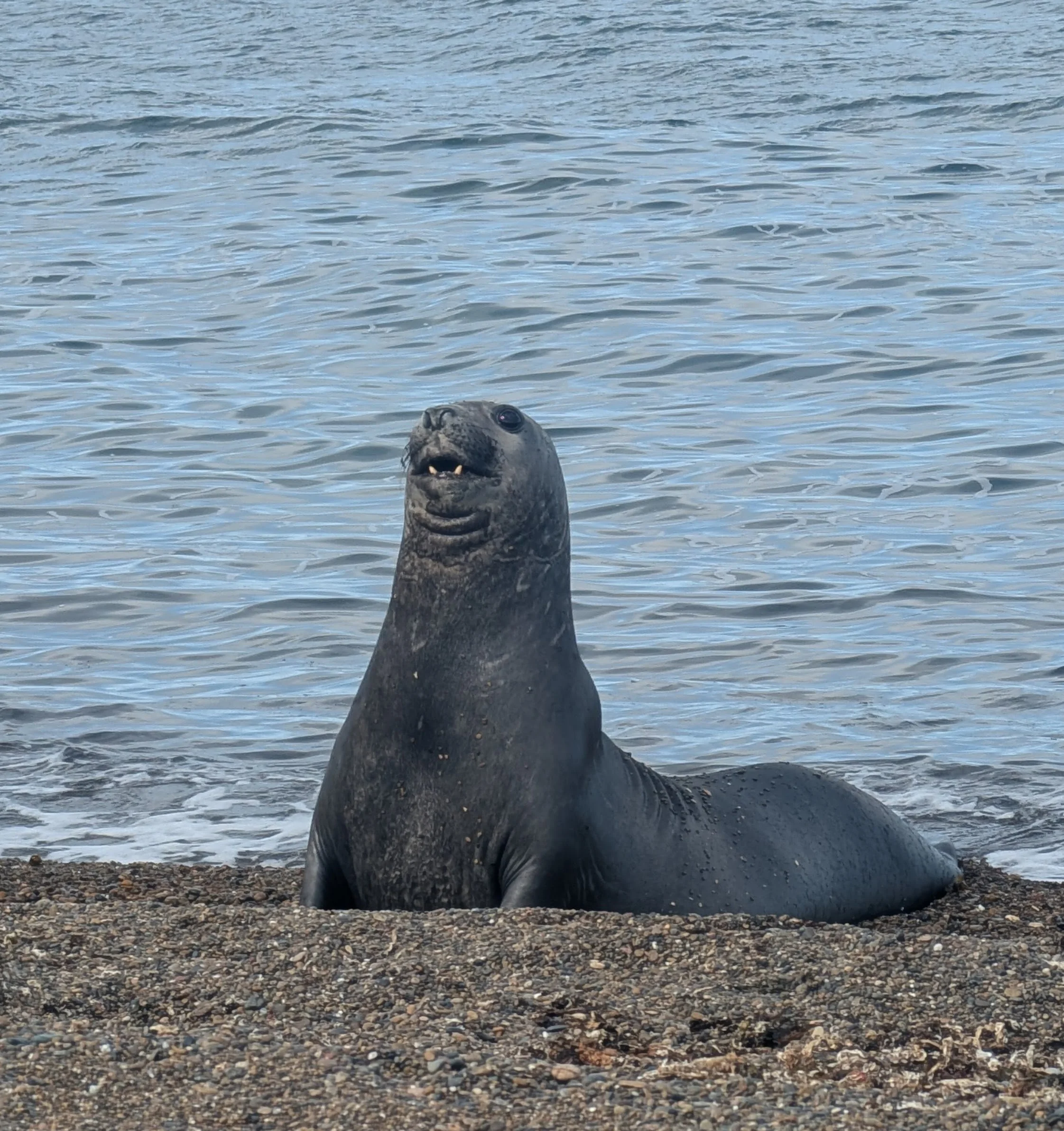
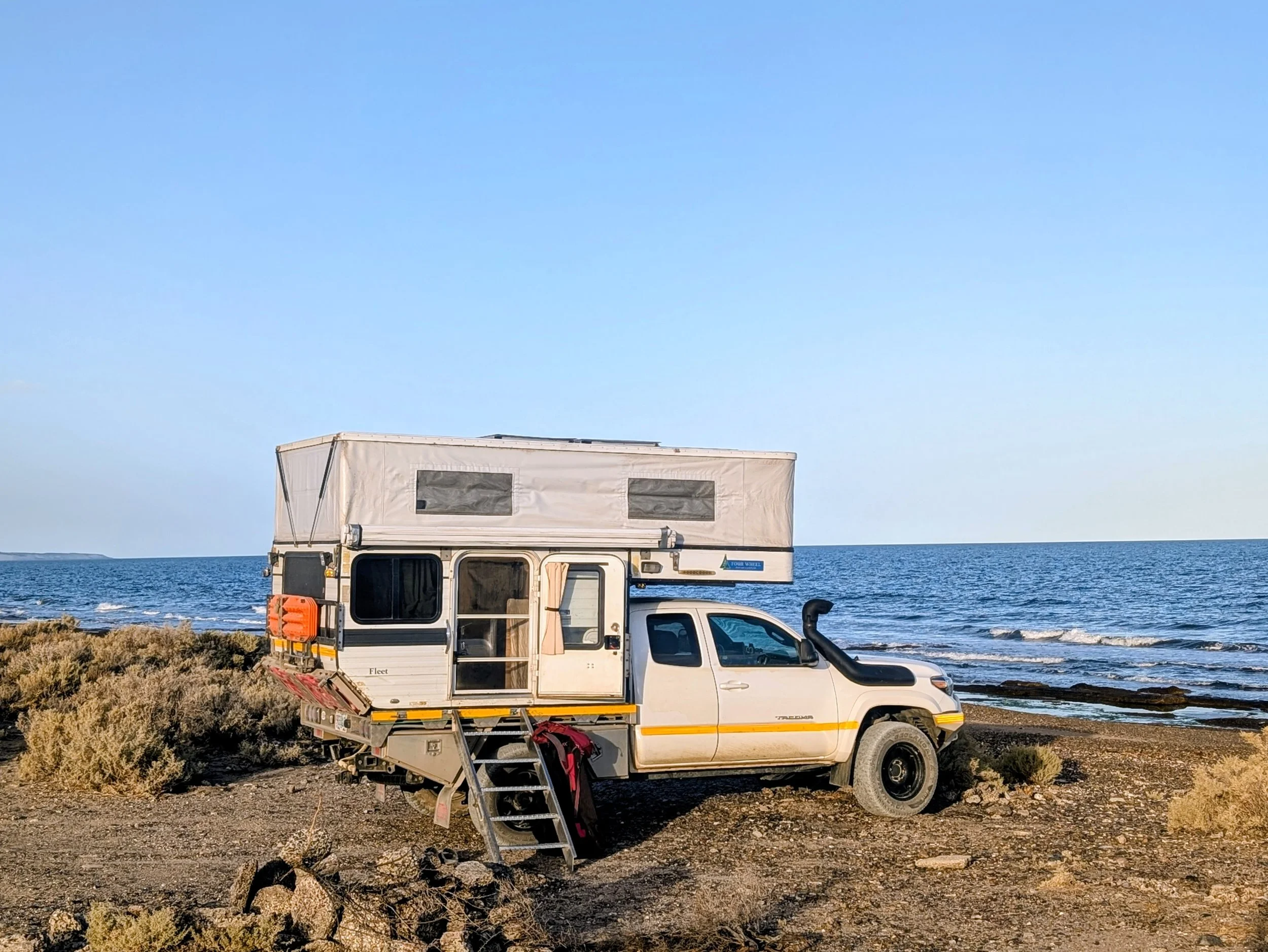
Beach camp
Driving out of the beach camp, Andy noticed that the clutch felt strange. It was getting worse as we drove, so we limped into Puerto Madryn and found a campground. It was a Sunday so we were not hopeful about finding any help. But the campground called their local 24 hour guy Augustine, and he came out and cheerfully told us just to follow him. So we did. All the way across town to his shop - which was really a paved area in front of his family house
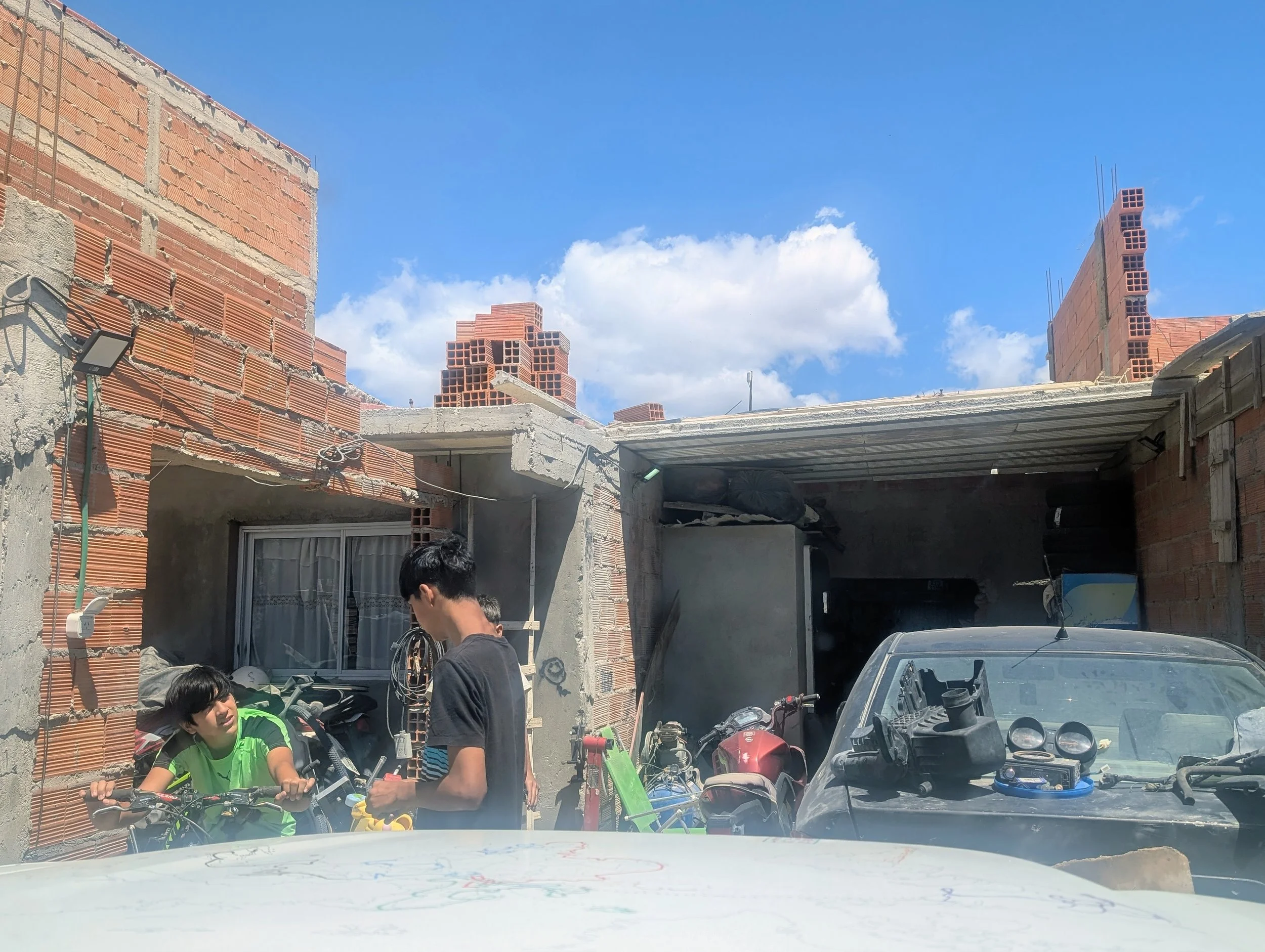
Augustin’s shop in Puerto Madryn
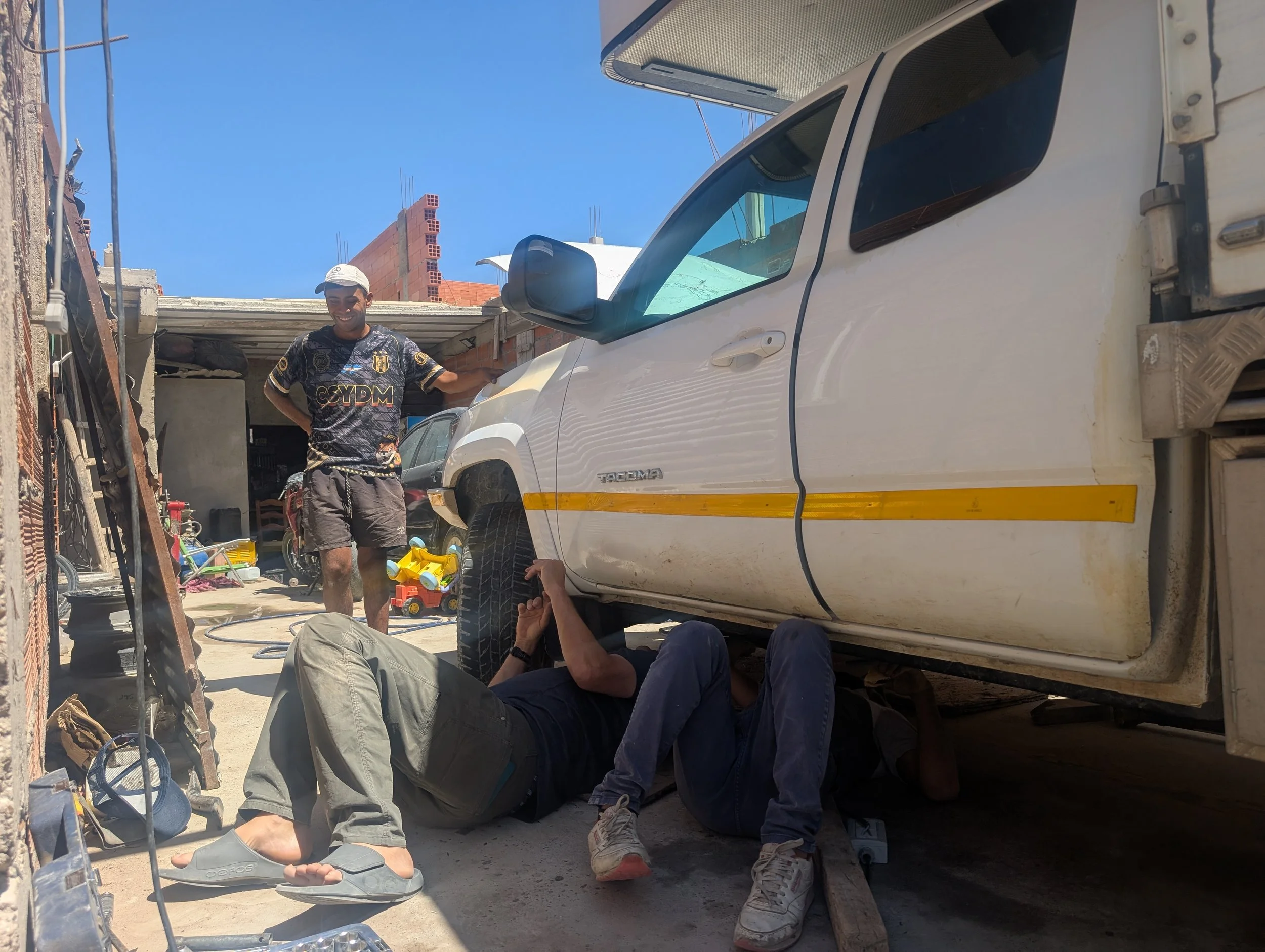
Investigating the problem
With our limited Spanish, it was a challenge to communicate and we did not always know what was going on. By the end of the day on Sunday, with the truck taken apart it was clear we were not going anywhere. So we booked a nearby hotel and settled in. Overall we had a mixed experience with Augustine, and some of that was definitely our fault. We did not ask about costs upfront and by the time the truck was dismantled he told us it was going to cost $1500 to fix the transmission. We were in sticker shock. He explained that his rates were higher because he did not have all the tools and it took him longer. In the end we negotiated the price to $1,000 and in the course of two days he and his mechanics sourced a part (Hilux throwout bearing) and professionally repaired the transmission. Had we had the parts we would have replaced friction plates as well.
Because we were ready to go, we did not have him look at what we were seeing was a new minor fuel leak. He also pointed out to us that our radiator was leaking . . .
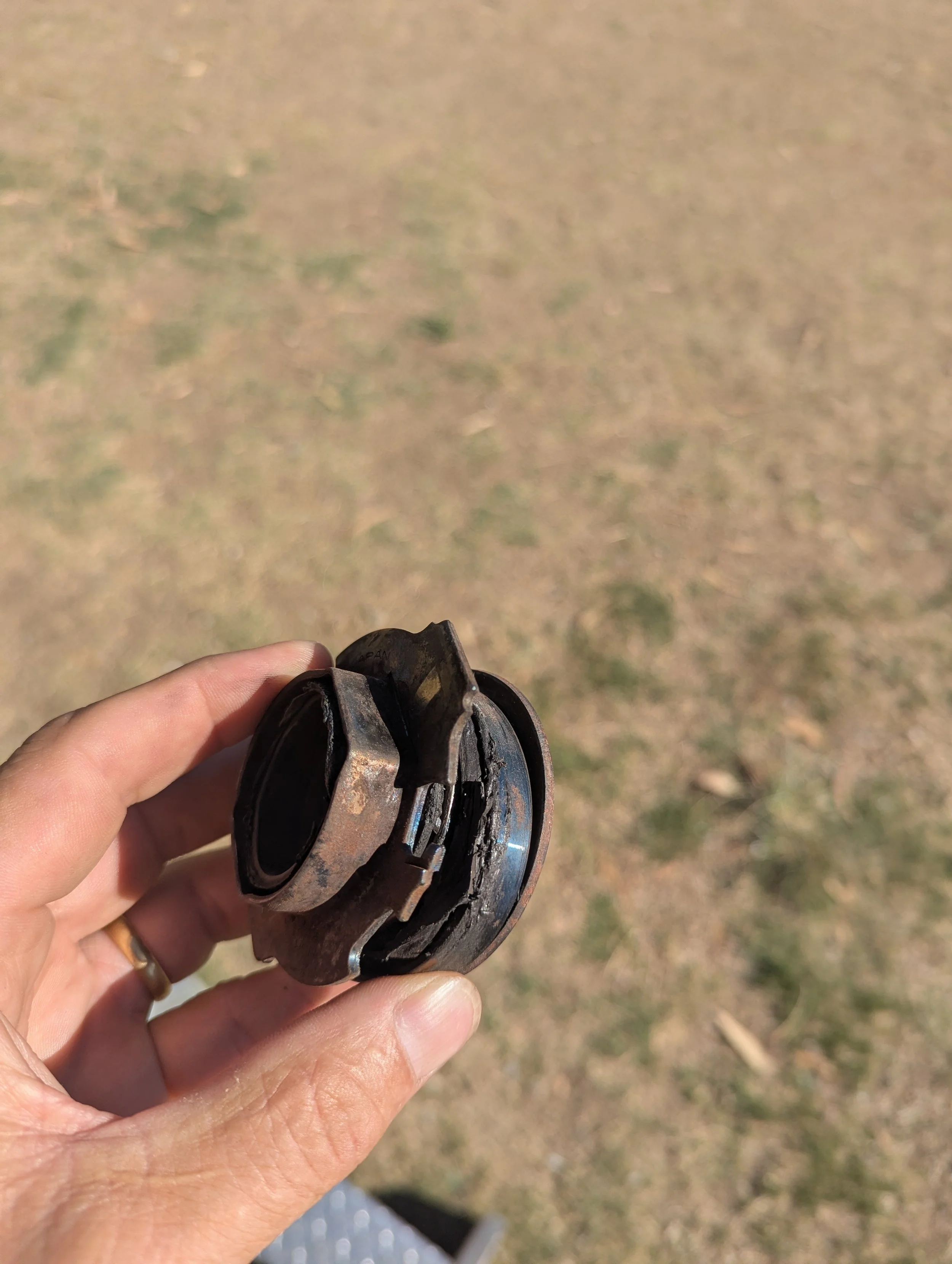
Completely destroyed throwout bearing. Luckily the friction plates in the clutch were still fine.
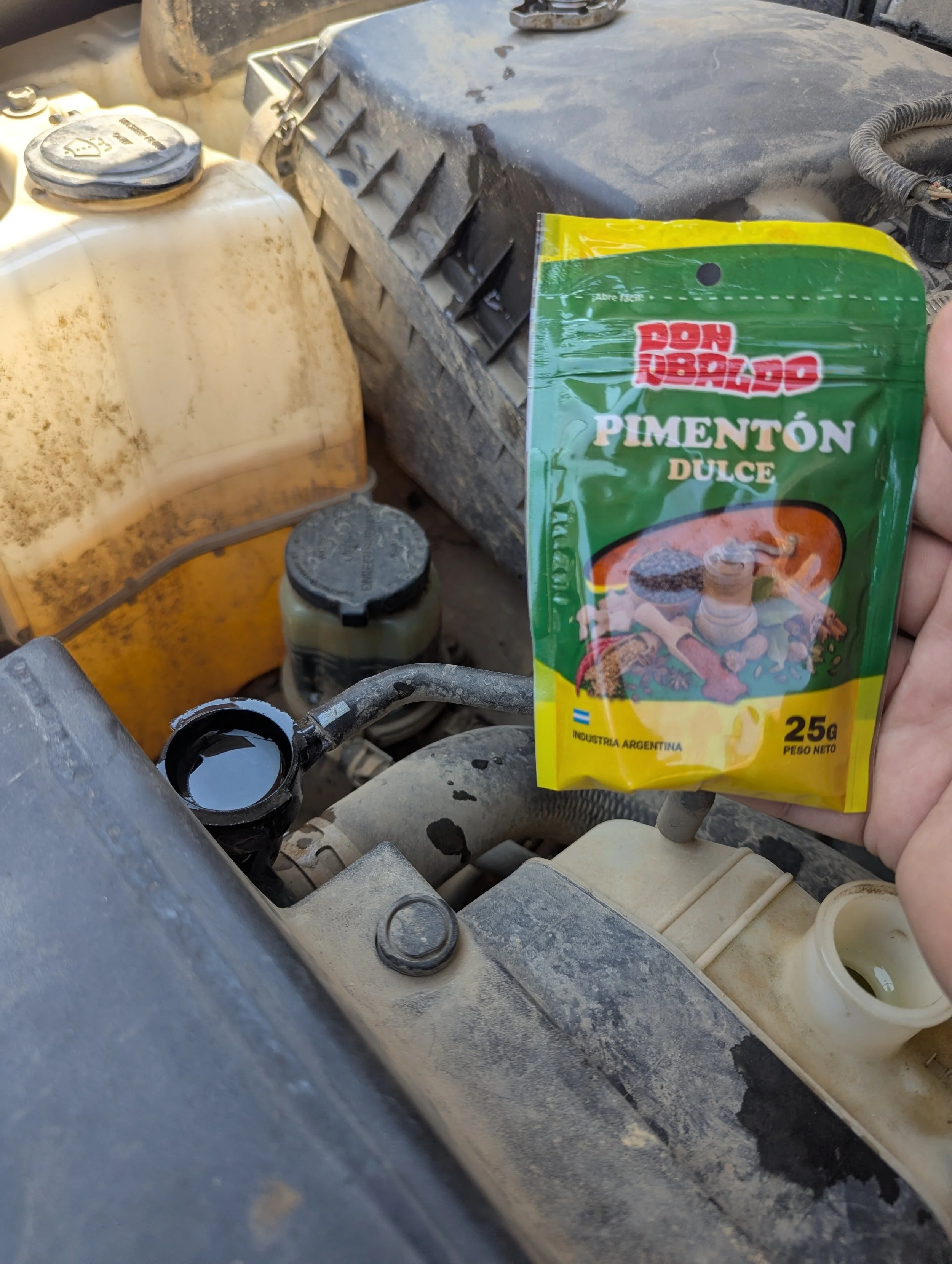
Local fix for a radiator leak - it actually worked for us for about a week
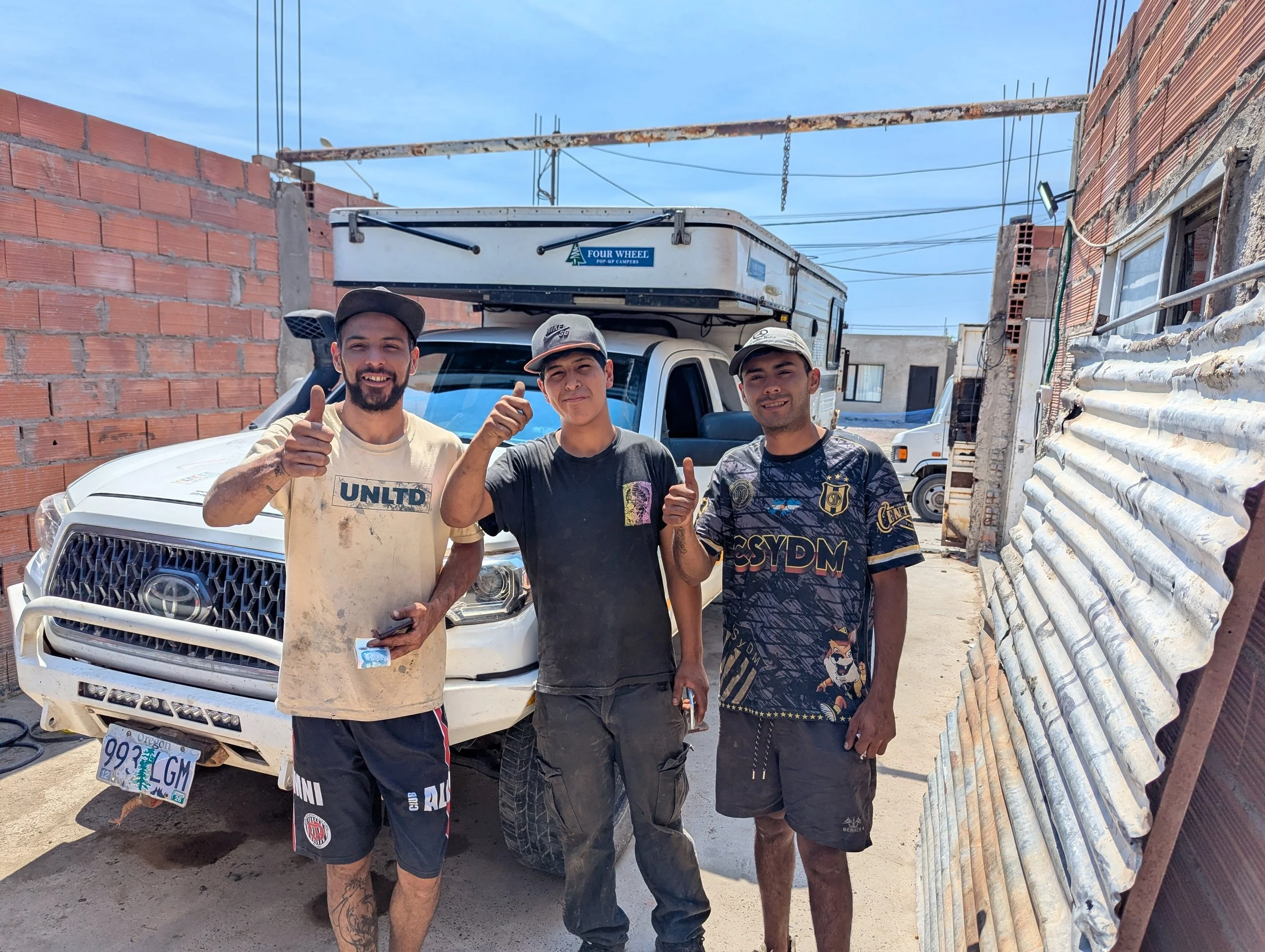
Thank you Augustine and crew!
Second guessing ourselves, we decided not to leave town before having the fuel leak looked at again, so pulled into yet another shop where they replaced more hose and fittings. Once again we were hopeful and headed out to Peninsula Valdez to see sea life. Unfortunately we were about a month early to watch the iconic orcas hunting sea lions but there was still plenty to see.
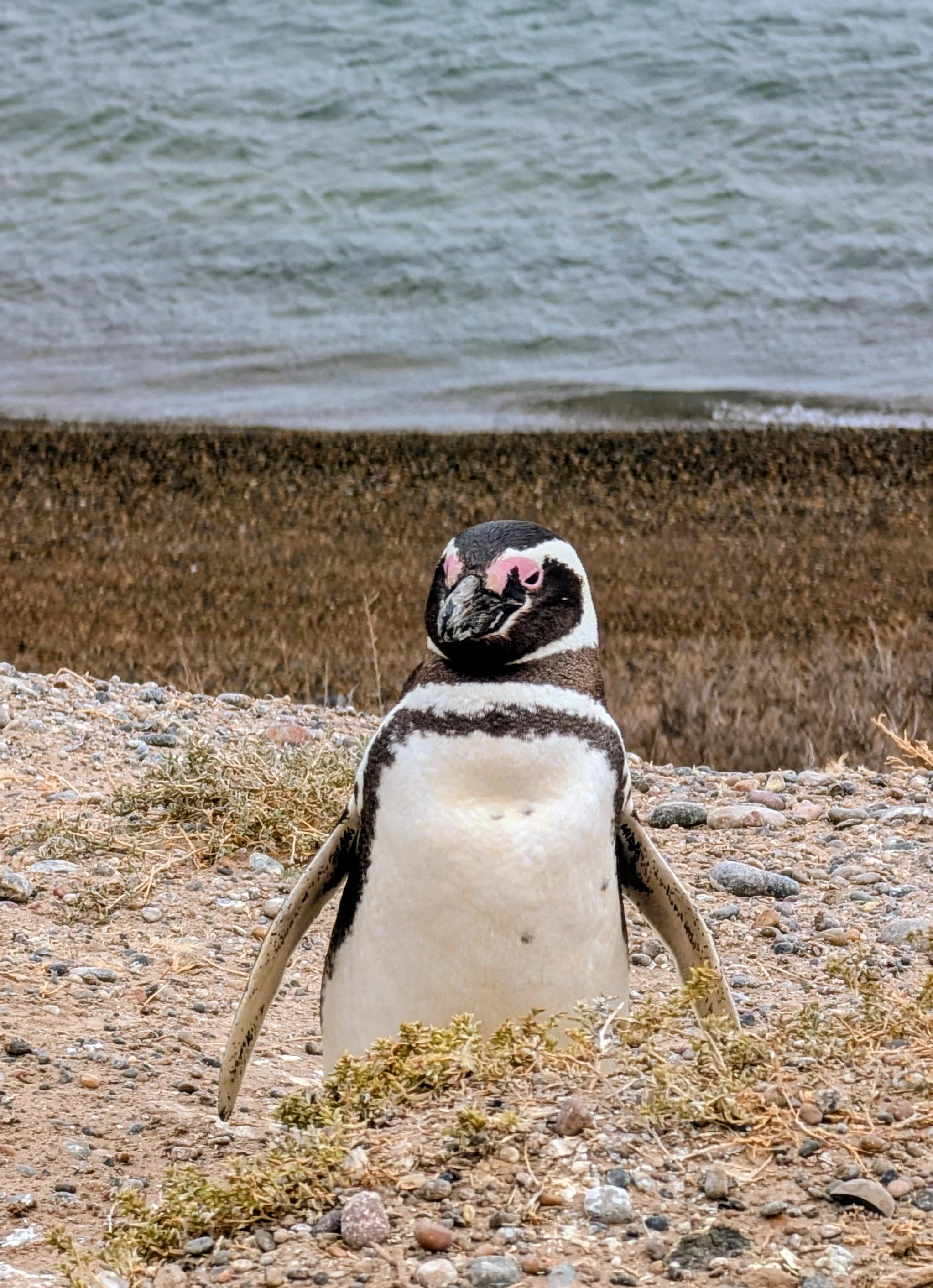
Penguins at Peninsula Valdes
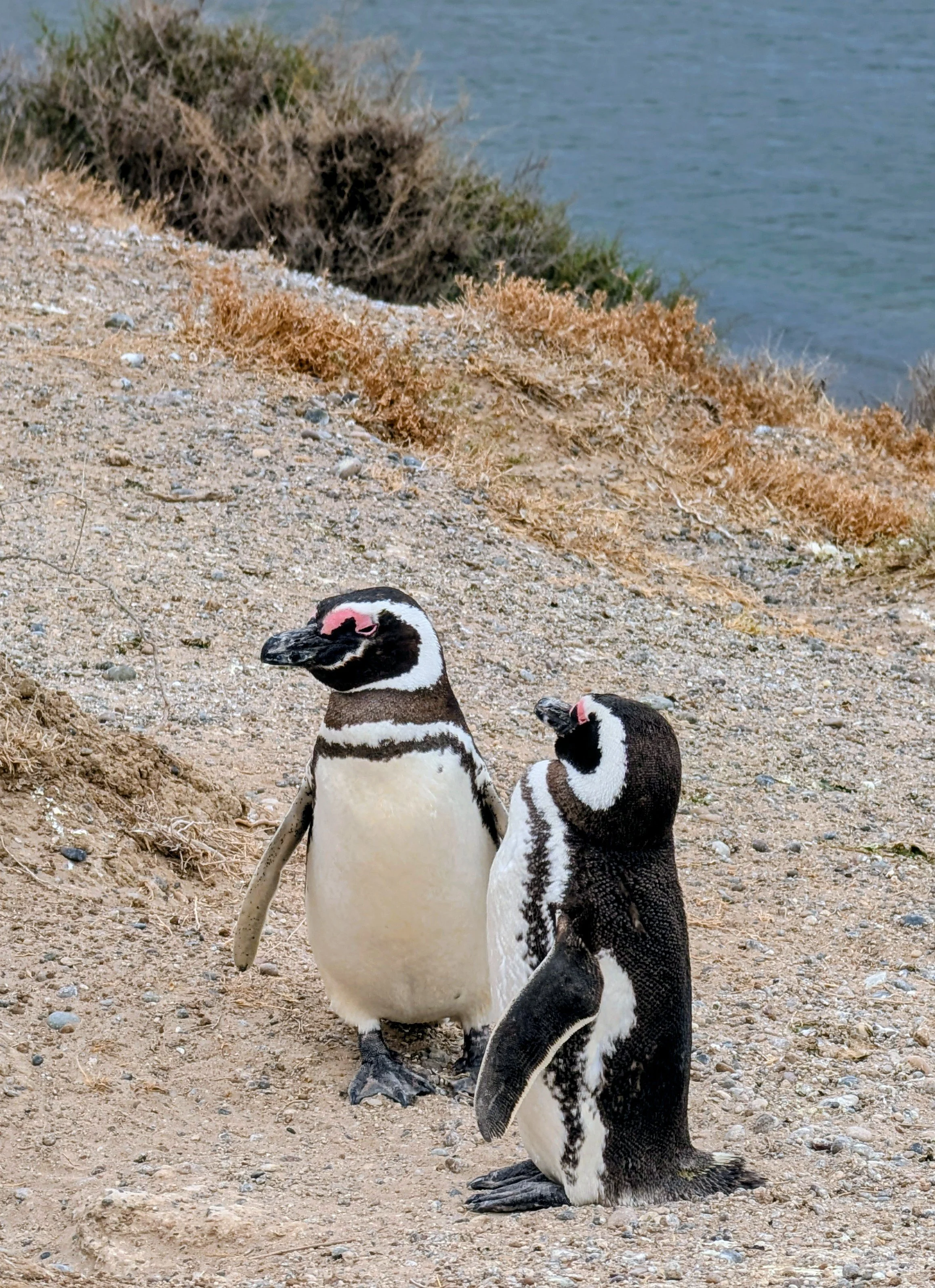
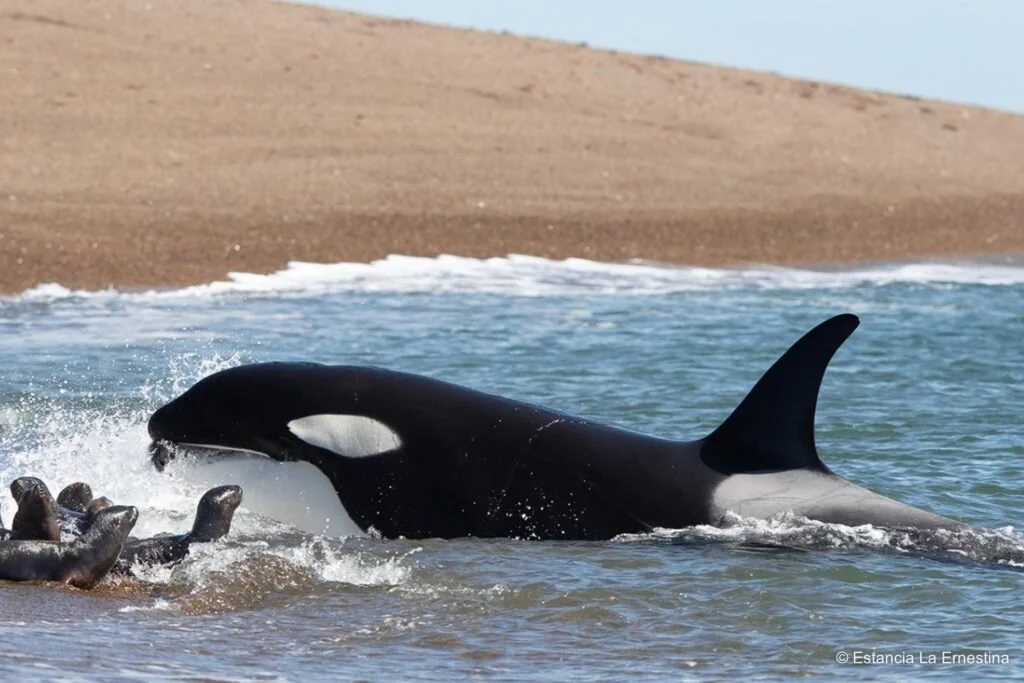
No we did not see this. But our biggest regret in planning our Argentina trip was missing this by a month. Peninsula Valdez is famous for the ability to see orcas coming up on the beach to hunt juvenile sea lions in late Feb, early March. When we were there, the sea lion pups were too young to go in the water. We had not realized what a unique place it was - maybe a little grim, but the orcas have a unique hunting pattern in this area which makes them easy to see as they come into shore.
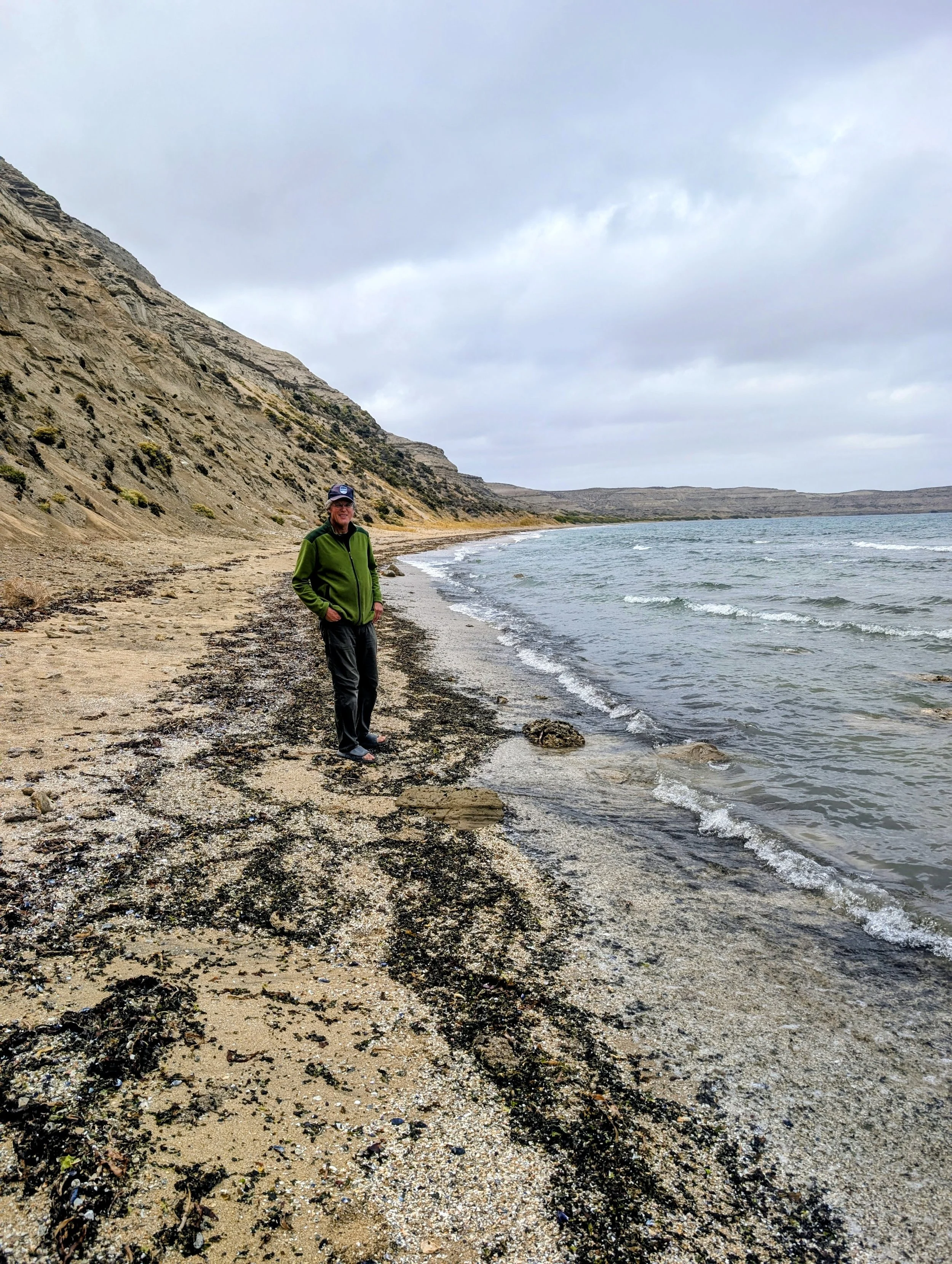
Remote coastal walk
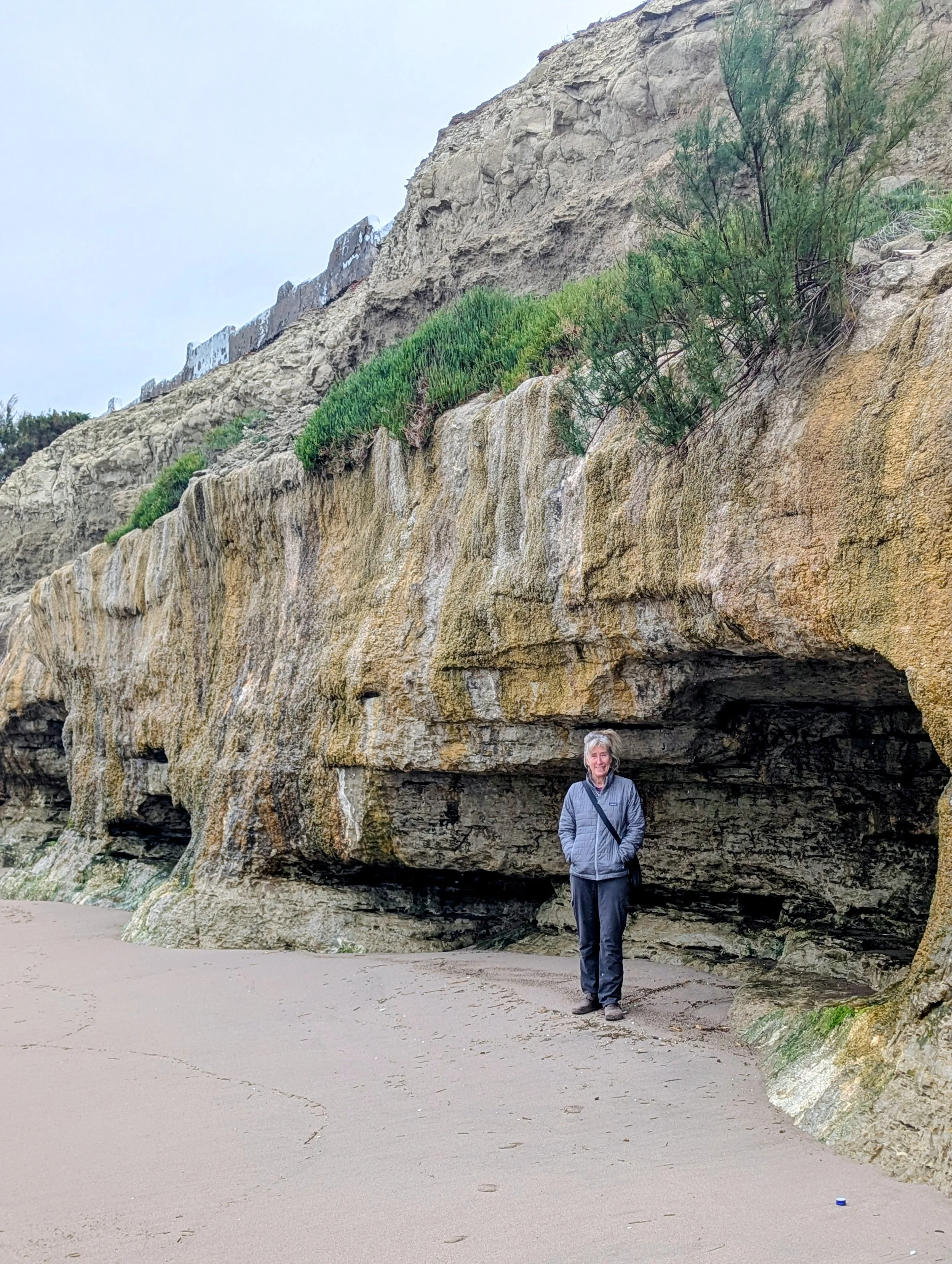
Las Grutas - beachside grottos
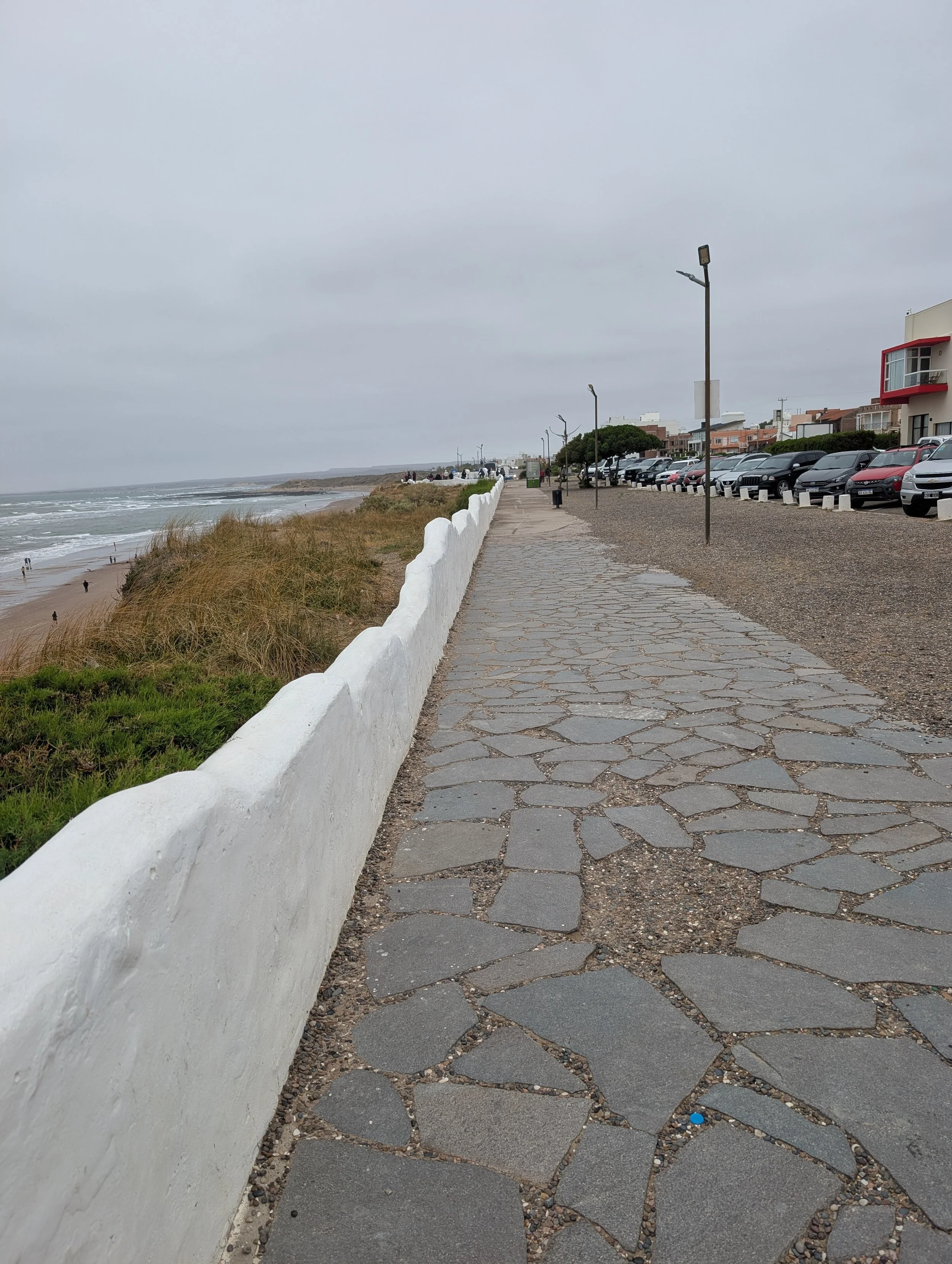
Walking the costanera in Las Grutas
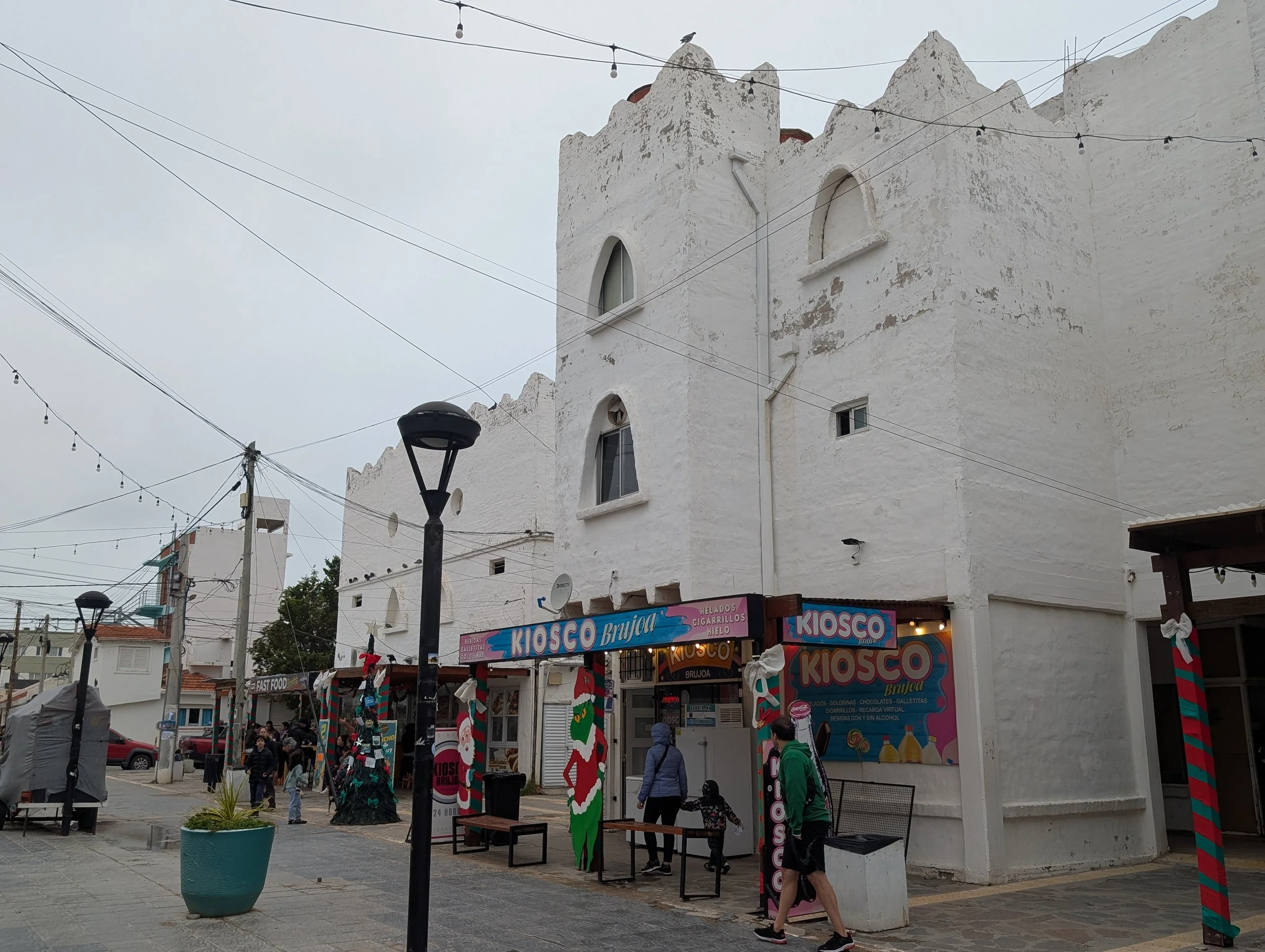
It was a charming sea side town
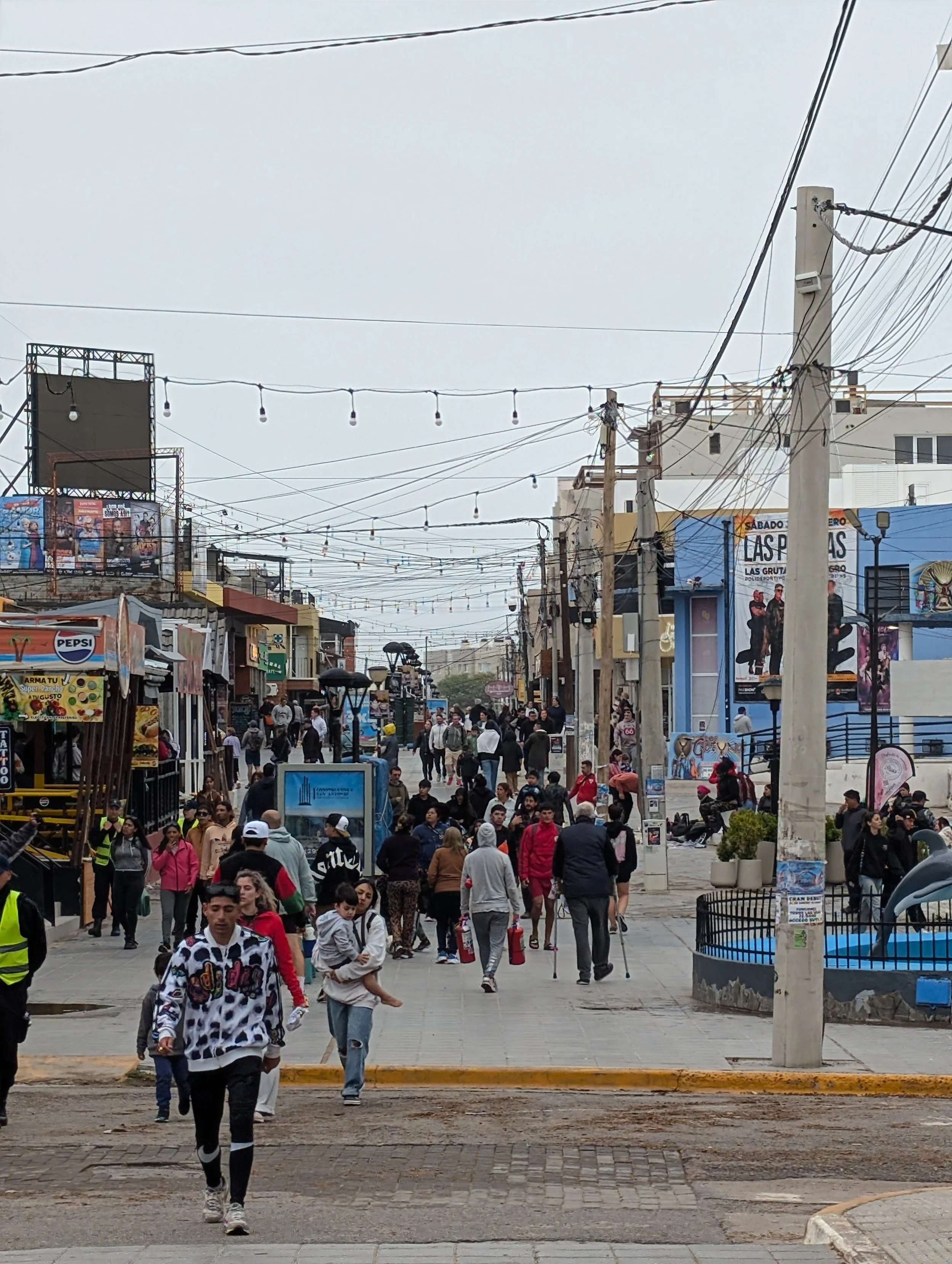
Full of Argentinian holiday makers
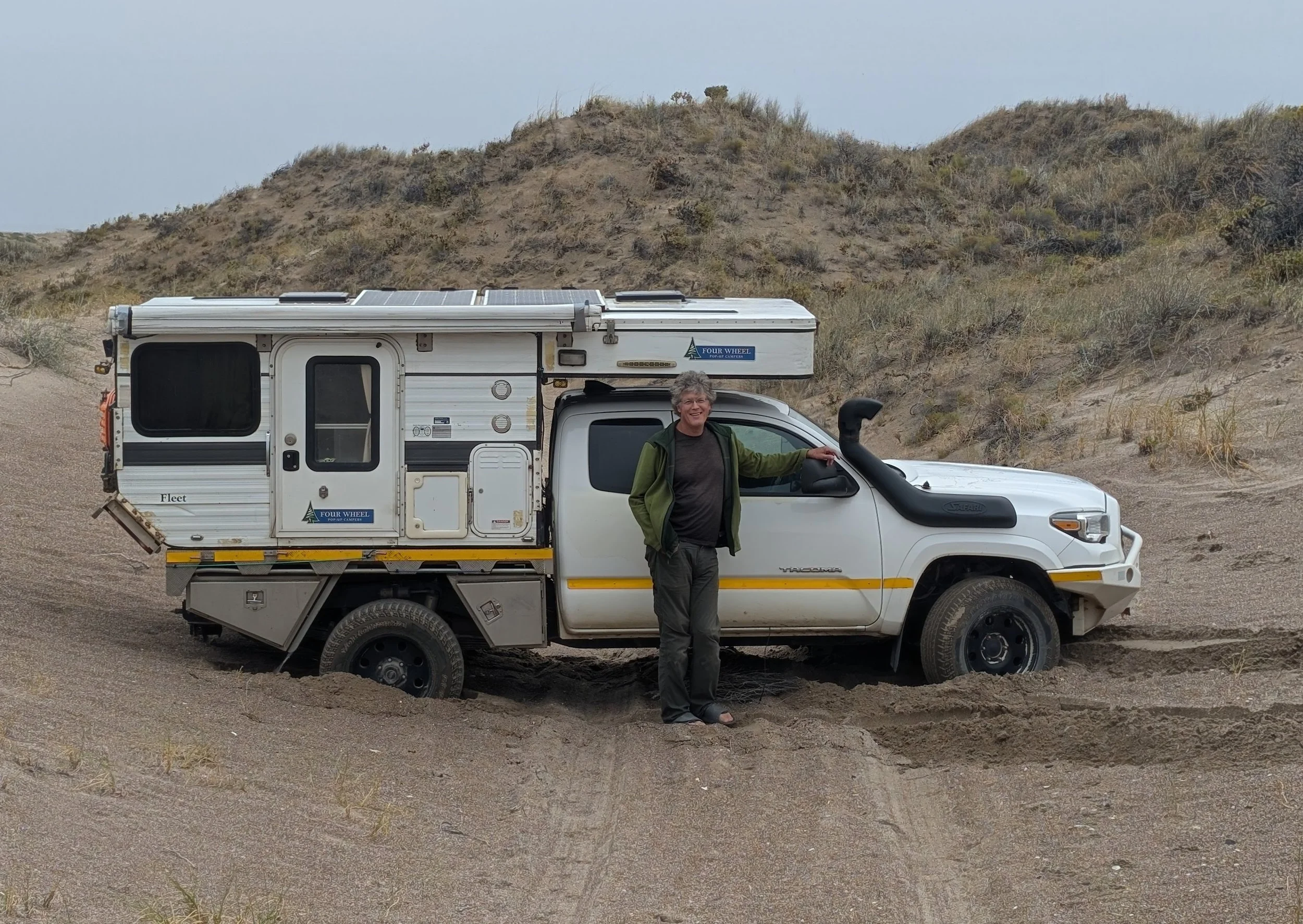
Gambled on turning around in soft sand on the way to a dune camp. Nope, ten minutes of digging and Maxtraxs to the rescue
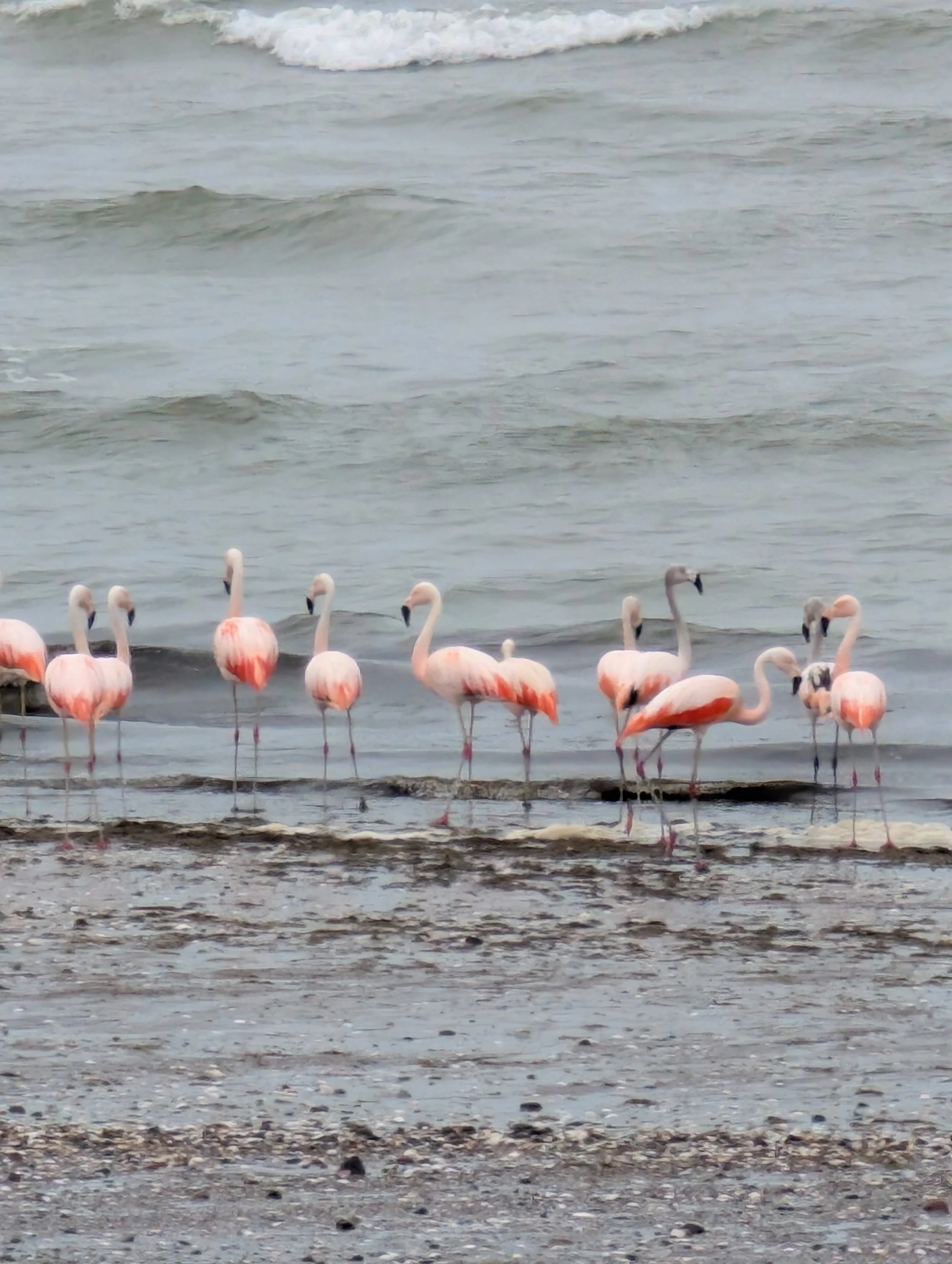
Eventually we made it to a beautiful spot in the dunes with flamingos nearby
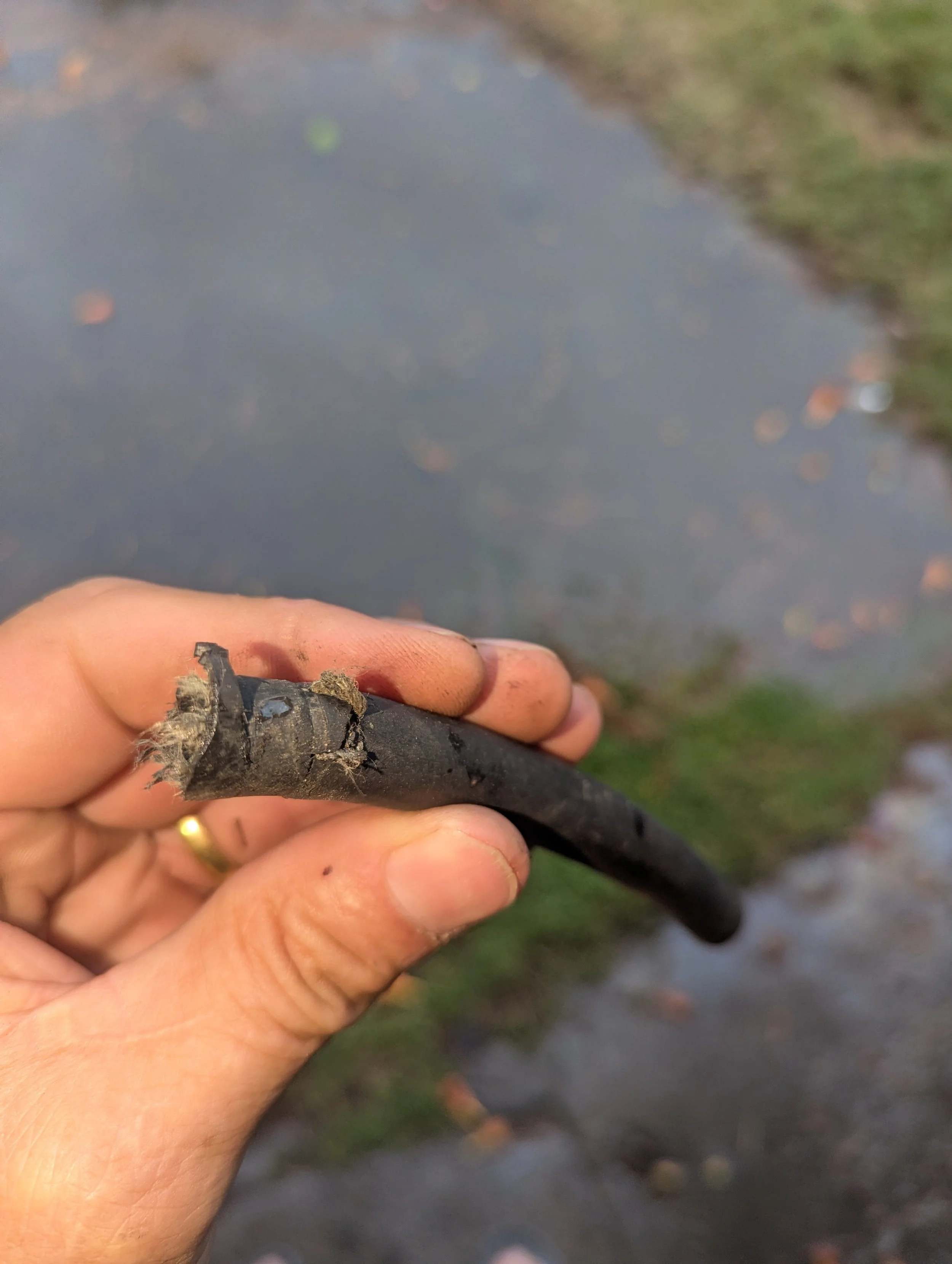
Brand new fuel line with a hole
We hit the road and didn’t get far before we started smelling gas again. Andy got out and checked and once again, we were leaking fuel. Highly frustrated, we found a mechanic in the nearest town of Rio Colorado (through iOverlander). We waited through the siesta hours and were thankful he brought in his son to translate for us as we recounted our tale of woe with fuel leaks. He decided to replace the line with higher pressure line - but we were starting to wonder if there was a problem with the new fuel pump - if it was spiking pressure and blowing the lines.
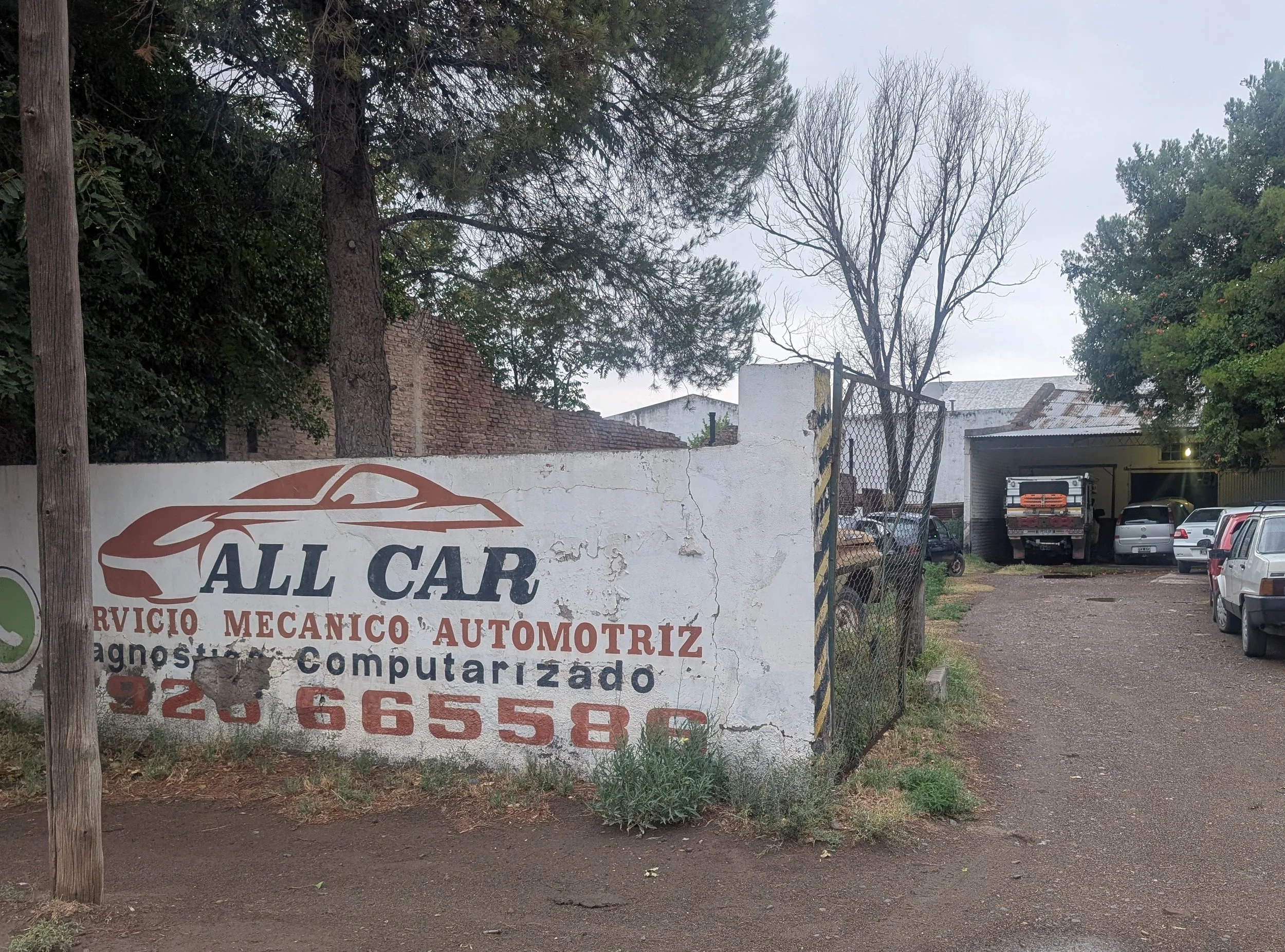
All Car shop in Rio Colorado
With the broken fuel lines replaced with stronger ones, we once again hit the road.
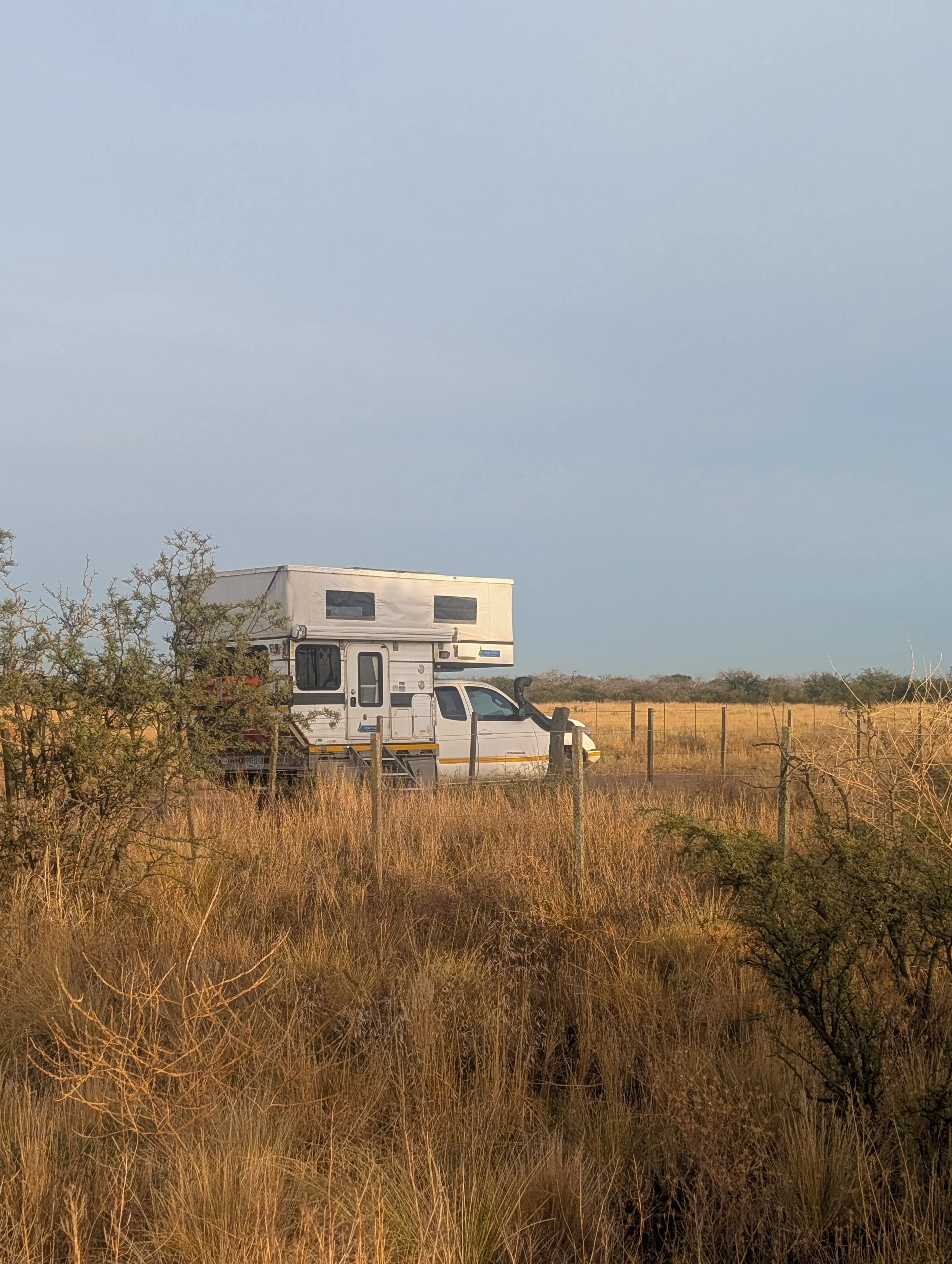
It was late, so we didn’t get far, camping on a small rural road.
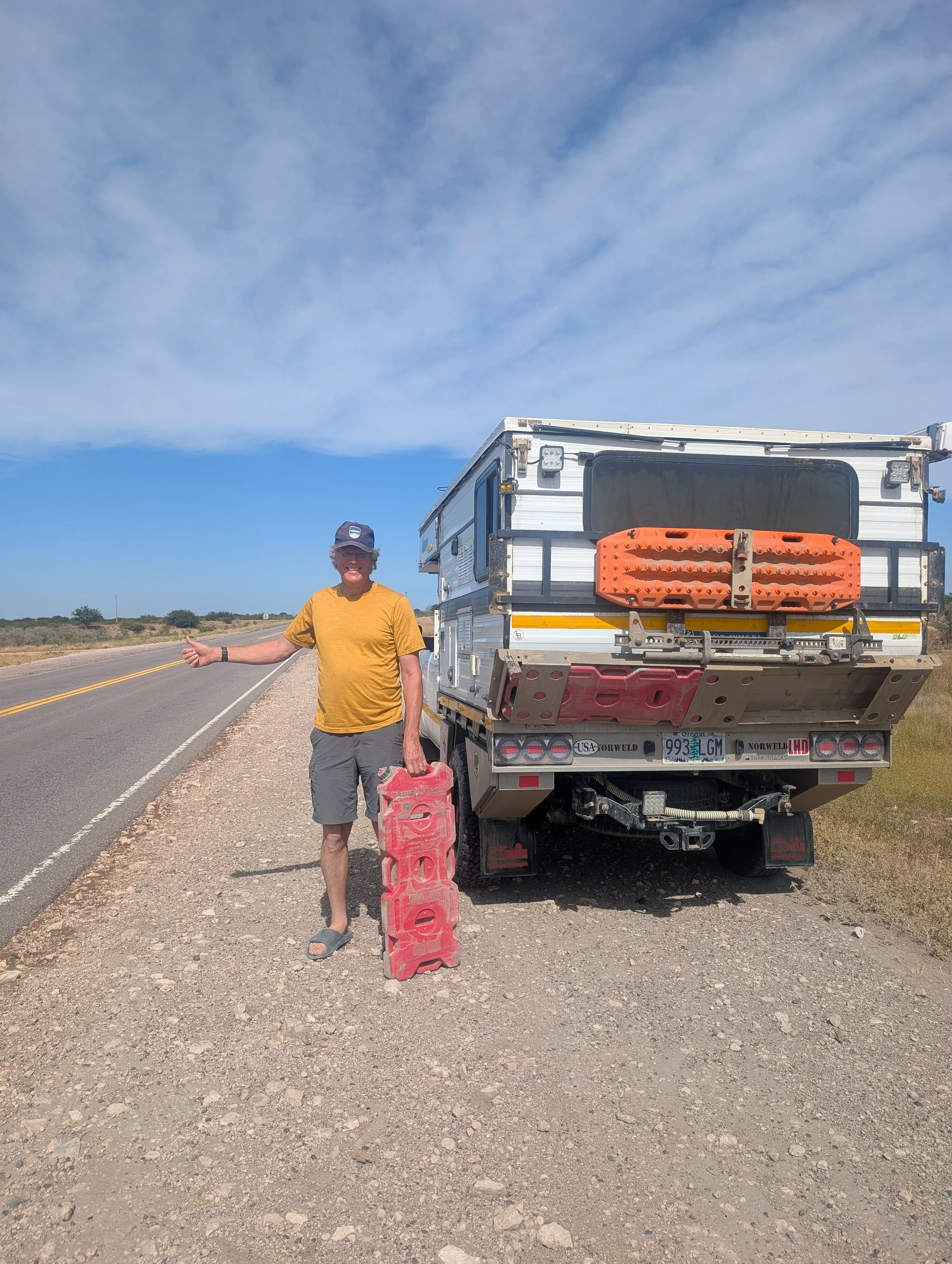
The next morning we awoke to the now very familiar smell of gas. We decided to turn around and go back to All Car as he was already familiar with the problem. Unfortunately, a few miles along we lost all our gas and luckily made it to the side of the road.
People are so kind in Argentina, they do not ignore someone obviously in trouble. Every time we were broken down roadside, multiple people would stop offering assistance. The mechanics always prioritized us, knowing that we were traveling and wanted to get on our way. A young man stopped and rather than just going to get gas which would likely just leak out, took Andy back to the mechanic shop in Rio Colorado where the owner called us a tow truck.
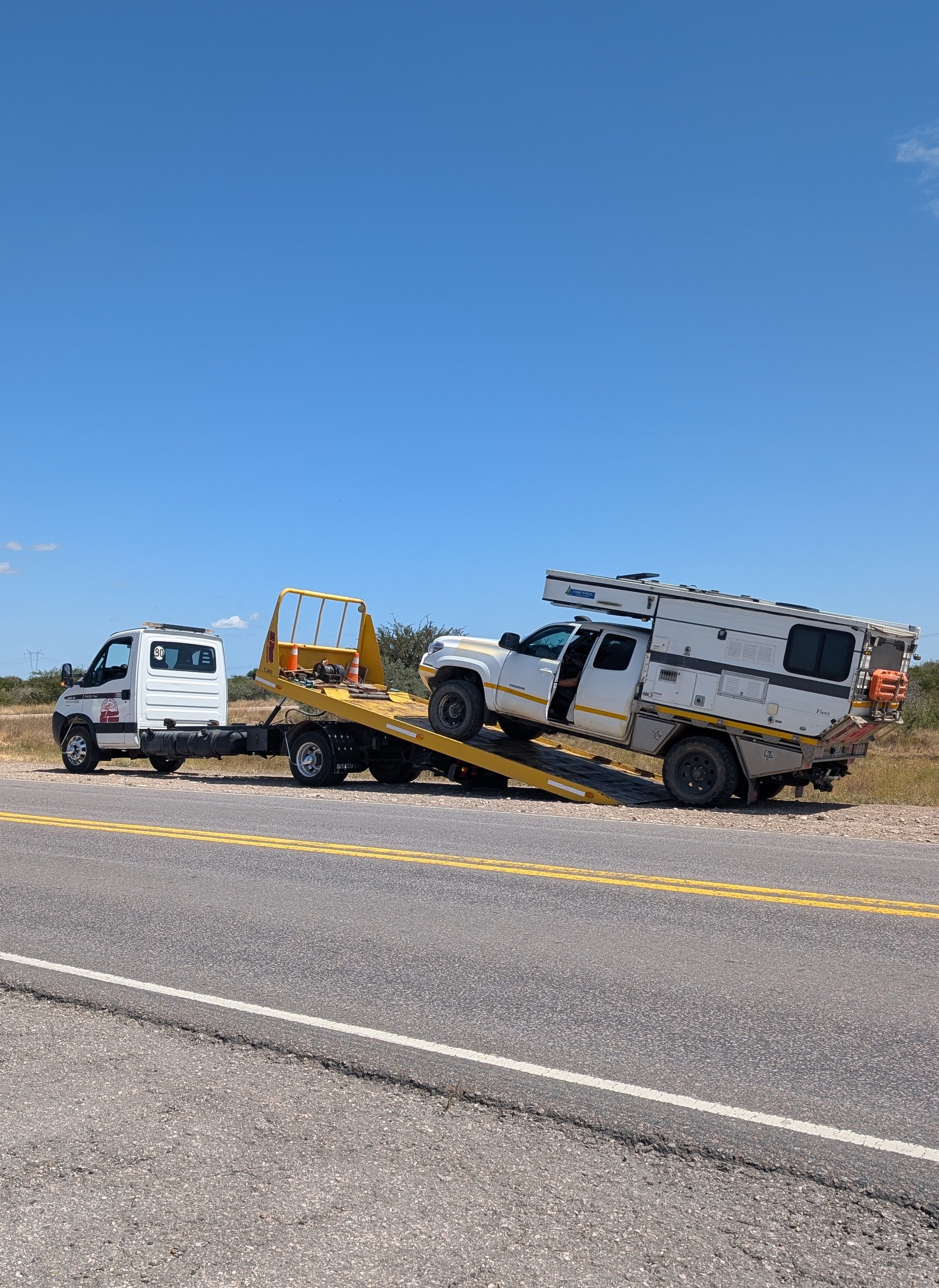
Getting towed back to the mechanic
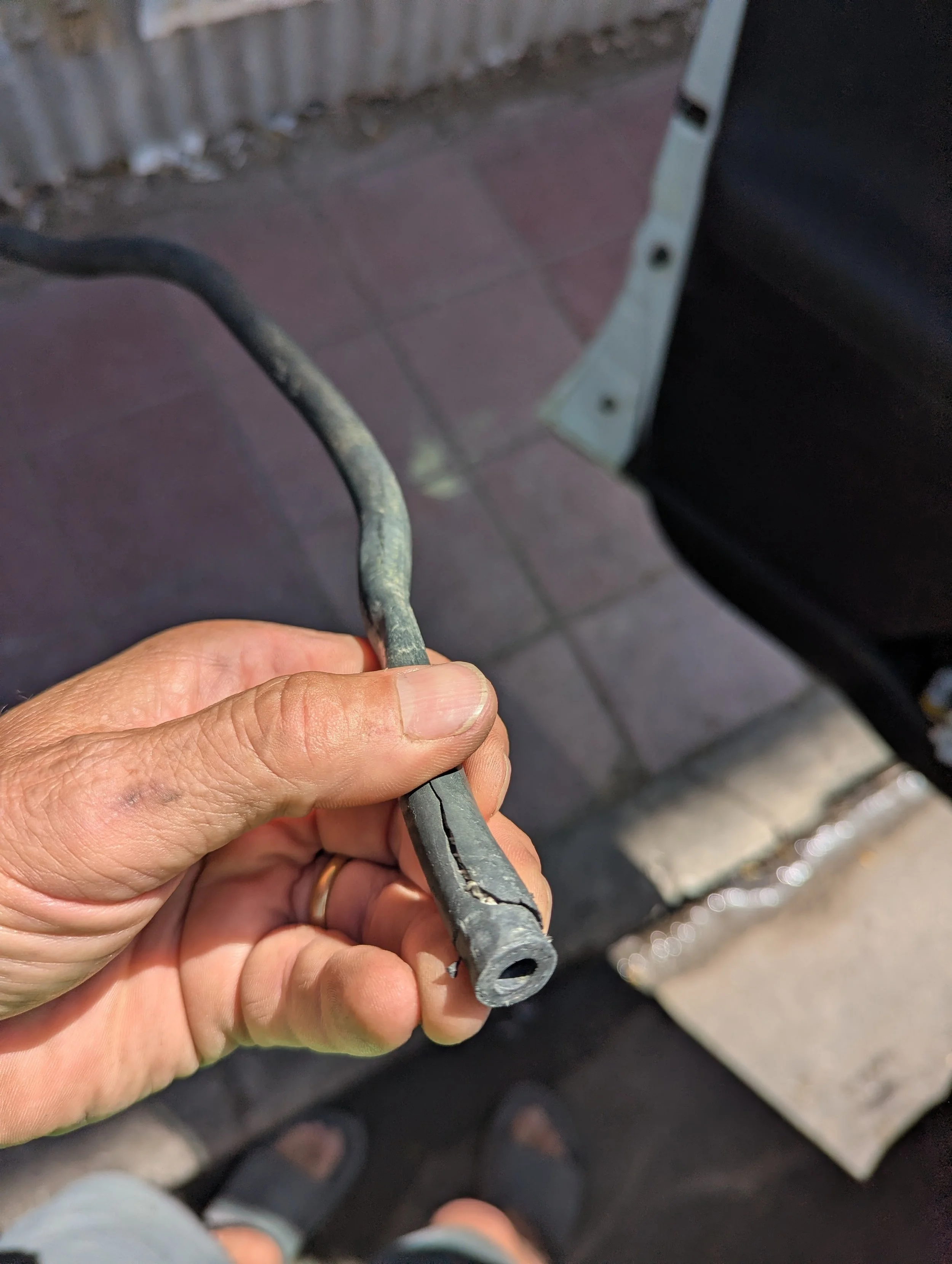
New connection split
This time we asked that very single hose be replaced with the highest quality available. Alfonso at All Car agreed and took care of it for us. So we hit the road, again late in the day and made it to a pleasant municipal campground about 25 miles north of where we had spent the night before.
We pulled in to the campground and parked to scope it out. When Andy went to re-start the truck to move to a different site, it would not start and the fuel was once again leaking.
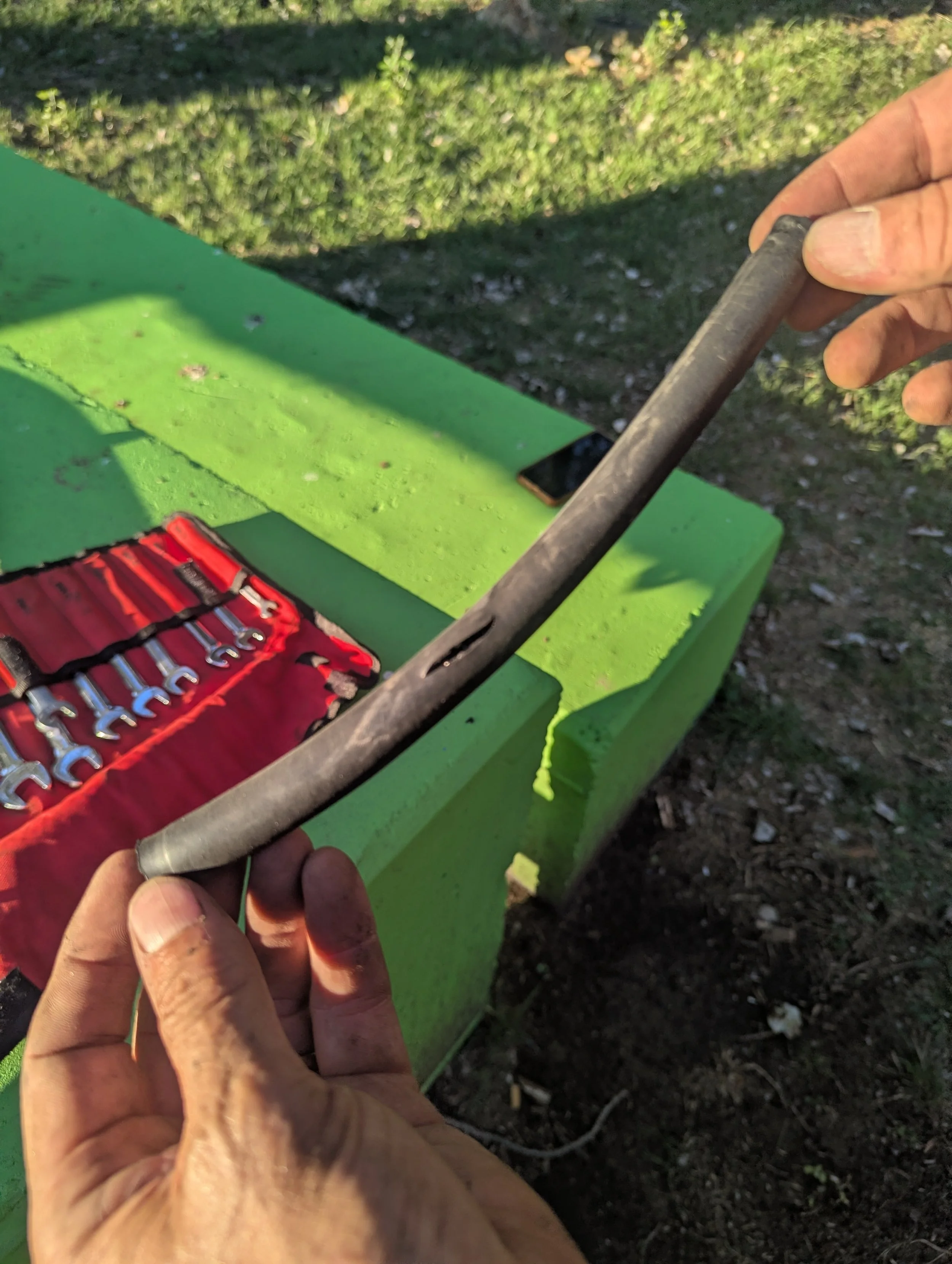
Andy decided to check it out himself and lowered the fuel tank. When he inspected the brand new line he saw that it had blown out.
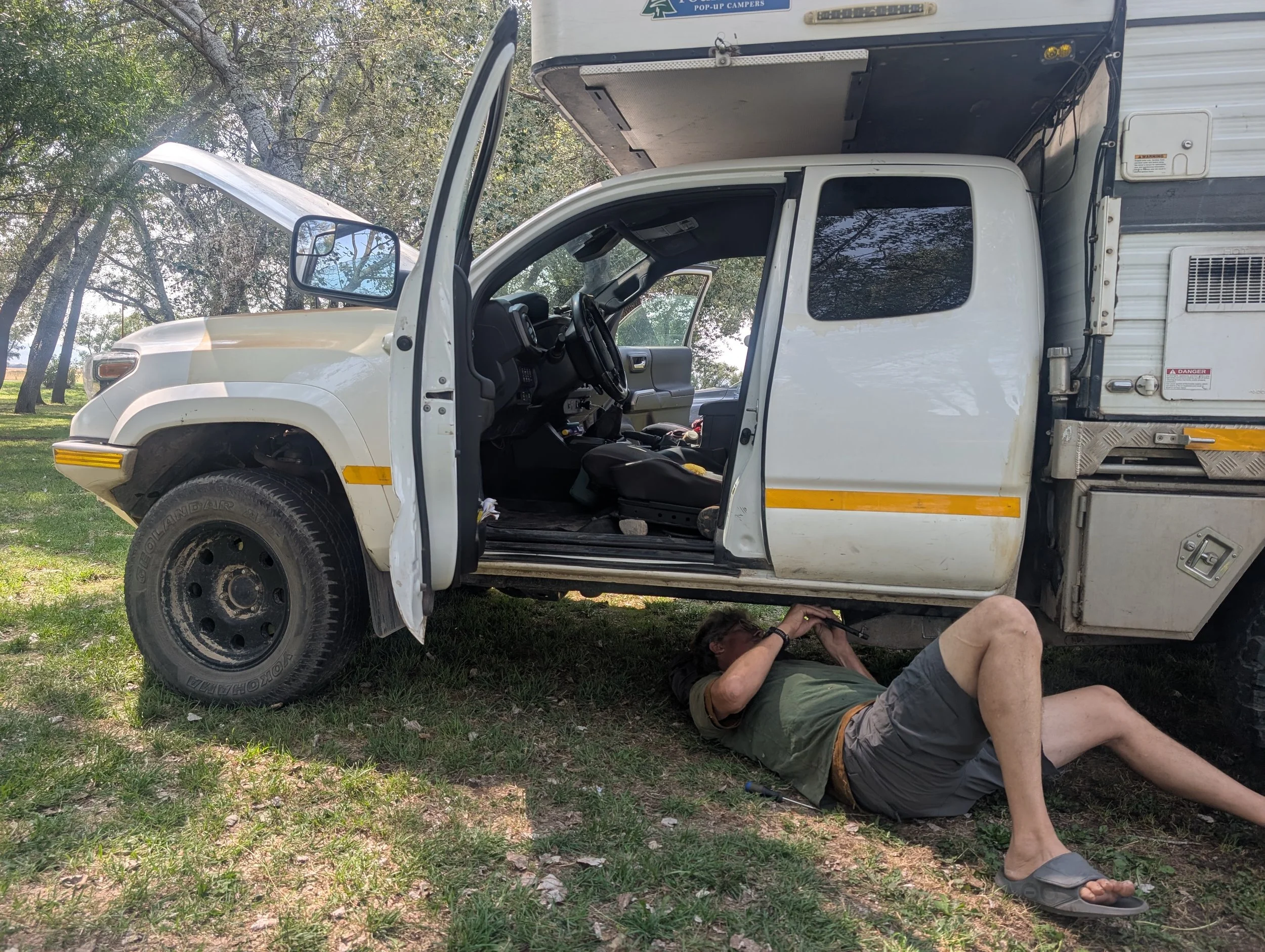
At least this time we were in a grassy campground
At our wits end with how to fix the bigger problem, we also had the issue that we were stuck in a remote rural campground with no services. Dawn found a mechanic on iOverlander an hour away and texted him on Whatsapp. A specialist in Landrovers, Santiago agreed to drive an hour the next morning and see if he could help us. He stopped along the way and purchased an even higher quality fuel line to see if that could fix the problem.
The next morning, Andy and Santiago replaced all the lines, lifted the tank back into place but the truck still would not start. Thinking maybe we were out of gas, they drove to a station to get some. That did not work. Finally, they lowered the tank again and removed an air lock in the line. We high fived with Santiago, paid him through Paypal (our cash reserves were dwindling) and he headed back home. We packed up, started up the truck, drove about a 1/4 mile (barely out of the campground) and once again the truck died and the smell of gasoline permeated the air. Andy lowered the tank and again bled the fuel line but this time it wouldn’t start. Andy was ready to sell the truck and start over.
We messaged Santiago and he went to work finding us a tow truck, recommending that we head about 30km north to Pigue where there were more mechanics around. About four hours later, the truck showed up and a kind plan had been made for us. The tow truck driver took us to his boss’s shop where we were offered a shady place under a tree to camp and the promise of an excellent mechanic to trouble shoot with us the next morning.
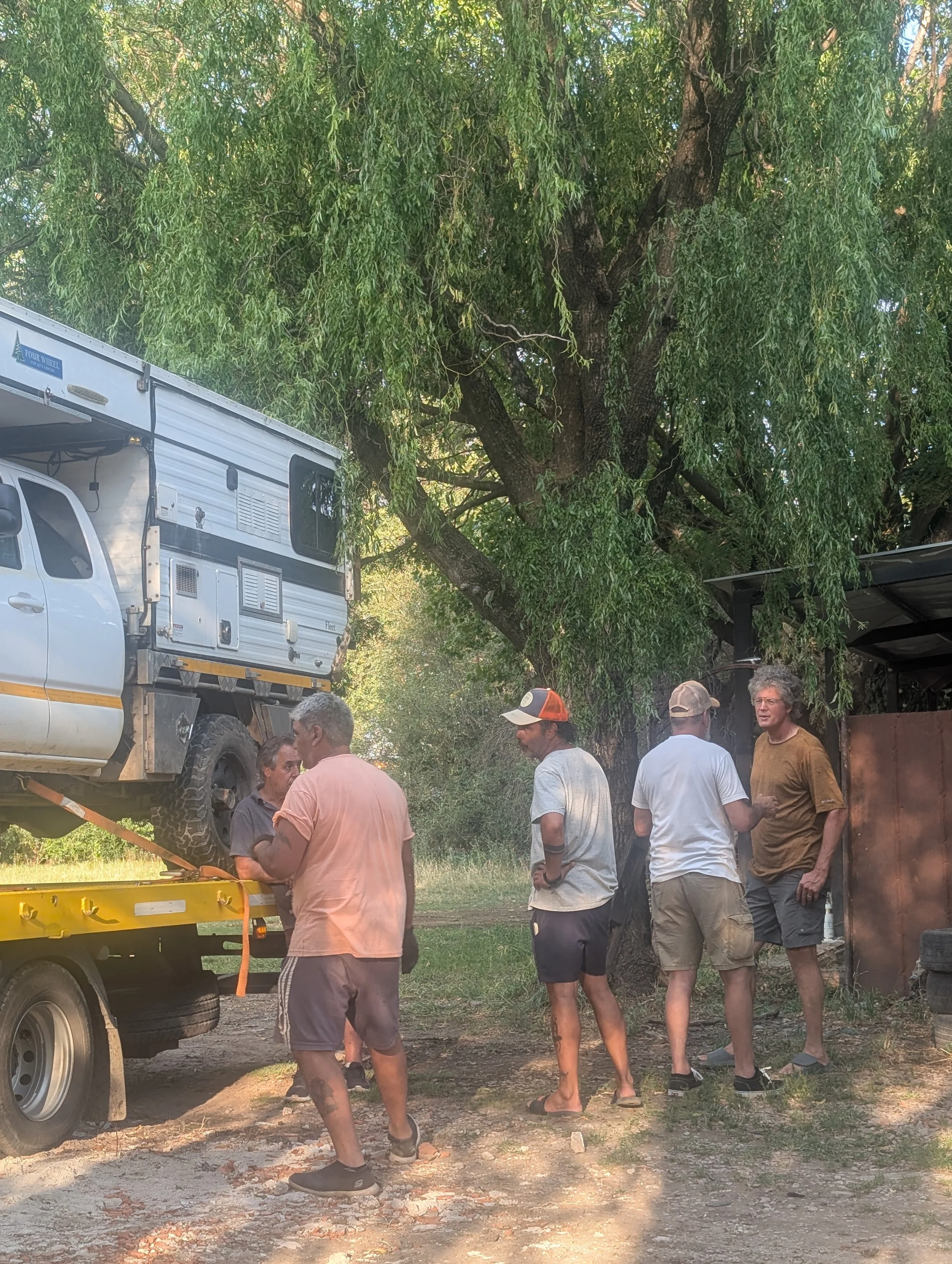
Arriving at the tow truck company shop site - they even brought in an American friend, Loro to translate for us
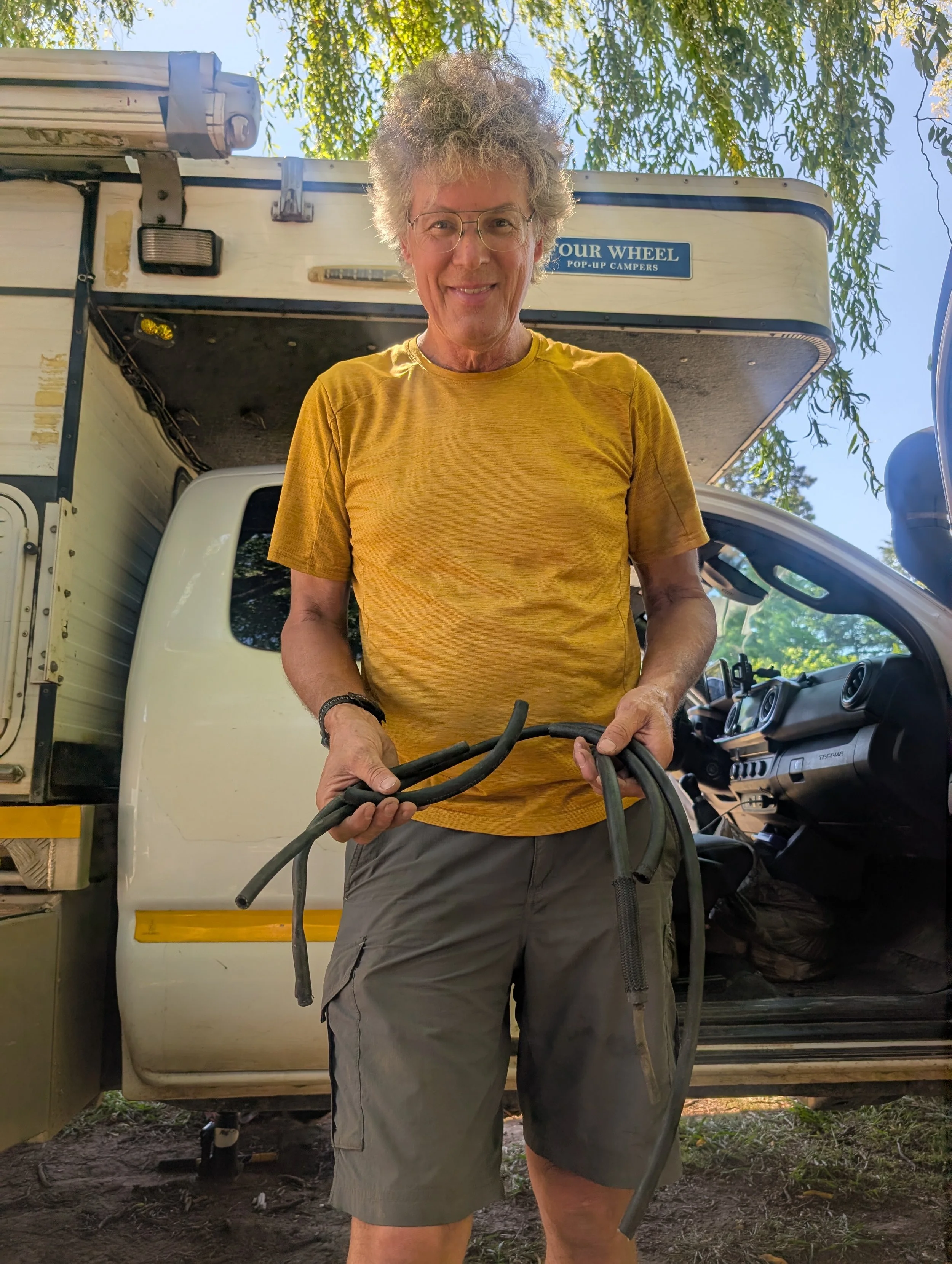
Andy displaying our assortment of broken hoses
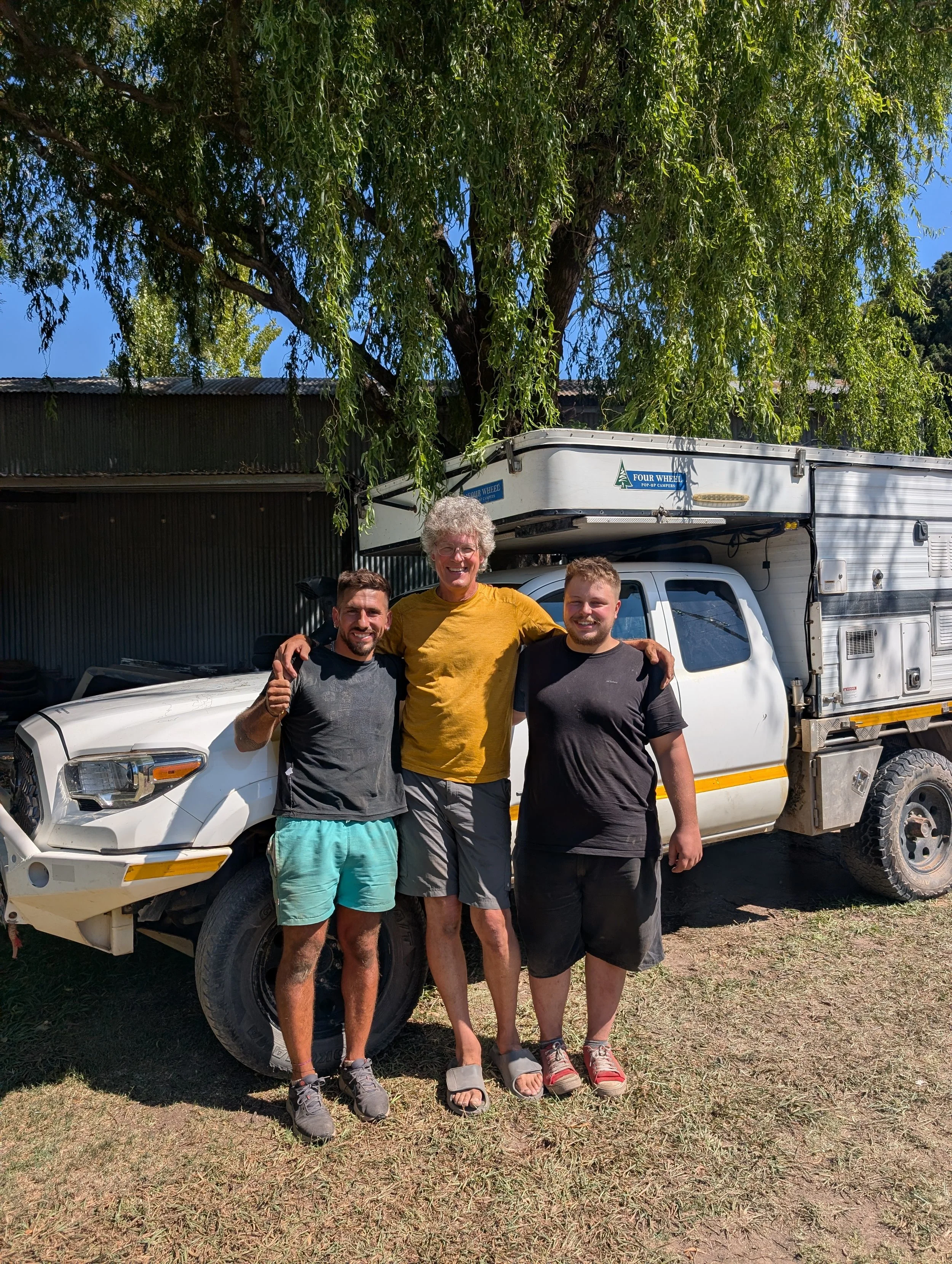
Our heroes!!!! These young mechanics finally figured it out. Apparently, all along the way mechanics had been replacing our fuel line with diesel rated lines since most vehicles burn diesel here. Since we run on gasoline, the gas was gradually dissolving the lines.
No longer taking anything for granted, we cautiously got back on the road with some hope of making it to Uruguay in time to store our truck and return to the US for a bit. Our parts shopping list had grown exponentially and we had plans to fly back with a new radiator, master brake cylinder (turns out the brake booster we had replaced on advice from a Toyota dealer in La Serena was not the problem with the brakes), both inner and outer tie rod ends on both sides, front body mount bushings, and a clutch fan……. We had also spent an unbudgeted $4,200 over the past two weeks on parts, repairs, tow trucks and mechanics. Yikes.
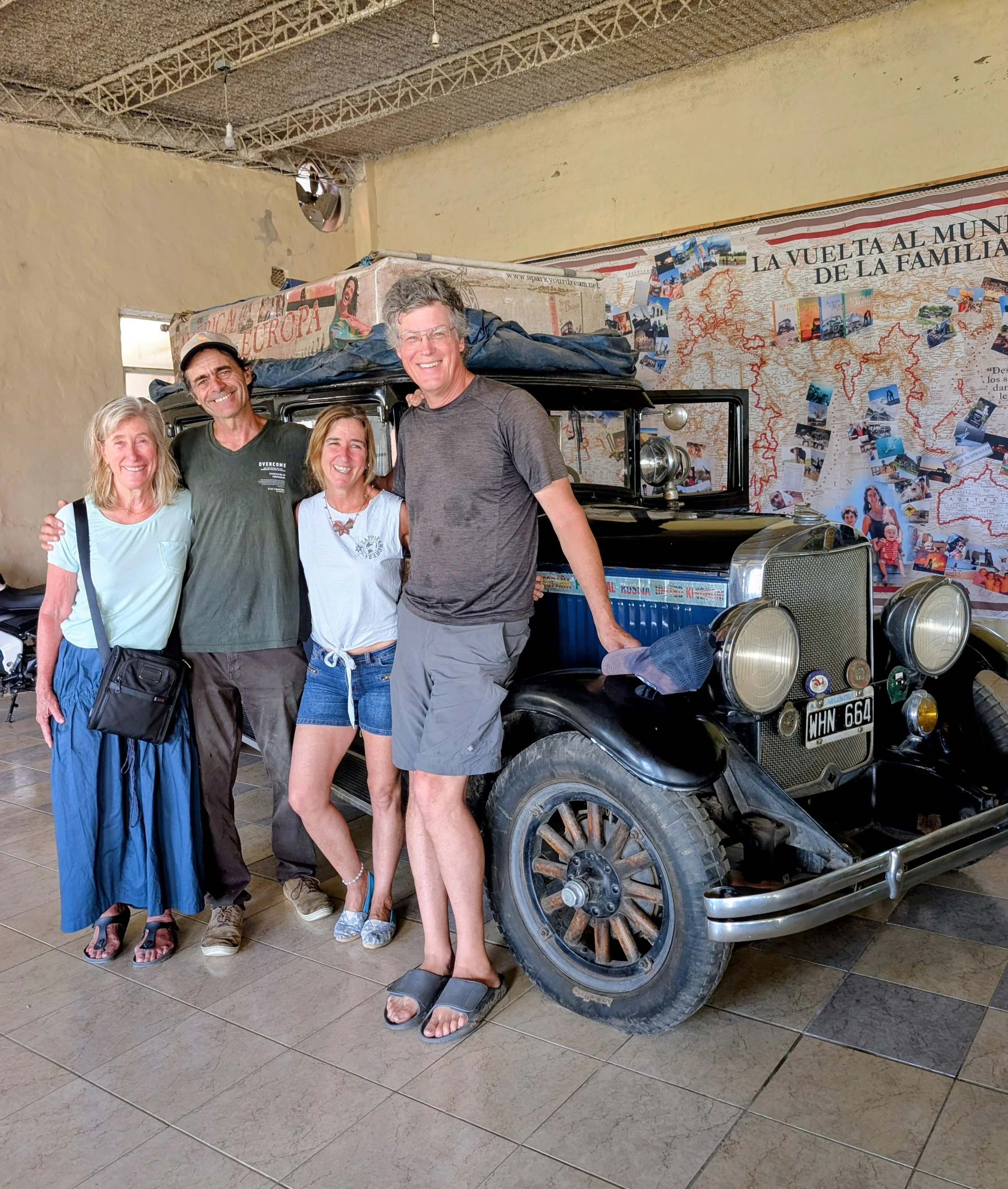
We ended our time in Argentina staying with this lovely couple at Zappo Ranch outside Buenos Aires. Herman and Cande had spent 22 years overlanding in this vehicle, 1928 Graham-Paige (and had four children along the way). Now they operate a super welcoming overland camp.
Argentina may have ended on a hard note, but we will miss the country and its people. In nine weeks we saw a lot, learned a lot and appreciated both the natural beauty and the rich culture. We have empathy for the hard working people who are constantly fighting an unstable economy. We would love to return someday. Thank you for reading along with all our troubles. That’s it for now!