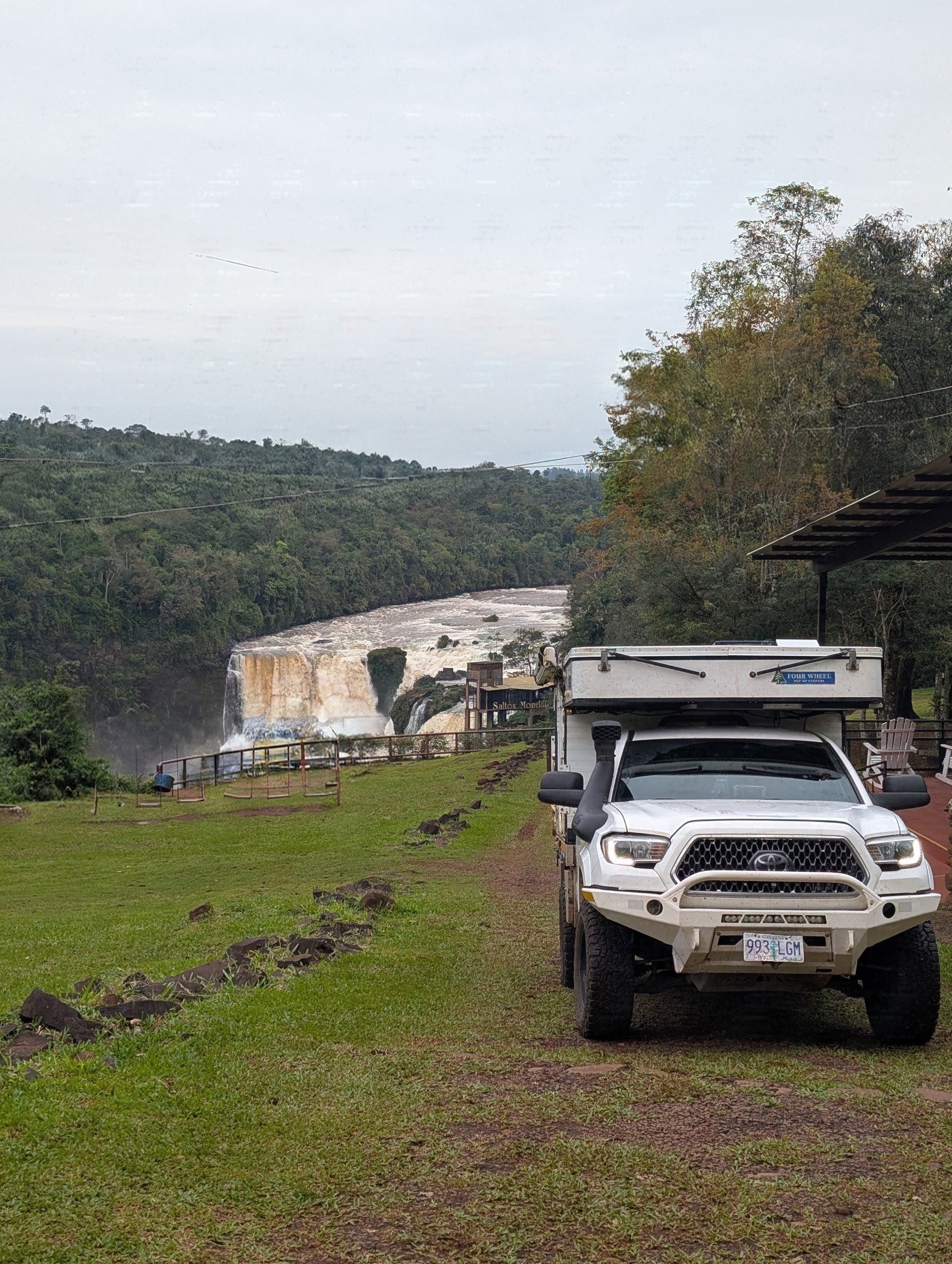
Our first night in Paraguay, we were the only campers at the top of Saltos del Monday Falls
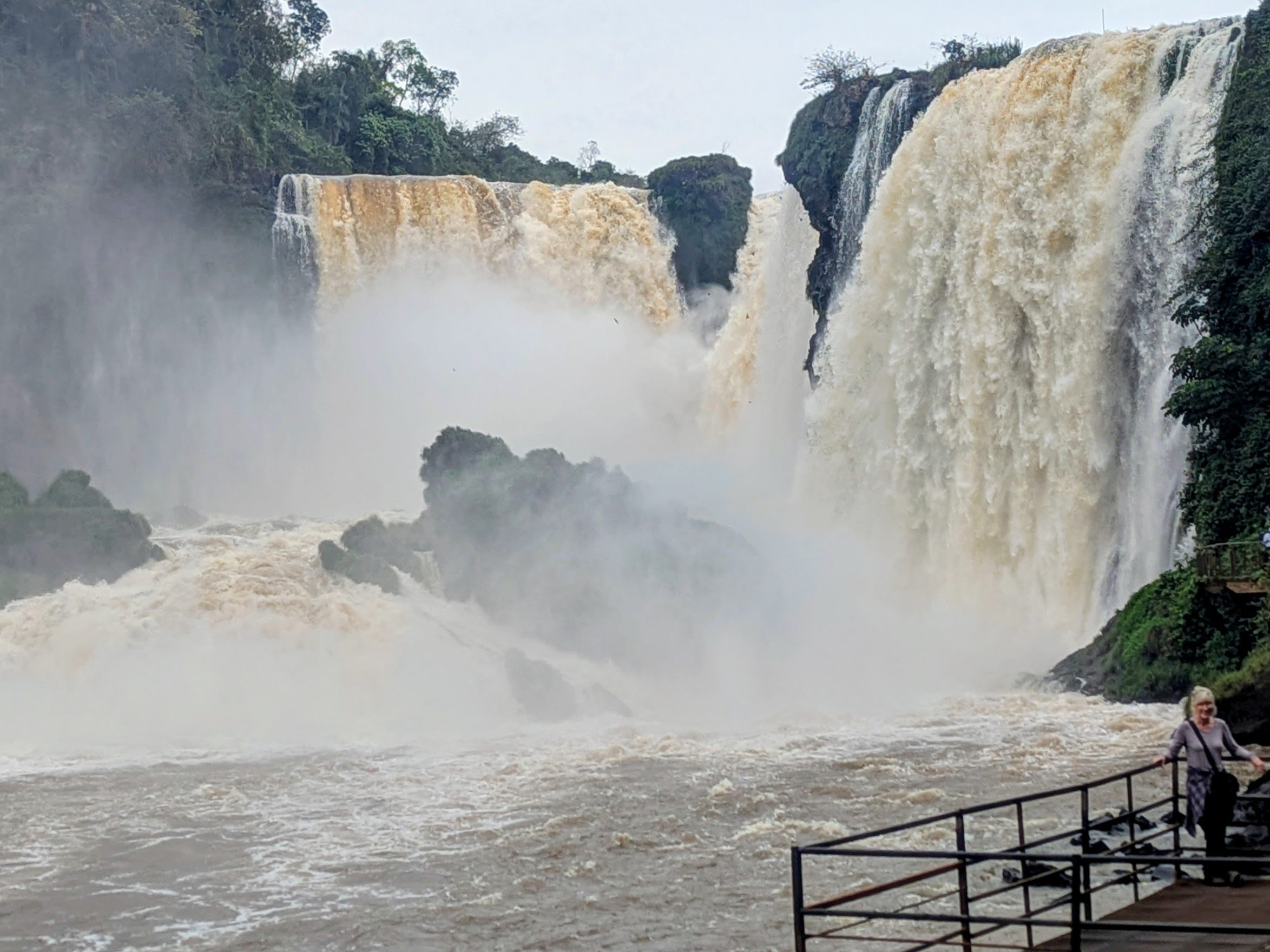
We felt like we had the biggest waterfall in Paraguay to ourselves
Paraguay was an easy country to overland. Our time there felt comfortable and relaxing. In terms of experiences there were no extreme highs or lows, it felt like a gentle exploration of a small friendly country.
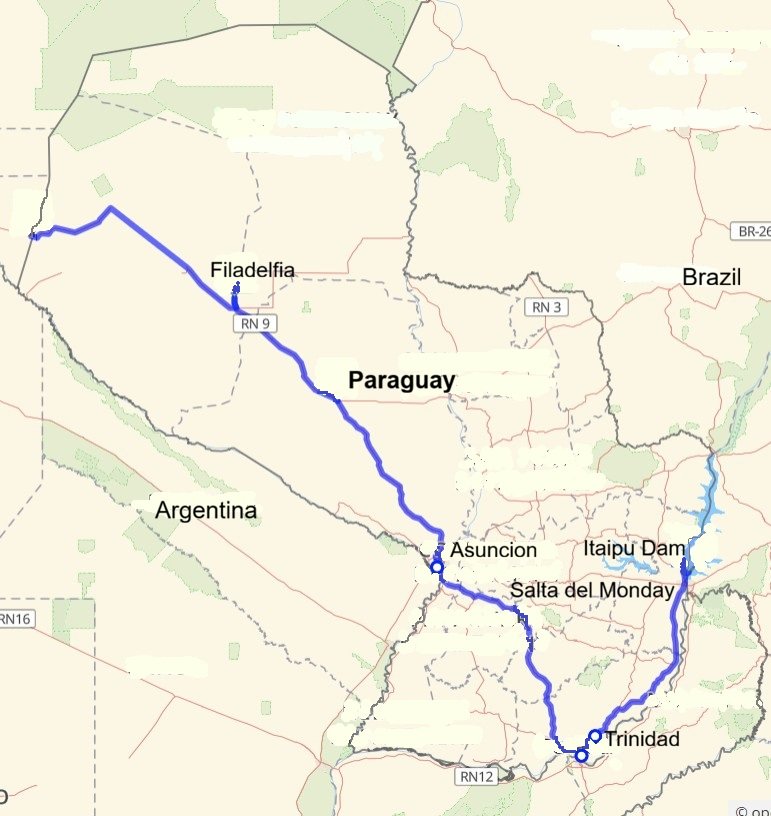
Our 12 day 1000 mile route through Paraguay
Originally inhabited by the indigenous Guarani populations, Paraguay was colonized by the Spanish in 1537. Paraguay is unique in Latin America as the Spanish intermarried with the locals resulting in a blending of colonial influence and indigenous Guaraní heritage which merged to create a predominantly Mestizo society. The country declared its independence from Spain in 1811 and was subsequently shaped by a series of isolationist and authoritarian rulers. 19th century wars with it’s neighboring countries decimated the population. But Paraguay transformed into to a constitutional democracy in the early 1990s and has since focused on regional stability and economic growth. (Since we left Paraguay the country has plunged into crisis with the primary bank going bankrupt and the president impeached under a cloud of corruption allegations. At the time of travel we had no inkling of the upcoming turmoil. Our hearts go out to the people of Paraguay who over night were unable to access their bank accounts.)
The first place we visited was the impressive Itaipu Dam. Jointly owned by the governments of Brazil and Paraguay, this enormous facility provides up to 90% of Paraguay’s electrical needs
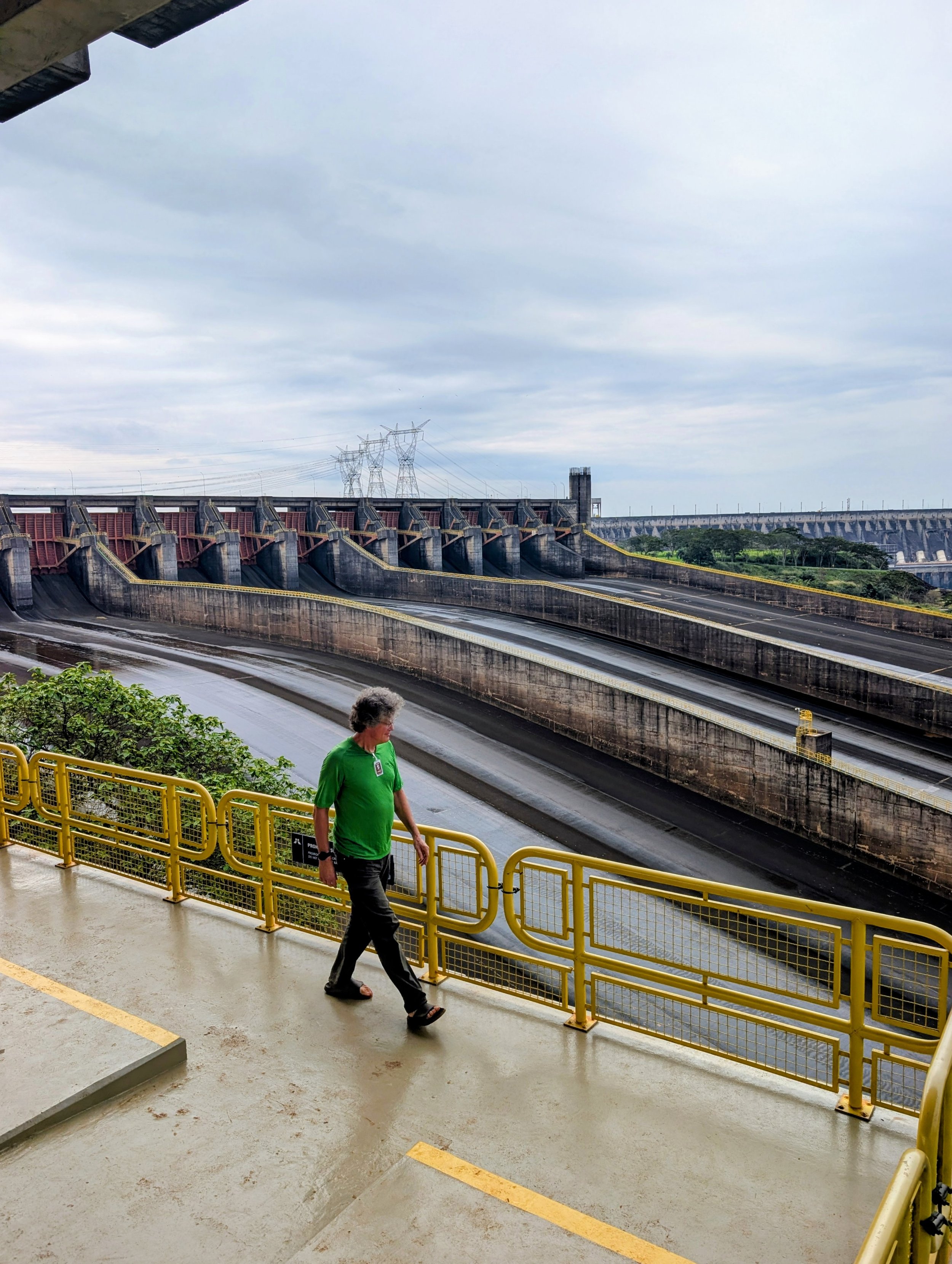
Walking the overlook of Itaipu Dam - the largest dam in the world.
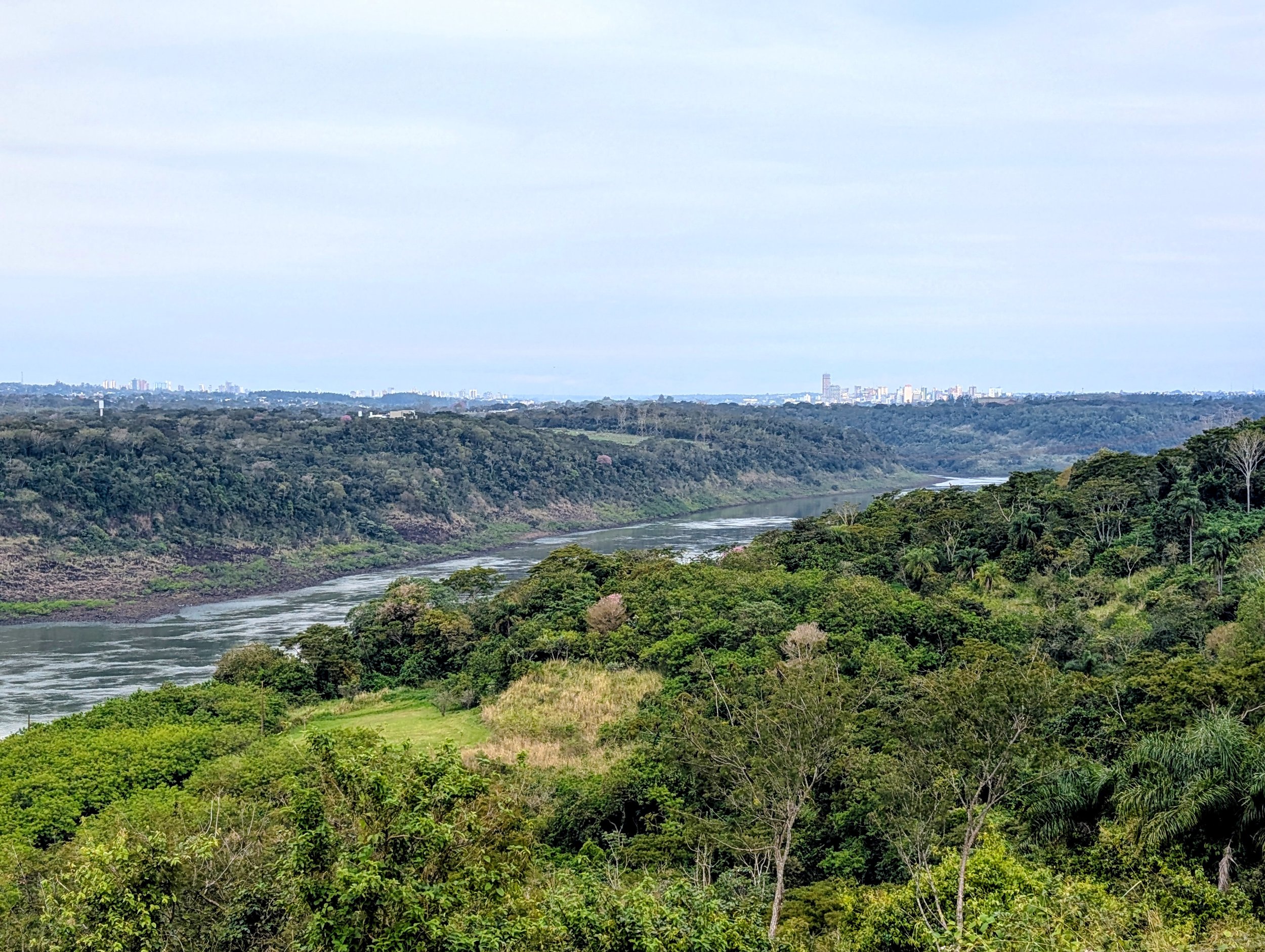
Looking down on the Parana River from the dam. Almost 200,000 acres in Paraguay were set aside as a natural preserve as mitigation for the dam.
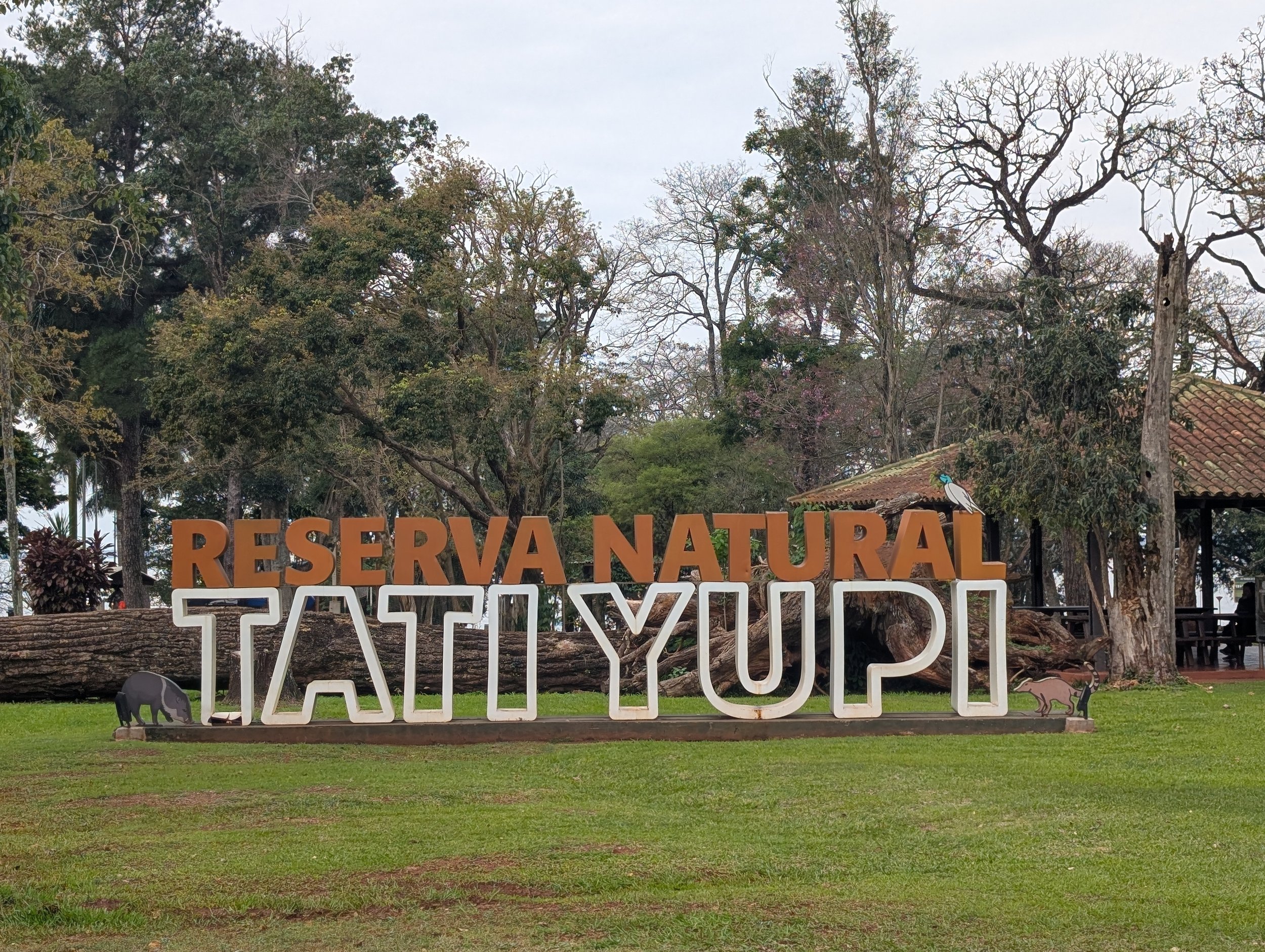
Free camping was available in an area of the reserve (we just had to pre-register at the dam office which was a little confusing but staff and security were welcoming, kind and helped us with the logistics).
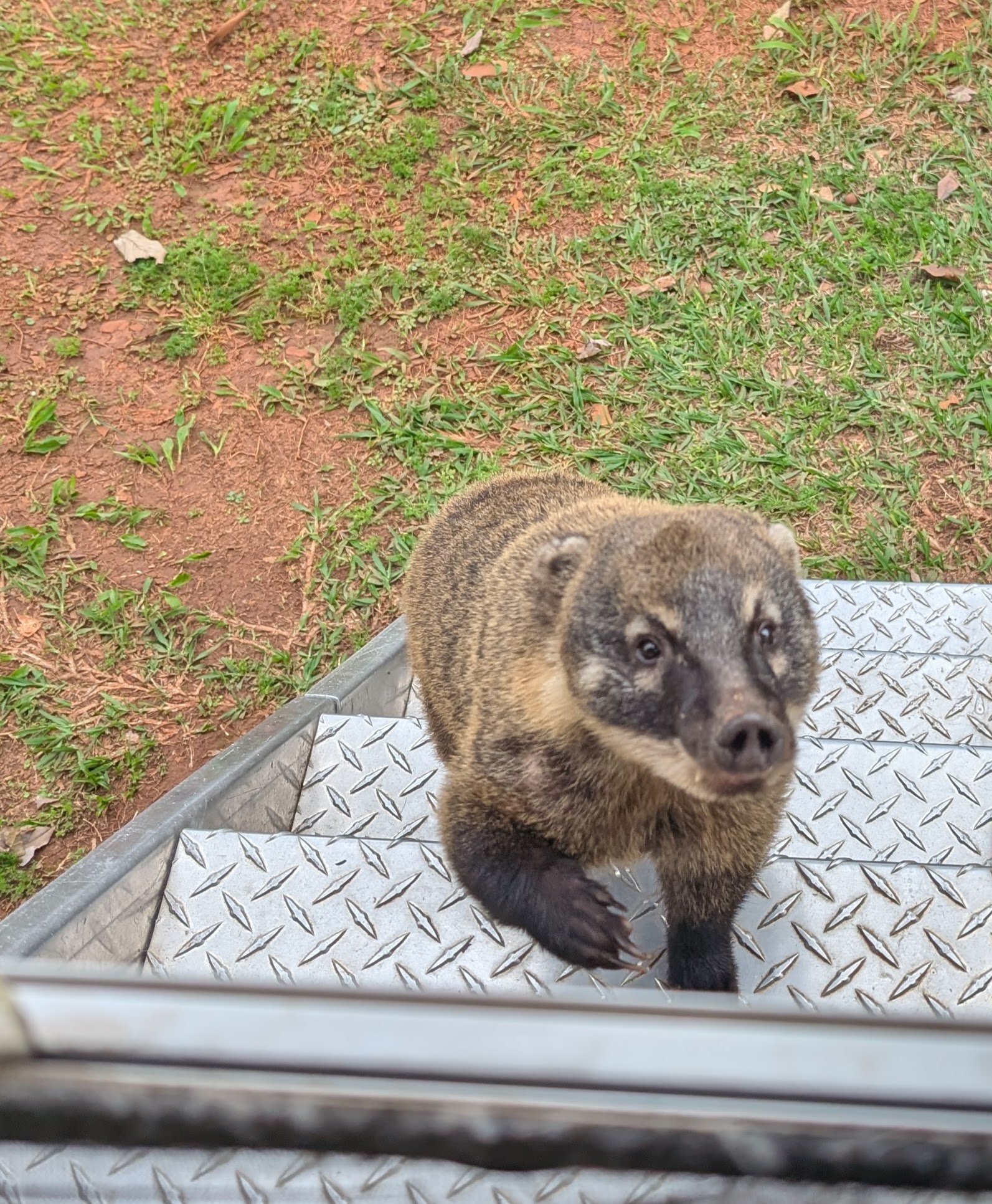
Our curious visitor coming up the camper steps for a snack, we did not provide one.
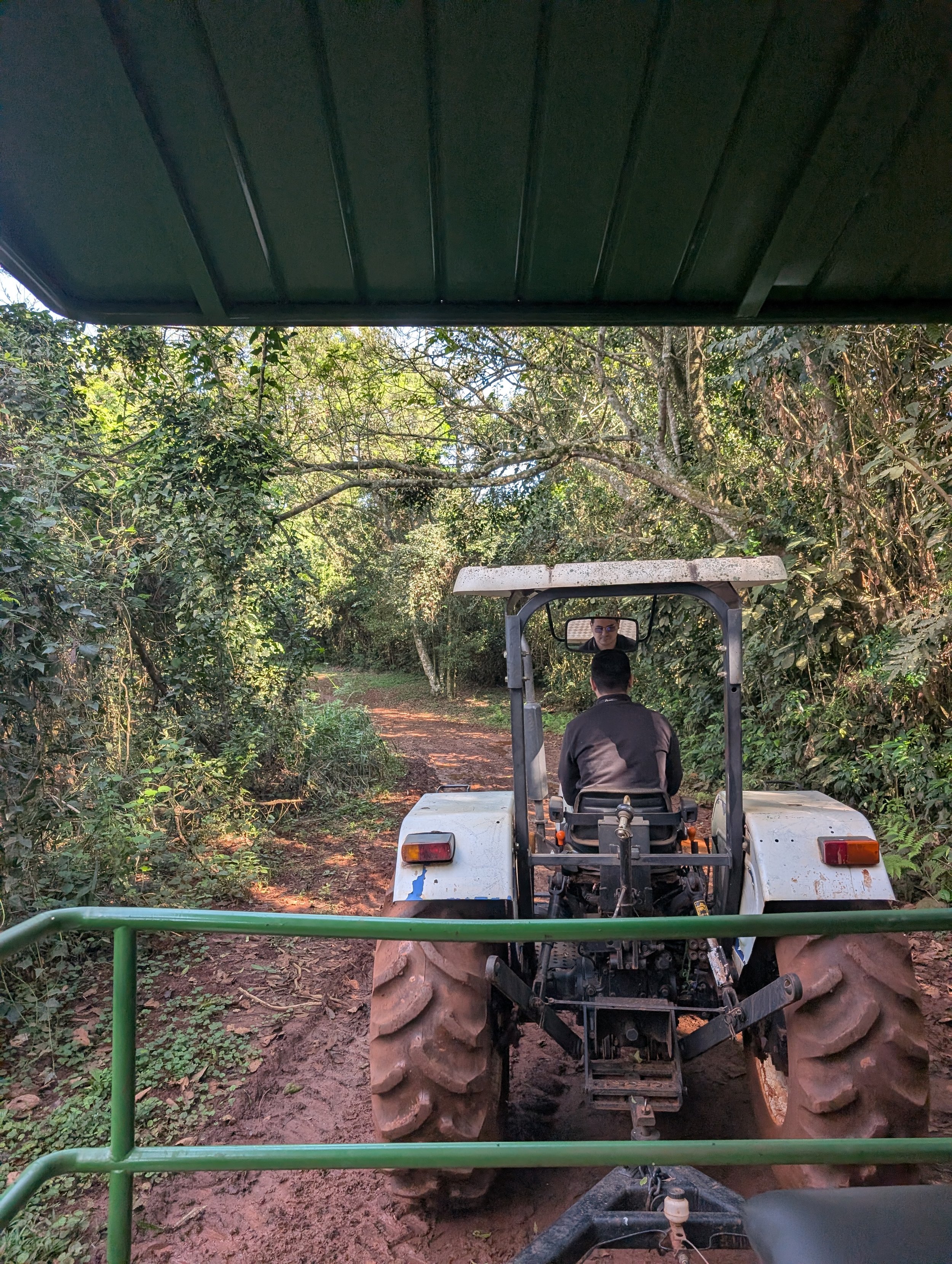
We had been hoping to do some hikes around the preserve, but the rangers informed us that there was an upset male cougar around (el no es tranquilo) so instead they kindly offered us a tractor ride.
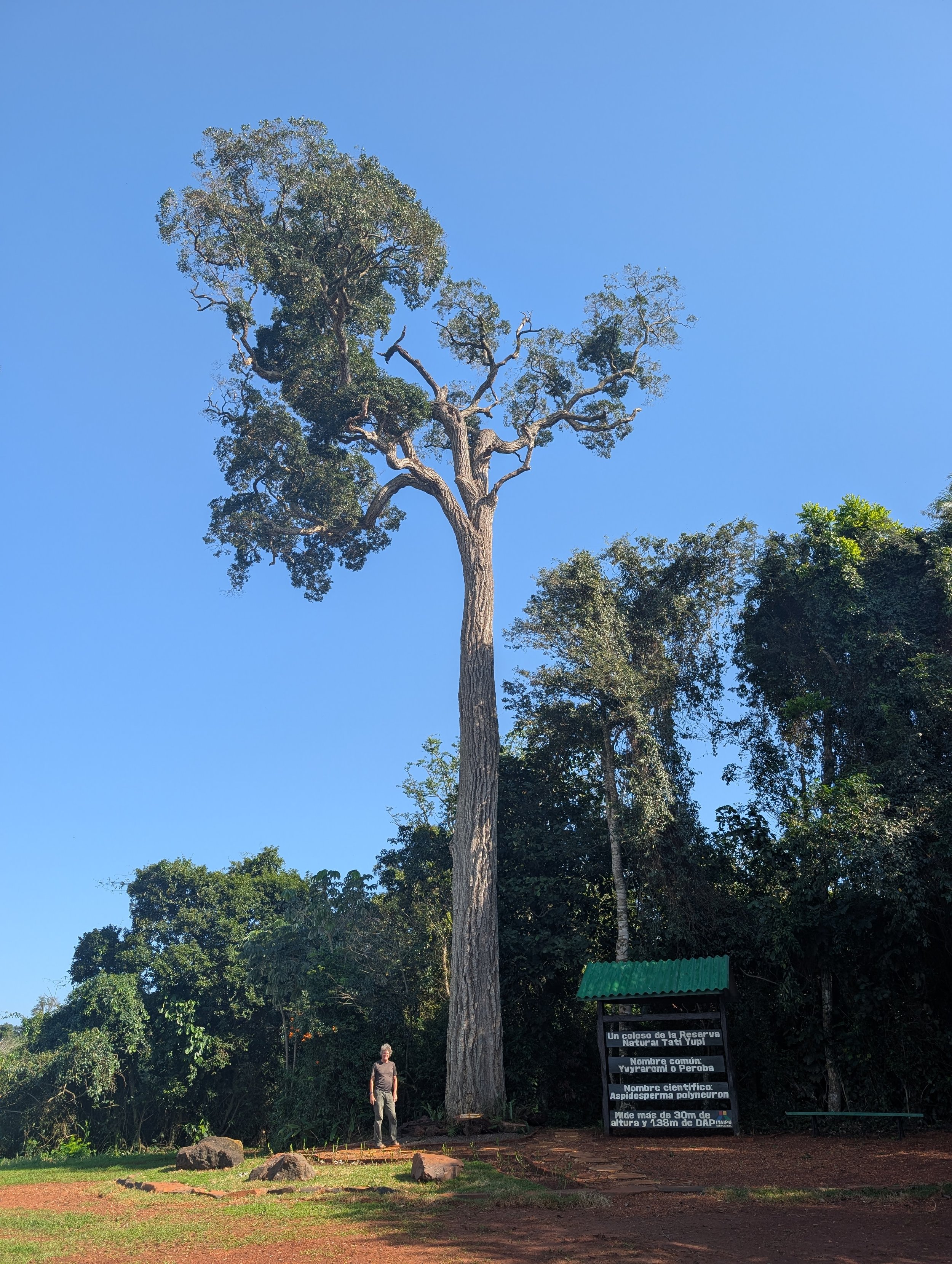
Andy with one of the tallest trees.
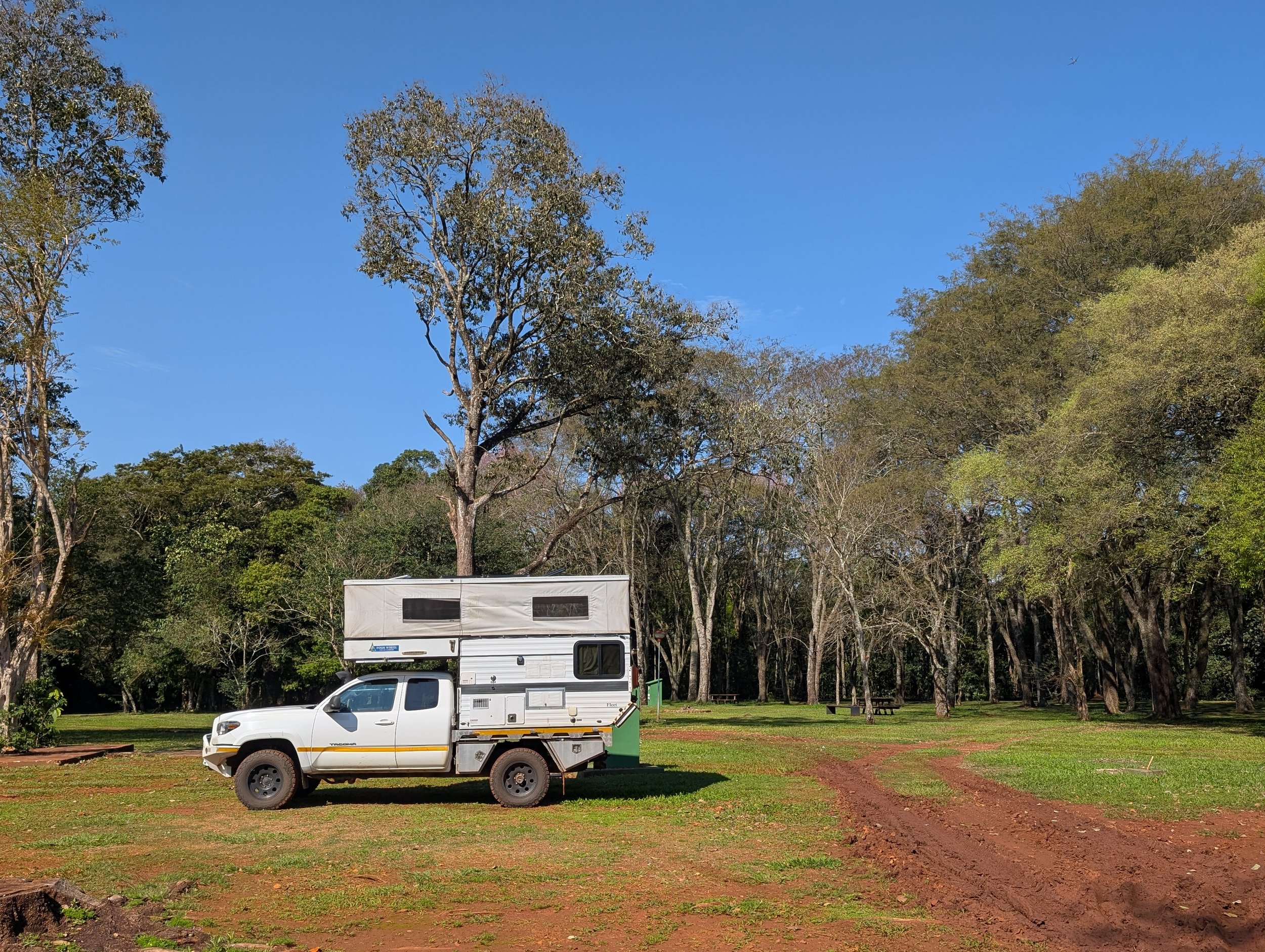
We had a restful night with hospitable rangers. No cougar sightings.
In general it was difficult to find suitable wild camping spots in Paraguay - much of the country is in agricultural production. We are also pretty picky about what we will accept as a wild spot - many places were tagged on iOverlander as such but they tended to be village squares, schools, behind gas stations, etc. A shift we had seen on the app (which is our primary resource for finding camping spots) in South American was that “wild spaces” tended to be marked, really meaning “free spots.” Our favorite sites are wild camps, but for us that means there is no development in sight - no people and no inhabited buildings. But it was easy to find inexpensive camping spots.
Next we set off on the famous Jesuit Mission route - encompassing a series of Unesco designated missions from the 1700’s.
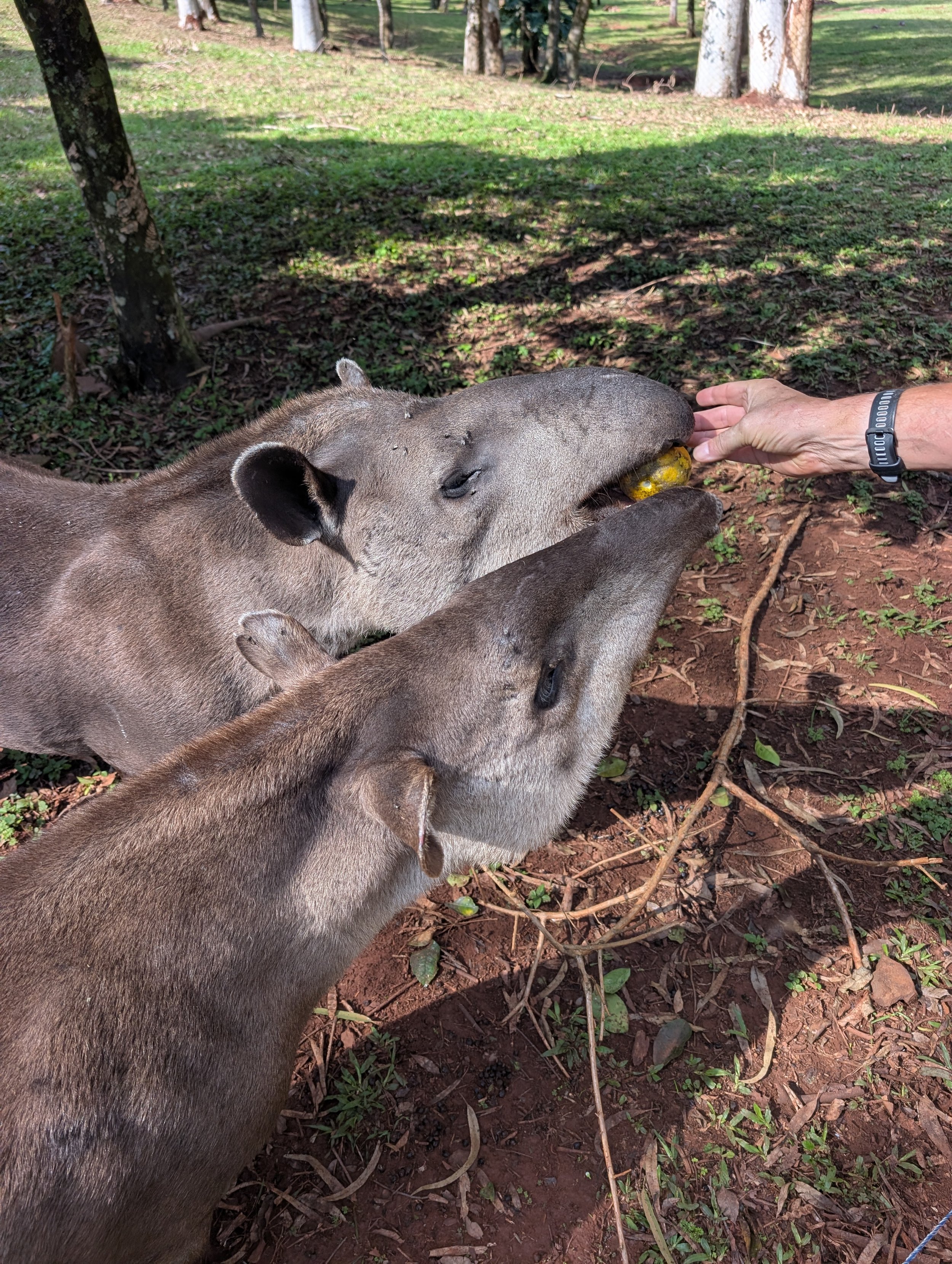
Spent the night at a campsite which had domesticated tapirs on site. Andy had fun feeding them oranges.
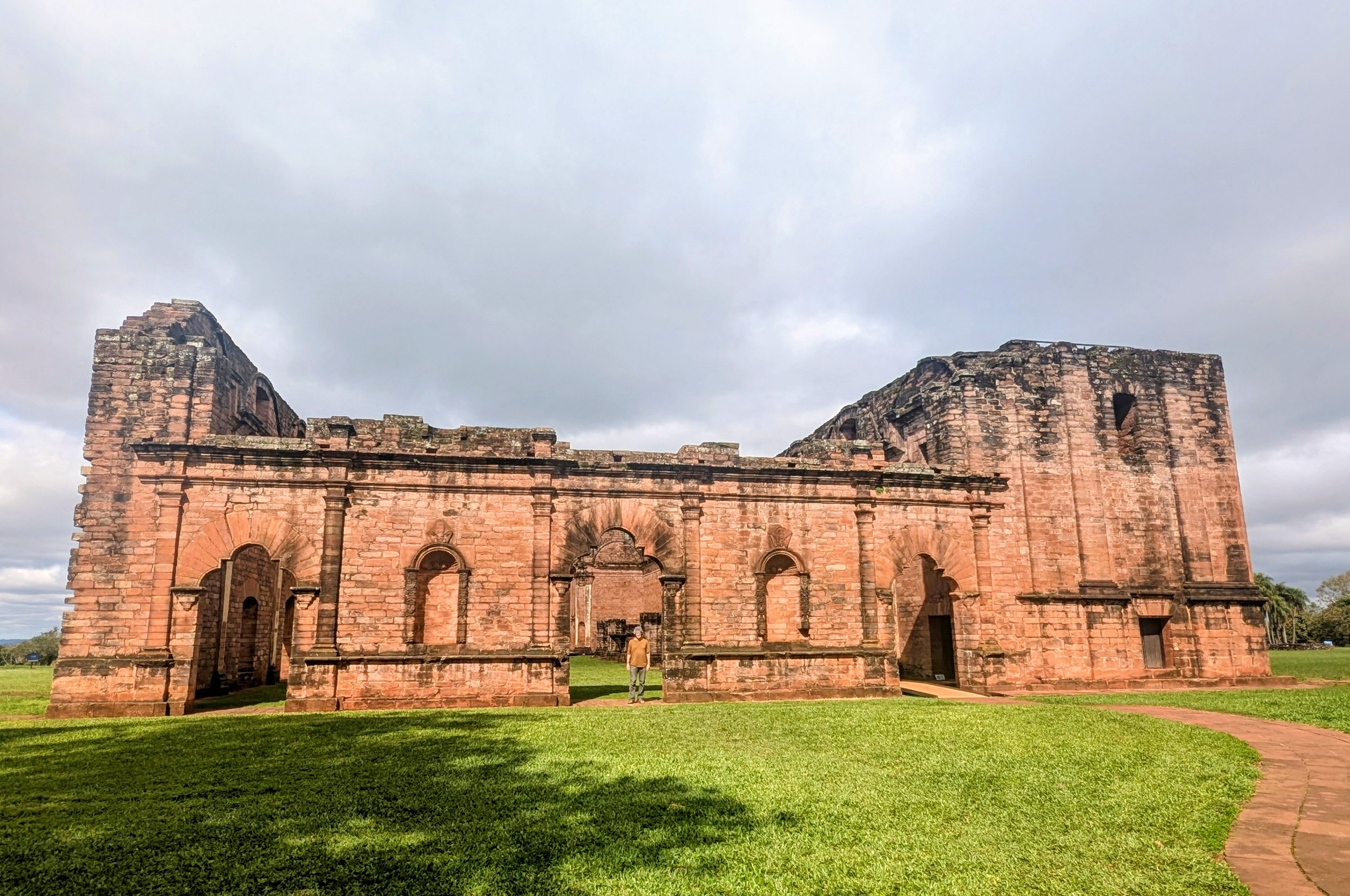
Ruins of the Jesus de Tavarangue mission outside of Trinidad
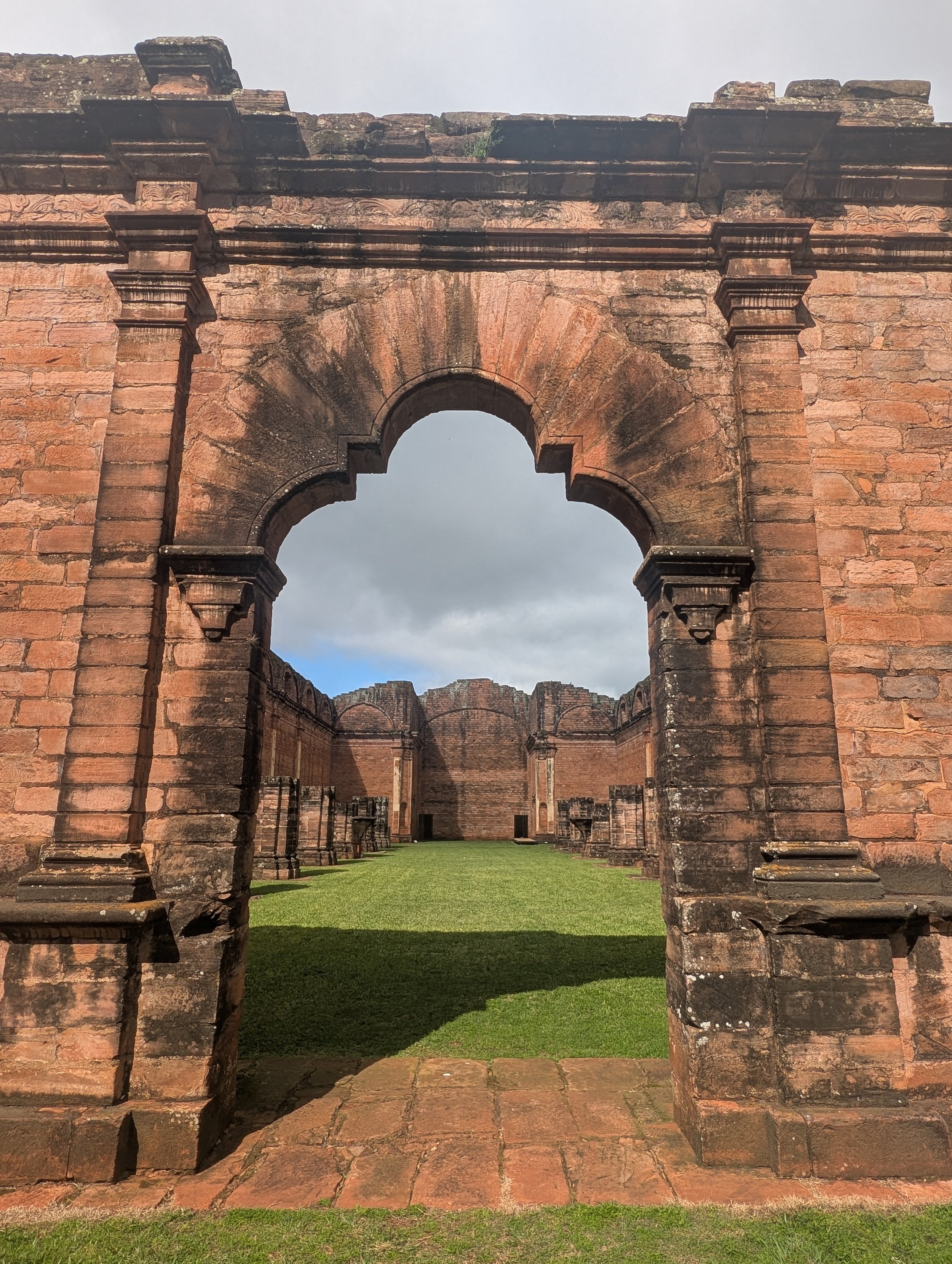
This was our favorite mission that we visited - completely deserted and enough of the building standing to spur the imagination.
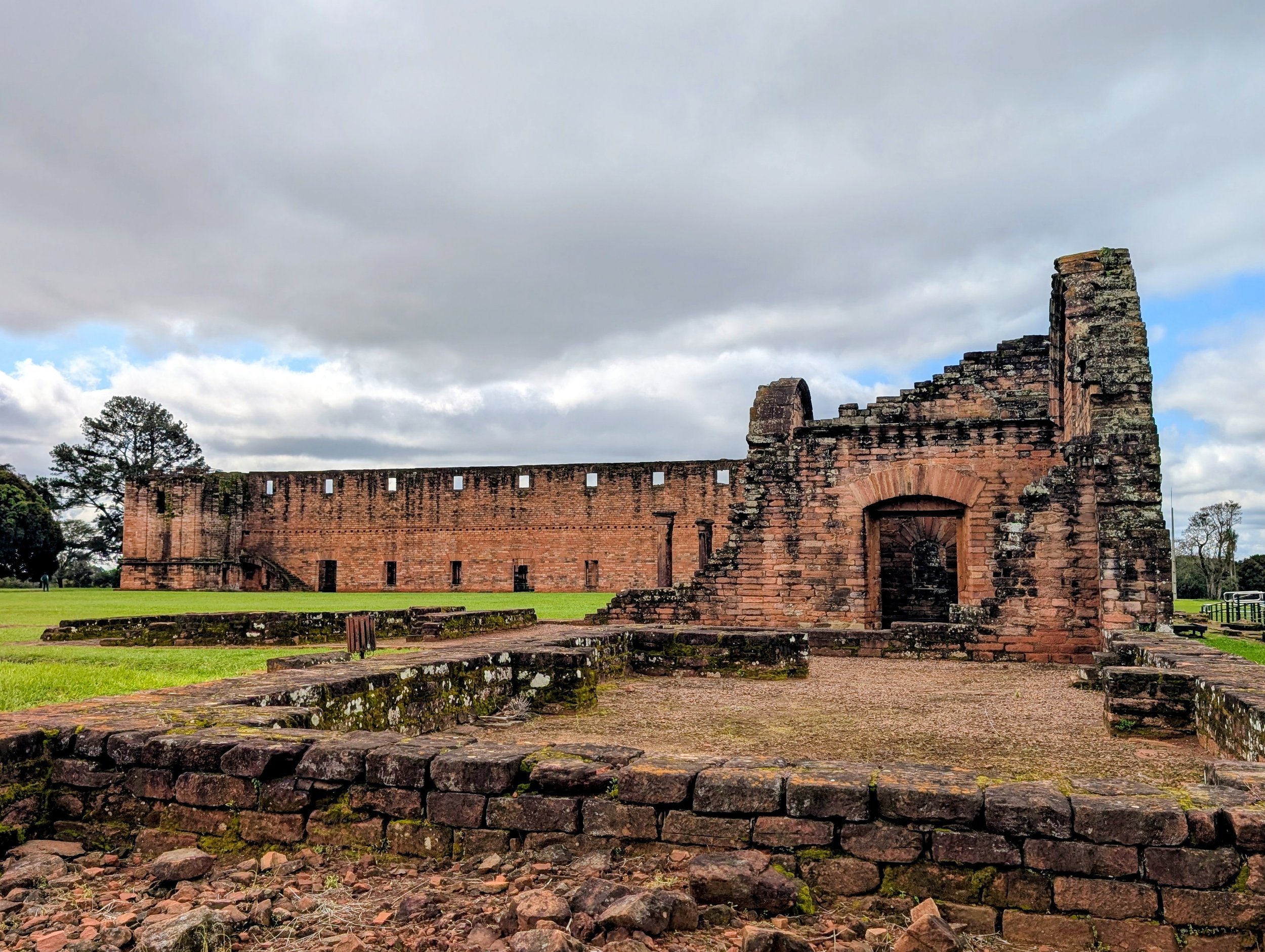
We could imagine monks wandering the site. An audio tour provided on an app helped make the place come alive.
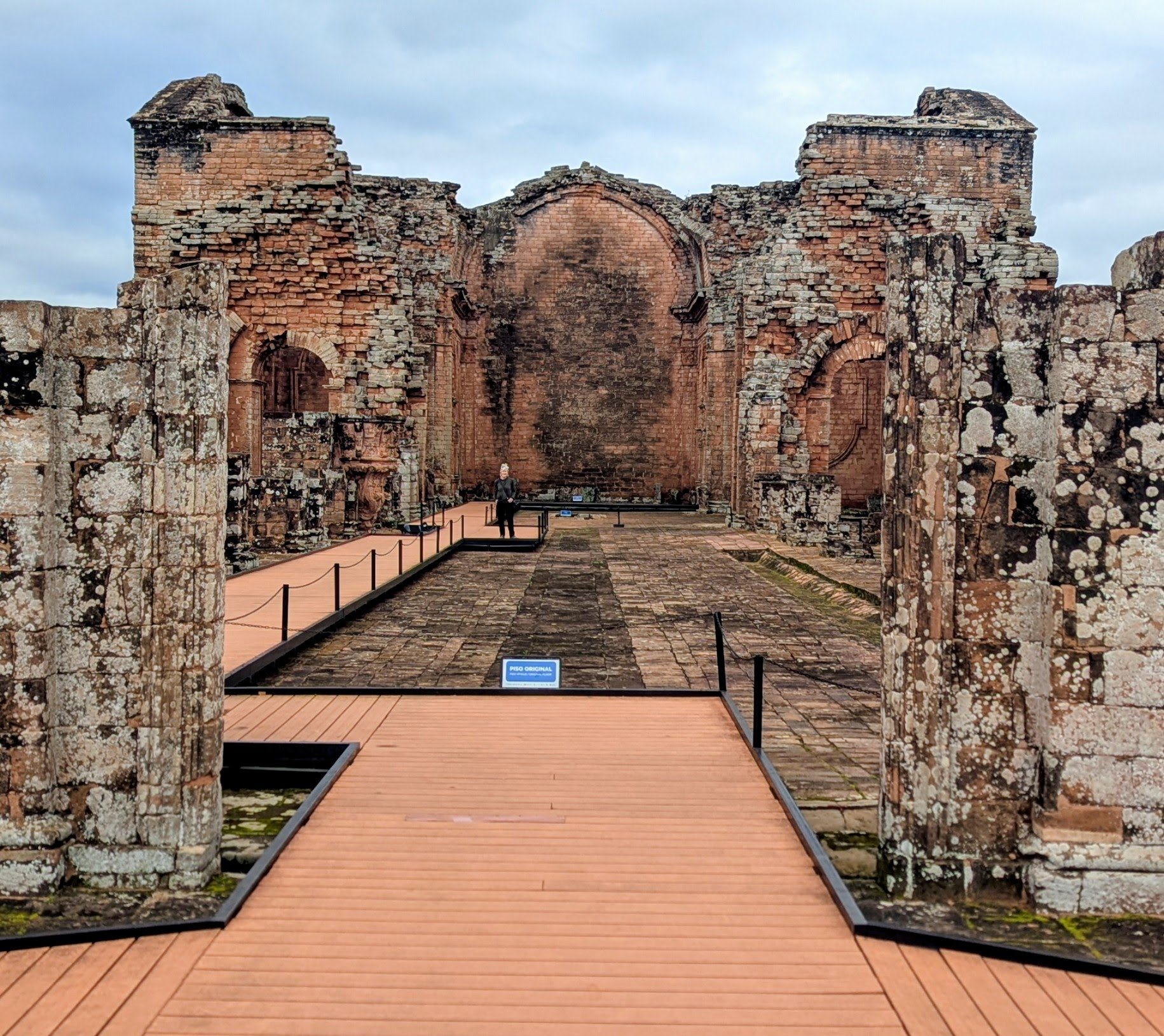
Jesuit Mission of the Guarani in Trinidad.
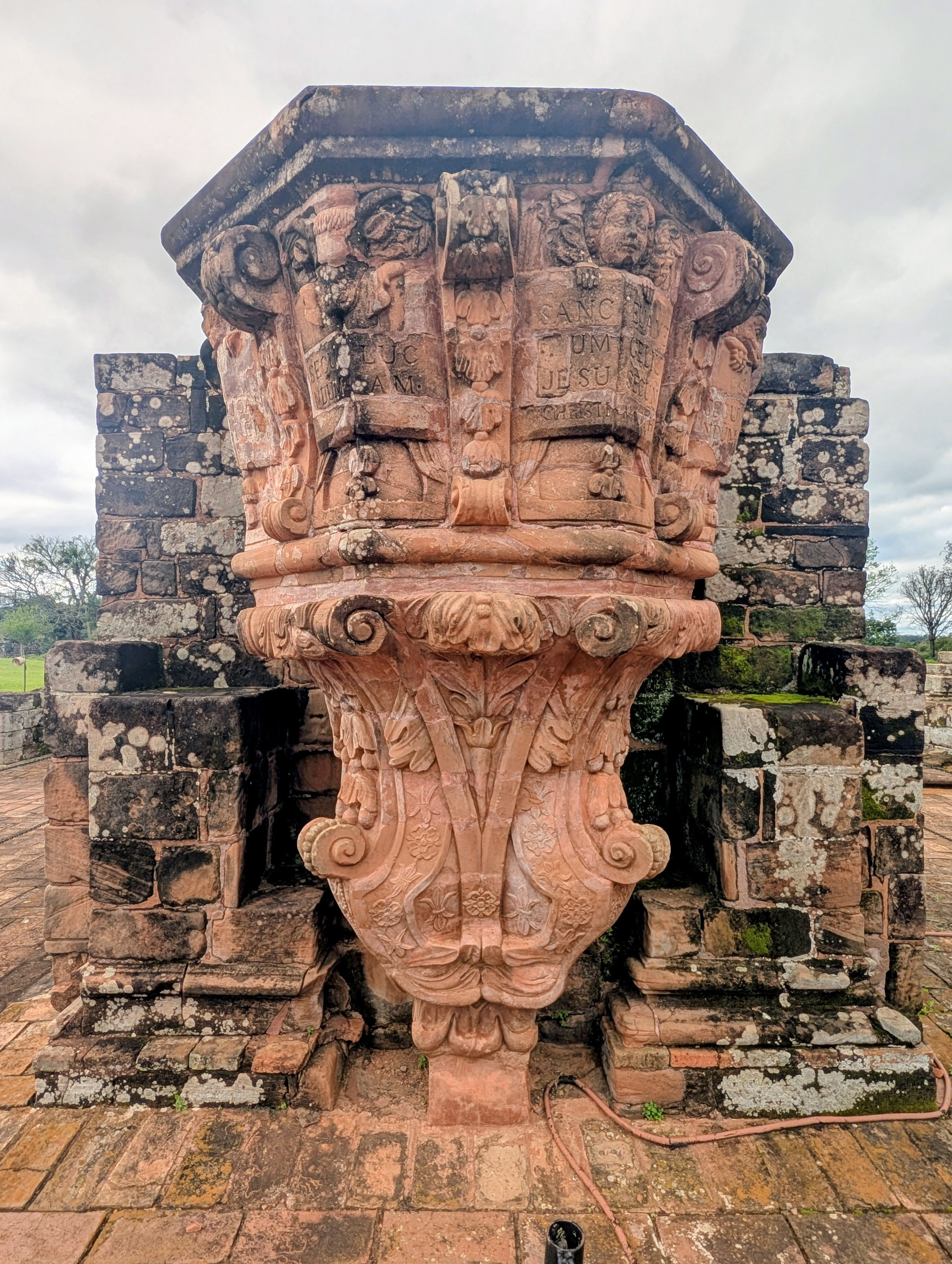
A unique fusion of European Baroque architecture and traditional Guaraní craftsmanship which makes it a UNESCO site.
Originally we intended to do the whole Jesuit Mission circuit - almost 300 km of driving up some rural roads. But, as much as we enjoyed the first few missions we visited, when we evaluated the hours of driving versus the benefit of more similar ruins we cut some of them out. It also helped that a significant portion of the drive was on a segment of road undergoing construction and known for slow progress.
So instead, we added a visit to the third largest city, Encarnación.
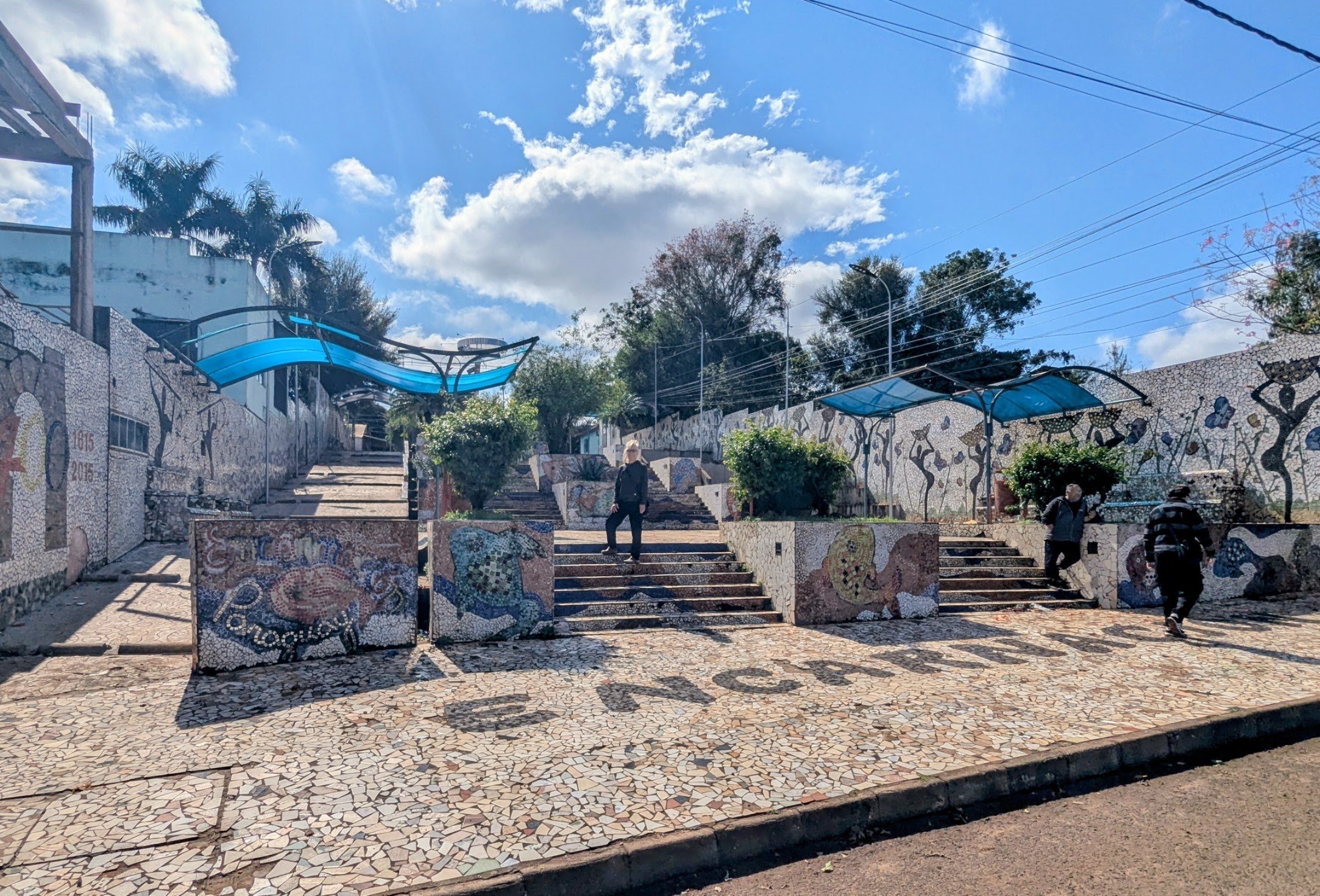
Exploring the famous tiled steps in Encarnación.
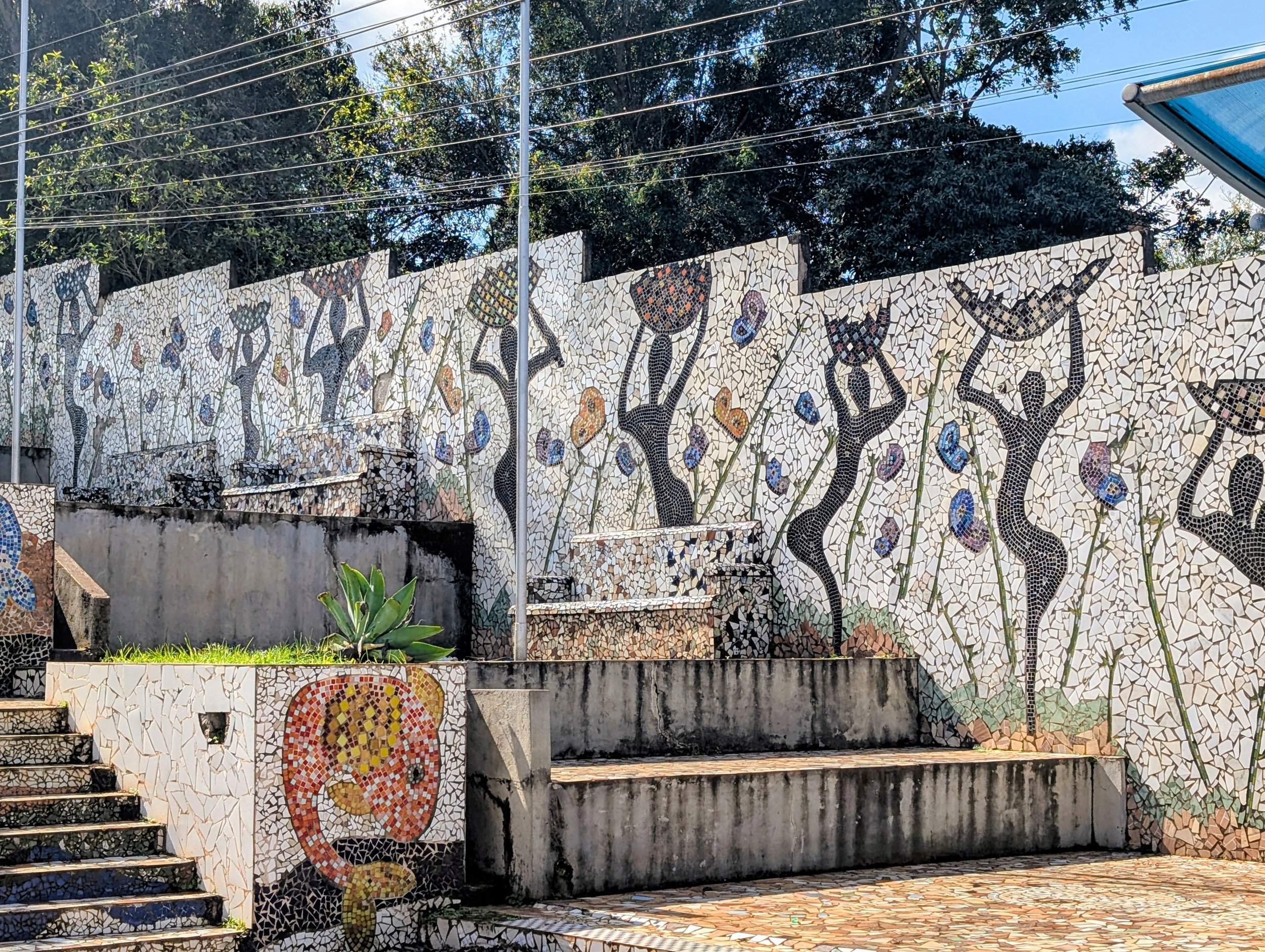
Beautiful mosaics
It was worth a day visit, but as usual we find it difficult to be entranced by a city. We enjoyed a long walk on the costanera (waterfront promenade) along the banks of the Parana river, re-supplied groceries, and camped on the grounds of a hotel outside of town.
Throughout South America we have enjoyed finding waterside walking paths - along the ocean and rivers. We appreciate the urban planners who prioritize these walkways - usually filled with families, joggers, bikers and casual walkers.
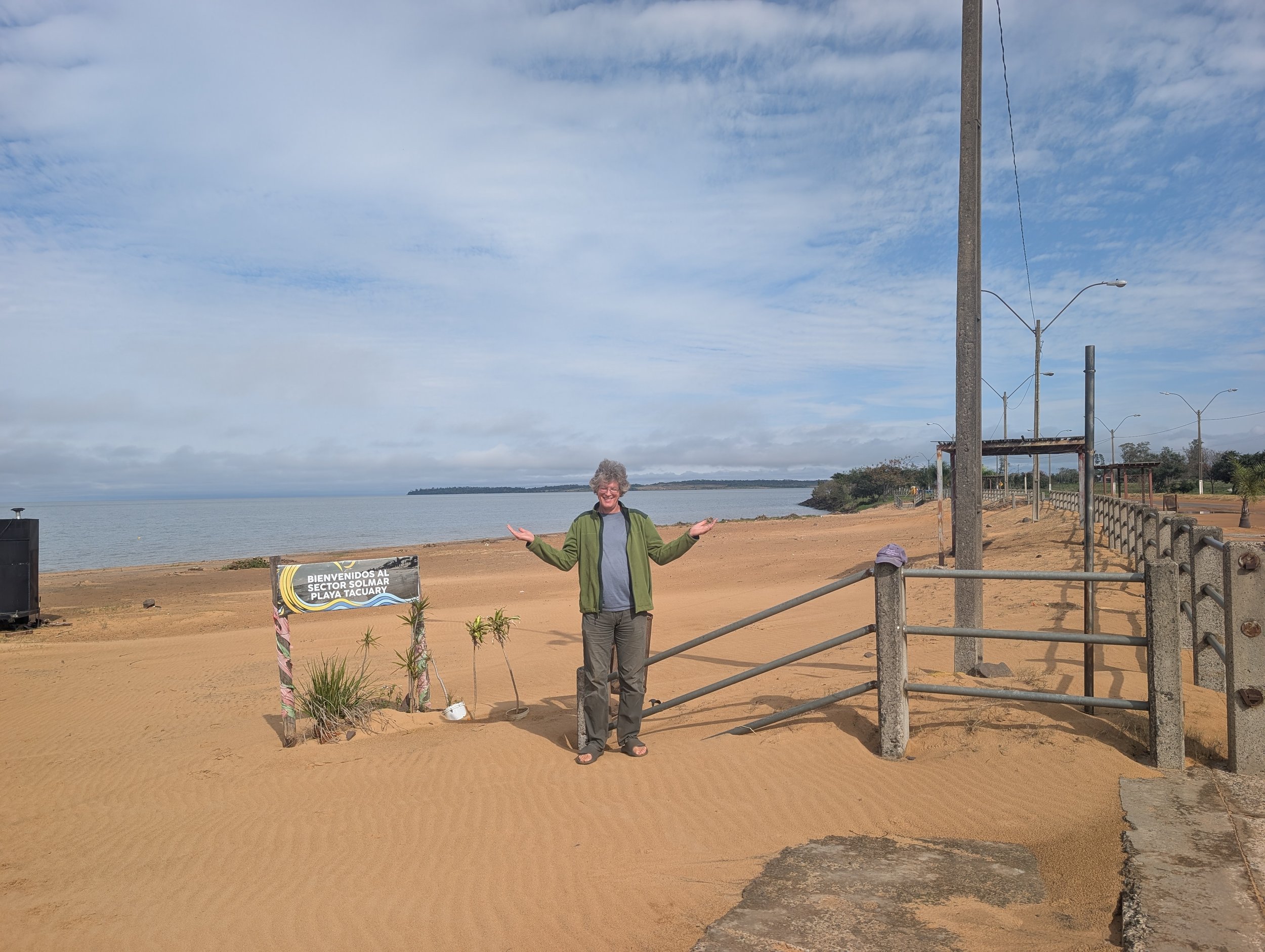
This particular costanera in Carmen del Parana, was much less populated but one of our favorites.
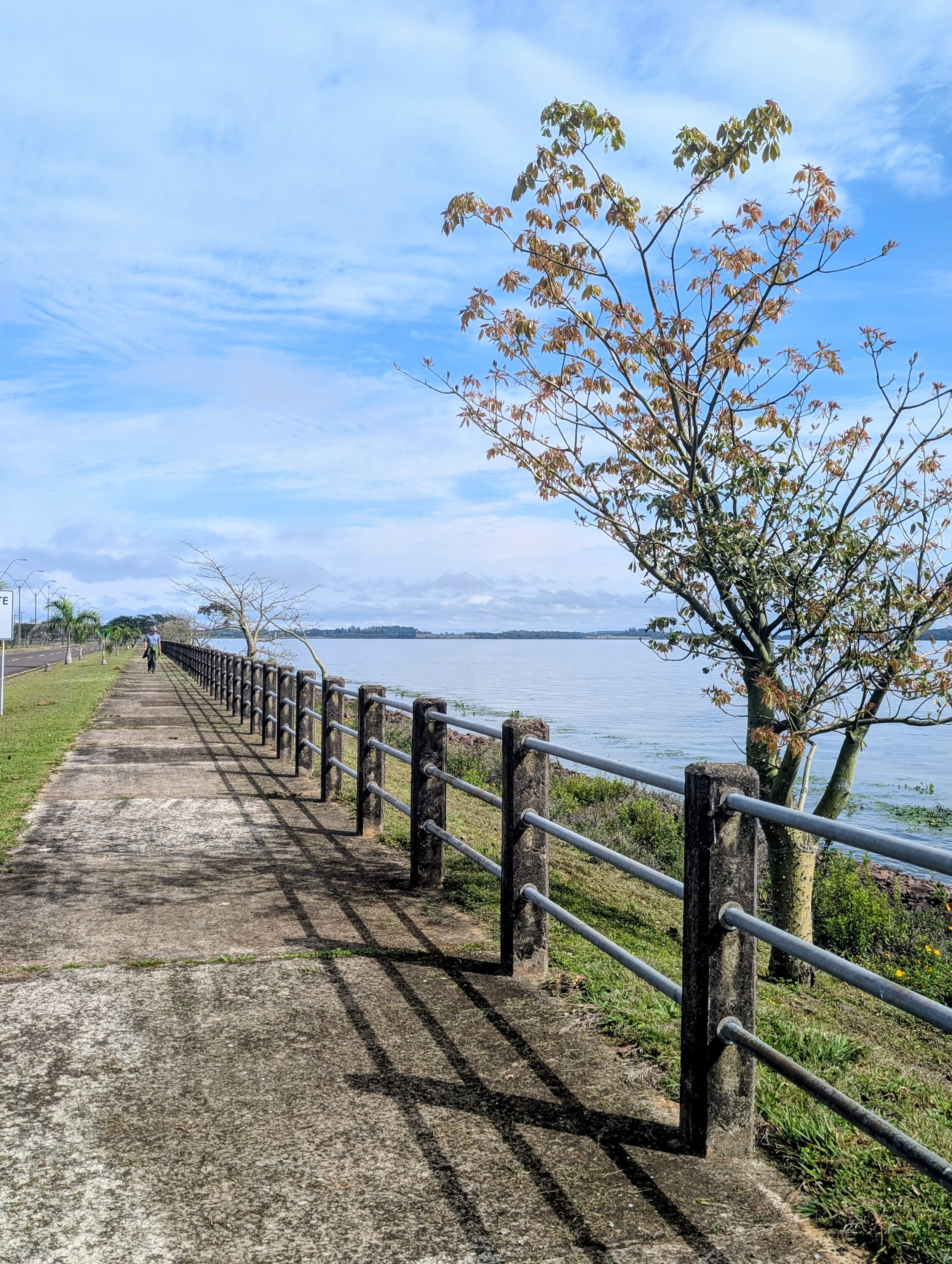
Peaceful, along the banks of the Parana river (which we basically had been following since leaving Brazil and Iguazu falls)
We were enjoying our ambling journey through Paraguay, finding daily walks and points of interest.
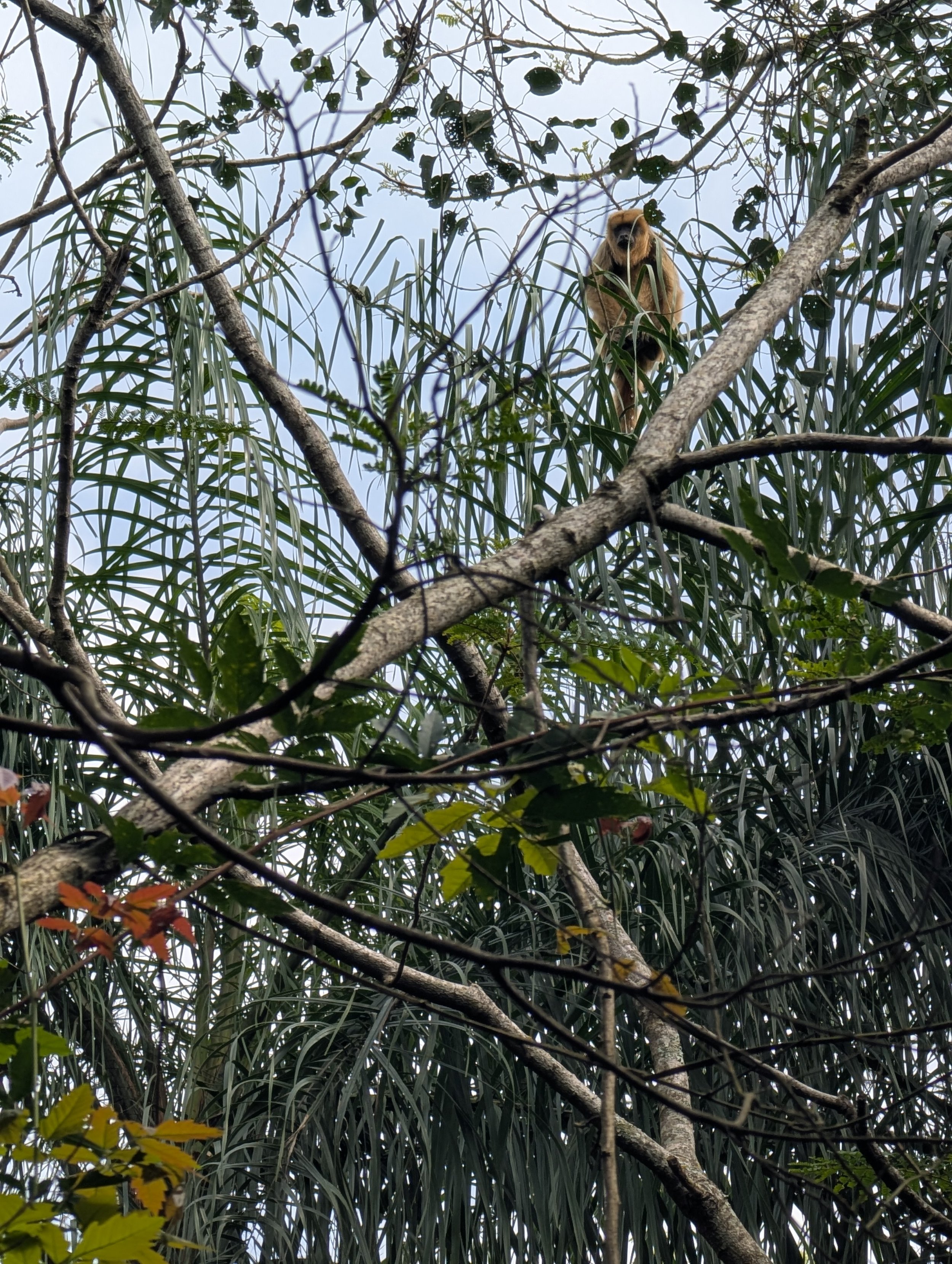
Tracking down howler monkeys in our campground outside San Ignacio Guazu. We heard them in the morning and set off through the forest to find them - success!
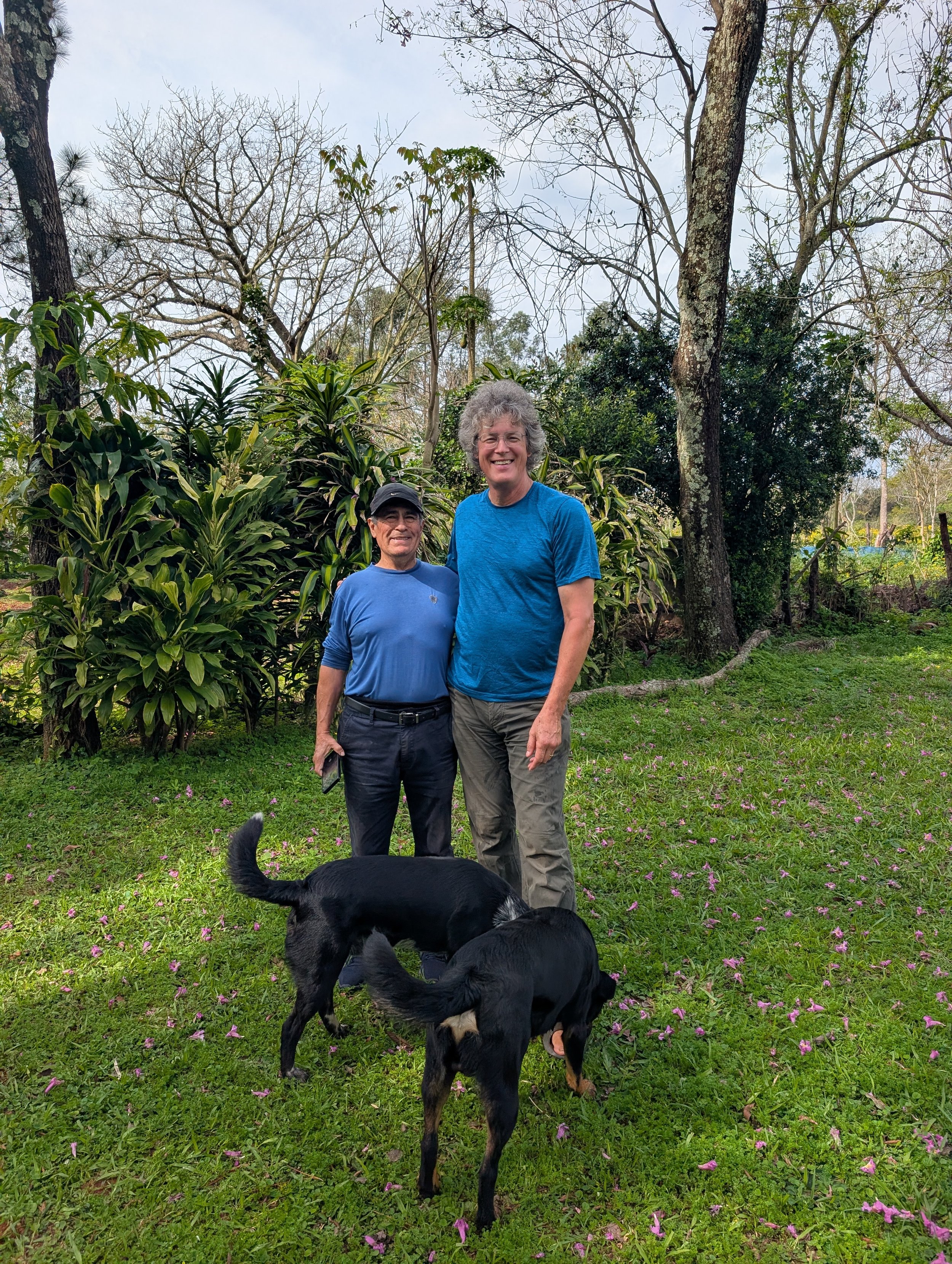
Our kind campground host who loaded us up with fruit from his garden
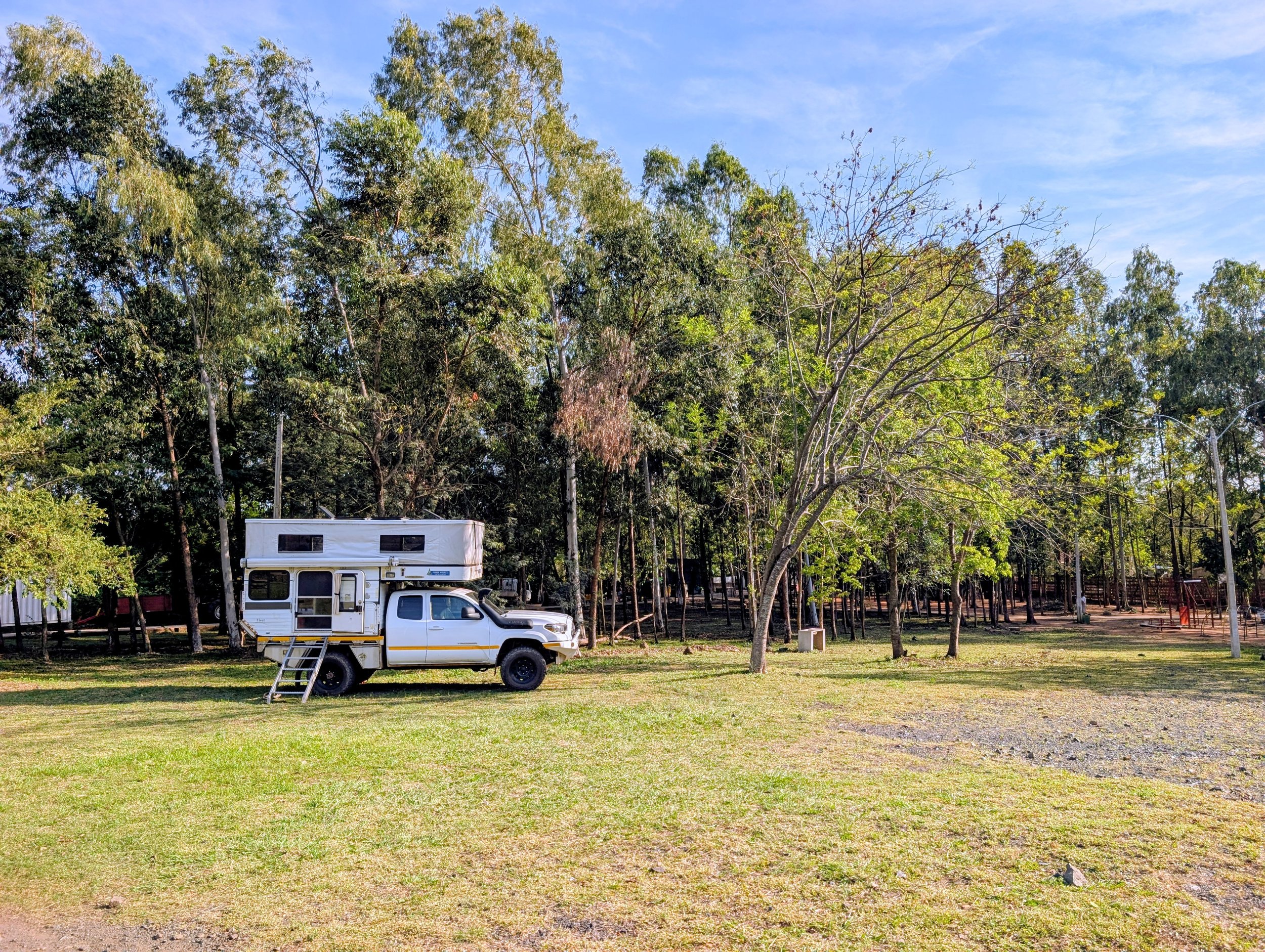
Free camp at a park outside Nemby - the kind security guard allowed us to spend the night in a community park - the only campers on site.
Next we made our way to Asuncion, the capital and the largest city in Paraguay. It was founded in 1537 by the Spanish who used it as a base for exploring across South America.
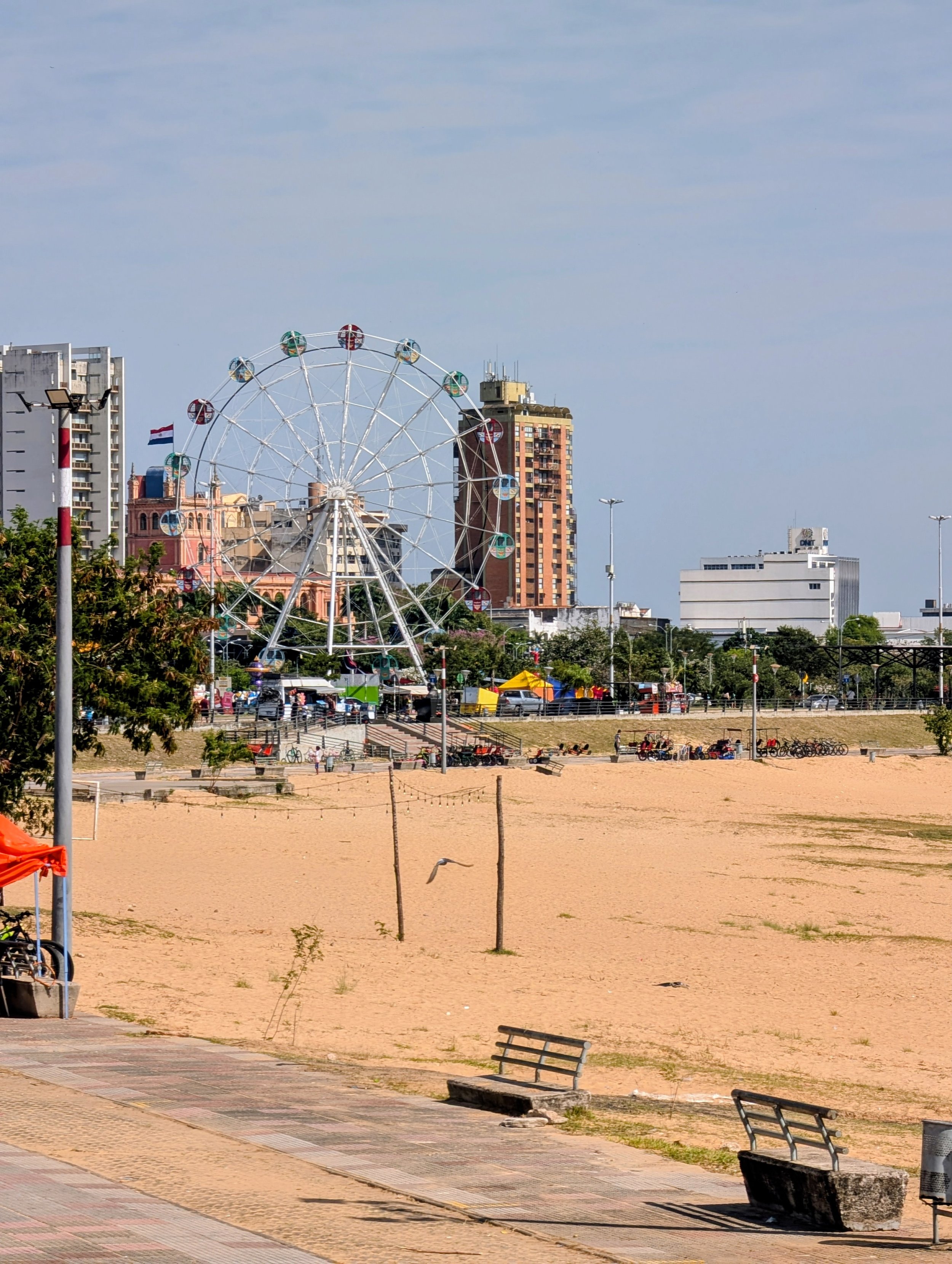
View down the costanera in Asuncion
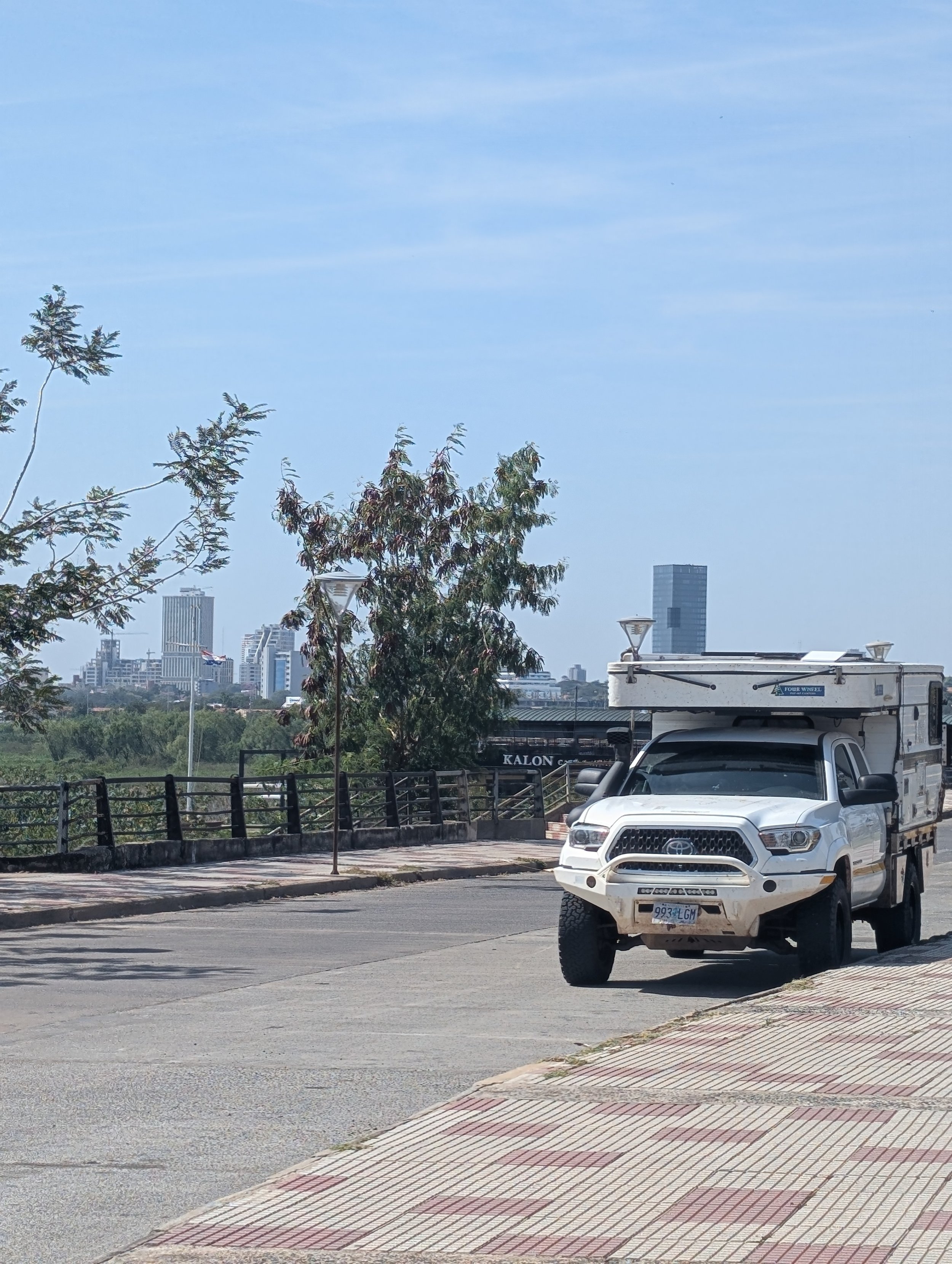
Parked along the Paraguay River in Asuncion, also designated as a “wild camping” spot on Ioverlander, but we opted for a city hotel instead
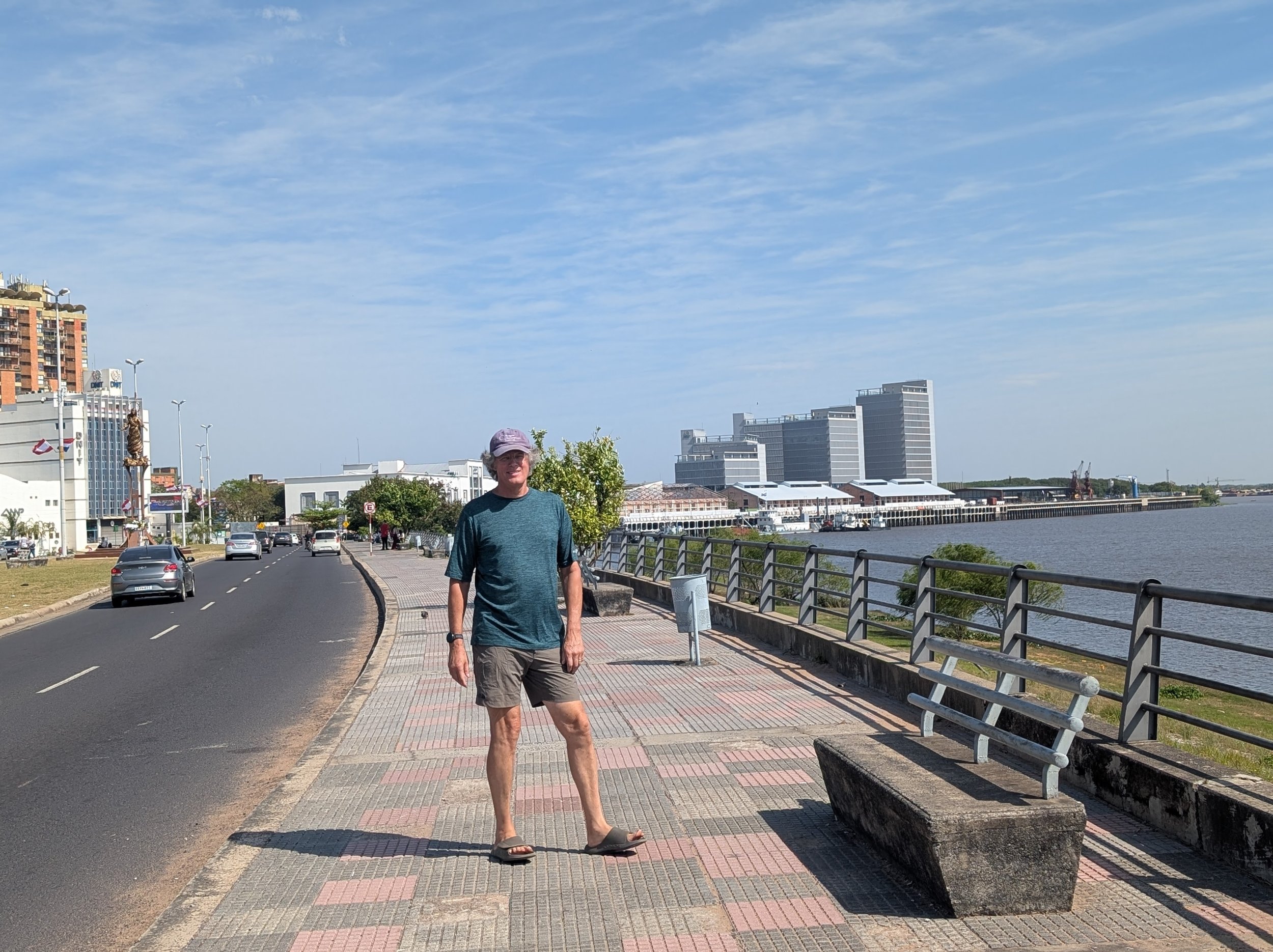
Walking the costanera - 4 km of paved boardwalk along the river
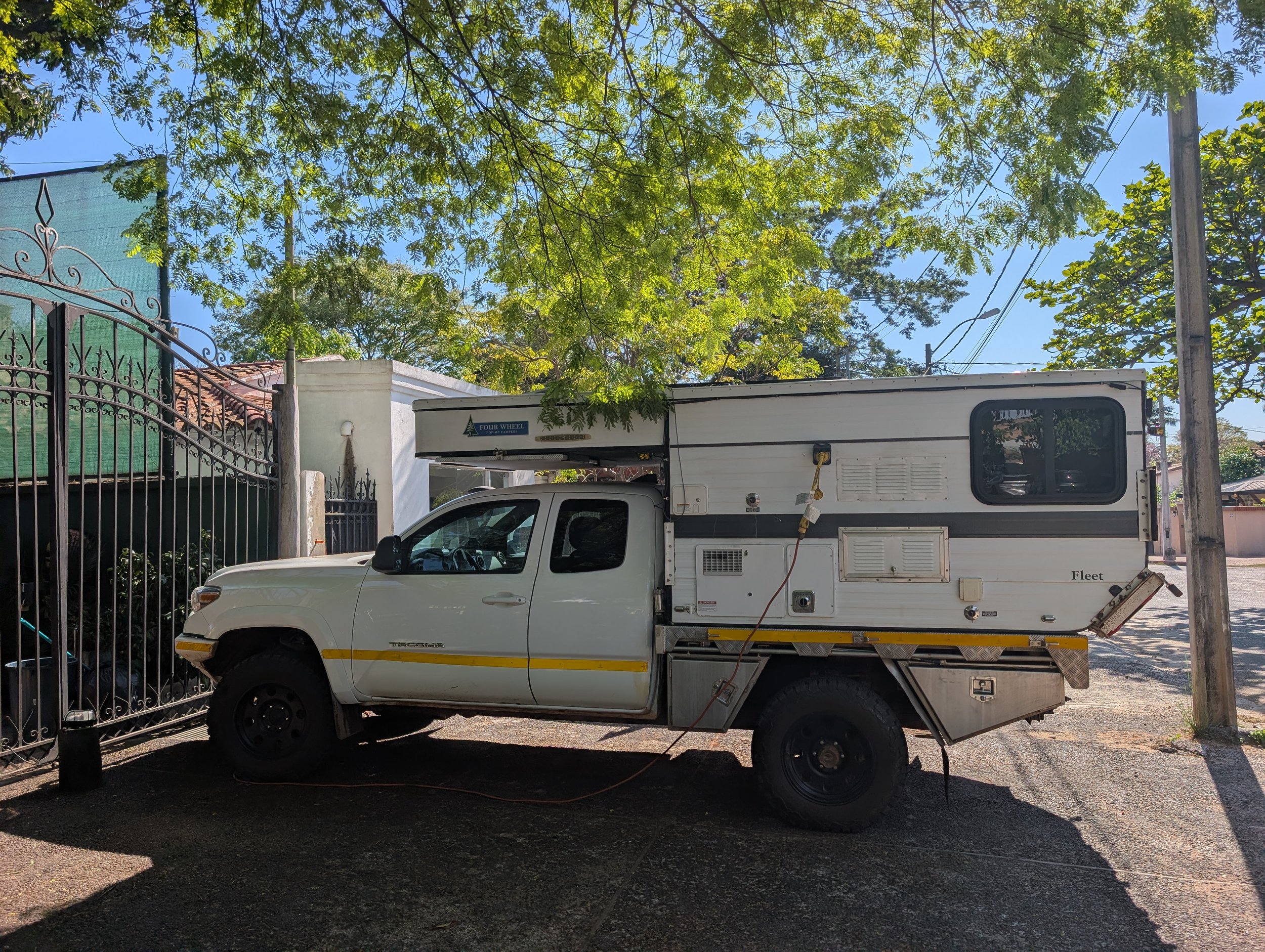
We just fit in the hotel parking area
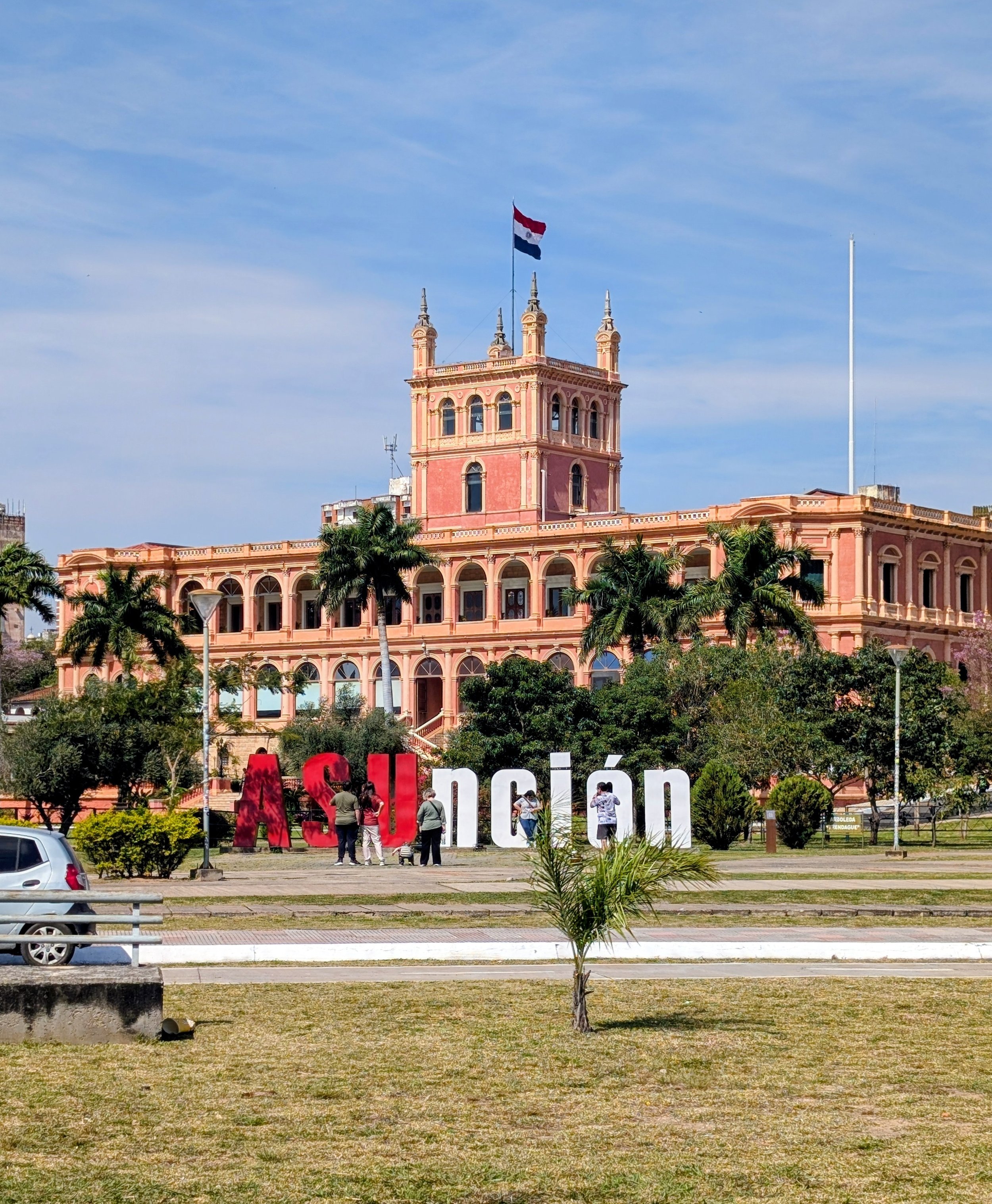
Palacio de Lopez - government headquarters
Our impressions of Asuncion were mixed. More than anywhere else in Paraguay, the economic disparities and challenges were evident. It is home to a large favela (South American term for a low income, high density housing area where homes are made by hand out of scavenged materials, more commonly known in the US as a shantytown or slum ). This area is built in the low lands between the costanera and the historic downtown. One day we watched as the government workers exited the Palacio de Lopez for lunch and armed guards spaced themselves at intervals down the street to popular cafes to keep an eye out. There was a high security presence around the outskirts of the favela, creating an informal barrier between the residents and the colonial downtown.
In general, Paraguay felt reasonably prosperous, which makes sense as it is known for its consistent economic growth and stability. (Which has unfortunately changed after the time of writing this.)
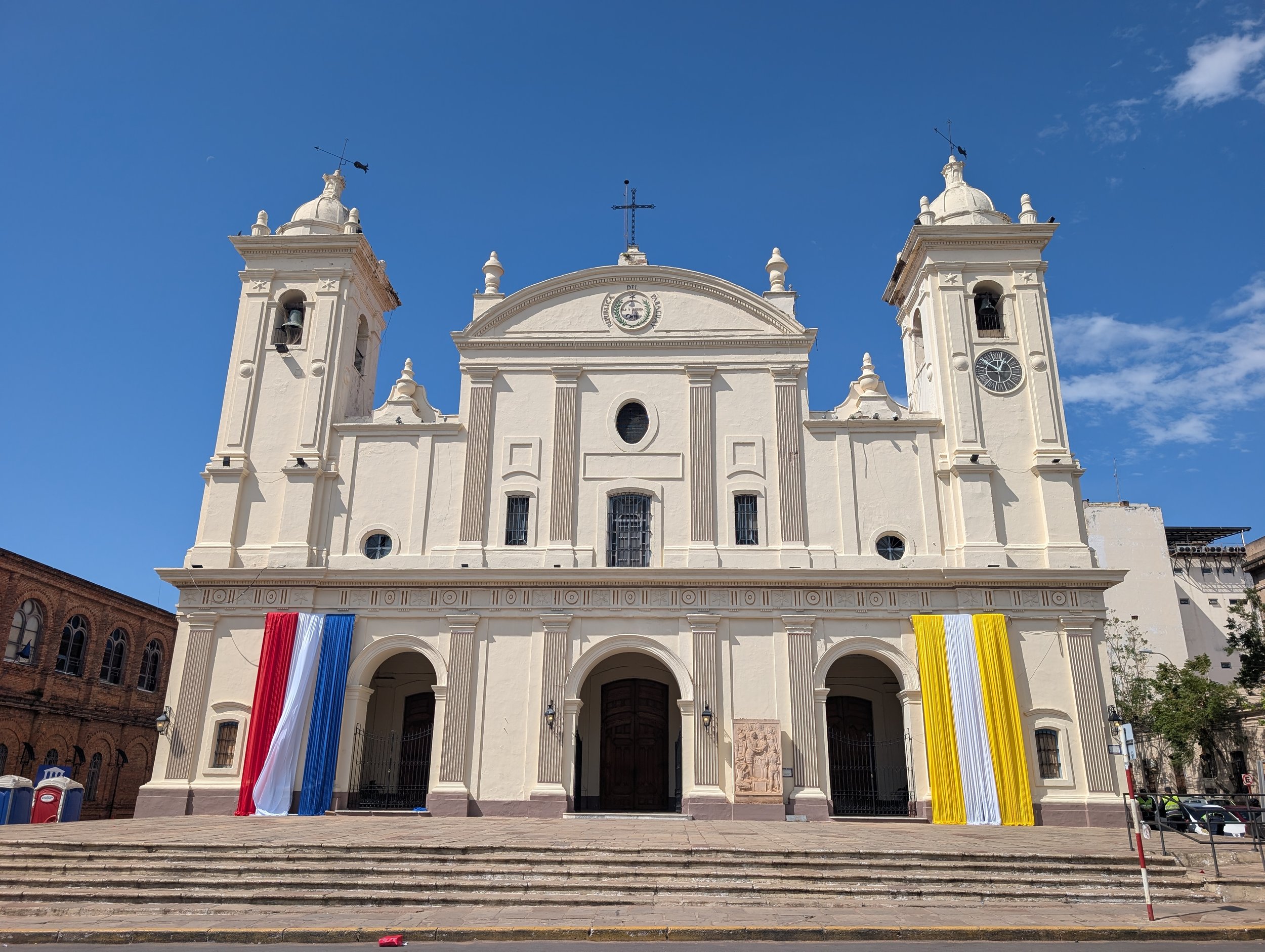
There were plenty of architecturally interesting colonial buildings in the city.
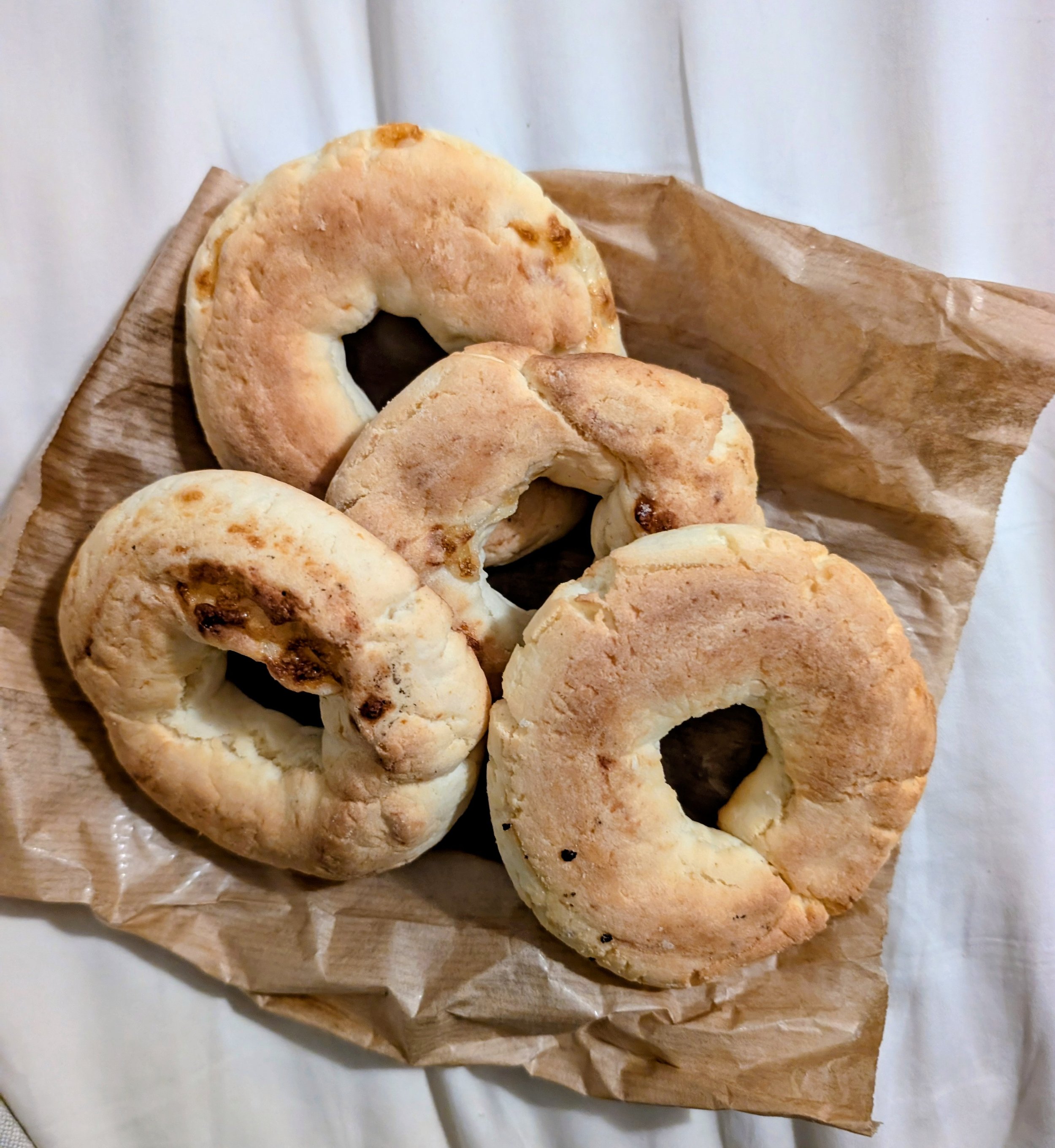
We had fun trying the traditional food - pictured here - chipas - a ring shaped cheese bread make from cassava. Very dense and filling.
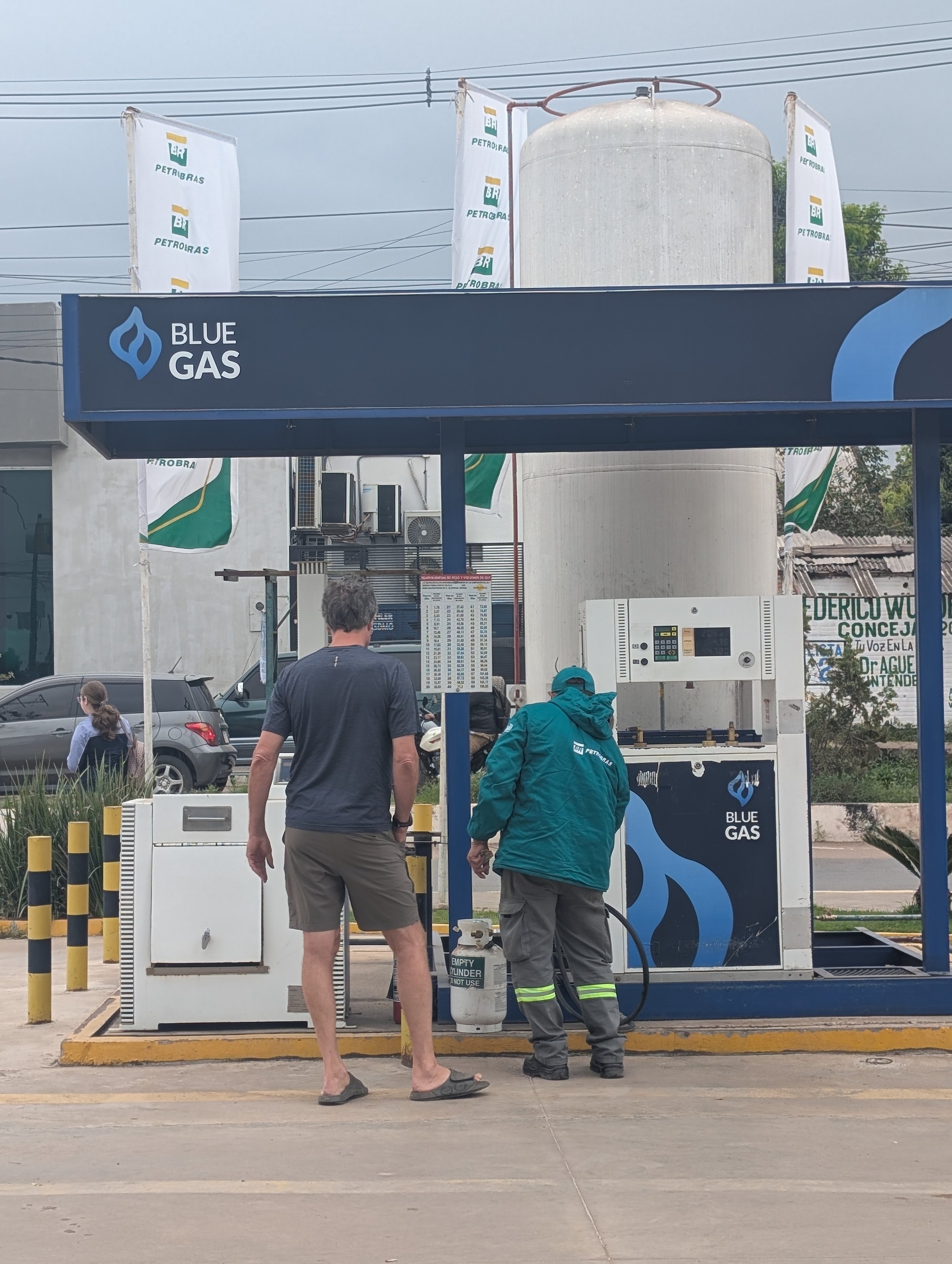
It was the easiest country in the world to refill our propane tanks - standard gas stations could do it and we didn’t even need an adapter.
The last place we visited in Paraguay was our favorite - the immense Chaco region. A vase semi-arid plain, the Chaco covers over 60% of Paraguay’s land area and is one of the most sparsely populated regions in South America. There are areas where indigenous people are living with no contact with outside people.
Along our way to the Chaco, we stopped in Filadelfia, the center of the Mennonite culture in Paraguay. We spent some interesting time at the local museums, learning more about why the Mennonites settled the area - the Russian Mennonites fleeing Stalin’s persecution and the German Mennonites fleeing potential mandatory military service. The Paraguayan government welcomed them to settle in this remote region. at the edge of the Chaco. To this day, the area is owned and administered by Mennonite leaders.
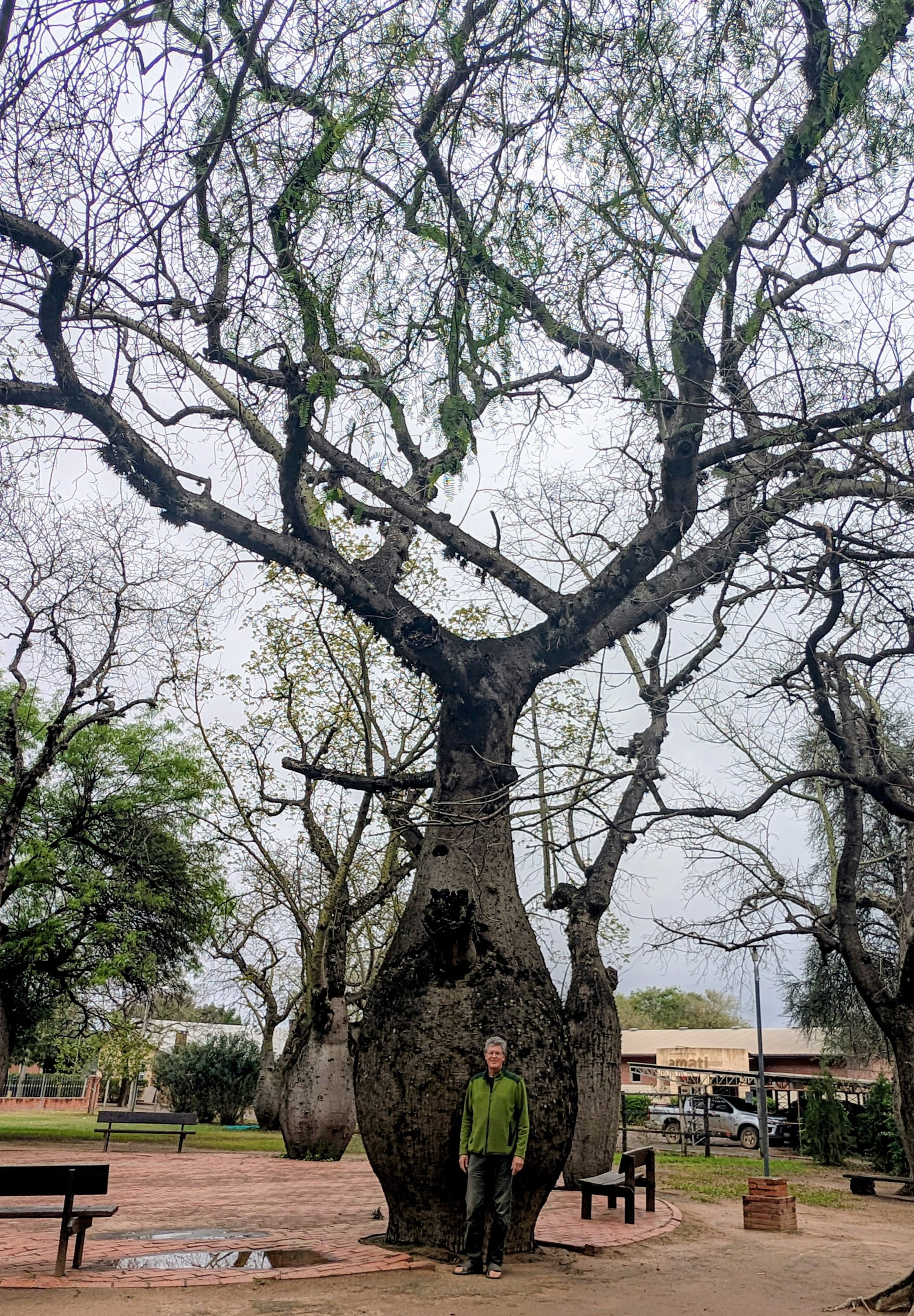
We found our favorite South American tree - colloquially known as the “bottle tree” - a relative of the African Baobab.
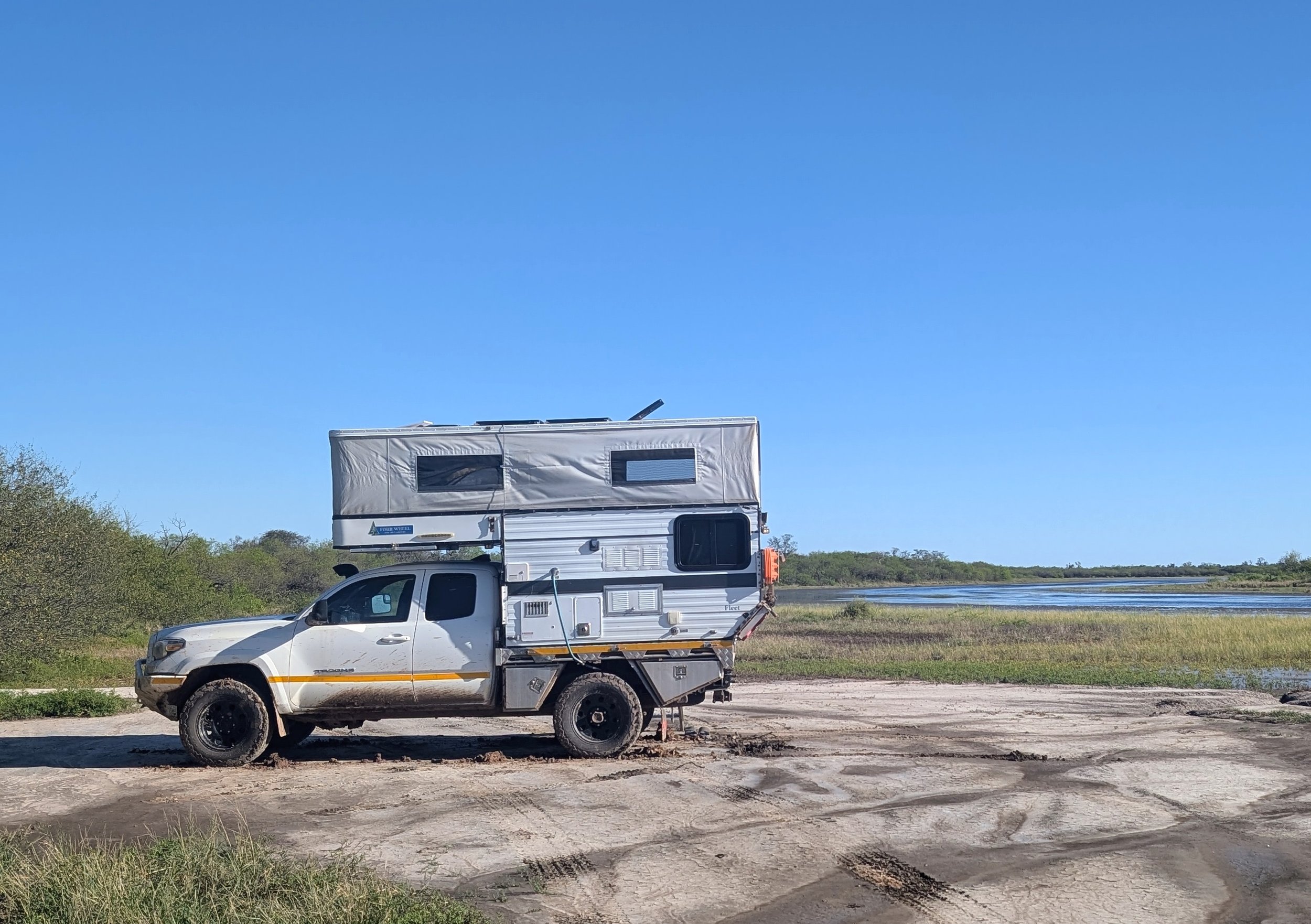
The Chaco was the only area we managed to actually wild camp.
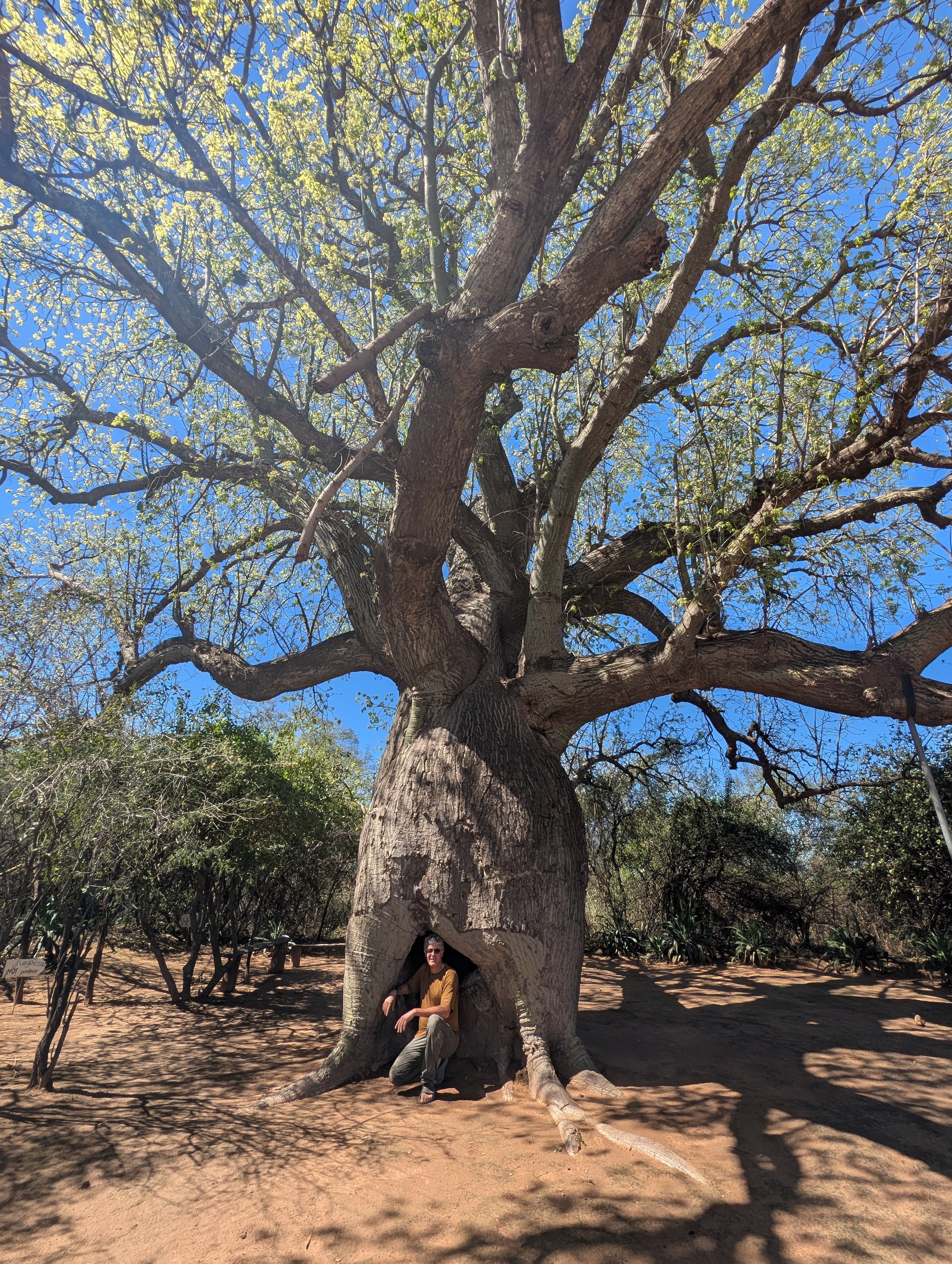
Andy posing with a beautiful bottle tree - the dryer the climate, the bigger the “bottle.”
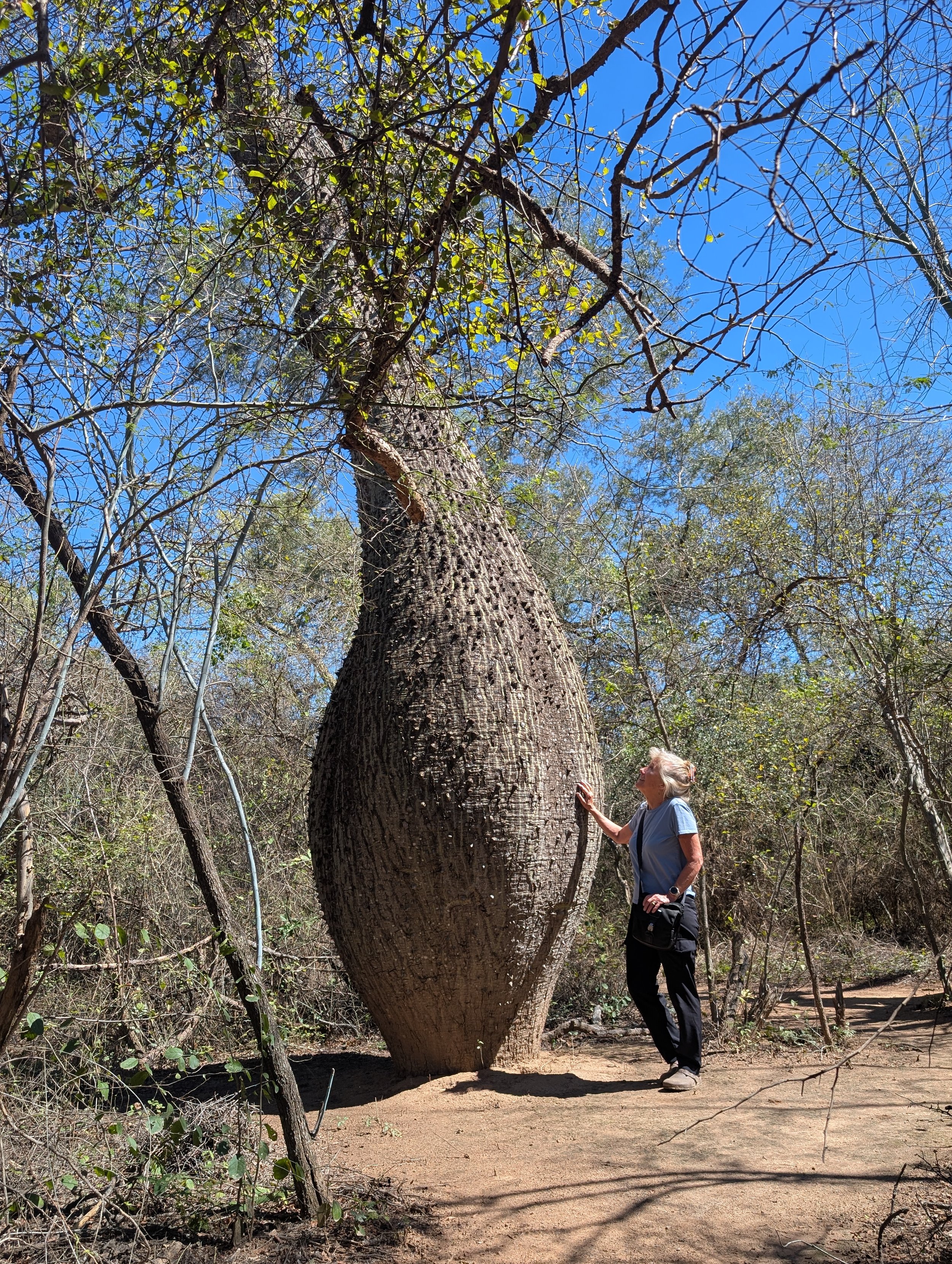
Dawn appreciating their unique style - the local name in Guarani is samu’u
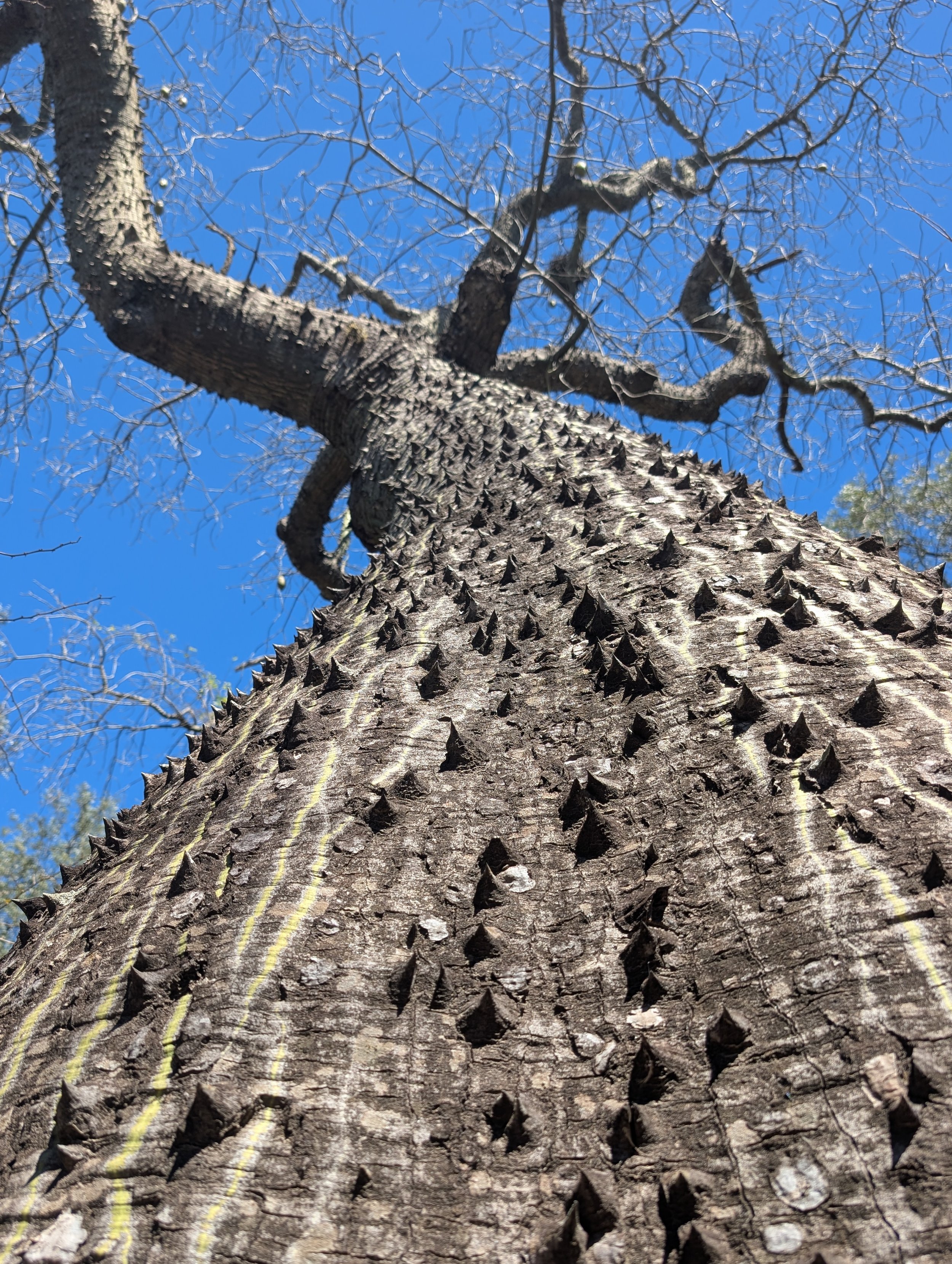
They have a lot of protection built in
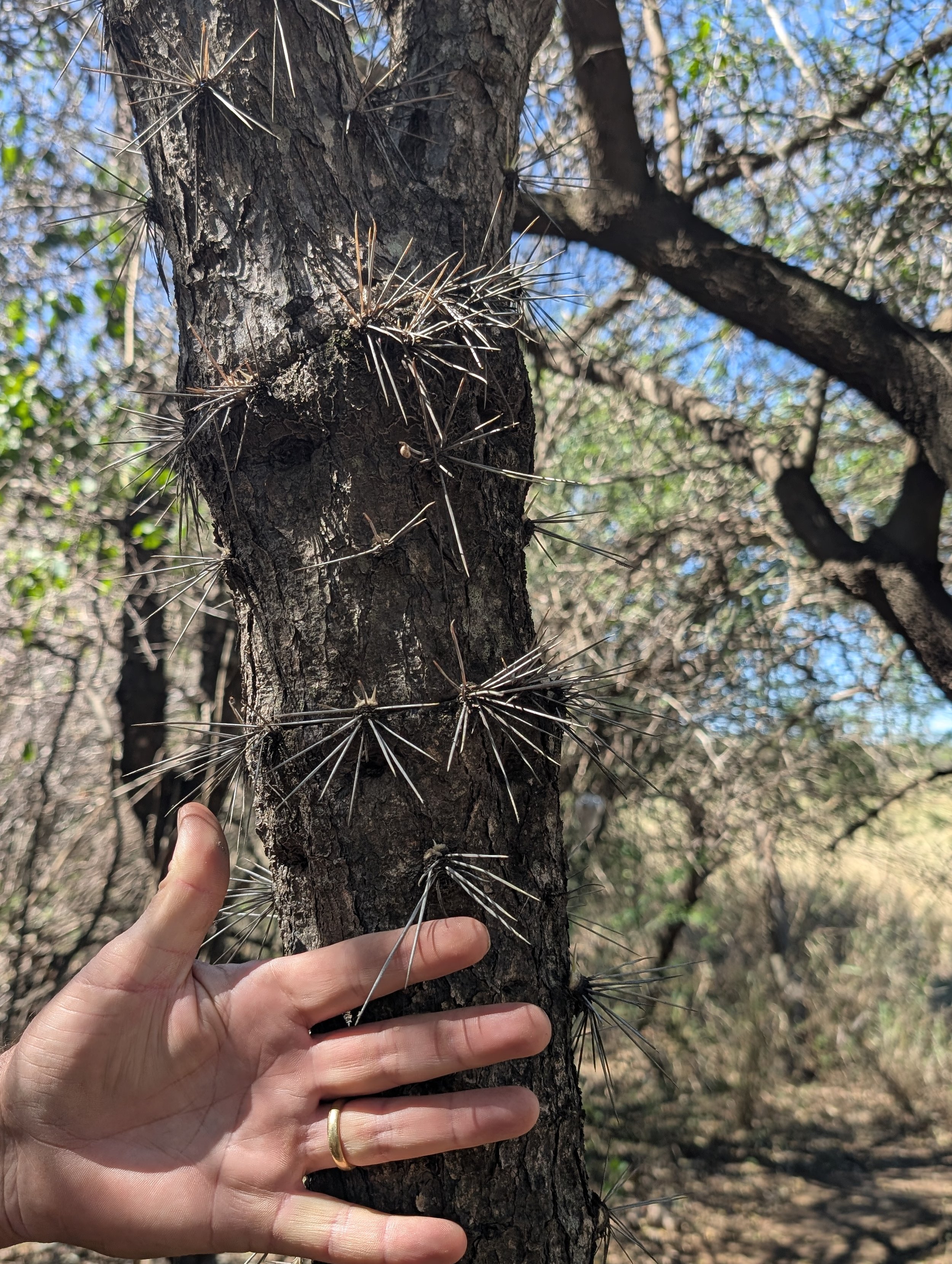
As do many of the plants in the Chaco
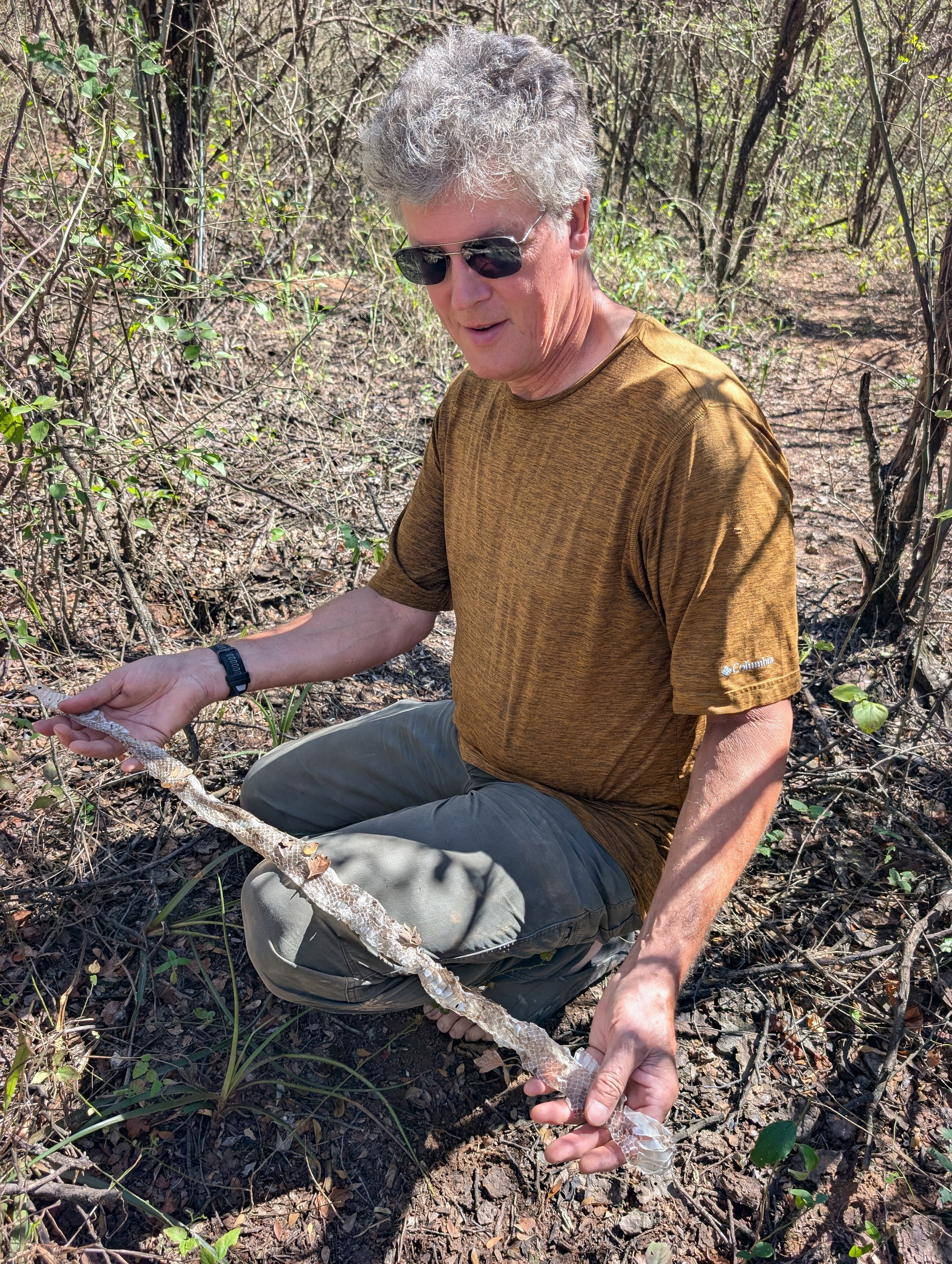
Andy found a snake skin, but no snake
During our last days in Paraguay in the Chaco, unexpected heavy rain storms turned the predominantly dirt roads to muddy swamps.
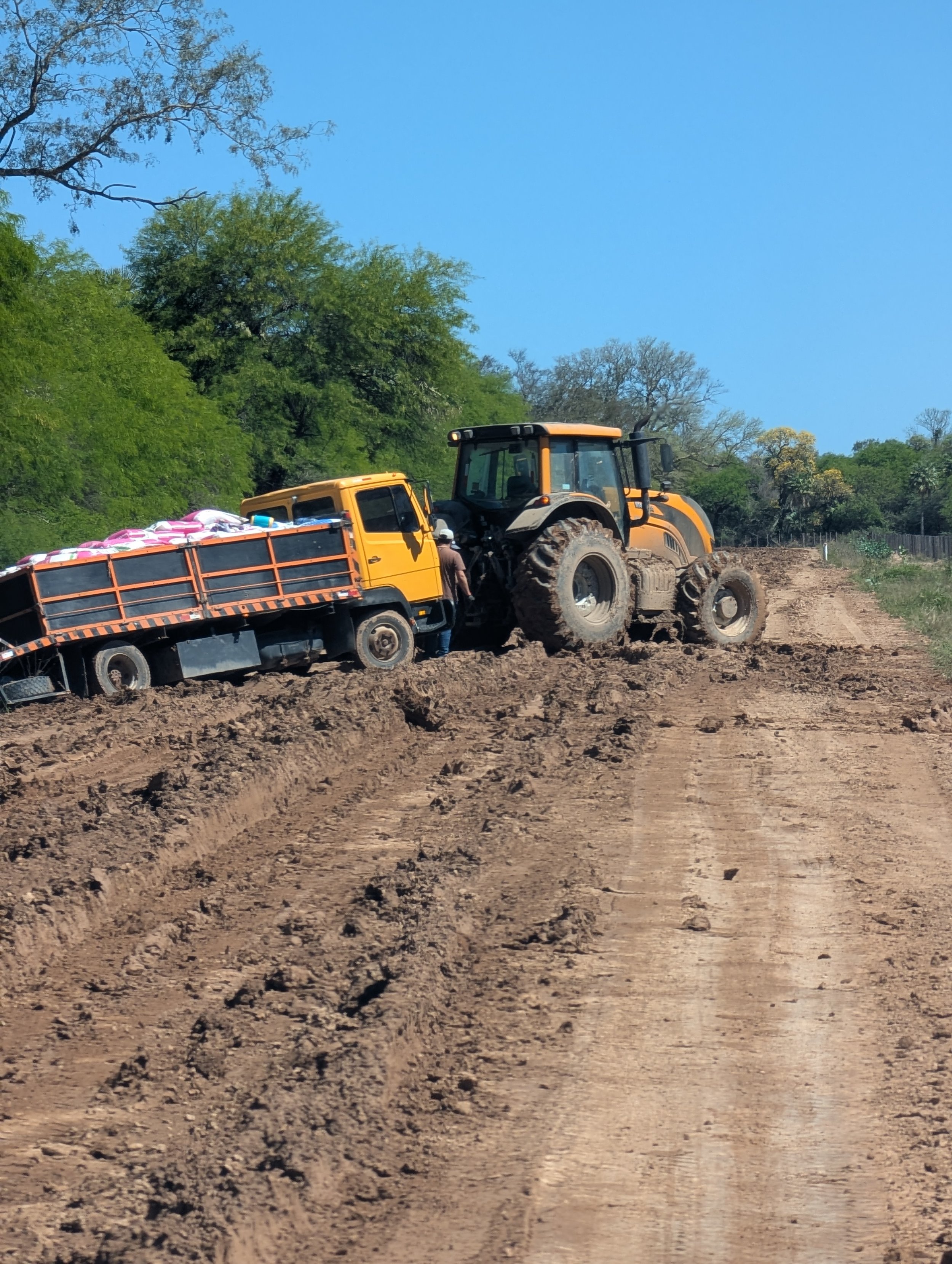
We saw this truck that had slid off the road being towed out by a tractor and thought we could drive around.
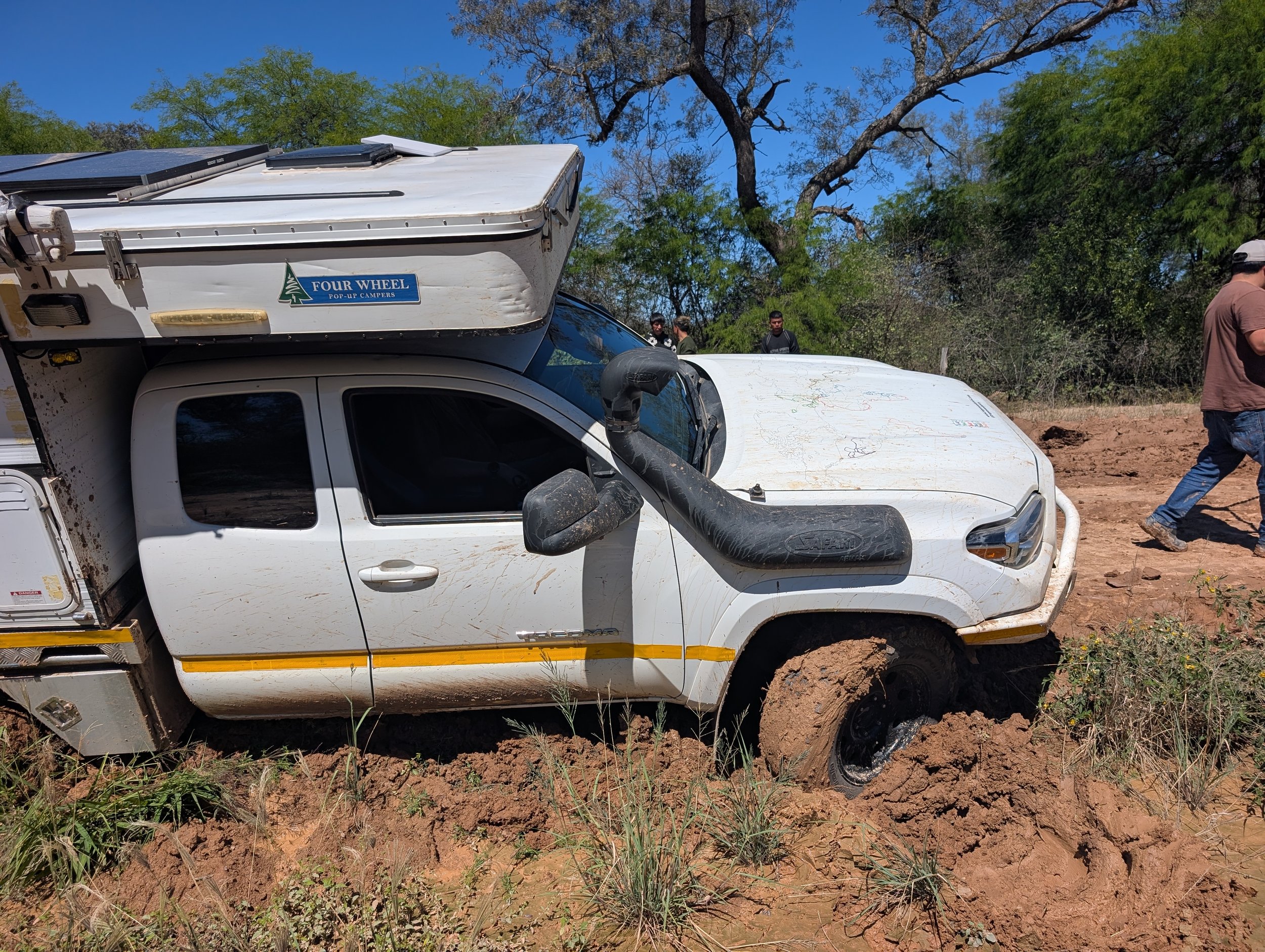
Nope, we slid right off the edge, luckily the friendly tractor driver just pulled us right out
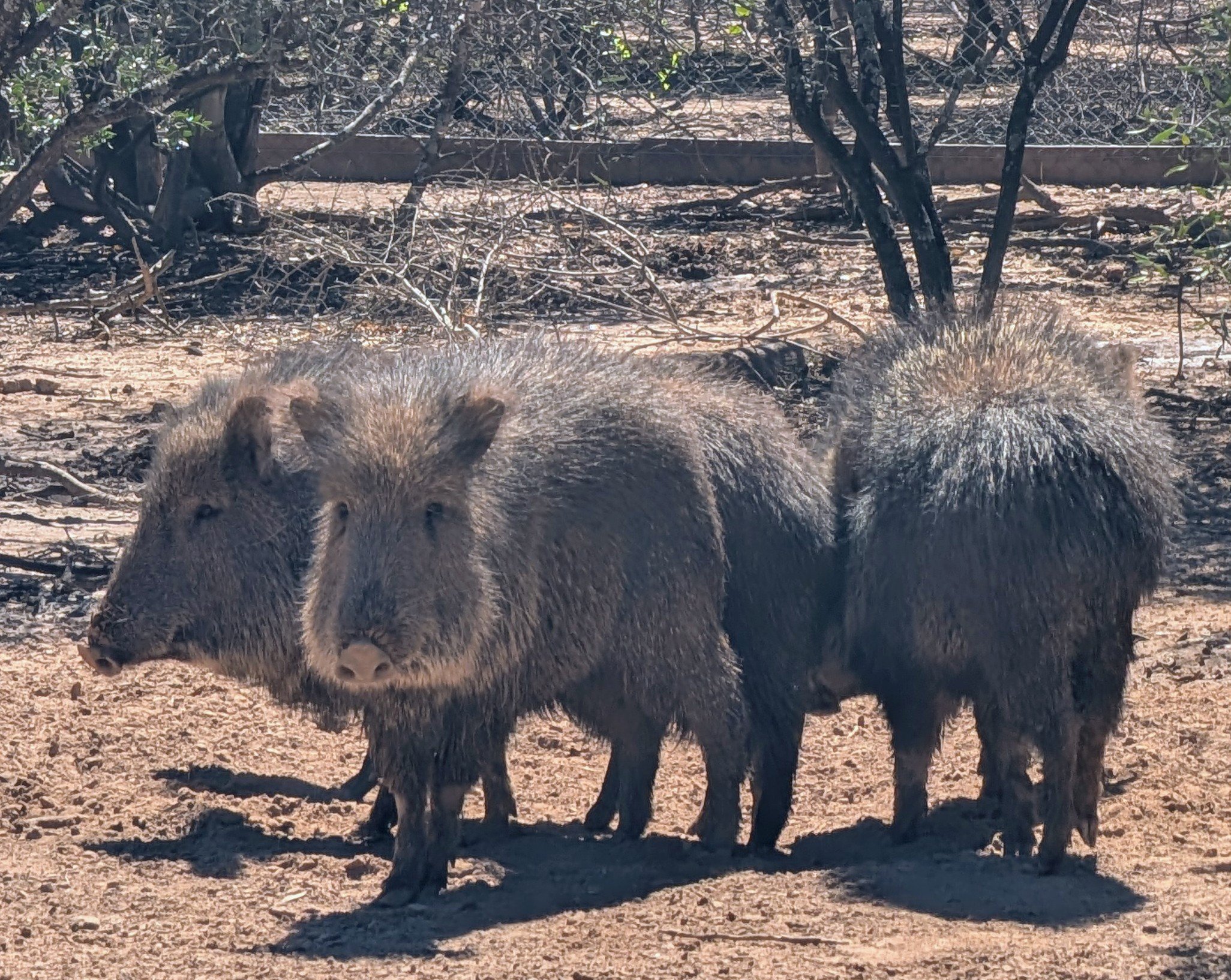
Visiting a breeding center and preserve for the endangered Chacoan peccary
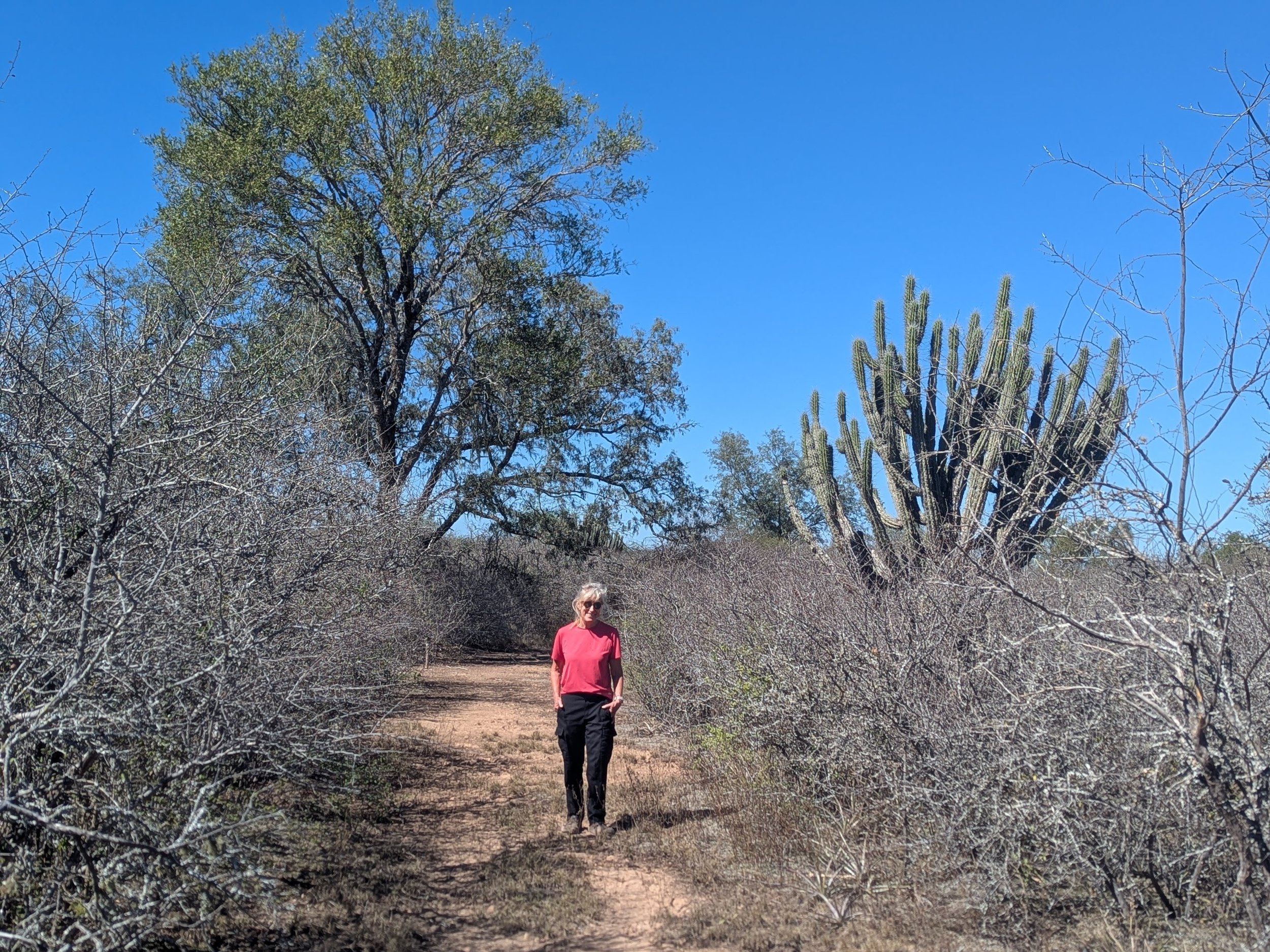
Going for a Chaco hike
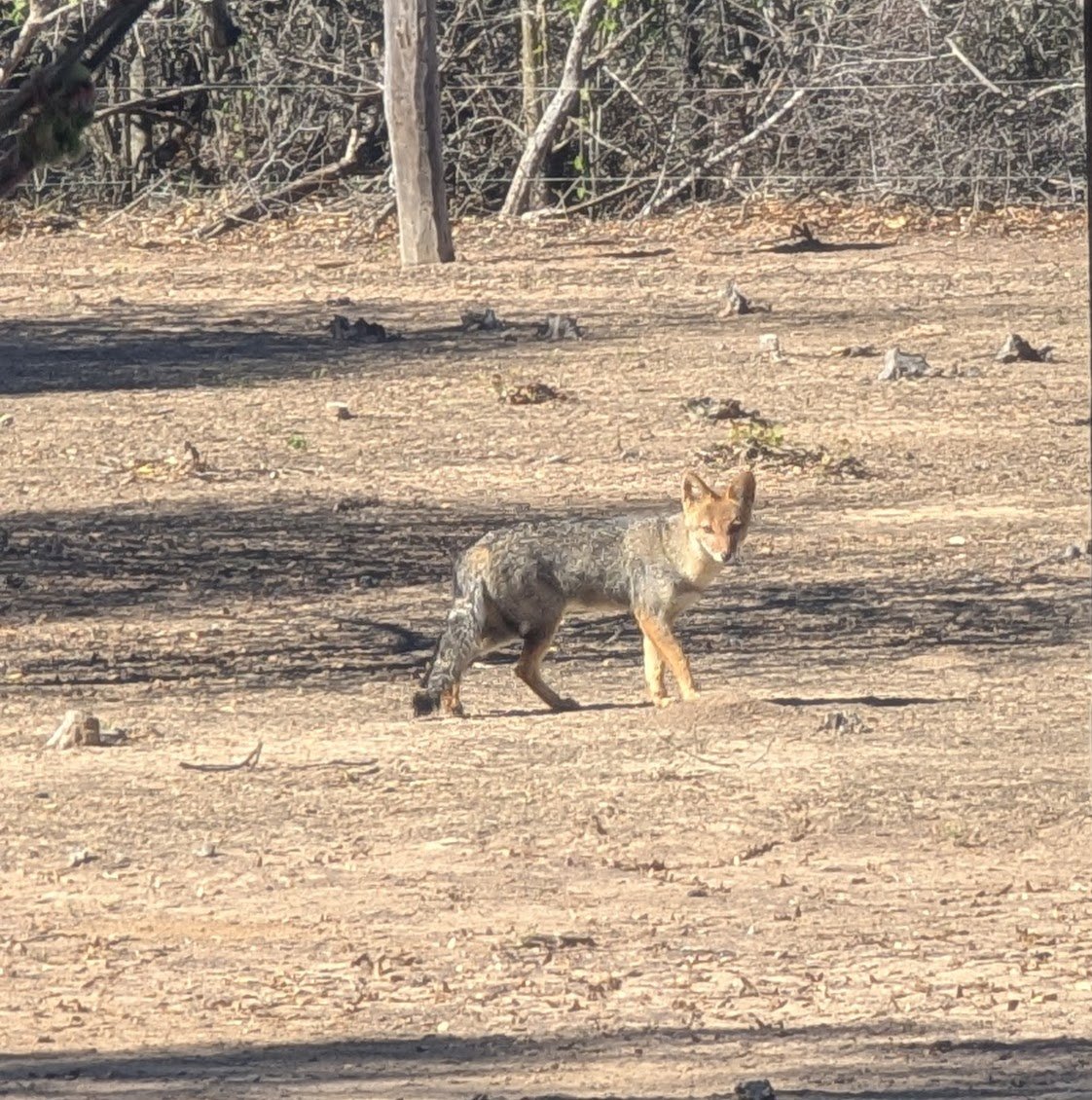
Some local fauna
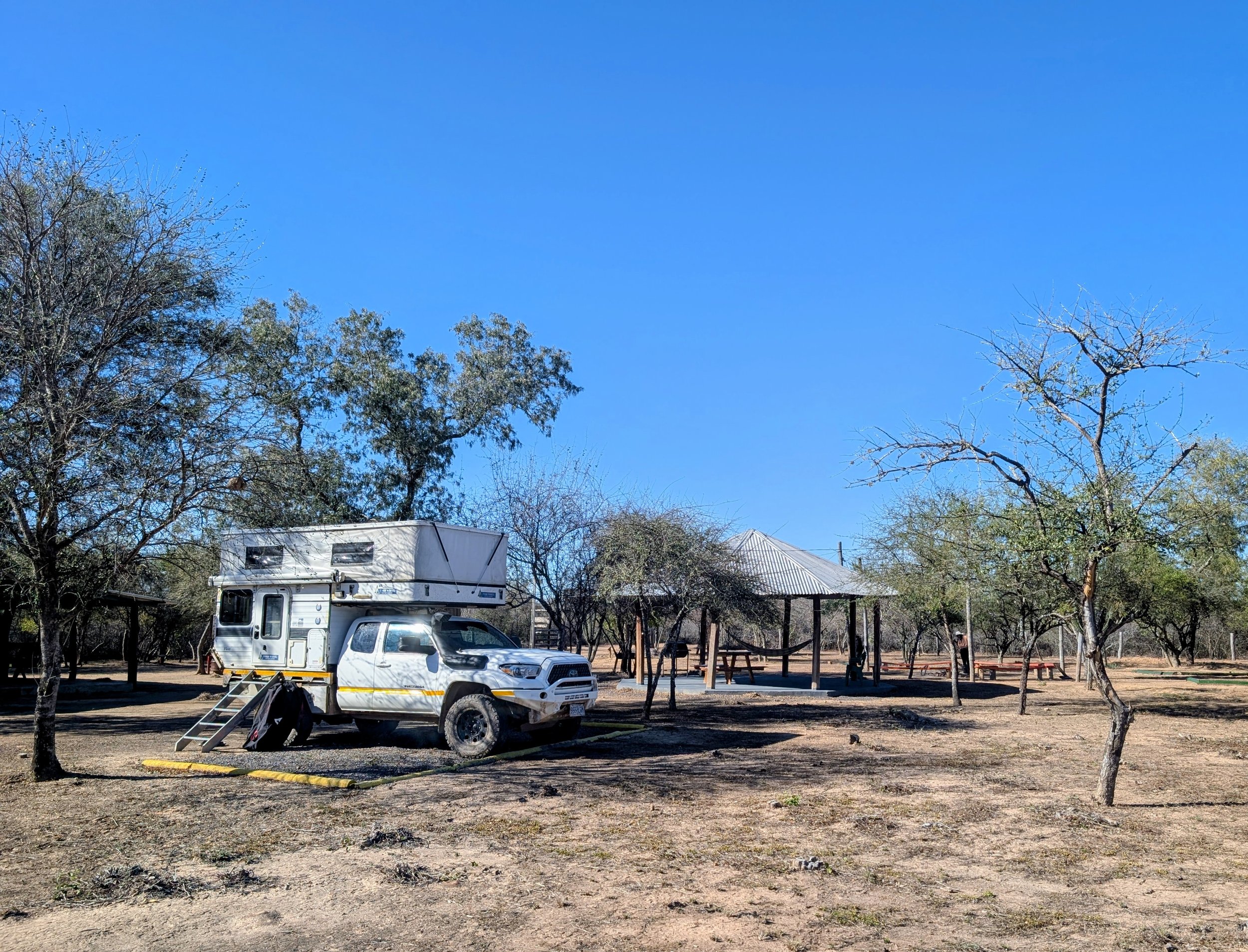
Our last night in Paraguay, the only campers (as usual) at an indigenous campground
That’s it for Paraguay - short but sweet. Thank you for reading - next stop Bolivia, we are looking forward to some mountains!