Chile
Part 1 - October 13-25
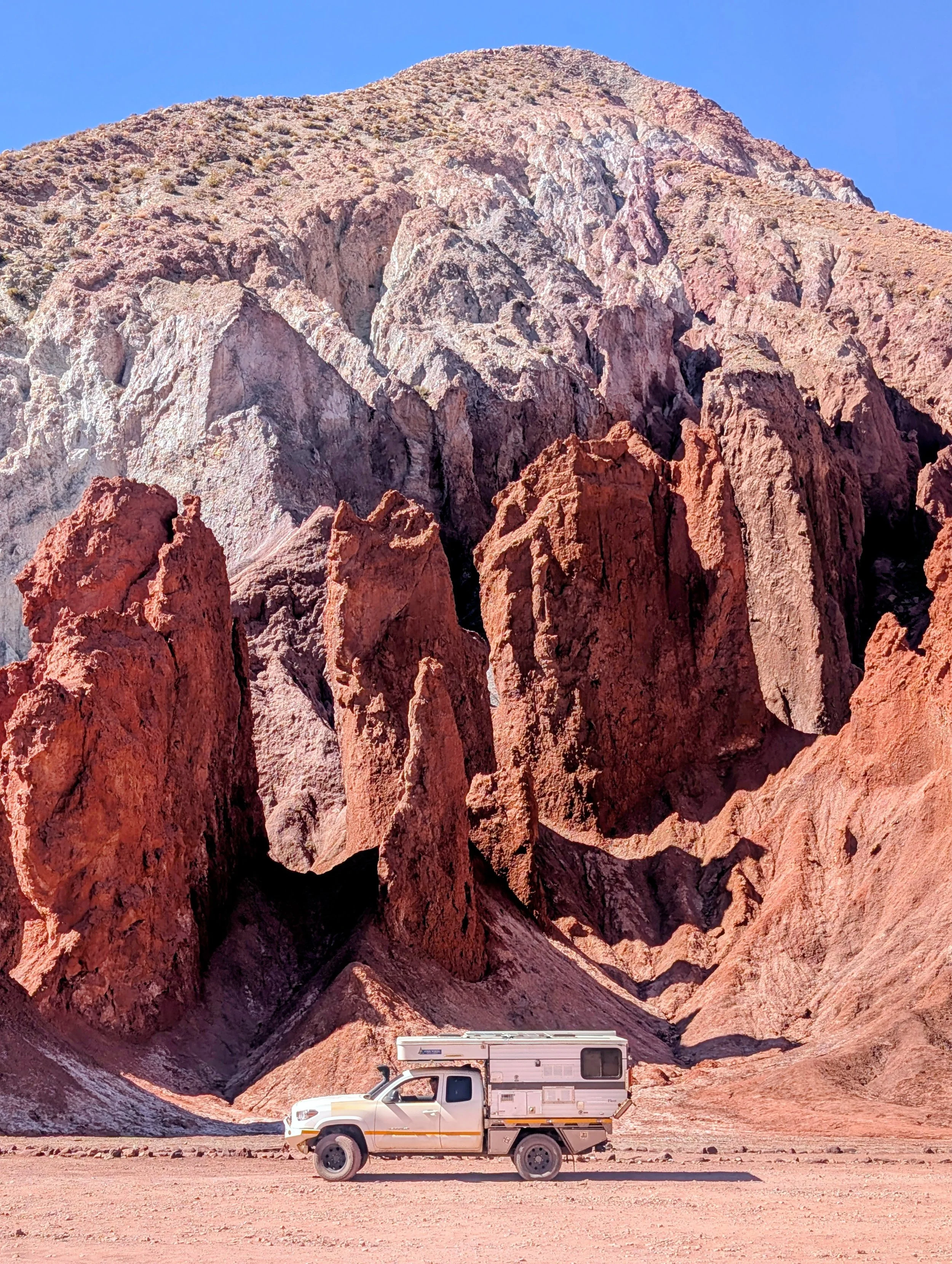
Valle de la Muerte, San Pedro de Atacama
As soon as we hit the road in Chile everything felt right with the world. We were reminded what we loved most about our overlanding life. Travel felt easy with vast and varied wild landscapes and tasty food. We looked forward to learning about a new culture and people. We realized how challenged we had been in Southeast Asia to travel in our truck. The climate, our lack of knowledge of the local languages, the regulations preventing us from taking the truck into some countries and the general logistical difficulties (there are a lot of islands) had prevented our ability to travel freely. We had struggled with the jungle heat and humidity which we are not made for and the lack of accessible wild space. All this changed in Chile. Plus there was the fact that we had just had a significant break in the US with family and friends which meant we were recharged and ready for adventure.
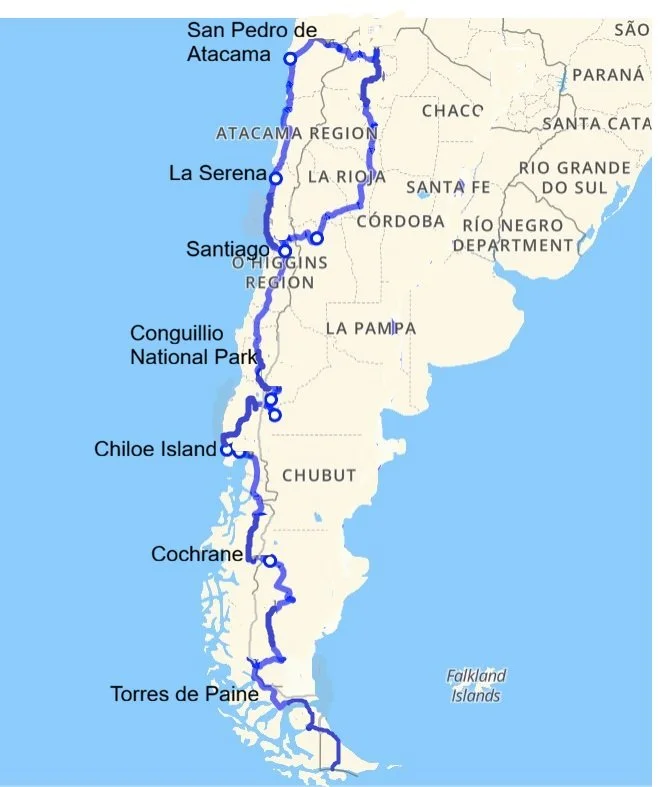
Our six week, 3900 mile route through Chile
Chile’s geography is diverse and beautiful. A long narrow country spread between the Pacific Ocean and the Andes mountains, its terrain encompasses huge deserts, fertile valleys, snowy volcanos, rugged coastline and majestic mountain peaks. Every day brought varied and intriguing landscapes.
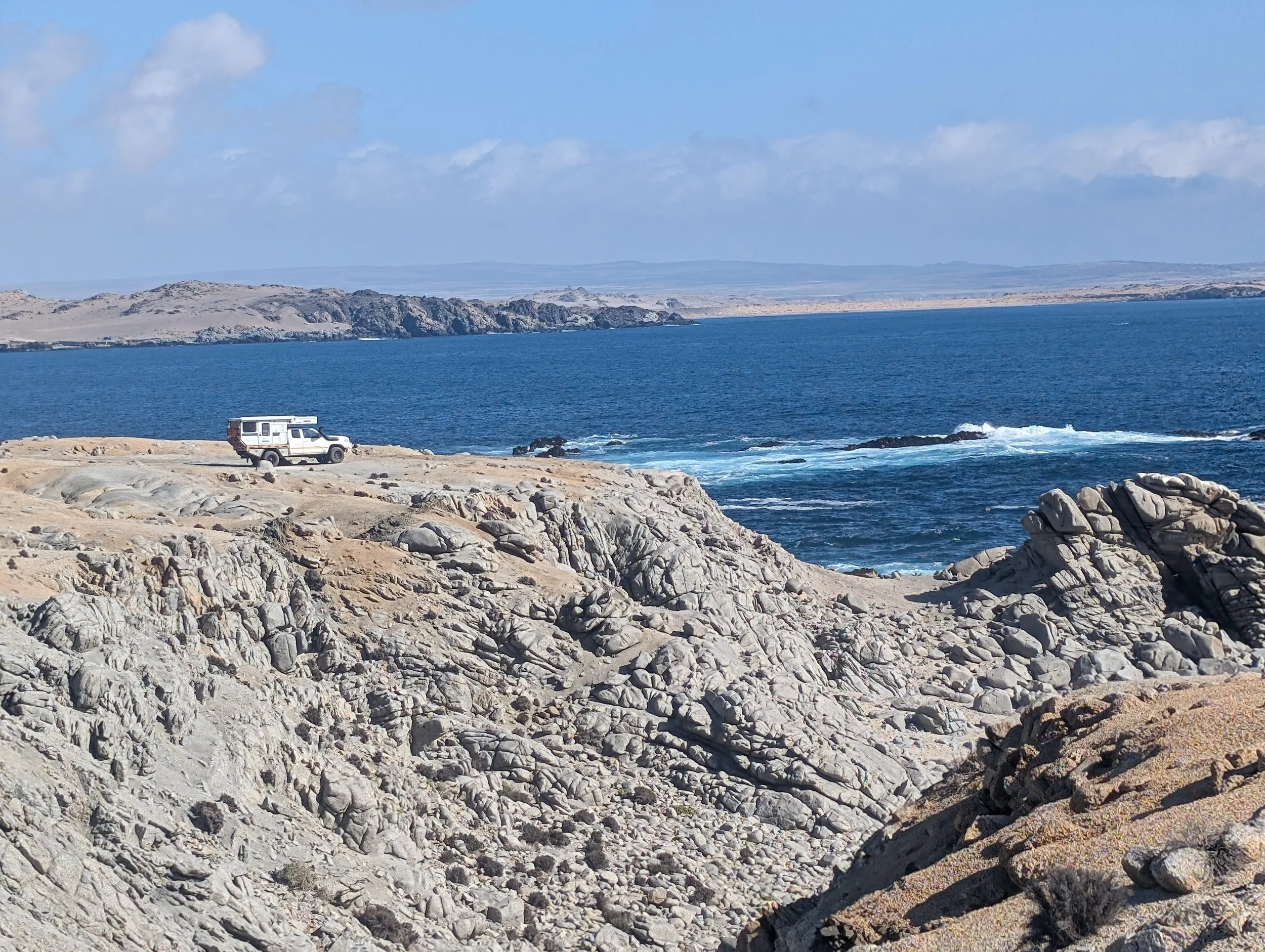
Wild camp on the northern coast of Chile
But before our love affair with Chile commenced, we arrived in Santiago nervous and a little on edge. More than anywhere else that we had traveled in the world, reports of tourists and overland vehicles being targeted for robbery and petty theft were numerous and recent, especially in the big cities. Although we were challenged by some factors in Southeast Asia, we did not worry about robbery or theft. We were not sure what we would encounter in Santiago but were prepared for the worst.
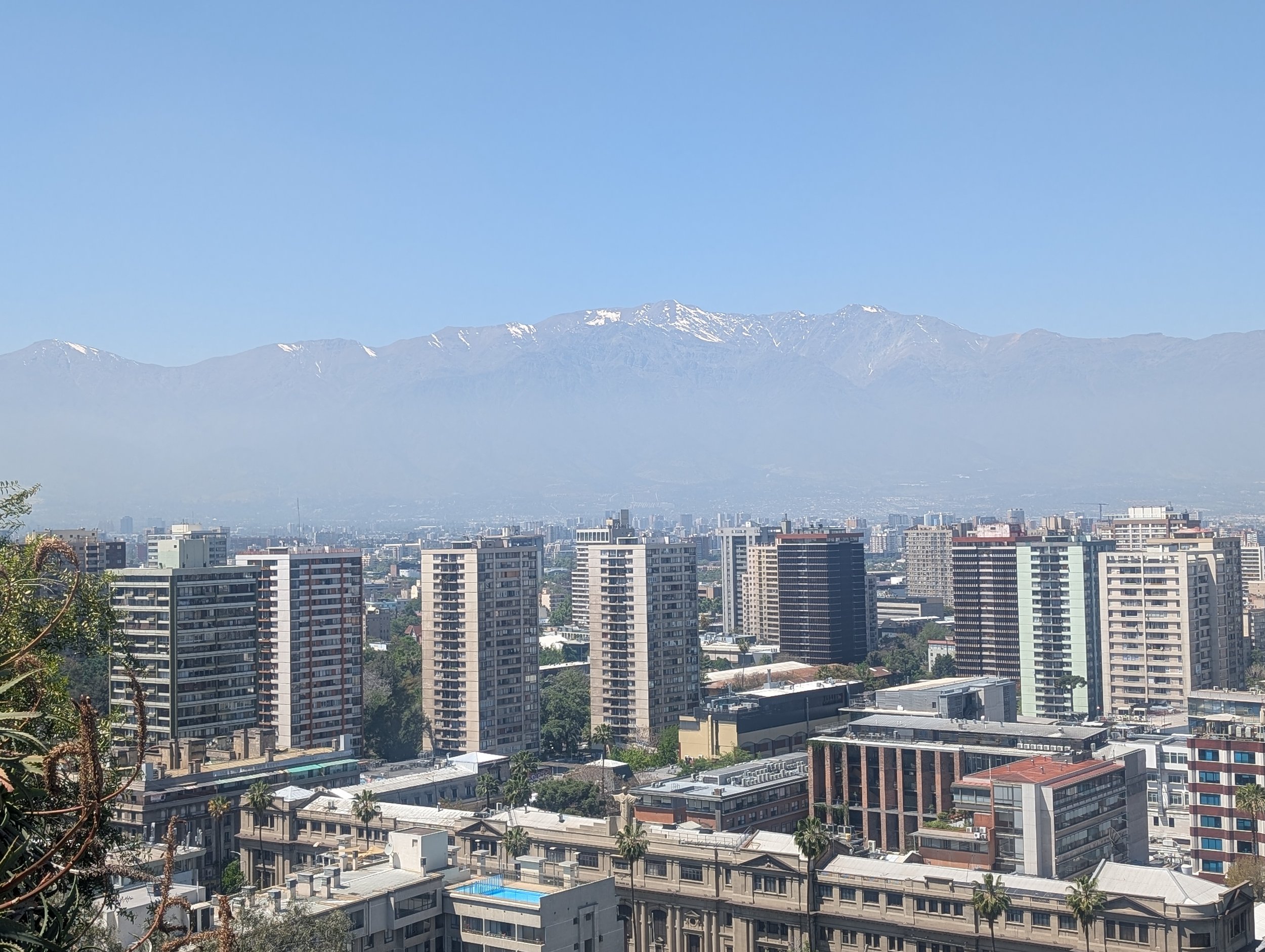
First day in Santiago and first glimpse of the Andes on the distant skyline
With safety at the forefront of our minds, we asked our shipper if he could store our vehicle for a couple more days so that we could explore Santiago without worrying about parking. It is a constant challenge for us to find safe parking for the truck in big cities where most of the secure parking is in underground garages which are height limited at about 2.1m high (we are 2.3m).
So first up, we joined a free walking tour of the old town center. We have done scores of these and it was the first time we had heard a guide say “you may be robbed on this tour, it is not my fault.”
Despite the warning, our guide was incredibly informative, explaining that most of the long term, wealthy residents had actually moved out of the old city center due to a huge influx of immigrants who had been taking over the streets for the last eight years. He estimated that almost a quarter of the population of Chile, totaling 5 million people, had arrived escaping poverty, political persecution or drug cartels in neighboring countries. Chile’s unique geographic shape with its long narrow border made walking in easy. But there are not enough jobs for all the immigrants which leads to desperation and crime.
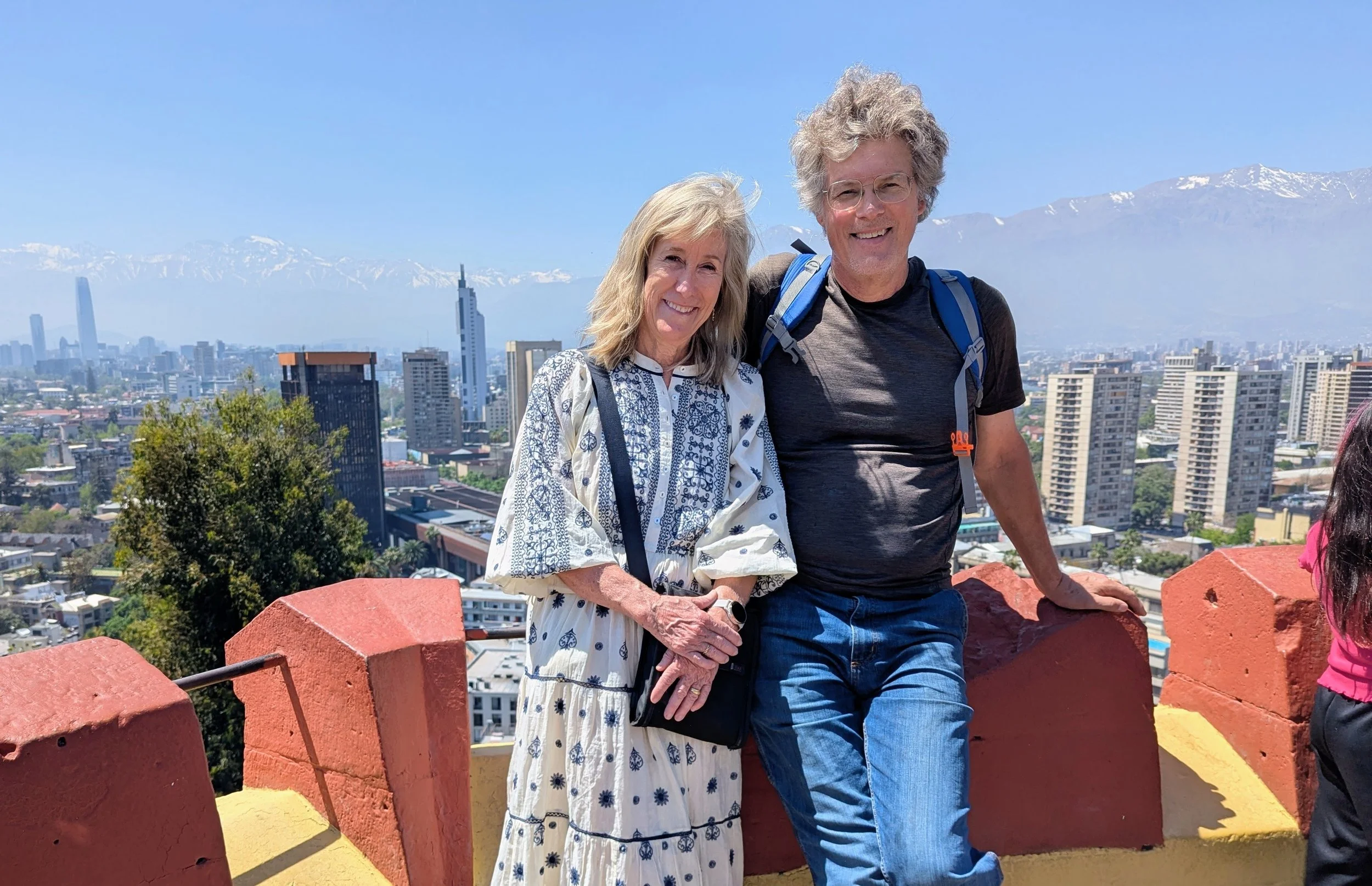
Climbed to the top of Cerro Santa Lucia to enjoy the view
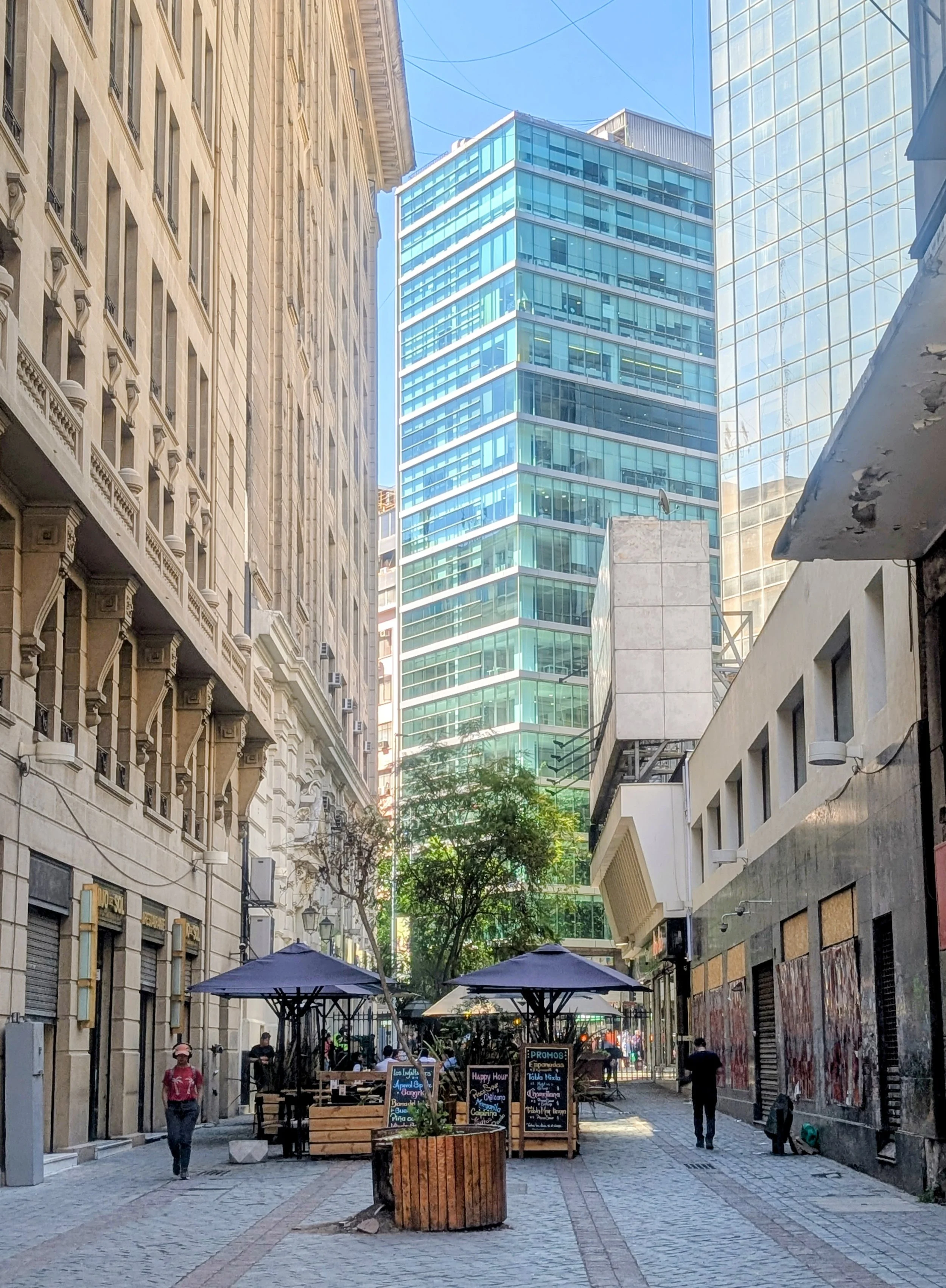
We found the old city center to be calm despite its infamous reputation
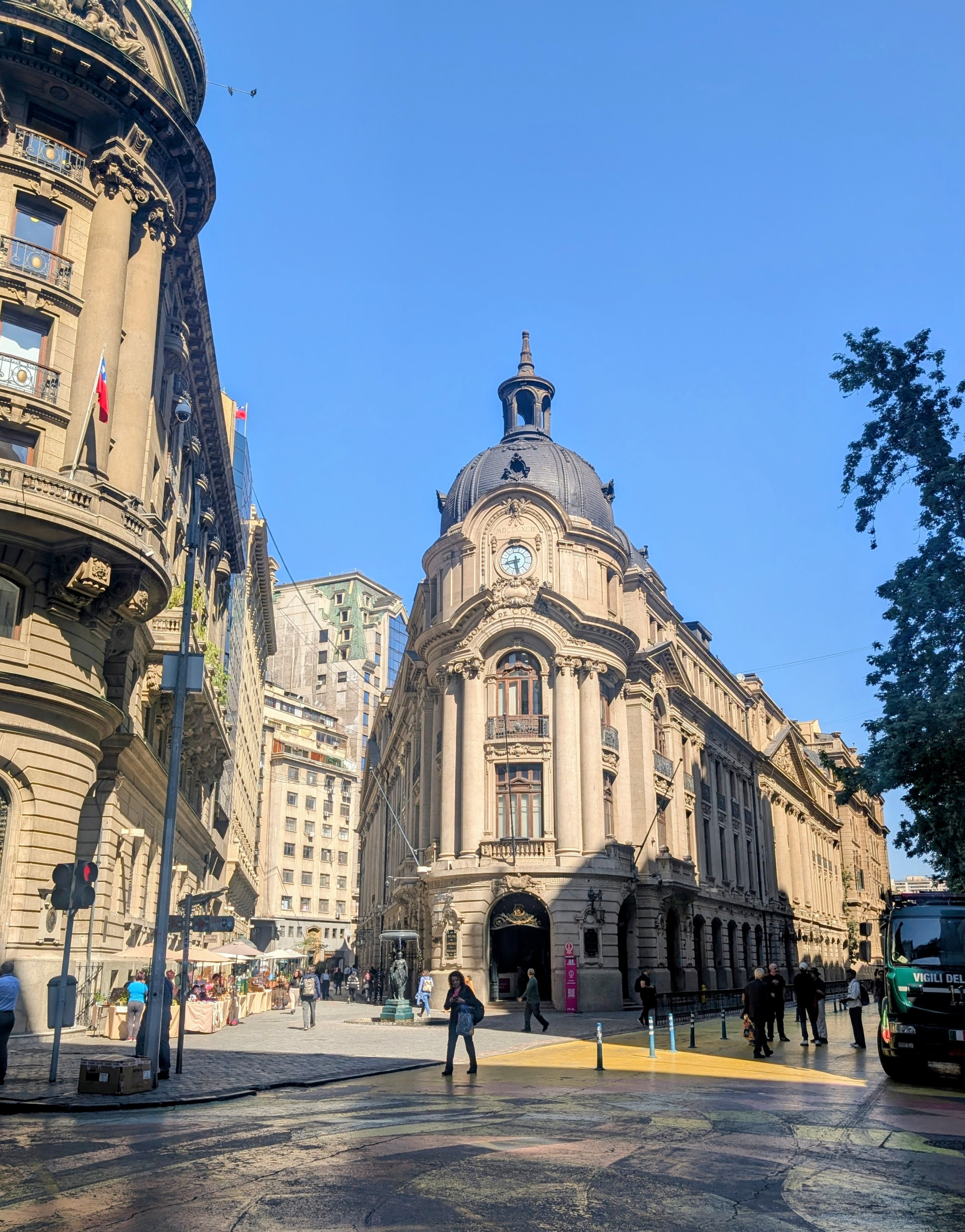
Despite multiple earthquakes over the last 100 years, some of the old buildings from the colonial period remained, and some had been more recently built by the first leaders after independence who were obsessed with European architecture.
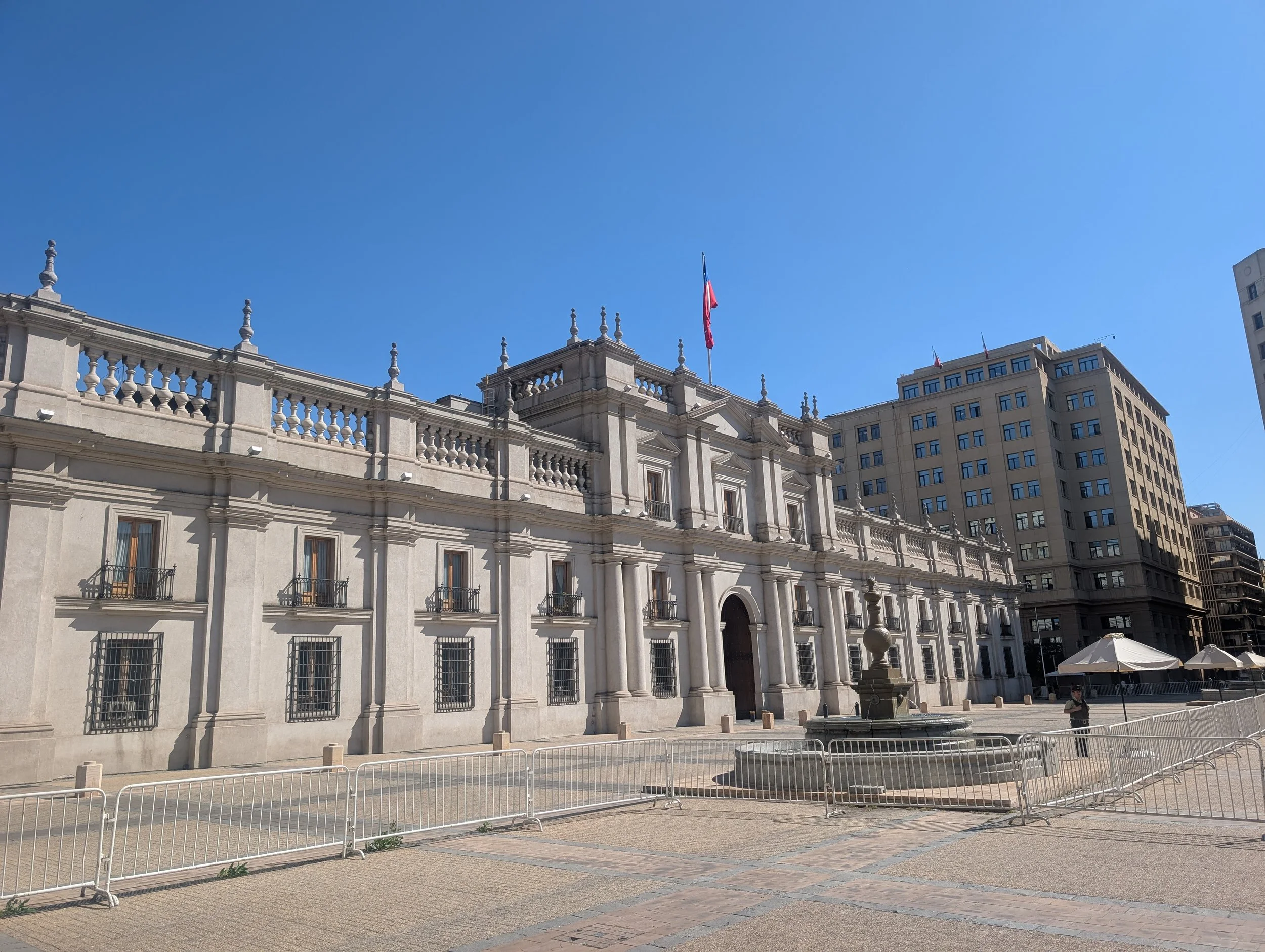
Presidential palace where newly elected socialist president Salvador Allende died during a military coup in 1973. The military dictator Augusto Pinochet subsequently ruled from here for 17 years. The building is still the official seat of the presidency.
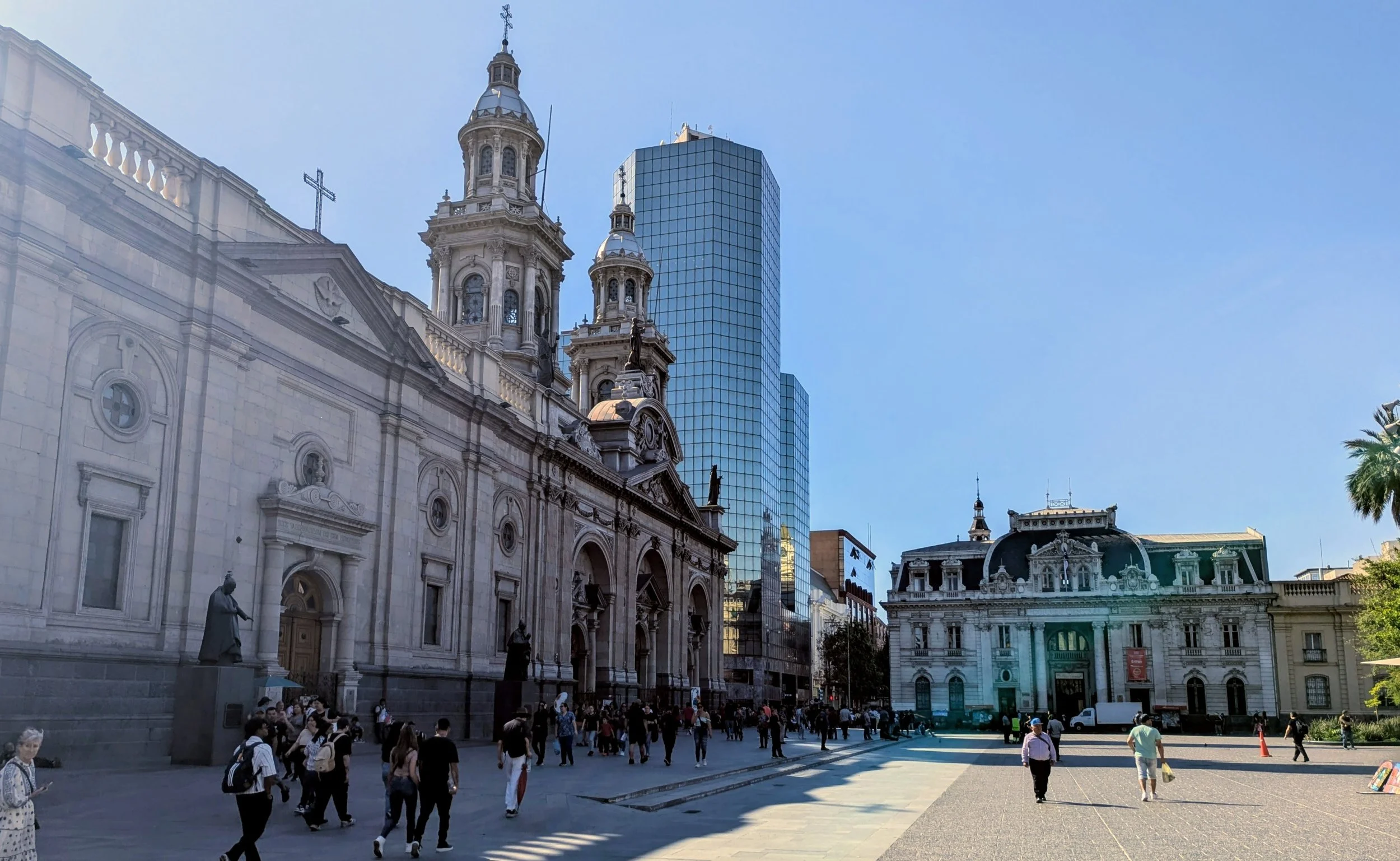
Central square of Santiago, Plaza de Armas
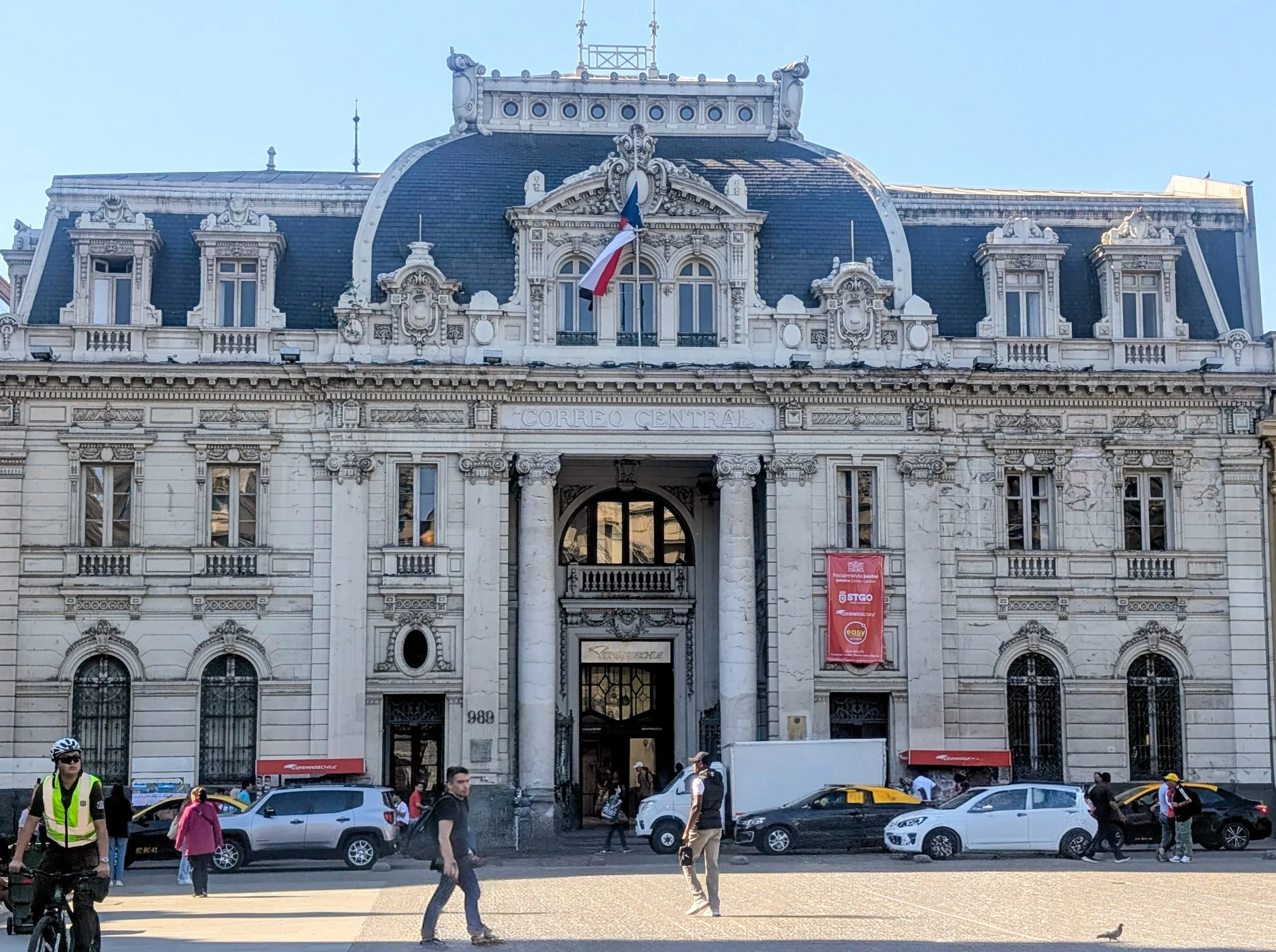
Old Central Post Office Building
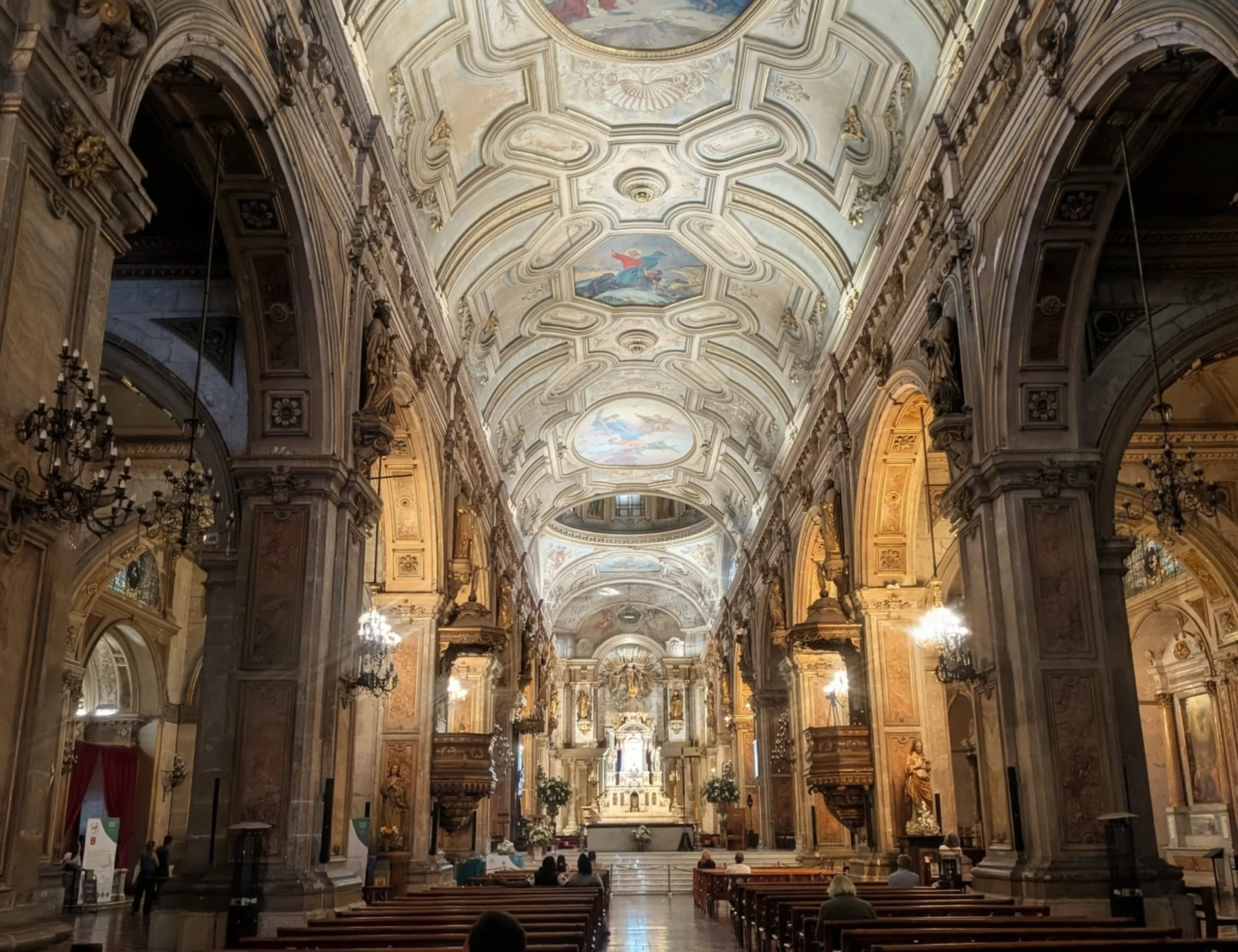
Metropolitan Cathedral in Santiago, building started in 1748
The Spanish conquest of Chile in the 16th century led to most of the people affiliating with Catholicism, however, more recent surveys suggest that 40% of the people are unaffiliated which makes the country one of the least religious in the region.
Our city guide explained that Chilean people are largely descended from the Machupe people who were warriors who fought off the Incans and Spanish in Southern Chile, which he said explains their practical and serious culture.
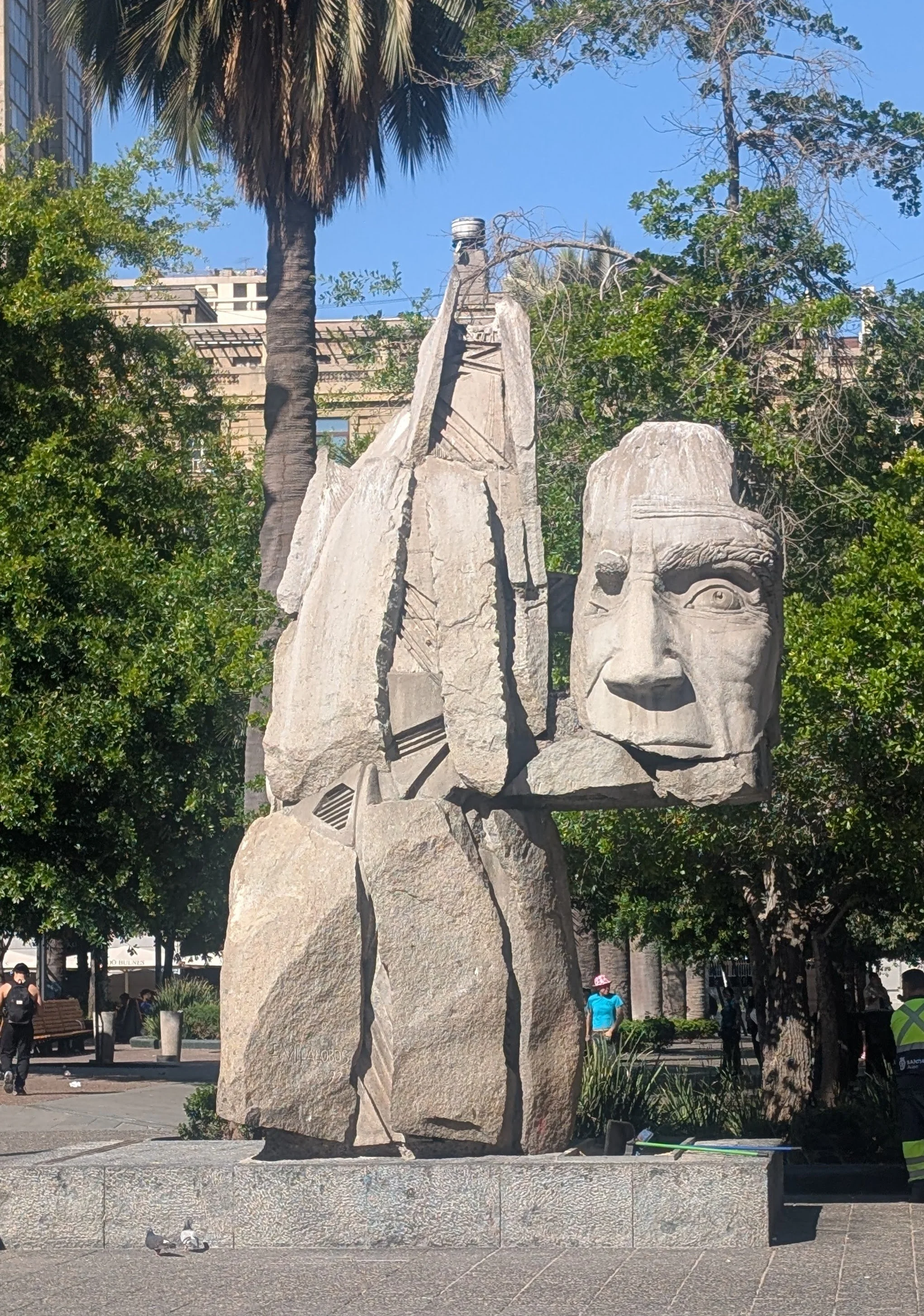
Monument to the Indigenous People by Chilean sculptor Enrique E. Villalobos Sandoval. The Machupe people of southern Chile successfully fought off the Incan and Spanish invaders.
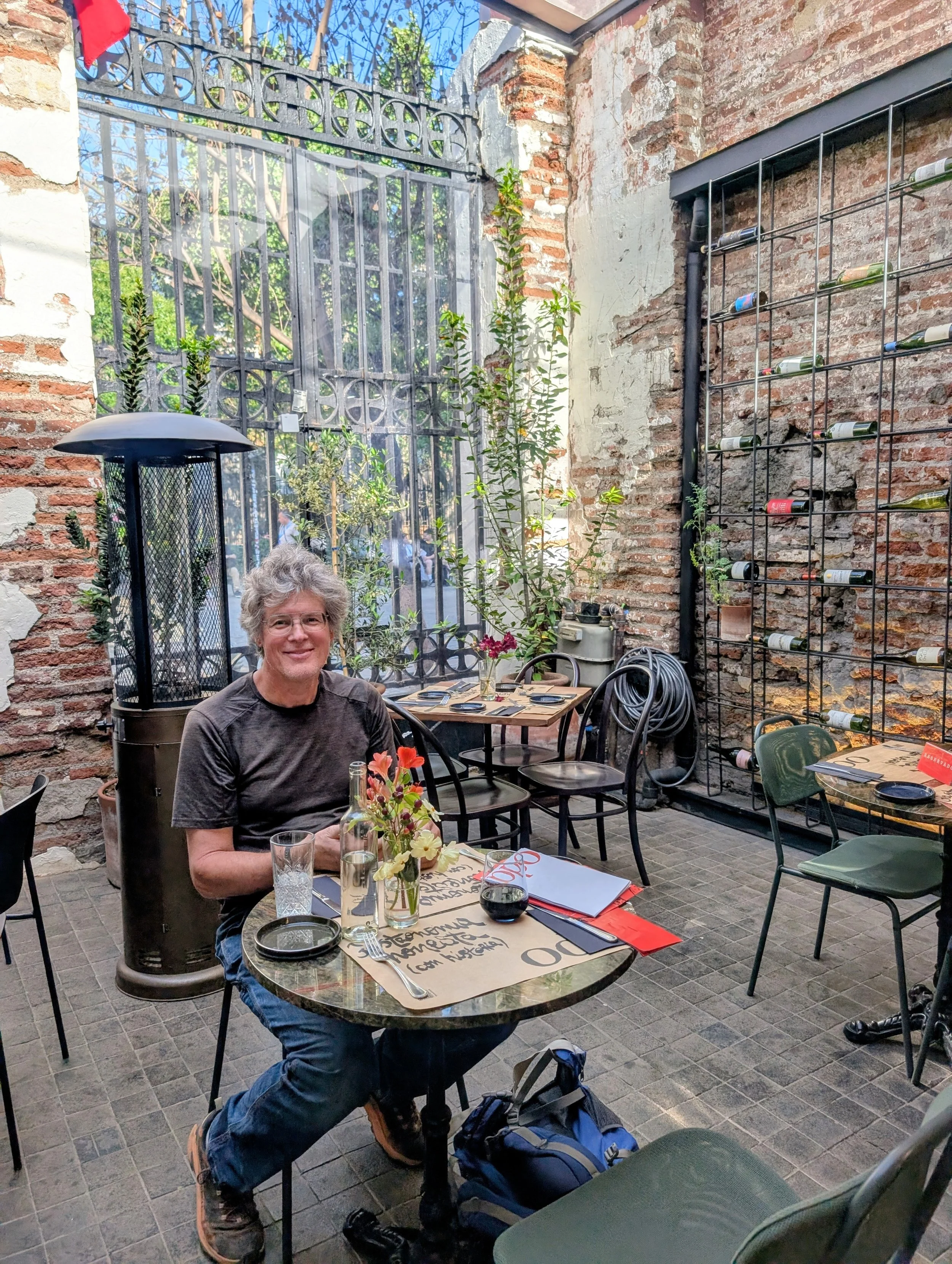
Enjoying a meal out in a trendy neighborhood in Santiago
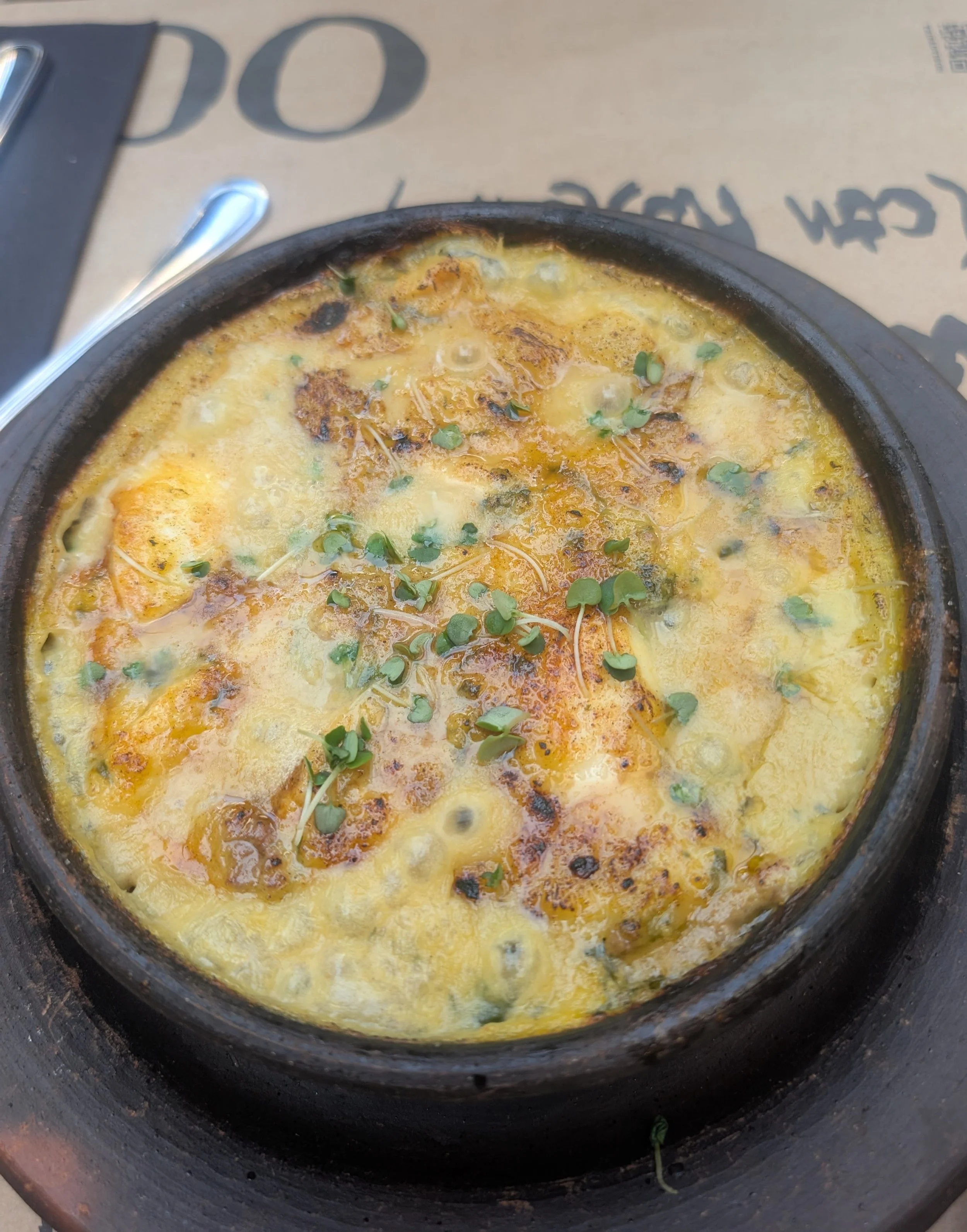
Pastel de choclo - traditional Chilean corn pie, delicious
We easily survived our three days without the truck in Santiago. We learned not to pull out our phones unless one of us was on guard, carried minimal money and did not walk after dark, all lessons learned in cities across the world. The city had a charming side along with its grit which made it interesting to explore.
But then it was time to get back to our real life. We gathered up our luggage full of spare parts and supplies from the US and made our way to the warehouse where our kind shipping partners (thank you Anouk and Hubert) had brought our truck after unloading it from the container. This was the second time we had successfully found shipping partners to fill a 40’ container (first time was from Kenya to Oman) using a combination of Whatsapp forums, Facebook and personal contacts.
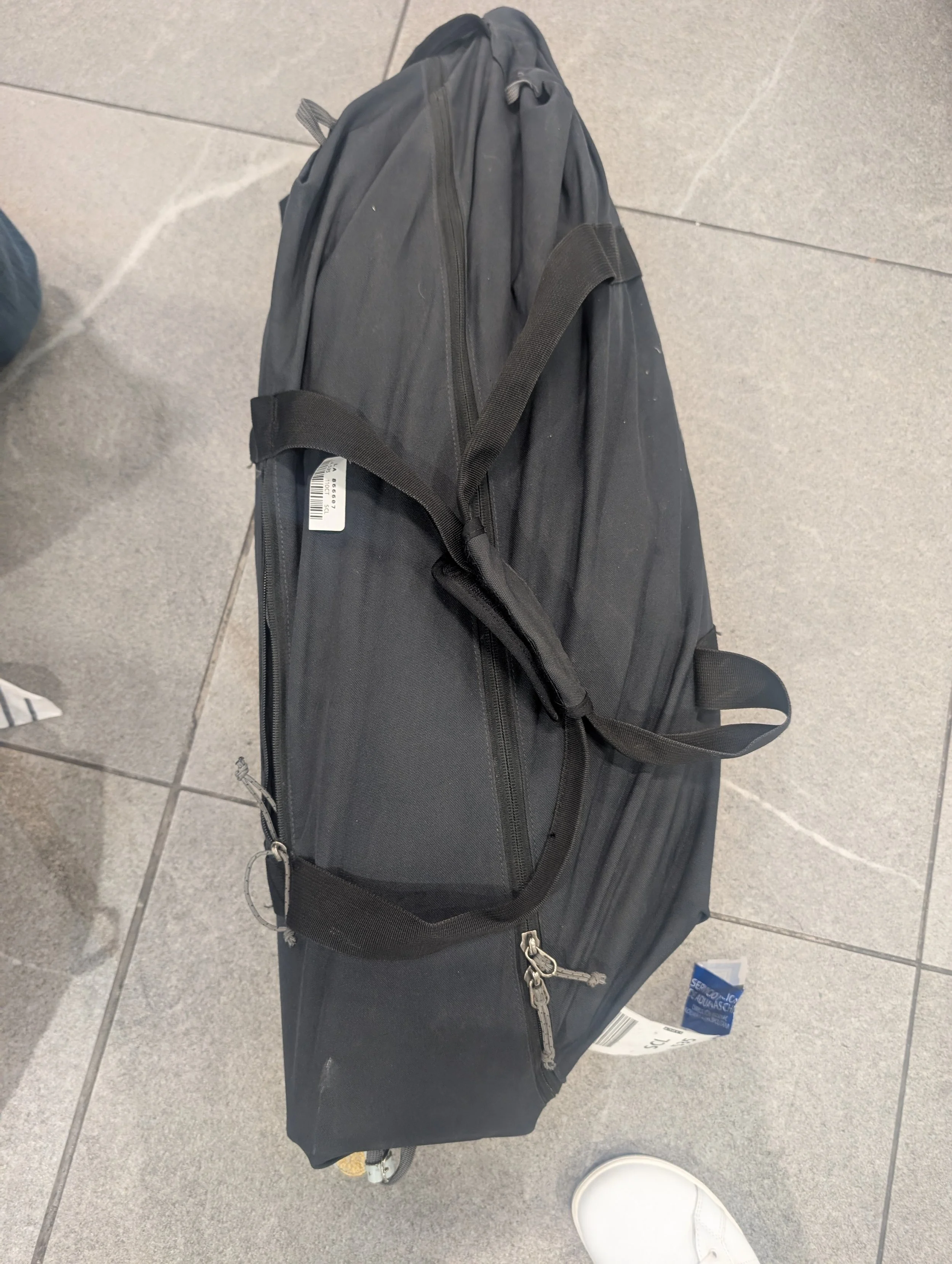
Andy’s check through duffle stretched to its limit with supplies for the truck
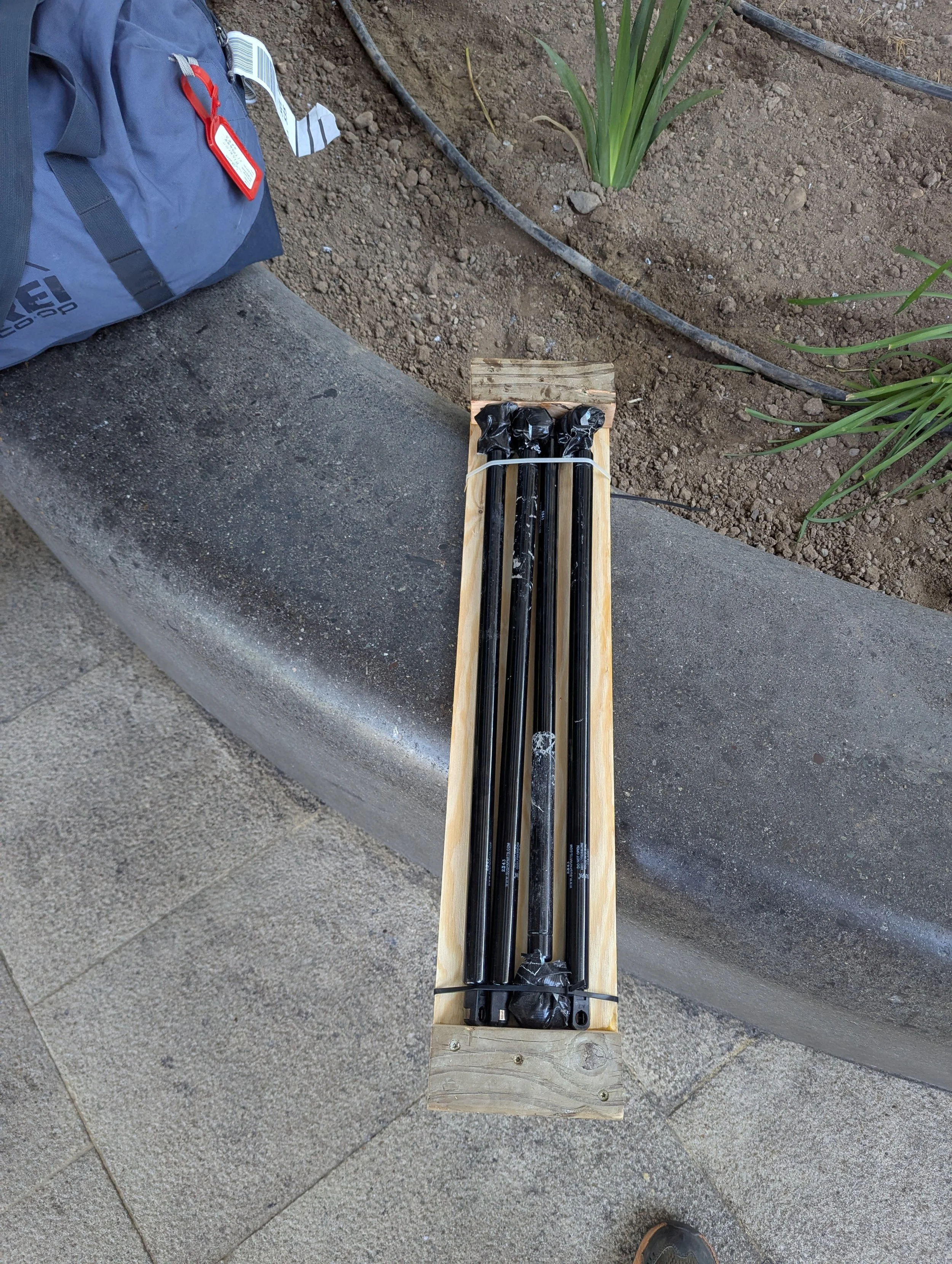
New camper struts in a special box he built for transport - to keep them compressed
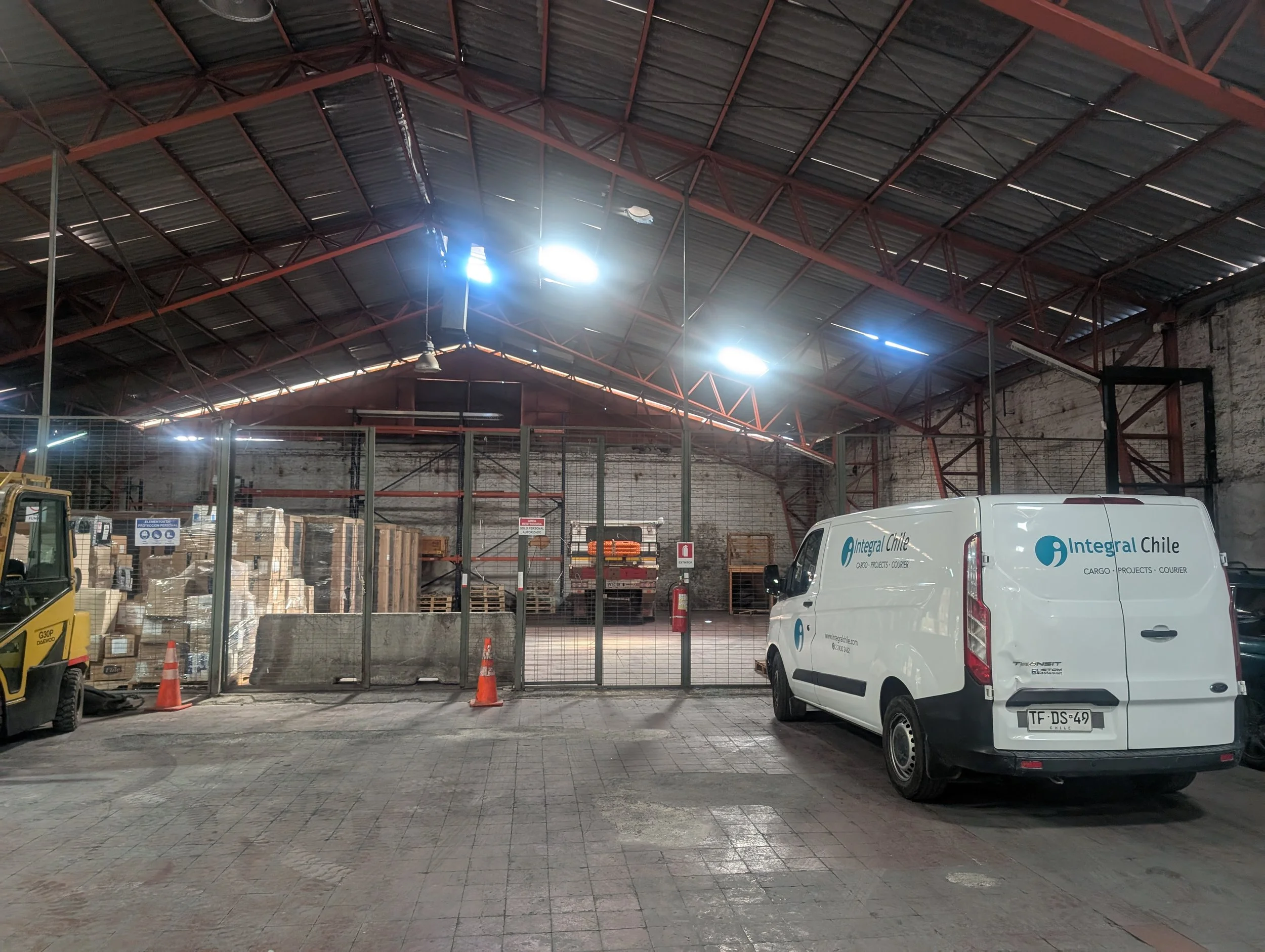
Warehouse where our truck had been stored for us since shipping. Luckily it was in great shape - no damage or mold growth from its journey from Malaysia.
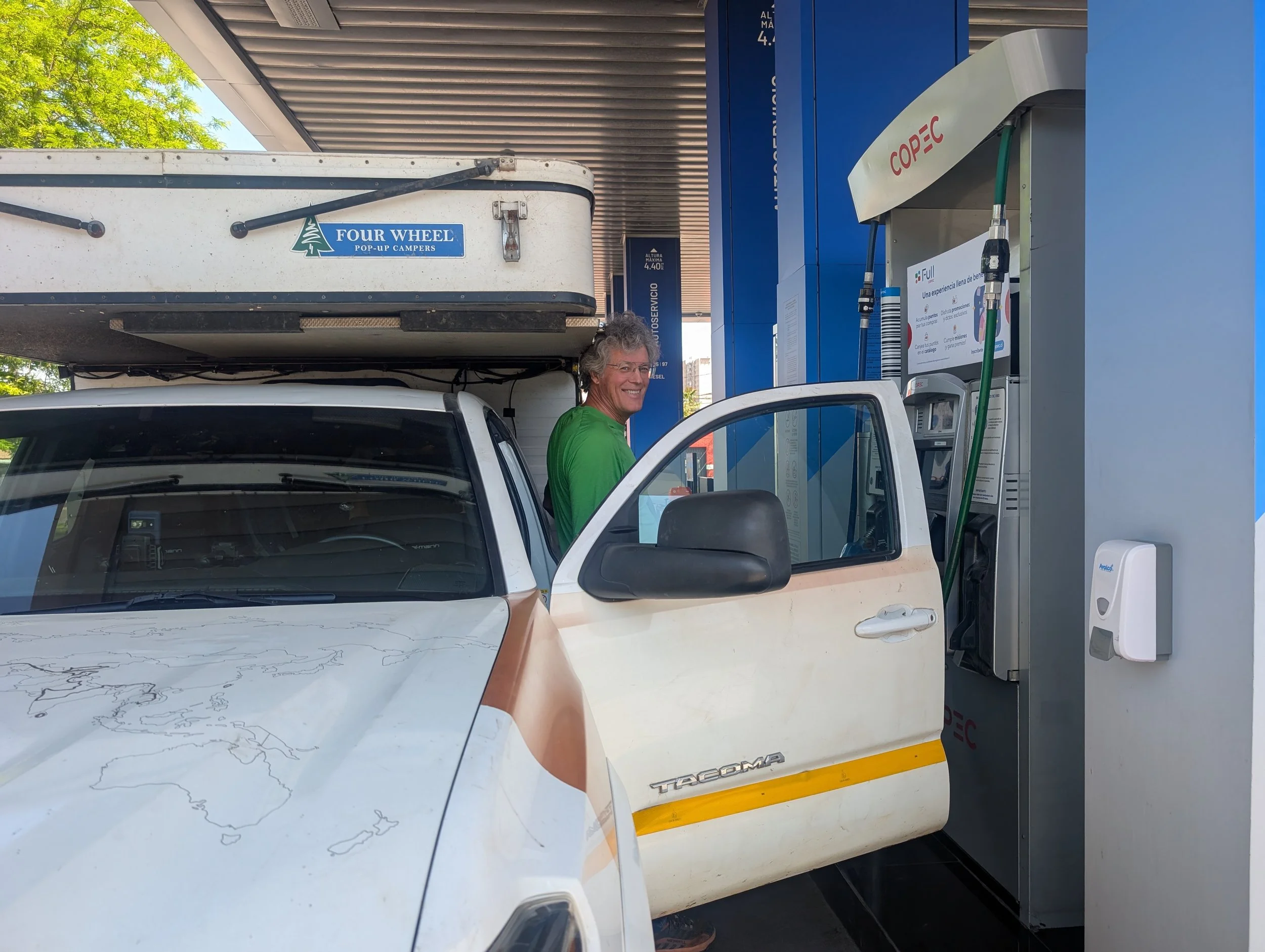
It’s resupply time - first gas
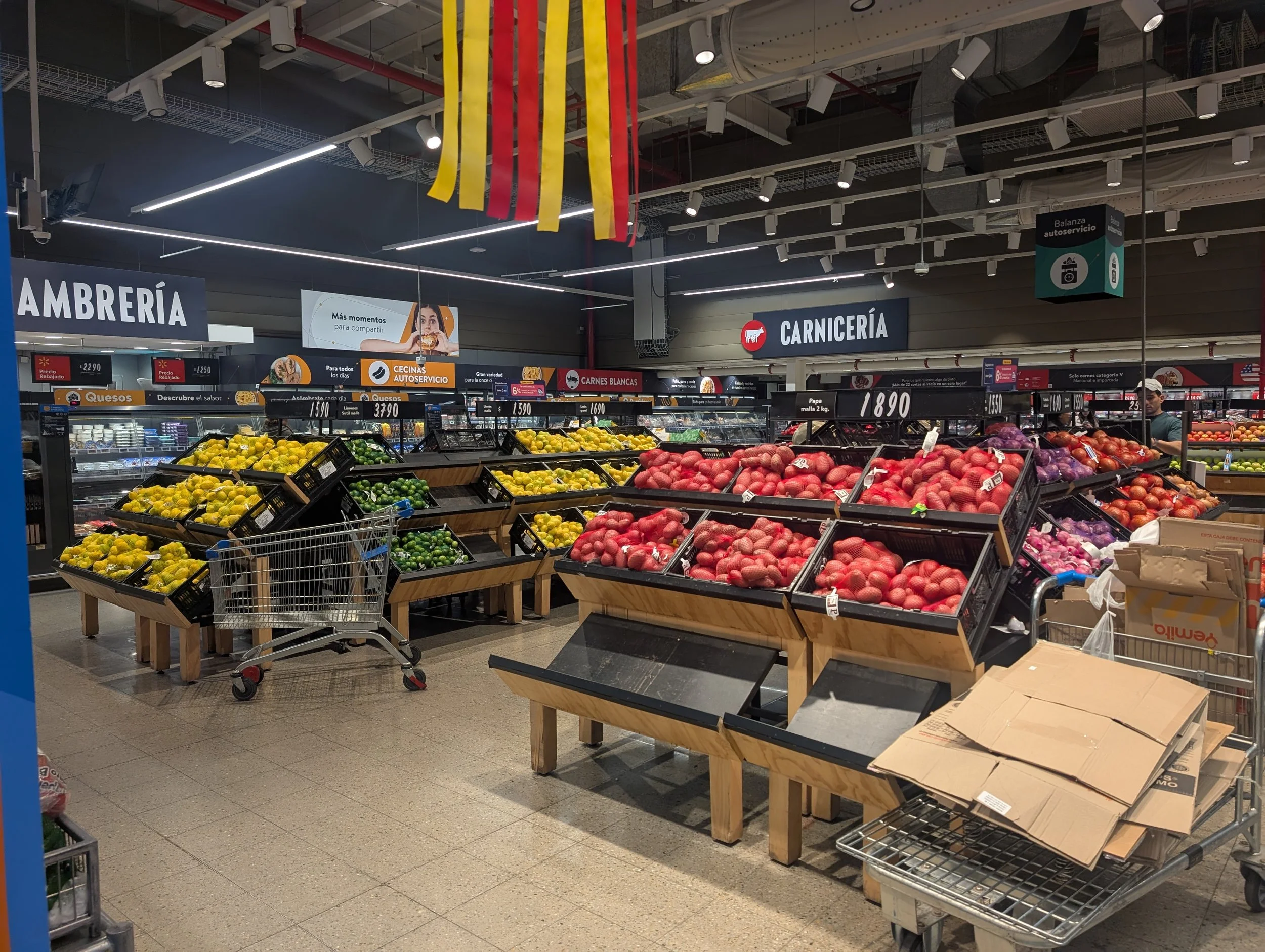
Then food - the supermarkets in Chile were amazing
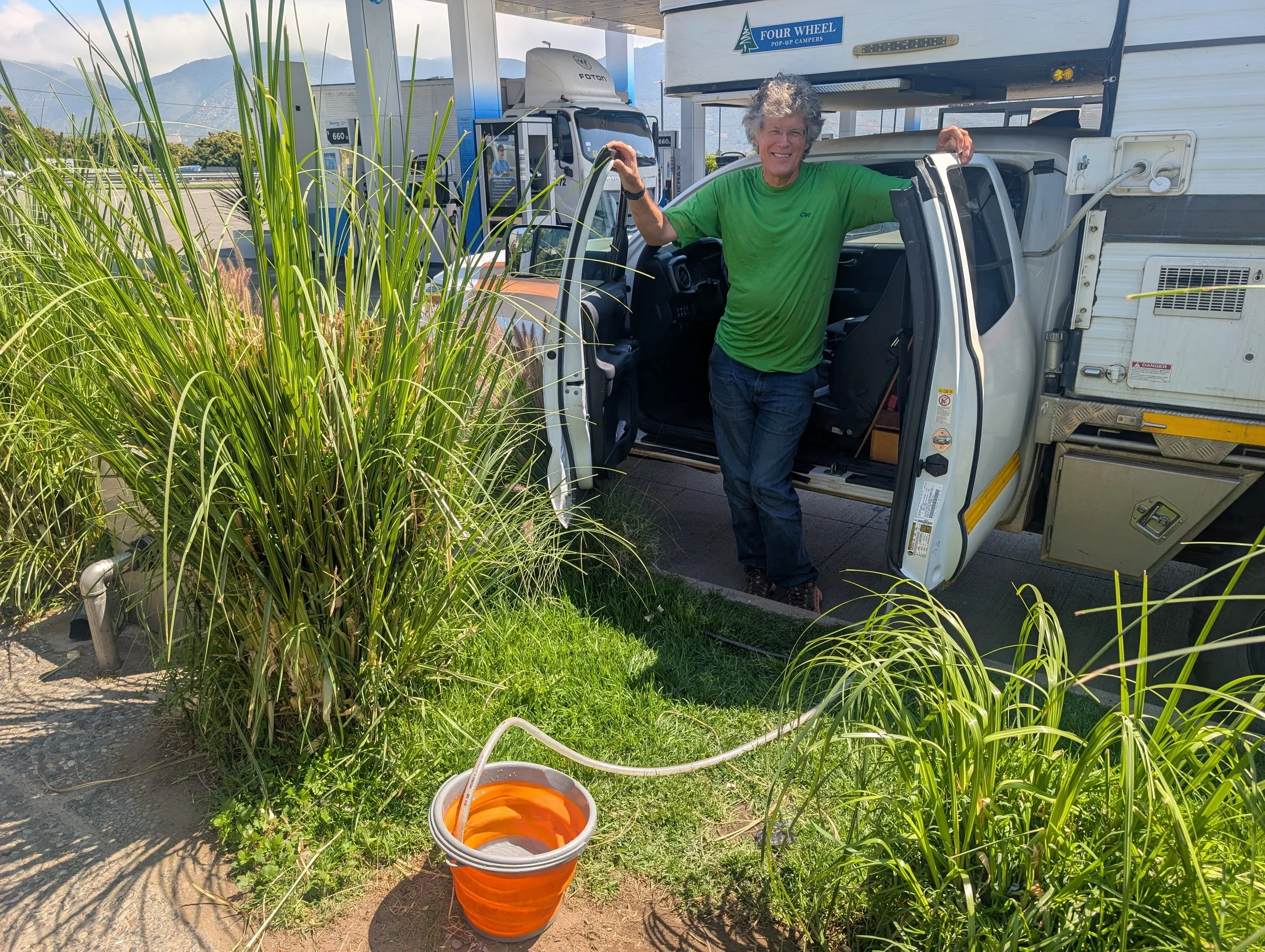
And finally - water, filling our potable water tank by pumping it through our filtration system
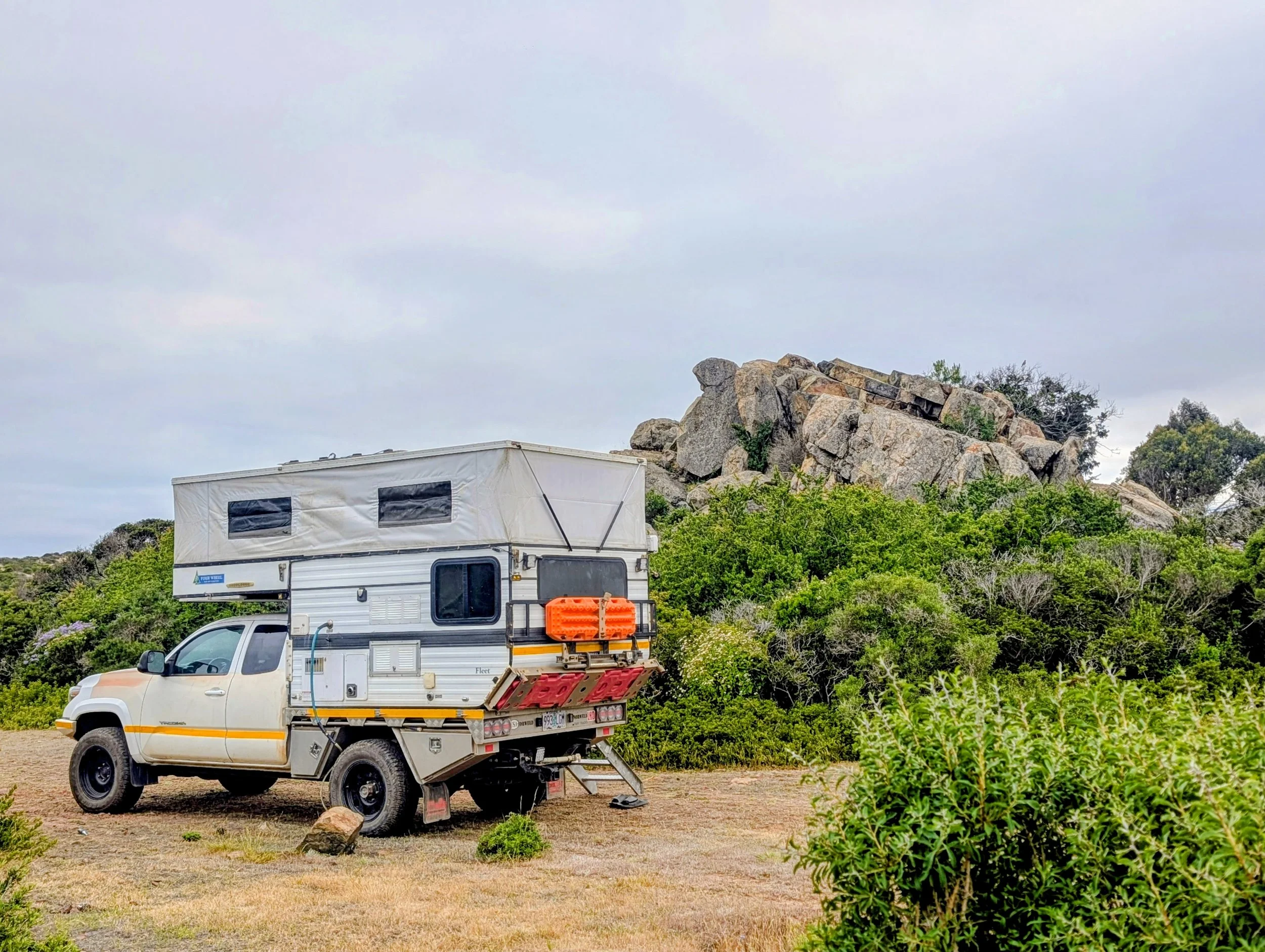
First wild camp! Coastal site north of Santiago
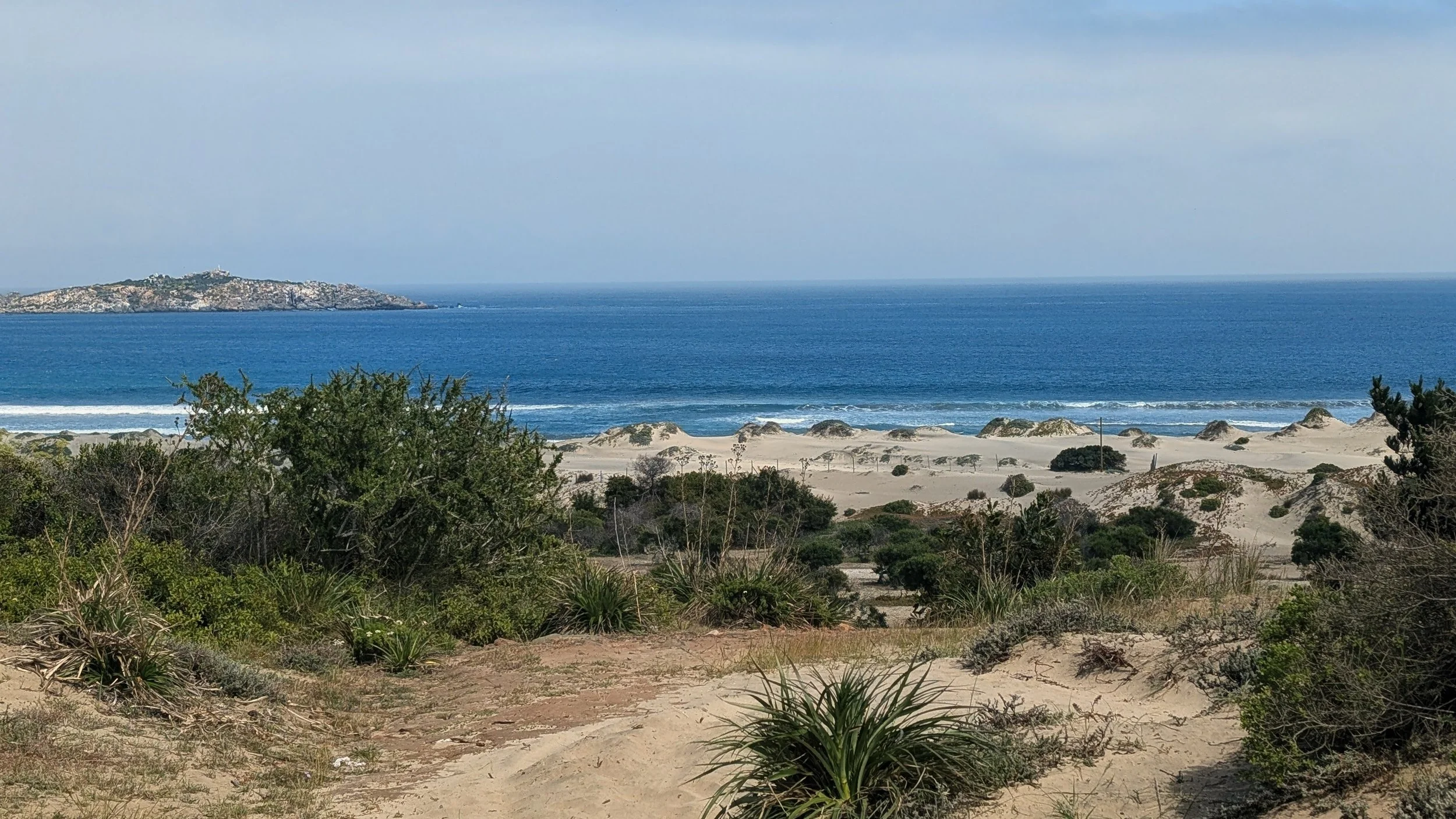
View from camp
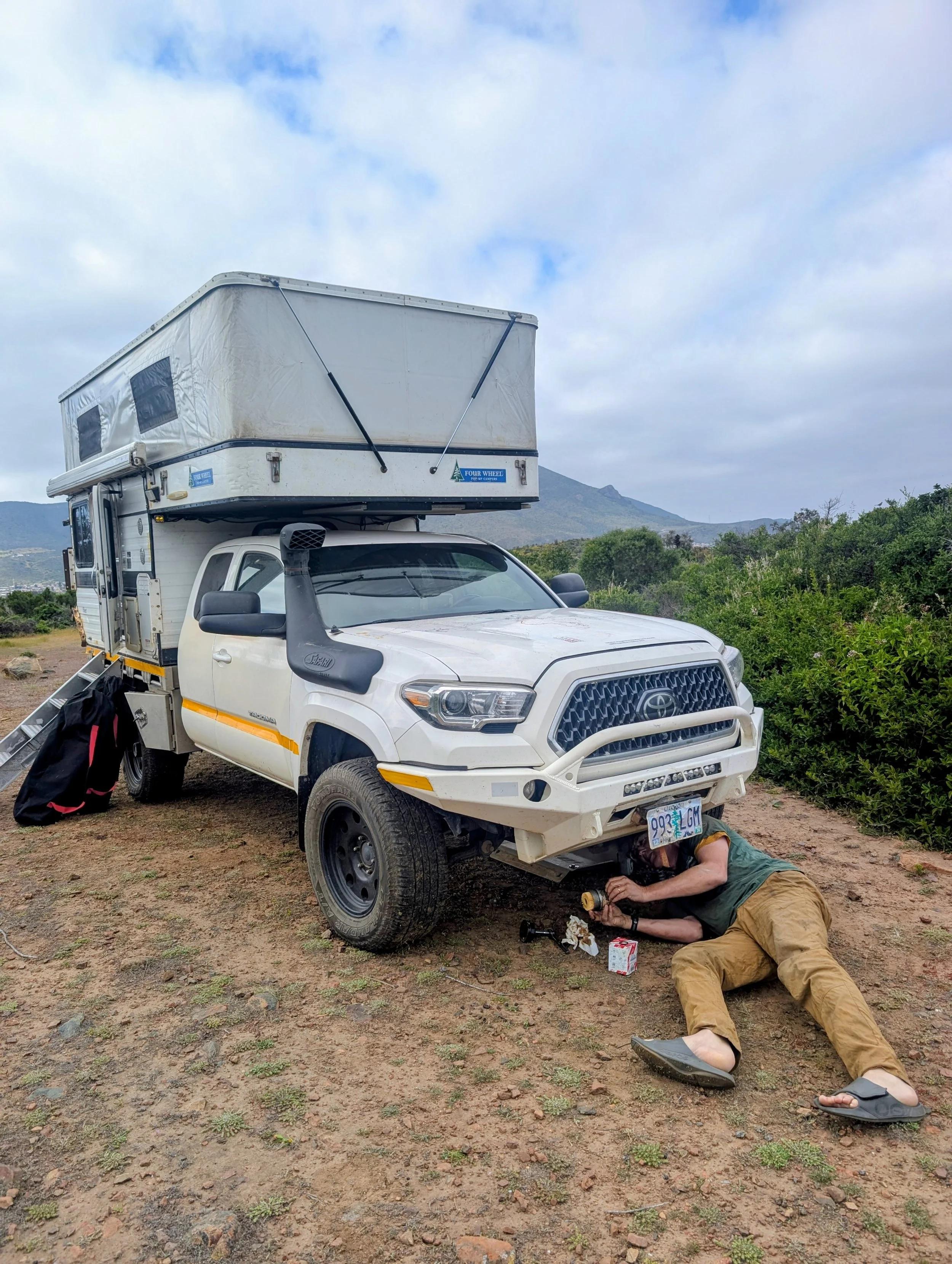
Andy’s first day - changing the oil and swapping out the struts. A kind Instagram contact (thank you @blueberrytaco) let us know one of the struts was installed upside down, Andy had thought it didn’t matter which way they go - he quickly fixed it.
The northern coast of Chile was beautiful, rocky cliffs, open space and clear water.
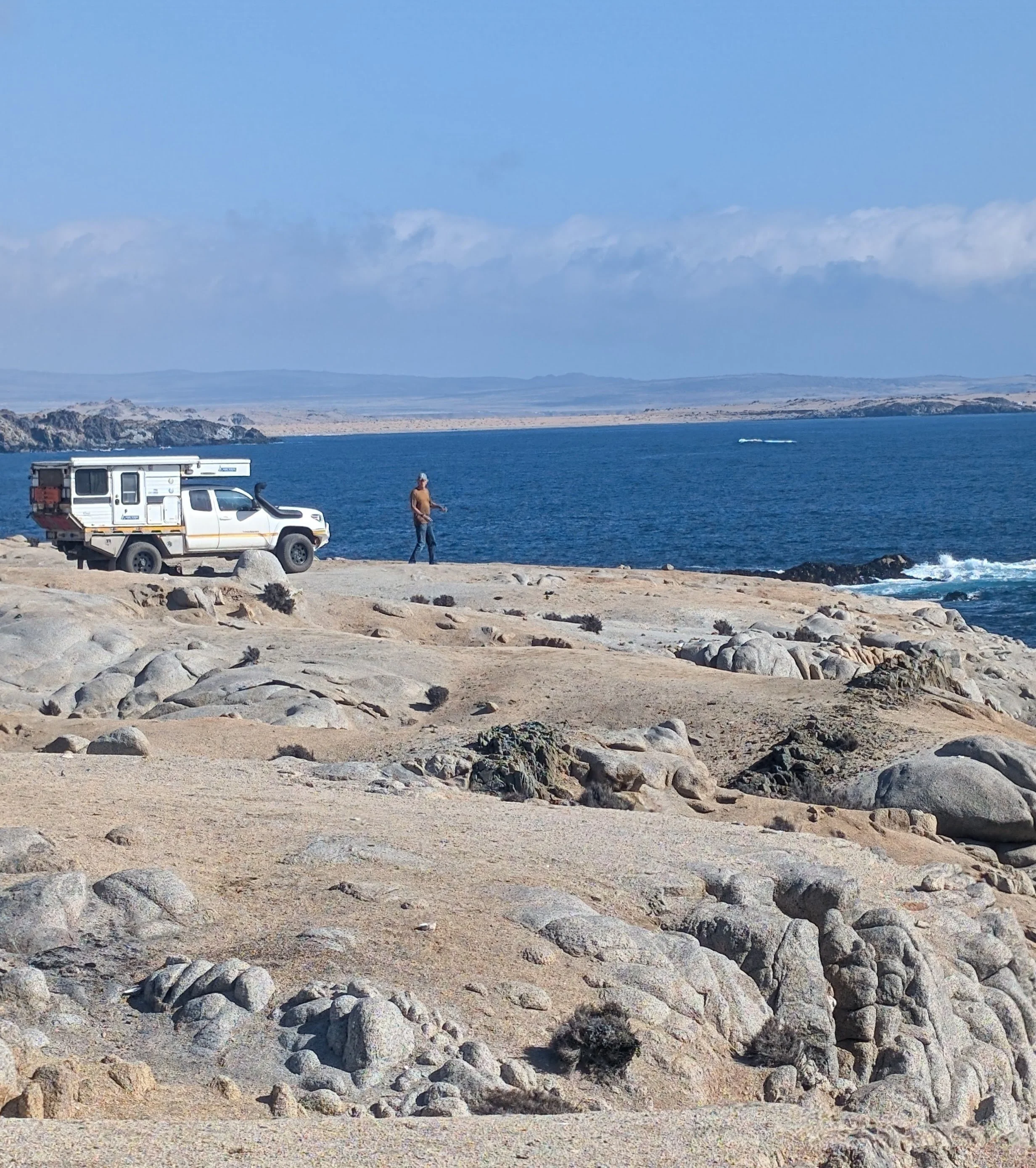
Bluff top camping spot
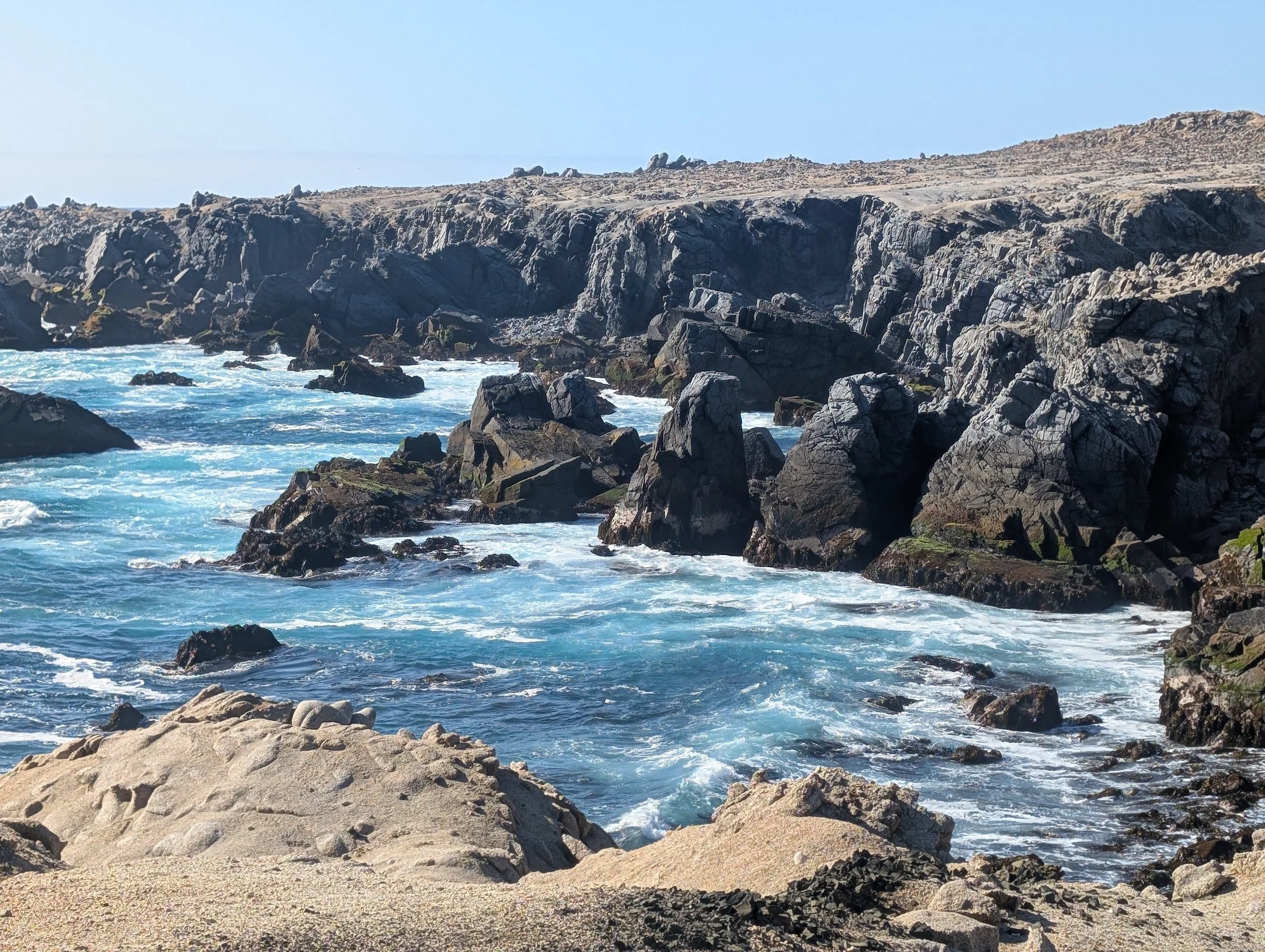
View from camp
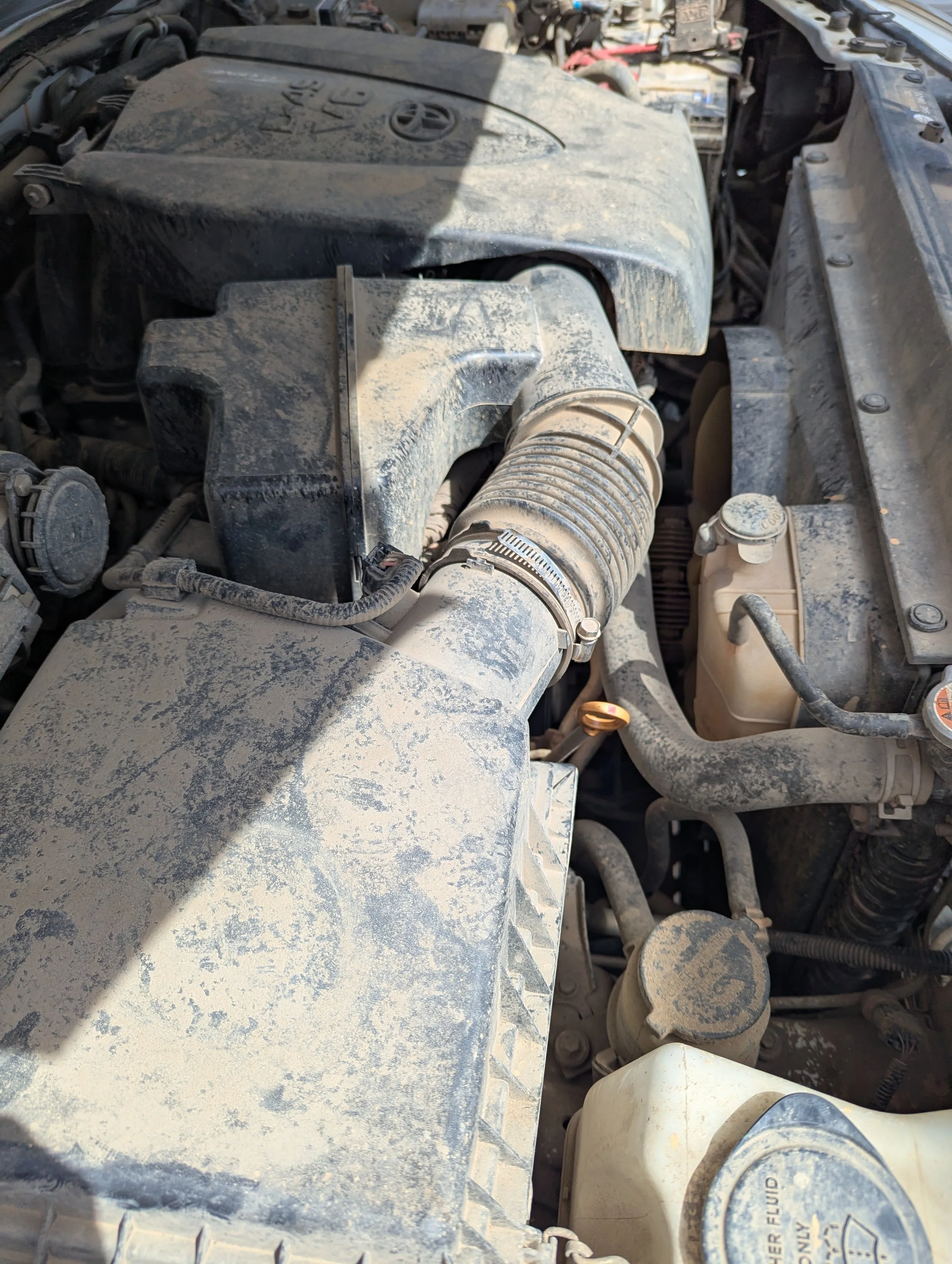
But then the blissful honeymoon came to an abrupt stop as an emergency light glowed orange on the dashboard. We pulled into a Toyota dealership in La Serena for a diagnosis. The first thought was that rats had chewed some critical wires (shown here rat footprints on the engine, we think from the warehouse in Santiago).
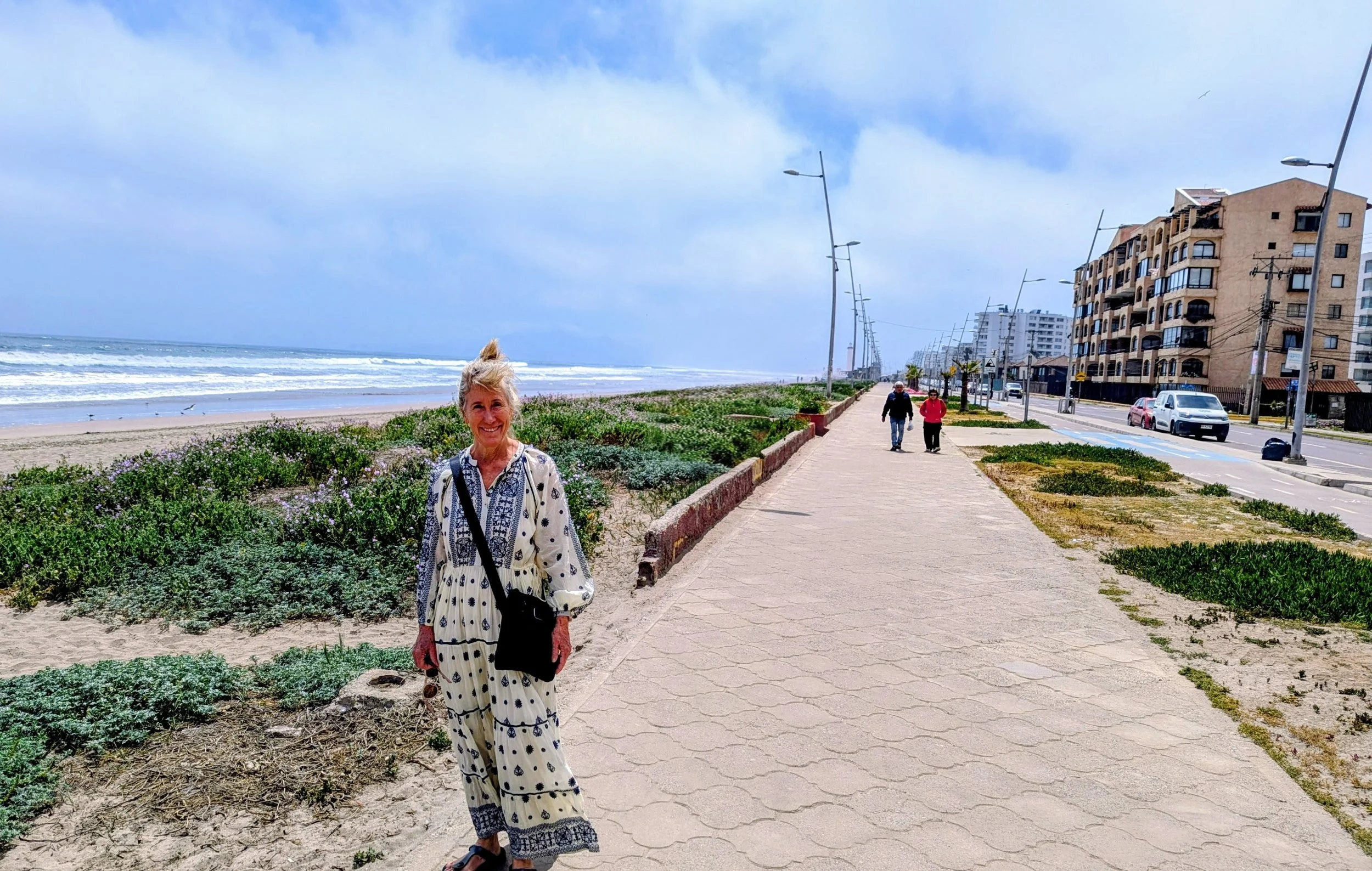
Making the best of a forced layover, wandering the ocean front in Santiago waiting to hear from the Toyota mechanics.
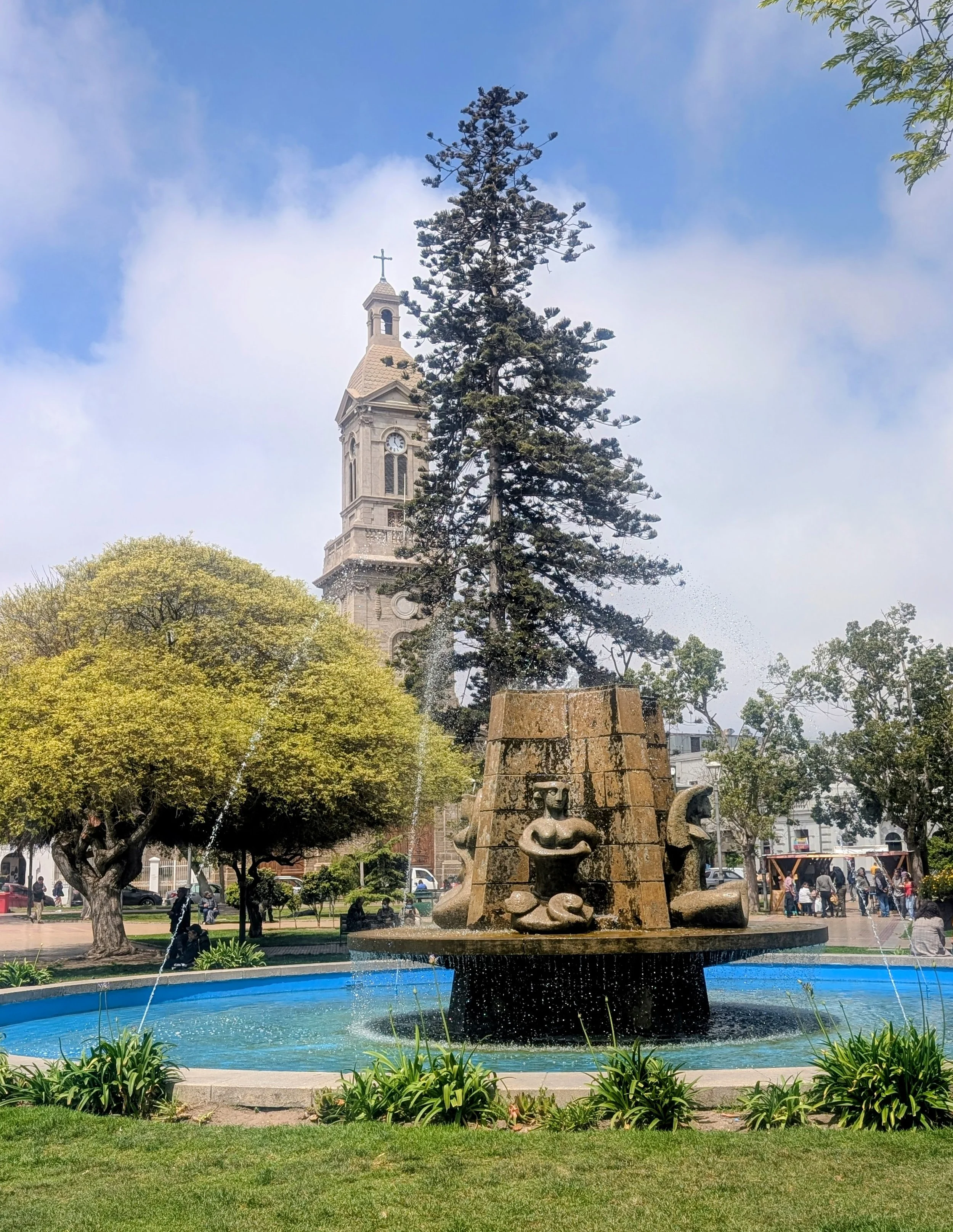
We were learning to appreciate the shaded beautiful squares featured in every city and village.
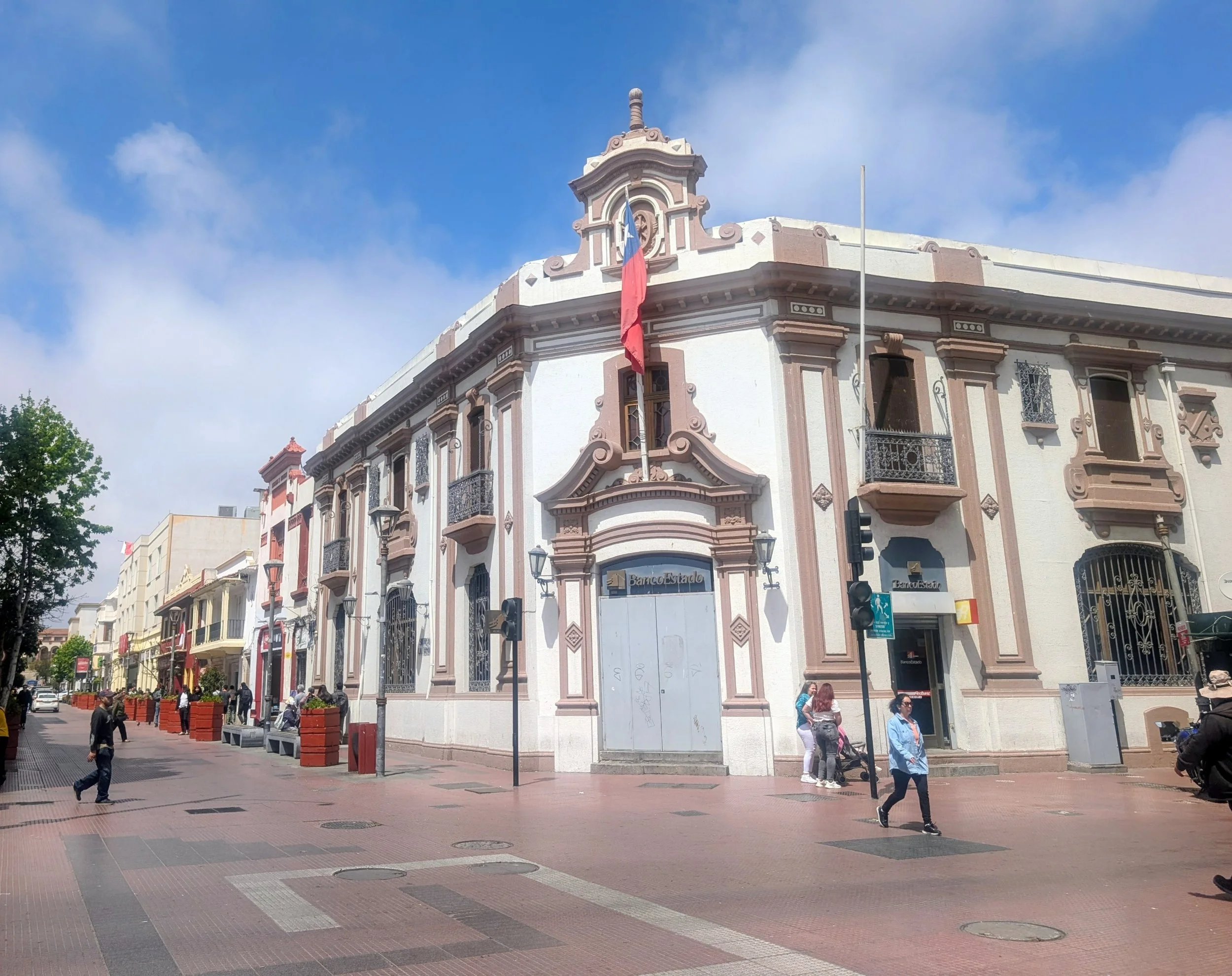
Downtown pedestrian streets in La Serena
Unfortunately the news was not good. The mechanics determined that we needed a new fuel pump and there were none available for our Tacoma in Chile. They said that we “would probably be fine” driving for a while. Since we were heading into the giant Atacama desert, we were a little nervous but decided the show must go on, so continued on our way. Andy found the parts we needed (we also needed some brake work) and had them shipped to our son Trevor so that he could ship them to a mechanic in Santiago for us. We made a plan to circle back to Santiago in a month and meanwhile, hope for the best.
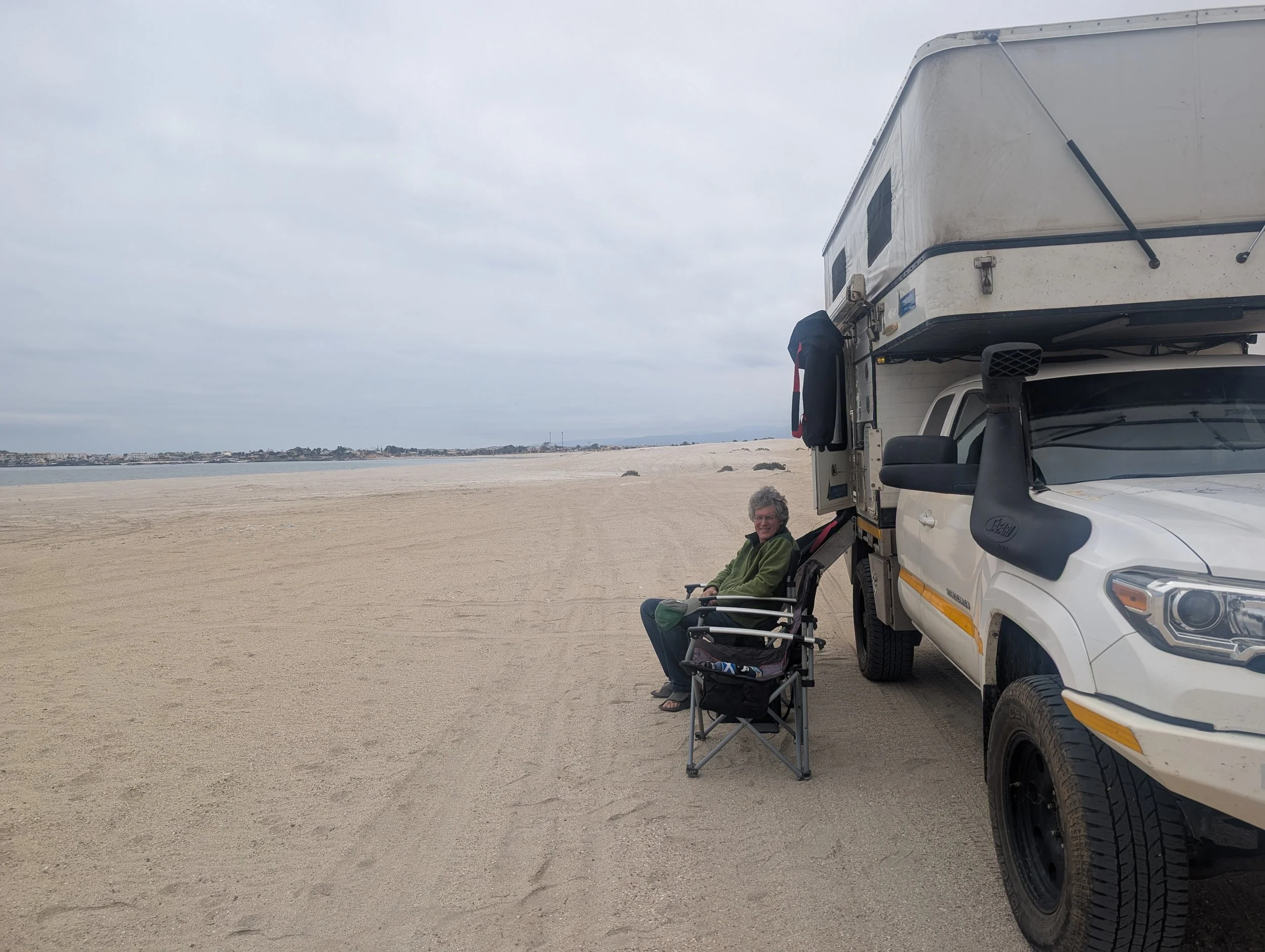
Back on the road, beach camp
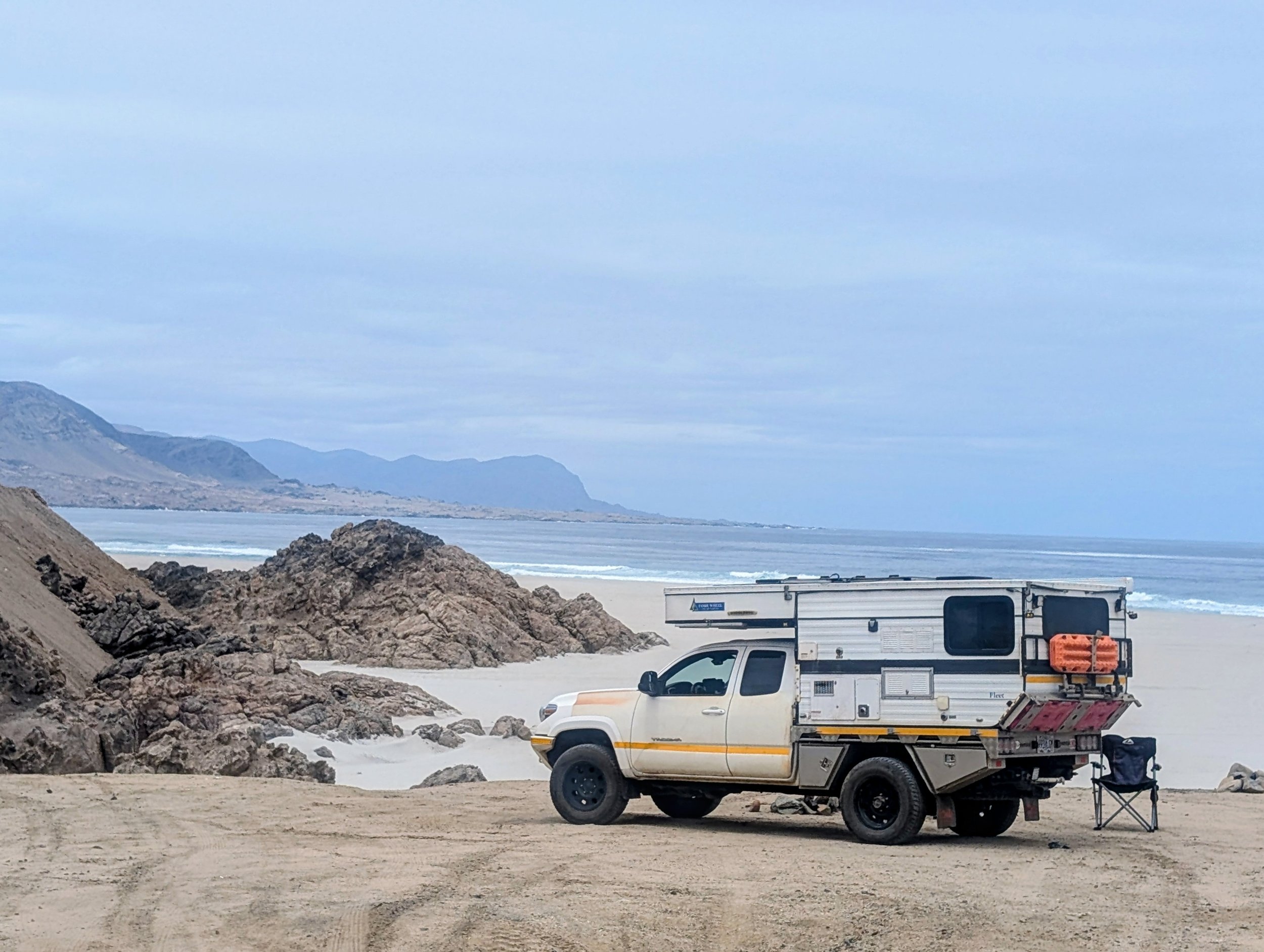
And another bluff top camp
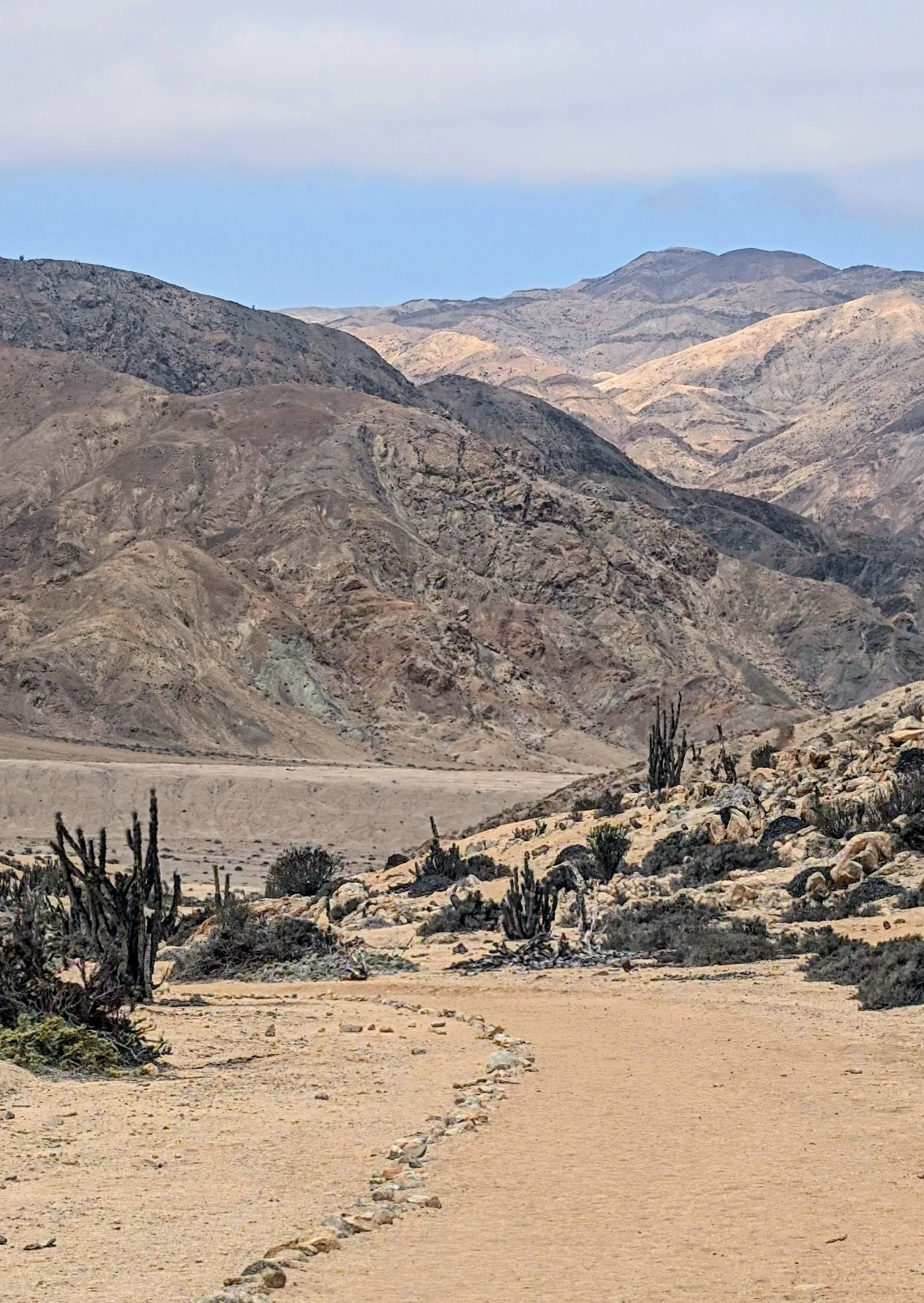
Hike in Pan de Azucar National Park - the environment is getting more desert like as we near the Atacama region
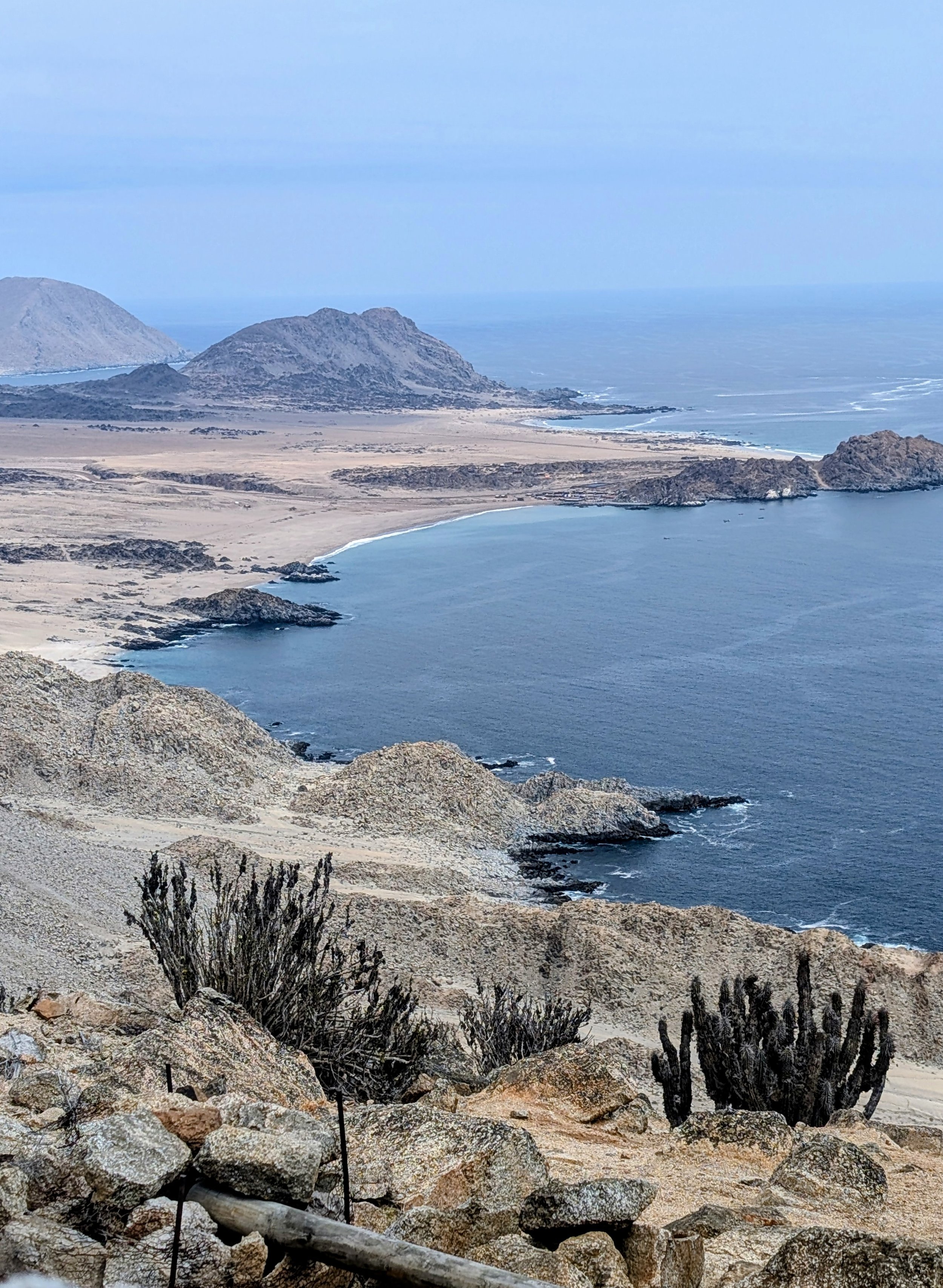
Clifftop view from Pan de Azucar National Park
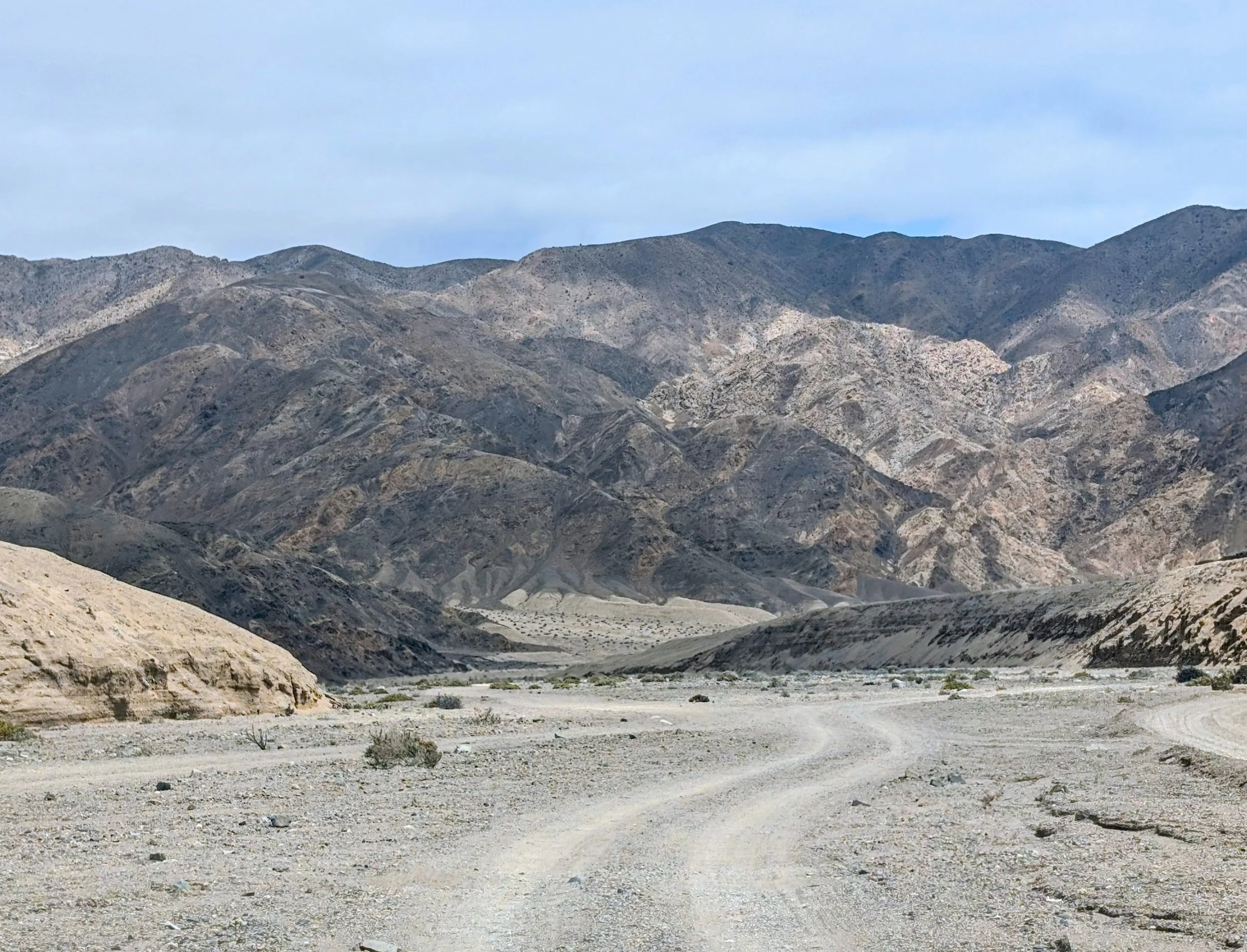
Enjoying the desert hills
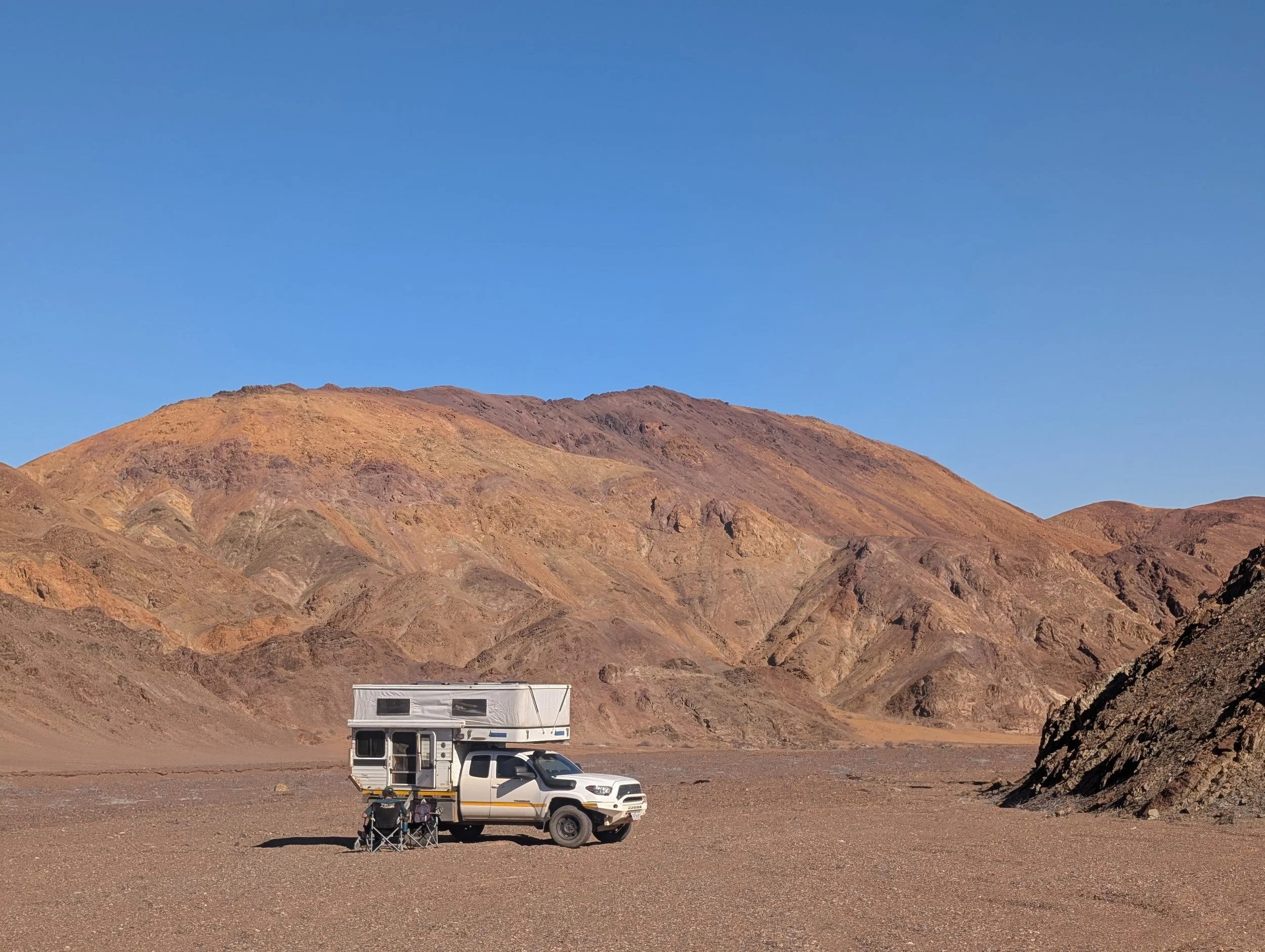
Found a great canyon to camp in by ourselves

The colorful cliffs in the light as we drove out the next day
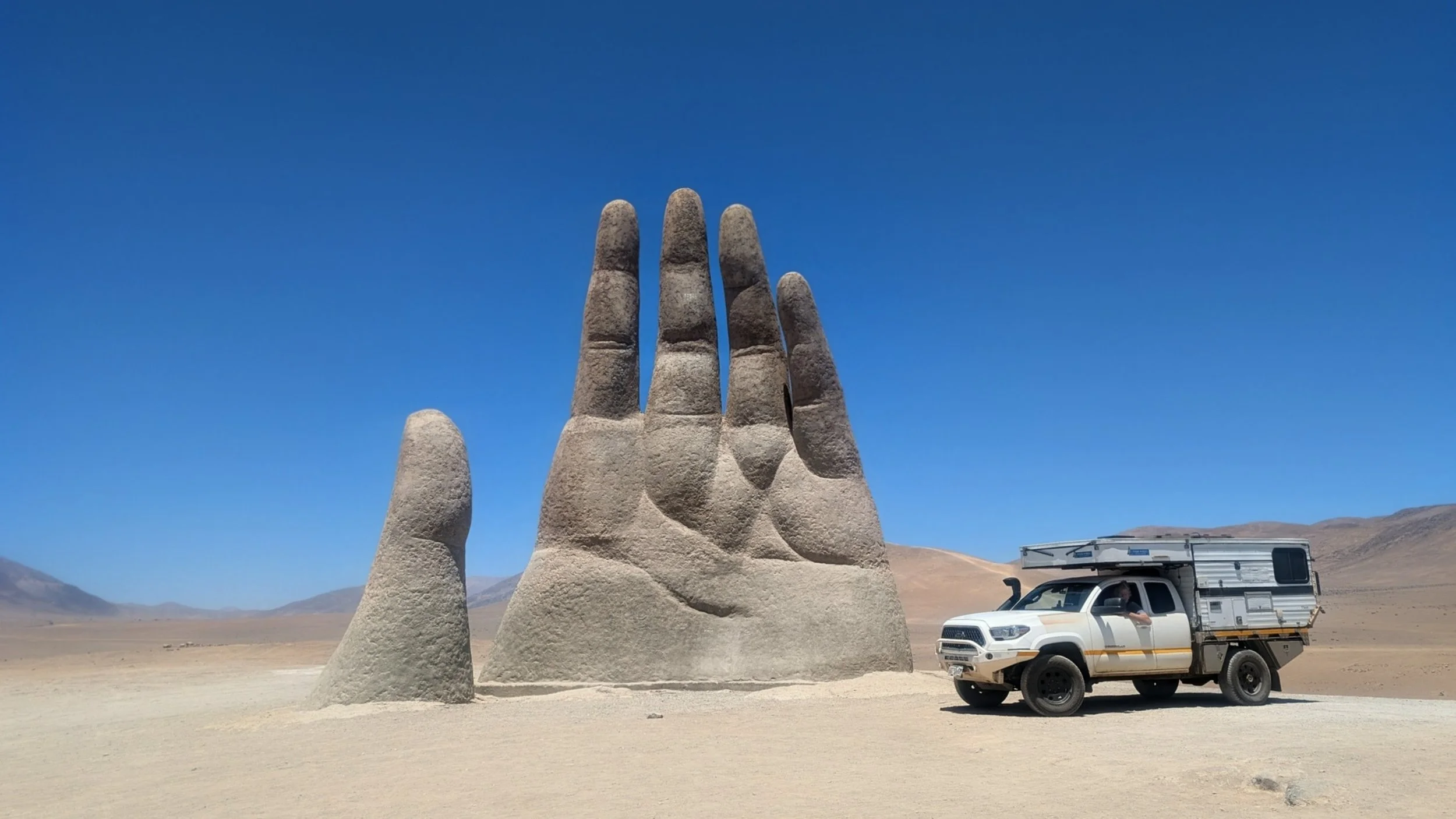
Posing the truck by the Mano a Desierto, sculpture by Chilean artist Mario Irarrázabal

Walking the coast in Antofogasta - our re-supply stop before we head into the inland Atacama desert
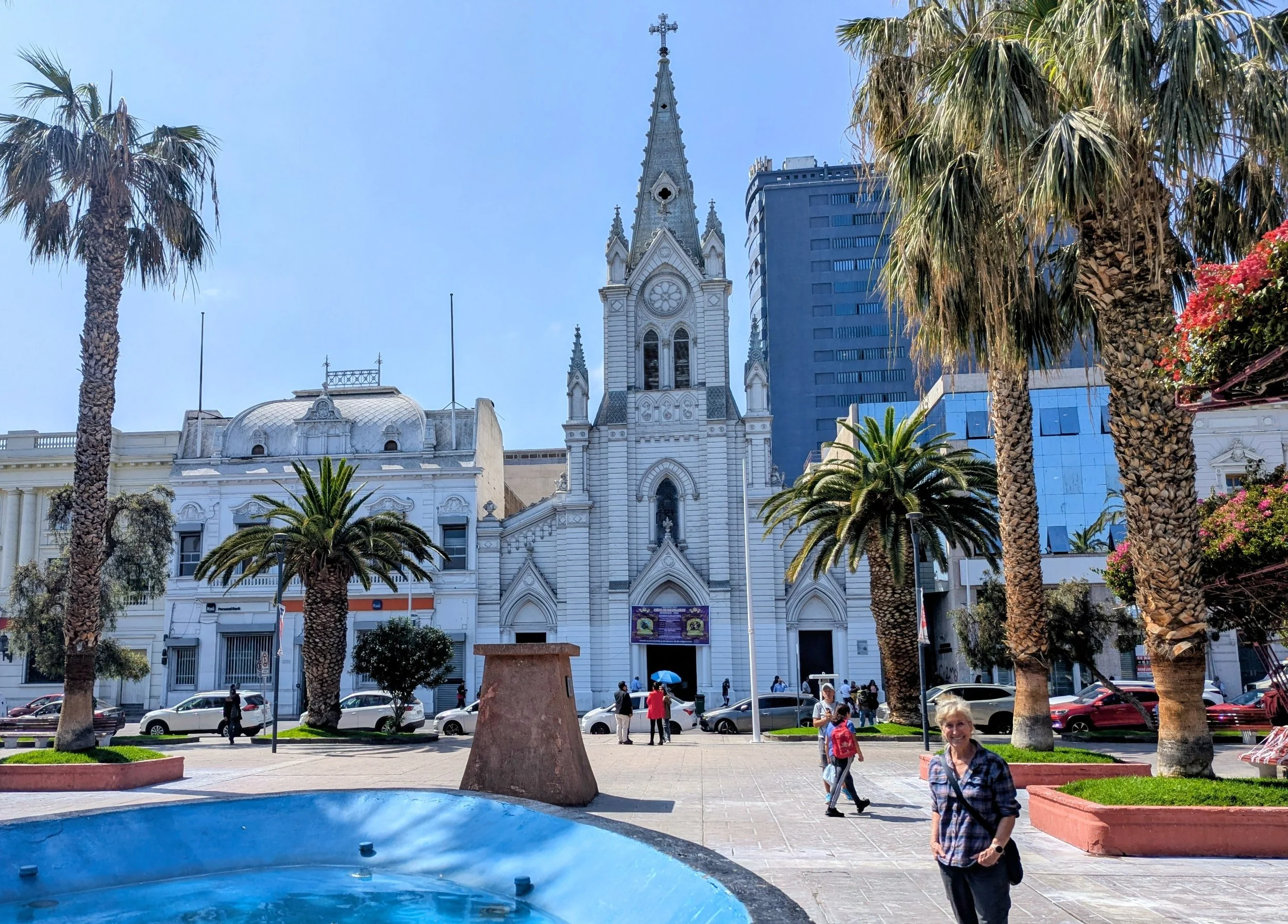
Central square of Antofogasta
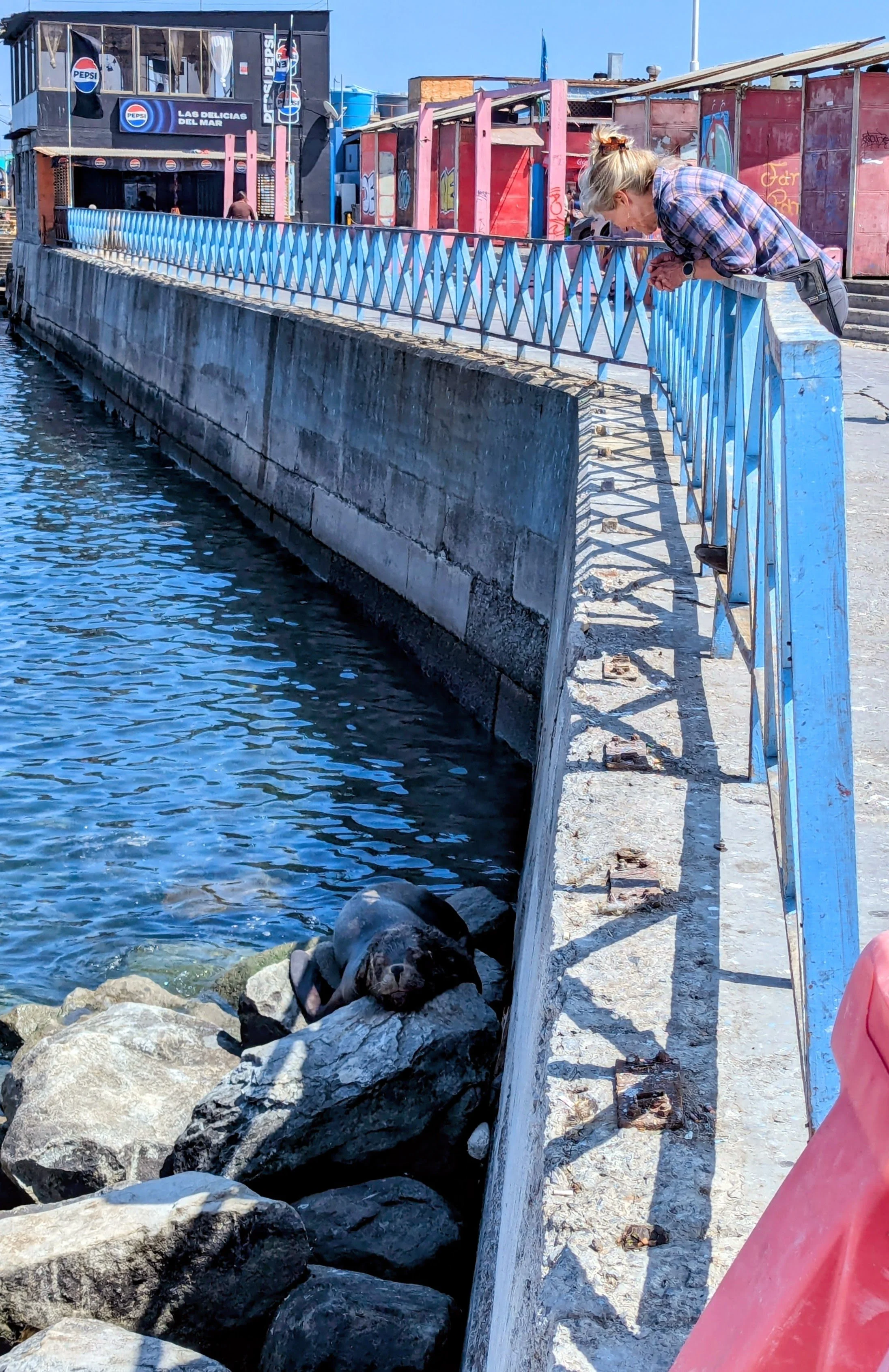
Watching the sea lions in port
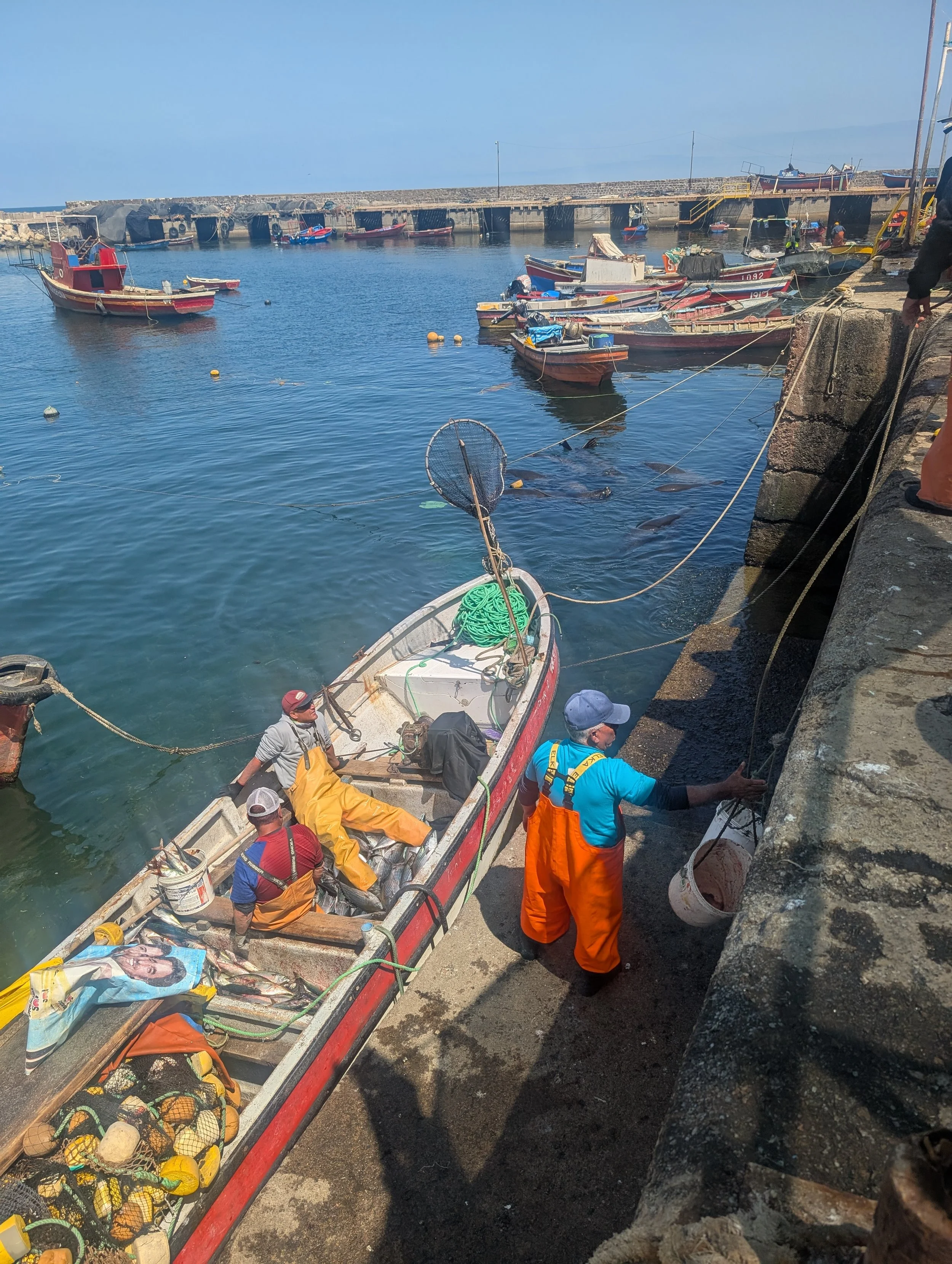
And watching the tuna fisherman offloading their catch (and giving scraps to the begging sea lions)
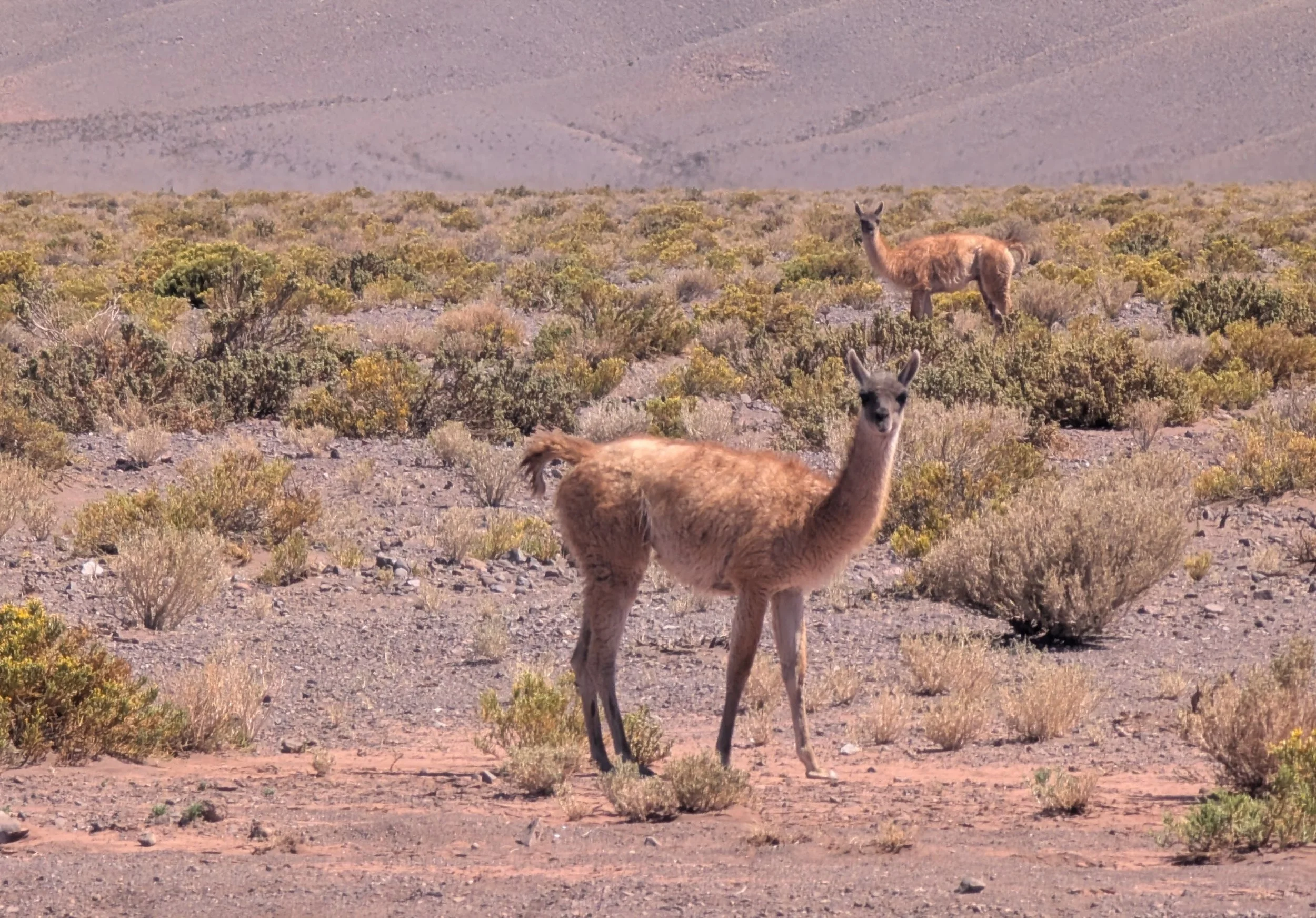
Our first guanacos! At least we think so, we are still working on identifying guanacos vs vicunas. But guanacos are supposed to be the ones with black faces.
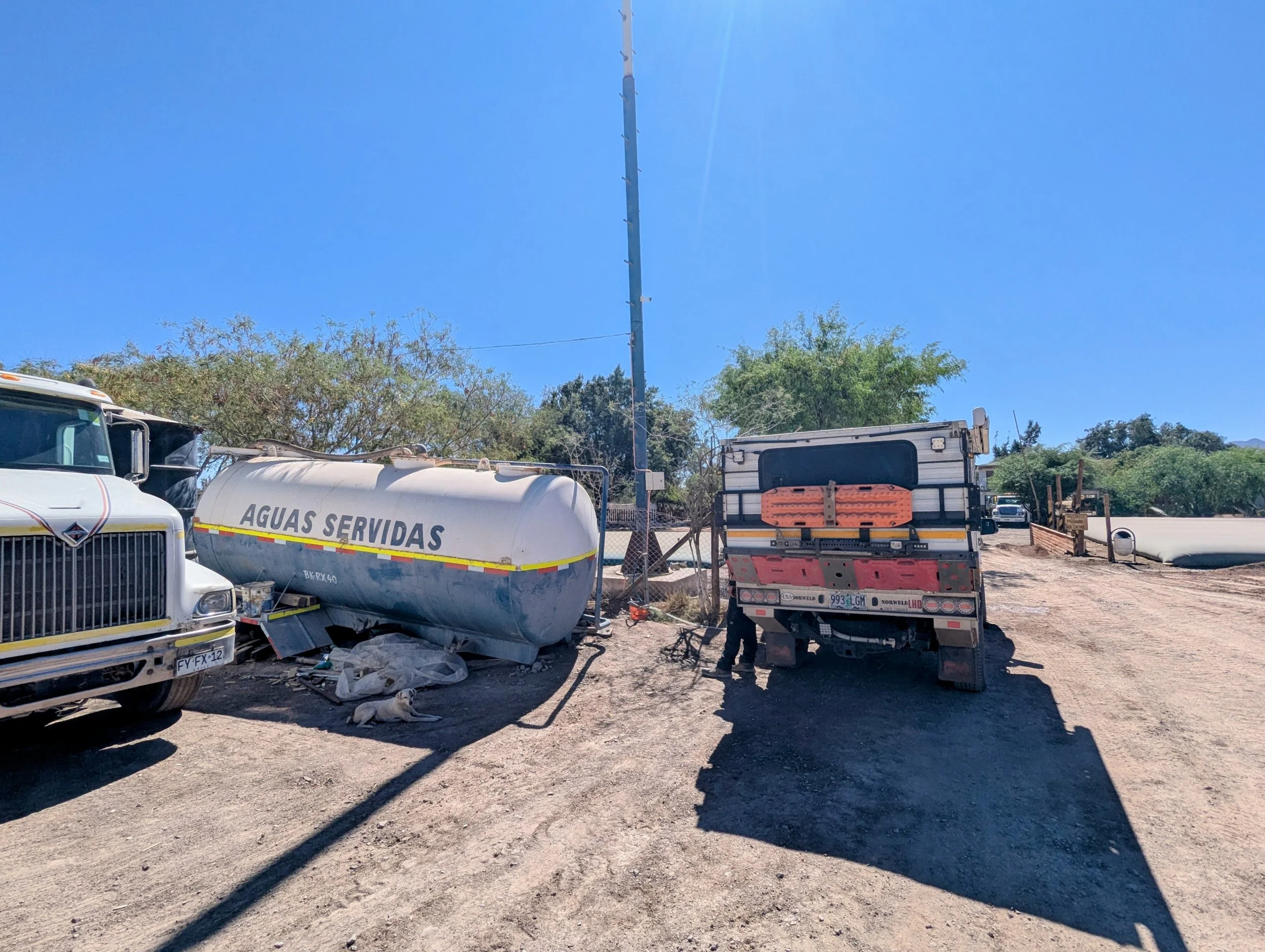
Filling up the water tank in a village on the way. The Atacama desert is one of only three places in the world we have paid for water (eastern Romania and Kazakhstan being the other two).
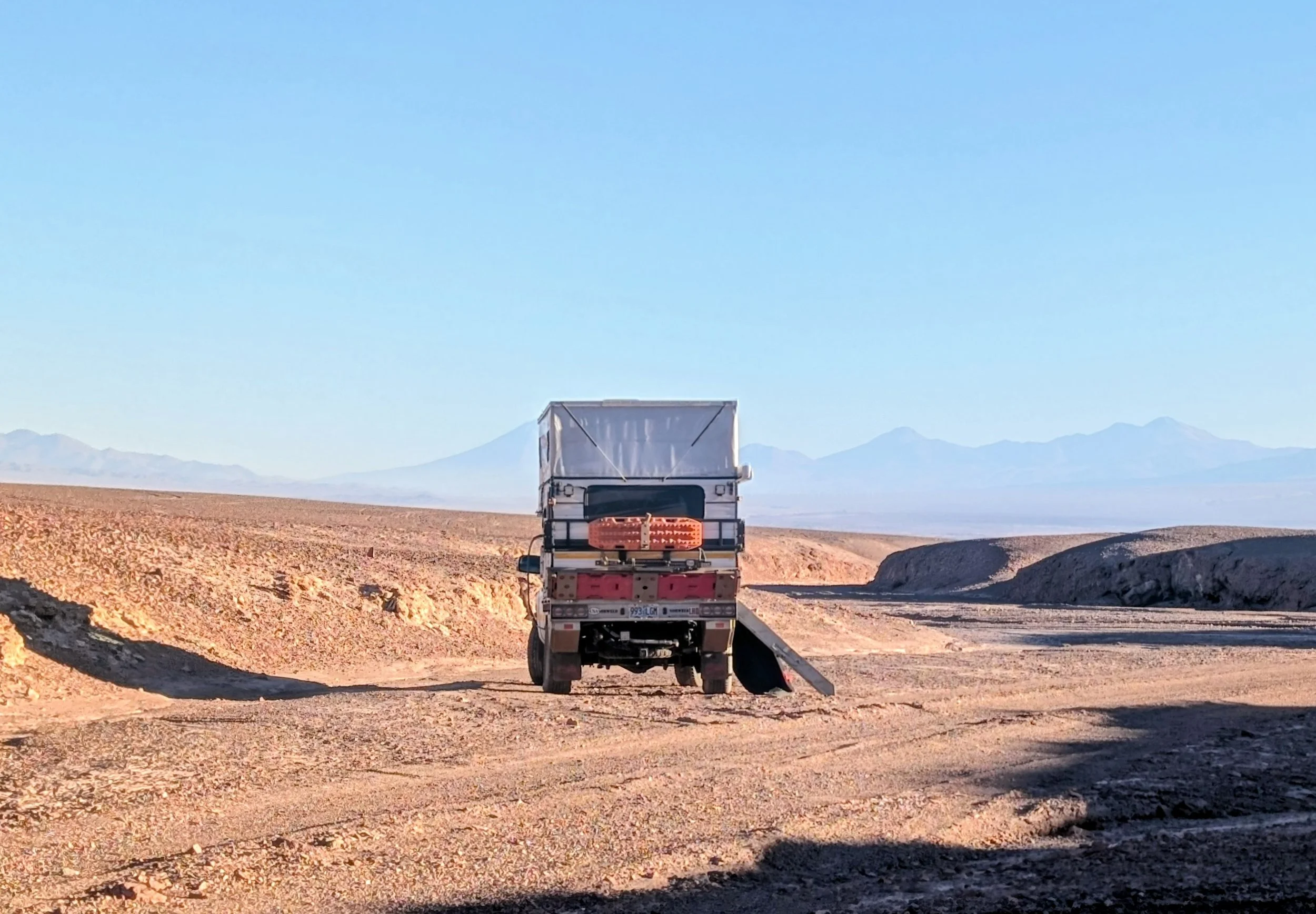
In northern Chile at the time of year we were there, we quickly landed on our favorite wild camping spot - dry river beds. They were not privately owned, no one cared if we were there, they were usually flat and you could drive as far as you needed to get away from roads and be private.
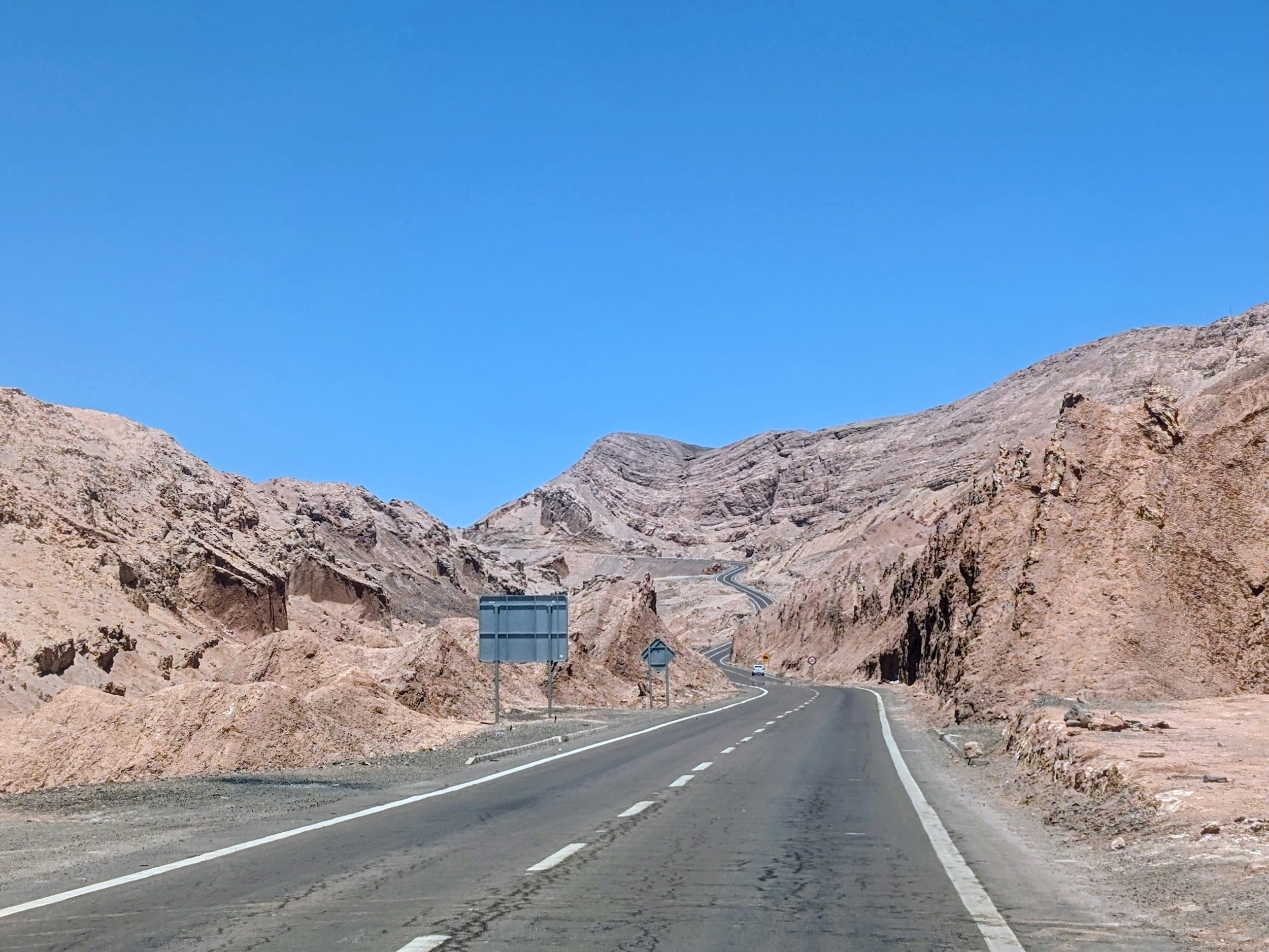
Desert freeway - in general the roads were in decent shape
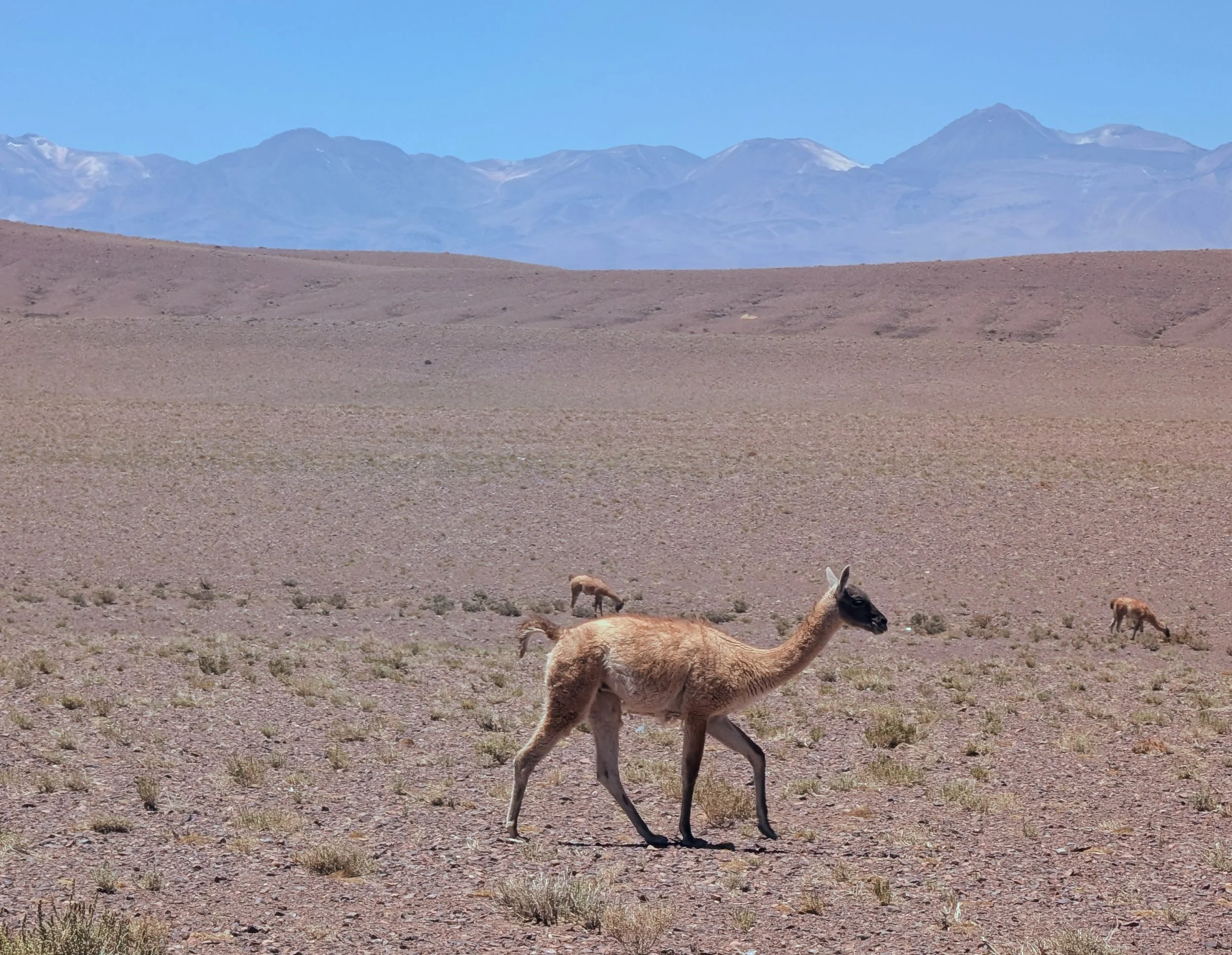
More guanaco, they seemed to live in the most barren places
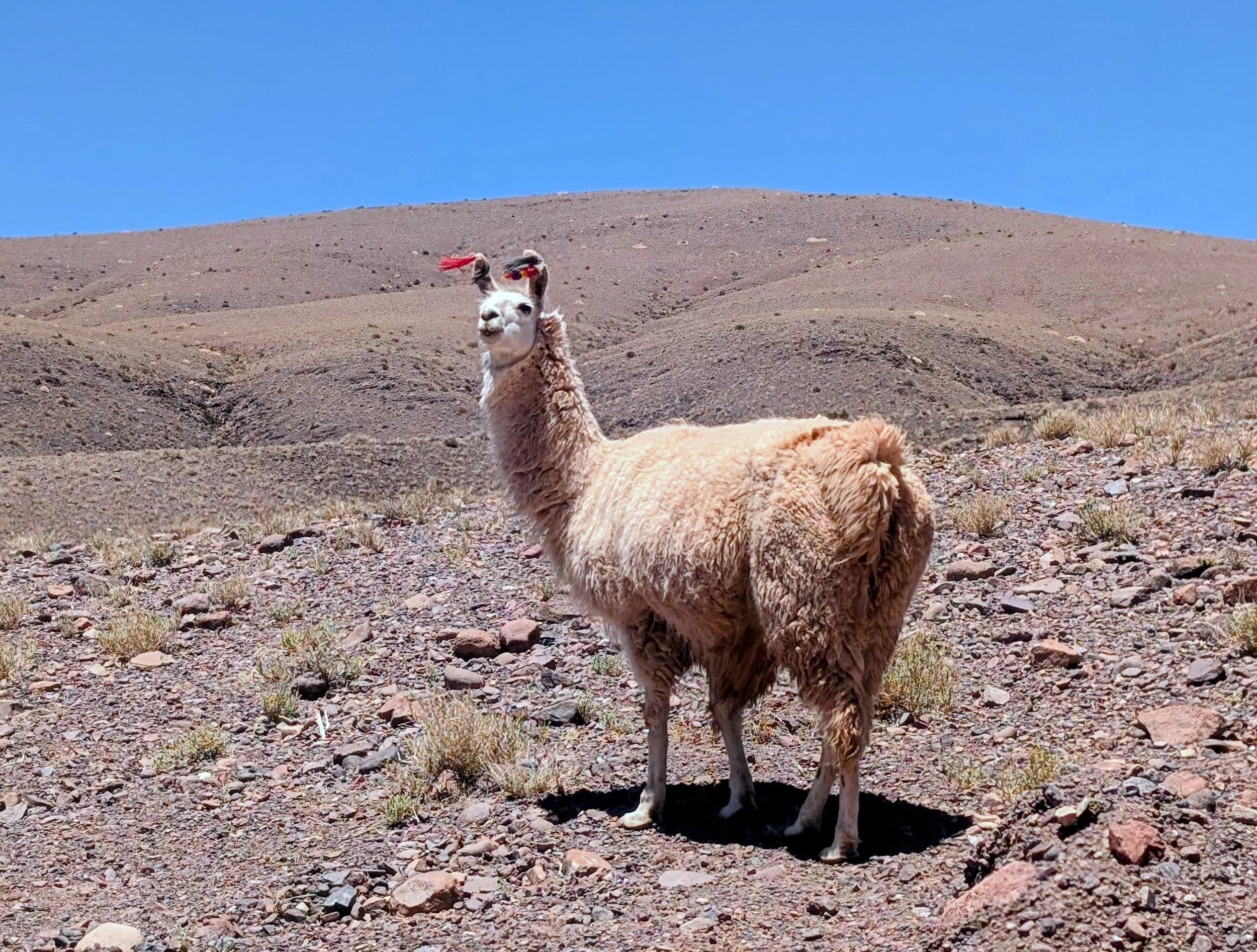
And the iconic llamas
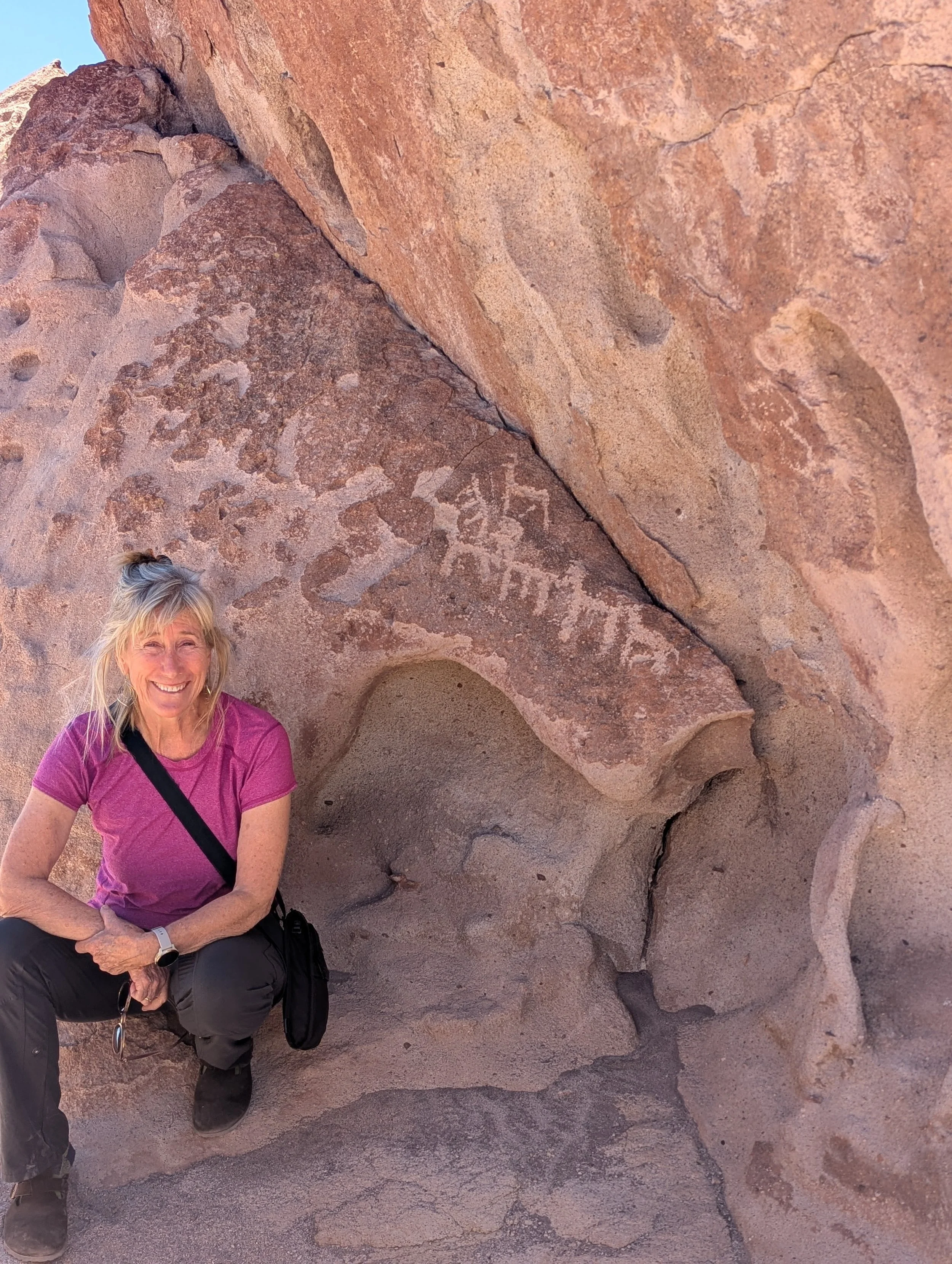
Ancient petroglyph site in the desert at Yerba Buena
Throughout the Atacama region, native people are developing tourism sites on their lands. We found the sites to be well run, clearly signposted with very modern and clean restrooms and with welcoming staff to explain trails and attractions. Charges were minimal, typically $5-8 a person and we usually got a discount for being a “persona mayor” (or old, over 60). Because they were gated, we always felt safe leaving our vehicle which was a bonus. We appreciated that prices were always posted clearly so that we knew what to expect. Some places required us to have a guide for a given trail or hike but most of the time we were left to explore on our own.
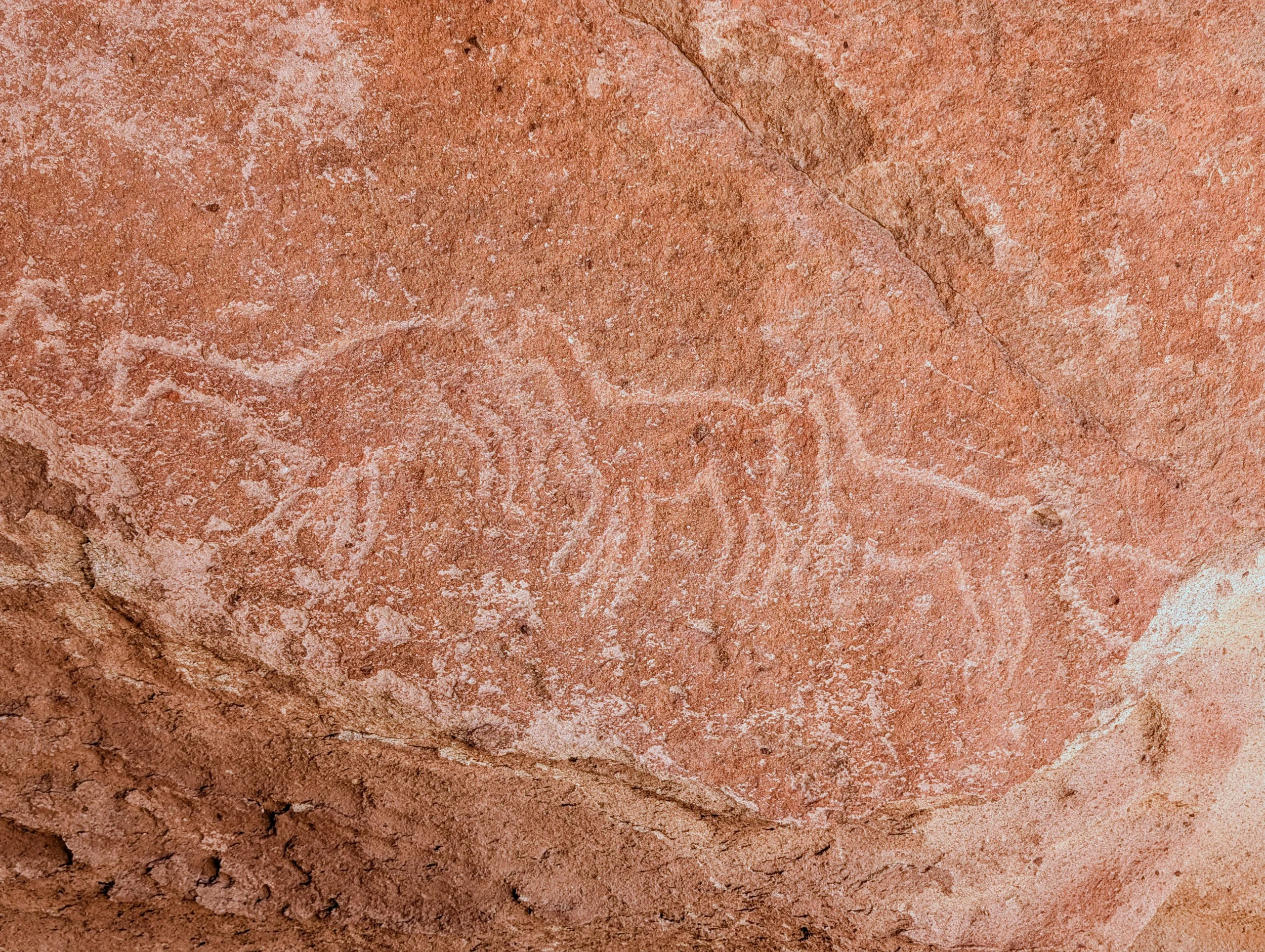
We think these are llamas
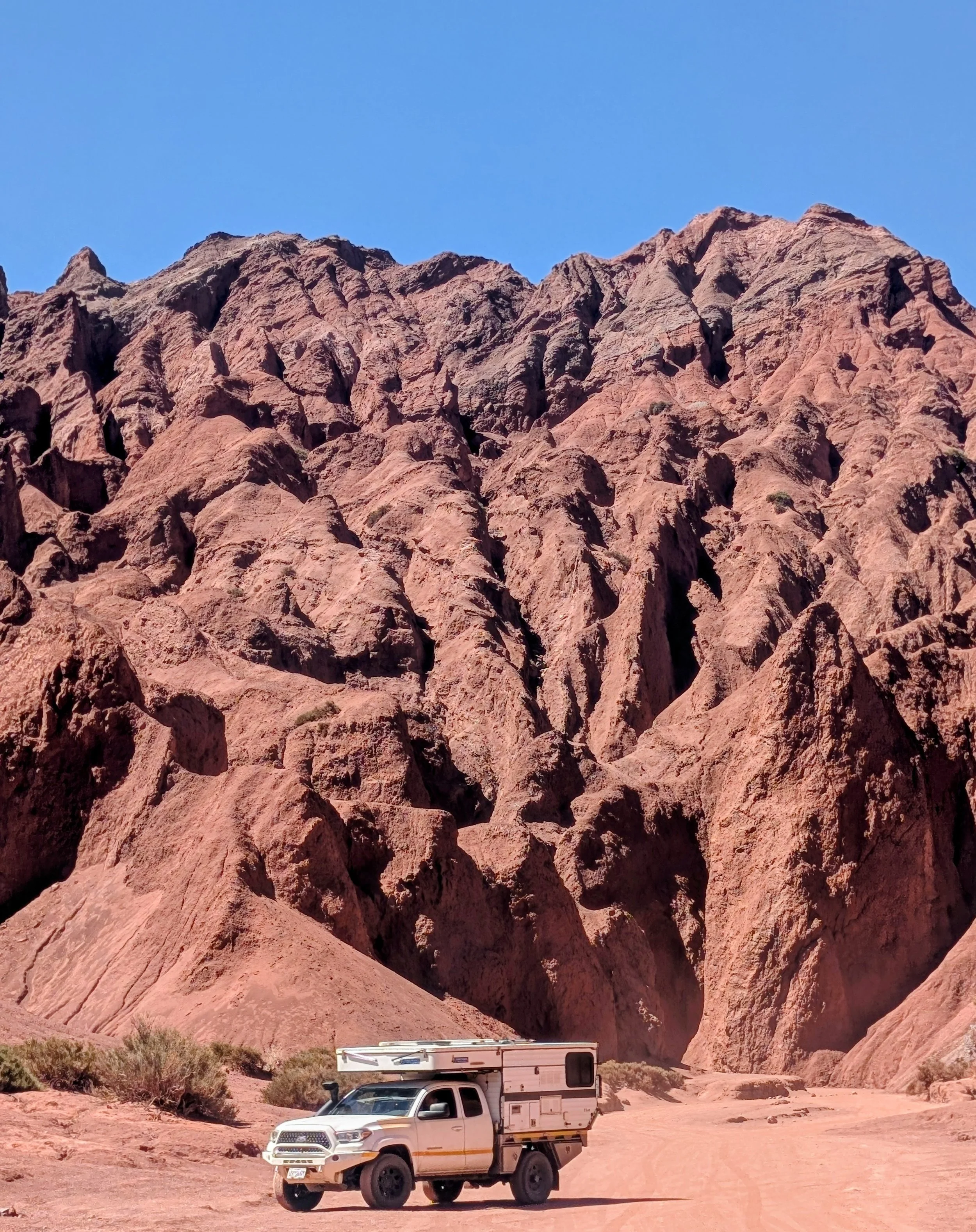
Posting the truck in the scenic Valle de Arcoiris
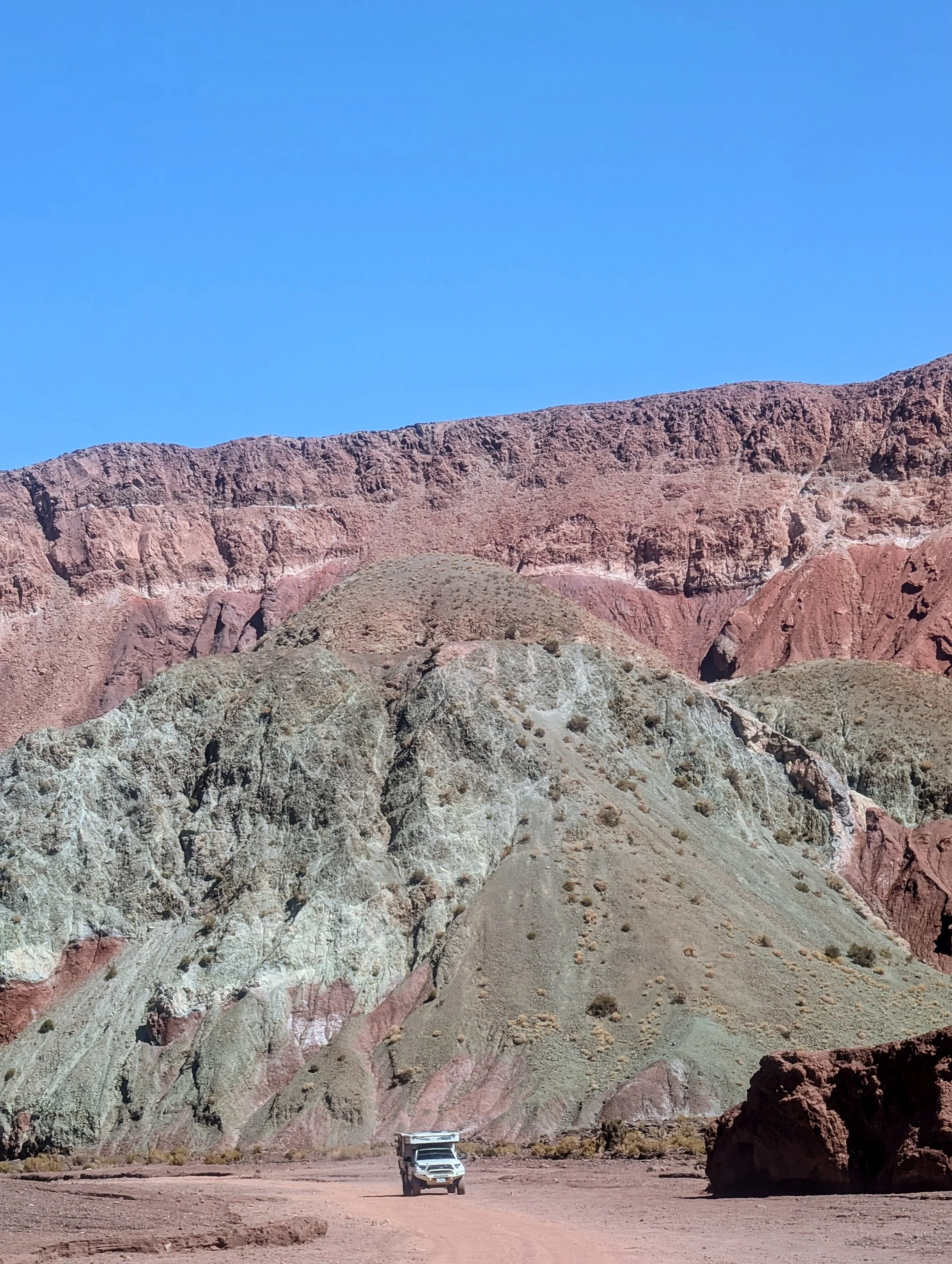
The area is famous for its multi colored hills
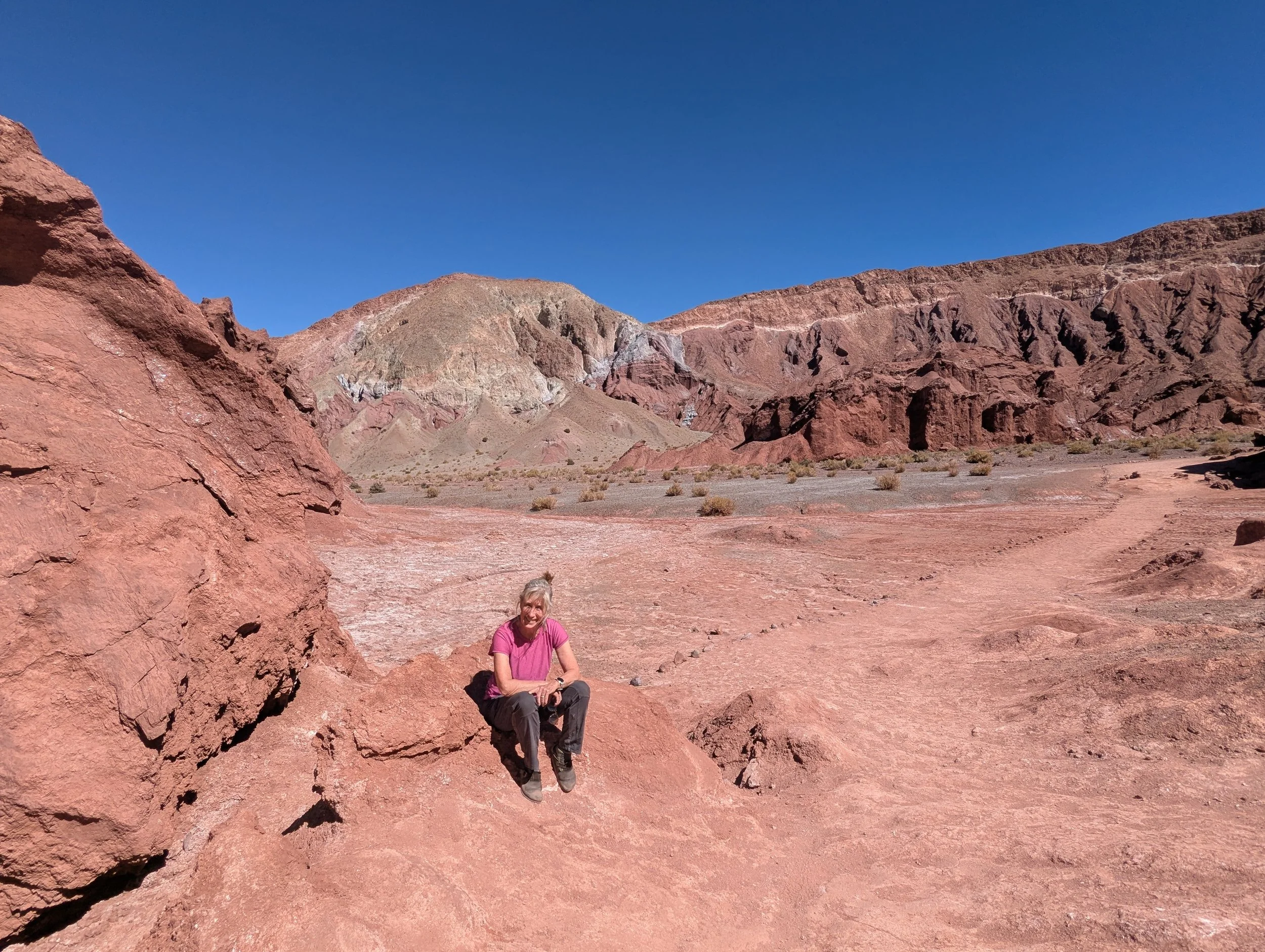
Taking a hiking break
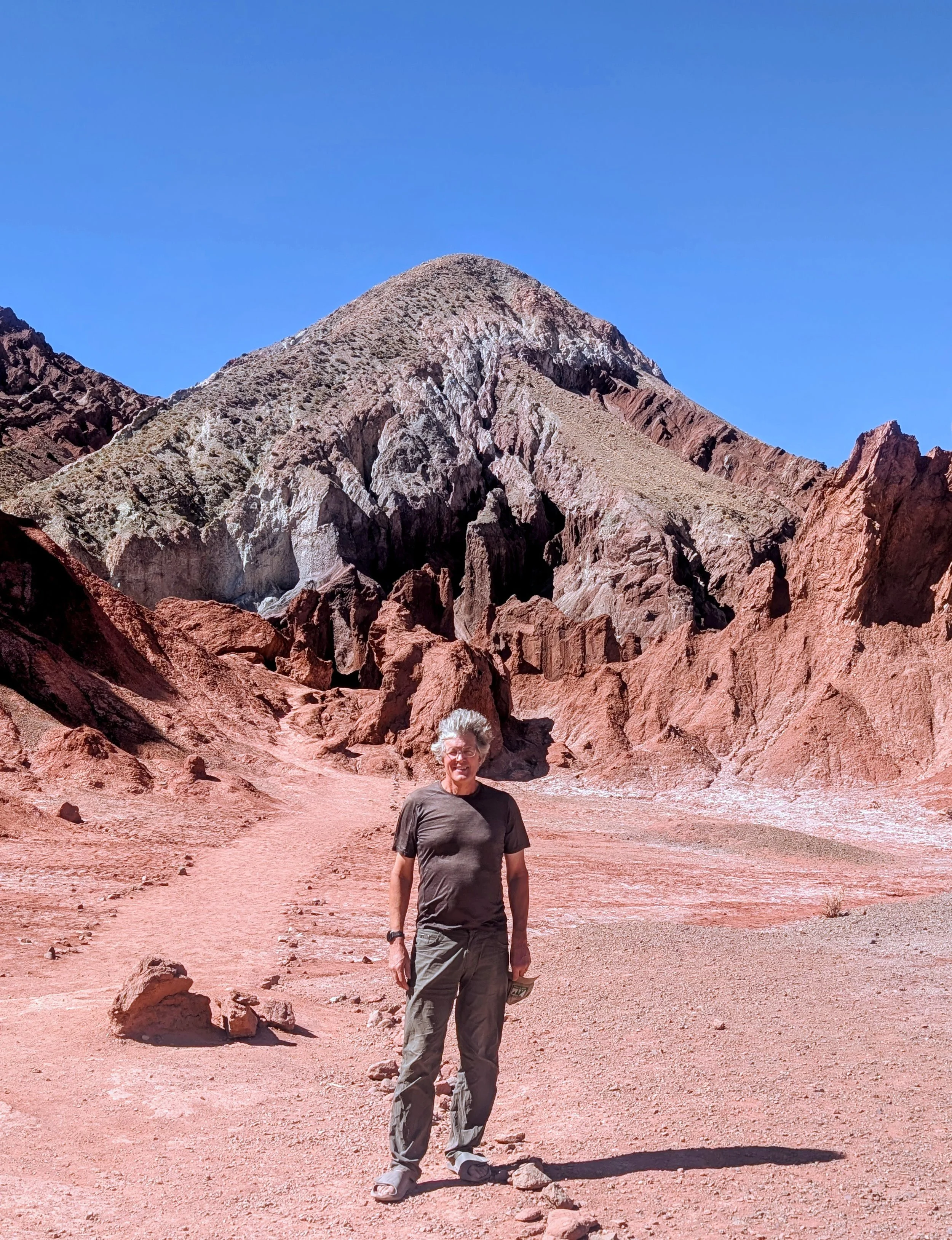
Walking the scenic valleys
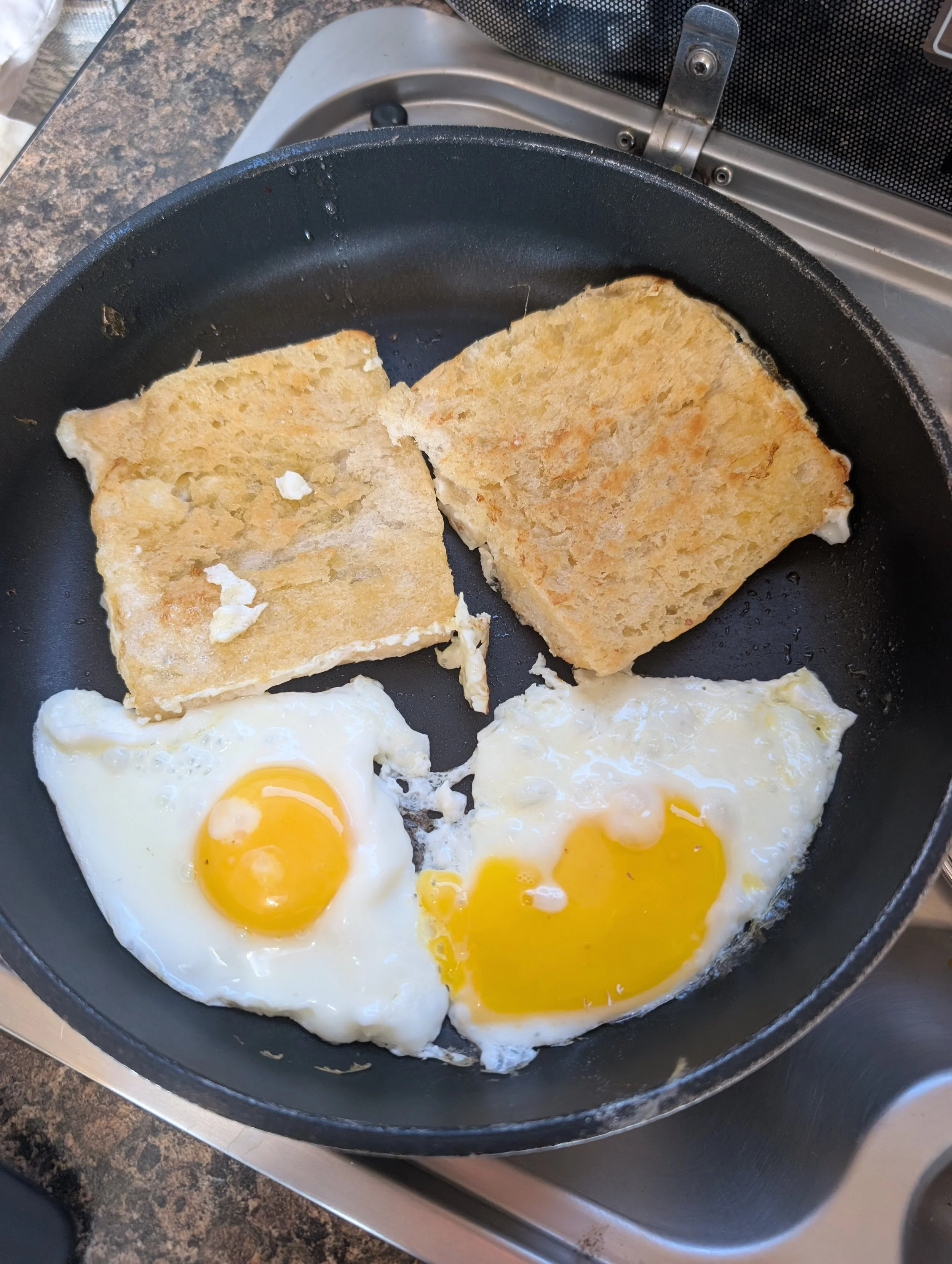
A typical camp breakfast for us - pan toasted bread and fried eggs. We were appreciating the readily available variety of breads available in every village.
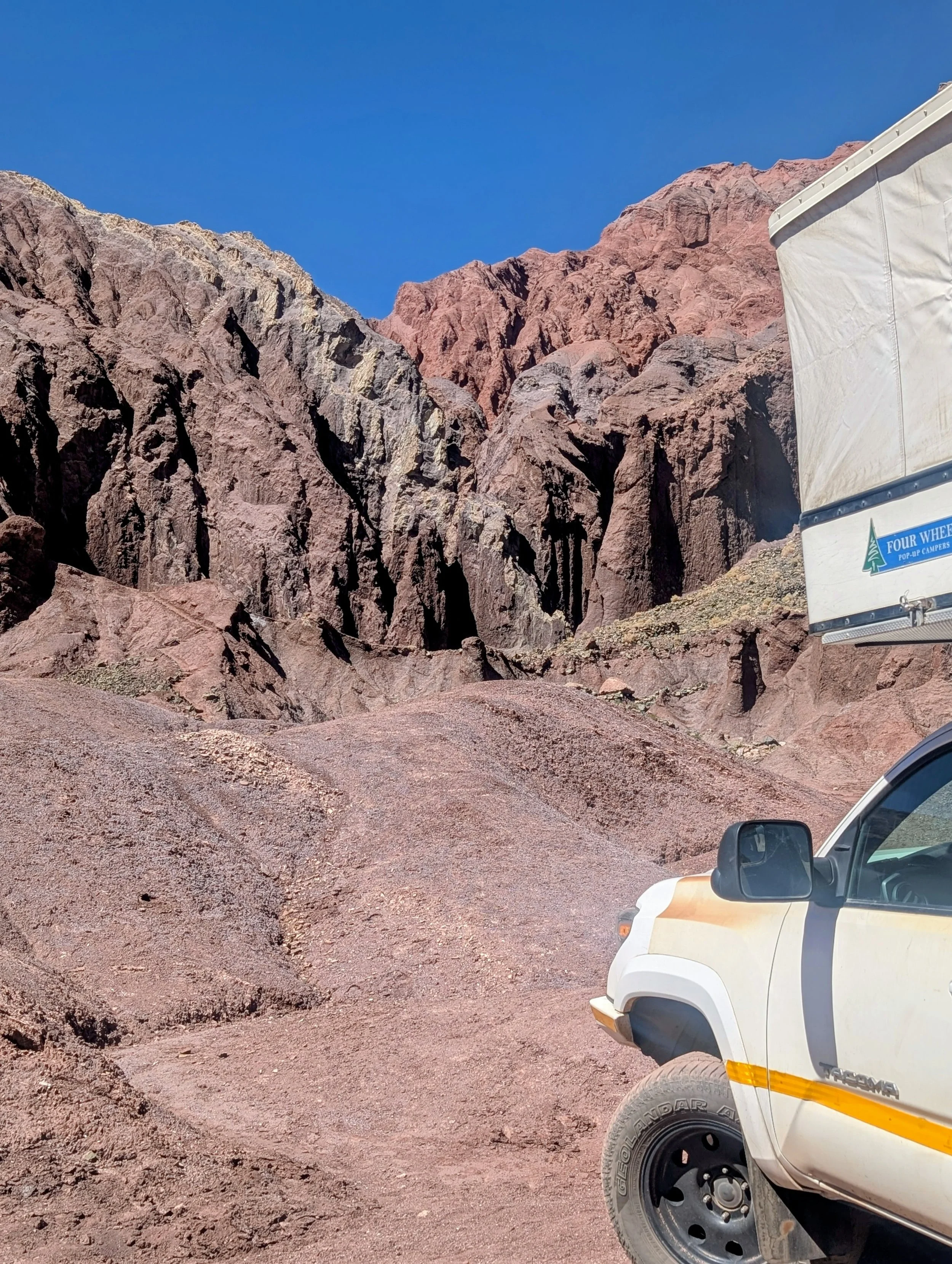
View from desert camp
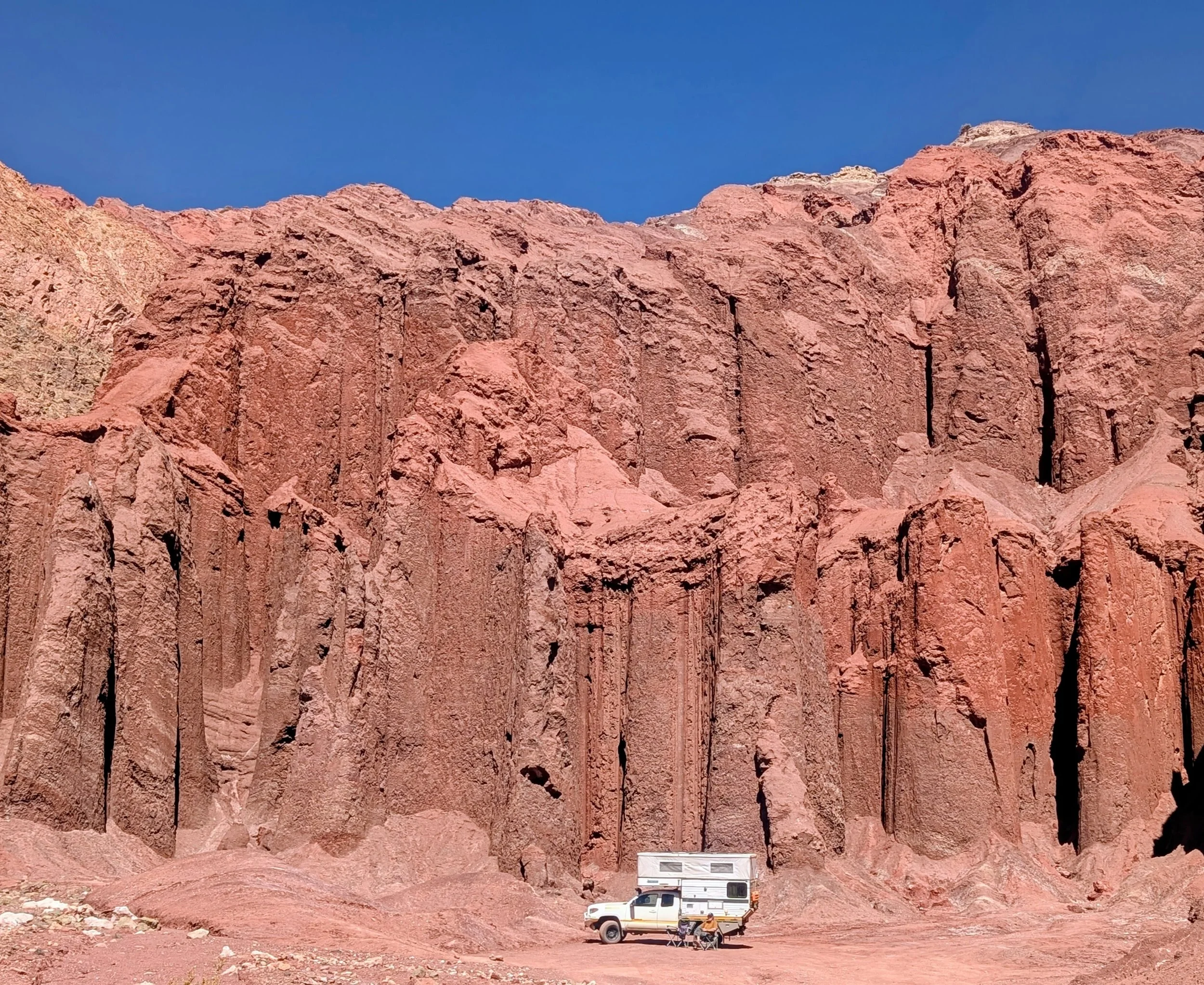
We found our own ampitheater
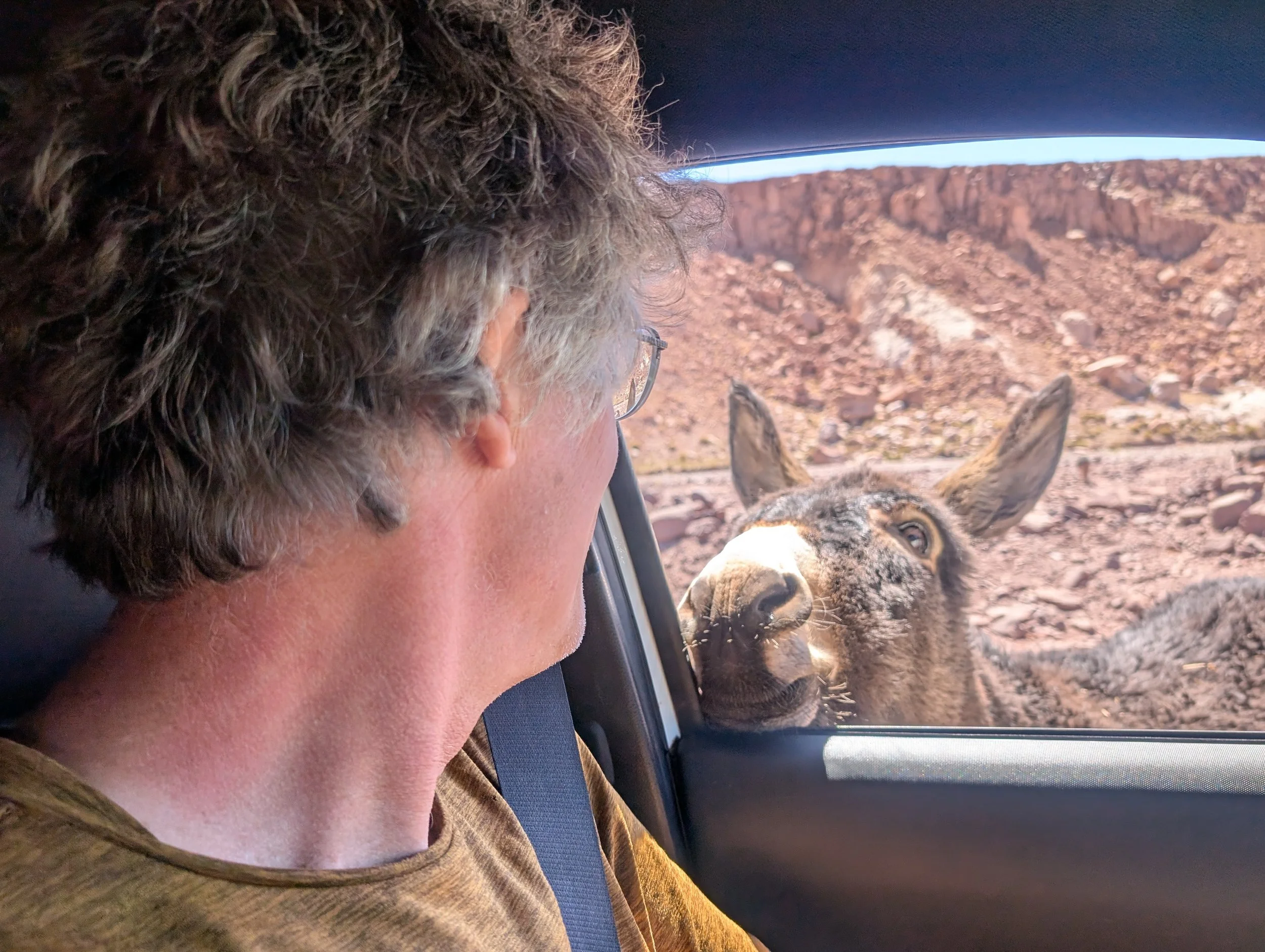
Andy makes a friend
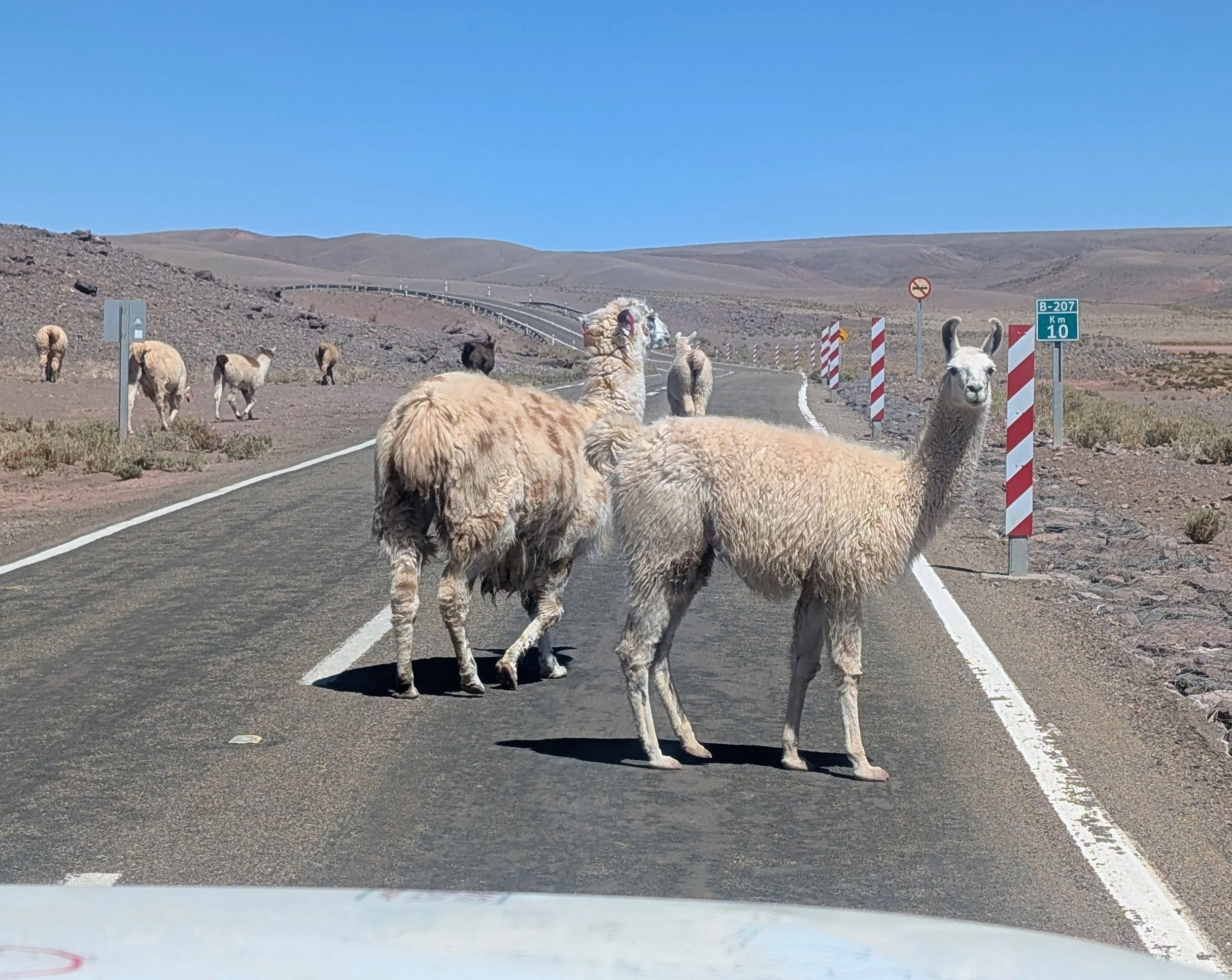
Llamas in the road, it never gets old
After a few days out in the desert we arrived in the central tourist town of the region - San Pedro de Atacama. It was charming, filled with cafes and tourist shops, but also a bit of a shock to suddenly be surrounded by other foreign tourists, mostly young Europeans seeking desert adventures. (We are very aware that we are also actually tourists but we prefer to be in places where we feel like the only ones.) But it was a convenient town to come in and out of to re-supply food and access wi-fi.
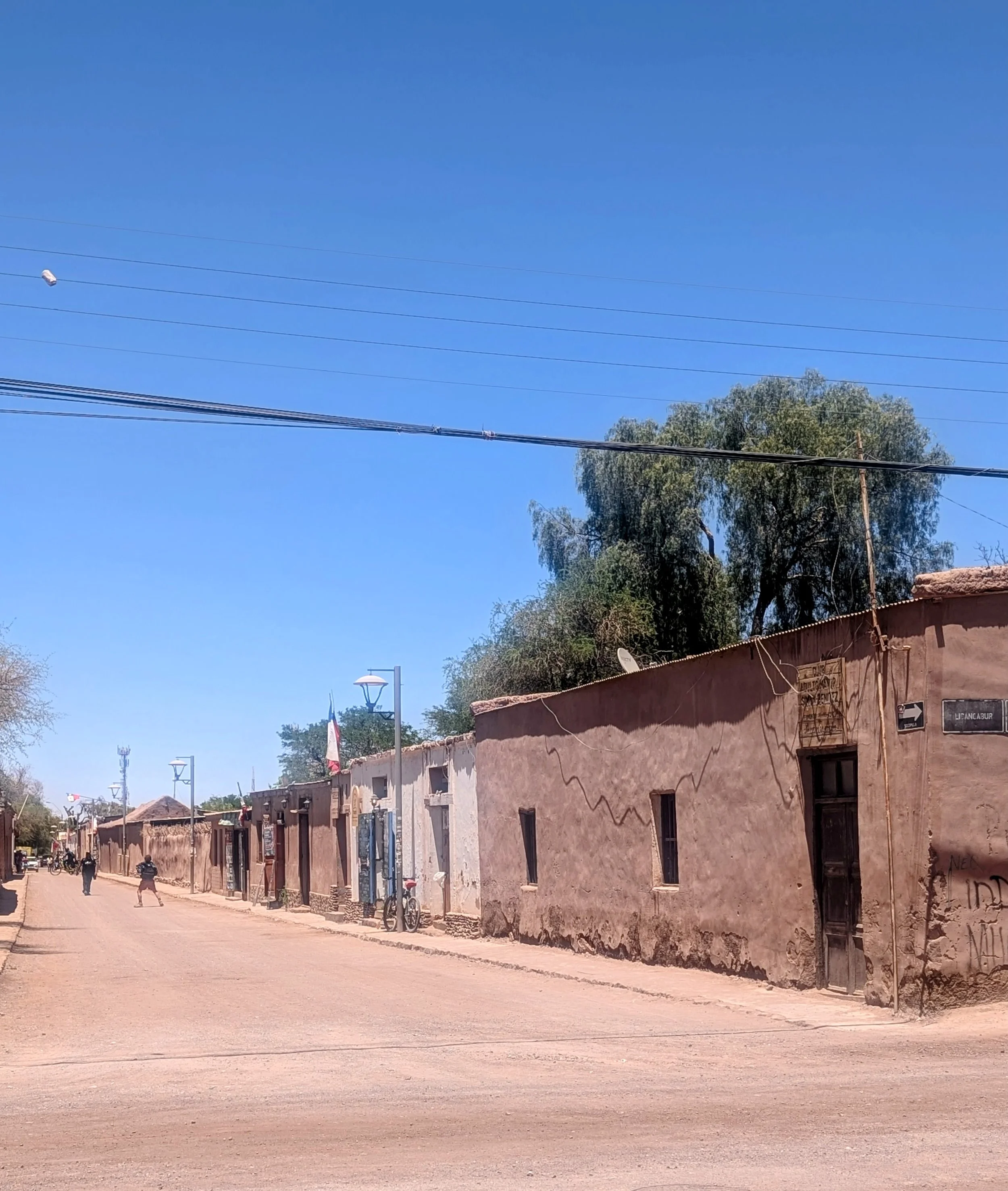
The wide dusty streets of San Pedro de Atacama
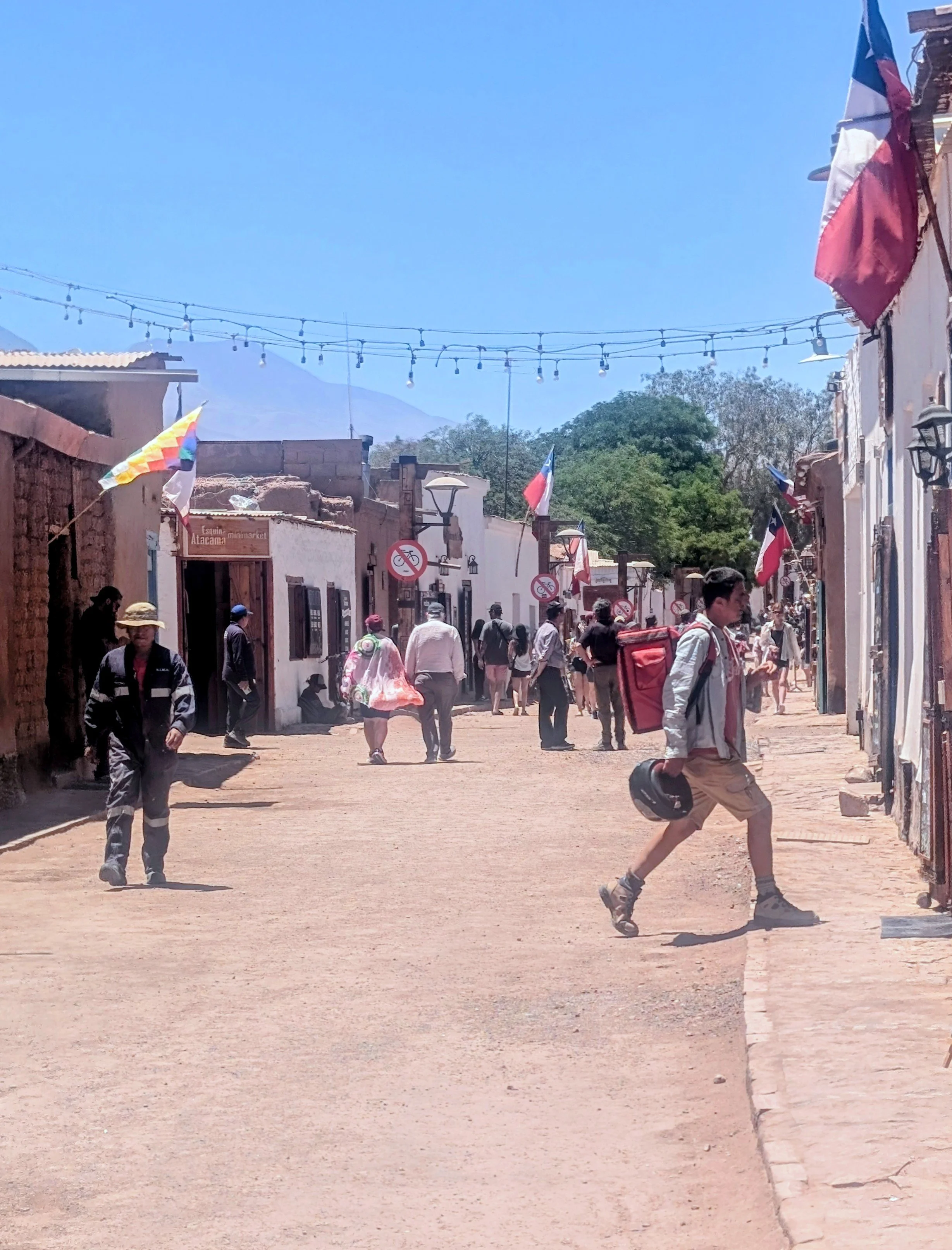
The bustling town center - art shops, cafes and bars
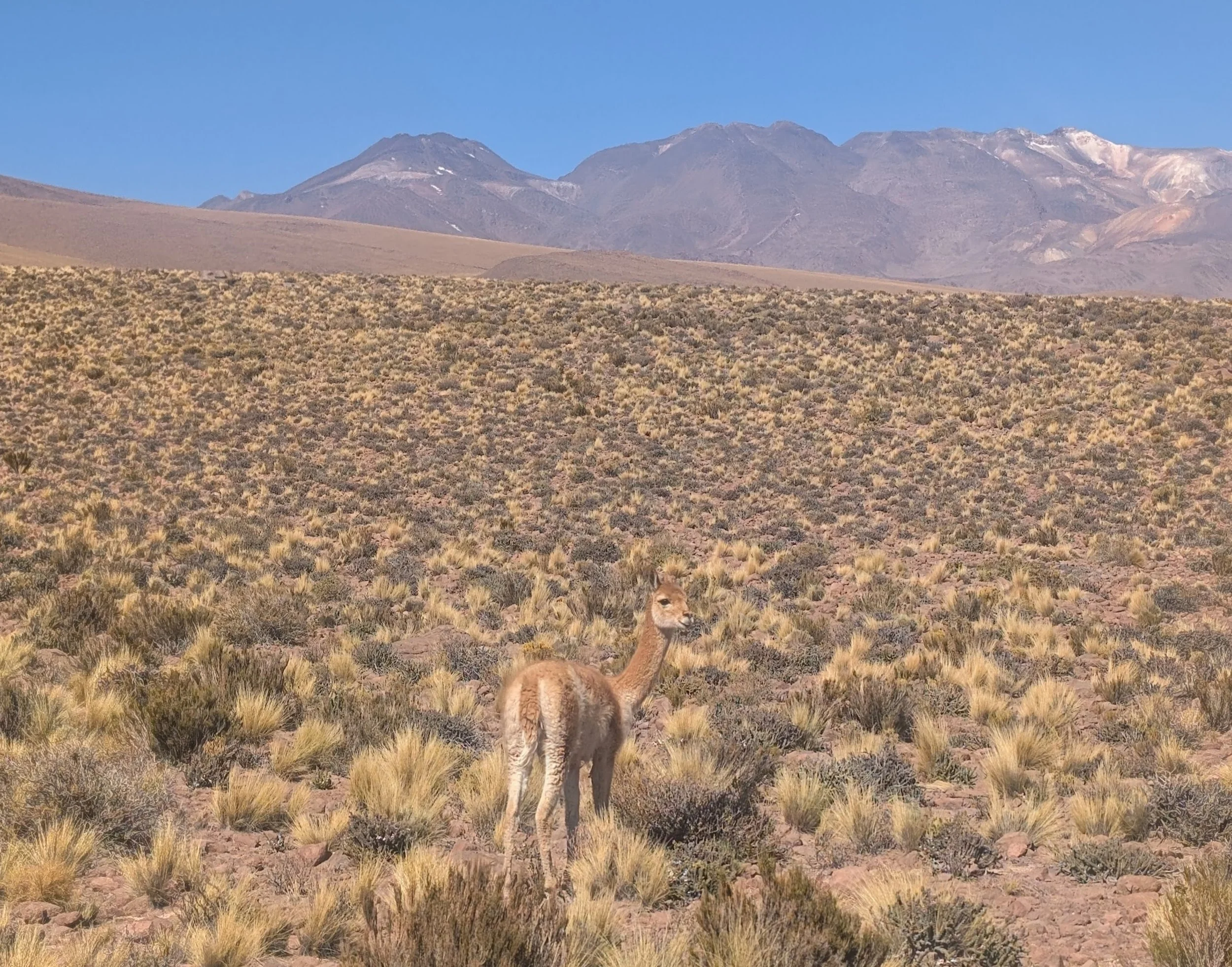
Our first vicuña
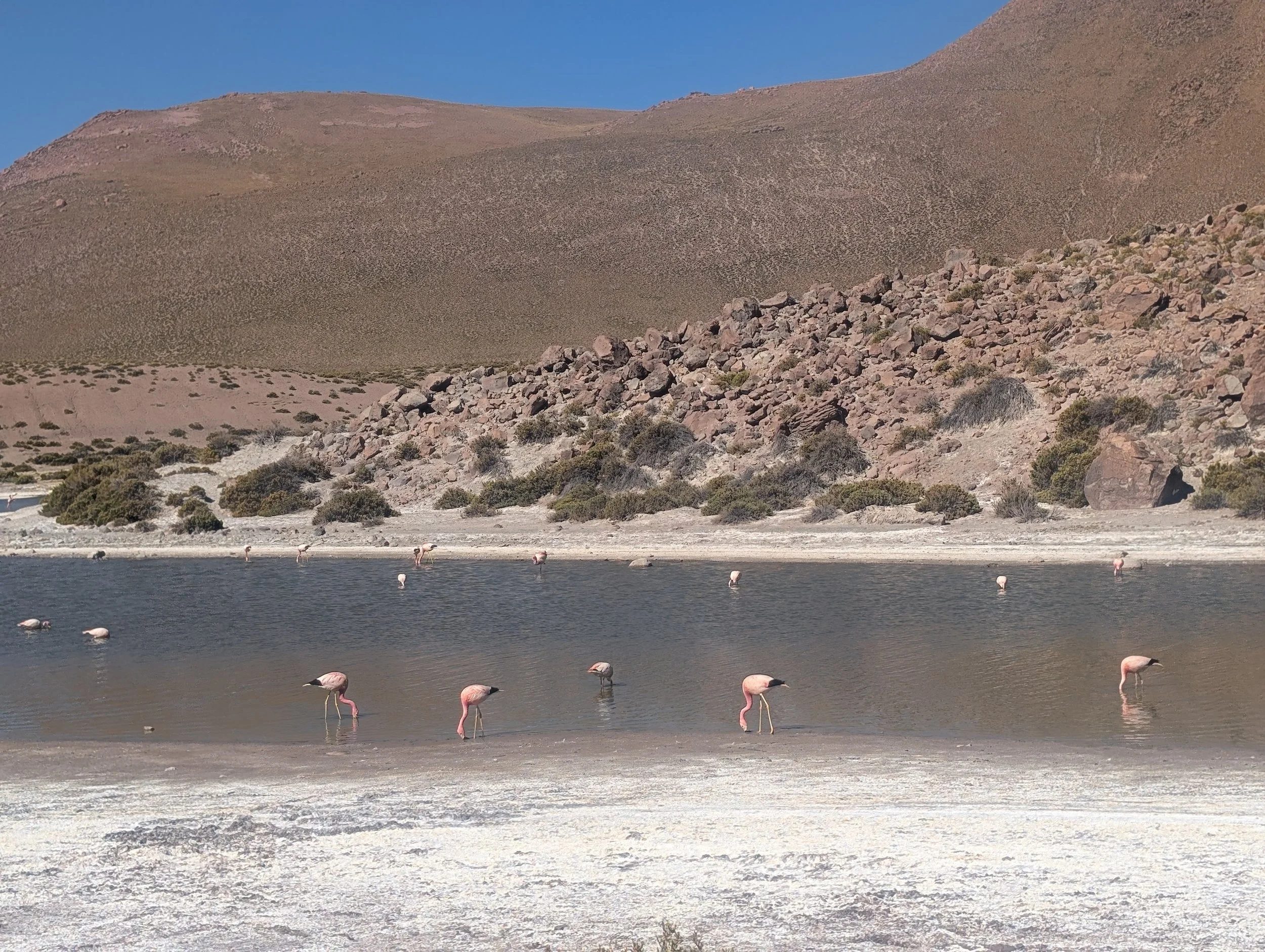
High altitude (13,000’) mountain flamingos
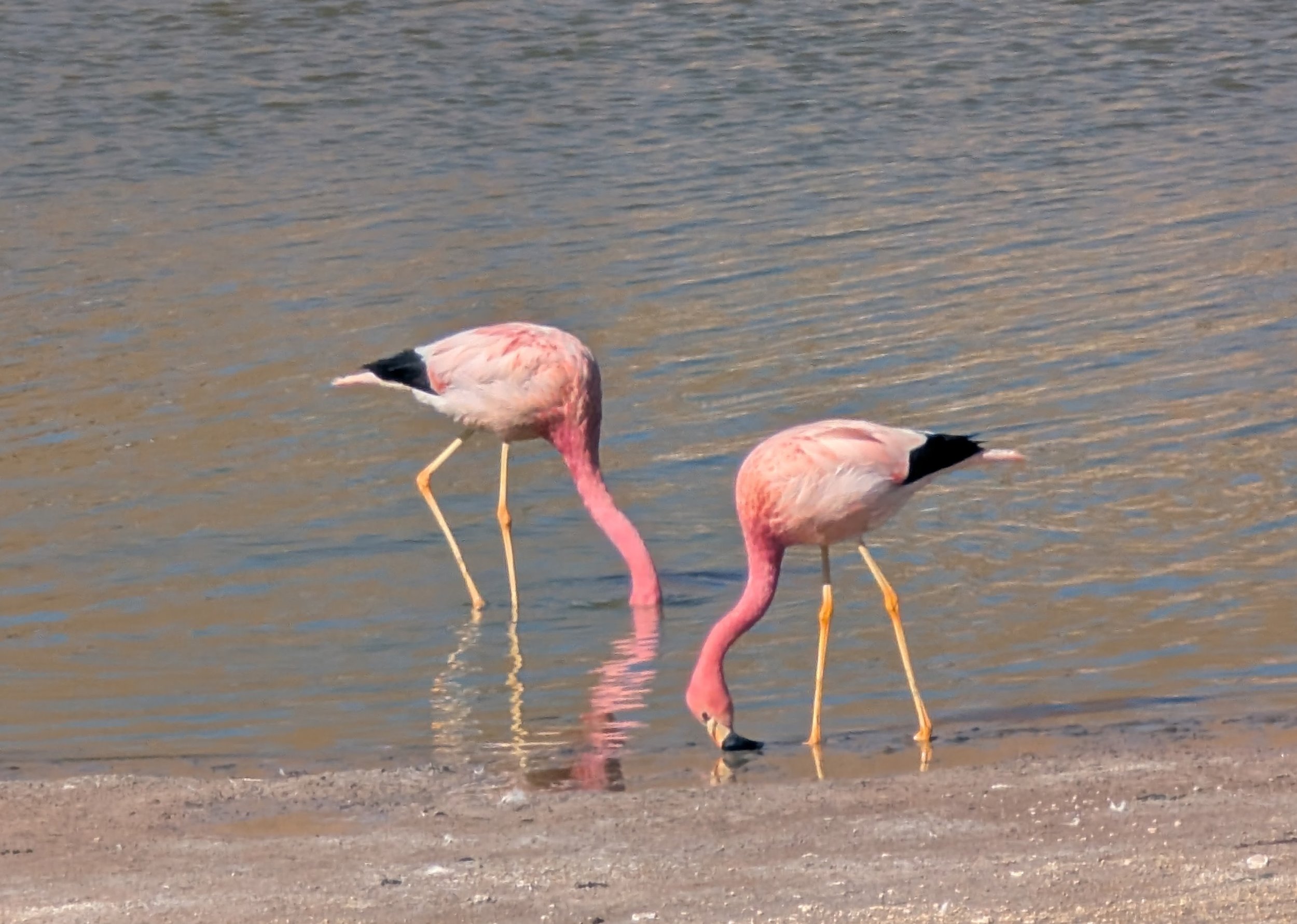
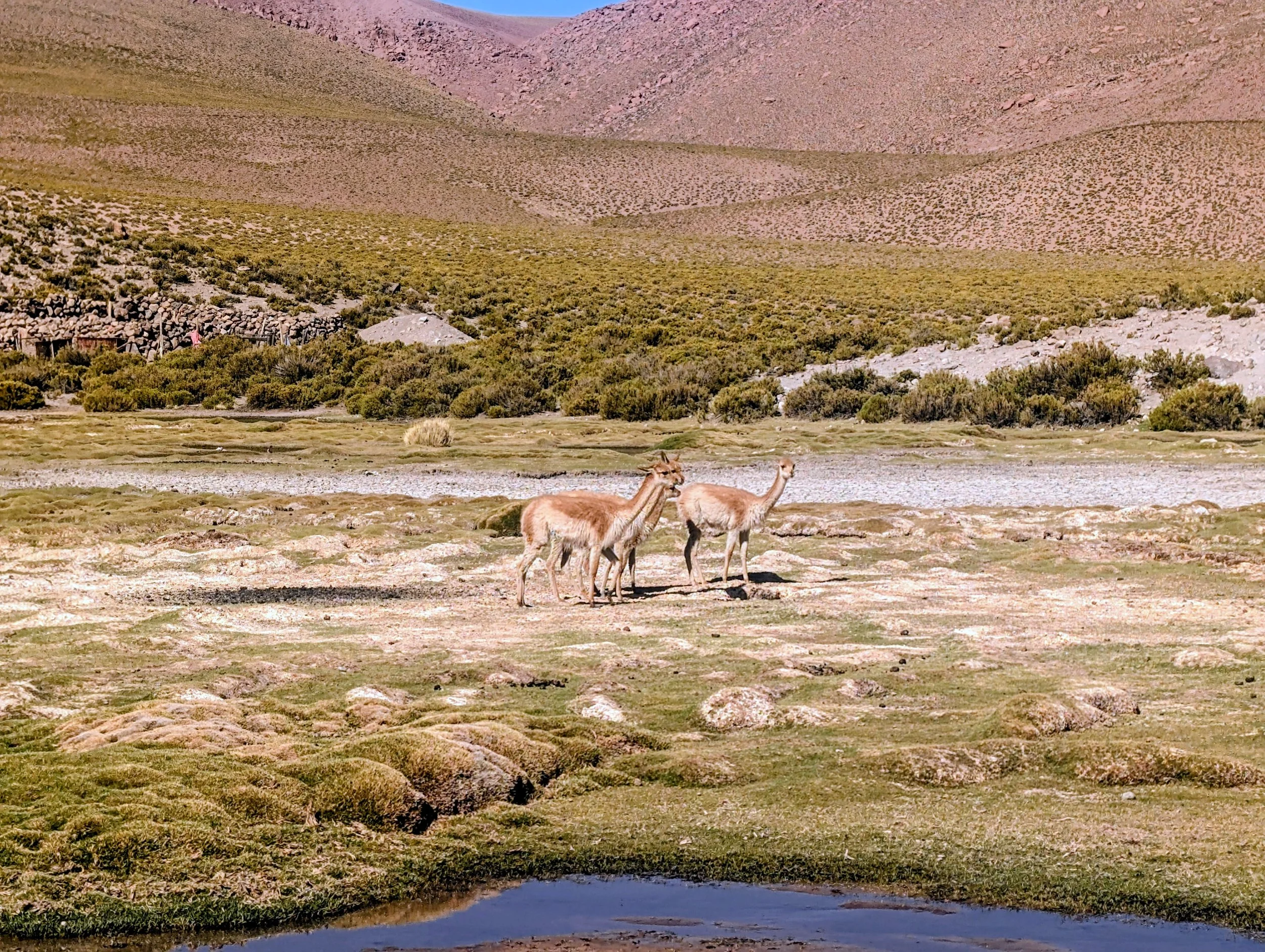
More vicuña
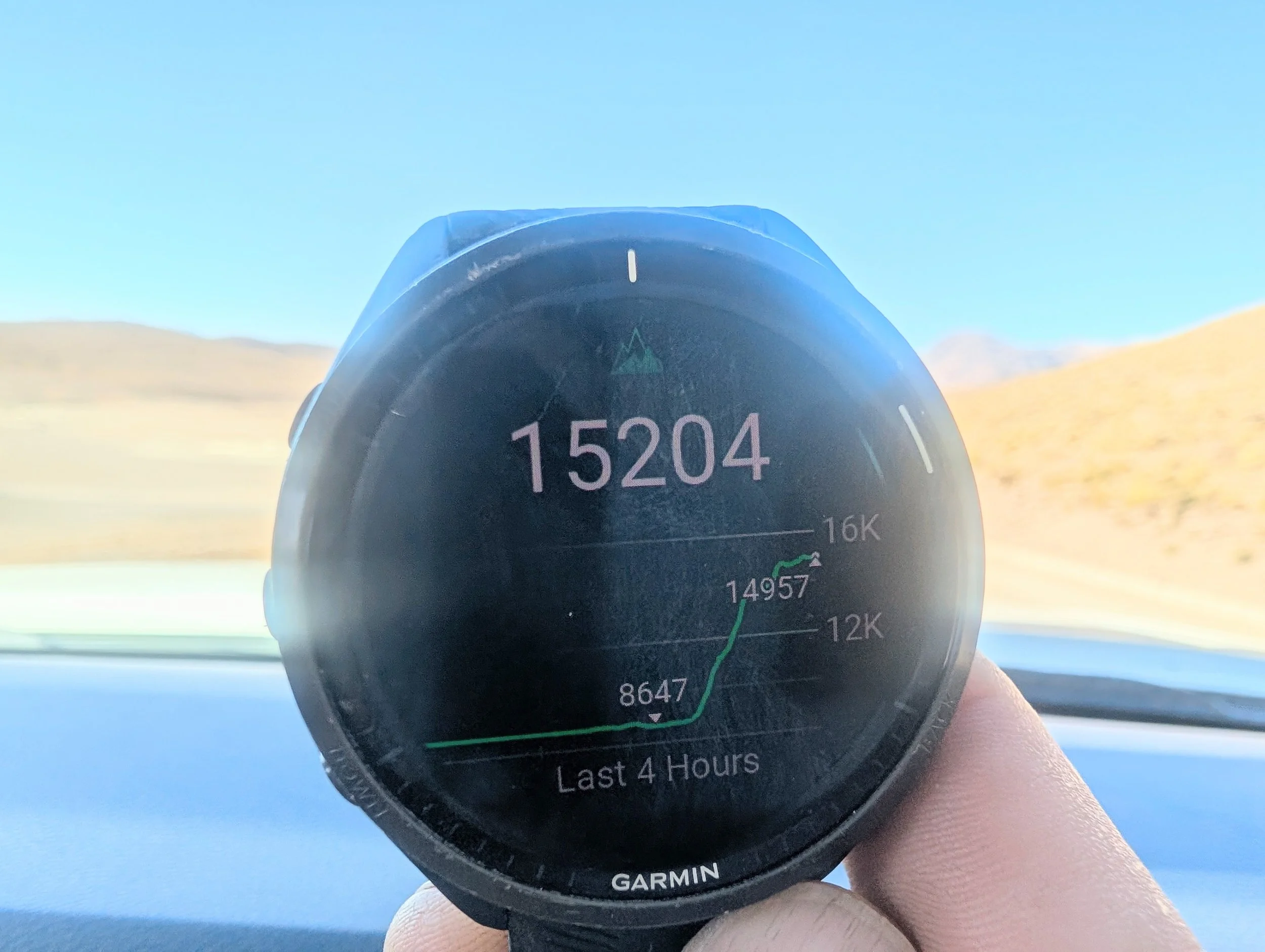
We had been on our way to a mountain wild camp but when Andy’s watch let us know we were at over 15,000 feet, we turned back to seek a slightly lower sleeping place, we had already had a few restless nights sleeping up high.
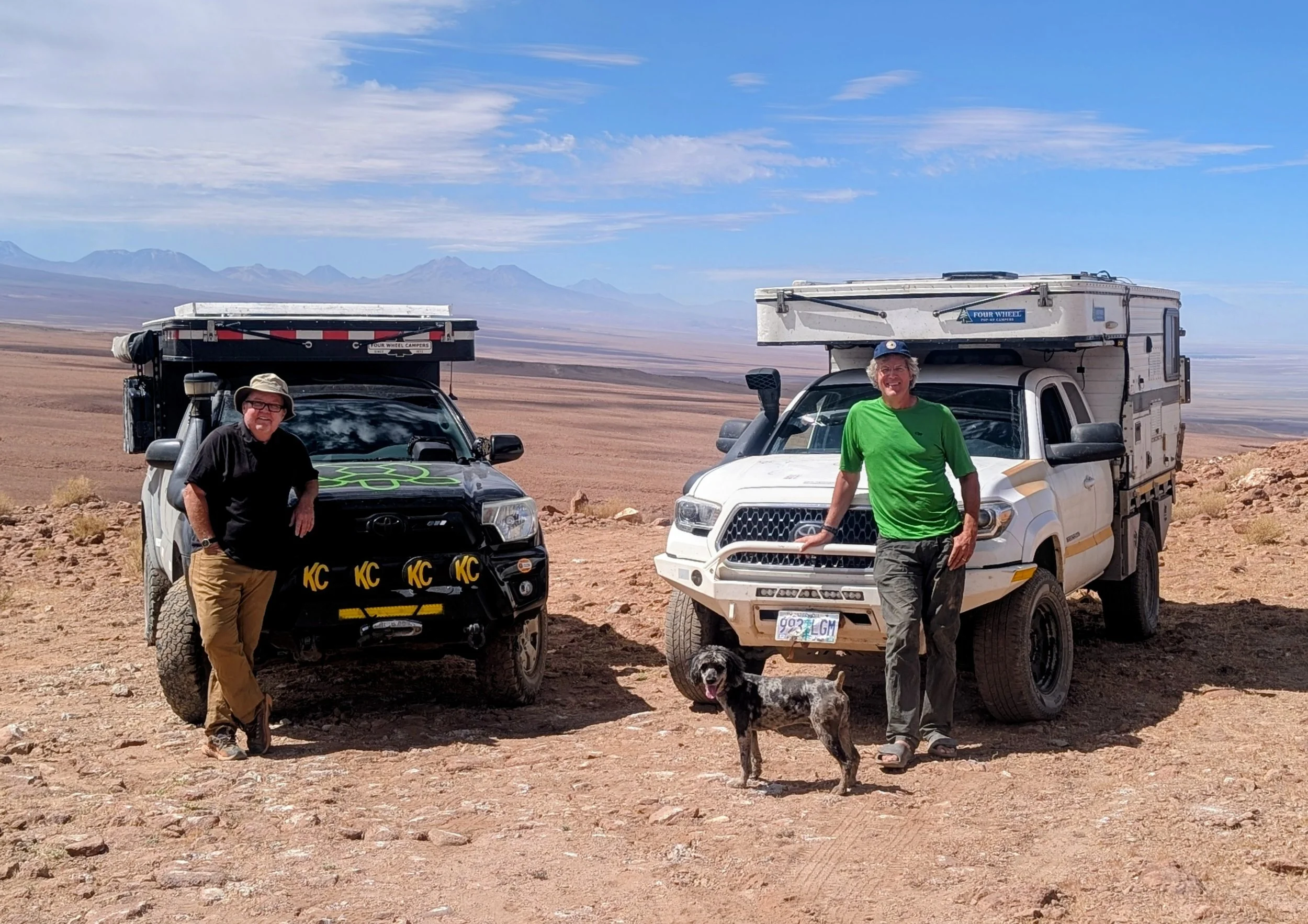
Meet up with Jim (Terrapin Overland) and his dog Dax. It was fun to finally meet him after messaging back and forth over the last few years.
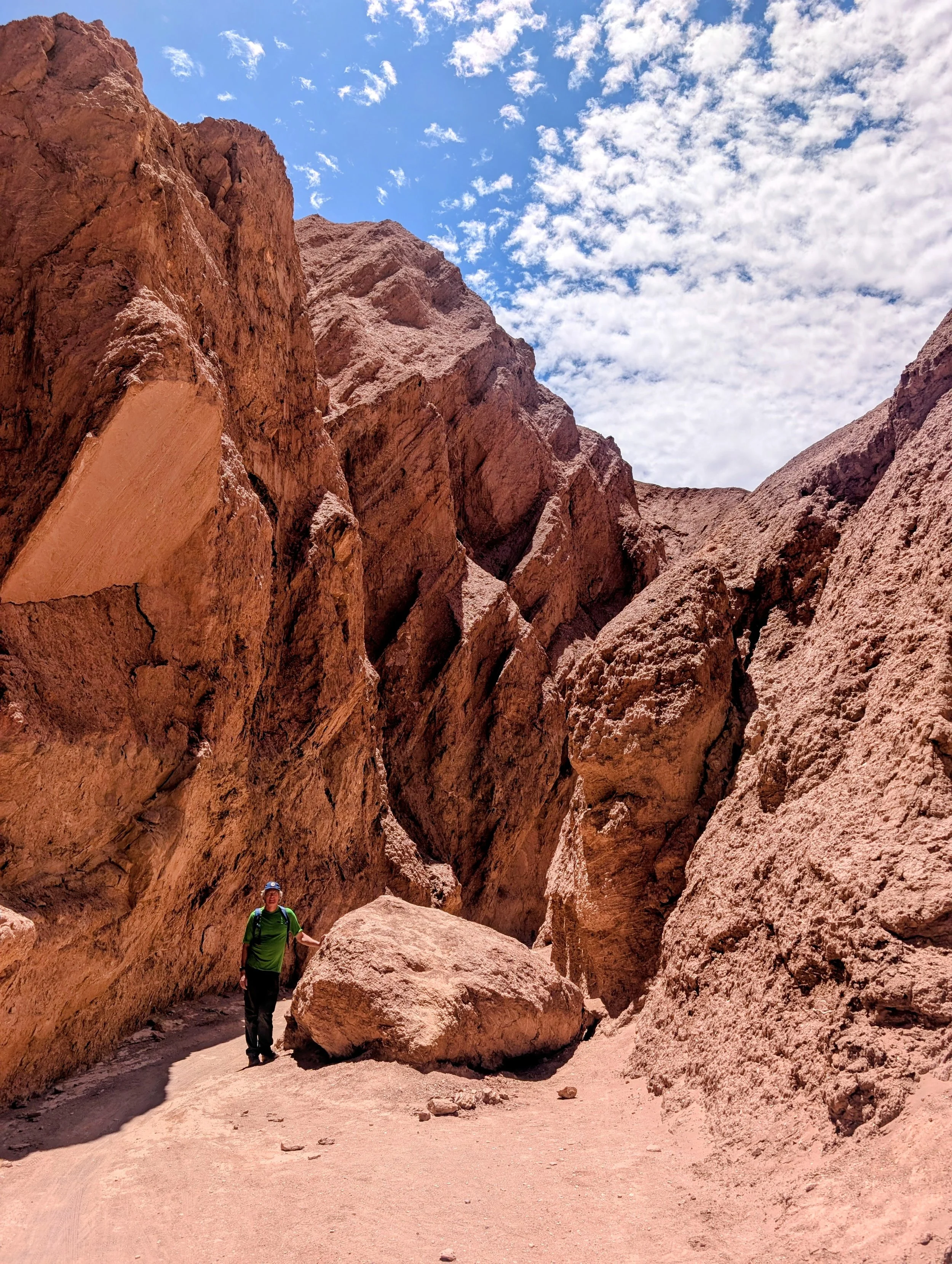
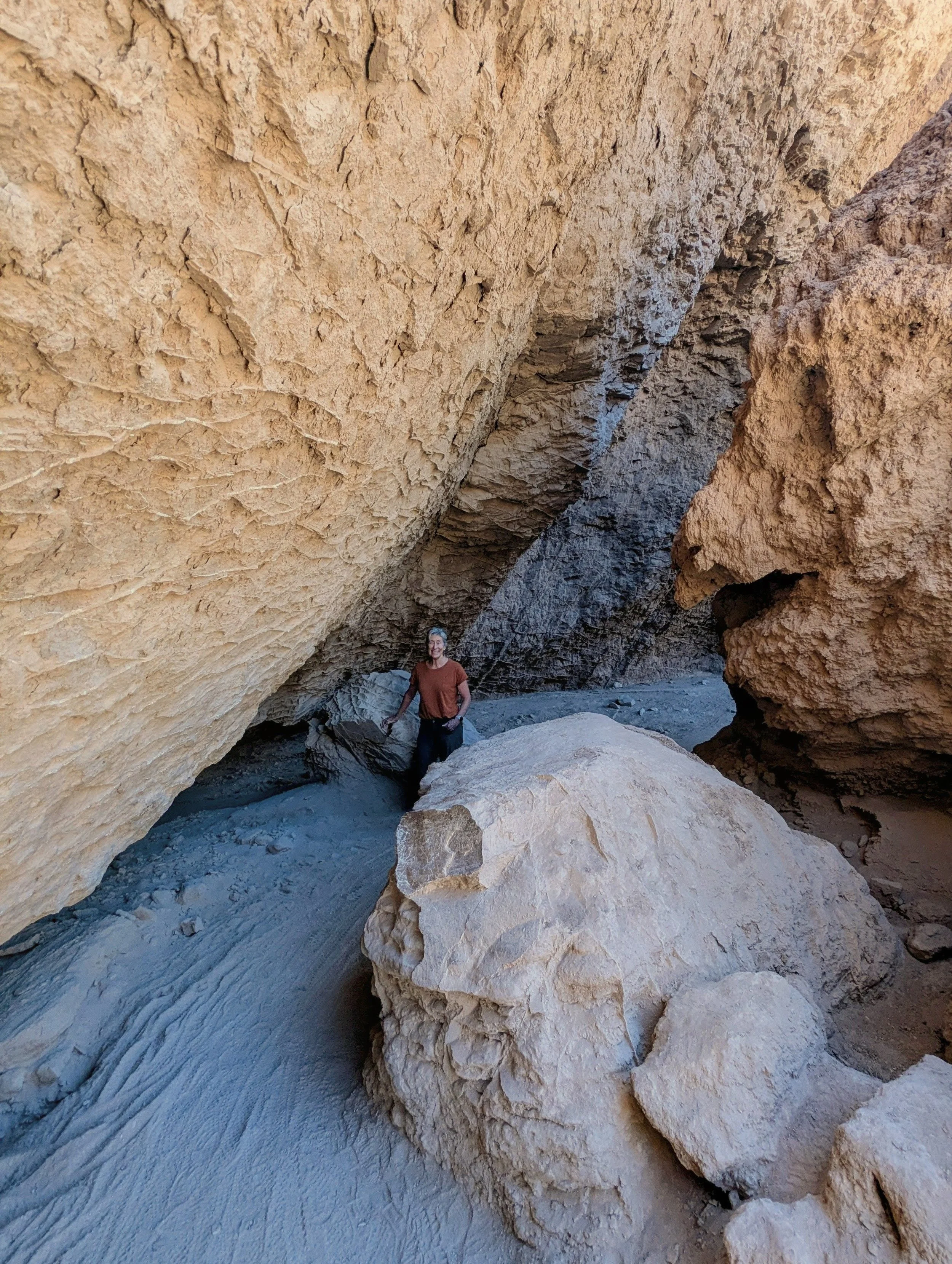
Gargantua del Diablo (a common name) canyon hike
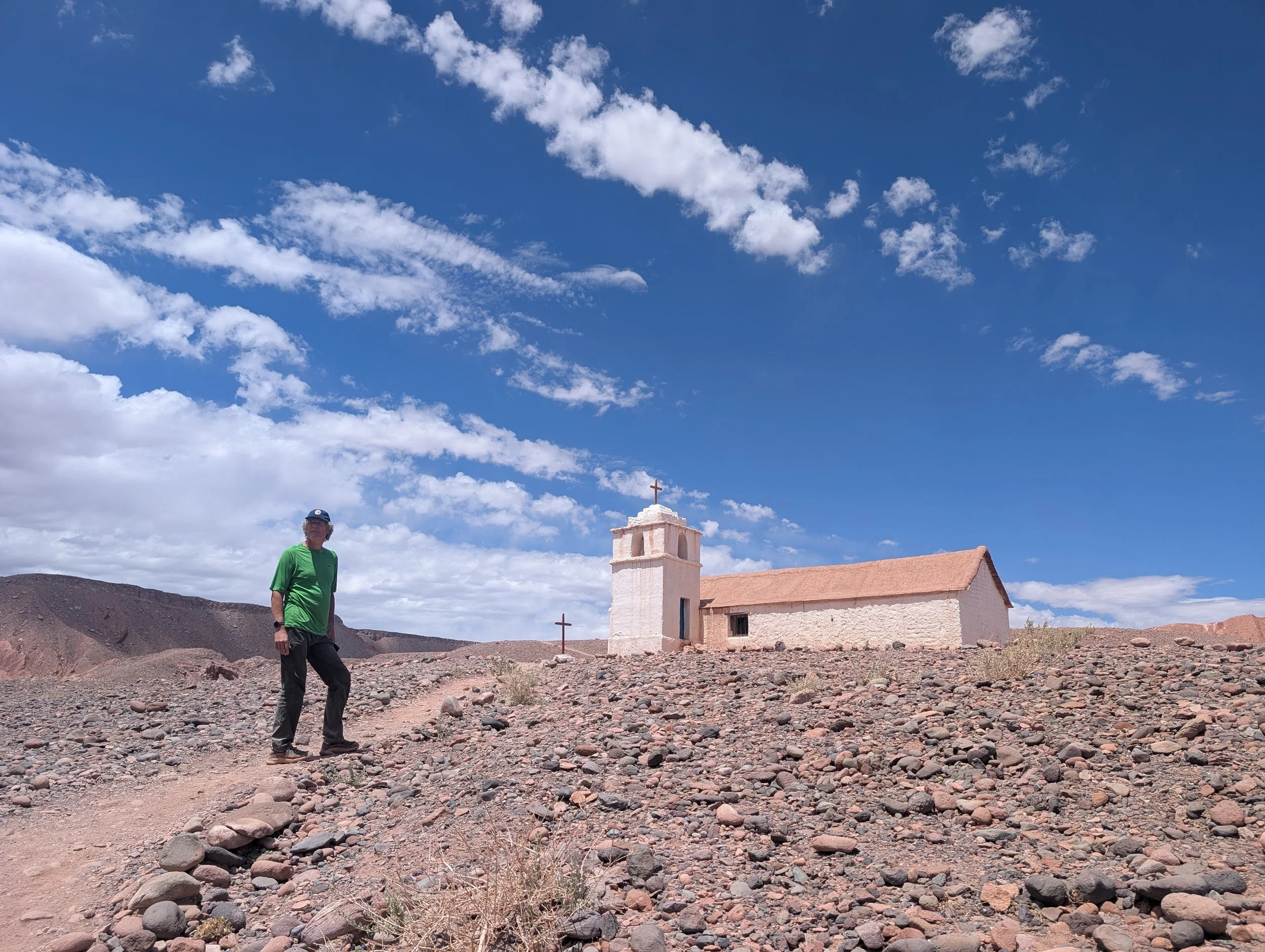
A lonely church in the desert
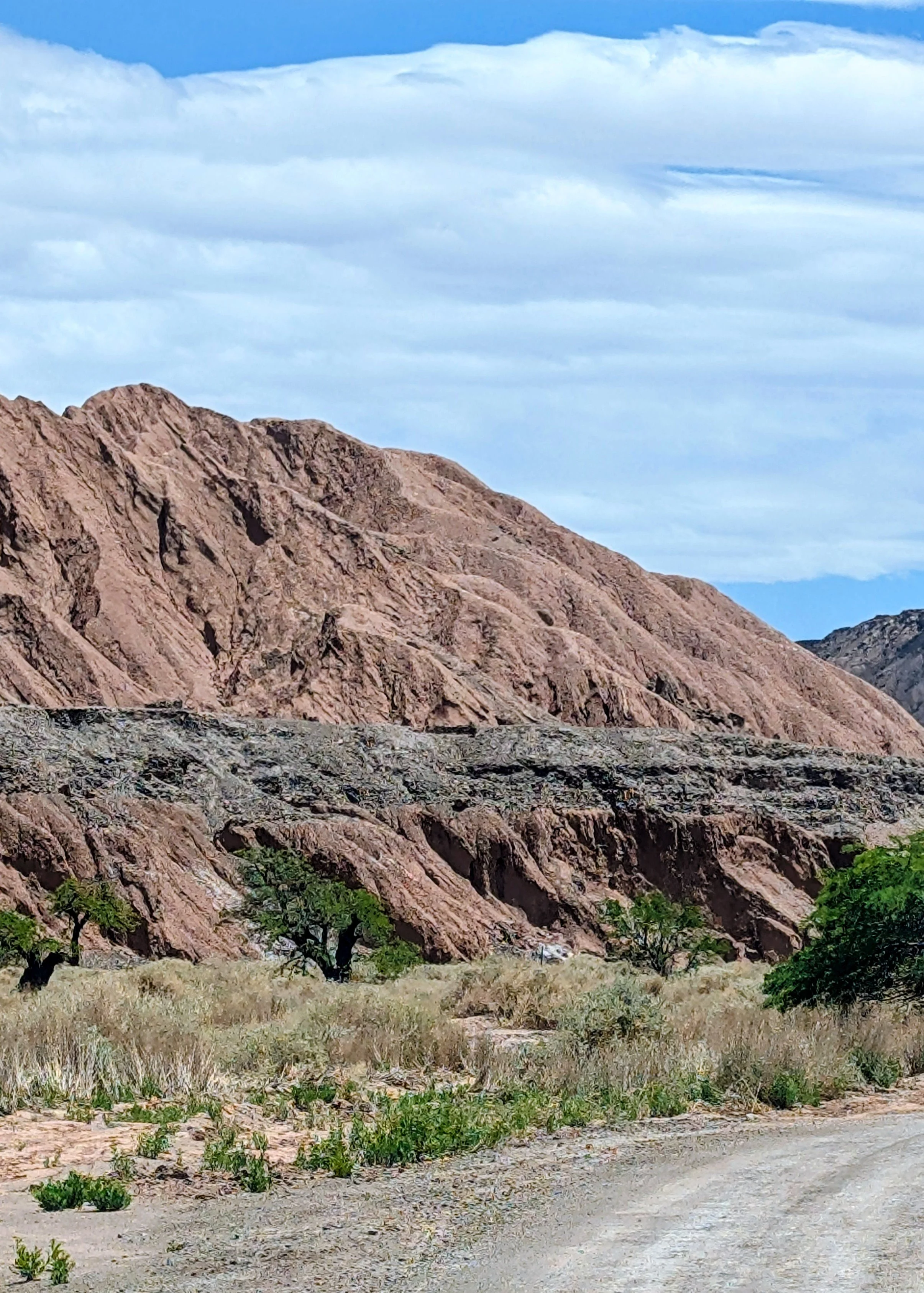
Exploring Quebrada Chulacao
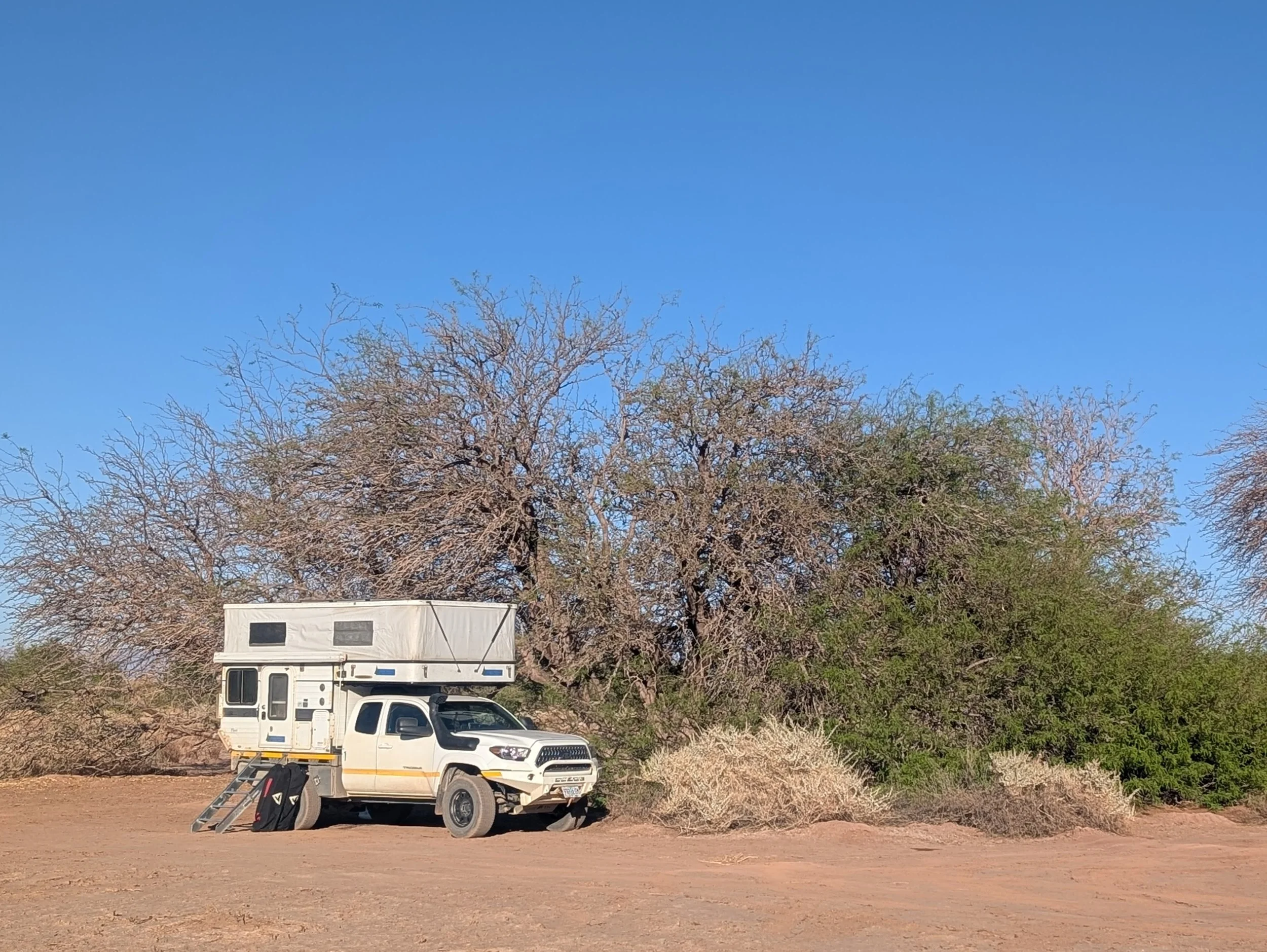
Remote bush camp
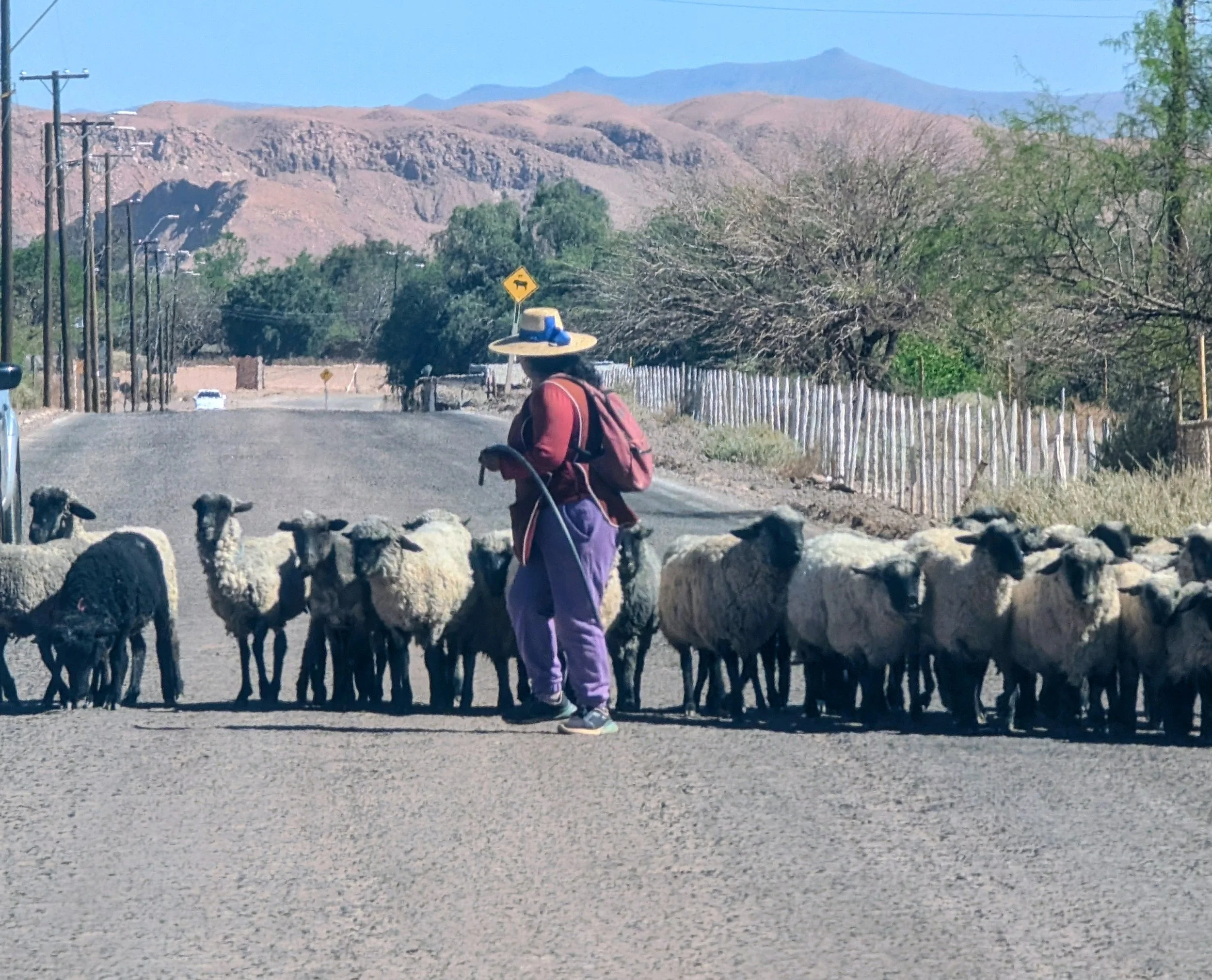
Road block
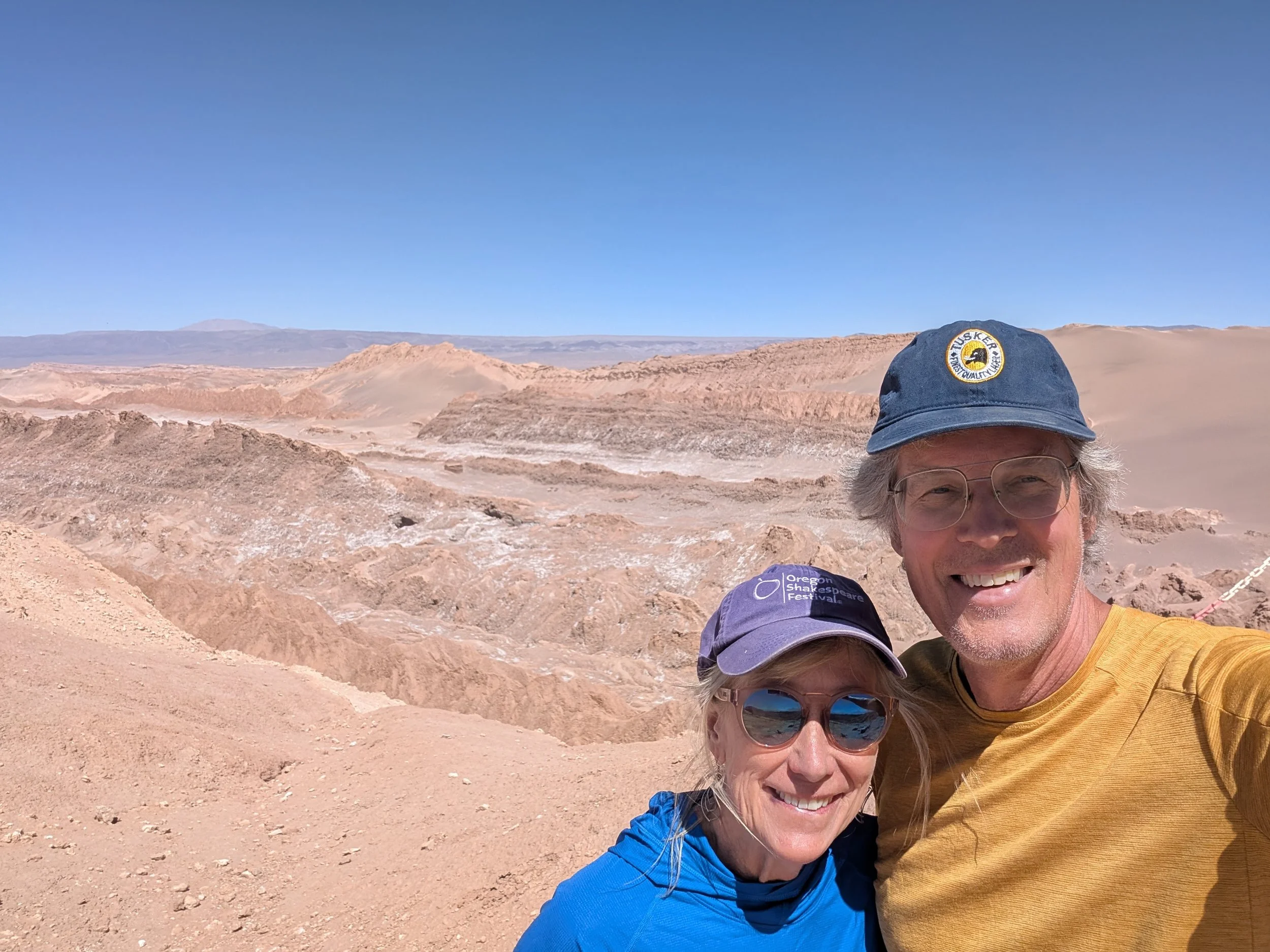
Exploring Valle de la Luna (another common name)
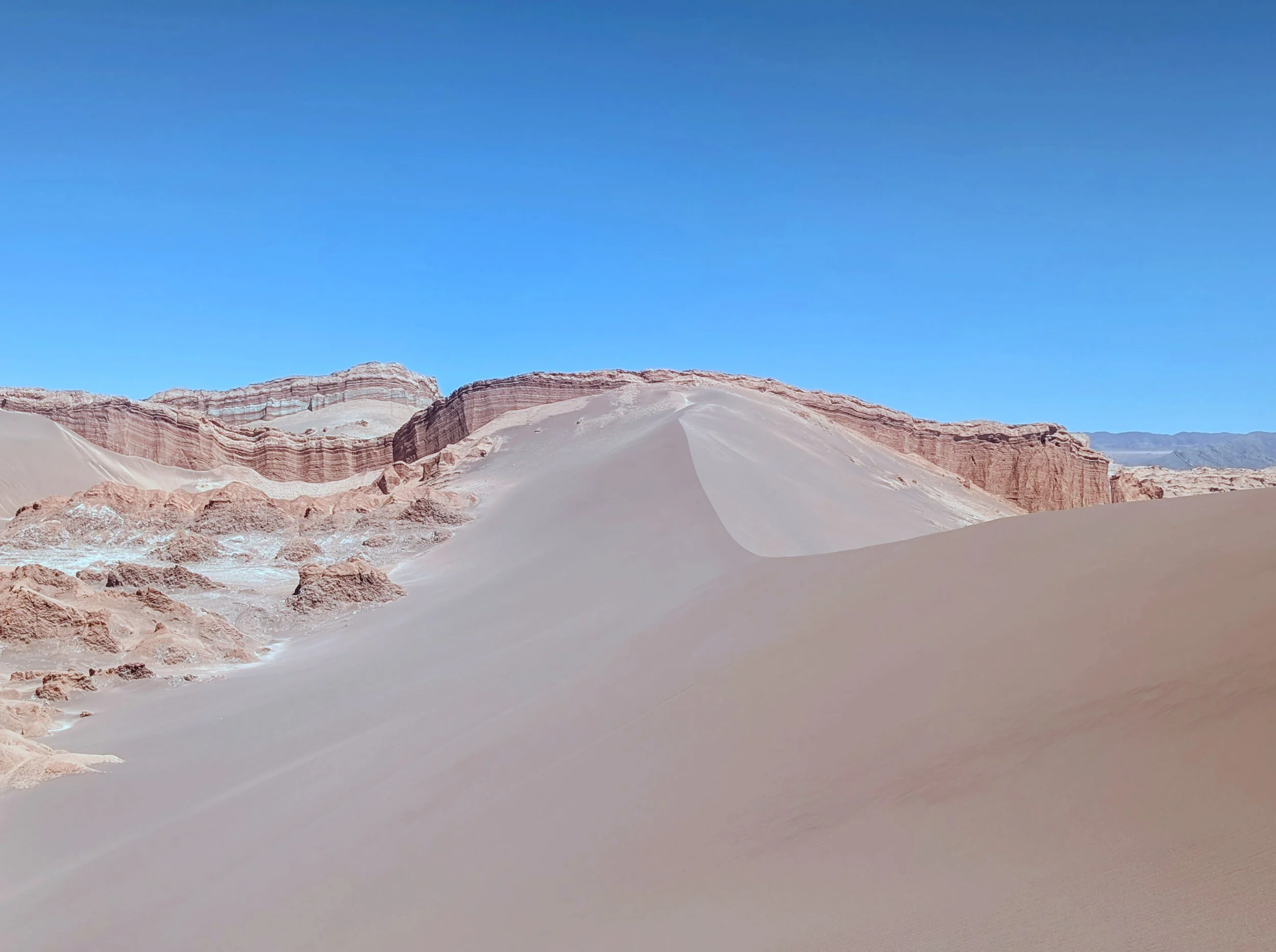
Enormous sand dune (Duna Mayor)
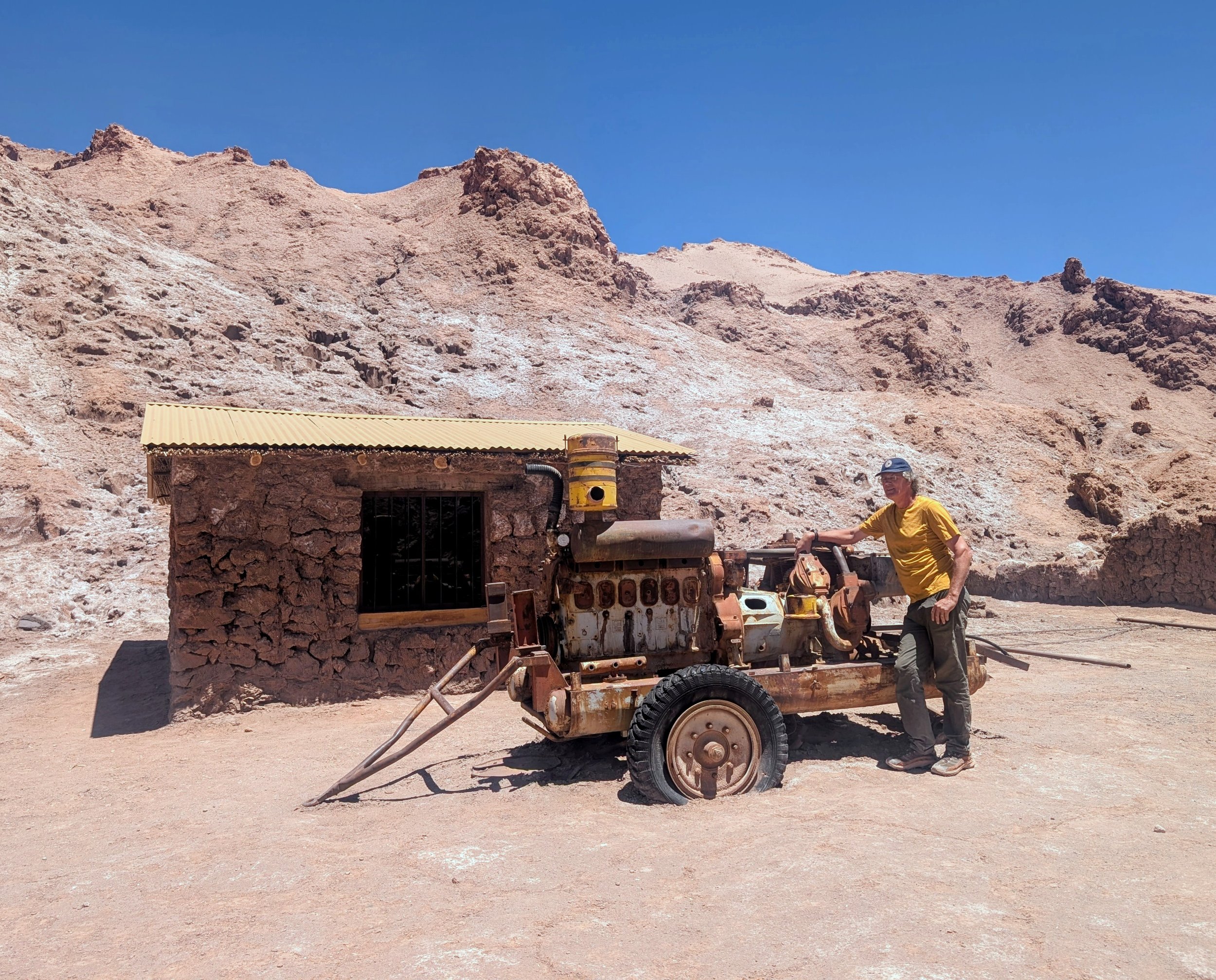
Old salt mining area
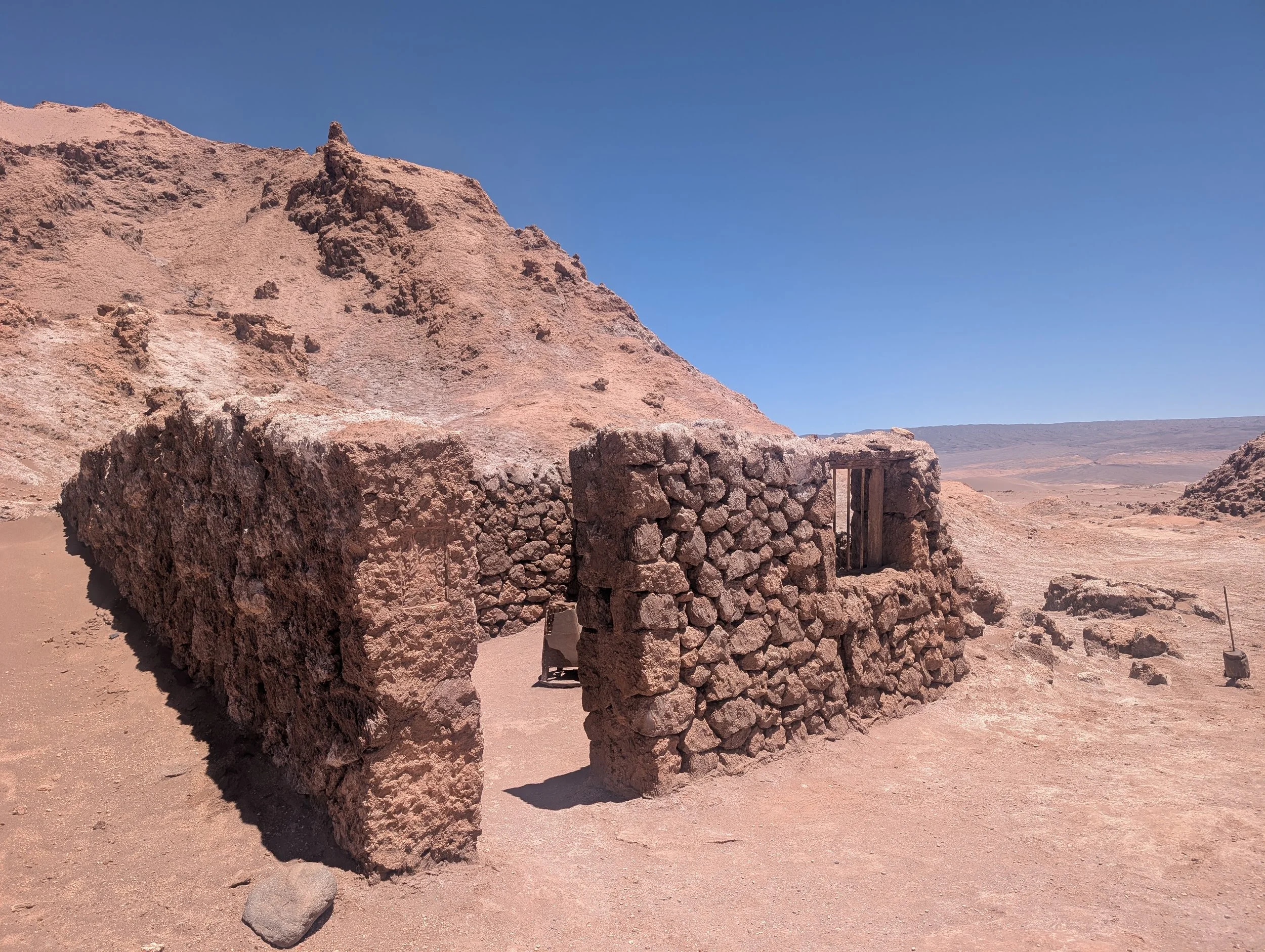
Old salt mining building in the desert
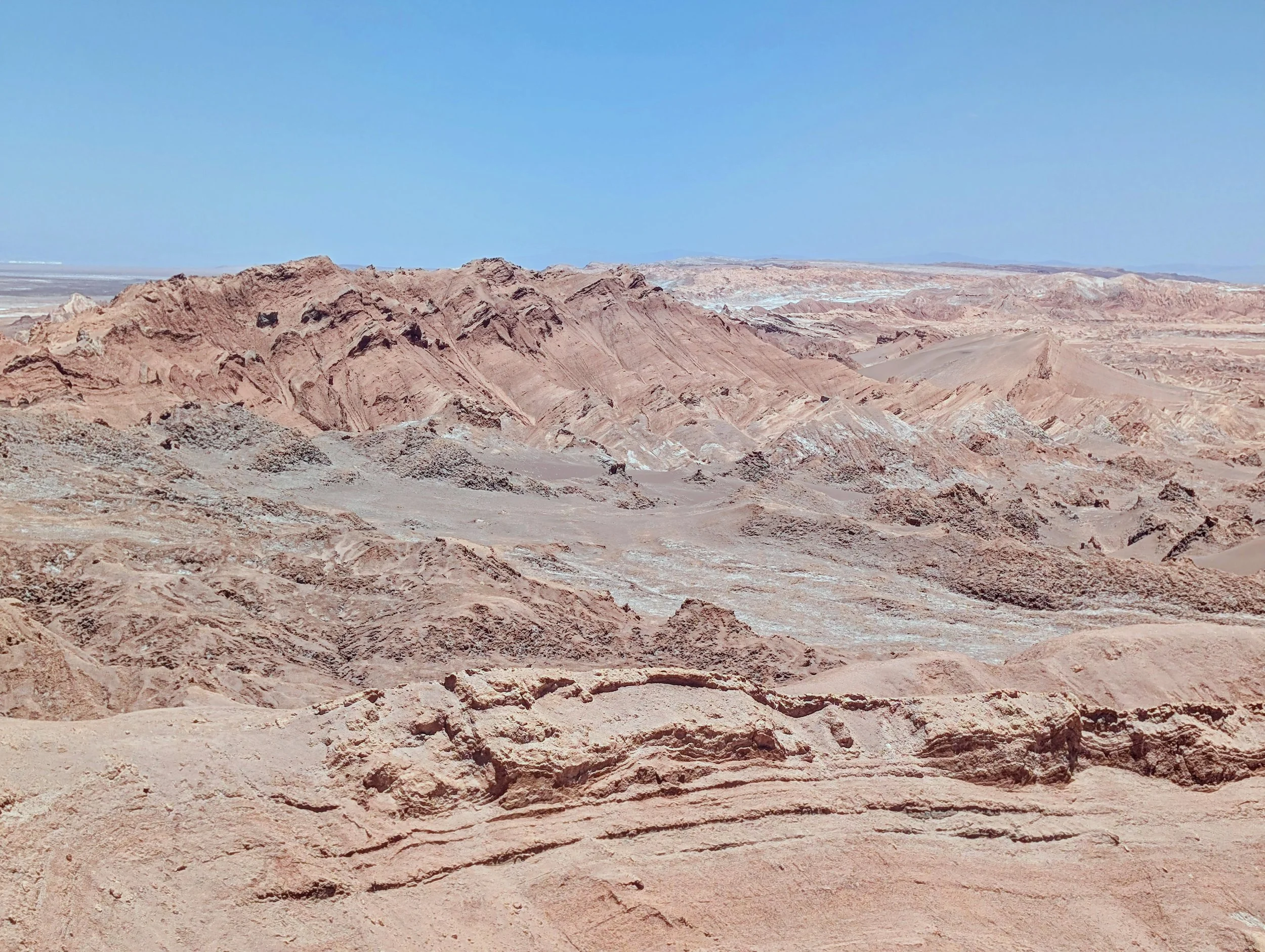
Area appropriately named as a lunar landscape
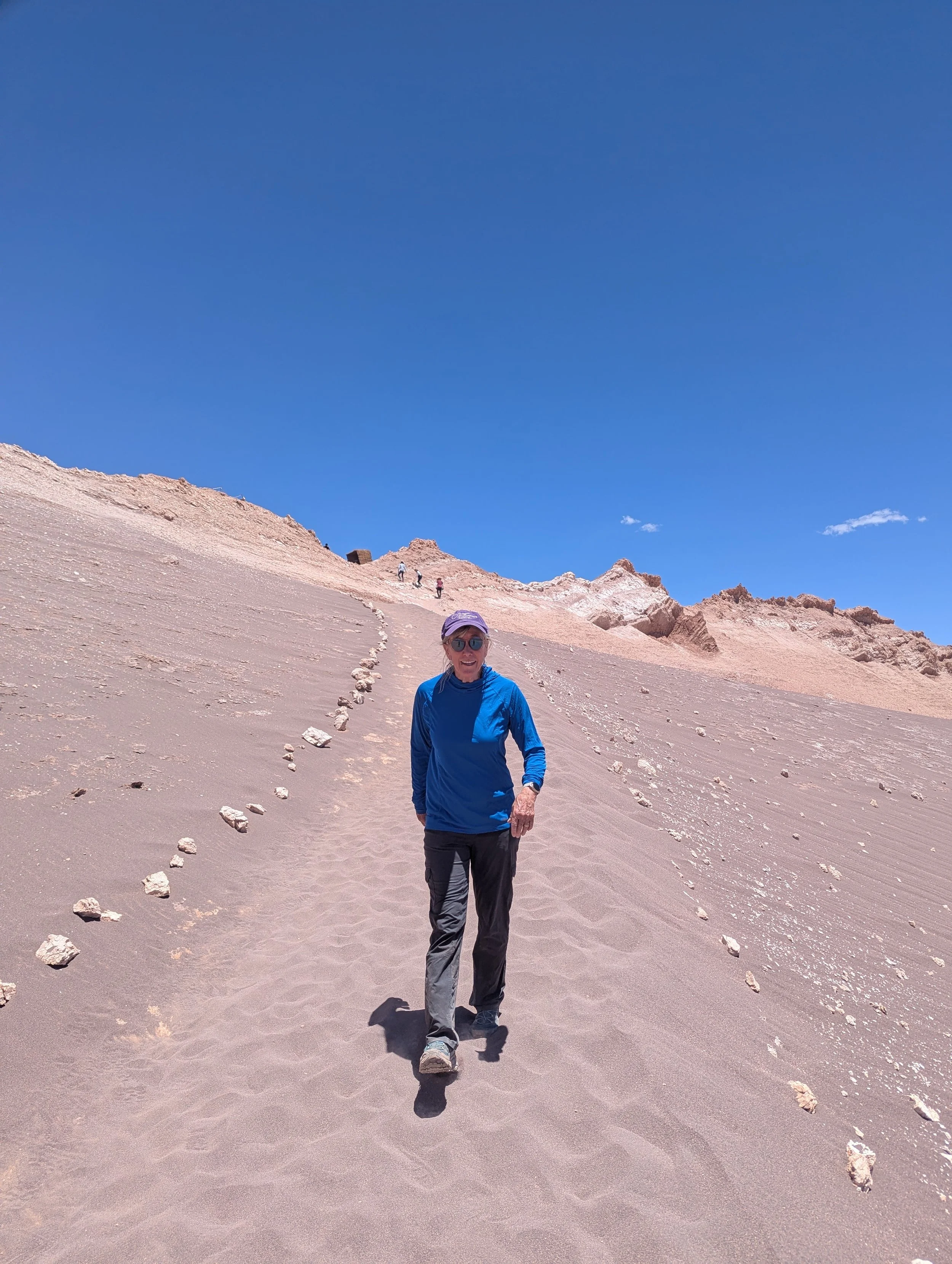
Just striding through the desert
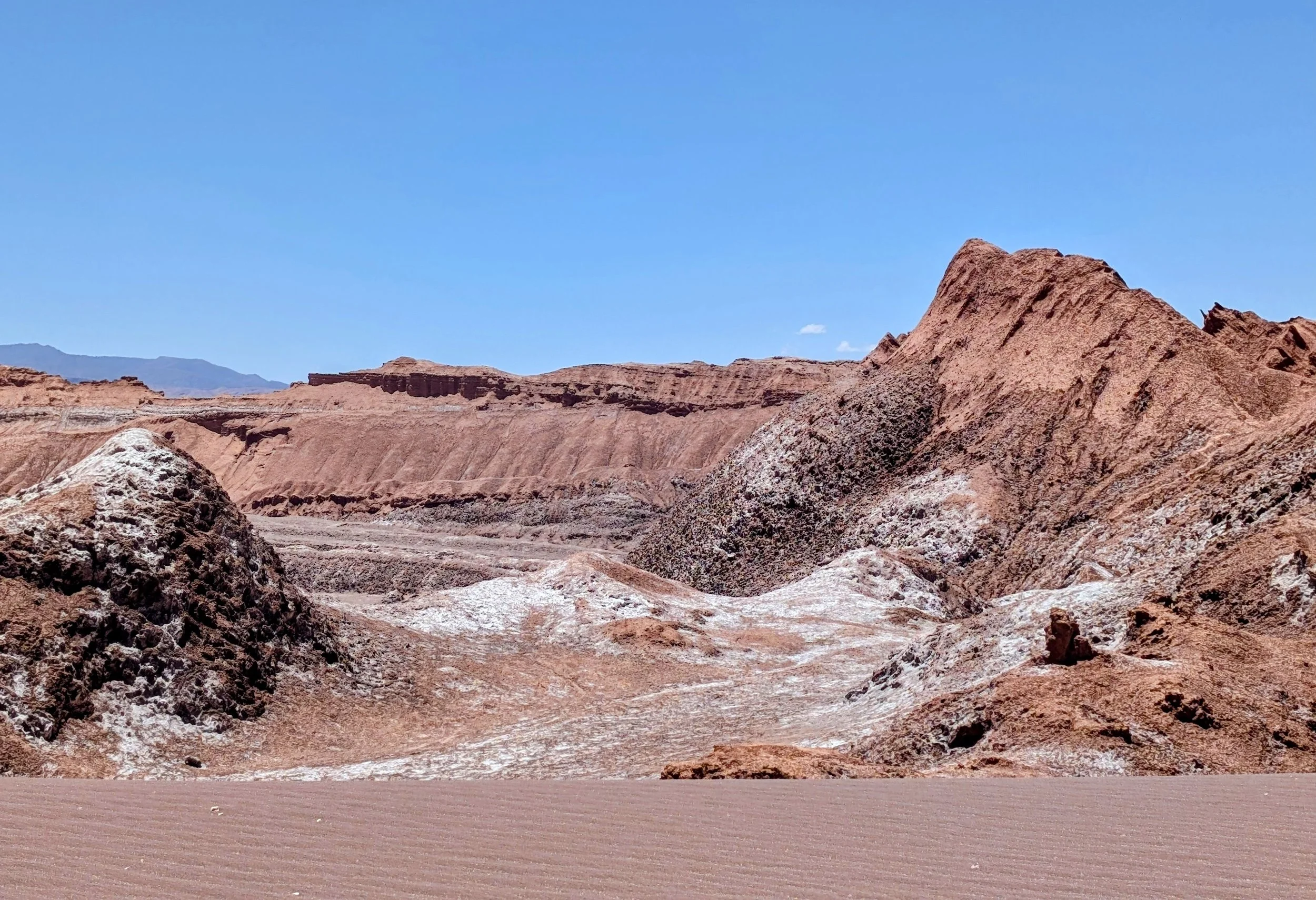
Salt flats encroaching on the sand
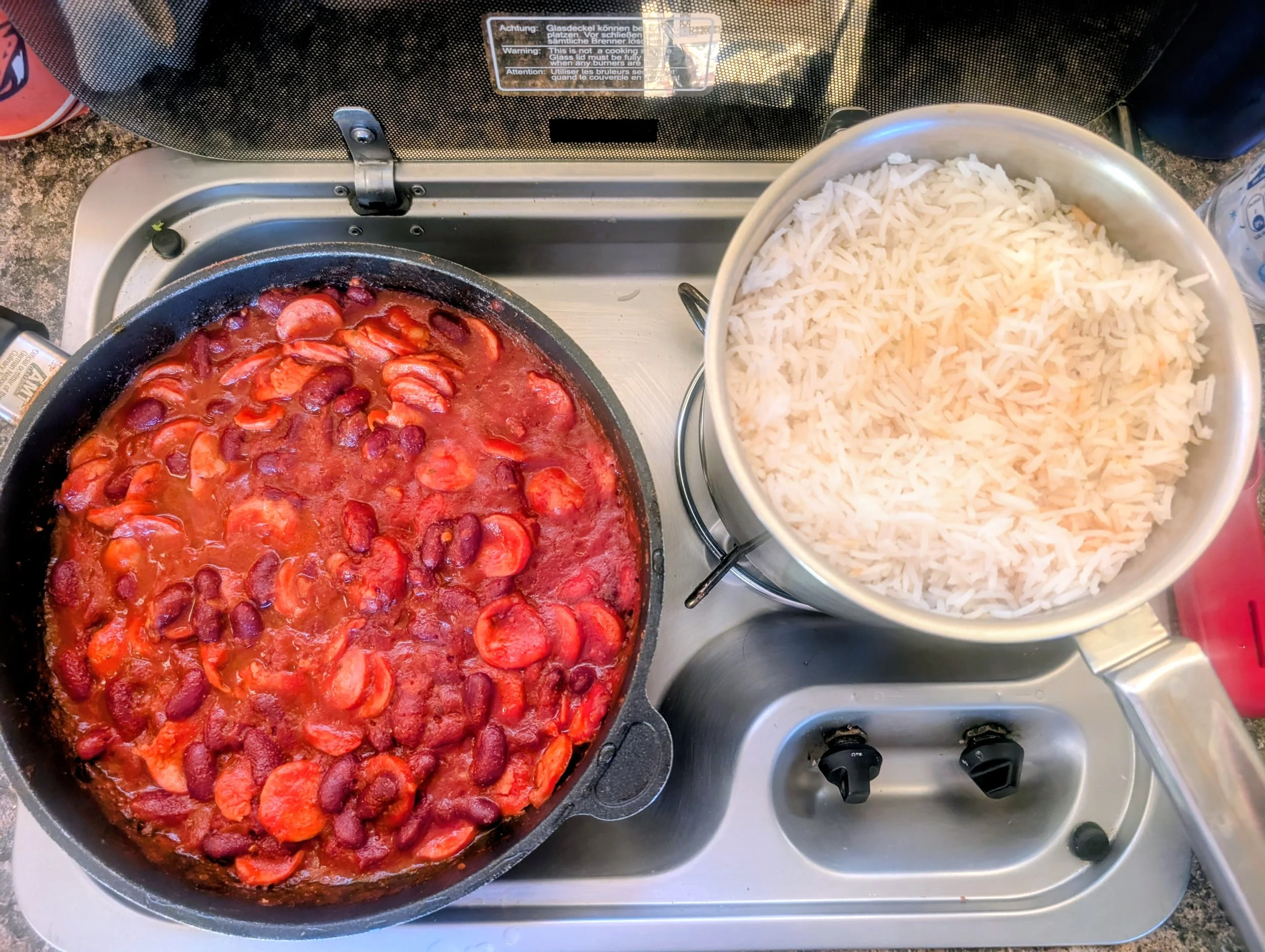
Tonight’s dinner - rice and beans with chorizo.
Our first entry into Chile was coming to an end and we set off to climb our second highest mountain pass with the truck (the highest was in Tibet), heading east to Argentina. Our plan was to work our way down to the tip of South America, criss crossing back and forth between Chile and Argentina. This meant more border crossings which was a hassle, but allowed us to see the best parts of both countries with a little less driving. We learned to carefully measure our fresh food buys so that we were empty whenever we crossed a border - neither country wanted any of the other’s fresh meat, dairy, fruits, vegetables, eggs or honey. Luckily paperwork and bureaucracy crossing between the two countries was straightforward and generally easy.
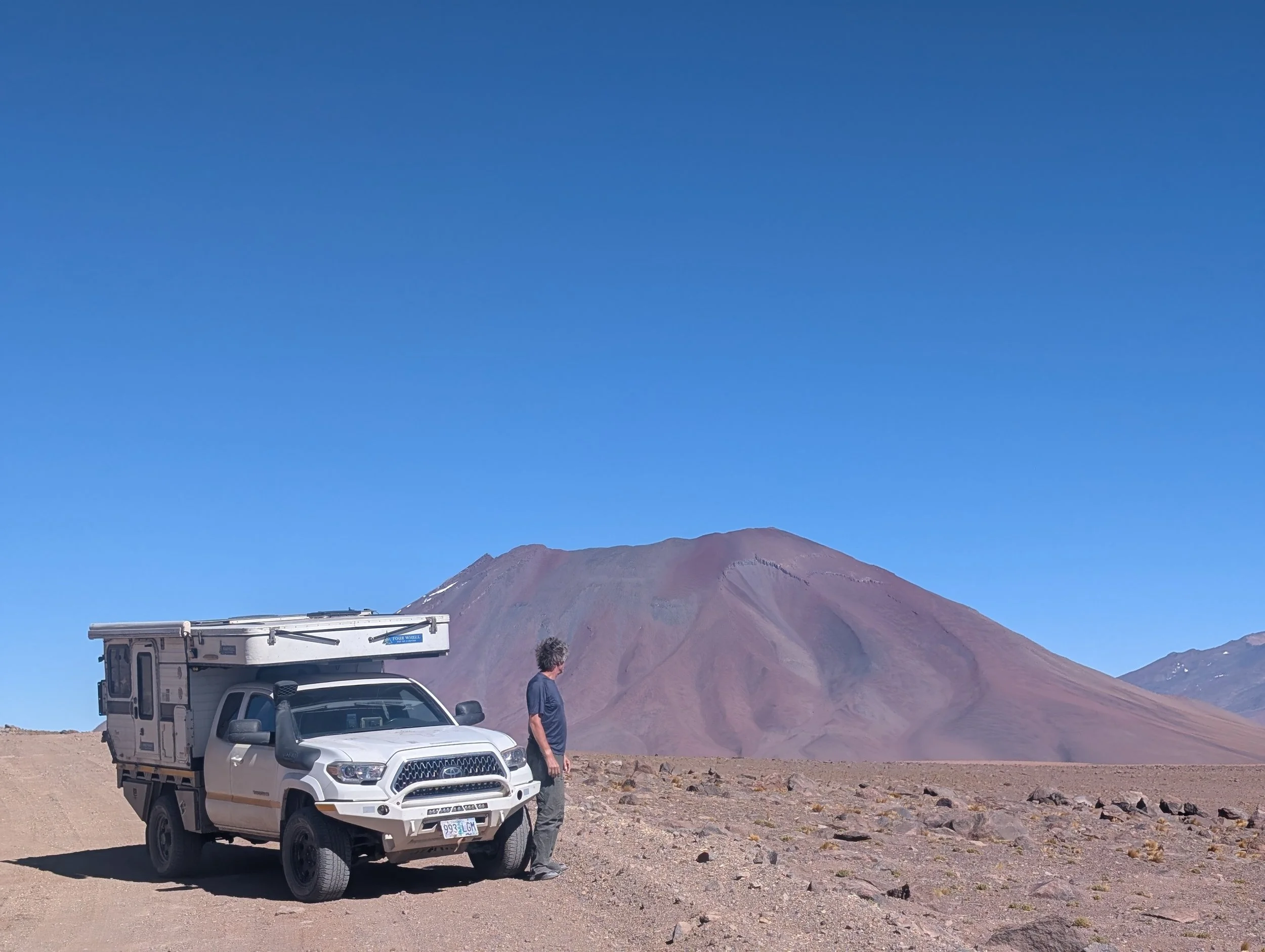
Heading east to Argentina - almost 16,000 foot pass between the two countries - we planned to enter Argentina in the Jujuy Province.
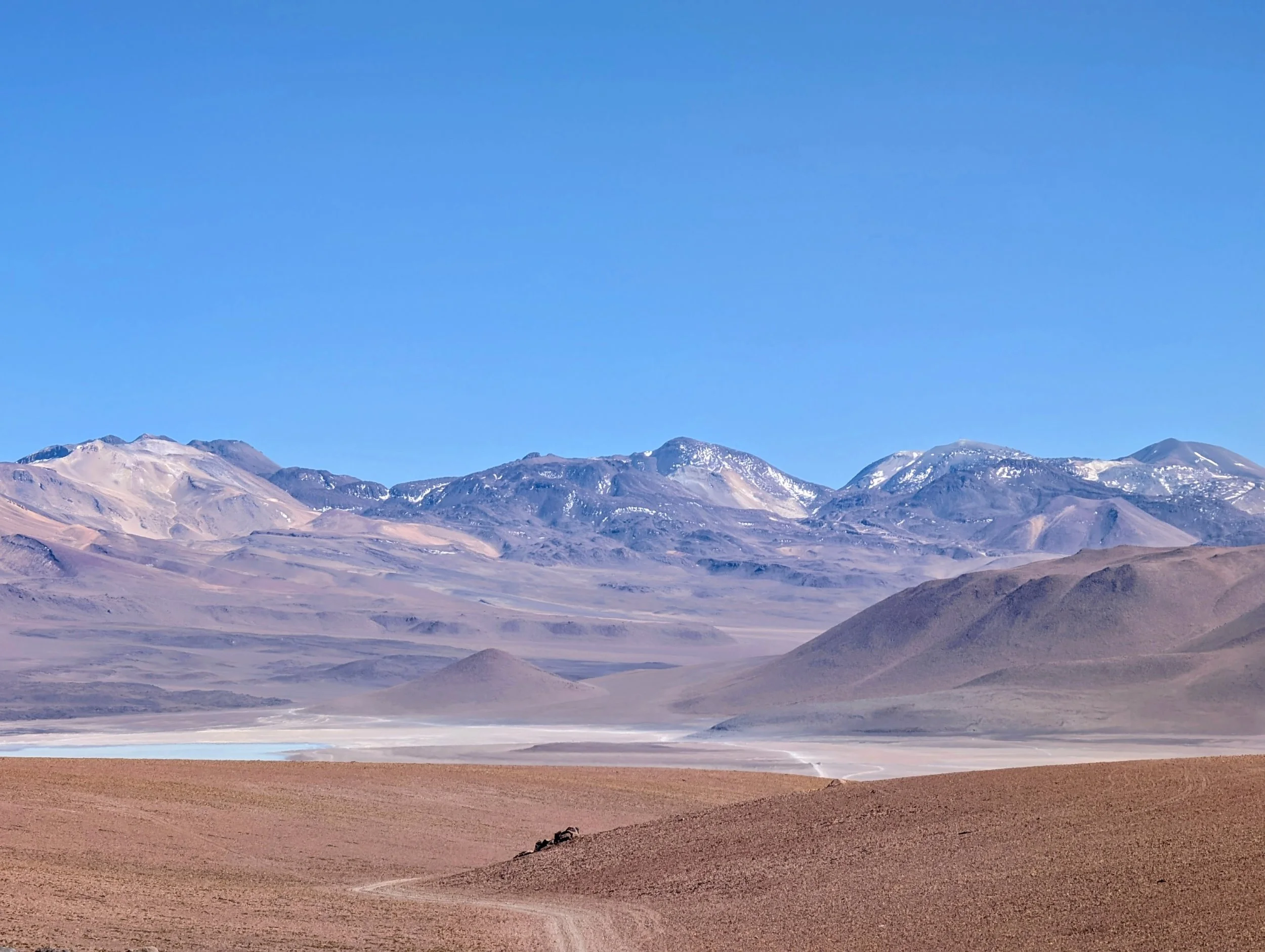
Very scenic drive
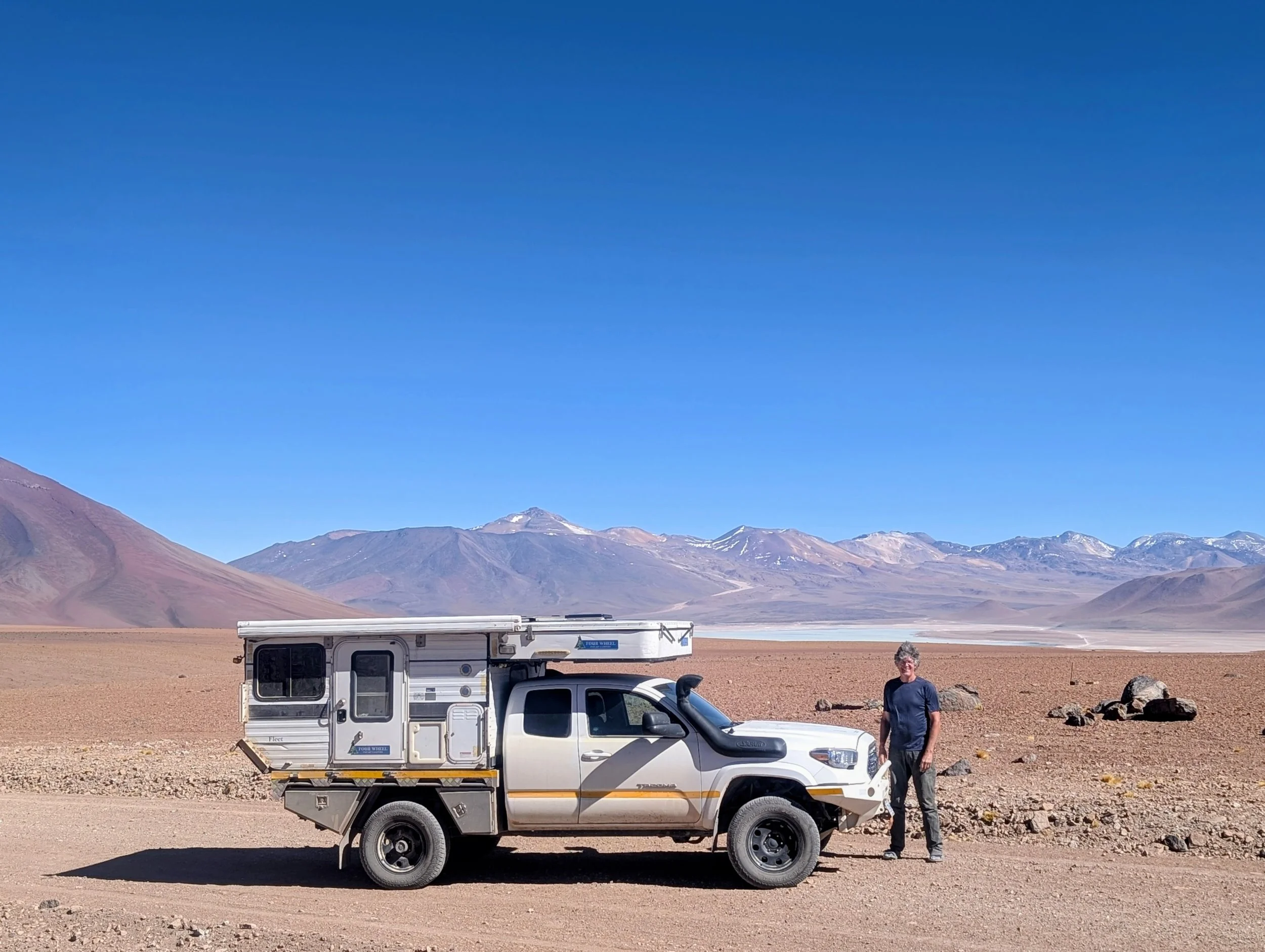
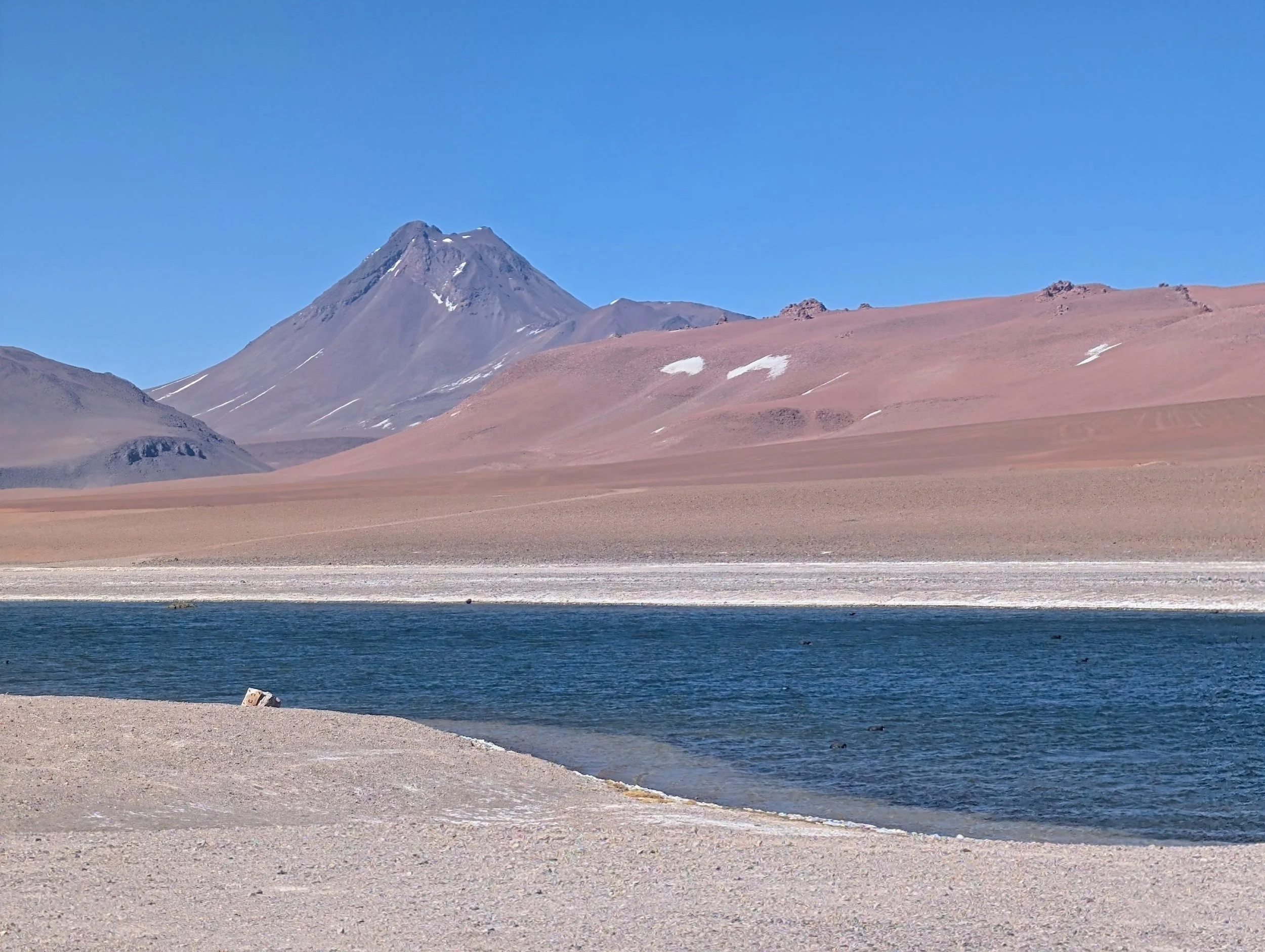
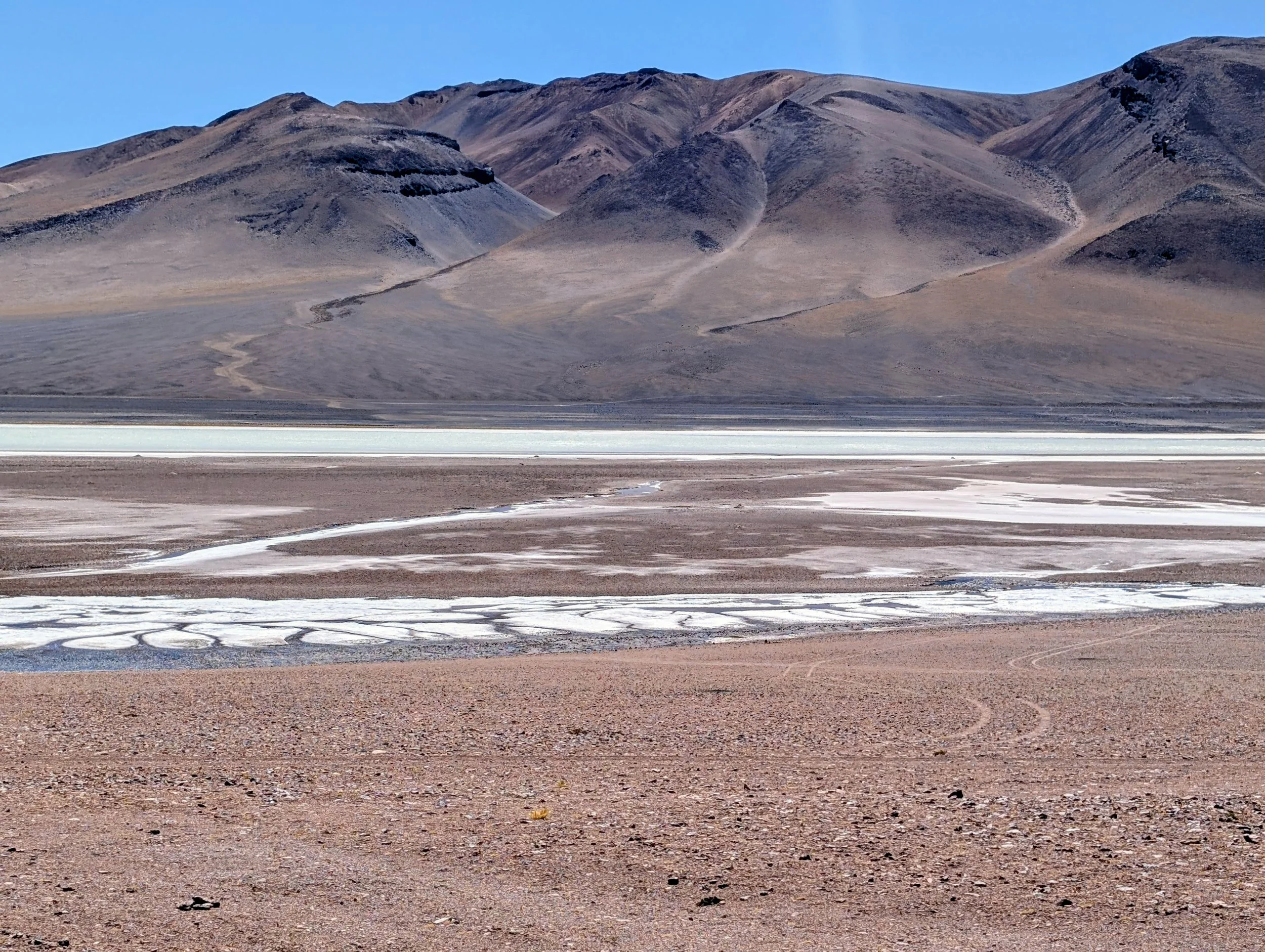
More salt flats and bright blue high mountain lakes
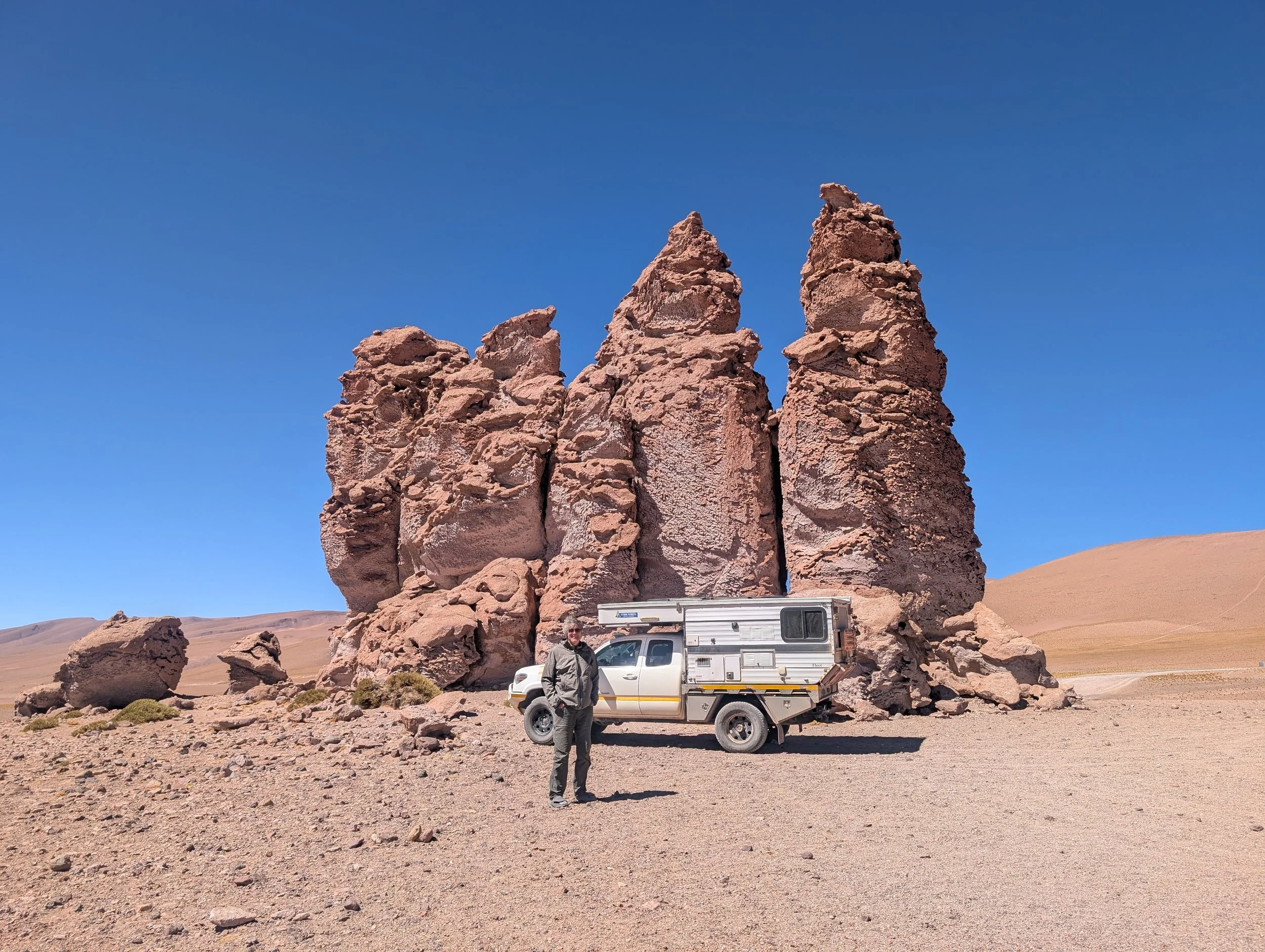
And a last side trip to interesting rock formations rising out of the sand
Our first foray into Chile was a huge success. We were feeling relaxed and confident about dealing with travel logistics ahead. People were welcoming and kind and our limited Spanish was appreciated. We were greeted with smiles and given assistance with our broken Spanish and atrocious pronunciation. At least we could understand almost everything people were saying to us, speaking back was our issue. We did remain on high alert for robbery and break ins in crowded tourist areas. Most of the time Dawn did the shopping and errands and Andy remained with the vehicle. If we were both going to do something, we found secure parking and paid the nominal charge for peace of mind (usually a $1 an hour or so). Chile was rising to the top of our “best places to overland” list.
Part 2 - November 13- 22
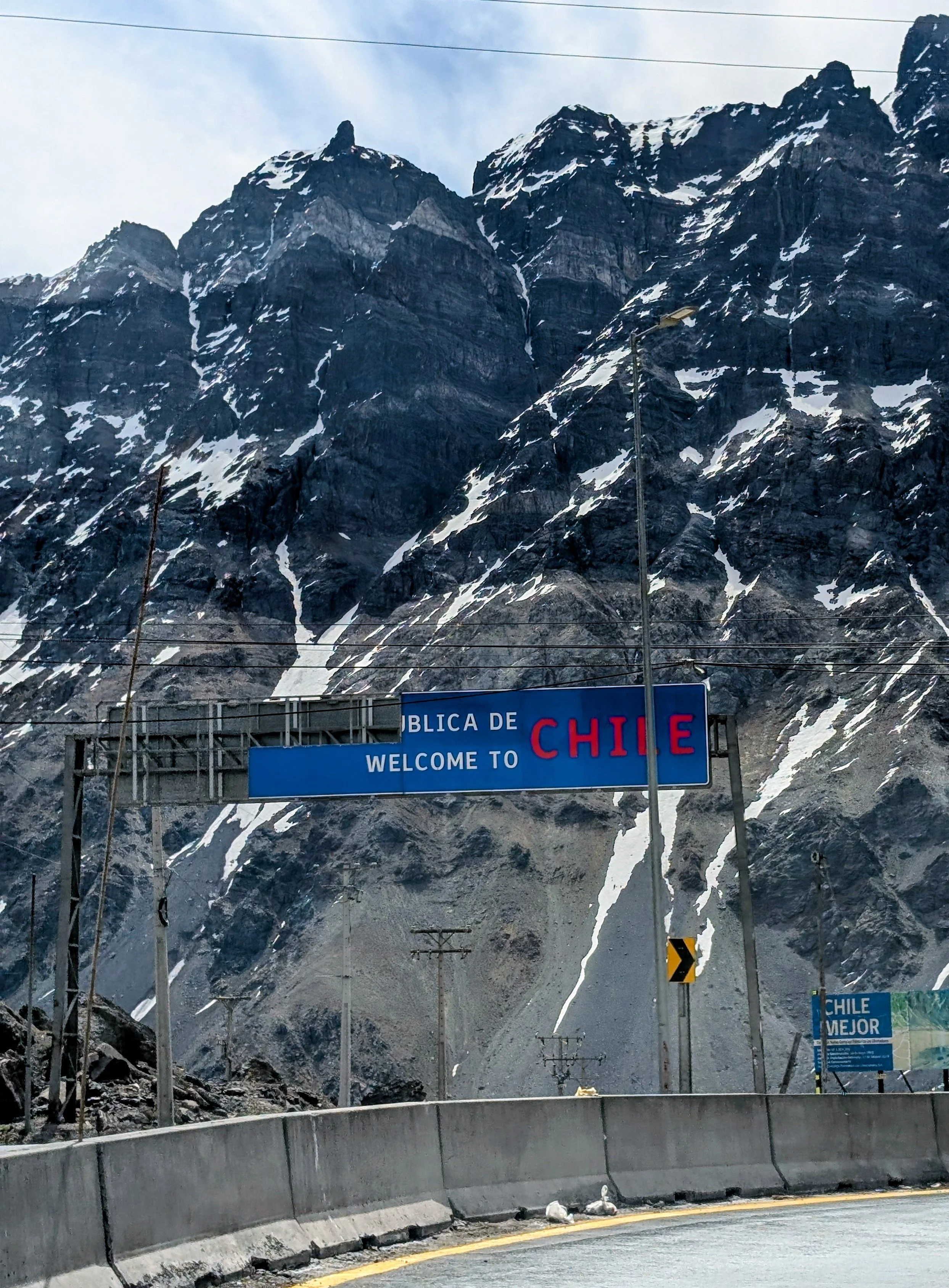
Crossing the mountain pass from Mendoza to Santiago
Before we knew it, we were heading back into Chile, making our way from Mendoza to Santiago over another steep mountain pass.
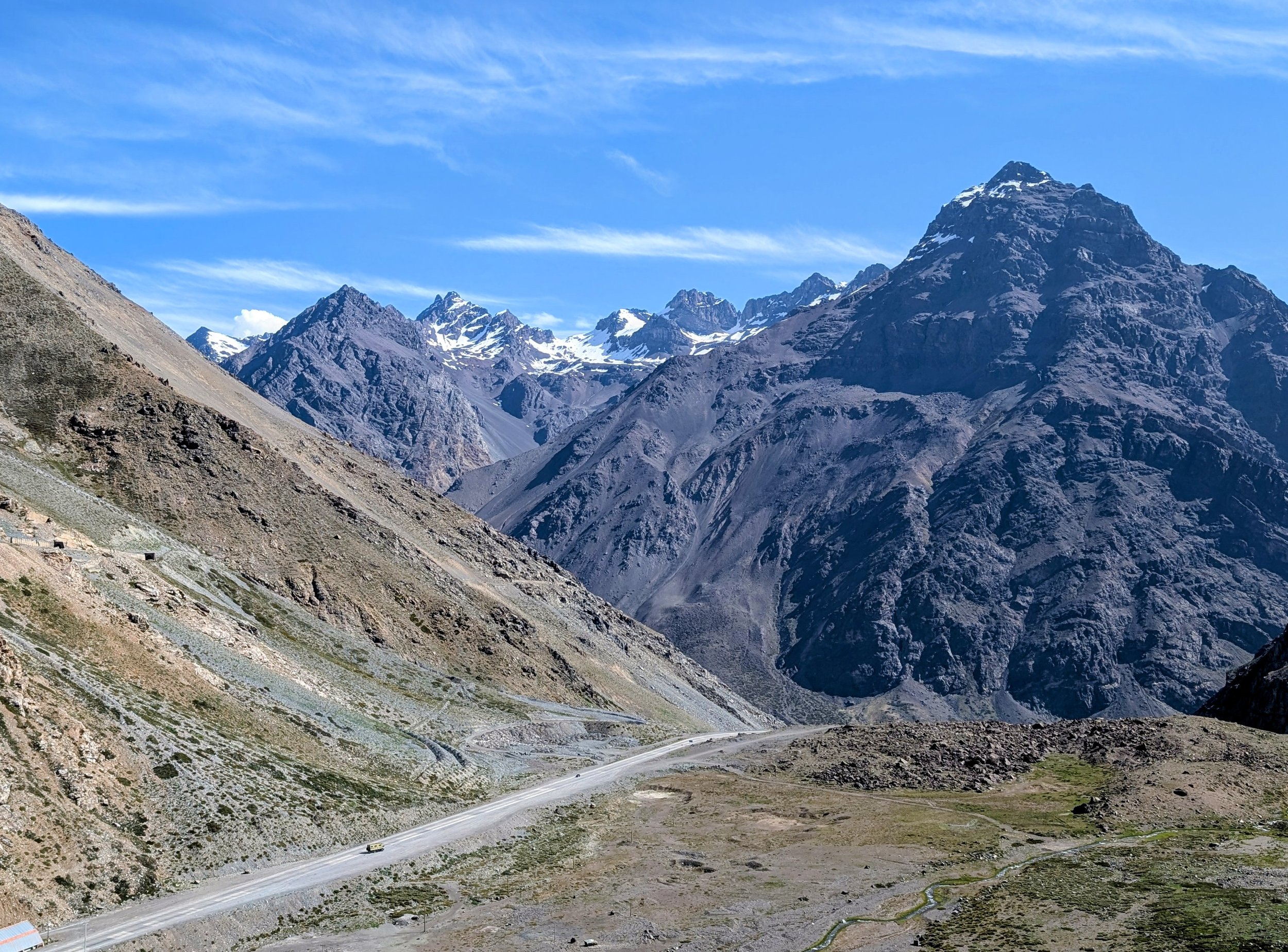
One of our most scenic roads yet
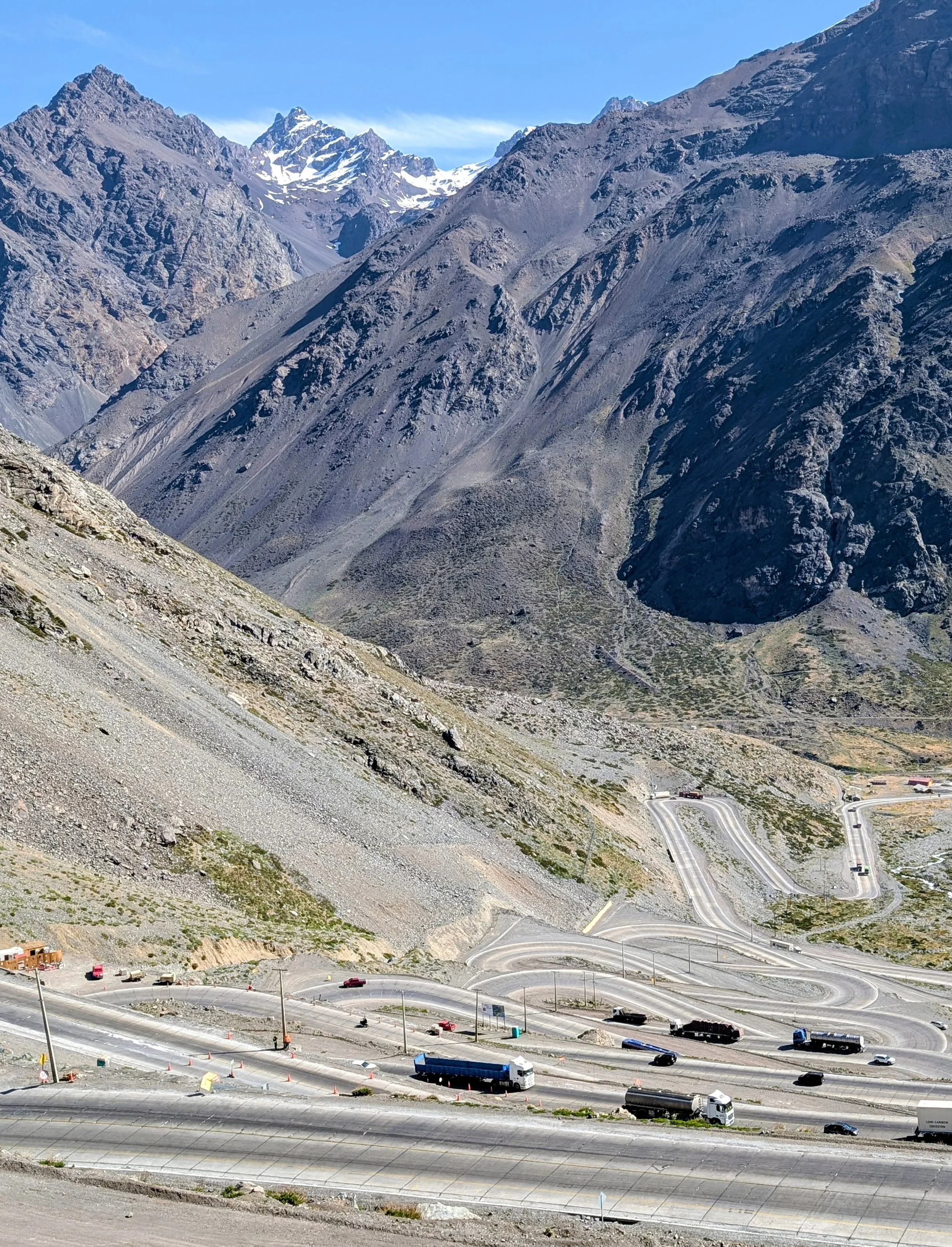
Some serious switchbacks though
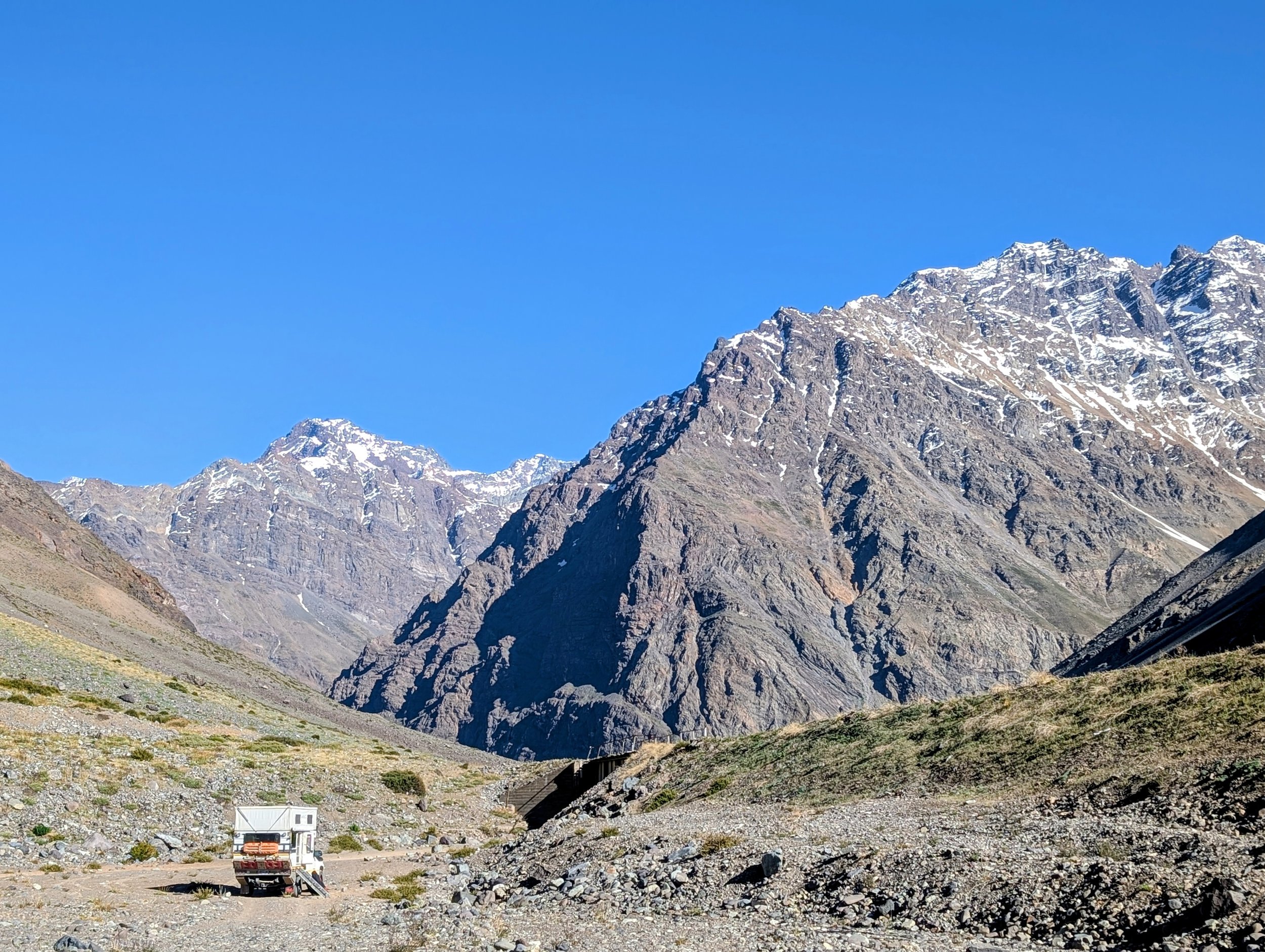
Mountain camp along the way
We had another setback with the truck repairs we had planned for Santiago. When our son Trevor went to a shipping office in the US with our new fuel pump and brake booster (total weight 4 lbs) he was told that DHL would no longer ship to Chile because of customs complications but FedEx would do it for $1500. Insane. Since Trevor was coming to visit us for Christmas, we agreed that he would bring us the parts then and we would risk another month on the road without doing the repairs.
So we had some more time to explore Santiago. The first time we were in the Santiago area, we did not visit Valparaiso because of the frequency of vehicle break ins there. But we were feeling more confident and also regretful that we had not visited the historic scenic port. So we left the truck in secure parking outside Santiago and signed up for a day tour to visit Valparaiso. We are glad we did. Of all the cities we have visited, it had the most vibrant and varied street art.
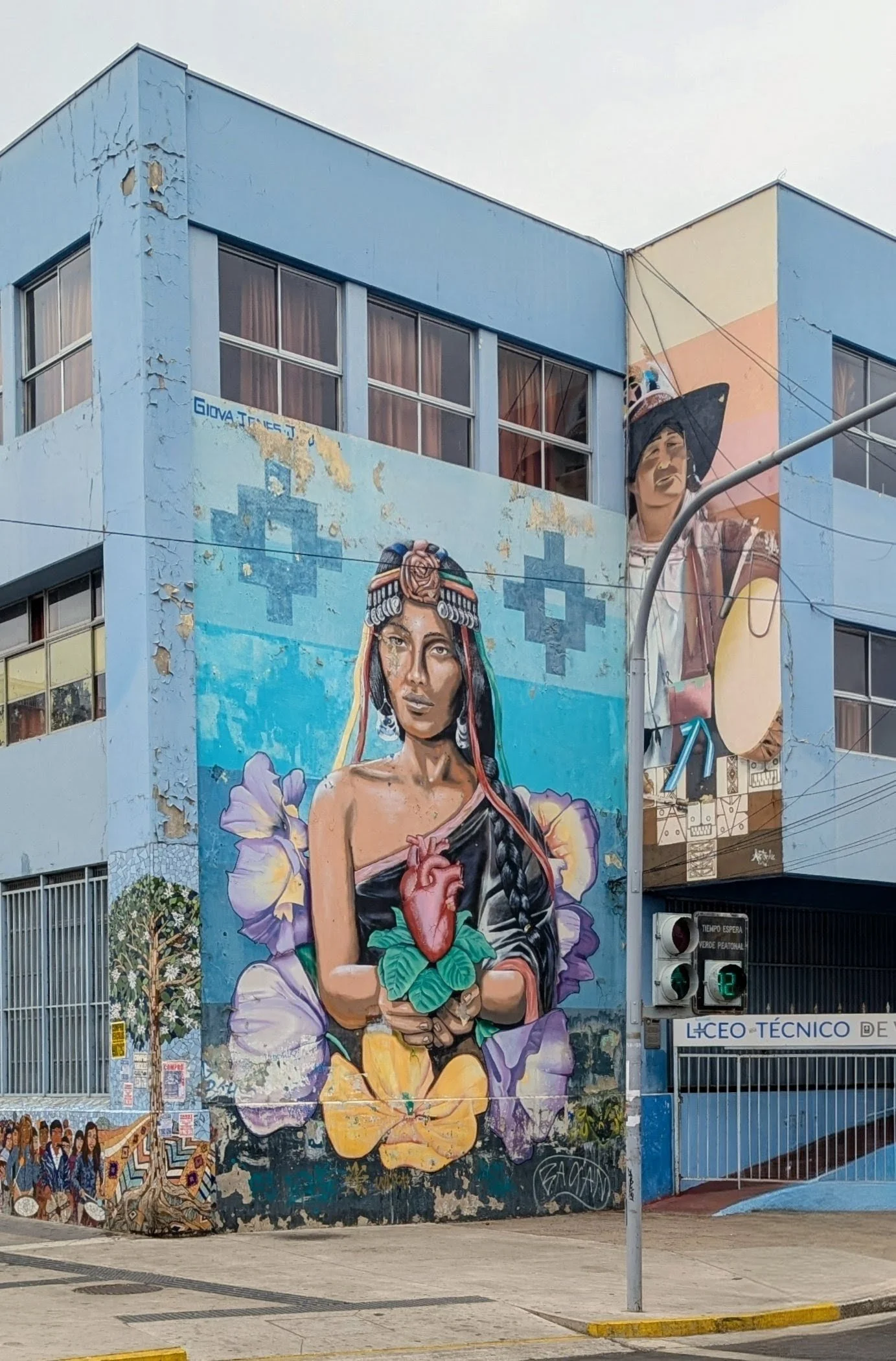
Murals everywhere in Valparaiso
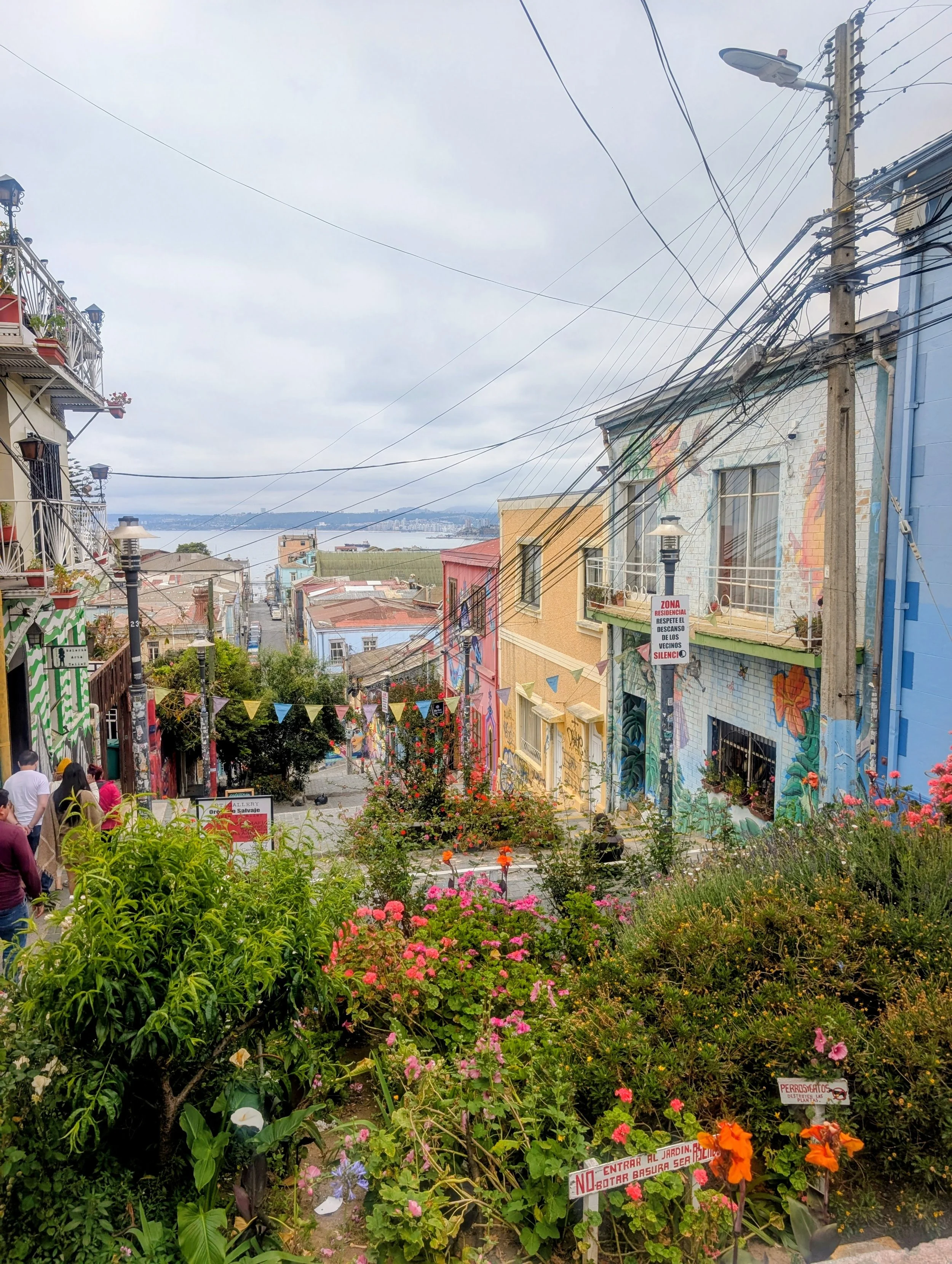
Houses are built in the hills above the port
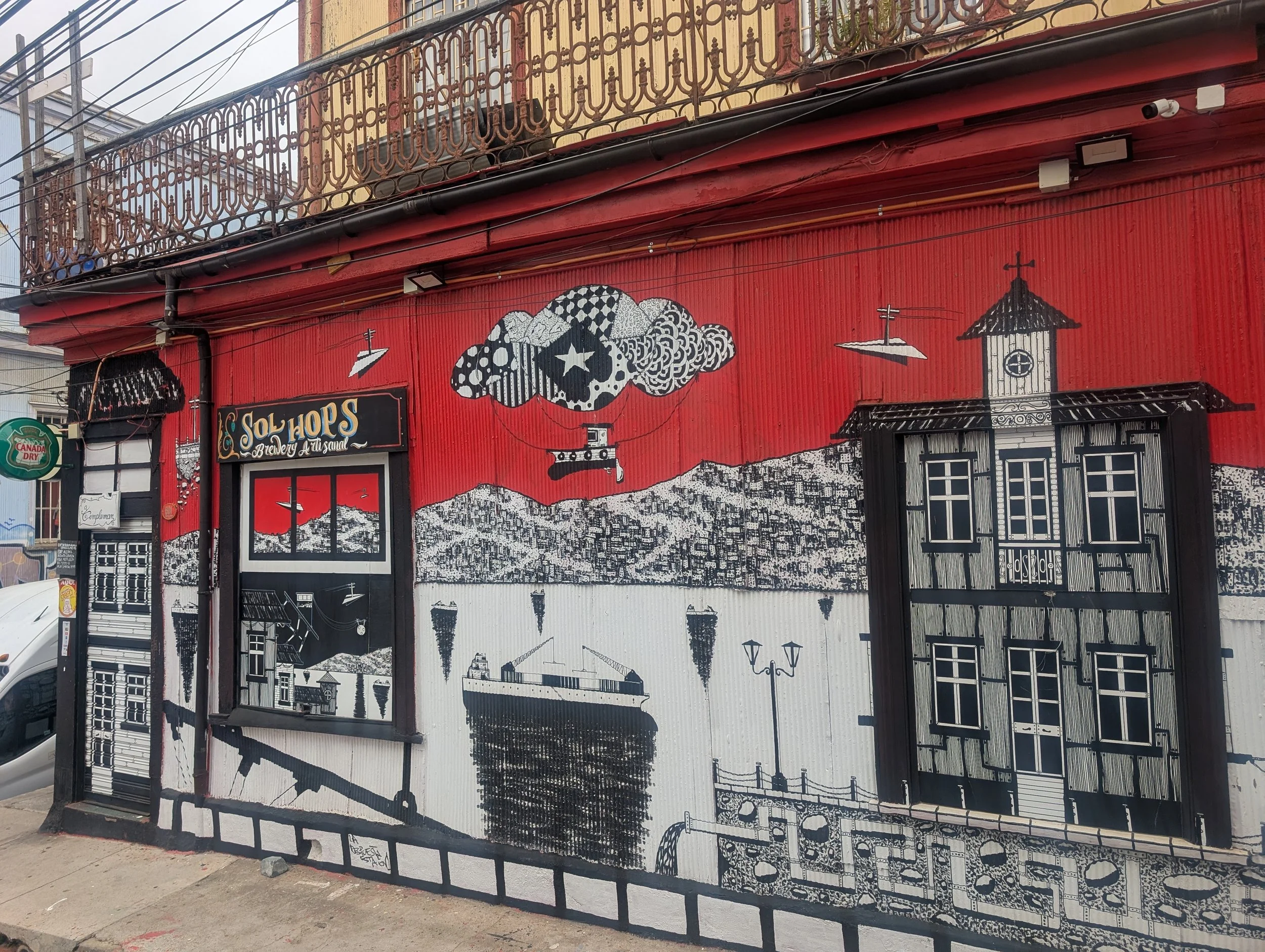
The street art was varied and the most prolific we have ever seen
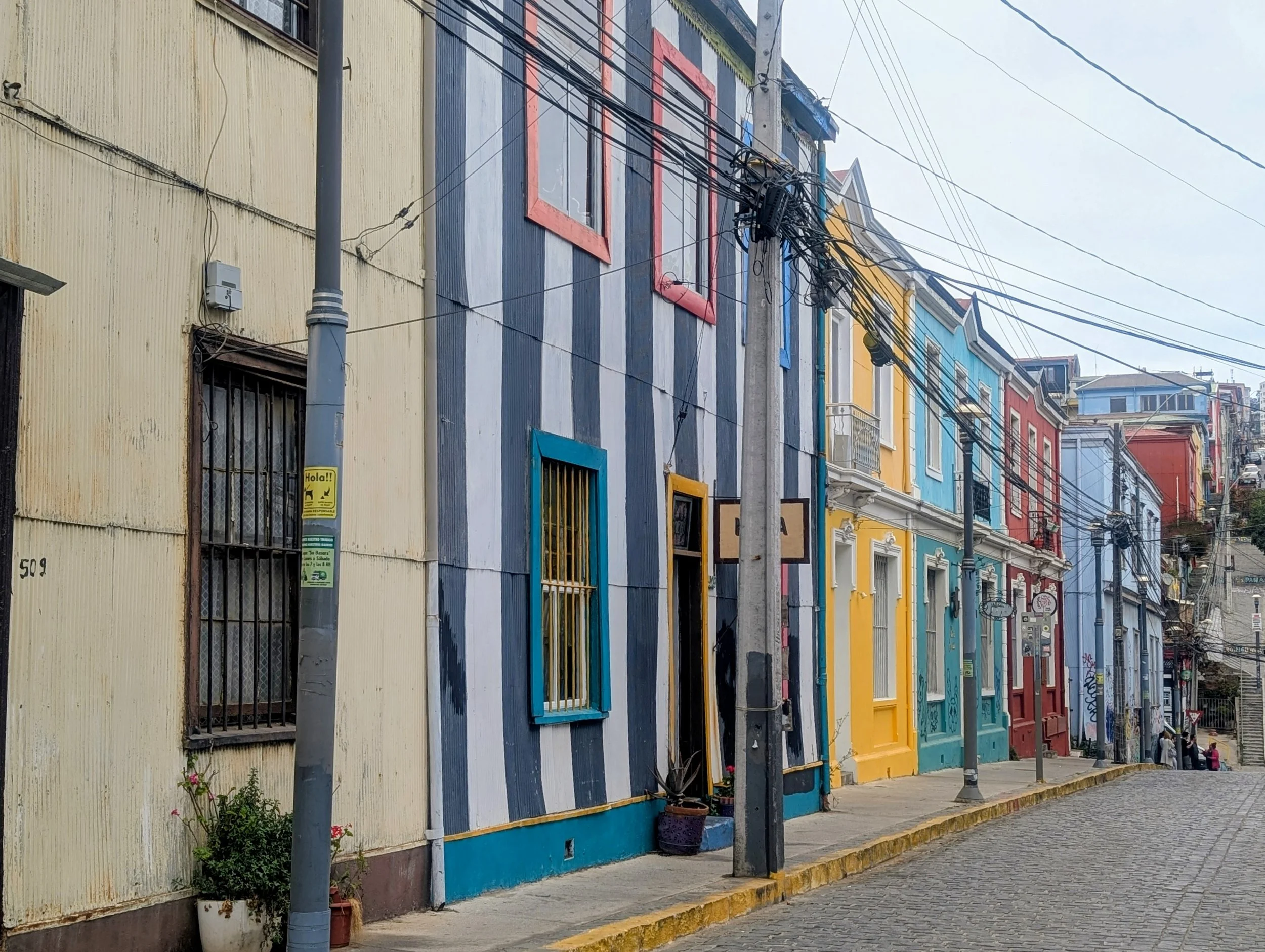
Even the buildings without art were colorfully painted
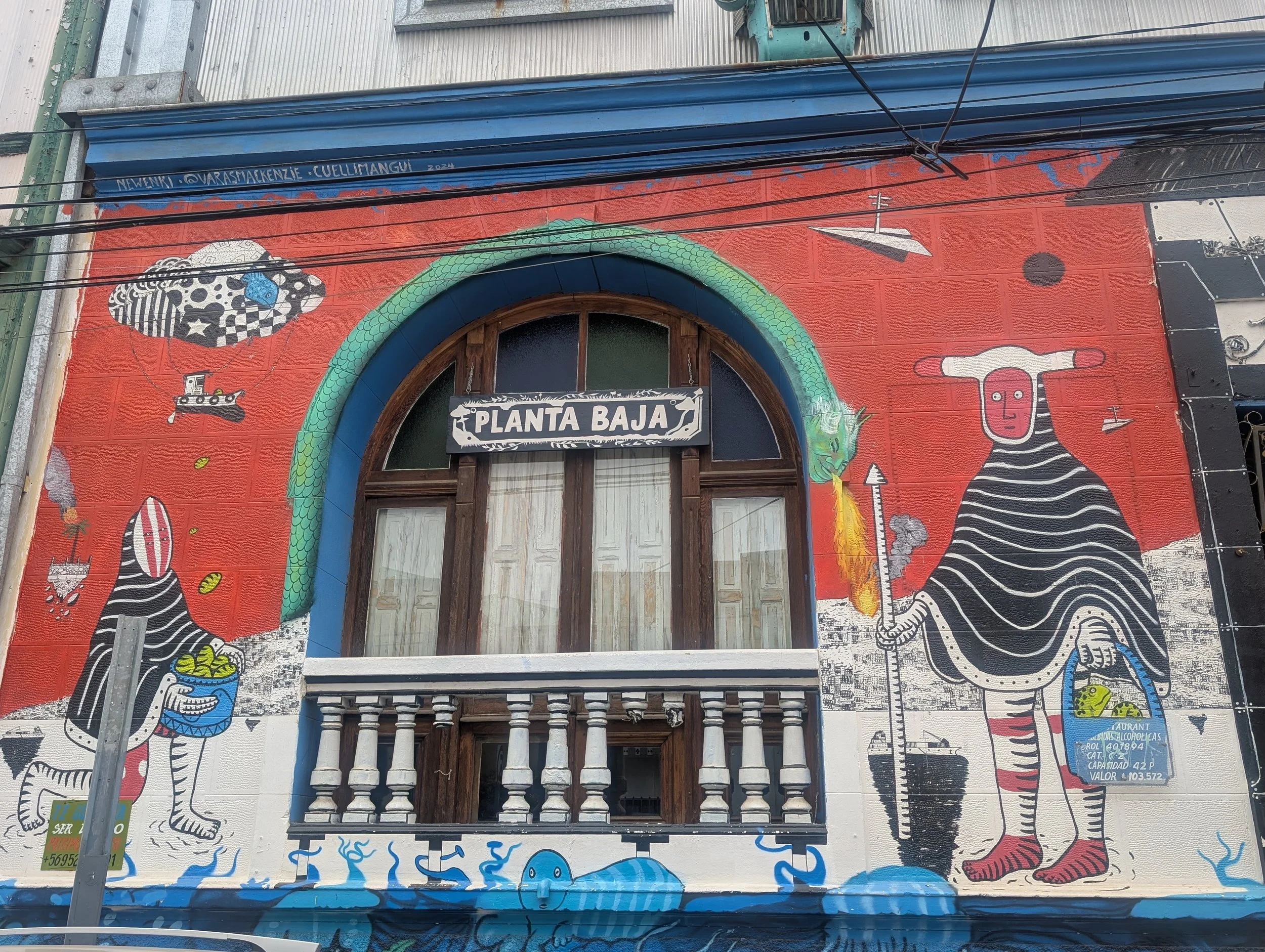
Interesting blend of historic and futuristic art
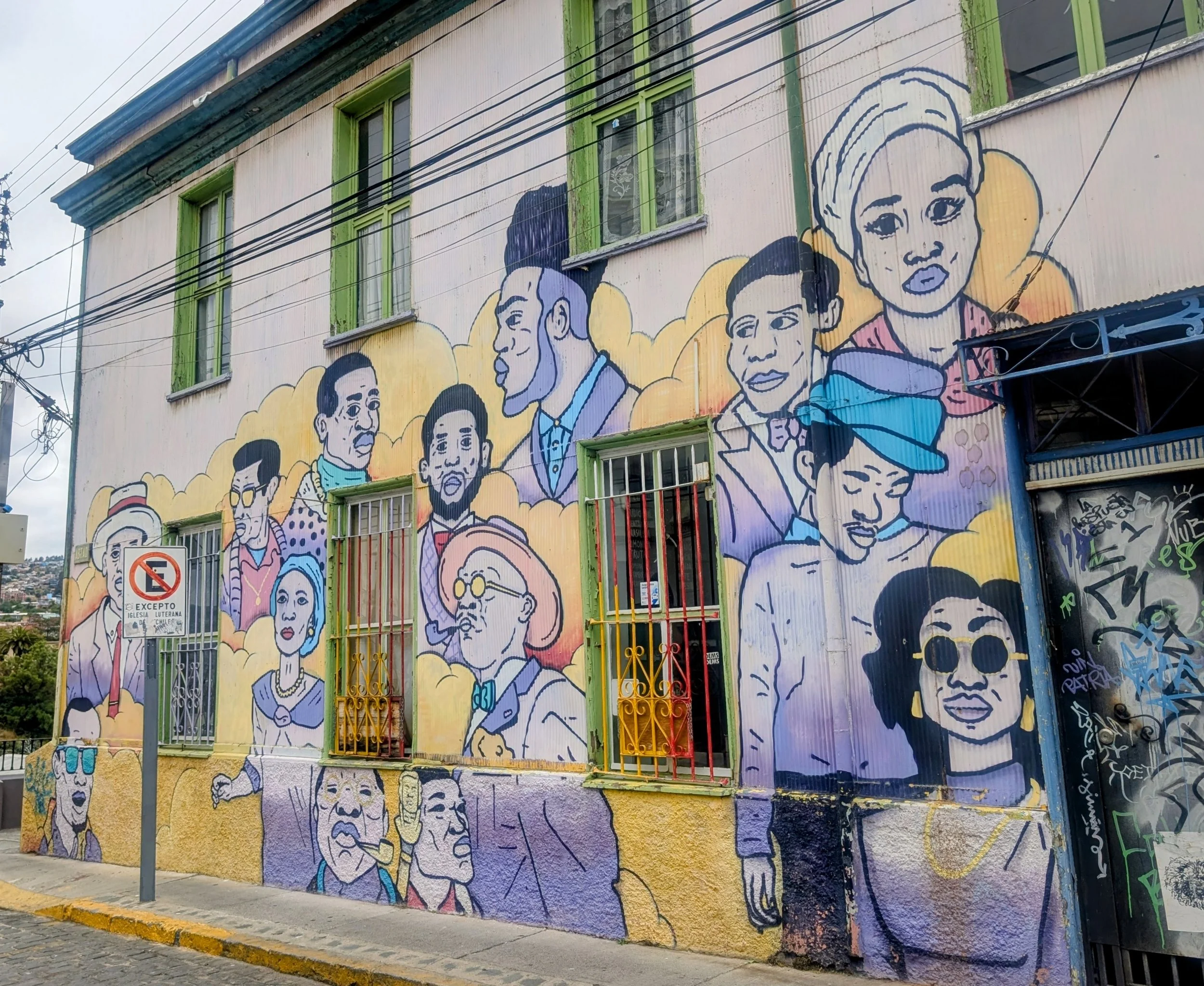
The art made wandering the streets a fascinating experience
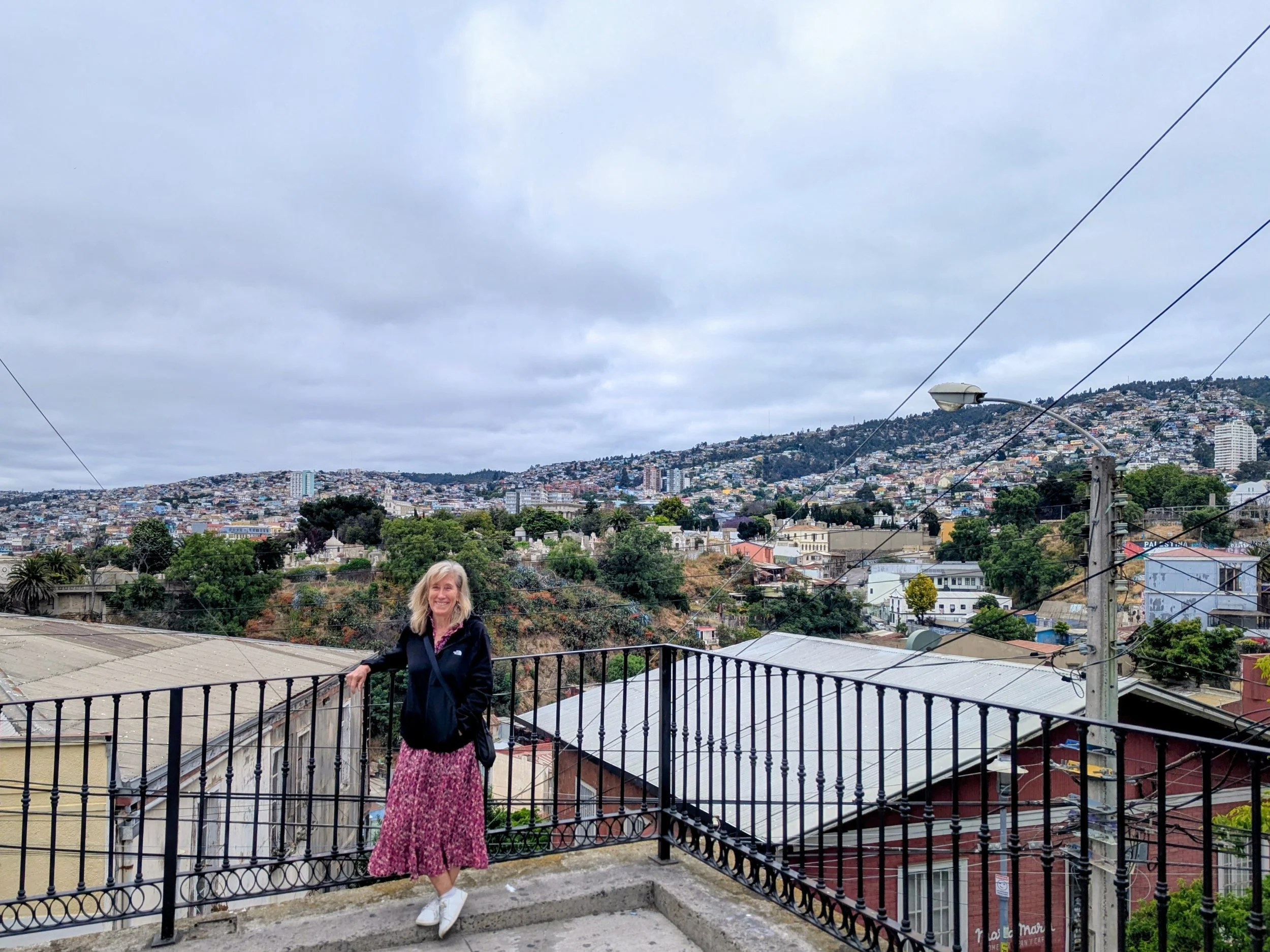
Scenic overlook in the hills of Valparaiso
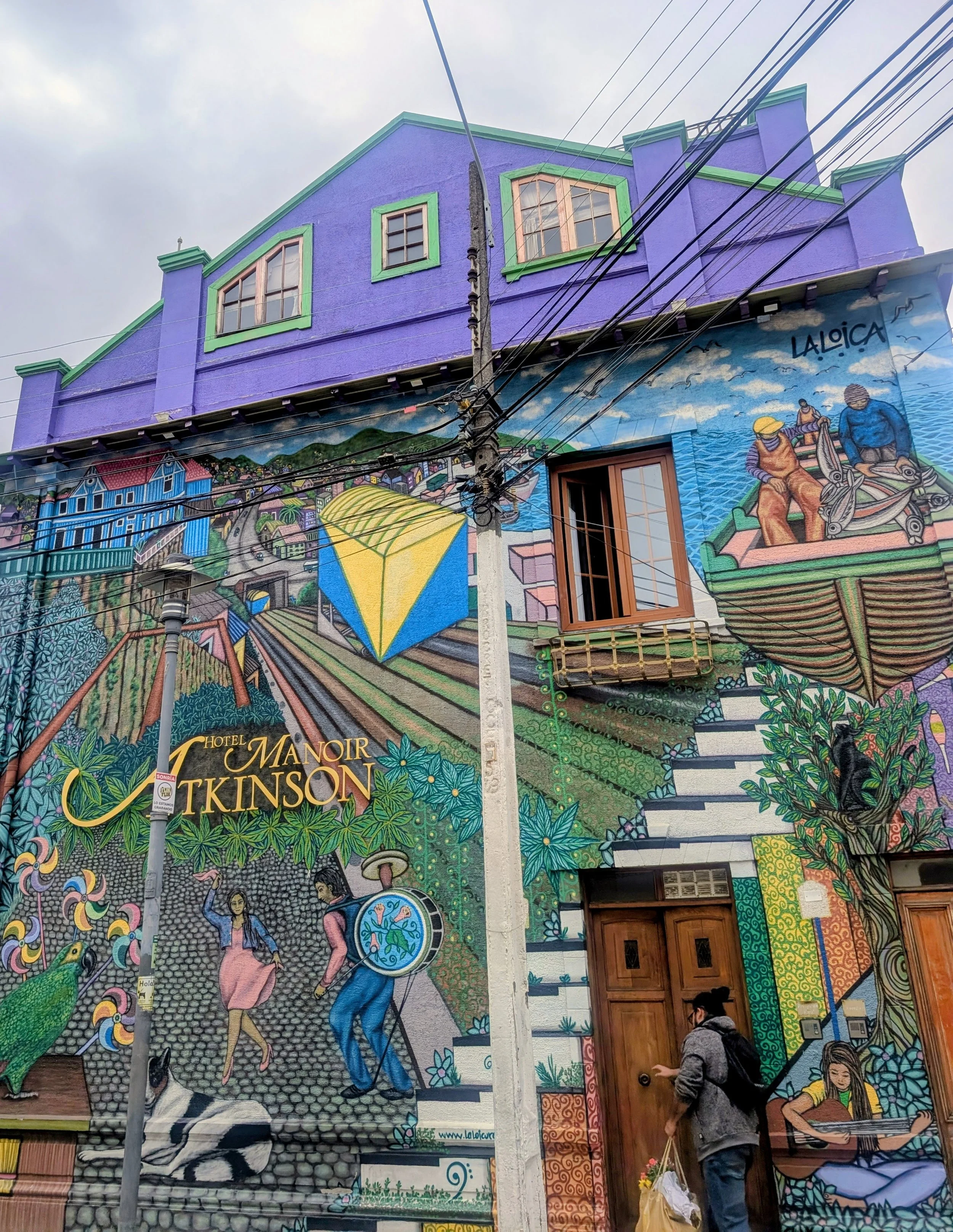
It was hard to stop taking photos of the art
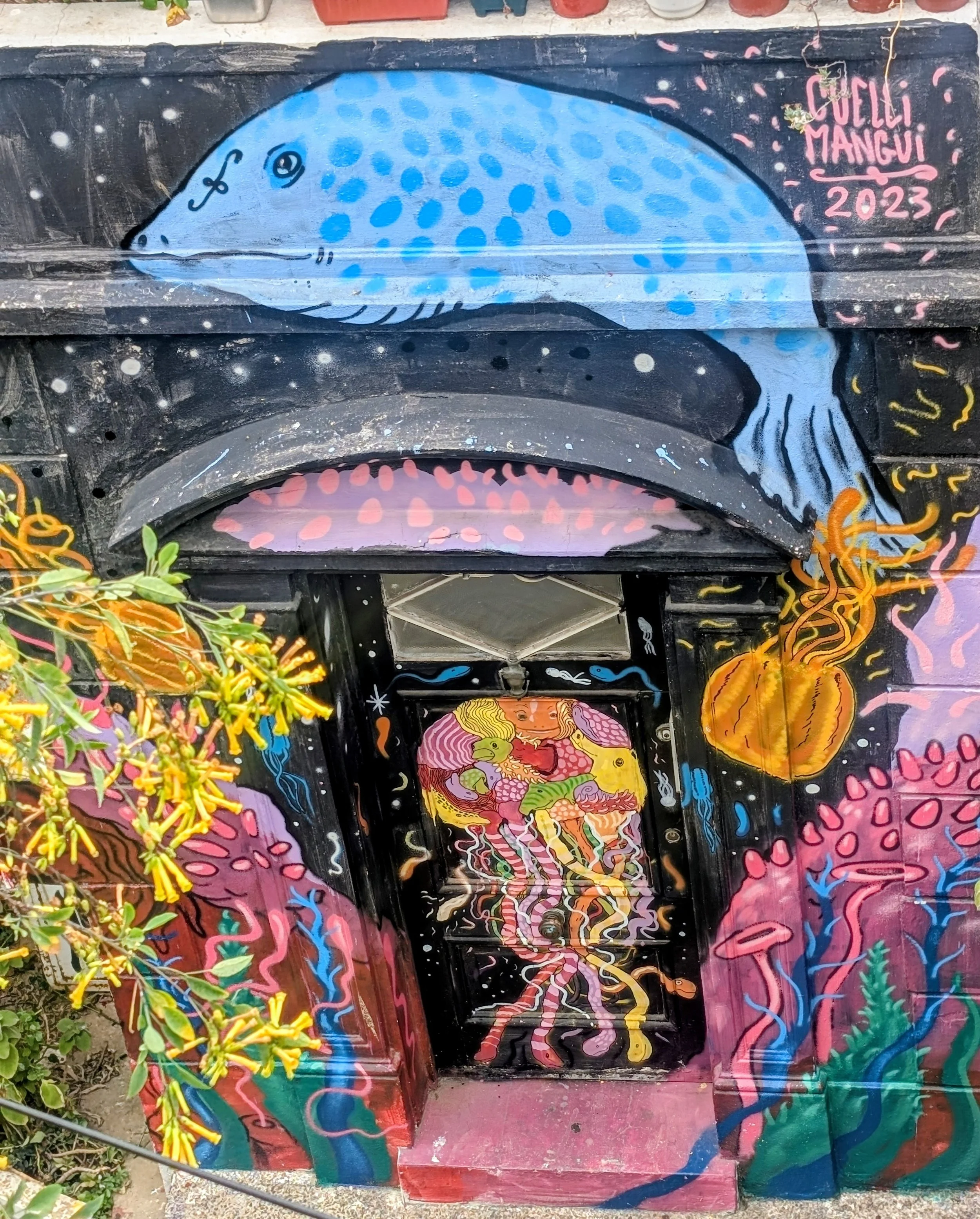
At least for Dawn
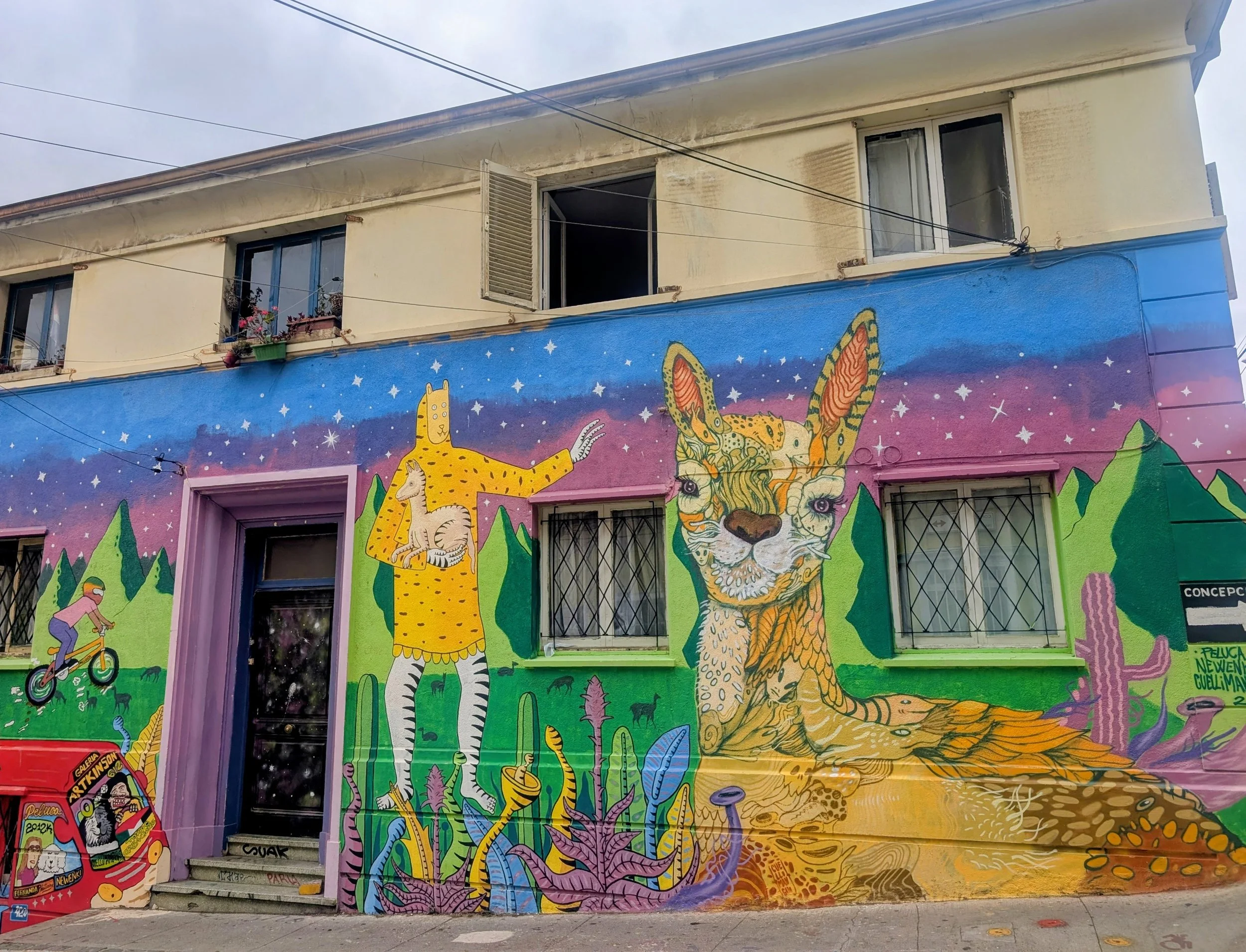
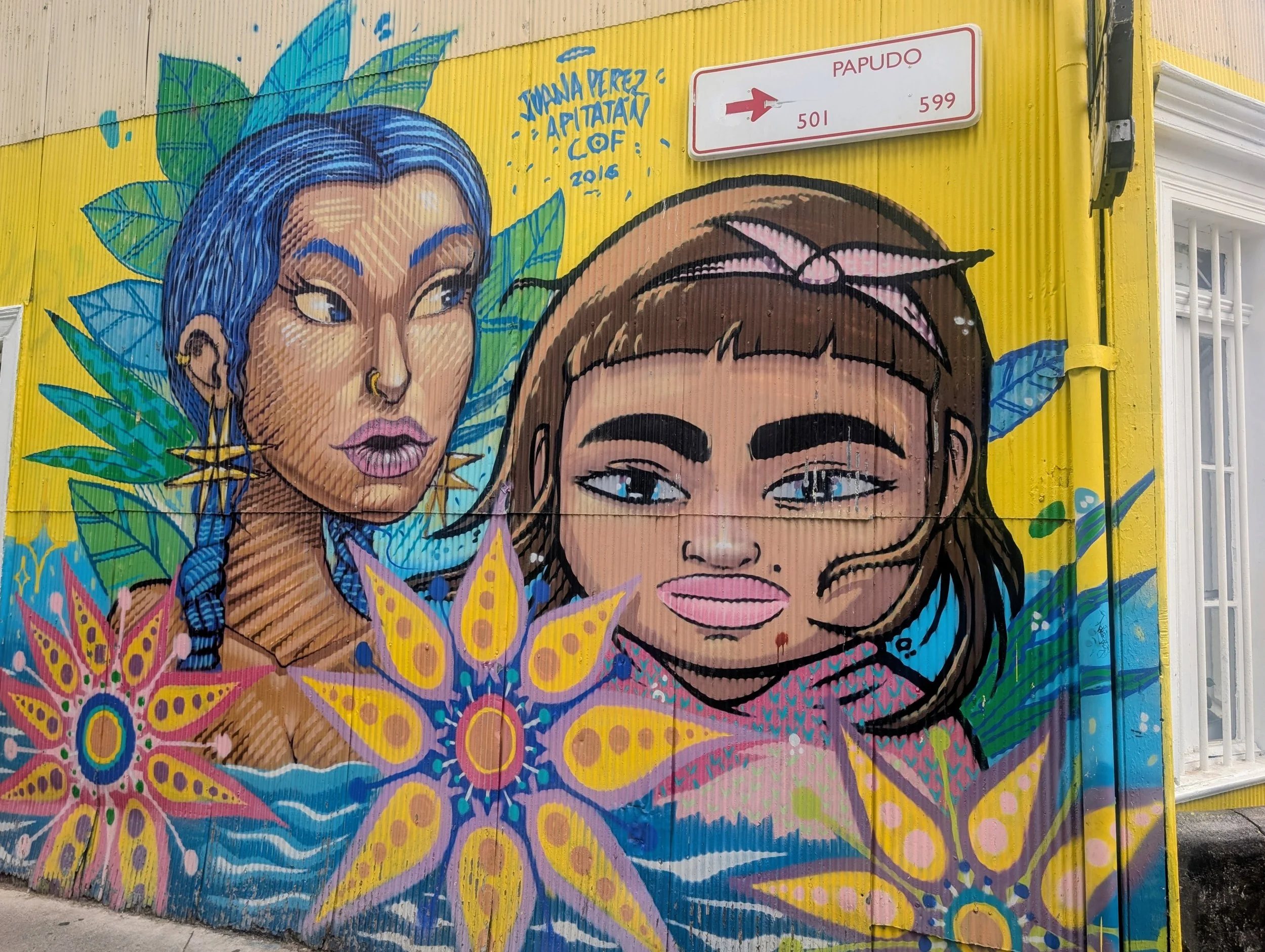
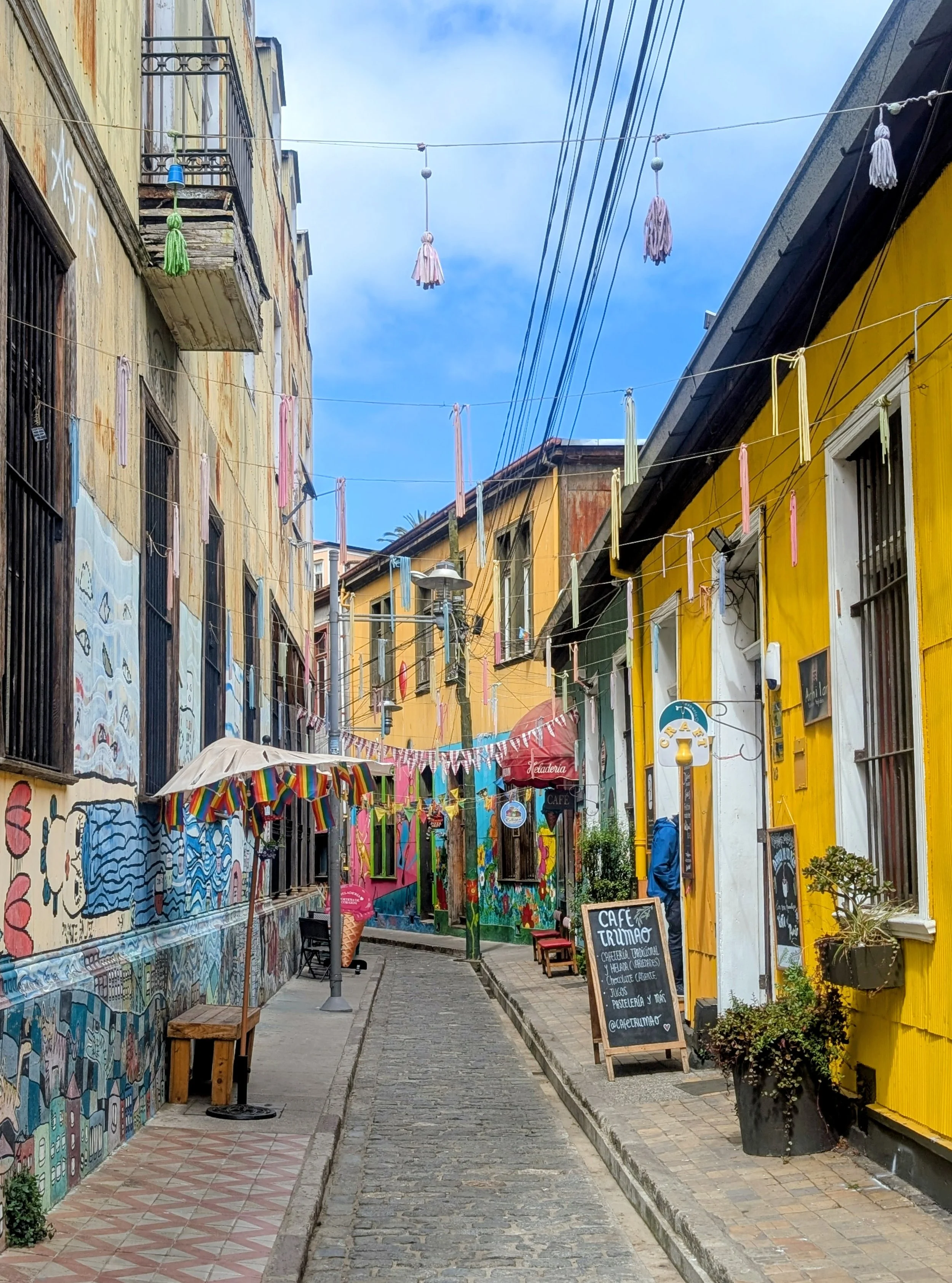
Narrow colorful alleyways in the old town
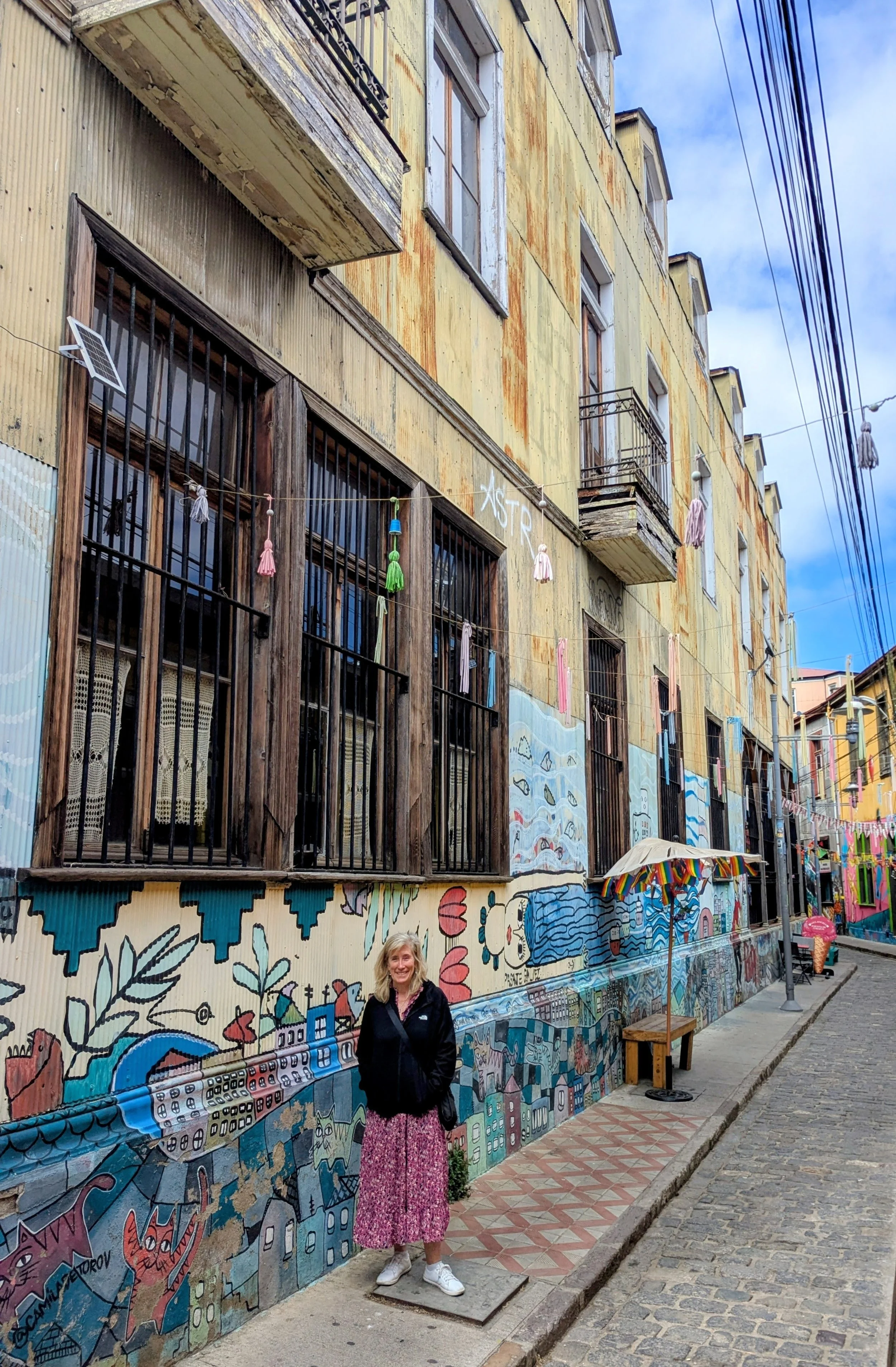
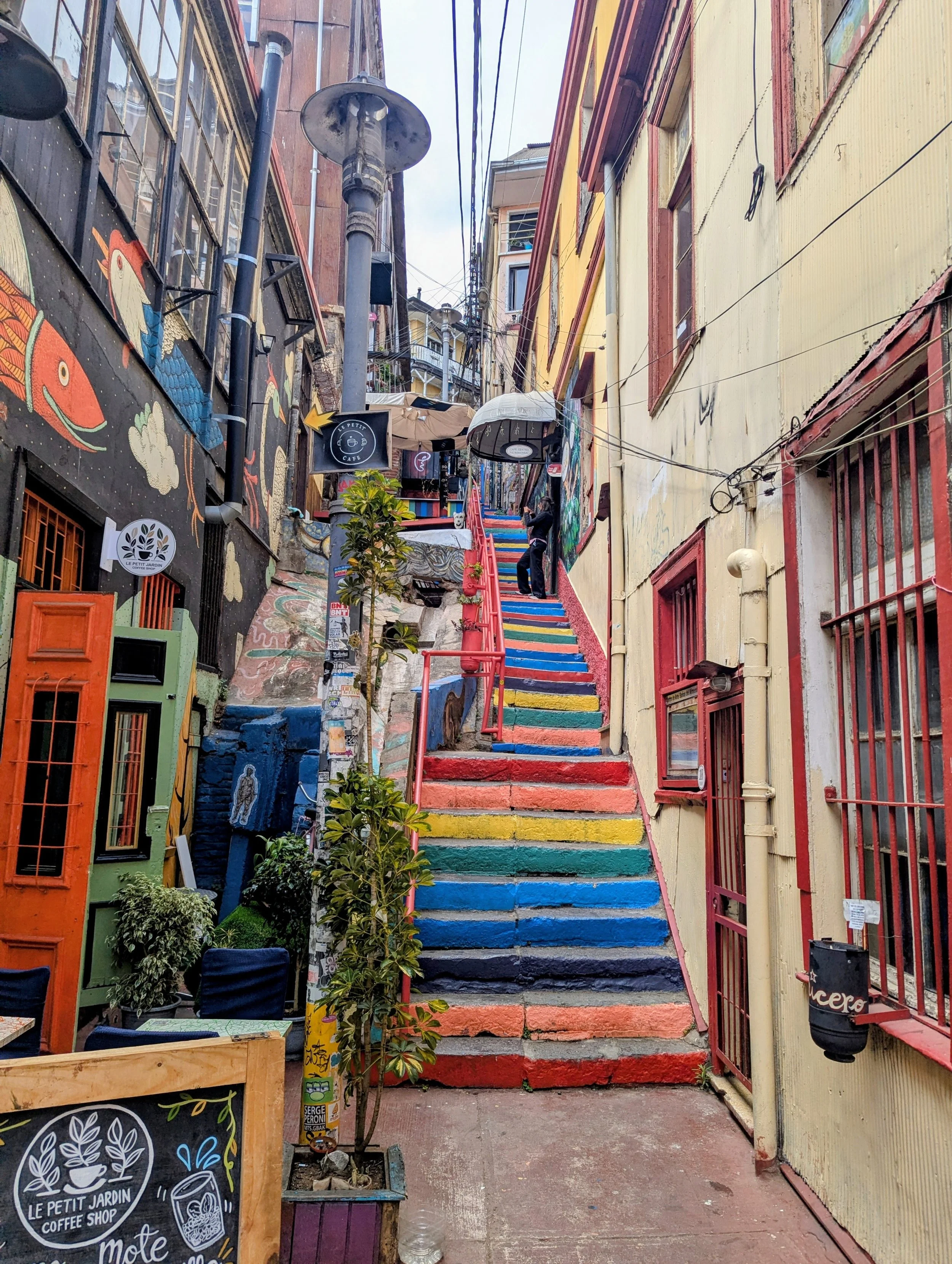
A cacophony of color
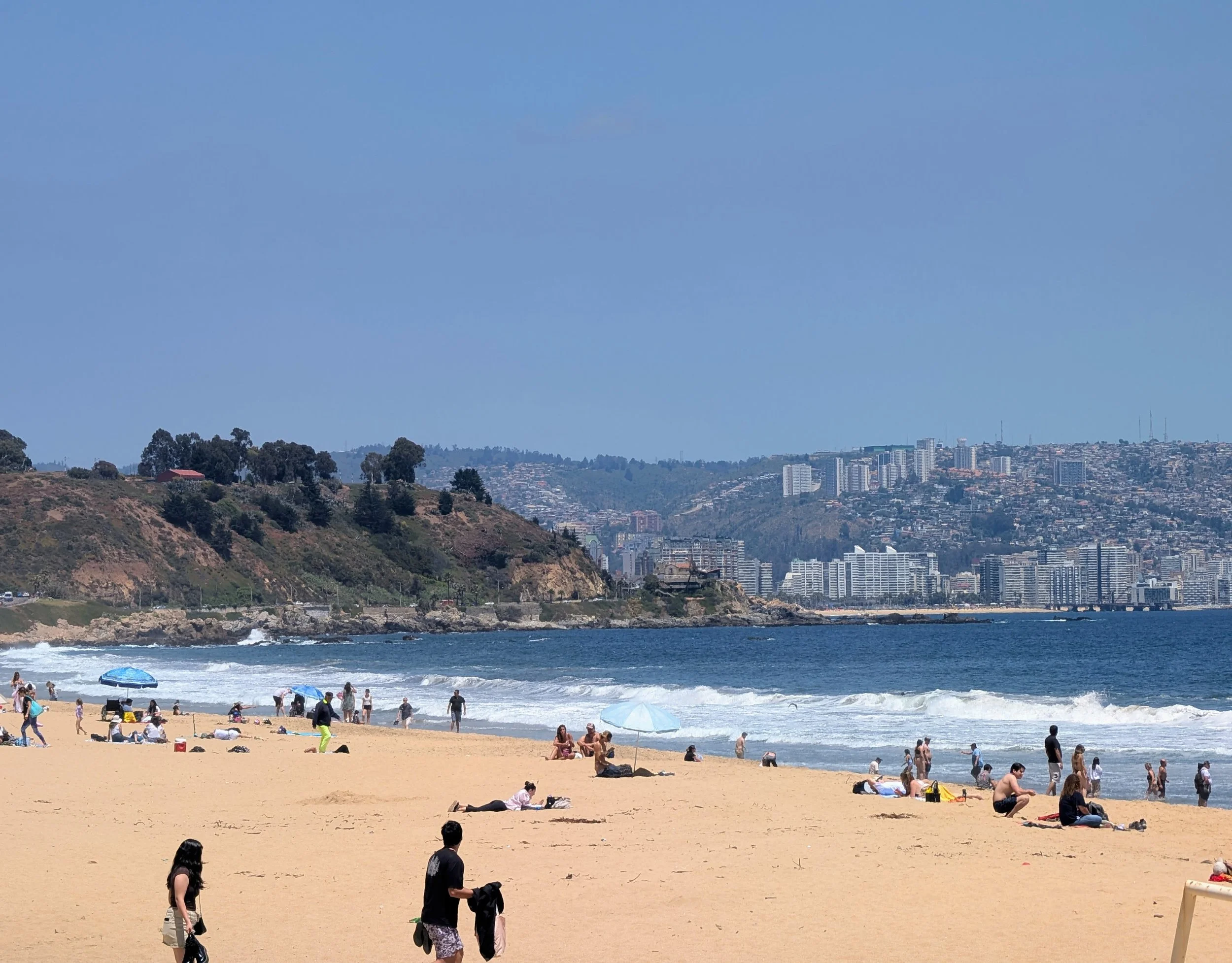
Sandy beach at nearby Vista del Mar
We felt like the day tour was the right move for seeing Valparaiso - we definitely could have stayed longer but it allowed us to cover a lot of ground with an expert guide and not worry about theft. It was time for us to get back on the road and out to nature.
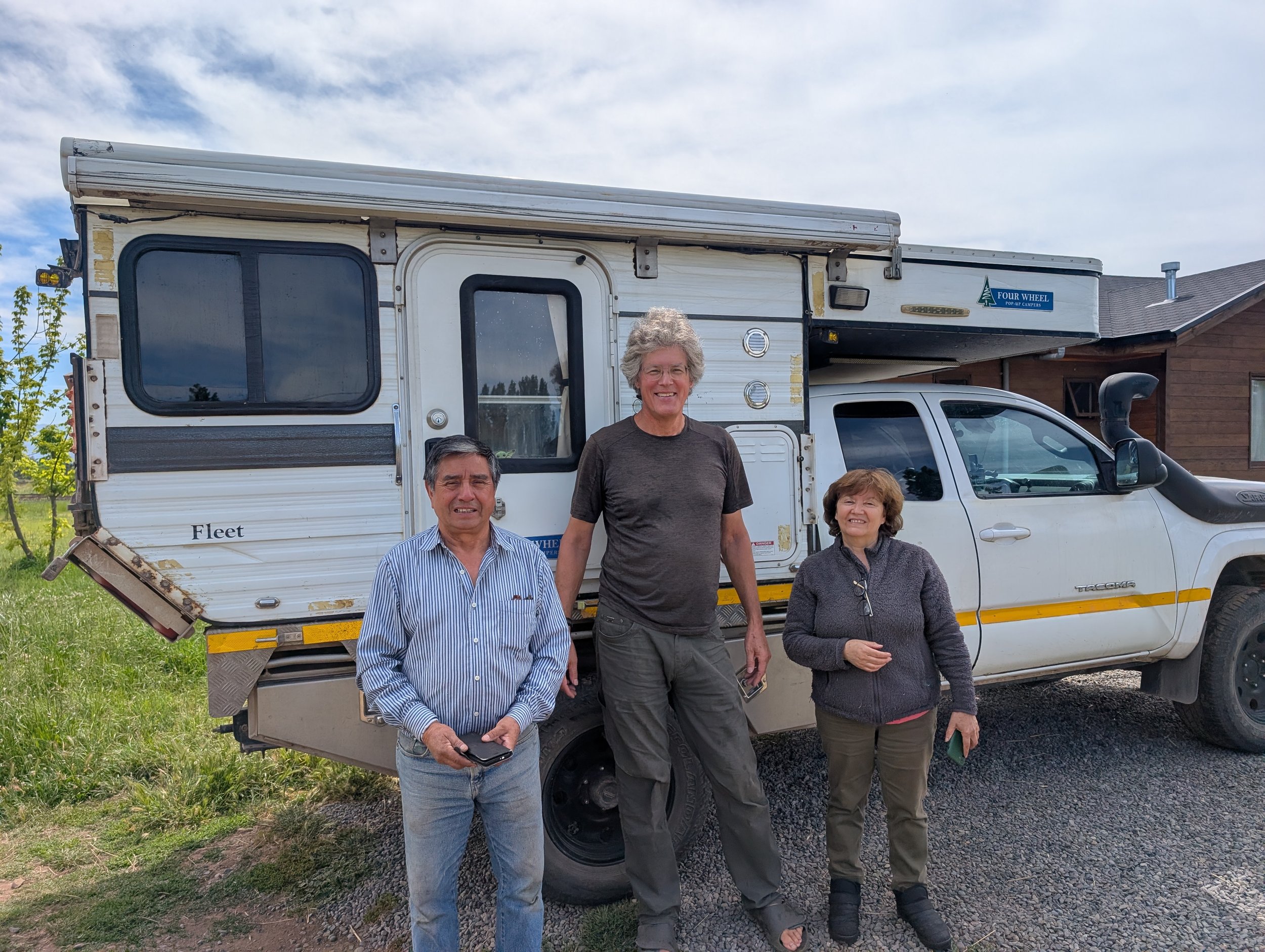
Lovely couple who run a backyard campground we stayed at along the way - first off we were offered wine and BBQ
We were ready to hike so headed to Altos de Lircay, a nature reserve with scenic mountain hikes. In general, national parks and reserves in Chile required buying passes online, usually before you showed up at remote entrance gates with no cell coverage. (We learned the hard way having to back track 20 km to find coverage so that we could buy our permits for this reserve.) We also learned that many parks were closed on Monday which required some planning.
The next day was our 36th wedding anniversary so we decided to celebrate in style - hiking 14 steep miles (a lot for us these days!). It is hard to imagine that of our 36 years being together, six of those have been full time on the road. We thought we knew all there was to know about each other before, but moving into our tiny home on wheels was next level. (What doesn’t kill you makes you stronger.) Amazingly we have learned to adapt, compromise and further understand each other’s strengths and frailties. Andy hates not knowing exactly where he is on a map at any point in time - his entire body and mind cannot stand it. Dawn abhors any conversation before two cups of coffee (Andy knew this before but it is more difficult in a tiny shared space). We are not perfect, it is hardest when we are both grumpy because then one of us cannot poke the other out of the bad mood. But we both know there is no one else on the planet we could be doing this with.
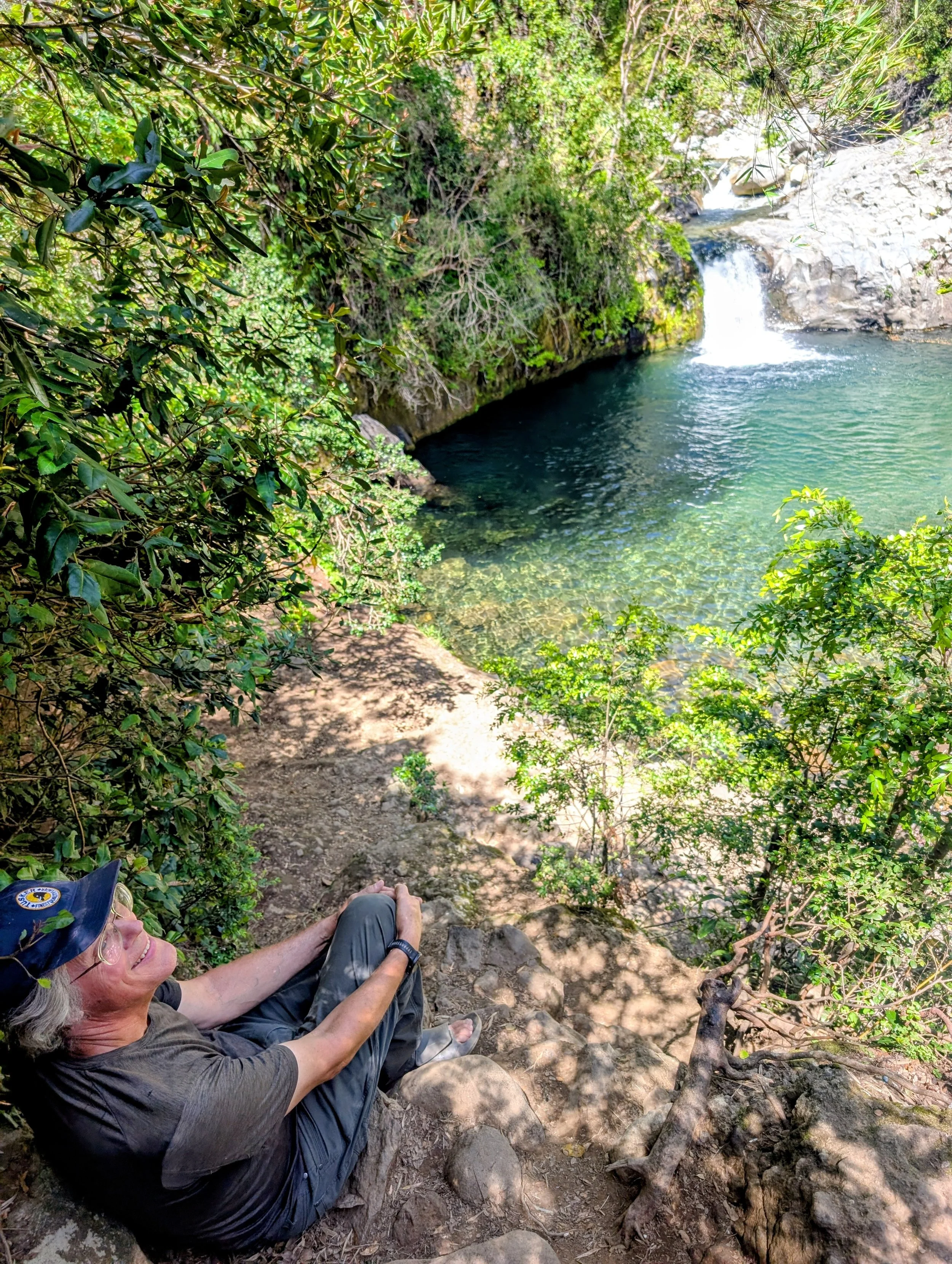
Waterfall break
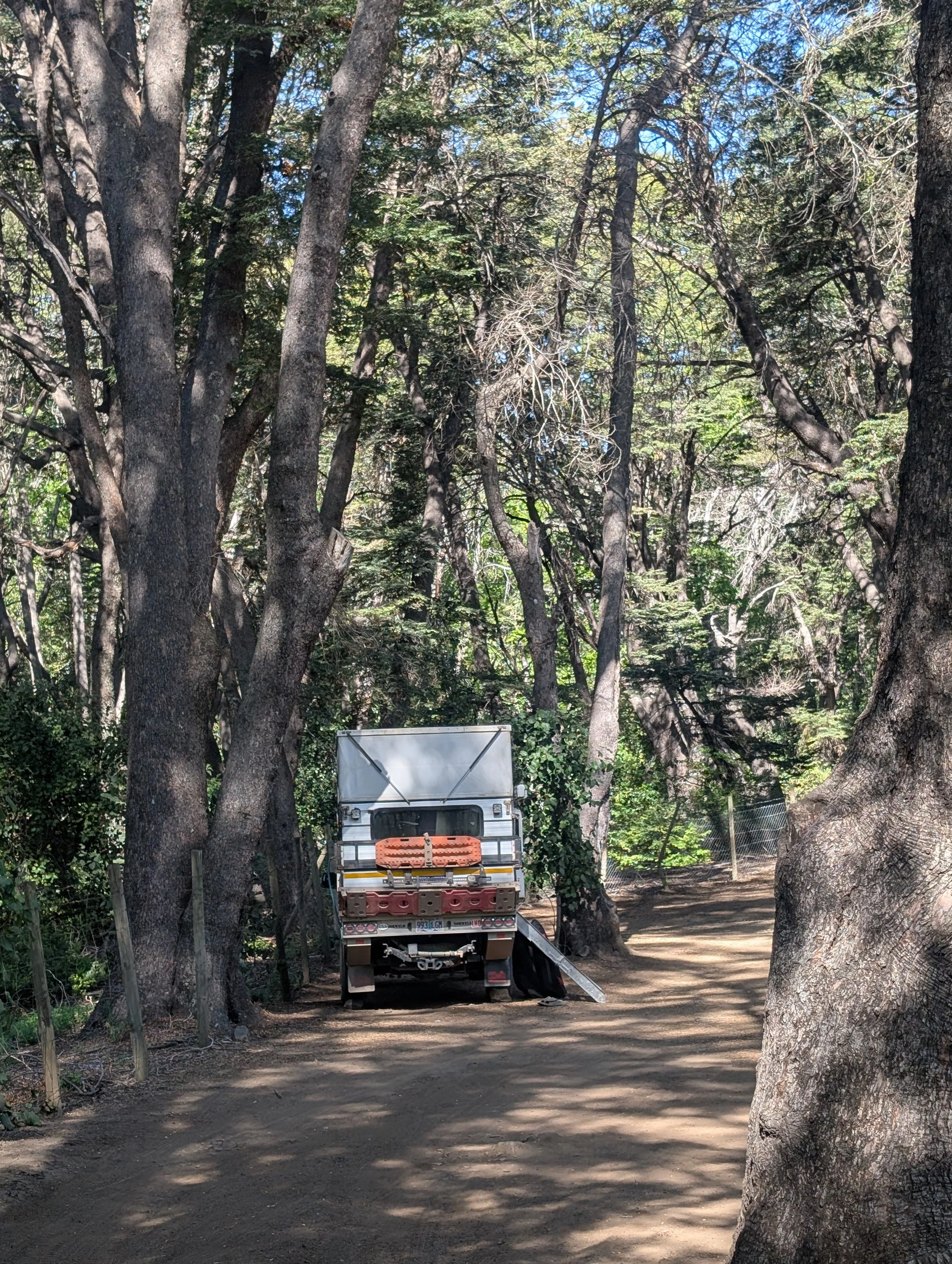
Camped outside the Altos de Lircay Nature Reserve entrance gate - we arrived on a Monday and it was closed so had to wait a day
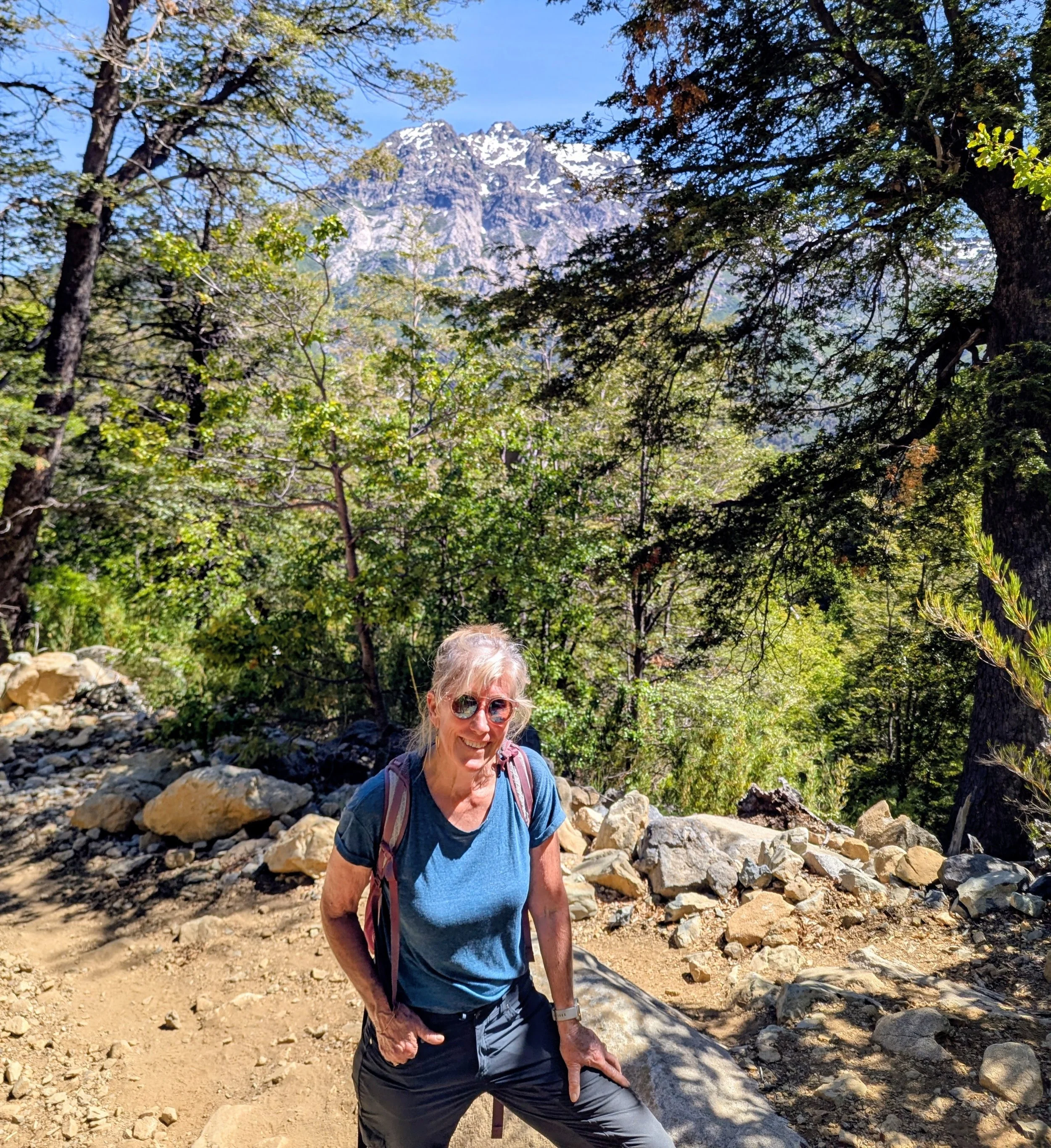
Happy hiking
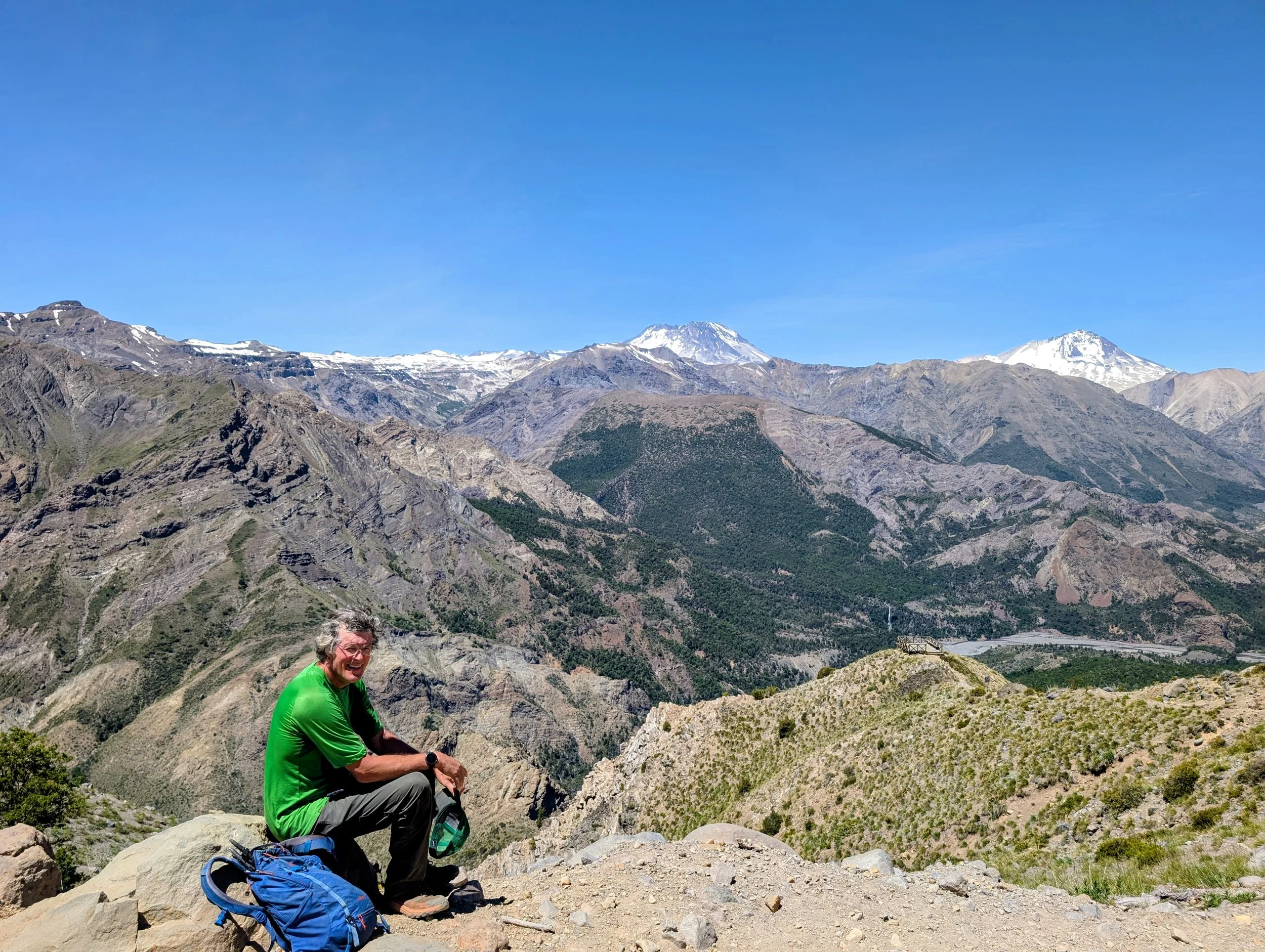
Glorious views
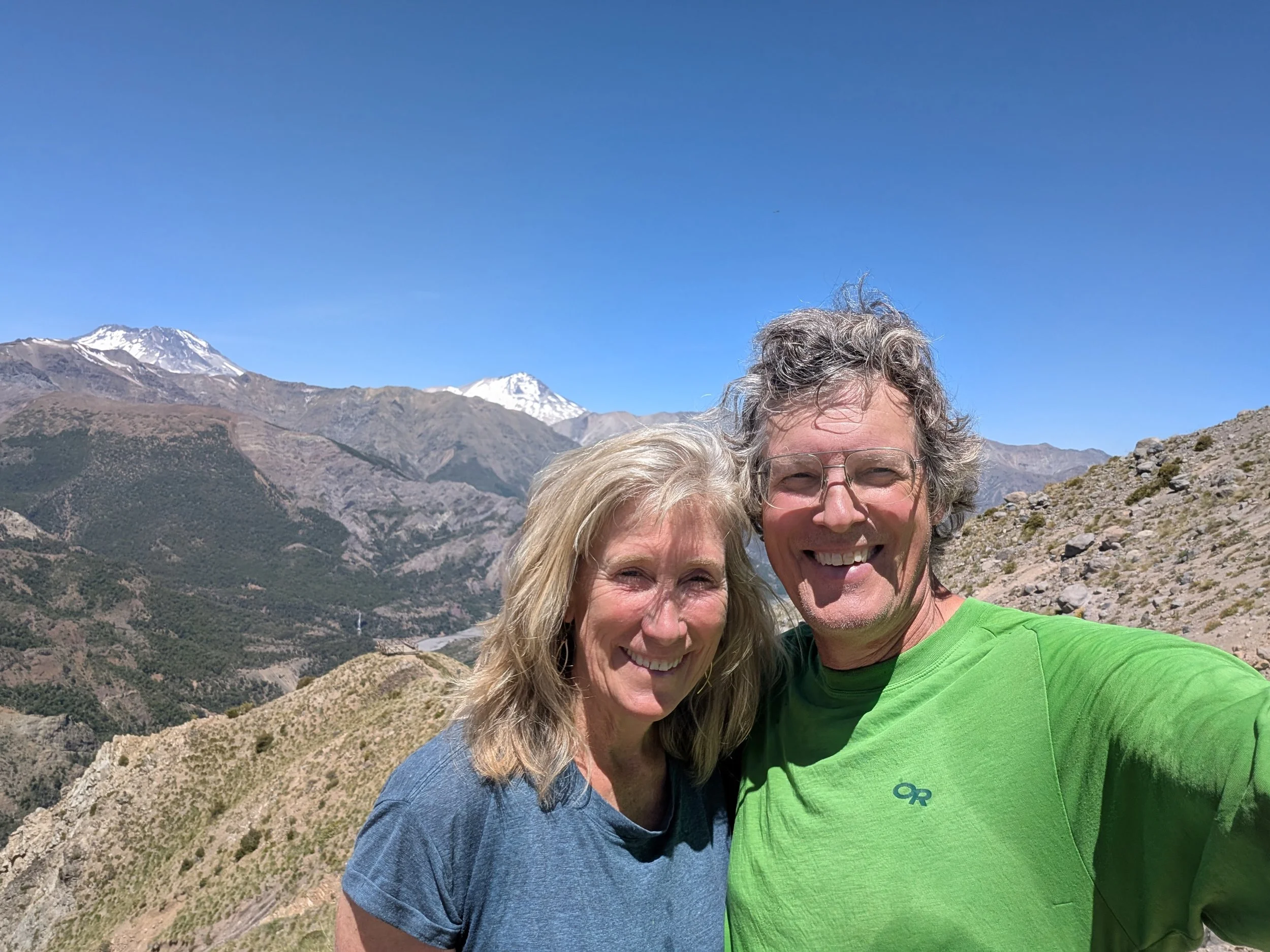
Selfie in honor of our 36th wedding anniversary
Celebration and hike completed, we were off on our way to see some iconic Chilean volcanos.
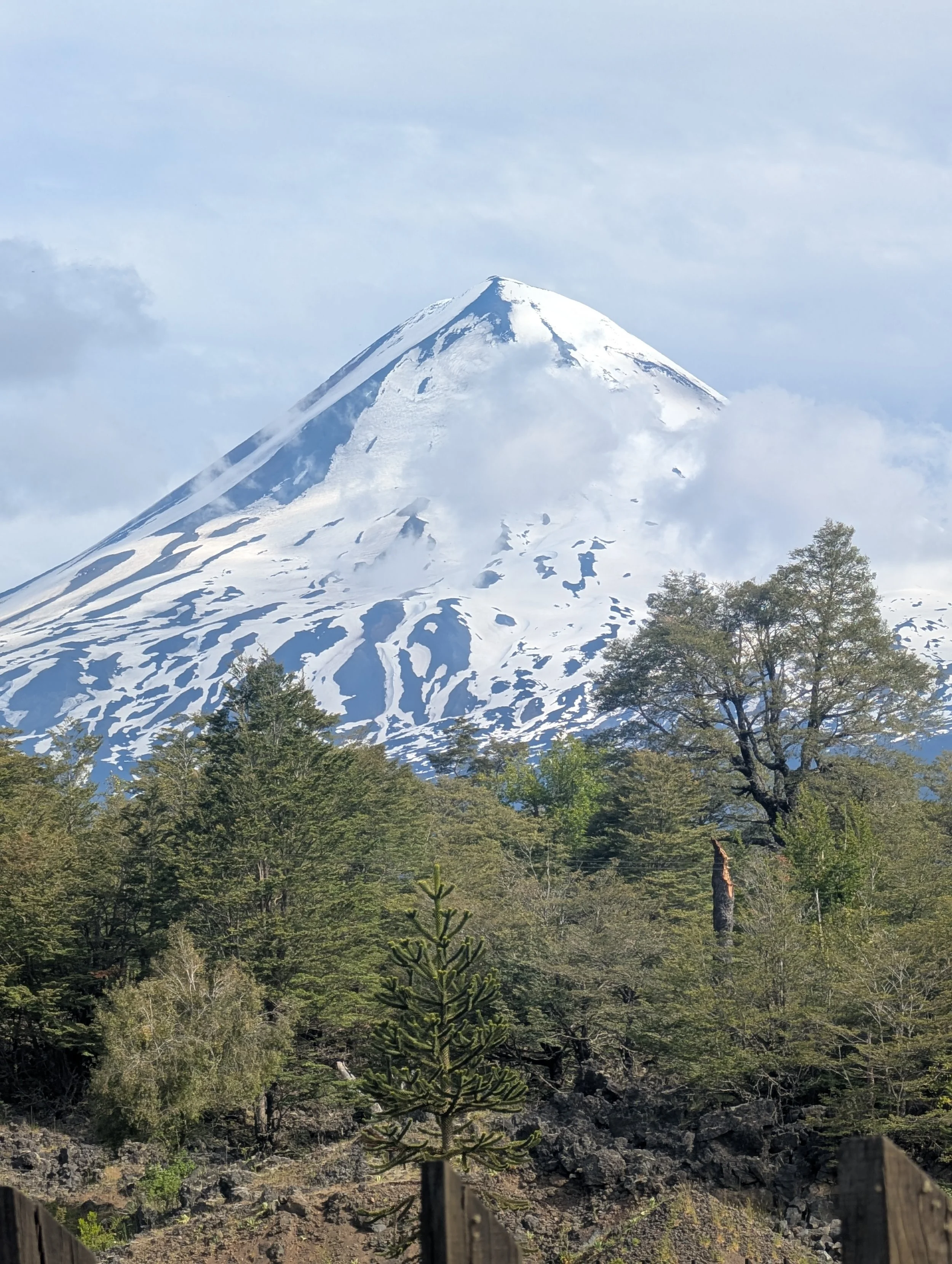
Parque Nacional Conguillio
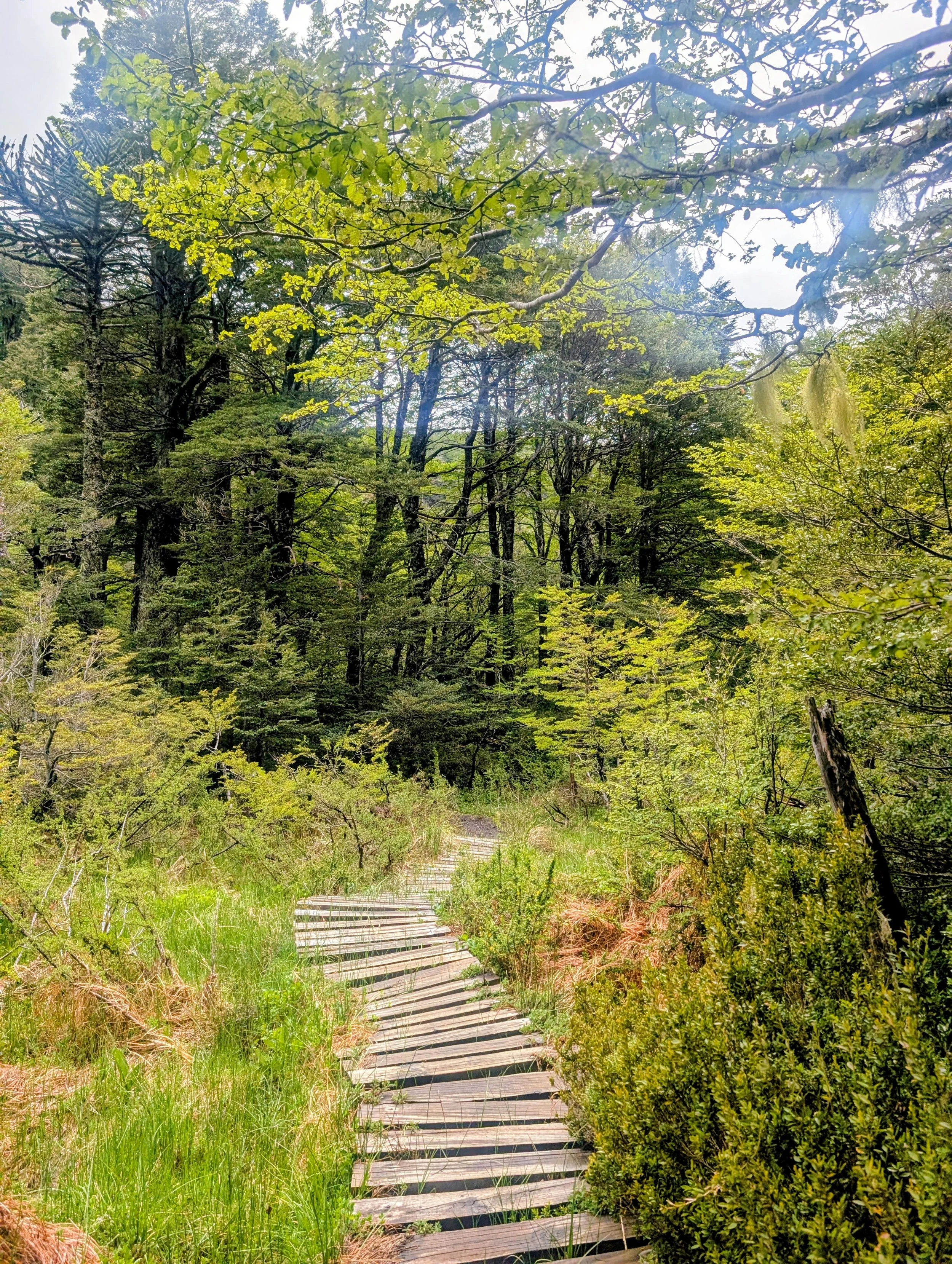
Wonky boardwalk hike
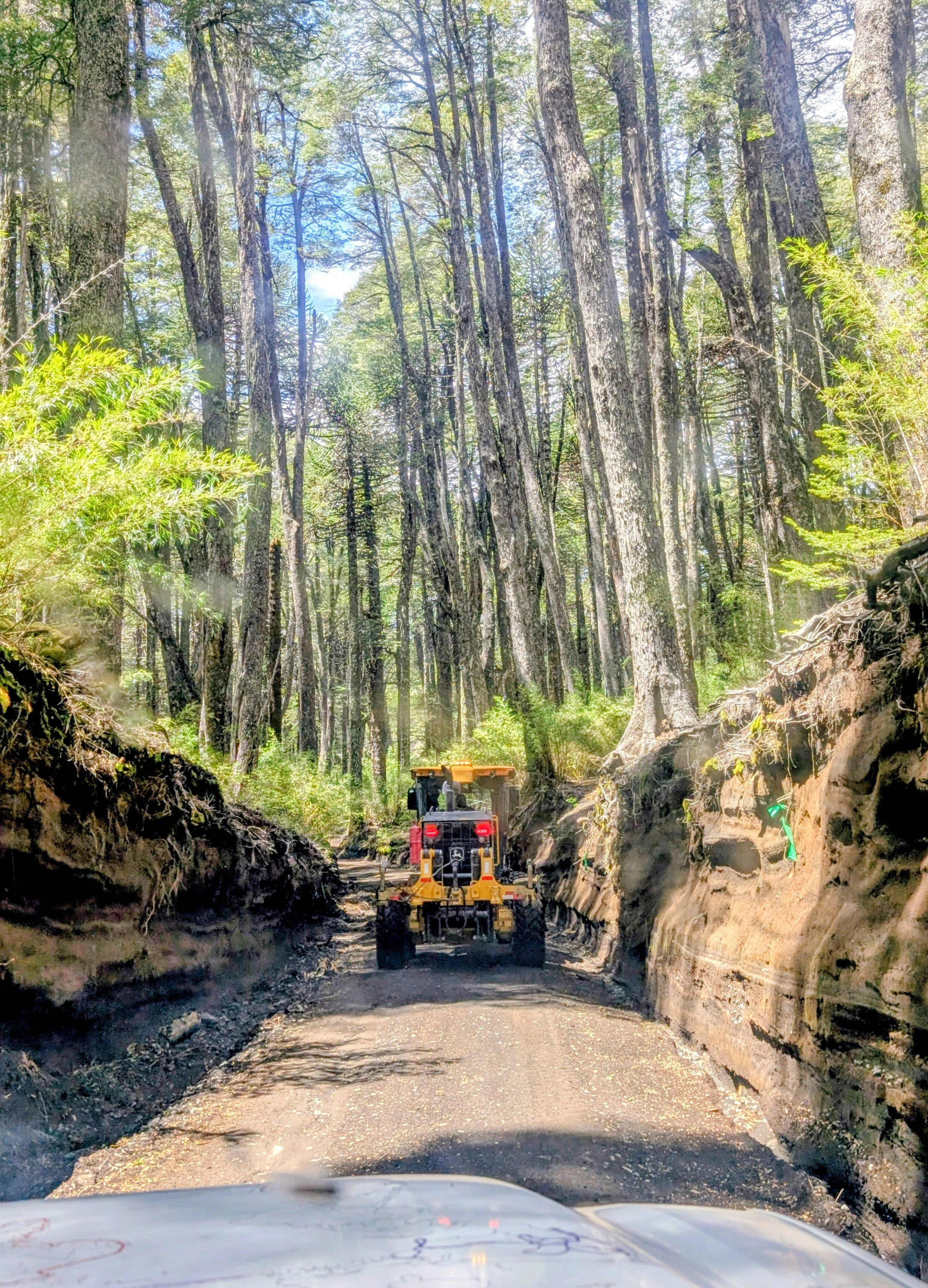
One lane cutbanks through out the park, glad we were following this guy instead of meeting head on
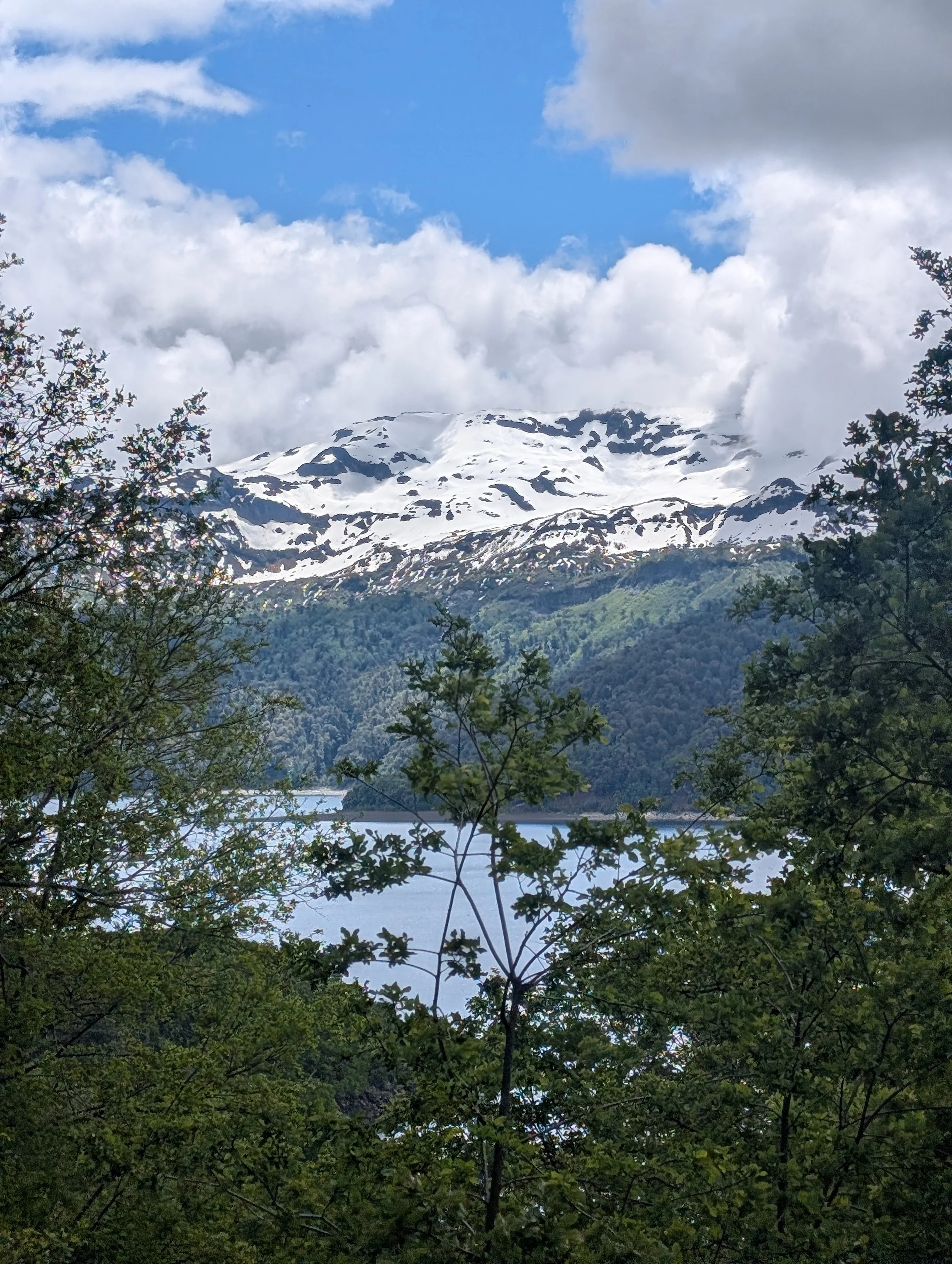
Hiking in Conguillio National Park
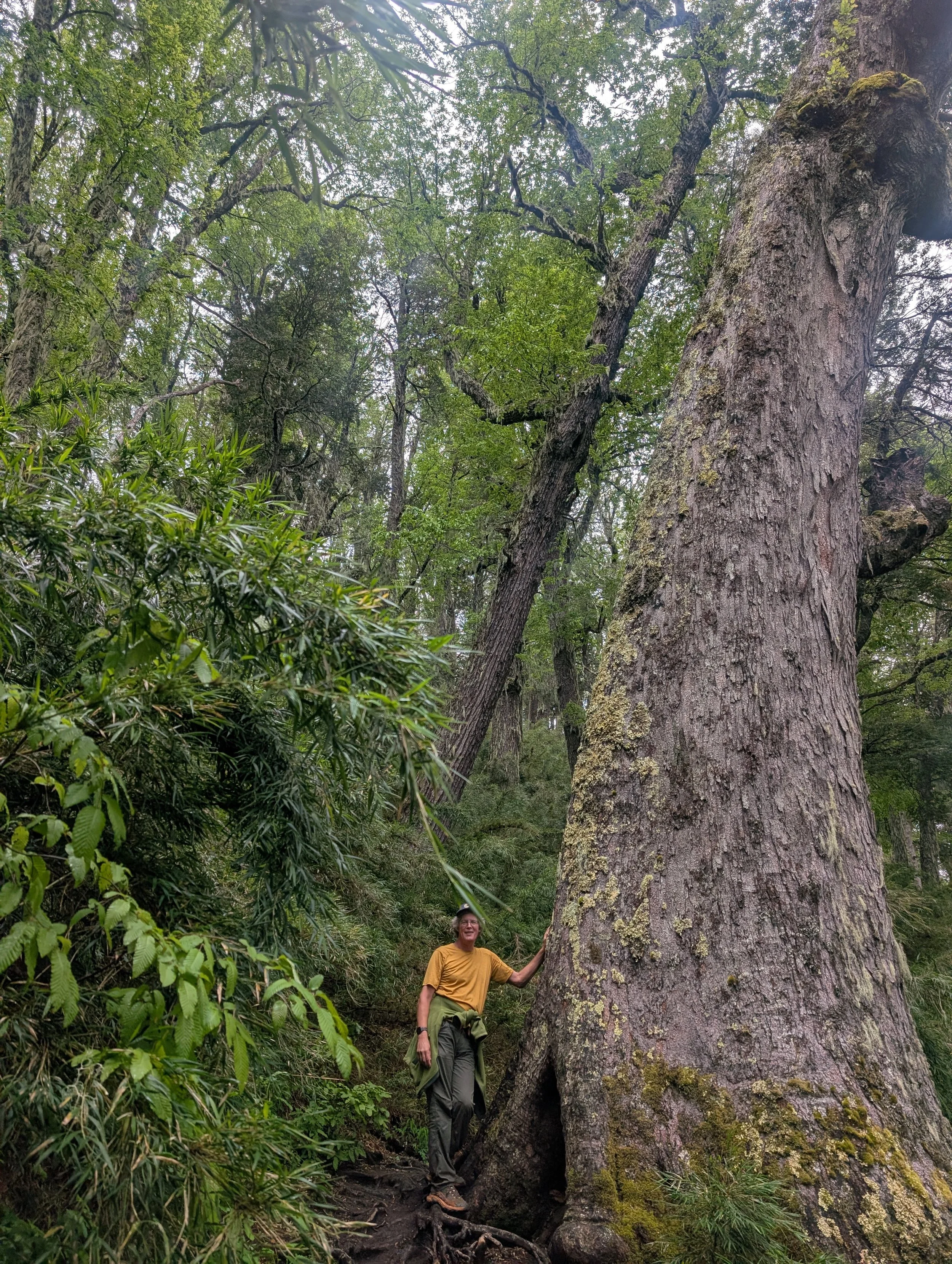
Andy’s favorite - big tree photo
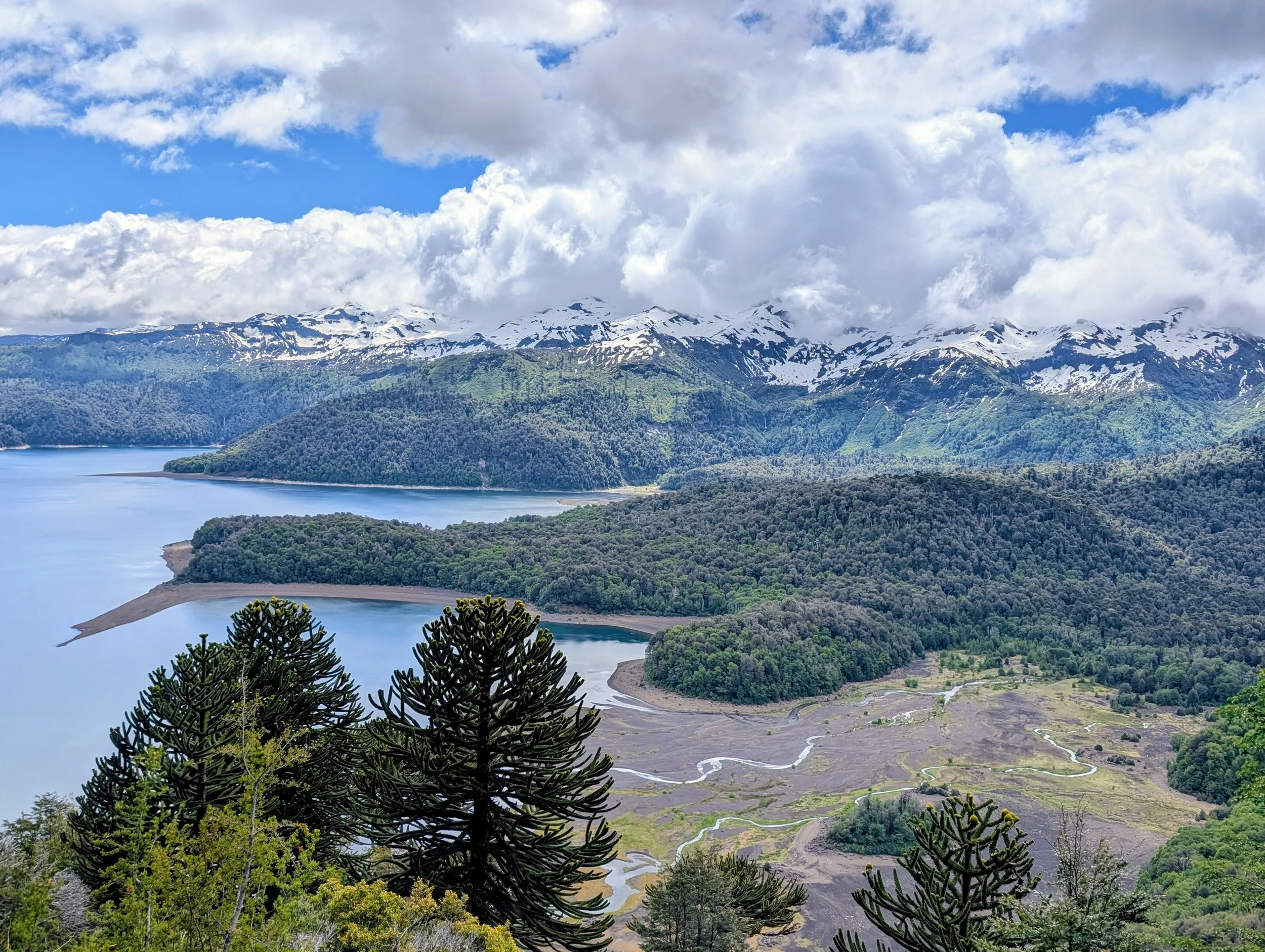
View from a hill top hike
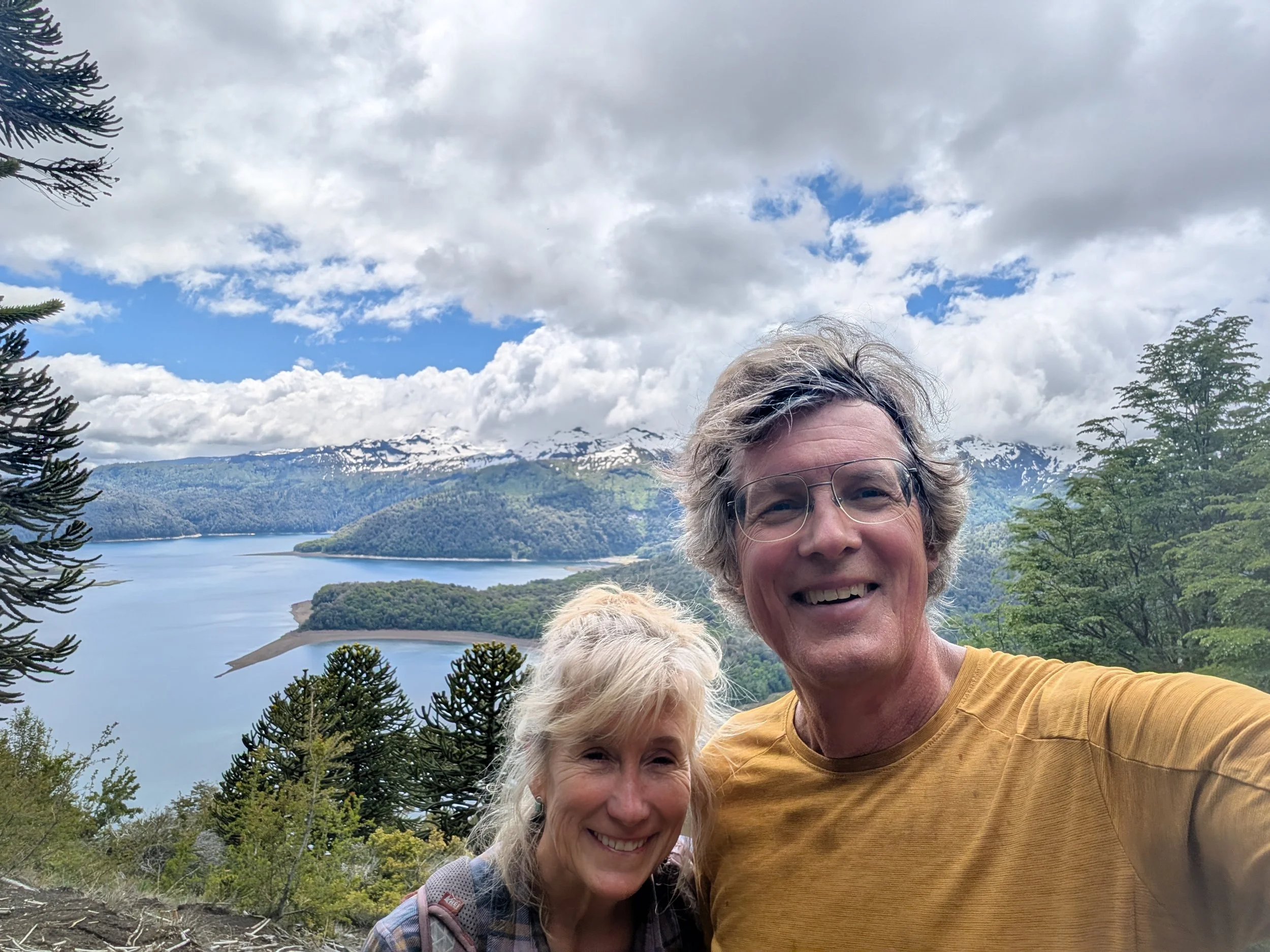
Life is good.
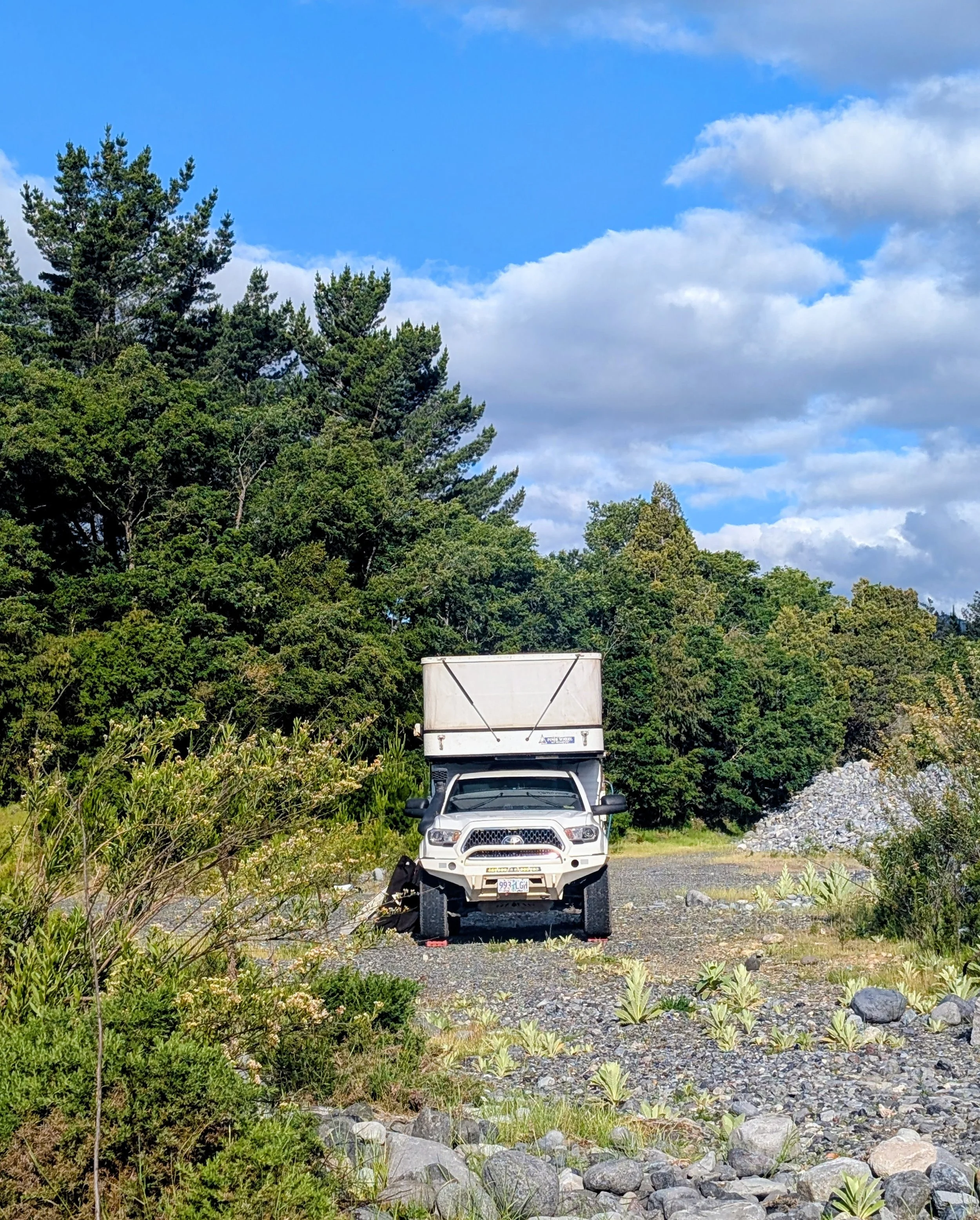
River side camp
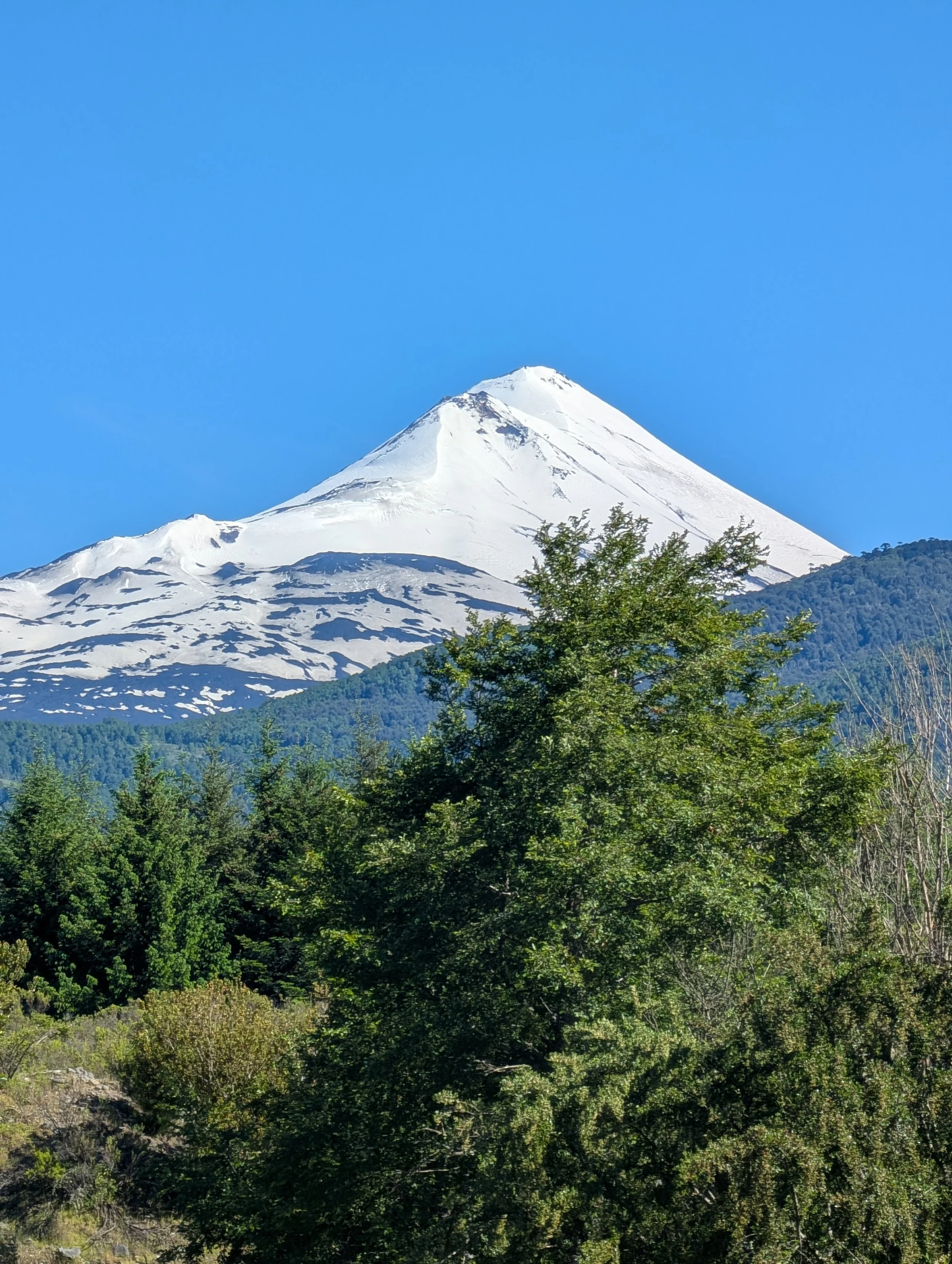
View from camp
We went from Conguillio National Park where we were mostly the only people to the mountain town of Pucón - another culture shock as we drove through droves of tourists, looking for a laundromat. The town was built for tourism, the streets lined with high end mountaineering shops, expensive restaurants and bars. It was a convenient re-supply stop and had its own charm but not a place we felt like we needed to stay longer than it took to get the laundry done and buy groceries. Chile was the first country in years where we were regularly taking advantage of the multitude of inexpensive and professional lavanderias. We could get 10 days of laundry done overnight for about $8. Picking up that immaculately folded bag of clean laundry aways felt like a huge relief.
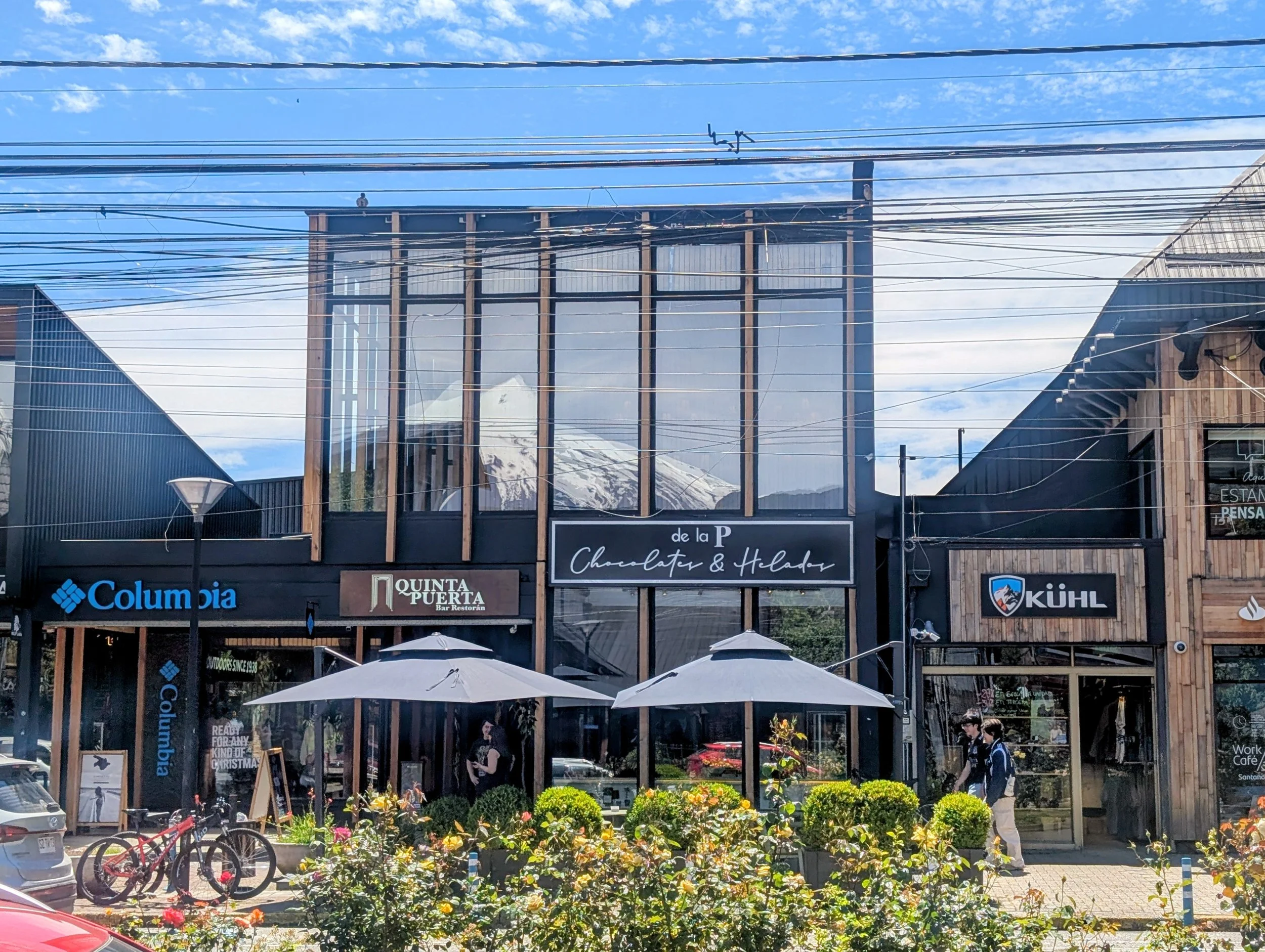
Main street in Pucón
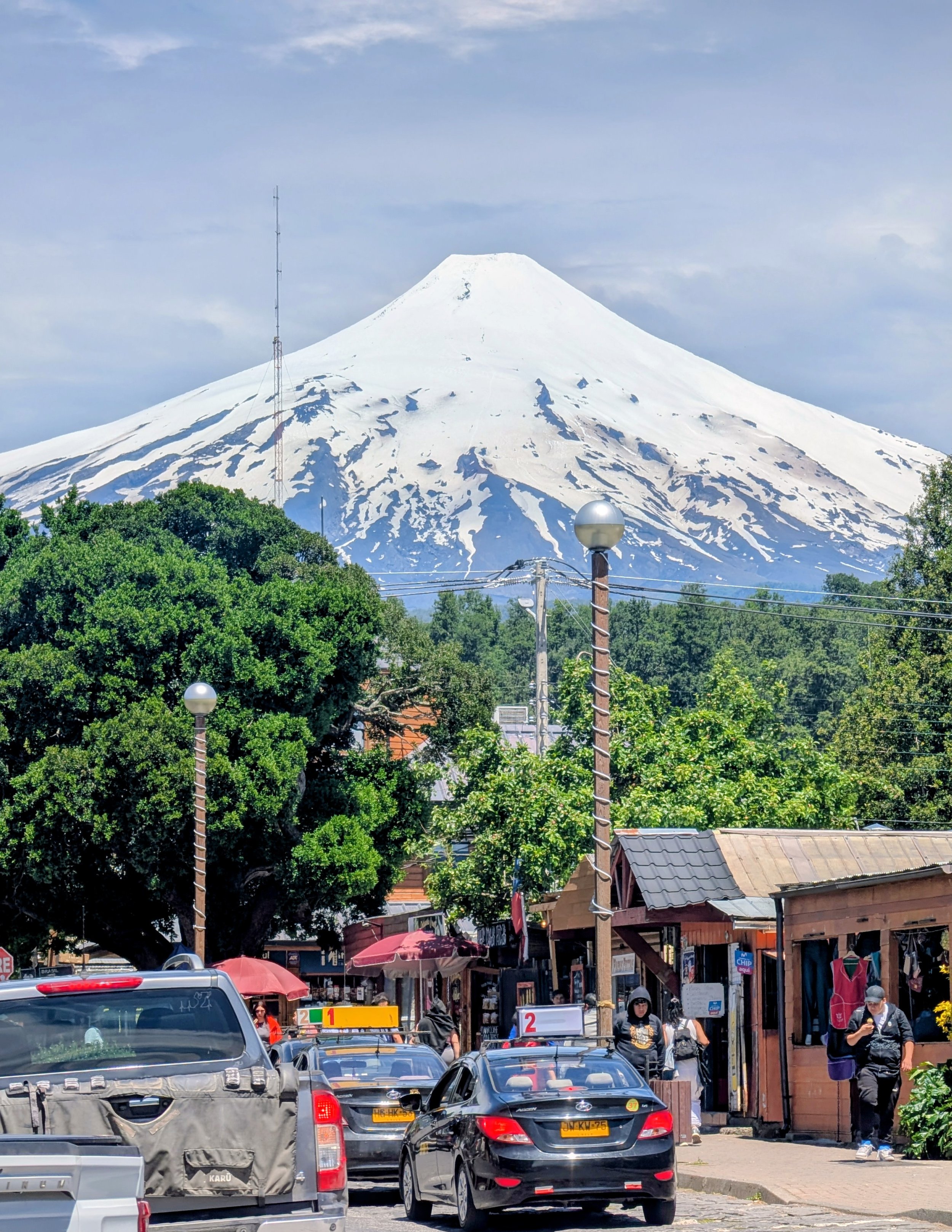
Overshadowed by volcanos
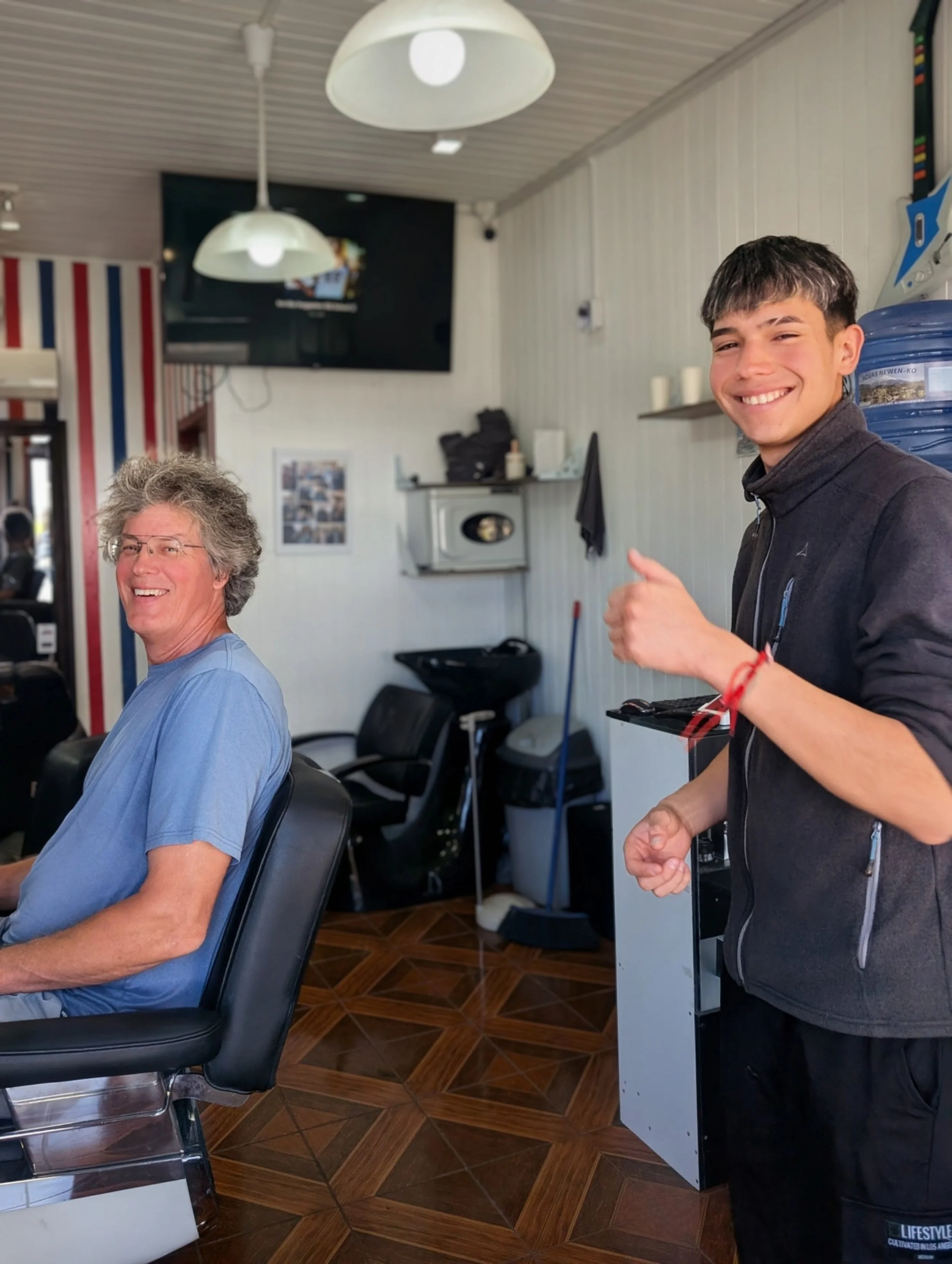
Another city errand - Andy gets a haircut (we think his barber was about 16 years old but he did a great job)
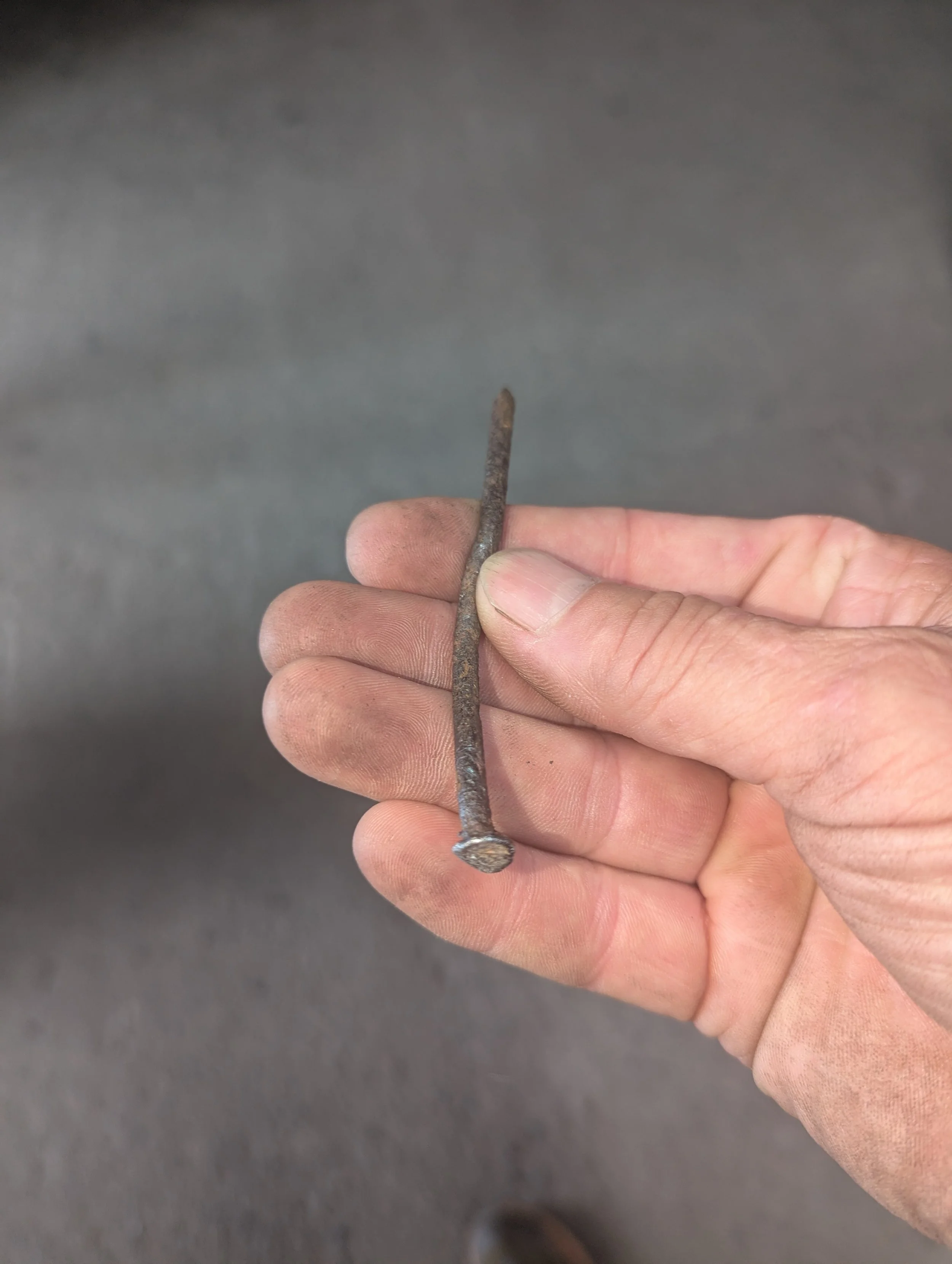
Oops - picked up a nail in our tire - slow leak
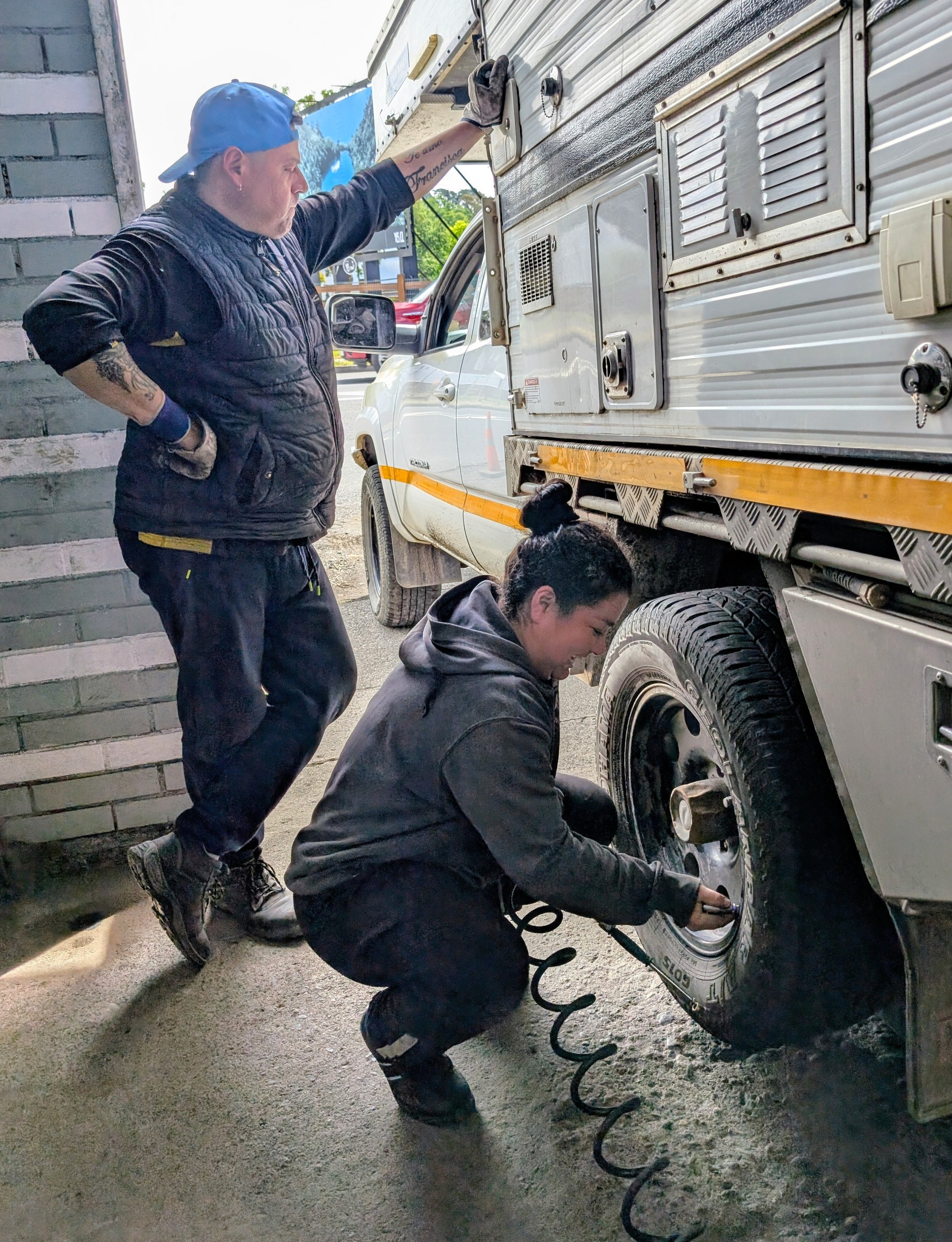
Efficiently repaired by the only female tire technician in Pucón
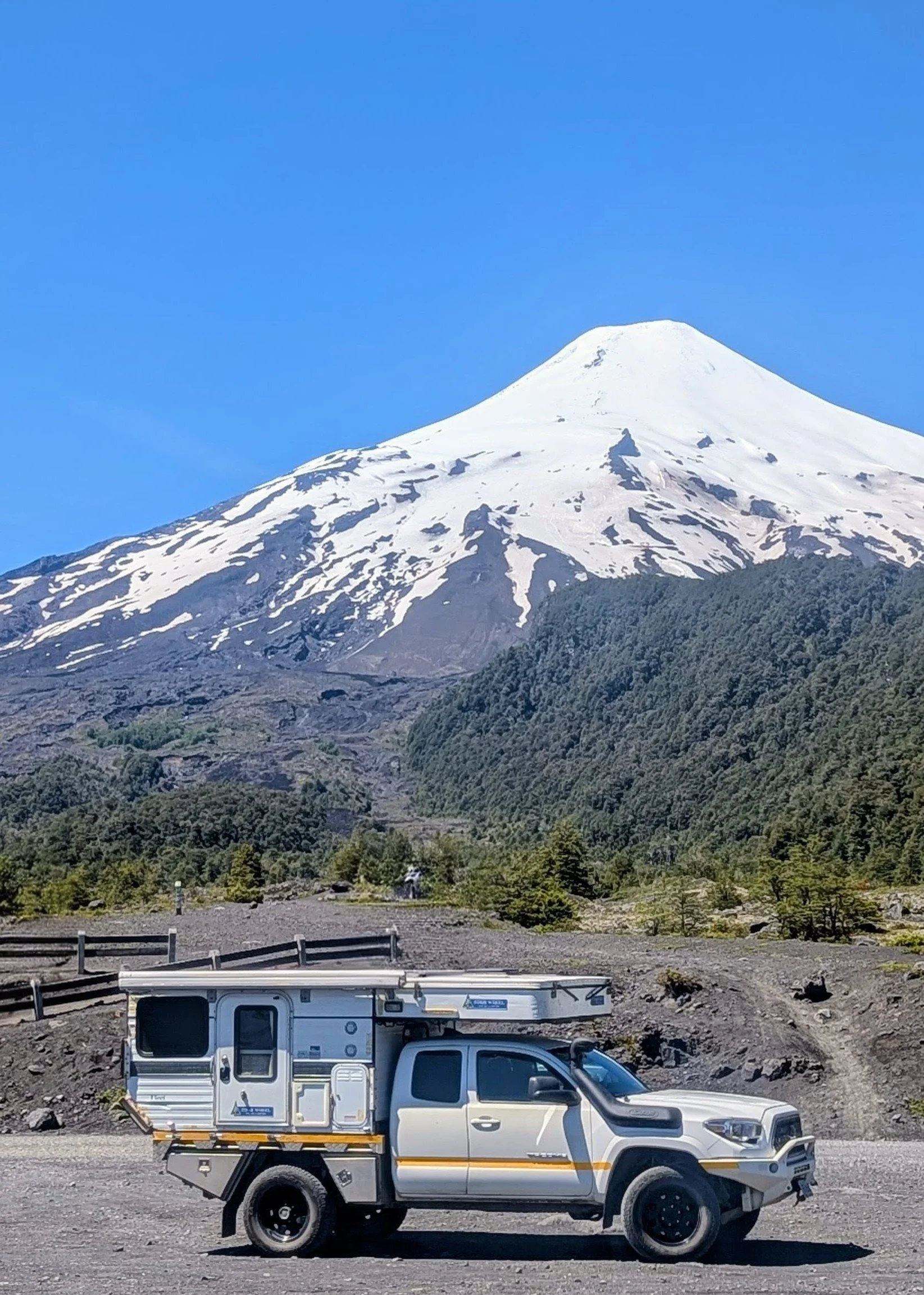
Truck in front of Villarica Volcano
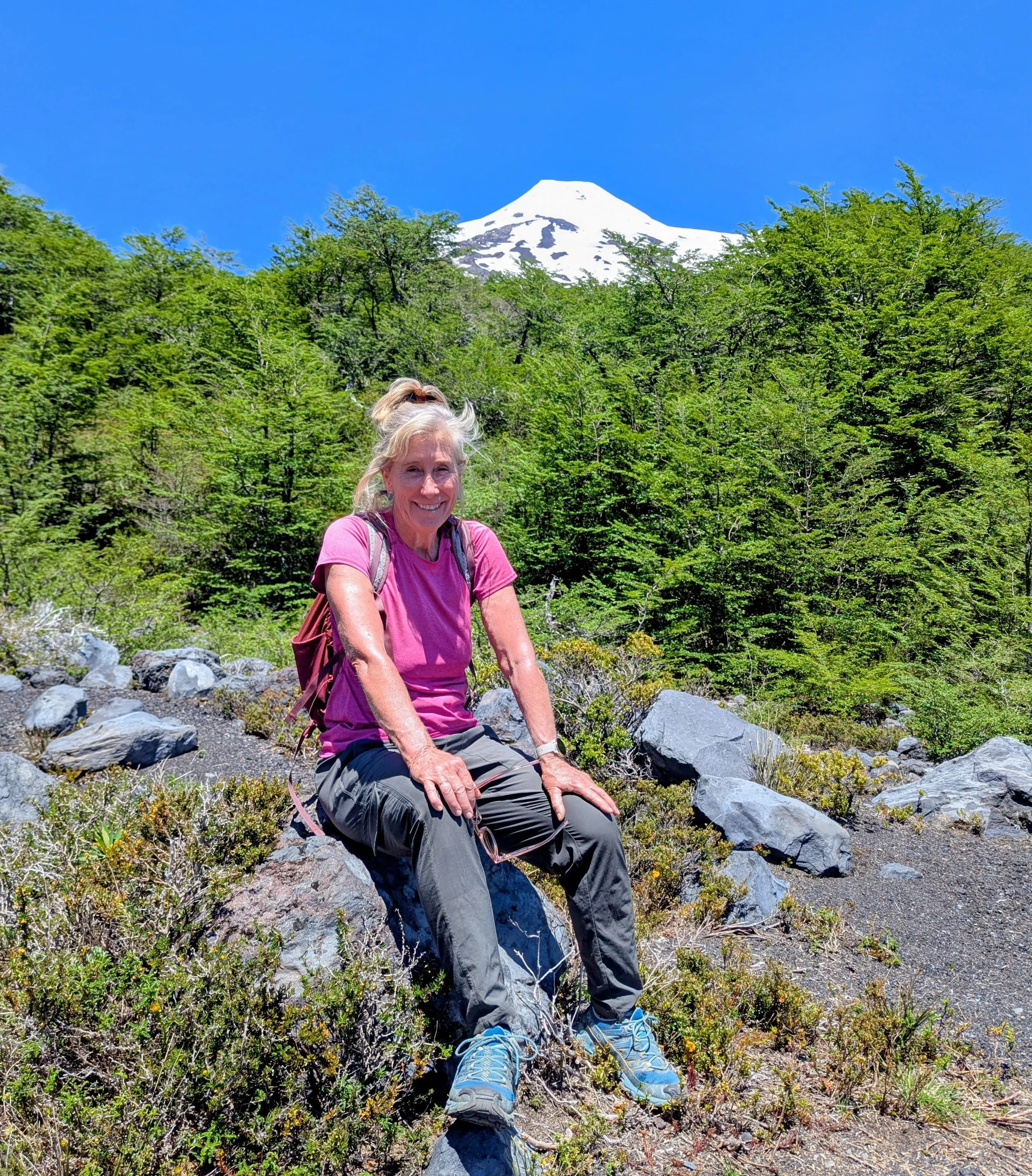
Beautiful hike in Villarica National Park
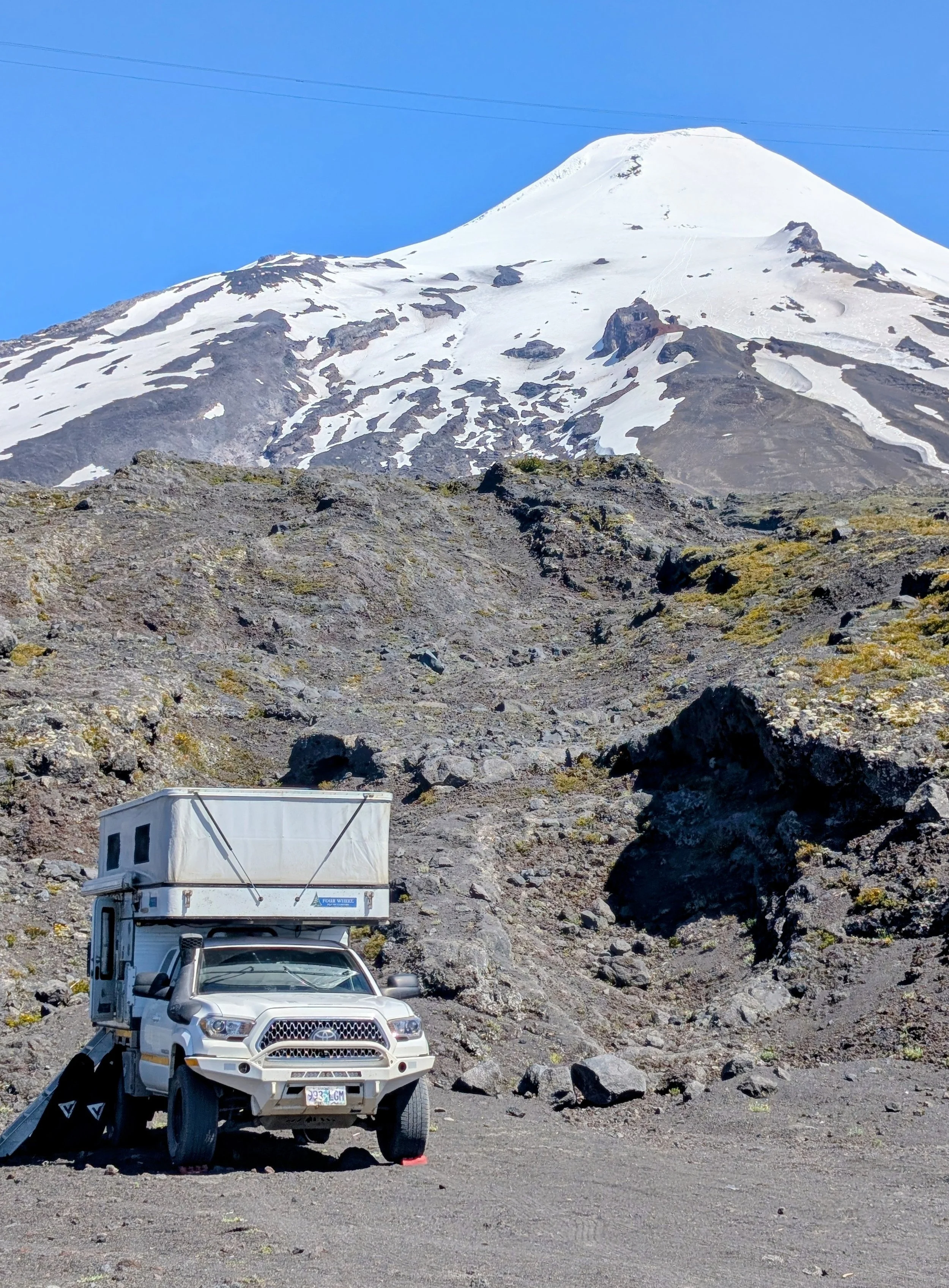
Wild camp at the base of the active volcano - we did get a 9am knock from a ranger who advised us it was “peligroso” - dangerous to camp there, so we moved on.
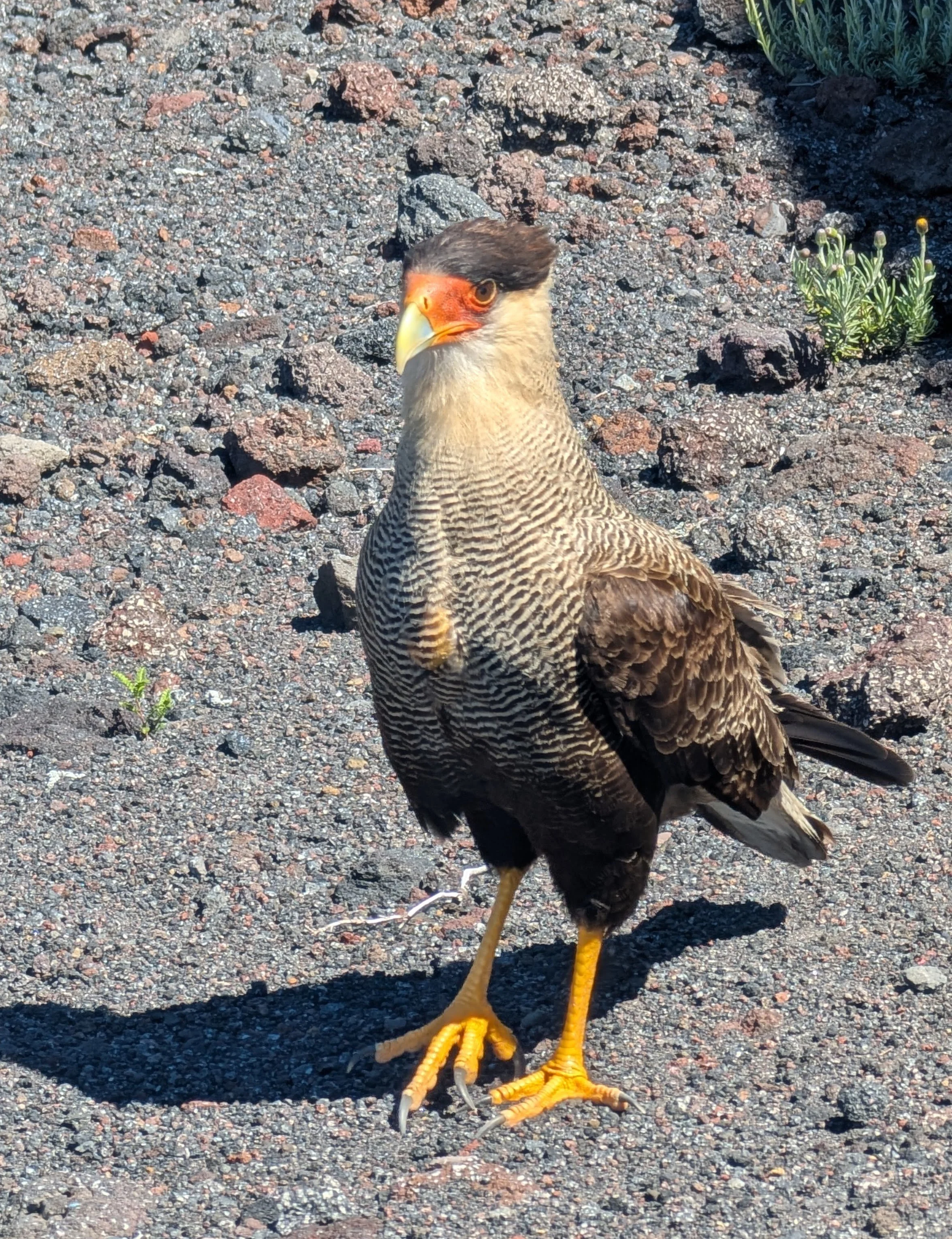
Camp bird
Once again it was time to leave Chile and enter the lake district of Argentina. So we quickly ate all our fruit and headed to the border.
Part 3 - December 3 -13
Our zig zagging journey continuing, we re-entered Chile and headed right for the ferry to Chiloe Island. We had heard about its charm and unique culture and were intrigued. The island culture was known to be rooted in farming and fishing, with a distinctive architecture of colorfully painted wooden buildings built on the water.
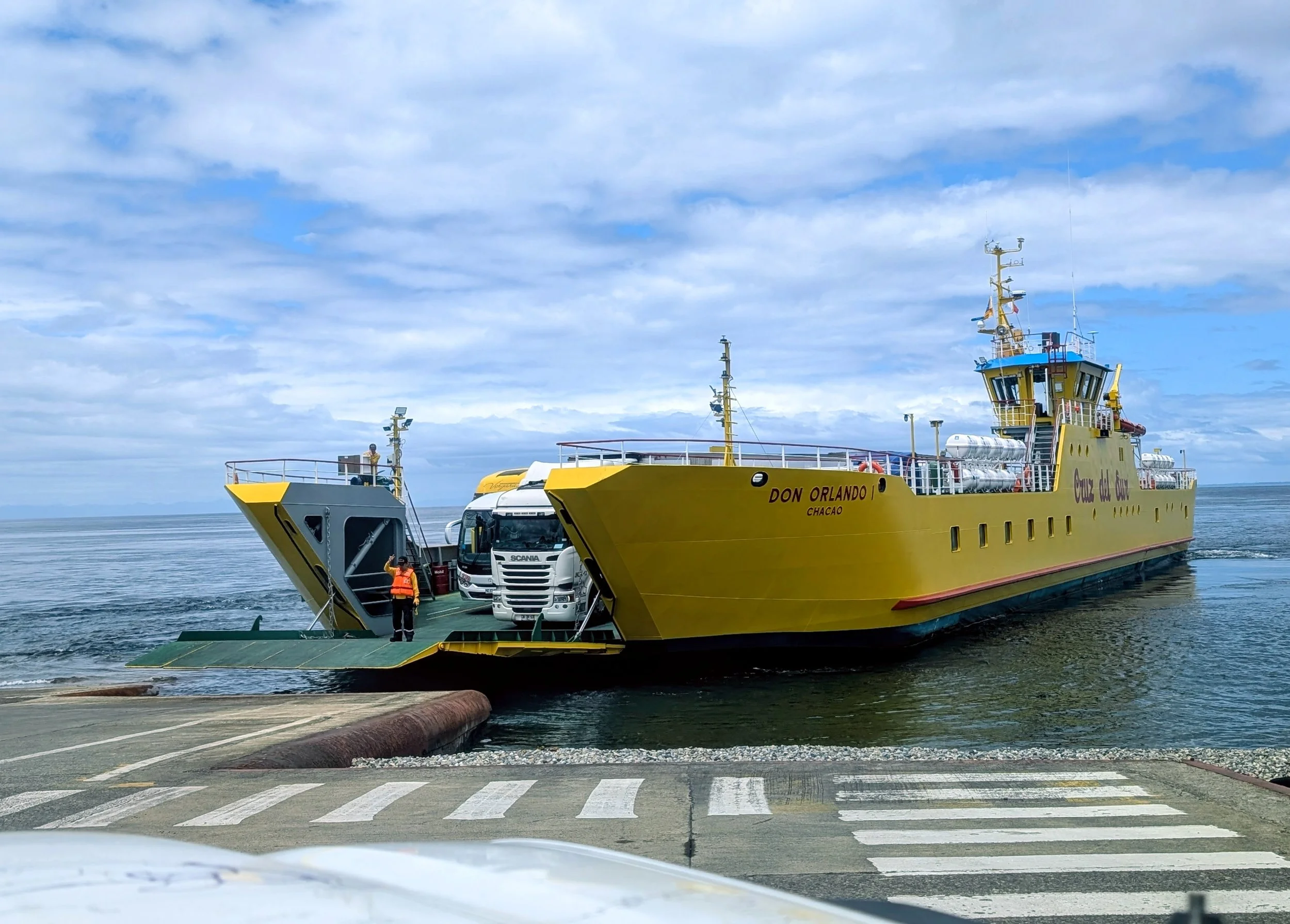
Ferry to Chiloe Island from Puerto Montt
We went straight from the ferry to the first of what would be many South American penguin adventures - Puñihuil Penguin Colon. This was an easy first trip - $10 each and visitors are pushed on a cart into the waves to board a rubber dingy that takes you along the coast to their nesting rocks. It wasn’t our best penguin experience in terms of close up wild life viewing, but it was definitely our cheapest.
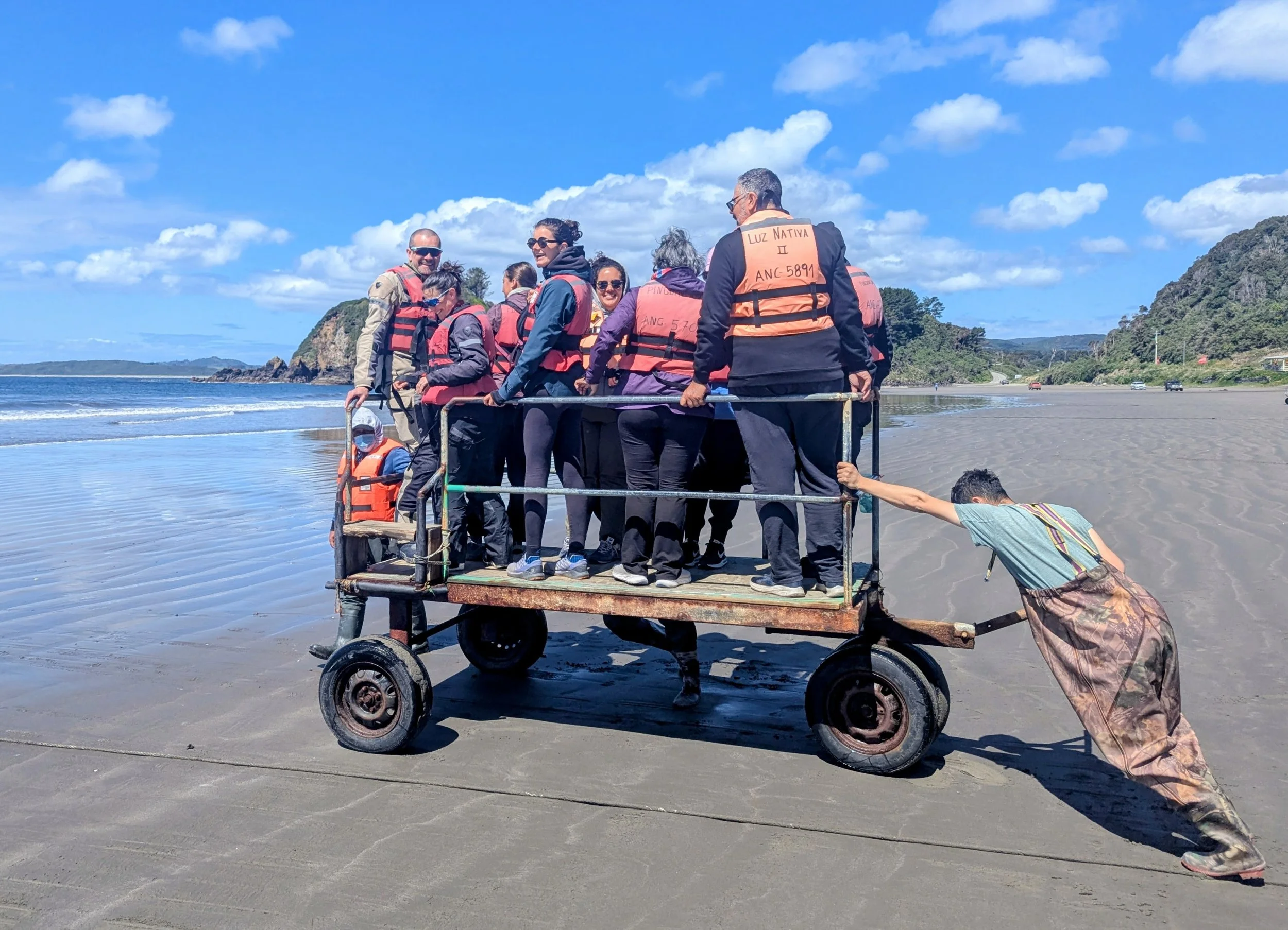
Tourists are pushed into the waves on a cart
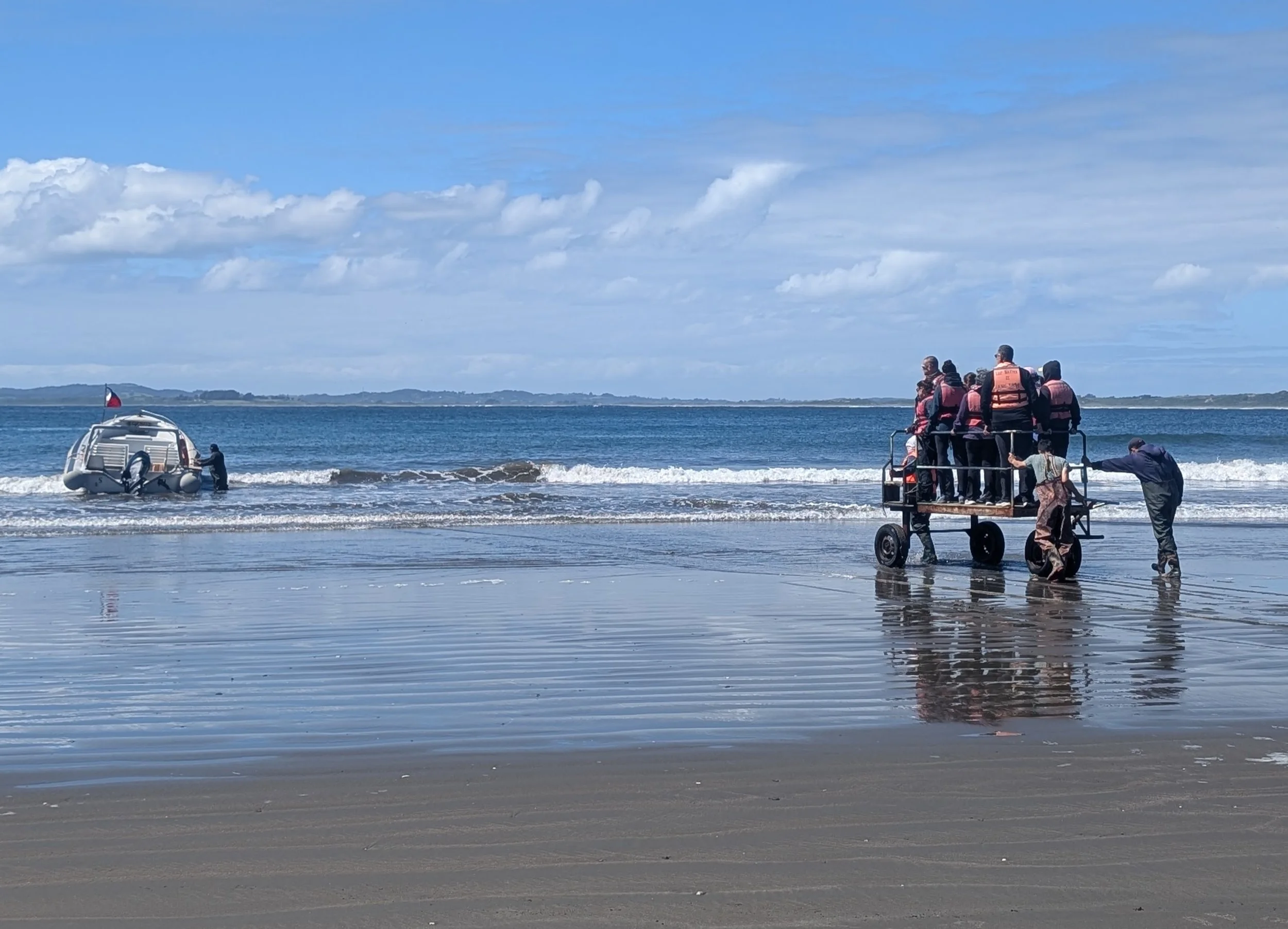
And then transfered to a boat
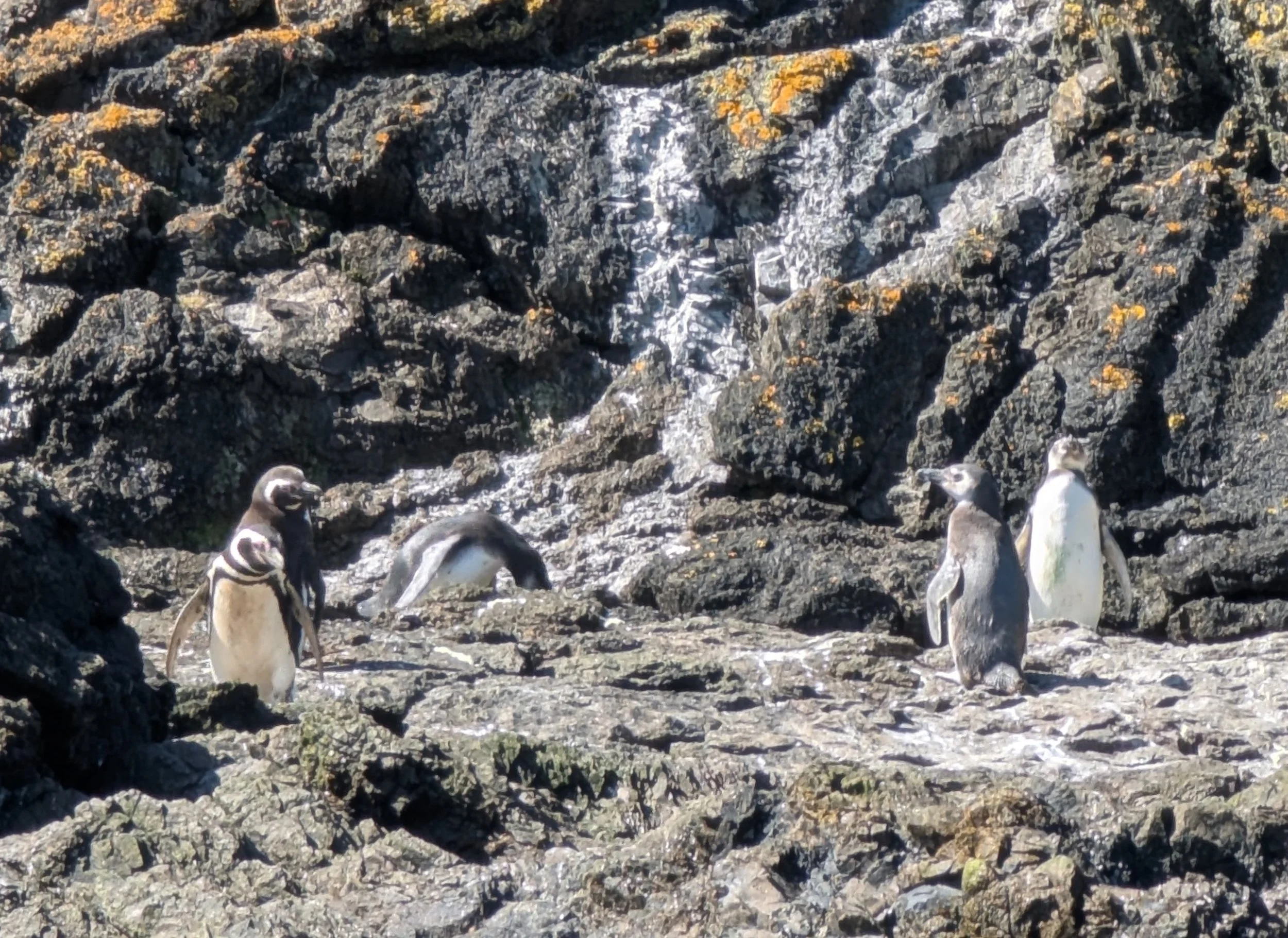
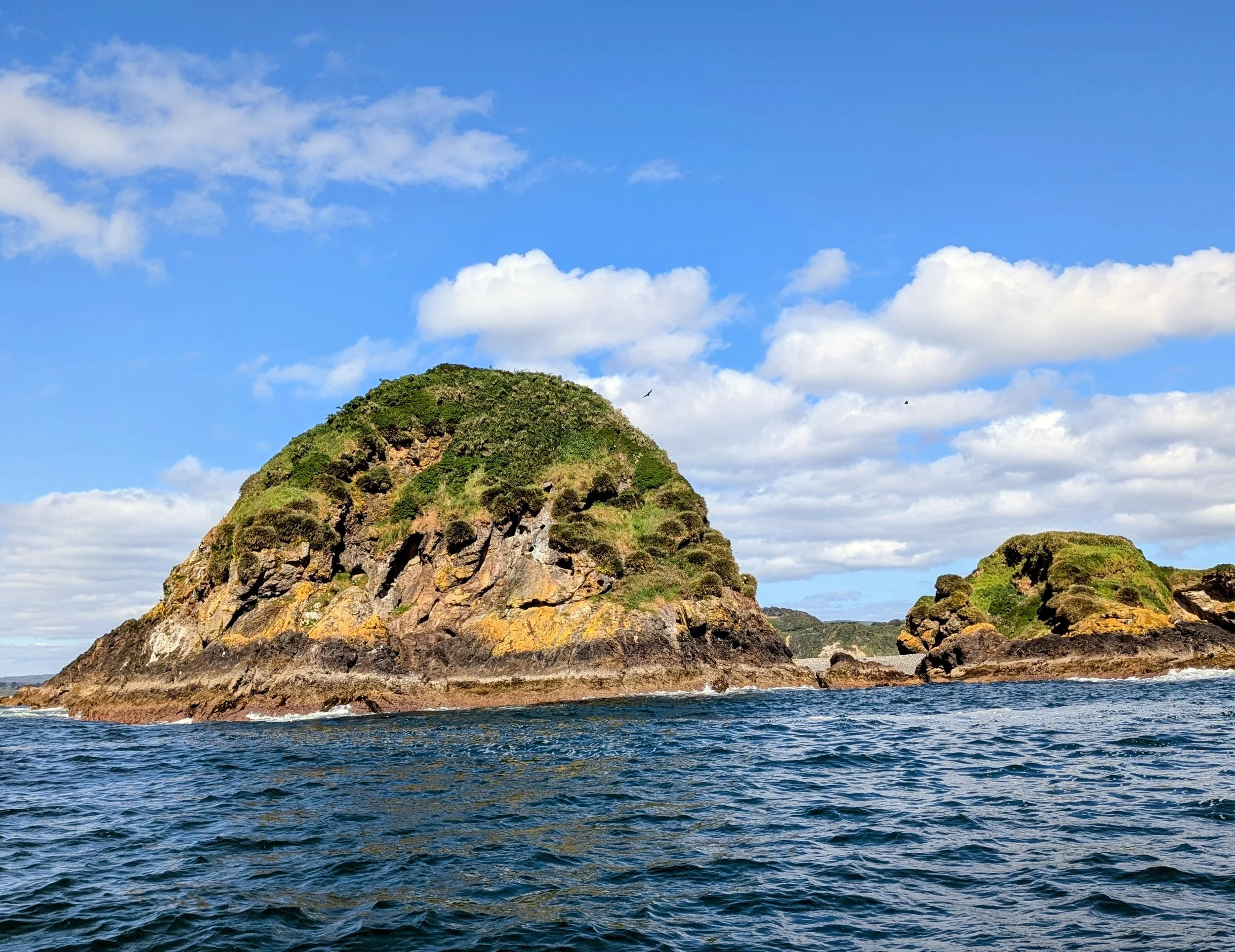
Penguins on the nearby rocks! The only place where Humboldt and Magellanic penguins nest side by side
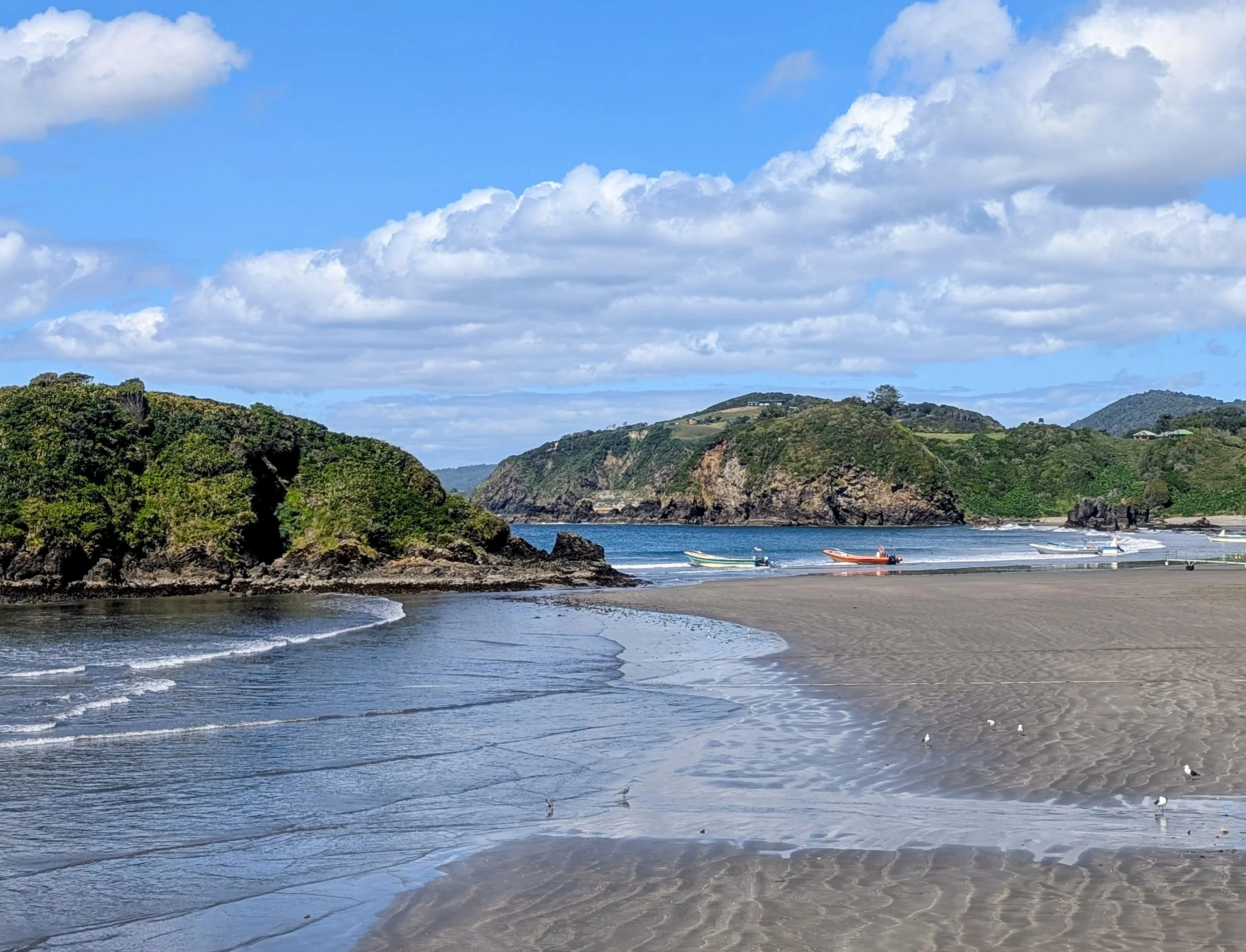
What the experience lacked in adventure was made up for in that it was a beautiful day and a gorgeous coastline
From the penguin beach, we made our way to the biggest town on the island - Castro. We enjoyed the colorful and unique architecture with the wooden shake-sided houses - shakes cut in an ornamental “fish scale” pattern.
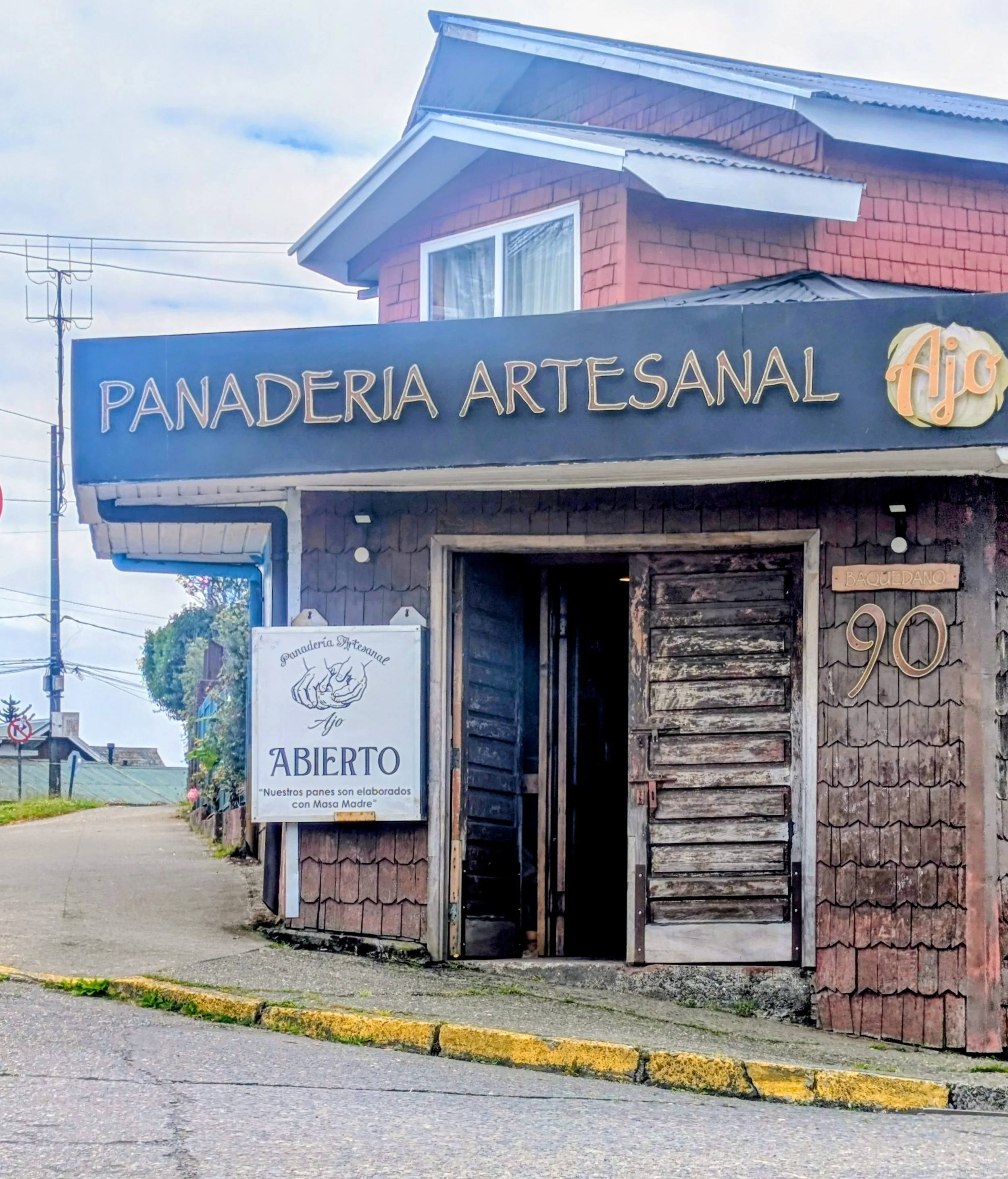
In every town we find our favorite panaderia
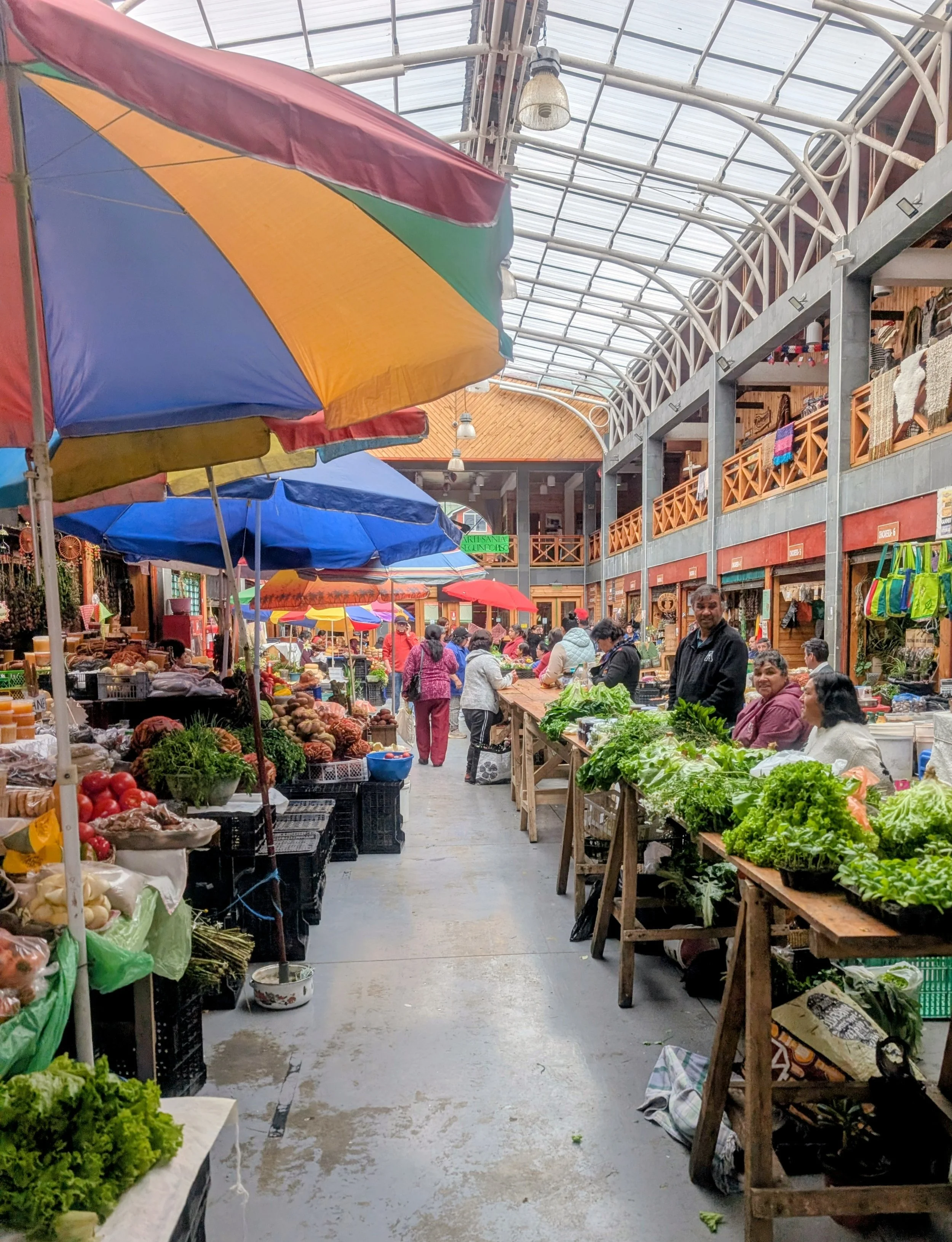
Central mercado in Castro - perfect re-supply stop
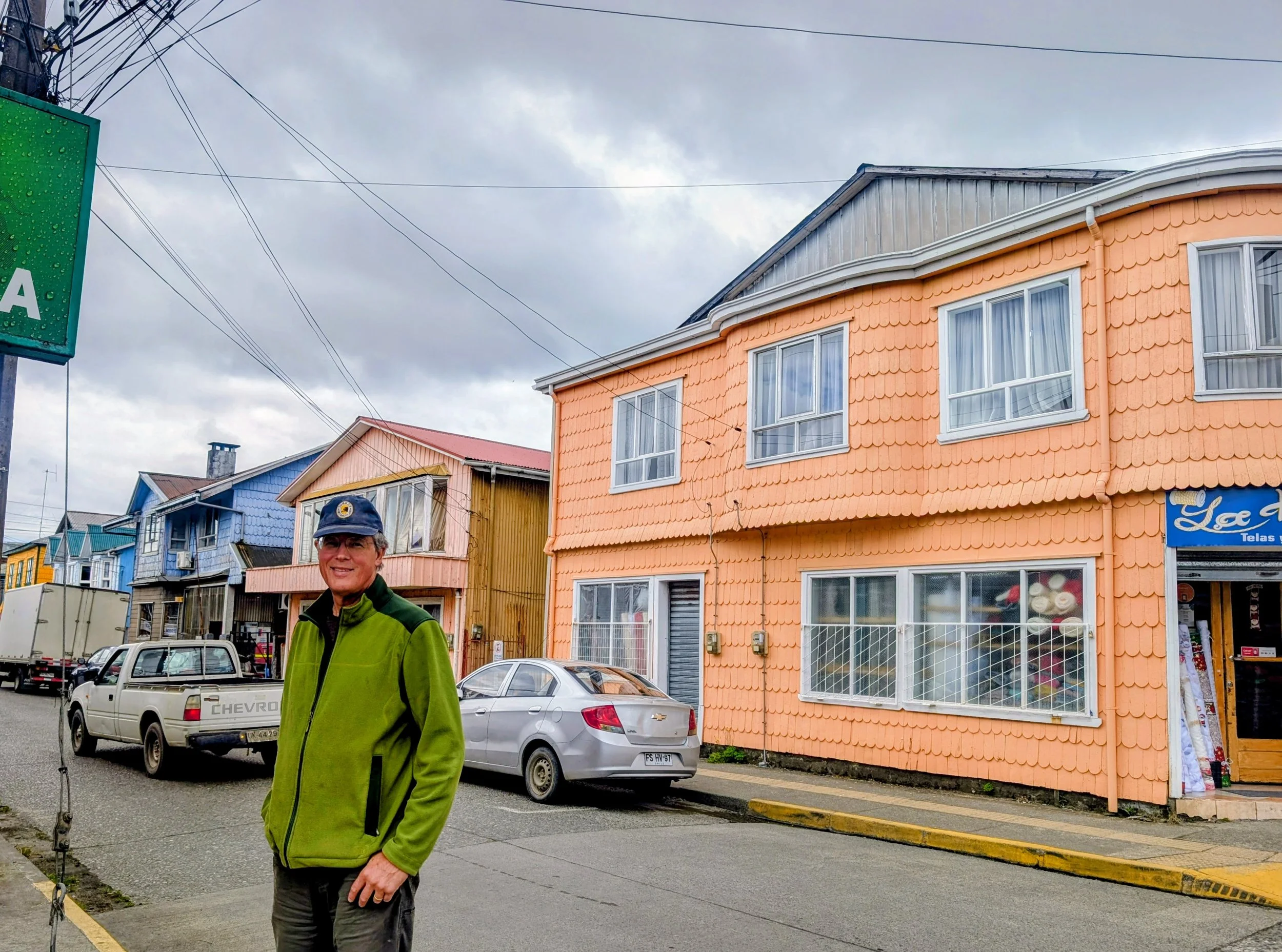
Wandering the streets of Castro, enjoying the unique buildings
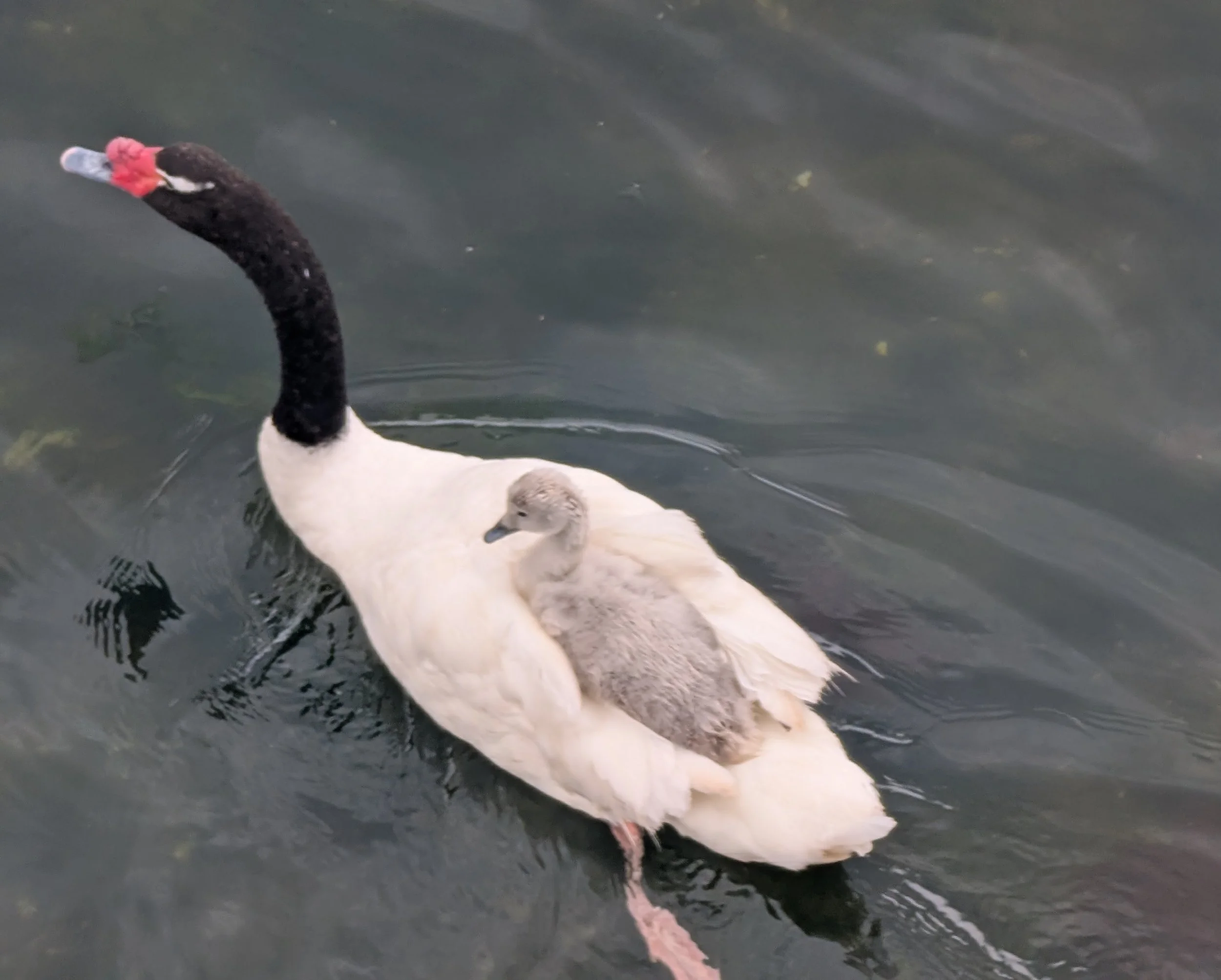
Baby on board
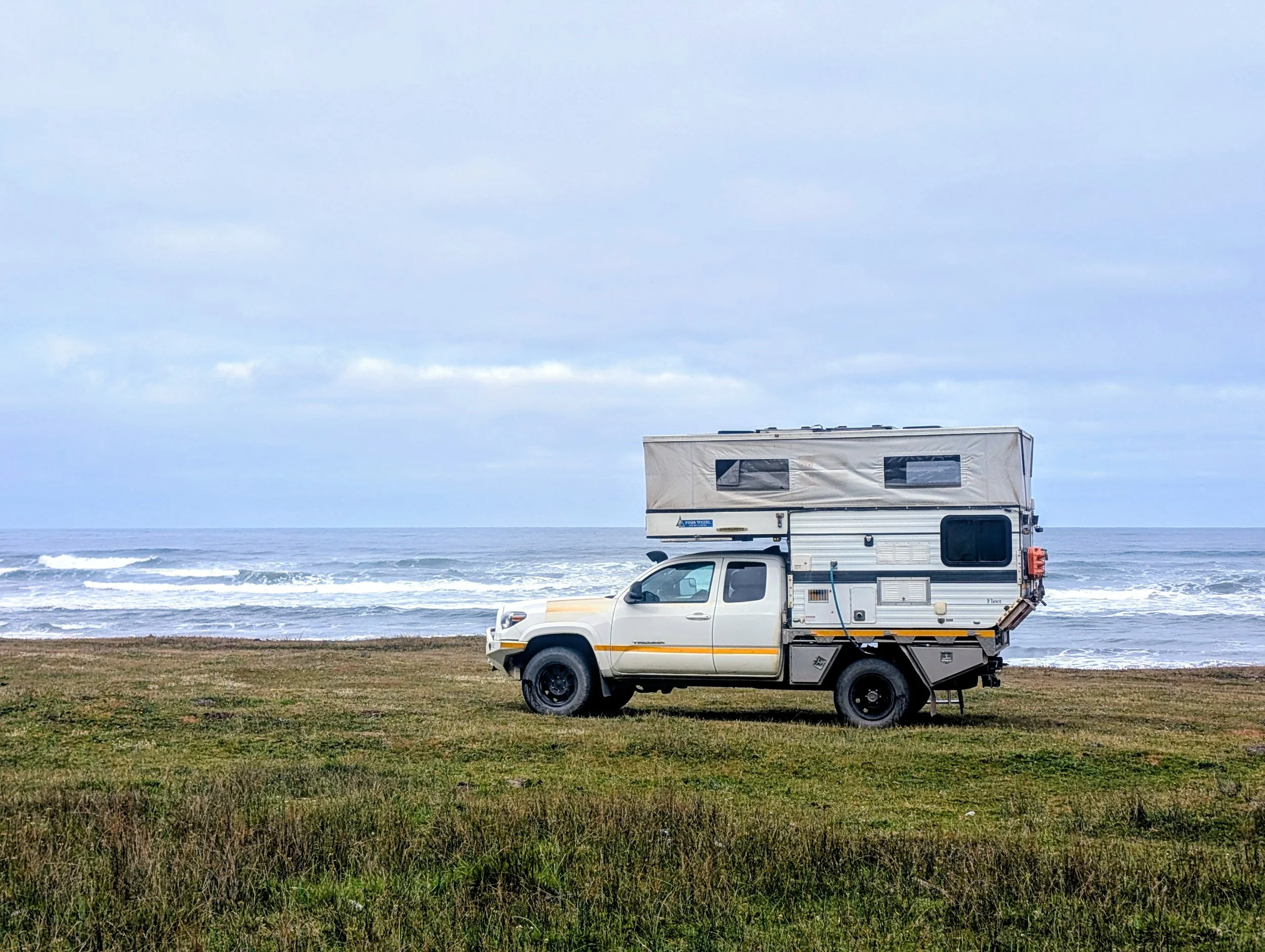
Found a great beachside wild camping spot - just the occasional fisherman or gaucho passing by
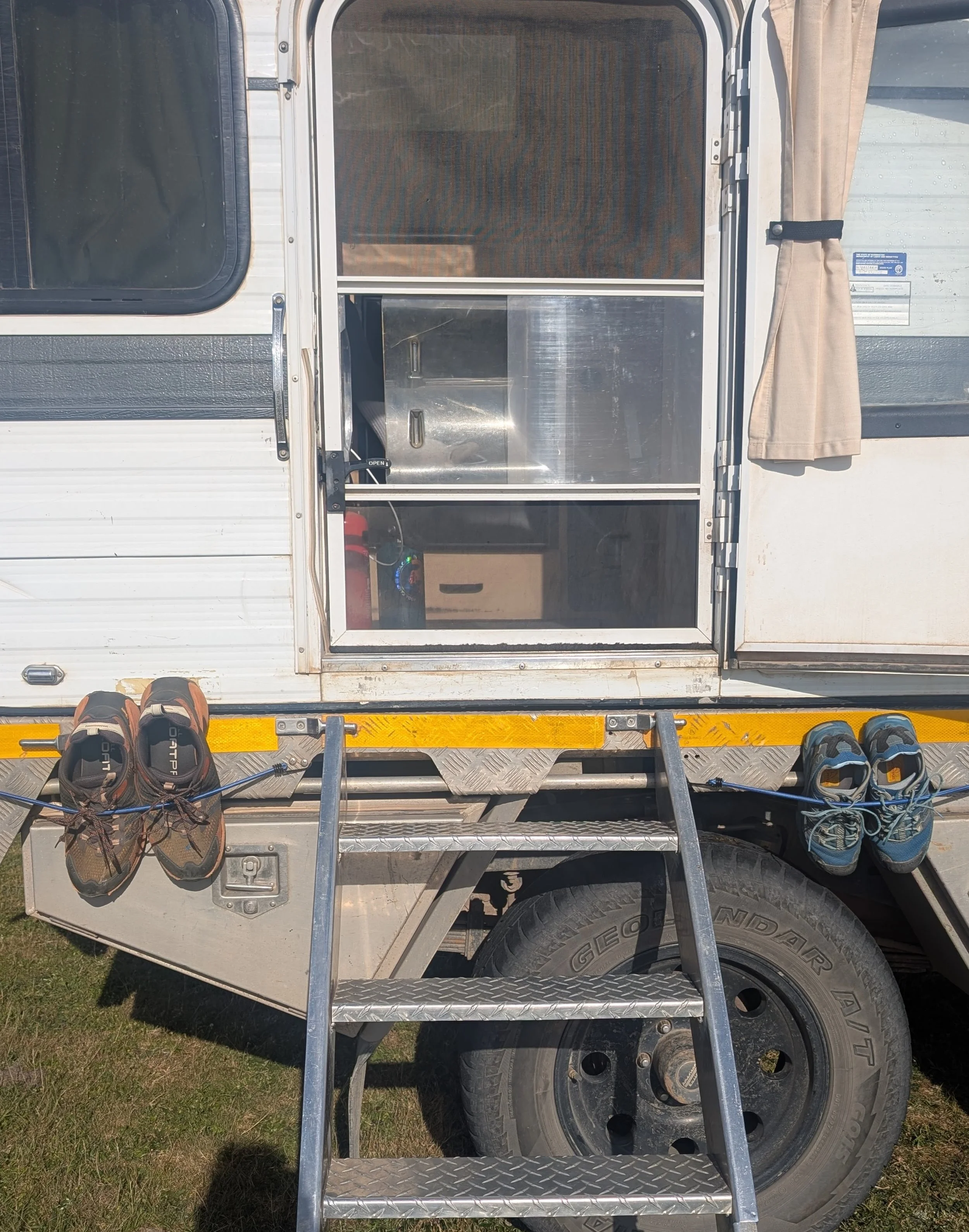
After our camp shoes were stolen for the 4th time (all canine thefts, foxes, jackals, hyenas and dogs) we finally created a bungee system to get them off the ground
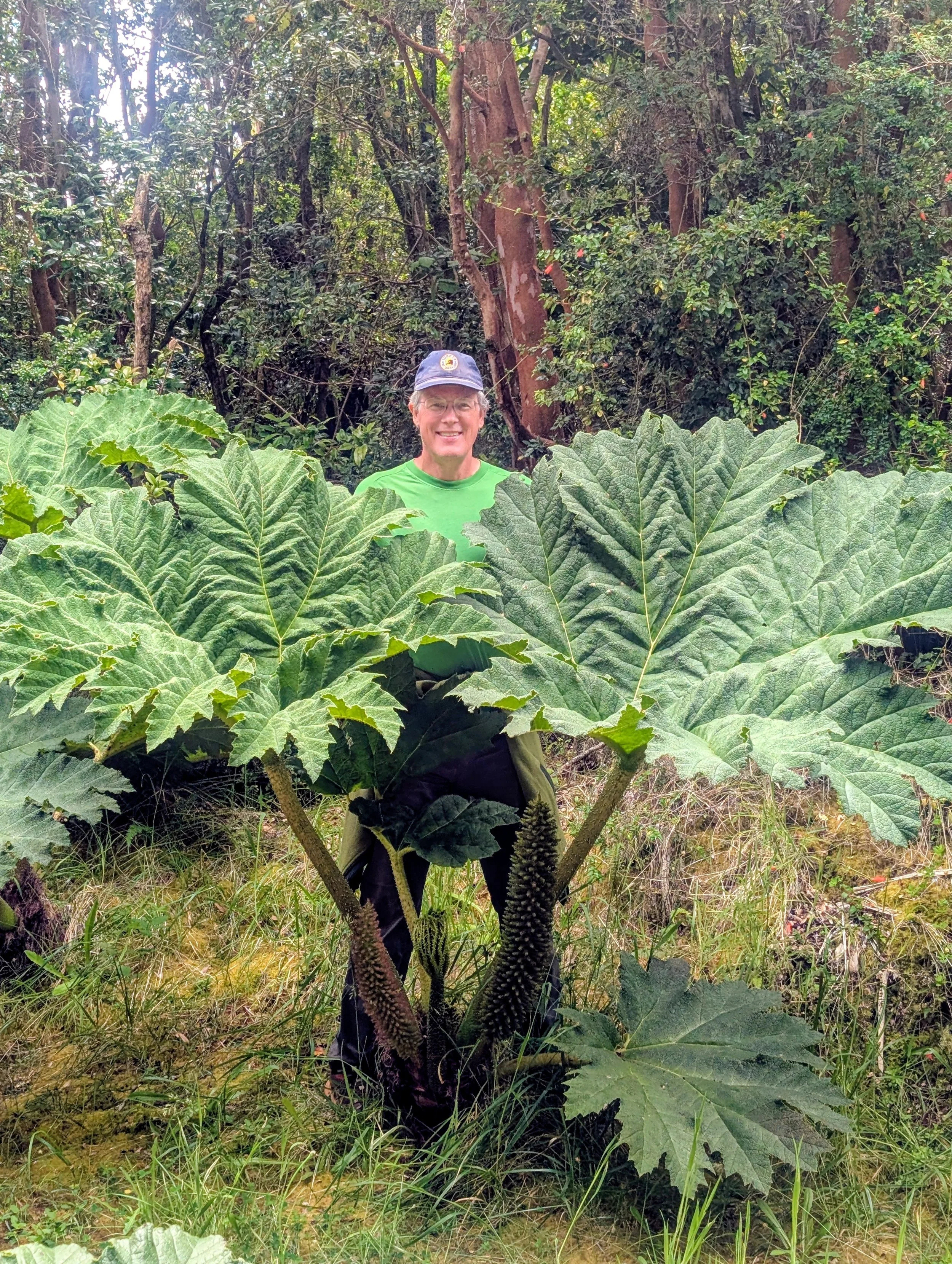
Andy’s favorite plants in Chiloe National Park- giant pre-historic looking leaves
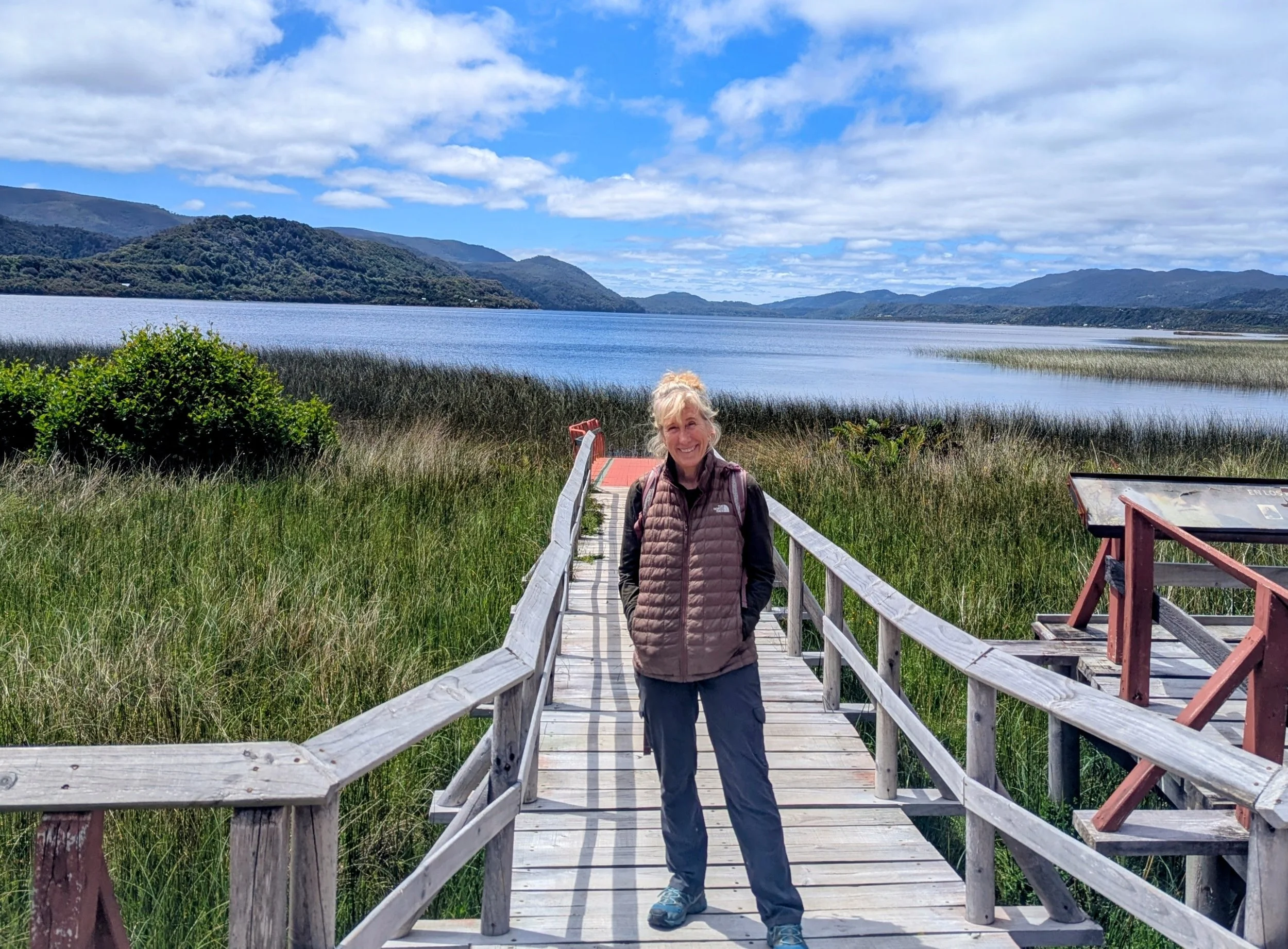
Lots of marshy land and boardwalks in the park
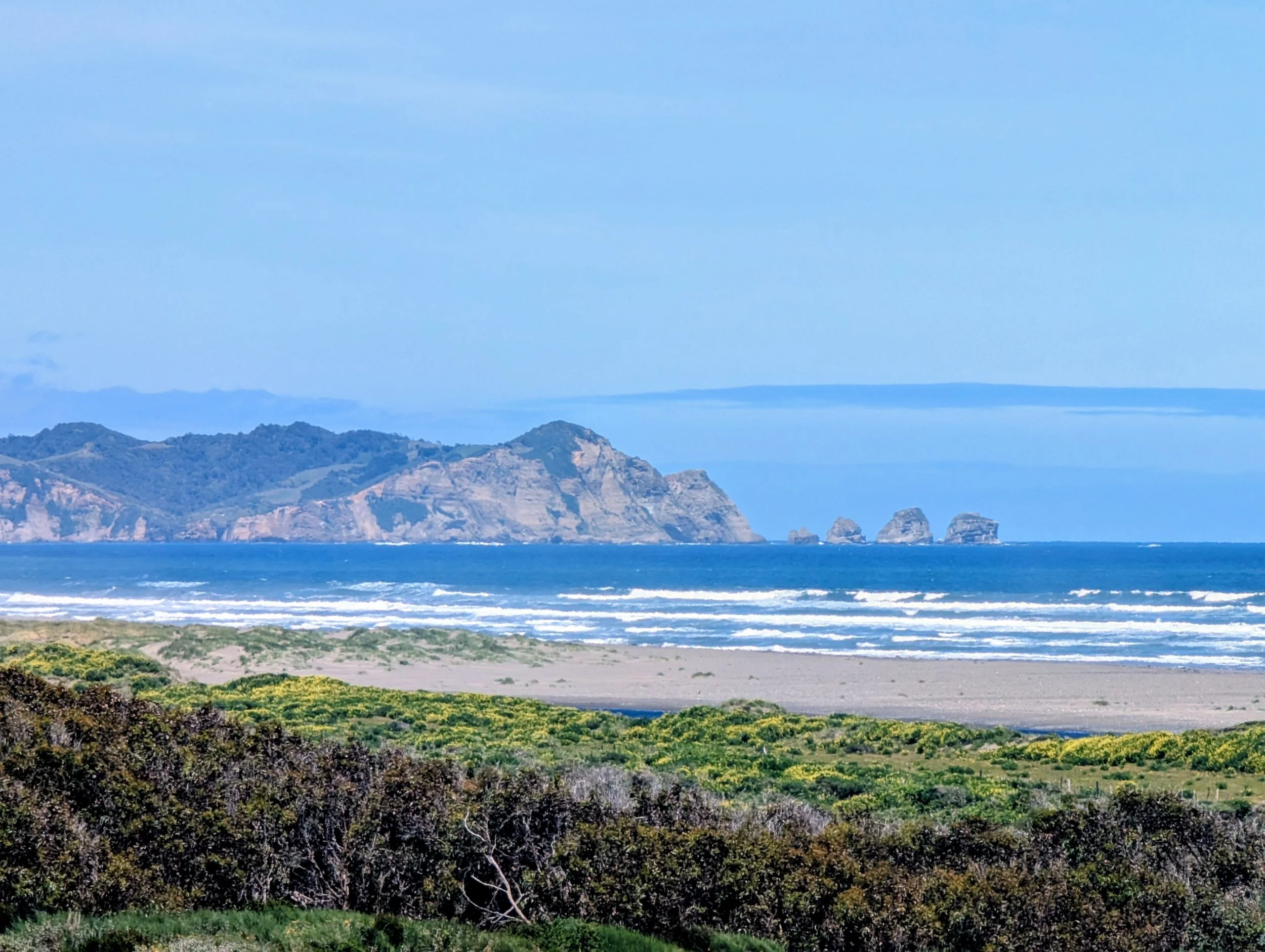
Beachside overlook
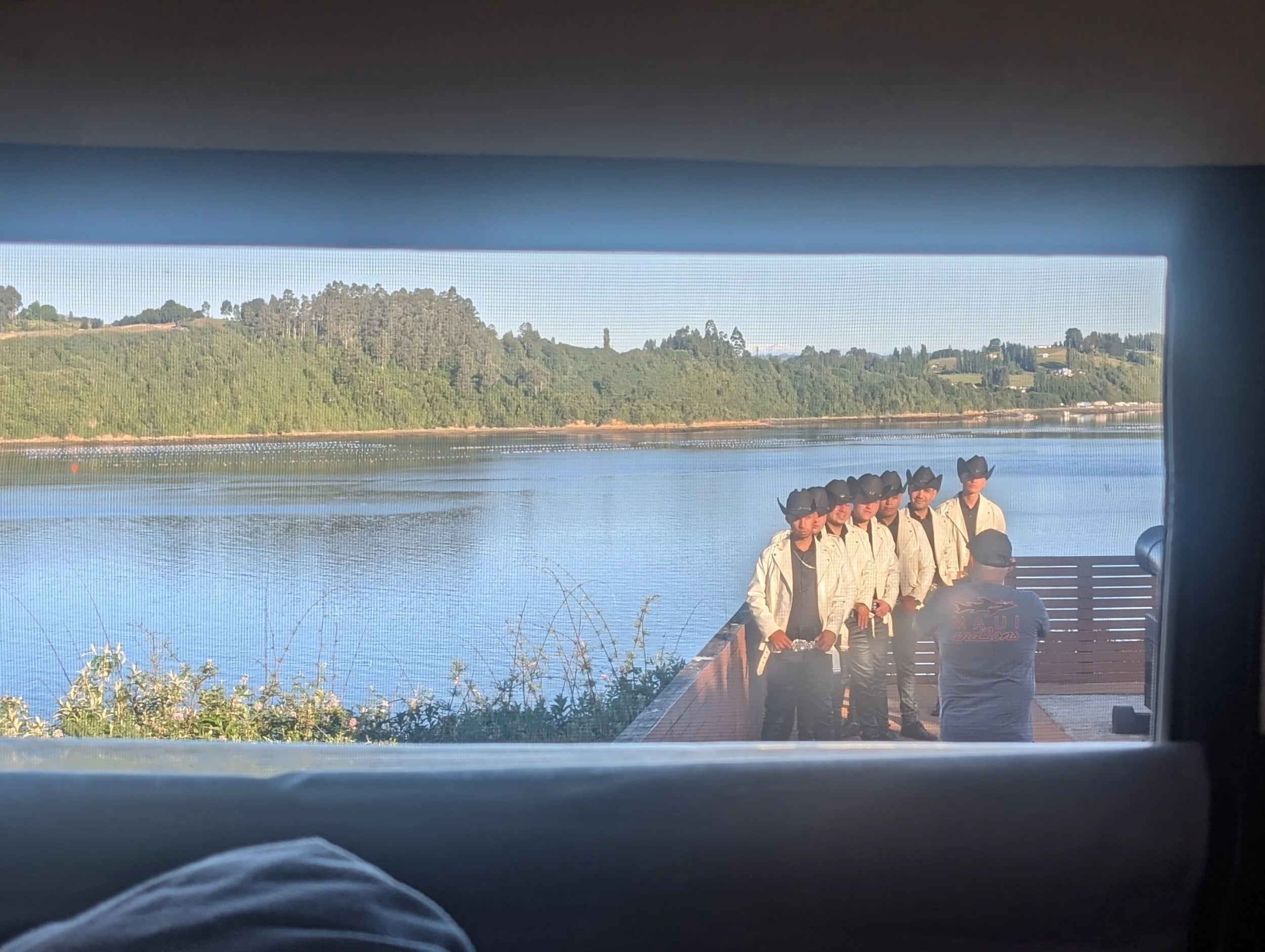
All set up in camp for the night and outside our window a Chilean cowboy band shows up for a photo shoot
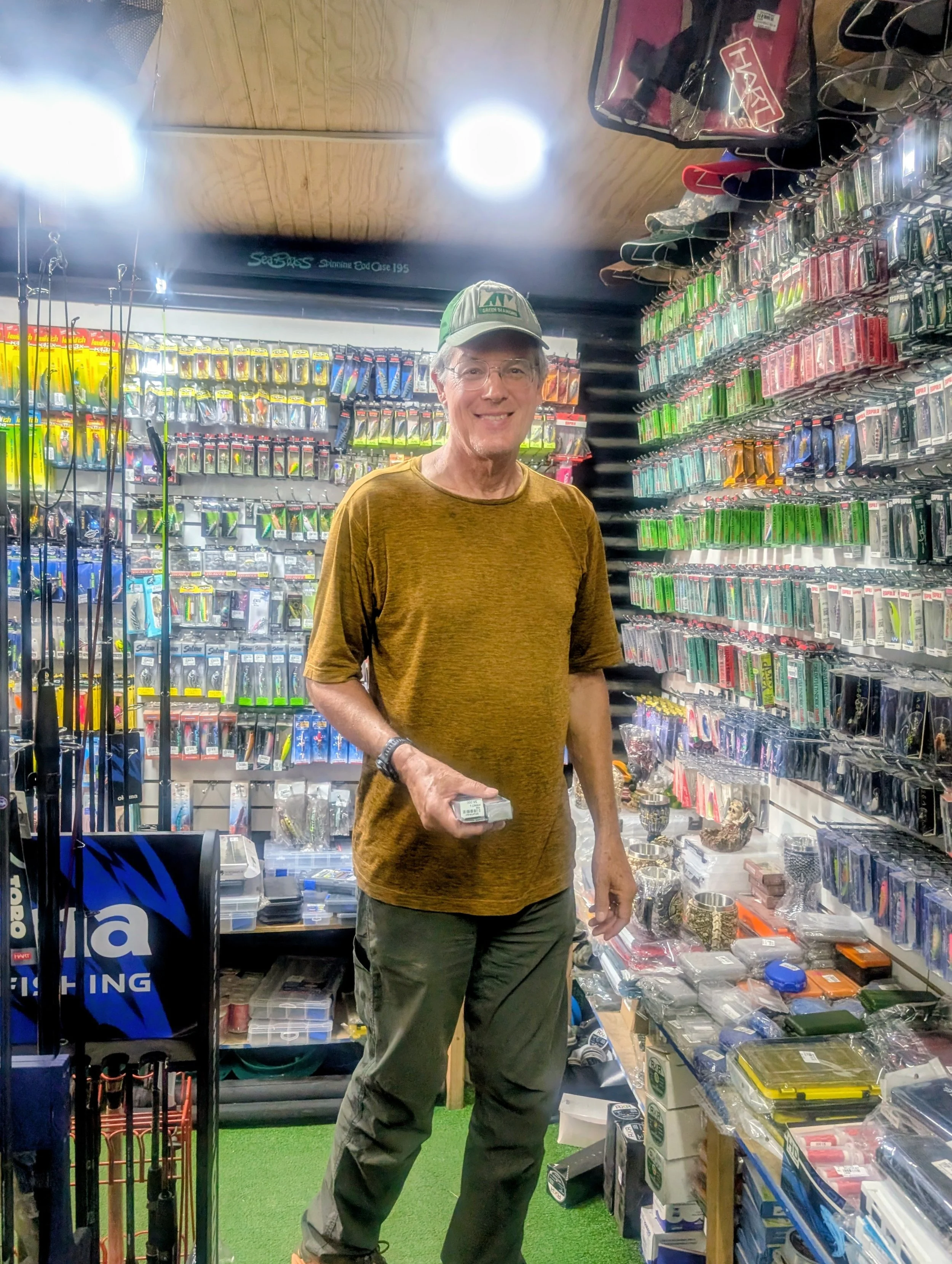
Andy found his favorite store
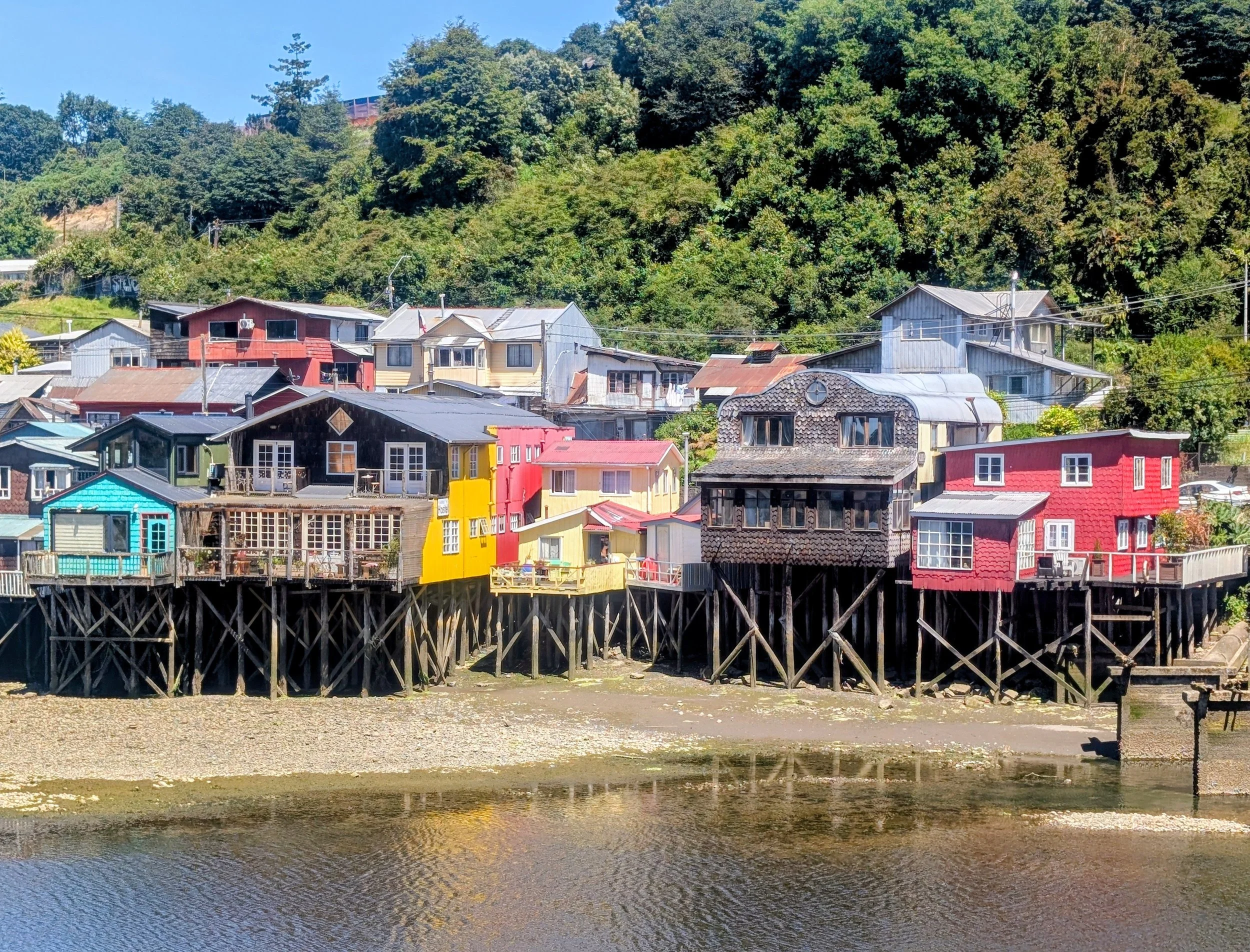
The beautiful stilt homes - palafitos - of Chiloe Island
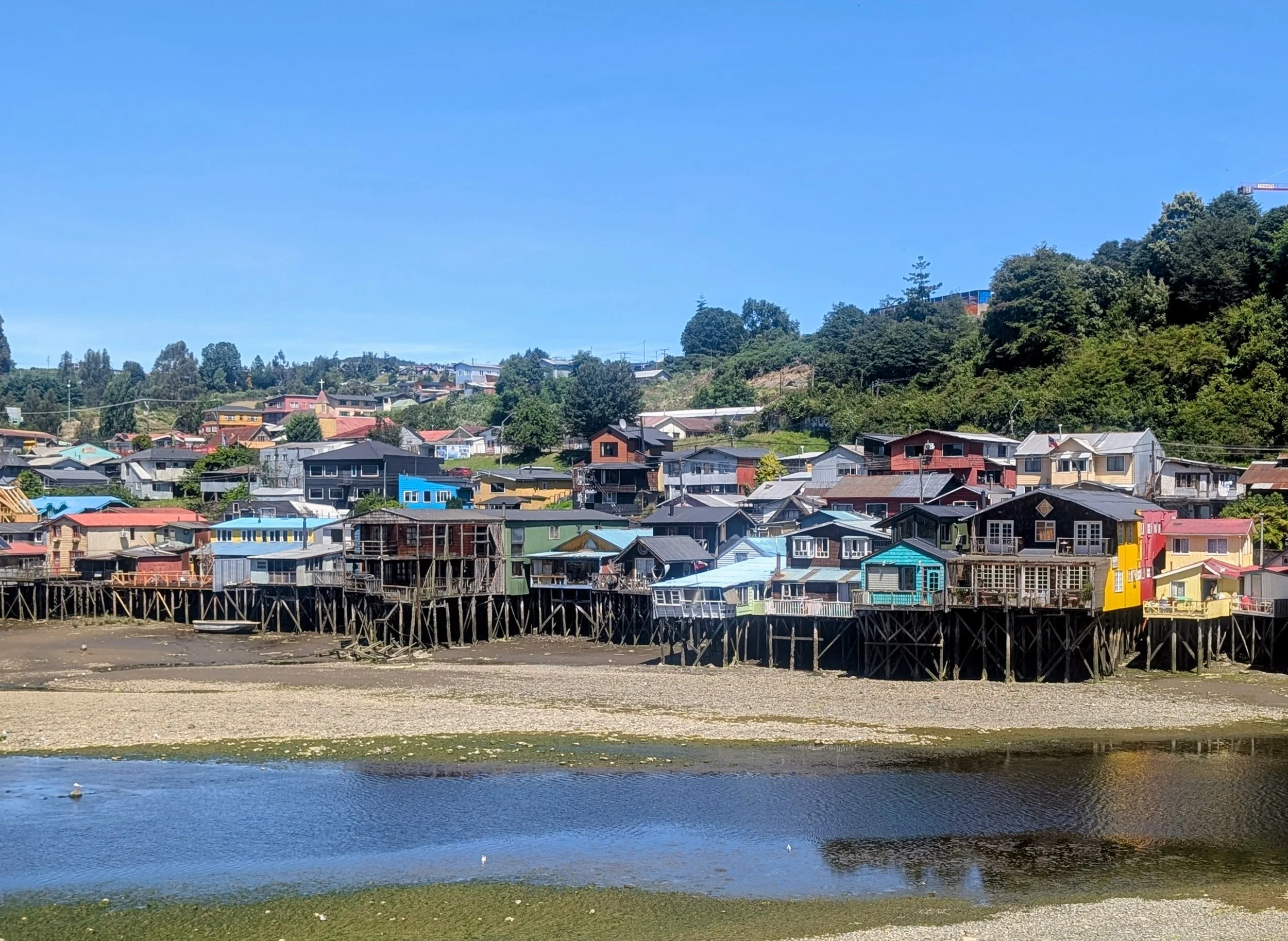
Definitely unique
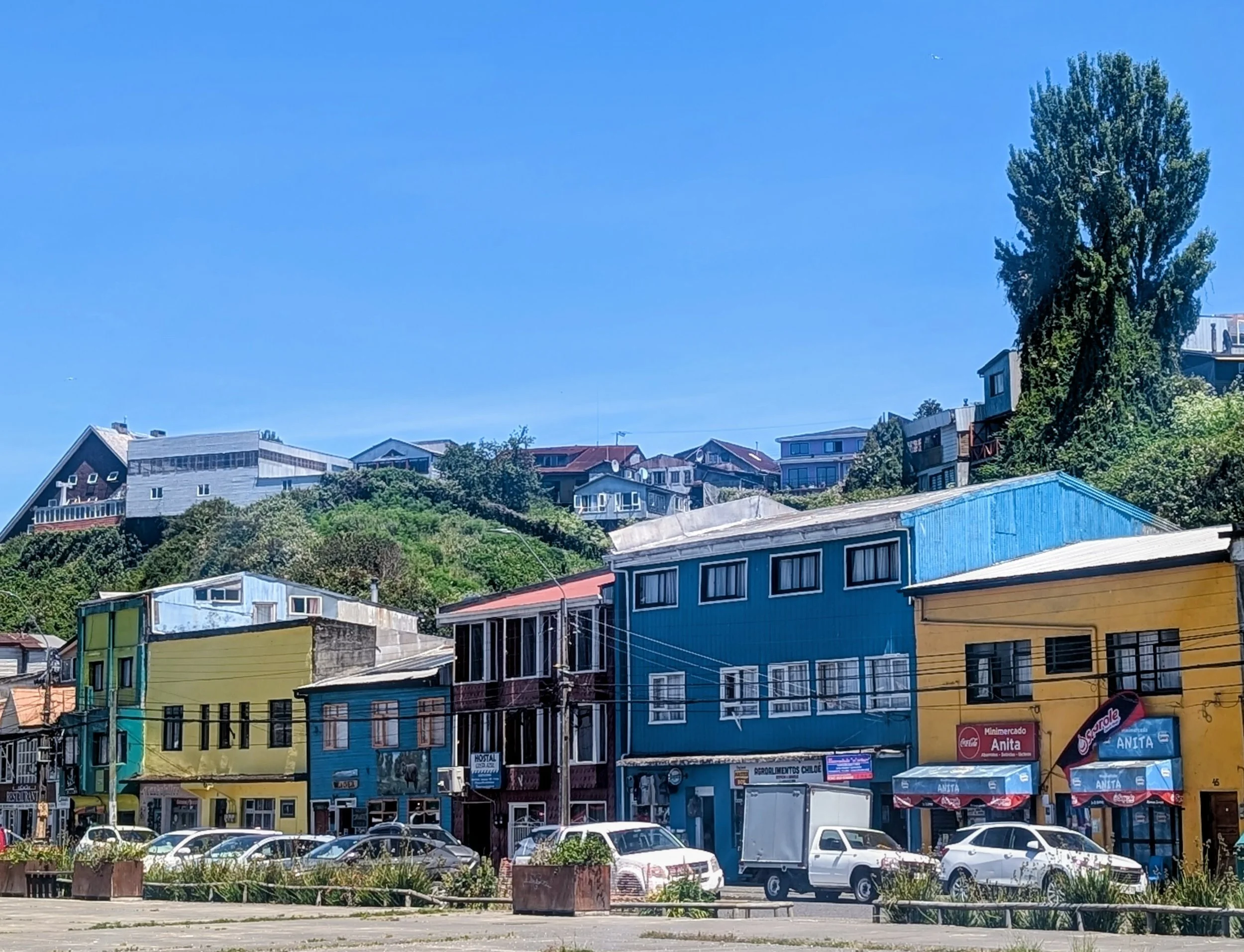
The towns were colorful and charming
Overall, we enjoyed our time on Chiloe Island, it was calm and peaceful with beautiful ocean views. But we would not say it was a highlight of Chile for us - definitely worth seeing, but it did not meet our bar for wild and scenic landscapes. We were getting spoiled and our expectations were high.
So we took the ferry onwards, heading south to what would be the start of the Carretera Austral for us. We opted to take the ferry from Castro to Chaiten, skipping the reputedly less scenic and slow driving road from Puerto Montt to Chaiten. We arrived in Chaiten at 11pm, disembarked the ferry found our way out to a coastal wild camping site. We have a pretty hard and fast rule that we do not find our camping spots at night for many reasons. In this case, Andy woke up at 3am to find the tidal water lapping at our tires and quickly moved us to higher ground. Likely if it had been lighter and we had been more alert when we parked up, we could have avoided this. But in the end at least it didn’t turn into an emergency situation.
Our first stop from Chaiten was Pumalin National Park - also known as Parque Nacional Douglas Tompkins. We were gradually learning more about Doug Tompkins (founder of Northface) and his wife Kris and their fascinating legacy of purchasing vast tracts of land in Patagonia and donating them to the Chilean government to become national parks. Pumalin National Park offered beautiful trails, glacier and mountain views all for free entrance.
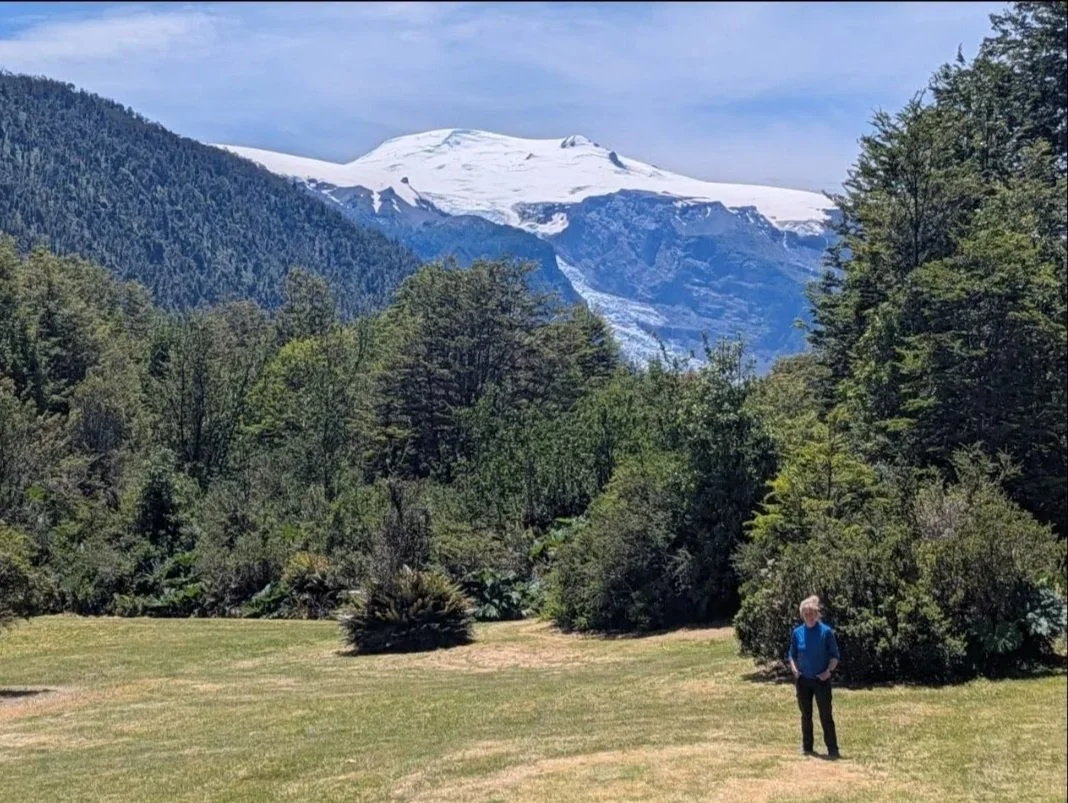
Hiking in Pumalin National Park, glacier view in the distance
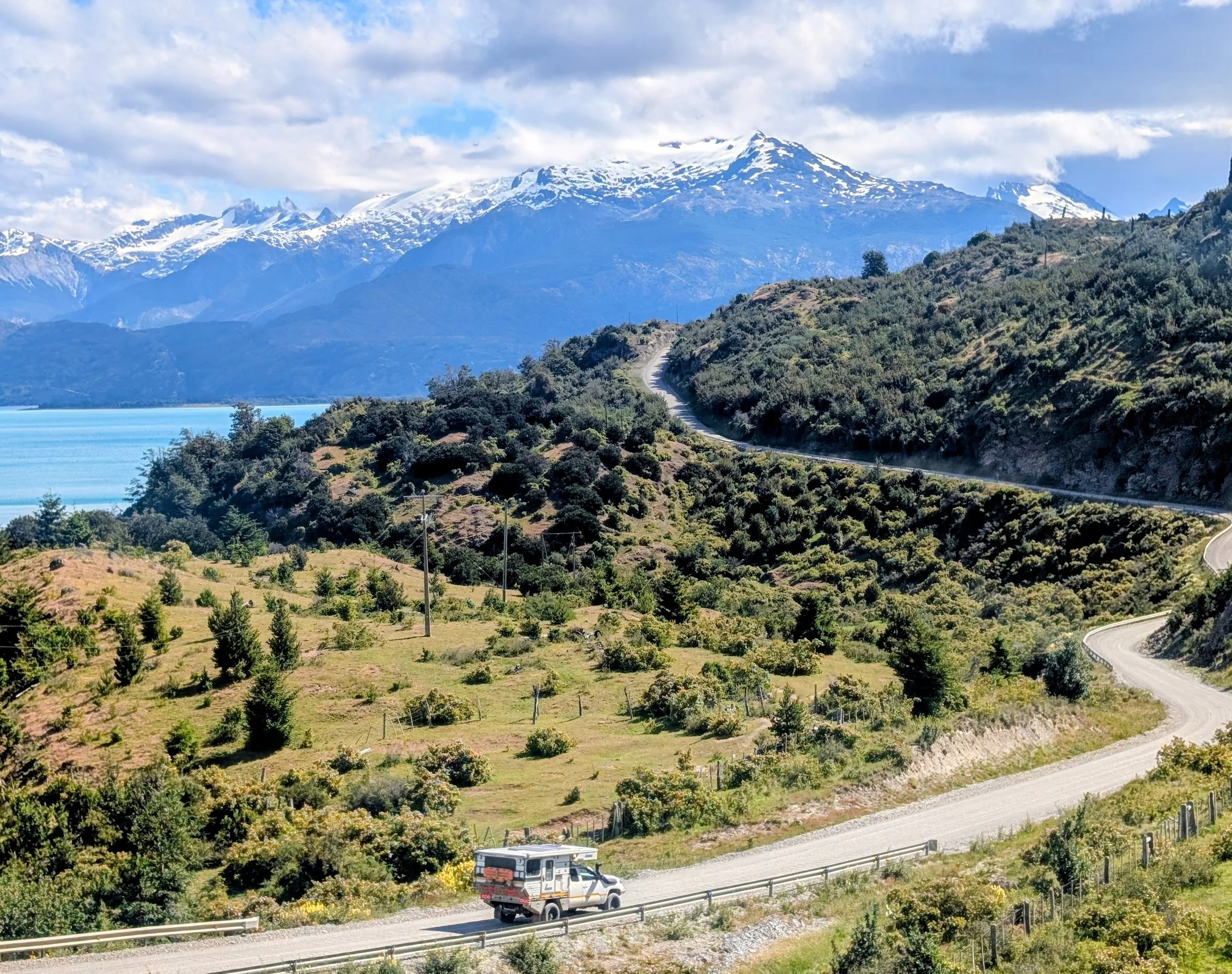
Then we were off on the Carretera Austral - one of those iconic routes we had dreamt of driving. The whole route is 1200 km, we were committed to 900 km of those. Currently about 60% of the route is paved, for us, about half of what we drove was paved, the rest good was gravel with some painful washboard sections. Similar to the Pamir highway in Tajikistan, national plans were in the works for paving the whole highway. We had the same feeling that we had driving the Pamir highway, the difficulty of the road somehow added to the adventure and the overall experience (even though we were grateful when we hit the paved sections). We appreciate that for local people, paving the road makes their lives easier but as more and more of these iconic drives become highways it makes us a tiny bit sad. There is something lost there, at least for those of us seeking remote scenery.
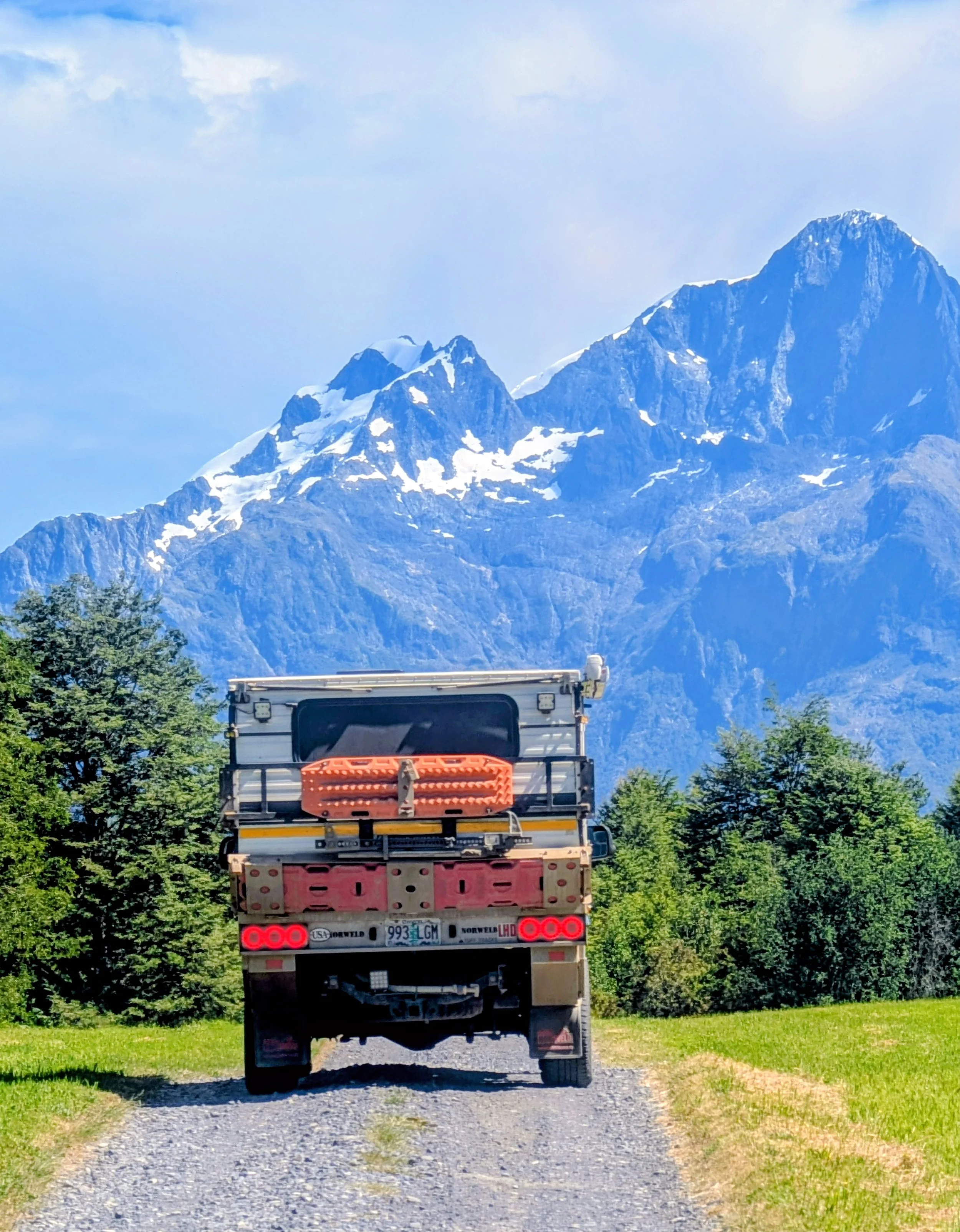
Spectacular scenery
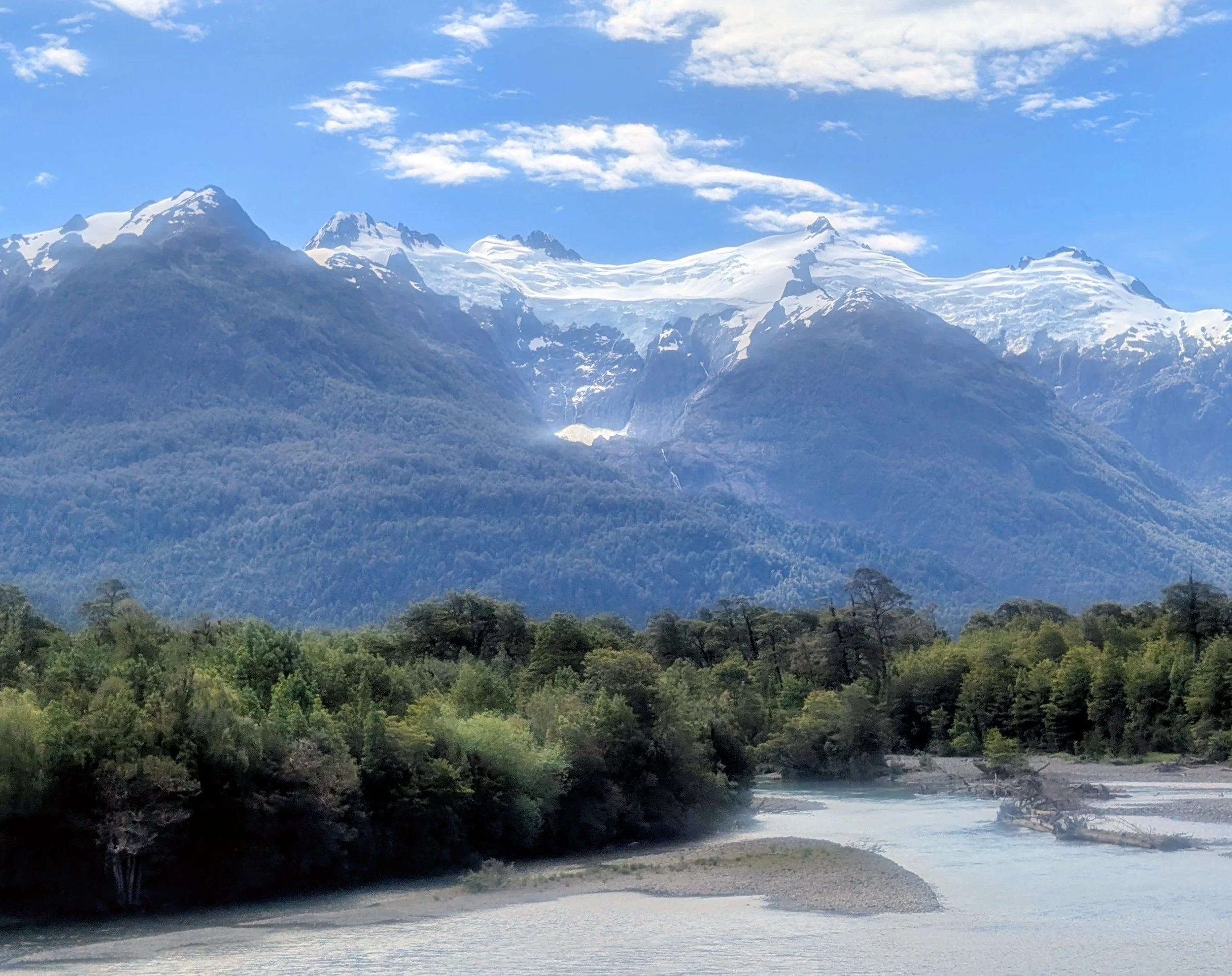
Surrounded by snow capped mountains
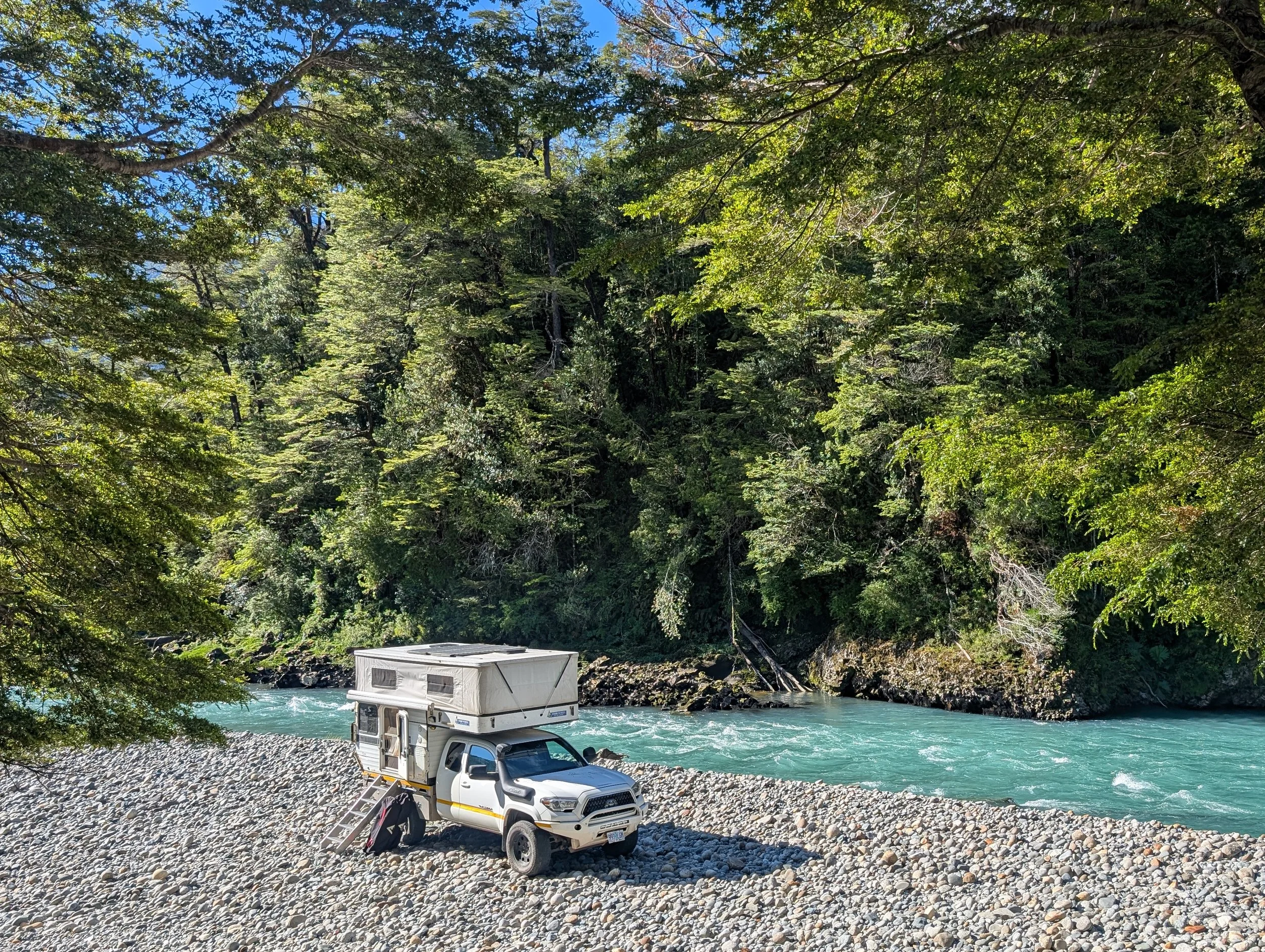
River side wild camp
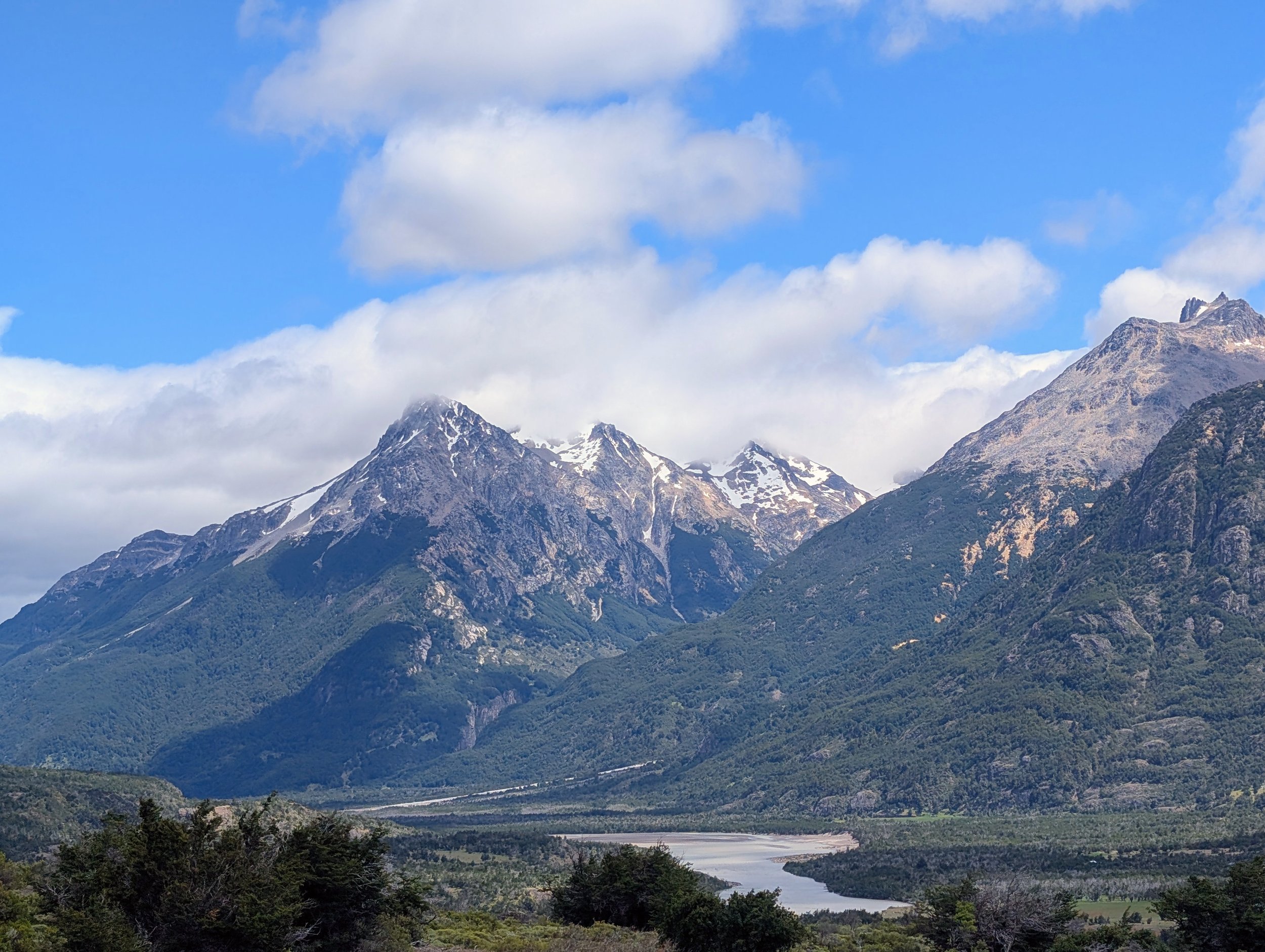
Glacial rivers, jagged peaks, it doesn’t get any better
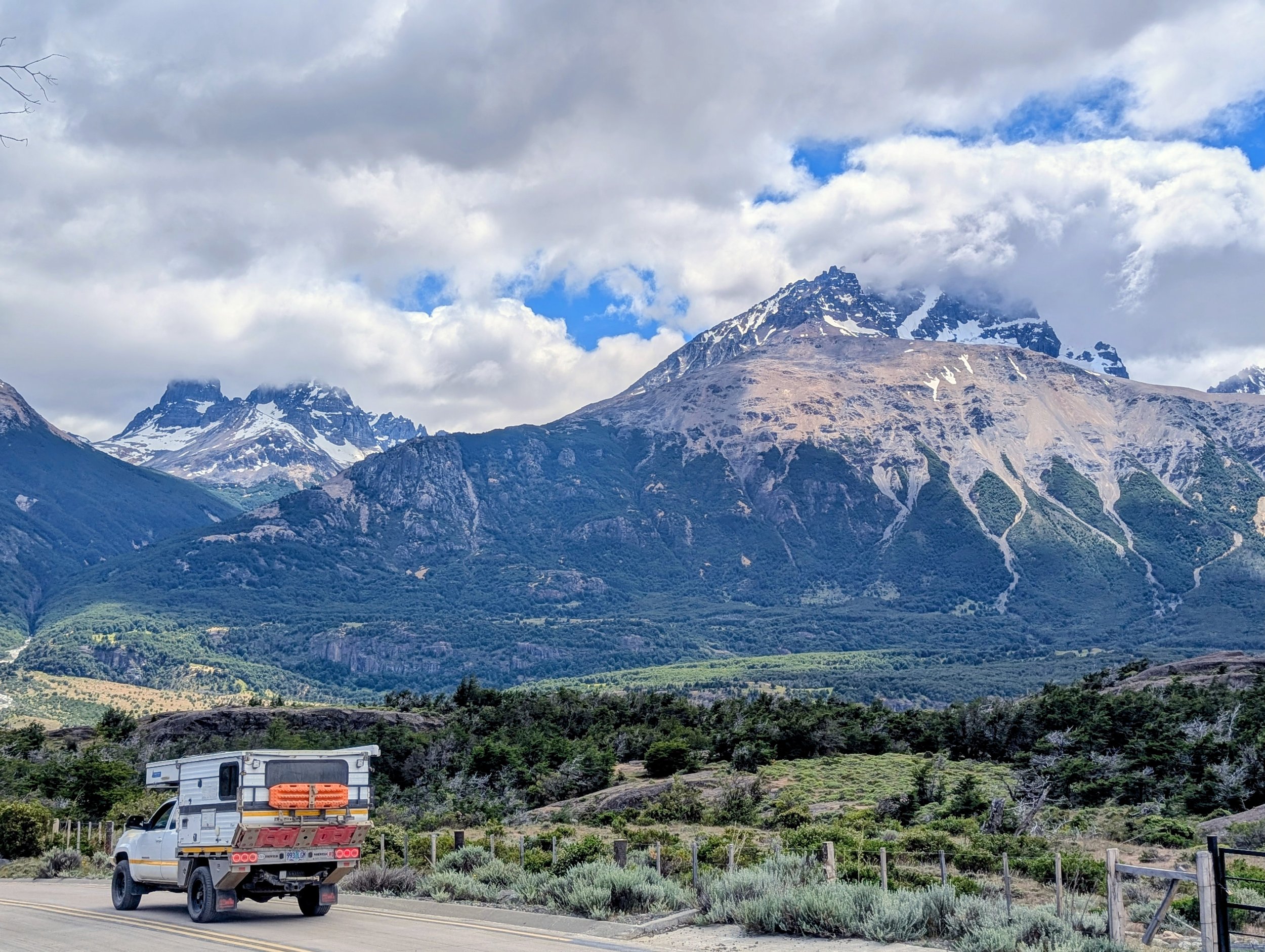
Hitting the paved section
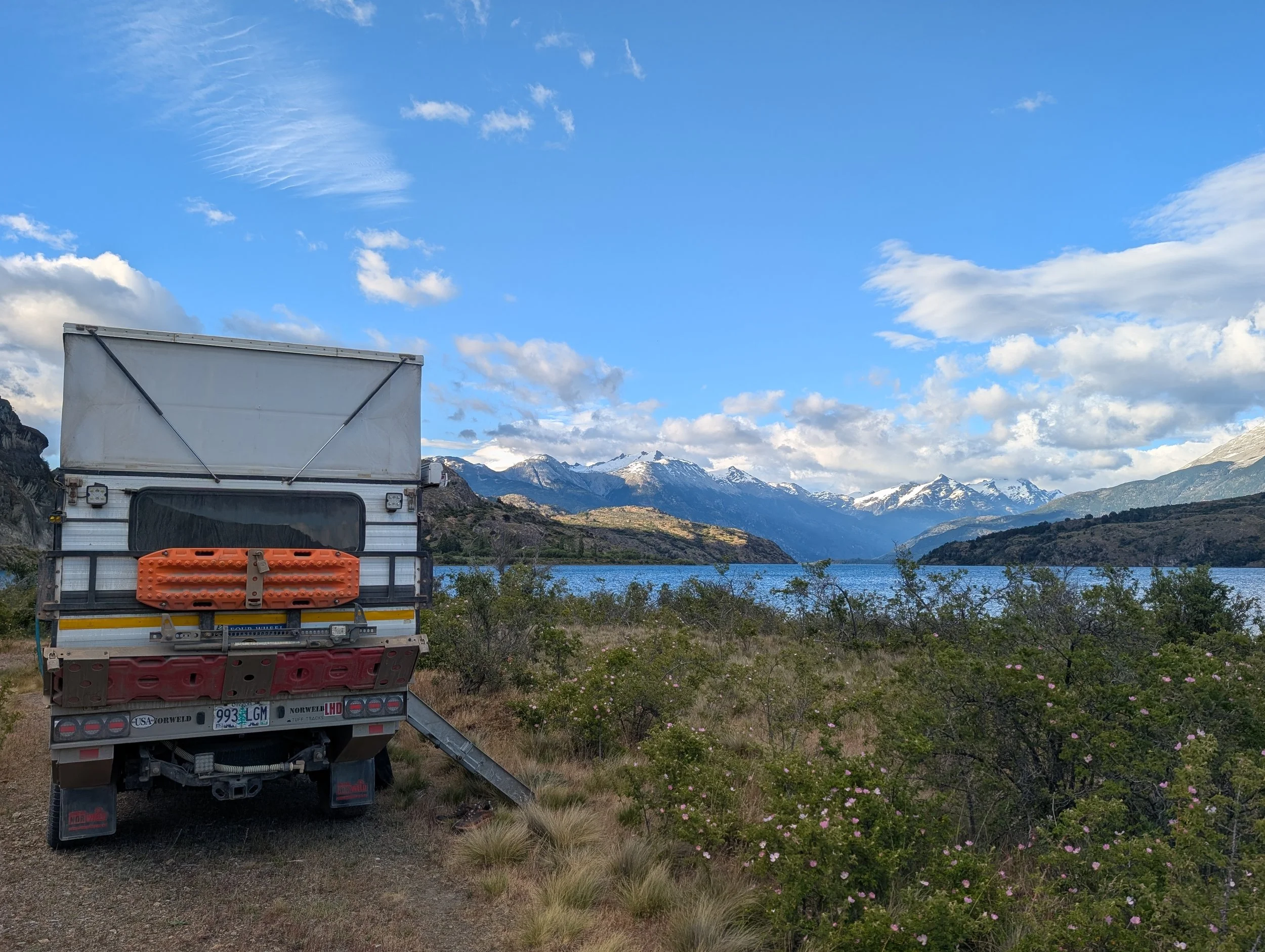
Wild camp along the way
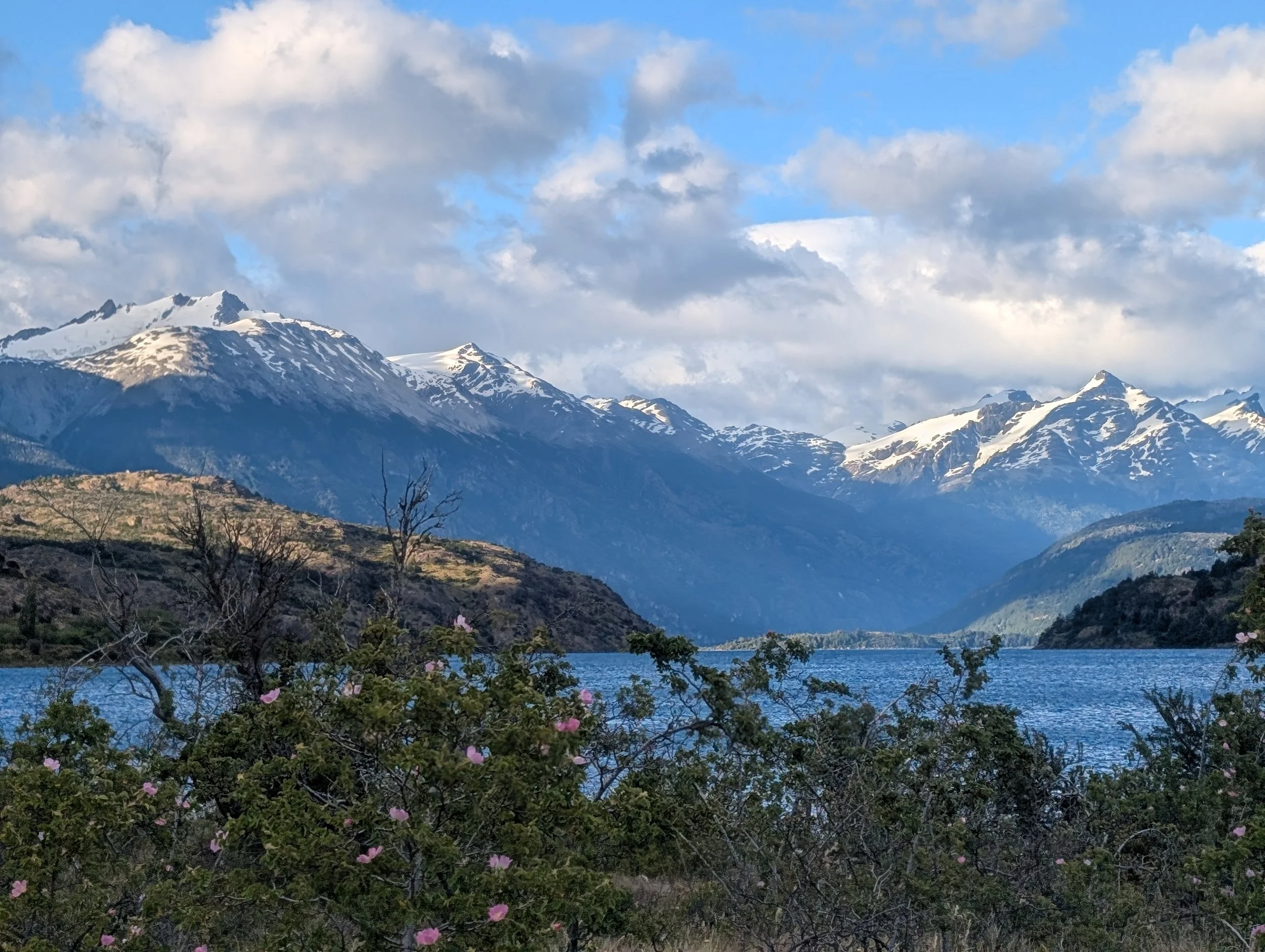
Evening view from camp
Our final three days on the Carretera Austral were spent driving through and camping and hiking in three different areas of Patagonia National Park - all donated by Doug and Kris Tompkins to the government of Chile. The scenery was spectacular and the hiking beautiful. The park is enormous - 750,000 acres stretching from the town of Cochrane to the Paso Roballos border with Argentina.
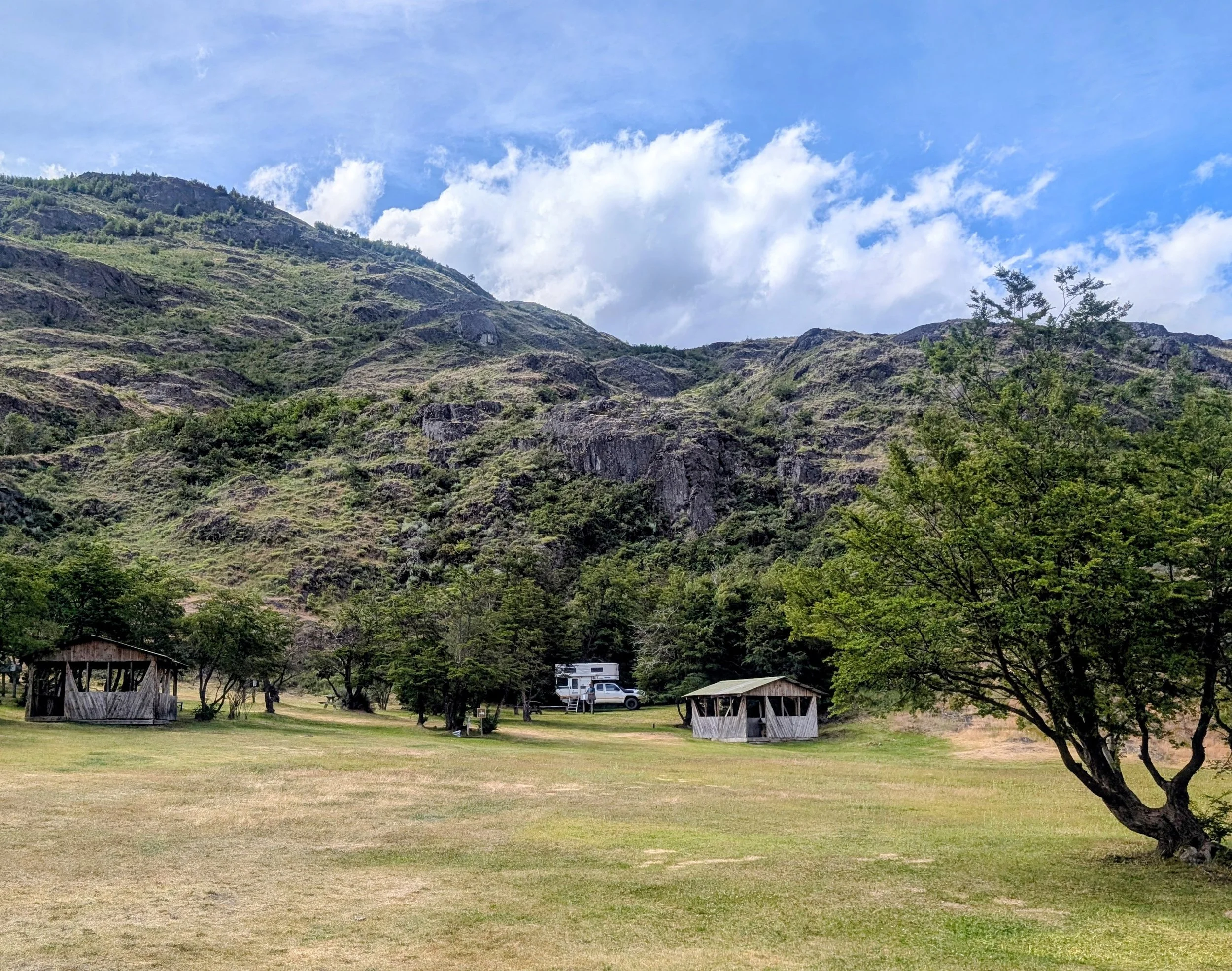
Campground in the Tamango sector of Patagonia National Park - outside of Cochrane
Cochrane was our first decent sized town since we left Puerto Montt and a good re-supply point. We spent a rainy day in a cafe getting caught up on wifi, and applied for our Salvoconductos. These were online permits required to exit the remote southern border of Chile - basically confirming that we had not committed any crimes in the country. We had a hiccup as Dawn got hers back in two hours but after 24 hours we had not heard anything about Andy’s permit. We had no information about what was going on just the sense that he was lost in a bureaucratic black hole (or had a ticket in the system we didn’t know about). In the end he re-applied and received his in a couple of hours so we were good to go with only a days delay.
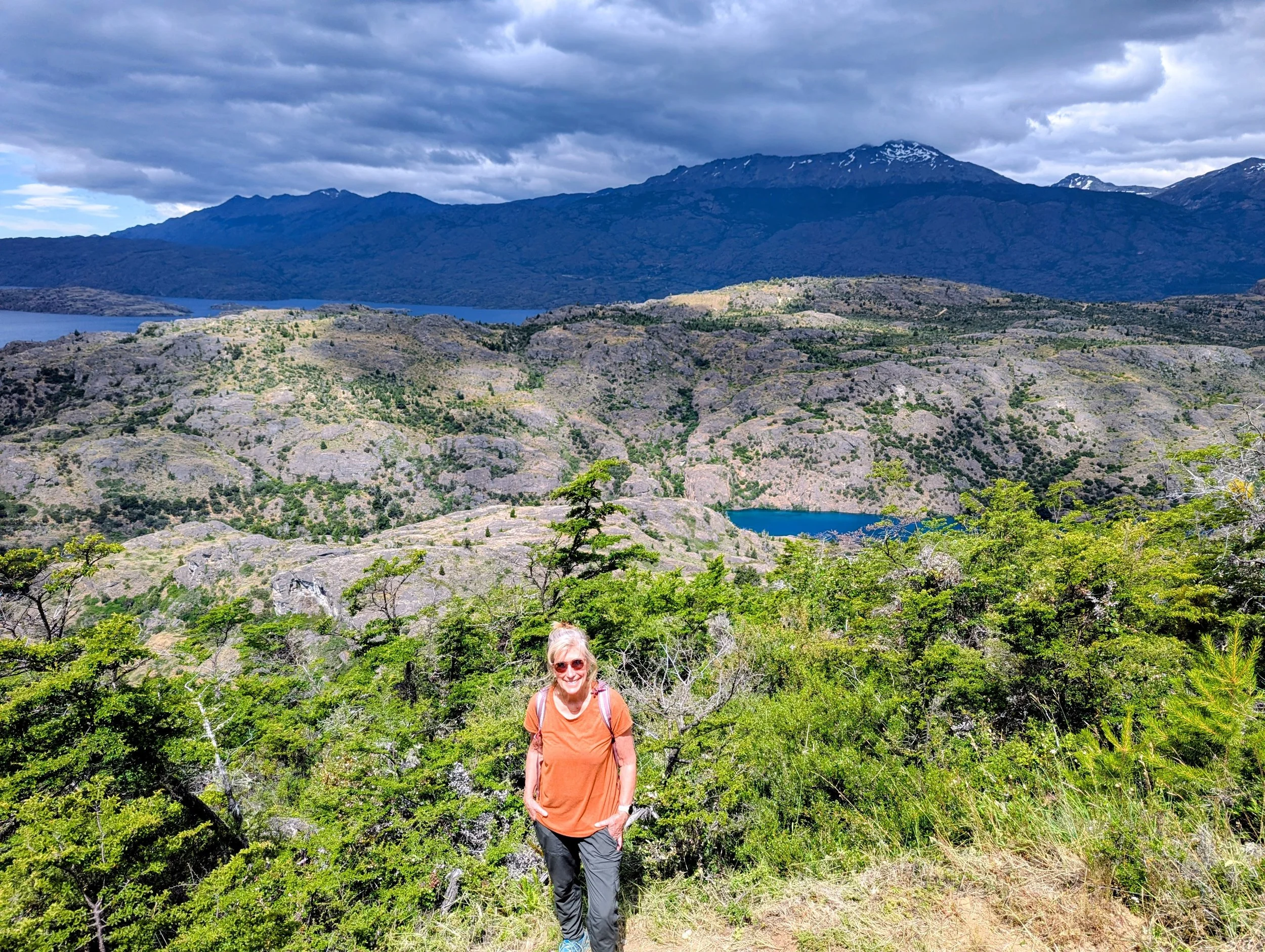
Hiking around Tamango sector of Patagonia National Park
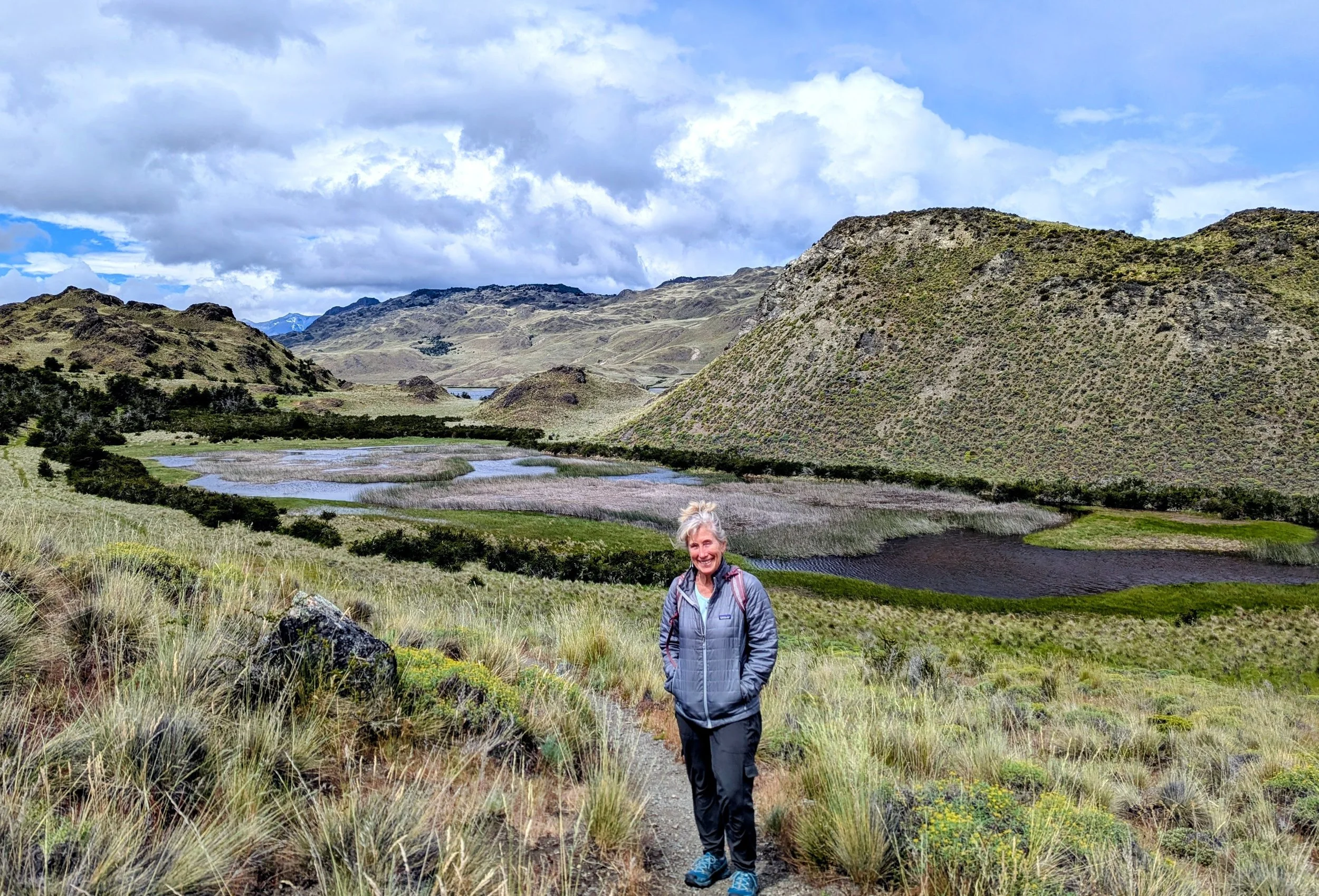
Hiking in Valle Chacabuco in Patagonia National Park
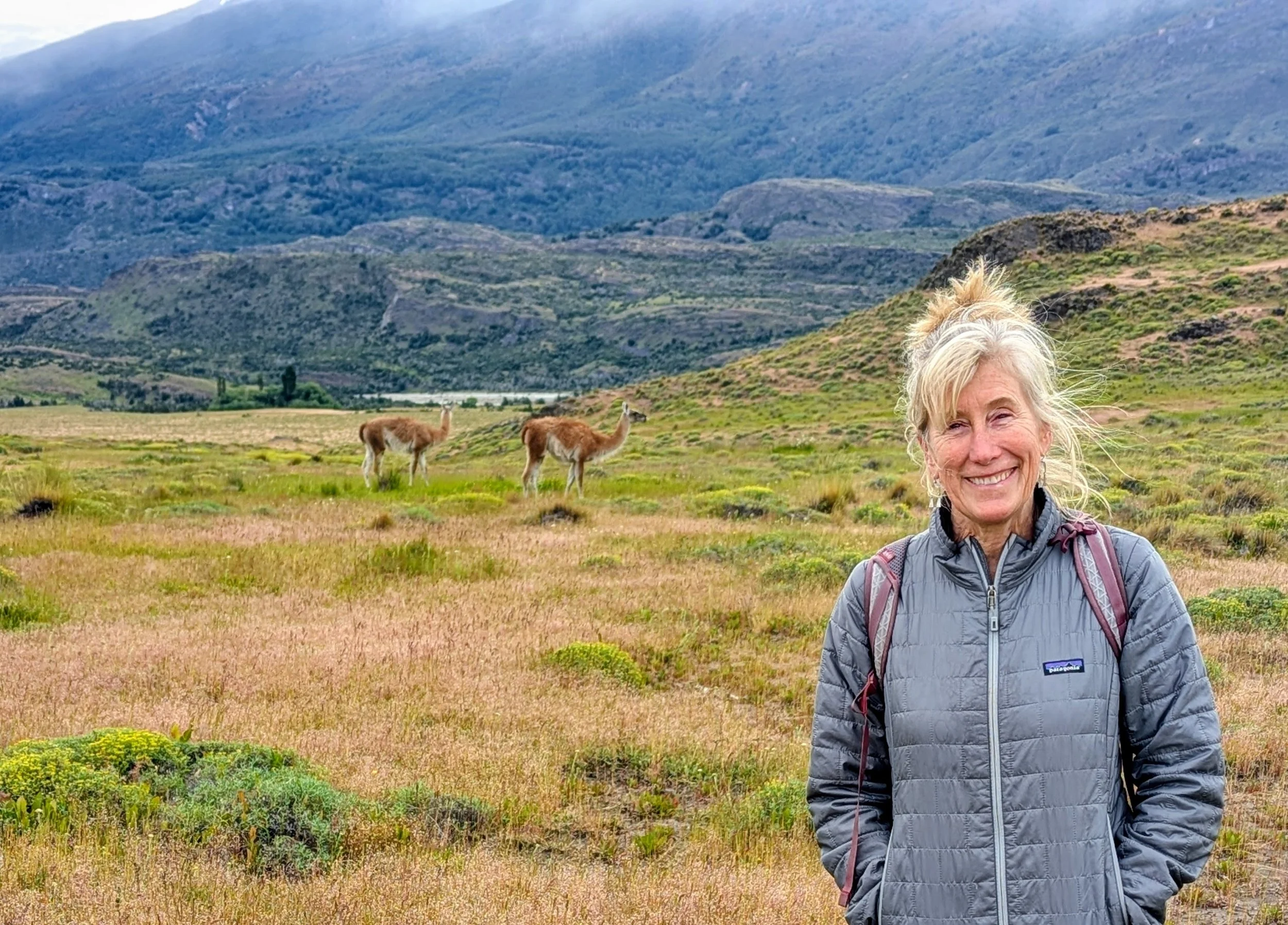
Complete with guanaco
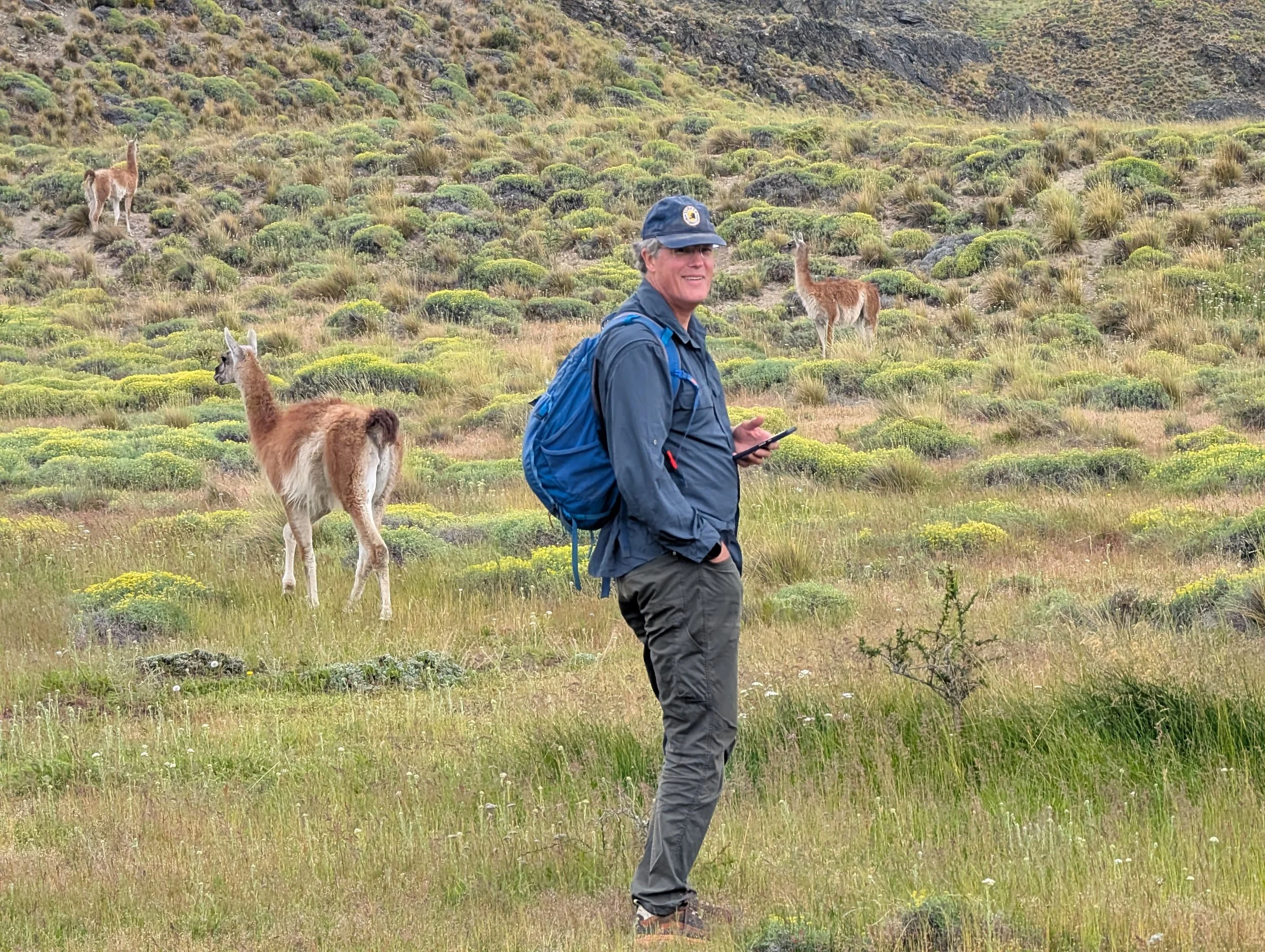
Our trail went through a herd, we proceeded slowly but the male guardian was not happy with Andy, hissing at him and trying to head him off
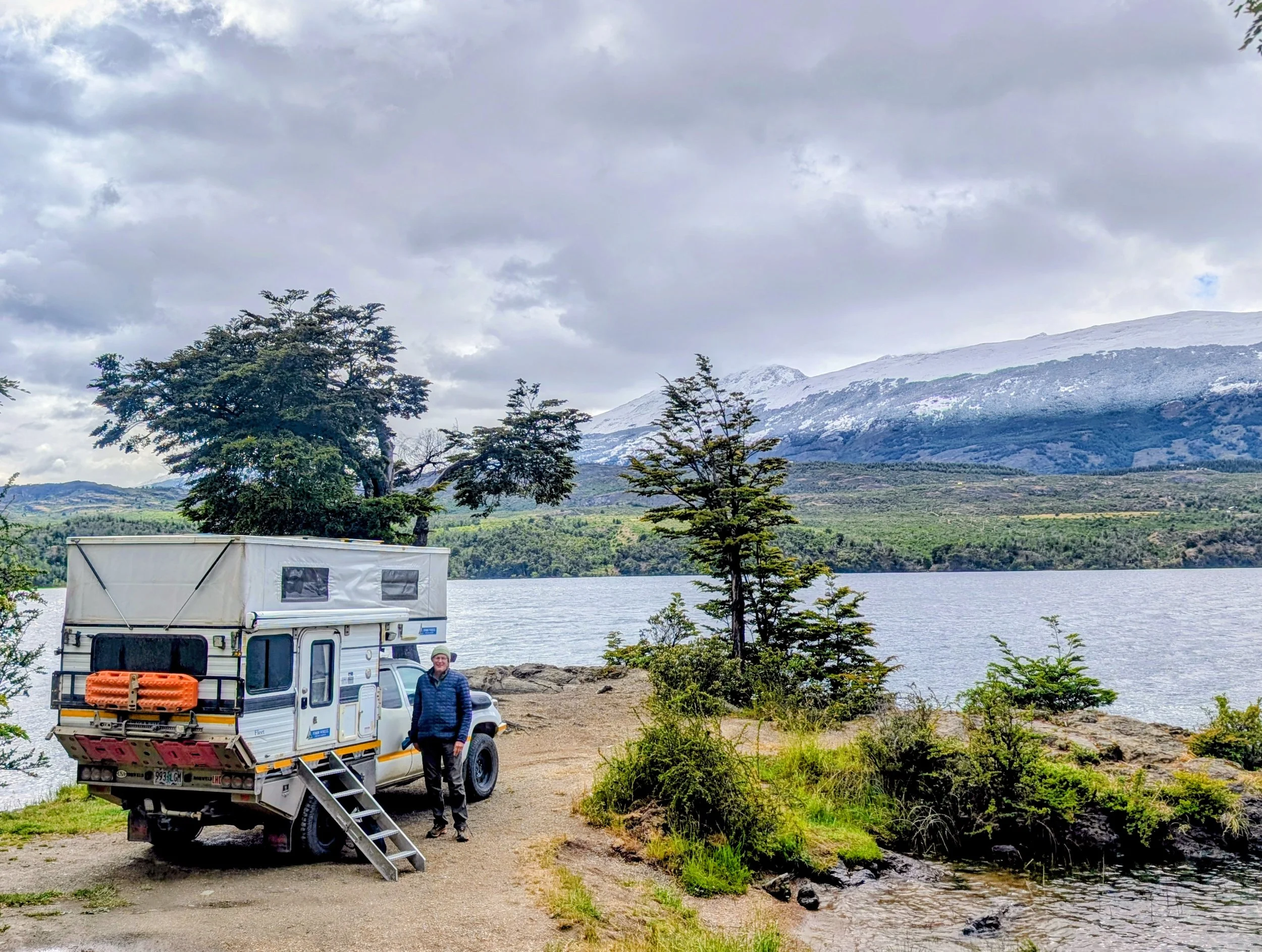
Lakeside wild camp spot
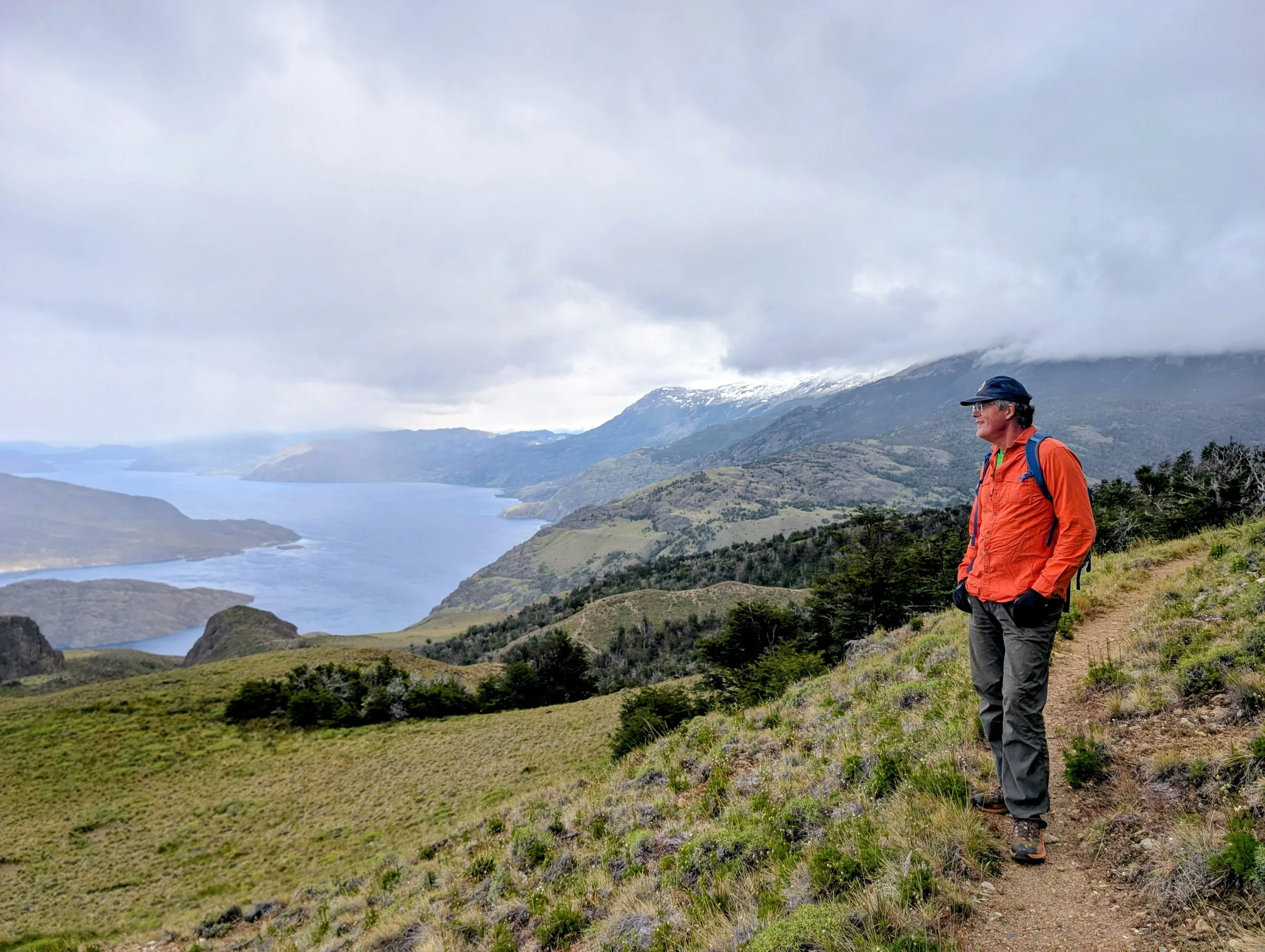
Final hike in the Patagonia National Park - near the “Doug Tompkins Lookout”
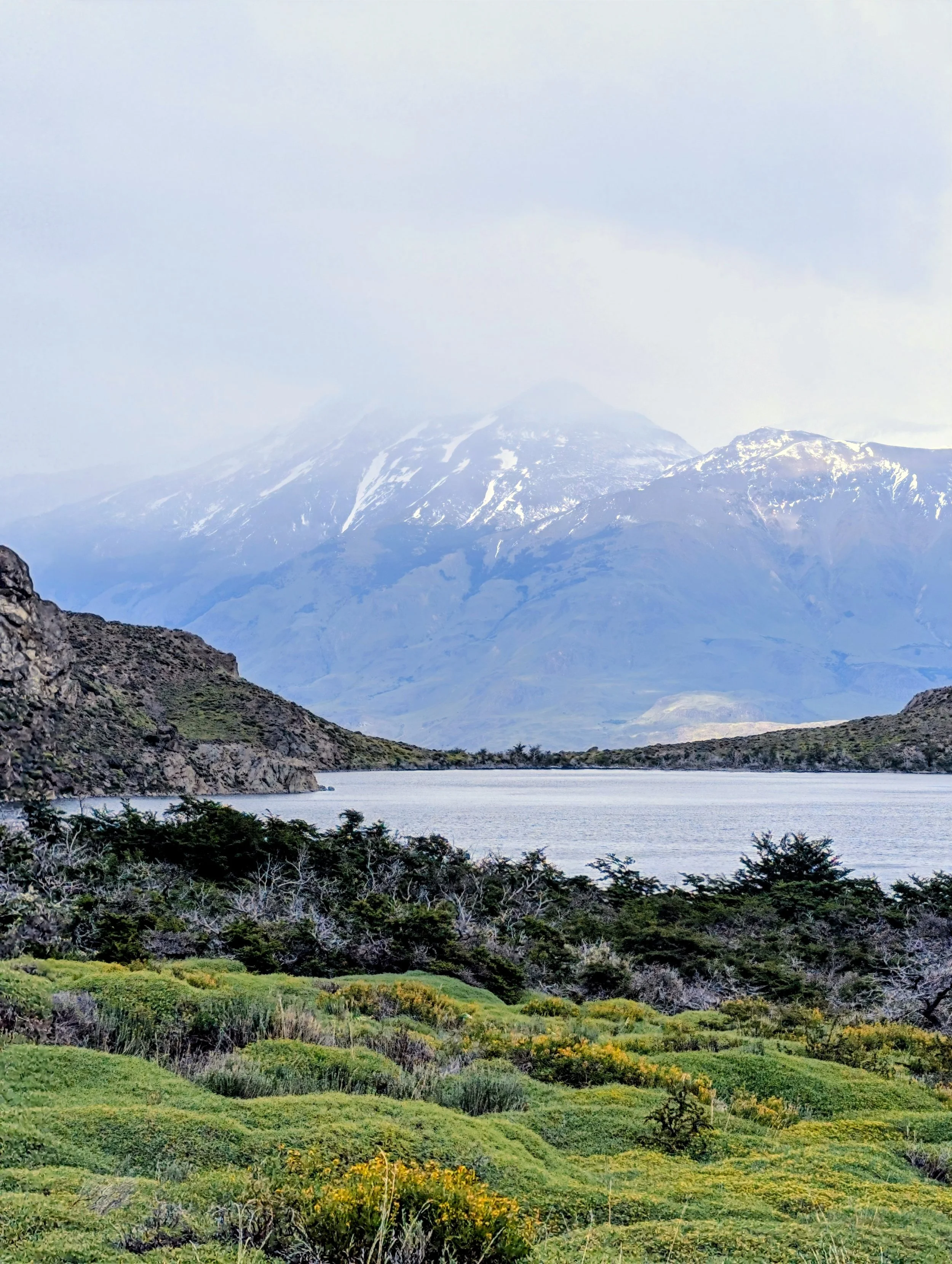
Lago Chico
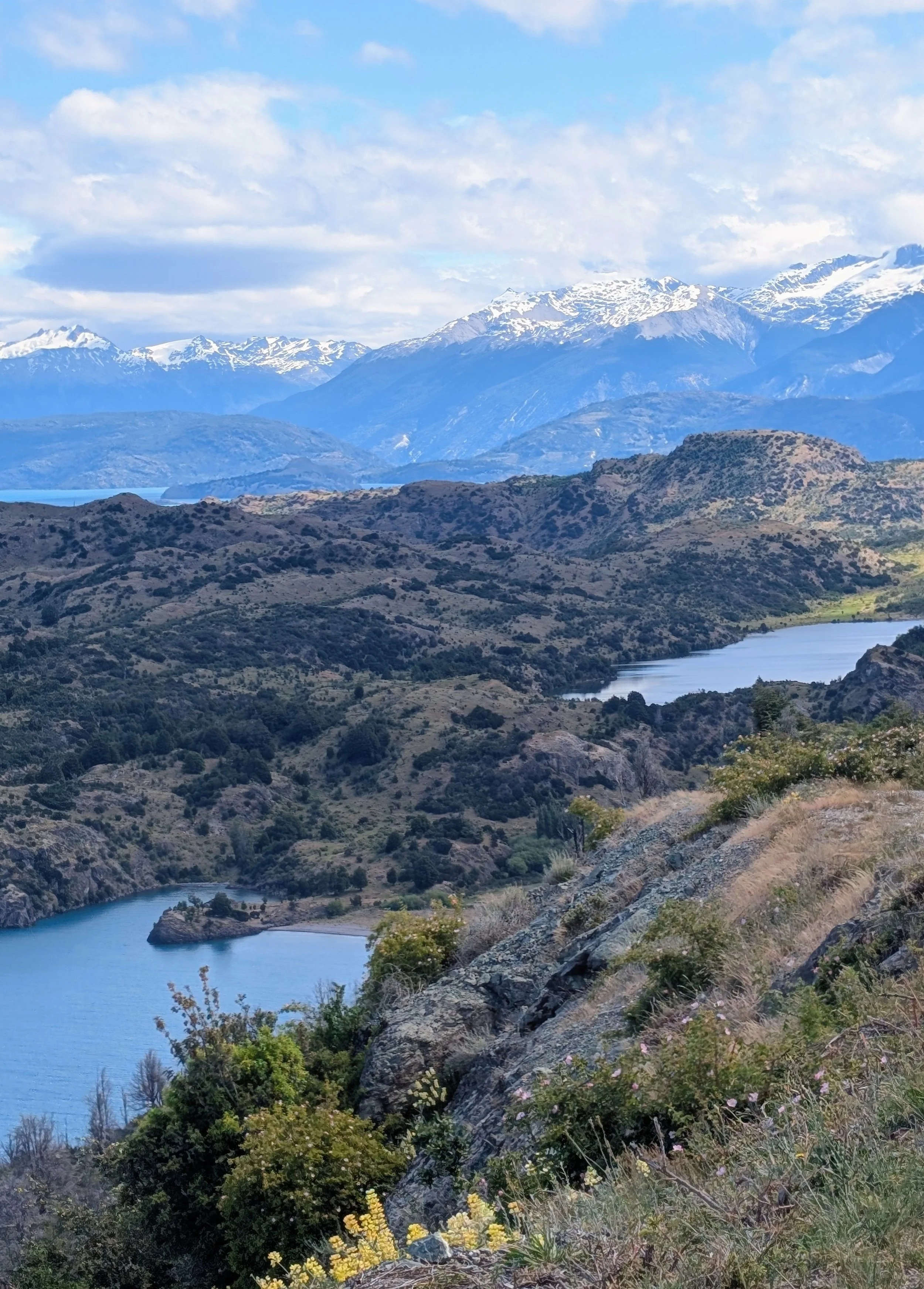
One of our favorite hikes in the park the trail - “Lago Chico” - a nine mile loop with spectacular views - for a moderate difficulty level hike it had some of the most spectacular views
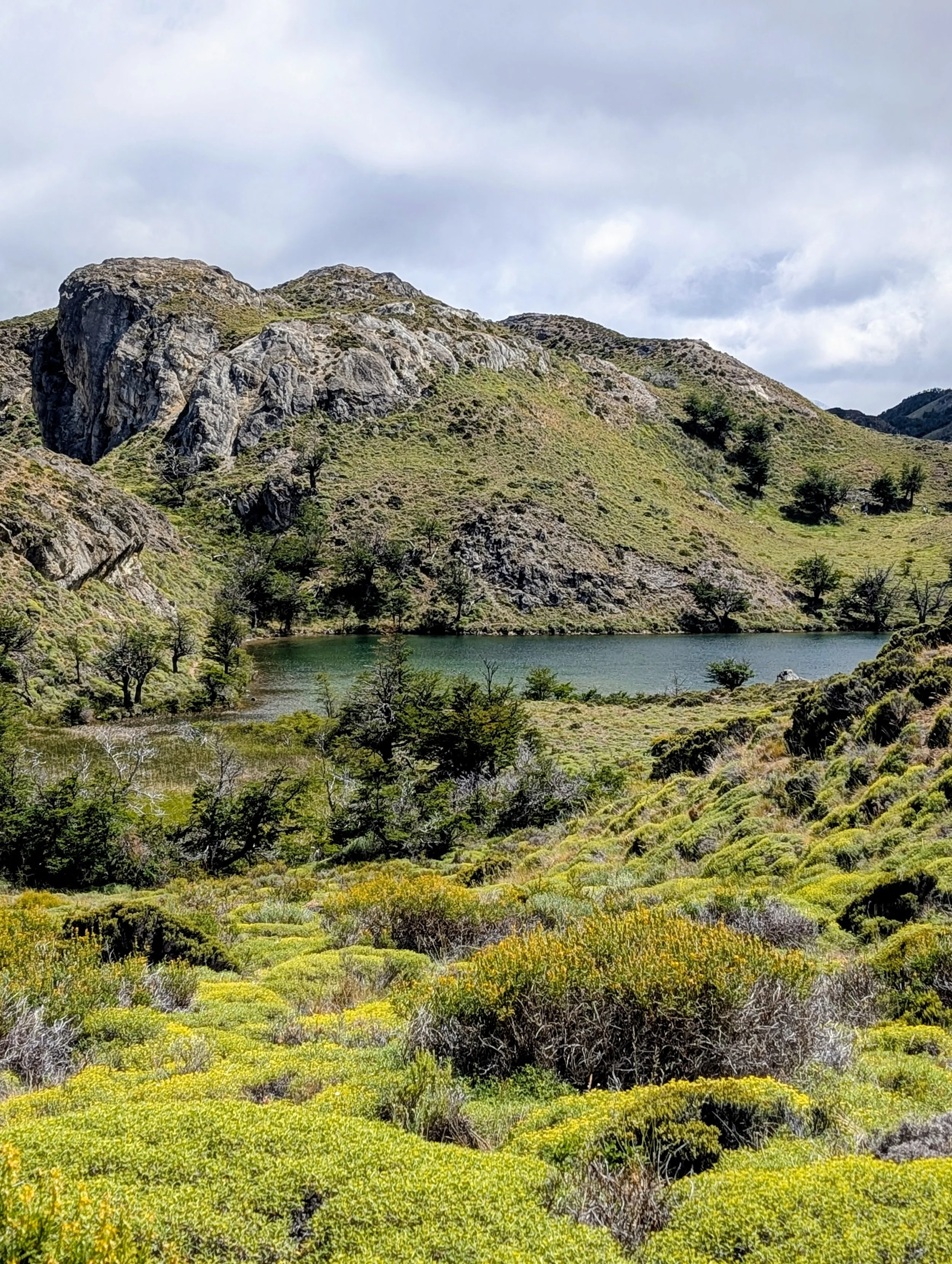
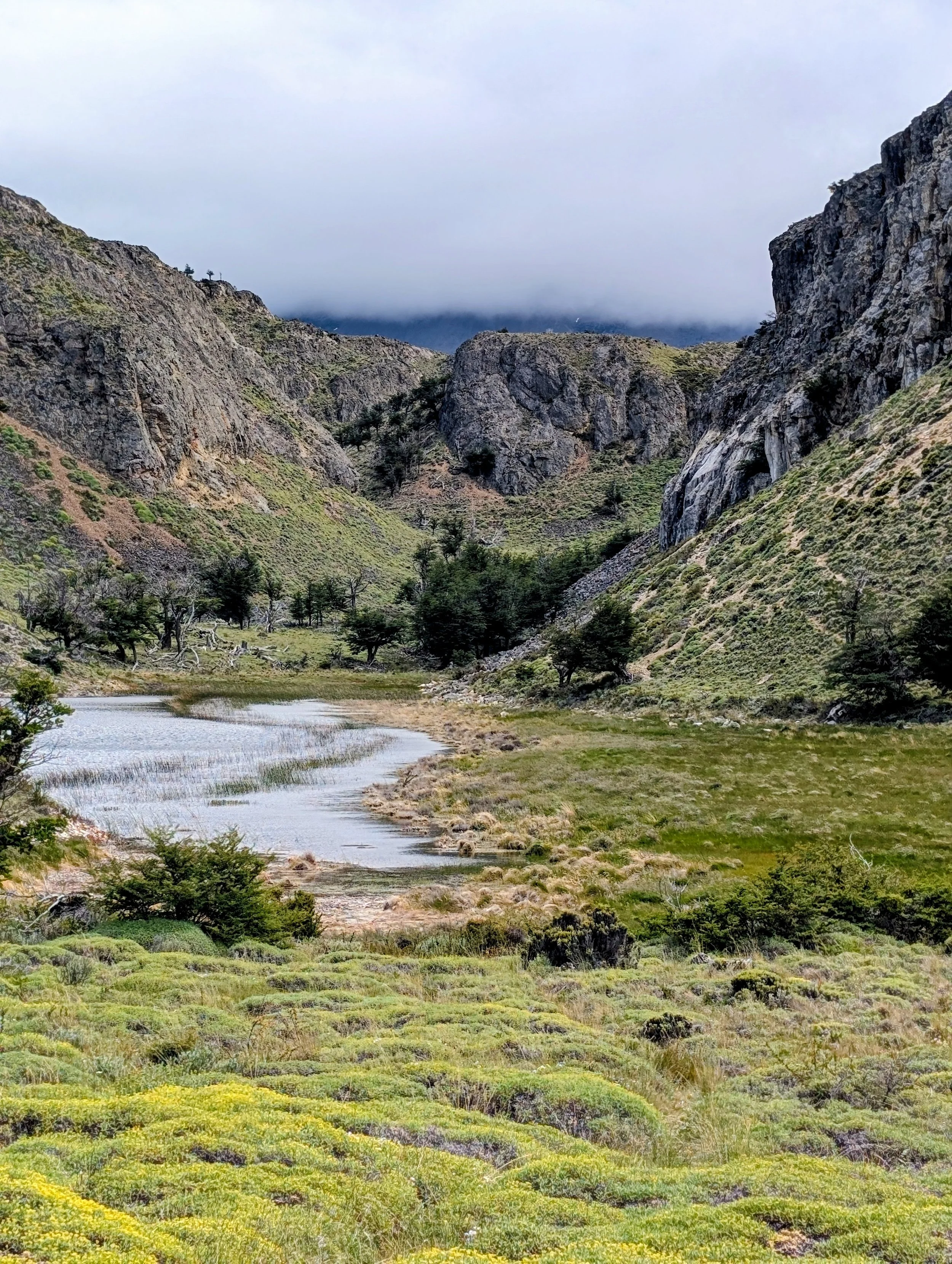
Appreciating the many varieties of green vegetation
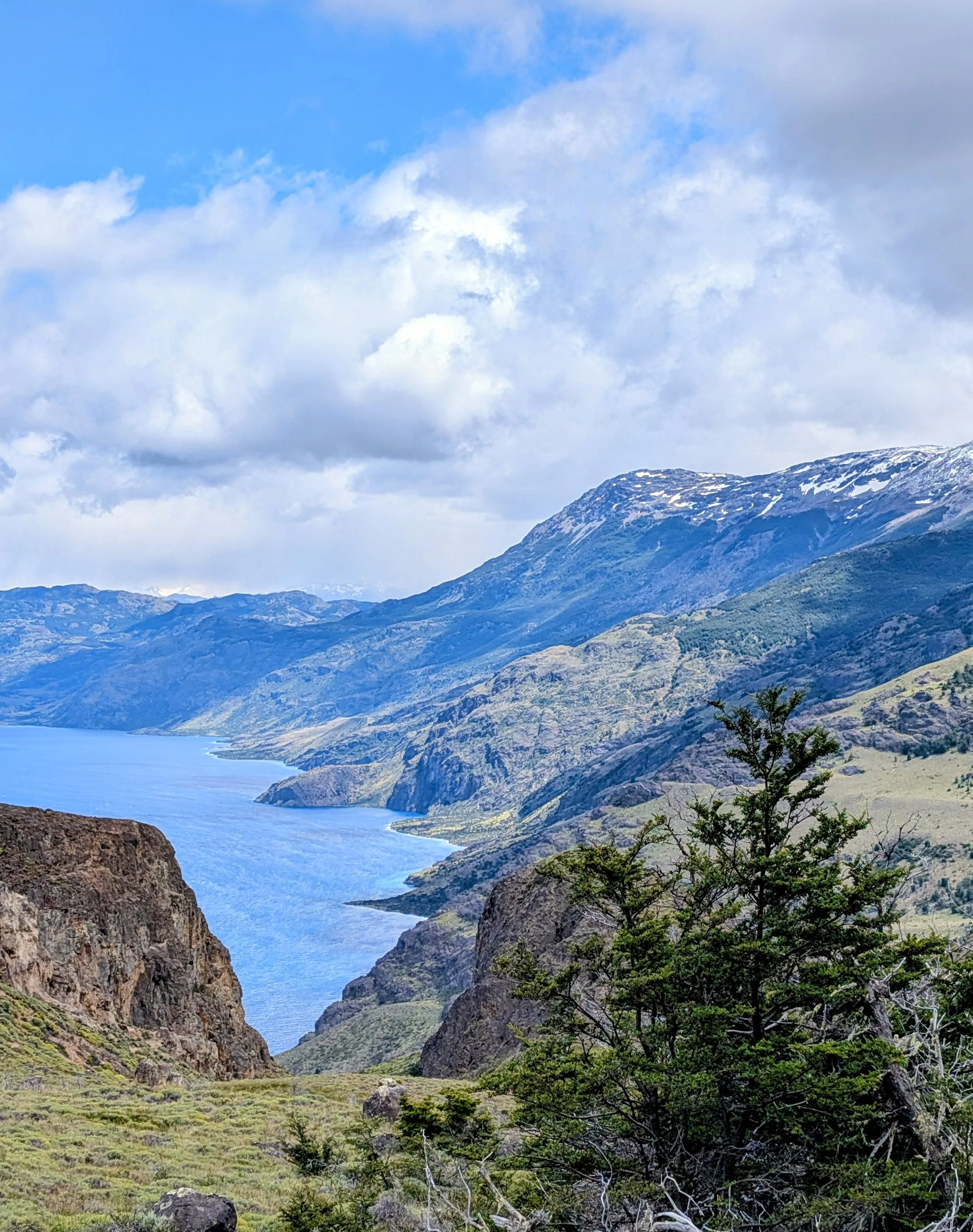
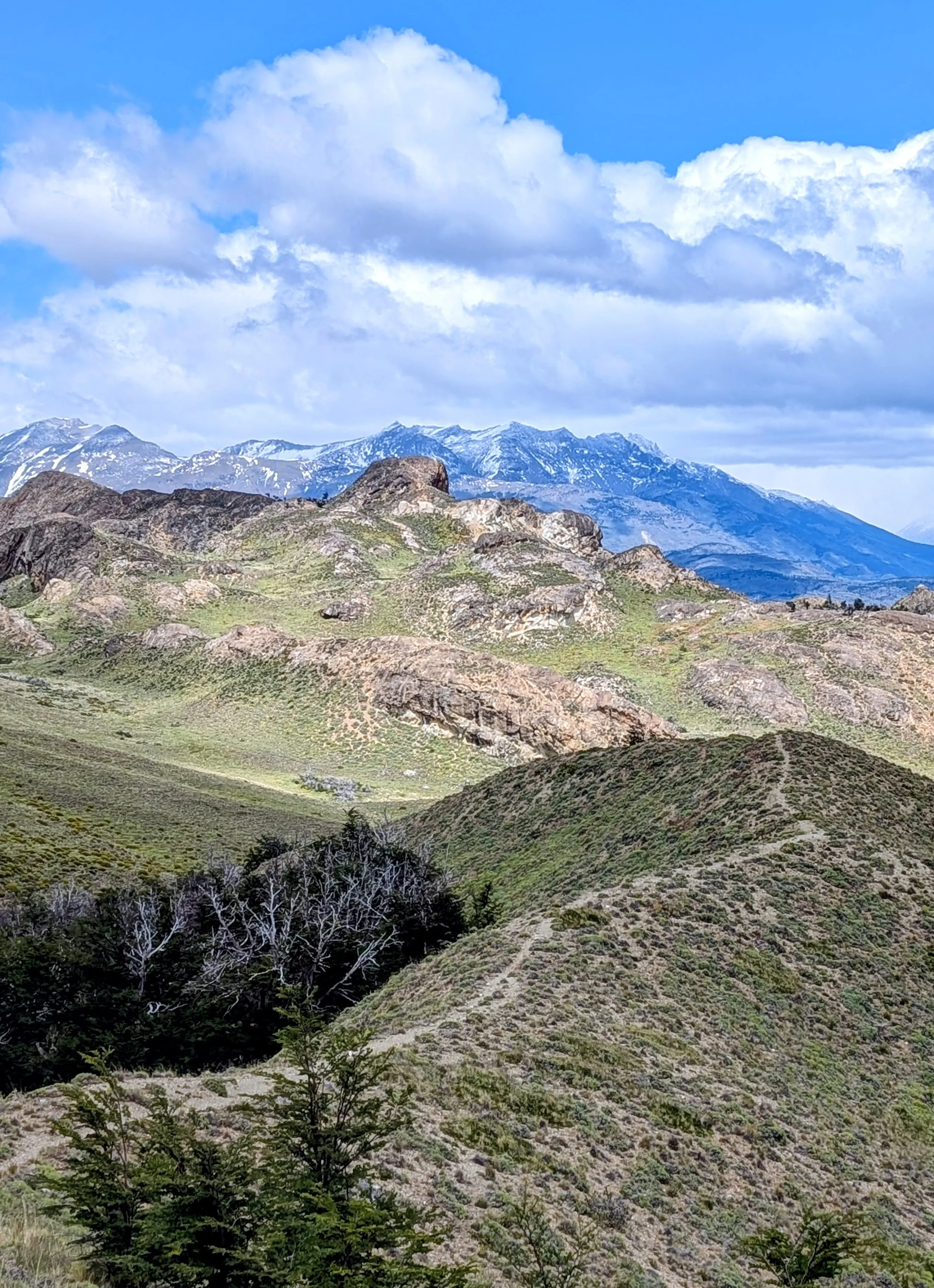
One of our favorite trails
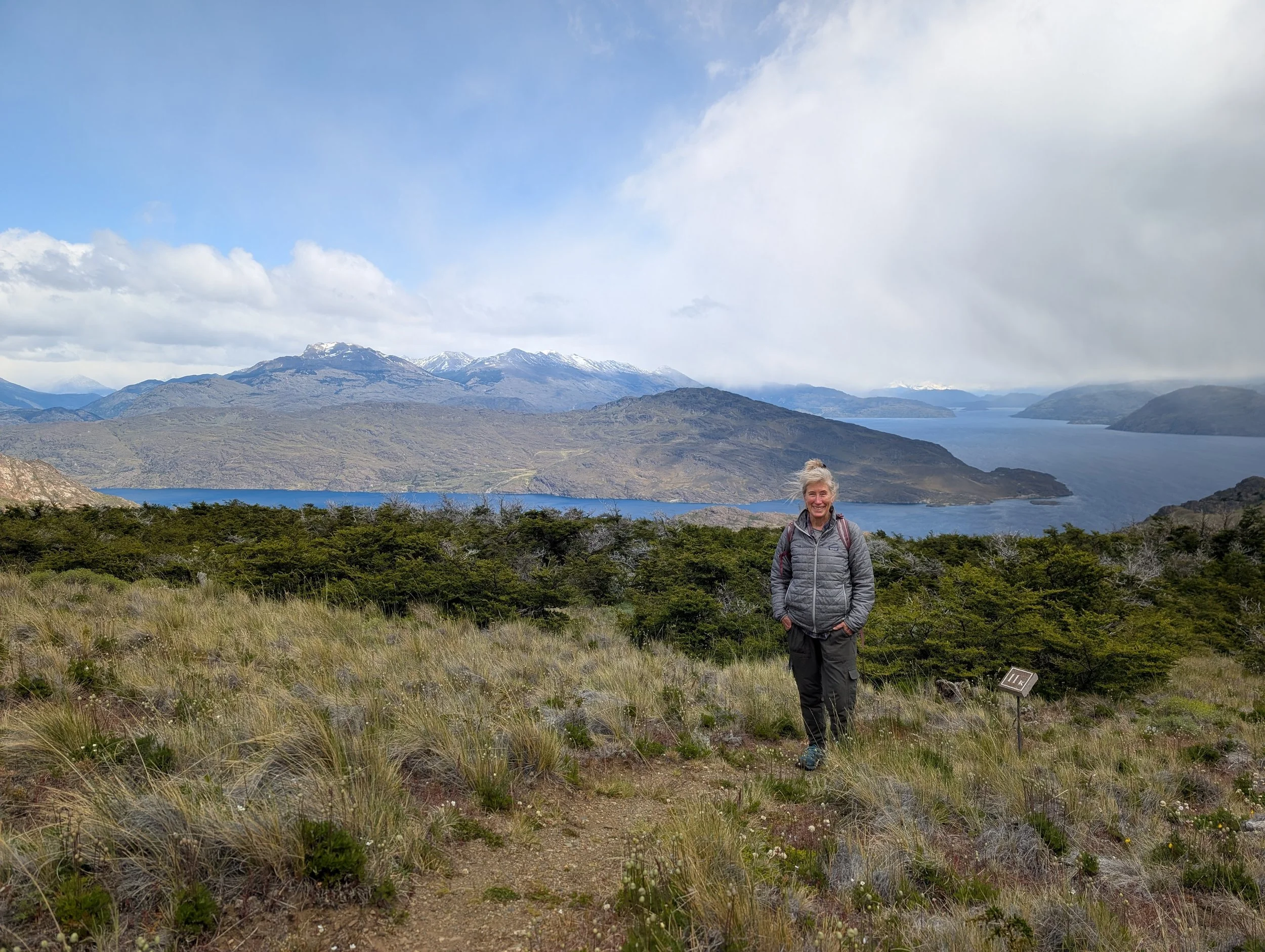
Happy days
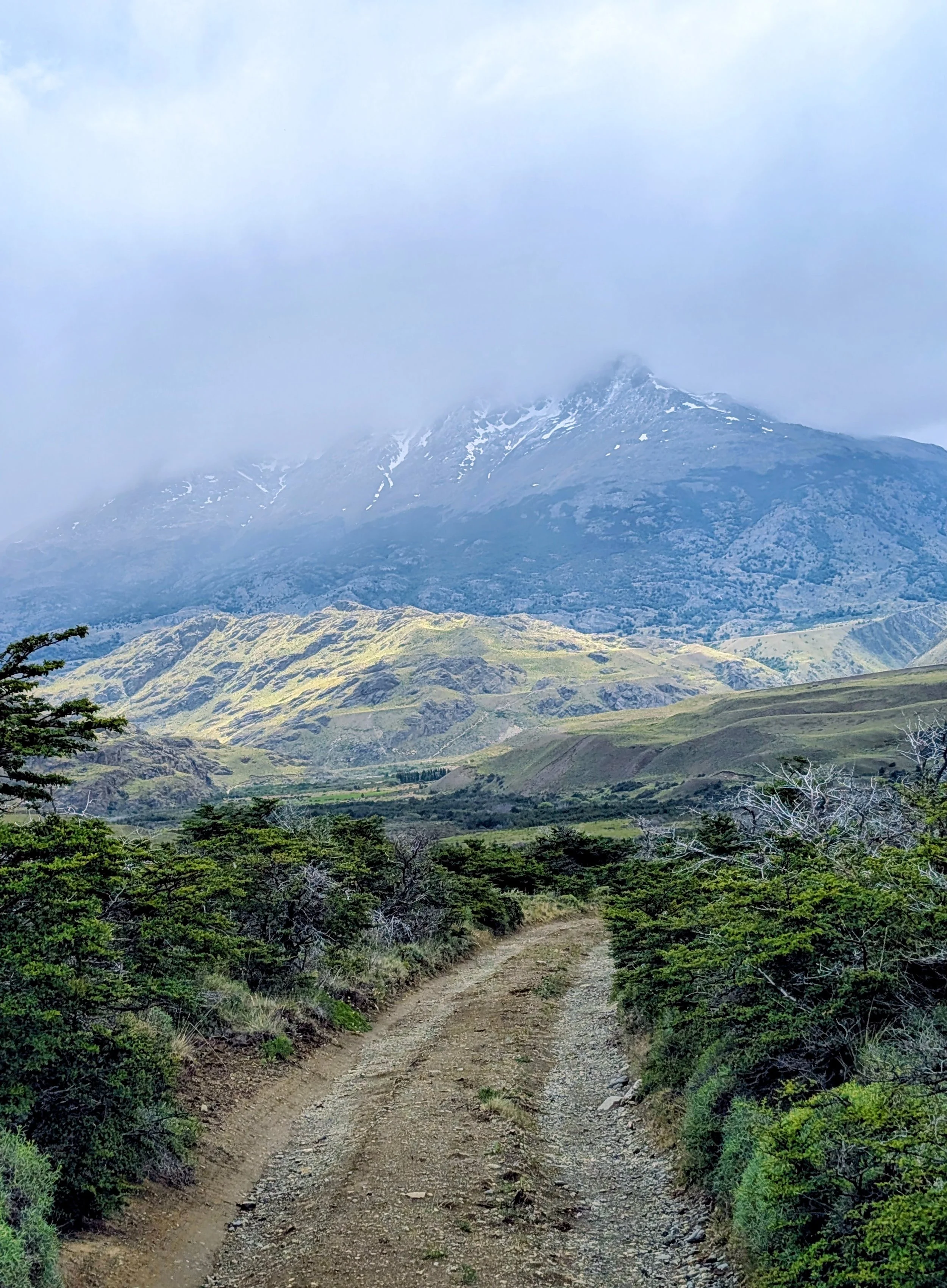
Heading back from the trail head to the border to go back to Argentina, we were not going all the way to O”Higgins, where the road ends in Chile as you cannot cross with a vehicle there.
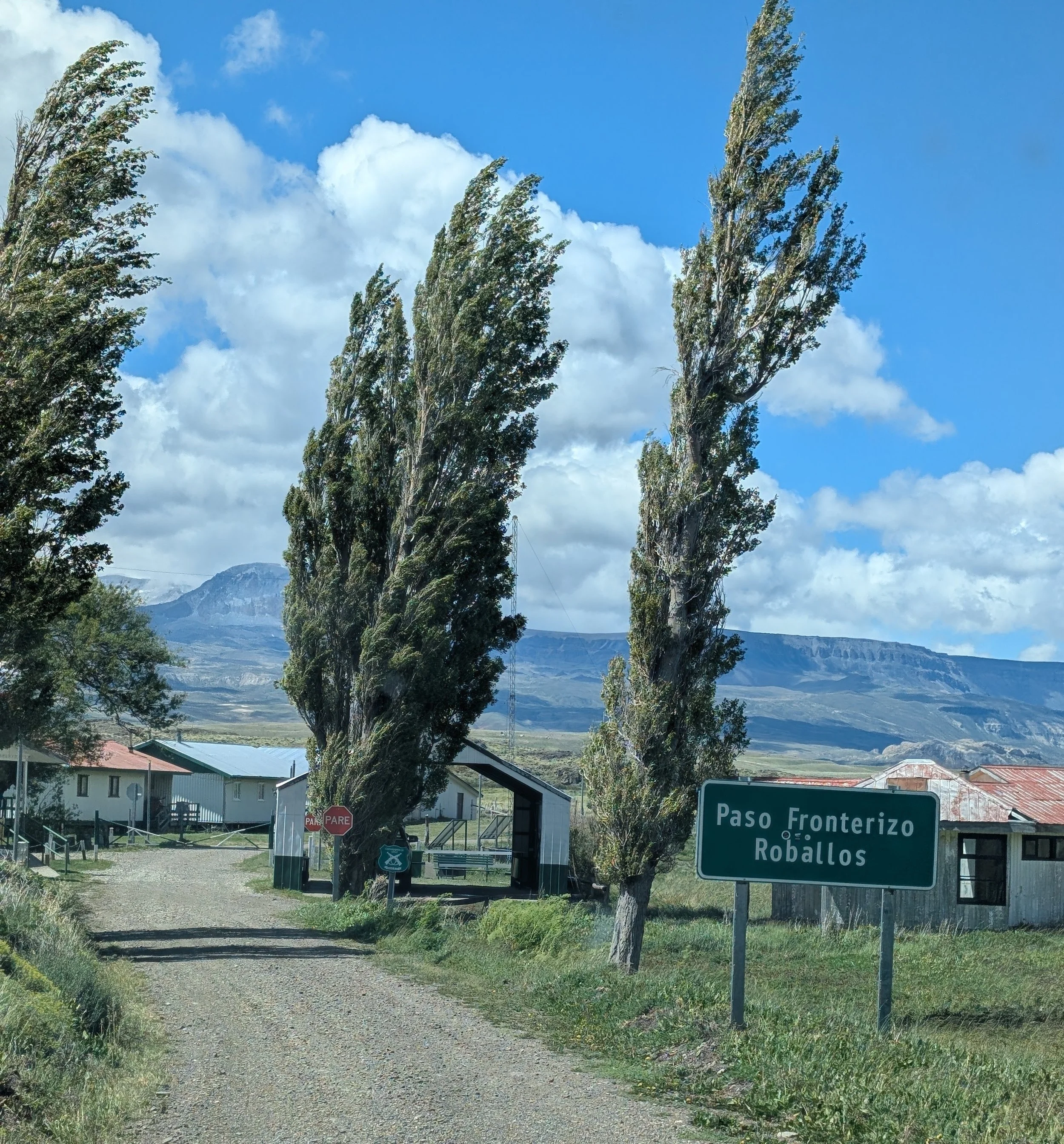
The southern most border you can cross between Chile and Argentina - just a one man show. He checked our documents and waved us on.
Part 4 - January 8 -14
Our last entry into Chile was from the border near El Calafate in Argentina. We had just spent two weeks touring Argentinian Patagonia with our family while the truck stayed at a mechanic shop in El Calafate getting a new fuel pump and brake booster (parts brought from the US by our son, Trevor). We were rested, our hearts full of family time and ready to hit the final highlights of Chile - Torres del Paine National Park and visiting King penguins.
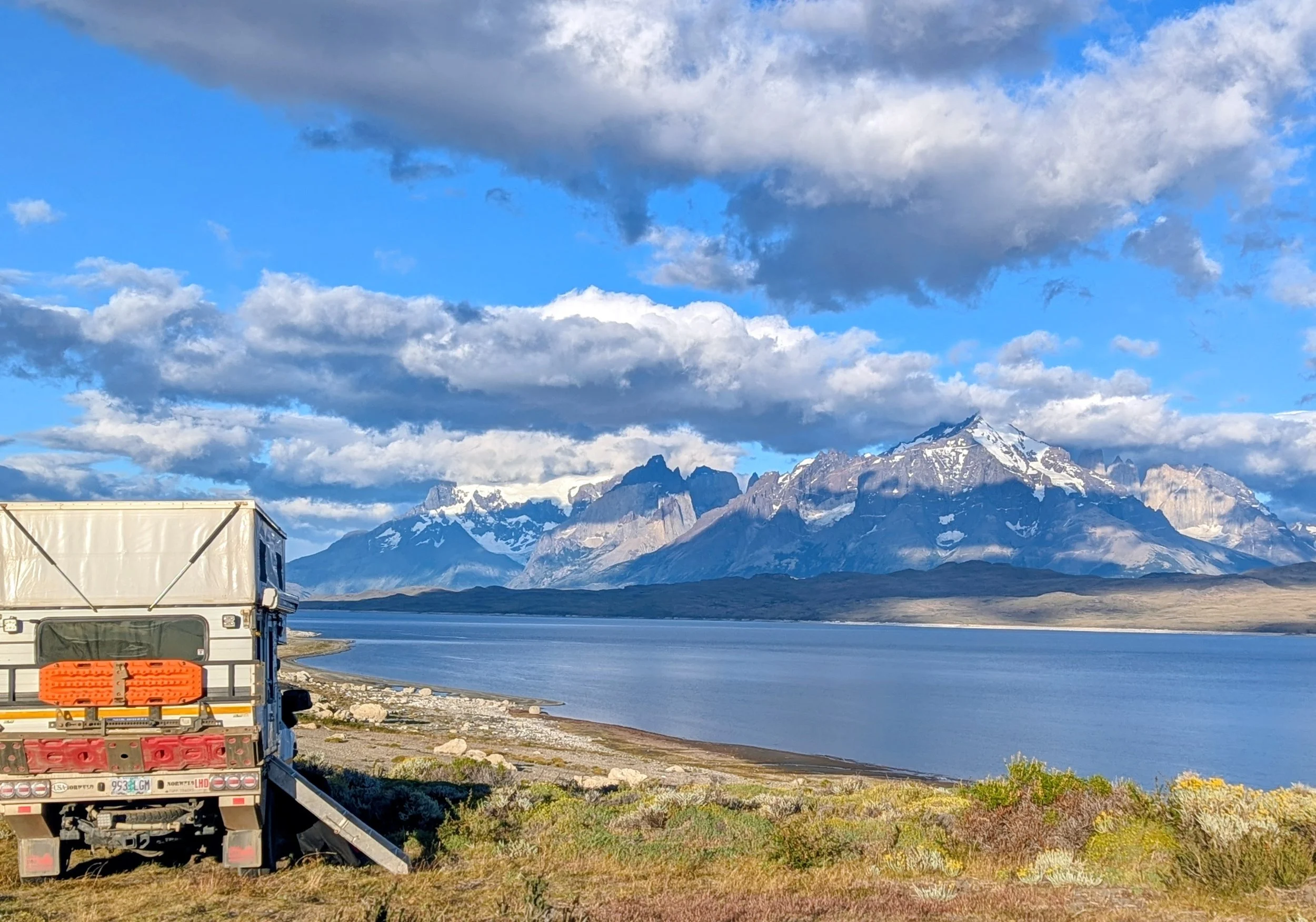
Our first night in sight of the mountains of Torres del Paine - wild camping outside the park.
Torres del Paine is magnificent. We think it is one of the most beautiful places in the world with its striking mountain peaks, stone towers and gorgeous hiking. But it is not an easy place to visit in high season (December-January, the middle of summer). We had tried to make reservations in refugios in the park in order to do the iconic W trek. But we only tried six months in advance and they were mostly booked. You are only allowed to camp along the park trails in the designated refugios which typically offer a range of options from a reserved spot for your own tent, to rented permanent tents and dorm rooms. Camping in your own vehicle in the park is also mostly prohibited except for two paid campsites. Sometimes rangers will allow you to park at visitor centers but permission seems to be uneven - sometimes it’s OK and sometimes not. We were there for five days -spending two nights in the two different campsites, wild camping outside the park and a night at a refugio that we were able to book. We settled in for tackling some of the best hikes we could accomplish as out and backs in a day.
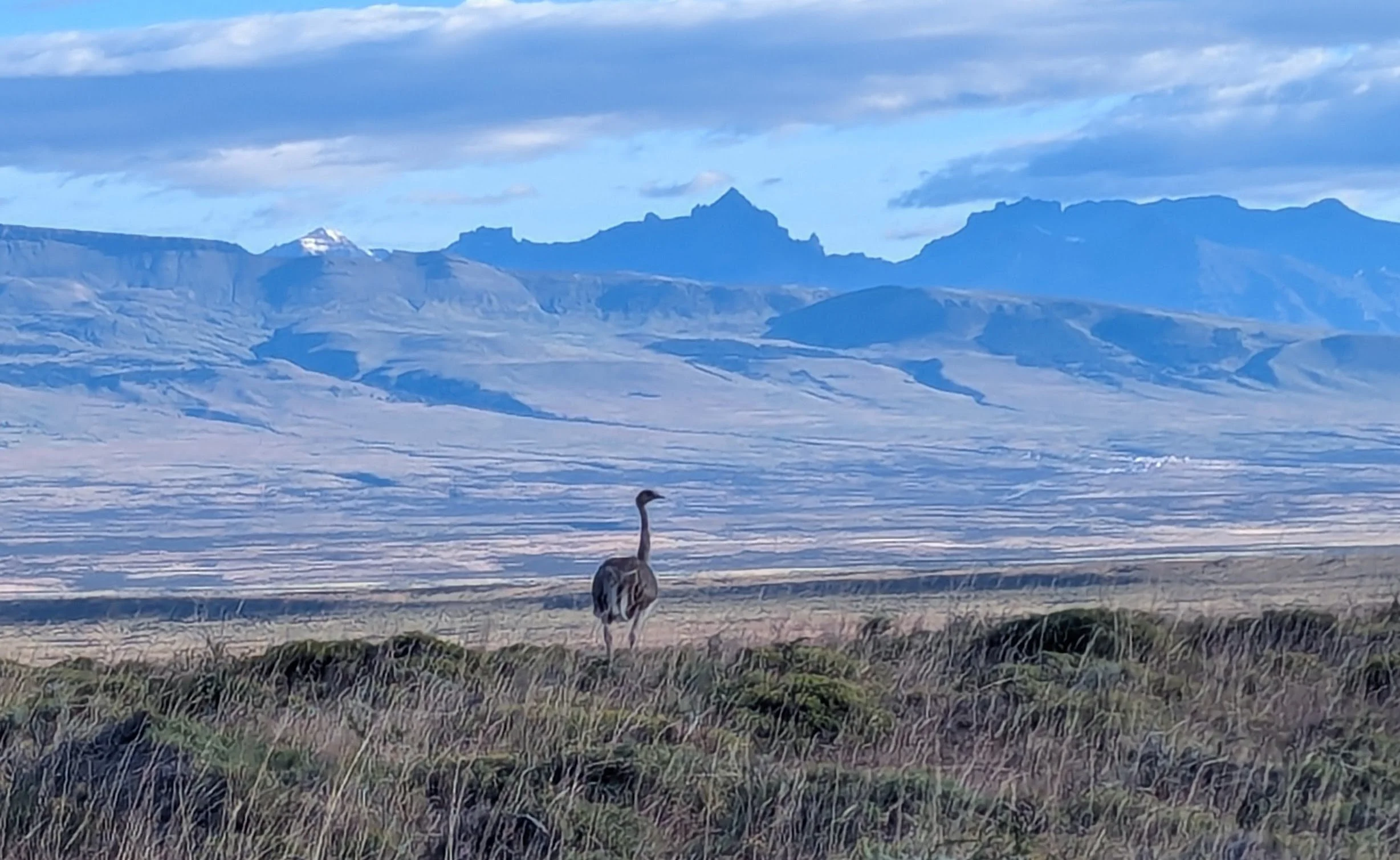
We loved seeing the Argentinian flightless birds - we know them as Rheas but locally called Choique, usually seen in herds running away
Our first hike is the most famous one in the park - Mirador las Torres Base - a 12 mile out and back steep trail to the iconic view of the three stone towers. The ideal would have been to stay at the refugio along the way but it was all booked, so we readied ourself for a long hard day and set off.
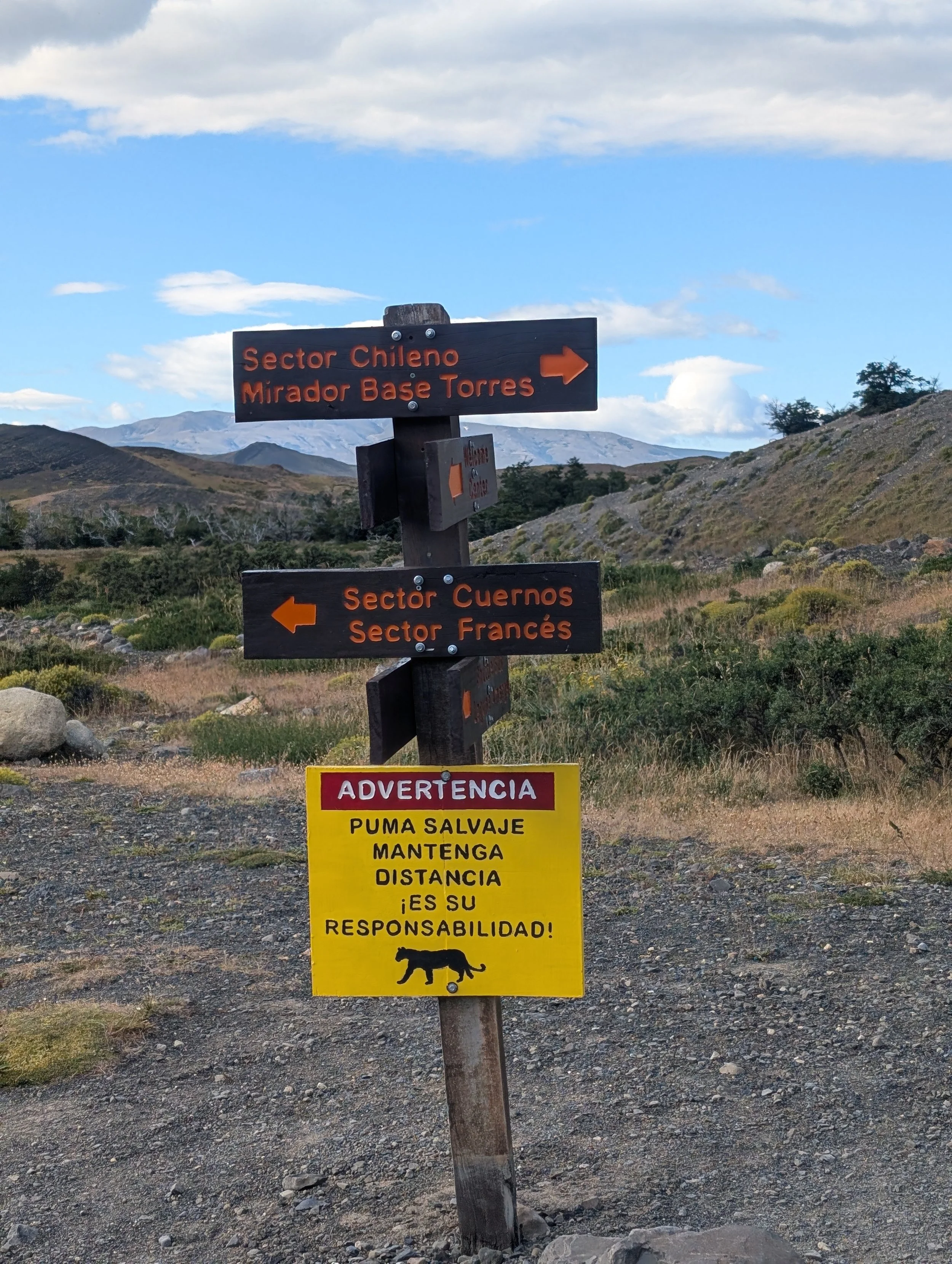
We never saw a puma but saw plenty of warnings
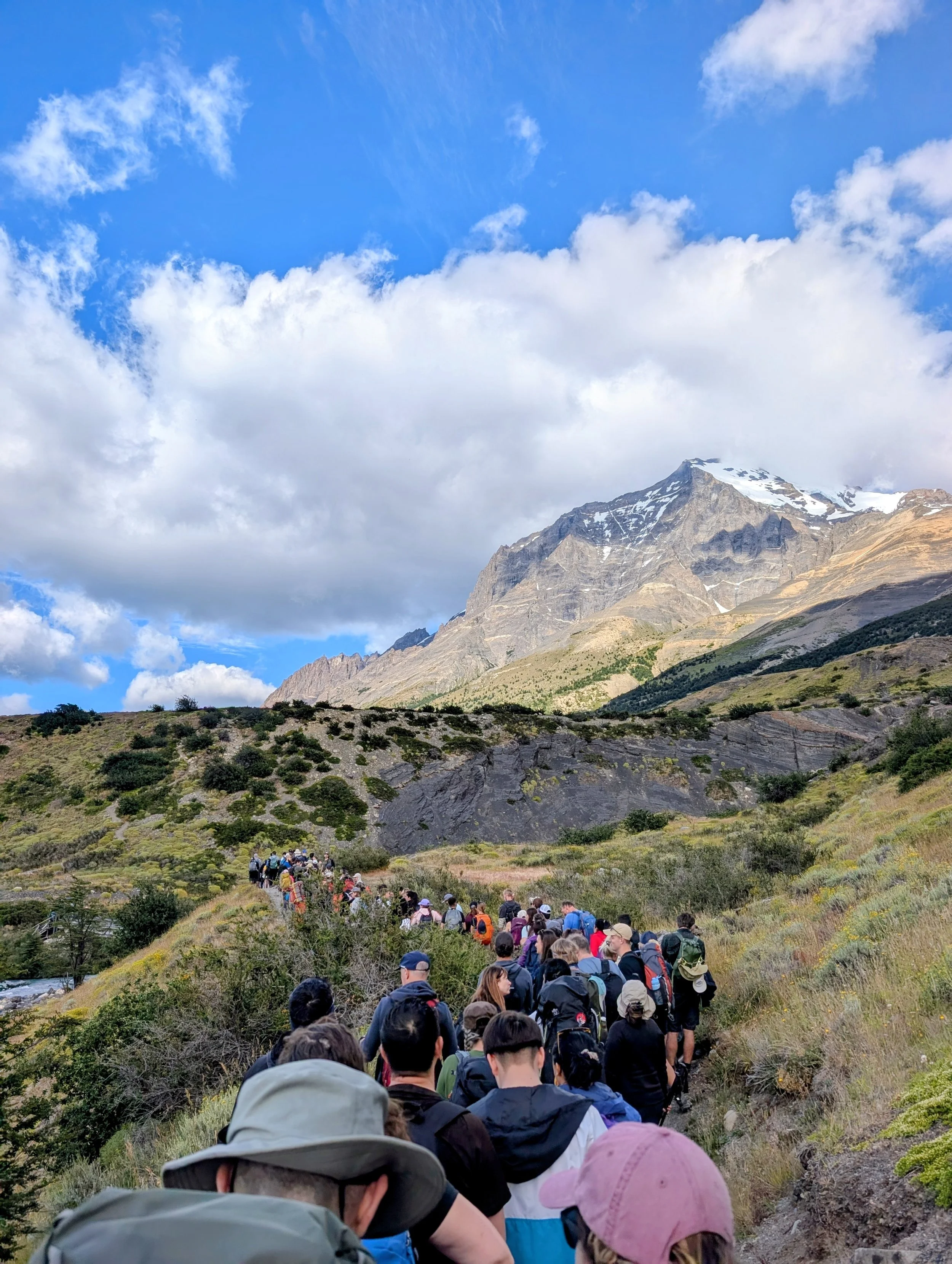
We quickly realized that we were not the only ones with the idea of doing this hike on such a perfect day in summer. We found the trail to be fairly full of large guided hiking groups which created regular choke points. This is the line to cross a suspension bridge with a two-person maximum weight restriction.
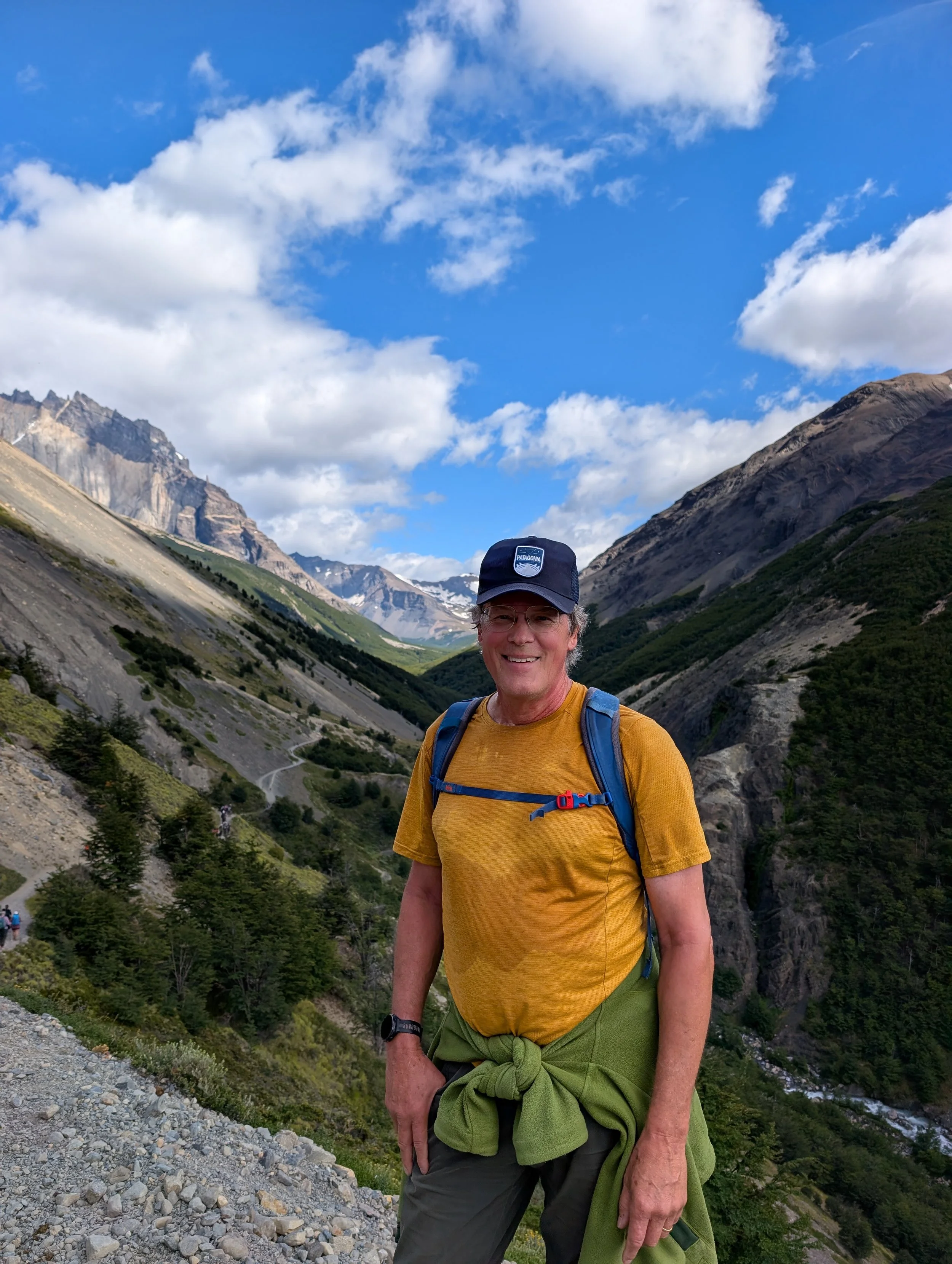
But the adventure is real

Chileno Refugio - stopping point serving food and beverages and a place to spend the night. We had brought our own food so kept going.
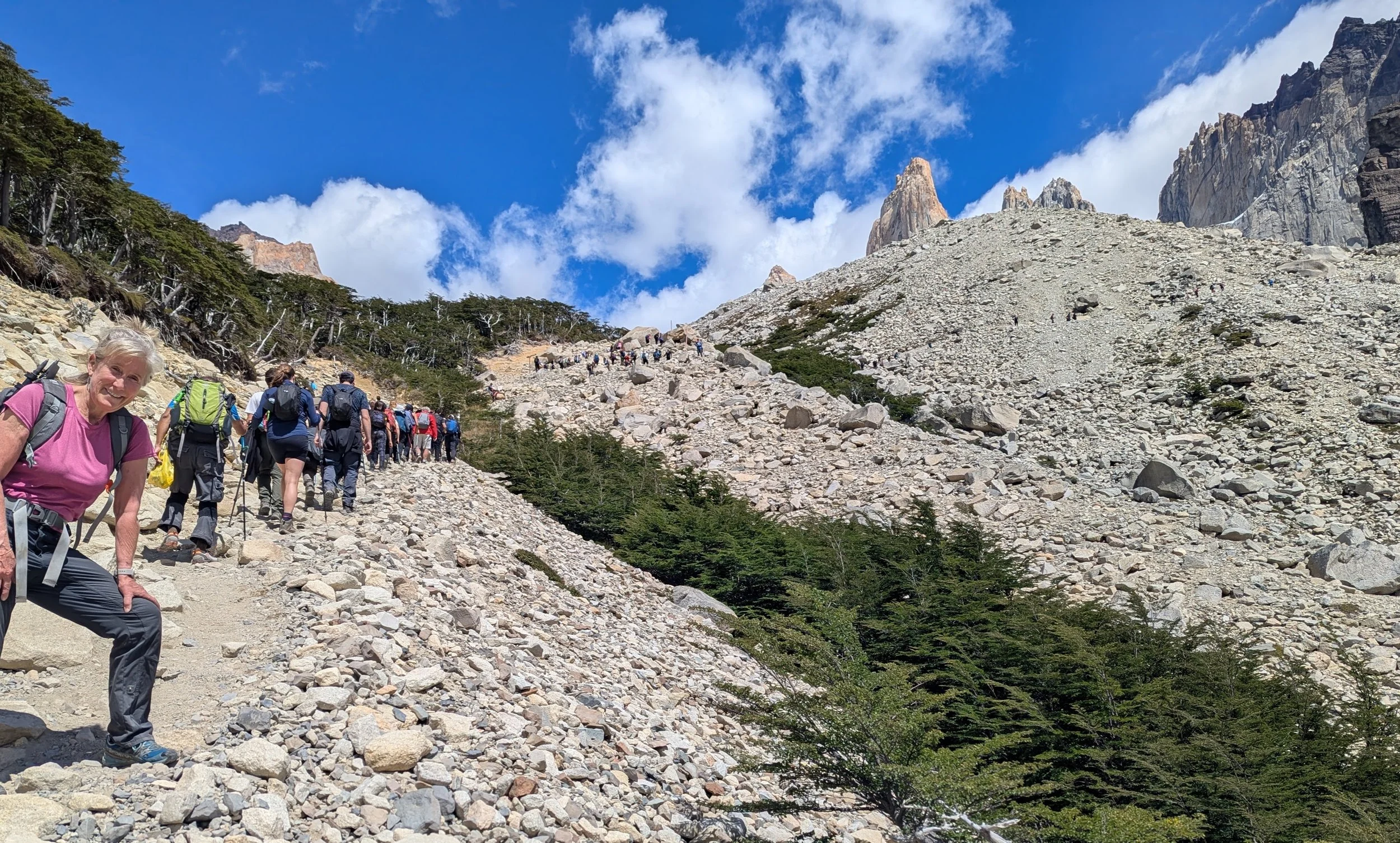
Hikers backed up heading into the final steep approach to the lake. The line extends across the entire width of the photo
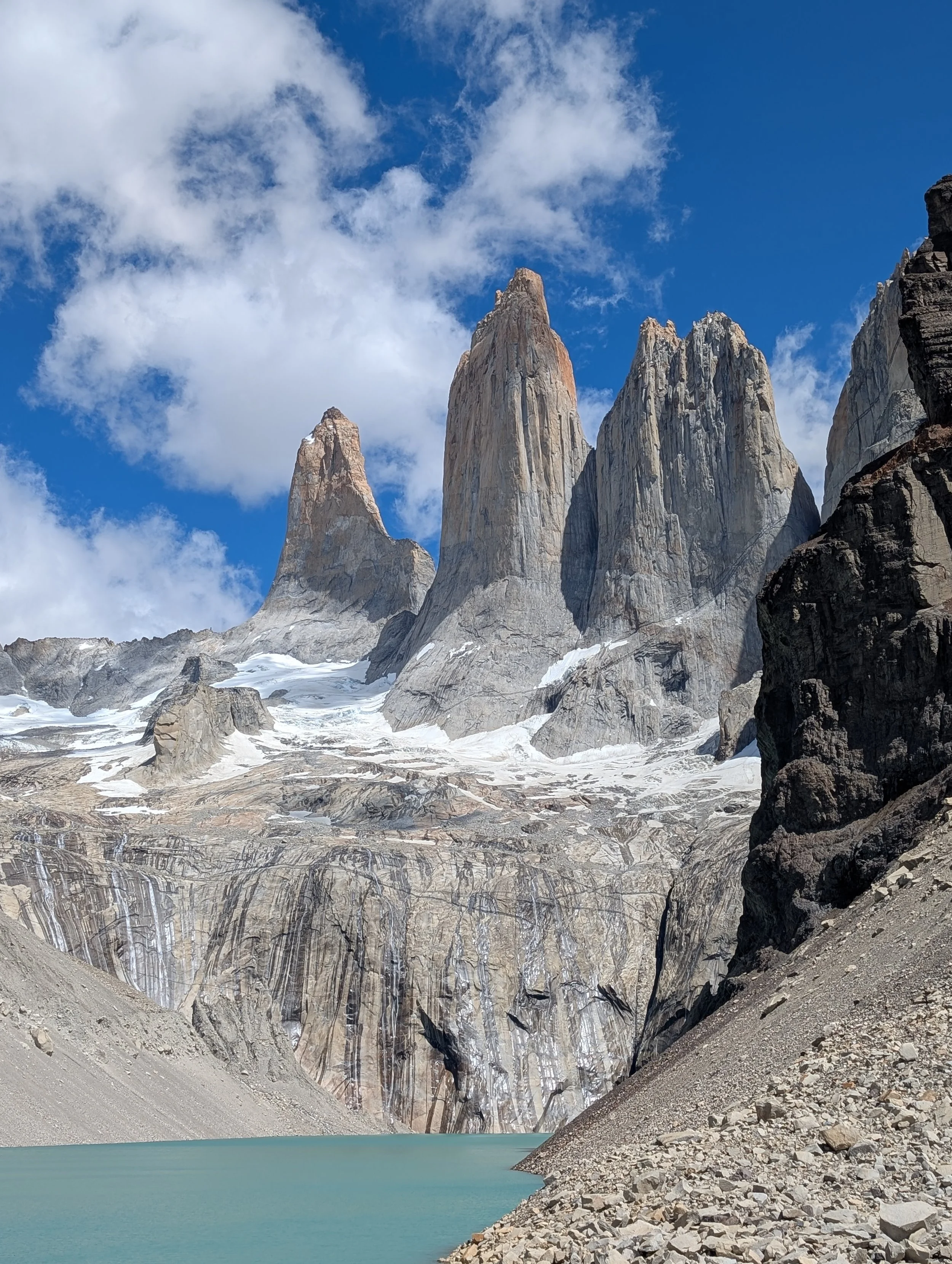
And we made it!
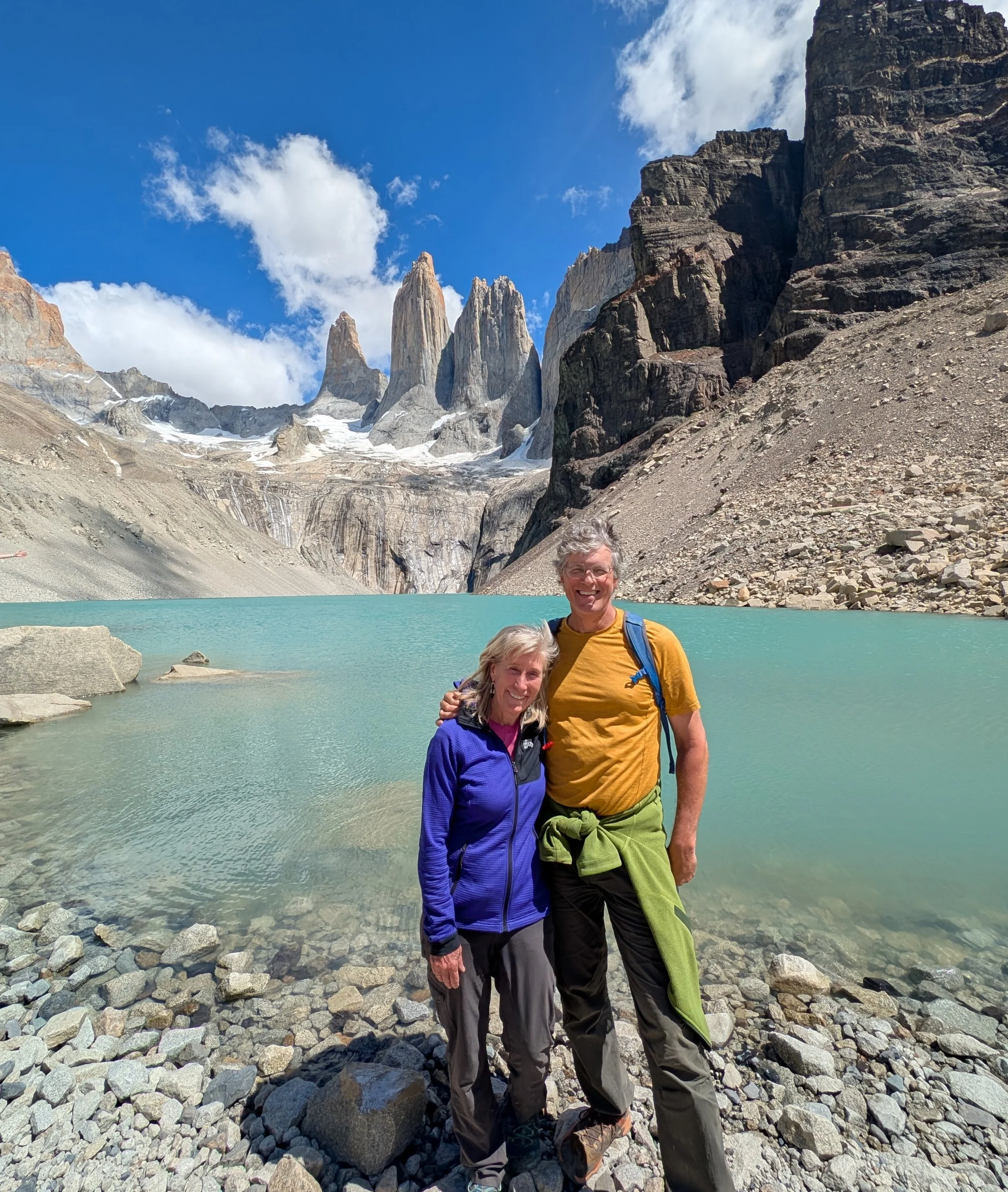
The moment we saw the view we forgot our aching knees and backs and couldn’t stop smiling
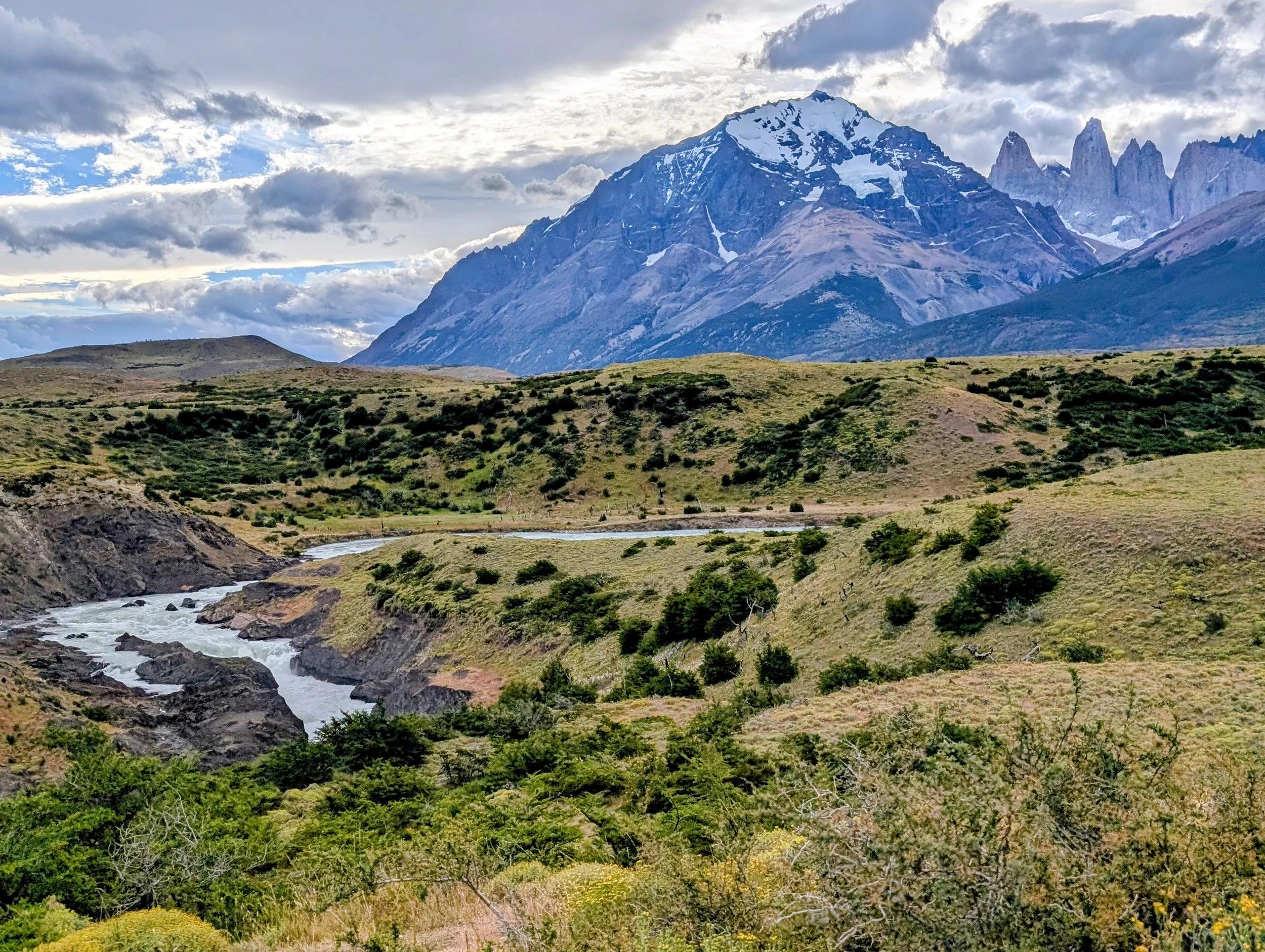
But it was a long hike back out!
That night we made our way to Laguna Azul to “camp” in a field with other overland travelers. 10,000 pesos per night to line up in rows and have access to the main campground toilet - a 10 minute walk away. But we were tired and ready to sleep so popped up and enjoyed the view.
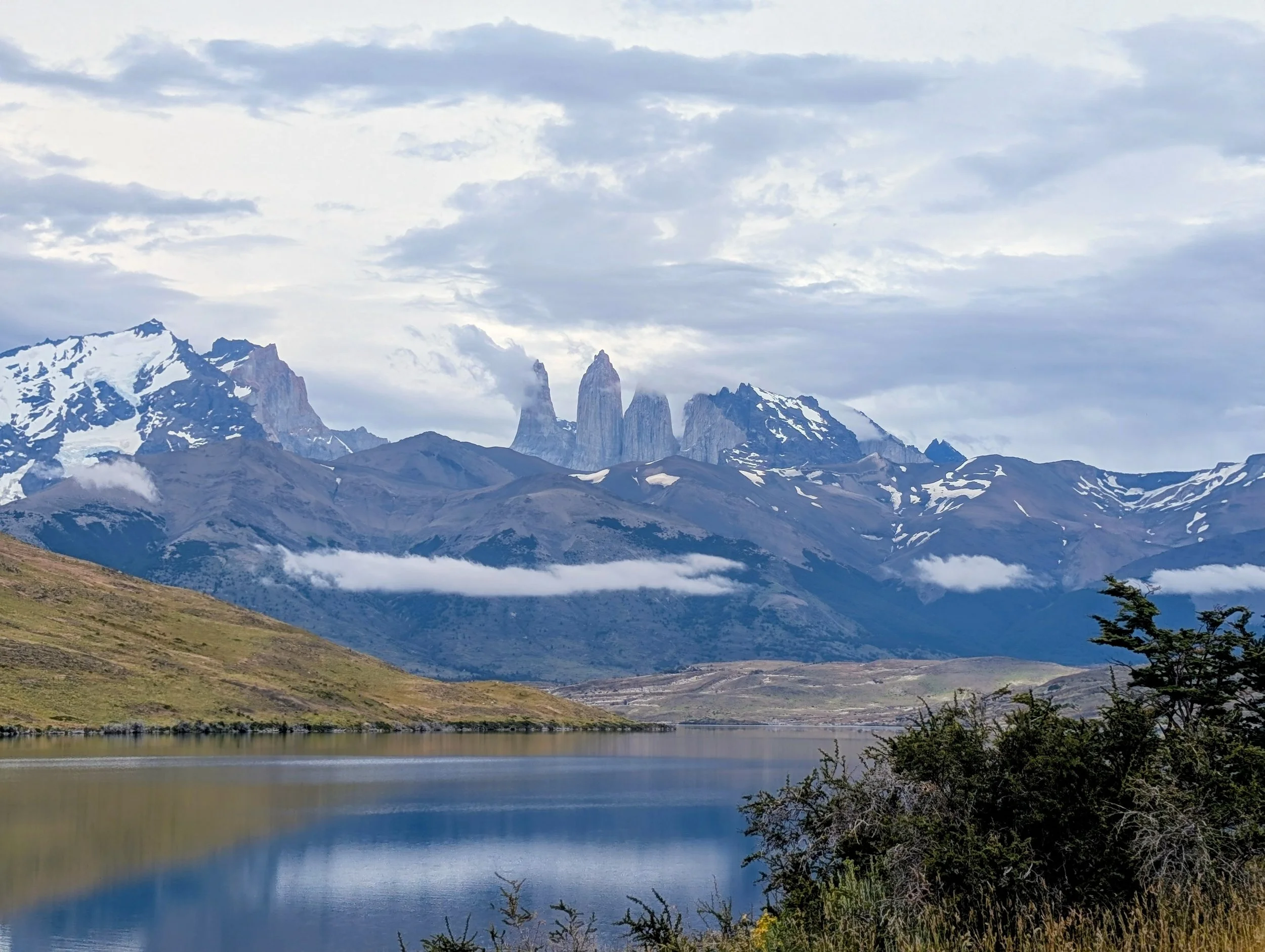
View from Laguna Azul camp
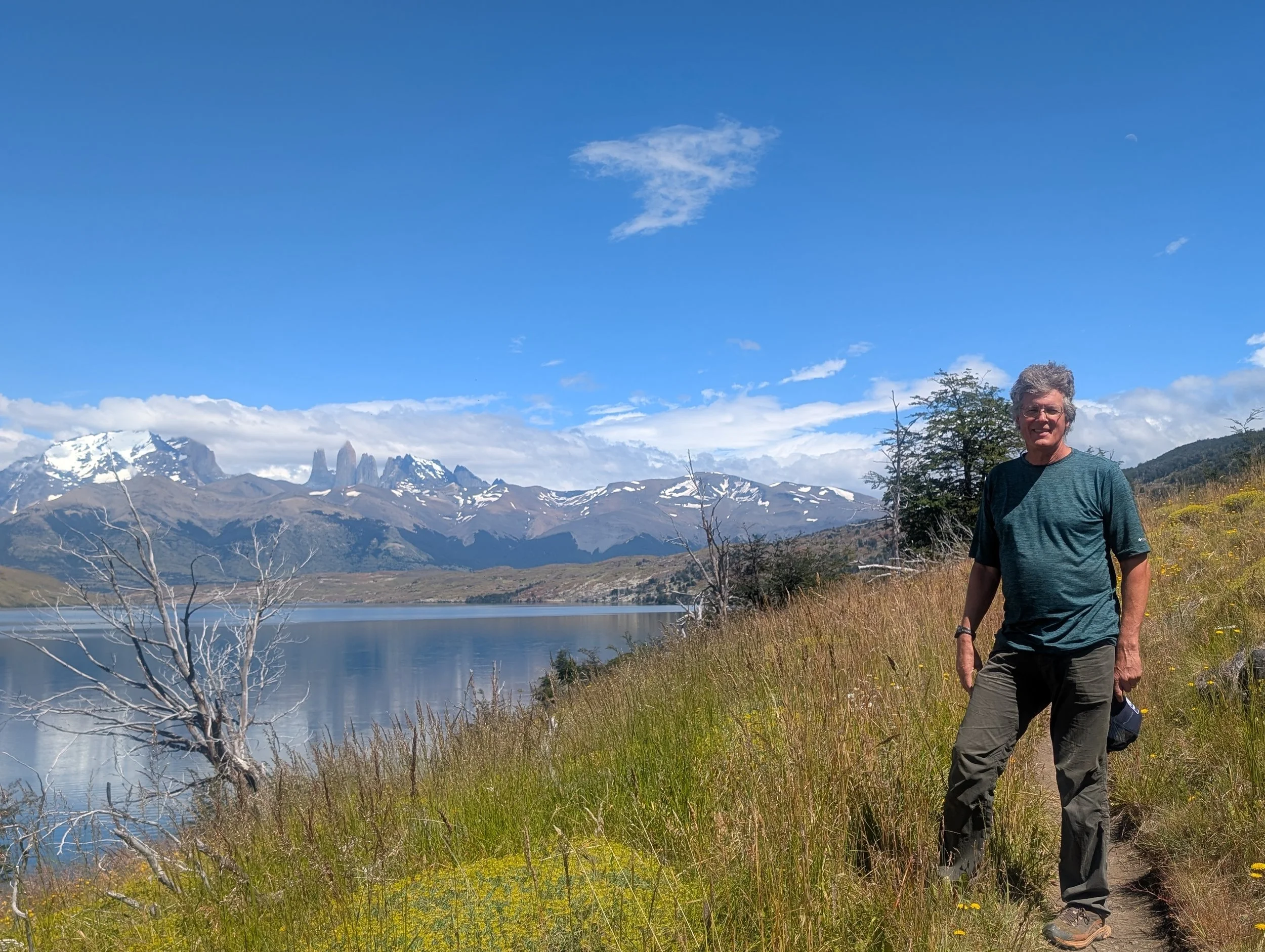
Stretching our legs on a short hike the next day
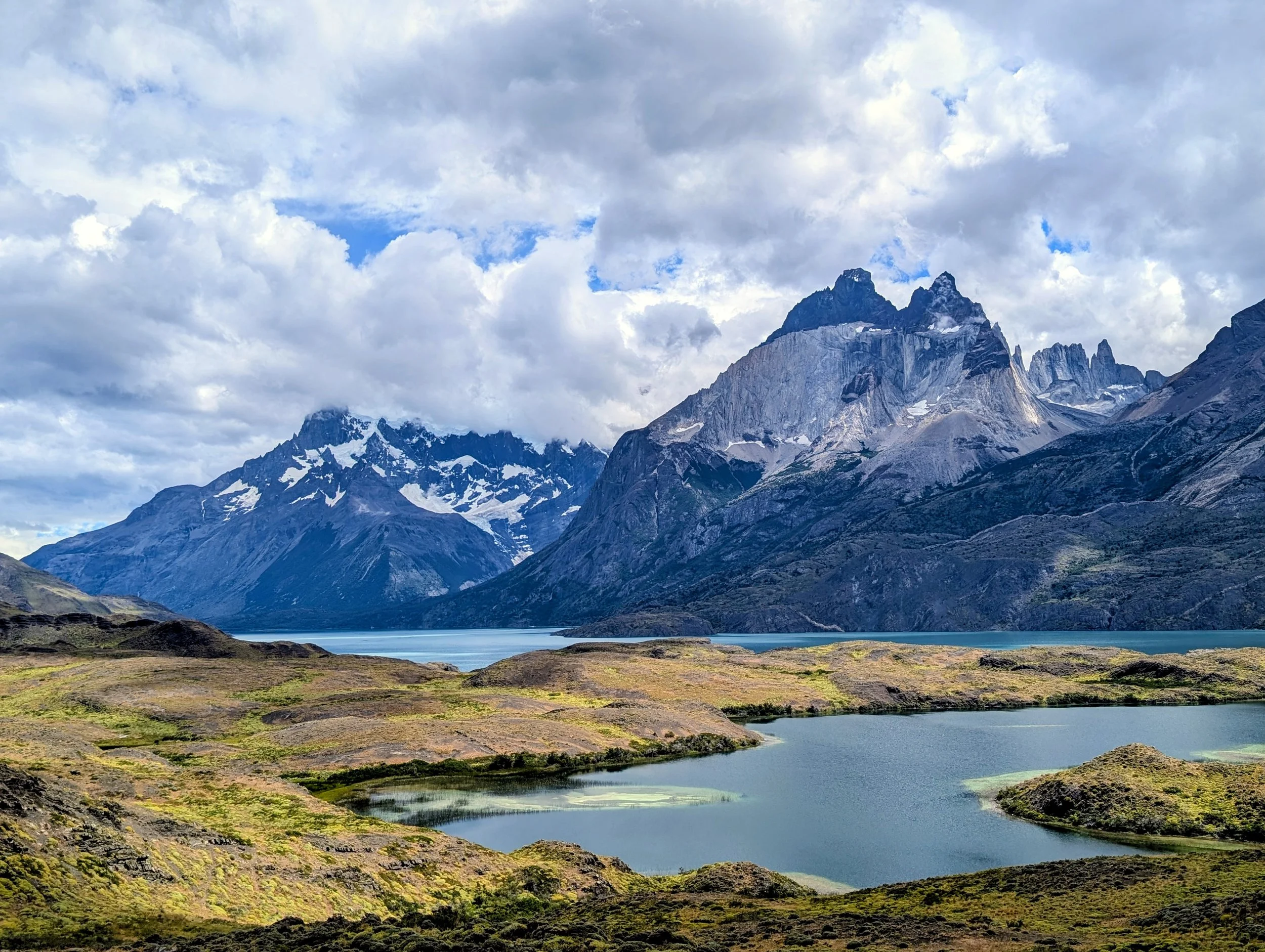
We are glad that we managed the Mirador Las Torres Base hike but quickly realized that was the most crowded area of the park. It was actually easy to get away from the crowds if you sought out some of the more remote roads. The park is close to 600,000 acres and in five days we didn’t even scratch the surface.
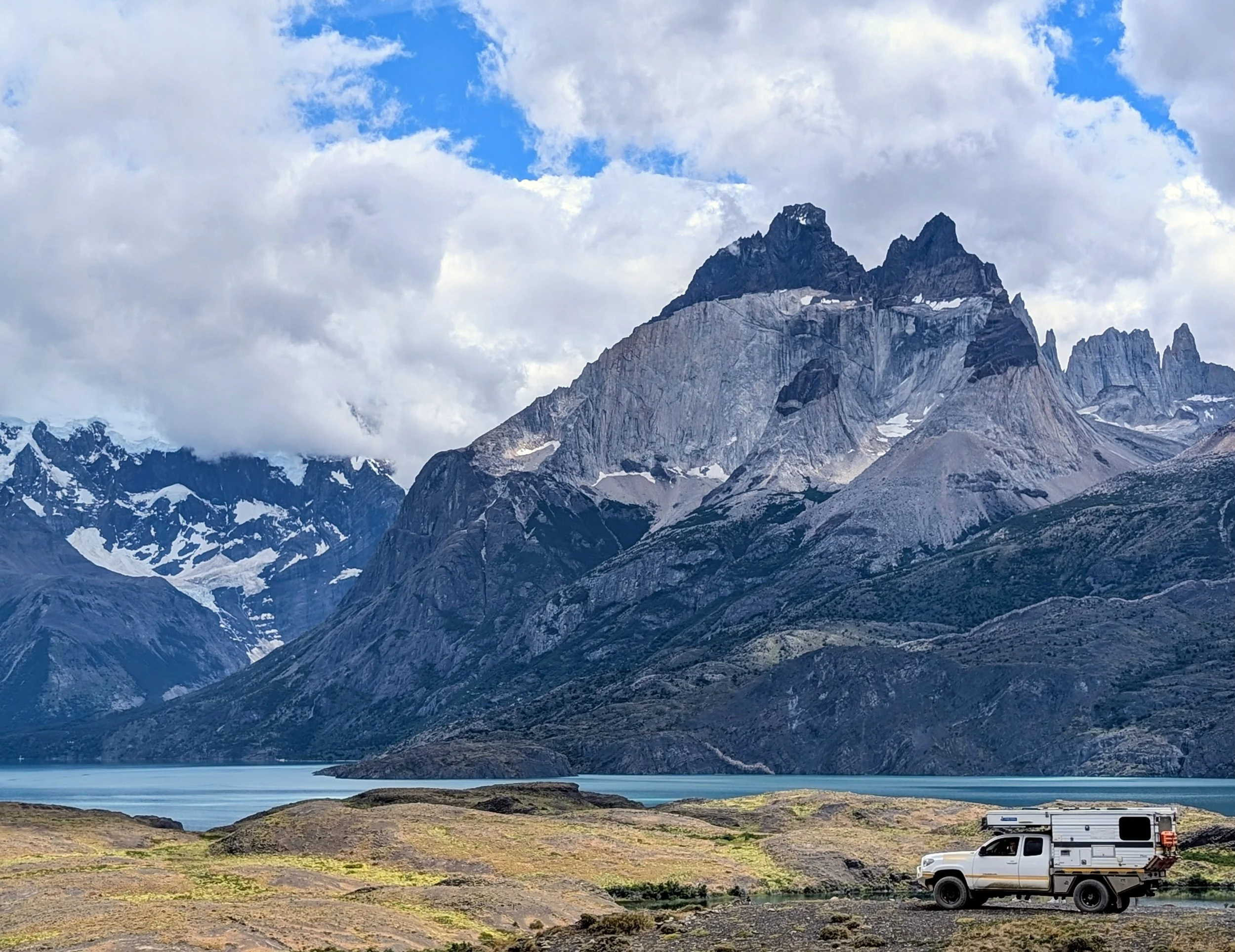
Doing our truck posing thing
Next we moved on to the second official camping area in the park - Lake Pehoe. This campground was better set up for vehicles and although they charged more (about $40 for two people and a vehicle) hot water showers were included which at that point was well worth it for us.
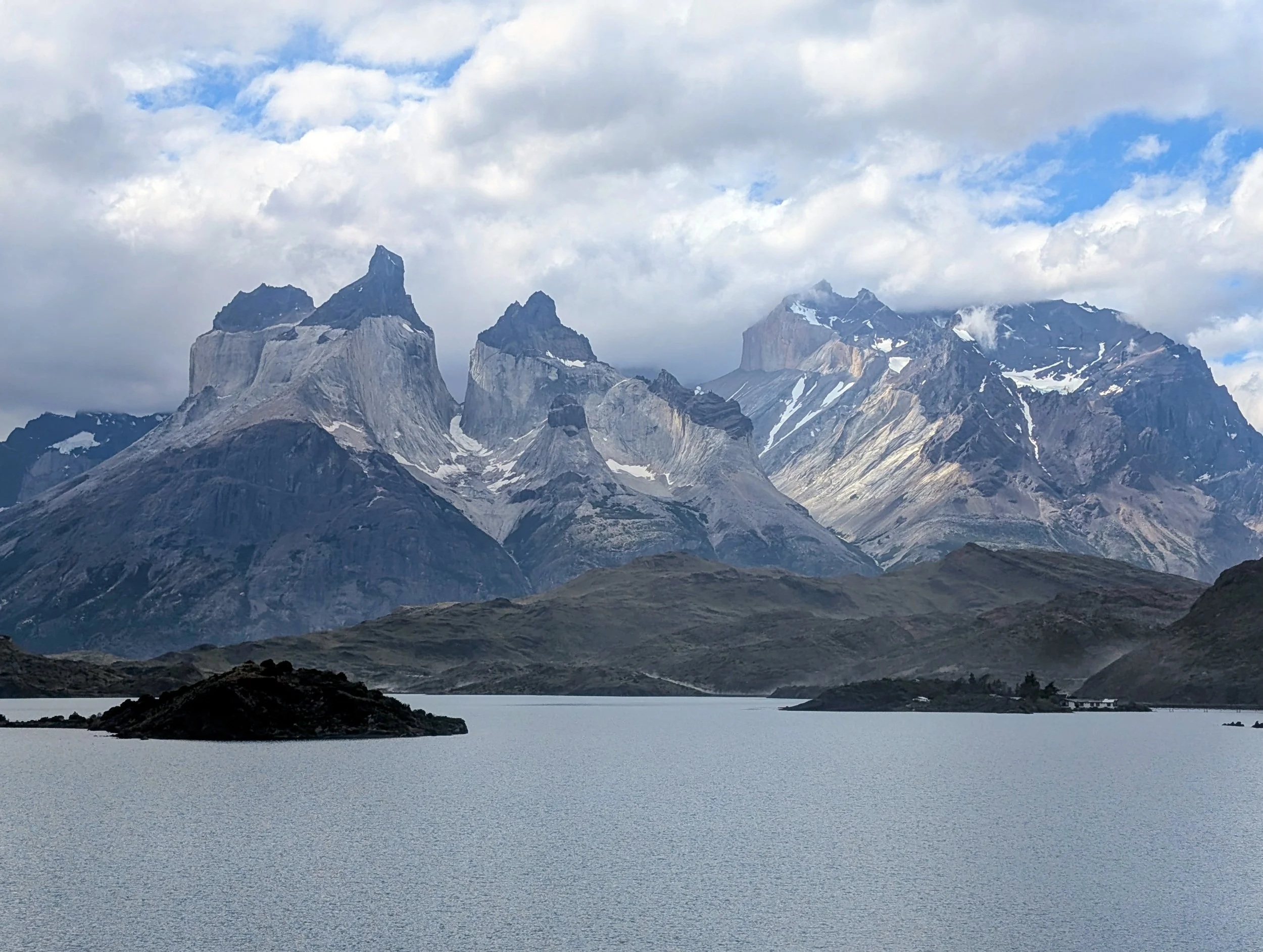
View from Camping Lago Pehoe
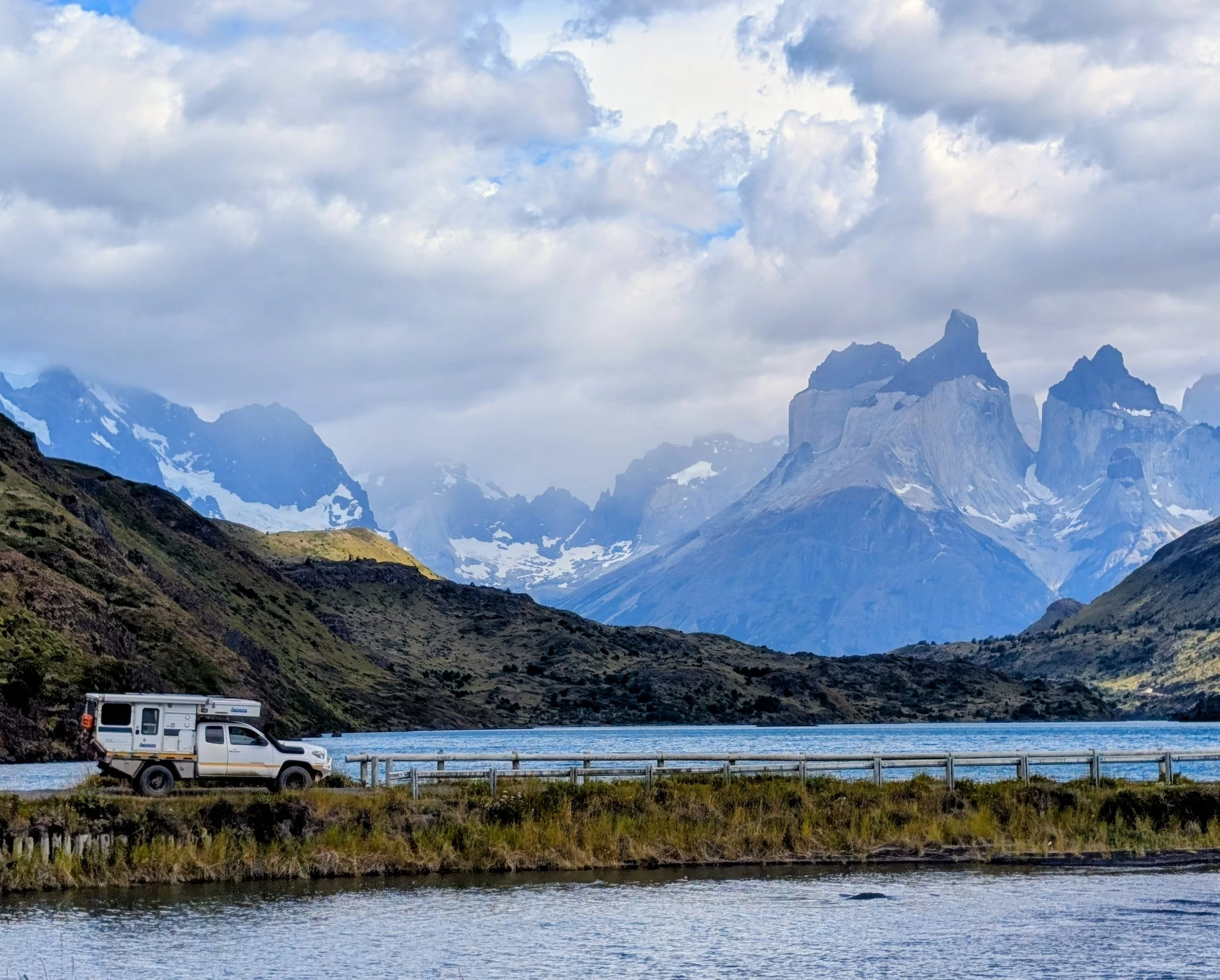
View from Puente Weber
For our last night in the park we headed back to Central where the most popular hikes take off and set out spend a night the the refugio Las Cuernos where we had managed to secure a spot in a tent.
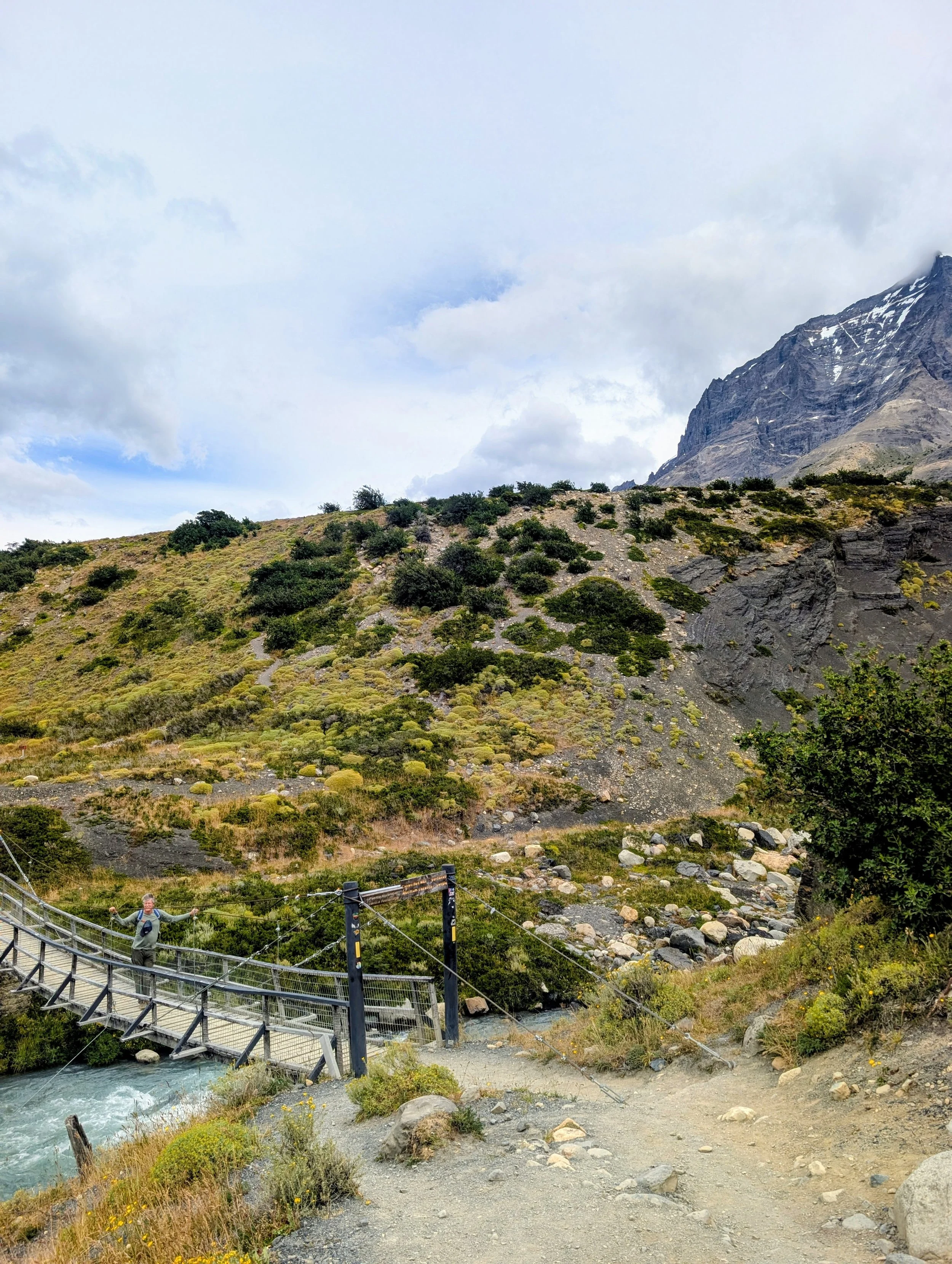
Crossing the suspension bridge - a much later start in the morning meant no crowds
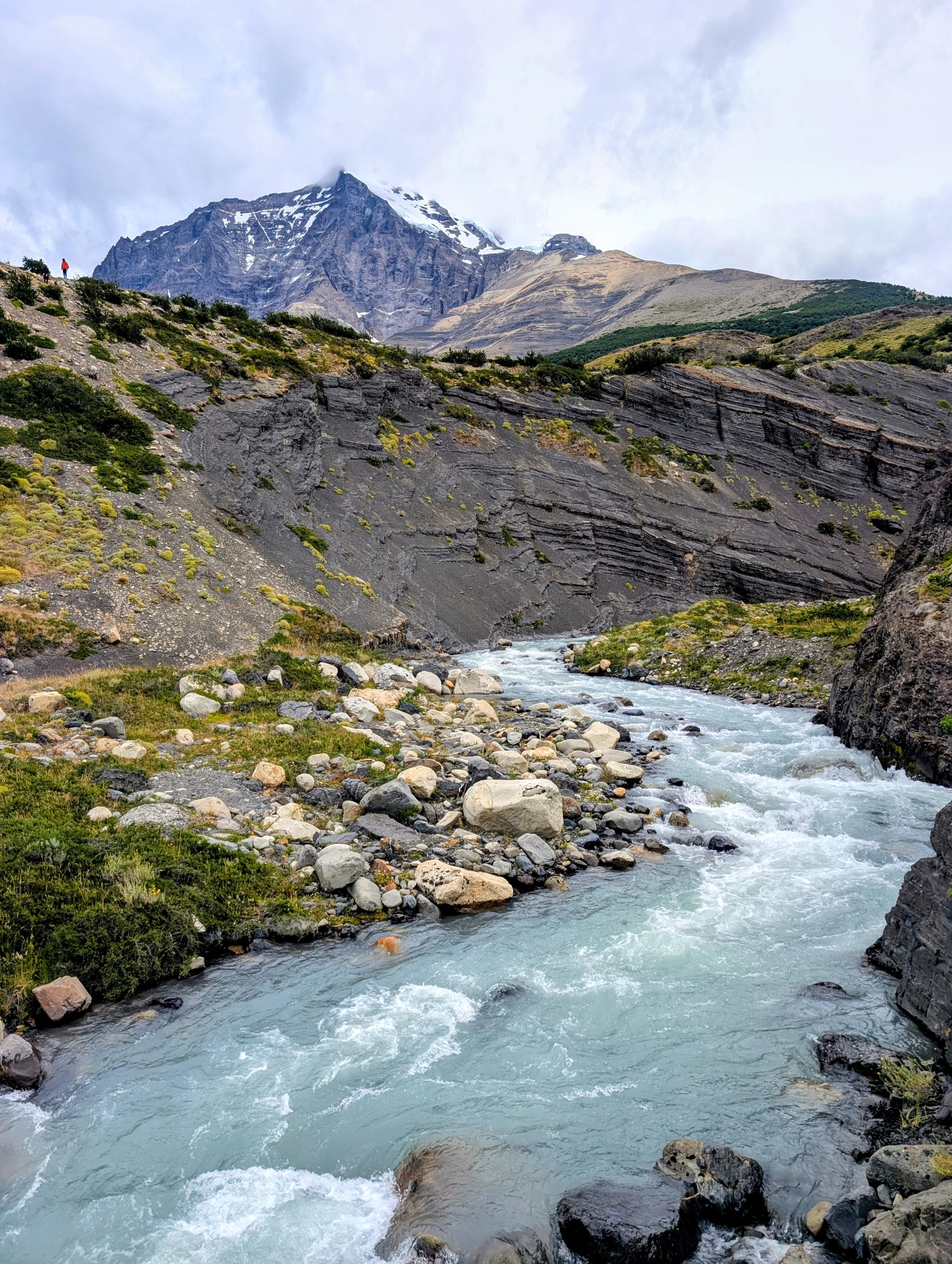
Glacial rivers
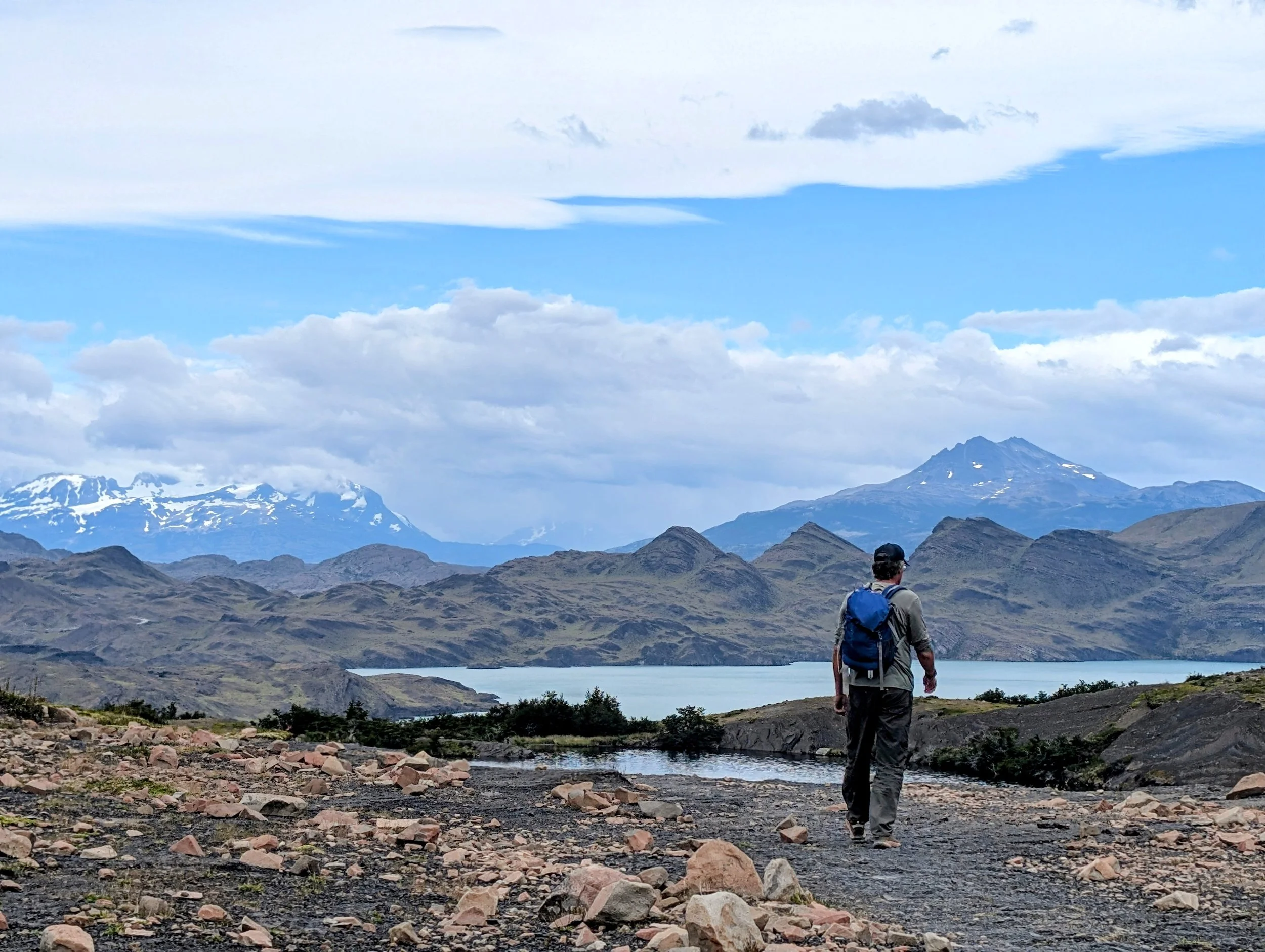
Hike to Las Cuernos - much flatter than to the Mirador
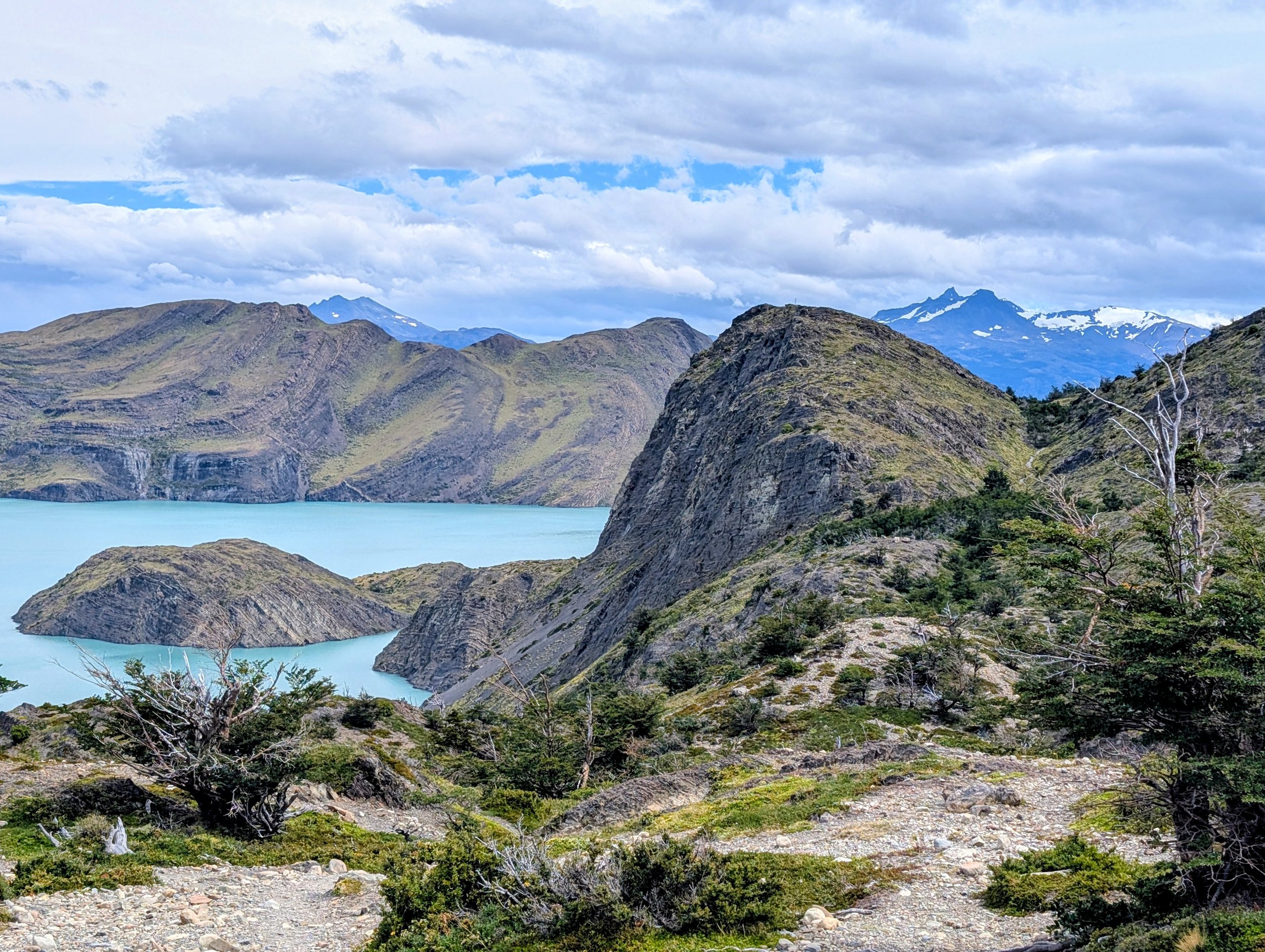
Still beautiful though
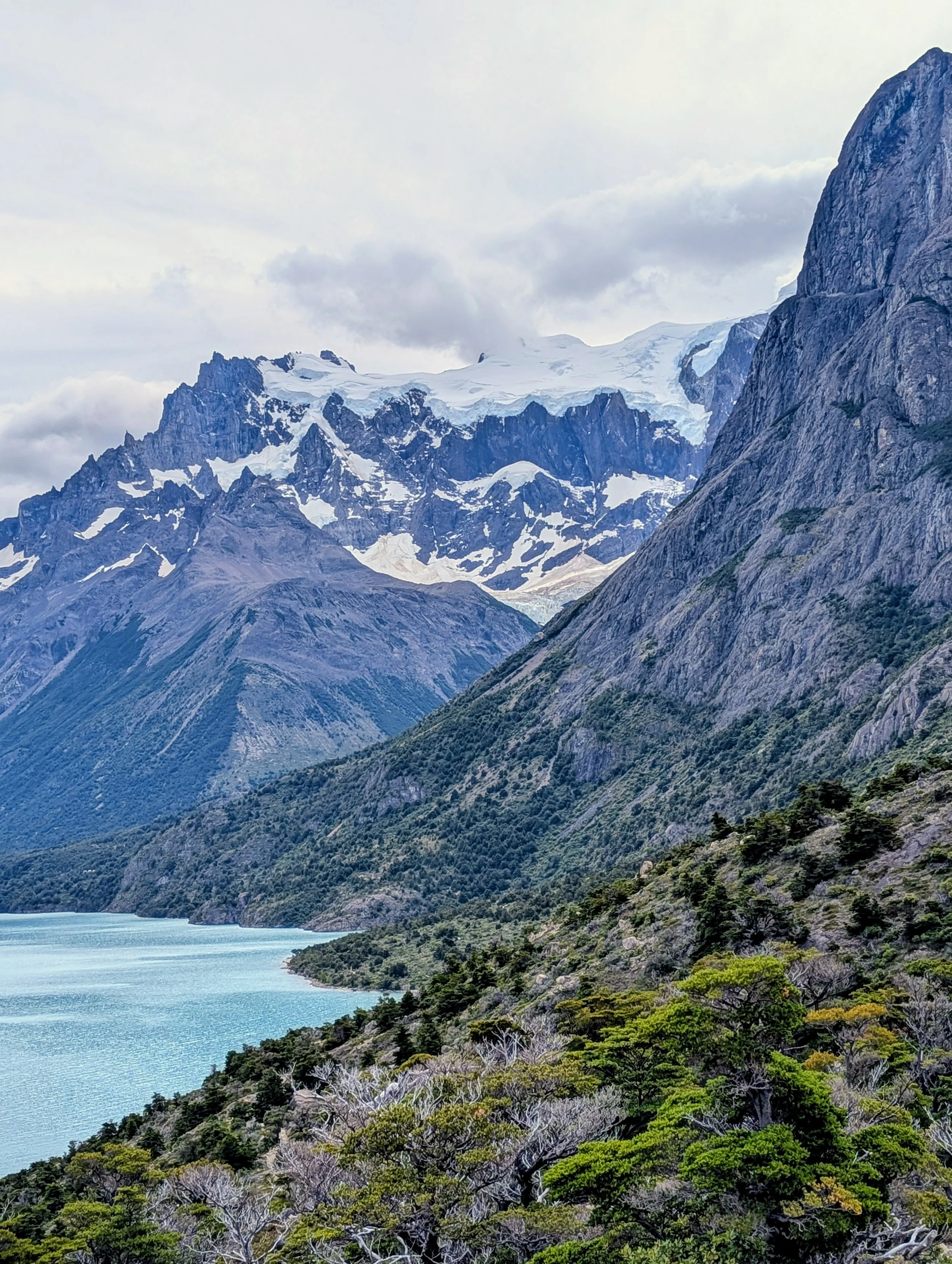
Last part of the six mile trail curves along the coast of Lake Nordenskjöld
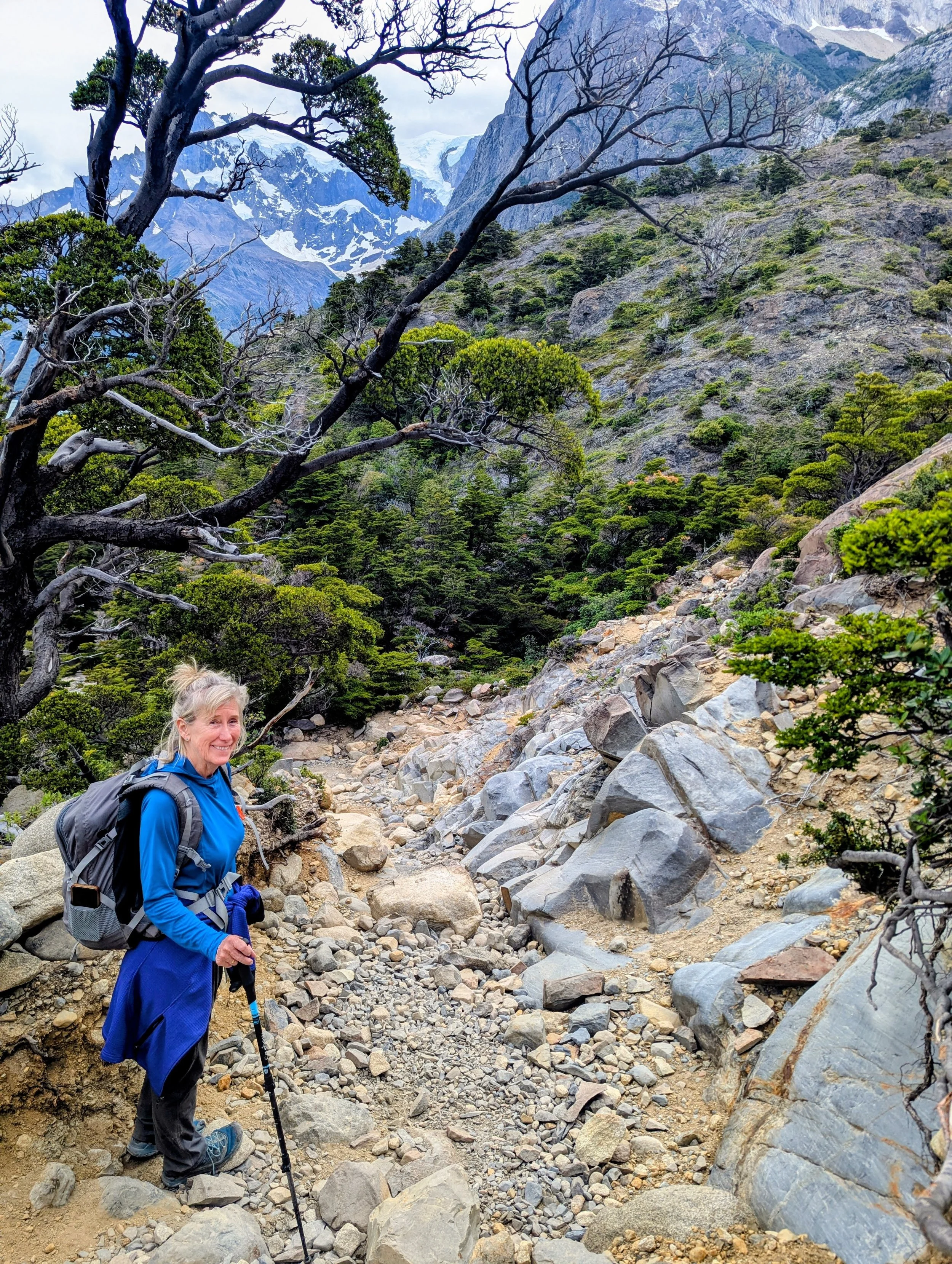
Last part of the trail is steep and rocky - Dawn’s favorite
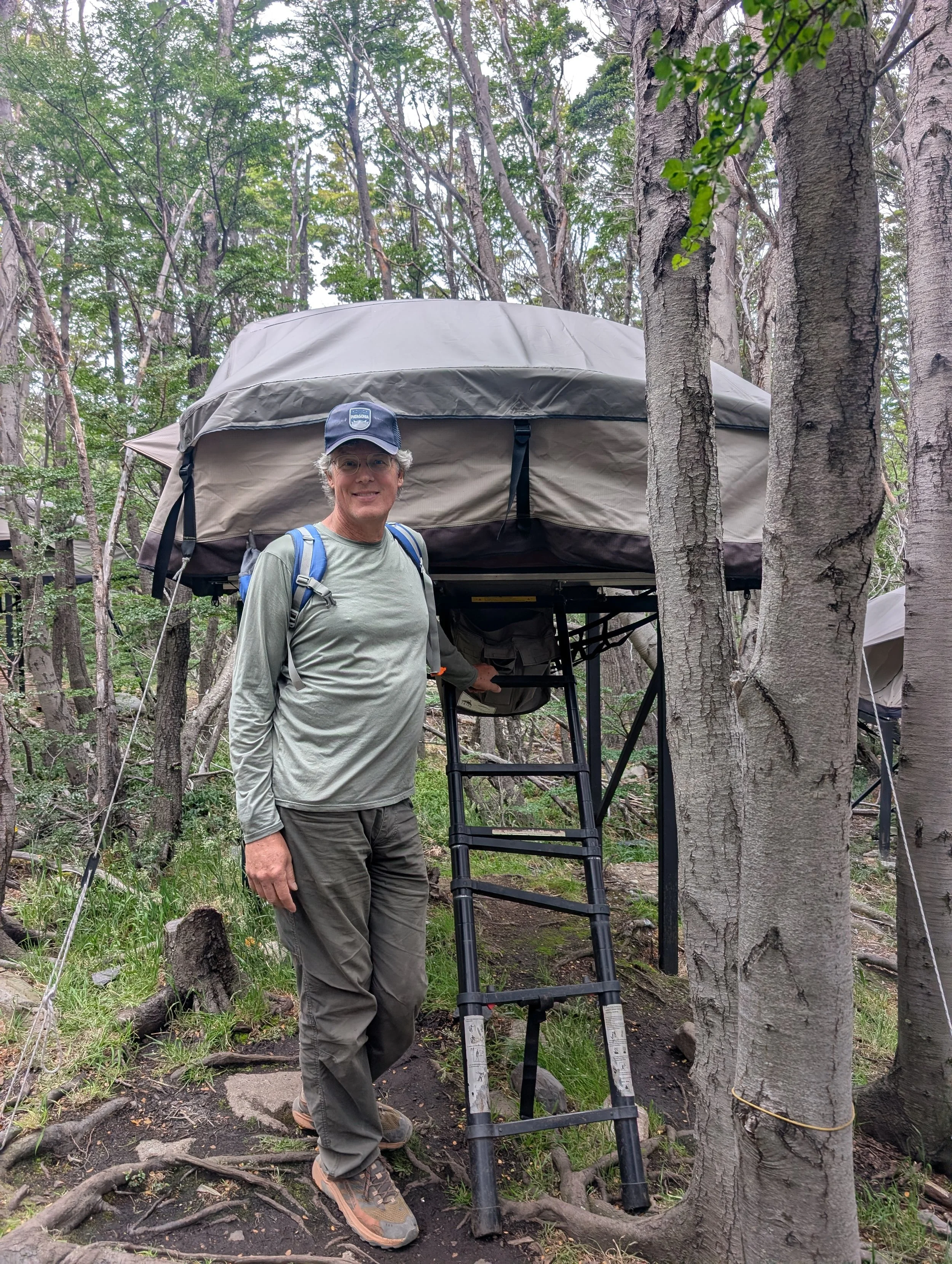
Our spot for the night - they use ground mounted roof top tents because of the steep terrain. We laughed that our most expensive night in Chile was in a roof top tent ($220 for the night). But it was a spectacular hike and location and splurged on the meal plan ($130 for two people) too so were treated to a hot three course dinner served family style on inside picnic benches - which felt luxurious.
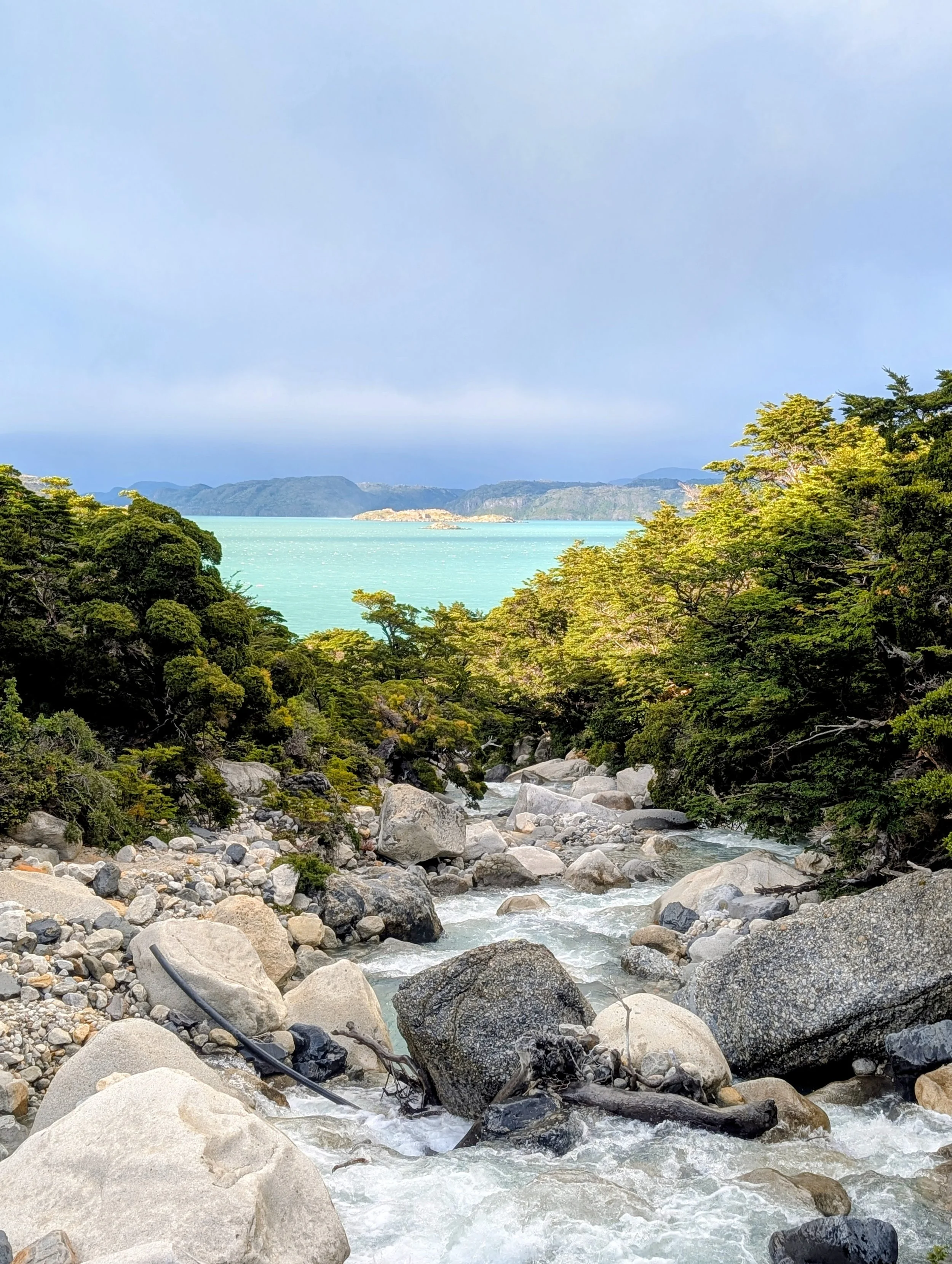
Hike out the next morning - sunlight on the glacial melt
Well, we had checked off one bucket list item and set off to check off another. We had reservations at the King Penguin reserve at Bahia Inutil. Unlike Torres del Paine, we were easily able to make reservations online a couple of weeks in advance.
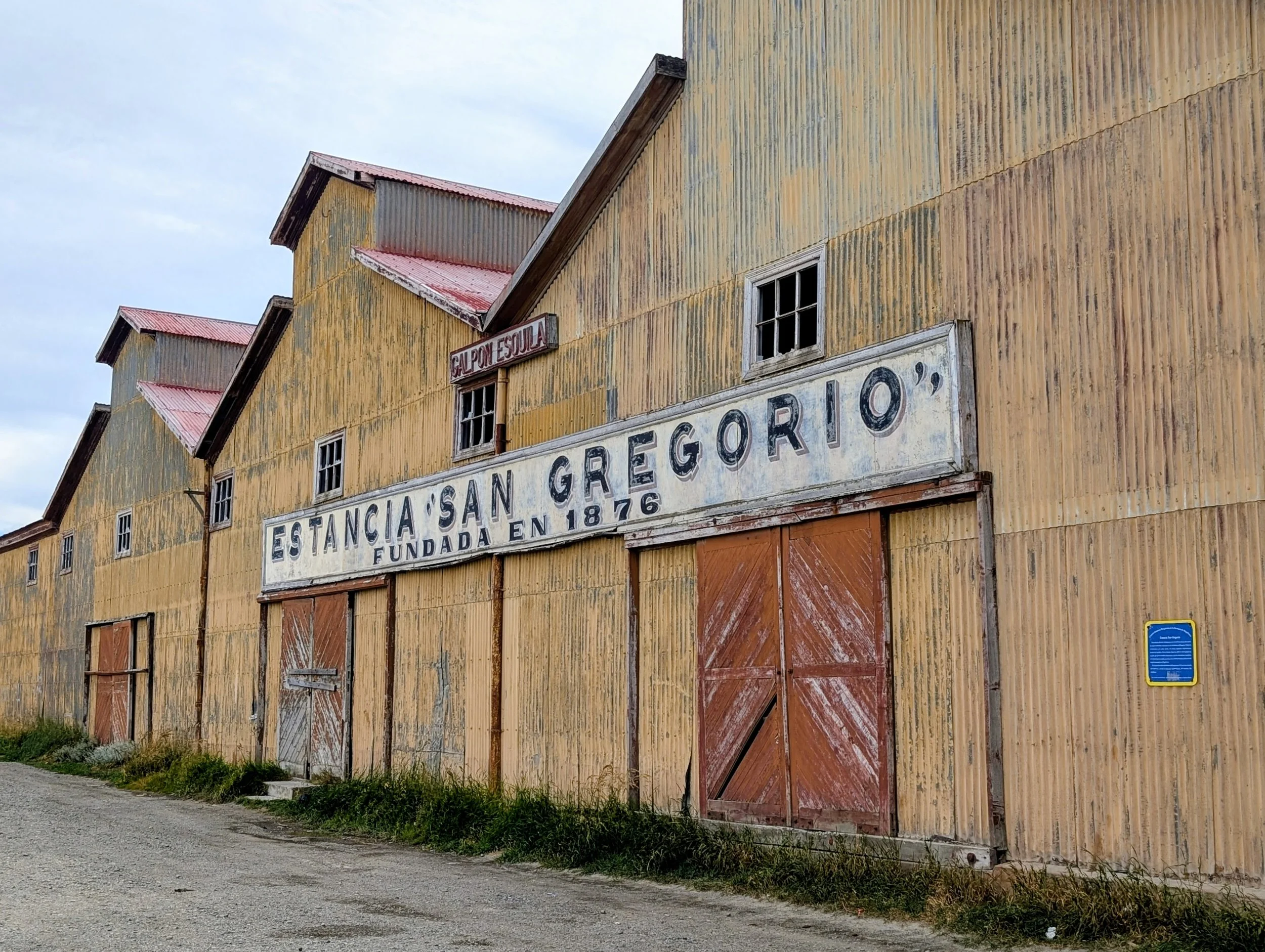
Driving to the Penguin Reserve - passing an old “ghost town” - a ranch built in 1876 falling into disrepair.
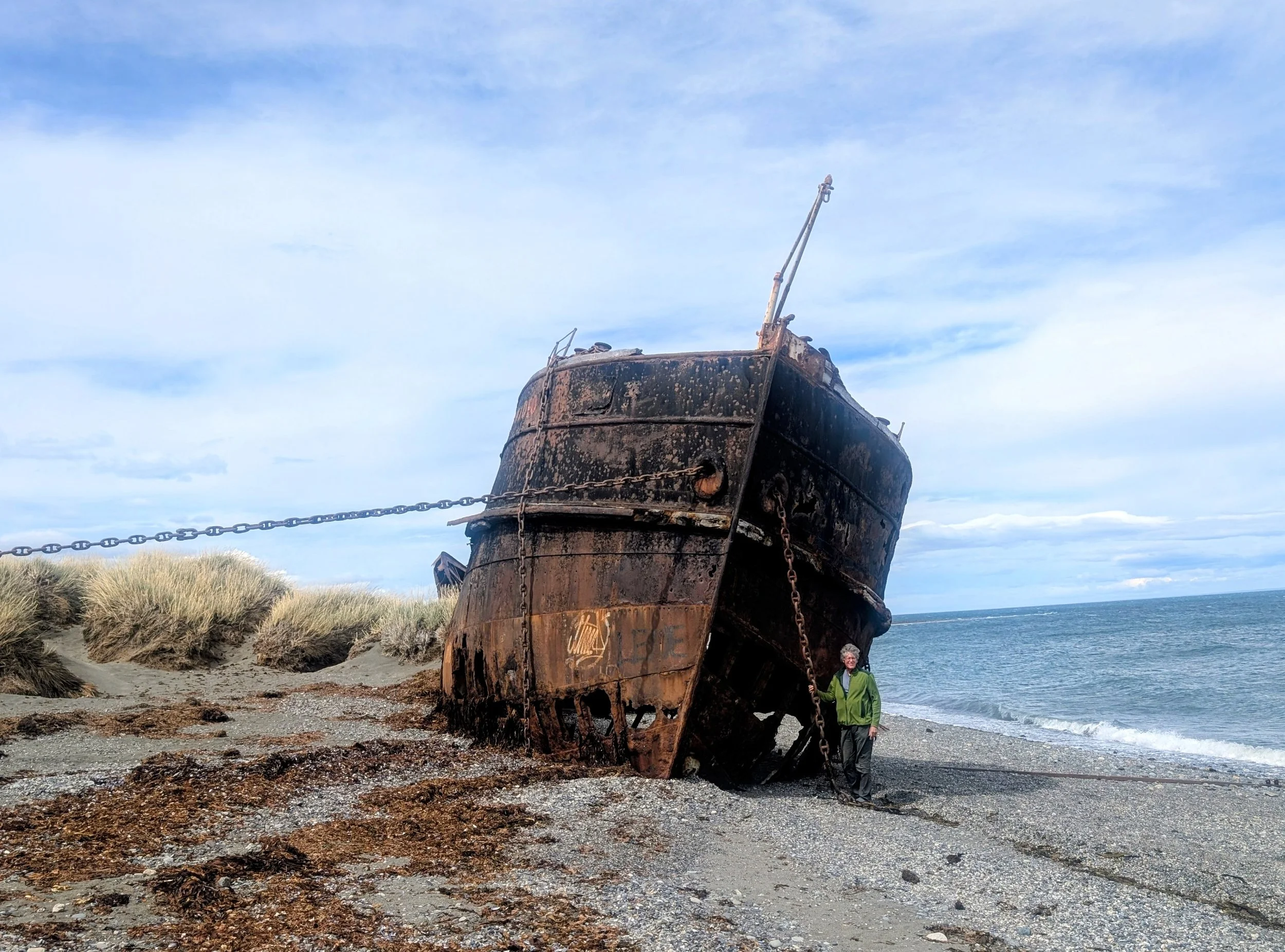
Complete with ships falling apart on the beach
We arrived at the reserve the night before our reservation and wild camped down the road. For $18 each, we joined a group and were led by a guide to a viewing site to watch the King Penguins in action. They are the second largest species of penguins in Chile - and as always were engaging and fun to watch.
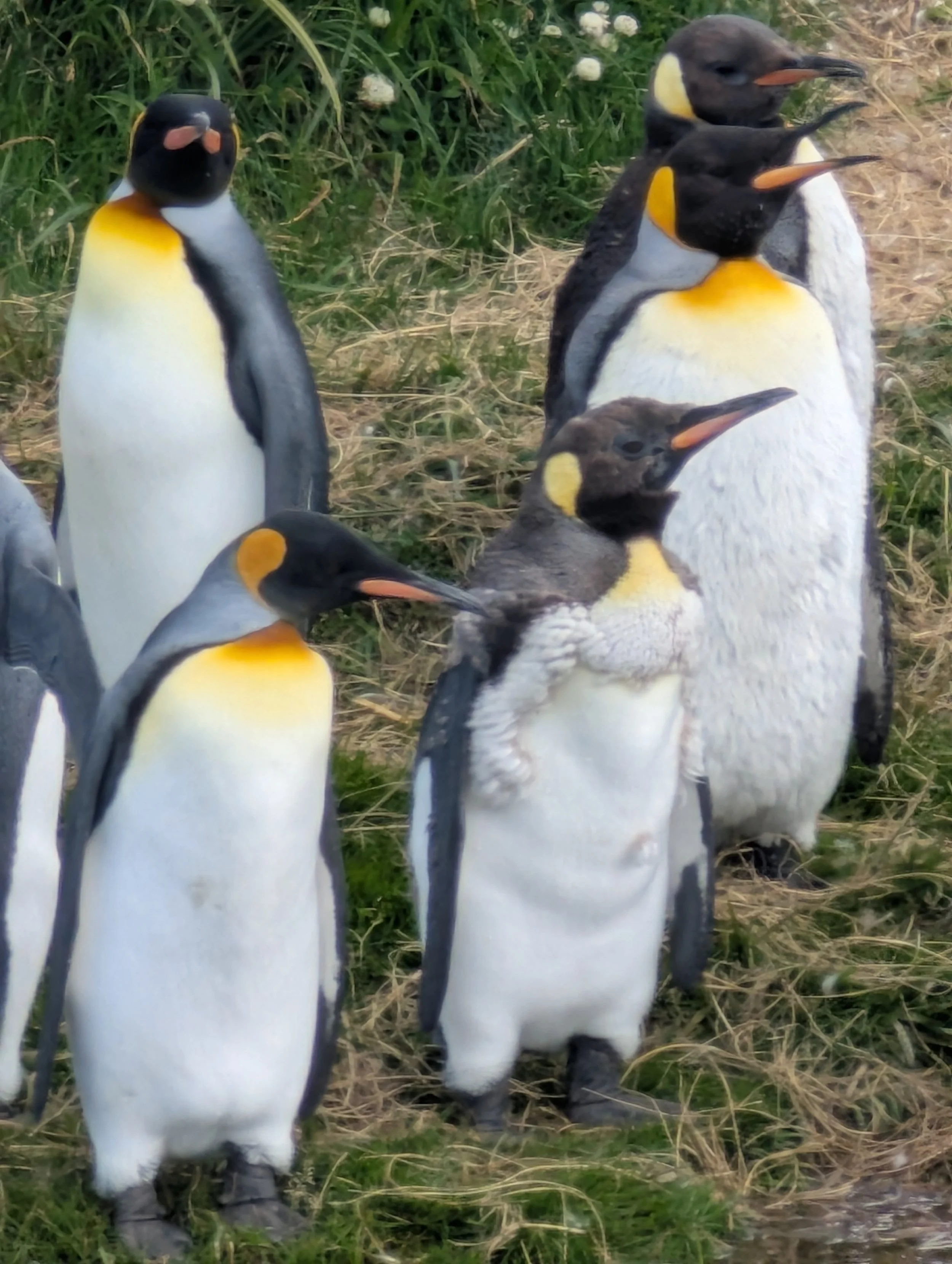
Pinguino Rey! Some of them were molting which meant staying out of the cold water until their feathers re-grew
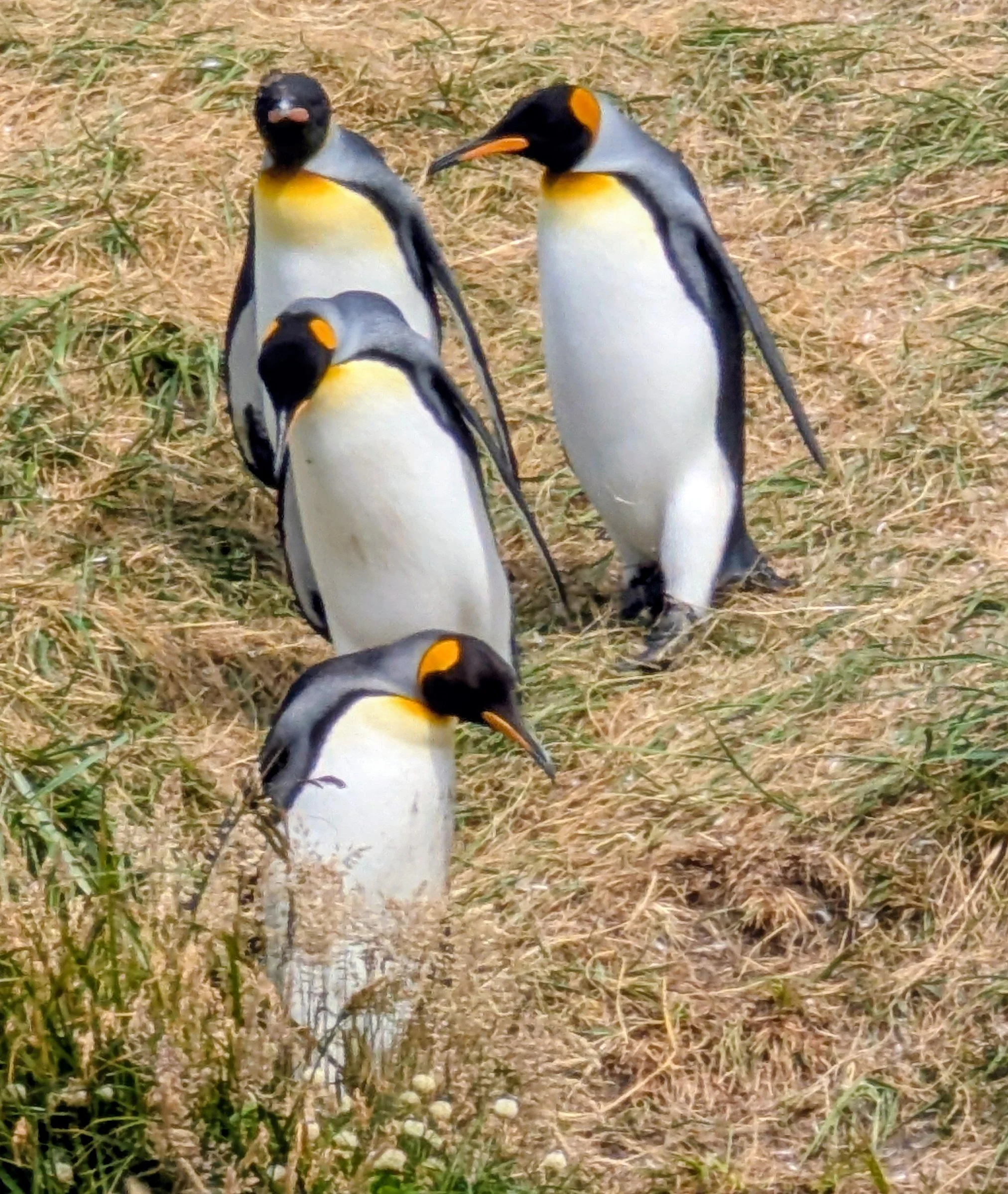
It was nesting seaon which is what brought them to this spot. The male and female parents take turns guarding the nest while the other partner heads into the sea to eat.
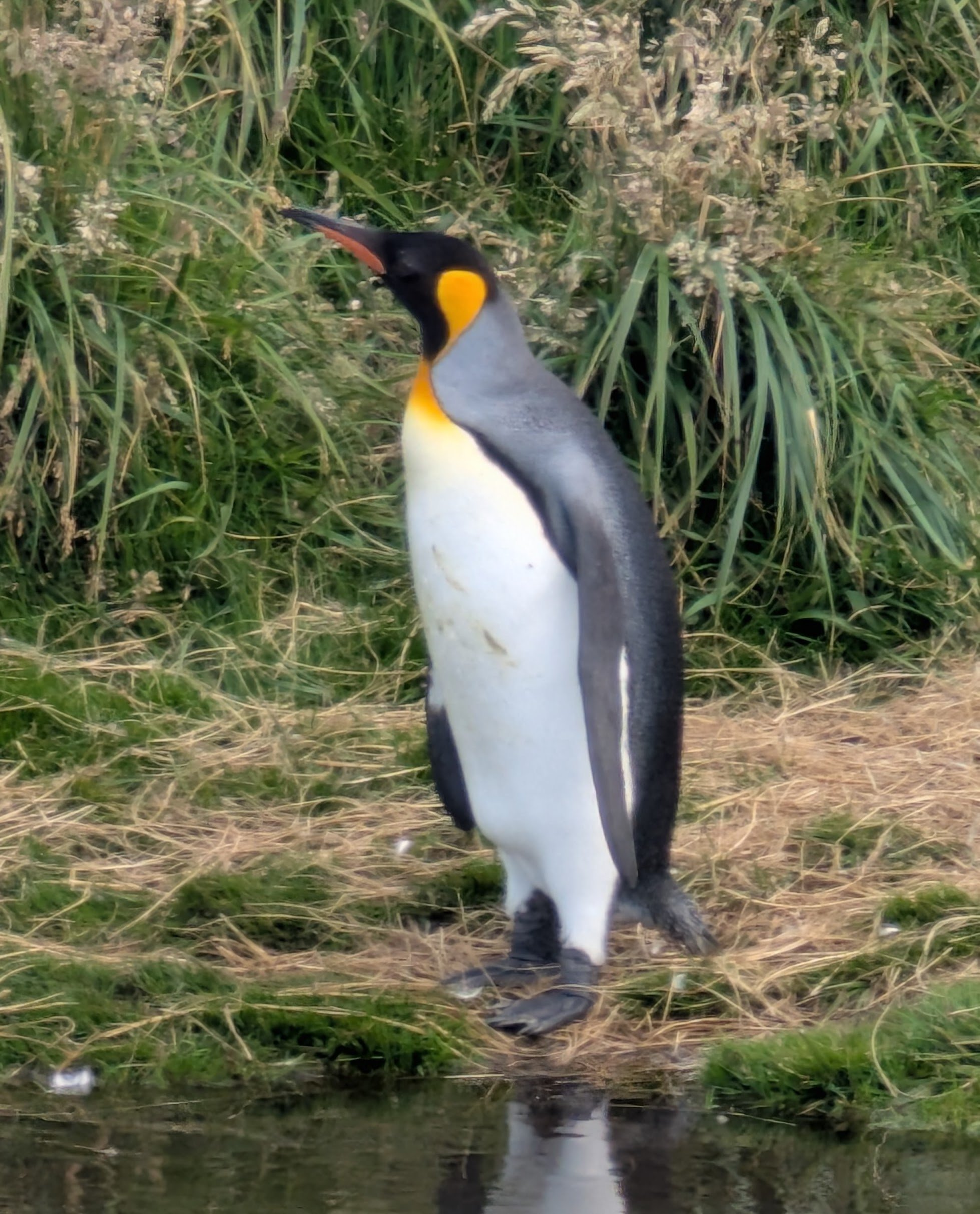
They were brilliantly colored with their orange markings
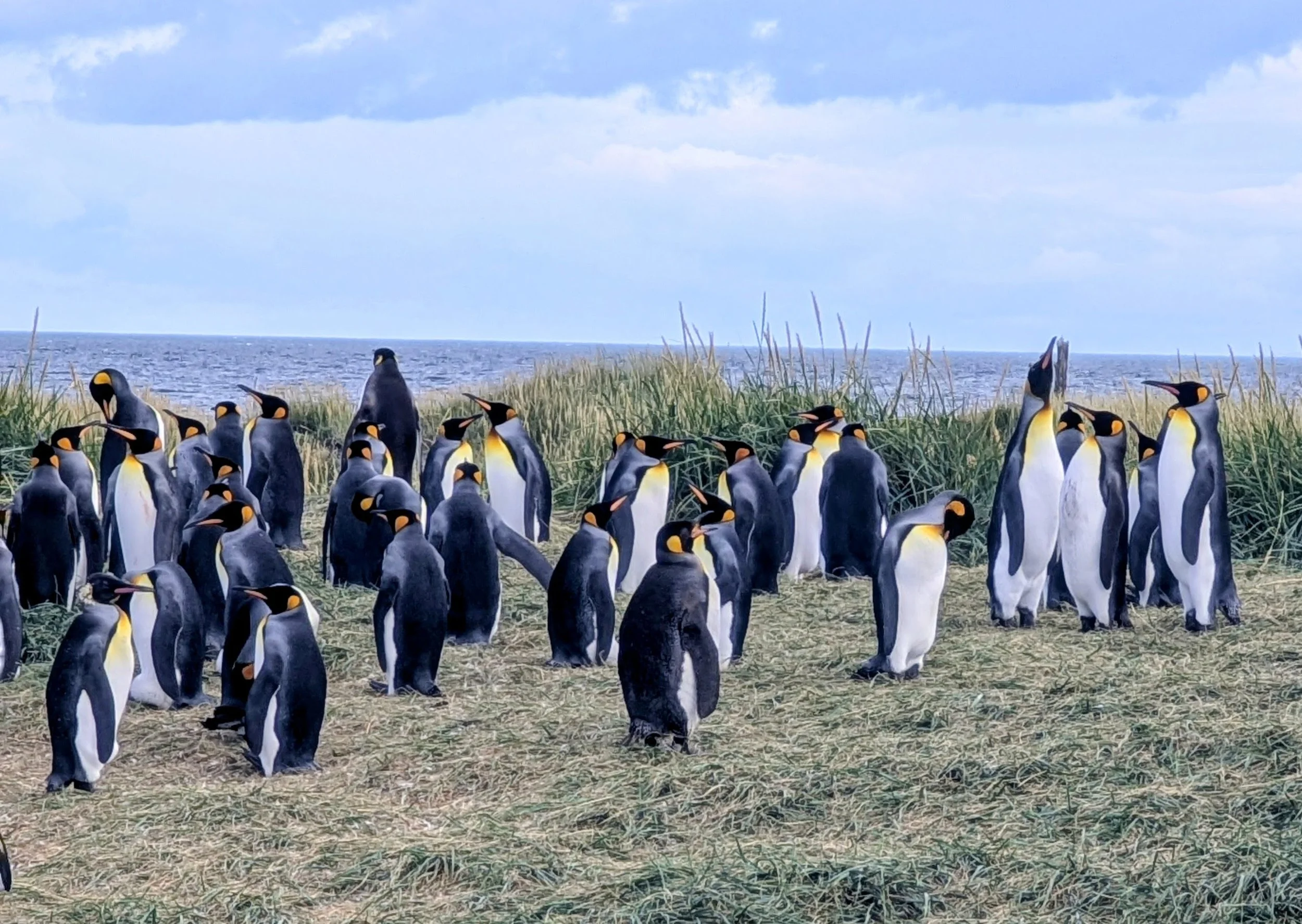
Hanging out - they make a sound like a small trumpeting elephant
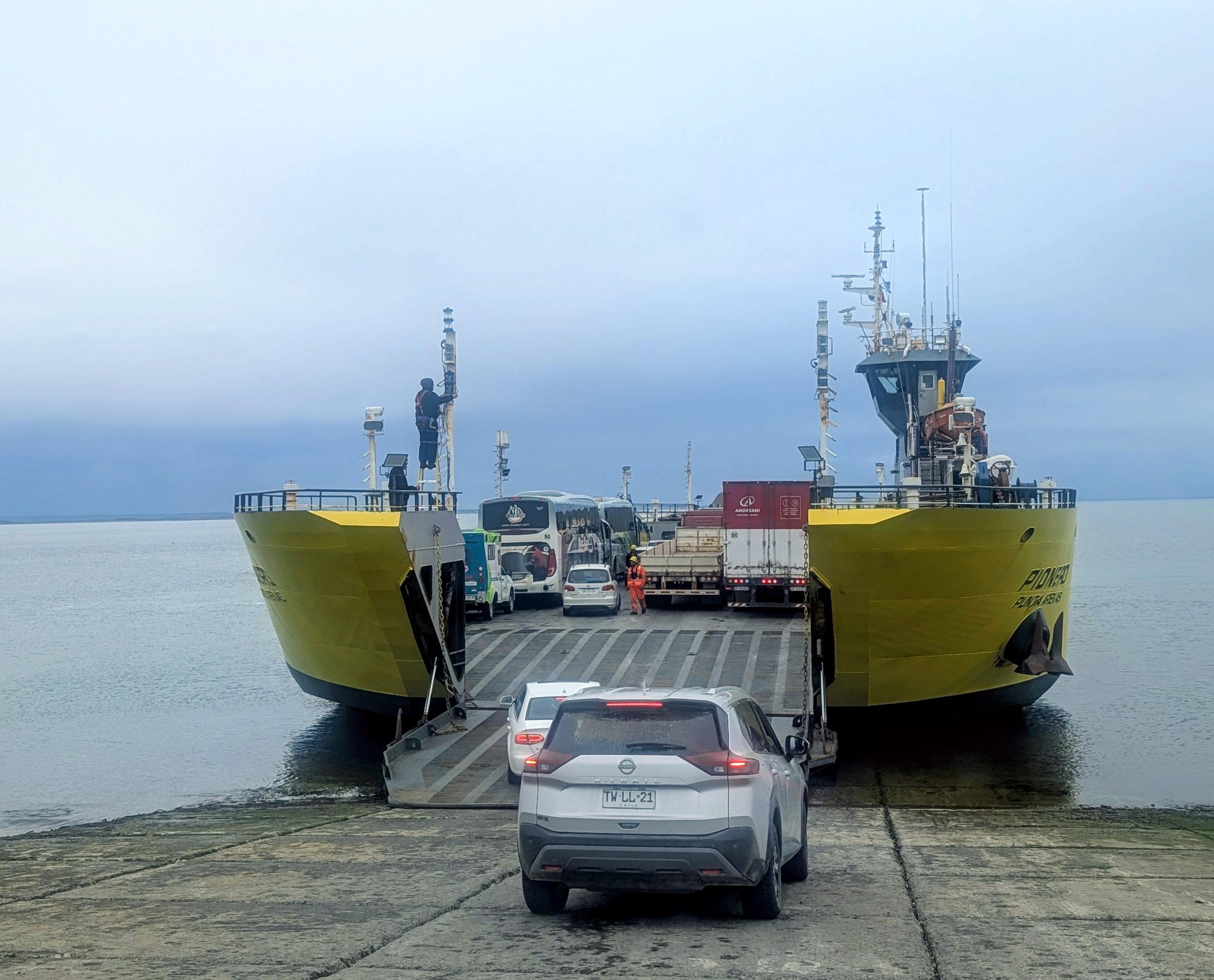
Taking the ferry back from the King Penguin Reserve area to make our final border crossing from Chile to Argentina
That’s a wrap for Chile - our first South American country. It was a super place to overland, definitely makes it into our top ten percent. The variety of landscapes and the easy travel logistics makes it a perfect place to explore in a vehicle. We did find we had some of the worst cell coverage we have experienced - pretty much only in the towns. But sometimes that is not a bad thing too. But the roads were mostly in good shape and resources - gas, food, water - were readily accessible. Thank you Chile for being a soft re-entry into the Americas after six years overseas. And thank you for reading and staying with us on our journey.